Hubbry Logo
search
logo
1780015

Retail marketing

logo
Community Hub0 Subscribers
Read side by side
from Wikipedia
The retail marketing mix or the 6 Ps of retailing

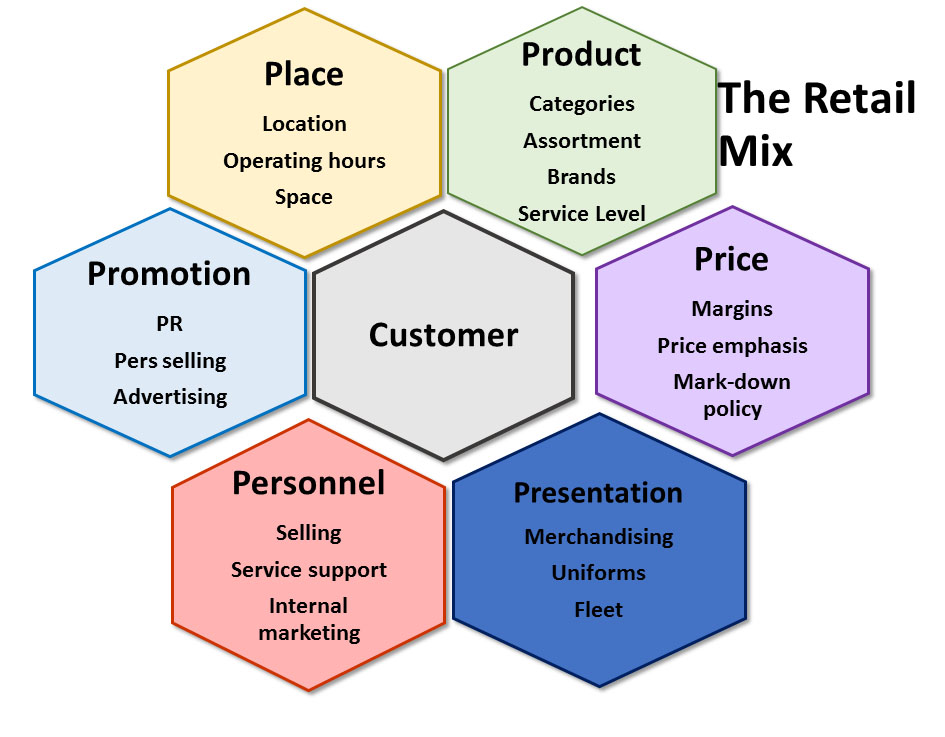
Once the strategic plan is in place, retail managers turn to the more managerial aspects of planning. A retail mix is devised for the purpose of coordinating day-to-day tactical decisions. The retail marketing mix typically consists of six broad decision layers including product decisions, place decisions, promotion, price, personnel and presentation (also known as physical evidence). The retail mix is loosely based on the marketing mix, but has been expanded and modified in line with the unique needs of the retail context. A number of scholars have argued for an expanded marketing, mix with the inclusion of two new Ps, namely, Personnel and Presentation since these contribute to the customer's unique retail experience and are the principal basis for retail differentiation. Yet other scholars argue that the Retail Format (i.e. retail formula) should be included.[1] The modified retail marketing mix that is most commonly cited in textbooks is often called the 6 Ps of retailing (see diagram at right).[2][3]

Product

[edit]

See Product management

The primary product-related decisions facing the retailer are the product assortment (what product lines, how many lines and which brands to carry); the type of customer service (high contact through to self-service) and the availability of support services (e.g. credit terms, delivery services, after sales care). These decisions depend on careful analysis of the market, demand, competition as well as the retailer's skills and expertise.

Product assortment

[edit]
A typical supermarket carries an assortment of between 30,000 and 60,000 different products.
Assorted books

The term product assortment refers to the combination of both product breadth and depth. The main characteristics of a company's product assortment are:[4]

(1) the length or number of products lines
the number of different products carried by a store
(2) the breadth
refers to the variety of product lines that a store offers. It is also known as product assortment width, merchandise breadth, and product line width.:
(3) depth or number of product varieties within a product line
the number of each item or particular styles carried by a store
(4) consistency
how products relate to each other in a retail environment.

For a retailer, finding the right balance between breadth and depth can be a key to success. An average supermarket might carry 30,000–60,000 different product lines (product length or assortment), but might carry up to 100 different types of toothpaste (product depth).[5] Speciality retailers typically carry fewer product lines, perhaps as few as 20 lines, but will normally stock greater depth. Costco, for example, carries 5,000 different lines while Aldi carries just 1,400 lines per store.[6]

Discount grocery retailer, Aldi, has successfully trimmed the number of product lines it carries to about 1,400.

Large assortments offer consumers many benefits, notably increased choice and the possibility that the consumer will be able to locate the ideal product. However, for the retailer, larger assortments incur costs in terms of record-keeping, managing inventory, pricing and risks associated with wastage due to spoiled, shopworn or unsold stock. Carrying more stock also exposes the retailer to higher risks in terms of slow-moving stock and lower sales per square foot of store space. On the other hand, reducing the number of product lines can generate cost savings through increased stock turnover by eliminating slow-moving lines, fewer stockouts, increased bargaining power with suppliers, reduced costs associated with wastage and carrying inventory, and higher sales per square foot which means more efficient space utilisation.

When determining the number of product lines to carry, the retailer must consider the store type, the store's physical storage capacity, the perishability of items, the expected turnover rates for each line, and the customer's needs and expectations.

Customer service and supporting services

[edit]
Self-service is a more cost efficient way to deliver goods.

Customer service is the "sum of acts and elements that allow consumers to receive what they need or desire from [the] retail establishment." Retailers must decide whether to provide a full service outlet or minimal service outlet, such as no-service in the case of vending machines; self-service with only basic sales assistance or a full service operation as in many boutiques and speciality stores. In addition, the retailer needs to make decisions about sales support such as customer delivery and after sales customer care.

Retailing services may also include the provision of credit, delivery services, advisory services, exchange/ return services, product demonstrations, special orders, customer loyalty programs, limited-scale trials, and a range of other supporting services. Retail stores often seek to differentiate themselves along customer service lines. For example, some department stores offer the services of a stylist; a fashion advisor, to assist customers in selecting a fashionable wardrobe for the forthcoming season, while smaller boutiques may allow regular customers to take goods home on approval, enabling them to try out goods before making the final purchase. The variety of supporting services offered is known as the service type. At one end of the spectrum, self-service operators offer few basic support services. At the other end of the spectrum, full-service operators offer a broad range of highly personalised customer services to augment the retail experience.[7]

When making decisions about customer service, the retailer balances the customer's requirement for service against the customer's willingness to pay for the cost of those services. Self-service reduces costs because the customer performs various retail tasks. However, some customers prefer full service and pay more for that level of service.[8]

A sales assistant's role typically includes greeting customers, providing product and service-related information, providing advice about products available from current stock, answering customer questions, finalising customer transactions and if necessary, providing follow-up service necessary to ensure customer satisfaction.[9] For retail store owners, it is extremely important to train personnel with the requisite skills necessary to deliver excellent customer service. Such skills may include product knowledge, inventory management, handling cash and credit transactions, handling product exchange and returns, dealing with difficult customers and of course, a detailed knowledge of store policies. The provision of excellent customer service creates more opportunities to build enduring customer relationships with the potential to turn customers into sources of referral or retail advocates. In the long term, excellent customer service provides businesses with an ongoing reputation and may lead to a competitive advantage. Customer service is essential for several reasons.[10] Firstly, customer service contributes to the customer's overall retail experience. Secondly, evidence suggests that a retail organization that trains its employees in appropriate customer service benefits more than those who do not. Customer service training entails instructing personnel in the methods of servicing the customer that will benefit corporations and businesses. It is important to establish a bond amongst customers-employees known as Customer relationship management.[11]

Counter service is associated with full-service retail outlets and allows the salesperson to provide expert advice.

Types of customer service

[edit]

There are several ways the retailer can deliver services to consumers:

  • Counter service, where goods are out of reach of buyers and must be obtained from the seller. This type of retail is common for small expensive items (e.g. jewellery) and controlled items like medicine and liquor.
  • Curbside pickup, where orders are placed online, via a mobile app, or called in, then the customer picks up the product on the property of but outside of the physical store. The coronavirus pandemic is making curbside pickup much more valuable to customers[12]
  • Ship to Store, where products are ordered online and can be picked up at the retailer's main store
  • Delivery, where goods are shipped directly to consumer's homes or workplaces.
  • Mail order from a printed catalogue was invented in 1744 and was common in the late 19th and early 20th centuries. Ordering by telephone was common in the 20th century, either from a catalog, newspaper, television advertisement or a local restaurant menu, for immediate service (especially for pizza delivery), remaining in common use for food orders. Internet shopping  – a form of delivery – has eclipsed phone-ordering, and, in several sectors – such as books and music – all other forms of buying. There is increasing competitor pressure to deliver consumer goods – especially those offered online – in a more timely fashion. Large online retailers such as Amazon.com are continually innovating and as of 2015 offer one-hour delivery in certain areas. They are also working with drone technology to provide consumers with more efficient delivery options. Direct marketing, including telemarketing and television shopping channels, are also used to generate telephone orders. started gaining significant market share in developed countries in the 2000s.
  • Door-to-door sales, where the salesperson sometimes travels with the goods for sale.
  • Self-service, where goods may be handled and examined prior to purchase.
  • Digital delivery or Download, where intangible goods, such as music, film, and electronic books and subscriptions to magazines, are delivered directly to the consumer in the form of information transmitted either over wires or air-waves and is reconstituted by a device which the consumer controls (such as an MP3 player; see digital rights management). The digital sale of models for 3D printing also fits here, as do the media leasing types of services, such as streaming.

Place

[edit]

Place decisions are primarily concerned with consumer access and may involve location, space utilisation and operating hours.

Sellers of souvenirs are typically located in high traffic areas such as this London souvenir stand situated near a railway station on a busy street corner.

Location

[edit]

Also see Site selection

The perspective of marketing in large-scale enterprises is based on the theory of supply chain management; it emphasizes that the suppliers, large-scale retail enterprises, and customers form a chain of cooperative marketing that establishes mutually beneficial long-term relationships. Relationship marketing of huge retail enterprises from the perspective of supply chain mainly includes two relationship markets, supplier relationships, and customer relationships, as the two greatest influences on retail profits are suppliers and customers. First, as the supplier of commodities to retail enterprises, it directly determines the procurement cost of commodities to retail enterprises, which is mainly reflected in the purchase price of commodities themselves, the cost incurred in the procurement process, and the loss cost caused by unstable supply of commodities. In addition, the good relationship with supplier interaction, large retail enterprises can also promote the suppliers timely grasp the market information, improved or innovative products according to customer demand, which contributed to the retail enterprises improve the market competitiveness of the goods are sold, so the retail enterprise's relationship with the supplier directly affects the retail enterprises in the commercial product competitive. Second, due to the transfer of advantages between buyers and sellers, the retail industry has turned to the buyer's market, and consumers have become the key resources for major retailers to compete with each other.[13] Therefore, it is very important to establish a good relationship with clients and improve customer loyalty. The relationship marketing of customer relationship market regards the transaction with clients as a long term activity. Retail enterprises should pursue long-term mutual benefit maximization rather than a single transaction sales profit maximization. This requires large retail enterprises to establish a customer-oriented trading relationship with the customer relationship market. Retail stores are typically located where market opportunities are optimal – high traffic areas, central business districts. Selecting the right site can be a major success factor. When evaluating potential sites, retailers often carry out a trade area analysis; a detailed analysis designed to approximate the potential patronage area. Techniques used in trade area analysis include: Radial (ring) studies; Gravity models and Drive time analyses.

In addition, retailers may consider a range of both qualitative and quantitative factors to evaluate to potential sites under consideration:

Macro factors

[edit]
Macro factors include market characteristics (demographic, economic and socio-cultural), demand, competition and infrastructure (e.g. the availability of power, roads, public transport systems)

Micro factors

[edit]
Micro factors include the size of the site (e.g. availability of parking), access for delivery vehicles

Channels

[edit]

A major retail trend has been the shift to multi-channel retailing. To counter the disruption caused by online retail, many bricks and mortar retailers have entered the online retail space, by setting up online catalogue sales and e-commerce websites and apps. However, many retailers have noticed that consumers behave differently when shopping online. For instance, in terms of choice of online platform, shoppers tend to choose the online site of their preferred retailer initially, but as they gain more experience in online shopping, they become less loyal and more likely to switch to other retail sites.[14] Online stores are usually available 24 hours a day, and many consumers in Western countries have Internet access both at work and at home.

The COVID-19 pandemic has greatly accelerated shoppers move to online grocery shopping, and has led substantial growth in online grocery shopping. As a result, retailers have begun to invest more in their online platforms and to use the benefits of online shopping such as personalizations, AI, and machine-learning models to help them better understand their customer in all the various channels users can now shop from.[15]

Pricing strategy and tactics

[edit]

See also Pricing Strategies

A price tag is a highly visual and objective guide to value.

The broad pricing strategy is normally established in the company's overall strategic plan. In the case of chain stores, the pricing strategy would be set by head office. Broadly, there are six approaches to pricing strategy mentioned in the marketing literature:

Operations-oriented pricing: where the objective is to optimise productive capacity, to achieve operational efficiencies, or to match supply and demand through varying prices. In some cases, prices might be set to demarket.[16]
Revenue-oriented pricing: (also known as profit-oriented pricing or cost-based pricing) – where the marketer seeks to maximise the profits (i.e., the surplus income over costs) or simply to cover costs and break even.[16]
Customer-oriented pricing: where the objective is to maximise the number of customers; encourage cross-selling opportunities or to recognise different levels in the customer's ability to pay.[16]
Value-based pricing: (also known as image-based pricing) occurs where the company uses prices to signal market value or associates price with the desired value position in the mind of the buyer. The aim of value-based pricing is to reinforce the overall positioning strategy e.g. premium pricing posture to pursue or maintain a luxury image.[17][18]
Relationship-oriented pricing: where the marketer sets prices in order to build or maintain relationships with existing or potential customers.[19]
Socially-oriented pricing: Where the objective is to encourage or discourage specific social attitudes and behaviours. e.g. high tariffs on tobacco to discourage smoking.[20]

Pricing tactics

[edit]
Retailers must also plan for mode of payment.

When decision-makers have determined the broad approach to pricing (i.e., the pricing strategy), they turn their attention to pricing tactics. Tactical pricing decisions are shorter term prices, designed to accomplish specific short-term goals. The tactical approach to pricing may vary from time to time, depending on a range of internal considerations (e.g. the need to clear surplus inventory) or external factors (e.g. a response to competitive pricing tactics). Accordingly, a number of different pricing tactics may be employed in the course of a single planning period or across a single year. Typically store managers have the necessary latitude to vary prices on individual lines provided that they operate within the parameters of the overall strategic approach.

Retailers must also plan for customer preferred payment modes – e.g. cash, credit, lay-by, Electronic Funds Transfer at Point-of-Sale (EFTPOS). All payment options require some type of handling and attract costs. If credit is to be offered, then credit terms will need to be determined. If lay-by is offered, then the retailer will need to take into account the storage and handling requirements. If cash is the dominant mode of payment, the retailer will need to consider small change requirements, the number of cash floats required, wages costs associated with handling large volumes of cash and the provision of secure storage for change floats. Large retailers, handling significant volumes of cash, may need to hire security service firms to carry the day's takings and deliver supplies of small change. A small, but increasing number of retailers are beginning to accept newer modes of payment including PayPal and Bitcoin.[21] For example, Subway (US) recently announced that it would accept Bitcoin payments.[22]

Contrary to common misconception, price is not the most important factor for consumers, when deciding to buy a product.[23]

A discount is any form of reduction in price.

Pricing tactics that are commonly used in retail include:

Discount pricing

Discount pricing is where the marketer or retailer offers a reduced price. Discounts in a variety of forms – e.g. quantity discounts, loyalty rebates, seasonal discounts, periodic or random discounts etc.[24]

Everyday Low Prices" are widely used in supermarkets.
Everyday low prices (EDLP)

Everyday low prices refers to the practice of maintaining a regular low price-low price – in which consumers are not forced to wait for discounting or specials. This method is extensively used by supermarkets.[25]

High-low pricing

High-low pricing refers to the practice of offering goods at a high price for a period of time, followed by offering the same goods at a low price for a predetermined time. This practice is widely used by chain stores selling homewares. The main disadvantage of the high-low tactic is that consumers tend to become aware of the price cycles and time their purchases to coincide with the low-price cycle.[25][26]

Loss leader

A loss leader is a product that has a price set below the operating margin. Loss leaders are widely used in supermarkets and budget-priced retail outlets where it is intended to generate store traffic. The low price is widely promoted and the store is prepared to take a small loss on an individual item, with an expectation that it will recoup that loss when customers purchase other higher priced-higher margin items. In service industries, the practice sometimes consists charging a reduced price on the first order as an inducement and with anticipation of charging higher prices on subsequent orders.

Price bundling
Xbox price bundle price

Price bundling (also known as product bundling) occurs where two or more products or services are priced as a package with a single price. There are several types of bundles: pure bundles where the goods can only be purchased as a package or mixed bundles where the goods can be purchased individually or as a package. The prices of the bundle are typically less than when the two items are purchased separately.[27] Price bundling is extensively used in the personal care sector to price cosmetics and skincare.

Price lining

Price lining is the use of a limited number of prices for all products offered by a business. Price lining is a tradition started in the old five and dime stores in which everything cost either 5 or 10 cents. In price lining, the price remains constant but the quality or extent of product or service adjusted to reflect changes in cost. The underlying rationale of this tactic is that these amounts are seen as suitable price points for a whole range of products by prospective customers. It has the advantage of ease of administering, but the disadvantage of inflexibility, particularly in times of inflation or unstable prices. Price lining continues to be widely used in department stores where customers often note racks of garments or accessories priced at predetermined price points e.g. separate racks of men's ties, where each rack is priced at $10, $20 and $40.

Promotional pricing

Promotional pricing is a temporary measure that involves setting prices at levels lower than normally charged for a good or service. Promotional pricing is sometimes a reaction to unforeseen circumstances, as when a downturn in demand leaves a company with excess stocks; or when competitive activity is making inroads into market share or profits.[28]

Psychological pricing
Extensive use of the terminal digit 'nine' suggests that psychological pricing is at play.

Psychological pricing is a range of tactics designed to have a positive psychological impact. Price tags using the terminal digit "9", ($9.99, $19.99 or $199.99) can be used to signal price points and bring an item in at just under the consumer's reservation price. Psychological pricing is widely used in a variety of retail settings.[29]

Personnel and staffing

[edit]

Because patronage at a retail outlet varies, flexibility in scheduling is desirable. Employee scheduling software is sold, which, using known patterns of customer patronage, more or less reliably predicts the need for staffing for various functions at times of the year, day of the month or week, and time of day. Usually needs vary widely. Conforming staff utilization to staffing needs requires a flexible workforce which is available when needed but does not have to be paid when they are not, part-time workers; as of 2012 70% of retail workers in the United States were part-time. This may result in financial problems for the workers, who while they are required to be available at all times if their work hours are to be maximized, may not have sufficient income to meet their family and other obligations.[30]

Selling and sales techniques

[edit]

Also see Personal selling

One of the most well-known cross-selling sales scripts comes from McDonald's. "Would you like fries with that?"

Retailers can employ different techniques to enhance sales volume and to improve the customer experience:

Add-on, Upsell or Cross-sell.

[edit]
Upselling and cross-selling are sometimes known as suggestive selling. When the consumer has selected their main purchase, sales assistants can try to sell the customer on a premium brand or higher quality item (up-selling) or can suggest complementary purchases (cross-selling). For instance, if a customer purchases a non-stick frypan, the sales assistant might suggest plastic slicers that do not damage the non-stick surface.
Selling on value
Skilled sales assistants find ways to focus on value rather than price. Selling on value often involves identifying a product’s unique features. Adding value to goods or services such as a free gift or buy 1 get 1 free adds value to customers whereas the store is gaining sales[31]
Know when to close the sale
Sales staff must learn to recognise when the customer is ready to make a purchase. If the sales person feels that the customer is ready, then they may seek to gain commitment and close the sale. Experienced sales staff soon learn to recognise specific verbal and non-verbal cues that signal the client's readiness to buy. For instance, if a customer begins to handle the merchandise, this may indicate a state of buyer interest. Clients also tend to employ different types of questions throughout the sales process. General questions such as, "Does it come in any other colours (or styles)?" indicate only a moderate level of interest. However, when clients begin to ask specific questions, such as "Do you have this model in black?" then this often indicates that the prospect is approaching readiness to buy.[32] When the sales person believes that the prospective buyer is ready to make the purchase, a trial close might be used to test the waters. A trial close is simply any attempt to confirm the buyer's interest in finalising the sale. An example of a trial close, is "Would you be requiring our team to install the unit for you?" or "Would you be available to take delivery next Thursday?" If the sales person is unsure about the prospect's readiness to buy, they might consider using a 'trial close.' The salesperson can use several different techniques to close the sale; including the ‘alternative close’, the ‘assumptive close’, the ‘summary close’, or the ‘special-offer close’, among others.

Promotion

[edit]

In the 1980s, the customary sales concept in the retail industry began to show many disadvantages. Many transactions cost too much, and the industry was unable to retain customers as it only paid attention to the process of a single transaction rather than to marketing for customer development and maintenance. The traditional marketing theory holds that transactions are one-time value exchange processes and the means of exchanging goods needed by both parties. Accordingly, when the transaction is completed, the relationship between the two parties will also end, so the theory is called "transactional marketing". Transactional marketing aims to find target consumers, then negotiate, trade, and finally end relationships to complete the transaction. In this one-time transaction process, both parties aim to maximize their own interests. As a result, transactional marketing raises follow-up problems such as poor after-sales service quality and a lack of feedback channels for both parties. In addition, because retail enterprises needed to redevelop client relationships for each transaction, marketing costs were high and customer retention was low. All these downsides to transactional marketing gradually pushed the retail industry towards establishing long-term cooperative relationships with customers. Through this lens, enterprises began to focus on the process from transaction to relationship.[33] While expanding the sales market and attracting new customers is very important for the retail industry, it is also important to establish and maintain long term good relationships with previous customers, hence the name of the underlying concept, "relational marketing". Under this concept, retail enterprises value and attempt to improve relationships with customers, as customer relationships are conducive to maintaining stability in the current competitive retail market, and are also the future of retail enterprises.

One of the unique aspects of retail promotions is that two brands are often involved; the store brand and the brands that make up the retailer's product range. Retail promotions that focus on the store tend to be ‘image’ oriented, raising awareness of the store and creating a positive attitude towards the store and its services. Retail promotions that focus on the product range, are designed to cultivate a positive attitude to the brands stocked by the store, in order to indirectly encourage favourable attitudes towards the store itself.[34] Some retail advertising and promotion is partially or wholly funded by brands and this is known as co-operative (or co-op) advertising.[35]

Retailers make extensive use of advertising via newspapers, television and radio to encourage store preference. In order to up-sell or cross-sell, retailers also use a variety of in-store sales promotional techniques such as product demonstrations, samples, point-of-purchase displays, free trial, events, promotional packaging and promotional pricing. In grocery retail, shelf wobblers, trolley advertisements, taste tests and recipe cards are also used. Many retailers also use loyalty programs to encourage repeat patronage.

Presentation

[edit]

See Merchandising; Servicescapes; Retail design

The way that products are displayed is part of the store's presentation.

Presentation refers to the physical evidence that signals the retail image. Physical evidence may include a diverse range of elements – the store itself including premises, offices, exterior facade and interior layout, websites, delivery vans, warehouses, staff uniforms.

Designing retail spaces

[edit]
Simplified servicescapes model

The environment in which the retail service encounter occurs is sometimes known as the retail servicescape.[36] The store environment consists of many elements such as smells, the physical environment (furnishings, layout and functionality), ambient conditions (lighting, temperature, noise) as well as signs, symbols and artifacts (e.g. sales promotions, shelf space, sample stations, visual communications). Collectively, these elements contribute to the perceived retail servicescape or the overall atmosphere and can influence both the customer's cognitions, emotions and their behaviour within the retail space.

Relationship between market

Large retail enterprises of relationship marketing refers to a large retail enterprise with suppliers, customers, internal organization, channel distributors, market impact, and other competitors such as the interests of the enterprise marketing process related everything to establish and maintain good relations, thus maximizing the interests of the large retail enterprise in the long-term marketing activities, it was based on the relationship marketing concept as the core of innovation. Different from traditional marketing concepts, relationship marketing focuses on maintaining long-term good relations with relevant parties on marketing activities. The ultimate goal of relationship marketing is tantamount to maximize the long term interests of enterprises.

Modern technologies are often displayed in clean environments with much empty space.

The marketing activities of large retail enterprises mainly have six relationship markets, which are supplier relationship market, customer relationship market, enterprise internal relationship market, intermediary relationship market at all levels, enterprise marketing activities influence relationship market and industry competitor relationship market. Among these six relational markets, supply relational market and customer relational market are the two markets that have the greatest influence on the relationship marketing of large retail enterprises. Substantial retail enterprises usually have two sources of profit. The principal source of profit is to reduce the purchase price from suppliers. The other is to develop new customers and keep old clients, so as to expand the market sales of goods. In addition, the extra four related markets have an indirect impact on the marketing activities of large retail enterprises.[37] The internal relationship market of an enterprise can be divided into several different types of relationships according to distinct objects, such as employee relationship market, department relationship market, shareholder relationship market and the mutual relations among the relationship markets. The purpose of carrying out relationship marketing is to promote the cohesion and innovation ability of enterprises and maximize the long term interests of enterprises. Another relationship of relationship marketing middlemen is the relationship between market and intermediary in the process of corporate marketing is playing the intermediary role between suppliers and customers, in the current increasingly fierce market competition, more important distribution channels for enterprises, but for retail enterprises, too much sales levels will increase the cost of sales of the enterprise. Therefore, large retail enterprises should realize the simplification of sales channel level by reasonably selecting suppliers. Large-scale retail enterprises purchasing goods to suppliers with procurement scale advantage, can directly contact with the product manufacturing, with strong bargaining power, therefore, direct contact with the manufacturer is a large retail enterprise to take the main purchasing mode, it is a terminal to the starting point of zero level channel purchasing mode, therefore, the elimination of middlemen, so as to make the large retail enterprise in the marketing activity, the dealer relationship market is not so important. Then there is the enterprise influence relationship market, which is a relational marketing influence in the enterprise supply chain. It mainly guides and standardizes the advance direction of enterprises through formulating systems at the macro level. The relationship market mainly includes the relationship between the relevant government departments at all levels where the enterprise is located, the relationship with the industry association to which the enterprise belongs, and the relationship with all kinds of public organizations, etc., and the enterprise influence itself cannot directly affect the marketing activities of the enterprise. The final relational market is the industry's competitors, potential competitors, alternative competitors and so on. How to correctly deal with the relationship between competitors and the market has become a problem that large retail enterprises need to solve.

Retail designers pay close attention to the front of the store, which is known as the decompression zone. This is usually an open space in the entrance of the store to allow customers to adjust to their new environment. An open-plan floor design is effective in retail as it allows customers to see everything. In terms of the store's exterior, the side of the road cars normally travel, determines the way stores direct customers. New Zealand retail stores, for instance, would direct customers to the left.

In order to maximise the number of selling opportunities, retailers generally want customers to spend more time in a retail store. However, this must be balanced against customer expectations surrounding convenience, access and realistic waiting times. The overall aim of designing a retail environment is to have customers enter the store, and explore the totality of the physical environment engaging in a variety of retail experiences – from browsing through to sampling and ultimately to purchasing. The retail service environment plays an important role in affecting the customer's perceptions of the retail experience.[38]

The retail servicescape includes the appearance, equipment, display space, retail counters, signage, layout and functionality of a retail outlet. Pictured: Harrods food court

The retail environment not only affects quality perceptions, but can also impact on the way that customers navigate their way through the retail space during the retail service encounter. Layout, directional signage, the placement of furniture, shelves and display space along with the store's ambient conditions all affect patron's passage through the retail service system. Layout refers to how equipment, shelves and other furnishings are placed and the relationship between them. In a retail setting, accessibility is an important aspect of layout. For example, the grid layout used by supermarkets with long aisles and gondolas at the end displaying premium merchandise or promotional items, minimises the time customers spend in the environment and makes productive use of available space.[39] The gondola, so favoured by supermarkets, is an example of a retail design feature known as a merchandise outpost and which refers to special displays, typically at or near the end of an aisle, whose purpose is to stimulate impulse purchasing or to complement other products in the vicinity. For example, the meat cabinet at the supermarket might use a merchandise outpost to suggest a range of marinades or spice rubs to complement particular cuts of meat. As a generalisation, merchandise outposts are updated regularly so that they maintain a sense of novelty.[40]

According to Ziethaml et al., layout affects how easy or difficult it is to navigate through a system. Signs and symbols provide cues for directional navigation and also inform about appropriate behaviour within a store. Functionality refers to extent to which the equipment and layout meet the goals of the customer.[41] For instance, in the case of supermarkets, the customer's goal may be to minimise the amount of time spent finding items and waiting at the check-out, while a customer in a retail mall may wish to spend more time exploring the range of stores and merchandise. With respect to functionality of layout, retail designers consider three key issues; circulation – design for traffic-flow and that encourages customers to traverse the entire store; coordination – design that combines goods and spaces in order to suggest customer needs and convenience – design that arranges items to create a degree of comfort and access for both customers and employees.[42]

The way that brands are displayed is also part of the overall retail design. Where a product is placed on the shelves has implications for purchase likelihood as a result of visibility and access. Products placed too high or too low on the shelves may not turn over as quickly as those placed at eye level.[43] With respect to access, store designers are increasingly giving consideration to access for disabled and elderly customers.

Navigational floor signs are commonly used in complex environments such as shopping malls and department stores.

Through sensory stimulation retailers can engage maximum emotional impact between a brand and its consumers by relating to both profiles; the goal and experience. Purchasing behaviour can be influenced through the physical evidence detected by the senses of touch, smell, sight, taste and sound.[44] Supermarkets offer taste testers to heighten the sensory experience of brands. Coffee shops allow the aroma of coffee to waft into streets so that passers-by can appreciate the smell and perhaps be lured inside. Clothing garments are placed at arms' reach, allowing customers to feel the different textures of clothing.[44] Retailers understand that when customers interact with products or handle the merchandise, they are more likely to make a purchase.

Within the retail environment, different spaces may be designed for different purposes. Hard floors, such as wooden floors, used in public areas, contrast with carpeted fitting rooms, which are designed to create a sense of homeliness when trying on garments. Peter Alexander, retailer of sleep ware, is renowned for using scented candles in retail stores.

Ambient conditions, such as lighting, temperature and music, are also part of the overall retail environment.[44] It is common for a retail store to play music that relates to their target market. Studies have found that "positively valenced music will stimulate more thoughts and feeling than negatively valenced music", hence, positively valenced music will make the waiting time feel longer to the customer than negatively valenced music.[45] In a retail store, for example, changing the background music to a quicker tempo may influence the consumer to move through the space at a quicker pace, thereby improving traffic flow.[46] Evidence also suggests that playing music reduces the negative effects of waiting since it serves as a distraction.[45] Jewellery stores like Michael Hill have dim lighting with a view to fostering a sense of intimacy.

The design of a retail store is critical when appealing to the intended market, as this is where first impressions are made. The overall servicescape can influence a consumer's perception of the quality of the store, communicating value in visual and symbolic ways. Certain techniques are used to create a consumer brand experience, which in the long run drives store loyalty.[47]

See also

[edit]

References

[edit]
Revisions and contributorsEdit on WikipediaRead on Wikipedia
from Grokipedia
Retail marketing is the strategic application of marketing principles to the retail sector, encompassing the promotion, distribution, and sale of goods and services directly to end consumers for personal, family, or household use through physical stores, online platforms, or integrated omni-channel approaches. It focuses on understanding consumer needs, creating engaging shopping experiences, and building long-term customer loyalty to drive sales and profitability in a competitive landscape.[1][2] At its core, retail marketing revolves around the retail marketing mix, often extended to include seven key elements: product assortment (selecting and curating merchandise to match customer preferences), pricing (employing strategies like cost-plus, value-based, or dynamic pricing to balance profitability and appeal), place (optimizing store locations, layouts, and distribution channels for accessibility), promotion (utilizing advertising, sales promotions, public relations, and digital campaigns to communicate value), presentation (through visual merchandising and store design to enhance ambiance and impulse buying), personnel (training staff to deliver superior customer service), and processes (streamlining operations like inventory management and customer relationship management for efficiency). These components enable retailers to break down bulk quantities from manufacturers into smaller units, provide place and time utility, and offer assortments that cater to diverse consumer demands, while mitigating risks such as stockouts or obsolescence.[1][2] The global retail industry, a cornerstone of commerce valued at approximately $28.2 trillion in sales for 2024, underscores the scale and significance of retail marketing, with physical stores accounting for about $26 trillion of that figure and e-commerce projected to reach $3.66 trillion in 2025. Key trends shaping the field include the rise of omni-channel retailing for seamless integration of online and offline experiences, data analytics and AI for personalized recommendations and demand forecasting, and a growing emphasis on sustainability and ethical sourcing to align with consumer values. In international contexts, retail marketing adapts to cultural differences, regulatory environments, and global supply chains through strategies like franchising, joint ventures, or localization, enabling expansion into emerging markets while navigating economic uncertainties.[3][4][1] As retailers face challenges like shifting consumer behaviors and technological disruptions, effective retail marketing emphasizes customer-centric innovation, such as loyalty programs, social commerce, and augmented reality for virtual try-ons, to foster competitive advantages and sustain growth in an industry expected to expand at a compound annual growth rate of around 6% through 2030.[4][1]

Overview

Definition and Scope

Retail marketing refers to the strategic application of marketing principles within the retailing sector to attract, engage, and retain customers in both physical and digital environments. Retailing encompasses all activities involved in selling goods or services directly to final consumers for personal, non-business use, as defined by Philip Kotler.[5] This process highlights the retailer's role as the final link in the supply chain, where products from manufacturers reach end-users through curated assortments and value-added services.[6] The scope of retail marketing is primarily confined to business-to-consumer (B2C) transactions, distinguishing it from wholesale or business-to-business (B2B) marketing, which involves bulk sales to intermediaries rather than direct consumer interactions.[5] It includes operations across traditional brick-and-mortar stores, e-commerce platforms, and omnichannel models that blend online and offline experiences to meet diverse consumer needs.[6] Retail marketing thus focuses on creating convenient access to a wide range of tangible products, such as apparel and groceries, as well as intangible services like repairs and consultations.[7] At its core, retail marketing integrates the traditional 4Ps of marketing—product, price, place, and promotion—adapted specifically for retail settings, with an emphasis on customer-centric approaches that prioritize personalization, loyalty building, and experiential engagement.[6] Product strategies involve assortment planning to offer variety and quality; pricing ensures perceived value; place optimizes location and distribution for accessibility; and promotion leverages advertising, in-store displays, and digital tools to drive foot traffic and sales.[7] This holistic framework aims to align retail operations with consumer preferences, fostering repeat business through tailored interactions.[5] Retail marketing faces unique challenges, including intense competition from both local and global players, the unpredictability of impulse buying driven by in-store stimuli, and the necessity to deliver immersive sensory experiences—such as visual merchandising and ambiance—to influence purchasing decisions.[6] These elements require retailers to balance operational efficiency with innovative tactics to stand out in saturated markets.[5]

Historical Evolution

The origins of retail marketing can be traced to the mid-19th century with the emergence of department stores in urban centers, which revolutionized shopping by introducing structured merchandising and customer-centric practices. Macy's, founded in 1858 in New York City, pioneered the one-price policy—eliminating haggling in favor of fixed pricing—which standardized transactions and built consumer trust in transparent dealings.[8] This store also innovated with elaborate window displays to visually entice passersby, transforming storefronts into promotional tools that drew crowds and elevated shopping as a leisure activity.[8] These early tactics shifted retail from small-scale, negotiation-based shops to larger emporiums offering diverse goods under one roof, laying the groundwork for modern visual merchandising.[9] In the early 20th century, retail evolved further with the rise of supermarkets in the 1930s, which adopted self-service models to streamline operations and expand product variety. Pioneered by chains like King Kullen in 1930, these large-format stores allowed customers to browse aisles independently, reducing labor costs and enabling lower prices through high-volume sales.[10] Self-service, initially tested in smaller grocers in the 1910s, became widespread by the 1930s amid economic pressures from the Great Depression, fostering impulse buying and category-based layouts that influenced contemporary store design.[11] Post-World War II suburbanization accelerated this trend, as enclosed shopping malls emerged in the 1950s to serve growing car-dependent populations.[12] Victor Gruen's designs, such as Southdale Center in 1956, created pedestrian-friendly environments mimicking town centers, integrating retail with leisure to boost dwell time and sales.[13] This mall model dominated American retail through the 1960s and 1970s, decentralizing commerce from city cores.[14] The late 20th century marked a shift toward data-informed and customer-retention strategies, beginning in the 1980s with the advent of category management in grocery and general merchandise retail. Developed collaboratively between manufacturers and retailers like Procter & Gamble and Walmart, this approach treated product categories (e.g., snacks or apparel) as strategic business units, optimizing assortment, pricing, and promotion based on sales data to maximize category profitability.[15] By the 1990s, category management had become a standard practice, enhancing supply chain efficiency and shelf-space allocation through early point-of-sale analytics.[16] Concurrently, loyalty programs proliferated in the 1980s and 1990s, evolving from simple stamp cards to sophisticated rewards systems that tracked purchase history to encourage repeat visits.[17] Retailers like American Airlines' frequent flyer model inspired grocery chains to offer points redeemable for discounts, fostering long-term customer relationships amid intensifying competition.[18] Big-box retailers amplified these innovations; Walmart, founded in 1962 by Sam Walton, scaled low-price leadership through efficient logistics and everyday low pricing, disrupting traditional formats by capturing market share in suburbs and rural areas.[19] By the 2000s, Walmart's model had reshaped global retail, pressuring competitors to adopt similar cost-control and assortment strategies.[19] The 2010s introduced digital disruption, propelled by e-commerce pioneers like Amazon, founded in 1994 as an online bookstore but expanding into a comprehensive retail platform.[20] Amazon's growth accelerated in the 2010s, leveraging algorithms for personalized recommendations and rapid fulfillment, which eroded brick-and-mortar dominance and forced incumbents to integrate online channels.[21] This led to omnichannel strategies, where retailers synchronized physical and digital experiences—such as buy-online-pickup-in-store—to meet consumer demands for seamless shopping across touchpoints.[22] Key events underscored these shifts: the post-Thanksgiving shopping frenzy, originating in the 1920s with department store promotions tied to holiday parades like Macy's in 1924, evolved into a cornerstone of seasonal retail marketing by the mid-20th century.[23] The COVID-19 pandemic in 2020 further hastened digital adoption, with U.S. e-commerce sales surging 43% to $815.4 billion as lockdowns curtailed in-person shopping, permanently elevating online retail's role in the sector.[24] This acceleration induced a structural shift in retail trajectories worldwide, embedding hybrid models as standard.[25]

Product Strategy

Assortment Planning

Assortment planning in retail marketing involves the strategic selection, management, and optimization of product ranges to align with customer preferences, maximize sales, and control inventory costs. This process ensures a balanced offering that drives customer satisfaction and profitability by evaluating which products to include, how many variants to stock, and when to introduce or phase out items. Retailers use data-driven approaches to avoid overstocking low-demand items while maintaining sufficient variety to attract shoppers. The planning process starts with market research to identify consumer trends, preferences, and unmet needs through surveys, focus groups, and sales data analysis. Demand forecasting follows, employing statistical models and historical patterns to predict future sales volumes and adjust assortments accordingly. SKU management then rationalizes stock-keeping units by deciding on the number and types of products to carry, aiming to balance product variety against inventory holding costs and space limitations. Key factors influencing assortment planning include customer demographics, such as age, income levels, and lifestyle preferences, which guide product selection to target specific segments. Seasonality plays a critical role, requiring retailers to adapt assortments for events like holidays or weather changes, such as stocking more winter apparel in colder months. Supplier relationships are essential, as they affect product availability, pricing negotiations, and delivery reliability, enabling consistent assortment fulfillment. To prioritize effectively, retailers apply ABC analysis, categorizing products by sales volume: A items (high-volume, high-value) receive close monitoring, B items moderate attention, and C items (low-volume) basic oversight to optimize resource allocation. Common strategies include wide assortments, which feature a broad range of product categories with limited depth per category, as seen in supermarkets offering everything from groceries to household goods to appeal to one-stop shoppers. In contrast, deep assortments focus on narrow categories with extensive variants, typical of specialty stores like electronics retailers providing multiple models and features within a single line to cater to niche demands. Private label development enhances differentiation by creating retailer-branded products, often at lower costs and higher margins, allowing customization to customer tastes and strengthening loyalty without relying solely on national brands. Performance is measured using key metrics like the inventory turnover ratio, calculated as:
Inventory Turnover Ratio=Cost of Goods SoldAverage Inventory \text{Inventory Turnover Ratio} = \frac{\text{Cost of Goods Sold}}{\text{Average Inventory}}
This indicates how efficiently inventory is sold and replenished, with higher ratios signaling better liquidity and reduced holding costs. Another vital metric is gross margin return on investment (GMROI), given by:
GMROI=Gross MarginAverage Cost of Inventory \text{GMROI} = \frac{\text{Gross Margin}}{\text{Average Cost of Inventory}}
GMROI evaluates profitability per dollar invested in inventory, helping retailers identify high-performing assortments and discontinue underperformers to improve overall returns.

Merchandising and Branding

Merchandising in retail involves strategic product presentation to optimize sales and customer engagement, while branding enhances perceived value through identity and associations. Planograms serve as detailed visual diagrams that dictate precise product placement on shelves, ensuring consistency across stores and facilitating efficient inventory management. These tools help retailers align displays with consumer behavior patterns, such as eye-level positioning for high-demand items, thereby increasing visibility and purchase likelihood.[26][27] End-cap displays, positioned at aisle ends, capture shopper attention during navigation and can significantly boost sales for featured products, with studies showing lifts of up to 32%.[28] Cross-merchandising complements this by juxtaposing related items from different categories, such as placing chips near dips, to stimulate impulse purchases and leverage complementary demand, with studies showing sales lifts of 10-20% in targeted categories.[29][30] In retail branding, store brands—also known as private labels—offer retailers control over pricing and margins, often positioned as value alternatives to national brands, which command premiums through established reputation and marketing investment. Store brands capture around 20% market share in mature categories as of 2024.[31] Co-branding partnerships, such as Target's designer collaborations starting in the early 2000s with brands like Missoni, blend luxury aesthetics with mass-market accessibility, generating buzz; the Missoni collection sold out rapidly and increased Missoni's signature line sales by 10%.[32][33] Sensory elements extend branding beyond visuals, engaging multiple senses to forge emotional connections and influence decisions. Packaging design, for instance, uses tactile materials and shapes to convey premium quality, with ergonomic features like easy-open seals improving satisfaction and repeat buys. Scent marketing deploys ambient fragrances, such as fresh bakery aromas in grocery aisles, to evoke positive associations and increase dwell time, while curated music—congruent with store themes, like upbeat tracks in apparel sections—enhances mood and perceived value, potentially lifting sales by 5-15%.[34][35] Visual merchandising principles guide these efforts through deliberate spatial and aesthetic strategies. Focal points, created via lighting or elevation on key displays, direct shopper gaze to high-margin items, drawing attention quickly. Color psychology informs palette choices, where warm tones like red stimulate urgency for clearance racks, and cool blues promote trust in electronics sections, influencing mood and category-specific spending. Traffic flow analysis optimizes pathways, using wide aisles and strategic signage to minimize congestion and maximize exposure, ensuring efficient shopper accessibility for sustained engagement.[36][37]

Pricing Strategy

Pricing Methods

Pricing methods in retail marketing form the foundation for establishing base prices that balance profitability, market positioning, and customer appeal. These approaches typically fall into cost-based, value-based, competition-based, and psychological categories, each drawing on different economic and behavioral principles to set static retail prices before any real-time adjustments. Retailers select methods based on product type, market conditions, and strategic goals, ensuring prices cover costs while remaining competitive and perceived as fair.[38] Cost-based methods calculate prices starting from the retailer's acquisition or production costs, adding a predetermined margin to ensure profitability. The standard markup pricing formula is expressed as Retail Price = Cost + (Cost × Markup Percentage), where the markup percentage reflects desired profit levels and covers overheads like operations and distribution. This approach is straightforward and widely adopted in retail for its simplicity, particularly for commodities or stable-demand items, as it directly ties pricing to internal financial data.[38] A specific variant, keystone pricing, applies a 100% markup by doubling the wholesale cost to arrive at the retail price, commonly used in apparel and general merchandise to achieve a 50% gross margin while simplifying inventory management.[39] These methods prioritize cost recovery but may overlook external market dynamics, leading retailers to combine them with other strategies for broader effectiveness.[40] Value-based methods shift focus from internal costs to the perceived value customers assign to a product, setting prices according to willingness-to-pay derived from benefits like quality, convenience, or brand prestige. This approach requires understanding customer priorities through tools such as conjoint analysis, a survey technique that presents product attribute combinations—including price—to quantify trade-offs and estimate value contributions from features. For instance, in retail electronics, conjoint analysis might reveal that customers value battery life over aesthetics, allowing prices to reflect those premiums. Value-based pricing enhances margins by capturing surplus value but demands robust market research to accurately gauge perceptions.[38][41] Competition-based methods orient prices around rivals' offerings to position products attractively within the market, often without deep cost or value analysis. Penetration pricing sets low initial prices to rapidly gain market share and deter entrants, ideal for high-volume retail categories like groceries where economies of scale can later support profitability. In contrast, skimming pricing launches at high levels to maximize early revenues from price-insensitive segments, such as innovative consumer gadgets, before gradually lowering to broader audiences. These strategies rely on monitoring competitor prices and demand elasticity, with empirical studies showing skimming yields higher short-term profits in differentiated markets while penetration accelerates volume in commoditized ones.[38][42] Psychological pricing leverages cognitive biases to influence purchase decisions through price presentation, making base prices appear more favorable without altering the underlying value. Charm pricing, for example, ends prices in .99 (e.g., $9.99 instead of $10) to exploit left-digit bias, where consumers anchor on the initial digit and perceive a significant discount, boosting sales by up to 24% in retail settings according to controlled experiments. Reference pricing complements this by displaying a higher suggested or former price alongside the current one, anchoring perceptions of savings and enhancing value signals for items like apparel or household goods. These tactics are prevalent in brick-and-mortar and online retail, subtly shaping behavior while maintaining base price integrity.[43][44]

Dynamic Pricing Tactics

Dynamic pricing tactics in retail involve adjusting prices in real-time or near-real-time to respond to fluctuating market conditions, such as supply and demand shifts, competitor actions, and inventory levels, aiming to maximize revenue while maintaining customer satisfaction. One prominent approach is surge pricing, which raises prices during periods of high demand to balance supply constraints and incentivize efficient resource allocation, similar to models used in ride-sharing but adapted to retail contexts like flash sales or peak shopping events. For instance, retailers may implement surge pricing for limited-time promotions during holidays, where prices for popular items increase temporarily to manage stock and capture higher willingness to pay from urgent buyers.[45][46] Technology integration plays a central role in enabling these tactics, particularly through AI-driven algorithms that analyze vast datasets for precise, automated adjustments. These systems process factors like demand elasticity—measuring how sensitive consumer purchases are to price changes—to optimize pricing dynamically, often integrating with tools like electronic shelf labels for in-store updates or e-commerce platforms for online repricing. Price matching guarantees, where retailers automatically adjust to match competitors' lower prices, further support this by using AI to monitor rivals in real-time and maintain competitiveness without manual intervention.[45][47] In fashion retail, airline-style yield management techniques have been adapted to optimize revenue by treating inventory as perishable, with prices fluctuating based on sales velocity and seasonal trends. Zara exemplifies this through its dynamic pricing strategy, which uses real-time data on customer behavior and inventory to implement weekly markdowns on slower-moving items, thereby clearing stock efficiently while elevating prices on high-demand pieces to maximize margins. This approach ensures rapid inventory turnover, a hallmark of fast fashion, without relying on deep end-of-season discounts. Complementing these are personalized pricing tactics, which leverage customer-specific data such as purchase history, browsing patterns, and demographics to tailor prices individually, often resulting in varied offers for the same product across consumers. For example, retailers may present higher prices to new parents for baby products based on inferred needs from search behavior, enhancing revenue through targeted elasticity assessments. However, such practices have raised concerns about privacy and fairness, with regulatory bodies like the U.S. Federal Trade Commission scrutinizing the use of surveillance data for individualized pricing as of 2025.[48][49] A foundational concept underpinning these tactics is price elasticity of demand, which quantifies the responsiveness of quantity demanded to price changes. The formula is:
Price Elasticity of Demand=% Change in Quantity Demanded% Change in Price \text{Price Elasticity of Demand} = \frac{\% \text{ Change in Quantity Demanded}}{\% \text{ Change in Price}}
This metric, typically expressed as an absolute value, helps retailers distinguish elastic goods—where demand drops significantly with price increases (elasticity > 1), such as non-essential apparel with many substitutes—from inelastic goods, where demand remains relatively stable (elasticity < 1), like everyday essentials. In practice, retailers apply this to elastic categories by lowering prices during low-demand periods to boost volume, while raising them for inelastic items to improve profitability with minimal sales loss.[50]

Place and Distribution

Location Selection

Location selection in retail marketing involves evaluating macro and micro environmental factors to determine optimal physical sites that enhance accessibility, attract target customers, and support long-term profitability. This process integrates demographic, economic, and regulatory data to forecast trade areas and minimize risks associated with poor placement.[51] Macro factors play a foundational role in initial site screening, focusing on broad regional characteristics that influence customer potential. Population density is a primary indicator, as higher concentrations correlate with greater foot traffic and sales volume. Economic indicators, such as median household income and employment rates, further refine choices by aligning sites with consumer purchasing power—higher-income areas support premium retail formats, while lower-income zones suit value-oriented outlets. Zoning laws impose regulatory constraints, dictating permissible land uses and building sizes; for example, commercial zoning variances can enable mixed-use developments but often require environmental impact assessments to avoid litigation risks. Geographic Information Systems (GIS) mapping tools integrate these elements, overlaying layers of demographic, traffic, and land-use data to visualize suitability scores and predict market capture.[52][53][54][55] Micro factors address site-specific attributes within a targeted area, emphasizing immediate surroundings that drive impulse visits and convenience. Proximity to competitors is critical, as clustering can boost visibility through agglomeration effects but risks market saturation if within 1-2 miles of direct rivals. For small retailers surveying a similar location, practical steps include visiting nearby comparable stores over several days to observe daily customer foot traffic, order volumes, and queue situations, as well as discreetly inquiring with existing store owners about real sales data without revealing intentions.[56] Parking availability influences accessibility, with sites offering at least 4-5 spaces per 1,000 square feet of retail space recommended as a standard. Visibility from major thoroughfares enhances draw, as high exposure to daily traffic increases walk-ins. The Huff model provides a quantitative framework for trade area prediction, estimating the probability of a customer visiting a store based on distance sensitivity and relative store size, where closer and larger outlets capture higher shares of regional demand.[57][58][59][60][61] Retailers weigh trade-offs across urban, suburban, and rural placements to balance costs and customer alignment. Urban locations offer dense, diverse demographics with higher median incomes (around $85,000+ as of 2024), attracting affluent, time-constrained shoppers, but incur elevated rents due to limited space and high demand. Suburban sites provide moderate rents and family-oriented profiles with stable employment, supporting larger formats with ample parking, though they require broader trade areas to achieve volume. Rural placements minimize costs with lower rents but serve lower-density populations with median incomes around $67,000 as of 2023, necessitating volume-driven strategies like discount models to offset sparse traffic.[62][63][64][65][66] Emerging trends in location selection emphasize temporary and experiential formats to test markets and build engagement without long-term commitments, including post-pandemic shifts toward suburban sites and incorporation of sustainability features like energy-efficient designs. Pop-up stores enable rapid deployment in high-traffic urban niches, generating buzz and collecting real-time data on consumer preferences while significantly minimizing overheads (up to 80% less expensive than permanent sites). Experiential locations, such as Nike's House of Innovation launched in Shanghai in 2018, integrate immersive elements like interactive zones and localized product curation to foster brand loyalty, drawing high visitor volumes through event-driven footfall. These approaches complement multi-channel synergies by bridging physical trials with online conversions.[67][68][69][70]

Multi-Channel Integration

Multi-channel integration in retail marketing refers to the coordination of diverse sales and distribution channels to provide customers with seamless access to products and services across physical and digital touchpoints. This approach encompasses brick-and-mortar stores as traditional offline channels, e-commerce websites for direct online transactions, mobile applications for on-the-go shopping, and third-party marketplaces such as Amazon for expanded reach through integrated seller platforms. By synchronizing these channels, retailers aim to create a cohesive ecosystem that enhances accessibility and convenience, drawing on established research showing that integrated systems improve overall customer engagement.[71] Omnichannel strategies represent an advanced form of multi-channel integration, emphasizing unified operations to eliminate silos between channels. A prominent example is Buy Online, Pick Up In-Store (BOPIS), which allows customers to purchase items digitally and collect them from physical locations, thereby reducing shipping costs and expanding market coverage while leveraging store networks for fulfillment. Complementing this, unified inventory systems enable real-time visibility and management of stock across all channels, preventing discrepancies and enabling efficient allocation, as demonstrated in studies where such integration boosted sales through improved access and knowledge sharing. These strategies foster a frictionless experience, with multichannel customers proving more profitable due to higher spending across categories. Despite these benefits, multi-channel integration presents significant challenges, particularly channel conflict arising from cannibalization, where online sales erode brick-and-mortar revenue, potentially reducing overall profits if not managed through pricing adjustments or commission incentives for resellers. Logistics optimization adds complexity, requiring coordination of fulfillment across channels to avoid stockouts or overstocking, often addressed via third-party providers like Shopify, which offer centralized platforms for inventory syncing and order routing to streamline operations. Retailers must balance these issues to maintain channel harmony, as unresolved conflicts can hinder performance.[72] Key metrics for evaluating multi-channel integration include conversion rates across channels, which rise with effective integration by enhancing trust and cross-selling opportunities, and customer journey mapping, which visualizes interactions to identify friction points in multi-touchpoint paths—research indicates 73% of customers engage multiple channels during purchases as of 2025. These measures help retailers quantify the impact of integration on loyalty and sales growth, prioritizing seamless transitions over isolated channel performance.[73]

Promotion and Communication

Advertising and Promotions

Advertising in retail marketing encompasses various traditional forms designed to capture consumer attention and drive foot traffic or immediate purchases. In-store signage, such as point-of-sale displays and shelf talkers, serves as a direct communication tool within the retail environment, influencing consumer attitudes and purchase intentions by highlighting product features and promotions at the moment of decision-making.[74] Television and radio spots provide broad reach through mass media, allowing retailers to build brand awareness and convey promotional messages to large audiences during peak listening or viewing times.[75] Print media, including newspapers, magazines, and flyers, offers targeted advertising that can detail store-specific offers and is particularly effective for local campaigns.[76] These forms often apply the AIDA model—Attention, Interest, Desire, Action—originally formulated by E. St. Elmo Lewis in 1898, to structure messages that first grab attention with eye-catching visuals or headlines, build interest through relevant benefits, foster desire via emotional appeals, and prompt action with clear calls to purchase.[77][78] Promotional tactics in retail further amplify these advertising efforts by incentivizing purchases through tangible benefits. Discounts, including percentage or fixed-amount reductions, are a staple tactic that boosts short-term sales volume by lowering perceived price barriers, though they must be balanced to avoid eroding profit margins.[76] Coupons, distributed via print ads or in-store, encourage trial of products and repeat visits by offering redeemable savings, with studies showing they effectively stimulate demand in competitive markets.[76] Loyalty rewards, such as points systems where customers accumulate credits for future redemptions, foster long-term retention by rewarding frequent patronage and can increase customer lifetime value over time.[79] Buy-one-get-one (BOGO) offers, which provide a free or discounted second item with a purchase, attract greater consumer attention than equivalent percentage discounts due to their concrete and immediate value perception.[80] Event-based promotions leverage temporal contexts to create heightened engagement and urgency. Seasonal campaigns, such as holiday sales around Christmas or Black Friday, capitalize on predictable demand spikes by aligning advertising with cultural events, resulting in significant sales uplifts for fresh and staple products in grocery retail.[81] These initiatives often integrate in-store displays and media spots to emphasize limited-time availability, driving impulse buys during peak periods. Flash sales, characterized by short-duration deep discounts, generate a sense of scarcity and urgency that prompts rapid consumer responses, particularly effective in clearing inventory or boosting traffic during off-peak times.[82] The effectiveness of advertising and promotions is evaluated using metrics like return on advertising spend (ROAS), calculated as revenue generated from ads divided by the cost of those ads, providing a direct measure of financial efficiency in retail campaigns.[83] A ROAS greater than 1 indicates profitability, with benchmarks in retail often targeting 4:1 or higher to justify investments in traditional media and tactics.[84] While digital extensions like targeted emails can complement these efforts, the core impact remains in mass-reach offline strategies.

Digital Marketing Tools

Digital marketing tools in retail encompass a range of online platforms and technologies designed to engage customers, drive traffic to e-commerce sites, and facilitate purchases through targeted interactions. These tools leverage data and algorithms to enhance visibility, personalize experiences, and measure performance, enabling retailers to compete in an increasingly digital landscape. Key components include social media advertising, email campaigns, search engine optimization (SEO), retargeting mechanisms, chatbots, influencer partnerships, and analytics metrics, which collectively support customer acquisition and retention. Social media advertising has become integral to retail strategies, with platforms like Instagram offering features such as Instagram Shops, launched in 2020, that allow users to browse and purchase products directly within the app, converting passive scrolling into immediate sales opportunities.[85] This integration has expanded social commerce, where Instagram's over 3 billion users in 2025 provide retailers with interactive channels to showcase products and influence buying decisions.[86] Email marketing complements these efforts by delivering personalized promotions to subscribers, with 59% of consumers reporting that such emails influence their purchases, and over 50% making at least one monthly buy based on them.[87] In retail, email campaigns achieve high effectiveness, outperforming banner ads and SMS by 108% in driving conversions as of 2023 data extended into 2025 trends.[88] Search engine optimization (SEO) for e-commerce sites focuses on optimizing product pages, category structures, and site speed to improve organic search rankings and attract qualified traffic. Best practices include keyword research aligned with buyer intent, long-tail keywords for specific products, and mobile-friendly designs, which enhance user experience and search engine visibility.[89] Google's guidelines emphasize structured data for products and fast-loading pages, leading to higher click-through rates and sustained traffic for retailers implementing these tactics.[90] Personalization through retargeting ads targets users based on their browsing history, displaying tailored product recommendations across websites and apps to re-engage potential customers who abandoned carts or viewed items. This approach increases relevance, with dynamic retargeting adapting ads in real-time to user behavior, boosting conversion rates in retail settings.[91] Chatbots further personalize interactions by handling customer queries instantly, such as checking stock availability or providing product recommendations, often escalating complex issues to human agents for seamless support. In retail, AI-powered chatbots reduce response times and enhance satisfaction, with use cases including order tracking and personalized shopping assistance on platforms like Shopify stores.[92] Influencer and content marketing in retail increasingly involve partnerships with micro-influencers, defined as creators with 10,000 to 100,000 followers, who provide authentic endorsements that resonate more genuinely than traditional celebrity ads. These collaborations foster trust, with 92% of consumers preferring micro-influencer recommendations over conventional advertising, driving higher engagement and sales for retail brands in 2025. Micro-influencers' relatable content, such as unboxing videos or lifestyle integrations, aligns with retail goals of building long-term brand loyalty through organic promotion.[93] Analytics tools evaluate these digital efforts using metrics like click-through rate (CTR), which measures the percentage of ad impressions that result in clicks, indicating ad relevance and appeal in retail campaigns.[94] A strong CTR, often ranging from 1-5% depending on the industry, helps retailers refine targeting to improve visibility. Customer acquisition cost (CAC), calculated as total marketing spend divided by new customers acquired, assesses the efficiency of digital investments, enabling retailers to optimize budgets and scale profitable channels.[95] In retail, monitoring CAC alongside CTR ensures sustainable growth, with lower costs correlating to higher ROI from tools like email and social ads.[96]

Customer Experience

Service Delivery Models

Service delivery models in retail marketing refer to the structured frameworks retailers use to provide customer support and after-sales services, balancing efficiency, personalization, and cost-effectiveness to enhance satisfaction and loyalty. These models vary based on the level of customer involvement and retailer assistance, allowing businesses to tailor services to different product categories, customer segments, and store formats. By implementing appropriate models, retailers can address post-purchase needs, such as problem resolution and value-added support, which directly influence repeat business and brand reputation.[97] The primary service delivery models include self-service, assisted service, and full-service approaches. Self-service empowers customers to handle transactions and support independently using tools like kiosks and self-checkout systems, reducing operational costs while appealing to tech-savvy shoppers who value speed and autonomy. For instance, self-service kiosks enable returns, information retrieval, and basic troubleshooting without staff intervention, as seen in widespread adoption by grocery and apparel chains.[98][99] Assisted service involves sales associates providing guidance and support for moderately complex needs, such as product recommendations or minor adjustments, striking a balance between independence and human interaction to build trust in mid-tier retail environments.[100] Full-service models offer comprehensive assistance, including personal shoppers who curate selections, handle custom orders, and provide end-to-end support, commonly used in luxury retail to deliver high-touch experiences that justify premium pricing.[101] Key types of after-sales services within these models encompass returns policies, warranties, and installation support, each designed to mitigate purchase risks and foster long-term customer relationships. Returns policies typically allow customers to exchange or refund items within a specified period, often 30 to 90 days, with proof of purchase, helping retailers manage inventory while addressing dissatisfaction promptly. Warranties guarantee product performance, obligating manufacturers or sellers to repair, replace, or refund defective items, thereby enhancing perceived value in durable goods like electronics and appliances. Installation support, such as on-site setup for furniture or home appliances, extends service beyond the point of sale, often bundled with warranties to ensure seamless integration into customers' lives. Omnichannel service consistency ensures these services—whether initiated in-store, online, or via mobile—maintain uniform policies and processes across channels, preventing fragmentation and building a cohesive brand experience that boosts retention by up to 89% for retailers with strong integration.[102][103][104] Technology aids significantly enhance these models by streamlining delivery and improving accessibility. Self-checkout systems, powered by AI and mobile scanning, allow customers to process transactions independently, reducing wait times and labor needs while integrating with loyalty programs for personalized offers. App-based support enables remote assistance, such as virtual troubleshooting or scheduling installations, extending service reach beyond physical stores and supporting omnichannel consistency through real-time data synchronization. These technologies not only cut costs but also collect valuable insights for service refinement.[105][106][107] As of 2025, emerging technologies like AI-powered chatbots and virtual assistants are increasingly integrated into assisted and full-service models, providing 24/7 personalized support and predictive issue resolution, which can improve customer satisfaction scores by up to 25% according to industry reports.[108] To assess and improve service quality across these models, retailers often apply the SERVQUAL framework, a seminal tool developed by Parasuraman, Zeithaml, and Berry in 1988. SERVQUAL measures the gap between customer expectations and perceptions along five dimensions: tangibles (physical facilities and appearance), reliability (dependable service delivery), responsiveness (prompt assistance), assurance (knowledge and courtesy of staff), and empathy (caring, individualized attention). In retail contexts, this model helps identify weaknesses, such as inconsistent omnichannel responses, guiding targeted enhancements like staff training for better empathy and assurance. Extensive applications in retailing have validated its utility, with studies showing correlations between high SERVQUAL scores and increased customer satisfaction and loyalty.[109][110] Legal aspects underpin these models, particularly through consumer protection laws that mandate fair practices in warranties and returns. In the United States, the Magnuson-Moss Warranty Act of 1975 requires written warranties for consumer products over $15 to be clear, conspicuous, and fully disclosed, prohibiting deceptive terms and ensuring remedies like repairs or refunds without unreasonable conditions. This act applies to retail warranties, compelling sellers to honor implied warranties of merchantability and fitness, thus safeguarding customers from unfair post-sale burdens and promoting accountable service delivery. Brief training for staff on these legal standards ensures compliance and effective implementation of service models.[111][112]

In-Store Presentation

In-store presentation refers to the deliberate orchestration of physical retail environments to shape consumer perceptions, emotions, and behaviors through visual, spatial, and sensory cues. These elements, often termed atmospherics, serve as non-verbal marketing tools that enhance shopper engagement without direct sales pitches. Pioneered in seminal work by Philip Kotler, atmospherics encompass the design of space to create an immersive experience that influences dwell time, exploration, and ultimately purchasing decisions.[113] Core design principles revolve around lighting, fixtures, and signage to facilitate seamless navigation and highlight key areas. Strategic lighting, such as warm ambient illumination combined with focused spotlights on merchandise, draws attention to products and evokes specific moods—brighter settings for energetic apparel stores versus softer tones for luxury boutiques. Fixtures like modular shelving and adjustable displays allow flexibility in arrangement, while clear, intuitive signage reduces cognitive load, enabling shoppers to locate items efficiently and spend more time browsing. Atmospheric variables further amplify these effects: optimal temperature (typically 68-72°F in winter) prevents discomfort that could shorten visits, and subtle scents, like vanilla in bakeries or fresh linen in clothing stores, can increase perceived pleasantness and impulse buys in controlled studies.[113][114] Layout strategies are tailored to store objectives and product categories, balancing efficiency with allure. The grid layout, common in grocery and discount retailers, features perpendicular aisles for quick, systematic navigation, maximizing space utilization and supporting high-volume traffic. In contrast, the free-flow layout employs curved or irregular paths, fostering a relaxed, exploratory atmosphere ideal for specialty shops where discovery drives sales. Boutique layouts create semi-enclosed zones within larger spaces, mimicking intimate high-end environments to encourage lingering. Zoning tactics strategically position high-margin items near entrances or along primary traffic paths—such as end-cap displays just beyond the initial decompression zone—to capitalize on first impressions and foot traffic, potentially boosting visibility and sales compared to peripheral placements.[115][116][117] Visual and experiential elements elevate in-store presentation by transforming functional spaces into memorable destinations. Themed displays, such as seasonal vignettes or brand-storytelling setups, use color coordination and props to evoke emotions and reinforce narratives, guiding shoppers through a curated journey. Interactive zones add dynamism; for instance, Apple's Genius Bar, launched in 2001 as part of its inaugural retail stores, integrates consultation tables with product demos, fostering hands-on interaction that has contributed to Apple's stores generating approximately $5,500 in sales per square foot as of 2023—far exceeding industry averages. These features briefly intersect with product displays to create cohesive narratives, though the emphasis remains on spatial immersion.[118][119] In 2025, augmented reality (AR) applications for virtual try-ons and interactive displays are enhancing in-store experiences, allowing customers to visualize products in real-time and increasing engagement by up to 40% in pilot programs.[120] Sustainability integration in in-store presentation has gained prominence, incorporating eco-friendly materials into fixtures to align with consumer values and regulatory pressures. Retailers increasingly use reclaimed wood for shelving, bamboo for flooring, and LED lighting systems that cut energy use by up to 75%, as seen in LEED-certified fashion stores where such designs not only lower carbon footprints but also enhance brand appeal among eco-conscious demographics. This approach ensures long-term viability while maintaining aesthetic functionality.[121]

Personnel and Sales

Staffing and Training

Recruitment in retail marketing encompasses a range of job roles critical to store operations and customer interaction, including entry-level positions such as cashiers, who process transactions and handle customer inquiries, sales associates, who assist with product recommendations and merchandising, and higher-level roles like first-line supervisors and store managers, who oversee teams and ensure operational efficiency.[122][123] Diversity hiring practices have become integral to retail recruitment, aiming to build workforces that mirror customer demographics and foster inclusive environments.[124] Retail organizations often implement targeted strategies like bias training for hiring managers and partnerships with diverse community networks to promote equity in selection processes.[125] Training programs in retail emphasize comprehensive onboarding to equip employees with essential skills, starting with product knowledge to enable effective sales and inventory management, compliance training on regulations such as workplace safety and data privacy at point-of-sale systems, and development of soft skills including communication, conflict resolution, and customer empathy.[126][127] E-learning platforms have revolutionized these programs by delivering interactive, mobile-accessible modules that allow flexible training on topics like loss prevention and team collaboration, reducing onboarding time and improving knowledge retention compared to traditional methods.[128][129] Performance management in retail involves strategic shift scheduling to balance employee availability with peak store hours, often using software to minimize conflicts and accommodate preferences, which helps maintain morale and operational coverage.[130] Incentives such as performance-based commissions motivate sales staff by tying earnings to individual and team targets, while broader strategies like recognition programs and career advancement opportunities encourage long-term commitment.[131] Turnover reduction efforts focus on supportive leadership, competitive compensation packages, and open communication channels, with retail managers reporting success in lowering rates through regular feedback and addressing work-life balance concerns.[132] A key metric for evaluating these practices is the employee turnover rate, calculated as (Number of Departures / Average Number of Employees) × 100, which provides a standardized measure of workforce stability over a given period.[133] As of 2025, average annual employee turnover rates in the retail industry range from approximately 37% to 60%, underscoring the persistent challenge.[134][135] High turnover in retail has been shown to negatively correlate with customer satisfaction, particularly in front-of-house roles where frequent staff changes disrupt service consistency and perceived quality.[136]

Advanced Selling Techniques

Advanced selling techniques in retail marketing encompass specialized staff-driven methods designed to guide customer decisions during in-store or direct interactions, emphasizing value creation over transactional exchanges. These approaches shift from traditional product pushing to customer-centric strategies that assess needs and propose tailored solutions, thereby enhancing purchase likelihood and long-term loyalty.[137] Consultative selling involves a thorough needs assessment where sales personnel engage customers in dialogue to uncover specific requirements, preferences, and pain points before recommending suitable products. This technique fosters trust by positioning the salesperson as an advisor rather than a vendor, leading to higher conversion rates in complex retail environments like electronics or apparel stores. For instance, a salesperson might probe a customer's lifestyle needs to suggest an appropriate smartphone model rather than promoting the latest high-end device.[138][139] Upselling encourages customers to opt for higher-value alternatives by highlighting enhanced features or benefits that better align with their identified needs, such as upgrading from a basic laptop to one with additional storage for professional use. In retail settings, this technique can increase average transaction values by 10-30% when executed thoughtfully, as it builds on the consultative foundation to demonstrate superior value.[140][141] Cross-selling complements the primary purchase by suggesting related items that enhance utility, like offering accessories with a new appliance purchase. Retailers employing this method, such as suggesting phone cases during a smartphone sale, report up to 20% revenue uplift from existing customers without alienating them.[142][143] Downselling provides affordable alternatives when a customer's budget constraints make higher options unfeasible, such as recommending a mid-range coffee maker instead of a premium model. This approach salvages potential sales that might otherwise be lost, maintaining customer satisfaction and opening doors for future upsell opportunities in budget-conscious retail segments like home goods.[144][145] Add-on strategies further refine these techniques through product bundling, where complementary items are offered at a discounted package price to increase perceived value, as seen in retail electronics where a camera bundle includes lenses at a reduced rate. This method boosts overall sales volume by leveraging synergies between products, with studies showing profitability gains in asymmetric retail assortments. Objection handling scripts equip staff with structured responses to common concerns, such as addressing price hesitations by reframing benefits or offering guarantees, ensuring interactions remain productive and customer-focused.[146][147] Training for these techniques typically incorporates role-playing exercises to simulate real customer scenarios, allowing sales teams to practice responses and refine delivery in a low-risk setting, which has been shown to improve performance outcomes like job satisfaction and customer orientation. Integration of Customer Relationship Management (CRM) tools during training enables tracking of interactions, providing data-driven feedback to personalize future engagements and measure technique efficacy in retail sales cycles.[148][149] Ethical considerations in advanced selling prioritize building trust by avoiding high-pressure tactics, such as aggressive closing or misleading urgency, which can erode customer confidence and lead to long-term reputational damage in retail. Instead, emphasizing transparency and genuine value alignment ensures sustainable relationships, aligning with broader staff development goals in ethical sales practices.[150][151]

Omnichannel Retailing

Omnichannel retailing refers to a seamless integration of multiple sales channels—such as physical stores, online platforms, mobile apps, and social media—to deliver a consistent and unified customer experience across all touchpoints.[152] This approach goes beyond multichannel strategies by ensuring that customer interactions, data, and transactions flow interchangeably, allowing consumers to switch channels without friction, such as starting a purchase online and completing it in-store.[153] The primary benefits include enhanced customer satisfaction through personalized and convenient journeys, reduced cart abandonment rates by minimizing channel-specific barriers, and increased loyalty, with studies showing omnichannel customers having a 30% higher lifetime value than single-channel shoppers.[154] For instance, Walmart's 2018 omnichannel initiatives, including the acquisition of Cornershop for last-mile delivery in Mexico and Chile, exemplified this by integrating online ordering with in-store pickup options to streamline fulfillment and boost overall sales efficiency.[155] Implementation of omnichannel retailing typically involves unified point-of-sale (POS) systems that synchronize inventory and customer data in real time across channels, enabling features like buy-online-pickup-in-store (BOPIS).[156] Mobile integration further supports this by allowing app-based check-ins, payments, and notifications that bridge digital and physical experiences.[157] Augmented reality (AR) try-ons represent a key technological enabler, as seen in IKEA's 2017 launch of the IKEA Place app, which lets users virtually place furniture in their homes via smartphone cameras, reducing purchase hesitation and driving conversions from online browsing to in-store visits.[158] These tools collectively create a cohesive ecosystem where retailers can track and fulfill orders regardless of origin, improving operational agility. Despite these advantages, omnichannel retailing faces significant challenges, particularly data silos that fragment customer information across platforms and hinder personalized service delivery.[159] Supply chain synchronization poses another hurdle, as disparate systems for inventory management can lead to stockouts or overstocking during cross-channel demands.[160] The COVID-19 pandemic accelerated adoption, with U.S. e-commerce sales reaching $870.8 billion in 2021—representing 13.2% of total retail sales—up from pre-pandemic levels due to lockdowns and shifted consumer behaviors.[161] This growth exposed vulnerabilities in legacy infrastructure, prompting retailers to invest in integrated platforms to handle surging hybrid demands. Looking ahead, omnichannel retailing is poised to incorporate voice commerce, where AI-powered assistants like Amazon Alexa enable hands-free shopping integrated with other channels for seamless reordering and discovery.[162] Metaverse stores will further expand virtual experiences, allowing immersive 3D shopping environments that blend with physical retail, as evidenced by over 120 major brands launching metaverse storefronts in 2023 to enhance engagement and sales in a projected $85.5 billion market by 2030.[163] Recent advancements as of 2025 include generative AI for dynamic content creation across channels, improving personalization and operational efficiency.[164]

Data-Driven Personalization

Data-driven personalization in retail marketing involves leveraging customer data to tailor marketing strategies, enhancing relevance and engagement while respecting privacy regulations. Key data sources include purchase history, which tracks transaction records to identify buying patterns; browsing data, capturing online navigation and product views to infer interests; and loyalty programs, which collect opt-in information such as preferences and demographics from enrolled members.[165][166][167] These sources enable retailers to build comprehensive customer profiles, but their use must comply with privacy laws like the General Data Protection Regulation (GDPR), enacted in 2018, which mandates explicit consent, data minimization, and transparency in processing personal information to protect consumer rights.[168][169] Core techniques for personalization include recommendation engines, which analyze user behavior to suggest relevant products, as exemplified by Amazon's "customers also bought" feature that drives approximately 35% of the company's sales by correlating past purchases and views.[170] Another foundational method is RFM analysis, a segmentation approach evaluating customers based on recency (time since last purchase), frequency (number of purchases), and monetary value (total spending), allowing retailers to prioritize high-value segments for targeted campaigns.[171][172] This technique, widely adopted since the 1990s, facilitates precise grouping, such as identifying "champions" with recent, frequent, high-spend activity for loyalty incentives. Artificial intelligence enhances these efforts through predictive analytics, which forecast customer churn by modeling patterns in historical data to enable preventive actions like retention offers, reducing attrition rates in retail settings.[173][174] AI also powers hyper-personalized emails, incorporating dynamic content based on individual data, resulting in 29% higher open rates compared to generic messaging by delivering timely, context-specific promotions.[175] To measure effectiveness, retailers use metrics like the Net Promoter Score (NPS), calculated as the percentage of promoters (scores 9-10 on a 0-10 recommendation scale) minus the percentage of detractors (scores 0-6), providing a loyalty benchmark ranging from -100 to 100.[176] Another key indicator is customer lifetime value (CLV), derived from the formula:
CLV=(Average Purchase Value×Purchase Frequency×Lifespan)Acquisition Cost \text{CLV} = (\text{Average Purchase Value} \times \text{Purchase Frequency} \times \text{Lifespan}) - \text{Acquisition Cost}
This quantifies long-term profitability, guiding resource allocation toward high-CLV segments in personalization strategies.[177][178] As of 2025, evolving regulations like the California Privacy Rights Act (CPRA) further emphasize data protection in personalization efforts.[179]

References

User Avatar
No comments yet.