Hubbry Logo
Paranasal sinusesParanasal sinusesMain
Open search
Paranasal sinuses
Community hub
Paranasal sinuses
logo
8 pages, 0 posts
0 subscribers
Be the first to start a discussion here.
Contribute something
Paranasal sinuses
Paranasal sinuses
from Wikipedia
Paranasal sinuses
Paranasal sinuses seen in a frontal view
Lateral projection of the paranasal sinuses
Details
Identifiers
Latinsinus paranasales
MeSHD010256
TA98A06.1.03.001
TA23176
FMA59679
Anatomical terminology

Paranasal sinuses are a group of four paired air-filled spaces that surround the nasal cavity.[1] The maxillary sinuses are located under the eyes; the frontal sinuses are above the eyes; the ethmoidal sinuses are between the eyes, and the sphenoidal sinuses are behind the eyes. The sinuses are named for the facial bones and sphenoid bone in which they are located. The role of the sinuses is still debated.

Structure

[edit]

Humans possess four pairs of paranasal sinuses, divided into subgroups that are named according to the bones within which the sinuses lie. They are all innervated by branches of the trigeminal nerve (CN V).

The paranasal sinuses are lined with respiratory epithelium (ciliated pseudostratified columnar epithelium).

Functions

[edit]

One known function of the paranasal sinuses is the production of nitric oxide, which also functions as a facilitator of oxygen uptake.[3]

Development

[edit]

Paranasal sinuses form developmentally through excavation of bone by air-filled sacs (pneumatic diverticula) from the nasal cavity. This process begins prenatally (intrauterine life), and it continues through the course of an organism's lifetime.

The results of experimental studies suggest that the natural ventilation rate of a sinus with a single sinus ostium (opening) is extremely slow. Such limited ventilation may be protective for the sinus, as it would help prevent drying of its mucosal surface and maintain a near-sterile environment with high carbon dioxide concentrations and minimal pathogen access. Thus composition of gas content in the maxillary sinus is similar to venous blood, with high carbon dioxide and lower oxygen levels compared to breathing air.[4]

At birth, only the maxillary sinus and the ethmoid sinus are developed but not yet pneumatized; only by the age of seven are they fully aerated. The sphenoid sinus appears at the age of three, and the frontal sinuses first appear at the age of six, and fully develop during adulthood.[5]

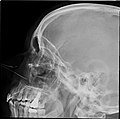
CT scans, radiographs (X-rays) and other illustrations

[edit]

Clinical significance

[edit]

Inflammation

[edit]

The paranasal sinuses are joined to the nasal cavity via small orifices called ostia. These become blocked easily by allergic inflammation, or by swelling in the nasal lining that occurs with a cold. If this happens, normal drainage of mucus within the sinuses is disrupted, and sinusitis may occur. Because the maxillary posterior teeth are close to the maxillary sinus, this can also cause clinical problems if any disease processes are present, such as an infection in any of these teeth. These clinical problems can include secondary sinusitis, the inflammation of the sinuses from another source such as an infection of the adjacent teeth.[6]

These conditions may be treated with drugs such as decongestants, which cause vasoconstriction in the sinuses; reducing inflammation; by traditional techniques of nasal irrigation; or by corticosteroid.[medical citation needed]

Cancer

[edit]

Malignancies of the paranasal sinuses comprise approximately 0.2%[7] of all malignancies. About 80% of these malignancies arise in the maxillary sinus. Men are much more often affected than women. They most often occur in the age group between 40 and 70 years. Carcinomas are more frequent than sarcomas. Metastases are rare. Tumours of the sphenoid and frontal sinuses are extremely rare.

Etymology

[edit]

Sinus is a Latin word meaning a fold, curve, or bay. Compare sine.

Animals

[edit]

Paranasal sinuses occur in many animals, including most mammals, birds, and crocodilians. They have also been discovered in non-avian dinosaurs. The bones occupied by sinuses vary with species.

Illustrations

[edit]

See also

[edit]

References

[edit]
[edit]
Revisions and contributorsEdit on WikipediaRead on Wikipedia
from Grokipedia
The paranasal sinuses are a group of four paired, air-filled cavities located within the bones surrounding the in the and face. These include the frontal sinuses (positioned in the above the eyes), ethmoid sinuses (a collection of small cells between the eyes within the ), sphenoid sinuses (situated in the behind the ), and maxillary sinuses (the largest, located in the maxillary bones beneath the cheeks). Lined with pseudostratified ciliated columnar , they connect to the through small openings called ostia, allowing for drainage and air exchange. The primary functions of the paranasal sinuses involve humidifying and warming inhaled air to protect the , producing that traps pathogens and particles while facilitating their clearance via mucociliary transport, and lightening the overall weight of the to support efficient head movement. Additional roles include enhancing vocal by acting as resonating chambers during speech and potentially generating to aid in immune defense and within the . Their strategic positioning also provides some cushioning against . Embryologically, the paranasal sinuses originate as outgrowths from the nasal during the third month of fetal development, with pneumatization (air filling) occurring progressively after birth—maxillary and ethmoid sinuses beginning , frontal around age 2, and sphenoid around age 3—reaching full development by late . Physiologic variants, such as or Haller cells, can influence drainage and predispose to conditions like , an inflammation affecting up to 30 million people annually in the United States due to obstruction or infection.

Anatomy

Location and General Structure

The paranasal sinuses are air-filled cavities that represent extensions of the , situated within the frontal, ethmoid, sphenoid, and maxillary bones of the . These sinuses form a network of pneumatic spaces that surround the on multiple sides, contributing to the overall architecture of the face and cranium. They develop as outgrowths from the during embryogenesis and pneumatize the surrounding bones, creating hollow regions that vary in extent among individuals. In terms of general location, the paranasal sinuses encircle the laterally, superiorly, and posteriorly, while extending into the facial and cranial regions. The paired maxillary sinuses occupy the maxillary bones in the cheek area, inferior to the orbits; the frontal sinuses reside in the above the eyes; the ethmoid sinuses fill the between the orbits; and the sphenoid sinuses are housed within the , positioned inferior to the and posterior to the . This arrangement positions the sinuses in intimate relation to key cranial structures, including the orbits (with the ethmoid sinuses separated by the thin lamina papyracea), the anterior and middle cranial fossae (adjacent to the covering the ), the oral cavity (via the inferiorly), and the upper teeth (particularly the molar roots abutting the maxillary sinuses). The total volume of the paranasal sinuses in adults typically ranges from 60 to 85 ml (bilateral), with females averaging 64 ml and males 81 ml, reflecting the combined capacities of all four pairs, with the maxillary sinuses accounting for the largest portion at approximately 15-20 ml per side. Natural variability is common, including asymmetries in size and shape, with perceptible differences between left and right sides observed in about 69% of individuals and a slight left-sided dominance in over half of cases. Such variations arise from differential pneumatization during development and can influence the overall contour of the . Schematic diagrams of the paranasal sinuses often illustrate their positions as bilateral, interconnected air cells radiating from the , highlighting their embedded placement within the bony framework of the face and cranium for visual clarity in anatomical studies.

Individual Sinuses

The paranasal sinuses consist of four paired structures: the , frontal, ethmoidal, and sphenoidal sinuses, each exhibiting distinct morphological features and variations. The is the largest of the paranasal sinuses, with an average adult volume of approximately 15 mL. It has a pyramidal shape, with its base forming the medial wall adjacent to the lateral and its apex extending toward the . The floor of the maxillary sinus is positioned above of the maxillary teeth, formed by the of the . The is typically triangular in shape and located within the above the . It drains into the via the frontonasal duct. The shows significant variability, including unilateral or bilateral agenesis in 10-15% of individuals, and its volume ranges from 5 to 10 mL in adults, though it can be absent or hypoplastic. The ethmoidal sinuses comprise multiple small air cells, numbering 8 to 18 per side, arranged within the between the eyes. These cells are divided into anterior, middle, and posterior groups based on their drainage ostia, with the anterior and middle groups draining into the middle meatus and the posterior into the superior meatus. The ethmoidal air cells are enclosed by thin bony walls that separate them from adjacent structures such as the and . The sphenoidal sinuses are located within the body of the , posterior to the . They feature a that is often asymmetric, and their pneumatization varies by type: conchal (limited to the sinus above the sella), presellar (extending to the anterior sellar wall), and sellar (extending posterior to the sella). The average volume is 5 to 10 mL, and these sinuses lie in close proximity to critical structures including the optic nerves and internal carotid arteries. Anatomical variations among the paranasal sinuses include , an pneumatization of the middle turbinate that can alter nasal airflow; Haller cells, ethmoidal air cells extending into the roof; and Onodi cells, posterior ethmoidal cells adjacent to the that may contact the . Sinus sizes generally differ by and , with males exhibiting larger volumes across all types compared to females, and variations such as greater dimensions observed in certain populations like those of European descent versus Asian. These asymmetries often arise during postnatal development, where pneumatization proceeds unevenly between sides without necessarily indicating .

Blood Supply, Innervation, and Lymphatics

The arterial supply to the paranasal sinuses derives primarily from branches of both the external and internal carotid arteries, ensuring robust vascularization for mucosal health and function. The maxillary sinus receives blood from the maxillary artery (a branch of the external carotid) via its infraorbital, posterior superior alveolar, greater palatine, and sphenopalatine branches, which penetrate the sinus walls to nourish the mucosa. The frontal sinus is supplied by the supraorbital and supratrochlear arteries, along with the anterior ethmoidal artery, all originating from the ophthalmic artery (internal carotid system). The ethmoidal sinuses obtain their supply from the anterior ethmoidal artery for the anterior cells and the posterior ethmoidal artery for the posterior cells, both branches of the ophthalmic artery. The sphenoid sinus is vascularized mainly by the sphenopalatine artery from the maxillary artery, with additional contributions from branches of the internal carotid artery within the sinus. Venous drainage of the paranasal sinuses occurs through a network that parallels the arterial supply but interconnects with critical intracranial and orbital veins, posing risks for retrograde infection spread. The maxillary sinus drains via veins accompanying the into the and ultimately the . Frontal and ethmoidal sinuses drain into the , which communicates with the , while the drains directly into the via . These venous pathways form extensive anastomoses, facilitating potential spread of infections to the or . Innervation of the paranasal sinuses includes sensory and autonomic components, primarily from the and autonomic ganglia, supporting sensation, control, and glandular secretion. Sensory innervation arises from branches of the (CN V): the ophthalmic division (V1) supplies the frontal and anterior ethmoidal sinuses via the supraorbital and anterior ethmoidal nerves, while the maxillary division (V2) innervates the maxillary, posterior ethmoidal, and sphenoid sinuses through the infraorbital and posterior superior alveolar nerves. Autonomic innervation involves parasympathetic fibers from the (via V2) for mucosal secretion and sympathetic fibers from the (via the ) for regulation. Lymphatic drainage from the paranasal sinuses follows regional patterns to cervical nodes, aiding immune surveillance of the upper respiratory tract. The maxillary sinus primarily drains to the submandibular and retropharyngeal lymph nodes. Frontal and anterior ethmoidal sinuses drain to submandibular nodes, whereas posterior ethmoidal and sphenoid sinuses route to retropharyngeal and deep cervical nodes. These pathways lack direct connections to intracranial lymphatics but integrate with nasal cavity drainage. Clinically, the rich anastomoses between internal and external carotid arterial branches in the paranasal sinuses, such as between the sphenopalatine and ethmoidal arteries, elevate hemorrhage risks during endoscopic sinus surgery. Anatomical variations, including accessory ethmoidal arteries arising directly from the (with reported prevalences varying from 6% to 42% across studies), can alter surgical planes and increase potential if unidentified.

Functions and Physiology

Air Conditioning and Protection

The paranasal sinuses play a key role in conditioning inhaled air by humidifying and warming it to near body temperature and saturation levels, primarily through the action of their ciliated lined with goblet cells that secrete . This mucosal surface, with its extensive folds and large total area across all sinuses, enhances heat and moisture exchange efficiency, thereby minimizing evaporative water loss from the lower and reducing nasal resistance to airflow. Studies indicate that this process conditions over 10,000 liters of air daily under normal , optimizing conditions for pulmonary . In terms of protection, the sinuses facilitate filtration of airborne particles and pathogens via the sticky layer, which captures dust, allergens, and microbes before they reach deeper airways. The sinus mucosa produces , including that hydrolyzes bacterial cell walls and that sequesters iron to inhibit microbial growth, providing a first-line innate immune defense. These mechanisms trap and neutralize invaders, with concentrations in nasal and sinus secretions reaching approximately 0.1-1 mg/mL in healthy individuals. The air-filled cavities of the paranasal sinuses also serve as mechanical buffers, absorbing and distributing impact forces during head trauma to safeguard adjacent structures like the orbits and . Functioning akin to , larger sinus volumes—particularly in the frontal and maxillary regions—correlate with reduced severity of cerebral injuries in trauma cases, as evidenced by biomechanical models showing up to 20-30% greater in pneumatized skulls. Gas exchange occurs within the sinuses to a minor extent, where oxygen from inspired air diffuses across the thin mucosal into of the sinus vasculature, partially oxygenating it and aiding local regulation through carbon dioxide removal. Computational models confirm this diffusion-limited process, with oxygen gradients driving uptake at rates sufficient for mucosal but negligible for systemic circulation. Recent research highlights the paranasal sinuses as a major site of (NO) production, first demonstrated in , where inducible NO synthase in the epithelial cells generates concentrations up to 20-25 ppm—far higher than in the lower airways. This NO acts as an agent by disrupting bacterial biofilms and as a vasodilator to enhance pulmonary blood flow and oxygenation during nasal breathing, with post-2000 studies expanding its role in immune modulation and ciliary beat frequency enhancement. Recent studies as of 2023 have further explored NO's role in mitigating viral infections like by improving oxygenation during nasal breathing.

Voice Resonance and Structural Support

The paranasal sinuses function as accessory resonators within the vocal tract, contributing to the amplification and modification of voice frequencies through their air-filled cavities. These structures introduce specific formant frequencies and anti-resonances that shape the timbre of speech and singing, with the maxillary sinuses influencing mid-range tones and the sphenoid sinus affecting lower bass components via their distinct volumes and positions. Cadaveric studies have demonstrated that occluding individual sinuses alters the nasal tract's transfer function, confirming their role in modulating acoustic output by creating zeros in the frequency response that dampen certain harmonics. In conditions such as sinusitis, fluid accumulation within the sinuses disrupts this resonance, leading to a muffled or altered voice timbre, as evidenced by pre- and post-surgical acoustic analyses showing improvements in parameters like fundamental frequency and harmonics-to-noise ratio following endoscopic sinus surgery. Beyond acoustics, the paranasal sinuses reduce the overall mass of the , which supports efficient upright posture and is evolutionarily tied to by minimizing energy expenditure on head support during locomotion. Electromyographic investigations of neck muscles indicate that this weight reduction decreases postural muscle activity, facilitating balance in bipedal humans. The sinuses also provide structural reinforcement to the , distributing masticatory forces from across a broader area and preventing localized stress concentrations. Pneumatization patterns within the sinuses optimize the bone's strength-to-weight ratio, akin to architectural hollowing in , thereby enhancing durability without excessive mass. Experimental further underscores the sinuses' influence on voice, with computational models and clinical measurements revealing that variations in sinus volume can modulate vocal intensity and spectral characteristics by up to 15-20% in affected individuals, highlighting their subtle yet integral contribution to . These findings, derived from analyses in models, emphasize how sinus patency ensures optimal voice projection and quality.

Mucociliary Clearance

in the paranasal sinuses is an process mediated by the coordinated beating of cilia on the pseudostratified ciliated lining the sinus cavities, which propels the layer containing trapped particles, debris, and pathogens toward the sinus for drainage. The cilia exhibit a metachronal , with each beating in a power stroke toward the ostium followed by a recovery stroke, at a typical frequency of 10-17 Hz under physiological conditions. This movement is essential for maintaining sinus patency and preventing stagnation. Seromucinous glands in the secrete the gel layer, with total production from the paranasal sinuses estimated at approximately 20-40 ml per day, which forms a low-viscosity periciliary layer (sol phase) and a higher-viscosity layer ( blanket) to facilitate efficient without ciliary entanglement. The process is regulated by multiple factors, including autonomic innervation—primarily parasympathetic stimulation that enhances glandular secretion and ciliary activity—while sympathetic input may modulate vascular tone affecting local . Environmental influences such as adequate and are critical, as dry air reduces ciliary beat frequency and impairs hydration, and viral infections can temporarily halt ciliary motion through epithelial or inflammatory mediators. The itself, with its protective glycoproteins and components, supports clearance by trapping inhalants, though its composition is finely tuned to balance viscosity for optimal ciliary propulsion. Drainage pathways converge on key nasal structures: mucus from the maxillary, anterior ethmoidal, and frontal sinuses flows via the ostiomeatal complex into the middle , while posterior ethmoidal and sphenoid sinuses drain through the sphenoethmoidal recess into the superior . Factors affecting include variations in ciliary beat frequency, which is influenced by and relative , ensuring optimal performance at body (37°C) and high (>90%). Age-related decline becomes evident after 50 years, with reduced beat frequency and mucociliary transport velocity due to epithelial remodeling and decreased ciliary density, increasing susceptibility to sinus stasis. Emerging research from the 2010s and 2020s highlights interactions between the sinus and , where a balanced microbial community—dominated by commensals like and —may enhance clearance by modulating and mucus properties, whereas in conditions like chronic rhinosinusitis disrupts this synergy and impairs transport. Studies suggest that microbial metabolites influence ciliary function and epithelial integrity, positioning the as a potential therapeutic target for optimizing clearance.

Development

Embryological Origins

The paranasal sinuses develop from the nasal placodes, which emerge as thickenings of the surface during the fourth to fifth weeks of embryonic , marking the initial formation of the olfactory and nasal structures. These placodes invaginate to form nasal pits by week 5, establishing the primitive nasal cavities that serve as the foundation for subsequent sinus outgrowths. The process involves coordinated ectodermal and mesodermal interactions, leading to the lateral nasal wall from which the sinuses evaginate as mucosal diverticula. Morphogenesis of the individual sinuses begins with the ethmoid sinus, which arises from multiple evaginations or buds along the upper part of the lateral nasal wall starting around week 6, forming the ethmoidal infundibulum by weeks 11-12. The maxillary sinus develops next as a single evagination from the middle meatus at approximately week 10, initially appearing as a shallow groove that deepens into a cavity. The frontal and sphenoid sinuses form later, with the frontal sinus originating as an outpouching from the frontal recess around week 12 and the sphenoid sinus as an invagination of the sphenoethmoidal recess between weeks 12 and 16. Unlike the ethmoid's multiple origins, the other sinuses typically derive from singular outgrowths, reflecting their distinct positions relative to the nasal meatuses. Genetic regulation plays a critical role in this patterning, with signaling molecules such as Sonic Hedgehog (SHH) and Fibroblast Growth Factor 8 (FGF8) essential for frontonasal prominence formation and septation. Disruptions in SHH signaling, for instance, can impair midline development, contributing to congenital anomalies like , which occurs in approximately 1 in 5,000 births due to failed posterior nasal aperture perforation. These pathways orchestrate cell proliferation, migration, and in the and , ensuring proper evagination and cavity separation. In utero imaging via and (MRI) can visualize early pneumatization, with fluid-filled maxillary sinuses detectable by MRI around week 22, providing insights into fetal sinus formation and potential anomalies. By week 20, rudimentary sinus outlines may be discernible on advanced , highlighting the progression from solid to aerated spaces.

Postnatal Pneumatization

The paranasal sinuses undergo progressive pneumatization after birth, a process involving the expansion of air-filled cavities into surrounding bones through . The ethmoid sinuses are largely pneumatized at birth, with their cells forming the shortly thereafter, while the maxillary sinuses, though present as small cavities at birth, begin significant expansion between 1 and 2 years of age, growing downward and laterally as the develops. The sphenoid sinuses initiate pneumatization around 3 to 5 years, progressing to reach the by age 7 in most cases, and the frontal sinuses start developing around 2 years of age, with significant growth increasing around age 6, extending superiorly from the frontal recess. This postnatal growth continues variably until late , with the sinuses achieving near-adult volumes by 18 to 20 years, coinciding with the completion of facial skeletal maturation. The mechanism of postnatal pneumatization primarily involves the resorption of cancellous by osteoclasts, creating air spaces that expand under the influence of mechanical forces from nasal and mucosal secretions. This process is characterized as an opportunistic , where redundant is replaced by air-filled cavities, facilitated by transitioning immature to mature lamellar structures. Nasal plays a key role in directing expansion, as increased ventilation promotes mucosal growth and further , while hormonal influences, such as surges during , accelerate volumetric increases in the maxillary and frontal sinuses. Computed tomography (CT) scans illustrate this progression, showing small, slit-like maxillary sinuses in infants evolving into larger, pyramidal structures by , with ethmoid cells filling the medially and frontal sinuses protruding into the by late childhood. Variations in pneumatization timing and extent are influenced by both intrinsic and extrinsic factors. Ethnic differences also contribute, with studies indicating more extensive maxillary pneumatization in Asian populations compared to European or African ancestries, potentially linked to climatic adaptations affecting dynamics. These findings underscore the interplay of and environment in achieving full sinus development.

Clinical Significance

Inflammatory and Infectious Conditions

Inflammatory and infectious conditions of the paranasal sinuses primarily manifest as , an involving both the and sinuses, which is the most common clinical issue affecting these structures. Acute (ARS) typically lasts up to 4 weeks and is often preceded by a viral upper respiratory , while chronic (CRS) persists for more than 12 weeks. Bacterial involvement is more common in acute cases, whereas chronic forms frequently involve mixed flora including anaerobes and fungi. The pathophysiology of rhinosinusitis centers on ostial obstruction at the ostiomeatal complex, leading to impaired sinus ventilation, negative pressure, stasis, and subsequent bacterial overgrowth or secondary . This process is exacerbated by mucosal and reduced , often triggered by viral s or allergens. Key risk factors include , which promotes mucosal inflammation, and cigarette smoking, which impairs ciliary function and increases susceptibility to . Common symptoms of rhinosinusitis include facial pain or pressure, purulent nasal discharge, , and (reduced sense of smell). In acute bacterial rhinosinusitis (ABRS), symptoms such as purulent discharge and facial pain typically worsen after 5 days or persist beyond 10 days, distinguishing it from viral cases. Complications, though rare, can include , occurring in less than 3% of cases of acute sinusitis, particularly in children, and potentially leading to vision-threatening spread from ethmoid sinusitis. Diagnosis of rhinosinusitis is primarily clinical, based on symptom duration and severity, with computed tomography (CT) imaging recommended for suspected complications or to assess ostiomeatal complex blockage in recurrent or chronic cases. The 2025 American Academy of Otolaryngology-Head and Neck Surgery (AAO-HNS) guideline update emphasizes differentiating viral from bacterial ARS through clinical criteria, such as symptom persistence beyond 10 days or worsening after initial improvement, with extended up to 14 days in select cases; emerging biomarkers like (CRP) or may aid in select cases to avoid unnecessary antibiotics. For acute bacterial rhinosinusitis, first-line treatment includes antibiotics such as high-dose amoxicillin (or amoxicillin-clavulanate for resistant strains), alongside symptomatic relief with saline and short-term decongestants to promote drainage. In chronic , management focuses on addressing underlying inflammation with intranasal corticosteroids and saline irrigation, reserving antibiotics for acute exacerbations; for severe or refractory chronic with nasal polyps (CRSwNP), biologic therapies such as are recommended as of the 2025 AAO-HNS guidelines. Prevention strategies include against and pneumococcus, which reduce the incidence of viral triggers and bacterial superinfections leading to .

Neoplastic and Other Pathologies

Benign neoplastic and cystic lesions of the paranasal sinuses include nasal polyps and mucoceles. Nasal polyps are soft, non-cancerous growths arising from the sinonasal mucosa, with approximately 80-90% exhibiting eosinophilic inflammation characterized by elevated tissue eosinophils. These polyps are frequently associated with (AERD), with approximately 10% of patients with chronic with nasal polyps (CRSwNP) demonstrating hypersensitivity to aspirin and non-steroidal anti-inflammatory drugs, often alongside and . Mucoceles are epithelium-lined cystic expansions that develop due to obstruction of sinus ostia, leading to accumulation and potential bony remodeling or . They most commonly affect the frontal and ethmoid sinuses and can cause symptoms such as proptosis or from mass effect. Malignant neoplasms of the paranasal sinuses are rare, with an annual incidence of less than 1 per 100,000 individuals. is the most common , accounting for the majority of cases, while represents a notable salivary gland-type with propensity. Key risk factors include occupational exposure to wood dust, which elevates risk particularly, and cigarette smoking, which contributes to overall sinonasal . Rare sarcomas, such as or , comprise under 10% of sinonasal and carry a poor , with 5-year overall survival rates around 30-60%. Non-neoplastic pathologies encompass fungal balls and granulomatous diseases. Fungal balls, often due to species, are noninvasive accumulations of fungal hyphae in immunocompetent hosts, typically within the , presenting as unilateral opacification without tissue invasion. (GPA, formerly Wegener's granulomatosis) frequently involves the paranasal sinuses in up to 80% of cases, manifesting as destructive inflammation with mucosal ulceration, septal perforation, and saddle-nose deformity. Diagnosis of sinonasal neoplasms relies on histopathological confirmation via , which distinguishes benign from malignant entities and identifies specific subtypes. Imaging with positron emission -computed (PET-CT) aids in staging by assessing metabolic activity, local extension, and distant metastases. for sinonasal cancers varies by and stage, with 5-year overall survival rates generally ranging from 40-60%, influenced by factors such as tumor and lymph node involvement. Genetic markers provide insights into sinonasal tumorigenesis, with TP53 mutations occurring in 40-50% of cases across various histologies, promoting genomic instability. Other alterations, such as or BRAF mutations, are less common but targetable in subsets. Recent advances include for HPV-related sinonasal squamous cell carcinomas, where post-2020 clinical trials have demonstrated improved survival with checkpoint inhibitors like in HPV-driven cases, which account for a subset of these rare tumors.

Trauma, Obstruction, and Surgical Interventions

Trauma to the paranasal sinuses often occurs in the context of midfacial injuries, such as Le Fort fractures, which classify maxillary involvement based on the level of detachment from the skull base. Le Fort II fractures, traversing the maxillary sinuses, can lead to opacification and hemorrhage within these sinuses, while Le Fort III fractures, involving the zygomaticofrontal suture and orbital floor, frequently extend to the ethmoid and sphenoid sinuses, increasing the risk of associated complications. Orbital blowout fractures, typically resulting from blunt trauma to the eye, commonly involve the thin ethmoid air cells forming the medial orbital wall, leading to herniation of orbital contents into the ethmoid sinus and potential entrapment of extraocular muscles. Common symptoms across these injuries include epistaxis due to vascular disruption in the nasal cavity and surrounding sinuses, as well as cerebrospinal fluid (CSF) rhinorrhea from dural tears at the skull base, particularly in fractures extending to the frontal or ethmoid regions. Obstruction of the paranasal sinuses arises from structural anomalies that impair ostial drainage, with deviated being a primary cause by narrowing the nasal passages and blocking sinus ostia, often exacerbating unilateral sinus pressure and recurrent infections. Turbinate hypertrophy, commonly involving the inferior turbinates due to chronic inflammation or allergic responses, further contributes to obstruction by enlarging the mucosal folds and reducing airflow, which can lead to downstream effects like impaired in the maxillary and ethmoid sinuses. This chronic blockage may result in vacuum sinusitis, a condition characterized by negative intrasinus pressure causing and inward bowing of sinus walls, particularly in the , as air resorption outpaces replenishment. Surgical interventions for paranasal sinus disorders primarily include (FESS), established as the gold standard since the 1980s for addressing chronic rhinosinusitis by precisely removing obstructive tissue and widening sinus ostia while preserving mucosa. FESS targets the ostiomeatal complex to restore drainage in the maxillary, anterior ethmoid, and frontal sinuses, with overall complication rates reported at approximately 0.5%, including rare major events like iatrogenic occurring in about 0.09% of cases due to inadvertent skull base penetration. An alternative minimally invasive option is , which involves inflating a small balloon within the sinus ostia to dilate passages without tissue removal, effectively treating recurrent acute sinusitis in the maxillary and frontal sinuses by improving mucociliary flow. Preoperative imaging with computed tomography (CT) is essential for surgical planning, providing multiplanar views of sinus anatomy, variations like , and disease extent to guide navigation systems during FESS, thereby minimizing risks to adjacent structures such as the and base. Standard paranasal sinus CT scans are designed with a field of view from the hard palate to above the frontal sinuses, excluding the mandible to focus on the relevant sinus anatomy (frontal, ethmoid, sphenoid, and maxillary) and minimize radiation exposure. Postoperative monitoring typically employs CT or (MRI) to assess surgical outcomes, detect residual obstruction or complications like synechiae formation, and evaluate sinus , with MRI particularly useful for differentiating postoperative changes from recurrent or . Emerging advancements in the 2020s include robotic-assisted endoscopic sinus surgery, which enhances precision in navigating complex anatomy through tremor-filtered instruments and real-time imaging integration, potentially reducing operative times and complications in revision cases, though widespread adoption remains limited by cost and training requirements.

History and Terminology

Historical Perspectives

The earliest documented references to nasal and sinus-related conditions appear in ancient Egyptian medical texts, such as the Edwin Smith Papyrus dating to approximately 1600 BCE, which describes treatments for nasal injuries and drainage procedures to address suppuration and obstructions in the nasal passages. In ancient Greece, Hippocrates (c. 460–370 BCE) provided detailed accounts of sinus suppuration, recommending treatments like incision and drainage for nasal polyps and empyema, while also noting the role of paranasal cavities in voice production through air passage. Similarly, ancient Indian Ayurvedic texts, including the Sushruta Samhita (c. 600 BCE), describe conditions akin to paranasal sinusitis under terms like peenasa or apeenasa, attributing them to imbalances in kapha and vata doshas, and advocating nasal cleansing (nasya) with medicated oils and irrigations to clear blockages. During the , anatomical studies advanced understanding of the paranasal sinuses through dissection and illustration. Leonardo da Vinci's sketches from the early 1500s, including sagittal sections of the , accurately depicted the frontal and es, though these drawings remained unpublished until the . In 1651, English anatomist Nathaniel Highmore provided the first detailed printed description of the in his work Corporis Humani Disquisitio Anatomica, naming it the "antrum Highmorei" and illustrating its connections to the . The 19th century marked significant progress in sinus anatomy and clinical management. Austrian anatomist Emil Zuckerkandl's comprehensive atlas, Normale und pathologische Anatomie der Nasenhöhle und ihrer pneumatischen Anhänge (published in volumes from 1885 to 1893), offered meticulous dissections and illustrations of all paranasal sinuses, establishing foundational topographic knowledge still referenced today. Concurrently, sinus irrigation techniques evolved with the introduction of specialized syringes and devices made from metal or rubber, enabling systematic lavage of the maxillary antrum through natural or surgical ostia to treat chronic suppuration. The discovery of X-rays by Wilhelm Röntgen in 1895 revolutionized sinus diagnostics; by 1896, early radiographic imaging was applied to visualize paranasal sinus opacification and pathology non-invasively. In the , surgical interventions transformed sinus treatment. The Caldwell-Luc procedure, independently described by American surgeon George W. Caldwell in 1893 and refined by French surgeon Henri Luc in 1897, involved transoral access to the for drainage and , becoming the standard for chronic until the late 20th century. By the 1980s, (FESS), pioneered by Austrian otolaryngologist Heinz Stammberger and American surgeon David W. Kennedy, shifted paradigms toward minimally invasive, mucosa-preserving techniques using fiberoptic endoscopes to restore sinus ventilation and drainage.

Etymology and Nomenclature

The term "paranasal" is a compound derived from the Greek prefix "para-," meaning "beside" or "adjacent to," and "nasal," which stems from the Latin "nasus" for "." The word "sinus" originates from the Latin "sinus," denoting a "," "," "," or "hollow," and was applied in anatomical contexts to describe enclosed cavities, with early medical usage appearing in the to refer to such structures in the body. Specific etymologies for individual sinuses include "ethmoid," from the Greek "ēthmos" meaning "," reflecting the perforated, lattice-like structure of the housing these air cells. Standardized nomenclature for the paranasal sinuses is governed by the , first published in 1998 by the Federative International Programme for Anatomical Terminology (FIPAT) and updated in 2019, which designates them as (frontal sinus), (maxillary sinus), (sphenoid sinus), and cellulae ethmoidales (ethmoidal cells, subdivided into anterior and posterior). This Latin-based system promotes uniformity in anatomical description and education worldwide. Historical nomenclature evolved with contributions from early anatomists; for instance, the maxillary sinus was termed the "antrum of Highmore" after Highmore, who detailed its structure in his 1651 treatise Corporis Humani Disquisitio Anatomica. Clinical and international variations supplement this standard terminology for practical use. In otorhinolaryngology, the "ostiomeatal complex" (OMC) refers to the functional drainage pathway involving the ostia (openings) of the frontal, anterior ethmoidal, and maxillary sinuses into the middle meatus, a term emphasizing physiological rather than purely structural aspects. Linguistic differences appear across languages; in German, for example, the paranasal sinuses are collectively "Nasennebenhöhlen," with the frontal sinus specifically termed "Stirnhöhle" (from "Stirn" for forehead and "Höhle" for cavity). These variations facilitate region-specific communication while aligning with the core Latin terms in global scientific literature.

Comparative Anatomy

In Non-Human Animals

Paranasal sinuses exhibit significant variation across non-human animals, reflecting diverse anatomical adaptations and evolutionary histories. In mammals, these air-filled cavities are generally well-developed in therian lineages but show pronounced differences in presence, size, and configuration compared to humans. For instance, higher possess pneumatized frontal and maxillary sinuses similar to those in Homo sapiens, though some monkeys lack maxillary sinuses entirely, with only spongy bone lateral to the . In ungulates, the sinuses are notably extensive to accommodate large cranial structures; the domestic (Equus caballus) features six pairs of paranasal sinuses, including the largest maxillary sinus among mammals, which extends rostrocaudally and aids in reducing head weight while supporting masticatory muscles. Conversely, paranasal sinuses are absent or greatly reduced in certain mammalian groups adapted to specialized environments. Monotremes, the most basal mammals, lack true paranasal sinuses, retaining a primitive chondrocranial structure without pneumatization beyond the nasal capsule. Aquatic mammals like cetaceans have eliminated paranasal sinuses entirely as a diving adaptation; the rigid, bone-enclosed air spaces would risk fracturing under deep-sea pressures, so modern whales rely instead on soft-tissue for buoyancy and pressure regulation. Among , sinuses are minimal and rudimentary, often limited to small maxillary and ethmoidal extensions that do not significantly pneumatize the , as seen in like the (Mus musculus) and (Rattus norvegicus), where volumes are proportionally tiny relative to body size. Carnivores display enlarged frontal sinuses that may enhance olfactory capabilities by expanding the nasal region's surface area for scent processing. In canids such as the domestic dog (Canis familiaris), the ethmoidal region is particularly expanded, housing hundreds of millions of olfactory neurons on intricate turbinates within the and ethmoid sinuses, facilitating superior odor detection through turbulent airflow during sniffing. Outside mammals, paranasal sinuses are absent in birds, which instead possess a single infraorbital sinus ventral to the eye, but lack the diversified frontal, maxillary, and sphenoidal types found in mammals. In reptiles, sinuses are present but limited; crocodilians like the (Alligator mississippiensis) have sphenoid-like paranasal cavities, including antorbital and pterygopalatine bullae, which connect to the nasal passages and may assist in glandular drainage. Fossil evidence from non-avian dinosaurs reveals paranasal sinuses in certain lineages; hadrosaurids (e.g., lambeosaurine species) possessed elaborate nasal crests with extensive pneumatic spaces, interpreted as resonators for vocalization based on 1990s endocast studies of cranial cavities. Recent CT scans of skulls in the have further illuminated sinus evolution, showing reduced antorbital sinuses in thalattosuchian crocodyliforms, highlighting early variations in pneumaticity among extinct reptiles.

Evolutionary Aspects

The paranasal sinuses, as air-filled extensions of the within the , have a phylogenetic history rooted in the transition to terrestrial life among early tetrapods. Simple ethmoidal recesses, considered precursors to true paranasal sinuses, first appear in early amniotes, providing basic pneumatization of the adjacent to the nasal capsule for structural support and initial respiratory adaptations. These structures expanded significantly in amniotes, particularly in archosaurs and early mammals during the era, coinciding with the evolution of more complex nasal systems. In mammals, post-Jurassic diversification linked sinus expansion to endothermy, where larger sinuses facilitated increased nasal surface area for heat and moisture conservation during high metabolic rates, alongside lightening to accommodate growing without excessive weight. This pneumatization reduced cranial density by up to 18% in some lineages, enhancing biomechanical efficiency. Adaptive roles of paranasal sinuses vary across clades, reflecting ecological pressures. In hadrosaur dinosaurs like , elaborate nasal crests incorporated extensive sinus networks that functioned as chambers, enabling low-frequency vocalizations for intraspecific communication over distances. Among mammals, canids exhibit pronounced sinus development that enlarges the , enhancing olfaction by increasing the volume for turbulent and odorant capture on a vast containing hundreds of millions of sensory neurons. Conversely, flighted birds show reduced paranasal sinus complexity compared to mammals, with pneumatic spaces primarily serving weight reduction to optimize flight energetics while maintaining respiratory efficiency. Multiple hypotheses explain sinus , supported by and comparative evidence. has been proposed in some vertebrates, where sinuses may act as thermal buffers attenuating . Genetic factors contribute to craniofacial pneumatization across vertebrates. CT scans of early hominin specimens reveal pneumatization patterns aligning with great ape variation and indicating for enhanced nasal amid bipedal posture changes.

References

Add your contribution
Related Hubs
Contribute something
User Avatar
No comments yet.