Hubbry Logo
search
logo
1998474

Solidarity

logo
Community Hub0 Subscribers
Read side by side
from Wikipedia
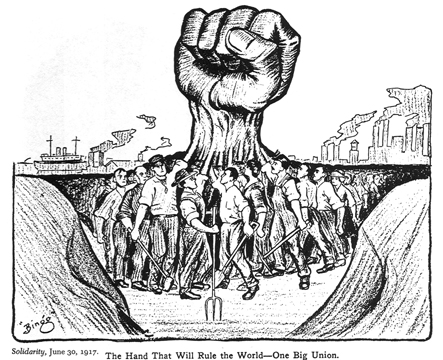
A raised fist symbolizing solidarity of the worker movement

Solidarity or solidarism is an awareness of shared interests, objectives, standards, and sympathies creating a psychological sense of unity of groups or classes.[1][2] True solidarity means moving beyond individual identities and single issue politics.[3] Still, solidarity does not reject individuals and sees individuals as the basis of society.[4] It refers to the ties in a society that bind people together as one. The term is generally employed in sociology and the other social sciences, as well as in philosophy and bioethics.[5] It is a significant concept in Catholic social teaching and in Christian democratic political ideology.[6] Although closely related to the concept of charity, solidarity aspires to change whole systems, not merely to help individuals.[7][8]

Solidarity is also one of six principles of the Charter of Fundamental Rights of the European Union,[9] and International Human Solidarity Day is recognized each year on December 20 as an international observance. Solidarity is not mentioned in the European Convention on Human Rights nor in the United Nations' Universal Declaration of Human Rights and therefore has lesser legal meaning when compared to basic rights.

Concepts of solidarity are mentioned in the Universal Declaration on Bioethics and Human Rights,[10] but not defined clearly.[11]


History

[edit]

Socialisation of the concept

[edit]

The terms solidaire and solidairement had already appeared in French legal language in the 16th century. They are related to the Roman legal concept in solidum, which was derived from the Latin word solidus, meaning "on behalf of the whole". In the Napoleonic code, solidarity meant the joint liability of debtors towards a common creditor and was not a primary legal principle.[12]

Conservatism, following the French Revolution, introduced the concept of "solidarity", which was detached from the legal system, as a reaction against rapid social change and as a longing for a stable society. During the July Monarchy, Pierre Leroux, a utopian socialist who is also said to have coined the term socialism, also introduced the concept of non-legal solidarity.[12] Auguste Comte, the so-called founder of sociology, adopted the concept in the sense of social interdependence between people. Comte linked solidarity to the concept of altruism as the opposite of egoism. Instead of emphasising the individual, altruism emphasises common responsibility and solidarity. The interpretations of Pierre Leroux and Auguste Comte gave rise to the idea of a specific social solidarity as the basis of the social order.[13]

After the French Revolution, new scientific and ideological interpretations of solidarity emerged in France. The concept took on sociological, economic, legal, and political variants. Thinkers with different emphases shaped the meaning of the concept of solidarity to suit their own purposes.

The Paris Communards, for example, exchanged the revolutionary slogan of "fraternity" for "solidarity". Some French liberal economists also began to use the term "solidarity", but they changed its meaning in an individualistic direction. Liberalists argued that interdependence between people meant that people also had to take responsibility for their actions without the state intervening.[12] Charles Gide, an economist who opposed liberalism, developed his own interpretation of the concept and even proposed solidarity as the name of a new school of economics.[13]

Through these stages, by the turn of the 20th century, solidarity had become a generic term that could be associated with almost everything that was considered good and progressive. The Paris World Fair in 1900 was accompanied by a congress on "social education and the new solidarity". The Catholic Church also began to use the popular concept of solidarity. According to sociologist Steven Lukes, solidarity played a role in France at the time that was almost as strong and influential as individualism was in the United States at the same time.[12]

Émile Durkheim

[edit]

According to Émile Durkheim, the types of social solidarity correlate with types of society. Durkheim introduced the terms mechanical and organic solidarity[14] as part of his theory of the development of societies in The Division of Labour in Society (1893). In a society exhibiting mechanical solidarity, its cohesion and integration comes from the homogeneity of individuals—people feel connected through similar work, educational and religious training, and lifestyle. Mechanical solidarity normally operates in traditional small-scale societies.[15] In tribal society, solidarity is usually based on kinship ties of familial networks. Organic solidarity comes from the interdependence that arises from specialization of work and the complementarities between people—a development which occurs in modern and industrial societies.[15]

Although individuals perform different tasks and often have different values and interests, the order and solidarity of society depends on their reliance on each other to perform their specified tasks. "Organic" refers to the interdependence of the component parts, and thus social solidarity is maintained in more complex societies through the interdependence of its component parts (e.g., farmers produce the food to feed the factory workers who produce the tractors that allow the farmer to produce the food).

Léon Bourgeois

[edit]

Although the concept of solidarity had already been used in the labor movement in the mid-19th century, it was only the liberal republicans who brought solidarity into the mainstream of French political debate. In 1896, Léon Bourgeois published his book Solidarité, which introduced the concept of solidarity into political language. Bourgeois's solidarity was based primarily on the interdependence between people, a double-edged sword that produced both security and threats. However, it was also based on the idea of social debt. According to Bourgeois, man owes society the technical and intellectual capital that social development has produced for him.[12][13]

Bourgeois also introduced the term solidarism to describe a political ideology based on solidarity. Solidarism was a precise and clear structure of ideas which radicalism was also able to assimilate, and it came to regard it as its own ideological expression. After the turn of the century, Bourgeois solidarism came to be regarded almost as an official idea of the Third Republic. His solidarism combined elements of Durkheim's theory of solidarity with the theories of Louis Pasteur and Charles Darwin, and constituted an alternative to the confrontation between classical liberalism and workers collectivism. Bourgeois emphasised the solidarity generated by interdependence between people as a positive factor for all human growth. Solidarism thus combined the natural interdependence of human beings with solidarity as a moral goal. Although the idea of solidarity had different successors and interpretations, they had in common the emphasis on both the social responsibility of the state and the cooperation of citizens.[12][13]

Charles Gide

[edit]

Solidarity also played a central role in the thinking of the French economist Charles Gide (1847–1932). Gide set out to challenge the dominance of the liberal school of economics in France. His thinking was influenced by both biology and sociology. He was particularly influenced by Charles Fourier, who had criticised the social ills created by free market competition. Solidarity became a fundamental concept in Gide's thinking. He found manifestations of solidarity in nature, in the economy and in the social interdependencies of society, but for him solidarity was only ethically valuable when it was consciously voluntary. He created his own national economic doctrine, called Solidarism, according to which society could gradually move towards a cooperative economy in which workers themselves controlled the means of production. In Gide's thinking, the values and goals of solidarity could be pursued through cooperative associations, 'the voluntary association of well-meaning people'.[16]

In Gide's solidarity, the common property created by free cooperative associations is their own and the added value created by their activities is returned in the form of profit sharing. Solidarism preserved the foundations of the free market economic system and also accepted differences in people's economic status. However, large income disparities were not in line with the idea of solidarity, as Gide considered them to break the ties that bind the individual to society.[16] Gide is considered a major representative of the French historical school, and his ideas were different from the mainstream liberal economics of the time. Gide's social philosophy was close to that of Léon Walras, the developer of neoclassical general equilibrium theory, and he was one of the few supporters of Walras during his lifetime.[17]

Solidarity is still the core value underlying cooperatives today, alongside self-reliance, ownership, equality, and justice. Cooperative members have a duty to emphasise the common interest and to ensure that all members are treated as fairly as possible. In addition to solidarity with its own members, the cooperative now also emphasises social responsibility beyond the cooperative itself.

Peter Kropotkin

[edit]

Anarchist theorist Peter Kropotkin (1842–1921) connected the biological and the social in his formulation of solidarity. In his book, Mutual Aid: A Factor of Evolution (1902), written partly in response to Huxleyan Social Darwinism, Kropotkin studied the use of cooperation as a survival mechanism in human societies at their various stages, as well as with animals. According to him, mutual aid, or cooperation, within a species has been an important factor in the evolution of social institutions. Solidarity is essential for mutual aid; supportive activity towards other people does not result from the expectation of reward, but rather from instinctive feelings of solidarity.

In his introduction to the book, Kropotkin wrote:

The number and importance of mutual-aid institutions which were developed by the creative genius of the savage and half-savage masses, during the earliest clan-period of mankind and still more during the next village-community period, and the immense influence which these early institutions have exercised upon the subsequent development of mankind, down to the present times, induced me to extend my researches to the later, historical periods as well; especially, to study that most interesting period—the free medieval city republics, whose universality and influence upon our modern civilization have not yet been duly appreciated. And finally, I have tried to indicate in brief the immense importance which the mutual-support instincts, inherited by mankind from its extremely long evolution, play even now in our modern society, which is supposed to rest upon the principle "every one for himself, and the State for all," but which it never has succeeded, nor will succeed in realizing".[18]

Kropotkin advocated an alternative economic and social system, which would be coordinated through a horizontal network of voluntary associations with goods distributed in compliance with the physical needs of the individual, rather than according to labor.[19]

Solidarity in the insurance system

[edit]

The political philosophy of the early twentieth century, condensed into the concept of solidarity, sought to offer both a scientific theory of social interdependence and a moral solution to social problems. According to some scholars, the emergence of this new rationality was made possible by the concept of social risk and the idea and technology of insurance developed to manage it. Social risk is defined as the risk to a group of people, statistically speaking, which is caused in one way or another by their living together and which can be mitigated by a technique of joint and several liability such as insurance.[13]

It has been said that insurance can be seen as one of the institutions of the social contract. The way insurance works requires individuals to take a collective responsibility or the events they feel the need to prepare for. Society can be said to have become 'modern' when insurance becomes social insurance and when, thanks to the techniques and institutions of insurance, the insurance model becomes both a symbolic and a functional basis for the social contract.[13]

Solidarity and justice are key principles underpinning the insurance system, according to Risto Pelkonen and Timo Somer. In the context of voluntary personal insurance, solidarity means that the insured share the benefits and costs between themselves, while justice means that each insured contributes to the costs according to the actuarial probability. Social insurance, on the other hand, is available to all citizens, regardless of their choice and health status, as the costs are covered by tax revenues and statutory contributions.[20]

Solidarity as the foundation of the welfare state

[edit]

Solidarity, or solidarism, is widely seen as the central foundation of the welfare state.[13][21][22][23] Among other things, the advent of statutory social insurance and social law in the 20th century changed social thinking and enabled the breakthrough of the solidarity paradigm. The emergence of solidarity in social law can be thought of as being based on the norm of collective provisioning as the foundation of social justice. However, it can be argued that the justification for social regulation and solidarity is not necessarily a positive normative logic, but rather general civil rights. Human rights are intended to apply equally to all people and are more akin to a legal 'law' than to a normative logic. The formation of welfare policy can therefore be thought of as being based on human and civil rights with a completely different logic, rather than on a collective norm.[13]

According to Professor Heikki Ervast, however, three basic concepts can be associated with Nordic welfare states: macro-collectivism, universalism and solidarism. In simple terms, macro-collectivism means that recipients and payers of transfers do not need to know each other. Universalism means that the social protection and services of the welfare state apply to all citizens. Solidarism means that the welfare state is not simply an instrument designed to guarantee social peace, but is based on solidarity, human dignity, and equality. Pauli Forma, Associate Professor of Social Policy at the University of Turku, has summarised the central role of solidarity as the ethical basis of the welfare state: 'The welfare state is an institution of collective solidarity'. In other words, a welfare state is a democratic and prosperous state that collectively shows solidarity by taking responsibility for the social security and equality of its citizens and for helping the disadvantaged. The welfare state can be said to be the "invisible hand of solidarity", in the same way that the "invisible hand of the market" is at work in a free market economy.

Solidarity tax

[edit]

A solidarity tax is a fee imposed by the government of some countries to finance projects that serve, in theory, to unify or solidarize the country. It is usually imposed for a short period of time in addition on income tax of individuals, private entrepreneurs, and legal entities.[24][25][26]

In Germany, the solidarity tax was first introduced after German reunification. The tax amounted to 7.5% of the amount of income tax payable (for individuals) and income tax payable (for legal entities). It was later abolished and reintroduced from 1995 to December 31, 1997, after which it was reduced to 5.5% on January 1, 1998.[27][28] The legality of the tax was repeatedly challenged, but it was recognized by the German Federal Financial Court as not contrary to the German Constitution. The long-term assessment of the solidarity tax was considered unconstitutional in Germany.[24]

In Italy, the solidarity tax was first introduced in 2012. All individuals whose annual gross income exceeds €300,000 are required to pay a 3% tax on the amount exceeding this amount.[29]

In France, the solidarity tax on wealth was introduced in 1981; in September 2017, the French government abolished the solidarity tax and replaced it with a wealth tax on real estate starting in 2018. It was paid by all citizens and married couples whose property exceeded 1.3 million euros on January 1. The tax ranged from 0.5% to 1.5% of the value of property exceeding 800,000 euros.[30]

In 2013 the solidarity tax was also introduced in the Czech Republic in response to economic recession and was cancelled in 2021. In this country it was 7% for all residents earning more than CZK 100,000 per month.[31]

Bioethics

[edit]

Solidarity is discussed in philosophy within its various sub-fields of law, ethics, and political philosophy.[32] Ancient philosophers such as Socrates and Aristotle discuss solidarity from within a virtue ethics framework, because in order to live a good life one must perform actions and behave in a way that is in solidarity with the community.[citation needed]

An approach in bioethics is to identify solidarity as a three-tiered practice enacted at the interpersonal, communal, and contractual and legal levels.[11] This approach is driven by the quest to differentiate between the diverse applications of the concept and to clarify its meaning, both historically and in terms of its potential as a fruitful concept for contemporary moral, social, and political issues.[33] The modern practice of bioethics is significantly influenced by Immanuel Kant's concept of the Categorical Imperative. Pastor and philosopher Fritz Jahr's article "Bio-Ethics: A Review of the Ethical Relationships of Humans to Animals and Plants" refines Kant's original Categorical Imperative discourse[34] by including the notion of the Bioethical Imperative[definition needed].[35] Biomedical technology has also further introduced solidarity as the pivotal concept in bioethics. Another scholar, Meulen ter Ruud, discusses the need for solidarity within European health and social care systems, through organizations like Solidar.[36]

Imperative

[edit]

Fritz Jahr describes bioethics as ultimately made up of “academic discipline, principle, and virtue.”[35] This reflects the influence of Socrates on the norms and practices of bioethics. Jahr utilizes Kant’s Categorical Imperative to demonstrate the obligatory, yet innately human, practice of the Bioethical Imperative:

“The guiding principle for our actions is the Bioethical Imperative: Respect every living being in general as an end in itself, and treat it, if possible, as such.”

— Fritz Jahr, Bioethical Imperative

This imperative arises in relationships not only among humans but also with plants and other animal species. Jahr believes that to practice bioethics, one must be in solidarity with all forms of life. If one chooses to limit this solidarity only to humans, then one cannot truly behave virtuously in any meaningful sense.[37]

Catholic social teaching

[edit]

Solidarity is an element of Catholic social teaching. According to Pope Francis:

No one can remain insensitive to the inequalities that persist in the world... the Brazilian people, particularly the humblest among you, can offer the world a valuable lesson in solidarity, a word that is too often forgotten or silenced because it is uncomfortable... I would like to make an appeal to those in possession of greater resources, to public authorities and to all people of good will who are working for social justice: never tire of working for a more just world, marked by greater solidarity[38]

The Church's teaching on solidarity is explained in the Compendium of the Social Doctrine of the Church, and briefly summarised in the Catechism of the Catholic Church:[39]

1939
The principle of solidarity, also articulated in terms of "friendship" or "social charity," is a direct demand of human and Christian brotherhood
1940
Solidarity is manifested in the first place by the distribution of goods and remuneration for work. It also presupposes the effort for a more just social order where tensions are better able to be reduced and conflicts more readily settled by negotiation.
1941
Socio-economic problems can be resolved only with the help of all the forms of solidarity: solidarity of the poor among themselves, between rich and poor, of workers among themselves, between employers and employees in a business, solidarity among nations and peoples. International solidarity is a requirement of the moral order; world peace depends in part upon this
1942
The virtue of solidarity goes beyond material goods. In spreading the spiritual goods of the faith, the Church has promoted, and often opened new paths for, the development of temporal goods as well. And so throughout the centuries has the Lord's saying been verified: "Seek first his kingdom and his righteousness, and all these things shall be yours as well."

Islamic Solidarity

[edit]

Solidarity is an important part of the teachings God sent down to the Prophet Muhammad. Indeed, Muslims were called upon in the Qur'an to unify under one banner, that of Islam, as equals before God. This centred around principles of brotherhood (ukhuwwa), social responsibility (al-takaful al-ijtima'i) and almsgiving (zakat or sadaqa). The central teaching to Islam is to subject oneself to God, and that, in this pursuit, all are equal before Him.

IX, 60
"Alms are meant only for the poor, the needy, those who administer them, those whose hearts need winning over, to free slaves and help those in debt, for God's cause, and for travellers in need. This is ordained by God; God has the knowledge to decide."[40]
XVI, 90
"God commands justice, doing good, and generosity towards relatives and He forbids what is shameful, blameworthy, and oppressive."[41]
LIX, 7
"Whatever gains God has turned over to His Messenger from the inhabitants of the villages belong to God, the Messenger, kinsfolk, orphans, the needy, the traveller in need - this is so that they do not just circulate among those of you who are rich - so accept whatever the Messenger gives you, and abstain from whatever he forbids you."[42]

This is not only applicable to the Muslim community. Other religious communities, especially the people of the book, are traditionally accepted as true believers and protected communities. This lesson is drawn from Surat al-Ma'ida, verse 48.[43] Although opinions differ on this matter, Seyyed Hossein Nasr notes that the majority opinion of Islamic scholars is that this verse pertains to a universal acceptance of other religions.[44]

Pan-Islamism

[edit]

In modern history, pan-Islamism was an important driver of inter-Islamic solidarity movements. This movement sought to mobilize a trans-national imagined community in the wake of a perceived decline of the Muslim world to regain its former political glory. Pan-Islamism is often associated with anti-colonialism and anti-imperialism.[45] Whilst this is true for later period, early pan-Islamic thinkers such as Jamāl al-Dīn al-Afghānī and Syed Ameer Ali sought to make use of pan-Islamic ideals to fight for Muslim rights within the colonial framework of the United Kingdom and the concert of Europe of which the Ottoman Caliphate was a part.[46] In the 1920s, the Khalifat Movement made use of British concessions during World War I to combat the Treaty of Sèvres.[47] And, in the 1930s, the World Islamic Congress was held in Jerusalem to negotiate a settlement for Palestinian independence within the confines of the British Mandate.[48] Pan-Islamist ideas of society (Ar. umma, mujtamiʿ, or al-hayʾa al-ijtimāʿiyya) were characterised by modernist interpretations of Islam and a general acceptance of other religions.[49]

Others in that period sought to implement Islamic solidarity principles from the bottom up. In Egypt, Hassan al-Banna established the Muslim Brotherhood in 1928 to organize society on the basis of Islamic ethical and social values, including social welfare and solidarity with the disenfranchised.[50] Operating in the capitalist setting of interwar Egypt and drawing on Islamic rights to property, they made the pragmatic decision to advocate an Islamic economy that stressed Egyptian ownership over factories and emphasized social welfare.[51]

Al-Takāful al-Ijtimāʿī and Islamic Socialism

[edit]

Takāful is a difficult to translate word that might best be translated as a combination of solidarity, mutual responsibility, and cooperative insurance. Thinkers like Mustafa al-Siba'i, the leader of the Syrian Muslim Brotherhood, have employed the term to argue for Islamic Socialism, arguing that socialism was most in line with Islamic teachings on al-takāful al-ijtimāʿī (En. social solidarity).[52] Al-Siba'i identified ten levels of social responsibility and solidarity:[53][54]

  1. al-takāful al-adabī (Solidariy in mannerisms)
  2. al-takāful al-ʿilmī (Solidarity in providing education)
  3. al-takāful al-siyāsī (Political solidarity)
  4. al-takāful al-difāʿī (Solidarity in defence [of one's community])
  5. al-takāful al-jināʾī (Solidarity in [solving] crime)
  6. al-takāful al-akhlāqī (Solidarity in upholding morality)
  7. al-takāful al-iqtiṣādī (Economic solidarity)
  8. al-takāful al-ʿabādī (Solidarity in worship)
  9. al-takāful al-ḥaḍārī (Solidarity amongst societal groups)
  10. al-takāful al-maʿāshī (Solidarity with respect to living, i.e. taking care of the needy)

Since the 1970s, takāful became theorised in Islamic finance as "a scheme where the participants are the insureds as well as the insurers and therefore share in the loss or profit of the operator, unlike insurance companies, where the risk is borne solely by the insurers"[55]

Solidarity and the Palestinian Cause

[edit]

The Palestinian cause has taken central stage in expressions of solidarity in the Islamic world. Although solidarity with Palestinians is not exclusively an Islamic matter, the land of Palestine holds extra significance for many Muslims due to the city of Jerusalem.[56] Expressions of solidarity have taken several forms:

State-Level Diplomacy

[edit]

The Organisation of Islamic Cooperation, a intergovernmental organisation of Muslim majority countries, has resisted and spoken out against Israeli violence against Palestinians,[57] though they have been criticised for neglecting minority rights in own member states. Additionally, in the 1970s the PLO earned a spot at the United Nations Council through the anti-colonialist movement in the Global South during that time.[58]

Armed Resistance Groups

[edit]

Solidarity with the Palestinian cause has played a central role in Hizballah's legitimation in Lebanon,[59] with their genesis in the second Israeli invasion of Lebanon and their resistance to the subsequent occupation.[60] Hizballah was supported by the 'axis of resistance' which is central to Iran's Islamically inspired militant opposition to colonial presence in the region.[61] In the past, secular opposition also called on anti-colonial and third world solidarity to justify their armed resistance.

Activism

[edit]

Popular protests, bringing together intersectional solidarity networks, have been a recurring expression of solidarity with wars in Palestine.[62][63] Organizations such as Samidoun, the Boycott, Divestment and Sanctions Movement, Islamic Relief Worldwide, and Jewish Voice for Peace have played important roles in the West in terms of raising awareness and funds for the Palestinian cause. Universities have also been home to student protests.[64][65] They call for the breaking of ties with Israeli universities because of their alleged complicity in oppressing Palestinian students and knowledge production.[66]

[edit]

See also

[edit]
  • Altruism – Concern for the well-being of others
  • Autarky – Quality of self-sufficiency, especially regarding economics
  • Classism – Discrimination on the basis of social class
  • Corporatism – Political ideology which advocates the organization of society by corporate groups
  • Entitativity – Concept in social psychology
  • Generalized exchange – Type of social exchange
  • Group cohesiveness – Bonding between members of a group
  • Groupthink – Psychological phenomenon that occurs within a group of people
  • Hierarchy – System of elements that are subordinated to each other
  • Linked fate – Sociopolitical phenomenon
  • Pan-Islamism – Movement advocating unity of Muslims under one state
  • Solidarism – Political ideology
  • Solidarity economy – Model of organization emphasizing cooperation and social health over profit

Notes

[edit]

Further reading

[edit]
Revisions and contributorsEdit on WikipediaRead on Wikipedia
from Grokipedia
Solidarity is a principle of mutual support, interdependence, and shared responsibility among individuals or groups, often arising from common interests, objectives, or circumstances that foster a sense of unity and collective action. The concept emphasizes social cohesion through voluntary or reciprocal bonds and plays a central role in sociology, philosophy, ethics, and political theory.

Conceptual Foundations

Definition and Etymology

Solidarity refers to a principle of mutual support, interdependence, and shared responsibility among individuals or groups, often arising from common interests, objectives, or circumstances that foster a sense of unity and collective action.[1] This concept emphasizes cohesion through voluntary or reciprocal bonds, distinguishing it from mere association by implying an active commitment to the welfare of others within the group.[1] In sociological contexts, it describes the integrative forces that maintain social order, such as shared values or functional interdependencies, rather than coercion or external imposition.[2] The English term "solidarity" was first attested in 1829, borrowed from French solidarité, which denoted "communion of interests and responsibilities" or "mutual responsibility."[3] The French word originated as a 1765 coinage in the Encyclopédie, evolving from solidaire ("interdependent" or "solidary"), a term rooted in Roman law's obligatio in solidum—a joint contractual obligation where multiple parties bear full, undivided liability for the whole debt or sum (solidum, meaning "whole" or "entire amount").[3] [1] This legal foundation, derived from Latin solidus ("solid," "firm," or "whole"), initially connoted indivisible unity in financial or moral obligations, later broadening in the 19th century to social, political, and ethical domains amid industrialization and class conflicts in Europe.[3] [1] Unlike earlier notions of fraternity or charity, solidarity's etymological emphasis on wholeness implies a structural inseparability, where the fate of one affects all, as seen in its application to labor movements and social insurance by the late 1800s.[1]

Distinctions: Voluntary vs. Coerced Solidarity

Voluntary solidarity refers to mutual support arising from individual choices, reciprocal agreements, or communal norms without external compulsion, often exemplified by mutual aid groups where participants freely exchange resources during crises, such as grassroots networks providing food and medical aid in response to natural disasters or economic hardships.[4][5] These arrangements emphasize horizontal reciprocity and shared responsibility, as in historical friendly societies or contemporary volunteer-led initiatives that redistribute goods within communities without relying on hierarchical authority.[6] In philosophical terms, such solidarity aligns with voluntary action that accords with personal inclinations, promoting authentic bonds through self-initiated cooperation rather than obligation.[7] Coerced solidarity, by contrast, involves state or institutional mandates that compel contributions, such as through progressive taxation, mandatory social insurance premiums, or legal requirements for risk-pooling in welfare systems, where non-compliance incurs penalties like fines or imprisonment.[8][9] This form is embedded in modern policy frameworks, including European asylum redistribution quotas or national health systems enforcing universal coverage, which redistribute resources across diverse populations regardless of individual consent or proximity.[10] Critics from liberal economic perspectives argue that such mechanisms blur into coercive exchanges, potentially eroding the voluntary ethos central to genuine social cohesion by substituting state enforcement for personal moral agency.[11][12] Empirical distinctions highlight differing sustainability: voluntary solidarity thrives in tight-knit groups but declines with detraditionalization and globalization, as individuals prioritize personal autonomy over unchosen obligations, whereas coerced variants endure via institutional inertia, as evidenced in persistent public support for compulsory pension systems despite waning interpersonal trust.[13][14] In health policy, voluntary solidarity operates as a "community value" driven by interpersonal ethics, while coerced forms function as "system values" upheld by regulatory frameworks, with studies indicating the latter's resilience in diverse societies but potential for moral hazard through reduced personal accountability.[15] This divide underscores a causal tension: voluntary efforts cultivate intrinsic motivation and efficiency in localized contexts, yet scale poorly without enforcement, whereas coercion enables broader coverage at the risk of resentment and dependency, as observed in debates over welfare states where mandatory levies fund intergenerational transfers amid demographic shifts like aging populations.[16][17]

Historical Origins

The concept of solidarity originated in Roman law as obligatio in solidum, denoting a joint and several liability among multiple obligors for the entirety of a debt or obligation, irrespective of individual shares.[1] This principle, rooted in the Digest of Justinian (compiled 530–533 CE), allowed creditors to demand full payment from any co-debtor, fostering collective responsibility to ensure enforceability of contracts in commercial and familial contexts.[18] Roman jurists balanced this with protections against overreach, such as divisibility of obligations post-payment, reflecting a pragmatic approach to risk distribution in agrarian and trade-based societies.[19] In medieval Europe, solidarity manifested in guild structures, which formalized mutual aid through legally recognized charters granting corporate privileges. English guilds, emerging prominently from the 13th century, required members to contribute to common funds for sickness, burial, and widow support, embodying reciprocal obligations enforceable via guild courts and ecclesiastical oversight.[20] By 1350, over 1,000 guilds operated in England alone, often integrating Christian ethics of charity with legal mechanisms like oaths and fines for non-compliance, which prefigured modern insurance while reinforcing social cohesion amid feudal instability.[21] These associations, distinct from state coercion, derived authority from royal or papal grants, such as Edward III's 1363 ordinance regulating guild practices to prevent monopolies while affirming their supportive roles.[22] Canon law further adapted Roman solidarity principles, emphasizing communal responsibility in ecclesiastical communities. The 12th-century Decretum Gratiani incorporated mutual support doctrines, influencing practices like tithe-sharing for communal welfare, where clergy and laity shared liabilities for church maintenance.[19] This legal framework, blending Roman civil obligations with Christian communalism, laid groundwork for pre-modern views of solidarity as both enforceable duty and voluntary fraternity, evident in Venetian guilds' 14th-century statutes mandating collective defense against economic threats.[23] Such institutions mitigated individual vulnerabilities without centralized welfare, relying on localized enforcement to sustain group viability.

19th-Century Sociological Emergence

The concept of solidarité, originally a legal term denoting joint obligation from Roman law and codified in the French Civil Code of 1804, transitioned into sociological usage in early 19th-century France as thinkers grappled with social fragmentation post-Revolution and amid rapid industrialization.[24] This shift reflected efforts to conceptualize society as an integrated whole, countering atomistic individualism with notions of mutual interdependence essential for stability.[1] By the 1830s, as sociology coalesced as a discipline, solidarité denoted the structural bonds linking individuals through functional differentiation, akin to organic unity in biology.[25] Auguste Comte, who formalized "sociology" in his 1838 Cours de philosophie positive, elevated solidarité as a core principle of social statics—the study of societal equilibrium.[26] He posited it as a "fundamental law" governing social interdependence, where division of labor fosters cohesion by rendering parts reliant on the whole, much like physiological systems in organisms.[26] Comte's framework, spanning volumes published 1830–1842, emphasized altruism and consensus derived from shared language and functions as prerequisites for solidarity, warning that its erosion—evident in 1830s urban unrest and pauperism affecting over 20% of Paris's population by 1840—threatened progress. This organic analogy grounded sociology's positivist turn, prioritizing empirical observation of social facts over metaphysical speculation.[27] Mid-century applications extended solidarité to labor contexts, with French socialists invoking it to justify mutual aid amid factory exploitation, where workdays averaged 14–16 hours by the 1840s.[28] However, sociological treatments remained tied to Comtean holism until later refinements, distinguishing voluntary bonds from coerced uniformity and highlighting risks of overemphasizing interdependence without individual agency.[27] These early formulations laid groundwork for analyzing cohesion in transitioning societies, where traditional mechanical ties yielded to differentiated, reciprocal ones driven by economic specialization.[1]

Philosophical and Sociological Theories

Émile Durkheim's Framework

Émile Durkheim developed his theory of social solidarity primarily in The Division of Labor in Society (1893), positing it as the mechanism binding individuals into cohesive social units despite increasing differentiation in modern life.[29] He argued that solidarity evolves with societal complexity, shifting from uniformity-based ties to interdependence-based ones, thereby explaining how division of labor fosters rather than fragments social order.[30] This framework counters classical economists like Adam Smith, who viewed specialization primarily as an economic efficiency driver, by emphasizing its causal role in generating moral regulation and mutual reliance.[29] Mechanical solidarity predominates in simpler, agrarian societies with minimal division of labor, where cohesion stems from resemblances among members—shared beliefs, lifestyles, and a potent collective conscience that enforces conformity through repressive sanctions like collective punishment.[31] In such systems, law focuses on offenses against the communal ethos, reinforcing similarity as the basis for unity; for instance, tribal or segmentary societies exhibit this form, where individuals derive identity directly from the group without intermediary roles.[30] Durkheim observed that this type yields a dense, enveloping social bond but risks rigidity, as evidenced by historical examples of clan-based retribution in pre-industrial Europe.[32] Organic solidarity, by contrast, characterizes advanced industrial societies marked by extensive division of labor, where cohesion arises from functional complementarity—individuals depend on diverse specialists akin to organs in a body, promoting restitutive law that restores equilibrium rather than punishes deviance.[33] Durkheim contended that this interdependence, driven by population density and moral density (increased interactions), cultivates contractual relations and professional ethics, as seen in 19th-century France's emerging occupational guilds and factories.[29] However, he warned of pathological forms if division becomes forced rather than spontaneous, leading to anomie—normative deregulation—undermining solidarity, a concern empirically linked later to urban alienation rates exceeding rural ones by factors of 1.5 to 2 in early 20th-century data.[30] Durkheim extended solidarity's implications in Suicide (1897), framing it as varying degrees of social integration: low integration (egoistic suicide) signals weakened mechanical bonds in Protestant communities (rates 2-3 times higher than Catholic ones, per his analysis of 1870-1880 European statistics), while excessive integration (altruistic) appears in tightly knit groups like military units.[34] Anomic suicide, tied to disrupted organic solidarity during economic upheavals (e.g., 1826-1890 French data showing spikes post-crisis), underscores the need for regulative institutions like corporations to stabilize interdependence.[35] Thus, Durkheim's framework posits solidarity not as static sentiment but as a dynamic social fact, verifiable through correlations between labor division, legal evolution, and integration metrics, prioritizing empirical patterns over individualistic explanations.[34]

Other Key Thinkers: Kropotkin, Bourgeois, and Gide

Peter Kropotkin (1842–1921), a Russian naturalist and anarchist philosopher, advanced solidarity as mutual aid in his 1902 book Mutual Aid: A Factor of Evolution.[36] Drawing from observations of animal and human societies, Kropotkin contended that cooperative behaviors, including instinctive solidarity, enhance species survival more effectively than intra-species competition, countering social Darwinist emphases on individual struggle.[37] He described solidarity as an unconscious recognition of interdependence, where each individual draws strength from the collective, serving as the ethical foundation for anarchist societies organized through voluntary federations rather than hierarchical authority.[38] Léon Bourgeois (1851–1925), a French statesman who served as prime minister from 1895 to 1896, formulated solidarism as a philosophical basis for social policy in his 1896 treatise Solidarité.[1] Bourgeois portrayed society as an organic whole of interdependent parts, generating a "social debt" wherein prosperous individuals must compensate the disadvantaged for unearned intergenerational advantages, rationalizing mechanisms like progressive taxation and mandatory insurance.[39] This doctrine, adopted as the Third Republic's official social philosophy, bridged liberal individualism and socialist collectivism by enforcing solidarity through state-enforced reciprocity, though critics noted its reliance on juridical coercion over voluntary ethics.[40] Charles Gide (1847–1932), a French economist and historian of economic thought, integrated solidarity into economic theory via cooperatives and social economy principles.[41] Influenced by Protestant ethics, Gide promoted consumer cooperatives as vehicles for voluntary solidarity, where members pool resources to mitigate market risks and foster mutual support, contrasting with competitive capitalism.[42] He envisioned a "cooperative republic" institutionalizing solidarity through democratic associations, arguing that such structures achieve equitable distribution and moral progress by prioritizing collective welfare over individual profit.[43] Gide's framework emphasized empirical success of cooperatives in France, such as reduced poverty through shared purchasing and production.[44]

Economic and Policy Applications

Risk-Sharing in Insurance Systems

In insurance systems, risk-sharing refers to the mechanism by which participants collectively pool premiums to cover unpredictable losses, embodying solidarity through mutual financial interdependence rather than individual self-reliance. This pooling mitigates the variance of individual risks, as the law of large numbers ensures that aggregate claims approximate expected values, stabilizing costs for the group.[45] Early mutual aid societies, such as 19th-century friendly societies in Britain, exemplified voluntary risk-sharing, where members contributed fixed sums based on communal agreements to fund benefits like sickness payments, without state coercion.[46] Social insurance systems, however, institutionalize solidarity via mandatory enrollment and non-actuarial premium structures, often decoupling contributions from personal risk levels to enforce cross-subsidization across income, age, or health strata. In these frameworks, healthier or wealthier individuals subsidize higher-risk members, as seen in Germany's statutory health insurance (Gesetzliche Krankenversicherung), established in 1883 under Bismarck, where funds operate on a solidarity principle with income-based levies funding uniform benefits.[47] Similarly, the Dutch health insurance model, reformed in 2006, mandates universal coverage with community-rated premiums supplemented by income-related subsidies, aiming for equitable risk distribution but requiring government oversight to prevent risk selection.[48] This approach contrasts with voluntary private insurance, where premiums align closely with individual risk assessments to incentivize preventive behavior, potentially fostering greater efficiency but risking exclusion of high-risk individuals.[49] Empirical evidence highlights trade-offs in mandatory solidarity-based pooling: while it expands coverage—e.g., reducing uninsured rates in solidarity systems like France's Sécurité Sociale, covering 99% of the population as of 2020—it elevates premiums for low-risk groups and encourages moral hazard, with studies estimating overuse of services by 10-20% in community-rated schemes due to decoupled incentives.[50] [51] Adverse selection is curtailed by compulsion, but long-term sustainability depends on demographic trends; aging populations in Europe have strained funds, prompting adjustments like France's 2023 deficit of €8.4 billion in health branches, addressed via contribution hikes rather than risk-adjusted pricing.[52] Proponents argue this fosters social cohesion, yet critics, drawing from economic analyses, contend that coerced sharing distorts markets and erodes personal responsibility, as voluntary pooling in competitive environments yields lower costs through innovation and selection.[53] [49]

Foundations of the Welfare State

The modern welfare state emerged in the late 19th century with social insurance systems that institutionalized solidarity through compulsory risk-pooling among workers. In Germany, Chancellor Otto von Bismarck enacted the Health Insurance Law on June 15, 1883, mandating coverage for industrial workers against illness, financed by tripartite contributions from employees (two-thirds), employers (one-third), and the state in limited cases, thereby embodying occupational solidarity within trades or industries.[54] This was followed by the Accident Insurance Law of 1884, covering workplace injuries via employer-funded premiums, and the Invalidity and Old Age Pensions Law of 1889, which provided benefits after age 70 or disability, supported by worker and employer levies.[55] These programs, covering over 3 million workers by 1890, aimed to mitigate industrial risks collectively while binding labor to the imperial state, explicitly to preempt socialist appeals by offering state-administered security over class-based alternatives.[56] In France, the principle of solidarity gained doctrinal form through solidarism, advanced by Prime Minister Léon Bourgeois in his 1896 treatise Solidarité, which posited societal interdependence as generating a "social heritage" debt, obliging repayment via state-enforced mutual obligations like progressive income taxes and insurance funds.[57] Bourgeois's framework, influencing Third Republic policies from 1895 onward, rejected both laissez-faire individualism and Marxist collectivism, advocating instead republican solidarity to harmonize interests through public education, hygiene measures, and proto-welfare institutions such as family allowances piloted in the early 1900s.[39] By 1910, solidarist ideas underpinned laws expanding maternity benefits and workplace protections, laying groundwork for the 1945 social security code that formalized national solidarity funds.[58] These Bismarckian and solidarist models contrasted with Anglo-American poor relief traditions by emphasizing contributory, insurance-like mechanisms over discretionary charity, fostering group-specific reciprocity to undergird broader social cohesion amid urbanization and proletarianization.[59] Post-World War I expansions in Europe, including Germany's 1911 Imperial Insurance Code unifying prior laws, extended solidarity to white-collar workers, covering 13 million by 1914 and influencing interwar systems in Austria and Belgium.[54] Critics, including contemporary socialists, noted these foundations prioritized state control over genuine worker autonomy, yet they established empirical precedents for scaling mutual aid into mandatory, state-overseen redistribution.[60]

Solidarity Taxes and Redistribution Mechanisms

Solidarity taxes constitute supplementary levies imposed by governments to finance redistribution initiatives, often rationalized as fostering social cohesion by transferring resources from higher-income or wealthier individuals to support public goods, welfare programs, or economic equalization efforts. These taxes typically apply progressive rates to income, capital gains, corporate profits, or net assets, with revenues directed toward specific solidarity objectives such as regional development, social security, or crisis recovery. Unlike standard taxes, they are frequently temporary or earmarked, though some persist long-term, and their design aims to embody mutual obligation within society.[61][62] In Germany, the Solidaritätszuschlag (solidarity surcharge) exemplifies such a mechanism, enacted in 1991 and effective from January 1, 1995, as a 5.5% levy on personal income tax, corporate tax, and capital gains tax to offset the fiscal burdens of German reunification. This surcharge facilitated transfers exceeding €2 trillion from western to eastern states between 1990 and 2020 for infrastructure, pensions, and unemployment benefits, with annual revenues reaching about €13 billion by 2023 despite exemptions for low earners (those with income tax below €19,950 annually). The Federal Constitutional Court upheld its constitutionality in March 2025, affirming its role in ongoing equalization despite criticisms of its regressive impact on middle-income payers and calls for abolition from business groups.[63][64][65] France's Impôt de Solidarité sur la Fortune (ISF), introduced in 1982 and applied annually to individuals with net taxable wealth over €1.3 million, operated as a progressive wealth tax with rates from 0.5% on €1.3–2.57 million to 1.5% on amounts exceeding €10 million, generating roughly €5 billion yearly at its peak to fund social programs and reduce inequality. The tax encompassed global assets excluding business holdings, but faced evasion issues, with estimates of €60 billion in annual capital flight by 2017; it was repealed in 2017 under President Macron and succeeded by the Impôt sur la Fortune Immobilière (IFI), limited to real estate assets over the same threshold, to encourage productive investments while preserving redistribution for housing-related equity.[66][67] Broader redistribution mechanisms grounded in solidarity principles underpin welfare state architectures, particularly through pay-as-you-go social insurance systems where current contributors finance benefits for non-workers, retirees, or the unemployed, embodying intergenerational or occupational risk-sharing. For instance, in many European nations, unemployment insurance pools premiums across employers and employees to provide temporary income replacement, with eligibility tied to prior contributions rather than need alone, as seen in Germany's Arbeitslosengeld system, which redistributed €40 billion in 2022 via solidarity-funded short-time work subsidies during economic downturns. Progressive income taxation complements these by enabling transfers that mitigate income disparities, though empirical analyses indicate varying efficacy: Nordic models achieve Gini coefficient reductions of 20–30 points post-tax-and-transfer, while southern European systems show lesser impacts due to informal economies and lower compliance. Such mechanisms prioritize collective resilience over individual merit, yet provoke debate on disincentives to labor mobility and capital formation.[68][69]

Religious and Ethical Dimensions

Catholic Social Teaching

In Catholic Social Teaching, solidarity is understood as a fundamental moral principle and virtue that recognizes the interconnectedness of the human family, obliging individuals and societies to promote the common good through mutual support and responsibility. Rooted in the Christian doctrine of the imago Dei and the commandment to love one's neighbor, it transcends mere interdependence by demanding active commitment to the welfare of others, particularly the vulnerable and marginalized. This principle counters both unbridled individualism, which prioritizes self-interest, and totalitarian collectivism, which subordinates persons to the state, advocating instead for a balanced social order where personal initiative aligns with communal obligations.[70][71] The concept gained explicit prominence in papal encyclicals building on the foundations laid by Pope Leo XIII's Rerum Novarum (1891), which addressed labor conditions amid industrialization without using the term solidarity but emphasizing just wages and workers' associations as means of social harmony. Pope Pius XI's Quadragesimo Anno (1931) advanced this by critiquing economic imbalances and introducing subsidiarity, which complements solidarity by ensuring aid occurs at the most local effective level. However, Pope John Paul II's Sollicitudo Rei Socialis (1987) most directly articulated solidarity as a "firm and persevering determination to commit oneself to the common good," describing it as a Christian virtue essential for authentic development and global justice, transforming economic interdependence into ethical solidarity.[72][73][70] Subsequent teachings, such as the Compendium of the Social Doctrine of the Church (2004), integrate solidarity with human dignity and subsidiarity, portraying it as a structural principle for social, economic, and political life that fosters peace through justice rather than coercion. In practice, it calls for policies supporting families, education, and fair trade while rejecting ideologies that exploit divisions, as seen in critiques of both capitalism's excesses and socialism's denial of private property. Empirical applications include Church advocacy for debt relief in developing nations and local cooperatives, where voluntary cooperation evidences causal links between solidarity and reduced poverty without eroding personal responsibility.[74][70]

Islamic Conceptions of Solidarity

In Islamic theology, solidarity manifests primarily through the concept of the ummah, the transnational community of believers unified by faith rather than kinship or geography, as articulated in the Quran and Hadith. The Quran declares, "The believers are but brothers, so make settlement between your brothers. And fear Allah that you may receive mercy" (Quran 49:10), establishing mutual support, reconciliation, and collective responsibility as religious imperatives that transcend ethnic or tribal divisions.[75] This brotherhood extends to practical aid, with Hadith such as the Prophet Muhammad's statement, "The Muslim is a brother of another Muslim, he doesn't oppress him, forsake him, or despise him," underscoring prohibitions against betrayal or neglect within the community.[75] Such teachings prioritize horizontal solidarity among Muslims, rooted in shared submission to God (tawhid), which binds individuals in a divinely ordained social contract.[76] A core institutional mechanism for enacting solidarity is zakat, the third Pillar of Islam, requiring eligible Muslims to donate 2.5% of their savings exceeding the nisab threshold (equivalent to 85 grams of gold or 595 grams of silver) annually to specified recipients, including the poor, needy, debtors, stranded travelers, and those working in zakat collection (Quran 9:60). This obligatory wealth transfer, distinct from voluntary sadaqah, functions as a redistributive tool to avert economic disparity and foster interdependence, as it mandates the affluent to sustain the vulnerable, thereby preventing social fragmentation.[77] Empirical implementation in early Islamic societies, such as under the caliphates, demonstrated zakat's role in stabilizing communities by addressing immediate needs and reinforcing communal bonds, though its effectiveness depended on centralized administration.[77] Classical thinkers like Ibn Khaldun (d. 1406) further conceptualized solidarity via asabiyyah, a form of group cohesion and mutual loyalty essential for societal formation and endurance, which in an Islamic context elevates tribal instincts toward religious unity within the ummah. Asabiyyah enables collective defense and cooperation but dissipates over generations without ideological reinforcement, as observed in the cyclical rise and fall of dynasties in Khaldun's Muqaddimah.[78] This dynamic underscores a causal realism in Islamic thought: solidarity thrives through shared purpose and restraint against internal strife, yet risks devolving into factionalism if unanchored in faith, as evidenced by historical schisms like Sunni-Shi'a divisions.[79] Modern interpretations, such as those from the Organisation of Islamic Cooperation, invoke these principles to advocate global Muslim cooperation amid crises, though empirical outcomes vary due to political divergences.[76]

Political Movements and Practical Examples

The Polish Solidarity Trade Union

Solidarity (Solidarność) originated from strikes at the Gdańsk Shipyard in August 1980, triggered by the dismissal of activist Anna Walentynowicz and broader grievances over food price hikes and labor conditions under Poland's communist regime.[80] On August 14, 1980, workers led by electrician Lech Wałęsa initiated a walkout that expanded into an inter-factory strike involving over 20 shipyards and factories along the Baltic coast, demanding recognition of independent unions, the right to strike, and economic reforms.[81] The government, facing widespread unrest, signed the Gdańsk Agreement on August 31, 1980, conceding to the formation of free trade unions, which paved the way for Solidarity's official establishment.[80] Formally founded on September 22, 1980, by delegates from 36 regional unions, it rapidly grew to encompass nearly 10 million members—about one-third of Poland's workforce—representing not only laborers but also intellectuals, students, and rural workers united in opposition to the Polish United Workers' Party's monopoly.[82][83] The movement's ethos emphasized worker self-governance, economic accountability, and national independence from Soviet influence, drawing moral support from the Catholic Church and Pope John Paul II's 1979 visit, which had galvanized public dissent.[83] By early 1981, Solidarity had organized mass demonstrations, independent media, and cultural initiatives, pressuring the regime through nonviolent tactics like strikes and boycotts amid chronic shortages and inflation exceeding 20% annually.[83] However, fearing loss of control, General Wojciech Jaruzelski imposed martial law on December 13, 1981, arresting thousands of leaders including Wałęsa, banning the union, and deploying military force that resulted in at least 100 deaths from clashes and detentions.[83] Underground networks persisted, sustaining clandestine operations, publications, and strikes that eroded regime legitimacy through the 1980s, as economic stagnation—GDP growth averaging under 1% yearly—fueled public disillusionment.[83] Renewed strikes in 1988, involving over 1 million workers, compelled negotiations leading to the Round Table Talks from February to April 1989 between Solidarity representatives and the government.[84] These yielded semi-free elections on June 4, 1989, where Solidarity candidates won 99 of 100 contested Sejm seats and all 35 Senate seats available, decisively rejecting communist rule.[84] This electoral triumph triggered the appointment of Tadeusz Mazowiecki as Poland's first non-communist prime minister on August 24, 1989, initiating democratic reforms and market liberalization that dismantled the one-party state.[83] Solidarity's success demonstrated how organized labor solidarity could catalyze regime change without armed revolution, influencing dissident movements across Eastern Europe and contributing to the broader collapse of Soviet bloc communism by 1991, though internal divisions later fragmented the union politically.[84][83]

Other Instances: Labor Unions and International Campaigns

The Industrial Workers of the World (IWW), established on June 27, 1905, in Chicago, embodied labor solidarity through its foundational preamble, which declared that "an injury to one is an injury to all" and advocated industrial unionism to overcome divisions among craft-specific unions, enabling workers to act as a unified class against capitalist exploitation.[85] This principle drove IWW-led actions such as the 1912 Lawrence Textile Strike in Massachusetts, where over 20,000 immigrant workers from diverse nationalities and skills coordinated a walkout lasting from January 12 to March 14, securing a 25% wage increase and shorter hours through collective refusal to work divided. The IWW's emphasis on direct action and rank-and-file organization contrasted with more bureaucratic unions, prioritizing cross-industry and cross-border worker unity to counter employer tactics like strikebreaking. Sympathy strikes further illustrated intra-union solidarity in the United States, as seen in the 1894 Pullman Strike, where on June 26, approximately 125,000 railroad workers nationwide halted operations in support of 4,000 Pullman Palace Car Company employees protesting wage cuts and high rents in company housing, marking the first major instance of workers from unrelated industries aiding a specific dispute. This action, coordinated by the American Railway Union under Eugene V. Debs, disrupted rail traffic across 27 states and the District of Columbia, though federal intervention via injunctions and troops ultimately suppressed it, highlighting both the potential and limits of such solidarity amid state opposition. Similar tactics appeared in the 1919 Seattle General Strike, involving 65,000 workers from multiple unions who ceased work from February 6 to 11 to back shipyard machinists, demonstrating coordinated shutdowns to amplify leverage without violence. Internationally, trade unions coordinated campaigns against South African apartheid, exemplified by the International Conference of Trade Unions Against Apartheid held in Geneva from October 17-21, 1977, which mobilized over 100 union representatives from 50 countries to endorse boycotts, divestment, and solidarity strikes, culminating in a global week of action in March 1978 that pressured multinational corporations.[86] By 1990, 43 national trade unions had affiliated with the Anti-Apartheid Movement, contributing to economic isolation that reduced foreign investment in South Africa from $27 billion in 1980 to $5 billion by 1990, aiding the regime's eventual dismantling.[87] U.S. unions, including the United Auto Workers, divested pension funds totaling millions from apartheid-linked firms starting in the early 1980s, while European counterparts like Britain's Trades Union Congress enforced consumer boycotts and port worker refusals to handle South African goods, underscoring how transnational union networks amplified local struggles through shared economic disruption.[88] These efforts relied on verifiable reports from union archives rather than state media, which often downplayed labor's role amid geopolitical biases.

Bioethics and Contemporary Ethics

Solidarity Imperative in Medical Contexts

In bioethics, the solidarity imperative posits an ethical duty for individuals to contribute to collective medical goods, particularly when personal choices affect shared health resources or risks, extending beyond individual autonomy to foster reciprocal support within communities. This principle, articulated as a complement to distributive justice, addresses gaps in universal ethical frameworks by emphasizing practices like resource sharing and risk-bearing for mutual benefit, as explored in analyses of biobanks and public health emergencies.[89][90] Unlike strict deontic obligations, it functions as a relational "putty" that binds societies through voluntary or incentivized actions, such as participating in clinical trials where personal risk generates public knowledge goods.[91] A primary application arises in organ transplantation, where solidarity underpins calls for deceased donation as a communal act rather than isolated altruism, with systems like presumed consent in countries such as Spain achieving donation rates of 48.9 per million population in 2019 by presuming collective willingness to share organs across national pools.[92] Critics, however, question national solidarity's limits in transnational contexts, arguing it can perpetuate inequities by prioritizing in-group sharing over global needs, as evidenced by debates over Eurotransplant's allocation favoring higher-contributing states.[93] Empirical data from opt-out regimes show higher procurement rates—e.g., 25.7 per million in the UK post-2020 shift versus 15.5 pre-reform—but causal attribution to solidarity versus logistical factors remains contested, with some studies highlighting cultural reciprocity over imposed duty.[94] During pandemics, the imperative manifests in expectations of compliance with measures like vaccination and quarantine to mitigate communal transmission risks, framing non-participation as a breach of reciprocal responsibility. In the COVID-19 response, surveys across nine countries linked perceived solidarity to higher adoption of preventive behaviors, with a 2021 study finding positive solidarity sentiments correlating with 10-15% greater odds of masking and distancing.[95] Yet, enforced solidarity via mandates has drawn scrutiny for eroding trust; for instance, vaccine hesitancy rose in regions with coercive policies, suggesting that authentic reciprocity outperforms compulsion, as voluntary uptake in high-solidarity communities like certain Scandinavian cohorts exceeded 90% without penalties.[96][97] In resource rationing, such as ventilator allocation during surges, solidarity justifies prioritizing collective utility over strict egalitarianism, as in utilitarian triage protocols that weigh societal contributions, though this risks discriminating against lifestyle-related conditions absent behavioral penalties. Health systems grounded in solidarity, like Germany's statutory insurance, permit surcharges for self-inflicted harms—e.g., smokers facing higher premiums since 2000 reforms—but evidence of reduced consumption remains mixed, with causal links to lower obesity rates unproven amid confounding socioeconomic factors.[98] Overall, while the imperative promotes resilience in interdependent medical scenarios, its implementation hinges on balancing against autonomy erosions, with bioethics literature noting institutional biases toward collectivist interpretations that may overlook individual incentives' efficiency in sustaining long-term compliance.[99]

Criticisms and Debates

Individualist and Libertarian Critiques

Libertarian thinkers contend that enforced solidarity, particularly through state mechanisms like progressive taxation or mandatory collective bargaining, constitutes aggression against individual property rights and autonomy, violating the non-aggression principle that prohibits initiating force against others. Murray Rothbard, in his exposition of anarcho-capitalism, argued that any collective obligation imposed without unanimous consent equates to theft, as it compels individuals to fund ends they may not endorse, thereby undermining voluntary exchange as the sole ethical basis for social cooperation. This critique extends to solidarity movements that seek legal privileges, such as closed-shop union rules, which Rothbard viewed as cartel-like coercion rather than genuine mutual aid, potentially stifling market competition and individual choice in labor contracts.[100] Ayn Rand's Objectivist philosophy rejects solidarity as a variant of altruism, which she defined as the moral code demanding self-sacrifice to others or the collective, eroding the virtue of rational self-interest essential for human flourishing. In her view, collectivist solidarity subordinates the individual producer's achievements to unearned group claims, fostering dependency and moral inversion where creators are penalized to subsidize non-producers, as illustrated in her novel Atlas Shrugged (1957), where societal collapse ensues from such dynamics. Rand asserted that true social harmony arises from individuals pursuing their own productive goals without coercive redistribution, not from imposed unity that treats people as interchangeable parts of a tribe.[101][102] Friedrich Hayek distinguished between solidarity instincts adaptive to small, kinship-based groups—where shared purposes and reciprocity evolve naturally—and their malapplication to the "extended order" of modern markets, which rely on abstract rules rather than concrete fellow-feeling. In The Fatal Conceit (1988), Hayek warned that extending tribal solidarity to large-scale planning leads to rationalistic hubris, ignoring the dispersed knowledge problem wherein central authorities cannot efficiently allocate resources without violating individual plans and incentives. He critiqued "social justice" solidarity as a retrogressive impulse that favors equality of outcomes over procedural fairness, empirically linked to reduced innovation and prosperity in socialist experiments, though he allowed for limited voluntary mutual aid within civil society.[103] Methodological individualists, including economists in the Austrian tradition, challenge the ontological primacy of collectives in solidarity rhetoric, insisting that social phenomena emerge from individual actions and cannot impose duties absent personal consent. This perspective posits that attributing moral agency or rights to groups diffuses responsibility, enabling free-riding and moral hazard, as individuals shirk contributions under the guise of collective benefit. Critics like these argue that genuine cooperation flourishes through spontaneous order—contractual networks and reputation mechanisms—rather than top-down solidarity mandates, which distort incentives and erode personal accountability.[104][105]

Empirical Outcomes and Causal Analysis

The Polish Solidarity movement provides a prominent case for examining empirical outcomes of organized solidarity. Emerging amid economic stagnation—with industrial production growth averaging under 2% annually in the late 1970s—the 1980 strikes mobilized over 10 million workers, causally disrupting the centrally planned economy by paralyzing key industries and forcing regime concessions. This pressure contributed to the 1989 Round Table Agreement and semi-free elections, where Solidarity-backed candidates secured 99 of 100 contested seats, accelerating the communist regime's collapse. Post-transition, the associated Balcerowicz Plan reforms led to an initial GDP contraction of about 18% cumulatively from 1989 to 1991 due to hyperinflation peaking at 585% in 1990 and enterprise closures, but subsequent liberalization fostered average annual GDP growth of 4.5% from 1992 to 2008, enabling Poland to avoid recession during the 2008 financial crisis and converge toward Western European income levels—outpacing peers like Hungary and the Czech Republic by 20-30% in per capita terms by 2010.[83][106] Causal analysis attributes these outcomes to solidarity's role in eroding authoritarian control, creating space for market-oriented policies that enhanced allocative efficiency and foreign investment inflows, rising from $100 million in 1990 to over $10 billion annually by 2000. However, the movement's worker self-management ideals largely failed to materialize, yielding unintended rises in income inequality—the Gini coefficient increased from 0.27 in 1988 to 0.34 by 1995—as privatization favored asset holders over labor, and unemployment surged to 20% in the early 1990s. Econometric studies, controlling for endogeneity via historical strike data as instruments, confirm that such solidarity-driven transitions boost long-term growth through institutional change but impose short-term adjustment costs disproportionately on lower-skilled workers.[83][107] Broader empirical evidence from trade unions, frequent embodiments of labor solidarity, reveals mixed net effects. Meta-analyses of peer-reviewed research across OECD countries indicate unions raise wages for members by 12-20% via collective bargaining but reduce aggregate employment by 3-5%, particularly among youth and low-skilled groups, due to wage floors exceeding marginal productivity. Instrumental variable estimates, using legal reforms as exogenous shocks, link higher union density to 0.5-1% lower annual GDP growth, mediated by labor market rigidities that discourage hiring and innovation—evident in France and Italy, where union coverage exceeds 90% and structural unemployment hovers above 8% chronically. Productivity impacts are neutral to negative, with rents extracted from firms correlating to 2-4% lower investment rates.[108][109][110] In social solidarity contexts, such as community or intergenerational support networks, panel data from European surveys show positive associations with pro-social behaviors—like a 10-15% increase in volunteering rates—but causal effects on macroeconomic outcomes remain weak, often confounded by selection bias where cohesive groups form endogenously in high-trust environments. Unintended consequences include alliance fragmentation post-mobilization, as initial unity dissolves into competing factions, and essentialization of group identities that hinders broader cooperation. These findings, drawn predominantly from economics journals skeptical of collective action's efficiencies, contrast with sociology literature emphasizing solidarity's normative benefits, highlighting the need for rigorous causal identification over correlational advocacy.[111][108]

Modern Developments

Contemporary Connotations in English-Speaking Countries

In contemporary usage within English-speaking countries, including Canada, the term "solidarity" is closely associated with labor movements, trade unions, socialism, and social justice activism. It often appears in phrases such as "solidarity with [marginalized group]," expressing support for collective action in progressive contexts, including advocacy for workers' rights and opposition to exploitation or systemic inequalities. This reflects historical roots in socialist thought, where solidarity denotes unity among workers for shared interests and revolutionary goals, extended in modern activism to broader alliances against injustice.[1][112]

Global Crises and International Solidarity (2000–Present)

Since 2000, global crises including natural disasters, pandemics, and armed conflicts have prompted varied expressions of international solidarity, often manifesting through humanitarian aid, coordinated responses, and diplomatic support, though outcomes have frequently fallen short of expectations due to logistical challenges, national interests, and inefficiencies in aid delivery.[113][114] The 2004 Indian Ocean tsunami, which killed approximately 230,000 people across 14 countries, elicited an unprecedented $14 billion in global aid, surpassing prior humanitarian efforts and fostering regional mechanisms like the ASEAN Agreement on Disaster Management and Emergency Response signed in 2005 to enhance future cooperation.[115][116] Contributions from entities such as the European Union (€123 million initial package) and the United States ($168 million for recovery) underscored a collective commitment, though long-term reconstruction faced issues like aid mismanagement in recipient nations.[117][118] The 2010 Haiti earthquake, resulting in over 200,000 deaths, saw international pledges totaling $13.5 billion, with the United States allocating $2.3 billion through USAID for reconstruction by 2021, yet much of the funding supported short-term relief rather than sustainable development, highlighting tensions between immediate solidarity gestures and effective causal impacts on poverty reduction.[119][120] Similarly, the 2014-2016 West Africa Ebola outbreak, which claimed over 11,000 lives, prompted the World Health Organization to declare a Public Health Emergency of International Concern on August 8, 2014, mobilizing U.S.-led efforts including CDC deployments and global funding exceeding $5 billion, though initial delays in international response exacerbated spread due to weak health systems and bureaucratic hurdles.[121][122] The COVID-19 pandemic, originating in late 2019 and causing millions of deaths worldwide, tested global solidarity through initiatives like COVAX, which aimed to equitably distribute 2 billion vaccine doses by 2022 but delivered only about 1 billion, largely due to high-income countries prioritizing domestic stockpiles—a phenomenon termed "vaccine nationalism" that undermined equitable access in low-income nations.[123][124] Despite calls from the United Nations and WHO for shared responsibility, empirical data revealed fragmented cooperation, with developing countries receiving less than 25% of vaccines by mid-2021, prompting critiques of institutional failures in enforcing collective action.[125] Russia's full-scale invasion of Ukraine on February 24, 2022, generated robust Western solidarity, including over €100 billion in EU financial, military, and humanitarian aid by 2024, alongside hosting millions of Ukrainian refugees under temporary protection directives, reflecting a unified front against aggression but contrasting with more muted responses to contemporaneous crises elsewhere.[126][127] The United Nations has emphasized continued global support, with over 12.7 million Ukrainians needing aid as of 2024, though geopolitical divisions limited broader participation, as seen in abstentions from some nations in UN resolutions condemning the invasion.[128][129] These instances illustrate solidarity's potential in crisis mobilization but also its constraints by self-interest and uneven implementation, informing debates on reforming international aid architectures for greater efficacy.[123]

Social Solidarity Economy and Recent Initiatives

The social solidarity economy (SSE) encompasses economic activities and organizations guided by principles of voluntary cooperation, mutual aid, democratic governance, and prioritization of social and environmental objectives over profit maximization.[130] These entities include cooperatives, mutual societies, associations, and social enterprises that reinvest surpluses to advance member welfare and community needs rather than distributing them primarily to external investors.[131] SSE models emphasize ethical development, sustainability, and equity, often operating within or alongside market systems to address gaps in employment, inclusion, and resource distribution.[132] Recent initiatives have sought to scale SSE through policy integration and international collaboration. In Québec, Canada, the government launched an Action Plan for the Social Economy (2020–2025) allocating Can$137 million across 25 targeted measures to bolster cooperative and nonprofit enterprises, focusing on job creation and regional development.[133] The OECD's Global Action on Promoting Social and Solidarity Economy Ecosystems (2020–2023), funded by the European Union, facilitated capacity-building in over 20 countries, emphasizing legal frameworks, financing access, and ecosystem mapping to enhance SSE contributions to sustainable development.[134] At the United Nations, the Task Force on Social and Solidarity Economy advanced a 2025 roadmap incorporating SSE into poverty eradication strategies, building on the 2024 Eradicating Poverty Beyond Growth report, which advocated stimulating SSE for inclusive growth.[135] In Africa, SSE gained prominence as a pathway for sustainable growth amid crises like poverty and inequality; a 2025 World Economic Forum analysis highlighted its potential in South Africa and broader continental efforts, aligning with G20 discussions on equitable economic models.[136] Globally, the 2025 UN Commission for Social Development session underscored cooperatives' and SSE's expansion, calling for supportive legal environments to integrate them into sustainable development agendas, with evidence from ILO reports indicating their role in generating decent work opportunities.[137] [138] Empirical studies, such as those on farm cooperatives in Ghana's Assin Fosu Municipality, demonstrate SSE's promotion of social inclusion by enhancing access to markets and resources for marginalized groups, though comparative analyses in southern European countries reveal it remains marginal relative to dominant economies, with impacts varying by policy support and scale.[139] [140]

References

User Avatar
No comments yet.