


Community hub
Recent from talks
Contribute something
Nothing was collected or created yet.
Parking lot
View on Wikipedia


A parking lot (North American English) or car park (British English), also known as a car lot, is a cleared area intended for parking vehicles. The term usually refers to an area dedicated only for parking, with a durable or semi-durable surface. In most jurisdictions where cars are the dominant mode of transportation, parking lots are a major feature of cities and suburban areas. Shopping malls, sports stadiums, and other similar venues often have immense parking lots. (See also: multistorey car park)
Parking lots tend to be sources of water pollution because of their extensive impervious surfaces, and because most have limited or no facilities to control runoff. Many areas today also require minimum landscaping in parking lots to provide shade and help mitigate the extent to which their paved surfaces contribute to heat islands. Many municipalities require a minimum numbers of parking spaces for buildings such as stores (by floor area) and apartment complexes (by number of bedrooms). In the United States, each state's department of transportation requires a fraction of lot spaces to be reserved for people holding a disabled parking permit. Modern parking lots use various technologies to enable motorists to pay parking fees, help them find unoccupied spaces and retrieve their vehicles, and improve their parking experiences.
Planning and economics
[edit]A 2015 study of US parking lots found that the average cost of construction, excluding the cost of the land purchase, was about US$24000 per space for a surface lot and US$34000 per space for an underground lot.[1] Donald Shoup, professor of urban planning at the University of California, Los Angeles, estimated in 2023 that the United States had between 700 million and 2 billion parking spaces overall, amounting to 2.5 to 7.0 spaces per car.[2]
The effect of large-scale in-city parking has long been contentious. The replacement of historic structures by garages and lots has led to historical preservation movements in many cities. The massive acreage devoted to parking is widely seen as disruptive to walkable urban fabric, maximizing convenience to each individual building but hampering foot traffic between them. Large paved areas have been called "parking craters", "parking deserts", and similar terms, emphasizing their "depopulated" nature and the barriers they can create to walking movement.
Parking minimums and maximums
[edit]Urban planning policies such as parking minimums and maximums can influence the size of private parking lots.
Criticism
[edit]Due to a recent trend[further explanation needed] towards more livable and walkable communities, parking minimums (policies requiring each building to have a minimum number of parking spaces) have been criticized by both livable streets advocates[3] and developers alike. For a time, the British government recommended that local councils should establish maximum parking standards to discourage car use.[4] American cities such as Washington, DC, are now considering removing parking minimums as a way to add more housing for residents while encouraging the use of public transit.[5] Parking lots designed specifically for bicycle parking are also becoming more prevalent in response to increased environmental and health consciousness. These may include bicycle parking racks and locks, as well as more modern technologies for security and convenience.[6] For instance, a growing number of bicycle parking lots in Tokyo include automated parking systems.[7][8]
Efforts to reduce the amount of space dedicated to parking lots for diminishing the dependence on cars, has been taken in Beijing, Mexico City, Delhi and different cities in California.[9] Portland, Minneapolis, Austin abolished the requirement for parking minimum. As of 2 November 2023, Austin (Texas) is the biggest city in the US that has done so - for encouraging, walking, biking, public transit, lowering the cost of housing and increase the amount of housing units that can be built in the city territory.[10]
Legal issues
[edit]
Sweden and Denmark
[edit]
In Sweden and Denmark, there are legally two types of car parking, either on streets and roads, or on private land. A parking violation on streets is a traffic crime, resulting in fines. A parking violation on private land (also if owned by the city) is a contract violation and gives additional parking fee (Swedish: kontrollavgift = check fee). The difference is small for the car owner and the owner is always responsible.
United Kingdom
[edit]The United Kingdom has two types of car parking: either on public or on private land. The police will investigate any reported accident on public land but have no legal obligation and will not do so on private land. Public road is defined by the Road Traffic Act 1972 and the Road Traffic Act 1972 (Amendment) Regulations 1988 (SI 1988/1036)[11] as: "Road", in relation to England and Wales, means any highway and any other road to which the public has access, and includes bridges over which a road passes. There is also a House of Lords judgment on this matter.[12]
Civil enforcement officers enforce parking restrictions on public, council-run car parks. These include failure to purchase a ticket as payment (if available)/not parking in a marked bay/other offences.
United States
[edit]In the United States, each state's Department of Transportation sets the proper ratio for disabled spaces for private business and public parking lots. Certain circumstances may demand more designated spaces. These reserved spaces are mandated by the Americans with Disabilities Act Accessibility Guidelines.[13]
Payment
[edit]

Various forms of technology are used to charge motorists for the use of a parking lot.
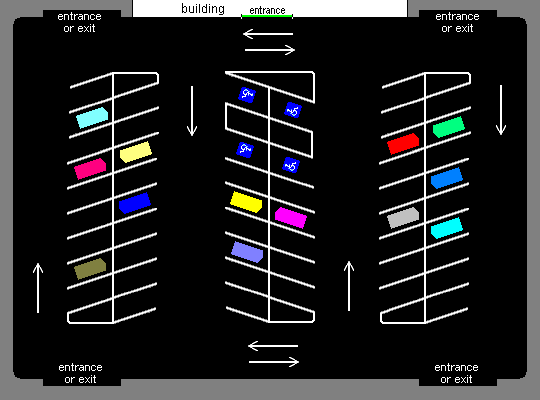
Boom gates are used in many parking lots. A customer arrives to the entry ticket machine by vehicle, presses the ticket request push button, takes a ticket - which raises the barrier - and enters the parking lot. To exit the lot, the customer presents the ticket to a cashier in a booth at the exit and tenders payment, after which the cashier opens the boom gate.
In 1954, the first automated parking lots were built where, for a monthly fee, a driver with a magnetic key card could enter and exit the parking lot by raising and lowering the boom.[14]
A more modern system uses automatic pay stations, where the driver presents the ticket and pays the fee required before returning to their car, then drives to the exit terminal and presents the ticket. If the ticket has not been paid for, the boom barrier will not raise, which will force the customer to either press the intercom and speak to a staff member, or reverse out to pay at the pay station or cashier booth.
At some major airports' parking lots in the United States, a driver can choose to swipe a credit card at the entry ticket dispenser instead of taking a ticket. When the driver swipes the same credit card at the exit terminal upon leaving the lot, the applicable parking fee is automatically calculated and charged to the credit card used.
In some parking lots, drivers present their tickets to and pay the cashiers at a separate cashier's office or counter (which are often located elsewhere from the entrances and exits of carparks). Such cashier's offices are called shroff offices or simply shroff in some parking lots in Hong Kong and other parts of East Asia influenced by the Hong Kong usage. If a ticket has not been paid, the barrier will not raise. In recent years, cashiers and shroff officers have often been replaced with automated machines.[citation needed] Another variant of payment has motorists paying an attendant on entry to the lot, with the way out guarded by a one-way spike strip that will only allow cars to exit.[citation needed]
Parking meters can also be used, with motorists paying in advance for the time required for the bay they are parked in. Pango (a play on "pay and go"[15]), a company founded in Israel in 2007, created a mobile app that allows users to both find and pay for available metered parking; the app can also be used to pay for garage parking.[15] Users' accounts are linked to a payment method, and the system remembers where a vehicle is parked and allows users to share a parking session with Facebook friends. Users may also, for a nominal monthly fee per registered car, subscribe to reminders that text alerts shortly before metered time expires,[16] and in some municipalities, users may buy additional metered time via cellphone. Philadelphia, encourages parking space turnover by charging escalating parking fees when metered time is added.[17][18] Another app, Streetline, whose primary purpose is to help motorists find open parking spots using their smartphones, includes a timer, so users can get back to a parking meter before it expires, and a filter that lets users choose between on-street and off-street parking spaces; it also connects to the phone's camera so a user can take a photograph of their car.[19]
Other lots operate on a pay and display system, where a ticket is purchased from a ticket machine and then placed on the dashboard of the car. Parking enforcement officers patrol the lot to ensure compliance with the requirement.[citation needed]
Similar to this is the system where the parking is paid by the mobile phone by sending an SMS message which contains the license plate number. In this case, the virtual cashier books the car and the time when the message is sent, and later a new SMS message must be sent whenever the time is due. The actual payment is then made via the mobile phone bill.[citation needed]
Since 1978 in the United Kingdom, it has been possible to pre-book parking with specialist companies, such as BCP. This is prevalent at all airports, major ports and cities.
Technology
[edit]
Modern parking lots use a variety of technologies to help motorists find unoccupied parking spaces using parking guidance and information system, retrieve their vehicles, and improve their experience. This includes adaptive lighting, sensors, indoor positioning system (IPS) and mobile payment options. The Santa Monica Place shopping mall in California has cameras on each stall that can help count the lot occupancy and find lost cars.[20]
In outdoor parking lots, GPS can be used to remember the location of a vehicle (some apps saves location automatically when turning off the car when a smartphone breaks communication with a vehicle's Bluetooth connection).[citation needed] In indoor parking lots, one option is to record one's Wi-Fi signature (signal strengths observed for several detectable access points) to remember the location of a vehicle.[21] Another alternative is to use smartphone applications that does inertial dead reckoning, detection of turns made by the car while driving indoor, correlations of travel time between turns, and machine learning algorithms, to infer the rough location of the parked car based on a map or floorplan.[22][23]
Online booking technology service providers have been created to help drivers find long-term parking in an automated manner, while also providing significant savings for those who book parking spaces ahead of time. They use real-time inventory management checking technology to display parking lots with availability, sorted by price and distance from the airport.
There are mobile apps providing services for the reservation of long-term parking lot spaces similar to online or aggregate parking facility booking services. Some long-term parking mobile apps also have turn-by-turn maps to locate the parking lot, notably US and UK based ParkJockey.
Solar canopy parking lots
[edit].jpg)
Solar canopy parking lots are solar arrays installed on canopies in parking lots. They are up to twice as expensive to install as normal open field solar arrays because the added material in the structure to elevate them for cars to park underneath. They can also be useful at protecting cars from extreme weather and the Sun's heat.[24]
Environmental considerations
[edit]Water pollution
[edit]Parking lots tend to be sources of water pollution because of their extensive impervious surfaces. Virtually all of the rain (minus evaporation) that falls becomes urban runoff. To avoid flooding and unsafe driving conditions, the lots are built to channel and collect runoff.[25] Parking lots, along with roads, are often the principal source of water pollution in urban areas.[26]
Motor vehicles are a constant source of pollutants, the most significant being gasoline, motor oil, polycyclic aromatic hydrocarbons (PAHs), and heavy metals. are found in combustion byproducts of gasoline, as well as in asphalt and coal tar-based sealants used to maintain parking lots.) Many parking lots are also significant sources of trash which ends up in waterways.[27]
Treatment of pollution: Traditionally, the runoff has been shunted directly into storm sewers, streams, dry wells or even sanitary sewers. However, most larger municipalities now require construction of stormwater management facilities for new lots. Typical facilities include retention basins, infiltration basins and percolation trenches.[28] Some newer designs include bioretention systems, which use plants more extensively to absorb and filter pollutants. However, most existing lots have limited or no facilities to control runoff.
Alternative paving materials: An alternative solution today is to use permeable paving surfaces, such as brick, pervious concrete, stone, special paving blocks, or tire-tread woven mats. These materials allow rain to soak into the ground through the spaces inherent in the parking lot surface. The ground then may become contaminated in the surface of the parking lot park, but this tends to stay in a small area of ground, which effectively filters water before it seeps away. This can however create problems if contaminants seep into groundwater, especially where there is groundwater abstraction 'downstream' for potable water supply.

Landscaping
[edit]Many areas today also require minimum landscaping in parking lots. This usually principally means the planting of trees to provide shade. Customers have long preferred shaded parking spaces in the summer, but parking lot providers have long been antagonistic to planting trees because of the extra cost of cleaning the parking lots.[citation needed]
Paved surfaces contribute to heat islands in two ways. The first is through excessive accumulation of heat. Dark materials and the enclosed canyons created by city buildings trap more of the sun's energy. The reflection rate of paving compared to natural surfaces is important as higher reflectance means cooler temperatures. Black pavements, the hottest, have solar reflectances of 5 to 10 percent. Lighter pavements have solar reflectance rates of 25 percent or higher. Reflectance values for soils and various types of vegetation range from 5 to 45 percent. The second cause of heat islands is the low moisture content of paving and building materials. Such materials are watertight, so no moisture is available to dissipate the sun's heat through evaporation.[29]
Tree planting has been shown to significantly reduce temperatures in open, paved areas. In one study in Alabama, daytime summer temperatures of 120 °F (49 °C) were recorded in the centre of a bare parking lot, whereas where a small island of trees was present, temperatures only reached 89 °F (32 °C). It also found that a further 1 °F temperature reduction could be obtained for every additional canopy tree planted.[30]
More recently, parking lots have been seen as prime real estate for installing large solar panel installations, with the additional benefit of shade for vehicles parked underneath.
Land usage
[edit]A parking lot needs fairly large space, around 25 square meters or 270 square feet per parking spot. This means that lots usually need more land area than for corresponding buildings for offices or shops if most employees and visitors arrive by car. This means covering large areas with asphalt.[31]
Services
[edit]Some lots have charging stations for battery vehicles. Some regions with especially cold winters provide electricity at most parking spots for engine block heaters, as antifreeze may be inadequate to prevent freezing.
Impact on climate
[edit]Parking lots are responsible for many greenhouse gas emissions because they increase driving and contributing to the urban heat island due to the materials they are built from.[9]
Notable lots
[edit]- The remains of Richard III were found under a parking lot in Leicester, England.
- A species of tardigrade, Macrobiotus shonaicus, was discovered in a parking lot in Tsuruoka, Japan.
- The West Edmonton Mall has the world's largest parking lot.[32][33]
- 250 Water Street, a parking lot in New York City protected as a historical landmark since 1977.[34]
Art
[edit]Parking lots have appeared in a wide range of creative works, including painting, photography, literature, film, and performance. Often used as a symbol of modern urban life, transience, or overlooked everyday spaces, parking lots have served both as settings and subjects for artistic reflection. They have been depicted in works by photographers such as Ed Ruscha, whose Thirtyfour Parking Lots in Los Angeles (1967) is a seminal photobook documenting empty lots from an aerial perspective, and in films like Sofia Coppola’s Somewhere (2010), where parking structures evoke themes of isolation and anonymity.
In contemporary art publishing, an annual publication titled our Parking (available at ourparking.net) curates creative content themed around parking and parking lots. The publication takes the form of a book and includes contributions from writers, photographers, and visual artists exploring the cultural, emotional, and aesthetic dimensions of these everyday spaces.
See also
[edit]
- Airport parking
- Automated parking system
- Automatic number-plate recognition (ANPR)
- Automatic vehicle location
- British Parking Association
- Charging station
- Green parking lot
- Indoor positioning system (IPS)
- Multi-storey car park
- Park and ride
- The Parking Lot Movie
- Parking meter
- Parking space
- Permeable paving
- Radio-frequency identification (RFID)
- Road surface marking
- Vehicle location data
References
[edit]- ^ Shoup, Donald (September 20, 2019). "Parking Reform Will Save the City". Bloomberg CityLab.
- ^ Woodard, Collin (April 3, 2023). "America Has As Many As 2 Billion Parking Spaces, And They're Ruining Our Cities". Jalopnik.
- ^ Fried, Ben (August 20, 2008). "How to Fix Off-Street Parking Policy, Before It's Too Late". StreetsBlog NYC. Archived from the original on April 2, 2015. Retrieved March 27, 2015.
- ^ Communities.gov.uk Archived 2009-03-06 at the Wayback Machine
- ^ "Out, Damned Spot! How D.C.'s Onerous Parking Requirements Slow Development". March 21, 2013. Archived from the original on December 13, 2013.
- ^ "Parking Management Software". Hamari Society. December 11, 2018. Retrieved December 9, 2018.
- ^ Springer, Kate; Han, Sol (October 19, 2016). "Japan's crazy underground bike vaults". CNN Style. Retrieved July 18, 2018.
- ^ "Invisible Bicycles: Tokyo's High-Tech Underground Bike Parking". Web Urbanist. March 26, 2015. Archived from the original on March 28, 2015. Retrieved March 27, 2015.
- ^ a b "To Tackle Climate Change, Cities Need to Rethink Parking". Institute for transportation & development policy. Retrieved November 7, 2023.
- ^ FECHTER, JOSHUA (November 2, 2023). "To fight climate change and housing shortage, Austin becomes largest U.S. city to drop parking-spot requirements". Texas tribune. Retrieved November 7, 2023.
- ^ "Road Traffic Act 1988". www.opsi.gov.uk. Archived from the original on September 9, 2006.
- ^ "House of Lords - Clark (A.P.) and Others v. Kato, Smith and General Accident Fire & Life Assurance Corporation PLCCutter v. Eagle Star Insurance Company". publications.parliament.uk. Archived from the original on February 24, 2017.
- ^ ADA Accessibility Guidelines Parking and Passenger Loading Zones Archived 2011-05-14 at the Wayback Machine
- ^ "Key Card Inserted In Slot Opens Gate At Automated Parking Lot". Popular Science. Hearst Magazines. August 1954. p. 94. (mid page)
- ^ a b Furman, Phyllis (August 6, 2013). "Parking app Pango making tracks in NYC, adding 20 more garages over next few weeks (App that speeds up pick-ups and payments spreading to 110 Manhattan garages by year-end)". New York Daily News. Archived from the original on December 22, 2015. Retrieved January 17, 2016.
- ^ Staff Writer (November 4, 2014). "Mt. Vernon Launches Pango Mobile Payments for Parking on November 5". Mount Vernon Inquirer.[permanent dead link]
- ^ Philadelphia Parking Authority Staff (May 21, 2015). "Pango Mobile Parking App Coming to Philadelphia". The PPA Blog.
- ^ "PANGO Mobile Parking". Parking Network. Archived from the original on December 22, 2015.
- ^ Motavalli, Jim (October 11, 2012). "New York Times contributor blogs about interesting ways of getting around. Streetline app aims to end the hunt for a parking space". Mother Nature Network. Archived from the original on December 22, 2015.
- ^ Martha Groves (January 23, 2011). "Servant or snoop in the parking garage?". Los Angeles Times. Archived from the original on August 31, 2014. Retrieved August 29, 2014.
- ^ Joshua Correa, Ed Katz, Patricia Collins, Martin Griss (November 2008). "Room-Level Wi-Fi Location Tracking" (PDF). Carnegie Mellon Silicon Valley MRC-TR-2008-02. Archived (PDF) from the original on March 3, 2016.
{{cite web}}: CS1 maint: multiple names: authors list (link) - ^ Cherian, Jim; Luo, Jun; Ho, Shen-Shyang (September 18, 2018). "ParkLoc: Light-weight Graph-based Vehicular Localization in Parking Garages". Proceedings of the ACM on Interactive, Mobile, Wearable and Ubiquitous Technologies. 2 (3): 1–23. doi:10.1145/3264909. S2CID 214703023.
- ^ Gao, R.; Zhao, M.; Ye, T.; Ye, F.; Wang, Y.; Luo, G. (July 2017). "Smartphone-Based Real Time Vehicle Tracking in Indoor Parking Structures". IEEE Transactions on Mobile Computing. 16 (7): 2023–2036. doi:10.1109/TMC.2017.2684167.
- ^ "How to fight climate change with parking lots - YouTube". YouTube. Archived from the original on January 3, 2024. Retrieved January 3, 2024.
- ^ Schueler, Thomas R. "The Importance of Imperviousness". Archived 2009-02-27 at the Wayback Machine Reprinted in The Practice of Watershed Protection. Archived 2008-12-23 at the Wayback Machine 2000. Center for Watershed Protection. Ellicott City, MD.
- ^ United States. National Research Council. Washington, DC. "Urban Stormwater Management in the United States". Archived 2013-08-31 at the Wayback Machine October 15, 2008. p.5
- ^ G. Allen Burton Jr.; Robert Pitt (2001). Stormwater Effects Handbook: A Toolbox for Watershed Managers, Scientists, and Engineers. New York: CRC/Lewis Publishers. ISBN 0-87371-924-7. Archived from the original on May 19, 2009. Chapter 2.
- ^ California Stormwater Quality Association. Menlo Park, CA. "Stormwater Best Management Practice (BMP) Handbooks". Archived January 18, 2008, at the Wayback Machine 2003.
- ^ Wolf, Kathleen (2004). Trees, Parking and Green Law: Strategies for Sustainability (PDF). Georgia: USDA Forest Service, Southern Region Georgia Forestry Commission. p. 8. Archived (PDF) from the original on May 28, 2015.
- ^ "Green Parking Lot Resource Guide" (PDF). National Service Center for Environmental Publications. EPA. February 2008. p. 40. Archived (PDF) from the original on October 5, 2017. Retrieved October 5, 2017.
- ^ Milman, Oliver (December 26, 2022). "Shifting gears: why US cities are falling out of love with the parking lot". The Guardian. Retrieved December 26, 2022.
- ^ Westly, Erica (November 10, 2008). "The World's Largest Parking Lots". Forbes. Retrieved April 25, 2016.
- ^ "Largest car park". Guinness World Records. Retrieved April 28, 2016.
- ^ "How a $180 Million Parking Lot Could Change N.Y.C.'s Historic Character". New York Times.
| International | |
|---|---|
| National | |
| Other | |

Parking lot
View on GrokipediaHistory
Origins and early development
The advent of the automobile in the late 19th and early 20th centuries initially led to unstructured curbside parking, which quickly caused congestion in urban areas as vehicle ownership surged.[8] Dedicated off-street parking facilities evolved from this chaos, with surface parking lots emerging primarily in the 1920s to accommodate growing numbers of cars while freeing up streets for traffic flow.[8] Early examples were often private initiatives by businesses, such as street railway companies constructing lots to attract riders and boost patronage amid competition from automobiles.[8] Municipal parking lots appeared shortly thereafter, with one of the earliest recorded in Los Angeles in 1922, designed to regulate parking and reduce downtown clutter.[8] This was followed by facilities in Flint, Michigan, in 1924, and in Chicago and Boston by 1930, reflecting broader efforts by cities to formalize parking as automobile registrations climbed—reaching over 23 million in the United States by 1930.[8] [9] These surface lots typically featured gravel or unpaved surfaces initially, with minimal markings or barriers, prioritizing capacity over organization.[10] Parallel developments included multi-story garages predating widespread surface lots, such as the first known multistorey facility in London in 1901 and an underground structure in Barcelona in 1904, which addressed land scarcity in dense European cities but influenced later American surface lot designs by emphasizing vertical and off-street solutions.[10] In the United States, commercial surface lots proliferated around retail and transit hubs in the 1920s, marking the shift from ad hoc street parking to purpose-built areas that supported emerging consumer economies.[11] This early phase laid the groundwork for standardized layouts, though enforcement remained rudimentary until parking meters were introduced in 1935 in Oklahoma City.[12]Expansion in the automobile era
The proliferation of parking lots in the early 20th century coincided with the rapid increase in automobile ownership in the United States, where registrations grew from approximately 8,000 vehicles in 1900 to 458,500 by 1910 and nearly 9.2 million by 1920.[13] This surge, fueled by affordable mass-produced models like the Ford Model T introduced in 1908, overwhelmed urban street parking capacity, prompting businesses and municipalities to develop dedicated off-street spaces to accommodate drivers and reduce congestion.[14] Early parking provisions were often informal, with vehicles left on sidewalks or adjacent lots, but as car numbers escalated—reaching 26.7 million registrations by 1930—the need for organized facilities became acute.[13] Private enterprises led the initial expansion in the 1920s, converting vacant land near commercial districts into surface lots to draw motorists to stores and theaters. In 1923, the J.C. Nichols Company in Kansas City, Missouri, constructed two pioneering lots accommodating 150 cars each, specifically designed for shopping centers to enhance accessibility.[15] Similar initiatives spread as retailers recognized that ample parking boosted patronage; by the mid-1920s, businesses across American cities allocated spaces for customer vehicles, marking a shift from reliance on curbside parking to purpose-built lots.[8] Municipal responses followed, with Los Angeles establishing one of the earliest public lots in 1922 to manage downtown overflow, followed by Flint, Michigan, in 1924.[8] These developments reflected a pragmatic adaptation to automotive demand, prioritizing functionality over aesthetics, often using simple gravel or dirt surfaces before widespread paving. Vertical parking structures also emerged during this period to address land scarcity in dense areas, with multi-level garages appearing in cities like New York, Chicago, and Los Angeles by the mid-1920s.[16] Innovations such as spiral ramps and early automated systems, like Chicago's 1932 rotary facility on Monroe Street, demonstrated engineering efforts to stack vehicles efficiently.[17] By the end of the decade, parking meters—patented in concept by 1928—began regulating on-street use, indirectly accelerating off-street lot growth as cities sought revenue and order.[10] This era's expansion laid the groundwork for parking as an integral urban feature, driven by economic incentives rather than regulatory mandates, though it also initiated debates over land use amid rising vehicle dependency.[8]Post-World War II proliferation
The proliferation of parking lots accelerated after World War II, driven primarily by the explosive growth in automobile ownership and the shift toward suburban living in the United States. Vehicle registrations surged from 25.8 million in 1945 to 52.1 million by 1955, reflecting pent-up demand from wartime restrictions and economic prosperity.[18] This boom overwhelmed existing on-street parking, prompting widespread adoption of off-street facilities to manage congestion and support mobility.[19] Municipal zoning ordinances increasingly mandated minimum off-street parking spaces starting in the mid-1940s, with such requirements becoming ubiquitous across U.S. cities by the 1950s.[20] [21] These policies aimed to prevent spillover onto public streets but entrenched the expansion of paved lots in new developments. Concurrently, federal initiatives like the GI Bill facilitated suburban homeownership, while the 1956 Interstate Highway Act spurred sprawl, integrating large parking areas into residential and commercial sites.[22] Developers paved expansive asphalt surfaces to comply with standards, often allocating space for several cars per household or business unit. Commercial landscapes epitomized this trend through the emergence of drive-in shopping centers. Early examples, such as Seattle's Northgate Center opened in 1950, featured surrounding parking lots designed for automobile access, setting a template for regional malls.[23] By the mid-1950s, planning guidelines emphasized parking ratios for retail, with reports recommending spaces equivalent to 4-5 per 1,000 square feet of store area to handle peak demand.[24] [25] Enclosed malls like Southdale Center in 1956 further scaled this model, incorporating thousands of surface parking spots to draw suburban drivers. This infrastructure not only enabled retail decentralization but also transformed land use, with parking dominating site plans and paving vast tracts formerly used for other purposes.[26]Design and Construction
Types and layouts
Parking lots are classified primarily by their structural configuration and operational mechanism. Surface lots consist of open-air, ground-level areas designed for vehicle storage without enclosing structures, often utilizing asphalt or concrete paving for durability against weather exposure.[27] These represent the simplest and most cost-effective type, suitable for low-density urban or suburban sites where land availability permits expansive footprints.[28] Multi-story parking structures, or garages, stack levels vertically above ground to maximize capacity on constrained sites, typically employing reinforced concrete ramps or elevators for vertical circulation.[27] Underground facilities excavate below grade to conceal parking while preserving surface land for other uses, though they incur higher construction costs due to excavation, waterproofing, and ventilation requirements.[29] Automated systems, which include mechanical platforms, shuttles, or robotic retrieval, eliminate driver maneuvering by storing vehicles in compact grids, achieving up to 60% greater density than conventional layouts but requiring specialized equipment and user interfaces.[27] Layouts optimize space utilization, traffic flow, and accessibility through geometric arrangements of stalls and aisles. Perpendicular parking, with stalls oriented at 90 degrees to aisles, supports two-way traffic and requires minimum stall dimensions of 9 feet in width by 18 to 20 feet in length, paired with 24-foot-wide aisles for efficient circulation.[30] Angled configurations, such as 60-degree or 45-degree stalls, reduce aisle widths to 16-18 feet while facilitating one-way traffic, enhancing entry ease and reducing collision risks in high-turnover areas like retail centers.[31] Parallel layouts align stalls longitudinally along curbs or aisles, demanding 8-foot widths and 22- to 25-foot aisles but minimizing land use in linear spaces.[30] Efficiency metrics, such as stalls per acre, vary: perpendicular lots yield approximately 300-350 stalls per acre on flat terrain, while angled designs can increase this by 10-15% through tighter packing, though they demand precise striping and signage for safe navigation.[32] Hybrid layouts incorporate dedicated zones for accessible parking, with van-accessible spaces featuring 8-foot-wide stalls adjacent to 5-foot access aisles, mandated at ratios of one per six accessible spots under standards like the Americans with Disabilities Act.[2] One-way loop systems, common in larger lots, direct traffic counterclockwise to minimize conflicts, often integrating landscaped islands to delineate rows and control speeds.[30] Site-specific factors, including ingress/egress alignment with adjacent roads, influence layout selection; for instance, rectangular sites favor grid patterns, while irregular topography may necessitate terraced or sloped designs to maintain level stalls.[33]Materials, standards, and safety features
Parking lots are primarily surfaced with asphalt or concrete, selected based on factors such as initial cost, durability, maintenance needs, and environmental conditions. Asphalt, a flexible bituminous material, typically costs $3 to $7 per square foot to install and offers a lifespan of 15 to 20 years with periodic resurfacing every 5 to 10 years, making it suitable for areas with freeze-thaw cycles due to its ability to expand and contract without cracking.[34] [34] Concrete, a rigid Portland cement-based material, costs $4 to $8 per square foot but endures 30 years or more under heavy loads with minimal upkeep, though it is prone to cracking in cold climates and requires joint sealing.[34] [35] Alternative materials include gravel for low-traffic rural lots, offering low cost but poor durability and dust issues, and permeable pavers for stormwater management, which allow water infiltration to reduce runoff.[36] Sub-base layers, such as compacted aggregate, are standard beneath pavements to provide structural support and drainage, with asphalt bases meeting specifications for mix density and stability.[37] Design standards for parking lots are governed by local building codes, zoning regulations, and accessibility laws, emphasizing dimensional consistency, drainage, and load-bearing capacity. Standard parking spaces measure approximately 9 feet wide by 18 feet long, with aisle widths of 24 feet for two-way traffic, though these vary by jurisdiction and usage; for instance, compact spaces may be 8 feet wide.[38] A minimum slope of 2% to 5% is required for paved surfaces to ensure drainage and prevent ponding.[38] In the United States, the Americans with Disabilities Act (ADA) mandates accessible spaces comprising 2% of total spaces for lots with 1 to 25 stalls, increasing to 6% for larger lots; car-accessible spaces must be at least 96 inches wide with a 60-inch access aisle, while van-accessible spaces require 132 inches width and an 8-foot aisle, all with a maximum slope of 1:48 (2.08%).[39] [40] Fire lanes and loading zones follow International Building Code guidelines, typically 20 feet wide with concrete curbs.[41] Safety features prioritize visibility, traffic control, and hazard mitigation to reduce accidents, which occur frequently in lots due to low speeds and pedestrian-vehicle interactions. Adequate lighting is essential, with the Illuminating Engineering Society recommending a minimum horizontal illuminance of 0.2 foot-candles (approximately 2 lux) and vertical illuminance of 0.1 foot-candles for general parking areas, rising to 1 foot-candle (10 lux) for pedestrian walks and 2 foot-candles (20 lux) at entrances.[42] [43] Pavement markings, including white or yellow striping per Manual on Uniform Traffic Control Devices (MUTCD) standards, delineate spaces, aisles, and crosswalks; wheel stops or bollards prevent overhangs into walkways, while speed bumps and signage enforce limits.[44] Proper drainage curbs slippery surfaces, and perimeter barriers like curbs or fences deter unauthorized access; surveillance cameras and emergency call boxes enhance security in high-crime areas.[45] These elements collectively lower collision risks, with studies indicating well-lit and marked lots reduce incidents by up to 50%.[46]Economic Functions and Impacts
Enabling commercial activity
Parking lots enable commercial activity primarily by accommodating vehicles for customers arriving by automobile, which constitutes the dominant mode of transport for retail and service-oriented trips in many developed countries. In the United States, surveys indicate that 92% of shopping trips occur by car, underscoring the necessity of off-street parking to minimize access barriers and maximize customer inflow to businesses such as stores, restaurants, and entertainment venues.[47] This infrastructure supports high-volume commerce in suburban and exurban settings, where public transit options are sparse and personal vehicles facilitate the transport of goods, families, or bulk purchases that would be impractical otherwise. Without sufficient parking, potential patrons often bypass establishments, leading to reduced foot traffic and forgone sales.[48] Expansive parking facilities underpin the model of drive-in and drive-to retail formats, including strip malls, big-box stores, and regional shopping centers, which emerged prominently in the post-World War II era amid rising car ownership. These lots allow businesses to cluster in low-density areas, drawing consumers from wider catchment zones and enabling economies of scale through increased throughput. Research on retail sites shows a positive correlation between parking availability and turnover, as convenient, free or low-cost spaces encourage longer dwell times and impulse purchases, directly boosting revenue for adjacent enterprises.[49] For instance, suburban retail developments prioritize vast asphalt surfaces—often comprising 50-70% of site area—to accommodate peak-hour demand, fostering customer loyalty and competitive edges over transit-reliant urban competitors.[50] Beyond mere capacity, well-designed and maintained parking lots contribute to commercial viability by enhancing perceived safety and accessibility, which surveys link to higher visitation rates. Businesses report that optimized parking management, including clear signage, lighting, and flow, can increase foot traffic by up to 45%, as it alleviates congestion and vehicle damage concerns that deter shoppers.[51] In car-dependent economies, this translates to sustained economic activity: ample off-street options subsidize retail expansion by internalizing transport costs, allowing operators to focus resources on merchandising rather than competing for scarce curb space. Empirical analyses confirm that such provisions are pivotal for retaining market share in regions where over 80% of households own vehicles, preventing revenue leakage to more accessible rivals.[52][53]Costs, revenues, and market dynamics
Construction costs for surface parking lots typically range from $900 to $3,500 per stall, encompassing site preparation, paving with asphalt or concrete, and striping, with asphalt options costing $2.50 to $4.50 per square foot including labor and materials.[54][55] Structured parking facilities, such as garages, incur higher expenses at $25,000 to $35,000 per space for above-ground builds and up to $100,000 for subterranean ones, with a national median of $29,900 per space in 2024 reflecting a 3.1% rise from the prior year due to material and labor inflation.[56][57] Land acquisition further elevates total capital outlay, particularly in urban areas where opportunity costs for alternative uses like development amplify effective expenses. Operating and maintenance costs average $400 to $600 per space annually for garages, covering cleaning, repairs, lighting, and security, while surface lots require periodic resealing at $0.14 to $0.25 per square foot every two to four years to prevent deterioration from weather and traffic.[58][59] Sweeping and debris removal add $50 to $150 per session for mid-sized lots, with overall annual upkeep per space estimated at $600 to $5,000 depending on location and usage intensity, often subsidized implicitly through underpricing due to regulatory mandates.[60][61] Revenues derive primarily from user fees, with gross annual earnings varying by location and occupancy; a small 20-space lot charging $10 per day per space can generate $73,000 yearly, while urban garages may yield $200 or more per space monthly under optimal conditions.[62][63] The U.S. parking lots and garages sector reached $13.1 billion in market size by 2025, supported by ancillary income from leasing to commercial properties or events, though profitability hinges on high utilization rates exceeding 70% to offset fixed costs.[64] Market dynamics feature chronic supply surpluses in many regions, averaging 3 to 8 spaces per vehicle, driven by zoning minimums that suppress prices and encourage free or nominal parking, distorting demand signals and inflating societal costs estimated at $1,000 per space annually without commensurate user payment.[61][65] Pricing strategies range from fixed rates to performance-based models that adjust for real-time occupancy, aiming to balance supply and demand; the global parking management industry, valued at $4.8 billion in 2024, projects growth to $9.3 billion by 2030 at a 9.3% CAGR, fueled by urbanization and smart tech integration despite pressures from ride-sharing reducing solo vehicle trips.[66][67] Reforms eliminating minimum requirements could enhance efficiency by allowing market-driven provision, reducing overbuild and enabling land reallocation to higher-value uses.[68]Effects on housing and development
Minimum parking requirements in zoning codes compel developers to allocate land and resources for off-street parking spaces, elevating the total cost of residential construction by an estimated $20,000 to $50,000 per unit in many U.S. markets, depending on local land values and building standards.[69] These added expenses, including site paving, drainage, and lighting, reduce project profitability and deter infill development on smaller or irregularly shaped parcels, particularly in dense urban environments where space is at a premium.[70] Consequently, such mandates limit the supply of multifamily and affordable housing options, as developers prioritize higher-end projects that can absorb the parking overhead or opt for suburban sites with cheaper land.[71] Surface parking lots exacerbate land use inefficiencies by occupying prime developable acreage—often equivalent to several city blocks in downtown cores—that could support denser housing forms like apartments or townhomes, thereby suppressing overall residential density and contributing to urban sprawl.[72] In high-demand cities, this opportunity cost manifests as forgone housing units; for example, redeveloping underutilized lots has enabled projects yielding hundreds of units per site, as seen in conversions in Buffalo, New York, where former asphalt expanses were transformed into mixed-use buildings starting in the mid-2010s.[73] Low-density parking-dominated layouts also increase infrastructure burdens, such as extended utility lines and road maintenance, indirectly raising per-unit housing costs through higher municipal fees passed to developers.[74] Reforms abolishing parking minimums correlate with accelerated housing production, as evidenced by simulations showing potential increases of up to 40% in feasible units on constrained urban parcels by freeing land for vertical construction. However, in car-dependent suburbs, excessive parking provision can enable low-rise housing sprawl, diluting investment in transit-accessible areas and perpetuating reliance on automobiles for daily mobility, which sustains higher long-term ownership costs for residents. Empirical analyses from cities like Seattle and Minneapolis, which reduced mandates post-2010, indicate modest rises in rental vacancy rates and stabilized prices, underscoring parking's role as a supply constraint rather than an unalloyed enabler of development.[75]Urban Planning and Policy Debates
Parking mandates: minimums, maximums, and reforms
Minimum parking requirements are zoning regulations mandating a specific number of off-street parking spaces for new developments, typically calculated based on factors such as building square footage, number of units, or expected occupancy—for instance, requiring one space per residential unit or five spaces per 1,000 square feet of retail space.[76] These mandates originated in the United States with the first implementation in Columbus, Ohio, in 1923, and proliferated nationwide by the 1950s as automobile ownership surged post-World War II, aiming to alleviate on-street congestion by shifting parking demand to private lots.[77] However, urban economist Donald Shoup has documented that these requirements lack empirical foundation, as planners often derive ratios from unverified assumptions or averages without accounting for local demand variations, resulting in systematic over-supply of spaces that remain underutilized.[76][78] The economic distortions from minimums include elevated development costs passed to consumers, with one analysis estimating a 13% increase in housing prices for households without cars due to mandated spaces they do not use.[78] Developers build to the maximum required to mitigate regulatory risk, even in low-demand areas, leading to excess impervious surfaces that consume land—equivalent to over eight acres avoided per project in some reform cases—and subsidize driving by treating parking as a bundled cost rather than a priced good.[74] This approach ignores price signals, fostering inefficiency: studies post-reform show developers averaging 60 fewer spaces than prior minimums, with no widespread shortages but improved curb utilization for deliveries and transit.[74][79] Parking maximums, conversely, cap the number of spaces to curb overbuilding in transit-rich or dense zones, promoting alternatives like walking or public transport; for example, some policies limit spaces to three per five occupants in eating establishments or apply caps at 135% of former minimums for large commercial projects.[80][81] These are rarer than minimums, appearing in select U.S. locales like Bellevue, Washington, or Portland, Oregon's central districts, where they prevent parking from dominating land use and exacerbating sprawl.[82] Maximums address the inverse problem of minimums by enforcing scarcity to encourage market pricing, though implementation requires careful calibration to avoid unintended on-street spillover. Reforms eliminating or reducing minimums have accelerated since the 2010s, driven by housing affordability pressures and Shoup's influential critiques, with over 3,000 U.S. jurisdictions adopting changes by 2024, including full citywide abolitions in Hartford, Connecticut (2018), Minneapolis, Minnesota (fully by 2020 after partial cuts in 2015), and Austin, Texas (2023, the largest such city).[83][84][85] In Minneapolis, post-reform multifamily projects included fewer spaces without evident access issues, lowering costs and enabling denser development; similarly, nine studied U.S. cities saw parking supply adjustments aligning closer to actual demand after mandates lifted.[81][79] These shifts reflect a move toward demand-responsive systems, often paired with performance-based standards or pricing, yielding verifiable reductions in unnecessary infrastructure while maintaining functionality through adaptive management.[86][76]Arguments for and against requirements
Proponents of minimum parking requirements argue that they ensure sufficient off-street spaces to prevent spillover onto public streets, thereby reducing congestion and maintaining orderly urban traffic flow. For instance, urban planners historically implemented these mandates to avoid overwhelming neighborhood streets with vehicles from nearby businesses, as seen in mid-20th-century zoning practices aimed at balancing private development with public infrastructure capacity.[77] Businesses, particularly retailers and restaurants, benefit from mandated spaces that accommodate customer and employee vehicles, potentially averting lost revenue if patrons seek alternatives with easier access; a 2022 analysis noted that inadequate parking can deter customers, shifting them to competitors.[87] Critics, however, contend that minimum requirements distort market signals by forcing developers to build excess capacity regardless of actual demand, leading to underutilized lots and higher construction costs passed to consumers. Empirical studies estimate that each required space adds approximately 12.5% to the cost of urban housing units, with additional spaces compounding this effect; for example, analyses of U.S. developments show mandates inflating total unit costs by $52,000 to $117,000 due to land, construction, and maintenance expenses for superfluous parking.[88][61] These policies subsidize automobile use by embedding parking costs into rents and prices rather than charging users directly, encouraging car dependency, urban sprawl, and inefficient land allocation—off-street parking in the U.S. occupies an area equivalent to Connecticut while often remaining half-empty.[89][76] Further evidence against mandates highlights their role in exacerbating housing shortages and affordability crises; in high-demand areas, required spaces consume prime land that could support denser residential or mixed-use development, with reforms eliminating minimums correlating to increased housing supply without widespread parking shortages, as observed in cities like Minneapolis post-2021 reforms.[74][90] Donald Shoup's research demonstrates that such requirements, by mandating supply without regard to turnover or pricing, foster "free" parking that induces cruising for spots—adding 30% or more to traffic volumes in congested areas—and undermine alternatives like transit or walking by prioritizing vehicles.[76] While advocates claim mandates protect public streets, case studies from areas without them, such as central business districts, show developers responding to demand via paid curbside options or shared facilities, avoiding the predicted chaos.[91] Overall, the economic and spatial inefficiencies of minimums outweigh purported benefits, as market-driven provision better matches supply to use, per analyses of pre-mandate eras and post-reform outcomes.[78]Variations across countries and regions
In North America, particularly the United States, parking lots are predominantly large surface-level facilities, often mandated by local zoning codes requiring minimum spaces per commercial or residential unit, such as one space per 300 square feet of retail space in many municipalities, which contributes to urban sprawl and land consumption exceeding 5% of developed area in some cities.[92] These requirements, rooted in mid-20th-century automobile-centric planning, persist despite evidence of over-supply, with average occupancy rates below 2% outside peak hours in urban centers.[83] In contrast, Canada shows similar patterns but with emerging reforms in cities like Vancouver, where minimums have been eliminated for certain transit-oriented developments since 2010 to promote density.[83] European countries exhibit greater variation driven by land scarcity and sustainability priorities; Germany and the Netherlands often enforce maximum parking limits in urban zones, capping residential requirements at 0.5-1 space per unit in dense areas, as evaluated in mid-sized cities where demand rarely exceeds these caps.[93] The United Kingdom has abolished minimums in select locales like London boroughs since the 2000s, favoring performance-based standards that tie parking to actual usage data, while France integrates multi-level structures in suburban malls to minimize footprint.[92] Switzerland and other Alpine nations adapt designs for topography, incorporating sloped or terraced lots, with space widths standardized at around 2.5 meters to accommodate compact vehicles.[94] In Asia, Japan leads in automated and vertical parking due to acute space constraints and high vehicle density, having installed over 100,000 automated spaces annually in the late 1990s, with tower systems using robotics to stack cars efficiently in urban settings like Tokyo.[95] This contrasts with China, where rapid urbanization has spurred mixed formal-informal systems, including app-based smart lots in megacities but persistent on-street encroachments.[96] Southeast Asian nations like Indonesia rely heavily on informal practices, with unauthorized attendants managing roadside spots in cities such as Padang, where official lots cover less than 20% of demand amid weak enforcement.[97] Developing regions in Africa and Latin America frequently feature unregulated informal parking, where street vendors or "helpers" organize ad-hoc lots on sidewalks or vacant land, providing income for the urban poor but exacerbating congestion and safety risks, as seen in cities like Lagos or Mexico City with vehicle-to-parking ratios exceeding 2:1.[98] Reforms lag due to institutional barriers, though pilot managed systems in 31 Chinese cities demonstrate potential for priced, zoned facilities to formalize supply.[99] Across continents, policies reflect local densities and enforcement capacity, with innovations succeeding more in high-income, regulated environments.[100]Technology and Operations
Payment and access systems
Payment and access systems in parking lots encompass mechanisms for collecting fees and regulating vehicle entry and exit, evolving from manual coin-operated meters to integrated digital technologies that enhance operational efficiency and revenue collection. Traditional systems often rely on ticket dispensers at entry points, where drivers receive a timestamped ticket validated upon payment at kiosks or pay stations before exiting via barrier gates.[101] These setups, common in multi-level garages, minimize revenue leakage by ensuring payment prior to departure but require physical infrastructure maintenance.[102] Modern payment methods prioritize contactless and mobile solutions, driven by consumer demand for speed and security; over 50% of U.S. in-person transactions are now contactless, accelerating adoption in parking. Mobile apps, such as those enabling QR code scans or geolocation-based payments, dominate, with the global parking meter apps market projected to grow from $119.1 million in 2025 to $587.4 million by 2035 at a 17.3% CAGR, fueled by urbanization and smartphone penetration.[103] These apps integrate with credit cards or digital wallets, reducing staffing needs and automating revenue—operators using digital payments report up to 45% increases in retail foot traffic via improved turnover.[104] RFID-enabled payments, where pre-registered tags on vehicles trigger automatic deductions upon entry and exit, further streamline processes for frequent users like employees or residents.[105] Access control technologies complement payments by verifying authorization and preventing unauthorized use. Barrier gate systems with automated arms, often paired with ticket readers or proximity sensors, remain prevalent for high-security lots, controlling flow in transient facilities.[106] License plate recognition (LPR or ANPR) uses cameras to scan plates at entry and exit, cross-referencing against paid records or databases for barrier activation; while cost-effective, ANPR accuracy varies with lighting and weather, achieving near-100% reliability only under optimal conditions compared to RFID's consistent performance via electromagnetic tags up to 15 meters away.[107] [108] RFID systems excel in reliability, employing error-checking protocols absent in optical ANPR, which can incur up to 4% error rates in adverse conditions, making hybrid implementations common for robust management.[109] Keypad or mobile credential access suits reserved spots, integrating with apps for one-time codes or push notifications to grant entry.[110] The global parking payment systems market reflects this technological convergence, valued at $13.71 billion in 2025 with sustained growth from IoT-enabled dynamic pricing and AI-driven enforcement.[111] [112] These systems reduce evasion—88% of U.S. drivers report avoiding paid parking due to inconvenience, a barrier apps mitigate by simplifying compliance.[113] Overall, they optimize revenue through real-time data analytics while enhancing user experience, though implementation costs and privacy concerns around data collection persist as challenges.[114]Automation and smart technologies
Smart parking systems utilize IoT-enabled sensors, including ultrasonic, magnetic, and camera-based technologies, to monitor parking space occupancy in real time.[115] These sensors detect vehicle presence and transmit data via networks like LoRaWAN for integration into centralized platforms.[116] A 2021 review of smart parking systems highlighted the use of infrared, inductive loops, and image processing for occupancy detection, with accuracy rates exceeding 90% in controlled tests.[117] Guidance technologies, such as dynamic signage and mobile applications, leverage sensor data to direct drivers to available spots, reducing search times by 20-40% according to field studies.[118] Systems often incorporate AI for predictive analytics, forecasting availability based on historical patterns and events, as implemented in IoT-AI hybrids reported in 2024 IEEE research.[119] Automated payment and access features, including license plate recognition and cashless apps, streamline entry and exit, with adoption reflected in the global smart parking market's growth from USD 7.98 billion in 2024 to a projected USD 33.82 billion by 2033.[120] Fully automated parking garages employ robotic lifts, shuttles, and pallets to transport and store vehicles in compact configurations, doubling or tripling space efficiency over conventional layouts.[121] For instance, systems like AUTOParkit optimize retrieval times to under 90 seconds per vehicle through sequenced shuttles and sensors.[122] In August 2025, robotic parking implementations using mechanical platforms were noted for handling storage in high-density urban settings, with operational examples in the U.S. demonstrating halved land requirements for equivalent capacity.[123] These technologies minimize human error and emissions from circling, though initial costs remain a barrier, estimated at 20-50% higher upfront than manual garages per industry analyses.[124]Innovations in efficiency and sustainability
Smart parking systems employing Internet of Things (IoT) sensors detect vehicle occupancy in real time, enabling apps to guide drivers to available spots and reducing search times by an average of 15-20 minutes per trip in urban settings.[125] These systems integrate with license plate recognition and AI analytics to optimize traffic flow and predict demand, with implementations in cities like San Francisco demonstrating up to 43% reductions in congestion-related emissions.[126] Automated parking technologies, such as robotic vertical stacking, increase space utilization by mechanically arranging vehicles in multi-level configurations without ramps, allowing up to 60% more capacity on the same footprint compared to traditional garages.[127] Deployments of these systems, advanced by machine learning for faster retrieval—often under 90 seconds per vehicle—have expanded in Europe and Asia since 2023, addressing land scarcity in dense areas.[128] Sustainability efforts incorporate solar canopies over parking lots, exemplified by the 13.5 MW installation at Ford's Silverton Assembly Plant in South Africa,[129] which generate photovoltaic energy—up to 1 MW per 300-space lot—while shielding vehicles from weather, providing shade that reduces interior heating, and mitigating urban heat islands through shaded impervious surfaces.[130] In the United States, parking lots cover an estimated 13,778 square miles; covering 50% with solar panels at conservative capacity estimates could generate approximately 3,376 GW, exceeding national electricity needs.[131] These structures often integrate electric vehicle (EV) charging stations, powering them directly from on-site renewables and reducing reliance on fossil fuel-derived grid electricity; for example, U.S. installations since 2024 have offset over 500 MWh annually per site.[132] Complementary permeable paving surfaces, using porous materials like pervious concrete, allow up to 90% of stormwater infiltration, minimizing runoff pollution and flood risks in lots paired with solar installations.[133] Such combined approaches, evidenced in projects from 2023 onward, lower operational carbon footprints by diverting energy production to underutilized spaces rather than undeveloped land.[134]Environmental Effects
Land use and urban heat
Parking lots represent a significant consumer of urban land, often prioritizing vehicle storage over denser development alternatives. In the United States, surface parking lots cover more than 5% of total urban land, an area exceeding the combined size of several states.[4] Among cities with populations over one million, an average of 22% of central district land is devoted to parking, with variations such as 10.7% of parcel land in Anaheim's central business district.[135][7] This extensive footprint, estimated at eight parking spaces per capita in urban areas, limits opportunities for housing, retail, or public spaces, thereby constraining urban density and promoting outward expansion to accommodate both people and vehicles.[136] Asphalt-dominated parking lots exacerbate the urban heat island (UHI) effect through high heat absorption and retention. Dark impervious surfaces like asphalt exhibit low albedo, absorbing up to 95% of incoming solar radiation and attaining surface temperatures as high as 82°C (180°F) during peak sunlight, far exceeding those of vegetated or lighter materials.[137] This stored thermal energy re-radiates slowly, elevating local air temperatures by 2–8°F above rural baselines, particularly at night when natural cooling is impeded by the absence of evapotranspiration from soil or plants.[138] Parked vehicles compound this by adding metal and glass surfaces that further trap and emit heat, with darker cars showing pronounced effects in high-density settings; a 2025 analysis quantified their role in amplifying UHI intensity where road and lot coverage is extensive.[139][140] Such land use patterns thus intensify localized warming, increasing energy demands for cooling and risks of heat-related health issues, while alternatives like permeable pavements or vegetated lots could mitigate absorption without fully resolving the underlying spatial inefficiency.[141][142]Water and pollution management
Parking lots, as large impervious surfaces, generate significant stormwater runoff that transports pollutants into receiving waters, exacerbating urban water quality degradation. Unlike natural landscapes, these areas prevent water infiltration, increasing peak flows by up to 10-fold during storms and conveying contaminants accumulated on surfaces.[143] [144] Runoff from parking lots contributes substantially to nonpoint source pollution, with studies indicating that such surfaces can account for 20-50% of total suspended solids and heavy metals in urban stormwater.[145] [146] Primary pollutants include hydrocarbons and oils from vehicle leaks, heavy metals such as zinc and copper from tire wear and brake abrasion, polycyclic aromatic hydrocarbons (PAHs) from exhaust, and sediments from pavement erosion.[147] [148] Nutrients like phosphorus and nitrogen may also enter via fertilizers or atmospheric deposition, while pathogens from animal waste or illicit discharges pose health risks.[149] Empirical data from monitoring shows that untreated parking lot runoff can exceed EPA water quality criteria for metals by factors of 5-10 during first-flush events.[150] These inputs degrade downstream ecosystems, promoting eutrophication and bioaccumulation in aquatic life.[151] Management relies on structural and non-structural best management practices (BMPs) to mitigate runoff volume and pollutant loads. Permeable pavements, such as porous asphalt or concrete, allow infiltration rates of 100-500 inches per hour, reducing runoff by 70-90% and capturing particulates through filtration.[152] [153] Field studies in eastern North Carolina demonstrated 80-95% reductions in total suspended solids and metals like zinc after four years, though effectiveness diminishes without regular vacuum sweeping to prevent clogging.[154] [155] Complementary BMPs include vegetated swales and detention basins, which detain runoff for settling and biological uptake, achieving 40-60% pollutant removal.[156] Oil-water separators target hydrocarbons, with efficiencies up to 90% for free oils but lower for dissolved fractions.[157] Non-structural measures, such as routine sweeping and source controls like covered drains, prevent pollutant accumulation; EPA evaluations show sweeping removes 10-30% of sediments annually.[158] Green parking designs, incorporating reduced impervious area via compacted gravel or bioswales, further integrate these approaches, with low-impact lots reducing phosphorus loads by 50% compared to conventional asphalt.[143] Long-term success depends on maintenance, as unmaintained permeable systems can fail to infiltrate after 2-5 years of heavy use.[160] Regulatory frameworks, such as NPDES permits, mandate these BMPs in many U.S. jurisdictions to comply with Clean Water Act standards.[158]Climate contributions and green adaptations
Asphalt parking lots, comprising approximately 5% of urban land area, significantly exacerbate the urban heat island effect by absorbing and re-radiating solar radiation, elevating local air temperatures by several degrees compared to vegetated areas.[161] Dark-colored asphalt surfaces and parked vehicles, particularly those with darker exteriors, further intensify this heating, with studies indicating that parked cars can raise surrounding surface temperatures substantially in dense urban settings.[139] [162] Additionally, asphalt releases volatile organic compounds (VOCs) into the air, especially under hot and sunny conditions, contributing to ground-level ozone formation and broader air pollution that indirectly affects climate through atmospheric chemistry.[163] As impervious surfaces, conventional parking lots prevent water infiltration, increasing stormwater runoff volumes by up to 16 times during storms compared to natural landscapes, which amplifies flood risks and transports pollutants like oils, heavy metals, and sediments into waterways, degrading aquatic ecosystems and contributing to non-point source pollution linked to climate-exacerbated precipitation events.[141] [164] This runoff dynamic also hinders groundwater recharge, potentially worsening drought conditions in urban areas amid changing climate patterns.[165] Green adaptations mitigate these impacts through permeable pavements, which allow up to 90% of rainfall to infiltrate, reducing runoff and associated flooding while cooling surfaces via evaporation.[166] Planting large canopy trees in parking lots can lower ambient temperatures by 2–6°C, decrease hydrocarbon emissions from vehicle evaporation, and sequester carbon, directly countering heat island effects and supporting urban climate resilience.[167] Solar canopies over parking spaces provide shade to reduce pavement heating and vehicle-related emissions while generating renewable electricity—installations have produced megawatts in sites like California, offsetting fossil fuel use without additional land consumption.[130] Integrating bioretention areas and bioswales along perimeters further filters pollutants from runoff, enhancing water quality and reducing the climate footprint of impervious infrastructure.[166] These strategies, when combined, transform parking lots from net contributors to climate stressors into assets for adaptation, though their adoption remains limited by initial costs and regulatory hurdles, with empirical data from pilot projects showing measurable reductions in heat loads and runoff volumes.[167][168]Legal, Safety, and Social Aspects
Regulations and liabilities
Parking lot regulations typically encompass zoning ordinances, building codes, and accessibility standards that dictate construction, dimensions, and operational requirements to ensure public safety and orderly land use. In the United States, local zoning laws often mandate off-street parking spaces for non-residential developments, with minimum stall dimensions of 9 feet by 18 feet, plus maneuvering areas, to prevent congestion on public streets.[169] These provisions, drawn from model codes like the International Zoning Code, require parking facilities to include adequate access aisles, lighting, and surfacing to withstand vehicular loads, with vertical clearances of at least 7 feet in many jurisdictions.[170] [41] Accessibility regulations under the Americans with Disabilities Act (ADA) impose specific mandates for commercial parking lots, requiring at least one accessible space for lots with 1 to 25 total spaces, increasing proportionally thereafter—for instance, 2% of spaces must be accessible in lots over 501 spaces.[40] Accessible spaces must measure at least 96 inches wide with an adjacent 60-inch access aisle (or 132 inches wide for van-accessible without aisle), positioned on the shortest route to building entrances, and marked with the International Symbol of Accessibility.[40] [171] Non-compliance can result in fines up to $75,000 for first violations and $150,000 for subsequent ones, enforced through private lawsuits or Department of Justice actions.[172] Internationally, regulations vary significantly; for example, some European cities have eliminated minimum parking requirements to curb urban sprawl, while space dimensions may be smaller than U.S. standards, reflecting denser land use and public transit priorities.[173] Liability for parking lot owners stems from premises liability doctrines, holding proprietors accountable for maintaining reasonably safe conditions against foreseeable hazards. Owners or operators can be liable for injuries from negligent maintenance, such as unaddressed potholes, ice accumulation, or poor lighting leading to slips, trips, or vehicle collisions, provided the injured party proves the owner had notice of the defect and failed to remedy it.[174] [175] In vehicular accidents within lots, fault is apportioned based on negligence principles similar to roadways, though owners may share responsibility if inadequate signage or design contributed, as in cases of unmarked hazards.[176] Many jurisdictions require commercial lots to carry general liability insurance covering such claims, with defenses like contributory negligence potentially reducing awards if users ignore warnings.[177] Empirical data from insurance analyses indicate that premises claims in parking areas often arise from environmental factors like weather, underscoring the causal importance of proactive inspections over reactive responses.[178]Safety measures and accident data
Parking lots represent a substantial portion of motor vehicle crash locations, with approximately 20% of all reported crashes occurring in these areas according to data from the Insurance Institute for Highway Safety.[179] In the United States, the National Safety Council estimates nearly 50,000 such crashes annually, resulting in over 500 fatalities and about 60,000 injuries.[180][181] Pedestrian-involved incidents are especially common, accounting for a notable share of nonfatal injuries (around 13,000 annually) and deaths (approximately 454 in recent NSC reporting), often due to low speeds masking collision severity and reduced driver vigilance in non-roadway environments.[182] Reversing operations exacerbate risks, contributing to 9% of pedestrian fatalities in parking lots per NSC analysis of government data, as drivers frequently fail to detect vulnerable road users like children or the elderly behind vehicles.[180] Distracted driving, including cellphone use, correlates with tens of thousands of additional parking lot crashes yearly, underscoring causal factors like impaired attention in confined, multi-directional spaces.[180] Vehicle-to-vehicle collisions, pedestrian strikes, and low-speed impacts predominate, with underreporting common since many incidents involve property damage only or occur on private property outside standard traffic surveillance.[179] To mitigate these hazards, parking lot operators implement visibility-enhancing measures such as full-spectrum lighting to reduce shadows and improve reaction times during low-light conditions, which empirical studies link to fewer incidents.[45] Clear pavement markings, including designated pedestrian crosswalks and directional arrows, guide traffic flow and prevent lane-cutting, while speed bumps or rumble strips enforce reduced velocities typically under 10-15 mph.[183][44] Angled parking stalls (e.g., 45-60 degrees) and one-way aisles minimize head-on risks and backing frequency, promoting causal separation of entry/exit paths.[44] Technological interventions include rearview cameras and proximity sensors, mandated in new U.S. vehicles since 2018, which NSC data associates with a decline in backup-related pedestrian deaths by alerting drivers to obstacles.[180] Bollards, wheel stops, and barriers protect against errant vehicle paths into walkways, while surveillance systems deter reckless behavior and aid post-incident analysis.[45] Regular maintenance to eliminate potholes or debris addresses environmental contributors to loss of control, with insurance industry guidelines emphasizing these as cost-effective reductions in liability exposure.[184]Cultural representations and notable examples
Parking lots have been depicted in visual art as emblematic of modern urban emptiness and consumer landscapes. In 1967, artist Edward Ruscha published Thirtyfour Parking Lots in Los Angeles, a book featuring aerial photographs of vacant surface lots across the city, each captioned with its location, highlighting their repetitive, anonymous geometry amid sprawling development.[185] Ruscha's work, part of a series on everyday Western motifs, underscores parking lots' role as overlooked infrastructural voids rather than active spaces.[186] Public art installations have critiqued automobile dependency through parking lot interventions. The Ghost Parking Lot (1978), created by architect James Wines and the SITE collaborative in Hamden, Connecticut, embedded 20 stripped-down cars in concrete beneath a fresh asphalt surface at Hamden Plaza shopping center, forming humps that evoked buried vehicles and satirized car-centric suburbia.[187] The project, commissioned as environmental art, remained visible until its demolition in 2003 to make way for commercial redevelopment, drawing initial tourist interest but eventual complaints over maintenance.[188] In architectural theory and literature, parking lots symbolize populist commercial vernacular. Robert Venturi and Denise Scott Brown, in their 1972 book Learning from Las Vegas, analyzed supermarket A&P parking lots as democratic spaces where signage and circulation patterns rival monumental architecture, arguing for their cultural validity over elite modernism.[189] Eran Ben-Joseph's 2012 analysis in ReThinking a Lot: The Design and Culture of Parking frames surface lots as underutilized landscapes covering up to 30% of some U.S. city centers, proposing redesigns that integrate greenery or multifunctionality while acknowledging their historical evolution from chaotic street storage to ordered grids post-1920s.[190][191] Notable historical examples include the pioneering off-street facilities at Kansas City's Country Club Plaza, developed in 1923 by J.C. Nichols with two 150-car lots adjacent to retail, marking an early shift to dedicated parking to support suburban shopping.[8] In contemporary culture, expansive sports venue lots foster tailgating rituals, as seen in traditions around Major League Baseball games like Chicago White Sox events, where fans grill and socialize pre-game in vast paved areas.[192] Music scenes, such as Grateful Dead and successor Dead & Company concerts, have elevated parking lots into improvisational social hubs for vending, performances, and community, extending countercultural gatherings beyond venues.[192] These uses contrast lots' typical portrayal as transient, low-aesthetic buffers in urban planning discourse.References
- https://www.[researchgate](/page/ResearchGate).net/publication/228699743_Low-Impact_Parking_Lot_Design_Reduces_Runoff_and_Pollutant_Loads