


Community hub
Recent from talks
Contribute something
Nothing was collected or created yet.
Astrochemistry
View on Wikipedia
Astrochemistry is the study of the abundance and reactions of molecules in the universe, and their interaction with radiation.[1] The discipline is an overlap of astronomy and chemistry. The word "astrochemistry" may be applied to both the Solar System and the interstellar medium. The study of the abundance of elements and isotope ratios in Solar System objects, such as meteorites, is also called cosmochemistry, while the study of interstellar atoms and molecules and their interaction with radiation is sometimes called molecular astrophysics. The formation, atomic and chemical composition, evolution and fate of molecular gas clouds is of special interest, because it is from these clouds that solar systems form.
History
[edit]As an offshoot of the disciplines of astronomy and chemistry, the history of astrochemistry is founded upon the shared history of the two fields. The development of advanced observational and experimental spectroscopy has allowed for the detection of an ever-increasing array of molecules within solar systems and the surrounding interstellar medium. In turn, the increasing number of chemicals discovered by advancements in spectroscopy and other technologies have increased the size and scale of the chemical space available for astrochemical study.
History of spectroscopy
[edit]Observations of solar spectra as performed by Athanasius Kircher (1646), Jan Marek Marci (1648), Robert Boyle (1664), and Francesco Maria Grimaldi (1665) all predated Newton's 1666 work which established the spectral nature of light and resulted in the first spectroscope.[2] Spectroscopy was first used as an astronomical technique in 1802 with the experiments of William Hyde Wollaston, who built a spectrometer to observe the spectral lines present within solar radiation.[3] These spectral lines were later quantified through the work of Joseph von Fraunhofer.
Spectroscopy was first used to distinguish between different materials after the release of Charles Wheatstone's 1835 report that the sparks given off by different metals have distinct emission spectra.[4] This observation was later built upon by Léon Foucault, who demonstrated in 1849 that identical absorption and emission lines result from the same material at different temperatures. An equivalent statement was independently postulated by Anders Jonas Ångström in his 1853 work Optiska Undersökningar, where it was theorized that luminous gases emit rays of light at the same frequencies as light which they may absorb.
This spectroscopic data began to take upon theoretical importance with Johann Balmer's observation that the spectral lines exhibited by samples of hydrogen followed a simple empirical relationship which came to be known as the Balmer Series. This series, a special case of the more general Rydberg Formula developed by Johannes Rydberg in 1888, was created to describe the spectral lines observed for hydrogen. Rydberg's work expanded upon this formula by allowing for the calculation of spectral lines for multiple different chemical elements.[5] The theoretical importance granted to these spectroscopic results was greatly expanded upon the development of quantum mechanics, as the theory allowed for these results to be compared to atomic and molecular emission spectra which had been calculated a priori.
History of astrochemistry
[edit]While radio astronomy was developed in the 1930s, it was not until 1937 that any substantial evidence arose for the conclusive identification of an interstellar molecule[6] – up until this point, the only chemical species known to exist in interstellar space were atomic. These findings were confirmed in 1940, when McKellar et al. identified and attributed spectroscopic lines in an as-of-then unidentified radio observation to CH and CN molecules in interstellar space.[7] In the thirty years afterwards, a small selection of other molecules were discovered in interstellar space: the most important being OH, discovered in 1963 and significant as a source of interstellar oxygen,[8] and H2CO (formaldehyde), discovered in 1969 and significant for being the first observed organic, polyatomic molecule in interstellar space[9]
The discovery of interstellar formaldehyde – and later, other molecules with potential biological significance, such as water or carbon monoxide – is seen by some as strong supporting evidence for abiogenetic theories of life: specifically, theories which hold that the basic molecular components of life came from extraterrestrial sources. This has prompted a still ongoing search for interstellar molecules which are either of direct biological importance – such as interstellar glycine, discovered in a comet within the Solar System in 2009[10] – or which exhibit biologically relevant properties like chirality – an example of which (propylene oxide) was discovered in 2016[11] – alongside more basic astrochemical research.
Spectroscopy
[edit]One particularly important experimental tool in astrochemistry is spectroscopy through the use of telescopes to measure the absorption and emission of light from molecules and atoms in various environments. By comparing astronomical observations with laboratory measurements, astrochemists can infer the elemental abundances, chemical composition, and temperatures of stars and interstellar clouds. This is possible because ions, atoms, and molecules have characteristic spectra: that is, the absorption and emission of certain wavelengths (colors) of light, often not visible to the human eye. However, these measurements have limitations, with various types of radiation (radio, infrared, visible, ultraviolet etc.) able to detect only certain types of species, depending on the chemical properties of the molecules. Interstellar formaldehyde was the first organic molecule detected in the interstellar medium.
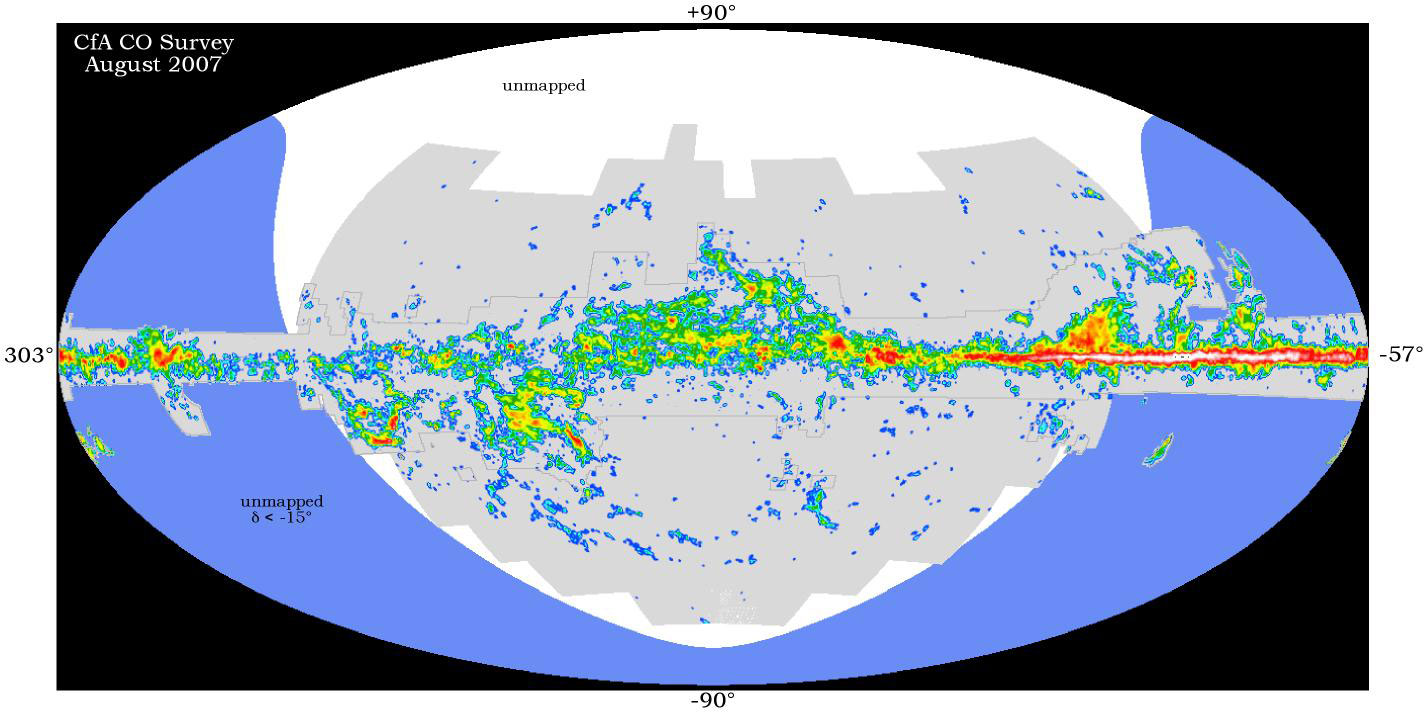
Perhaps the most powerful technique for detection of individual chemical species is radio astronomy, which has resulted in the detection of over a hundred interstellar species, including radicals and ions, and organic (i.e. carbon-based) compounds, such as alcohols, acids, aldehydes, and ketones. One of the most abundant interstellar molecules, and among the easiest to detect with radio waves (due to its strong electric dipole moment), is CO (carbon monoxide). In fact, CO is such a common interstellar molecule that it is used to map out molecular regions.[12] The radio observation of perhaps greatest human interest is the claim of interstellar glycine,[13] the simplest amino acid, but with considerable accompanying controversy.[14] One of the reasons why this detection was controversial is that although radio (and some other methods like rotational spectroscopy) are good for the identification of simple species with large dipole moments, they are less sensitive to more complex molecules, even something relatively small like amino acids.
Moreover, such methods are completely blind to molecules that have no dipole. For example, by far the most common molecule in the universe is H2 (hydrogen gas, or chemically better said dihydrogen), but it does not have a dipole moment, so it is invisible to radio telescopes. Moreover, such methods cannot detect species that are not in the gas-phase. Since dense molecular clouds are very cold (10 to 50 K [−263.1 to −223.2 °C; −441.7 to −369.7 °F]), most molecules in them (other than dihydrogen) are frozen, i.e. solid. Instead, dihydrogen and these other molecules are detected using other wavelengths of light. Dihydrogen is easily detected in the ultraviolet (UV) and visible ranges from its absorption and emission of light (the hydrogen line). Moreover, most organic compounds absorb and emit light in the infrared (IR) so, for example, the detection of methane in the atmosphere of Mars[15] was achieved using an IR ground-based telescope, NASA's 3-meter Infrared Telescope Facility atop Mauna Kea, Hawaii. NASA's researchers use airborne IR telescope SOFIA and space telescope Spitzer for their observations, researches and scientific operations.[16][17] Somewhat related to the recent detection of methane in the atmosphere of Mars. Christopher Oze, of the University of Canterbury in New Zealand and his colleagues reported, in June 2012, that measuring the ratio of dihydrogen and methane levels on Mars may help determine the likelihood of life on Mars.[18][19] According to the scientists, "...low H2/CH4 ratios (less than approximately 40) indicate that life is likely present and active."[18] Other scientists have recently reported methods of detecting dihydrogen and methane in extraterrestrial atmospheres.[20][21]
Infrared astronomy has also revealed that the interstellar medium contains a suite of complex gas-phase carbon compounds called polyaromatic hydrocarbons, often abbreviated PAHs or PACs. These molecules, composed primarily of fused rings of carbon (either neutral or in an ionized state), are said to be the most common class of carbon compound in the Galaxy. They are also the most common class of carbon molecule in meteorites and in cometary and asteroidal dust (cosmic dust). These compounds, as well as the amino acids, nucleobases, and many other compounds in meteorites, carry deuterium and isotopes of carbon, nitrogen, and oxygen that are very rare on Earth, attesting to their extraterrestrial origin. The PAHs are thought to form in hot circumstellar environments (around dying, carbon-rich red giant stars).
Infrared astronomy has also been used to assess the composition of solid materials in the interstellar medium, including silicates, kerogen-like carbon-rich solids, and ices. This is because unlike visible light, which is scattered or absorbed by solid particles, the IR radiation can pass through the microscopic interstellar particles, but in the process there are absorptions at certain wavelengths that are characteristic of the composition of the grains.[22] As above with radio astronomy, there are certain limitations, e.g. N2 is difficult to detect by either IR or radio astronomy.
Such IR observations have determined that in dense clouds (where there are enough particles to attenuate the destructive UV radiation) thin ice layers coat the microscopic particles, permitting some low-temperature chemistry to occur. Since dihydrogen is by far the most abundant molecule in the universe, the initial chemistry of these ices is determined by the chemistry of the hydrogen. If the hydrogen is atomic, then the H atoms react with available O, C and N atoms, producing "reduced" species like H2O, CH4, and NH3. However, if the hydrogen is molecular and thus not reactive, this permits the heavier atoms to react or remain bonded together, producing CO, CO2, CN, etc. These mixed-molecular ices are exposed to ultraviolet radiation and cosmic rays, which results in complex radiation-driven chemistry.[22] Lab experiments on the photochemistry of simple interstellar ices have produced amino acids.[23] The similarity between interstellar and cometary ices (as well as comparisons of gas phase compounds) have been invoked as indicators of a connection between interstellar and cometary chemistry. This is somewhat supported by the results of the analysis of the organics from the comet samples returned by the Stardust mission but the minerals also indicated a surprising contribution from high-temperature chemistry in the solar nebula.
Research
[edit]
Research is progressing on the way in which interstellar and circumstellar molecules form and interact, e.g. by including non-trivial quantum mechanical phenomena for synthesis pathways on interstellar particles.[25] This research could have a profound impact on our understanding of the suite of molecules that were present in the molecular cloud when the Solar System formed, which contributed to the rich carbon chemistry of comets and asteroids and hence the meteorites and interstellar dust particles which fall to the Earth by the ton every day.
The sparseness of interstellar and interplanetary space results in some unusual chemistry, since symmetry-forbidden reactions cannot occur except on the longest of timescales. For this reason, molecules and molecular ions which are unstable on Earth can be highly abundant in space, for example the H3+ ion.
Astrochemistry overlaps with astrophysics and nuclear physics in characterizing the nuclear reactions which occur in stars, as well as the structure of stellar interiors. If a star develops a largely convective envelope, dredge-up events can occur, bringing the products of nuclear burning to the surface. If the star is experiencing significant mass loss, the expelled material may contain molecules whose rotational and vibrational spectral transitions can be observed with radio and infrared telescopes. An interesting example of this is the set of carbon stars with silicate and water-ice outer envelopes. Molecular spectroscopy allows us to see these stars transitioning from an original composition in which oxygen was more abundant than carbon, to a carbon star phase where the carbon produced by helium burning is brought to the surface by deep convection, and dramatically changes the molecular content of the stellar wind.[26][27]
In October 2011, scientists reported that cosmic dust contains organic matter ("amorphous organic solids with a mixed aromatic-aliphatic structure") that could be created naturally, and rapidly, by stars.[28][29][30]
On August 29, 2012, and in a world first, astronomers at Copenhagen University reported the detection of a specific sugar molecule, glycolaldehyde, in a distant star system. The molecule was found around the protostellar binary IRAS 16293-2422, which is located 400 light years from Earth.[31][32] Glycolaldehyde is needed to form ribonucleic acid, or RNA, which is similar in function to DNA. This finding suggests that complex organic molecules may form in stellar systems prior to the formation of planets, eventually arriving on young planets early in their formation.[33]
In September, 2012, NASA scientists reported that polycyclic aromatic hydrocarbons (PAHs), subjected to interstellar medium (ISM) conditions, are transformed, through hydrogenation, oxygenation and hydroxylation, to more complex organics – "a step along the path toward amino acids and nucleotides, the raw materials of proteins and DNA, respectively".[34][35] Further, as a result of these transformations, the PAHs lose their spectroscopic signature which could be one of the reasons "for the lack of PAH detection in interstellar ice grains, particularly the outer regions of cold, dense clouds or the upper molecular layers of protoplanetary disks."[34][35]
In February 2014, NASA announced the creation of an improved spectral database [36] for tracking polycyclic aromatic hydrocarbons (PAHs) in the universe. According to scientists, more than 20% of the carbon in the universe may be associated with PAHs, possible starting materials for the formation of life. PAHs seem to have been formed shortly after the Big Bang, are widespread throughout the universe, and are associated with new stars and exoplanets.[37]
On August 11, 2014, astronomers released studies, using the Atacama Large Millimeter/Submillimeter Array (ALMA) for the first time, that detailed the distribution of HCN, HNC, H2CO, and dust inside the comae of comets C/2012 F6 (Lemmon) and C/2012 S1 (ISON).[38][39]
For the study of the recourses of chemical elements and molecules in the universe is developed the mathematical model of the molecules composition distribution in the interstellar environment on thermodynamic potentials by professor M.Yu. Dolomatov using methods of the probability theory, the mathematical and physical statistics and the equilibrium thermodynamics.[40][41][42] Based on this model are estimated the resources of life-related molecules, amino acids and the nitrogenous bases in the interstellar medium. The possibility of the oil hydrocarbons molecules formation is shown. The given calculations confirm Sokolov's and Hoyl's hypotheses about the possibility of the oil hydrocarbons formation in Space. Results are confirmed by data of astrophysical supervision and space researches.
In July 2015, scientists reported that upon the first touchdown of the Philae lander on comet 67/P's surface, measurements by the COSAC and Ptolemy instruments revealed sixteen organic compounds, four of which were seen for the first time on a comet, including acetamide, acetone, methyl isocyanate and propionaldehyde.[43][44][45]
In December 2023, astronomers reported the first time discovery, in the plumes of Enceladus, moon of the planet Saturn, of hydrogen cyanide, a possible chemical essential for life[46] as we know it, as well as other organic molecules, some of which are yet to be better identified and understood. According to the researchers, "these [newly discovered] compounds could potentially support extant microbial communities or drive complex organic synthesis leading to the origin of life."[47][48]
See also
[edit]- Astrobotany – Study of plants grown in spacecraft
- Astrobiology – Science concerned with life in the universe
- Astrophysics – Subfield of astronomy
- Astrosciences – Overview of and topical guide to space science
- Hemolithin – Protein claimed to be of extraterrestrial origin
- Interstellar medium – Matter and radiation in the space between the star systems in a galaxy
- List of interstellar and circumstellar molecules
- Molecular astrophysics – Field of study on atomic and molecular particles in space
- Nucleocosmochronology – Technique to determine timescales for astrophysical objects and events
- Recombination – Epoch c. 370,000 years after the Big Bang
- Reionization – Cosmological process in the early universe
References
[edit]- ^ "Astrochemistry". www.cfa.harvard.edu/. 2013-07-15. Archived from the original on 2016-11-20. Retrieved 2016-11-20.
- ^ Burns, Thorburn (1987). "Aspects of the development of colorimetric analysis and quantitative molecular spectroscopy in the ultraviolet-visible region". In Burgess, C.; Mielenz, K. D. (eds.). Advances in Standards and Methodology in Spectrophotometry. Burlington: Elsevier Science. p. 1. ISBN 978-0444599056.
- ^ "A Timeline of Atomic Spectroscopy". Archived from the original on 9 August 2014. Retrieved 24 November 2012.
- ^ Charles Wheatstone (1836). "On the prismatic decomposition of electrical light". Journal of the Franklin Institute. 22 (1): 61–63. doi:10.1016/S0016-0032(36)91307-8.
- ^ Bohr, N Rydberg's discovery of the spectral laws. p. 16.
- ^ Swings, P. & Rosenfeld, L. (1937). "Considerations Regarding Interstellar Molecules". Astrophysical Journal. 86: 483–486. Bibcode:1937ApJ....86..483.. doi:10.1086/143879.
{{cite journal}}: CS1 maint: multiple names: authors list (link) - ^ McKellar, A. (1940). "Evidence for the Molecular Origin of Some Hitherto Unidentified Interstellar Lines". Publications of the Astronomical Society of the Pacific. 52 (307): 187. Bibcode:1940PASP...52..187M. doi:10.1086/125159. S2CID 122134703.
- ^ S. Weinreb, A. H. Barrett, M. L. Meeks & J. C. Henry (1963). "Radio Observations of OH in the Interstellar Medium". Nature. 200 (4909): 829–831. Bibcode:1963Natur.200..829W. doi:10.1038/200829a0. S2CID 38569542.
{{cite journal}}: CS1 maint: multiple names: authors list (link)) - ^ Lewis E. Snyder, David Buhl, B. Zuckerman, and Patrick Palmer (1969). "Microwave Detection of Interstellar Formaldehyde". Phys. Rev. Lett. 22 (13): 679–681. Bibcode:1969PhRvL..22..679S. doi:10.1103/PhysRevLett.22.679.
{{cite journal}}: CS1 maint: multiple names: authors list (link) - ^ "NASA Researchers Make First Discovery of Life's Building Block in Comet". Retrieved 8 June 2017.
- ^ Brett A. McGuire, P. Brandon Carroll, Ryan A. Loomis, Ian A. Finneran, Philip R. Jewell, Anthony J. Remijan, Geoffrey A. Blake (2016). "Discovery of the interstellar chiral molecule propylene oxide (CH3CHCH2O)". Science. 352 (6292): 1449–1452. arXiv:1606.07483. Bibcode:2016Sci...352.1449M. doi:10.1126/science.aae0328. PMID 27303055. S2CID 23838503.
{{cite journal}}: CS1 maint: multiple names: authors list (link) - ^ "CO_survey_aitoff.jpg". Harvard University. 18 Jan 2008. Retrieved 18 Apr 2013.
- ^ Kuan, Y. J.; Charnley, S. B.; Huang, H. C.; et al. (2003). "Interstellar glycine". Astrophys. J. 593 (2): 848–867. Bibcode:2003ApJ...593..848K. doi:10.1086/375637.
- ^ Snyder, L. E.; Lovas, F. J.; Hollis, J. M.; et al. (2005). "A rigorous attempt to verify interstellar glycine". Astrophys. J. 619 (2): 914–930. arXiv:astro-ph/0410335. Bibcode:2005ApJ...619..914S. doi:10.1086/426677. S2CID 16286204.
- ^ Mumma; Villanueva, GL; Novak, RE; Hewagama, T; Bonev, BP; Disanti, MA; Mandell, AM; Smith, MD; et al. (2009). "Strong Release of Methane on Mars in Northern Summer 2003". Science. 323 (5917): 1041–1045. Bibcode:2009Sci...323.1041M. doi:10.1126/science.1165243. PMID 19150811. S2CID 25083438.
- ^ "upGREAT – a new far-infrared spectrometer for SOFIA". DLR Portal. Archived from the original on 2016-11-21. Retrieved 2016-11-21.
- ^ Greicius, Tony (2015-03-26). "Spitzer Space Telescope – Mission Overview". NASA. Retrieved 2016-11-21.
- ^ a b Oze, Christopher; Jones, Camille; Goldsmith, Jonas I.; Rosenbauer, Robert J. (June 7, 2012). "Differentiating biotic from abiotic methane genesis in hydrothermally active planetary surfaces". PNAS. 109 (25): 9750–9754. Bibcode:2012PNAS..109.9750O. doi:10.1073/pnas.1205223109. PMC 3382529. PMID 22679287.
- ^ Staff (June 25, 2012). "Mars Life Could Leave Traces in Red Planet's Air: Study". Space.com. Retrieved June 27, 2012.
- ^ Brogi, Matteo; Snellen, Ignas A. G.; De Kok, Remco J.; Albrecht, Simon; Birkby, Jayne; De Mooij, Ernest J. W. (June 28, 2012). "The signature of orbital motion from the dayside of the planet t Boötis b". Nature. 486 (7404): 502–504. arXiv:1206.6109. Bibcode:2012Natur.486..502B. doi:10.1038/nature11161. PMID 22739313. S2CID 4368217.
- ^ Mann, Adam (June 27, 2012). "New View of Exoplanets Will Aid Search for E.T." Wired. Retrieved June 28, 2012.
- ^ a b "The Astrophysics & Astrochemistry Laboratory". NASA Ames Research Center. 10 Sep 2013. Retrieved 18 Apr 2014.[permanent dead link]
- ^ "Astrobiology: Photochemistry on ice". Macmillan Publishers Ltd. 28 Mar 2002. Retrieved 18 Apr 2014.
- ^ "Turbulent border". www.eso.org. Archived from the original on 16 August 2016. Retrieved 15 August 2016.
- ^ Trixler, F (2013). "Quantum tunnelling to the origin and evolution of life". Current Organic Chemistry. 17 (16): 1758–1770. doi:10.2174/13852728113179990083. PMC 3768233. PMID 24039543.
- ^ Wallerstein, George; Knapp, Gillian R. (September 1998). "Carbon Stars". Annual Review of Astronomy and Astrophysics. 36: 369–433. Bibcode:1998ARA&A..36..369W. doi:10.1146/annurev.astro.36.1.369. Retrieved 30 January 2021.
- ^ Suh, Kyung-Won (29 February 2016). "A Model for the Dust Envelope of the Silicate Carbon Star Iras 09425-6040". The Astrophysical Journal. 819 (1): 61. Bibcode:2016ApJ...819...61S. doi:10.3847/0004-637X/819/1/61. S2CID 123696114.
- ^ Chow, Denise (26 October 2011). "Discovery: Cosmic Dust Contains Matter from Stars". Space.com. Retrieved 2011-10-26.
- ^ ScienceDaily Staff (26 October 2011). "Astronomers Discover Complex Organic Matter Exists Throughout the Universe". ScienceDaily. Retrieved 2011-10-27.
- ^ Kwok, Sun; Zhang, Yong (26 October 2011). "Mixed aromatic–aliphatic organic nanoparticles as carriers of unidentified infrared emission features". Nature. 479 (7371): 80–83. Bibcode:2011Natur.479...80K. doi:10.1038/nature10542. PMID 22031328. S2CID 4419859.
- ^ Than, Ker (August 29, 2012). "Sugar Found In Space". National Geographic. Archived from the original on September 1, 2012. Retrieved August 31, 2012.
- ^ Staff (August 29, 2012). "Sweet! Astronomers spot sugar molecule near star". AP News. Retrieved August 31, 2012.
- ^ Jørgensen, J. K.; Favre, C.; Bisschop, S.; Bourke, T.; Dishoeck, E.; Schmalzl, M. (2012). "Detection of the simplest sugar, glycolaldehyde, in a solar-type protostar with ALMA" (PDF). The Astrophysical Journal Letters. eprint. 757 (1): L4. arXiv:1208.5498. Bibcode:2012ApJ...757L...4J. doi:10.1088/2041-8205/757/1/L4. S2CID 14205612.
- ^ a b Staff (September 20, 2012). "NASA Cooks Up Organics to Mimic Life's Origins". Space.com. Retrieved September 22, 2012.
- ^ a b Gudipati, Murthy S.; Yang, Rui (September 1, 2012). "In-Situ Probing Of Radiation-Induced Processing Of Organics In Astrophysical Ice Analogs – Novel Laser Desorption Laser Ionization Time-Of-Flight Mass Spectroscopic Studies". The Astrophysical Journal Letters. 756 (1): L24. Bibcode:2012ApJ...756L..24G. doi:10.1088/2041-8205/756/1/L24. S2CID 5541727.
- ^ "NASA Ames PAH IR Spectroscopic Database". The Astrophysics & Astrochemistry Laboratory, NASA-Ames. 29 Oct 2013. Archived from the original on 16 April 2014. Retrieved 18 Apr 2014.
- ^ Hoover, Rachel (February 21, 2014). "Need to Track Organic Nano-Particles Across the Universe? NASA's Got an App for That". NASA. Archived from the original on May 10, 2020. Retrieved February 22, 2014.
- ^ Zubritsky, Elizabeth; Neal-Jones, Nancy (August 11, 2014). "NASA's 3-D Study of Comets Reveals Chemical Factory at Work". NASA. Retrieved August 12, 2014.
- ^ Cordiner, M.A.; et al. (August 11, 2014). "Mapping the Release of Volatiles in the Inner Comae of Comets C/2012 F6 (Lemmon) and C/2012 S1 (ISON) Using the Atacama Large Millimeter/Submillimeter Array". The Astrophysical Journal. 792 (1): L2. arXiv:1408.2458. Bibcode:2014ApJ...792L...2C. doi:10.1088/2041-8205/792/1/L2. S2CID 26277035.
- ^ Dolomatov, Michel Y. (May 2014). "Thermodynamic models of the distribution of life-related organic molecules in the interstellar medium". Astrophysics and Space Science. 351 (1): 213–218. Bibcode:2014Ap&SS.351..213D. doi:10.1007/s10509-014-1844-8. S2CID 119971379.
- ^ Dolomatov, Michel Yu.; Zhuravliova, Nadezhda A.; Tanatarova, Diana R. (20 July 2014). "About Organic Systems Origin According to Equilibrium Thermodynamic Models of Molecules Distribution in Interstellar Medium". Applied Physics Research. 6 (5). doi:10.5539/apr.v6n5p65.
- ^ Dolomatov, Michel Yu.; Zhuravliova, Nadezhda A.; Tanatarova, Diana R. (25 Sep 2012). "The Thermodynamic Models of Molecular Chemical Compound Distribution in the Giant Molecular Clouds Medium". Applied Physics Research. 6 (5). Bibcode:2012ApPhR...4.....D. doi:10.5539/apr.v6n5p65.
- ^ Jordans, Frank (July 30, 2015). "Philae probe finds evidence that comets can be cosmic labs". The Washington Post. Associated Press. Archived from the original on October 7, 2019. Retrieved July 30, 2015.
- ^ "Science on the Surface of a Comet". European Space Agency. July 30, 2015. Retrieved July 30, 2015.
- ^ Bibring, J.-P.; Taylor, M.G.G.T.; Alexander, C.; Auster, U.; Biele, J.; Finzi, A. Ercoli; Goesmann, F.; Klingehoefer, G.; Kofman, W.; Mottola, S.; Seidenstiker, K.J.; Spohn, T.; Wright, I. (July 31, 2015). "Philae's First Days on the Comet - Introduction to Special Issue". Science. 349 (6247): 493. Bibcode:2015Sci...349..493B. doi:10.1126/science.aac5116. PMID 26228139.
- ^ Green, Jaime (5 December 2023). "What Is Life? - The answer matters in space exploration. But we still don't really know". The Atlantic. Archived from the original on 5 December 2023. Retrieved 15 December 2023.
- ^ Chang, Kenneth (14 December 2023). "Poison Gas Hints at Potential for Life on an Ocean Moon of Saturn - A researcher who has studied the icy world said "the prospects for the development of life are getting better and better on Enceladus."". The New York Times. Archived from the original on 14 December 2023. Retrieved 15 December 2023.
- ^ Peter, Jonah S.; et al. (14 December 2023). "Detection of HCN and diverse redox chemistry in the plume of Enceladus". Nature Astronomy. 8 (2): 164–173. arXiv:2301.05259. doi:10.1038/s41550-023-02160-0. Archived from the original on 15 December 2023. Retrieved 15 December 2023.
External links
[edit]
- Astrochemistry division of the International Astronomical Union
- The University of Arizona Astrochemistry Group
- Astrophysics & Astrochemistry at Astrochemistry.eu
- The Astrochemistry Lab at NASA Ames Research Center
- The Astrochemistry Lab at NASA Goddard Space Flight Center
- The University of Leiden Laboratory for Astrophysics
- The astrochemist (Resources for Astrochemists & Interested Bystanders)
| Astronomy by |
| ||||||||||
|---|---|---|---|---|---|---|---|---|---|---|---|
| Optical telescopes | |||||||||||
| Related |
| ||||||||||


Astrochemistry
View on GrokipediaFundamentals
Definition and Scope
Astrochemistry is the study of chemical processes occurring in space, encompassing the formation, evolution, abundances, and destruction of molecules under extreme astrophysical conditions such as temperatures ranging from ~10 K to 10^6 K, densities from ~10^{-3} to 10^7 cm^{-3}, and intense radiation fields.[6] This field investigates how atoms and molecules interact in non-terrestrial environments, revealing the chemical complexity of the universe beyond Earth's familiar conditions.[7] As a multidisciplinary discipline, astrochemistry integrates principles from chemistry, physics, and astronomy to model and interpret these processes, often relying on observational data like spectroscopy for molecular detection.[1] The scope of astrochemistry extends to diverse cosmic settings, including the interstellar medium (ISM) with its diffuse and molecular clouds, circumstellar envelopes around stars, protoplanetary disks, planetary atmospheres, comets, and meteorites.[6][1] Key environments include the near-vacuum of interstellar space, where gas-phase reactions dominate; dust grains that facilitate surface chemistry and ice mantle formation; and regions influenced by ion-neutral interactions and photochemistry driven by ultraviolet radiation or cosmic rays.[6] Molecular chemistry often focuses on colder (~10–100 K) and denser (10^2–10^7 cm^{-3}) regions, but the field encompasses a wide range of conditions. This breadth distinguishes astrochemistry from cosmochemistry, which primarily examines the bulk elemental and isotopic compositions of solar system bodies through sample analysis, and from planetary atmospheric chemistry, which is largely confined to Earth-specific dynamics rather than extraterrestrial contexts.[8][9] By bridging molecular-scale reactions with large-scale astronomical phenomena, astrochemistry provides insights into the chemical foundations of star and planet formation, as well as the origins of organic matter potentially linked to life's precursors.[7] Its interdisciplinary approach draws on astronomical observations, theoretical modeling, and laboratory simulations to address these questions, emphasizing the universal applicability of chemical laws across vastly different physical regimes.[1][6]Importance to Astronomy and Astrophysics
Astrochemistry plays a pivotal role in understanding star formation by enabling the tracing of molecular distributions in dense interstellar clouds, where molecules such as H₂ and CO serve as key diagnostics for the physical conditions that trigger gravitational collapse and the subsequent formation of protoplanetary disks.[10] These molecules, formed on dust grain surfaces or through gas-phase reactions, help map the transition from diffuse to dense regions, revealing how cooling mechanisms facilitated by H₂ allow clouds to become gravitationally unstable, thereby influencing the efficiency and sites of star birth across galaxies.[11] For instance, CO emission lines observed in molecular clouds provide estimates of mass and density, essential for modeling the initial mass function of stars.[12] In the broader context of galaxy evolution, astrochemistry elucidates chemical gradients that reflect the progressive enrichment of the interstellar medium with metals over cosmic time, as heavier elements from stellar nucleosynthesis are dispersed into the gas phase and incorporated into molecules.[13] Observations of molecular abundances, such as varying ratios of carbon monoxide to nitrogen-bearing species across galactic disks, indicate how star formation rates and supernova feedback have driven metallicity increases from early epochs to the present, with gradients steepening in more massive galaxies due to inward metal transport.[14] This molecular perspective complements atomic tracers, offering insights into the recycling of elements that fuel ongoing galaxy growth and morphological evolution.[15] Astrochemistry bridges to astrobiology by identifying prebiotic molecules, including amino acids detected in meteorites like Murchison, which suggest that organic building blocks essential for life could have been delivered to early planetary surfaces via cometary and asteroidal impacts.[16] These findings imply that interstellar chemistry produces complex organics, such as glycine and other amino acids, through ion-molecule reactions in cold clouds, potentially seeding habitable environments and informing models of life's origins on Earth and beyond.[9] Furthermore, astrochemistry contributes to fundamental physics by testing quantum chemical models under extreme conditions, such as non-local thermodynamic equilibrium (non-LTE) excitations in dilute, irradiated environments where collisional rates with H₂ or electrons deviate from thermal predictions.[17] Accurate quantum scattering calculations for molecular transitions, validated against interstellar observations, refine our understanding of radiative transfer and energy levels in ways unattainable in terrestrial labs.[18] On a practical level, astrochemistry guides the design and interpretation of major astronomical facilities, such as the James Webb Space Telescope (JWST) for infrared detection of complex organics in distant star-forming regions and the Atacama Large Millimeter/submillimeter Array (ALMA) for high-resolution mapping of molecular lines in nearby galaxies, thereby advancing space exploration missions and our comprehension of cosmic habitability.[19] These tools have already enabled breakthroughs in tracing chemical evolution during galaxy assembly, with implications for future probes like the Habitable Worlds Observatory.[20]Historical Development
Early Observations and Spectroscopy
The foundations of spectroscopic techniques pivotal to astrochemistry trace back to the 19th century, when early observations of stellar and solar spectra revealed distinct absorption and emission lines. In 1814, Joseph von Fraunhofer identified and cataloged approximately 700 dark absorption lines in the solar spectrum, now known as Fraunhofer lines, using prisms to disperse sunlight and mark a foundational step in understanding spectral features from celestial bodies.[21] Building on this, Gustav Kirchhoff and Robert Bunsen advanced the field in 1859–1860 by inventing the spectroscope and demonstrating that these lines correspond to specific atomic emissions and absorptions, enabling the identification of elements in distant stars through matching laboratory spectra to astronomical observations.[22] Their work established spectroscopy as a tool for chemical analysis in astronomy, linking terrestrial chemistry to cosmic phenomena.[23] The first detections of interstellar molecules emerged in the 1930s through optical spectroscopy of diffuse interstellar clouds along lines of sight to stars. In 1937, Theodore Dunham observed unidentified lines in the spectrum of HD 145502, which Paul Swings and Leon Rosenfeld attributed to the CH radical based on laboratory data, marking the initial identification of an interstellar molecule.[24] Shortly thereafter, the same researchers proposed CH⁺ as responsible for additional lines, confirmed by subsequent observations, highlighting the presence of simple molecular species in the cold interstellar medium.[25] These optical detections, occurring in the violet and blue regions, relied on high-resolution slit spectrographs and underscored the role of absorption lines in probing interstellar chemistry. Mid-20th-century advancements in radio astronomy further expanded spectroscopic capabilities for molecular studies. In 1941, Andrew McKellar analyzed cyanogen (CN) absorption lines toward several stars and derived a rotational excitation temperature of approximately 2.3 K for the interstellar medium, providing the first empirical estimate of its low thermal environment and foreshadowing later cosmic microwave background discoveries. This analysis built on earlier optical work and emphasized the utility of molecular rotational transitions for temperature diagnostics. By 1963, the detection of hydroxyl (OH) in absorption at 18 cm wavelength by Amnon Weinreb and colleagues using early radio telescopes marked the first radio-frequency identification of an interstellar molecule, leveraging post-war receiver technologies to access previously invisible spectral regimes. Anomalous emission from OH, interpreted as maser action, was soon observed in 1965 by Harold Weaver and team, revealing amplified signals from star-forming regions and accelerating interest in molecular radio spectroscopy. Key instrumental developments, including grating spectrometers, enhanced access to ultraviolet (UV) and infrared (IR) spectra crucial for early molecular observations. Henry Augustus Rowland's invention of the concave diffraction grating in the 1880s provided higher resolution and dispersion than prisms, facilitating detailed stellar spectra and extensions into UV wavelengths for detecting short-lived species.[26] These gratings enabled precise wavelength measurements essential for matching interstellar lines to molecular transitions. The transition to a molecular era in astrochemistry was catalyzed by post-World War II repurposing of radar technologies for radio astronomy. Surplus wartime radar receivers and antennas, developed for microwave detection, were adapted into sensitive radio telescopes by the late 1940s, allowing observations at centimeter and millimeter wavelengths where molecular rotational lines dominate.[27] This technological shift, exemplified by early instruments like the 21 cm hydrogen line detectors, bridged optical spectroscopy with radio methods and laid the groundwork for systematic interstellar molecular surveys.[28]Emergence of Astrochemistry as a Field
The emergence of astrochemistry as a distinct field began in the late 1960s, catalyzed by groundbreaking detections of interstellar molecules that shifted paradigms from predominantly atomic to molecular views of the interstellar medium (ISM). In 1968, the first polyatomic molecule, ammonia (NH₃), was detected via its ground-state inversion transitions toward the galactic center using radio observations at Hat Creek Observatory, marking a pivotal moment that demonstrated the viability of complex chemistry in space.[29] This discovery, led by Charles H. Townes and colleagues, refuted prevailing theories that interstellar conditions were too harsh for stable molecules beyond simple diatomics like CH and CN identified earlier via optical spectroscopy. Building on this, molecular hydrogen (H₂), the most abundant interstellar molecule, was detected in 1970 through ultraviolet absorption lines in the spectrum of ξ Persei using a rocket-borne spectrometer, confirming the presence of dense molecular clouds and spurring further searches.[30] The 1970s saw the formalization of astrochemistry through institutional developments and theoretical frameworks. Early conferences, such as the 1971 Symposium on Interstellar Molecules at the National Radio Astronomy Observatory in Charlottesville, facilitated discussions among astronomers, chemists, and physicists, fostering interdisciplinary collaboration.[31] Similarly, the 1979 IAU Symposium No. 87 on Interstellar Molecules at Mont-Tremblant brought together experts to review detections and models, solidifying the field's momentum. Key contributors included Takeshi Oka, who advanced studies of polyatomic species through laboratory spectroscopy starting in the late 1960s, enabling identifications like H₃⁺.[32] Theoretical progress was driven by gas-phase ion-molecule reaction models, notably the 1973 work by Eric Herbst and William Klemperer, which simulated molecular abundances in dense clouds by incorporating radiative associations and charge transfers, achieving agreement with observations within factors of 10.[33] This era also emphasized dust grain chemistry, with D. A. Williams highlighting surface reactions in the 1970s and 1980s as essential for H₂ formation and ice mantles, complementing gas-phase processes.[34] By the 1990s and early 2000s, astrochemistry integrated deeply with star formation theories, using molecules as tracers of cloud dynamics and collapse. Precursor facilities to the Atacama Large Millimeter/submillimeter Array (ALMA), such as the 30-meter telescope at the Institut de Radioastronomie Millimétrique (IRAM) operational since 1984 and the James Clerk Maxwell Telescope (JCMT) since 1987, enabled high-resolution mapping of molecular distributions in protostellar regions. These observations revealed how chemical evolution correlates with evolutionary stages, from prestellar cores rich in CO and N₂H⁺ to warm envelopes with complex organics, informing models of disk formation and planet-building. Significant late-20th-century milestones included the 1995 detection of glycolaldehyde, the first interstellar sugar-related molecule, and observations from the Submillimeter Wave Astronomy Satellite (SWAS, launched 1998) confirming widespread water vapor.[35] The field's growth reflected a broader recognition of astrochemistry's role in understanding the molecular universe, with over 180 species detected by the early 2000s, primarily through rotational spectroscopy.[35]Methods and Techniques
Observational Spectroscopy
Observational spectroscopy serves as the primary method for detecting and characterizing chemical species in astrophysical environments, enabling astronomers to identify molecular signatures through their emission and absorption lines across the electromagnetic spectrum. This approach relies on the unique spectral transitions of atoms and molecules, which reveal information about their abundance, temperature, and dynamics without direct physical access to distant regions. In astrochemistry, these techniques have revolutionized our understanding of interstellar and circumstellar chemistry by providing empirical data that constrains theoretical models. The main types of spectroscopy employed include radio and millimeter-wave observations, which target rotational transitions of molecules, such as the J=1-0 line of carbon monoxide (CO) at 115.271 GHz, allowing detection of cold molecular gas in dense clouds. Infrared (IR) spectroscopy probes vibrational modes, particularly useful for identifying ices and warm gas phases, while ultraviolet (UV) and optical spectroscopy captures electronic transitions, often revealing ionized or excited species in diffuse or high-energy environments. These methods exploit the fact that different wavelengths penetrate varying interstellar conditions, with radio/mm waves being less affected by dust and suitable for tracing abundant carriers like CO and HCN.[35] Key instruments have advanced these capabilities significantly. The Atacama Large Millimeter/submillimeter Array (ALMA) provides high-resolution millimeter-wave spectroscopy, resolving molecular line emission on scales of arcseconds to probe kinematics and chemistry in star-forming regions. The James Webb Space Telescope (JWST), equipped with the Mid-Infrared Instrument (MIRI), excels in mid-IR spectroscopy from 5 to 28 μm, enabling detailed studies of vibrational features in protoplanetary disks and envelopes. The Herschel Space Observatory, operational from 2009 to 2013, delivered far-IR observations that detected water ice features around 45-170 μm, illuminating ice chemistry in cold clouds.[36][37] Data analysis in observational spectroscopy involves interpreting line profiles to infer gas kinematics, such as velocities from Doppler shifts, and deriving isotopic ratios like ^{12}C/^{13}C ≈ 60-90 to estimate molecular abundances relative to total hydrogen. Non-local thermodynamic equilibrium (non-LTE) modeling is essential for excited conditions, using radiative transfer codes like RADEX to compute line intensities based on collisional excitation rates and escape probabilities in homogeneous slabs. These tools account for optical depth effects and background radiation, yielding physical parameters like column densities and excitation temperatures.[38][35] Detection sensitivities reach relative abundances as low as 10^{-9} with respect to H_2 in millimeter surveys of dark clouds, limited by noise and beam dilution, though challenges like foreground extinction in IR/UV bands obscure lines of sight through dense material, necessitating corrections via multi-band fitting. Multi-wavelength approaches enhance comprehensiveness by integrating X-ray observations, which trace ionization from high-energy processes, with sub-millimeter cooling lines to map energy balance in photo-dissociation regions and outflows.[38][35]Laboratory and Computational Approaches
Laboratory simulations play a crucial role in astrochemistry by replicating the extreme conditions of the interstellar medium (ISM), such as low temperatures around 10 K and high vacuum, to study ice mantle formation and surface reactions on dust grains. Cryogenic ultra-high vacuum chambers are commonly used to deposit and process thin ice layers, mimicking the accretion of molecules like H₂O, CO, and CH₃OH onto grain surfaces, followed by irradiation with ultraviolet photons or ions to simulate cosmic ray impacts. For instance, these setups enable the investigation of photodesorption and energetic processing that lead to complex organic molecule formation. Crossed-beam experiments, on the other hand, measure gas-phase reaction rates and dynamics under collision conditions relevant to diffuse clouds, providing kinetic data for barrierless ion-molecule reactions.[39][40] Key facilities advance these simulations through specialized instrumentation. The NASA Cosmic Ice Laboratory at Goddard Space Flight Center employs cryogenic chambers for ultraviolet photolysis of astrophysical ices, quantifying product yields and spectral signatures from irradiated mixtures like H₂O:CH₃OH. In Europe, the SURFRESIDE apparatus at Leiden Observatory, University of Leiden, Netherlands studies surface reactions under interstellar conditions, using temperature-programmed desorption to probe diffusion and recombination on amorphous ice analogs at 10–100 K. These labs integrate diagnostics such as Fourier-transform infrared spectroscopy and mass spectrometry to characterize reaction products and mechanisms.[41] Computational methods complement laboratory work by modeling reaction pathways and large-scale networks. Quantum chemistry calculations, often at the coupled-cluster CCSD(T) level with augmented correlation-consistent basis sets, compute accurate potential energy surfaces for gas-phase and surface reactions, revealing transition states and energetics for species like H + H₂O. Astrochemical models incorporate these into extensive reaction networks, such as the UMIST Database for Astrochemistry (UDfA), which includes over 6000 gas-phase reactions involving hundreds of species to simulate time-dependent chemistry in clouds. Rate coefficients for gas-phase reactions follow the modified Arrhenius form , where , , and are fitted parameters; for grain surfaces, diffusion is modeled via hopping rates that depend on binding energies and temperature, often using rate equations or kinetic Monte Carlo simulations.[42][43][43] Validation of these approaches involves direct comparisons between laboratory-derived spectra and astronomical observations from telescopes, ensuring that simulated infrared band positions and intensities match those of interstellar ices. For example, lab-measured optical constants for H₂O:CO ices align with Spitzer and Herschel data, refining model inputs. Uncertainty propagation in computational models quantifies sensitivities to rate coefficients and binding energies, highlighting key reactions that dominate molecular abundances and guiding targeted experiments.[44][45]Interstellar Medium Chemistry
Molecular Composition and Detection
The interstellar medium (ISM) hosts a diverse array of molecules, ranging from simple diatomic species to complex organics, with their compositions varying significantly across different environments such as diffuse clouds and dense molecular cores. These molecules are primarily detected through rotational and vibrational spectroscopy, revealing an inventory that reflects the physical conditions like density, temperature, and radiation exposure. Inorganic molecules dominate the mass budget, while organic species provide insights into chemical complexity. As of November 2025, 339 molecules have been confirmed in interstellar or circumstellar environments, cataloged in the Cologne Database for Molecular Spectroscopy (CDMS).[46] Among inorganic molecules, molecular hydrogen (H₂) is the most abundant, serving as the primary constituent of the ISM with typical column densities reaching ~10²¹ cm⁻² in diffuse regions. Carbon monoxide (CO) acts as a key tracer of molecular gas, exhibiting column densities up to ~10¹⁶ cm⁻² and a fractional abundance relative to H₂ of [CO]/[H₂] ≈ 10⁻⁴ in dense clouds, though it drops to lower values (~10⁻⁶) in warmer, diffuse layers where carbon is less efficiently locked into CO. Ions such as the trihydrogen cation (H₃⁺) play crucial roles in ion-molecule reactions, with abundances relative to H₂ around 10⁻⁸ in diffuse ISM, higher than in dense clouds due to enhanced cosmic-ray ionization and reduced recombination rates.[47][48][49] Organic molecules in the ISM span simple species like methanol (CH₃OH) and formaldehyde (H₂CO), which exhibit fractional abundances of [CH₃OH]/[H₂] ≈ 10⁻⁹ to 10⁻⁷ and [H₂CO]/[H₂] ≈ 10⁻⁹ in dense cores, formed largely through ice mantle processes. More complex organics, such as glycolaldehyde (CH₂OHCHO), were detected in the star-forming region Sgr B2 in 2012 via submillimeter observations, highlighting prebiotic chemistry with abundances around 10⁻¹¹ relative to H₂. Fullerenes like C₆₀ represent carbon cage structures, first identified in 2010 through infrared emission in reflection nebulae, with estimated abundances suggesting they account for 0.1–0.6% of the available carbon in certain environments, such as reflection nebulae.[50][51][52] Abundances of these molecules vary markedly by cloud type: in diffuse ISM (n_H ~ 10–100 cm⁻³), fractional abundances for tracers like CO are lower due to photodissociation, while in dense cores (n_H > 10⁴ cm⁻³), shielding enables higher concentrations of both simple and complex species, with organics enhanced by up to orders of magnitude. Detection trends show increasing molecular complexity toward star-forming regions, where warm temperatures (>100 K) in hot cores liberate grain-mantle ices, boosting complex organic molecules (COMs) like CH₃OH derivatives. Isotopic variants, such as ¹³CN, reveal fractionation effects driven by selective ion-molecule reactions, with ¹²C/¹³C ratios in CN often deviating from the standard ~60–90 due to kinetic preferences for lighter isotopes. Anionic species, including C₆H⁻, detected in 2006 toward IRC+10216, have fractional abundances ~10⁻⁸ relative to H₂ in envelopes, underscoring the role of radiative association in negative ion formation.[53][54][55][56]| Molecule Type | Example | Typical Fractional Abundance ([X]/[H₂]) | Environment |
|---|---|---|---|
| Inorganic | H₂ | ~1 | All ISM |
| Inorganic | CO | 10⁻⁴ | Dense cores |
| Inorganic | H₃⁺ | 10⁻⁸ | Diffuse |
| Simple Organic | CH₃OH | 10⁻⁹ – 10⁻⁷ | Dense cores |
| Complex Organic | CH₂OHCHO | ~10⁻¹¹ | Star-forming |
| Anionic | C₆H⁻ | ~10⁻⁸ | Envelopes |