Hubbry Logo
CarbodiesCarbodiesMain
Open search
Carbodies
Community hub
Carbodies
logo
7 pages, 0 posts
0 subscribers
Be the first to start a discussion here.
Carbodies
Carbodies
from Wikipedia

Carbodies was a taxi design and manufacturing company based in Coventry, England. In its latter years it also traded as London Taxis International and The London Taxi Company.

Key Information

It operated a coachbuilding business on Holyhead Road, Coventry. After half a century making short runs of limited demand bodies for major manufacturers it was obliged to replace these now moribund activities and in 1971 took from its former customer and supplier of taxi chassis, Austin, the manufacture of complete London taxicabs. Two years later was bought by Manganese Bronze Holdings.

Rebranded as The London Taxi Company in October 2010, it was placed in administration in October 2012, with certain assets purchased by Geely to form what is now the London EV Company.

History

[edit]

The origins of The London Taxi Company can be traced to 1919, when Robert 'Bobby' Jones, a former general manager at coachbuilder Hollick & Pratt took over the coachbuilding operations of his then employer, timber merchants Gooderhams and set up in business in premises acquired from Thomas Pass in West Orchard, Coventry.[1]

1919–1954

[edit]

Standardised Coachwork

[edit]
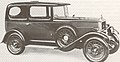
Hillman Minx sports tourer 1934
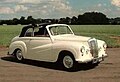
Hillman Minx drophead coupé 1947

Rather than make bespoke bodies to individual designs, Carbodies set out to produce coachwork to a number of standardised designs for car companies that did not have their own coachbuilding facilities. Their first major customers during the 1920s were MG and Alvis Cars. The scale of a new contract to build bodies for the MG M-Type Midget meant that they needed larger premises and in 1928, they moved to a larger site on Holyhead Road, where they remain to this day. In the 1930s, they supplied bodies for Rover, Invicta and Railton, but by far their biggest and most important customer in that decade was the Rootes Group.

During World War II the company made bodies for military vehicles. They also acquired press tools through the Lend-Lease scheme, which enabled them to make aircraft components. In 1943, Carbodies also became a limited company at this time, with Bobby Jones as governing director and his son, Ernest Jones managing director.[2]

Taxicabs, Convertibles, Daimlers and other Postwar Vehicles

[edit]

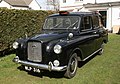
After the war, Carbodies negotiated with London taxi dealer Mann & Overton and Austin to make bodies for the Austin FX3 taxi, introduced in 1948, as well as finishing and delivering the complete vehicles. More than 7,000 FX3s, mainly destined for London, were produced over 10 years. They also developed a system for turning modern all-steel saloon cars into convertibles. This work was carried out on the early unit construction Hillman Minx, the Austin Somerset and Hereford, the Ford Mk1 Consul and Zephyr and, later the Mk2 Ford Consul, Zephyr and Zodiac.

BSA ownership (1954–1973)

[edit]

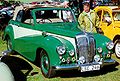
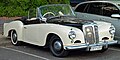
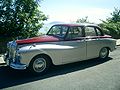
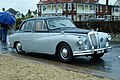
In 1954, Bobby Jones sold Carbodies to the BSA Group, who put it under the control of its prestige car company, Daimler. Although it was intended for Carbodies to become the manufacturing plant for Daimler steel bodies, this was never fulfilled. It did, however convert the Conquest saloon into a drophead, using the same methods they used on Fords and Austin and also made a drophead coupe body for the Daimler Conquest Roadster and made bodies for the Daimler Majestic and Majestic Major saloons.

Under BSA, manufacturing facilities were extended and more plant installed. In 1958, Carbodies began manufacturing the body and carrying out the assembly, finishing and delivery of the most important vehicle in their history, the Austin FX4 taxi. Carbodies also supplied prototype bodies and tooling, projects including the Jaguar E-type bonnet and panels for Triumph, Ariel and BSA motorcycles and scooters.

Further contracts undertaken during the 1960s and early 1970s were the conversion of Humber Hawk and Super Snipe, Singer Vogue and Triumph 2000 saloons into estate cars, but gradually, as contract work on private cars and commercial vehicles fell away, the FX4 taxi would become more important for the company.

In 1971 Carbodies bought the FX4 chassis assembly line from British Leyland's Adderley Park, Birmingham factory and moved it to Coventry, making them complete manufacturers of the FX4, in actuality if not in name.[3]

Manganese Bronze ownership (1973–2013)

[edit]

In 1973, Carbodies was included in the sale of BSA to Manganese Bronze Holdings.[4] In the 1970s, Carbodies tried to make a new taxi of their own, the FX5, but it was abandoned in 1979 because the development costs were too high.

In 1982 Carbodies took responsibility for the complete manufacture of the FX4 taxicab, after British Leyland lost interest in it.[5] By this time, the FX4 was the company's only product, despite attempts to introduce new lines, such as a Ford Cortina MkV convertible and the Range Rover Unitruck. A new model of taxi, the CR6, based on a Range Rover bodyshell was abandoned after almost five years of development. In 1984, the London taxicab dealer Mann & Overton was bought by Manganese Bronze Holdings. Pending the development of a new model, the FX4 was further developed and became the LTI Fairway.[citation needed]

Rebranded as London Taxis International

[edit]

In 1992 the company was rebranded London Taxis International with three divisions: LTI Carbodies, LTI Mann & Overton and London Taxi Finance.[citation needed]

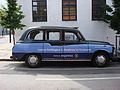
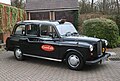
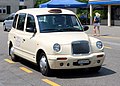
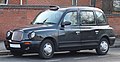
In 1997, a new model of taxicab, the TX1 was introduced as a successor to the FX4. Further development resulted in the launch in 2002 of the TXII, powered by a Ford Dura Torq 2.4-litre diesel engine and featuring an integral fold-down ramp for wheelchair users. It also has an intermediate step and swivel-out seat for passengers with moderate walking difficulties. For people with hearing problems it has an induction loop incorporated in the intercom system.[citation needed]

In 2007 the TXII was replaced by the TX4. This series established LTI Vehicles as a worldwide supplier of London-type taxis.[citation needed]

In October 2010 the London Taxis International was rebranded as The London Taxi Company. A joint venture with Chinese car maker Geely, who already held a 20% interest in the company through its Manganese Bronze shareholding, was formed to build a factory in Shanghai to manufacture London taxis for the export market and to supply components to the home factory in Coventry.[6][7] In 2010 the Mann & Overton trading name was dropped.[citation needed]

Administration

[edit]

In October 2012, following a suspension of sales due to the discovery of a serious flaw with vehicle steering components and having failed in an attempt to obtain new financing, the company was placed in voluntary administration.[8][9] The quite recently specified faulty steering components had been sourced from Geely supplier, Gang Yang in China.[10][11]

In February 2013, certain assets of The London Taxi Company were purchased from administrator PricewaterhouseCoopers by Geely.[12][13] It continued to trade as The London Taxi Company until rebranded as the London EV Company in September 2017 developing electric commercial vehicles at a new plant near Coventry, the first into production being an electric taxicab - the LEVC TX.[14]

[edit]

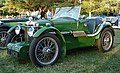
Carbodies' MGs

[edit]

They provided most bodies for the separate chassis cars

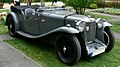
Carbodies' prewar sports bodies

[edit]

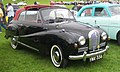
Carbodies' postwar drophead coupés and estate cars

[edit]

Carbodies' Daimlers

[edit]

Carbodies' taxis, hire cars and commercial vehicles

[edit]

LTI taxis

[edit]

See also

[edit]

References

[edit]
[edit]
Revisions and contributorsEdit on WikipediaRead on Wikipedia
from Grokipedia
Carbodies is a British automotive and manufacturer based in , , established in 1919 by Robert (Bobby) Jones through the acquisition of Gooderham and Co’s vehicle body-making business, and best known for designing and producing the iconic black taxis, including the long-running FX4 model. Initially operating from Old Church Road before relocating to Holyhead Road in , the company specialized in custom coachwork for luxury and sports car marques such as Alvis, MG, , Rover, and , capitalizing on post-World War I demand for high-quality vehicle bodies. During , Carbodies shifted to producing components for military vehicles and aircraft, including parts for the bomber, before resuming civilian production postwar with innovations like Kirksite moulds and press facilities to meet growing demand. By the , it had secured major contracts for taxi bodies, notably the and the enduring FX4 launched in 1958, which became synonymous with 's streets and was manufactured in various variants for over 40 years until 1997. In 1954, Carbodies was acquired by the BSA Group, integrating it with brands like Daimler, and by 1961 employed around 1,200 workers while expanding into prototype bodies for models such as the and drophead conversions for and Austin Somerset vehicles. Ownership changed again in 1973 when BSA was taken over by Manganese Bronze Holdings, leading to the company's rebranding as London Taxis International (LTI) in 1985, under which it introduced accessible models like the FX4W in the mid-1980s and the Fairway series in 1989, the first with full accessibility. The FX-series taxis, produced since the late , dominated London's taxi fleet until succeeded by the TX-series in 1997, with LTI and its successors continuing innovations toward hybrid-electric and fully electric models. In 2013, Chinese automaker acquired Manganese Bronze, rebranding the company as the London Electric Vehicle Company (LEVC), which as of 2025 produces fully electric taxis like the TX. Carbodies' adaptability—from coachbuilding to specialized production—exemplifies its survival amid the British motor industry's challenges, including technological shifts to unitized .

Company Overview

Founding and Early Operations

Carbodies was founded in when Robert Jones acquired the vehicle body-making business of Gooderham and Co., establishing the firm on Old Church Road in , , later moving to premises in West Orchards. This marked the beginning of Carbodies as a specialized coachbuilding enterprise in the burgeoning British , initially operating on a small scale to cater to the growing demand for custom vehicle bodies. In its early years, Carbodies concentrated on bespoke coachwork for luxury chassis from manufacturers such as , MG, and Alvis, producing handcrafted bodies that highlighted artisanal craftsmanship. These designs typically featured lightweight aluminum panels hand-formed over sturdy wood framing, providing both elegance and structural integrity suited to high-end touring cars and sports models of the era. During the , the company expanded its operations to include semi-standardized coachwork, adapting designs to fit various dimensions and thereby addressing the rising market for more affordable yet customized bodies. This shift allowed Carbodies to ally with key partners like MG and Alvis by 1924, streamlining production while maintaining quality. A pivotal early milestone came in 1928 with the relocation to a larger facility on Holyhead Road in , which facilitated increased production capacity and supported the firm's growth as a prominent .

Facilities and Expertise

Carbodies established its primary production facility at Holyhead Road in in 1928, relocating from West Orchards to accommodate increased output in coachbuilding operations. This site featured dedicated areas for body assembly, enabling the company to handle volume production of coachwork for major manufacturers such as Alvis, MG, and the . The factory incorporated specialized workshops for painting and trimming, supporting the full cycle from framing to finishing, with an emphasis on precision to meet automotive standards. Carbodies' expertise centered on traditional yet robust coachbuilding methods, including aluminum panel construction for strength, wooden framing for structural integrity, and high-quality designed to withstand British weather while providing luxurious interiors. These techniques prioritized durability and aesthetic refinement, often applied to sports and drophead coupé bodies. The workforce comprised skilled artisans proficient in panel beating and , with programs fostering expertise in these areas. To enhance efficiency, Carbodies introduced jig-based assembly for standardized body designs, streamlining production and reducing costs without compromising craftsmanship. These capabilities were notably utilized in early commissions for MG vehicles.

Historical Development

Pre-BSA Era (1919–1954)

Carbodies, established in 1919 by Robert Jones through the acquisition of Gooderham and Co.'s vehicle body-making business in , initially focused on production runs of coachwork rather than bespoke designs, supplying chassis from manufacturers such as Alvis, , and MG. By the 1930s, the company had expanded significantly, relocating to larger facilities on Holyhead Road in 1928 and specializing in sports bodies and convertibles, including standardized designs for MG's Midget series and Triple-M models, which emphasized lightweight construction and elegant styling. This period marked Carbodies' growth as a key supplier to the British motor industry, with additional work for Invicta, Railton, and , often incorporating power-operated hood mechanisms amid the rising popularity of pressed-steel bodies. During , Carbodies shifted production to support the war effort, manufacturing military vehicle bodies such as ambulance conversions and utility trailers for the , alongside aircraft components including fuselage parts for the bomber using innovative Kirksite molds made from zinc-aluminum alloy. The company's expertise in aluminum work, honed through these wartime adaptations, allowed for efficient production of lightweight panels and presses acquired via aid. These contributions sustained operations and built technical capabilities that proved vital for post-war recovery. In the immediate post-1945 years, Carbodies diversified into taxicab production, securing a major contract in 1948 to build bodies for the on its dedicated , which provided economic stability amid reconstruction. The firm also produced drophead coupés for models like the Century starting in spring 1954 and estate cars such as the and early Triumph variants, converting saloons for manufacturers including and Austin Somerset. However, the era was marked by key challenges, including severe material shortages in the late that limited output and increasing competition from pressed-steel body specialists like Fisher & Ludlow, which accelerated the industry's shift toward unitary construction and reduced demand for traditional coachbuilt .

BSA Ownership (1954–1973)

In 1954, Carbodies was acquired by the (BSA) for £1 million, marking a significant shift from its independent coachbuilding operations to integration within a larger industrial conglomerate. This purchase placed Carbodies under the control of BSA's prestige subsidiary, Daimler, which had been part of the group since , and facilitated synergies with other coachbuilding entities by effectively consolidating resources amid BSA's diversification strategy beyond motorcycles into automotive body production. Although initially envisioned as Daimler's primary body-making division, Carbodies' role expanded to support broader group influences, including Triumph and , through shared manufacturing capabilities and in pressed steel components. The acquisition extended Carbodies' facilities at Holyhead Road, , enabling increased capacity for volume production while leveraging BSA's engineering expertise in commercial vehicles. Under BSA ownership, Carbodies pivoted toward high-volume manufacturing, particularly taxi bodies for the , which debuted in 1958 with Carbodies handling both body fabrication and final assembly. This included the FL2 hire car variant, a non- counterpart designed for fleet use, alongside conversions for commercial vehicles such as panel vans and specialized pressings that supported BSA's diverse portfolio. Early designs, like those originating from the pre-BSA FX3 era, were adapted for mass output, emphasizing durability and compliance with regulations. By 1961, the workforce had grown to 1,200, reflecting sustained demand for these products, which became a cornerstone of Carbodies' operations and contributed to over 50,000 bodies produced during the BSA period. The 1960s brought mounting challenges as BSA grappled with financial difficulties, including extravagant leadership under Sir Bernard Docker that strained resources and led to the 1960 sale of Daimler to . These woes, compounded by underinvestment in amid competition from imported vehicles, limited innovation at Carbodies but allowed it to maintain steady output of hire cars and panel vans through cost efficiencies. Sales dipped 28% in 1966/67 to £594,000, yet profitability held at £48,584, underscoring the division's modest but resilient contribution to BSA's non-motorcycle operations. Diversification efforts, including Carbodies, ultimately diverted focus from core businesses, exacerbating BSA's strategic shortcomings. BSA's collapse in 1973, triggered by stock market failure and chronic mismanagement, prompted the sale of its non-motorcycle assets, including Carbodies, to Manganese Bronze Holdings for £3.5 million. This transaction, which netted Carbodies an estimated £300,000 profit in its final year under BSA, ended the era and transitioned the company toward independent taxi-focused revival.

Manganese Bronze and LTI Period (1973–2013)

In 1973, Manganese Bronze Holdings acquired the failing BSA Group, including its subsidiary Carbodies, which had been producing the iconic FX4 taxi since 1958. This acquisition marked a pivotal shift for Carbodies, transforming it from a general into a specialized manufacturer focused primarily on taxi production to meet the stringent requirements for 's hackney carriages. Under Manganese Bronze's ownership, the company continued to refine the FX4 design, introducing accessible variants like the FX4W in the early . By the mid-1980s, Manganese Bronze restructured its taxi operations to leverage the global recognition of the London black cab. The company acquired the prominent taxi dealership Mann & Overton in 1994 and rebranded as London Taxis International (LTI) in 1989, emphasizing its heritage in purpose-built cabs compliant with accessibility and safety standards. This rebranding facilitated a more integrated approach to design, sales, and service, allowing LTI to capitalize on the enduring symbol of British craftsmanship. The Fairway series, launched in 1989, was the first with full wheelchair accessibility, incorporating updated engines and improved reliability while maintaining the traditional black cab aesthetic. The , launched in 1997, represented a major modernization effort, featuring a more aerodynamic body, enhanced passenger space, and integration of contemporary safety features like ABS and improved seating, replacing the aging FX4 after nearly four decades of service. Subsequent models built on this foundation: the (produced from 2002 to 2006) introduced a more powerful engine and refined interior, while the (from 2007) offered further upgrades including Euro IV-compliant diesel engines and optional automatic transmissions. LTI achieved notable success in international markets during this period, exporting to regions such as , , and the (including fleets). These exports highlighted the vehicles' adaptability, with features like integral ramps—standard in the Fairway and later TX models—ensuring compliance with global regulations, and advancements in (NVH) reduction for greater passenger comfort on diverse road conditions. The period culminated in financial turmoil for Manganese Bronze and LTI. Persistent unprofitability since 2007, exacerbated by a major recall of over 400 taxis in 2012 due to a box fault, strained the company's resources and halted production. Mounting losses were further pressured by economic uncertainty and intensifying competition from ride-hailing services like , which eroded demand for traditional black cabs in and abroad. These factors led to Manganese Bronze entering administration on , 2012, ending LTI's independent operations after nearly four decades of taxi .

Geely Acquisition and LEVC Era (2013–Present)

In February 2013, acquired the assets of Manganese Bronze Holdings, the parent company of London Taxis International (LTI), out of administration for approximately £11 million, securing over 100 jobs and retaining the production facilities in . This acquisition preserved the heritage of the iconic black cab while injecting capital to stabilize operations amid financial difficulties in the traditional diesel market. Geely's involvement marked a strategic entry into the British automotive sector, leveraging LTI's expertise in purpose-built taxis to align with emerging global electrification trends. By 2017, under Geely's ownership, the company rebranded from The London Taxi Company to the London Electric Vehicle Company (LEVC), emphasizing its pivot toward electric mobility solutions. This rebranding coincided with a £325 million to establish a new manufacturing facility at Ansty Park near , the UK's first dedicated plant, spanning 37,000 square meters and creating over 1,000 skilled jobs. The facility enabled advanced production capabilities, including integration of Geely's eCity technology, positioning LEVC as a key player in zero-emission urban transport. The , launched in 2018 as a range-extender , featured a 70 km (43-mile) pure electric range (NEDC), compliant with London's zero-emission requirements, and has since achieved global sales exceeding 11,000 units by early 2025 (over 15,000 as of November 2025). Building on pre-2013 designs, the TX incorporated 's modular for enhanced efficiency and accessibility, including provisions. In , LEVC expanded into commercial vehicles with the VN5 van, entering full production and targeting urban delivery fleets with a similar 60 km (37-mile) electric range; by 2022, it represented a significant portion of output. LEVC's platforms, such as the 2023 Space-Oriented (SOA), now facilitate component sharing with brands like and , supporting broader EV adoption. As of November 2025, over 10,000 TX operate in London's fleet, contributing to reduced emissions and marking LEVC's role in sustainable urban mobility.

Products and Innovations

Pre-War Coachwork

Carbodies established its reputation in the as a prominent Coventry-based , specializing in sports tourers and saloons mounted on from marques such as MG, Alvis, and . These bodies exemplified the era's influences, characterized by elegant, flowing fenders that integrated seamlessly with the lines of the , often paired with wire-spoked wheels for enhanced and handling. The designs prioritized aerodynamic efficiency and open-air motoring, appealing to enthusiasts seeking refined without the mass-produced uniformity of factory bodies. A hallmark of Carbodies' pre-war output was the Coupé body style, applied notably to 1930s MG PA and PB models. Between 1934 and 1936, Carbodies crafted these two-seater coupés with sleek, low-slung profiles, featuring fixed or optional tops and sumptuous leather interiors tailored for comfort during spirited drives. Only around 28 PA Airline Coupés were produced, underscoring the exclusivity of such commissions, while similar drophead variants on PB offered versatile top-down configurations. These MG examples, built on lightweight , benefited from Carbodies' skilled panel beating to achieve a balance of style and agility. For Alvis, Carbodies supplied catalogued standard designs in the pre-war years, including sports saloons and tourers on Speed 20 , where the coachwork's smooth contours complemented the cars' sporting heritage. Carbodies' pre-1939 production emphasized quality over volume, with annual output in the dozens to low hundreds of units, catering primarily to affluent British buyers and exports within the . This positioning as a supplier to both volume producers like Rootes and prestige brands underscored the firm's role in the segment, where factory craftsmanship in enabled precise execution of client specifications.

Post-War Custom Bodies

Following the end of , Carbodies resumed its coachbuilding operations, specializing in custom conversions of production saloons into open-top and estate variants to meet demand for personalized luxury vehicles. The company leveraged its expertise in pressed steel fabrication to produce drophead coupés for Daimler models, adapting chassis from the and Majestic lines during the 1950s. These four-seater dropheads featured hydraulic-powered folding roofs for effortless operation and wood-rimmed steering wheels that enhanced the driving experience with a blend of elegance and control, appealing to affluent buyers seeking refined open-air motoring. In parallel, Carbodies expanded into estate car conversions, particularly in the early as convertible demand waned, creating designs on chassis from marques like and . These practical yet stylish adaptations incorporated extended rear sections with wood-trimmed panels and ample cargo space, tailored for rural markets where versatility for shooting parties or family outings was prized, emphasizing robust construction to withstand countryside use. Such conversions replaced earlier open-top work, reflecting a shift toward utility-focused customizations that combined luxury with functionality. Throughout the 1960s and 1970s, Carbodies' output of non-taxi custom bodies totaled around 1,000 units, encompassing a variety of specialized forms including bodies and limousines built on extended for and ceremonial purposes. These projects prioritized durability through reinforced framing and interior trims, allowing for high levels of client customization such as partitioned seating or ornate detailing, which sustained the firm's reputation amid evolving automotive trends. By the 1970s, however, the rise of construction—where body and frame formed a single integrated unit—eroded demand for traditional separate-chassis coachbuilding, leading Carbodies to curtail private custom work in favor of standardized production. This industry-wide transition, accelerated by cost efficiencies in mass manufacturing, marked the decline of post-war adaptations as manufacturers increasingly handled such modifications in-house.

Taxi Designs and Production

Carbodies played a pivotal role in the and production of London's iconic cabs, beginning with the in 1958, which featured an angular, purpose-built body on a separate ladder-frame engineered for urban maneuverability. The FX4's emphasized durability and compliance with Public Carriage Office (PCO) regulations, including a 25-foot turning circle to navigate tight streets, space for six passengers, and robust construction with bolt-on steel panels for easy repairs. Production of the FX4, initially in collaboration with Austin, shifted fully to Carbodies in by the early 1980s, where over 75,000 units were manufactured until 1997, with variants like the FX4R introduced in 1982 featuring a 2.3-liter diesel engine and for improved efficiency. Under London Taxis International (LTI), rebranded from Carbodies in , the company transitioned to the TX series, starting with the launched in 1997 as a modern successor to the FX4, incorporating an integrated metered fare system and enhanced accessibility features such as a built-in and restraint system. The retained the traditional black cab silhouette while adding saloon-like comfort with a 2.7-liter meeting 1 emissions standards. This was followed by the (often referred to as TX2) in 2002, which introduced (NVH) improvements through better insulation and a Ford-sourced 2.4-liter compliant with 2 standards, along with anti-theft measures like restricted rear windows. The , unveiled in 2007, further evolved the lineup with a redesigned front end, 4 emissions compliance (upgraded to 5 in later iterations), and refined suspension for smoother urban driving, produced at rates of around 3,000 units annually in . The manufacturing process at Carbodies and LTI involved integrating pre-fabricated —sourced initially from Austin and later produced in-house—with hand-assembled body panels, ensuring adherence to stringent PCO requirements such as seats for easier entry, a minimum luggage capacity, and the iconic 25-foot turning circle. Each vehicle underwent rigorous testing, including durability runs exceeding 1 million kilometers, to guarantee reliability in London's demanding conditions. For global markets, adaptations included left-hand drive configurations for exports to regions like and , while maintaining right-hand drive for the , contributing to cumulative production surpassing 100,000 units across the FX and TX series by 2013.

Electric Vehicle Transition

The transition to electric vehicles at LEVC, enabled by the 2013 acquisition by Holding Group, represented a pivotal shift toward sustainable urban mobility, culminating in the launch of the in 2018 as the world's first purpose-built, zero-emission-capable . The features a rear-mounted 110 kW powering the rear wheels, paired with a 31 kWh that delivers up to 80 miles of pure electric range before activating its BMW-sourced 1.5-liter three-cylinder petrol , which generates electricity without directly driving the wheels. This architecture allows the TX to achieve a total range exceeding 300 miles while meeting stringent zero-emission capable standards, such as London's requirements, by enabling fully electric operation for typical daily routes. Production of the TX at LEVC's Ansty Park facility in , , which boasts an annual capacity of over 20,000 units, has scaled rapidly to meet demand. As of January 2025, the TX fleet had collectively driven over one billion miles. By April 2022, more than 5,000 TX vehicles were operating in , comprising over a third of the city's black cab fleet and contributing to a 59% reduction in emissions from taxis compared to pre-2018 diesel models. By 2025, this number had expanded to over 9,000 TX units in , solidifying their dominance with more than 60% and preventing over 15,000 kg of emissions annually. These milestones underscore LEVC's role in electrifying urban transport, with the Ansty plant's advanced processes supporting efficient scaling for global export. Building on the TX platform for cost efficiency, LEVC introduced the VN5 electric van in 2022, a cargo-oriented plug-in hybrid targeting fleet operators in logistics and delivery sectors. The VN5 offers approximately 60 miles of electric-only range from its 31 kWh battery, powered by a 110 kW rear electric motor, with a total flexible range of up to 309 miles via the integrated range extender. It provides 5.5 cubic meters of loadspace and an 830 kg gross payload, accommodating two Euro pallets while prioritizing urban zero-emission operation for last-mile deliveries. Key innovations in LEVC's electric lineup include systems that recover energy during deceleration to extend range and reduce brake wear, particularly in stop-start city driving. Fast-charging capability supports 80% battery replenishment in about 30 minutes using a 50 kW DC charger, minimizing downtime for commercial users. Additionally, integration of Geely's advanced EV technologies, such as the co-developed Space Oriented (SOA) platform, enhances battery management through efficient thermal control and energy optimization, enabling reliable performance across diverse conditions.

Legacy and Impact

Influence on British Coachbuilding

Carbodies played a pivotal role in preserving Britain's coachbuilding heritage during the transition from craftsmanship to in the mid-20th century. Founded in as a traditional in , the company initially specialized in custom bodies for luxury chassis from manufacturers such as MG, Alvis, Invicta, Railton, and , maintaining handcrafted techniques like wood framing and panel beating even as unitized construction gained prominence. By adapting wartime innovations, such as Kirksite alloy moulds for efficient short-run production, Carbodies influenced broader industry practices, enabling other firms to balance artisanal quality with scalable output in an era dominated by standardized vehicle assembly. The company's focus on taxi production further standardized key features for urban vehicles, particularly in accessibility and safety. In 1986, Carbodies introduced the FX4W variant, the first wheelchair-accessible model in the FX series, featuring a hinged rear door and lowered floor to accommodate disabled passengers ahead of mandatory regulations. This innovation, followed by the 1989 Fairway model's integrated ramps and swivel seating, set benchmarks for global taxi design, emphasizing robust crash protection through reinforced chassis and spacious interiors that prioritized passenger safety in dense city environments. These advancements not only complied with emerging UK accessibility laws but also elevated expectations for inclusive public transport worldwide. Economically, Carbodies sustained significant employment in , reaching a peak of 1,200 workers in amid major contracts for bodies and convertible conversions. This workforce supported the local economy during the industry's post-war challenges, while the FX4 model's international sales from the 1970s onward contributed to UK export revenues by penetrating markets in , , and beyond, bolstering the nation's automotive trade balance through the 2000s. Culturally, Carbodies' black cabs, especially the enduring FX4, became synonymous with British identity, embodying London's resilient spirit and appearing prominently in , , and global media as symbols of the city's heritage. Their distinctive and reliability enhanced , with visitors often citing rides in these iconic vehicles as quintessential experiences that reinforced the allure of British urban sophistication.

Notable Collaborations and Commissions

Carbodies established significant partnerships with British automakers in its early years, particularly with MG, where it supplied production runs of coachwork during . This collaboration extended into the era with the production of drophead conversions for MG models, emphasizing lightweight and elegant open-top designs that appealed to enthusiasts. In the 1930s, Carbodies also bodied vehicles for Daimler, contributing to the luxury segment with custom coachwork on their . Following the company's acquisition by BSA in 1954—which also owned Daimler—these ties deepened, leading to commissions for limousines and postwar convertibles during the . One notable example from the pre-war period was a 1931 saloon with division, built for client John Owen, illustrating Carbodies' expertise in high-end, partitioned luxury bodies. A cornerstone of Carbodies' reputation was its role in taxi production, beginning with joint development alongside Austin and the dealer Mann & Overton for the FX series. Carbodies manufactured the bodies for the FX3 in the late 1940s and took over full production of the iconic FX4 from 1958, incorporating Morris engines in later variants to meet the demanding requirements of taxi regulations. This partnership ensured the FX4's durability and became synonymous with British urban for decades. Under its successor entity, London Taxis International (LTI), Carbodies' legacy evolved through collaboration with China's Geely Automobile, forming a joint venture in 2010 to develop the next-generation TX taxi. This partnership produced electric prototypes, culminating in the 2017 debut of the TX at the Goodwood Festival of Speed—the first taxi to tackle the hillclimb—paving the way for the fully electric LEVC TX launched in 2018. As of 2025, over 9,000 LEVC TX taxis operate in London, contributing to a 59% reduction in NOx emissions from the black cab fleet and cumulatively covering more than 1 billion miles. A 2024 update increased the battery capacity to 34.6 kWh, extending the all-electric range to 78 miles (WLTP), while international expansion includes delivery of 153 units to Azerbaijan in 2024 to support sustainable transport. Beyond , Carbodies excelled in custom one-offs during the , including bodies and tooling such as the bonnet for the , which highlighted its capabilities. The firm also specialized in limited-run estate conversions, notably for Humber Hawk and models in the and early 1970s.

References

Add your contribution
Related Hubs
User Avatar
No comments yet.