


Community hub
Recent from talks
Contribute something
Nothing was collected or created yet.
List of equipment of the British Army
View on Wikipedia
 |
| British Army of the British Armed Forces |
|---|
| Components |
| Administration |
| Overseas |
| Personnel |
| Equipment |
| History |
| Location |
| United Kingdom portal |
 |
| British Army lists |
|---|
| French Revolutionary and Napoleonic Wars |
|
|
| Victorian era |
|
|
| First World War |
|
|
| Second World War |
|
|
| Regiments |
|
|
| Officers |
|
|
| Other |
|
|
This is a list of equipment of the British Army currently in use. It includes current equipment such as small arms, combat vehicles, explosives, missile systems, engineering vehicles, logistical vehicles, vision systems, communication systems, aircraft, watercraft, artillery, air defence, transport vehicles, as well as future equipment and equipment being trialled.
The British Army is the principal land warfare force of the United Kingdom, a part of British Armed Forces. Since the end of the Cold War, the British Army has been deployed to a number of conflict zones, often as part of an expeditionary force, a coalition force or part of a United Nations peacekeeping operation.[1]
To meet its commitments, the equipment of the Army is periodically updated and modified. Programs exist to ensure the Army is suitably equipped for both current conflicts and expected future conflicts, with any shortcomings in equipment addressed as Urgent Operational Requirements (UOR), which supplements planned equipment programmes.[2]
Infantry section equipment
[edit]Each rifle section typically consists of 8 soldiers. They are each commanded by a corporal assisted by a lance corporal acting as section second-in-command (2IC). The section is further subdivided into 2 fireteams. The section commander typically commands the Charlie Fire Team, while the 2IC commands the Delta Fire Team.
While equipment formations can be tailored as required by section and platoon commanders, infantry sections are usually issued with the following:[3][4]
- Charlie Fire Team (4 men)
- 1× Section Commander, Corporal (OR-4), armed with 1 L85A3 rifle and 1 Glock 17 pistol
- 1× Rifleman, Private (OR-2), armed with 1 L85A3 rifle
- 1× Grenadier, Private (OR-2), armed with 1 L85A3 rifle and 1 L123A2 under-barrel grenade launcher
- 1× Sharpshooter, Private (OR-2), armed with 1 L129A1 Sharpshooter rifle
- Delta Fire Team (4 men)
- 1× Second-in-Command, Lance Corporal (OR-3), armed with 1 L85A3 rifle and 1 Glock 17 pistol
- 1× Rifleman, Private (OR-2), armed with 1 L85A3 rifle
- 1× Grenadier, Private (OR-2), armed with 1 L85A3 rifle and 1 L123A2 under-barrel grenade launcher
- 1× Machine Gunner, Private (OR-2), armed with 1 L7A2 general-purpose machine gun
The rifles are typically paired with the ELCAN SpecterOS 4× Lightweight Day Sight (LDS) with a mini-red dot sight (MRD) mounted on the top and a foregrip with an integrated bipod (grenadiers are not issued a foregrip/bipod because they have the L123A2 under-barrel grenade launcher in its place).
The section also operates NLAW disposable ATGMs, as well as multiple L109A2 high explosive grenades, and L83A1 smoke grenades. Specialist equipment such as claymore mines, L26A1 bangalore torpedoes, L128A1 combat shotgun, etc, is available if there is a requirement.
Vision systems
[edit]- Sight Unit Small Arms, Trilux (SUSAT) or SpecterOS Lightweight Day Sights (LDS) - for use with the SA80.[5]
- Advanced Combat Optical Gunsight (ACOG) - to be used with the L129A1 Sharpshooter.[6]
- ARILLS (Assault Rifle In-Line Low Light Sight) - new infrared / thermal imaging sight for the SA80 A3.
- Laser Light Module (LLM Mk3) - used for aiming and illumination with the SA80 A3.[7]
- Jim Compact Sight - new infared binoculars that can spot targets from more than 5 km away, have both thermal and low-level light capabilities and can take HD pictures and video recordings. It also has a laser positioning system.[8]
- Magnum Universal Night Sight (MUNS) - high-resolution clip-on night vision weapon sight for the L129A1 Sharpshooter. Detects and recognizes man-size targets in excess of 800 meters.[9]
- FIST Thermal Sight (FTS) - thermal imaging scope designed to be mounted on rifles and light machine guns. Acquired as part of the MoD's Future Integrated Soldier Technology.[10]
- Common Weapon Sight (CWS) - image-intensification night vision scope for weapons or handheld surveillance.[11]
- Head mounted Night Vision System (HNVS), based on the American AN/PVS-14.[12]
- Schmidt & Bender 5-25x56 PM II - 25x magnification day scope for the L115A3 Sniper Rifle.[13][14]
- Sniper Thermal Imaging Capability (STIC) - thermal imagining sight that is mounted on the L115A3 and AX50.[15]
- The command launch unit (CLU) of the Javelin anti-tank missile contains a sophisticated thermal imaging sensor that can double as a reconnaissance tool.[16]
- SMASH X4 sighting system - anti-drone sight mounted on the SA80 A3 that automatically acquires a target from the sight’s field-of-view, and then displays a box around the target in the shooter’s reflex sight, only allowing the shooter to fire when the sight is aligned to hit the target.[17][18]
Communications equipment
[edit]- Personal Role Radio (PRR) [19] - small, light UHF radio with a range of 500m and a battery life of 20 hours, issued to every member of the Infantry section.[20]
- Bowman Combat Net Radio - secure HF, VHF, UHF voice and data communications. The MoD plans to replace Bowman with a system named Morpheus in the future.[21]
- Falcon - joint tactical trunk communications system for the Land Environment.[22]
- Reacher - is a mobile X-Band Satellite Ground Terminal that uses the Skynet V military satellite network
- Small SATCOM - the satellite ground terminal is reasonably lightweight (41 kg) and can be set up by a single trained operator in less than 30 minutes, also using the Skynet V network.[22]
- Skynet - is a family of military communications satellites, they provide strategic and tactical communication services to the branches of the British Armed Forces, the British intelligence agencies, some UK government departments and agencies, and to allied governments including the Five Eyes intelligence alliance members (Australia, Canada, New Zealand, the United Kingdom and the United States).
- Tactical Satellite Communications (TACSAT) - use low orbiting communications satellites to relay radio signals between operators. The advantage to this method is the ability to communicate in remote areas out of reach of terrestrial transmitters.
Weapons
[edit]Pistols
[edit]| Name | Origin | Type | Cartridge | Image | Details |
|---|---|---|---|---|---|
| Glock 17
L131A1 L137A1 [23] |
 Austria Austria
|
Semi-automatic pistol | 9×19mm Parabellum |  |
Replaced the L9A1 pistol, the L47A1 pistol, and the L105A1/A2, L106A1, L107A1, and L117A1/A2 pistols.[24] Primary weapon of personnel working in operational staff appointments and vehicle commanders and carried as a backup weapon by frontline personnel.[25] Over 25,000 were purchased for use by all branches of the British Armed Forces.[26] The compact Glock 19 variant was also adopted.[23] |
Infantry rifles
[edit]| Name | Origin | Type | Cartridge | Image | Details |
|---|---|---|---|---|---|
| SA80
L85A2, L85A3, L22A2 |
 United Kingdom United Kingdom
|
Assault rifle (L85A2/A3)
Carbine (L22A2) |
5.56×45mm NATO |  _MOD_45160295.jpg)
|
Standard issue assault rifle, known as the SA80. Primarily fitted with either SUSAT, ACOG, Elcan SpecterOS 4X or Thermal Viper 2 sights. The Laser Light Module Mk3 and the L123 Underslung Grenade Launcher (UGL) can also be attached.[7][27]
A shortened carbine variant, the L22A2, is used primarily by vehicle and helicopter crews for self-defence and by dog handlers.[28] As of February 2025, there was a total inventory of 125,276 SA80 A2 rifles and 40,144 SA80 A3 rifles across the MOD.[29] |
| LMT MWS MARS-H
L129A1, L129A2 (Sharpshooter configuration) |
 United States United States
|
Designated marksman rifle | 7.62×51mm NATO | 
|
The Sharpshooter has been issued since 2010 to augment the long-range firepower of infantry sections.[30][31] It is equipped with an 6x48 ACOG optical sight, with an in-line Magnum Universal Night Sight providing night-time capability.[32] |
| Colt C8
L119A1, L119A2 |
 Canada Canada
|
Carbine (Officially designated and treated as a rifle) | 5.56×45mm NATO | 
|
The C8 Carbine is used by; the Special Air Service,[33] 16 Air Assault Brigade's Pathfinder Platoon,[34] 1st Battalion, Parachute Regiment and other Army components of the Special Forces Support Group,[35] the Royal Military Police Close Protection Unit,[36] and the Ranger Regiment.[37]
The L119A1 is also used by the Army component of 3 Commando Brigade after the Royal Marines began to use it as a replacement for their L85A3s.[38][39] An A2 variant was developed for United Kingdom Special Forces use,[40][41] while other units continue to employ the A1 version.[42] |
| KS-1 rifle
L403A1 |
United States
|
Assault rifle | 5.56×45mm NATO | 
|
Chosen to serve as the Alternative Individual Weapon of the Ranger Regiment and other Army Special Operations Brigade components, the L403A1 is the Knight's Stoner 1 variant of the Knight's Armament Company SR-16 fitted with a muzzle signature reduction system to mask the weapon from detection and a magnified optic. An initial order of 1,620 systems has been placed, with an option to procure up to 10,000 systems over the next decade.[43][44] |
Bladed weapons
[edit]| Name | Origin | Type | Image | Details |
|---|---|---|---|---|
| L3A1 | United Kingdom
|
Socket bayonet | .jpg) |
The L3A1 bayonet has a hollow handle that fits onto the muzzle of the L85 rifle with the blade offset to the side so that the rifle can be fired while the bayonet is fitted. It is shaped to produce good penetration when thrust and has a ribbed section for rope cutting. The bayonet can be used as a knife when needed. The L3A1's scabbard features a saw blade for use on wood, a sharpening stone and a bottle opener. The scabbard and bayonet can be combined to form a wire cutter.[45][46][47]
A rail-mounted adaptor was developed to allow the bayonet to be used with the L129A1 Sharpshooter Rifle.[48] |
| Kukri |  Nepal Nepal
|
Fighting-utility knife |  |
The Kukri is in service with the Brigade of Gurkhas in the British Army.[49] |
Long range rifles
[edit]| Name | Origin | Type | Cartridge | Image | Details |
|---|---|---|---|---|---|
| LMT MWS MARS-H
L129A1, L129A2 (Sniper Support Weapon configuration) |
United States
|
Designated marksman rifle | 7.62×51mm NATO | 
|
A configuration of the L129 issued to sniper pairs for use by the spotter. It is fitted with a L17A2 scope (Schmidt & Bender 3-12x50) and, usually, a suppressor.[32] |
| Accuracy International AWM
L115A3, L115A4 |
United Kingdom
|
Bolt action sniper rifle | 8.6x70 mm (.338 Lapua Magnum) | 
|
The Accuracy International AWM (known in British service as the L115A3/4) is the primary precision rifle for British Armed Forces snipers. The L115A3 entered service with British forces in 2008.
The A3 model used by the Special Forces had a requirement to fire a 300 gr (19 g) bullet. The L115A3 was developed as part of the Sniper System Improvement Programme (SSIP) to replace the Accuracy International Arctic Warfare (L96) and Accuracy International AWM (L115A1) sniper rifles.[50] |
| Accuracy International AS50 | United Kingdom
|
Anti materiel sniper rifle | 12.7×99mm NATO | Highly accurate long range anti-materiel rifle that is lightweight with a titanium frame. High rate of fire (5 rounds in 1.6 seconds).[51] | |
| Barrett M82
L135A1 |
United States
|
Anti materiel sniper rifle | 12.7×99mm NATO | 
|
Recoil-operated, semi-automatic, anti-materiel rifle. The British Army uses the M82A1 under the L135A1 Long Range Precision Anti-Structure (LRPAS) Rifle designation.[52][53] |
Submachine guns
[edit]| Name | Origin | Type | Cartridge | Image | Details |
|---|---|---|---|---|---|
| HK MP5
L92A1, L91A1, L80A1, L90A1 |
 Germany Germany
|
Submachine gun | 9×19mm Parabellum | 
|
Used by UKSF and the Royal Military Police Close Protection Unit.[54] The weapon comes in multiple variants from the standard L92A1 (MP5A3) and the integrally suppressed L91A1 (MP5SD3) to the more easily concealable L80A1 (MP5K) and L90A1 (MP5KA1) which are stockless and have vertical foregrips.
The weapons no longer see extensive use but are retained for hostage rescue operations in non-hostile environments since their 9×19mm ammunition is less likely to ricochet or over-penetrate.[55] |


Machine guns
[edit]| Name | Origin | Type | Cartridge | Image | Details |
|---|---|---|---|---|---|
| FN MAG
L7A2 |
 Belgium (Original design/prototypes only) Belgium (Original design/prototypes only) |
General-purpose machine gun | 7.62×51mm NATO | _Sol19-001-202.jpg)
|
The designated general purpose machine gun (GPMG) for sustained fire out to 1,800 m. It is used by two-man teams in specialised machine gun platoons for battalion-level fire support;[56] it is also carried by a foot soldier in an infantry section and was reinstated as the standard section machine gun following the removal of the L110A3 Minimi from service.[57]
Variants of the GPMG are mounted on most ground vehicles within the British Army.[58] |
| M2 Browning QCB
L1A2, L111A1 |
United States
|
Heavy machine gun | 12.7×99mm NATO | 
|
The L1A2[59] and L111A1 are the British Armed Forces versions of the American M2 Browning. It can be attached to both armoured and soft-skin vehicles, or a ground-mount tripod.
The weapon fires .50 calibre rounds at a rate of 485-635 rounds-per-minute out to an effective range of 2,000 metres.[60] |
Shotguns
[edit]| Name | Origin | Type | Cartridge | Image | Details |
|---|---|---|---|---|---|
| Benelli M4 Super 90 |  Italy Italy
|
Semi-automatic shotgun | 12 gauge | .jpg) |
Standard issue combat shotgun used in certain scenarios such as compound clearing, by an infantry section's point man.
The L128A1 has a capacity of eight rounds and a maximum effective range of 140 m (460 ft) for solid shot and 40 m (130 ft) for buckshot.[63] |
| Remington Model 870
L74A1, L74A2[64] |
United States
|
Pump-action shotgun | 12 gauge |  |
The Remington 870 pump-action shotgun is used by the SAS during counter-terrorist operations.[citation needed]
The SAS use special Hatton rounds to shoot hinges and locks off of locked doors. The Hatton round is a mixture of compressed gun or zinc powder and wax and is formulated to cause only localised damage without passing through the door and hitting a hostage.[65] |
Grenade launchers
[edit]| Name | Origin | Type | Cartridge | Image | Details |
|---|---|---|---|---|---|
| Heckler & Koch AG36
L123A2, L123A3 L17A1 |
Germany
|
Underslung grenade launcher | 40×46 mm LV | _MOD_45160296.jpg) |
Variant of the AG36 grenade launcher introduced during the SA80A2 upgrade and issued on a scale of two per infantry section.[66][57][67][68]
Ammunition natures used include fragmentation, HEDP, white illuminating parachute, infra-red illuminating parachute, and red phosphorus.[46][47][69] The L17A1 version is used with the L119A1/A2 rifles.[70] |
| Heckler & Koch GMG
L134A1 |
Germany
|
Grenade machine gun | 40×53 mm HV |  |
Can be mounted on both armoured vehicles and tripods. The weapon has a 320 rpm rate of fire and an effective range of 1,500 m (4,900 ft)-2,000 m (6,600 ft).[71] |
Explosives
[edit]| Name | Origin | Type | Detonation | Image | Details |
|---|---|---|---|---|---|
| L109A2[72] |  Switzerland Switzerland
|
HE hand grenade | Fuse |  |
British version of the Swiss HG 85 Grenade. It differs from the original in that it has a matte black safety clip similar to the American M67 grenade. It has a 3–4 second fuse delay (climate dependent), contains 155g of high explosive and has an effective casualty radius of 15 m (49 ft).[73] |
| L132A2[74] | United Kingdom
|
Smoke screening hand grenade | Fuse | 
|
Used for concealing unit movements when executing manoeuvres or withdrawing.[75] |
| L84A3[76] | Germany
|
Red phosphorus smoke screening hand grenade | Fuse | _(52836075387)_(L84A3_crop).jpg)
|
Red phosphorus smoke grenade which is effective against visual sight and aiming equipment, night-vision devices, sensors operating in the near IR-spectrum and laser range finders.[77] |
| L152A1 Green/L153A1 Orange/L154A1 Red/L157A1 Purple/L158A1 Turquoise | United Kingdom
|
Signal smoke hand grenade | Fuse | Used for ground-to-ground and ground-to-air signalling and for marking target and landing zones, evacuation points, airdrop positions, etc.[75] The colours in use are green, orange, red, blue, purple, and turquoise (the yellow L155A1 having been withdrawn in July 2023[78]). The various smoke colours do not have preassigned meanings or uses and are instead used according to operational orders. | |
| M18A1 Anti-Personnel Mine[79] | United States
|
Command-detonated anti-personnel mine | Detonator | 
|
Used for specialist and defensive purposes.[80] The Claymore fires steel balls out to about 100 m (110 yd) within a 60° arc in front of the device. It is used primarily in ambushes and as an anti-infiltration device against enemy infantry. It is also used against unarmored vehicles. |
| L26A1,[81] L26A2[78] | United Kingdom
|
Bangalore torpedo demolition charge | Detonator | 
|
The L26A1 was chosen to fulfill a MOD requirement for an improved bangalore torpedo design, and is lighter and easier to use than its predecessors.
The torpedo consists of an aluminium body filled with two kilograms of DPX1 explosive; detonation produces enhanced blast and fragmentation effects which in turn provide an enhanced cutting capability against both simple and complex wire entanglements. The L26A1 is also capable of cutting through up to six millimetres of steel plating. Up to eight L26A1s can be combined with one another, with the resulting assembly capable of defeating obstacles that are up to eight metres in length.[82][83][84] |
| GLADIUS[85] | United Kingdom
|
Anti-tank mine | Detonator | Modern off-route mine that is typically deployed along paths to target the sides of armoured vehicles, exploiting their weaker points, but can also be used for sabotage, and allows operators to customise the explosive charge to mission requirements.[86] | |
| PE7, PE8 | United Kingdom
|
Plastic explosive (RDX-based) | Detonator | _(PE8_crop).jpg)
|
Replacements for the long-serving PE4 plastic explosive.[87] PE7 was developed from Eurenco's HEXOMAX explosive[88] and is available in 500g block (L20A1) and 2 kg slab (L21A1) forms.[89][90] PE8 was developed by Chemring and is available in 2 kg slab (L22A1) form only.[91] Both PE7 and PE8 slabs are issued in a 20 kg logistic pack (pictured) containing two 10 kg bulk packs that have five 2 kg slabs each, with the 10 kg packs being capable of use for demolitions as a complete unit; the 2 kg slabs themselves contain four 500g blocks (designated L23A1 in the case of PE8 slabs) that can be removed and used individually.[92][93] |
| L3A3[94] | United Kingdom
|
Exploder | Electric current | .jpg)
|
Handheld electronic exploder used to initiate both electric and shock tube detonators. The exploder can initiate up to four separate firing circuits.[94] |
| L9A8, L17A1, L18A1[95] | United Kingdom
|
Anti-tank mine, demolition charge (improvised) | Pressure or detonator | 
|
No longer used in the anti-tank mine role. Bar mines have been used as improvised demolition charges during operations Telic[96] and Herrick.[97] |
| L1A1,[91] L1A2[78] | United Kingdom
|
Conical and linear demolition charges | Detonator | User-filled plastic explosive containers that have replaced pre-prepared demolition charge variants in British service due to their lower cost (both in terms of acquisition and in terms of storage since unfilled containers can be stored indefinitely[98][99] while charges such as the L1A1 Necklace Charge had a shelf life of ten years[100]) and their improved safety and ease of use.[101] Both containers consist of a plastic body with a copper lining (with the conical container also including four wooden legs for an adequate standoff distance) and can be used in wet conditions without any reduction in effectiveness unless a body of water is present between the underside of the copper lining and the target; the conical container is filled with 12 kg of PE8 prior to deployment and produces a hole in the target,[102][98] while the linear container is filled with 8 kg of PE8 and produces a linear cut in the target.[103][99] | |
| L23A1[104][78] | United Kingdom
|
Plastic explosive (RDX-based) | Detonator | Sheet-shaped plastic explosive. The DPX9 composition provides a high level of end-user safety without reducing performance in metal cutting and other tasks.[105] |
Indirect fire weapons
[edit]| Name | Origin | Type | Calibre | Image | Details |
|---|---|---|---|---|---|
| L16A2 81 mm Mortar | United Kingdom
|
Mortar | 81 mm |  |
Operated by a three-man team. It is often vehicle-borne; in Armoured infantry battalions it is mounted and fired from a Bulldog armoured vehicle.[106] Around 470 are in service.[107]
High Explosive (HE), Smoke and Illumination rounds can be fired up to 5.5 km (3.4 mi) out at a rate of 15 rounds-per-minute.[108] The modernised L16A2 features GPS and laser-range finding systems, dramatically increasing the weapon's accuracy.[109] |
Portable anti-material weapons
[edit]| Name | Origin | Type | Warhead | Image | Details |
|---|---|---|---|---|---|
| NLAW | United Kingdom /  Sweden Sweden
|
Anti-tank guided missile | 150 mm |  |
Man-portable, short range fire-and-forget anti-tank guided missile system designed for non-expert use. It is designed to "rapidly knock out any main battle tank in just one shot by striking it from above".[110]
In December 2022, it was announced that a £229 million deal had been agreed with Saab for several thousand more NLAW units to be delivered to the British Army from 2024 - 2026.[111] |
| Javelin | United States
|
Anti-tank guided missile | 127 mm | 
|
Man-portable medium range anti-tank missile system. It fires a high-explosive anti-tank (HEAT) warhead and can penetrate explosive reactive armour. |
| Carl Gustaf M4 | Sweden
|
Recoilless rifle | 84 mm | _(brightened,_no_background)_(leveled).png)
|
Launchers and training, anti-structure, and anti-tank rounds purchased in order to replenish munition stocks following the constant supplying of NLAW and MATADOR weapons to Ukraine.[112] |
| Starstreak | United Kingdom
|
MANPADS | 3 darts of 22 mm | 
|
Alongside the LML and Stormer mounted versions, the Royal Artillery also use a shoulder-mounted, man-portable version of the Starstreak missile.[113] |
| Martlet | United Kingdom
|
Multi-role missile | 76 mm | 
|
Uses the same launchers as the Starstreak missile while being intended for use against a wider range of targets.[114][115] |
Surface-to-air missile system
[edit]| Name | Origin | Type | Warhead | Image | Details |
|---|---|---|---|---|---|
| Starstreak LML | United Kingdom
|
Surface-to-air missile system | 145[116] | 
|
The Starstreak Lightweight Multiple Launcher (LML) is a short-range, highly mobile air defence system that holds three missiles ready for firing and can be used as either a stationary launch unit or mounted on a light vehicle, such as a Land Rover. Starstreak can also be used as a surface attack weapon, capable of penetrating the frontal armour of IFVs.[117]
Operated by 12th Regiment RA and 106th Regiment RA.[118][119] |
Personal equipment
[edit]Protective equipment
[edit]
Helmet
[edit]All soldiers are now equipped with the new Virtus helmet[120] (Revision Batlskin Cobra Plus[121]) which provides increased blunt impact protection, has a lighter weight than the preceding Mk7, can be fitted with face and mandible guards for certain roles, is specially shaped to allow effective weapon usage while in a prone position and wearing body armour, and features a permanent universal night vision mount and a scalable counterweight attached to the helmet's rear in order to ease strain on the user's neck while a night vision device is equipped. The helmet allows the soldier to wear a respirator, hearing protection, goggles and/or a radio headset as necessary.[122][123]
The previous standard helmet in service was the Mk7 which replaced the older Mk6 and Mk6A helmets on operations.
84,000 Mk 7 helmets were donated to the Armed Forces of Ukraine in 2022.[124]
Combat body armour
[edit]The British Army uses two main combat body armour systems;

The Virtus Scalable Tactical Vest (STV) is the primary body armour system used on live operations, LFTT, and firing ranges and has replaced the previously used Osprey body armour. It is 10 lbs lighter than Osprey and closer-fitting and can have its level of protection more closely scaled to the prevailing threat type. The vest also features a quick-release mechanism to aid safe extraction from hazardous situations such as burning vehicles or drowning and a dynamic weight distribution system which, when linked to a soldier's waist belt, aids in spreading the soldier's load across the back, shoulders, and hips; a mechanism in the small of the back allows the wearer to adjust the weight bias depending on the situation. The STV can be used in a variety of ways including; load carriage without armour, a fragmentation vest with soft composite armour but no hard plates, a plate carrier with no soft armour, and a full body armour system with both soft armour padding and hard plates.[120][123]
Enhanced Combat Body Armour (ECBA)[125][126][127] is a soft body armour vest that was first introduced in the 1980s and can be augmented with ceramic ballistic plates. It was used on operations until the introduction of the Osprey body armour series in 2006 and is now used solely for training purposes, primarily for non-infantry phase one training recruits.
Ancillary to regular body armour is a three-tier pelvic armour system - issued since 2010 - to mitigate against shrapnel and other blast effects. The first layer is a pair of underwear shorts manufactured from a ballistic silk material. The second layer consists of detachable pelvic body armour that is intended to be worn while 'outside the wire' to meet the greater threats faced by soldiers on patrol. The third layer consists of knee-length ballistic shorts worn over a soldier's combat trousers, offering coverage of the upper leg and wider abdominal region and designed for use by soldiers operating hand-held metal detectors to search for explosive devices or otherwise serving in a combat role where greater levels of protection are required.[128][129]
8,450 sets of Osprey body armour were donated to the Armed Forces of Ukraine in 2022.[130]
Respirator
[edit]By January 2015, over 300,000 General Service Respirators had been delivered to replace the older S10 respirator.[131]
Features which differentiate it from the S10 which it replaced are:
- Twin filter canisters can be changed more easily while in a CBRN environment
- Single visor provides better visibility and reduces the claustrophobic effect
- Improved drinking system
- Ability to convert to EU standard canisters with a simple modification
These respirators are also used by the rest of the British Armed Forces.
Uniforms
[edit]The multi-terrain pattern (MTP) combat clothing is designed to blend with the range of environments such as woodland, jungle, compounds, crops, grassland and arid stone. This change to the British camouflage pattern was the first in 40 years. The uniform is flame-retardant and insect-repellent treated.[132]
Troops on operations are issued with knee length, waterproof socks that have antimicrobial properties similar to those found in medical dressings and keep feet warmer than conventional socks.
Boots
[edit]
In 2012, the MOD purchased a newly designed range of brown combat boots from Haix,[133] Alt-Berg,[134] and other manufacturers for the Army, Royal Marines and RAF to replace the black and Desert Combat Boot previously worn. Five different types of boots, developed to match the Multi-Terrain Pattern uniform, are available to Armed Forces personnel depending on where they are based and what role they are in. Black boots have been retained for wear with most non-camouflage uniforms as well as units on parade in full dress uniform, such as regiments performing ceremonial duties in central London.[135][136]
- Desert Combat – worn by dismounted troops conducting medium to high levels of activity in desert type environments with temperatures exceeding 40 °C
- Desert Patrol – worn by drivers/armoured troops conducting lower levels of activity in desert type environments exceeding 40 °C
- Temperate Combat – worn by dismounted troops for medium to high levels of activity in temperate (European) climates
- Patrol – worn by mounted troops (drivers/armoured troops) taking part in lower levels of activity in temperate (European) climates
- Cold Wet Weather – worn by dismounted troops for medium to high levels of activity in temperatures down to −20 °C.
Personal Role Radio
[edit]A Personal Role Radio (PRR) is distributed to every member of an eight-strong infantry section.[19]
It consists of a headset attached to a UHF transmitter/receiver which has 256 channels, a 500m range, 20 hour battery life, weighs 1.5 kg, and is effective through thick cover and walls and floors of buildings, increasing the communication and effectiveness of infantry fireteams.[20]
Load-carrying equipment
[edit]

The Virtus webbing system is the current primary load carrying belt system used by the British Army. It consists of a yoke, MOLLE hip belt and dynamic weight distribution (DWD) system, which provides real weight transference, allowing the soldier, while on the move, to shift the weight of the load between 100% on the shoulders to 100% on the hips and anything in-between. The soldier can choose between a variety of pouches to attach to the belt depending on the mission, including grenade, ammo, PRR, UGL, pistol magazine, medical, bayonet scabbard, water bottle, utility, commander's pouch and more.[137][138][139]
Usage of privately purchased webbing, whether based on or customised PLCE or with MOLLE compatibility, also remains a very common item. 'Airborne' webbing, which is a single unit webbing set of multiple pouches sewn or stitched directly onto a foam hip pad[140] is favoured among soldiers for its comfort, stability and durability.[141][142][143]
Personal load carrying equipment (PLCE), officially known as 95 pattern webbing, is an older webbing system issued temporarily solely for training purposes during phase 1 'basic' training for non-infantry recruits, to carry ammunition, food and water, protective equipment, and other individual supplies. The webbing consists of a belt, a yoke harness, and various belt pouches. The system also consists of two daysacks (backpacks) for use with the Combat Order; these can be attached to a larger 'Bergen' rucksack for use with the Marching Order.[144] The Osprey body armour and webbing series,[122] the later Virtus scalable tactical vest and webbing,[145] and various items associated with either system such as daysacks all feature MOLLE loops for direct attachment of load carrying pouches, thus obviating the need for and mostly supplanting the earlier PLCE webbing.[123]
PLCE sets have previously been manufactured in the newer MTP camouflage pattern, and both this webbing and earlier DPM webbing (due to the quantity of webbing produced and the durability of its construction and materials, and soldiers personal preference) continues to see occasional usage, particularly during training situations which often see soldiers either wearing the non-MOLLE Enhanced Combat Body Armour vest or wearing no armour at all.[146][147]
Regardless of the particular load carrying system used by any given soldier, Army doctrine prescribes that it should be capable of holding everything that a soldier needs to operate in the field for up to 24 hours without resupply in Fighting Order, for up to 48 hours without resupply in Patrol Order and for up to two weeks without resupply in Marching Order.[148]
Combat vehicles
[edit]| Name | Origin | Type | Number | Image | Details |
|---|---|---|---|---|---|
| Challenger 2 | United Kingdom
|
Main battle tank | 288 (148 by 2027)[149] |  |
Equips three Regular and one reserve (the Royal Wessex Yeomanry) Armoured Regiments of the Royal Armoured Corps.[150]
Challenger 2 is currently being modernised and reduced to 148 upgraded Challenger 3 by 2027.[151][152] As of April 2024, eight pre-production models of the Challenger 3 had been delivered.[153] |
| Ajax | United Kingdom
|
Armoured fighting vehicle | 142 (589 by 2029)[149] |  |
Ajax is the replacement for the CVR(T) tracked reconnaissance vehicles and variants.[154]
There are six variants in the Ajax family; Ajax, Athena, Ares, Apollo, Atlas, Argus.[155] Ajax family variants will be used by the Royal Armoured Corps cavalry and Household Cavalry armoured reconnaissance, Royal Artillery fire support teams, armoured Royal Engineers units, and armoured REME units.[155] To be increased to 589 vehicles by 2029.[156] |
| Boxer | Germany
|
Armoured personnel carrier | 21(623 by 2027) |  |
Boxer is the new British Mechanised Infantry Vehicle (MIV).[157][158]
It will replace the Warrior and Mastiff (and Wolfhound, Ridgeback variants), and will be delivered to;[159]
In total, the Army has ordered 623 Boxers. The Initial Operating Capability (IOC) is planned for 2025.[160] |
| Warrior | United Kingdom
|
Infantry fighting vehicle | 604[149] |  |
Equips the battalions of Armoured Infantry in 3rd (UK) Division.
The Royal Armoured Corps Armoured Cavalry & Armoured Reconnaissance Regiments are now using it as a stopgap for combat reconnaissance before the Ajax vehicles reach Initial Operating Capability between July and December 2025, since the retirement of FV107 Scimitar.[161] A small number are also used by the Royal Artillery for command and observation, and by the REME for recovery and repair.[162] The vehicle is to be gradually phased out and replaced by 623 Boxer vehicles from 2023.[163][164] |
| Bulldog | United Kingdom
|
Armoured personnel carrier | 738[149] | 
|
The Bulldog FV 430 variant remains in service with the Infantry primarily as 81 mm mortar carriers and command vehicles, while the REME use them as recovery vehicles.[165]
Royal Army Medical Service regiments; 1st Medical Regiment, 2nd Medical Regiment and 3rd Medical Regiment use an ambulance variant.[166] Bulldog will be replaced by a yet to be determined platform with procurement activity starting in 2025.[167] |
Protected patrol vehicles
[edit]| Name | Origin | Type | Number | Image | Details |
|---|---|---|---|---|---|
| Mastiff | United States |
Protected mobility vehicle | 297[149] | 
|
Mastiff is a heavily armoured 6×6-wheel drive patrol vehicle which carries eight troops, plus two crew, and is fitted with ECMs and bowman radios.[168]
Ridgeback is a 4×4-wheel drive variant of the Mastiff, and provides protected mobility in urban and urban-fringe environments. It comes in three variants: battlefield ambulance, command variant and troop carrying vehicles.[168] The 6×6 Wolfhound is a tactical support variant of the Mastiff and is used to accompany front line patrols and carry essential combat supplies such as water and ammunition.[169] The vehicles primarily support the Heavy Mechanised Infantry battalions of 3rd (UK) Division and are equipped with either a .50 cal HMG, 40 mm GMG or a 7.62 GPMG.[170] These vehicles are due to be decommissioned & replaced by the Boxer 'Mechanised Infantry Vehicle'.[171] |
| Ridgeback | 164[149] |  | |||
| Wolfhound | 122[149] |  | |||
| Jackal 2 | United Kingdom
|
Protected mobility vehicle | 480[149] | .jpg) _MOD_45152543.jpg) |
The Supacat HMT 400 4×4 designated the Jackal 2 equips the Light Cavalry regiments of the Royal Armoured Corps, as well as the Light Recce Strike Infantry.[172]
The Supacat HMT 600 6×6 designated the Coyote is a tactical support variant (TSV) of the Jackal, that allows transportation of supplies and equipment over similar terrain, up to 1.5 tonnes.[173][174] An order for 70 Supacat Extenda Mk2 vehicles that can be configured as 4×4 or 6×6 was placed in February 2023 with Supacat.[175][176] The vehicles will be designated the Jackal 3.[177] The contract has an option of acquiring a total of 240 vehicles.[175][176] |
| Jackal 3 | 70[178] | ||||
| Coyote | 72[149] | ||||
| Foxhound | United Kingdom
|
Protected mobility vehicle | 390[149] |  |
Equips the battalions of Light and Light Mechanised Infantry in 1st (UK) Division and 16 Air Assault Brigade Combat Team,[172] plus resident battalions in Cyprus.[179] |
| Panther CLV | United Kingdom
|
Protected mobility vehicle | 378[149] | .jpg) |
Listed in official formations but set for retirement/storage. |
| RWMIK Land Rover | United Kingdom
|
Protected mobility vehicle | Unknown |  |
The Revised Weapons Mounted Installation Kit is maintained in small numbers solely as a specialist capability by the 16 Air Assault Brigade Combat Team.[180] |
Artillery
[edit]| Name | Origin | Type | Number | Image | Details |
|---|---|---|---|---|---|
| L118 light gun | United Kingdom
|
Towed howitzer | 126[149] |  |
The L118 Light Gun is used by these field artillery regiments:
4th Regiment RA, 7th Parachute Regiment RHA, 29th Commando Regiment RA, 103rd Regiment RA, 104th Regiment RA, 105th Regiment RA. |
| Archer Artillery System | Sweden
|
Self-propelled artillery | 14[181][182] | 
|
Deal with Sweden announced on 16 March 2023 for an interim system to replace part of the 32 AS-90 transferred to Ukraine. They became operational from April 2024. All systems were delivered to the UK by July 2024.[183][184] The Archer systems will be replaced by the RCH 155.[185] |
| M270 Multiple Launch Rocket System | United States
|
Multiple rocket launcher | 43[149] (76 by 2029) | 
|
The Guided Multiple Launch Rocket System (GMLRS) is to be upgraded to use the Guided MLRS Extended Range (GMLRS-ER) missile and the Precision Strike Missile (PrSM) by 2025.[186]
61 M270 MLRS are on order to be modernised, with 15 additional planned to be contracted in 2025, for a total of 76 by the end of 2029.[187] Operated by the 26th Regiment RA, 3rd Regiment RHA and the 101st Regiment RA.[188][189] |
| Exactor 2 |  Israel Israel
|
Guided missile | Unknown |  |
Rafael’s Exactor 2 is a new breed of long-range precision-guided weapon that can successfully engage targets at 25-30 kilometres.
The system can be operated automatically, which means that the missile independently guides itself to the selected target without interference (fire-and-forget) or it can be controlled by a human operator (man-in-the-loop) which enables manual control of the missile.[190] Operated by 26th Regiment RA.[191] |
Air defence and radar
[edit]| Name | Origin | Type | Number | Image | Details |
|---|---|---|---|---|---|
| Sky Sabre | United Kingdom
|
Medium-range ground-based air defence | 6 batteries[192] (6 more ordered)[193] | .jpg) |
Sky Sabre is the British Army's version of the Common Anti-Aircraft Modular Missile (CAMM), Sky Sabre became operational in January 2022, replacing Rapier.[clarification needed].[194]
This system consists of Land Ceptor missiles, SAAB Giraffe AMB radars and Rafael Advanced Defense Systems Modular Integrated C4I Air & Missile Defense System (MIC4AD), all mounted on MAN trucks.[195] Sky Sabre is operated by 16th Regiment RA.[196] |
| Starstreak SP HVM | United Kingdom
|
Short-range ground-based air defence | 53[116] |  |
The Starstreak SP HVM is mounted on the Alvis Stormer tracked vehicle with an eight-round launcher and internal stowage for a further 12 missiles. The Starstreak HVM (High Velocity Missile) is designed to counter threats from very high performance, low-flying aircraft and fast 'pop up' strikes by helicopters.[117]
Operated by 12th Regiment RA and 106th Regiment RA.[119][118] |
| Giraffe 1X | Sweden
|
Radar | 6[197] |  |
A lightweight, multi-mission, 3D surveillance radar that provides ground based air defence target data; drone (C-UAS) detection; and Counter-Rocket, Artillery, and Mortar (C-RAM), as part of the Sky Sabre system. |
| TAIPAN (ARTHUR) | Sweden
|
Counter-battery radar | 5 | _counter-battery_radar_on_RMMV_HX_6x6_truck_at_Dynamic_Front_25_(cropped).webp) |
Radar systems used for counter-battery operations, replacing previous generation MAMBA. The new systems can locate a greater number of targets at extended ranges while reducing electronic warfare signatures, using Saab’s Digital Antenna technology.[198]
Operated by 5th Regiment RA since June 2024.[199] |
Engineering and logistics
[edit]| Name | Origin | Type | Number | Image | Details |
|---|---|---|---|---|---|
| Trojan | United Kingdom
|
Armoured engineer vehicle | 32[149] |  |
Trojan is based on the Challenger 2 chassis and is designed to breach through enemy defences, such as walls or fortifications, and clear paths through minefields. The Trojan is equipped with the Python minefield breaching system.[200]
Operated by the Armoured Engineer units of the Royal Engineers, such as 22 Engineer Regiment and 26 Engineer Regiment.[201] |
| Titan | United Kingdom
|
Armoured vehicle-launched bridge | 33[149] |  |
The Titan is an armoured bridge launcher based on the Challenger 2 chassis with the capability to deploy a bridge up to 60 meters long.[202]
Operated by the Armoured Engineer units of the Royal Engineers, such as 22 Engineer Regiment and 26 Engineer Regiment.[201] |
| Terrier | United Kingdom
|
Combat engineering vehicle | 60[149] |  |
Provides mobility support (obstacle and route clearance), counter-mobility (digging of anti-tank ditches and other obstacles) and survivability (digging of trenches and armoured fighting vehicle slots).[203]
Operated by the Armoured Engineer units of the Royal Engineers, such as 22 Engineer Regiment and 26 Engineer Regiment.[201] |
| CRARRV | United Kingdom
|
Armoured recovery vehicle | 72[149] | _(7527707880).jpg) |
Based on the Challenger 1 chassis and is designed to recover and repair damaged or incapacitated Challenger 2 tanks[204][205]
An unspecified number of CRARRVs have been donated to the Ukrainian Ground Forces alongside a squadron of Challenger 2 tanks in 2023.[206] Operated by 'Recovery Mechanics' from the Royal Electrical and Mechanical Engineers.[207] |
| Oshkosh HET | United States
|
Heavy equipment transporter | 165[149] | .jpg) |
The Oshkosh HET 1070F is the Heavy Equipment Transport System (HET) of the British Army. The Heavy Equipment Transporters are capable of carrying a 72-tonne main battle tank and are responsible for the strategic transportation of armoured vehicles over land.[208]
Operated solely by 19 Tank Transporter Squadron, RLC.[209] |
| MTVR | United States
|
Close support tanker | 353 tractor + 430trailer[149] |  |
The Oshkosh Wheeled Tanker forms the backbone of the British Army's bulk fuel and water transportation. The tanker can be fitted with enhanced blast-proof armour for driver protection and General Purpose Machine Guns.[210] |
| Alvis Unipower | United Kingdom
|
Tank bridge transporter | Unknown |  |
The Tank Bridge Transporter (TBT) has the same cross-country performance as a tank even when fully loaded. It can carry a No 10 Bridge or 2 × No 12 Bridges (Close Support Bridge) of the BR90 family of bridges. It can deploy, drop off and load bridges independently, but it cannot recover them.[211] |
| M3 Amphibious Rig | Germany
|
Amphibious bridging vehicle | 28[149] |  |
The M3 Amphibious Rigs are vehicles operated by a 3-man crew. The M3 Rigs can drive into the water, open up and join together to create a bridge of varying length. A 100m bridge can be constructed using 8 rigs.[212]
Operated by 23 Amphibious Engineer Squadron, RE, based in Sennelager, Germany.[213] |
| MAN SV | Germany
|
Support vehicle | 6901[149] |  |
The MAN family of support vehicles have gradually replaced all previous cargo vehicles currently in service. Consisting of 6/9/15 tonne variants, 4x4/6x6/8x8 retrospective. They have good mobility and the ability to be fitted with armour and General Purpose Machine Guns.[214]
A total of 382 vehicles were converted in to EPLS Mk.3 systems.[215] |
| EPLS Mk.3 | Germany
|
Support vehicle | 882[216] | The Enhanced Pallet Load System (EPLS) is based on the 15-tonne SV variant. It is fitted with additional armour packs to protect crew from ballistic and blast threat and forms the logistic backbone of the British Army.[217]
It is a load carrier with a 15-tonne flatrack payload, allowing the rapid loading and unloading of flatracks or 20 ft ISO containers.[218] 500 upgraded vehicles rapidly procured to augment vehicles already in service, with deliveries completed in 2024.[219] | |
| Pinzgauer | Austria
|
Support vehicle | 748[149] |   |
The Pinzgauer is a 4×4 and 6×6 tactical support vehicle used by the Royal Artillery and Royal Horse Artillery[220] to tow artillery operated assets, such as the L118 Light Gun and Watchkeeper WK450.[221] |
| Land Rover Wolf | United Kingdom
|
Light utility vehicle | 5842[149] |  |
The Land Rover Wolf is a militarised version of the Land Rover Defender. They can be found in service with the British Army worldwide, and can be armed with one 12.7mm Heavy Machine Gun and a 7.62mm General Purpose Machine Gun.[222]
The Land Rover Wolf is designated as a Truck Utility Light (TUL – Defender 90) and Medium (TUM – Defender 110).[222] In April 2023, it was announced that British Army Land Rovers will be part of a new trial examining electric power for UK military vehicles.[223] |
| Land Rover Battle Field Ambulance (BFA) | United Kingdom
|
Military ambulance | Unknown | .jpg) |
The Land Rover Pulse battlefield ambulance has full medical facilities with the capacity to hold up to six seated casualties or four casualties on stretchers. The vehicle can be airlifted.[224] |
Explosive ordnance disposal (EOD) and CBRN reconnaissance
[edit]| Name | Origin | Type | Number | Image | Details |
|---|---|---|---|---|---|
| Dragon Runner | United Kingdom
|
Explosive ordnance disposal | Unknown |  |
Dragon Runner is a lightweight, back-packable, multi-terrain robot capable of detecting a variety of devices without putting the operator in harm's way, which helps bomb disposal experts find and deactivate improvised explosive devices (IEDs).[225] |
| L3Harris T7 EOD | United States
|
Explosive ordnance disposal | 122 | The T7 EOD UGV is equipped with high-definition cameras, lightning-fast datalinks, an adjustable manipulation arm, and tough all-terrain treads, allowing them to neutralise a wide range of explosive threats.
The T7 replaces the previously used Wheelbarrow Mk8B.[226] The robot is purpose-built to operate in extreme conditions and offers support for high-calibre EOD disruptors. Its unique haptic grip controller also provides precision critical to complex tasks, keeping soldiers out of harm’s way, and saving lives.[227][228] | |
| GASKET 3 | United Kingdom
|
Explosive ordnance disposal | 10 |  |
GASKET 3 is the Heavy EOD response vehicle and carries the T7 bomb disposal RCV and bespoke EOD equipment such as the Mk 6 bomb suit, X-ray equipment and other specialist tools.[229]
The GASKET 3 is based on the Mercedes Benz Atego, extensively modified for Explosive Ordnance Disposal (EOD) and electronic countermeasure (ECM) by Cambridge based Marshall Land Systems.[230] It is used by 11 Explosive Ordnance Disposal and Search (EOD&S) Regiment to provide a nationwide high readiness response capability in support of the police.[231] |
| TPz Fuchs | Germany
|
CBRN reconnaissance vehicle | 10[149] |  |
Equips Falcon Squadron, 28 Engineer Regiment (C-CRBN), but is manned by soldiers of the Royal Tank Regiment.[232]
In 2022, Supacat delivered the physical integration of the latest chemical, biological, nuclear and radiological sensing equipment, RBSL having completed the engineering work required to upgrade the CBRN vehicles.[233] |
MITER vehicle fleet
[edit]
The job of the Royal Engineers is to restrict the enemy's ability to advance, while also allowing friendly combat forces the freedom to maneuver as necessary. Other tasks undertaken are bomb disposal, construction of fortifications, runways, roads and bridges and the improvement of existing infrastructure to support operations – such as improving existing roads for logistic convoys. To achieve this, they operate a large and diverse fleet of vehicles.[234]
In August 2020, AmeyBriggs (new joint venture between Amey plc and Briggs Defence)[235] was awarded a seven year, £240m contract to maintain, manage and support the British Army's fleet of earth-moving, engineer construction and mechanical handling capabilities.[236] The C-vehicle Capability, Defence Mechanical Handling Equipment (DMHE), and Protected Engineering Equipment contracts now form part of the new consolidated MITER contract.[237]

AmeyBriggs now provides the British Army with a wide range of earthmoving, construction and materials handling/lifting equipment to support their worldwide training and operational requirements.[238]
In recent years the equipment, which includes excavators, bulldozers, dump trucks, concrete mixers, tractors, lighting towers, forklift trucks and cranes,[239] has been used to help with recovery following the devastation caused by Hurricanes Irma and Dorian in the Caribbean, during major flooding incidents in the UK and supporting the military response to COVID-19 by loading and off-loading vital medical supplies.[240]
All-terrain vehicles
[edit]
There are a number of all-terrain vehicles in service with the British Army.
The Supacat ATMP is a lightweight 6×6 used by 16 Air Assault Brigade Combat Team.[241] It can carry up to 8 troops with a standard NATO pallet of stores and ammunition.
Approximately 900 Grizzly 450 quad bikes are used as light transport for food, water and ammunition to the front line in difficult to access areas or where larger vehicles are not suitable, effectively moving alongside dismounted troops. They also have the ability to evacuate two casualties at a time, thereby speeding up emergency aid.[242]
United Kingdom Special Forces
[edit]In 2001, 65 Supacat High Mobility Transporter (HMT) 400 vehicles were ordered under Project Minacity after being in development since the late 1990s.[243][244] The Minacity vehicles entered service in 2003 in Afghanistan.[245][246] In 2007, the Ministry of Defence ordered the HMT 400 for regular forces, designated as the Jackal.[243][247][246]
In 2008, 24 Australian Bushmaster armoured vehicles were purchased for the UKSF for operations in Iraq.[248][249] [250] The Bushmasters were fitted with additional armour, counter-IED electronics, and a .50 calibre machine gun mounted in a RWS.[249]
In August 2016, BBC News reported that the Toyota Land Cruiser-based Jankel Al-Thalab long range patrol vehicle was being used in Syria.[251]
Aircraft
[edit]| Type | Origin | Class | Role | Introduced | In service | Total | Notes |
|---|---|---|---|---|---|---|---|
| Attack helicopters | |||||||
| Boeing AH-64E Apache Guardian | United States | Helicopter | Attack | 2022 | 50 | 50 | 50 Apache AH1 were remanufactured to AH-64E specification. Armed with M230 cannon and JAGM, Hellfire K1 and Hellfire Romeo missiles.[252] |
| Reconnaissance helicopters | |||||||
| AgustaWestland AW159 Wildcat | United Kingdom | Helicopter | Utility | 2014 | 24 | 34 | [253] |
| Transport helicopters | |||||||
| Eurocopter AS365 Dauphin II | France | Helicopter | SAS | 2009 | 5 | 5 | Used by No. 658 Squadron AAC in support of 22 SAS for domestic counter terrorism operations.[254][255] |
| UAV | |||||||
| Thales Watchkeeper WK450 | United Kingdom | UAV | ISR | 2014 | 13 | 47 | Will be retired by March 2027.[256] |
| Loitering munitions | |||||||
| AeroVironment Switchblade | United States | Loitering munition | UAV | 2021 | Unknown | Unknown | [257] |


.jpg)
.jpg)
Watercraft
[edit]Raiding Craft
[edit]The Rigid Raider is used by the Royal Engineers and is sometimes used in rivers and during amphibious operations, while the Inflatable Raiding Craft, being small and flexible, is also utilised by the Army at times, as a raiding craft to get soldiers quickly across water in small groups, and in other tasks such as flood relief.[258]
SAS Boat Troops also utilise these raiding craft, Boat Troop's role covers many aspects of amphibious warfare, although the emphasis is on amphibious insertion/extraction, and demolitions, including attacking ships in harbours with magnetic limpet mines.[259]

Army Workboat
[edit]Four boats in service,[260] operated by 17 Port and Maritime Regiment and 165 Port and Maritime Regiment, Royal Logistic Corps as small tugs and general purpose work-boats in support of amphibious operations. They have a displacement of 48 tonnes and a maximum speed of 10 knots. The Army Workboat can be used as tugs for Mexeflotes, positioning other pontoon equipment and for handling flexible pipelines.[261] It is also used for assisting with firefighting and the provision of fuel (i.e. fuel being delivered across water.).[258]

Mexeflote
[edit]Mexeflotes are amphibious landing craft operated by 17 Port and Maritime Regiment and 165 Port and Maritime Regiment, Royal Logistic Corps for amphibious operations and are designed to deliver both armoured vehicles and material from ship to shore. They are usually deployed on the 16,160 tonne Bay-class landing ships of the Royal Fleet Auxiliary. Mexeflote is a powered raft (two diesel engines), used to move goods and vehicles between ship and shore when a pier is not available.[258]
Combat Support Boat
[edit]Both the Royal Engineers and 17 Port and Maritime Regiment and 165 Port and Maritime Regiment, Royal Logistic Corps also make use of the Combat Support Boat since it is capable of being used to support bridging and amphibious operations as well as inland water patrolling and ship-to-shore resupply (it can carry 2 tonnes of cargo or 12 personnel) and diving operations. It is also relatively quick, with a top speed of 30 knots.[258]
Future equipment
[edit]Small-arms equipment
[edit]Future assault rifle, Project Grayburn
[edit]Project Grayburn is the replacement project for the SA80, expected to be delivered in 2026. The current Out of Service Date (OSD) for the SA80 rifle is 2030.[262] The new weapon system will consist of a rifle using a common lower receiver group and a variable upper receiver group based on role, likely of a conventional layout rather than a bullpup, with up to four variants.[263]
Thermal sight
[edit]In March 2023, the 2nd Battalion, Royal Yorkshire Regiment trialled working with the Thermal Clip-On Sight, known as TCOS, which is mounted on their helmet. This allows infantry soldiers to see a combined thermal and night vision picture while undertaking activities rather than having to stop and look through a weapon sight.[264]
Vehicles
[edit]Mobile Fires Platform programme
[edit]
The Mobile Fires Platform (MFP) programme will replace the AS90 with a new 155 mm self-propelled howitzer to equip the Royal Artillery.[265][266] On 24 April 2024, the UK announced its selection of the RCH-155. The vehicles will be built in both Germany and the UK and will comprise over 100 UK-sourced components. The platform will consist of the Remote-Controlled Howitzer 155 mm (RCH 155) weapon module fitted to the rear half of the Boxer mechanised infantry vehicle (MIV) and will be in service with the Royal Artillery by the end of the decade.[267][268]
- 116 to be delivered before 2030.[269]
Land Mobility Programme
[edit]This programmes intends to replace 15 vehicles types with 5 platforms.[270][271] A total of 1,400 vehicles is planned to be purchased with this programme.[272]
- Medium Protected Mobility whose role will consist of command and control, ISTAR, GBAD, CBRN, ambulance, tactical support. These vehicles will replace the Ridgeback (4×4), the Mastiff (6×6) and the Wolfhound (6×6).
- Light Protected Mobility whose role will consist of command and liaison, command and control, patrol tasks, ISTAR, GBAD, CBRN, tactical support and utility. These vehicles will replace the Stormer HVM, the FV430 Bulldog, the Iveco LMV (Panther) and the Foxhound.
- Light Mobility Vehicle whose role will consist of general support and utility. These vehicles will replace the Land Rover Defender and the Pinzgauer. Some of the potential successors presented in September 2024 at DVD include:[273]
- Toyota Land Cruiser 70 series and the Land Cruiser 250 (in collaboration with Babcock and Supacat)
- Ford Ranger (in collaboration with General Dynamics UK)
- Ineos Grenadier
- Mercedes-Benz G-Class (W464 model)
- MAN TGE
- Light Tactical Mobility Platform Medium (LTMP Medium, Contract Number 704573452) [274] Up to 863 vehicles (side-by-side type)
- 48 to be procured initially
- 815 in option
- Light Tactical Mobility Platform Light (LTMP Light, Contract Number: 703466451) [275] Up to 311 vehicles (ATV type)
- 156 to be procured initially
- 155 in option
Motorcycles
[edit]The Parachute Regiment began trialling the Sur-Ron Firefly electric motorcycle in 2021, "for recce, infiltration, but also for communications between positions where you need to pass messages on the man, like we’ve done for hundreds of years, but in a situation where electronic communication is jammed or intercepted.”[276][277]
Unmanned land vehicles
[edit]
The Ministry of Defence selected the Rheinmetall Mission Master SP for its Robotic Platoon Vehicles program in 2022. The British Army ordered the Surveillance Autonomous Unmanned Ground Vehicle (A-UGV) in two variants; four in an ISTAR configuration, and three in a cargo configuration.[278]
In March 2023, the first ever UK trial of heavy uncrewed ground systems (H-UGVs) took place. Held over two weeks at the Armoured Trials and Development Unit in Bovington, Dorset, the H-UGVs underwent stringent trials to test their effectiveness in battlefield situations. The trial saw three companies selected to take part to showcase their platforms: Elbit with its Robust, Milrem and its Type X, and Rheinmetall with its Wiesel.[279]
Unmanned aerial vehicles
[edit]The Hydra 400 jet-propelled drone, which provides a maximum lift of 400 kg and fires Brimstone laser-guided missiles, was showcased at DSEI 2023, and will be tested during the next phase of the Army’s Warfighting Experiment (AWE).[280]
Air Defence
[edit]SHORAD
[edit]- The British Army is considering procuring a new mobile short-range air defence (SHORAD) system on an interim basis to replace the Stormer-based Starstreak High Velocity Missile systems that were provided to Ukraine in 2022.[281][282]
Land Laser Directed Energy Weapon (LDEW)
[edit]- At DSEI 2023, Raytheon UK announced that its high-energy laser weapon system, a product of the MoD’s Land Demonstrator programme, is operationally ready and will be integrated onto a Wolfhound vehicle for testing.[283] The 15-kilowatt laser will be used to stop aerial threats such as unmanned aerial vehicles.[284]
- In July 2024, it was announced that the weapon had been trialled for the first time on a British Army vehicle at DSTL’s range in Porton Down. The laser weapon neutralised targets such as enemy drones at distances in excess of 1km with 15kW of power. The system can track multiple targets and engage at the speed of light, costing just £10 per shot. The weapon was tested on the Wolfhound armoured vehicle, however it can be mounted on various platforms to meet different operational needs.[285][286]
- In November 2024, Raytheon UK and the British Army conducted a successful live-firing of the system against moving aerial targets, while also having soldiers trained on the weapon’s targeting and tracking technologies.[287]
Long-range fires
[edit]Communications
[edit]Trinity
[edit]- The British Army's future "broadband for the battlefield" is the Trinity Wide Area Network (WAN). Trinity, which is to be in service by late 2025, will be able to "handle 100 times more data than the current Falcon internet system", due to be retired by 2026. The Army also plans to fit Trinity nodes to the Boxer armoured vehicle.[288][289]
See also
[edit]- Other equipment lists
- List of communications and reconnaissance equipment of the British Army
- List of equipment of the Royal Marines
- Royal Engineers bridging and trackway equipment
- Unmanned systems of the British Army
- List of equipment of the RAF Regiment
- Related articles
References
[edit]- ^ "Deployments". www.army.mod.uk. Retrieved 12 February 2020.
- ^ "Defence Factsheet: Urgent Operational Requirements (UOR)". Ministry of Defence. Archived from the original on 27 March 2010. Retrieved 7 February 2010.
- ^ "British Army Rifle Platoon (Current)".
- ^ "Heart of the British Army: What is the Infantry made up of?". 10 July 2021.
- ^ "SpecterOS™ 4X sight by Raytheon ELCAN selected for UK MoD FIST programme" (Press release). Raytheon ELCAN Optical Technologies. 10 September 2009. Archived from the original on 11 April 2011. Retrieved 11 April 2019.
- ^ ""SHARPSHOOTER": THE UK'S NEW L129A1 7.62X51MM RIFLE". 2 October 2011.
- ^ a b Ministry of Defence (17 January 2014). "New Army kit helps soldiers see more clearly". Gov.uk. Retrieved 11 April 2019.
- ^ "Take a look at the Army's new infrared binoculars". 26 November 2022.
- ^ "MilSight® S135 Magnum Universal Night Sight (MUNS)™".
- ^ "Thales Awarded £150 million FIST order". 17 September 2009.
- ^ "Personal weapons - Defence Equipment & Support".
- ^ "Night Vision Devices". Elite UK Forces.info. Retrieved 26 August 2017.
- ^ "eliteukforces - snipers".
- ^ "L115A3: Is This British Sniper Rifle the Best In the World Today?". 7 May 2021.
- ^ "UKSF Gear - Thermal Imagers".
- ^ "How Does a Possible Javelin Lightweight Command Launch Unit Buy Fit with the UK's Long-term Anti-Tank Plans?". 5 August 2022.
- ^ "New intelligent sighting system lets British forces SMASH aerial drones with a rifle". www.forcesnews.com. 13 August 2024. Retrieved 14 August 2024.
- ^ Candlin, Alex (29 June 2023). "New £4.6m deal will put anti-drone sights on British soldiers' rifles". www.forcesnews.com. Retrieved 14 August 2024.
- ^ a b "Personal Role Radio". Ministry of Defence. Archived from the original on 27 January 2013. Retrieved 28 January 2010.
- ^ a b "British Army - Personal Equipment - PRR".
- ^ "Morpheus Programme: next generation tactical communication information systems for defence - GOV.UK". 18 April 2018.
- ^ a b "Communication and Surveillance | The British Army".
- ^ a b "Tactical Hearing Protection System (THPS) User Information" (PDF). Ministry of Defence. Archived from the original (PDF) on 14 October 2017. Retrieved 14 October 2017.
- ^ "Service Inquiry - Death of a Soldier from a Gunshot Wound at Camp Taji, Iraq 2 January 2017" (PDF). assets.publishing.service.gov.uk. 19 June 2019. p. 58.
- ^ "Service Inquiry Death of a Soldier from a Gunshot Wound at Camp Taji, Iraq 2 January 2017" (PDF). assets.publishing.service.gov.uk. 19 June 2019. p. 25.
- ^ "New pistols for UK Armed Forces". Government of the United Kingdom and the Ministry of Defence. 11 January 2013.
- ^ "Small arms and support weapons".
- ^ "L22A2 Compact SA80".[dead link]
- ^ West, Lisa (19 March 2025). "MOD discloses UK military rifle numbers". Retrieved 20 March 2025.
- ^ "Desider Issue 22" (PDF). Ministry of Defence (United Kingdom). 22 February 2010. Retrieved 13 July 2025.
- ^ "L129A1 sharpshooter rifle". Ministry of Defence. Archived from the original on 20 June 2014. Retrieved 5 May 2014.
- ^ a b Houghton, Steve (25 November 2021). British Sniping Rifles since 1970. Osprey Publishing. pp. 54–55. ISBN 9781472842350.
- ^ Neville, Leigh (15 December 2016). The SAS 1983–2014. Osprey Publishing. p. 62. ISBN 9781472814036.
- ^ Tanner, James (20 September 2014). The British Army since 2000. Osprey Publishing. p. 45. ISBN 9781782005933.
- ^ Neville, Leigh (20 May 2015). The British Army in Afghanistan 2006–14: Task Force Helmand. Osprey Publishing. pp. 42–43. ISBN 9781472806758.
- ^ Ministry of Defence (United Kingdom) (2012). "Royal Military Police train for close protection". Retrieved 20 June 2020.
- ^ Corporal Adam J Wakefield, RLC (28 April 2021). "Project HERMOD 2". defenceimagery.mod.uk. Ministry of Defence. Retrieved 3 April 2023.
- ^ LPhot Phil Bloor (16 March 2021). "40 Cdo-Project HERMOD Livex [MOD 45168192]". defenceimagery.mod.uk. Ministry of Defence. Retrieved 3 April 2023.
- ^ LPhot Phil Bloor (17 March 2021). "40 Cdo-Project HERMOD LIVEX [MOD 45168238]". defenceimagery.mod.uk. Ministry of Defence. Retrieved 3 April 2023.
- ^ "Tactical Hearing Protection System (THPS) User Information" (PDF). Ministry of Defence. Archived from the original (PDF) on 14 October 2017. Retrieved 14 October 2017.
- ^ "L119A2 – Colt Canada C8 Upgrade". Think Defence. 24 June 2014. Retrieved 26 August 2017.
- ^ Neville, Leigh (2016). Guns of Special Forces 2001–2015. Barnsley: Pen & Sword Military. ISBN 978-1-47382-106-4.
- ^ "New advanced rifle for Ranger Regiment". British Army. 7 September 2023. Retrieved 7 September 2023.
- ^ "Knight's Stoner 1: British troops getting new assault rifle". Forces Network. 7 September 2023. Retrieved 7 September 2023.
- ^ Kontis, George (24 August 2011). "Are We Forever Stuck with the Bayonet?". Small Arms Defense Journal. Retrieved 16 February 2020.
- ^ a b Ministry of Defence (2004). Army Code No. 71807, Infantry Training Volume II, Pamphlet No. 5 The SA80 A2 (5.56 mm) System (Rifle, Light Support Weapon and Carbine) and Associated Equipment.
- ^ a b Ministry of Defence (2015). Army Code No. 71807, Infantry Training Volume II, Pamphlet No. 5 The SA80 A2 (5.56 mm) System (Rifle, Light Support Weapon and Carbine) and Associated Equipment.
- ^ ISTEC Services. "Bayonet Adaptor". Retrieved 7 April 2020.
- ^ "The Kukri - Gurkhas". 26 March 2013.
- ^ "L115A3: The UK's Sniper System Improvement Program". defenseindustrydaily.com.
- ^ Allison, George (4 June 2024). "UK awards £4m contract for AS50 sniper rifle parts". Retrieved 6 June 2024.
- ^ Gander, Terry (2006). Jane's Infantry Weapons 2006–2007. Jane's Information Group. p. 22. ISBN 0-7106-2755-6.
- ^ "Tactical Hearing Protection System (THPS) User Information" (PDF). Ministry of Defence. Archived from the original (PDF) on 14 October 2017. Retrieved 14 October 2017.
- ^ Miller, David (2001). The Illustrated Directory of 20th Century Guns. London, UK: Salamander Books Ltd. ISBN 978-1-84065-245-1.
- ^ Neville, Leigh (15 December 2016). The SAS 1983–2014. Osprey Publishing. p. 60. ISBN 9781472814036.
- ^ Ministry of Defence (United Kingdom) (1998). Army Code No. 71611, Infantry Tactical Doctrine Volume 1, Pamphlet No. 1 Infantry Company Group Fundamentals.
- ^ a b "Weapons of choice" (PDF). Soldier Magazine. British Army. September 2018. Retrieved 30 July 2025.
- ^ "General Purpose Machine Gun". Ministry of Defence. Archived from the original on 25 January 2013. Retrieved 28 January 2010.
- ^ Fiorenza, Nicholas (7 November 2019). "UK Boxer contract signed". Janes. Retrieved 3 April 2023.
- ^ "Heavy machine gun". Ministry of Defence. Archived from the original on 27 January 2013. Retrieved 28 January 2010.
- ^ Watt, Richard (23 June 2010). "Benelli M4 Combat Shotgun". defenceimagery.mod.uk. Ministry of Defence (United Kingdom). Retrieved 15 February 2023.
- ^ "BENELLI L128A1" (PDF). Defence Equipment Sales Authority. 14 October 2021. Retrieved 16 February 2023.
- ^ "Combat Shotgun". Ministry of Defence. Archived from the original on 27 January 2013. Retrieved 28 January 2010.
- ^ "Tactical Hearing Protection System (THPS) User Information" (PDF). Ministry of Defence. Archived from the original (PDF) on 14 October 2017. Retrieved 14 October 2017.
- ^ "SAS Weapons Remington 870".
- ^ Ministry of Defence (2009). Army Code No. 71882, Infantry Tactical Doctrine Volume 1, Pamphlet No. 3 Infantry Platoon Tactics.
- ^ "SA80 individual weapon". Army.mod.uk. Archived from the original on 10 December 2015. Retrieved 22 April 2009.
- ^ "The Infantry – Small Arms in the Section". British Army. Archived from the original on 27 December 2005. Retrieved 23 June 2020.
- ^ "Leading system supplier of 40mm weapons, ammunition and fire control technology" (PDF). Rheinmetall Defence. 13 September 2011.
- ^ Neville, Leigh (20 May 2015). The British Army in Afghanistan 2006–14: Task Force Helmand. Osprey Publishing. p. 54. ISBN 9781472806758.
- ^ "Grenade Machine Gun". Ministry of Defence. Archived from the original on 27 January 2013. Retrieved 28 January 2010.
- ^ Lance Cpl. Larisa Chavez (31 July 2019). "Agile Spirit 19: Close quarter battle range". DVIDS. Retrieved 4 April 2023.
- ^ Irish Guards [@irish_guards] (24 May 2019). "The L109A1 HE fragmentation grenade can be thrown up to 40 meters by the average soldier and has a fuse delay of 3-4 seconds. The effective casualty radius is 15 meters caused by the detonation of the steel shell which fragments outwards at high velocity. #irishguards" (Tweet). Retrieved 28 May 2021 – via Twitter.
- ^ Kerr, Bdr Murray (21 November 2020). "Exercise Dynamic Victory 2020". Defence Imagery. Retrieved 27 September 2025.
- ^ a b BACTEC International Limited. "Potential Sources of Allied UXO" (PDF). WSP UK Limited. Archived from the original (PDF) on 22 June 2020. Retrieved 20 June 2020.
- ^ Secretariat, Defence Equipment and Support (2 July 2019). "FOI2019/06669" (PDF). Whatdotheyknow. Retrieved 3 July 2019.
They have been replaced by the L84A3 red phosphorous (sic) smoke grenade
- ^ "Spirco – Smoke hand grenade". Rheinmetall Defence. Retrieved 14 October 2017.
- ^ a b c d "FOI2023-09976 Information on weapons upgrades" (PDF). 8 September 2023. Retrieved 13 July 2025.
- ^ "House of Commons Hansard Debates for 26 Jul 1993". publications.parliament.uk.
- ^ "What Do Assault Pioneers Do? | Forces TV". 4 May 2020 – via www.youtube.com.
- ^ Ministry of Defence (United Kingdom) (2012). "DIN Digest October 2012" (PDF). Retrieved 12 August 2018.
- ^ Chemring Energetics UK (2018). "CEUK Demolition Stores Capability Brochure" (PDF). Retrieved 20 January 2020.
- ^ Chemring Energetics UK (2016). "AP Bangalore Torpedo" (PDF). Retrieved 20 January 2020.
- ^ Chemring Energetics UK (2011). "Advanced Performance Bangalore Torpedo" (PDF). Retrieved 20 January 2020.
- ^ "User Filled Off Route Mines [Award]". bidstats.uk. Retrieved 18 February 2025.
- ^ West, Lisa (18 January 2025). "Britain buying anti-tank mines to create 'lethal barriers'". Retrieved 18 February 2025.
- ^ Chemring Energetics UK (2018). "CEUK Demolition Stores Capability Brochure" (PDF). Retrieved 20 January 2020.
New international regulations introducing taggants – microscopic identifiers – to the manufacturing process meant the UK MOD required a new generation of plastic explosive. The UK MOD identified that this was also the opportunity to replace its Second World War technology – where soldiers had to unwrap each stick of plastic explosive and, in many cases, tie them together – with a new product that was easier and quicker to use.
- ^ "HEXOMAX is our new bulk plastic explosive". eurenco.com. 2013. Archived from the original on 23 August 2014.
- ^ "Fast Cook off Test (FCO)" (PDF). ndiastorage.blob.core.usgovcloudapi.net. 2012. p. 14.
- ^ "Picture of Demolition charge, Slab PE7, L21A1". cdn.globalauctionplatform.com.
- ^ a b Ministry of Defence (United Kingdom) (2015). "DIN Digest January 2015" (PDF). Retrieved 10 February 2020.
- ^ Chemring Energetics UK (2018). "CEUK Demolition Stores Capability Brochure" (PDF). Retrieved 20 January 2020.
- ^ Chemring Energetics UK (2016). "PE8 Plastic Explosive" (PDF). Archived from the original (PDF) on 12 July 2020. Retrieved 18 July 2021.
- ^ a b Cherming Technology Solutions (2018). "Shrike Mk4 & Mk5" (PDF). Retrieved 22 May 2025.
- ^ Ministry of Defence (United Kingdom) (1980). Army Code No. 60777 Pt.1, Mine A/Tank HE Blast L9 L17 & L18 (Barmine), General Arrangement & Sectioned View.
- ^ Cpl Russ Nolan RLC (25 December 2006). "HQMND(SE)-2006-222-151.jpg". Defence Imagery. Retrieved 29 March 2024.
Soldiers from 11 Squadron 38 Regiment Royal Engineer prepare to demolish the Al Jameat Police station by placing bar mines on the major structure points.
- ^ Cpl. Brian Gabriel Jr. (1 February 2011). "UK forces use explosives to save time, lives". DVIDS. Retrieved 5 September 2020.
- ^ a b Chemring Energetics UK (2016). "Charge Demolition User Filled (Conical)" (PDF). Retrieved 16 June 2020.
- ^ a b Chemring Energetics UK (2016). "Charge Demolition User Filled (Linear)" (PDF). Retrieved 16 June 2020.
- ^ Mondial Defence Systems. "Charge Demolition Necklace L1A1" (PDF). Archived from the original (PDF) on 23 January 2014. Retrieved 16 June 2020.
- ^ Chemring Energetics UK (2018). "CEUK Demolition Stores Capability Brochure" (PDF). Retrieved 20 January 2020.
- ^ Chemring Group PLC. "Charge Demolition User Filled (CDUF) – Conical". Retrieved 14 August 2020.
- ^ Chemring Group PLC. "Charge Demolition User Filled (CDUF) – Linear". Retrieved 14 August 2020.
- ^ Cpl Daniel Wiepen RLC (Phot) (3 April 2016). "Exercise Shamel Storm 2016". defenceimagery.mod.uk. Ministry of Defence (United Kingdom). Retrieved 3 April 2023.
- ^ Chemring Energetics UK (2016). "Charge Demolition Sheet Explosive SX4" (PDF). Retrieved 12 June 2020.
- ^ "81mm Mortar". Ministry of Defence. Archived from the original on 7 March 2013. Retrieved 28 January 2010.
- ^ "United Kingdom: British Army". armedforces.co.uk. Retrieved 11 April 2019.
- ^ "The Rifles". Facebook.
- ^ "L16 81mm Mortar". eliteukforces.info.
- ^ "NLAW". Ministry of Defence. Archived from the original on 28 June 2014. Retrieved 5 May 2014.
- ^ "UK orders thousands more anti-tank weapons to bolster stockpiles - A £229 million deal will see thousands of Next Generation Light Anti-Tank Weapon (NLAW) systems assembled in Northern Ireland and delivered to the British Army".
- ^ Chuter, Andrew (30 March 2023). "Britain, NATO order Saab's Carl-Gustaf weapons". DefenseNews. Retrieved 3 April 2023.
- ^ "Artillery and air defence". www.army.mod.uk. Retrieved 16 February 2020.
- ^ "Has Ukraine used British missile the UK Armed Forces has only just accessed?". Forces Network. 13 April 2022. Retrieved 2 April 2023.
- ^ "Martlet ( Lightweight Multirole Missile) - Think Defence". www.thinkdefence.co.uk. 12 November 2022. Retrieved 2 April 2023.
- ^ a b "British Army Equipment Summary". ArmedForces.co.uk. Retrieved 12 December 2016.
- ^ a b "Starstreak high velocity missile". Ministry of Defence. Archived from the original on 1 October 2017. Retrieved 26 August 2017.
- ^ a b "106 Yeomanry Regiment Royal Artillery".
- ^ a b "12 Regiment Royal Artillery". army.mod.uk.
- ^ a b "New Virtus body armour for infantry troops". Ministry of Defence. Archived from the original on 18 September 2015. Retrieved 15 August 2015.
- ^ "Revision to Supply State-of-the-Art Cobra Plus Head Protection System for UK Troops". Archived from the original on 26 September 2015. Retrieved 18 September 2015.
- ^ a b "Combat body armour (2014)". Ministry of Defence. Archived from the original on 6 May 2014. Retrieved 6 May 2014.
- ^ a b c "Combat body armour (2016)". Ministry of Defence. Archived from the original on 1 June 2016. Retrieved 31 July 2020.
- ^ "MOD Donnington donates thousands of helmets to Ukraine Military". April 2022.
- ^ Ministry of Defence (2001). Army Code No. 71717, Infantry Training Volume 1, Pamphlet No. 2 Fieldcraft, Battle Lessons and Exercises.
- ^ "The Infantry – Individual Equipment". British Army. Archived from the original on 27 December 2005. Retrieved 31 July 2020.
- ^ "Operational use and regular deployment of the Enhanced Combat Body Armour ECBA" (PDF). assets.publishing.service.gov.uk. 28 September 2015.
- ^ "MOD introduces pelvic protection for front line troops". gov.uk.
- ^ "Pelvic Protection System". Archived from the original on 12 October 2012.
- ^ "What military equipment has the UK sent to Ukraine?". forces.net. 25 May 2023.
- ^ "309,228! Final respirator is handed over in £52 million contract" (PDF). Desider. No. 80. Ministry of Defence. 9 January 2015. Retrieved 9 January 2015.
- ^ "Request for the latest JSP 786 defence clothing catalogue (Annex C) - s_1-6.pdf" (PDF).
- ^ "New UK Forces Footwear – Brown Boots By Haix". Combat & Survival. 1 January 2013. Archived from the original on 5 March 2014.
- ^ "Something for the Ladies – Alt-Berg's Female Lasts". Combat & Survival. 1 August 2013. Archived from the original on 29 January 2014.
- ^ "Combat boots". Ministry of Defence. Archived from the original on 6 May 2014. Retrieved 6 May 2014.
- ^ Ministry of Defence (23 July 2012). "Deal signed for new combat boots". Gov.uk. Retrieved 15 August 2015.
- ^ Marshall, Andrew (25 June 2018). "What is the Virtus Soldier System?". Boot Camp & Military Fitness Institute. Retrieved 15 September 2023.
- ^ "UK Army Virtus Training Videos". Source Tactical Gear. Retrieved 15 September 2023.
- ^ Tip 2 - MOLLE Belt. How to configure and wear the VIRTUS MOLLE Belt | British Army, 7 August 2020, retrieved 15 September 2023
- ^ British Army Personal Kit - Layer 2: Fight!, retrieved 15 September 2023
- ^ PO Phot Owen Cooban (17 May 2017). "British Assault Rifles". Ministry of Defence (United Kingdom). Retrieved 5 July 2023.
- ^ Cpl Nathan Tanuku (19 November 2020). "SCOTS DG Go Paintballing". Ministry of Defence (United Kingdom). Retrieved 5 July 2023.
- ^ Pfc. Destinee Rodriguez (30 July 2022). "US, UK and Bulgarian soldiers perform CQB Training during Platinum Lion '22". DVIDS. Retrieved 5 July 2023.
- ^ "Personal clothing". Ministry of Defence. Archived from the original on 6 May 2014. Retrieved 6 May 2014.
- ^ "Request for a copy of the virtus equipment book" (PDF). assets.publishing.service.gov.uk. 24 July 2018.
- ^ Stuart A Hill AMS (7 June 2017). "Live Mortar Firing Exercise". defenceimagery.mod.uk. Ministry of Defence (United Kingdom). Retrieved 22 February 2023.
- ^ Dawson, Cpl. Danielle (10 February 2021). "Army Reserves train for success - Ex YORKSHIRE STRIKE". defenceimagery.mod.uk. Ministry of Defence (United Kingdom). Retrieved 22 February 2023.
- ^ Ministry of Defence (United Kingdom) (2015). Army Code No. 71717, Infantry Training Volume 1, Pamphlet No. 2 Fieldcraft, Battle Lessons and Exercises.
- ^ a b c d e f g h i j k l m n o p q r s t u v w x "UK armed forces equipment and formations 2025". GOV.UK. Retrieved 31 October 2025.
- ^ "Challenger 2 main battle tank". Ministry of Defence. Archived from the original on 28 June 2014. Retrieved 6 May 2014.
- ^ "Integrated Review: Defence Command Paper". Parliament. 22 March 2021. Retrieved 8 April 2021.
- ^ "Challenger 3 tanks reach next milestone - GOV.UK".
- ^ "British Army's most lethal tank prototype rolls off production line". www.army.mod.uk. Ministry of Defence. 18 April 2024. Retrieved 25 August 2024.
- ^ "'Shambles' as £5.5bn armoured vehicle project is branded 'a complete and utter disaster'". express.co.uk. 12 December 2022. Retrieved 11 February 2023.
- ^ a b "British Army - Ajax".
- ^ "UK armed forces equipment".
- ^ "Production in West Midlands of British Army's new Boxer vehicle begins". 28 March 2023.
- ^ "UK details Boxer variants and confirms plans for bigger fleet". 17 June 2021.
- ^ "Boxer For the British Army".
- ^ "IAV 2024: UK plans more Boxer variants". Janes.com. Retrieved 9 March 2024.
- ^ "Soldier Magazine".
- ^ "Warrior infantry fighting vehicle". Ministry of Defence. Archived from the original on 28 June 2014. Retrieved 6 May 2014.
- ^ Chuter, Andrew (22 March 2021). "Who are the winners and losers in Britain's new defense review?". Defense News. Retrieved 8 April 2021.
- ^ "100 extra Boxer vehicles for the British Army".
- ^ "British Army - Bulldog & FV430 series". army.mod.uk.
- ^ "Bulldog & FV430 series". Ministry of Defence. Archived from the original on 28 June 2014. Retrieved 6 May 2014.
- ^ "Bulldog replacement yet to be determined - UKDJ". ukdefencejournal.org.uk. 7 January 2022.
- ^ a b "Protected Patrol Vehicles - British Army".
- ^ "Wolfhound". Ministry of Defence. Archived from the original on 6 May 2014. Retrieved 6 May 2014.
- ^ "Mastiff". Ministry of Defence. Archived from the original on 29 June 2014. Retrieved 6 May 2014.
- ^ "UK Decommissions Protected Patrol Vehicles". 15 July 2020.
- ^ a b "Global Response Force tested on iconic Salisbury Plain". 11 May 2023.
- ^ "Coyote TSV (light)". Ministry of Defence. Archived from the original on 4 May 2014. Retrieved 6 May 2014.
- ^ "Coyote / Jackal 2 TSV".
- ^ a b "DE&S awards £90M contract for Jackal High Mobility Transporters". GOV.UK (Press release). Defence Equipment and Support. 23 February 2023. Retrieved 29 December 2023.
- ^ a b "Collaborative relationship will deliver major order with UK MOD for High Mobility Transporters". Babcock (Press release). 23 February 2023. Retrieved 29 December 2023.
- ^ "Jackal contract: Supporting the British Army's battle-winning capabilities". Babcock. Retrieved 29 December 2023.
- ^ markblackburn (1 February 2024). "Babcock and Supacat launch production on Jackal 3 for the British Army". Babcock International. Retrieved 11 February 2024.
- ^ "Foxhound". Ministry of Defence. Archived from the original on 6 May 2014. Retrieved 6 May 2014.
- ^ World Armies (30 November 2023), 16 Air Assault Brigade, retrieved 11 February 2024
- ^ "British Army announces new artillery deal with Sweden". GOV.UK. Retrieved 16 March 2023.
- ^ Bisht, Inder Singh (16 March 2023). "British Army to Receive Swedish Archers as Interim Artillery Replacement: Report". The Defense Post. Retrieved 16 March 2023.
- ^ "British Army announces new artillery deal with Sweden". GOV.UK. Retrieved 30 May 2023.
- ^ "SOLDIER". edition.pagesuite-professional.co.uk. Retrieved 14 August 2024.
- ^ Doubling Down on Archer
- ^ "Upgrades to Multiple Launch Rocket Systems Strengthen Deep Fires Capability". British Army. 31 March 2021. Archived from the original on 1 April 2021. Retrieved 8 April 2021.
- ^ Thomas, Richard (17 September 2024). "British Army to surge M270 MLRS fleet to over 70 vehicles". Army Technology. Retrieved 19 September 2024.
- ^ "26th Regiment Royal Artillery". Ministry of Defence. Archived from the original on 4 April 2019. Retrieved 14 May 2019.
- ^ "3 Regiment Royal Horse Artillery".
- ^ "Long-Range Precision Guided Weapons – The New Force Multiplier". 29 May 2018.
- ^ "26th Regiment Royal Artillery is the Army's Divisional Fires Regiment. Equipped with the Multiple Launch Rocket System (MLRS) and EXACTOR 2, the new Regiment delivers precision strike munitions out to 84km in support of the Iron Division".
- ^ "UK 'increasingly vulnerable' to threat of missile and drone attacks after decades of cuts". Sky News. Retrieved 14 August 2024.
- ^ "UK jobs and air defences boost with purchase of new missile launchers". GOV.UK. 22 August 2025. Retrieved 22 August 2025.
The UK is doubling the number of deployable Sky Sabre systems operated by the Armed Forces in a drive to reinforce our air defences.
- ^ "Sky Sabre Air Defence System".
- ^ weapons defence industry military technology UK. "British army unveils its new Sky Sabre air defense missile system | weapons defence industry military technology UK | analysis focus army defence military industry army". Armyrecognition.com. Retrieved 28 May 2021.
- ^ "16 Regiment RA - The British Army".
- ^ "UK orders Giraffe radars from Saab". Default. 3 May 2023. Retrieved 15 August 2024.
- ^ "Saab delivers British Army's next generation artillery hunting radars". Start. Retrieved 23 November 2024.
- ^ "Saab delivers British Army's next generation artillery hunting radars". Start. Retrieved 23 November 2024.
- ^ "Trojan armoured vehicle". Ministry of Defence. Archived from the original on 6 May 2014. Retrieved 6 May 2014.
- ^ a b c "Armoured Engineer - British Army Roles - Royal Engineers".
- ^ "Titan armoured bridge launcher". Ministry of Defence. Archived from the original on 6 May 2014. Retrieved 6 May 2014.
- ^ "Terrier". Ministry of Defence. Archived from the original on 6 May 2014. Retrieved 6 May 2014.
- ^ "Challenger armoured repair & recovery vehicle". Ministry of Defence. Archived from the original on 6 May 2014. Retrieved 6 May 2014.
- ^ "Meet The Tanks And Other Armor The U.K. Is Sending To Ukraine". 16 January 2023.
- ^ "Defence Secretary oral statement on war in Ukraine GOV.UK". 16 January 2023.
- ^ "Recovery Mechanic Royal Electrical and Mechanical Engineers".
- ^ "Heavy equipment transporter". Ministry of Defence. Archived from the original on 6 May 2014. Retrieved 6 May 2014.
- ^ "British Army RLC Careers - Driver Tank Transporter Operator".
- ^ "Wheeled Tanker | Oshkosh Defense".
- ^ "BR90 bridge family". Ministry of Defence. Archived from the original on 7 May 2014. Retrieved 6 May 2014.
- ^ "M3 Amphibious bridging vehicle". Ministry of Defence. Archived from the original on 7 May 2014. Retrieved 6 May 2014.
- ^ "Bridging nations with German and British engineers - British Army News".
- ^ "Support vehicles". Ministry of Defence. Archived from the original on 6 May 2014. Retrieved 6 May 2014.
- ^ "First battle-critical vehicles delivered to British Army" (PDF). DESider. No. 126. Ministry of Defence. January 2019. p. 7. Retrieved 11 April 2019.
- ^ "British Army to receive 500 trucks to support operational activity". Forces Network. 3 February 2024. Retrieved 3 May 2024.
- ^ "Scotlands Logistic Regiment Train on EPLS Trucks". Facebook.
- ^ "Logistic workhorse rolls out fleet fit for the future - British Army News".
- ^ "Rheinmetall". Rheinmetall. Retrieved 3 May 2024.
- ^ "Facebook - 104 Regiment Royal Artillery "Yesterday's Royal Gun Salute received exceptional support from the public. "". Facebook.
- ^ "47 Regiment Royal Artillery Facebook". Facebook.
- ^ a b "Land Rover Wolf 4×4 Military Vehicle".
- ^ "Army Land Rovers in new trial of electric powered UK military vehicles". 14 April 2023.
- ^ "Land Rover battlefield ambulance". Ministry of Defence. Archived from the original on 6 May 2014. Retrieved 6 May 2014.
- ^ "British Army Explosive Ordnance Disposal (EOD) Engineering equipment".
- ^ "British Army receives pioneering bomb disposal robots".
- ^ "L3HARRIS T7 EOD". 30 July 2019.
- ^ "L3Harris Technologies Delivers Final Explosive Ordnance Disposal Robot to UK Ministry of Defence for Project STARTER".
- ^ "Next generation vehicle for EOD soldiers announced".
- ^ "Marshall Land Systems delivers the first 10 EOD and ECM specialist vehicles to the UK Ministry of Defence".
- ^ "11 EOD and Search Regiment".
- ^ Defence Equipment and Support. "Corporate Plan 2015–2018" (PDF). Gov.uk. p. 25. Retrieved 11 April 2019.
- ^ "Supacat delivers upgraded British Army CBRN Vehicles". 22 September 2022.
- ^ "Terex Demag to supply 65 cranes to UK army".
- ^ "Amey and Briggs have linked up to deliver a £240 million contract to maintain and manage construction and materials-handling equipment used by British forces worldwide". 26 August 2021.
- ^ "DE&S award contract for Defence construction and mechanical handling capability". 28 August 2020.
- ^ "AmeyBriggs £240m MITER defence contract goes live". 26 August 2021.
- ^ "AmeyBriggs.co.uk".
- ^ "About Us - AmeyBriggs".
- ^ "A year of supporting COVID response - BRITISH ARMY".
- ^ "Supacat ATMP".
- ^ "Quad Bike - British Army Website". Archived from the original on 6 May 2014.
- ^ a b Connors, Shaun (9 April 2014). "Briefing: Wheels of the Elite". Jane's Defence Weekly. 51 (20). ISSN 0265-3818.
- ^ Neville, Leigh (2011). Special Operations Patrol Vehicles : Afghanistan and Iraq. New Vanguard 179. Oxford: Osprey Publishing. pp. 22, 23. ISBN 9781849081870.
- ^ "UKSF to evaluate General Dynamics' Flyer-72". Jane's International Defense Review. 47 (10). 1 October 2014.
- ^ a b Neville 2011, p. 24.
- ^ "New patrol vehicles will give troops enhanced capability". Ministry of Defence (Press release). 25 June 2007. Archived from the original on 29 June 2007.
- ^ Dodd, Mark (14 May 2008). "Brits buy our army vehicles". The Australian. Archived from the original on 31 December 2012.
- ^ a b Neville 2011, p. 42.
- ^ Neville, Leigh (2016). The SAS 1983-2014. Illustrated by Peter Dennis. London: Osprey Publishing. ISBN 9781472814050.
- ^ Sommerville, Quentin (8 August 2016). "UK special forces pictured on the ground in Syria". BBC News. Retrieved 18 August 2016.
- ^ "New version of Apache attack helicopter enters service". UK Defence Journal. 23 January 2022.
- ^ "UK armed forces equipment and formations 2024". Ministry of Defence. HM Government. 2025. Retrieved 28 February 2025.
- ^ "UK Army Air Corps lose Dauphin in accident". HeliHub. 3 August 2023.
- ^ Parliamentary Under-Secretary (Ministry of Defence) Julian Brazier (4 March 2015). "Military Aircraft: Written question – 225371 – Aircraft Platforms table". www.parliament.uk. House of Commons. Retrieved 12 March 2020.
- ^ Allison, George (14 October 2025). "Army's ageing Watchkeeper drone to stay in service to 2027". UK Defence Journal. Retrieved 14 October 2025.
- ^ "UK to buy Switchblade loitering munition". FlightGlobal. 2021. Retrieved 18 March 2021.
- ^ a b c d "Know Your Army - Boats". 4 October 2021.
- ^ "SAS Boat Troop - eliteukforces".
- ^ Storm (WB41), Diablo (WB42), Mistral (WB43) and Sirocco (WB44)
- ^ "UK Amphibious Capability". 16 May 2015.
- ^ "Written questions and answers - Written questions, answers and statements - UK Parliament". 29 November 2023.
- ^ "Details emerge on British Army's small arms replacement projects". Janes.com. Retrieved 12 March 2024.
- ^ "Infantry soldiers trial future of frontline warfare".
- ^ Turnbull, Grant (2 April 2019). "UK releases RFI for new self-propelled howitzer". IHS Jane's 360. Retrieved 3 April 2019.
- ^ McNeil, Harry (11 December 2023). "Artillery alliance aims for UK's next-gen fires platform". Army Technology. Retrieved 28 February 2024.
- ^ "Germany, Britain plan to build remote-controlled howitzers together". Yahoo News. 24 April 2024. Retrieved 24 April 2024.
- ^ Thomas, Richard (24 April 2024). "German RCH 155 artillery selected for British Army's Mobile Fires Platform". Army Technology. Retrieved 24 April 2024.
- ^ "SOLDIER". edition.pagesuite-professional.co.uk. p. 10. Retrieved 14 August 2024.
- ^ "IAV 2024: British Army outlines procurement plans for Land Mobility Programme". Janes.com. Retrieved 7 May 2024.
- ^ "UK starts to move on Land Mobility Programme | Shephard". www.shephardmedia.com. Retrieved 7 May 2024.
- ^ Giansiracusa, Aurelio (27 September 2024). "Land Mobility Programme per il British Army". Ares Osservatorio Difesa (in Italian). Retrieved 27 September 2024.
- ^ "Light Mobility Vehicle Contenders at DVD 2024". Joint Forces News. 27 September 2024. Retrieved 27 September 2024.
- ^ "UK Light Tactical Mobility Platform (M) Contract Notice". Joint Forces News. 31 August 2023. Retrieved 7 May 2024.
- ^ "UK Light Tactical Mobility Platform (L) Contract Notice". Joint Forces News. 31 August 2023. Retrieved 7 May 2024.
- ^ "Army Parachute Regiment trial electric bikes".
- ^ "Army Testing Electric Motorbikes for Military Airdrops". 27 December 2021.
- ^ "UK orders seven more Mission Master A-UGVs from Rheinmetall". Janes.com. Retrieved 28 February 2024.
- ^ "UK's first ever trial of heavy uncrewed ground vehicles gives glimpse of future battlefield".
- ^ Panasovskyi, Maksim. "The UK Army has unveiled the Hydra 400 drone, armed with three Brimstone missiles with a launch range of more than 30 km". gagadget.com. Retrieved 13 September 2023.
- ^ Allison, George (8 February 2024). "British Army considering new short-range air defence platforms". Retrieved 11 February 2024.
- ^ "IAV 2024: British Army mulls procurement of interim SHORAD system". Janes.com. Retrieved 11 February 2024.
- ^ "Raytheon UK to integrate laser weapon on patrol vehicle". optics.org. Retrieved 13 September 2023.
- ^ Allison, George (13 September 2023). "Raytheon UK to integrate new UK laser weapon – DSEI23". Retrieved 13 September 2023.
- ^ Administrator (22 July 2024). "High-Powered Laser Weapon trialled for the first time on a British Army Vehicle". Defence Equipment & Support. Retrieved 14 August 2024.
- ^ "High-Energy Laser Weapon System test-fired from British Army Wolfhound vehicle". Default. 24 July 2024. Retrieved 14 August 2024.
- ^ "High-Energy Laser Weapon System fired by British Army for first time". www.raytheon.co.uk. Retrieved 1 March 2025.
- ^ Newton, Simon (11 October 2023). "British Army and RAF's new 'broadband for the battlefield' explained". Forces Network. Retrieved 13 October 2023.
- ^ "UK MOD awards £89m contract to boost battlefield communications | BAE Systems". www.baesystems.com. Retrieved 13 October 2023.
External links
[edit]- "The British Army: Vehicles and Equipment". Ministry of Defence.
- "Army Index". Armed Forces.co.uk.
- "British Special Forces & Elite Units". Elite UK Forces.
| General (lists) |
| ||||||||||||||||||||||||||
|---|---|---|---|---|---|---|---|---|---|---|---|---|---|---|---|---|---|---|---|---|---|---|---|---|---|---|---|
| Regiments and corps |
| ||||||||||||||||||||||||||


!["40 Cdo-Project HERMOD Livex [MOD 45168192]"](https://www.defenceimagery.mod.uk/Home/Search?Query=45168192.jpg&Type=Filename)
!["40 Cdo-Project HERMOD LIVEX [MOD 45168238]"](https://www.defenceimagery.mod.uk/Home/Search?Query=45168238.jpg&Type=Filename)


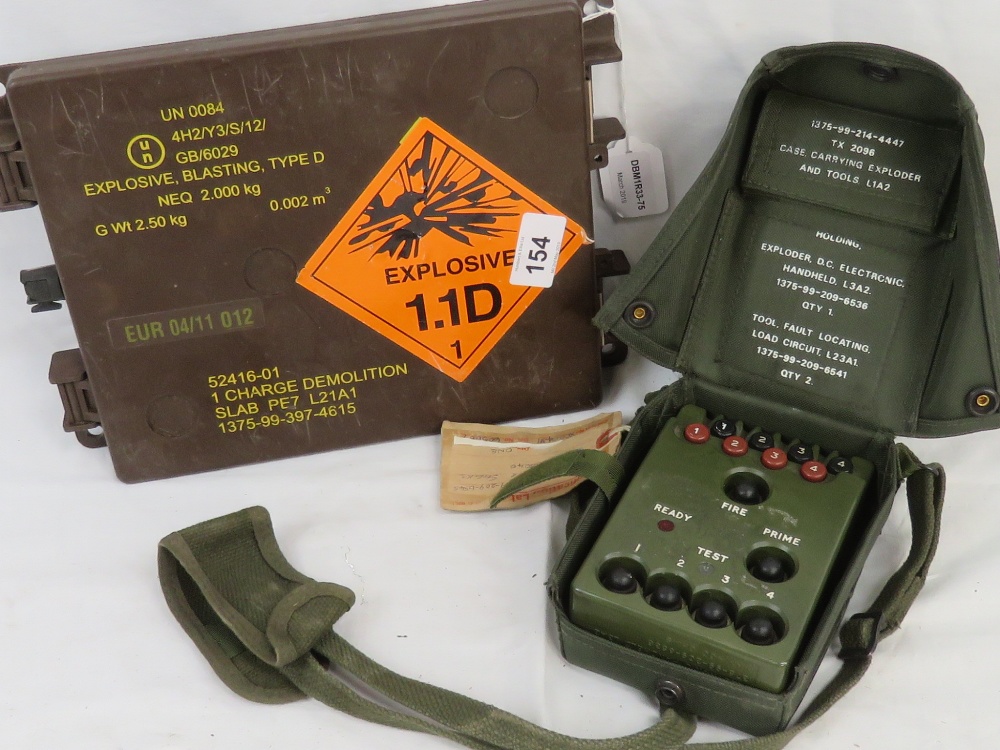


List of equipment of the British Army
View on GrokipediaIndividual and Personal Equipment
Uniforms and Protective Clothing
The standard uniforms of the British Army have evolved significantly to meet operational demands, transitioning from the Disruptive Pattern Material (DPM) camouflage introduced in the 1960s, which featured a four-color woodland scheme for temperate environments, to the current Multi-Terrain Pattern (MTP) adopted in 2010 as part of the Personal Clothing System (PCS).[9] This shift addressed limitations in the DPM's effectiveness across diverse terrains, particularly after experiences in Afghanistan, where a hybrid pattern combining DPM's disruptive shapes with MultiCam-inspired colors was developed and approved by the Ministry of Defence (MOD) for issuance starting in March 2010—the first major camouflage update since 1968.[10] The MTP uniform, comprising combat jackets, trousers, and shirts, is constructed from a 50% cotton/50% polyester ripstop fabric blend treated for infrared (IR) suppression to reduce visibility to night-vision devices, enhancing concealment in varied light conditions while providing durability and breathability.[11] Environmental variants of the MTP and related systems adapt to extreme conditions; for cold weather operations, the No.8 Cold Weather Clothing System, an extension of the temperate PCS, includes layered garments such as insulated parkas, thermal base layers, and windproof over-trousers made from polycotton mixes to maintain body temperature in sub-zero environments, often used in Northern European deployments.[12] Desert and temperate desert uniforms retain elements of the earlier three-color Desert DPM pattern alongside MTP warm-weather variants, featuring lighter-weight fabrics in sandy tones for arid regions like the Middle East, with the PCS warm-weather trousers and shirts using similar IR-suppressed polycotton to prevent overheating while ensuring compatibility with operational gear.[10] Flame-retardant and chemical-resistant overgarments provide additional protection layered over the base uniform; these include fire-resistant coveralls made from 100% treated cotton that meet MOD specifications for anti-flash protection during explosive incidents, and nuclear, biological, chemical, and defense (NBCD) suits such as lightweight overgarments with activated carbon linings for contaminant resistance in hazardous environments.[13] These uniforms integrate seamlessly with body armor systems for modular wear in combat scenarios.Helmets and Body Armour
The British Army utilises the Virtus helmet as its standard combat headgear, designed to protect against ballistic impacts and fragmentation. This helmet features a fixed shroud for mounting night vision devices, a counterweight pouch to alleviate neck strain, and an adjustable fit system comparable to those in cycling or climbing helmets, with a sculpted rear profile to facilitate prone firing positions. It provides enhanced side protection over predecessors like the Mk 7 and weighs approximately 1.4 kg, making it 350 g lighter than the Mk 7 while maintaining robust ballistic resistance equivalent to NIJ Level IIIA standards.[14][15][16] By 2025, the Virtus helmet is undergoing evaluation for replacement with next-generation models as part of the British Soldier 2025 modernisation initiative, focusing on high-cut designs for improved compatibility with advanced gear and further weight reductions through innovative materials. Optional mandible guards and visors are available for enhanced facial protection in specific roles, such as vehicle crews.[17] The Osprey body armour system offers modular torso protection, incorporating soft Kevlar panels and ceramic strike plates capable of defeating 7.62 mm rounds at typical combat velocities. Fully configured with front, rear, and side plates, it weighs up to 10 kg, providing scalable coverage from fragmentation threats to high-velocity rifle ammunition while allowing adjustments for mobility. The system includes rubberised shoulder reinforcements to prevent slippage from rucksacks or weapons and elasticated pouches for ammunition storage.[14][15] In parallel, the Virtus body armour represents an evolution from Osprey, delivering comparable protection at a significantly lighter weight—approximately 4.7 kg less overall—through dynamic weight distribution that transfers load from the shoulders to the hips via a spine-linked belt. This design enhances soldier endurance in prolonged operations, with quick-release mechanisms for rapid doffing in emergencies.[14][18] The FM50 respirator serves as the primary defence against chemical, biological, radiological, and nuclear (CBRN) threats, featuring a full-face silicone mask with a flexible visor for unobstructed vision and twin 40 mm NATO-standard filters. It offers protection for up to 8 hours against nerve agents like sarin and VX, as well as blister agents and particulates, with low breathing resistance (under 30 mm water gauge at 95 L/min inhalation) to maintain operational efficiency. The mask integrates seamlessly with the Virtus helmet and is produced in multiple sizes for a secure seal.[19][20] These helmets and armour systems are engineered for compatibility with the British Army's standard uniforms, ensuring layered protection without restricting movement.Load-Carrying Systems
The Virtus Soldier System forms the cornerstone of the British Army's load-carrying equipment, providing a modular framework for infantry soldiers to transport essential items such as ammunition, hydration supplies, and personal gear during dismounted operations. Developed by Source Tactical Gear and selected through a Ministry of Defence tender, it emphasizes scalability to adapt to varying mission requirements, from short patrols to prolonged engagements, while prioritizing user mobility and comfort.[21][14] Key components include a scalable plate carrier that serves as a chest rig for rapid-access items, integrated with MOLLE-compatible pouches for ammunition magazines, medical kits, and utility tools. Hydration carriers, typically featuring 3-liter bladders, attach directly to the system for hands-free access to water, while dedicated radio harnesses secure devices like the Personal Role Radio (PRR) via MOLLE mounting points on the chest or yoke, allowing for stable positioning without impeding arm movement. For day-to-day operations, soldiers use assault packs with up to 40-liter capacity to carry immediate essentials, whereas bergens offering 90-liter volume support extended patrols by accommodating additional rations, sleeping gear, and spare batteries.[22][23][24] The system's Dynamic Weight Distribution (DWD) mechanism, incorporating an adjustable exospine linked to a hip belt, enables soldiers to transfer loads dynamically from the shoulders to the hips, accommodating typical combat weights of 25 to 35 kilograms and mitigating strain during prolonged marches. Introduced in 2015 to replace legacy systems like the Osprey, Virtus has undergone iterative enhancements, including a 2024 procurement re-compete for improved ergonomic features that address fit and reduce musculoskeletal injury risks through better anatomical coverage and lighter materials.[25][26][27] Its integration with body armour allows for seamless attachment of load components, enhancing overall soldier effectiveness in diverse environments.[28][14]Communications and Vision Systems
Communications Devices
The British Army's communications devices are designed to enable secure, reliable tactical coordination at the unit level, primarily through the Bowman tactical communications and command system, which achieved full operational capability in 2008 as a replacement for the legacy Clansman radios, with initial fielding starting in 2004.[29][30][31] This shift marked a transition to digital, software-defined radios capable of secure voice and limited data transmission across HF, VHF, and UHF bands, supporting operations from individual soldiers to brigade headquarters. A key component of Bowman is the Personal Role Radio (PRR), a lightweight, short-range transceiver used by infantry for squad-level voice communications. Operating in the 2.4 GHz band, the PRR employs spread spectrum technology—including frequency hopping—to enhance security against interception and jamming, with an effective range of 500 meters even through obstacles like building walls. It features 256 selectable channels and provides up to 20 hours of continuous battery life from standard AA cells, weighing just 1.5 kg for easy integration into personal load-carrying systems.[32][33] For broader tactical use, the army employs the L3Harris Falcon IV AN/PRC-163 multi-channel handheld radio, which supports simultaneous voice, video, and data over wideband frequencies with advanced encryption for classified operations. This software-defined radio offers multi-waveform capability, interoperability with NATO allies, and extended battery life, making it suitable for dismounted troops as a replacement for legacy systems like the AN/PRC-152. The Bowman network, including these devices, integrates with ISTAR platforms to facilitate real-time data sharing for situational awareness. As of 2025, over 50,000 Bowman radios have been fielded to regular and reserve units.[34][35][36] In July 2025, the British Army procured approximately 800 TrellisWare Technologies TSM waveform radios under Project Asgard to enhance tactical data links and mesh networking for dismounted forces. Ongoing upgrades to Bowman, including the planned version 5.7 rollout expected in late 2025 or early 2026, incorporate satellite communications via systems like Scytale for beyond-line-of-sight extension and increased bandwidth supporting video feeds up to 2 Mbps. These enhancements build on the Falcon deployable network for higher-echelon broadband voice, data, and video, ensuring seamless unit coordination while maintaining backward compatibility. Devices like the PRR and AN/PRC-163 can be mounted on soldiers' load-carrying systems for operational mobility.[37][38][39][40]Night Vision and Optics
The British Army employs a range of night vision and optical systems to enhance soldier situational awareness in low-light and adverse weather conditions, evolving from traditional image intensification devices to advanced fusion technologies that combine visible, infrared, and thermal imaging. These systems are typically helmet-mounted or handheld, providing critical capabilities for dismounted infantry operations. Primary equipment includes monocular and binocular night vision goggles based on third-generation image intensifier tubes, alongside thermal imaging devices that detect heat signatures through obscurants like fog or smoke.[41] The AN/PVS-14 monocular night vision goggle (NVG), designated as the Helmet-Mounted Night Vision System (HMNVS) in British service, has been a cornerstone since its introduction in 2008. Equipped with Gen 3 image intensifier tubes, it offers a 40° field of view, enabling detection of man-sized targets at up to 300 meters under optimal conditions, with a tube life exceeding 10,000 hours for sustained reliability in field operations. The device weighs approximately 355 grams and operates for over 10 hours on a single AA battery, supporting both helmet-mounted and handheld use for versatility in tactical scenarios.[41][42] For binocular applications, the British Army procures the XACT nv33 compact NVGs from Elbit Systems UK, with ongoing contracts ensuring delivery of thousands of units as of 2025. These lightweight Gen 3 devices provide a 40° field of view per eye in a fused binocular configuration, weighing under 500 grams and offering up to 30 hours of operation, enhancing depth perception and reducing helmet strain during extended missions. A £16 million contract uplift in October 2024 supports phased deployment to infantry units, building on initial procurements from 2021.[43][41][44] Thermal imaging capabilities have advanced through the TALON Fused Weapon Sight developed by Qioptiq, integrating thermal and low-light image intensification for enhanced target acquisition. This system detects man-sized targets at up to 1,000 meters in fog or darkness and identifies them at 250 meters, with a near-silent shutter for stealthy operations; up to 10,000 units are slated for integration across the force by 2025 under a £120 million framework contract. The fusion technology overlays thermal data onto visible or intensified images, improving accuracy in degraded visibility.[45][46][47] The evolution of these vision systems reflects a shift from passive infrared image intensification, which amplifies ambient light, to active fusion technologies incorporating thermal sensors for all-weather performance. Early reliance on monocular devices like the AN/PVS-14 has progressed to binocular and fused systems like the XACT nv33 and TALON, driven by operational needs in diverse environments and supported by recent procurements emphasizing modularity and reduced weight. These advancements ensure interoperability with helmet mounts for hands-free use.[41][48]Weapons Systems
Pistols and Submachine Guns
The British Army employs compact firearms such as pistols and submachine guns primarily for close-quarters combat, self-defense, and specialized operations where maneuverability is essential. These weapons are issued to officers, vehicle crews, and special forces units, emphasizing reliability, low recoil, and compatibility with 9×19mm Parabellum ammunition. The standard sidearm serves as a backup to primary rifles, while submachine guns provide suppressive fire in confined spaces.[49] The primary pistol in service is the L131A1 General Service Pistol, a designation for the Glock 17 Generation 4, chambered in 9×19mm with a standard 17-round magazine capacity. Adopted in 2013 to replace the aging Browning Hi-Power, it offers improved ergonomics, lighter weight (approximately 710 grams unloaded), and enhanced accuracy due to its polymer frame and Safe Action trigger system. The Ministry of Defence procured 25,000 units across UK armed forces, with the British Army receiving a significant portion for general issue. Its muzzle velocity is around 375 meters per second, enabling effective engagement at ranges up to 50 meters.[49][50] The Heckler & Koch MP5 submachine gun remains in limited use, particularly with special operations units like the Special Air Service, where its compact design and controllability excel in urban and hostage rescue scenarios. This 9×19mm weapon features a 30-round magazine, a roller-delayed blowback system, and a cyclic rate of 800 rounds per minute, with variants including the suppressed MP5SD for reduced signature operations. Although phased out from frontline regular infantry roles in favor of carbines, it remains in limited use with elite formations as of 2025.[51][52] Training for these weapons focuses on marksmanship, malfunction clearing, and tactical employment in close-quarters battle, conducted at ranges like those at the Infantry Training Centre Catterick. Personnel receive instruction on suppressor attachment for the MP5SD to minimize noise and flash, enhancing stealth during night operations; suppressors are typically integrally suppressed barrels rather than add-ons for pistols. Maintenance protocols emphasize regular lubrication of the Glock's polymer components and inspection of the MP5's recoil spring assembly to ensure functionality in adverse conditions. Holsters, such as the RADAR retention system, integrate with the army's load-carrying equipment for secure thigh-mounted carry, allowing quick draw while maintaining mobility.[53][54] These systems undergo periodic evaluations under programs like Project Grayburn, ensuring alignment with evolving threats, though no immediate replacement for the L131A1 has been confirmed as of 2025.[55]Rifles and Sniper Weapons
The British Army's rifles and sniper weapons form the core of its individual infantry firepower, providing versatile assault capabilities and precision engagement for designated marksmen and snipers. The standard-issue rifle is the SA80 series, a bullpup design chambered in 5.56×45mm NATO, while specialized sharpshooter and sniper rifles in larger calibers extend effective engagement ranges for squad support and long-distance targeting. These weapons are integrated with advanced optics and modular accessories to enhance accuracy and adaptability in diverse operational environments.[56] The SA80A3 (L85A3) serves as the primary assault rifle, featuring a 5.56mm calibre, 30-round STANAG magazine capacity, and an effective range of approximately 500 meters with optics. Weighing 4.98 kg loaded with sight and magazine, it measures 785 mm in length and is manufactured by Heckler & Koch following a major mid-life upgrade program completed in 2018, which incorporated improved polymer components for enhanced ergonomics, reliability, and reduced weight. This upgrade addressed earlier issues with the SA80A2 variant, ensuring compatibility with underslung grenade launchers and holographic sights. As of February 2025, the Ministry of Defence reports an inventory of 165,420 SA80 variants (125,276 A2 and 40,144 A3) across the armed forces. The rifle integrates the Elcan Specter OS-based Lightweight Day Sight (LDS), a 4× fixed magnification optic that replaced the older SUSAT, providing improved target acquisition and compatibility with thermal overlays for low-light operations.[56][57][58] For designated marksmen, the L129A1 sharpshooter rifle offers semi-automatic precision in 7.62×51mm NATO, with a 20-round detachable box magazine and an effective range of 800 meters to support infantry sections in extended firefights. Adopted in 2009 as an Urgent Operational Requirement, it weighs 4.5 kg and is produced by Lewis Machine & Tool based on the AR-10 platform, providing enhanced accuracy over standard rifles without the full bolt-action deliberation of sniper systems. An initial procurement of over 400 units was made in 2009 at a cost of £1.5 million, with over 3,000 units supplied by 2014 and remaining in service as of 2025 for designated marksmen roles. Optics integration includes the Elcan Specter series for versatile day sighting, often paired with variable magnification for marksman roles.[59][60][47] The L115A3 represents the pinnacle of British sniper weaponry, a bolt-action rifle chambered in .338 Lapua Magnum (8.59mm) with a 5-round box magazine and an effective range exceeding 1,500 meters for anti-personnel and light materiel targets. Manufactured by Accuracy International, it weighs 6.8 kg, measures 1,300 mm in length, and was first deployed in 2008 as part of the Sniper System Improvement Programme to replace earlier 7.62mm models. The design includes a fluted stainless steel barrel for sustained accuracy and is routinely fitted with suppressors to reduce signature during operations. It employs state-of-the-art telescopic optics, such as the Schmidt & Bender 5-25×56 PM II, supporting day/night and all-weather engagements, with brief compatibility noted for thermal fusion via inline adapters.[61][62][63]Machine Guns and Grenade Launchers
The British Army employs a range of machine guns and grenade launchers to provide suppressive fire and area denial capabilities at the squad and platoon levels, emphasizing portability, reliability, and integration with infantry tactics. These weapons support sustained fire roles, enabling suppression of enemy positions while minimizing exposure for advancing troops. Key systems include general-purpose and light machine guns chambered in NATO-standard calibers, alongside 40mm grenade launchers for both individual and vehicle-mounted applications.[2] The L7A2 General Purpose Machine Gun (GPMG), based on the FN MAG design, serves as the primary sustained-fire weapon across infantry, vehicle, and coaxial applications. It fires 7.62×51mm NATO ammunition from a 100-round disintegrating link belt, with an effective range of 800 meters in the light role (using a bipod) and up to 1,800 meters in the sustained fire role (with tripod and C2 sight for battalion-level support). Weighing approximately 11.8 kg in the infantry configuration, the L7A2 offers versatility through vehicle-mountable variants on platforms like the Warrior IFV and Challenger 2 tank.[64] The L110A2 Light Machine Gun, a variant of the FN Minimi, provides lighter suppressive fire for dismounted sections and was adopted in 2001 to enhance squad mobility. Chambered in 5.56×45mm NATO, it is gas-operated and can be fed by belts or 200-round magazines, with a cyclic rate of 700–1,000 rounds per minute and an effective range of 800 meters. At 7.2 kg unloaded, it allows a single soldier to carry and employ it effectively, though as of 2025, the Ministry of Defence is procuring a replacement to modernize the 5.56mm light machine gun capability. As of February 2025, the Ministry of Defence issued a tender under Project TROUBLER for a new 5.56mm lightweight assault machine gun for dismounted troops.[65][66] For grenade launchers, the L134A1 Grenade Machine Gun (GMG), manufactured by Heckler & Koch, delivers high-volume 40×53mm grenade fire from a 32-round belt, achieving an effective range of 2,200 meters. Weighing 28.8 kg, it combines machine gun accuracy with mortar-like trajectory flexibility, making it ideal for vehicle mounting on Land Rovers or tripods to engage armored vehicles and infantry. Its muzzle velocity of 241 m/s supports point and area targets up to 2.5 km.[67] Complementing rifle systems, the L123A1 Underslung Grenade Launcher integrates with the SA80 series as a 40mm single-shot attachment based on the Heckler & Koch AG36. It provides point fire support with an effective range of 350 meters and a muzzle velocity of 76 m/s, allowing grenadiers to engage personnel or light cover without detaching from their primary weapon. Ammunition for these launchers, including high-explosive and smoke variants, is carried in modular load-bearing systems.[56]| Weapon | Caliber | Feed | Effective Range | Weight (Unloaded) | Primary Role |
|---|---|---|---|---|---|
| L7A2 GPMG | 7.62×51mm | 100-round belt | 800–1,800 m | 11.8 kg | Sustained suppression, vehicle/coaxial |
| L110A2 LMG | 5.56×45mm | Belt or 200-round magazine | 800 m | 7.2 kg | Squad light support |
| L134A1 GMG | 40×53mm | 32-round belt | 2,200 m | 28.8 kg | Area denial, anti-armor |
| L123A1 UGL | 40mm | Single-shot | 350 m | 1.12 kg (attached) | Individual point fire |
Explosives and Anti-Materiel Weapons
The British Army employs a range of man-portable explosives and anti-materiel weapons designed for breaching, demolition, and engaging light vehicles or fortifications in infantry operations. These systems emphasize portability, reliability in varied terrains, and integration with dismounted troops, often complementing rifle-mounted launchers for enhanced tactical flexibility.[68][69] The Next Generation Light Anti-Tank Weapon (NLAW) serves as a primary short-range anti-armor system, featuring a 150 mm warhead and a fire-and-forget guidance mechanism that allows infantry to engage targets without sustained aiming. Adopted in 2009, it achieves an effective range of 20 to 800 meters, with a soft-launch capability enabling use in confined spaces.[68][69][70] For directional fragmentation effects, the Army utilizes the Claymore mine, a command-detonated device containing approximately 1.5 pounds of plastic explosive behind 700 steel balls, producing a lethal cone-shaped pattern with an effective casualty radius of up to 50 meters when fired from distances up to 300 meters. This mine supports defensive perimeters and ambush setups by Royal Engineers and infantry units.[71][72] Plastic explosives like PE4, an RDX-based composition similar to C-4, provide versatile demolition capabilities, moldable for charges up to several kilograms and detonated via timed or command fuzes. PE4 is issued in kits for breaching obstacles, with training emphasizing safe handling and calculation of explosive yields to minimize collateral damage during engineer tasks.[73][74][75] The L82A1, a British designation for the Barrett M82A1 .50 caliber (12.7x99mm) semi-automatic rifle, functions as a heavy anti-materiel weapon for disabling light vehicles, radar systems, or personnel at ranges up to 1,800 meters. Primarily operated by Royal Marines and designated marksmen, it weighs around 14 kilograms and employs match-grade ammunition for precision in counter-equipment roles.[76][77] Demolition charges in service include user-filled containers with PE8 or equivalent explosives, replacing fixed-weight variants for cost efficiency, often configured as timed or fuzed kits weighing 5 to 26 pounds for cutting steel beams or concrete. Training protocols, outlined in Royal Engineers handbooks, stress misfire procedures, quantity-distance safety, and environmental considerations to ensure operational effectiveness.[78][75][79] with recent procurement contracts to replenish stocks following international aid commitments, ensuring sustained availability for NATO-aligned forces as of 2025.[70][80][81]Portable Anti-Tank and Anti-Air Systems
The British Army employs portable anti-tank and anti-air systems to equip infantry units with capabilities against armored vehicles and low-flying aerial threats, such as helicopters and attack aircraft. These man-portable guided missile systems emphasize fire-and-forget or laser-guided technologies for rapid engagement in dynamic battlefield conditions. Key systems include the Javelin for anti-armor roles and the Starstreak High Velocity Missile (HVM) for short-range air defense, both integrated into light infantry formations for dismounted operations. The Javelin Light Forces Anti-Tank Guided Weapon (LF ATGW) serves as the primary man-portable anti-tank system, designed to defeat modern main battle tanks through a top-attack profile that targets weaker upper armor. It features an infrared-homing guidance system with fire-and-forget functionality, allowing the operator to seek cover immediately after launch. The missile has a maximum effective range of 2,500 meters and employs a tandem high-explosive anti-tank (HEAT) warhead weighing approximately 8.4 kg to penetrate explosive reactive armor. The system consists of the missile housed in a disposable launch tube for single-use firing and a reusable Command Launch Unit (CLU), which provides day/night sighting, target acquisition, and missile control; recent upgrades include the Lightweight CLU (LWCLU), reducing weight by 25% for improved infantry mobility. The British Army maintains a substantial inventory of Javelin missiles, with production support from UK suppliers contributing to ongoing replenishment efforts following aid shipments. The Starstreak HVM provides very short-range air defense against low-level threats, particularly helicopters, using a laser beam-riding guidance system for high-speed intercepts up to Mach 3.5. Its warhead disperses three tungsten-alloy darts upon impact, each capable of penetrating armored aircraft skins to deliver kinetic energy damage rather than explosive effects, enhancing lethality against fast-moving targets. The effective engagement range extends to 7 kilometers, with the portable configuration using a shoulder-fired launcher that accommodates three ready-to-fire missiles. Starstreak entered service in 1997, fully replacing the earlier Starburst system, which had been phased out due to limitations in guidance and range; by 2025, Starstreak remains the standard man-portable surface-to-air missile across Royal Artillery air defense units. These systems trace operational legacy to post-Cold War conflicts, with Javelin proving effective in urban and asymmetric warfare since its introduction in 2001, including engagements in Iraq and Afghanistan. Both Javelin and Starstreak have seen recent deployment parallels in Ukraine aid packages, where the UK supplied consignments of each to counter Russian armor and aerial incursions, underscoring their role in peer-adversary scenarios.Armoured and Combat Vehicles
Main Battle Tanks
The British Army's main battle tank fleet centers on the Challenger series, which has evolved from the Challenger 1, retired in 2002 after service since the 1980s, to the current Challenger 2, with ongoing upgrades to the Challenger 3 standard.[82] The Challenger 2, introduced in 1998, serves as the primary armoured fighting vehicle for direct tank-on-tank combat and breakthrough operations, emphasizing superior protection and firepower.[83] It features a four-person crew consisting of a commander, gunner, loader, and driver, with the commander using advanced panoramic sights for situational awareness and target acquisition.[83] The tank's hull and turret are protected by Dorchester armour, a second-generation composite system derived from Chobham, providing exceptional resistance to kinetic and chemical threats.[83] Weighing 62.5 tonnes in base configuration and up to 75 tonnes in combat load, it is powered by a Perkins CV12-6A V12 diesel engine delivering 1,200 horsepower, enabling a top road speed of 59 km/h and a range of 550 km.[83] As of April 2025, the British Army holds 288 Challenger 2 tanks, though operational readiness varies due to maintenance and storage cycles.[84] The Challenger 2's primary armament is the L30A1 120 mm rifled gun, capable of firing a mix of ammunition types for versatile engagement, including the L31 High-Explosive Squash Head (HESH) round for anti-fortification and soft-target roles, and L27A1 Armour-Piercing Fin-Stabilized Discarding Sabot (APFSDS) rounds for penetrating modern armoured threats.[85] These rounds provide effective lethality at ranges exceeding 2,000 metres, with the APFSDS variant achieving muzzle velocities around 1,500 m/s to maintain kinetic energy against distant targets.[86] The tank carries up to 49 main gun rounds, supplemented by a 7.62 mm coaxial machine gun and a 7.62 mm roof-mounted gun for close defence.[83] Modernization efforts are transforming select Challenger 2 vehicles into the Challenger 3 configuration to extend service life beyond 2040 and enhance lethality against peer adversaries.[87] Announced in 2021, the programme will upgrade 148 tanks, with initial operational capability targeted for 2027 following trials commencing in 2025; mobility trials were completed in September 2025.[88][89] Key upgrades include replacement of the rifled gun with the 120 mm L55A1 smoothbore cannon for compatibility with advanced NATO-standard ammunition, integration of the Israeli-developed Trophy Active Protection System to intercept incoming anti-tank guided missiles and rocket-propelled grenades, and improved digital fire-control systems with enhanced commander sights.[90][91] These enhancements, managed by Rheinmetall BAE Systems Land (RBSL), aim to restore the fleet's edge in high-intensity warfare while maintaining the platform's renowned survivability.[92]Infantry Fighting Vehicles and Armoured Personnel Carriers
The British Army's inventory of infantry fighting vehicles (IFVs) and armoured personnel carriers (APCs) primarily consists of tracked and wheeled platforms designed to transport and protect infantry squads during combat operations, providing fire support with autocannons or machine guns while maintaining mobility across varied terrains. These vehicles emphasize modularity for mission adaptability, enhanced protection against small arms, improvised explosive devices, and artillery fragments, and integration with networked command systems for reconnaissance and direct engagement. As of November 2025, the fleet is undergoing a transition, with legacy systems like the Warrior IFV entering retirement phases amid delays in new procurements, while modern platforms such as the Ajax family and Boxer series are achieving initial operating capability to bolster mechanized infantry brigades.[93][94] The Ajax family represents the Army's next-generation armoured reconnaissance and fighting vehicle, comprising six tracked variants built on a common 42-tonne chassis for enhanced survivability and all-terrain performance. The baseline Ajax variant is armed with a 40mm Case Telescoped Cannon (CTA) capable of firing programmable airburst munitions, supported by a coaxial 7.62mm machine gun and optional remote weapon stations for additional firepower. Designed for a crew of three plus up to seven dismounts, it features advanced sensors including 360-degree situational awareness cameras and electronic architecture for real-time data sharing. Despite significant delays—original delivery targeted for 2017—the Ministry of Defence declared initial operating capability on November 6, 2025, with the first vehicles entering service; a total of 589 units across variants (including the APC-configured Ares) are contracted for delivery by the end of the decade.[95][96][97] The Warrior IFV, a tracked vehicle in service since the 1980s, remains a cornerstone of the Army's armoured infantry capability during its phased withdrawal, with 604 active units as of April 2025 following the disposal of 80 vehicles earlier in 2025.[1][98][99] Equipped with a 30mm L21A1 RARDEN autocannon and a 7.62mm chain gun, it accommodates a crew of three and six to seven troops, bolstered by recent up-armouring kits adding up to 7 tonnes of modular protection against anti-tank threats and blast effects. In August 2025, the Ministry of Defence announced Project Atilla to repurpose surplus Warriors into autonomous mine-breaching vehicles.[100] The Warrior Capability Sustainment Programme, intended for comprehensive upgrades including improved electronics and lethality, was cancelled in 2021, leading to a retirement timeline now extended to 2030 to bridge gaps until replacements like the Boxer are fully fielded; these enhancements ensure interim viability in high-threat environments.[101] Complementing these is the Boxer, a modular 8x8 wheeled APC selected as the Mechanised Infantry Vehicle (MIV) to replace older transports like the Saxon, with 623 units ordered to enhance brigade mobility and logistics. Based on a mine-resistant design with a V-hull and spaced armour, it carries a driver, commander, gunner, and up to eight troops, fitted with remote weapon stations mounting 12.7mm or 40mm systems for self-defence. Production of UK-built variants began in 2025 at a rate of about 100 per year, with initial operating capability targeted for late 2025 despite supply chain risks; its Patria AMV-derived underpinnings provide amphibious capability and rapid role changes via swappable mission modules. Across the fleet, these vehicles typically support 7-10 personnel, prioritizing troop protection and integration with dismounted infantry tactics.[102][103]Protected Patrol Vehicles
Protected patrol vehicles form a critical component of the British Army's light mobility fleet, designed for reconnaissance, rapid response, and operations in low-to-medium threat environments where high speed and agility are prioritized over heavy armor. These vehicles emphasize off-road capability, crew protection against small arms and improvised explosive devices (IEDs), and integration with networked command systems to support infantry and reconnaissance units. Unlike heavier armored personnel carriers, protected patrol vehicles focus on speed and payload flexibility for scouting and logistics in contested areas, with many featuring modular designs for mission-specific adaptations.[8] The Jackal 2 serves as a high-mobility weapons platform, primarily configured as a 4x4 vehicle with an air-bag suspension system for enhanced protection and terrain adaptability. It is armed with a 7.62mm general purpose machine gun for crew protection, and can mount a heavier 12.7mm machine gun or 40mm grenade machine gun as the primary weapon. The vehicle achieves a top road speed of 130 km/h and a payload capacity of approximately 1 tonne, enabling it to carry reconnaissance equipment or additional supplies over extended ranges. As of April 2025, the British Army maintains a fleet of 480 Jackal vehicles in protected mobility roles.[104][105][1] Complementing the Jackal, the Coyote tactical support vehicle (TSV) is a 6x6 variant built on an extended chassis, optimized for troop and logistics support in high-mobility operations. It accommodates a crew of 4 to 5 personnel plus cargo, with dimensions including a length of 7.04 m and a maximum speed of 120 km/h, allowing it to keep pace with forward elements across rough terrain. The Coyote's design prioritizes supply transport and equipment carriage, with armament options mirroring the Jackal's machine gun configurations for self-defense. It forms part of the integrated reconnaissance fleet, enhancing operational sustainment without the need for dedicated heavy logistics.[106][105] The Panther command and liaison vehicle (CLV) is a 4x4 platform weighing 7 tonnes, air-transportable and suitable for underslung carriage under Chinook helicopters, supporting commanders, liaison officers, and specialist platoons in armored and infantry units. Powered by a 3.0L Iveco diesel engine, it reaches speeds up to 80 km/h and provides STANAG Level 1 ballistic protection against 7.62mm rounds, with options for upgrades including a 12.7mm machine gun and day/night sighting systems. As of 2025, the Panther remains in widespread service but is slated for eventual replacement or reserve status amid broader fleet modernization, with no specific out-of-service date confirmed beyond 2030 projections for similar light vehicles.[107][108][4] For higher-threat patrols, the Mastiff and Wolfhound mine-resistant ambush-protected (MRAP) vehicles offer robust blast mitigation, with the Mastiff as a 6x6 configuration carrying 2 crew plus 8 troops and the Wolfhound as a 6x6 tactical support variant for combat supplies. Both feature V-shaped hulls designed to deflect blasts from up to 10 kg of explosives, supplemented by electronic countermeasures and blast-attenuating seats, while armaments include 7.62mm machine guns, 12.7mm heavy machine guns, or 40mm grenade launchers. The Mastiff reaches 90 km/h, emphasizing protected mobility over speed. These vehicles are part of a broader protected mobility inventory exceeding 1,500 units as of 2024, but phase-out plans target retirement by 2028 to streamline the fleet toward newer platforms like the Boxer.[109][110][4]| Vehicle | Configuration | Key Armament | Top Speed | Payload/Capacity | Inventory (2025) | Status |
|---|---|---|---|---|---|---|
| Jackal 2 | 4x4 | 7.62mm GPMG; optional 12.7mm HMG or 40mm GMG | 130 km/h | ~1,000 kg | 480 | Active |
| Coyote TSV | 6x6 | 7.62mm GPMG; optional 12.7mm HMG or 40mm GMG | 120 km/h | 4-5 crew + cargo | Integrated with Jackal fleet | Active |
| Panther CLV | 4x4 | 7.62mm GPMG; optional 12.7mm | 80 km/h | 1+3 crew | Widespread (exact number unspecified) | Active, reserve planned post-2030 |
| Mastiff | 6x6 | 7.62mm GPMG, 12.7mm HMG, or 40mm GMG | 90 km/h | 2+8 troops | >1,500 total protected mobility (shared) | Phase-out by 2028 |
| Wolfhound | 6x6 | 7.62mm GPMG, 12.7mm HMG, or 40mm GMG | ~90 km/h | Supplies/logistics | >1,500 total protected mobility (shared) | Phase-out by 2028 |
Artillery and Indirect Fire
Self-Propelled Guns
The British Army's self-propelled guns provide mobile, armoured artillery support for indirect fire, enabling rapid deployment and repositioning on the battlefield to deliver high-volume firepower in support of ground operations. These platforms emphasise mobility, protection, and integration with command systems for precise targeting, distinguishing them from static towed systems by allowing sustained operations in dynamic environments.[111] The primary self-propelled gun in service has been the AS90 Braveheart, a 155mm tracked howitzer developed by Vickers Defence (now BAE Systems) and introduced in 1992. It features a 39-calibre L31 gun barrel capable of firing NATO-standard ammunition, including the L15 high-explosive (HE) round, with a standard range of 24.7 km. With base-bleed or rocket-assisted projectiles, the effective range extends to 30 km, while upgrades such as a 52-calibre barrel—manufactured by Royal Ordnance—can achieve over 40 km. The system supports a burst rate of three rounds in under 10 seconds and an intense rate of six rounds per minute for three minutes, sustained at two rounds per minute. As of April 2025, approximately 70 AS90s remained in British Army inventory, equipping field regiments of the Royal Horse Artillery and Royal Artillery before the fleet's full transfer to Ukraine in May 2025.[111][112][113][114] Operated by a crew of five—comprising a commander, driver, gunner, and two loaders—the AS90 incorporates a semi-automatic loading system that enhances firing efficiency and reduces crew exposure. Prototypes and upgrades have explored fully automated loaders to further decrease crew size and increase rate of fire, though the standard configuration retains manual elements for reliability in combat. Ammunition includes the L15 HE round for general-purpose engagements at up to 24.7 km, alongside extended-range variants like the Denel Assegai velocity-enhanced long-range projectile, which exceed 40 km when paired with modular charge systems. The vehicle's armour provides protection against small arms and shell fragments, with a top speed of 53 km/h and operational range of 420 km.[111][112][115] Proposed upgrades for the AS90 included trials of a Rheinmetall-supplied 52-calibre barrel in 2025, aimed at boosting range to approximately 54 km through improved ballistics and compatibility with advanced propellants; however, these were curtailed following the platform's retirement. The donation of the entire fleet to Ukraine accelerated the British Army's transition away from the AS90, which had been scheduled for out-of-service by 2030.[111][113][114] To address the capability gap, the Mobile Fires Platform (MFP) programme will introduce a replacement by the late 2020s, with the Rheinmetall Boxer-based RCH 155 wheeled howitzer selected in 2024, though the timeline is currently under review as of November 2025. This 155mm/52-calibre system promises enhanced range beyond 40 km, automated loading for a reduced crew of three, and greater mobility on wheeled chassis, integrating advanced fire control for networked operations. Interim measures include the acquisition of 14 Swedish Archer systems in 2023 to maintain close-support fires until the MFP's full rollout.[116][117][114][118]Towed Artillery and Mortars
The towed artillery and mortars of the British Army provide lightweight, deployable indirect fire support for expeditionary operations, emphasizing mobility and rapid setup over the heavier, self-propelled systems used for sustained engagements. These systems are primarily employed by field artillery regiments and infantry battalions, enabling precise strikes at battalion and brigade levels while being air-transportable or man-portable to support airborne and amphibious forces. Unlike self-propelled guns, which focus on protected, high-volume fire from tracked platforms, towed artillery and mortars prioritize quick emplacement in austere environments, often integrated with digital targeting for enhanced accuracy. The primary towed artillery piece is the L118 105mm light gun, a versatile howitzer designed for rapid deployment. It achieves a maximum range of 17.2 km with high-explosive ammunition and can be towed by light vehicles or carried underslung by Chinook helicopters, making it ideal for air-mobile operations with parachute and commando units. As of 2025, the British Army maintains an inventory of 126 L118 guns, operated by crews of 5-6 personnel who handle positioning, loading, and firing. Recent upgrades from 2023 to 2025 have integrated digital fire control systems, including the Automatic Pointing System (APS) with inertial navigation and touchscreen interface, allowing the gun to be ready for fire in under 30 seconds and improving precision through automated alignment. These enhancements, part of broader Royal Artillery digitization efforts like the FC-BISA system, enable seamless data sharing with forward observers for joint fires integration. At the mortar level, the 81mm L16 provides section- and platoon-level indirect fire, serving as an infantry battalion's organic artillery for close support. This muzzle-loading system fires 4.2 kg high-explosive bombs up to 5.65 km, with options for smoke and illumination rounds, and weighs 35.3 kg for breakdown into portable components carried by a crew of 3-4 soldiers. It is typically deployed from mortar platoons within mechanized or armored battalions, offering a sustained rate of fire up to 15 rounds per minute and rapid repositioning via vehicles like the FV432 APC. In October 2025, the Ministry of Defence launched Project Stokes to acquire a new 120mm vehicle-mounted mortar system, with industry proposals including the Ground Deployed Advanced Mortar System (GDAMS) for integration on light vehicles to provide enhanced indirect fire support.[119]| System | Caliber | Max Range | Crew Size | Key Features |
|---|---|---|---|---|
| L118 Light Gun | 105mm | 17.2 km | 5-6 | Air-transportable, digital APS upgrade |
| L16 Mortar | 81mm | 5.65 km | 3-4 | Section-level, 4.2 kg HE bomb |
Multiple Launch Rocket Systems
The British Army employs the M270 Multiple Launch Rocket System (MLRS) as its primary multiple launch rocket system for delivering long-range, area-suppression fire in support of ground operations. This tracked, self-propelled launcher, developed by Lockheed Martin, fires 227mm rockets from modular pods, enabling rapid saturation of targets with high-explosive or submunition warheads to deny enemy maneuver space. Introduced to the Army in the late 1980s, the M270 has been upgraded over time to integrate advanced guidance technologies, enhancing its precision and extending its operational relevance within NATO frameworks. The standard M270 configuration carries two six-rocket pods, allowing a full salvo of 12 rockets to be launched in under 40 seconds, with an effective range of up to 70 km when using the Guided Multiple Launch Rocket System (GMLRS) munitions. These GMLRS rockets employ GPS/inertial navigation systems (INS) for circular error probable (CEP) accuracy of less than 10 meters, significantly reducing collateral damage compared to unguided variants. The Extended Range (ER) GMLRS variant further extends this capability to over 150 km, providing deeper strike options against high-value targets such as command centers or logistics nodes. Additionally, the system is compatible with the Precision Strike Missile (PrSM), which offers ranges up to 499 km, though integration into British service is planned for the late 2020s. Reloading the M270 involves replacing the 6-rocket pods using a dedicated resupply vehicle, typically taking 3 to 4 minutes for a full 12-rocket load under optimal conditions. This "shoot-and-scoot" cycle, including deployment, firing, and repositioning, can be completed in approximately 3 minutes, minimizing exposure to counter-battery fire. The launcher's armored chassis, based on the Bradley Fighting Vehicle platform, provides protection against small arms and artillery fragments, with a maximum road speed of 64 km/h and an operational range of 480 km. As a key NATO interoperable asset, the M270 MLRS aligns with alliance standards for indirect fire support, allowing seamless ammunition sharing and joint operations with allies like the United States and Germany. The British Army's fleet is undergoing modernization to the M270A2 standard, which includes improved fire control systems and compatibility with future munitions. In 2025, the active inventory stands at around 40 launchers, bolstered by ongoing procurements of 61 upgraded units from the United States, with deliveries commencing this year and an additional 15 expected soon after. This expansion aims to double the fleet to over 70 vehicles by 2029 and up to 85 by 2030, ensuring sustained capability through mid-century.Air Defence and Surveillance
Ground-Based Air Defence Systems
The British Army's ground-based air defence systems provide layered protection against aerial threats, including aircraft, helicopters, drones, and precision-guided munitions, through vehicle-mounted and fixed launchers integrated into broader networked operations. These systems emphasize mobility, rapid response, and interoperability with joint forces, forming a critical component of the UK's integrated air and missile defence architecture. Primary assets include the Sky Sabre and Stormer HVM platforms, which have evolved to counter modern saturation attacks and low-observable targets.[120][121] Sky Sabre, also known as Land Ceptor, serves as the cornerstone of the Army's medium-range air defence capability, fully replacing the legacy Rapier system by 2021. This advanced system employs Common Anti-Air Modular Missiles (CAMM) with an engagement range exceeding 25 km, launched from mobile platforms that can simultaneously guide up to 24 missiles against separate targets. It integrates the Giraffe Agile Multi-Beam 3D radar for 360-degree surveillance and the iLauncher command-and-control unit, which facilitates two-way datalinks for in-flight updates. In August 2025, the Ministry of Defence procured six additional Land Ceptor launchers, increasing the total from 7 operational systems to 13 ordered to enhance protection against cruise missiles and drones, with each launcher typically holding eight missiles. Delivery is ongoing under a three-year contract. The system's Link 16 tactical datalink enables seamless data sharing with Royal Air Force assets, such as Typhoon fighters, for coordinated engagements.[122][123][124][125][120][121] Complementing Sky Sabre, the Stormer HVM provides short-range, high-mobility defence using Starstreak missiles mounted on tracked Stormer vehicles. Each vehicle carries eight ready-to-fire missiles, with an additional 12 in reserve, offering an effective range of up to 7 km against low-flying threats like helicopters and unmanned aerial vehicles. The platform's design allows for rapid deployment and firing within 10 seconds, supporting tactical units in forward areas. Ongoing upgrades in 2025 have focused on enhancing drone interception capabilities, aligning with broader Army efforts to counter proliferating unmanned threats through improved targeting algorithms and sensor fusion. Over 200 Starstreak missiles are maintained in the inventory to sustain operational readiness across 7 Air Defence Group, though continued donations to Ukraine in 2025 have supported adjustments to stock levels.[126][127][128][129]| System | Missile Type | Range | Key Features | Status (2025) |
|---|---|---|---|---|
| Sky Sabre (Land Ceptor) | CAMM | >25 km | 360° radar, Link 16 integration, 24 simultaneous engagements | 7 operational, 6 on order (as of November 2025) |
| Stormer HVM | Starstreak | Up to 7 km | Tracked mobility, 8 ready missiles per vehicle | In service with upgrades for drone defence |
Radar and Detection Equipment
The British Army utilises sophisticated radar systems for air surveillance, ground-based threat detection, and artillery localisation, enabling real-time battlefield awareness and integration with broader intelligence, surveillance, target acquisition, and reconnaissance (ISTAR) networks. These systems emphasise mobility, multi-mission functionality, and resistance to electronic interference, supporting operations from tactical to theatre-level scales. Key assets include truck-mounted 3D radars and counter-battery sensors that provide critical data for air defence and indirect fire coordination, often networked with unmanned aerial systems for enhanced coverage. In November 2025, the Army received the first tranche of Elbit Systems' Ground Based Surveillance Radars (GBSR), comprising 5 units for tracking personnel, vehicles, helicopters, and drones, further bolstering surveillance capabilities.[130] The Giraffe AMB (Agile Multi-Beam), manufactured by Saab, serves as a primary 3D surveillance radar for air target detection and ground-based air defence (GBAD) acquisition. It offers a detection range of up to 120 km for conventional air targets, including aircraft and missiles, while providing 360-degree coverage with a 1-second revisit rate for rapid updates. Mounted on a mobile truck chassis, the system facilitates quick deployment in forward areas and incorporates low-probability-of-intercept features to minimise detectability. As the largest operator worldwide, the British Army maintains 12 Giraffe AMB sets as of 2025, integrated into formations such as the Land Environment Air Picture Provision (LEAPP) and supporting systems like Sky Sabre for layered air defence. These radars employ pulse-Doppler processing to estimate target velocities, enabling tracking of high-speed threats up to Mach 2. Complementing air surveillance, the COBRA (Counter Battery Radar) provides artillery spotting through its active electronically scanned array (AESA) technology, locating incoming shells and mortars with a range of up to 40 km for artillery projectiles. Developed under a multinational programme led by the Organisation for Joint Armament Co-operation (OCCAR), the mobile wheeled system classifies up to 40 firing batteries within two minutes, prioritising threats for counter-fire responses. COBRA is undergoing phased retirement in favour of newer weapon-locating radars like the Saab TAIPAN (with 5 units delivered by 2024) and Elbit GBSR (first tranche in November 2025), but remains in limited use for indirect fire detection in select Royal Artillery units as of late 2025.[131] Complementing radar-based detection, the SONUS acoustic weapon detection system, provided by Leonardo, enhances ground threat localisation through analysis of acoustic pressure waves from gunfire, mortars, and explosions. This lightweight system, weighing 70% less than previous equivalents, operates covertly without emitting an electronic signature, allowing troops to detect and target enemy positions while minimising their own detectability. Initial deliveries to British Army soldiers occurred five years ahead of the original schedule in February 2026.[132] Integration with the Watchkeeper WK450 unmanned aerial vehicle (UAV) enhances radar effectiveness by fusing sensor feeds into a common operational picture. Operated by the British Army's 32nd Regiment Royal Artillery, Watchkeeper networks radar-derived data with its electro-optical and infrared imagery, distributing real-time feeds to commanders, ground troops, and ISTAR assets via the UK Network Enabled Capability (NEC). This allows seamless handoff of radar tracks to air defence missiles, such as those in the Ground-Based Air Defence Systems portfolio, for rapid engagement. Ongoing enhancements in 2025 include digital upgrades to existing radar fleets, focusing on improved electronic warfare (EW) resistance through advanced signal processing and software-defined architectures. These modifications, supported by contracts with Saab, bolster low sidelobe performance and jamming mitigation, ensuring operational resilience in contested electromagnetic environments.Engineering, Logistics, and Support
Engineering Vehicles
The engineering vehicles of the British Army are specialized armoured platforms designed for battlefield construction, obstacle breaching, and vehicle recovery, primarily supporting the Royal Engineers in enabling manoeuvre forces to overcome terrain challenges and maintain operational tempo. These vehicles are typically derived from main battle tank chassis for enhanced protection and mobility in contested environments, allowing them to operate alongside combat units while performing tasks such as mine clearance, gap crossing, and repairs under fire. Key systems include the Trojan armoured vehicle royal engineers (AVRE), Titan armoured bridge launcher, and the Challenger armoured repair and recovery vehicle (CRARRV), forming a cohesive suite for combat engineering operations. Other notable platforms are the Terrier combat engineer tractor and M3 Amphibious Bridging Vehicle, contributing to the total of 274 pieces of combat engineering equipment as of April 2025.[1][133] The Trojan AVRE, manufactured by Rheinmetall BAE Systems Land (RBSL), is a multi-role combat engineering vehicle based on the Challenger 2 tank chassis, weighing approximately 62.5 tonnes and equipped with a dozer blade, mine plough, and excavator arm for breaching minefields, clearing obstacles, and conducting earthworks. It entered service in 2007 and supports route clearance and fascine delivery to fill ditches or craters, enhancing force mobility in dynamic battlefields. As of 2021, 33 Trojans were in service, with ongoing upgrades ensuring relevance into the mid-2020s.[134][135][136] Complementing the Trojan, the Titan armoured bridge launcher, also produced by RBSL on a Challenger 2 chassis and weighing 62.5 tonnes, enables rapid deployment of modular close support bridges to span gaps up to 60 metres, using systems like the No. 10 bridge (26 metres long, spanning 21-24.5 metres) or combined configurations for longer obstacles. It features a fascine launch capability in tandem with Trojan vehicles and entered service in 2007, providing essential crossing solutions over wet or dry gaps for armoured formations. Inventory stands at 33 units as reported in 2021, with the platform integral to the British Army's bridging doctrine.[137][138][136] The Terrier, a wheeled combat engineer tractor manufactured by BAE Systems, weighs 16.9 tonnes and is equipped with front and rear excavators, a dozer blade, and a hydraulic arm for earthmoving, obstacle clearance, and minefield breaching. Procured in 2013 with around 30 units, it provides agile support for medium-scale engineering tasks and remains in service as of 2025.[139][140] The M3 Amphibious Bridging Vehicle, based on the M2 amphibious rig, allows the assembly of floating bridges or ferries to cross water obstacles up to 30 metres wide, supporting vehicles up to 70 tonnes. Entered service in the 1990s, it enhances wet gap-crossing capabilities for expeditionary operations.[141] For recovery operations, the CRARRV, derived from the Challenger 1 chassis and upgraded for Challenger 2 support, features a main winch with a 52-tonne straight-pull capacity (extendable to 104 tonnes via pulley blocks) and a 6.5-tonne hydraulic crane for towing, lifting power packs, and battlefield repairs. Originally procured in numbers around 80 in the 1980s, the fleet has been reduced through maintenance practices, but remains critical for armoured recovery roles.[142][143][144] Overall, as of 2025, the British Army maintains over 30 Trojan vehicles in its engineering inventory, integrated within armoured brigades to deliver assured mobility and sustainment in high-threat scenarios.Logistics and Transport Vehicles
The British Army's logistics and transport vehicles form the backbone of its sustainment operations, enabling the efficient movement of supplies, personnel, and equipment across diverse terrains in rear areas. These unarmoured and semi-protected trucks prioritize high mobility, reliability, and payload capacity to support divisional-level logistics without the heavy armouring required for forward combat zones. The fleet emphasizes tactical wheeled platforms that can integrate with palletised load systems for rapid deployment and resupply, ensuring operational tempo in joint and multinational environments. The primary heavy-lift vehicles in service are the Rheinmetall MAN Military Vehicles (RMMV) HX range, particularly the 8x8 variants acquired to bolster the Army's tactical support capabilities. Under a £282 million contract awarded in 2024, the Ministry of Defence (MOD) procured 500 HX 8x8 trucks configured for palletised load system (PLS) operations, with deliveries commencing in December 2024. All 500 units were delivered by September 2025, enhancing the Field Army's heavy logistics fleet. These vehicles feature a reinforced military ladder frame, a 440-horsepower Euro 5 diesel engine, and a payload capacity of approximately 15 tonnes on the chassis cab, allowing for versatile cargo, fuel, or water transport roles.[147][148][149][150] Complementing the HX range are the MAN Support Vehicles (SV), introduced in 2008 under a multi-billion-pound programme to replace older truck fleets and serve as the Army's primary "workhorse" for logistic effect. This family includes 4x4, 6x6, and 8x8 configurations with payloads ranging from 6 to 15 tonnes, tailored for cargo haulage, unit support tankers, and flatbed platforms. Powered by Euro 4 or 5 diesel engines delivering up to 336 horsepower, the SV fleet offers air-transportable options and off-road mobility for rear-echelon supply chains, with variants like the 15-tonne 8x8 model supporting bulk fuel and water distribution. The programme has delivered thousands of units, forming the majority of the Army's wheeled support inventory.[151][152][153] For lighter utility tasks, the Pinzgauer 6x6 provides agile personnel and equipment transport in semi-protected roles. Adopted in the early 2000s, this high-mobility vehicle carries a payload of around 1.6 tonnes, accommodating a driver, crew, and up to eight passengers or light cargo over rough terrain with its portal axles and central backbone chassis. While still operational as of 2025, the MOD has initiated procurement for a Light Mobility Vehicle replacement by 2030 to address aging concerns and enhance survivability.[154][155][156] Overall, the British Army maintains a fleet exceeding 6,000 wheeled support vehicles as of April 2025, comprising approximately 45% of its total combat support equipment and enabling sustained operations through integrated logistics networks. Armoured variants for contested environments are addressed separately within protected patrol and infantry carrier categories.[1]| Vehicle Type | Configuration | Payload (tonnes) | Key Roles | Engine Standard | Notes |
|---|---|---|---|---|---|
| RMMV HX | 8x8 | ~15 | Cargo, PLS, tanker | Euro 5 | 500 units delivered by September 2025[147] |
| MAN SV | 4x4/6x6/8x8 | 6–15 | Cargo, flatbed, fuel/water | Euro 4/5 | Core fleet since 2008; thousands in service[151] |
| Pinzgauer | 6x6 | ~1.6 | Utility, personnel | Diesel (various) | Replacement planned by 2030[155] |
All-Terrain and Specialist Mobility
The British Army utilises a variety of lightweight, high-mobility vehicles designed for operations in challenging off-road terrains, enabling rapid deployment, reconnaissance, and support in remote or rugged environments. These platforms form a critical component of the Army's light and medium mobility fleet, prioritising agility over heavy armour to facilitate quick insertion and extraction of troops. Under the ongoing Land Mobility Programme, the service is replacing legacy vehicles with modern equivalents to enhance operational flexibility across diverse global theatres.[157] For close-range scouting and logistics in confined or uneven terrain, the British Army employs quad bikes, notably the Yamaha Grizzly 450. These 4x4 utility vehicles, equipped with winches, differential locks, and infrared lighting for night operations, carry payloads up to 160 kg and achieve speeds of 75 km/h. Procurements under urgent operational requirements have delivered over 250 units since 2008, primarily for reconnaissance and casualty evacuation in forward areas like Afghanistan.[158][159]| Vehicle | Configuration | Key Capabilities | Inventory (2025) |
|---|---|---|---|
| Yamaha Grizzly 450 | 4x4 quad bike | 160 kg payload, 75 km/h speed, winch-equipped | Over 250 units procured since 2008[158] |
EOD, CBRN, and Reconnaissance
Explosive Ordnance Disposal Vehicles
The British Army employs a range of specialised protected vehicles for explosive ordnance disposal (EOD) operations, primarily focused on route clearance, improvised explosive device (IED) detection, and safe neutralisation to protect personnel and enable secure mobility in contested environments. These vehicles form part of integrated systems that incorporate remote manipulation, advanced sensors, and countermeasures, drawing from lessons learned in operations such as those in Afghanistan. Key platforms emphasise blast resistance through V-hulled designs and modular configurations to support EOD teams from units like 11 Explosive Ordnance Disposal and Search Regiment, Royal Logistic Corps.[160][161] The Buffalo mine-protected clearance vehicle (MPCV), a six-wheeled mine-resistant ambush-protected (MRAP) platform, serves as a cornerstone for high-threat EOD tasks, weighing approximately 20.5 tonnes in curb configuration and capable of carrying a crew of two plus up to four operators. Equipped with a remote-controlled manipulator arm extending up to 9 metres (30 feet) for probing and handling suspect devices, it features integrated video systems and claw grippers to enable safe investigation and disruption of buried IEDs or mines without exposing personnel. The British Army acquired 43 units starting in 2008, with 43 in service as of 2025, often deployed in route clearance convoys to clear paths for follow-on forces.[162][163][164] The Mastiff, a 6x6 heavily armoured protected patrol vehicle derived from the US Cougar MRAP, includes dedicated EOD variants configured for bomb disposal teams, accommodating bulky equipment and supporting up to eight personnel plus crew. These variants incorporate electronic countermeasures such as radio frequency (RF) jammers to disrupt remote IED triggers within a several-kilometre radius during operations, alongside high-resolution cameras and sensor suites for IED detection. As of 2025, the fleet undergoes ongoing upgrades to enhance IED standoff detection and integration with digital networks, with an out-of-service date set for 2028; the Army maintains 297 Mastiff vehicles, including approximately two dozen EOD-specific configurations procured via foreign military sales.[165][109][4][166][167] Central to the British Army's EOD capabilities is the Talisman route clearance system, an integrated suite combining vehicles like the Mastiff as a command platform, Buffalo for manipulation, and the Husky 4x4 vehicle-mounted mine detector as a forward pusher to trigger pressure-plate devices while scanning for threats using ground-penetrating radar and imaging. Remote manipulators, such as those paired with Talon robots, allow operators to investigate and neutralise ordnance from protected positions, supplemented by unmanned aerial vehicles for overhead surveillance. Introduced in 2010 as an urgent operational requirement, Talisman supports deliberate route proving for logistics convoys, comprising multiple specialised EOD vehicles across the fleet. RF jammers and multi-spectral cameras are standard across Talisman elements to counter radio-controlled IEDs and provide real-time threat visualisation.[160][168][169]CBRN Reconnaissance Vehicles
The Fuchs (also known as Fox) serves as the primary chemical, biological, radiological, and nuclear (CBRN) reconnaissance vehicle in the British Army's inventory, enabling area survey and reconnaissance missions to identify and assess CBRN hazards on the battlefield. Originally developed in the 1980s by Daimler-Benz for the German Bundeswehr, the vehicle was adapted for British use following the transfer of 11 ex-German Army examples in 1990 to support operations during the Gulf War.[170][171] This 6x6 wheeled, all-wheel-drive armoured platform provides protected mobility while carrying integrated detection systems, allowing crews to operate in contaminated environments without direct exposure. The fleet, now numbering 9 vehicles after attrition and upgrades, is maintained at high readiness through ongoing sustainment programs.[172][173] Equipped with air filtration and overpressure systems, the Fuchs maintains a sealed cabin to protect against airborne contaminants during reconnaissance. It features sensor suites capable of detecting and identifying up to 50 chemical agents, as well as radiological and nuclear threats, through real-time analysis using technologies such as mass spectrometry for vapor and liquid sampling. Crews, typically consisting of four personnel (commander, driver, and two operators), can collect environmental samples via external probes or deployable kits while remaining inside the vehicle, supported by decontamination capabilities including external washdown systems for post-mission cleansing. The platform's amphibious design and top speed of 105 km/h enable rapid traversal of varied terrain, with a range exceeding 800 km to cover extensive survey areas.[174][175][171] Recent enhancements, completed under a £16 million contract awarded to Rheinmetall BAE Systems Land (RBSL) in 2020, have modernized the Fuchs from its 1980s origins to include digital interfaces for improved data processing, sensor upgrades for enhanced threat identification, and integration compatibility with emerging technologies such as unmanned aerial vehicles (UAVs) for extended-range sampling by 2025. These updates address obsolescence in electronics and propulsion while bolstering interoperability with joint forces, ensuring the vehicle's relevance against evolving CBRN risks. Operated by the Falcon Squadron of the Royal Tank Regiment within 28 Regiment Royal Engineers, the Fuchs supports both operational deployments and training simulations to maintain CBRN readiness.[173][176][172]Reconnaissance Vehicles
Reconnaissance capabilities in the British Army are supported by a range of vehicles and systems focused on intelligence gathering, surveillance, and target acquisition, distinct from CBRN-specific roles. Key platforms include the Jackal high-mobility protected patrol vehicle for long-range desert and rough-terrain operations, equipped with sensors and weapons for armed reconnaissance. These are covered in detail under Protected Patrol Vehicles. Additionally, uncrewed systems like the Watchkeeper WK450 provide persistent aerial surveillance, integrating with ground assets for enhanced situational awareness.[8][6]Aviation Assets
Attack and Utility Helicopters
The British Army's attack and utility helicopters form a critical component of its aviation assets, providing close air support, reconnaissance, troop transport, and logistical capabilities in diverse operational environments. These rotary-wing platforms, operated primarily by the Army Air Corps, enable rapid deployment and maneuverability on the battlefield, supporting ground forces with precision strikes and heavy-lift operations. As of November 2025, the fleet emphasizes modernized variants of proven designs, with upgrades focused on enhanced sensors, weaponry, and survivability to meet evolving threats.[1] The Apache AH-64E serves as the Army's primary attack helicopter, equipped with a 30 mm M230 chain gun mounted under the nose for direct fire support and up to 16 AGM-114 Hellfire air-to-surface missiles for anti-armor and precision engagements. This twin-engine platform achieves a maximum speed of approximately 296 km/h, allowing for agile operations in contested airspace. By early 2025, the British Army had completed the upgrade and delivery of its full fleet of 50 AH-64E helicopters, replacing earlier AH-64D models and incorporating advanced avionics such as the Joint Integrated Helmet and Display Sight System for improved pilot situational awareness.[177][178][179][180] For lighter attack and reconnaissance roles, the Wildcat AH Mk1 provides versatile multi-role support, including battlefield surveillance and light strike capabilities. It is armed with a 20 mm cannon for suppressive fire and can integrate missiles such as the Lightweight Multirole Missile for anti-armor tasks, with adaptability for anti-ship munitions in joint operations. The helicopter's advanced electro-optical/infrared sensors enable day-and-night target detection at extended ranges. As of April 2025, 25 Wildcat AH Mk1 units were in service (of 34 total), distributed across squadrons for reconnaissance, command-and-control, and troop transport missions.[181][182][183] Heavy-lift requirements are met by the Chinook HC6, a tandem-rotor helicopter capable of sling-loading up to 10 tons of cargo or transporting up to 55 troops internally, facilitating rapid insertion and resupply in austere terrains. Recent upgrades, drawing on Merlin-derived technologies for improved reliability and avionics, enhance its all-weather performance and integration with modern battlefield networks. The Army relies on approximately 50 Chinook units, operated by the Royal Air Force in direct support, to sustain operational tempo across joint maneuvers.[184][185][1] The Puma HC2 provides medium-lift utility capabilities, supporting troop transport and underslung loads up to 1.8 tonnes, with a fleet of 23 aircraft in service as of April 2025 following life-extension upgrades for enhanced reliability and hot/high performance. Operated by the Army Air Corps, it enables tactical mobility in support of ground operations.[1][186] Training is supported by the Airbus H135 Juno HT1, a light twin-engine helicopter used for basic and advanced rotary-wing training, with 29 units in service as of April 2025 at the Defence Helicopter Flying School. It features modern avionics and synthetic training aids to prepare pilots for operational platforms like Apache and Wildcat.[1][187] Overall, the British Army maintains over 100 rotorcraft in its attack and utility inventory as of November 2025, per Ministry of Defence assessments, ensuring robust aviation support amid ongoing fleet modernization.[1]Transport and Reconnaissance Aircraft
The British Army relies on Royal Air Force (RAF) fixed-wing aircraft for strategic and tactical airlift, enabling rapid deployment of troops, equipment, and supplies over long distances, as well as reconnaissance and intelligence, surveillance, and reconnaissance (ISR) missions to support ground operations. These platforms provide essential mobility and situational awareness, complementing rotary-wing assets for shorter-range tasks. As of 2025, the fleet emphasizes versatile, multi-role aircraft capable of operating from both established airfields and austere locations. The Airbus A400M Atlas serves as the RAF's primary tactical and strategic airlifter, with a maximum payload of 37 tonnes that supports the transport of vehicles, helicopters, and up to 116 troops. It offers a range of approximately 4,000 km with full payload, allowing delivery to remote theaters while achieving short takeoff and landing performance on unprepared strips. The UK operates 22 A400M aircraft, all delivered by 2022 and based at RAF Brize Norton. Full operational capability, including specialized roles like low-level parachute drops and special forces insertions, was achieved in 2025 following the completion of capability transitions from legacy platforms.[188][189][190][191] The Lockheed Martin C-130J Hercules provided tactical airlift for the British Army until its retirement from RAF service in June 2023, after which the fleet of 14 aircraft was sold to Turkey in 2025, completing transfer out of UK service. Capable of carrying a 20-tonne payload over tactical ranges, including airdrops and operations into short or contested airstrips, the C-130J supported Army maneuvers with versatility for underslung loads and rapid troop insertion. Its phase-out aligned with the A400M's maturation, though niche capabilities like special operations insertions were fully migrated by 2025.[192][193][194] For reconnaissance, the Beechcraft Shadow R1 delivers ISR capabilities using electro-optical/infrared (EO/IR) sensors and synthetic aperture radar for real-time intelligence in support of Army ground forces. Based on the King Air 350CER platform, it provides persistent surveillance at medium altitudes, with enhanced range and endurance for tactical overwatch in contested environments. The RAF maintains eight Shadow R1 units as of 2025, operated by No. 14 Squadron from RAF Waddington, focusing on rapid deployment for joint operations.[195][196][197] The Watchkeeper WK450 uncrewed aerial system provides tactical ISR for the British Army, equipped with electro-optical/infrared cameras and ground moving target indicator radar for persistent surveillance up to 50 km range. Operated by 54 Squadron Army Air Corps, the fleet of 18 systems as of April 2025 supports battlefield reconnaissance and target acquisition in permissive environments.[1][198] Air tanker support is provided by the Airbus Voyager, a multi-role tanker transport derived from the A330, enabling extended range for Army airlift and reconnaissance missions through in-flight refueling. Equipped with hose-and-drogue systems, it can offload up to 111 tonnes of fuel to RAF jets and helicopters, while also carrying 45 tonnes of cargo or 291 passengers in transport configuration. The RAF operates 14 Voyager aircraft from RAF Brize Norton, sustaining power projection for British Army deployments worldwide.[199][200]| Aircraft | Role | Max Payload (tonnes) | Range (km) | Units in Service (2025) |
|---|---|---|---|---|
| A400M Atlas | Tactical/Strategic Airlift | 37 | ~4,000 (with payload) | 22 |
| C-130J Hercules | Tactical Airlift (retired) | 20 | Variable (tactical) | 0 (sold) |
| Shadow R1 | ISR/Reconnaissance | N/A (sensors) | ~2,600 | 8 |
| Voyager | Air Refueling/Transport | 45 (cargo) | ~14,800 | 14 |
Watercraft and Amphibious Equipment
Raiding and Assault Craft
The raiding and assault craft of the British Army facilitate rapid amphibious insertions, special operations raids, and riverine patrols, emphasizing speed, maneuverability, and shallow-draft capabilities for covert troop deployment. These vessels, often shared with Royal Marines units under Ministry of Defence oversight, feature lightweight construction for quick launch from larger ships or land bases and are equipped with outboard or inboard engines to achieve high velocities in littoral environments. Primary models include rigid-hulled and inflatable designs optimized for small-team operations, with armaments such as machine gun mounts for fire support during assaults. The Rigid Raider, produced by BAE Systems, serves as a core light assault craft in British Army service alongside the Royal Navy. This series, developed since the 1970s, includes variants like the 5.2-meter Mk I model with a glass-reinforced plastic hull, powered by a single outboard petrol engine up to 140 horsepower, enabling speeds of 37 knots light and 31 knots laden. It accommodates a coxswain plus eight troops or up to 1,000 kg of cargo, supporting beach assaults, river patrols, and dive operations. Larger Mk II versions extend to 6.5 meters, maintaining similar propulsion with twin outboards for enhanced stability in rough waters, and are fitted with aluminum elements in upgraded hulls for durability.[201][202][203] The Pacific 24 rigid inflatable boat (RIB), also from BAE Systems, functions as a high-speed interceptor and assault platform for the UK Ministry of Defence, including British Army amphibious units. Measuring approximately 7.3 meters with an inboard diesel engine, it attains speeds up to 38 knots and carries up to six personnel plus equipment, with options for a .50 caliber machine gun mount for suppressive fire during raids. Over 50 units have been integrated into service since the Mk IV variant's introduction, proving effective for force protection, boarding actions, and rapid troop shuttling from carriers like HMS Queen Elizabeth. Its deep-V hull and inflatable collars enhance stability and shock absorption, allowing operations in high-sea states up to Force 5.[204][205] Commando Raiding Craft (CRC), an evolution of the Offshore Raiding Craft (ORC), provide the British Army with versatile shallow-draft options for riverine and coastal raids, particularly in support of special forces. The 9-meter aluminum-hulled CRC, refitted in 2024, features twin Steyr high-speed diesel engines each at 250 horsepower, propelling it to over 40 knots with a range exceeding 200 nautical miles. It supports up to 8 troops plus crew for commando insertion or extraction, with modular mounts for weapons and drone launchers, and its low profile aids stealthy approaches in littoral zones. These craft form a small fleet following 2023 (23 donated) and 2024 (part of 60-boat package donated) upgrades and donations to Ukraine, emphasizing multi-role functionality including fire support and interdiction.[206][207][208][209][210]| Craft Model | Length | Max Speed | Capacity | Propulsion | Primary Use |
|---|---|---|---|---|---|
| Rigid Raider Mk I | 5.2 m | 37 knots (light) | Coxswain + 8 troops | Single 140 hp outboard | Beach assault, river patrol |
| Pacific 24 RIB Mk IV | 7.3 m | 38 knots | 6 personnel | Inboard diesel | Interception, boarding |
| Commando Raiding Craft | 9 m | >40 knots | Up to 8 troops plus crew | Twin 250 hp diesels | Riverine raid, insertion |
Support and Logistics Boats
The support and logistics boats of the British Army provide essential utility for engineering, supply delivery, and bridging tasks during amphibious operations, enabling the transfer of heavy cargo from ships to shore in challenging environments. These vessels are operated primarily by the Royal Logistic Corps and are designed for versatility, including configurations for causeways, re-supply, and support to larger landing systems. They complement raiding craft by focusing on sustained logistical sustainment rather than high-speed assault, with modular designs that allow adaptation to various mission requirements.[211] The Mexeflote serves as the primary pontoon ferry system, consisting of self-propelled modular pontoons that can be assembled into rafts or causeways for transferring vehicles, equipment, and supplies. Each standard assembly measures 38.66 meters in length, 12.4 meters in width, and 1.54 meters in draft, with a displacement of 169,000 kg and a maximum speed of 6.5 knots, requiring a crew of six. It supports payloads up to 198 tonnes, facilitating operations from Royal Fleet Auxiliary landing ship docks to beaches or harbors, and has been deployed in conflicts since the 1982 Falklands War. The system's bow, center, and stern sections interlock to form configurations like 3x3 or 3x4 pontoons, providing a stable platform for heavy logistics in shallow waters.[211][212] The Army Work Boat (AWB) is a multi-role vessel dedicated to logistical support, including towing fuel dracones for resupply, positioning mooring buoys for pipelines, fire-fighting, and assisting Mexeflote deployments. Measuring 14.8 meters in length with a displacement of 48 tonnes and a top speed of 10 knots, it is operated exclusively by trained Royal Logistic Corps personnel and transported via landing ship docks for global deployment. Its robust hull and equipment enable sustained operations in coastal and riverine environments, prioritizing reliability for fuel and supply chains over speed.[213][214] The Combat Support Boat (CSB), manufactured by BAE Systems, functions as a high-speed utility craft for bridging, amphibious support, re-supply, diving operations, and inland patrols. At 8.77 meters in length and 2.90 meters in beam, it achieves speeds up to 30 knots via water jet propulsion, with a displacement of 4.8 tonnes, allowing rapid deployment from trailers or aircraft. Its shallow-draft catamaran hull enhances maneuverability in confined waters, supporting engineering tasks like pontoon assembly while being transportable for quick response. Variants include adaptations for specialized roles, such as integration with minesweeping systems like the FAST platform, which shares the CSB hull for towing equipment in hazardous areas.[215][216][214][217] Inventory details for 2025 remain classified, but the fleet sustains core amphibious logistics through ongoing maintenance and upgrades.[1]United Kingdom Special Forces Equipment
SF Personal and Weapons Gear
The personal equipment and weapons gear of the United Kingdom Special Forces (UKSF), encompassing units such as the Special Air Service (SAS) and Special Boat Service (SBS), emphasizes modularity, stealth, and adaptability for high-risk operations including close-quarters battle (CQB) and covert reconnaissance. This gear is customized for elite operators, prioritizing lightweight materials, suppressed firearms to minimize detection, and integrated systems that enhance mobility and survivability in diverse environments. Details on UKSF equipment are largely classified due to operational security, with available information drawn from open sources and declassified reports. Unlike standard British Army issue, UKSF equipment often draws from specialized manufacturers to meet mission-specific demands. Special operations forces, including Royal Marines elements, utilize Crye Precision uniforms such as the G3 combat shirt and pants in Multicam camouflage pattern, which provide advanced pattern disruption for arid and temperate terrains. These uniforms feature reinforced elbows, bicep pockets with button closures, and integrated padding pockets, designed for seamless compatibility with load-bearing systems. They are often paired with London Bridge Trading (LBT) pouches, such as modular magazine and utility carriers, allowing for customizable attachment via MOLLE webbing to support extended missions without compromising agility. This combination has been employed in operations in Afghanistan and Iraq, offering superior durability and camouflage efficacy compared to conventional combat attire.[218] UKSF operators commonly employ the L119A2 close-quarters battle personal weapon, a variant of the Colt Canada C8 carbine chambered in 5.56×45mm NATO, valued for its reliability and customization options in CQB scenarios. Equipped with suppressors for acoustic signature reduction, the rifle's barrels enable effective engagement at short to medium ranges while maintaining maneuverability in confined spaces. Preference for such platforms over the standard SA80 stems from ergonomic improvements and proven performance in special operations. The SIG Sauer MCX carbine in .300 Blackout configuration is utilized by the UK Commando Force (Royal Marines) for subsonic suppressed operations requiring enhanced terminal ballistics at short ranges. This variant features a 9-inch barrel, modular rail system for optics such as the SIG ROMEO8T red dot sight, and compatibility with suppressors for near-silent firing. Over 1,500 MCX rifles were procured in 2025 for specialist commando roles, supporting stealth insertions and extractions with reduced recoil and improved accuracy in low-light conditions.[219][220] Suppressors and holsters are employed across pistol platforms in special operations to ensure sound suppression and secure retention during high-mobility tasks. Inventory figures for UKSF personal and weapons gear remain classified, with no public estimates available.SF Vehicles and Support Assets
The United Kingdom Special Forces (UKSF) employ a range of modified vehicles and support assets optimized for covert insertion, high-mobility operations, and integration with advanced technologies, distinct from standard British Army platforms. These assets prioritize stealth, rapid deployment, and adaptability in diverse environments, including urban, arid, and remote terrains. Details on specific UKSF vehicle inventories and configurations are classified. Key examples include variants of the Supacat High Mobility Transporter (HMT) family, which form the backbone of UKSF ground mobility, alongside specialized aviation support for low-observable missions.[221] Jackal SF variants, based on the HMT 400 4x4 platform, are heavily modified for special forces insertion and reconnaissance roles. These vehicles feature a unique air suspension system that allows variable ride height adjustment, enabling internal loading into CH-47 Chinook helicopters for rapid air insertion into contested areas. The modular design supports integration of electronic countermeasures (ECM) through open-architecture mission hampers, enhancing protection against improvised explosive devices and radio-frequency threats during deep penetration operations. Proven in Afghanistan's rugged terrain, these variants provide high off-road speeds up to 130 km/h while carrying up to four personnel and weapons systems.[221][222] The Supacat HMT Extenda, a convertible configuration of the HMT Common Base Platform, serves as a 6x6 vehicle for extended-range patrols in special operations. It transforms from a base 4x4 HMT 400 by adding an Extenda module, doubling payload capacity to over 3 tonnes and improving stability for long-duration missions across rough terrain. Equipped with optional ballistic and mine-resistant kits, it supports logistics, surveillance, and strike roles, with interoperability for NATO allies. Recent upgrades in the HMT Mk3 series, ordered by the UK Ministry of Defence in 2024, include enhanced suspension and digital systems for greater endurance in remote patrols.[221][223] The Merlin HC4/4A helicopter, operated by the Commando Helicopter Force (CHF) in support of the UK Commando Force and integrated special operations, is configured for low-level flight and troop insertion. This medium-lift platform, derived from the AW101, features advanced avionics for night and adverse-weather operations, including terrain-following radar that enables nap-of-the-earth flying at altitudes below 50 meters to evade detection. Upgrades completed in 2025 allow for extended range up to 1,360 km with additional fuel tanks and payload increases for up to 30 troops or specialized equipment, facilitating covert raids and extraction in littoral environments. The CHF's conversions ensure seamless integration with Royal Marines and special operations units for amphibious and land-based missions.[224][225] The HMT 400 Desert variant provides armoured mobility tailored for arid operations in special forces contexts. Designed for high-temperature environments, this lightweight 4x4 platform withstands sand and dust ingress while maintaining speeds over 100 km/h across dunes and rocky surfaces. It includes reinforced underbody protection and modular mounts for weapons or sensors, supporting reconnaissance and raiding in desert theaters. Tactical trials by allied forces, including in the UAE, confirmed its reliability for operations requiring rapid maneuver in low-moisture conditions.[226] UKSF maintains a classified fleet of mobility assets, including these HMT derivatives and support vehicles, with ongoing integrations of drone systems as of 2025 to enhance situational awareness and unmanned scouting. Trials demonstrate single-operator control of multiple drones from crewed platforms, aligning with NATO standards for hybrid operations where unmanned aerial vehicles extend patrol ranges and provide real-time intelligence without exposing personnel. These developments, part of the UK's Generic Vehicle Architecture, enable seamless drone-vehicle synergy in special forces scenarios.[227][228]Future Equipment
Next-Generation Small Arms and Personal Systems
The Next-Generation Small Arms and Personal Systems initiative encompasses the British Army's efforts to modernize infantry weaponry and soldier equipment, aiming to enhance lethality, mobility, and situational awareness by 2030. This program addresses limitations in current systems, such as the SA80 rifle, through modular designs and integrated technologies that align with NATO interoperability standards.[229] Project Grayburn, led by the Ministry of Defence, seeks to replace the SA80 series with a new 6.8mm modular assault rifle capable of firing both lethal and non-lethal ammunition, featuring a bullpup or AR-15-style configuration for improved ergonomics and adaptability. Initial operational capability trials are targeted for 2025, with the program currently in the concept phase to define requirements and evaluate candidates like the HK433 and SIG MCX Spear. Discussions in May 2025 highlighted a potential shift to the 6.8mm calibre to match NATO allies' emphasis on enhanced penetration against body armor at ranges up to 600 meters, driven by U.S. developments in the XM7 rifle system.[230][55][231] Complementing the rifle upgrade, the integrated soldier system under development incorporates body-worn technologies, including sensor fusion, data visualization, and power management for seamless integration across personal gear. These systems aim to enable soldiers to carry heavier protective equipment without compromising agility.[232] Advanced optics form a core component, with thermal imaging sights enhanced by AI for automated target acquisition and tracking, reducing engagement times in low-visibility conditions. The TALON fused weapon sight, awarded in late 2024, provides thermal recognition and is slated for broader integration, while AI solutions like the SMASH X4 have undergone testing against dynamic threats such as drones. The Asgard digital targeting system further supports this by fusing sensor data for precise strikes at extended ranges.[45][233][234] Procurement under these initiatives is projected from 2026 to 2030, with preliminary tenders expected in early 2026 and an estimated acquisition of 150,000 to 180,000 rifles to equip frontline units. The program emphasizes domestic manufacturing to bolster UK industry, though full funding details remain under review as of mid-2025.[235][229][236]Advanced Vehicles and Platforms
The British Army's advanced vehicles and platforms represent a strategic evolution towards enhanced mobility, firepower, and integration of unmanned systems, driven by the 2025 Strategic Defence Review and ongoing modernization efforts. Key developments include the Mobile Fires Platform (MFP), which aims to deliver next-generation artillery capabilities to replace aging systems like the AS90. As an interim measure, the Army has acquired 14 Archer 155mm self-propelled howitzers from Sweden, featuring automated loading and a firing range exceeding 50 km with advanced munitions, enabling rapid deployment in high-threat environments. These systems achieved initial operational capability in 2024, with live-firing trials conducted during exercises in Estonia in 2025. For the long-term MFP solution, the Ministry of Defence selected the Rheinmetall Boxer-based Remote Carrier Howitzer 155mm (RCH 155) in 2024, a wheeled 155mm/L52 gun system capable of firing up to nine rounds per minute to ranges of over 40 km, with potential extensions to 52 km using precision-guided ammunition; as of November 2025, procurement and entry into service remain under review, with a previous target of 2027 subject to acceleration under the 2025 review.[237][238][239][240][118] The Land Mobility Programme forms the backbone of future wheeled vehicle enhancements, focusing on modular, survivable platforms to support mechanized infantry and logistics. Central to this is the Boxer 8x8 family, with 623 vehicles ordered across variants including infantry carriers, command posts, and ambulances, providing STANAG 4569 Level 4 protection and integration with future mission modules. Initial operating capability for core variants is now expected in 2026 or later due to delays, with full operational capability by 2032, enabling brigade-level deployment by 2028. Upgrades emphasize interoperability with allied forces, such as through shared Boxer production with Germany and Australia, and potential expansions to include bridging and recovery roles. This programme addresses gaps in protected mobility, replacing legacy vehicles like Mastiff while prioritizing rapid reconfiguration for diverse terrains.[237][241][157][242] The Ajax family of tracked armoured vehicles marks a pivotal upgrade in reconnaissance and combat support, resolving long-standing delays through resolved technical issues in 2025. Comprising 589 units across six variants—245 Ajax reconnaissance vehicles, 93 Ares armoured personnel carriers, 112 Athena command vehicles, 51 Argus recovery vehicles, 50 Apollo repair vehicles, and 38 Atlas engineer vehicles—the programme equips the Army with networked, sensor-rich platforms featuring 40mm cannons and advanced optics for beyond-line-of-sight targeting. Deliveries commenced in November 2025, achieving initial operating capability on November 6, 2025, with full rollout before 2030 to replace the CVR(T) fleet in service since 1971. This £6.3 billion investment supports over 4,100 jobs and enhances strike brigade capabilities.[237][243][95] Unmanned systems are emerging as force multipliers, with prototypes trialed under the Future Soldier plan to integrate robotic combat vehicles (RCVs) into manned operations. The Defence Science and Technology Laboratory (Dstl) conducted 2025 trials of heavy uncrewed ground systems exceeding five tons, focusing on autonomous navigation and seamless fleet integration using AI for threat detection. Concepts like the HAVOC 8x8 RCV, unveiled at DSEI 2025, demonstrate potential with hybrid propulsion, 30mm remote turrets, and modular payloads for reconnaissance or direct fire, though adoption remains in prototype evaluation. These platforms aim to reduce personnel risk while extending operational reach.[237][244] Tank modernizations, as outlined in the 2025 House of Commons Library briefing, include the Challenger 3 upgrade for 148 main battle tanks, incorporating advanced armour and a 120mm smoothbore gun for entry into service in 2027 and full capability by 2030, building on the current fleet's proven lethality.[237]Emerging Defence and Support Technologies
The British Army is advancing its short-range air defence (SHORAD) capabilities through a modernisation programme aimed at countering proliferating drone threats, with initial operational capability (IOC) targeted for 2026. This effort includes the integration of truck-mounted systems combining kinetic effectors such as 20mm cannons with missile options like the Starstreak High Velocity Missile (HVM), enabling rapid deployment for point defence against low-flying aerial targets including unmanned aerial systems (UAS). The programme builds on existing assets like the Stormer SHORAD vehicle while addressing gaps in mobile, all-weather protection for forward units.[245][120] Complementing kinetic systems, the Land Laser Directed Energy Weapon (LDEW) demonstrator represents a shift towards non-kinetic, cost-effective countermeasures against drones and loitering munitions. This ground-based system, leveraging 50kW-class laser technology derived from the DragonFire programme, is undergoing trials to validate its ability to engage small UAS at ranges exceeding 1km with precision and minimal collateral risk. Successful demonstrations have already shown high-power firing against aerial targets, paving the way for vehicle integration to provide layered defence in contested environments. The Ministry of Defence (MOD) emphasises rapid fielding to enhance tactical resilience against asymmetric threats.[246][247][248] In parallel, the TRINITY communications system is upgrading the Army's tactical networks to a resilient, deployable wide-area network (WAN) with mesh-like architecture for seamless data sharing across domains. Awarded to BAE Systems in a £89 million contract, TRINITY evolves from legacy systems like FALCON, incorporating advanced encryption and self-healing connectivity to support joint operations. Integration of artificial intelligence (AI) enhances real-time decision-making by automating threat detection and resource allocation within the network, aligning with broader MOD initiatives for AI-enabled command and control. This upgrade ensures robust, low-latency communications even in GPS-denied or jammed scenarios.[249][250][251] Unmanned systems are a priority for future reconnaissance, with Project Corvus serving as the successor to the Watchkeeper WK450 UAS, which is scheduled for out-of-service in March 2027. Corvus aims to deliver a next-generation tactical UAV fleet capable of deep-find missions with 24-hour endurance, incorporating modular payloads for intelligence, surveillance, and reconnaissance (ISR). As of November 2025, candidates such as Ukraine's Raybird drone are under consideration for rapid adoption. The MOD's Defence Drone Strategy outlines plans for over 100 such platforms to form a hybrid uncrewed ecosystem, emphasising attritable designs and swarm interoperability to maintain operational edge. This transition addresses Watchkeeper's limitations, including reliability issues, while accelerating procurement through open tenders.[252][253][254][255] The MOD's 2025 equipment inventory report highlights an evolving hybrid fleet, blending legacy platforms with emerging technologies amid fiscal constraints. For instance, the Warrior infantry fighting vehicle fleet, numbering 359 units as of April 2025, faces phased withdrawal by 2027 without full immediate replacement, necessitating interim upgrades and divestment of surplus vehicles. This approach underscores incomplete coverage in modernisation, prioritising high-impact investments in drones, directed energy, and networks over comprehensive platform overhauls.[256][257][258]References
- https://publications.[parliament](/page/Parliament).uk/pa/cm5802/cmselect/cmdfence/221/22102.htm
- https://www.army.mod.uk/learn-and-explore/[equipment](/page/Equipment)/logistic-vehicles/