


Community hub
Recent from talks
Contribute something
Nothing was collected or created yet.
Dopamine receptor D5
View on Wikipedia


Dopamine receptor D5, also known as D1BR, is a protein that in humans is encoded by the DRD5 gene.[5] It belongs to the D1-like receptor family along with the D1 receptor subtype.
Function
[edit]D5 receptor is a subtype of the dopamine receptor that has a 10-fold higher affinity for dopamine than the D1 subtype.[6] The D5 subtype is a G-protein coupled receptor, which promotes synthesis of cAMP by adenylyl cyclase via activation of Gαs/olf family of G proteins.[7][8] Both D5 and D1 subtypes activate adenylyl cyclase. D1 receptors were shown to stimulate monophasic dose-dependent accumulation of cAMP in response to dopamine, and the D5 receptors were able to stimulate biphasic accumulation of cAMP under the same conditions, suggesting that D5 receptors may use a different system of secondary messengers than D1 receptors.[9]
Activation of D5 receptors is shown to promote expression of brain-derived neurotrophic factor and increase phosphorylation of protein kinase B in rat and mice prefrontal cortex neurons.[10]
In vitro, D5 receptors show high constitutive activity that is independent of binding any agonists.[11]
Primary structure
[edit]D5 receptor is highly homologous to the D1 receptor. Their amino acid sequences are 49%[6] to 80%[12] identical. D5 receptor has a long C-terminus of 93 amino acids, accounting for 26% of the entire protein. In spite of the high degree of homology between D5 and D1 receptors, their c-terminus tails have little similarity.[12]
Chromosomal location
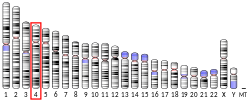
[edit]In humans, D5 receptor is encoded on the chromosome 4p15.1–p15.3.[13] The gene lacks introns[9] and encodes a product of 477 amino acids.[6] Two pseudogenes for D5 receptor exist that share 98% sequence with each other and 95% sequence with the functional DRD5 gene. These genes contain several in-frame stop codons that prevent these genes from transcribing a functional protein.[9]
Expression
[edit]Central nervous system
[edit]D5 receptor is expressed more widely in the CNS than its close structural homolog dopamine receptor D1.[14] It is found in neurons in amygdala, frontal cortex, hippocampus, striatum, thalamus, hypothalamus, basal forebrain, cerebellum,[14] and midbrain.[15] Dopamine receptor D5 is exclusively expressed by large aspiny neurons in neostriatum of primates, which are typically cholinergic interneurons.[16] Within a cell, D5 receptors are found on the membrane of soma and proximal dendrites.[14] They are also sometimes located in the neuropil in the olfactory region, superior colliculus, and cerebellum.[14] D5 receptor is also found in striatal astrocytes of the rat basal ganglia.[17]
The receptors of this subtype are also expressed on dendritic cells and T helper cells.[18]
Kidney
[edit]D5 receptors are expressed in kidneys and are involved in regulation of sodium excretion. They are located on proximal convoluted tubules, and their activation suppresses the activity of sodium–hydrogen antiporter and Na+/K+-ATPase, preventing reabsorption of sodium.[19] D5 receptors are thought to positively regulate expression of renalase.[20] Their faulty functioning in nephrons can contribute to hypertension.[19][20]
Clinical significance
[edit]Learning and memory
[edit]D5 receptor participates in the synaptic processes that underlie learning and memory. These receptors participate in the formation of LTD in rodent striatum, which is opposite to the D1 receptor involvement with the formation of LTP in the same brain region.[21] D5 receptors are also associated with the consolidation of fear memories in amygdala. It has been shown that M1-Muscarinic receptors cooperate with D5 receptors and beta-2 adrenergic receptors to consolidate cued fear memory. It is suggested that these G protein-coupled receptors redundantly activate phospholipase C in basolateral amygdala. One effect of the activation of phospholipase C is deactivation of KCNQ channels.[22] Since KCNQ channels conduct M current that raises the threshold for action potential,[23] deactivation of these channels leads to increased neuronal excitability and enhanced memory consolidation.[22]
D5 receptors may be required for long-term potentiation at the synapse between medial perforant path and dentate gyrus in murine hippocampal formation.[24]
Addiction
[edit]Smoking
[edit]Polymorphisms in the DRD5 gene, which encodes dopamine receptor D5, have been suggested to play a role in the initiation of smoking. In a study on the association of four polymorphisms of this gene with smoking, a statistical analysis suggested that there may exist a haplotype of DRD5 that is protective against initiation of smoking.[25]
ADHD
[edit]Dinucleotide repeats of DRD5 gene are associated with ADHD in humans. 136-bp allele of the gene was shown to be a protective factor against developing this disorder, and 148-bp allele of DRD5 was shown to be a risk factor for it.[14] There exist two types of the 148-bp allele of DRD5, a long and a short one. The short dinucleotide repeat allele is associated with ADHD, but not the long one.[26] Another allele of DRD5 that is moderately associated with ADHD susceptibility is 150 bp.[27] In a rat model of ADHD, low density of D5 was found in the hippocampal pyramidal cell somas. Deficiency in D5 receptors may contribute to learning problems that may be associated with ADHD.[28]
Parkinson's disease
[edit]D5 receptors may be involved in burst firing of subthalamic nucleus neurons in 6-OHDA rat model of Parkinson's disease. In this animal model, blockage of D5 receptors with flupentixol reduces burst firing and improves motor deficits.[29] Studies show that DRD5 T978C polymorphism is not associated with the susceptibility to PD, nor with the risk of developing motor fluctuations or hallucinations in PD.[30][31]
Schizophrenia
[edit]Several polymorphisms in DRD5 genes have been associated with susceptibility to schizophrenia. The 148 bp allele of DRD5 was linked to increased risk of schizophrenia.[32] Some single-nucleotide polymorphisms in this gene, including changes in rs77434921, rs1800762, rs77434921, and rs1800762, in northern Han Chinese population.[33]
Locomotion
[edit]D5 receptor is believed to participate in modulation of psychostimulant-induced locomotion. Mice lacking D5 receptors show increased motor response to administration of methamphetamine than wild type mice,[34] which suggests that these receptors have a role in controlling motor activity.
Regulation of blood pressure
[edit]D5 receptor may be involved in modulation of the neuronal pathways that regulate blood pressure. Mice lacking this receptor in their brains showed hypertension and elevated blood pressure, which may have been caused by increased sympathetic tone.[35] D5 receptors that are expressed in kidneys are also involved in the regulation of blood pressure via modulating expression of renalase and excretion of sodium, and disturbance of these processes can contribute to hypertension as well.[20]
Immunity
[edit]D5 receptors negatively regulate production of IFNγ by NK cells. The expression of D5 receptors was shown to be upregulated in NK cells in response to prolonged stimulation with recombinant interleukin 2. This upregulation inhibits proliferation of the NK cells and suppresses synthesis of IFNγ. Activation of D5 prevents p50, part of NF-κB protein complex, from repressing the transcription of miRNA 29a. Because miRNA29a targets mRNA of IFNγ, the expression of IFNγ protein is diminished.[36]
D5 receptors are involved in activation and differentiation of T helper 17 cells. Specifically, these receptors play a role in polarization of CD4+ T-cells into the T helper 17 cells by modulating secretion of interleukin 12 and interleukin 23 in response to stimulation with LPS.[37]
Ligands
[edit]The D1 and D5 receptors have a high degree of structural homology and few ligands are available that can distinguish between them as yet. However, there is a number of ligands that are selective for D1/5 over the other dopamine receptors. The recent development of a selective D5 antagonist has allowed the action of D1-mediated responses to be studied in the absence of a D5 component, but no selective D5 agonists are yet available.
D5 receptors show higher affinity for agonists and lower affinity for antagonists than D1 receptors.[11]
Agonists
[edit]Inverse agonists
[edit]Antagonists
[edit]- 4-Chloro-7-methyl-5,6,7,8,9,14-hexahydrodibenz[d,g]azecin-3-ol: antagonist, moderate binding selectivity over D1[40]

Protein–protein interactions
[edit]D5 receptor has been shown to form heteromers with D2 receptors. Co-activation of these receptors within the heteromer triggers increase in intracellular calcium. This calcium signaling is dependent on Gq-11 protein signaling and phospholipase C, as well as on the influx of extracellular calcium.[41] Heteromers between D2 and D5 receptors are formed by adjacent arginines in ic3 (third cytoplasmic loop[42]) of D2 receptor and three adjacent c-terminus glutamic acids in D5 receptor. Heteromerization of 2 and D5 receptors can be disrupted through changes of single amino acids in the c-terminus of the D5 receptor.[12]
Dopamine receptor D5 has been shown to interact with GABRG2.[43]
Experimental methods
[edit]The high degree of homology between D5 and D1 receptors and their affinity for drugs with similar pharmacological profile complicate distinguishing between them in research. Antibody staining these two receptors separately is suggested to be inefficient.[44] However, expression of D5 receptors has been assessed using immunohistochemistry. In this technique, two peptides were obtained from third extracellular loop and third intracellular loop of the receptor, and antisera were developed for staining the receptor in frozen mouse brain tissue.[35] A method involving mRNA probes for in situ hybridization has been developed, which allowed to separately examine the expression of D1 and D5 receptors in the mouse brain.[24]
DRD5 knockout mice can be obtained by crossing 129/SvJ1 and C57BL/6J mice.[10] D5 receptor can also be inactivated in an animal model by flanking the DRD5 gene with loxP site, allowing to generate tissue or animal lacking functional D5 receptors.[45] The expression of D5 receptor in vitro can also be silenced using antisense oligonucleotides.[20]
See also
[edit]References
[edit]- ^ a b c GRCh38: Ensembl release 89: ENSG00000169676 – Ensembl, May 2017
- ^ a b c GRCm38: Ensembl release 89: ENSMUSG00000039358 – Ensembl, May 2017
- ^ "Human PubMed Reference:". National Center for Biotechnology Information, U.S. National Library of Medicine.
- ^ "Mouse PubMed Reference:". National Center for Biotechnology Information, U.S. National Library of Medicine.
- ^ Polymeropoulos MH, Xiao H, Merril CR (March 1992). "The human D5 dopamine receptor (DRD5) maps on chromosome 4". Genomics. 11 (3): 777–778. doi:10.1016/0888-7543(91)90091-R. PMID 1774076.
- ^ a b c Sunahara RK, Guan HC, O'Dowd BF, Seeman P, Laurier LG, Ng G, George SR, Torchia J, Van Tol HH, Niznik HB (1991). "Cloning of the gene for a human dopamine D5 receptor with higher affinity for dopamine than D1". Nature. 350 (6319): 614–9. Bibcode:1991Natur.350..614S. doi:10.1038/350614a0. PMID 1826762. S2CID 4373022.
- ^ Beaulieu JM, Gainetdinov RR (2011). "The physiology, signaling, and pharmacology of dopamine receptors". Pharmacol. Rev. 63 (1): 182–217. doi:10.1124/pr.110.002642. PMID 21303898. S2CID 2545878.
- ^ Mello, F. G. (October 1978). "The Ontogeny of Dopamine-Dependent Increase of Adenosine 3',5'-Cyclic Monophosphate in the Chick Retina". Journal of Neurochemistry. 31 (4): 1049–1053. doi:10.1111/j.1471-4159.1978.tb00146.x. ISSN 0022-3042. PMID 212530. S2CID 84297833.
- ^ a b c Grandy DK, Zhang YA, Bouvier C, Zhou QY, Johnson RA, Allen L, Buck K, Bunzow JR, Salon J, Civelli O (1991). "Multiple human D5 dopamine receptor genes: a functional receptor and two pseudogenes". Proc. Natl. Acad. Sci. U.S.A. 88 (20): 9175–9. Bibcode:1991PNAS...88.9175G. doi:10.1073/pnas.88.20.9175. PMC 52675. PMID 1833775.
- ^ a b c Perreault ML, Jones-Tabah J, O'Dowd BF, George SR (2013). "A physiological role for the dopamine D5 receptor as a regulator of BDNF and Akt signalling in rodent prefrontal cortex". The International Journal of Neuropsychopharmacology. 16 (2): 477–83. doi:10.1017/S1461145712000685. PMC 3802523. PMID 22827965.
- ^ a b Tiberi M, Caron MG (1994). "High agonist-independent activity is a distinguishing feature of the dopamine D1B receptor subtype". J. Biol. Chem. 269 (45): 27925–31. doi:10.1016/S0021-9258(18)46876-7. PMID 7525564.
- ^ a b c O'Dowd BF, Nguyen T, Ji X, George SR (2013). "D5 dopamine receptor carboxyl tail involved in D5-D2 heteromer formation". Biochemical and Biophysical Research Communications. 431 (3): 586–9. doi:10.1016/j.bbrc.2012.12.139. PMC 3744868. PMID 23318175.
- ^ Eubanks JH, Altherr M, Wagner-McPherson C, McPherson JD, Wasmuth JJ, Evans GA (1992). "Localization of the D5 dopamine receptor gene to human chromosome 4p15.1-p15.3, centromeric to the Huntington's disease locus". Genomics. 12 (3): 510–6. doi:10.1016/0888-7543(92)90442-u. PMID 1532789.
- ^ a b c d e Wu J, Xiao H, Sun H, Zou L, Zhu LQ (2012). "Role of dopamine receptors in ADHD: A systematic meta-analysis". Molecular Neurobiology. 45 (3): 605–20. doi:10.1007/s12035-012-8278-5. PMID 22610946. S2CID 895006.
- ^ Reyes S, Cottam V, Kirik D, Double KL, Halliday GM (2013). "Variability in neuronal expression of dopamine receptors and transporters in the substantia nigra". Movement Disorders. 28 (10): 1351–9. doi:10.1002/mds.25493. hdl:1959.4/53610. PMID 23674405. S2CID 25057196.
- ^ Bergson C, Mrzljak L, Smiley JF, Pappy M, Levenson R, Goldman-Rakic PS (1995). "Regional, cellular, and subcellular variations in the distribution of D1 and D5 dopamine receptors in primate brain". The Journal of Neuroscience. 15 (12): 7821–36. doi:10.1523/JNEUROSCI.15-12-07821.1995. PMC 6577925. PMID 8613722.
- ^ Miyazaki I, Asanuma M, Diaz-Corrales FJ, Miyoshi K, Ogawa N (2004). "Direct evidence for expression of dopamine receptors in astrocytes from basal ganglia". Brain Research. 1029 (1): 120–3. doi:10.1016/j.brainres.2004.09.014. PMID 15533323. S2CID 34954571.
- ^ Prado C, Bernales S, Pacheco R (2013). "Modulation of T-cell mediated immunity by dopamine receptor d5". Endocrine, Metabolic & Immune Disorders Drug Targets. 13 (2): 184–94. doi:10.2174/1871530311313020007. hdl:10533/144001. PMID 23701196.
- ^ a b Hussain T, Lokhandwala MF (1998). "Renal dopamine receptor function in hypertension". Hypertension. 32 (2): 187–97. doi:10.1161/01.hyp.32.2.187. PMID 9719042.
- ^ a b c d e Wang S, Lu X, Yang J, Wang H, Chen C, Han Y, Ren H, Zheng S, He D, Zhou L, Asico LD, Wang WE, Jose PA, Zeng C (2014). "Regulation of renalase expression by D5 dopamine receptors in rat renal proximal tubule cells". AJP: Renal Physiology. 306 (6): F588–96. doi:10.1152/ajprenal.00196.2013. PMC 3949042. PMID 24500688.
- ^ Centonze D, Grande C, Saulle E, Martin AB, Gubellini P, Pavón N, Pisani A, Bernardi G, Moratalla R, Calabresi P (September 2003). "Distinct roles of D1 and D5 dopamine receptors in motor activity and striatal synaptic plasticity". The Journal of Neuroscience. 23 (24): 8506–12. doi:10.1523/JNEUROSCI.23-24-08506.2003. PMC 6740372. PMID 13679419.
- ^ a b c Young MB, Thomas SA (2014). "M1-muscarinic receptors promote fear memory consolidation via phospholipase C and the M-current". Journal of Neuroscience. 34 (5): 1570–8. doi:10.1523/JNEUROSCI.1040-13.2014. PMC 3905134. PMID 24478341.
- ^ Schroeder BC, Hechenberger M, Weinreich F, Kubisch C, Jentsch TJ (2000). "KCNQ5, a novel potassium channel broadly expressed in brain, mediates M-type currents". Journal of Biological Chemistry. 275 (31): 24089–95. doi:10.1074/jbc.M003245200. PMID 10816588.
- ^ a b Sariñana J, Kitamura T, Künzler P, Sultzman L, Tonegawa S (2014). "Differential roles of the dopamine 1-class receptors, D1R and D5R, in hippocampal dependent memory". Proceedings of the National Academy of Sciences. 111 (22): 8245–50. Bibcode:2014PNAS..111.8245S. doi:10.1073/pnas.1407395111. PMC 4050601. PMID 24843151.
- ^ Sullivan PF, Neale MC, Silverman MA, Harris-Kerr C, Myakishev MV, Wormley B, Webb BT, Ma Y, Kendler KS, Straub RE (April 2001). "An association study of DRD5 with smoking initiation and progression to nicotine dependence". Am. J. Med. Genet. 105 (3): 259–65. doi:10.1002/ajmg.1301. PMID 11353446.
- ^ Kim BN, Kang D, Cho SC, Park TW, Lim MH, Chung YC, Kim JW, Hwang JW, Yoo HJ, Chung US, Son JW, Yang JC, Chung SK, Lee JY, Jung YW (2009). "Shorter dinucleotide repeat length in the DRD5 gene is associated with attention deficit hyperactivity disorder". Psychiatric Genetics. 19 (1): 57. doi:10.1097/YPG.0b013e328320803c. PMID 19125111.
- ^ Squassina A, Lanktree M, De Luca V, Jain U, Krinsky M, Kennedy JL, Muglia P (2008). "Investigation of the dopamine D5 receptor gene (DRD5) in adult attention deficit hyperactivity disorder". Neuroscience Letters. 432 (1): 50–3. doi:10.1016/j.neulet.2007.12.003. PMID 18164132. S2CID 7548859.
- ^ Medin T, Rinholm JE, Owe SG, Sagvolden T, Gjedde A, Storm-Mathisen J, Bergersen LH (2013). "Low dopamine D5 receptor density in hippocampus in an animal model of attention-deficit/hyperactivity disorder (ADHD)". Neuroscience. 242: 11–20. doi:10.1016/j.neuroscience.2013.03.036. PMID 23541742. S2CID 25731931.
- ^ a b Chetrit J, Taupignon A, Froux L, Morin S, Bouali-Benazzouz R, Naudet F, Kadiri N, Gross CE, Bioulac B, Benazzouz A (2013). "Inhibiting subthalamic D5 receptor constitutive activity alleviates abnormal electrical activity and reverses motor impairment in a rat model of Parkinson's disease". Journal of Neuroscience. 33 (37): 14840–9. doi:10.1523/JNEUROSCI.0453-13.2013. PMC 6705171. PMID 24027284.
- ^ Wang J, Liu ZL, Chen B (July 2001). "Dopamine D5 receptor gene polymorphism and the risk of levodopa-induced motor fluctuations in patients with Parkinson's disease". Neuroscience Letters. 308 (1): 21–4. doi:10.1016/S0304-3940(01)01971-1. PMID 11445276. S2CID 43454552.
- ^ Wang J, Zhao C, Chen B, Liu Z (January 2004). "Polymorphisms of dopamine receptor and transporter genes and hallucinations in Parkinson's disease". Neuroscience Letters. 355 (3): 193–6. doi:10.1016/j.neulet.2003.11.006. PMID 14732464. S2CID 44740438.
- ^ Muir WJ, Thomson ML, McKeon P, Mynett-Johnson L, Whitton C, Evans KL, Porteous DJ, Blackwood DH (2001). "Markers close to the dopamine D5 receptor gene (DRD5) show significant association with schizophrenia but not bipolar disorder". American Journal of Medical Genetics. 105 (2): 152–8. doi:10.1002/1096-8628(2001)9999:9999<::AID-AJMG1163>3.0.CO;2-2. PMID 11304828.
- ^ Zhao Y, Ding M, Pang H, Xu XM, Wang BJ (2014). "Relationship between genetic polymorphisms in the DRD5 gene and paranoid schizophrenia in northern Han Chinese". Genetics and Molecular Research. 13 (1): 1609–18. doi:10.4238/2014.March.12.13. PMID 24668635.
- ^ Hayashizaki S, Hirai S, Ito Y, Honda Y, Arime Y, Sora I, Okado H, Kodama T, Takada M (2013). "Methamphetamine increases locomotion and dopamine transporter activity in dopamine d5 receptor-deficient mice". PLOS ONE. 8 (10) e75975. Bibcode:2013PLoSO...875975H. doi:10.1371/journal.pone.0075975. PMC 3796526. PMID 24155877.
- ^ a b Hollon TR, Bek MJ, Lachowicz JE, Ariano MA, Mezey E, Ramachandran R, Wersinger SR, Soares-da-Silva P, Liu ZF, Grinberg A, Drago J, Young WS, Westphal H, Jose PA, Sibley DR (2002). "Mice lacking D5 dopamine receptors have increased sympathetic tone and are hypertensive". The Journal of Neuroscience. 22 (24): 10801–10. doi:10.1523/JNEUROSCI.22-24-10801.2002. PMC 6758465. PMID 12486173.
- ^ Mikulak J, Bozzo L, Roberto A, Pontarini E, Tentorio P, Hudspeth K, Lugli E, Mavilio D (2014). "Dopamine inhibits the effector functions of activated NK cells via the upregulation of the D5 receptor". The Journal of Immunology. 193 (6): 2792–800. doi:10.4049/jimmunol.1401114. PMID 25127864.
- ^ Prado C, Contreras F, González H, Díaz P, Elgueta D, Barrientos M, Herrada AA, Lladser Á, Bernales S, Pacheco R (2012). "Stimulation of dopamine receptor D5 expressed on dendritic cells potentiates Th17-mediated immunity". The Journal of Immunology. 188 (7): 3062–70. doi:10.4049/jimmunol.1103096. hdl:10533/137684. PMID 22379034.
- ^ Wood M, Dubois V, Scheller D, Gillard M (2014). "Rotigotine is a potent agonist at dopamine D1 receptors as well as at dopamine D2 and D3 receptors". British Journal of Pharmacology. 172 (4): 1124–35. doi:10.1111/bph.12988. PMC 4314200. PMID 25339241.
- ^ Meade JA, Free RB, Miller NR, Chun LS, Doyle TB, Moritz AE, Conroy JL, Watts VJ, Sibley DR (2014). "(-)-Stepholidine is a potent pan-dopamine receptor antagonist of both G protein- and β-arrestin-mediated signaling". Psychopharmacology. 232 (5): 917–30. doi:10.1007/s00213-014-3726-8. PMC 5234683. PMID 25231919.
- ^ a b Mohr P, Decker M, Enzensperger C, Lehmann J (2006). "Dopamine/serotonin receptor ligands. 12(1): SAR studies on hexahydro-dibenz[d,g]azecines lead to 4-chloro-7-methyl-5,6,7,8,9,14-hexahydrodibenz[d,g]azecin-3-ol, the first picomolar D5-selective dopamine-receptor antagonist". J. Med. Chem. 49 (6): 2110–2116. doi:10.1021/jm051237e. PMID 16539400.
- ^ So CH, Verma V, Alijaniaram M, Cheng R, Rashid AJ, O'Dowd BF, George SR (2009). "Calcium signaling by dopamine D5 receptor and D5-D2 receptor hetero-oligomers occurs by a mechanism distinct from that for dopamine D1-D2 receptor hetero-oligomers". Molecular Pharmacology. 75 (4): 843–54. doi:10.1124/mol.108.051805. PMC 2684927. PMID 19171671.
- ^ Ulfers AL, McMurry JL, Kendall DA, Mierke DF (2002). "Structure of the third intracellular loop of the human cannabinoid 1 receptor". Biochemistry. 41 (38): 11344–50. doi:10.1021/bi0259610. PMID 12234176.
- ^ Liu F, Wan Q, Pristupa ZB, Yu XM, Wang YT, Niznik HB (2000). "Direct protein–protein coupling enables cross-talk between dopamine D5 and gamma-aminobutyric acid A receptors". Nature. 403 (6767): 274–80. Bibcode:2000Natur.403..274L. doi:10.1038/35002014. PMID 10659839. S2CID 4415918.
- ^ Missale C, Fiorentini C, Collo G, Spano P (2010). "The neurobiology of dopamine receptors: Evolution from the dual concept to heterodimer complexes". Journal of Receptors and Signal Transduction. 30 (5): 347–54. doi:10.3109/10799893.2010.506192. PMID 20684667. S2CID 11317445.
- ^ Heyer J, Xiao Q, Bugaj-Gaweda B, Ramboz S, Unterbeck A (2002). "Conditional inactivation of the dopamine receptor 5 gene: Flanking the Drd5 gene with loxP sites". Genesis. 32 (2): 102–4. doi:10.1002/gene.10069. PMID 11857790.
Further reading
[edit]- Missale C, Nash SR, Robinson SW, Jaber M, Caron MG (1998). "Dopamine receptors: from structure to function". Physiol. Rev. 78 (1): 189–225. doi:10.1152/physrev.1998.78.1.189. PMID 9457173.
- Grandy DK, Allen LJ, Zhang Y, Magenis RE, Civelli O (1992). "Chromosomal localization of three human D5 dopamine receptor genes". Genomics. 13 (4): 968–973. doi:10.1016/0888-7543(92)90009-H. PMID 1387108.
- Eubanks JH, Altherr M, Wagner-McPherson C, McPherson JD, Wasmuth JJ, Evans GA (1992). "Localization of the D5 dopamine receptor gene to human chromosome 4p15.1-p15.3, centromeric to the Huntington's disease locus". Genomics. 12 (3): 510–516. doi:10.1016/0888-7543(92)90442-U. PMID 1532789.
- Sunahara RK, Guan HC, O'Dowd BF, Seeman P, Laurier LG, Ng G, George SR, Torchia J, Van Tol HH, Niznik HB (1991). "Cloning of the gene for a human dopamine D5 receptor with higher affinity for dopamine than D1". Nature. 350 (6319): 614–619. Bibcode:1991Natur.350..614S. doi:10.1038/350614a0. PMID 1826762. S2CID 4373022.
- Tiberi M, Jarvie KR, Silvia C, Falardeau P, Gingrich JA, Godinot N, Bertrand L, Yang-Feng TL, Fremeau RT, Caron MG (1991). "Cloning, molecular characterization, and chromosomal assignment of a gene encoding a second D1 dopamine receptor subtype: differential expression pattern in rat brain compared with the D1A receptor". Proc. Natl. Acad. Sci. U.S.A. 88 (17): 7491–7495. Bibcode:1991PNAS...88.7491T. doi:10.1073/pnas.88.17.7491. PMC 52326. PMID 1831904.
- Grandy DK, Zhang YA, Bouvier C, Zhou QY, Johnson RA, Allen L, Buck K, Bunzow JR, Salon J, Civelli O (1991). "Multiple human D5 dopamine receptor genes: a functional receptor and two pseudogenes". Proc. Natl. Acad. Sci. U.S.A. 88 (20): 9175–9179. Bibcode:1991PNAS...88.9175G. doi:10.1073/pnas.88.20.9175. PMC 52675. PMID 1833775.
- Weinshank RL, Adham N, Macchi M, Olsen MA, Branchek TA, Hartig PR (1991). "Molecular cloning and characterization of a high affinity dopamine receptor (D1 beta) and its pseudogene". J. Biol. Chem. 266 (33): 22427–35. doi:10.1016/S0021-9258(18)54590-7. PMID 1834671.
- Sobell JL, Lind TJ, Sigurdson DC, Zald DH, Snitz BE, Grove WM, Heston LL, Sommer SS (1995). "The D5 dopamine receptor gene in schizophrenia: identification of a nonsense change and multiple missense changes but lack of association with disease". Hum. Mol. Genet. 4 (4): 507–514. doi:10.1093/hmg/4.4.507. PMID 7633397.
- Beischlag TV, Marchese A, Meador-Woodruff JH, Damask SP, O'Dowd BF, Tyndale RF, van Tol HH, Seeman P, Niznik HB (1995). "The human dopamine D5 receptor gene: cloning and characterization of the 5'-flanking and promoter region". Biochemistry. 34 (17): 5960–5970. doi:10.1021/bi00017a025. PMID 7727453.
- Sherrington R, Mankoo B, Attwood J, Kalsi G, Curtis D, Buetow K, Povey S, Gurling H (1994). "Cloning of the human dopamine D5 receptor gene and identification of a highly polymorphic microsatellite for the DRD5 locus that shows tight linkage to the chromosome 4p reference marker RAF1P1". Genomics. 18 (2): 423–425. doi:10.1006/geno.1993.1489. PMID 8288248.
- Sidhu A, Kimura K, Uh M, White BH, Patel S (1998). "Multiple coupling of human D5 dopamine receptors to guanine nucleotide binding proteins Gs and Gz". J. Neurochem. 70 (6): 2459–2467. doi:10.1046/j.1471-4159.1998.70062459.x. PMID 9603210. S2CID 35877239.
- Cargill M, Altshuler D, Ireland J, Sklar P, Ardlie K, Patil N, Shaw N, Lane CR, Lim EP, Kalyanaraman N, Nemesh J, Ziaugra L, Friedland L, Rolfe A, Warrington J, Lipshutz R, Daley GQ, Lander ES (1999). "Characterization of single-nucleotide polymorphisms in coding regions of human genes". Nat. Genet. 22 (3): 231–238. doi:10.1038/10290. PMID 10391209. S2CID 195213008.
- Liu F, Wan Q, Pristupa ZB, Yu XM, Wang YT, Niznik HB (2000). "Direct protein–protein coupling enables cross-talk between dopamine D5 and gamma-aminobutyric acid A receptors". Nature. 403 (6767): 274–280. Bibcode:2000Natur.403..274L. doi:10.1038/35002014. PMID 10659839. S2CID 4415918.
- Misbahuddin A, Placzek MR, Chaudhuri KR, Wood NW, Bhatia KP, Warner TT (2004). "A polymorphism in the dopamine receptor DRD5 is associated with blepharospasm". Neurology. 58 (1): 124–6. doi:10.1212/wnl.58.1.124. PMID 11781417. S2CID 33503277.
- Kabbani N, Negyessy L, Lin R, Goldman-Rakic P, Levenson R (2002). "Interaction with neuronal calcium sensor NCS-1 mediates desensitization of the D2 dopamine receptor". J. Neurosci. 22 (19): 8476–86. doi:10.1523/JNEUROSCI.22-19-08476.2002. PMC 6757796. PMID 12351722.
- Hemby SE, Trojanowski JQ, Ginsberg SD (2003). "Neuron-specific age-related decreases in dopamine receptor subtype mRNAs". J. Comp. Neurol. 456 (2): 176–183. doi:10.1002/cne.10525. PMC 4048549. PMID 12509874.
- Zheng S, Yu P, Zeng C, Wang Z, Yang Z, Andrews PM, Felder RA, Jose PA (2003). "Galpha12- and Galpha13-protein subunit linkage of D5 dopamine receptors in the nephron". Hypertension. 41 (3): 604–610. doi:10.1161/01.HYP.0000057422.75590.D7. PMID 12623966.
External links
[edit]- "Dopamine Receptors: D1". IUPHAR Database of Receptors and Ion Channels. International Union of Basic and Clinical Pharmacology. Archived from the original on 31 December 2014. Retrieved 4 December 2008.
- DRD5+protein,+human at the U.S. National Library of Medicine Medical Subject Headings (MeSH)
This article incorporates text from the United States National Library of Medicine, which is in the public domain.
Dopamine receptor D5
View on GrokipediaMolecular Structure and Genetics
Gene Location and Organization
The DRD5 gene, which encodes the dopamine receptor D5, is located on the short arm of human chromosome 4 at position 4p16.1, with genomic coordinates spanning approximately 2,376 base pairs (GRCh38: 9,781,634–9,784,009).[5][6] This locus is positioned centromeric to the Huntington's disease gene (HTT) at 4p16.3, though it does not fall within the core Huntington's critical region.[7] The gene structure consists of two exons separated by a small intron of variable size (134–156 base pairs) located entirely within the 5' untranslated region (UTR), rendering the protein-coding sequence intronless.[8] Exon 1 encompasses non-coding sequence in the 5' UTR, while exon 2 contains the entire open reading frame encoding the 477-amino-acid receptor protein, along with the 3' UTR. The DRD5 locus includes two related pseudogenes, DRD5P1 and DRD5P2, which feature sequences that result in premature truncation around residue 154.[5] The transcriptional start site is situated approximately 2,125 base pairs upstream of the translation initiation codon.[5] The promoter region features regulatory elements that modulate transcription, including a positive regulatory motif between positions -199 and -182 relative to the start site, which enhances expression, and a negative modulator spanning -500 to -251 that represses it.[5] A notable polymorphic microsatellite repeat (CT/GT/GA)_n in the 5' UTR intron exhibits 12 alleles ranging from 134 to 156 bp in length, with the 148-bp allele showing biased transmission in attention-deficit/hyperactivity disorder (ADHD) cases, potentially influencing transcriptional efficiency.[5][9] Among single nucleotide polymorphisms (SNPs), rs6283 (c.978C>T, p.Pro326=) is a common synonymous variant in the coding exon with a minor allele frequency of approximately 0.35 in diverse populations, linked to variations in receptor expression levels and associations with traits such as bruxism and schizophrenia susceptibility.[10][11] Evolutionarily, DRD5 demonstrates high sequence conservation across mammals, with the intronless coding architecture shared with the related DRD1 gene, reflecting an ancient duplication event predating vertebrate divergence.[12] This structure is preserved in most mammals, though independent inactivating mutations have occurred in cetaceans, leading to pseudogenization in some deep-diving species.[13] Orthologs exist in 158 species, underscoring its fundamental role in dopaminergic signaling.[6]Protein Primary and Tertiary Structure
The human dopamine receptor D5 (DRD5), encoded by the DRD5 gene, is a 477-amino-acid polypeptide with a calculated molecular weight of approximately 52 kDa.[14] As a class A G protein-coupled receptor (GPCR), its primary structure comprises an extracellular N-terminal domain, seven transmembrane helices (TM1 spanning residues 37–63, TM2 78–100, TM3 109–131, TM4 148–170, TM5 192–216, TM6 264–287, and TM7 311–334), three extracellular loops (ECL1 residues 64–77, ECL2 132–147, ECL3 288–310), three intracellular loops (ICL1 residues 101–108, ICL2 171–191, ICL3 217–263), and an intracellular C-terminal tail.[14] [15] Critical residues in the primary sequence include Asp103^{3.32} in TM3, which forms a salt bridge with the amine group of dopamine for ligand recognition, and the conserved DRY motif (Asp^{3.49}-Arg^{3.50}-Tyr^{3.51}, residues 124–126) at the end of TM3 extending into ICL2, which stabilizes the inactive state and facilitates G-protein coupling upon activation.[15] [14] The C-terminal tail, comprising residues 335–477, is approximately 31 amino acids longer than that of the closely related D1 receptor (DRD1, 446 total residues), enabling distinct interactions that influence signaling bias and receptor regulation.[14] [16] The tertiary structure of DRD5, determined by cryo-electron microscopy (cryo-EM) at 3.0 Å resolution in complex with Gs heterotrimer and the agonist rotigotine (PDB: 8IRV), exhibits the canonical seven-transmembrane helical bundle characteristic of GPCRs, with the ligand-binding pocket located in the transmembrane core.[15] The orthosteric binding site accommodates rotigotine through interactions including a salt bridge between Asp103^{3.32} and the ligand's ammonium, hydrogen bonds with Ser200^{5.42} and Asn292^{6.55}, and hydrophobic contacts with Trp82^{3.28}, Phe313^{7.35}, and Val317^{7.39}.[15] Compared to DRD1, DRD5 displays nearly identical overall conformation (Cα RMSD of 0.48 Å), but features a more negatively charged extracellular surface and cholesterol stabilization of Trp157^{3.52} in the sodium-binding pocket, contributing to subtle differences in ligand potency.[15] ECL2 and ICL3 exhibit flexibility and are partially unresolved, while the C-terminal tail remains disordered, consistent with its role in dynamic interactions.[15] Post-translational modifications include potential N-linked glycosylation at Asn5 and Asn11 in the N-terminal domain, which is essential for proper trafficking and plasma membrane expression of DRD5 but not DRD1. The C-terminal tail contains multiple serine and threonine residues (e.g., Ser408, Thr423) that serve as phosphorylation sites for GPCR kinases, modulating desensitization and internalization. [17]Signaling Pathways and Function
Activation Mechanism
The dopamine receptor D5 (D5R), a member of the D1-like subfamily of G protein-coupled receptors (GPCRs), is activated when dopamine binds to its orthosteric site within the transmembrane (TM) bundle. This binding occurs primarily through ionic interactions between the ligand's amine group and conserved aspartate residue Asp103^{3.32} in TM3, alongside hydrogen bonds with serine residues in TM5 and asparagine in TM6, stabilizing an active receptor conformation.[18] This conformational shift involves the disruption of the ionic lock—a salt bridge between Arg^{3.50} in TM3 and Glu^{6.30} in TM6—that maintains the inactive state in class A GPCRs, including D1-like receptors such as D5R; agonist binding induces an outward movement of TM6, opening the intracellular G protein-binding pocket.[19] Structural homology between D1R and D5R, sharing approximately 80% identity in their TM domains, supports this conserved activation dynamic for D5R.[20] DRD5 also displays higher constitutive activity than D1R, contributing to basal Gs signaling.[2] Upon activation, D5R preferentially couples to the stimulatory G proteins Gs or Golf, facilitating GDP-to-GTP exchange on the Gα subunit and subsequent dissociation of the Gα-GTP complex from the Gβγ heterodimer.[3] This uncoupling enables Gαs/olf to activate adenylyl cyclase, though D5R also exhibits potential for coupling to other G proteins like Gq under certain conditions, reflecting functional versatility in signaling initiation.[21] Allosteric modulation of D5R occurs at sites distinct from the orthosteric pocket, including regions on extracellular loop 2 (ECL2) and intracellular loop 3 (ICL3), which can enhance or inhibit ligand efficacy without competing for the primary binding site.[19] Positive allosteric modulators (PAMs), such as those selective for D1-like receptors, bind near the TM-III/V interface to stabilize active conformations and potentiate Gs coupling, offering improved selectivity over orthosteric ligands that often cross-react between D1R and D5R.[20] A 2024 review highlights how such allosteric ligands can fine-tune D5R efficacy in CNS disorders by modulating these loop regions, reducing off-target effects compared to traditional agonists.[20] D5R activation can exhibit biased agonism, where certain ligands preferentially recruit β-arrestin over G protein pathways, potentially leading to cAMP-independent signaling.[3] For instance, some non-catechol agonists promote G protein-biased responses at D5R while minimally recruiting β-arrestin, altering the balance of downstream effects without fully engaging arrestin-mediated pathways.[22] Prolonged D5R activation triggers rapid desensitization through phosphorylation by G protein-coupled receptor kinase 2 (GRK2), which recruits β-arrestin to the receptor's C-terminal tail and ICL3, uncoupling it from G proteins and promoting clathrin-mediated internalization.[23] This GRK2/β-arrestin mechanism, conserved across dopamine receptors, limits sustained signaling and facilitates receptor recycling or degradation, though D5R-specific studies indicate relatively modest internalization kinetics compared to D2-like subtypes.[3]Downstream Effects
Upon activation, the dopamine receptor D5 (DRD5), a G protein-coupled receptor (GPCR), primarily couples to the stimulatory G protein (Gs), leading to the activation of adenylyl cyclase and a subsequent increase in intracellular cyclic adenosine monophosphate (cAMP) levels.[1] This elevation in cAMP then activates protein kinase A (PKA), which phosphorylates various downstream targets to mediate cellular responses.[3] The cAMP-PKA pathway further promotes the phosphorylation of the cAMP response element-binding protein (CREB), a transcription factor that binds to cAMP response elements (CRE) in the promoter regions of target genes, thereby influencing gene transcription.[1] For instance, DRD5 activation has been shown to upregulate immediate early genes such as c-fos, which play roles in neuronal plasticity and adaptation.[24] In addition to the canonical Gs-cAMP pathway, DRD5 signaling exhibits crosstalk with other intracellular cascades, including the phosphoinositide 3-kinase (PI3K)/Akt pathway, which supports cell survival and anti-apoptotic effects, and the mitogen-activated protein kinase (MAPK)/extracellular signal-regulated kinase (ERK) pathway, implicated in cellular proliferation and differentiation.[3] These interactions allow for context-dependent modulation of signaling outputs. Tissue-specific downstream effects of DRD5 activation include, in neurons, the modulation of ion channels such as voltage-gated sodium and calcium channels, often enhancing neuronal excitability and promoting burst-firing in certain neuronal populations.[25][26] In non-neuronal cells, such as vascular smooth muscle, DRD5 signaling promotes relaxation and vasodilation through PKA-mediated inhibition of calcium influx.[1] Feedback regulation of DRD5 occurs via PKA- and G protein-coupled receptor kinase (GRK)-mediated phosphorylation of the receptor, which facilitates β-arrestin recruitment, leading to desensitization, internalization, and potential tolerance to prolonged agonist exposure.[3]Expression Profile
In the Central Nervous System
The dopamine D5 receptor (D5R) exhibits high expression in several key regions of the central nervous system, including the prefrontal cortex, hippocampus, striatum, and substantia nigra. In the prefrontal cortex, D5R mRNA and protein are prominently detected in pyramidal neurons, contributing to cortical circuitry. Similarly, within the hippocampus, particularly the CA1 and dentate gyrus regions, D5R is localized to pyramidal and granule cells, supporting memory-related functions. In the striatum, expression is enriched in medium spiny neurons and interneurons, while in the substantia nigra pars compacta, it appears on dopaminergic neurons, influencing midbrain outputs.[27][28][29] Notably, D5R colocalizes with D1 receptors in medium spiny neurons of the direct pathway in the striatum. Recent studies have also identified D5R expression in astrocytes within regions such as the striatum and spinal cord.[30] At the synaptic level, D5R is predominantly postsynaptic, localized to dendritic spines in regions like the prefrontal cortex and hippocampus, where it modulates glutamatergic transmission. This positioning allows D5R to influence excitatory synaptic plasticity, such as long-term potentiation, by altering AMPA receptor trafficking and calcium dynamics in spines receiving asymmetric (excitatory) inputs. During development, D5R expression peaks in early to mid-adolescence across cortical and striatal regions, coinciding with heightened neuroplasticity and circuit maturation that underpin behavioral transitions like increased risk-taking and learning flexibility. Post-adolescent levels decline gradually, reflecting stabilized adult circuitry.[29][31][27][32][33] Species differences in D5R density and localization are evident, with primates (including humans) showing higher postsynaptic expression on dendritic spines and more extensive dendritic labeling in the striatum and hippocampus compared to rodents. In rodents, D5R is more presynaptic in certain areas like the amygdala, with overall lower cortical density, potentially contributing to divergent cognitive and reward processing capacities across species.[27][34]In Peripheral Organs
The dopamine receptor D5 (DRD5) is expressed in the kidney, particularly in proximal tubule cells and renal vasculature, where it contributes to the regulation of natriuresis by inhibiting sodium reabsorption through downstream signaling that enhances diuresis and electrolyte homeostasis.[35] In juxtaglomerular cells and associated vascular structures, DRD5 activation modulates renin release as part of the intrarenal dopaminergic system's interaction with the renin-angiotensin pathway, helping to control blood pressure and fluid balance.[36] Human studies indicate that DRD5 mRNA expression is substantially elevated in the kidney compared to cerebral cortex, with levels reported up to 10-50 fold higher, underscoring its prominent peripheral role relative to central nervous system distribution.[37] In the heart, DRD5 is expressed in cardiac tissue, where it exerts cardioprotective effects by inhibiting reactive oxygen species (ROS) production, thereby mitigating oxidative stress and preventing progression to hypertrophy and failure; recent updates in genomic databases highlight this function in maintaining myocardial integrity.[38][39] DRD5 is also present in other peripheral sites, including the adrenal gland, where it participates in endocrine regulation; vascular smooth muscle, facilitating vasodilation via activation of calcium-dependent potassium channels that promote vessel relaxation; and immune cells such as T-lymphocytes, where it modulates activation, differentiation toward Th17 phenotypes, and overall immune responses.[40][41][42]Pharmacological Ligands
Agonists
The endogenous agonist for the dopamine D5 receptor is dopamine, which functions as a full agonist by activating Gs-coupled signaling pathways, including adenylyl cyclase stimulation and cyclic AMP accumulation. Dopamine exhibits approximately 10-fold higher binding affinity for the D5 receptor compared to the D1 receptor, with a pKi of 6.6 (Ki ≈ 251 nM) at D5, and functional potency reflected in an EC50 of around 1 μM in calcium signaling and cAMP assays. This differential affinity underscores the D5 receptor's role in fine-tuning dopaminergic responses in regions with overlapping D1/D5 expression.[43][44][45] Among synthetic agonists, dihydrexidine stands out as a high-potency, full-efficacy selective ligand for D1-like receptors, including D5, with binding affinities in the low nanomolar range (e.g., IC50 ≈ 10 nM at D1 and enhanced potency at D5 due to structural mimicry of dopamine's catechol moiety). Its selectivity profile favors D1/D5 over D2-like receptors by over 100-fold, making it valuable for preclinical studies and PET imaging to assess receptor occupancy in vivo. Similarly, A-68930 is a potent, selective D1-like agonist with an EC50 of 2.1 nM for adenylyl cyclase activation, demonstrating full agonism at D5 while exhibiting minimal activity at D2-like subtypes (EC50 > 3.9 μM), and has been instrumental in dissecting D5-mediated behaviors in animal models.[46][47][48] Fenoldopam represents a non-selective D1-like agonist primarily targeting peripheral receptors, functioning as a partial agonist with an EC50 of 57 nM for vasodilation and natriuresis, and showing comparable potency at both D1 and D5 without significant central penetration due to its hydrophilic nature. Recent advancements have drawn from natural products, particularly plant-derived alkaloids like tetrahydroprotoberberines, inspiring agonists such as (S)-(-)-stepholidine, which binds with Ki values of 5.1 nM at D1 versus 5.8 nM at D5, offering subtle selectivity and potential for subtype-specific therapeutic development. These compounds highlight evolving strategies to exploit D5's unique pharmacological profile for applications beyond traditional D1 targeting.[49][50]Antagonists and Inverse Agonists
The dopamine D5 receptor (D5R) is potently antagonized by selective D1-like blockers such as SCH-23390, a benzazepine derivative with a Ki value of 0.3 nM at D5R, demonstrating high selectivity over D2-like subtypes.[51] This compound competitively inhibits D5R activation without intrinsic activity, making it a prototypical neutral antagonist widely used in preclinical studies to dissect D1-like signaling.[51] Similar benzazepines, including SCH-39166 (Ki ≈ 1.2 nM at D5R), exhibit comparable high-affinity blockade of D5R, reinforcing the pharmacological utility of this class for targeting D1-like receptors.[52] Inverse agonists at D5R reduce the receptor's constitutive activity, which is notably higher in this subtype compared to other dopamine receptors. Chlorpromazine functions as an inverse agonist at D1/D5 receptors, suppressing basal signaling in cellular models expressing wild-type D5R.[53] Certain benzazepines also display inverse agonism at D5R, particularly in contexts of elevated basal tone, by stabilizing the inactive receptor conformation and diminishing agonist-independent cAMP production.[54] This property distinguishes them from neutral antagonists and may contribute to therapeutic effects in disorders involving D5R hyperactivity. Non-selective antagonists like the atypical antipsychotic clozapine bind D5R with moderate affinity (weak antagonism reported across D1-like subtypes), alongside stronger interactions at D4 and serotonin receptors, contributing to its broad pharmacological profile.[55] Haloperidol, a typical antipsychotic, primarily targets D2-like receptors but shows lower affinity for D5R, limiting its direct impact on D1-like pathways. Emerging allosteric antagonists for dopamine receptors, including those stabilizing inactive states of D1-like subtypes like D5R, have been reviewed in recent literature, offering potential for subtype-selective modulation without orthosteric competition.[20] Pharmacokinetic considerations for D5R antagonists vary by application; CNS-targeted compounds such as SCH-23390 readily cross the blood-brain barrier, enabling central effects at low doses (e.g., 0.25 mg/kg in rodents).[56] In contrast, peripheral-focused antagonists may exhibit restricted BBB penetration, supporting organ-specific interventions like in renal or cardiovascular physiology without central side effects.[20]Clinical and Pathophysiological Roles
In Neurological Disorders
The dopamine D5 receptor plays a compensatory role in Parkinson's disease, where its expression is upregulated in the striatum of animal models to counterbalance dopamine depletion in early stages.[57] This upregulation occurs alongside broader changes in D1-like receptors, potentially aiding in maintaining motor function amid nigrostriatal degeneration.[58] Selective D1/D5 agonists, such as tavapadon, have demonstrated enhanced motor benefits in preclinical PD models by stimulating striatal pathways without the dyskinesia risks associated with non-selective agents.[59] As of September 2025, a New Drug Application for tavapadon has been submitted to the FDA.[60] In studies of locomotion, dopamine D5 receptor knockout mice exhibit no significant deficits in baseline locomotor activity or exploratory behavior during open-field tests, indicating that D5 receptors are not essential for gross motor initiation.[61] However, these mice display altered activity patterns in home-cage monitoring, with increased activity during certain diurnal phases and reduced behavioral flexibility in response to impulsive actions, suggesting a modulatory role in fine-tuned locomotor adjustments.[61] No direct evidence links D5 receptor disruption to gait alterations in these models. The DRD5 gene, encoding the D5 receptor, maps to chromosome 4p16.1, proximal to the Huntington's disease (HD) locus at 4p16.3, raising possibilities for its involvement as a genetic modifier.[7] Genetic analyses have identified variants in the 4p16 region that influence HD age of onset.[62] D5 receptors contribute to the modulation of hippocampal excitability, influencing neuronal firing and synaptic plasticity in regions vulnerable to epileptic activity.[63] In seizure models, D5 receptor knockout mice display increased latency to seizure onset and fewer electroencephalographic seizures following D1-like agonist administration, indicating that D5 activation promotes hippocampal hyperexcitability and lowers seizure threshold.[64] This suggests a pro-convulsant role for D5 agonists in certain contexts, though broader dopaminergic modulation in epilepsy remains receptor subtype-dependent.[65] Recent investigations, including a 2024 review in the journal Receptors, emphasize the D5 receptor's distribution in basal ganglia nuclei such as the striatum and substantia nigra, where it supports motor coordination via direct pathway medium spiny neurons and synaptic plasticity.[66] Dysregulation of D5 signaling in these circuits is implicated in motor impairments across neurodegenerative conditions, highlighting its therapeutic potential for targeted interventions.[66]In Psychiatric Disorders
The dopamine D5 receptor (D5R), a member of the D1-like family, plays a critical role in prefrontal cortex (PFC) function, where its hypofunction has been linked to cognitive deficits in schizophrenia. Dysregulation of D1-like receptor signaling, including D5R, in the dorsolateral PFC contributes to impairments in working memory and executive function observed in patients with schizophrenia. Studies in animal models demonstrate that reduced D5R expression in the PFC leads to deficits in cognitive control and neuronal circuit oscillations necessary for attention and decision-making. In attention-deficit/hyperactivity disorder (ADHD), polymorphisms in the DRD5 gene, such as the 148-bp repeat allele in a microsatellite marker near the gene, are associated with increased risk and attention impairments. Meta-analyses confirm a small but significant association between DRD5 variants and ADHD susceptibility, particularly influencing inattentive subtypes and working memory deficits. Preclinical studies using D5R knockout mice reveal impairments in spatial working memory tasks, while D1/D5 agonists, such as dihydrexidine, enhance working memory performance in rodent models of ADHD, suggesting potential therapeutic targeting to improve cognitive symptoms. D5R in the nucleus accumbens modulates reward processing and contributes to addiction vulnerability, particularly through interactions with dopamine release induced by substances like nicotine. Activation of D5R facilitates reward signaling in this region, influencing motivational aspects of drug-seeking behavior. In smoking addiction, nicotine enhances dopamine transmission that engages D5R, promoting reinforcement and relapse; genetic variants in DRD5 have been implicated in nicotine dependence severity, with preclinical evidence showing D5R blockade reduces nicotine-induced reward in animal models. D5R facilitates long-term potentiation (LTP) in the hippocampus, a key mechanism for learning and memory consolidation. D1/D5 agonists enhance late-phase LTP in the CA1 region by promoting protein synthesis-dependent synaptic strengthening, which is essential for spatial memory formation. In D5R knockout mice, spatial memory is selectively impaired in tasks like the Morris water maze, with deficits in hippocampal-dependent navigation and temporal order memory, underscoring D5R's role in cognitive processes relevant to psychiatric disorders.In Cardiovascular and Renal Physiology
The dopamine D5 receptor (D5R) is expressed in renal proximal tubules, where its activation inhibits the Na⁺/H⁺ exchanger isoform 3 (NHE3), reducing sodium reabsorption and promoting natriuresis and diuresis to maintain extracellular fluid volume homeostasis.[67] This inhibitory effect on NHE3 occurs through D5R-coupled Gαs protein stimulation of adenylyl cyclase, increasing cAMP levels and protein kinase A (PKA) activity, which phosphorylates and internalizes NHE3.[68] Disruptions in D5R function, including single nucleotide polymorphisms in the human DRD5 gene at locus 4p15.1-16.1, impair this natriuretic response and are associated with essential hypertension by enhancing sodium retention.[67] In blood pressure regulation, D5R activation in vascular smooth muscle cells induces vasodilation by elevating cAMP, which cross-activates cGMP-dependent protein kinase to open large-conductance calcium- and voltage-activated potassium (BKCa) channels, leading to membrane hyperpolarization and relaxation.[41] D5R deficiency, as observed in knockout mice, results in salt-sensitive hypertension, with systolic blood pressure elevated by approximately 27 mmHg (124 ± 2 mmHg versus 97 ± 3 mmHg in wild-type controls) due to impaired vasodilation, increased renal sodium reabsorption, and heightened sympathetic tone.[67] [69] Emerging evidence highlights D5R's cardioprotective effects in cardiomyocytes, where activation reduces mitochondrial reactive oxygen species (ROS) production through cAMP-dependent autophagy, mitigating oxidative stress that contributes to ischemia-reperfusion injury.[70] Overexpression of mutant D5R in mouse cardiomyocytes, conversely, exacerbates ROS generation and leads to dilated cardiomyopathy, underscoring the receptor's normal role in maintaining redox balance.[71] D5R expression on T cells modulates immune responses relevant to cardiovascular health, suppressing pro-inflammatory cytokine production such as interleukin-2 (IL-2) to limit inflammation that could exacerbate hypertension or vascular damage.[72] This immunomodulatory function involves D5R signaling that reduces IL-2 secretion in CD4⁺ T cells, potentially attenuating systemic inflammatory contributions to salt-sensitive hypertension.[73] In pathophysiological contexts, D5R polymorphisms increase susceptibility to essential hypertension by disrupting renal dopamine signaling and elevating oxidative stress via NADPH oxidase activation.[74] Animal models of D5R knockout demonstrate blood pressure elevations of 20-30 mmHg, primarily through renal mechanisms including upregulated sodium transporters (e.g., NHE3, Na⁺/K⁺-ATPase) and angiotensin II type 1 receptor expression, confirming D5R's essential role in preventing hypertension.[69]Protein-Protein Interactions
Identified Interactors
The dopamine receptor D5 (DRD5), a member of the D1-like subfamily of G protein-coupled receptors, engages in various protein-protein interactions that regulate its localization, signaling, and trafficking. These interactions have been identified through experimental methods such as co-immunoprecipitation, yeast two-hybrid screening, and proximity ligation assays in cellular and animal models. Primary among these are couplings with heterotrimeric G proteins, which serve as direct transducers of receptor activation. DRD5 primarily couples to the stimulatory G proteins Gαs (GNAS) and Gαolf (GNAZ), activating adenylyl cyclase to increase cyclic AMP levels.[75] Evidence from biochemical assays in HEK293 cells and striatal neurons confirms that DRD5 activation leads to Gαs/olf dissociation and downstream effector engagement, with Gαolf predominating in olfactory and striatal regions.[76] Additionally, DRD5 associates with Gα12 and Gα13 (GNA12/GNA13) in renal tissues, linking to non-canonical pathways like RhoA activation, as demonstrated by affinity purification and mass spectrometry.[77] For receptor regulation, β-arrestins, particularly β-arrestin-2 (ARRB2), bind to the third intracellular loop (ICL3) of DRD5 following agonist-induced phosphorylation, promoting desensitization, endocytosis, and β-arrestin-biased signaling.[78] This interaction was characterized in macrophages, where dopamine via DRD5-ARRB2 inhibits inflammation.[78] DRD5 also forms heterodimers with other receptors, such as the D2 receptor (DRD2), generating intracellular calcium signaling via Gq/11 pathways, as shown in heterologous systems and nucleus accumbens.[79] Evidence for D1-D5 heteromers exists in the kidney, where they regulate sodium transport.[80] Scaffolding and regulatory proteins further modulate DRD5. Calcyon (CALY), an accessory protein, associates with DRD5 to promote clathrin-mediated endocytosis, demonstrated by enhanced internalization in calcyon-overexpressing cells.[81] Enzymatic interactors include G protein-coupled receptor kinase 2 (GRK2), which phosphorylates DRD5 serine/threonine residues in the C-terminus and ICL3, facilitating β-arrestin recruitment, confirmed by kinase assays and mutagenesis in HEK cells.[75] Database analyses provide a broader view of DRD5 interactome. The STRING database (version 12.5, as of 2025) identifies high-confidence partners (score >0.7), including GNAS, GNAZ, and ARRB2, derived from curated literature and experimental data.[82] BioGRID records 33 interactors for human DRD5, with physical interactions supported by low-throughput methods (e.g., GNAZ via affinity capture, GNA13 via co-purification), emphasizing G protein and arrestin dominance.[83]| Interactor Category | Specific Proteins | Interaction Type | Evidence Method | Key Reference |
|---|---|---|---|---|
| G-proteins | Gαs (GNAS), Gαolf (GNAZ), Gα12/13 (GNA12/GNA13) | Physical (coupling) | Co-IP, GTPγS binding | PMC5079267, AHA Journals |
| β-arrestins | β-arrestin-2 (ARRB2) | Physical (binding to ICL3) | Co-IP | Mol Cell |
| Other receptors | D2 (DRD2) | Heterodimer | Co-IP, functional assays | Biol Psychiatry |
| Enzymes | GRK2 (ADRBK1), calcyon (CALY) | Phosphorylation/accessory | Kinase assay, internalization | PMC5079267, PMC3442515 |