Hubbry Logo
EukaryogenesisEukaryogenesisMain
Open search
Eukaryogenesis
Community hub
Eukaryogenesis
logo
8 pages, 0 posts
0 subscribers
Be the first to start a discussion here.
Eukaryogenesis
Eukaryogenesis
from Wikipedia

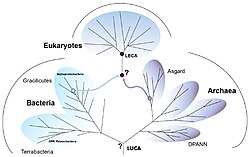
LUCA and LECA: the origins of the eukaryotes.[1] The point of fusion (marked "?") below LECA is the FECA, the first eukaryotic common ancestor, some 2.2 billion years ago. Much earlier, some 4 billion years ago, the LUCA gave rise to the two domains of prokaryotes, the bacteria and the archaea. After the LECA, some 2 billion years ago, the eukaryotes diversified into a crown group, which gave rise to animals, plants, fungi, and protists.

Eukaryogenesis, the process which created the eukaryotic cell and lineage, is a milestone in the evolution of life, since eukaryotes include all complex cells and almost all multicellular organisms. The process is widely agreed to have involved symbiogenesis, in which an archaeon and one or more bacteria came together to create the first eukaryotic common ancestor (FECA). This cell had a new level of complexity and capability, with a nucleus, at least one centriole and cilium, facultatively aerobic mitochondria, sex (meiosis and syngamy), a dormant cyst with a cell wall of chitin and/or cellulose and peroxisomes. It evolved into a population of single-celled organisms that included the last eukaryotic common ancestor (LECA), gaining capabilities along the way, though the sequence of steps involved has been disputed, and may not have started with symbiogenesis. In turn, the LECA gave rise to the eukaryotes' crown group, containing the ancestors of animals, fungi, plants, and a diverse range of single-celled organisms.

Context

[edit]

Life arose on Earth once it had cooled enough for oceans to form. That developed into the last universal common ancestor (LUCA), an organism which had ribosomes and the genetic code, some 4 billion years ago. It gave rise to two main branches of prokaryotic life, the Bacteria and the Archaea. From among these small-celled, rapidly-dividing ancestors arose the Eukaryotes, with much larger cells, nuclei, and distinctive biochemistry.[1][2] The eukaryotes form a domain that contains all complex cells and most types of multicellular organism, including the animals, plants, and fungi.[3][4]

Symbiogenesis

[edit]
In the theory of symbiogenesis, a merger of an archaean and an aerobic bacterium created the eukaryotes, with aerobic mitochondria, some 2.2 billion years ago. A second merger, 1.6 billion years ago, added chloroplasts, creating the green plants.[5]

According to the theory of symbiogenesis (the endosymbiotic theory) championed by Lynn Margulis, a member of the archaea gained a bacterial cell as a component. The archaeal cell was a member of the Promethearchaeati kingdom. The bacterium was one of the alphaproteobacteria, which had the ability to use oxygen in its respiration. This enabled it – and the archaeal cells that included it – to survive in the presence of oxygen, which was poisonous to other organisms adapted to reducing conditions. The endosymbiotic bacteria became the eukaryotic cell's mitochondria, providing most of the energy of the cell.[1][5] Lynn Margulis and colleagues have suggested that the cell also acquired a Spirochaete bacterium as a symbiont, providing the cell skeleton of microtubules and the ability to move, including the ability to pull chromosomes into two sets during mitosis, cell division.[6] More recently, the archaean has been identified as belonging to the unranked taxon Heimdallarchaeia of the phylum Promethearchaeota.[7]

Last eukaryotic common ancestor (LECA)

[edit]

The last eukaryotic common ancestor (LECA) is the hypothetical last common ancestor of all living eukaryotes, around 2 billion years ago,[3][4] and was most likely a biological population.[8] It is believed to have been a protist with a nucleus, at least one centriole and cilium, facultatively aerobic mitochondria, sex (meiosis and syngamy), a dormant cyst with a cell wall of chitin and/or cellulose, and peroxisomes.[9][10]

It had been proposed that the LECA fed by phagocytosis, engulfing other organisms.[9][10] However, in 2022, Nico Bremer and colleagues confirmed that the LECA had mitochondria, and stated that it had multiple nuclei, but disputed that it was phagotrophic. This would mean that the ability found in many eukaryotes to engulf materials developed later, rather than being acquired first and then used to engulf the alphaproteobacteria that became mitochondria.[11]

The LECA has been described as having "spectacular cellular complexity".[12] Its cell was divided into compartments.[12] It appears to have inherited a set of endosomal sorting complex proteins that enable membranes to be remodelled, including pinching off vesicles to form endosomes.[13] Its apparatuses for transcribing DNA into RNA, and then for translating the RNA into proteins, were separated, permitting extensive RNA processing and allowing the expression of genes to become more complex.[14] It had mechanisms for reshuffling its genetic material, and possibly for manipulating its own evolvability. All of these gave the LECA "a compelling cohort of selective advantages".[12]

Eukaryotic sex

[edit]

Sex in eukaryotes is a composite process, consisting of meiosis and fertilisation, which can be coupled to reproduction.[15] Dacks and Roger[16] proposed on the basis of a phylogenetic analysis that facultative sex was likely present in the common ancestor of all eukaryotes. Early in eukaryotic evolution, about 2 billion years ago, organisms needed a solution to the major problem that oxidative metabolism releases reactive oxygen species that damage the genetic material, DNA.[15] Eukaryotic sex provides a process, homologous recombination during meiosis, for using informational redundancy to repair such DNA damage.[15]

Scenarios

[edit]

Competing sequences of mitochondria, membranes, and nucleus

[edit]

Biologists have proposed multiple scenarios for the creation of the eukaryotes. While there is broad agreement that the LECA must have had a nucleus, mitochondria, and internal membranes, the order in which these were acquired has been disputed.[12] In the syntrophic model, the first eukaryotic common ancestor (FECA, around 2.2 gya) gained mitochondria, then membranes, then a nucleus.[12] In the phagotrophic model, it gained a nucleus, then membranes, then mitochondria.[12] In a more complex process, it gained all three in short order, then other capabilities. Other models have been proposed. Whatever happened, many lineages must have been created, but the LECA either out-competed or came together with the other lineages to form a single point of origin for the eukaryotes.[12]

Nick Lane and William Martin have argued that mitochondria came first, on the grounds that energy had been the limiting factor on the size of the prokaryotic cell.[17] Enrique M. Muro et al. have argued, however, that the genetic system needed to reach a critical point that led to a new regulatory system (with introns and the spliceosome), which enabled coordination between genetic networks.[18] The phagotrophic model presupposes the ability to engulf food, enabling the cell to engulf the aerobic bacterium that became the mitochondrion.[12]

Eugene Koonin and others, noting that the archaea share many features with eukaryotes, argue that rudimentary eukaryotic traits such as membrane-lined compartments were acquired before endosymbiosis added mitochondria to the early eukaryotic cell, while the cell wall was lost. In the same way, mitochondrial acquisition must not be regarded as the end of the process, for still new complex families of genes had to be developed after or during the endosymbiotic exchange. In this way, from FECA to LECA, the organisms can be considered as proto-eukaryotes. At the end of the process, LECA was already a complex organism with protein families involved in cellular compartmentalization.[19][20]

Viral eukaryogenesis

[edit]

Another scenario is viral eukaryogenesis, which proposes that the eukaryotes arose as an emergent superorganism, with the nucleus deriving from a "viral factory" alongside the alphaproteobacterium mitochondrion, hosted by an archaeal cell. In this scenario, eukaryogenesis began when a virus colonised an archaeal cell, making it support the production of viruses. The virus may later have assisted the bacterium's entry into the reprogrammed cell.[21] Eukaryotes share genes for several DNA synthesis and transcription enzymes with DNA viruses (Nucleocytoviricota). Those viruses may thus be older than the LECA and may have exchanged DNA with proto-eukaryotes.[22]

Diversification: crown eukaryotes

[edit]

In turn, the LECA gave rise to the eukaryotes' crown group, containing the ancestors of animals, fungi, plants, and a diverse range of single-celled organisms with the new capabilities and complexity of the eukaryotic cell.[23][24] Single cells without cell walls are fragile and have a low probability of being fossilised. If fossilised, they have few features to distinguish them clearly from prokaryotes: size, morphological complexity, and (eventually) multicellularity. Early eukaryote fossils, from the late Paleoproterozoic, include acritarch microfossils with relatively robust ornate carbonaceous vesicles of Tappania from 1.63 gya and Shuiyousphaeridium from 1.8 gya.[24]

The position of the LECA on the eukaryotic tree of life remains controversial. Some studies believe that the first split after the LECA happened between the Unikonta and the Bikonta (Stechmann and Cavalier-Smith 2003), or between Amorphea and all other eukaryotes (Adl et al. 2012; Derelle and Lang 2012). Some believe that the first split happened within Excavata (al Jewari and Baldauf 2023).[25] Yet others believe in a first split between the Opisthokonta and all others (Cerón-Romero et al. 2024).[26]

References

[edit]
[edit]
Revisions and contributorsEdit on WikipediaRead on Wikipedia
from Grokipedia
Eukaryogenesis is the evolutionary process by which eukaryotic cells—characterized by a membrane-bound nucleus, complex , and organelles such as mitochondria—arose from prokaryotic ancestors through a series of transformative events, primarily involving endosymbiosis. This pivotal transition, which gave rise to the domain Eukarya, is believed to have integrated an alphaproteobacterial into an archaeal host, leading to the mitochondrion's role in energy production and the development of eukaryotic cellular complexity. Estimates for the timing of eukaryogenesis vary, but analyses and evidence suggest it occurred between approximately 2.2 and 1.0 billion years ago during the Eon, with the Last Eukaryotic Common Ancestor (LECA) emerging around 1.1 to 1.3 billion years ago. Central to eukaryogenesis is the endosymbiotic theory, which posits that the host archaeon (likely related to modern Asgard archaea) engulfed and retained an alphaproteobacterium, establishing a syntrophic relationship initially under anoxic conditions where hydrogen transfer supported metabolism. Over time, massive gene transfer from the endosymbiont to the host nucleus reduced the mitochondrion to a remnant organelle encoding about 37 genes, while enabling the evolution of aerobic respiration as a later adaptation. Fossil proxies, such as organic-walled microfossils with excystment structures and complex cytoskeletons dating to ~1.65 billion years ago, provide evidence of early eukaryotic traits like shape-changing abilities and evidence of sterol or protosterol synthesis by at least ~1.6 billion years ago, with molecular estimates suggesting as early as ~2.3 billion years ago. Debates surrounding eukaryogenesis include the precise sequence of events, such as whether the nucleus evolved before or after mitochondrial integration, and alternative hypotheses like viral eukaryogenesis, which proposes that large DNA viruses contributed to nuclear formation and genetic complexity in the archaeal host. Environmental factors, particularly oxygen levels, have been scrutinized; while permanent atmospheric oxygenation began around 2.2 billion years ago, eukaryogenesis likely proceeded in pervasive anoxic deep-sea environments, with full deep-ocean oxygenation delayed until less than 500 million years ago. These insights, drawn from phylogenomics, cultivation of Asgard archaea, and geochemical analyses, underscore eukaryogenesis as a rare, emergent event that fundamentally shaped life's diversity on Earth. Recent phylogenomic analyses, including a 2026 comprehensive study of LECA genes using constrained phylogenetic trees, demonstrate dominant contributions from Asgard archaea to most conserved eukaryotic functional systems and pathways, with limited input from alphaproteobacteria primarily in energy transformation and Fe–S cluster biogenesis, and scattered acquisitions from other bacteria. This supports a model where key features of eukaryotic cell organization evolved in the Asgard lineage leading to LECA, followed by alphaproteobacterial endosymbiosis and sporadic horizontal gene transfers.

Evolutionary Context

Prokaryotic Origins and LUCA

The Last Universal Common Ancestor (LUCA) is posited as the most recent population from which all extant cellular life descends, emerging as a simple, prokaryotic-like organism approximately 4.2 billion years ago during the early eon. This entity possessed a genome of about 2.75 megabases encoding roughly 2,657 proteins, enabling basic metabolic capabilities such as a complete Wood–Ljungdahl pathway for acetogenic carbon fixation and an incomplete tricarboxylic acid cycle, all under anaerobic conditions. Notably, LUCA lacked a nucleus, membrane-bound organelles, or any eukaryotic cellular complexity, reflecting its prokaryotic nature with a single circular and reliance on RNA-based processes for early genetic functions. From LUCA, the primary domains of and diverged around 4.2–4.0 billion years ago, marking the initial radiation of prokaryotic life shortly after Earth's oceans stabilized. This split is inferred from phylogenetic analyses of universally conserved genes, indicating that both domains inherited core informational systems like and machinery from LUCA, while adapting distinct membrane lipids and compositions. The divergence occurred in a geologically dynamic environment, with prokaryotes diversifying through and metabolic innovations that laid the groundwork for later evolutionary transitions. Among archaeal lineages, the Asgard superphylum stands out for its relevance to eukaryotic origins, encompassing groups such as Lokiarchaeota and Heimdallarchaeota, discovered through metagenomic surveys of marine and sediment environments. While most Asgard archaea remain uncultivated, a significant advance came in 2020 with the cultivation of Candidatus Prometheoarchaeum syntrophicum (Lokiarchaeota), which grows syntrophically by oxidizing amino acids and reducing protons to hydrogen in partnership with hydrogenotrophic bacteria, and displays dynamic cell membrane protrusions suggestive of proto-phagocytic behavior. These archaea possess genomes enriched with eukaryotic signature proteins, including components for vesicle trafficking (e.g., TRAPP domains and coat protein homologs like Sec23/24), suggesting they represent a bridge between prokaryotic hosts and eukaryotic cellular complexity. Recent phylogenomic analyses (as of 2023) position Heimdallarchaeota, particularly the Hodarchaeales order, as the closest archaeal relatives to eukaryotes. As potential ancestral hosts in eukaryogenesis models, Asgard archaea exhibit actin-related proteins, though they remain fully prokaryotic without organelles. Early Earth conditions during the Hadean and Archean eons featured a predominantly anoxic atmosphere, composed mainly of , , and from volcanic , with reducing gases like and supporting prebiotic chemistry. This oxygen-poor environment, persisting from about 4.5 to 2.4 billion years ago, favored anaerobic metabolisms in prokaryotes and created ecological niches where metabolic symbioses could emerge, as energy gradients from hydrothermal vents and impacts drove microbial diversification. Prokaryotic evolution spanned from approximately 4.0 billion years ago, with the establishment of microbial mats and biofilms, to around 2.5 billion years ago, encompassing the proliferation of diverse bacterial and archaeal clades under anoxic conditions. The (GOE), occurring between 2.4 and 2.1 billion years ago, represented a pivotal shift as cyanobacterial oxygenic irreversibly increased atmospheric oxygen levels, enabling the evolution of aerobic prokaryotes and expanding metabolic possibilities for future symbioses. This oxygenation transformed Earth's , pressuring anaerobic lineages while fostering oxygen-tolerant bacteria capable of higher energy yields through respiration.

Defining Features of Eukaryotes

Eukaryotes are phylogenetically defined as a distinct domain of life, separate from and , based on shared derived traits (synapomorphies) that emerged in their last common ancestor, as established by ribosomal RNA sequence analyses that delineate three primary domains of cellular organisms. This underscores eukaryotes as a monophyletic group encompassing all organisms with complex cells, from protists to , fungi, and animals. The hallmark of eukaryotic cells is the presence of a membrane-bound nucleus that encloses the genetic material, distinguishing them from prokaryotes where DNA resides freely in the . Within the nucleus, DNA is organized into linear chromosomes associated with proteins, forming structures that enable regulated and packaging. Eukaryotes also feature an extensive , including the (ER) for protein and synthesis and the Golgi apparatus for modification and trafficking, which facilitates compartmentalization of cellular processes. Additionally, a dynamic composed of actin microfilaments, tubulin microtubules, and intermediate filaments provides structural support, enables intracellular transport, and powers cell motility. Ribosomes in eukaryotes are larger complexes, compared to the 70S ribosomes of prokaryotes, reflecting adaptations for synthesizing more complex proteins. Eukaryotic cells are typically much larger than prokaryotic ones, with diameters ranging from 10 to 100 μm versus 0.1 to 5 μm for prokaryotes, allowing for greater internal and volume for specialized functions. This increased size, coupled with compartmentalization via membrane-bound organelles, supports advanced metabolic pathways, such as in mitochondria, that are inefficient in smaller prokaryotic cells due to limitations. Genetically, eukaryotic genomes are characterized by the presence of introns—non-coding sequences interspersed within —that are precisely removed from pre-mRNA transcripts by the , a large ribonucleoprotein complex essential for mRNA maturation. Introns contribute to gene regulation, for proteome diversity, and the of expanded gene families involved in information processing, such as those encoding transcription factors and signaling proteins. These features, including intron-rich exceeding 10,000 in total count in the last eukaryotic common ancestor, enable sophisticated control of cellular responses and development.

Endosymbiotic Foundations

Mitochondrial Endosymbiosis

The mitochondrial endosymbiosis represents the pivotal event in eukaryogenesis where an alphaproteobacterium was incorporated into an archaeal host cell, establishing the as a universal in all extant eukaryotes. This primary endosymbiotic acquisition is estimated to have occurred approximately 1.8–2.0 billion years ago. Although this timing coincides with the around 2.4–2.1 billion years ago, the initial endosymbiotic relationship was likely established under anoxic conditions through hydrogen-dependent syntrophy, with aerobic respiration evolving subsequently as oxygen levels rose. The host is widely inferred to be an archaeon from the superphylum, with recent discoveries of cultured representatives like Promethearchaeum syntrophicum supporting its capability for intimate bacterial associations through membrane protrusions and lipid interactions. The process likely involved either phagocytosis-like engulfment by the archaeal host or active invasion by the alphaproteobacterium, followed by the endosymbiont's retention within a host-derived that evolved into the mitochondrial outer . Over time, extensive endosymbiotic gene transfer (EGT) occurred, relocating the majority—estimated at over 90%—of the to the host's nucleus, while a reduced set of remained in the mitochondrial to support essential functions like electron transport. This gene relocation necessitated the evolution of targeting mechanisms, such as N-terminal presequences, to nuclear-encoded proteins back into the , ensuring coordinated operation between host and endosymbiont. The incorporation of the mitochondrion conferred profound evolutionary advantages, primarily by enabling aerobic respiration through , which yields up to 36 ATP molecules per glucose molecule compared to just 2 from anaerobic glycolysis. This energetic boost facilitated increased cellular complexity, larger genome sizes, and the expansion to multicellularity, as the enhanced ATP supply supported energetically demanding processes like cytoskeletal dynamics and endomembrane trafficking. In the context of the Last Eukaryotic Common Ancestor (LECA), this underpinned the metabolic versatility that allowed diversification across eukaryotic lineages. Phylogenetic analyses robustly confirm the alphaproteobacterial ancestry of mitochondria, with mitochondrial proteins clustering within the Rickettsiales or sister groups in trees constructed from conserved genes like those encoding ribosomal proteins and respiratory chain components. Modern mitochondrial genomes retain a minimal set of 13 to over 100 genes, varying by lineage—for example, 37 total genes (13 protein-coding genes, 22 tRNAs, and 2 rRNAs) in animals, and up to 91 or more total genes in some protists such as jakobids—primarily encoding components of the electron transport chain and protein synthesis machinery. Shared metabolic pathways, including the tricarboxylic acid cycle and ubiquinone-based respiration, further corroborate the common origin, with orthologs traceable to alphaproteobacterial counterparts.

Plastid Endosymbiosis

Plastid endosymbiosis refers to the ancient acquisition of a photosynthetic by a eukaryotic host through the engulfment of a cyanobacterium, marking a pivotal event in eukaryotic . This primary endosymbiotic event occurred approximately 1.5 to 1.9 billion years ago in the common ancestor of the supergroup, which includes glaucophytes, , and (including land plants). The host cell, already possessing mitochondria from an earlier endosymbiosis, incorporated the cyanobacterial endosymbiont, which was gradually reduced to a through gene loss and endosymbiotic gene transfer (EGT). The process began with the of a free-living cyanobacterium capable of oxygenic , leading to its integration as an bounded by a double membrane. Over evolutionary time, extensive EGT transferred the majority of the endosymbiont's —estimated at over 2,000 originally—to the host nucleus, resulting in modern genomes that are highly reduced, typically containing 100 to 200 encoding proteins for , transcription, and . This gene relocation enabled nuclear control over plastid function, including protein import via targeting signals, while the plastid retained autonomy in core photosynthetic processes. Phylogenetic analyses of plastid , such as those encoding ribosomal proteins and components, consistently place the endosymbiont within the cyanobacterial lineage, specifically among early-branching, freshwater-adapted groups like Gloeomargarita. Shared biochemical features, including the presence of chlorophyll a and, in green lineages, chlorophyll b, alongside membranes and pigments like β-, further corroborate the cyanobacterial ancestry. Subsequent secondary and tertiary endosymbiotic events expanded plastid diversity beyond the primary lineage. In secondary endosymbiosis, eukaryotic hosts engulfed primary plastid-bearing , such as giving rise to plastids in chromalveolates (e.g., diatoms and apicomplexans) or in euglenids and chlorarachniophytes, resulting in organelles surrounded by three or four membranes. Tertiary events, like those in certain dinoflagellates engulfing secondary , further diversified algal groups but retained cyanobacterial genetic signatures through nested EGT. These complex plastids often preserve vestiges of the engulfed algal nucleus as a nucleomorph, as seen in cryptophytes and chlorarachniophytes, providing direct evidence of their eukaryotic intermediate origins. A more recent independent primary endosymbiosis occurred approximately 100–140 million years ago in the rhizarian genus Paulinella, where a cyanobacterium was integrated as a photosynthetic (nitroplast), offering insights into the early stages of plastid . The evolutionary impact of plastid endosymbiosis was profound, introducing oxygenic to eukaryotes and enabling them to become major contributors to global . This shift allowed eukaryotic algae to harness for carbon fixation, dramatically increasing organic matter synthesis in aquatic environments and contributing to the rise in atmospheric oxygen levels during the era. Prior to this event, oxygen production was limited to prokaryotic ; the integration of s empowered eukaryotes to dominate communities, influencing biogeochemical cycles and facilitating the oxygenation of Earth's oceans and atmosphere. Evidence for plastid endosymbiosis draws from multiple lines: genomic data showing cyanobacterial homologs in plastid and nuclear genomes, ultrastructural similarities in photosynthetic machinery, and fossil records. For instance, the ~1.88-billion-year-old coiled filaments of Grypania spiralis from the Negaunee Iron Formation in are interpreted as possible early eukaryotic with photosynthetic capabilities, predating but consistent with the timeline of primary plastid acquisition, though their exact affinity remains debated. analyses, calibrated with fossil constraints, support the primary event's antiquity, with divergence among lineages occurring shortly thereafter. These lines of evidence collectively affirm the endosymbiotic origin and underscore its role in shaping photosynthetic eukaryotic diversity.

Last Eukaryotic Common Ancestor

Core Characteristics of LECA

The Last Eukaryotic Common Ancestor (LECA), dated to approximately 1.8–1.5 billion years ago, represents the fully formed eukaryotic cell at the root of the crown-group radiation, reconstructed through of extant lineages. LECA is inferred to have been a unicellular, predatory , functioning as a small (≤25 µm) phagocytotic capable of engulfing prokaryotic prey for . This predatory lifestyle, supported by the presence of - and tubulin-based cytoskeletal elements for pseudopod formation and vesicle trafficking, underscores LECA's role as a heterotrophic consumer in ancient microbial ecosystems. Genomic data from deep-branching eukaryotes, including predatory flagellates like those in Provora and , bolster the view of LECA's phagotrophy as a derived yet ancestral trait, debated but increasingly evidenced by 2022–2025 phylogenomic analyses. LECA possessed a nucleus housing linear chromosomes, mitochondria with a complete system for aerobic energy production, an including and Golgi for protein sorting and secretion, and a versatile comprising , actin filaments, and intermediate filaments for structural integrity and intracellular transport. Its cellular inventory further encompassed centrioles (or basal bodies) organizing flagella or cilia for motility, peroxisomes handling and beta-oxidation of fatty acids, and the system—featuring E1, E2, and E3 enzymes—for targeted protein degradation via the . These organelles and machineries reflect LECA's compartmentalized architecture, enabling efficient predation and metabolic versatility in oxygenated environments. LECA's , estimated at around 10,000 protein-coding , integrated dominant contributions from Asgard archaea to the origins of most conserved eukaryotic functional systems and pathways tracing to the LECA, including core (e.g., replication and translation factors), cytoskeletal proteins, membrane remodelling, nucleocytoplasmic transport, protein sorting, glycosylation, and parts of the metabolic network such as sphingolipid and isoprenoid synthesis, with limited inputs from Alphaproteobacteria primarily relating to energy transformation systems and Fe–S cluster biogenesis, and scattered ancestry from other bacterial phyla across the eukaryotic functional landscape without clear trends, reflecting numerous sporadic horizontal gene acquisitions both before and after endosymbiosis. This chimeric repertoire supported advanced transcription via , complete with its heptapeptide repeat C-terminal domain for coupling splicing and export. From the simpler First Eukaryotic Common Ancestor (FECA)—an archaeal-like host in syntrophic partnership—LECA evolved through incremental innovations, including the emergence of spliceosomal introns in nuclear , which allowed for regulatory flexibility and exon shuffling to accommodate endosymbiotic gene transfers. A 2025 study frames the FECA-to-LECA transition as an algorithmic in gene architecture, where the proliferation of non-coding sequences—such as introns and regulatory elements—crossed a complexity threshold, enabling emergent properties like sophisticated gene regulation and cellular that defined eukaryotic innovation.

Origins of Eukaryotic Sexuality

Eukaryotic sexuality is characterized by , a specialized form of that reduces number through two sequential divisions following , and syngamy, the fusion of haploid gametes to restore diploidy, collectively enabling and diversity. This cycle of alternation between haploid and diploid phases distinguishes eukaryotic from prokaryotic processes and is thought to have originated as a core feature of the last eukaryotic common ancestor (LECA). The timeline of eukaryotic aligns with the of LECA approximately 1.8 billion years ago, during a period of rising atmospheric oxygen that coincided with mitochondrial endosymbiosis and increased cellular complexity. Phylogenetic analyses indicate that full meiotic , including recombination and fusion, was present in LECA, suggesting sexuality evolved concurrently with early eukaryogenesis rather than as a later . A 2025 hypothesis proposes that key meiotic mechanisms may have predated canonical in ancestral eukaryotes, allowing sexual proliferation without kinetochores through alternative spindle attachments, potentially facilitating early genetic exchange in a pre-mitotic cellular context. Compelling evidence for the ancient origins of eukaryotic sexuality comes from the phylogenetic conservation of meiotic genes across all major eukaryotic supergroups, including Opisthokonta, , , and . Genes such as Spo11, which initiates double-strand breaks for recombination, and DMC1, a promoting homologous pairing during , are ubiquitously present and functional in diverse lineages, indicating their presence in LECA. further reveals that these genes arose through early duplications from prokaryotic precursors before LECA, with minimal losses in modern lineages, underscoring sexuality as an inherent eukaryotic trait. For instance, SPO11 homologs are detected in genomes from amoebozoans to , supporting a single evolutionary origin of . The adaptive significance of in early eukaryotes likely centered on mechanisms to counter generated by mitochondria, which produce (ROS) as metabolic byproducts. By facilitating , repairs ROS-induced DNA lesions, such as double-strand breaks, that accumulate in the larger eukaryotic genomes, thereby enhancing survival in oxygenated environments. This repair function, coupled with syngamy's role in masking deleterious mutations through , provided a selective advantage during the transition to aerobic post-mitochondrial acquisition. Overall, these processes not only stabilized the genome against mitochondrial-induced damage but also promoted evolutionary innovation through recombination.

Hypotheses and Mechanisms

Syntrophic and Phagotrophic Models

The syntrophic model posits that eukaryogenesis arose from a mutualistic metabolic partnership between an anaerobic archaeal host, likely a , and an alphaproteobacterium, involving the exchange of , with the bacterial partner consuming it to produce , to optimize production in an oxygen-poor environment. In this scenario, the archaeal host oxidized fermentation products to , which the bacterial partner used to produce , providing the host with a high-energy substrate and alleviating metabolic constraints; over time, this interdependence facilitated the physical integration of the partners and endosymbiotic gene transfer (EGT), transferring bacterial genes to the host nucleus. Proposed and refined by William F. Martin and colleagues since the early 2000s, the model emphasizes that this symbiosis predated the evolution of the nucleus and , with mitochondrial acquisition driving subsequent cellular complexity through enhanced ATP availability. The phagotrophic model, in contrast, envisions an archaeal host—closely related to modern Asgard archaea—possessing primitive phagocytic capabilities that enabled it to engulf bacterial prey, including the alphaproteobacterial progenitor of mitochondria, leading to a stable endosymbiosis. This process likely involved actin-based protrusions and membrane invaginations for particle uptake, as evidenced by eukaryotic-signature genes in Asgard genomes, such as those for ESCRT machinery and small GTPases that support vesicle formation and trafficking. Although cultured Asgard species like Candidatus Prometheoarchaeum syntrophicum lack observed phagocytosis, their genomic repertoire and filamentous protrusions suggest an ancestral capacity for membrane remodeling that could evolve into engulfment, bridging prokaryotic and eukaryotic cellular behaviors. This model integrates predation as a driver of symbiosis, with the engulfed bacterium providing metabolic benefits that stabilized the association. A central debate in these models concerns the temporal order of key innovations: whether the nucleus and preceded mitochondrial acquisition (as in some phagotrophic scenarios requiring for engulfment) or emerged afterward, powered by mitochondrial energy (as favored in syntrophic views). Another key contention is the role of an "" in prokaryotes, where limited ATP production constrained expansion and complexity; mitochondrial integration is argued to have resolved this by increasing energy supply up to 100,000-fold, compelling massive EGT to the host genome and enabling eukaryotic informational systems. Recent genomic analyses as of 2026 reinforce the archaeal host's dominance in eukaryogenesis, with a comprehensive study demonstrating that the last eukaryotic common ancestor (LECA) already contained the mitochondrion and that Asgard archaea represent the closest archaeal relatives of eukaryotes. This analysis traced the origins of core eukaryotic genes to the LECA using a rigorous statistical framework centered on evolutionary hypothesis testing with constrained phylogenetic trees. The results revealed dominant contributions from Asgard archaea to the origin of most conserved eukaryotic functional systems and pathways, including the majority of informational genes (e.g., for replication and ). A limited contribution from Alphaproteobacteria was identified, relating primarily to energy transformation systems and Fe–S cluster biogenesis, whereas ancestry from other bacterial phyla was scattered across the eukaryotic functional landscape, without clear, consistent trends, and primarily operational for . These findings imply a model of eukaryogenesis—termed Asgard-dominant—in which key features of eukaryotic cell organization evolved in the Asgard lineage leading to the LECA, followed by the capture of the alphaproteobacterial endosymbiont and augmented by numerous but sporadic horizontal acquisitions of genes from other bacteria both before and after endosymbiosis. These insights integrate syntrophic and phagotrophic elements by suggesting an Asgard host with proto-phagocytic traits engaged in metabolic , followed by integration, as supported by expanded Asgard diversity and chimeric metabolic pathways in eukaryotic genomes.

Viral Eukaryogenesis Hypothesis

The viral eukaryogenesis hypothesis posits that the nucleus of eukaryotic cells originated from an ancient large that infected an archaeal host cell, transforming it into a proto-eukaryote through the establishment of a persistent compartment. Proposed by Philip Bell in 2001, this model suggests that a complex , akin to modern mimiviruses or other nucleocytoplasmic large (NCLDVs), integrated its genetic material and machinery into the host, forming a "viral factory" that enclosed the host's and evolved into the . This event is envisioned as occurring in parallel with the acquisition of a mitochondrial from an alphaproteobacterium, creating a chimeric cell with enhanced compartmentalization and energy production. Key mechanisms in this hypothesis involve the virus contributing essential genes and structures to eukaryotic innovation. Viral genes encoding membrane budding, which facilitates enveloped virus egress, are proposed to have given rise to the nuclear membrane's dynamics and vesicular trafficking in eukaryotes. Additionally, viral DNA replication machinery, including polymerases and capping enzymes, likely provided the basis for eukaryotic chromosome structure, linear DNA with telomeres, and mRNA processing systems like the 5' cap. Capsid proteins from the virus may have contributed to the formation of cytoskeletal elements or chromatin organization, while ongoing gene exchange in a pre-last eukaryotic common ancestor (LECA) virosphere allowed for the integration of viral innovations into the emerging eukaryotic lineage. Recent expansions of the model, from 2022 onward, emphasize this viral-archaeal symbiosis as an emergent superorganism, with the virus dominating genetic control. This offers explanatory advantages for the abrupt appearance of eukaryotic complexity in the geological record, as it invokes viral innovation to rapidly generate nuclear isolation and without relying on gradual prokaryotic adaptations. The enclosed viral factory naturally accounts for the nucleus's double-membrane structure and selective permeability, features absent in prokaryotes, while strategies could explain the separation of transcription and in eukaryotes. By bypassing incremental metabolic , the model highlights viruses as drivers of major evolutionary leaps, consistent with their role in other genomic expansions. Supporting evidence includes the identification of eukaryotic genes with viral origins, with phylogenetic analyses revealing that several eukaryotic genes, particularly in DNA metabolism and replication, share closest homologs with genes from giant viruses (e.g., eukaryotic initiation factors and histone-like proteins show affinities to NCLDV counterparts), suggesting ancient transfers. Moreover, studies of pre-LECA gene exchanges demonstrate a diverse virosphere where large DNA viruses encoded proteins relictual of extinct proto-eukaryotic lineages, linking giant viruses directly to early eukaryogenesis. These phylogenetic connections, reconstructed from diverse eukaryotic and viral genomes, predate the LECA and underscore the co-evolution of viruses with emerging eukaryotes.

Evidence and Diversification

Genomic and Fossil Evidence

Genomic evidence for eukaryogenesis is primarily derived from analyses of endosymbiotic gene transfer (EGT), where thousands of genes of bacterial origin, particularly from alphaproteobacterial ancestors of mitochondria, have been integrated into eukaryotic nuclear genomes, providing molecular signatures of organelle acquisition. Phylogenomic reconstructions of the last eukaryotic common ancestor (LECA) estimate it possessed approximately 4,100 universal eukaryotic genes, including those involved in core cellular processes, based on comparative analyses across diverse eukaryotic lineages. More recent analyses estimate LECA had around 10,000 orthologous gene groups. Metagenomic studies from 2020 to 2025 have further illuminated the archaeal contributions, with Asgard archaea genomes revealing eukaryotic signature proteins such as actin-like proteins and components of membrane-trafficking systems, supporting their role as the closest prokaryotic relatives to the eukaryotic host lineage. A 2026 comprehensive phylogenomic analysis of LECA genes, using constrained phylogenetic trees and evolutionary hypothesis testing, demonstrated dominant contributions from Asgard archaea to the origins of most conserved eukaryotic functional systems and pathways. Limited contributions from Alphaproteobacteria were identified, primarily relating to energy transformation systems and Fe–S cluster biogenesis, while ancestry from other bacterial phyla was scattered across the eukaryotic functional landscape without clear trends. These findings imply a model of eukaryogenesis in which key features of eukaryotic cell organization evolved in the Asgard lineage leading to LECA, followed by alphaproteobacterial endosymbiosis and augmented by numerous sporadic horizontal gene transfers from other bacteria before and after endosymbiosis. These findings indicate that key eukaryotic innovations, like cytoskeletal elements, predate LECA and emerged through archaeal-bacterial symbioses. Fossil evidence complements genomic data, with the earliest reliable biomarkers for eukaryotes being steranes—lipid remnants of sterols synthesized by eukaryotic membranes—detected in rocks approximately 1.64 billion years old, indicating the presence of crown-group eukaryotes by the . Microfossils, such as the multicellular filaments of Tappania and Qingshania magnifica from the ~1.63-billion-year-old Chuanlinggou Formation in , exhibit eukaryotic-like cellular organization, including large cell sizes and possible structures, pushing back evidence for multicellularity. Older candidates, like the ~2.1-billion-year-old from , feature centimeter-scale, organized structures suggestive of early complex life but remain disputed due to potential abiotic origins and lack of definitive cellular . Integrating these lines of evidence establishes a timeline for eukaryogenesis, with the first eukaryotic common ancestor (FECA) and mitochondrial endosymbiosis occurring around 2.3 billion years ago, shortly after the (~2.4 billion years ago), which facilitated oxygen-dependent metabolism. LECA is estimated to have emerged between 1.8 and 1.1 billion years ago, following genomic integration and the of complex traits like a nucleus and . This chronology aligns fossil records with molecular clocks, suggesting eukaryogenesis unfolded in an oxygenated post-GOE world. Recent 2025 studies highlight shifts in early eukaryotic genome architecture, including expansions in non-coding regions that complemented protein functions and marked an in evolutionary complexity. These analyses reveal how growth accelerated through non-coding additions, enabling regulatory innovations absent in prokaryotes and distinguishing LECA-era genomes.

Radiation of Crown Eukaryotes

Crown eukaryotes comprise the extant eukaryotic lineages that descend directly from the last eukaryotic common ancestor (LECA), marking the onset of diversification into major supergroups approximately 1.5 to 1 billion years ago during the era. This period followed the around 2.4 billion years ago, which gradually elevated atmospheric oxygen levels, enhancing mitochondrial efficiency and creating ecological niches for aerobic metabolisms that propelled eukaryotic expansion. LECA, reconstructed as a complex, phagotrophic cell with a nucleus, , and , served as the foundational progenitor for this radiation. The diversification involved rapid splits into key supergroups, including Opimoda (encompassing , with like animals and fungi, and others) and Diphoda (including with SAR, featuring , and excavates). The eukaryotic root is positioned between these assemblies, with excavate-like traits—such as a ventral feeding groove and flagellar apparatus—traced back to LECA, implying multiple losses in descendant lineages. Multicellularity emerged as a pivotal around 1 billion years ago (with evidence as early as 1.63 billion years ago in fossil records), enabling larger body sizes and specialized functions that further diversified supergroups. This radiation culminated in the emergence of major eukaryotic kingdoms: animals and fungi from Opisthokonta within , and land plants from via green algal ancestors. Inherited LECA features like meiotic sexuality and played crucial roles in adaptation, promoting for evolutionary flexibility and predatory lifestyles that exploited oxygenated environments. Recent 2025 phylogenomic analyses, leveraging expanded taxon sampling and advanced models, have refined boundaries by resolving long-debated roots and supergroup compositions, such as questioning the of traditional clades like while confirming excavate ancestry and post-LECA rapidity. These revisions underscore a dynamic early eukaryotic , with expansions varying across supergroups to drive niche specialization.

References

Add your contribution
Related Hubs
User Avatar
No comments yet.