Recent from talks
Nothing was collected or created yet.
History of Miami
View on Wikipedia
This article needs additional citations for verification. (August 2014) |

| History of Florida |
|---|
|
|
Thousands of years before Europeans arrived, a large portion of south east Florida, including the area where Miami, Florida exists today, was inhabited by Tequestas. The Tequesta (also Tekesta, Tegesta, Chequesta, Vizcaynos) Native American tribe, at the time of first European contact, occupied an area along the southeastern Atlantic coast of Florida. They had infrequent contact with Europeans and had largely migrated by the middle of the 18th century. Miami is named after the Mayaimi, a Native American tribe that lived around Lake Okeechobee until the 17th or 18th century.
The Spanish established a mission and small garrison among the Tequesta on Biscayne Bay in 1567. The mission and garrison were withdrawn a couple of years later.[2] In 1743 the governor of Cuba established another mission and garrison on Biscayne Bay. As the mission had not been approved by the Council of the Indies, the mission and garrison were withdrawn the following year. The Spanish recorded that the inhabitants at the site of the 1743 mission were survivors of the Cayos, Carlos (presumed to be Caloosa) and Boca Raton people, who were subject to periodic raids by the Uchises (native allies of the English in South Carolina).[3] Fort Dallas was built in 1836 and functioned as a military base during the Second Seminole War.[4]
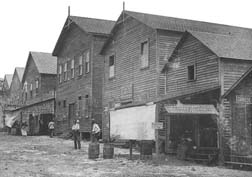
The Miami area was better known as "Biscayne Bay Country" in the early years of its growth. The few published accounts from that period describe the area as a wilderness that held much promise.[5] The area was also characterized as "one of the finest building sites in Florida".[5] After the Great Freeze of 1894, the crops of the Miami area were the only ones in Florida that survived. Julia Tuttle, a local landowner, convinced Henry Flagler, a railroad tycoon, to expand his Florida East Coast Railway to Miami. On July 28, 1896, Miami was officially incorporated as a city with a population of just over 300.[6]
Miami prospered during the 1920s, but weakened when the real-estate bubble burst in 1925, which was shortly followed by the 1926 Miami Hurricane and the Great Depression in the 1930s. When World War II began, Miami played an important role in the battle against German submarines due to its location on the southern coast of Florida. The war helped to increase Miami's population to almost half a million. After Fidel Castro rose to power in 1959, many Cubans emigrated to Miami, further increasing the population. In the 1980s and 1990s, various crises struck South Florida, among them the Arthur McDuffie beating and the subsequent riot, drug wars, Hurricane Andrew, and the Elián González affair. Despite these, Miami remains a major international, financial, and cultural center.
The city's name is derived from the Miami River, which is ultimately derived from the Mayaimi people who lived around the shores of Lake Okeechobee at the time of European colonization.
Though spelled the same in English, the Florida city's name has nothing to do with the Miami people who lived in a completely different part of North America.
Early settlement
[edit]The earliest evidence of Native American settlement in the Miami region came from about 10,000 years ago.[7] The region was filled with pine hardwood forests and was home to plenty of deer, bear, and wild fowl. These first inhabitants settled on the banks of the Miami River, with their main villages on the northern banks. These early Native Americans created a variety of weapons and tools from shells.[8]
When the first Europeans visited in the mid-1500s, the inhabitants of the Miami area were the Tequesta people, who controlled an area covering much of southeastern Florida including what is now Miami-Dade County, Broward County, and the southern parts of Palm Beach County. The Tequesta Indians fished, hunted, and gathered the fruit and roots of plants for food, but did not practice any form of agriculture. They buried the small bones of the deceased, but put the larger bones in a box for the village people to see. The Tequesta are credited with making the Miami Circle.
16th to 18th centuries
[edit]In 1513, Juan Ponce de León was the first European to visit the Miami area by sailing into Biscayne Bay. He wrote in his journal that he reached Chequescha, which was Miami's first recorded name,[9] but it is unknown whether or not he came ashore or made contact with the natives. Pedro Menéndez de Avilés and his men made the first recorded landing in this area when they visited the Tequesta settlement in 1566 while looking for Menéndez's missing son, who had been shipwrecked a year earlier.[10] Spanish soldiers, led by Father Francisco Villareal, built a Jesuit mission at the mouth of the Miami River a year later, but it was short-lived. By 1570, the Jesuits decided to look for more willing subjects outside of Florida. After the Spaniards left, the Tequesta Indians were left to fight European-introduced diseases, such as smallpox, without European help. Wars with other tribes greatly weakened their population, and they were easily defeated by the Creek Indians in later battles. By 1711, the Tequesta had sent a couple of local chiefs to Havana to ask if they could migrate there. The Spanish sent two ships to help them, but their illnesses struck, killing most of their population.[11] In 1743, the Spaniards sent another mission to Biscayne Bay, where they built a fort and church. The missionary priests proposed a permanent settlement, where the Spanish settlers would raise food for the soldiers and Native Americans. However, the proposal was rejected as impractical and the mission was withdrawn before the end of the year.[12]
18th and 19th centuries
[edit]

In 1766, Samuel Touchett received a land grant from the Crown for 20,000 acres (81 km2) in the Miami area. The grant was surveyed by Bernard Romans in 1772. A condition for making the grant permanent was that at least one settler had to live on the grant for every 100 acres (0.4 km2) of land. While Touchett wanted to found a plantation in the grant, he was having financial problems and his plans never came to fruition[13]
The first permanent European settlers in the Miami area arrived around 1800. Pedro Fornells, a Menorcan survivor of the New Smyrna colony, moved to Key Biscayne to meet the terms of his Royal Grant for the island. Although he returned with his family to St. Augustine after six months, he left a caretaker behind on the island. On a trip to the island in 1803, Fornells had noted the presence of squatters on the mainland across Biscayne Bay from the island. In 1825, U.S. Marshal Waters Smith visited the Cape Florida Settlement (which was on the mainland) and conferred with squatters who wanted to obtain title to the land they were occupying.[14] On the mainland, the Bahamian "squatters" had settled along the coast beginning in the 1790s. John Egan had also received a grant from Spain during the Second Spanish Period. John's son James Egan, his wife Rebecca Egan, his widow Mary "Polly" Lewis, and Mary's brother-in-law Jonathan Lewis all received 640-acre land grants from the U.S. in present-day Miami. Temple Pent and his family did not receive a land grant, but nevertheless stayed in the area.[15]
Treasure hunters from the Bahamas and the Keys came to South Florida to hunt for treasure from the ships that ran around on the treacherous Great Florida reef, some of whom accepted Spanish land offers along the Miami River. At about the same time, the Seminole Indians arrived along with a group of runaway slaves. In 1825, the Cape Florida Lighthouse was built on nearby Key Biscayne to warn passing ships of the dangerous reefs.
In 1830, Richard Fitzpatrick bought land on the Miami River from Bahamian James Egan. He built a plantation with slave labor where he cultivated sugarcane, bananas, maize, and tropical fruit. In January 1836, shortly after the beginning of the Second Seminole War, Fitzpatrick removed his slaves and closed his plantation.[16]
The area was affected by the Second Seminole War, where Major William S. Harney led several raids against the Indians. Fort Dallas was located on Fitzpatrick's plantation on the north bank of the river. Most of the non-Indian population consisted of soldiers stationed at Fort Dallas. The Seminole War was the most devastating Indian war in American history,[citation needed] causing almost a total loss of native population in the Miami area. The Cape Florida lighthouse was burned by Seminoles in 1836 and was not repaired until 1846.
After the Second Seminole War ended in 1842, Fitzpatrick's nephew, William English, re-established the plantation in Miami. He charted the "Village of Miami" on the south bank of the Miami River and sold several plots of land. When English died in California in 1852, his plantation died with him.[17]
The Miami River lent its name to the burgeoning town, extending an etymology that derives from the Mayaimi Indian tribe.[citation needed] In 1844, Miami became the county seat, and six years later, a census reported that there were ninety-six residents living in the area.[18] The Third Seminole War lasted from 1855 to 1858, but was not nearly as destructive as the previous one. However, it did slow down the rate of settlement of southeast Florida. At the end of the war, a few of the soldiers stayed and some of the Seminoles remained in the Everglades.
From 1858 to 1896, only a handful of families made their homes in the Miami area. Those that did lived in small settlements along Biscayne Bay. The first of these settlements formed at the mouth of the Miami River and was variously called Miami, Miamuh, and Fort Dallas. Foremost among the Miami River settlers were the Brickells. William Brickell had previously lived in Cleveland, Ohio, California, and Australia, where he met his wife, Mary. In 1870, Brickell bought land on the south bank of the river. The Brickells and their children operated a trading post and post office on their property for the rest of the 19th century.[19][20]
Other settlements within Miami's city limits were Lemon City (now Little Haiti) and Coconut Grove. Settlements outside the city limits were Biscayne, in present-day Miami Shores, and Cutler, in present-day Palmetto Bay. Many of the settlers were homesteaders, attracted to the area by offers of 160 acres (0.6 km2) of free land by the United States federal government.
1890s: Fast growth and formation
[edit]


In 1891, a Cleveland woman named Julia Tuttle decided to move to South Florida to make a new start in her life after the death of her husband, Frederick Tuttle. She purchased 640 acres on the north bank of the Miami River in present-day downtown Miami.
She tried to persuade railroad magnate Henry Flagler to expand his rail line, the Florida East Coast Railway, southward to the area, but he initially declined.[21] In December 1894, Florida was struck by a freeze that destroyed virtually the entire citrus crop in the northern half of the state. A few months later, on the night of February 7, 1895, the northern part of Florida was hit by another freeze that wiped out the remaining crops and the new trees. Unlike most of the rest of the state, the Miami area was unaffected. Tuttle wrote to Flagler again, asking him to visit the area and to see it for himself. Flagler sent James E. Ingraham to investigate and he returned with a favorable report and a box of orange blossoms to show that the area had escaped the frost. Flagler followed up with his own visit and concluded at the end of his first day that the area was ripe for expansion. He made the decision to extend his railroad to Miami and build a resort hotel.[22]
On April 22, 1895, Flagler wrote Tuttle a long letter recapping her offer of land to him in exchange for extending his railroad to Miami, laying out a city and building a hotel. The terms provided that Tuttle would award Flagler a 100-acre (0.4 km2) tract of land for the city to grow. Around the same time, Flagler wrote a similar letter to William and Mary Brickell, who had also verbally agreed to give land during his visit.
While the railroad's extension to Miami remained unannounced in the spring of 1895, rumors of this possibility continued to multiply, fueling real estate activity in the Biscayne Bay area. The news of the railroad's extension was officially announced on June 21, 1895. In late September, the work on the railroad began and settlers began pouring into the promised "freeze proof" lands. On October 24, 1895, the contract agreed upon by Flagler and Tuttle was approved.
With the railroad under construction, activity in Miami began to pick up. Men from throughout Florida flocked to Miami to await Flagler's call for workers of all qualifications to begin work on the promised hotel and city. By late December 1895, seventy-five of them already were at work clearing the site for the hotel. They lived mostly in tents and huts in the wilderness, which had no streets and few cleared paths. Many of these men were victims of the freeze, which had left both money and work scarce.
On February 1, 1896, Tuttle fulfilled the first part of her agreement with Flagler by signing two deeds to transfer land for his hotel and the 100 acres (0.4 km2) of land near the hotel site to him. The titles to the Brickell and Tuttle properties were based on early Spanish land grants and had to be determined to be clear of conflict before the marketing of the Miami lots began. On March 3, Flagler hired John Sewell from West Palm Beach to begin work on the town as more people came into Miami. On April 7, 1896, the railroad tracks finally reached Miami and the first train arrived on April 13. It was a special, unscheduled train and Flagler was on board. The train returned to St. Augustine later that night. The first regularly scheduled train arrived on the night of April 15. The first week of train service provided only for freight trains; passenger service did not begin until April 22.
On July 28, 1896, the incorporation meeting to make Miami a city took place. The right to vote was restricted to all men who resided in Miami or Dade County. Joseph A. McDonald, Flagler's chief of construction on the Royal Palm Hotel, was elected chairman of the meeting. After ensuring that enough voters were present, the motion was made to incorporate and organize a city government under the corporate name of "The City of Miami", with the boundaries as proposed. John B. Reilly, who headed Flagler's Fort Dallas land company, was the first elected mayor.
Initially, most residents wanted to name the city "Flagler". However, Henry Flagler was adamant that the new city would not be named after him. So on July 28, 1896, the City of Miami, named after the Miami River, was incorporated with 502 voters, including 100 registered black voters.[23] The black population provided the primary labor force for the building of Miami.[24] Clauses in land deeds confined blacks to the northwest section of Miami, which became known as "Colored Town" (today's Overtown).[25]
20th century
[edit]1900s to 1930
[edit]


Miami experienced a very rapid growth up to World War II. In 1900, 1,681 people lived in Miami; in 1910, there were 5,471 people; and in 1920, there were 29,549 people. As thousands of people moved to the area in the early 20th century, the need for more land quickly became apparent. Until then, the Florida Everglades extended to within three miles (5 km) of Biscayne Bay. Beginning in 1906, canals were made to remove some of the water from those lands. Miami Beach was developed in 1913 when a two-mile (3 km) wooden bridge built by John Collins was completed. During the early 1920s, an influx of new residents and unscrupulous developers led to the Florida land boom, when speculation drove land prices high. Some early developments were razed after their initial construction to make way for larger buildings. The population of Miami doubled from 1920 to 1923.[26] The nearby areas of Lemon City, Coconut Grove, and Allapattah were annexed in the fall of 1925, creating the Greater Miami area.
However, this boom began to falter due to building construction delays and overload on the transport system caused by an excess of bulky building materials. On January 10, 1926, the Prinz Valdemar, an old Danish warship on its way to becoming a floating hotel, ran aground and blocked Miami Harbor for nearly a month.[27] Already overloaded, the three major railway companies soon declared an embargo on all incoming goods except food. The cost of living had skyrocketed and finding an affordable place to live was nearly impossible.[28] This economic bubble was already collapsing when the catastrophic Great Miami Hurricane in 1926 swept through, ending whatever was left of the boom. The Category 4 storm was the 12th most costly and 12th most deadly to strike the United States during the 20th century.[29] According to the Red Cross, there were 373 fatalities, but other estimates vary, due to the large number of people listed as "missing". Between 25,000 and 50,000 people were left homeless in the Miami area. The Great Depression followed, causing more than sixteen thousand people in Miami to become unemployed. As a result, a Civilian Conservation Corps camp was opened in the area.[30]
During the mid-1930s, the Art Deco district of Miami Beach was developed. Also during this time, on February 15, 1933, an assassination attempt was made on President-elect Franklin D. Roosevelt. While Roosevelt was giving a speech in Miami's Bayfront Park, Giuseppe Zangara, an Italian anarchist, opened fire. Mayor Anton Cermak of Chicago, who was shaking hands with Roosevelt, was shot and died two weeks later. Four other people were wounded, but President-elect Roosevelt was not harmed. Zangara was quickly tried for Cermak's murder and was executed by the electric chair on March 20, 1933, in Raiford, Florida.
Also in 1933, the Miami City Commission asked the Miami Women's Club to create a city flag design. The flag was designed by Charles L. Gmeinder on their behalf, and adopted by City Commission in November 1933. It is unknown why the orange and green colors were selected for the flag. One theory is that the colors were inspired by the orange tree, although the University of Miami was already using the colors of orange and green for their sports teams since 1926.[31]
In 1937, the local chapter of the Ku Klux Klan raided La Paloma, an LGBT nightclub. After the non-lethal raid the nightclub became a site of a more solidified LGBT community and resistance against conservative sexual laws.[32]
1940s
[edit]

By the early 1940s, Miami was still recovering from the Great Depression when World War II started. Though many of the cities in Florida were heavily affected by the war and went into financial ruin, Miami remained relatively unaffected. Early in the war, German U-boats attacked several American ships including Portero del Llano, which was attacked and sunk within sight of Miami Beach in May 1942. To defend against the U-boats, Miami was placed in two military districts, the Eastern Defense Command and the Seventh Naval District.
In February 1942, the Gulf Sea Frontier was established to help guard the waters around Florida. By June of that year, more attacks forced military leaders in Washington, D.C. to increase the numbers of ships and men of the army group. They also moved the headquarters from Key West to the DuPont building in Miami, taking advantage of its location at the southeastern corner of the U.S.[citation needed] As the war against the U-boats grew stronger, more military bases sprang up in the Miami area. The U.S. Navy took control of Miami's docks and established air stations at the Opa-locka Airport and in Dinner Key. The Air Force also set up bases in the local airports in the Miami area.
In addition, many military schools, supply stations, and communications facilities were established in the area. Rather than building large army bases to train the men needed to fight the war, the Army and Navy came to South Florida and converted hotels to barracks, movie theaters to classrooms, and local beaches and golf courses to training grounds. Overall, over five hundred thousand enlisted men and fifty thousand officers were trained in South Florida.[33] After the end of the war, many servicemen and women returned to Miami, causing the population to rise to nearly half a million by 1950.
1950s to 1970s
[edit]First Cuban wave
[edit]

Following the 1959 Cuban revolution that unseated Batista and brought Fidel Castro to power, most Cubans who were living in Miami returned to Cuba. Soon after, however, many middle class and upper class Cubans moved to Florida en masse with few possessions. Some Miamians were upset about this, especially the African Americans, who believed that the Cuban workers were taking their jobs.[citation needed] In addition, the school systems struggled to educate the thousands of Spanish-speaking Cuban children. Many Miamians, fearing that the Cold War would become World War III, left the city, while others started building bomb shelters and stocking up on food and bottled water. Many of Miami's Cuban refugees realized for the first time that it would be a long time before they would get back to Cuba.[35] In 1965 alone, 100,000 Cubans packed into the twice daily "freedom flights" from Havana to Miami. Most of the exiles settled into the Riverside neighborhood, which began to take on the new name of "Little Havana". This area emerged as a predominantly Spanish-speaking community, and Spanish speakers elsewhere in the city could conduct most of their daily business in their native tongue. By the end of the 1960s, more than four hundred thousand Cuban refugees were living in Dade County.[36]
In the 1960s and 1970s, the Attorney General's authority was used to grant parole, or special permission, to allow Cubans to enter the country. However, parole only allows an individual permission to enter the country, not to stay permanently. To allow these immigrants to stay, the Cuban Adjustment Act was passed in 1966. This act provides that the immigration status of any Cuban who arrived since 1959 who has been physically present in the United States for at least a year "may be adjusted by the Attorney General to that of an alien lawfully admitted for permanent residence" (green card holder). The individual must be admissible to the United States (i.e., not disqualified on criminal or other grounds).
Although Miami is not really considered a major center of the Civil Rights Movement of the 1950s and 1960s, it did not escape the change that occurred. Miami was a major city in the southern state of Florida, and had always had a substantial African American and black Caribbean population.
On August 7 and 8, 1968, coinciding with the 1968 Republican National Convention, rioting broke out in the black Liberty City neighborhood, which required the Florida National Guard to restore order. Issues were "deplorable housing conditions, economic exploitation, bleak employment prospects, racial discrimination, poor police-community relations, and economic competition with Cuban refugees.".[37]: iv Overcrowding due to the near-destruction of the black Overtown neighborhood was also a factor.
The 1970s was a formative period for Miami as the city became a news leader due to several national-headline making events throughout the decade. The year 1972 was particularly pivotal.[38] The Miami Dolphins had their record-breaking undefeated 1972 season. Both the Democratic and Republican National Conventions were held in nearby Miami Beach during the 1972 Presidential Election. Florida International University, the regions' first state university, opened in September 1972. There were also significant advancements in the arts that contributed to the development of Miami's cultural institutions.[38] Later in the decade, a Dade County ordinance was passed in 1977 protecting individuals on the basis of sexual orientation.[39] Opposition to this ordinance, which was repealed, was led by Florida orange juice spokeswoman, Anita Bryant.
The mid-1970s were also a period of extensive Cuba-related terrorist activities, with dozens of bombings, leading The Miami News to call Miami the explosion capital of the country.[40]
In December 1979, police officers pursued motorcyclist Arthur McDuffie in a high-speed chase after McDuffie made a provocative gesture towards a police officer. The officers claimed that the chase ended when McDuffie crashed his motorcycle and died, but the coroner's report concluded otherwise. One of the officers testified that McDuffie fell off of his bike on an Interstate 95 on-ramp. When the police reached him he was injured but okay. The officers removed his helmet, beat him to death with their batons, put his helmet back on, and called an ambulance, claiming there had been a motorcycle accident. Eula McDuffie, the victim's mother, said to the Miami Herald a few days later, "They beat my son like a dog. They beat him just because he was riding a motorcycle and because he was black."[41] A jury acquitted the officers after a brief deliberation.
After learning of the verdict of the McDuffie case, one of the worst riots in the history of the United States,[citation needed] the Liberty City Riots of 1980, broke out. By the time the rioting ceased three days later, over 850 people had been arrested and at least 18 people had died. Property damage was estimated at around one hundred million dollars.[42]
In March 1980, the first black Dade County schools superintendent, Dr. Johnny L. Jones, was convicted on grand theft charges linked to gold-plated plumbing. His conviction was overturned on appeal and, on July 3, 1986, the state attorney Janet Reno announced that Jones would not be retried on these charges. However, in a separate case, he was convicted on misdemeanor charges of soliciting perjury and witness tampering and received a two-year jail sentence.[43]
1980s and 1990s
[edit]Later immigration
[edit]
The Mariel Boatlift of 1980 brought 150,000 Cubans to Miami, the largest transport in civilian history. Unlike the previous exodus of the 1960s, most of the Cuban refugees arriving were poor, some having been released from prisons or mental institutions to make the trip. During this time, many of the middle class non-Hispanic whites in the community left the city, often referred to as the "white flight". In 1960, Miami was 90% non-Hispanic white, but by 1990, it was only about 10% non-Hispanic white.
In the 1980s, Miami started to see an increase in immigrants from other nations, such as Haiti. As the Haitian population grew in Miami, the area known today as "Little Haiti" emerged, centered on Northeast Second Avenue and 54th Street. In 1985, Xavier Suarez was elected as Mayor of Miami, becoming the first Cuban mayor of a major city. In the 1990s, the presence of Haitians was acknowledged with Haitian Creole language signs in public places and ballots during voting.
Another major Cuban exodus occurred in 1994. To prevent it from becoming another Mariel Boatlift, the Clinton Administration announced a significant change in U.S. policy. In a controversial action, the administration announced that Cubans interdicted at sea would not be brought to the United States but instead would be taken by the Coast Guard to U.S. military installations at Guantanamo Bay or to Panama. During an eight-month period beginning in the summer of 1994, over 30,000 Cubans and more than 20,000 Haitians were interdicted and sent to live in camps outside the United States.
On September 9, 1994, the United States and Cuba agreed to normalize migration between the two countries. The agreement codified the new U.S. policy of placing Cuban refugees in safe havens outside the United States, while obtaining a commitment from Cuba to discourage Cubans from sailing to America. In addition, the United States committed to admitting a minimum of 20,000 Cuban immigrants per year. That number is in addition to the admission of immediate relatives of U.S. citizens.
On May 2, 1995, a second agreement with the Castro government paved the way for the admission to the United States of the Cubans housed at Guantanamo, who were counted primarily against the first year of the 20,000 annual admissions committed to by the Clinton Administration. It also established a new policy of directly repatriating Cubans interdicted at sea to Cuba. In the agreement, the Cuban government pledged not to retaliate against those who were repatriated.
These agreements with the Cuban government led to what has been called the Wet Foot-Dry Foot Policy, whereby Cubans who made it to shore could stay in the United States – likely becoming eligible to adjust to permanent residence under the Cuban Adjustment Act. However, those who do not make it to dry land ultimately are repatriated unless they can demonstrate a well-founded fear of persecution if returned to Cuba. Because it was stated that Cubans were escaping for political reasons, this policy did not apply to Haitians, who the government claimed were seeking asylum for economic reasons.
Since then, the Latin and Caribbean-friendly atmosphere in Miami has made it a popular destination for tourists and immigrants from all over the world. It is the third-biggest immigration port in the country after New York City and Los Angeles. In addition, large immigrant communities have settled in Miami from around the globe, including Europe, Africa, and Asia. The majority of Miami's European immigrant communities are recent immigrants, many living in the city seasonally, with a high disposable income.
1980s
[edit]
In the 1980s, Miami became one of the United States' largest transshipment point for cocaine from Colombia, Bolivia, and Peru.[44] The drug industry brought billions of dollars into Miami, which were quickly funneled through front organizations into the local economy. Luxury car dealerships, five-star hotels, condominium developments, swanky nightclubs, major commercial developments and other signs of prosperity began rising all over the city. As the money arrived, so did a violent crime wave that lasted through the early 1990s. The popular television program Miami Vice, which dealt with counter-narcotics agents in an idyllic upper-class rendition of Miami, spread the city's image as one of the Americas' most glamorous subtropical paradises.
Miami was host to many dignitaries and notable people throughout the 1980s and '90s. Pope John Paul II visited in September 1987, and held an open-air mass for 150,000 people in Tamiami Park.[45] Queen Elizabeth II and three United States presidents also visited Miami. Among them is Ronald Reagan, who has a street named after him in Little Havana.[46] Nelson Mandela's 1989 visit to the city was marked by ethnic tensions. Mandela had praised Cuban leader Fidel Castro for his anti-apartheid support on ABC News' Nightline. Because of this, the city withdrew its official greeting and no high-ranking official welcomed him. This led to a boycott by the local African American community of all Miami tourist and convention facilities until Mandela received an official greeting. However, all efforts to resolve it failed for months, resulting in an estimated loss of over US$10 million.[47]
1990s
[edit]
In 1992 Hurricane Andrew, caused more than $20 billion in damage just south of the Miami-Dade area.[48]
Several financial scandals involving the Mayor's office and City Commission during the 1980s and 1990s left Miami with the title of the United States' 4th poorest city by 1996. With a budget shortfall of $68 Million and its municipal bonds given a junk bond rating by Wall Street, in 1997, Miami became Florida's first city to have a state appointed oversight board assigned to it. In the same year, city voters rejected a resolution to dissolve the city and make it one entity with Dade County. The City's financial problems continued until political outsider Manny Diaz was elected Mayor of Miami in 2001.
21st century
[edit]


In 2000, the Elián González affair was an immigration battle in the Miami area. The controversy concerned six-year-old Elián González who was rescued from the waters off the coast of Miami. The U.S. and the Cuban governments, his father Juan Miguel González, his Miami relatives, and the Cuban-American community of Miami were all involved. The climactic stage of this prolonged battle was the April 22, 2000, seizure of Elián by federal agents, which drew the criticism of many in the Cuban-American community. During the controversy, Alex Penelas, the mayor of Miami-Dade County at the time, vowed that he would do nothing to assist the Bill Clinton administration and federal authorities in their bid to return the six-year-old boy to Cuba. Tens of thousands of protesters, many of whom were outraged at the raid, poured out into the streets of Little Havana and demonstrated. Car horns blared, demonstrators turned over signs, trash cans, and newspaper racks and some small fires were started. Rioters jammed a 10-block area of Little Havana. Shortly afterwards, many Miami businesses closed, as their owners and managers participated in a short, one-day boycott against the city, attempting to affect its tourism industry. Employees of airlines, cruise lines, hotels, car rental companies, and major retailers participated in the boycott. Elián González returned to Cuba with his father on June 28, 2000.
In 2003, the controversial Free Trade Area of the Americas negotiation occurred. It was a proposed agreement to reduce trade barriers while increasing intellectual property rights. During the 2003 meeting in Miami, the Free Trade Area of the Americas was met by heavy opposition from anti-corporatization and anti-globalization protests.
In the latter half of the 2000–2010 decade, Miami saw an extensive boom of high rise architecture, dubbed a "Miami Manhattanization" wave. This included the construction of many of the tallest buildings in Miami, with nearly 20 of the cities tallest 25 buildings finished after 2005. This boom transformed the look of downtown Miami, which is now considered to have one of the largest skylines in the United States, ranked behind New York City and Chicago.[A] This boom slowed due to the Great Recession and some projects were delayed, but recovered from 2013 to the present day.
The Port Miami Tunnel connecting Watson Island to PortMiami on Dodge Island, which cost $700 million, was opened in 2014,[49] directly connecting PortMiami to the Interstate Highway system and Miami International Airport via Interstate 395.
See also
[edit]Notes
[edit]- A. ^ New York has 205 existing and under construction buildings over 500 ft (152 m), Chicago has 105, Miami has 36. Source of information: SkyscraperPage.com diagrams: New York City, Chicago, Miami.
References
[edit]- ^ Wiggins, Larry (1995). "The Birth of the City of Miami" (PDF). Tequesta 1995 page 29. HistoryMiami. Retrieved February 9, 2014.
- ^ McNicoll, Robert E. (1941). "The Caloosa Village Tequesta: A Miami of the Sixteenth Century" (PDF). Tequesta. 1: 14, 17. Archived from the original (PDF) on September 10, 2016. Retrieved January 30, 2021 – via Florida International University Digital Collections.
- ^ Sturtevant, William C. (1978). "The Last of the South Florida Aborigines". In Milanich, Jerald T.; Proctor, Samual (eds.). Tacachale. Gainesville, Florida: The University Presses of Florida. pp. 144–147. ISBN 0-8130-0535-3.
- ^ George, Paul. "Miami: One Hundred Years of History: The Seminole Wars". Historical Museum of Southern Florida. Archived from the original on July 3, 2008. Retrieved August 24, 2009.
- ^ a b Wiggins, Larry. "The Birth of the City of Miami". Historical Museum of Southern Florida. Archived from the original on September 21, 2007.
- ^ George, Paul S. "Miami is Born". Archived from the original on July 3, 2008. Retrieved August 24, 2009.
- ^ Parks, Arva Moore. Miami: The Magic City. Miami, Fl: Centennial Press, 1991. ISBN 0-9629402-2-4 p 12.
- ^ Wilkinson, Jerry. "Prehistoric Indians.". Retrieved January 29, 2006.
- ^ Parks, p 13
- ^ Parks, p 14
- ^ Parks, p 14-16
- ^ Sturtevant, William C. (1978) The Last of the South Florida Aborigines, in Jerald Milanich and Samuel Proctor, Eds., Tacachale: Essays on the Indians of Florida and Southeastern Georgia during the Historic Period. Gainesville, Florida, The University Presses of Florida.
- ^ Braund, Kathryn E. Holland (1999), Bernard Romans: His Life and Times, in Romans, Bernard (1999). A Concise Natural History of East and West Florida, Modernized reprint of 1775 edition, Tuscaloosa, Alabama and London: The University of Alabama Press. ISBN 0-8173-0876-8. p 6, 56, 354
- ^ Blank, Joan Gill. 1996. Key Biscayne. Sarasota, Florida: Pineapple Press. ISBN 1-56164-096-4. pp. 19, 27.
- ^ Parks, Arva Moore. Miami, the Magic City. Miami: Community Media, c2008. p. 18-24.
- ^ Black, Hugo L., III. "Richard Fitzpatrick's South Florida, 1822–1840, Part II: Fitzpatrick's Miami River Plantation." In Tequesta, no. XI (1981). [1] Archived June 23, 2010, at the Wayback Machine
- ^ Parks, Arva Moore. Miami, the Magic City. Miami: Community Media, 2008. p. 36-38.
- ^ History of Miami-Dade county Archived January 28, 2006, at the Wayback Machine retrieved January 26, 2006
- ^ Carr, Robert S. "The Brickell Store and Seminole Indian Trade." In The Florida Anthropologist, v. 34, no. 4 (December 1981).
- ^ McMahon, Denise, and Christine Wild. "William Barnwell Brickell in Australia." In Tequesta, no. LXVII (2007)
- ^ Parks, Arva Moore. Miami, The Magic City. Miami: Community Media, c2008. p. 81.
- ^ Wiggins, Larry. "The Birth of the City of Miami." In Tequesta, number LV (1995), p. 10-12. [2] Archived February 22, 2012, at the Wayback Machine
- ^ Muir, Helen. 1953. Miami, U.S.A. Coconut Grove, Florida: Hurricane House Publishers. Pp. 66–7.
- ^ George, Paul S. (1978). "Colored Town: Miami's Black Community, 1896-1930". The Florida Historical Quarterly. 56 (4): 432–447. Retrieved February 13, 2026.
Substantial migration of blacks did not occur, however, until Henry M. Flagler began constructing his Florida East Coast Railroad into Miami, and brought in hundreds of black laborers. ... Blacks worked with white laborers in clearing land and on various construction projects and lived among them in a temporary 'tent city.' ... Of 368 persons who voted in the incorporation election, 162 were blacks.
- ^ Dunn, Marvin. Black Miami in the Twentieth Century Gainesville, Fl: University Press of Florida, 1997. ISBN 0-8130-1530-8 p 57-64
- ^ Parks, p 107
- ^ Muir, Helen. Miami, U.S.A. New York: Henry Holt and Company, 1953. p. 160.
- ^ Parks, p 120
- ^ Great Miami Hurricane. Retrieved January 27, 2006.
- ^ Parks, p 131-132
- ^ Elfrink, Tim (June 29, 2016). "Does Miami Need a New City Flag?". Miami New Times. Retrieved April 13, 2018.
- ^ Capo, Julio (November 28, 2017). "Why a Forgotten KKK Raid on a Gay Club in Miami Still Matters 80 Years Later". Time. Archived from the original on July 13, 2022. Retrieved July 16, 2019.
- ^ George, Paul S. "Miami: One Hundred Years of History: World War II". Archived from the original on July 3, 2008. Retrieved August 24, 2009.
- ^ Mizrahi, Adam (October 7, 2009). "Cheers to Bacardi – Historic Designation Awarded". Urban City Architecture. Archived from the original on December 19, 2010. Retrieved October 17, 2010.
- ^ Parks, p 153–155
- ^ Sicius, Ph.D, Francis (1998). "The Miami-Havana Connection: The First Seventy-Five Years" (PDF). Tequesta. Historical Association of Southern Florida. Retrieved July 21, 2015.
{{cite web}}: CS1 maint: multiple names: authors list (link) - ^ Tscheschlok, Eric G. (1995). Long Road to Rebellion: Miami's Liberty City Riot of 1968 (MA). Florida Atlantic University.
- ^ a b Permuy, Antonio; Cosio, Leo (December 27, 2022). "Revisiting 1972: the year that made modern Miami". www.sfmn.fiu.edu. South Florida Media Network. Retrieved December 27, 2022.
- ^ "Year in Review: Miami Demonstrations". United Press International. 1977.
- ^ Miami... the explosion capital of the country, Miami News, 23 December 1977
- ^ Miami Herald, December 27, 1979 pg 1B.
- ^ "Reliving the nightmare of the McDuffie riots" Miami Herald, dtd September 15, 2002. Retrieved January 28, 2006. Archived December 5, 2004, at the Wayback Machine
- ^ Dunn, p 256-261
- ^ Awash in a Sea of Money Miami-New Times (2005), by Rebecca Wakefield, retrieved August 7, 2006.
- ^ "Remembering: St. Pope John Paul II in Miami". Archdiocese of Miami. October 21, 2020. Archived from the original on December 1, 2020. Retrieved January 3, 2022.
- ^ Parks, p 202
- ^ Dunn, p 347
- ^ Hurricane Andrew: South Florida and Louisiana (pdf), by the National Disaster Survey Report. Retrieved February 1, 2006.
- ^ "Tunnel to PortMiami Opening Sunday Morning". CBSMiami Channel 4. Retrieved May 1, 2019.
Further reading
[edit]- Allman, T. D. Miami: City of the Future (1987)
- Bush, Gregory W. " 'Playground of the USA': Miami and the Promotion of Spectacle." Pacific Historical Review 68.2 (1999) pp: 153-172. online
- Capó Jr, Julio. Welcome to fairyland: Queer Miami before 1940 (U North Carolina Press, 2017).
- Cohen, Isidor. Historical sketches and sidelights of Miami, Florida (Jazzybee Verlag, 2017) online
- Castillo, Thomas A. Working in the Magic City: Moral Economy in Early Twentieth-Century Miami (U of Illinois Press, 2022); boosterism vs class and racial tension
- George, Paul S. "Passage to the New Eden: Tourism in Miami from Flagler through Everest G. Sewell." Florida Historical Quarterly (1981): 440-463. online
- Maingot, Anthony P. Miami: A Cultural History (Interlink Publishing, 2014).
- Nijman, Jan. Miami: mistress of the Americas (University of Pennsylvania Press, 2011). online
- Portes, Alejandro, and Ariel C. Armony. The global edge: Miami in the twenty-first century (University of California Press, 2019).
- Shell-Weiss, Melanie. Coming to Miami: A Social History (2009)
- Shell-Weiss, Melanie. "Coming North to the South: Migration, Labor and City-Building in Twentieth-Century Miami". Florida Historical Quarterly' (2005) 84#1: 79–99. online
- Smiley, Nixon. Knights of the Fourth Estate: The Story of the Miami Herald (1975)
- Tindall, George B. Bubble in the Sun (2014), short scholarly history of land bubble of 1920s
Ethnic and racial history
[edit]- Dunn, Marvin. Black Miami in the Twentieth Century (University Press of Florida, 1997) 414 pp.
- Grenier, Guillermo J., and Alex Stepick, eds. Miami Now!: Immigration, Ethnicity, and Social Change (2nd ed. University Press of Florida, 1992), essays by experts on the major groups.
- Grosfoguel, Ramón. "Global logics in the Caribbean city system: the case of Miami." in World cities in a world-system (1995) pp: 156-170.
- Levine, Robert M., and Moisés Asís. Cuban Miami (Rutgers University Press, 2000). online
- Logan, John R., Richard D. Alba, and Thomas L. McNulty. "Ethnic economies in metropolitan regions: Miami and beyond." Social forces 72.3 (1994): 691-724. online
- Mohl, Raymond A. "Making the second ghetto in metropolitan Miami, 1940-1960." Journal of Urban History 21.3 (1995): 395-427; on blacks. online
- Mohl, Raymond A. "Black immigrants: Bahamians in early twentieth-century Miami." Florida Historical Quarterly 65.3 (1987): 271-297. online
- Newman, Mark, "The Catholic Diocese of Miami and African American Desegregation, 1958–1977", Florida Historical Quarterly, 90 (Summer 2011), 61–84. online
- Perez-Stable, Marifeli, and Miren Uriarte. "Cubans and the changing economy of Miami." in New American Destinies: A Reader in Contemporary Asian and Latino Immigration (1997) pp: 141-162. online
- Portes, Alejandro, and Alex Stepick. City on the Edge: The Transformation of Miami (1993), sociological study of ethnicity
- Rose, Chanelle Nyree, The Struggle for Black Freedom in Miami: Civil Rights and America's Tourist Paradise, 1896–1968 (Louisiana State University Press, 2015). xvi, 315 pp.
- Stepick, Alex. "Miami: Capital of Latin America." in Newcomers in the workplace: Immigrants and the restructuring of the US economy (1994) pp: 129-144.
- Vazquez-Hernandez, Victor. Boricuas in the Magic City: Puerto Ricans in Miami (Arcadia, 2021) extract
- Wilson, Kenneth L., and W. Allen Martin. "Ethnic enclaves: A comparison of the Cuban and Black economies in Miami." American Journal of Sociology 88.1 (1982): 135-160. online
- Wilson, Kenneth L., and Alejandro Portes. "Immigrant enclaves: An analysis of the labor market experiences of Cubans in Miami." American journal of sociology 86.2 (1980): 295-319. online
External links
[edit]- HistoryMiami official website of HistoryMiami (formerly the Historical Museum of Southern Florida)
- "When Business Runs the Town" - article from Business magazine, March 1924, pp. 16–18, 49, explaining how the failed finances of the Miami city government were restored by five local bank presidents.
History of Miami
View on GrokipediaIndigenous and Pre-Columbian Era
Tequesta Settlement and Culture
The Tequesta people established permanent settlements along Biscayne Bay and the Miami River basin, with archaeological evidence of habitation dating back approximately 2,500 years as part of the Glades culture.[10] Their primary village was situated at the mouth of the Miami River, where sites like the Miami Circle reveal structured features such as bedrock-chiseled postholes and shell tools indicative of organized community activity from the Late Archaic period (circa 3,885–1,000 B.C.) through Glades I (500 B.C.–A.D. 750).[11] Additional settlements, including accretionary middens at the Granada Site and habitation areas on Everglades tree islands like Honey Hill, demonstrate adaptation to coastal and inland subtropical environments through elevated platforms and resource-focused living.[11] Tequesta society was organized as a non-egalitarian chiefdom, featuring inherited leadership under a cacique and hierarchical structures evidenced by differential burial practices and monumental constructions.[11] They constructed burial mounds, such as those at Margate-Blount, using sand, rock, and midden materials to inter cleaned bones of high-status individuals after natural decomposition, reflecting social differentiation and ritual significance.[11] Temple mounds, like the one at the Madden Site measuring 50 by 150 feet, served ceremonial or political functions, while habitation mounds elevated dwellings above flood-prone areas.[11] Daily life centered on marine and terrestrial exploitation without agriculture, with shell middens documenting heavy reliance on shellfish, diverse fish species (including mako shark and swordfish), marine mammals like manatees, and terrestrial game such as deer, supplemented by gathered plants like cocoplum and cabbage palm.[12][11] Tools included bone hooks, nets, spears, and bows for hunting and fishing.[1] Mobility and exchange were facilitated by large dugout canoes, preserved examples of which exceed 40 feet in length, enabling navigation of Biscayne Bay and construction of canal systems like the 6.3-kilometer Mud Lake Canal for efficient travel.[11] These vessels supported trade networks, as seen in exotic artifacts at Miami Circle sites—such as basaltic celts from northern Georgia, pumice possibly from Mexico, and copper items—indicating regional exchanges of local goods like strombus shells and dried whale meat.[11] Interactions with neighboring groups, particularly the Calusa to the southwest, involved complex dynamics of alliances sealed by marriages, potential conflicts over resources, and shared trade routes, though archaeological evidence of pre-contact violence or endemic diseases remains limited and inconclusive.[11] Overall, Tequesta culture emphasized high-trophic-level resource exploitation and socio-political complexity sustained by maritime prowess in the Miami region's estuarine ecosystem.[10]European Exploration and Colonial Control (1513–1821)
Spanish Expeditions and Claims
In April 1513, Spanish explorer Juan Ponce de León departed Puerto Rico with three ships and approximately 200 men, landing on the northeastern coast of Florida near present-day St. Augustine on April 3, where he claimed the territory for the Spanish Crown, naming it La Florida.[13] His expedition then proceeded southward along the Atlantic coast, reaching Biscayne Bay by early May, from which point the fleet sailed along the Florida Keys toward the Gulf Coast.[14] Despite these explorations, Ponce de León established no permanent settlements in the region during this voyage, focusing instead on mapping and claiming vast territories amid encounters with indigenous groups such as the Tequesta.[14] A subsequent attempt by Ponce de León in 1521 to colonize southwest Florida near Charlotte Harbor met fierce resistance from the Calusa people, resulting in heavy Spanish casualties, including the explorer's death from an arrow wound, and the expedition's abandonment.[13] Further Spanish ventures into south Florida remained exploratory and transient; for instance, Pánfilo de Narváez's 1528 expedition landed near Tampa Bay but disintegrated due to storms, disease, and native hostilities, with survivors never reaching the Miami area.[15] Hernando de Soto's 1539 overland incursion focused on northern and central Florida, bypassing the subtropical southeast, where Tequesta warriors continued to dominate the Biscayne Bay environs.[16] By the late 16th century, Pedro Menéndez de Avilés, founder of St. Augustine in 1565, extended influence southward, establishing a short-lived mission among the Tequesta at the mouth of the Miami River around 1567–1568, known as San Pedro de los Tequestas.[17] This outpost, intended for conversion and pacification, was abandoned within a year following Tequesta attacks and supply failures, reflecting persistent native resistance characterized by ambushes and refusal of tribute.[17] Spanish control over the Miami region thus remained nominal, asserted through papal bulls and royal decrees rather than garrisons or missions, as the Crown prioritized northern defenses against French and English incursions.[14] Into the 17th and 18th centuries, the area saw no sustained colonization efforts, hampered by the subtropical climate's hazards—including frequent hurricanes, malarial swamps, and mosquito-vectored diseases like yellow fever—which decimated European expeditions and deterred settlers.[18] Indigenous Tequesta populations, numbering several thousand, maintained autonomy through guerrilla tactics and alliances, while Spanish activities were limited to salvage operations following shipwrecks, such as those of the 1715 and 1733 treasure fleets off the Florida Keys and Biscayne coast, which yielded silver and gold but reinforced the region's perils rather than enabling settlement.[19] These factors, combined with Spain's resource allocation to richer mainland colonies, left south Florida a sparsely governed frontier under de jure Spanish sovereignty until the early 19th century.[18]Seminole Migration and Frontier Conflicts
In the late 18th century, bands of Creek Indians from Georgia and Alabama migrated southward into Spanish Florida, fleeing encroachment by American settlers and internal Creek conflicts, gradually coalescing into the distinct Seminole culture. These migrants, often led by chiefs like Cowkeeper of the Alachua band, established semi-autonomous villages across northern and central Florida, engaging in agriculture, hunting, and trade in deerskins with Spanish authorities in St. Augustine and Pensacola.[20][21] By the early 1800s, some Seminole groups had pushed further south into the peninsula's interior, including areas around Lake Okeechobee and the northern Everglades, though permanent settlements near the Miami River remained sparse amid the depopulated former Tequesta territories.[22] This expansion was facilitated by Spain's weak control over the region, which allowed the Seminoles relative autonomy in exchange for nominal allegiance and occasional military support against British or American threats.[23] A key element of Seminole society in Spanish Florida involved alliances with escaped African slaves, known as Black Seminoles or maroons, who sought refuge from Southern plantations and integrated into Seminole villages, often as farmers or warriors in exchange for protection. Spanish colonial policy explicitly encouraged such runaways by offering freedom to those who reached Florida, converted to Catholicism, and aided in defense against intruders, leading to communities like Fort Mose near St. Augustine by the 1730s, though many later affiliated with Seminole bands further south.[24][25] These Black Seminoles contributed to economic activities, including raiding Georgia plantations for cattle and additional fugitives, while fostering trade networks that supplied the Seminoles with firearms and goods via Spanish intermediaries. Such partnerships underscored limited but pragmatic Spanish-Seminole cooperation against U.S. expansionism, as Spain viewed the Seminoles as a buffer against American incursions into its crumbling Florida territory.[26] By the early 19th century, escalating frontier raids intensified tensions along the Florida-Georgia border, with Seminole warriors, often alongside Black allies, conducting incursions into U.S. territory to seize livestock and slaves, prompting retaliatory American expeditions. Events like the 1812 destruction of Seminole village Fowltown by Georgia militias and the 1816 explosion of Negro Fort on the Apalachicola River—where hundreds of Black Seminoles perished—served as immediate precursors, highlighting the lawlessness of the unsecured border and U.S. resolve to eliminate havens for fugitives.[27][23] These skirmishes, numbering in the dozens between 1812 and 1817, reflected broader U.S. frustrations with Spain's inability to police Florida, culminating in demands for intervention that presaged the First Seminole War of 1817–1818.[28]American Territorial Period and Incorporation (1821–1900)
Second Seminole War and U.S. Military Presence
The Adams–Onís Treaty, signed on February 22, 1819, between the United States and Spain, ceded East and West Florida to the U.S. in exchange for settlement of claims and border adjustments, with formal transfer occurring on July 10, 1821.[29][30] U.S. authorities subsequently pursued the removal of Seminole tribes from fertile lands to consolidate control and open territory for American settlement, as mandated under the Indian Removal Act of 1830.[23] Seminole resistance to forced relocation erupted into the Second Seminole War on December 28, 1835, following the ambush of Major Francis L. Dade's command, initiating seven years of protracted guerrilla conflict across Florida's swamps and hammocks.[31] In the Biscayne Bay region, U.S. forces established Fort Dallas in January 1836 on the north bank of the Miami River, utilizing structures from the former William English plantation as a forward supply depot and staging point for operations against Seminole bands in south Florida.[32][33] The fort housed troops under commanders like Captain Benjamin A. K. Pierce, who coordinated patrols and skirmishes amid hit-and-run tactics that exploited the terrain's dense mangroves and waterways, limiting decisive U.S. victories.[34] The conflict imposed severe financial burdens, with expenditures exceeding $40 million—equivalent to roughly one-third of the entire U.S. Army budget at the time—and resulted in over 1,500 military deaths from combat, disease, and exposure.[35][23] While approximately 3,000 to 4,000 Seminoles were eventually relocated to Indian Territory west of the Mississippi River by 1842, several hundred evaded capture by retreating into the Everglades, where inhospitable conditions thwarted full removal.[36] This incomplete pacification, coupled with the fort's role in mapping and securing the Miami River corridor, neutralized immediate threats and enabled subsequent land surveys and claims in the area, though permanent civilian occupation remained sparse until after the war's formal end via the Treaty of Paynes Landing extensions.[37]Julia Tuttle, Henry Flagler, and Railroad Development
Julia Tuttle, a businesswoman from Cleveland, Ohio, acquired approximately 640 acres of land north of the Miami River in 1891, envisioning development potential in the subtropical Biscayne Bay region.[38] Recognizing that reliable transportation was essential for settlement, she approached railroad magnate Henry Flagler, who had extended his line southward to Palm Beach, offering to deed him half her holdings in exchange for continuing the railway to Miami; Flagler initially declined, citing insufficient economic viability.[39] The devastating Great Freezes of December 29, 1894, and February 7, 1895, altered this calculus, with temperatures plunging to 14 degrees Fahrenheit across northern and central Florida, obliterating citrus crops, killing young trees, and causing widespread agricultural ruin.[40] Tuttle demonstrated Miami's resilience by dispatching unaffected orange blossoms, vegetables, and other produce to Flagler in St. Augustine, proving the area's escape from frost due to its southern latitude and bay-moderated climate.[41] Flagler, seeing opportunity in southward agricultural relocation, signed a contract on October 24, 1895, with Tuttle and the Brickell family, securing land grants—including 100 acres from Tuttle—in return for railway extension. The Florida East Coast Railway, incorporated that September under Flagler's direction, completed the 70-mile push from Palm Beach, with tracks reaching Biscayne Bay and the first train arriving on April 15, 1896.[42][43] Self-financed by Flagler's industrial fortune, this private infrastructure initiative—contrasting prior governmental neglect of the isolated outpost—directly catalyzed economic activity, enabling land sales, resource extraction, and labor migration, particularly of Bahamian workers for construction and early industries, thereby establishing Miami's foundational connectivity and growth trajectory.[44]City Formation and Initial Infrastructure
Miami was officially incorporated as a city on July 28, 1896, following the completion of the Florida East Coast Railway to the settlement on April 15 of that year, which enabled rapid influx of workers, settlers, and supplies from northern Florida.[45] The incorporation vote drew about 502 participants from an estimated resident population of roughly 300 to 444 individuals, primarily drawn by railroad construction opportunities and promises of land development.[46] [5] John B. Reilly, a local merchant, was elected the first mayor, serving four one-year terms from 1896 to 1900 and overseeing initial civic organization amid rudimentary governance structures.[47] Initial infrastructure focused on essential connectivity, with Henry Flagler financing street grading, basic waterworks, and land clearing to support urban layout, often through private investments rather than public taxation due to the sparse population and limited revenues. John Sewell, a railroad foreman who arrived in March 1896 with laborers to prepare sites, played a pivotal role in surveying and clearing land for streets and the foundational town plat, crediting himself alongside Flagler and Julia Tuttle for spurring the settlement's viability.[48] [45] Basic wooden bridges and dirt roads linked the Miami River waterfront to inland areas, funded via Flagler's bonds and local subscriptions, though progress was hampered by the region's swampy terrain and seasonal flooding. The Royal Palm Hotel, constructed by Flagler at the river's mouth and opened on January 16, 1897, incorporated early modern amenities like electric lighting and elevators, serving as a catalyst for further private investment in wharves and access paths.[49] The nascent economy revolved around citrus shipping from existing groves, small-scale trucking of produce to the railhead, and nascent trade in lumber and fish, leveraging the railway for export to northern markets despite persistent isolation from overland routes prior to 1896. Challenges included unresolved land claims from Seminole presence and ecological barriers, compounded by a yellow fever outbreak in late 1899 that infected over 220 residents and prompted a state-mandated quarantine from October 1899 to January 15, 1900, stalling migration and commerce. By the 1900 federal census, the city's population had expanded to 1,681, reflecting sustained railroad-driven growth despite these setbacks.[50]Early 20th-Century Expansion and Volatility (1900–1940)
1920s Land Boom and Urbanization
The 1920s land boom transformed Miami into a speculative hotspot, fueled by national advertising campaigns that branded it the "Magic City" for its rapid emergence from subtropical wilderness.[51] Promoters enticed investors from the Northeast and Midwest with promises of quick fortunes in real estate, leading to frenzied land sales where parcels changed hands multiple times daily, often sight unseen, akin to stock trading on exchanges set up in hotels.[52] Florida's overall population surged from 968,470 in 1920 to 1,263,540 by 1925, with Miami-Dade County exemplifying the influx as its population reached 55,363 by 1920 and continued climbing amid the hype.[53] [54] This growth was amplified by extensions of Henry Flagler's earlier railroad infrastructure, now complemented by automobile tourism via new highways like the Tamiami Trail, completed in segments through the mid-1920s, drawing motorists southward.[55] Infrastructure projects underscored the era's optimism, including extensive dredging of canals to reclaim wetlands for development and construction of causeways linking Miami to barrier islands like Miami Beach.[56] The Collins Bridge, a vital venetian causeway, facilitated access to burgeoning Miami Beach resorts, while similar efforts created artificial waterways and filled lowlands, enabling suburban expansion despite the region's vulnerability to flooding from poor drainage and seasonal rains.[57] These advancements, often financed through speculative bonds and leveraged purchases, prioritized short-term gains over long-term hydrological realities, as developers dismissed hurricane risks amid the prosperity of the Roaring Twenties.[58] Urban milestones included the erection of early skyscrapers symbolizing Miami's aspirations, such as the Freedom Tower, completed in 1925 as the headquarters for The Miami News and briefly the tallest structure in the American South at 289 feet.[59] This building exemplified the boom's architectural ambitions, with its Spanish Renaissance design reflecting the influx of capital that spurred hotels, offices, and residential projects. However, the frenzy relied on easy credit and inflated valuations, where land prices escalated without corresponding productive use, setting the stage for overleveraged investments that overlooked empirical indicators of unsustainable growth in a flood-prone coastal plain.[52]1926 Hurricane, Bust, and Great Depression Effects
The Great Miami Hurricane struck on September 18, 1926, making landfall near Miami as a Category 4 storm with sustained winds of 131 mph and a storm surge exceeding 10 feet in coastal areas.[60] It caused 372 deaths across South Florida, primarily from drowning and structural collapse, with over 6,000 injuries reported by the Red Cross.[61] Property damage reached approximately $150 million in 1926 dollars, demolishing thousands of homes, hotels, and nascent subdivisions, while severely impairing railroads, bridges, and the nascent infrastructure supporting the land boom.[62] The hurricane decisively terminated the speculative real estate frenzy that had inflated Miami's property values through debt-financed purchases and resale schemes, where parcels often changed hands multiple times daily without development.[52] Oversupply and pre-existing cooling from railroad embargoes on freight had already strained the market, but the storm's destruction exposed the fragility of unsubstantiated valuations, triggering widespread defaults and foreclosures as buyers abandoned leveraged investments.[63] This local collapse preceded the national downturn, plunging South Florida into economic contraction years early, with tourism and construction halting amid debris and investor exodus.[64] The 1929 stock market crash and ensuing Great Depression amplified the bust's effects, sustaining high foreclosure rates and unemployment in Miami, where reliance on transient speculation left little diversified economic base.[53] City population, which had surged from 29,549 in 1920 to over 110,000 by 1930 amid the boom's peak, stagnated with net outmigration of speculators, fostering prolonged poverty and shantytowns despite nominal growth figures masking underlying distress.[6] The absence of productive investment during the boom—prioritizing flips over sustainable development—causally extended recovery delays, as cleared lots and bankruptcies yielded minimal taxable revenue or jobs.[65] Federal New Deal initiatives provided partial alleviation, funding infrastructure like the Overseas Highway, repurposed from the hurricane-damaged Florida East Coast Railway and completed on March 29, 1938, to connect Miami to Key West and stimulate connectivity.[66] Works Progress Administration projects employed thousands in road repairs and public works, mitigating unemployment but underscoring the prior era's underinvestment in resilient assets over ephemeral gains.[67]World War II and Postwar Boom (1940–1960)
Military Installations and Wartime Growth
The entry of the United States into World War II following the Pearl Harbor attack on December 7, 1941, elevated Miami's strategic coastal position, as German U-boats commenced Operation Drumbeat (Paukenschlag) in January 1942, sinking dozens of Allied ships off Florida's shores, including tankers visible from Jacksonville Beach as early as April 10, 1942.[68][69] Local blackouts were enforced immediately after Pearl Harbor to dim coastal lights aiding submarine targeting, with Miami's waterfront and skyline darkened to mitigate risks from the 56 ships sunk and 14 damaged in the Gulf and Atlantic regions between 1942 and 1943.[70][71] This vulnerability prompted rapid military expansion in Greater Miami, transforming underutilized airfields and sites into key antisubmarine and training hubs.[72] The U.S. Navy established Naval Air Station (NAS) Richmond in 1942 as a blimp base headquarters to patrol against U-boats menacing Florida's shipping lanes, while NAS Miami at Opa-Locka Airport focused on operational training for naval aviators, featuring diverse aircraft like torpedo bombers and fighters on its ramps by 1942–1943.[73][74][75] The Army activated Miami Army Airfield for antisubmarine patrols and transport operations, later integrating into civilian use, alongside Homestead Army Air Field for expanded pilot training starting January 1942.[76] These facilities hosted Army and Navy units en masse, training thousands in aviation and patrol tactics amid Florida's favorable weather, contributing to the state's over 170 wartime installations.[77][78] Wartime defense spending injected economic vitality into Miami, where Great Depression-era unemployment exceeding 20% in the 1930s plummeted as bases drew workers and personnel, mirroring national trends that reduced overall U.S. joblessness to 1.2% by 1944 through retooling and mobilization.[79] Local influxes from military trainees and support staff accelerated urbanization, with Dade County's population surging amid the state's 46% decadal growth, as Miami's civilian base expanded to accommodate housing and infrastructure for transient forces.[78] By war's end, these developments had modernized air and naval infrastructure, laying foundations for postwar aviation hubs while temporarily doubling effective local population through stationed troops.[72]Tourism Surge and Suburban Development
Following World War II, Miami transitioned toward a leisure-based economy, with tourism surging as returning servicemen and northern visitors sought the region's beaches and mild winters. The dedication of Everglades National Park in 1947 enhanced the area's allure, drawing nature enthusiasts and contributing to economic activity in Miami-Dade County through visitor spending on accommodations and excursions. Advancements in commercial aviation, including expanded services from carriers like Pan American World Airways, reduced travel barriers; by the 1950s, an estimated 50,000 Cuban tourists visited Miami annually, facilitated by frequent and affordable flights.[80] Air conditioning's widespread adoption in the mid-20th century mitigated the subtropical heat, enabling year-round habitation and tourism beyond the traditional winter season. This innovation, alongside Florida's longstanding absence of a state income tax—never implemented since statehood—appealed to retirees and investors, fostering a pro-development environment with minimal regulatory hurdles on land use and business operations. Dade County's population reflected this boom, rising from 267,739 in 1940 to 495,084 in 1950 and nearly doubling again to 935,047 by 1960, as metro-area growth outpaced national averages.[81][82][83] Suburban expansion accompanied the tourism influx, with mass-produced housing tracts emulating Levittown models emerging to accommodate influxes of families and retirees amid rising car ownership. Federal interstate highway planning, including precursors to I-95, promoted automobile-dependent sprawl, linking central Miami to outlying areas and enabling westward development into former wetlands. The 1948 Central and Southern Florida Project accelerated this by channeling water for flood control and irrigation, supporting resort infrastructure but prompting environmental concerns over Everglades drainage, which reduced wetland extent by enabling agricultural and residential conversion at the expense of natural hydrology and biodiversity.[84]
