Hubbry Logo
Jain templeJain templeMain
Open search
Jain temple
Community hub
Jain temple
logo
8 pages, 0 posts
0 subscribers
Be the first to start a discussion here.
Jain temple
Jain temple
from Wikipedia

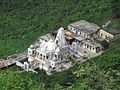
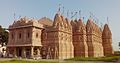
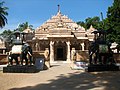
Palitana temples in Gujarat

A Jain temple, Derasar (Gujarati: દેરાસર) or Basadi (Kannada: ಬಸದಿ), is the place of worship for Jains, the followers of Jainism.[1] Jain architecture is essentially restricted to temples and monasteries, and Jain buildings generally reflect the prevailing style of the place and time they were built.

Jain temple architecture is generally close to Hindu temple architecture, and in ancient times Buddhist architecture. Normally the same builders and carvers worked for all religions, and regional and periodic styles are generally similar. For over 1,000 years, the basic layout of a Hindu or most Jain temples has consisted of a small garbhagriha or sanctuary for the main murti or idol, over which the high superstructure rises, then one or more larger mandapa halls.

Māru-Gurjara architecture or the "Solanki style", is a particular temple style from Gujarat and Rajasthan (both regions with a strong Jain presence) that originated in both Hindu and Jain temples around the year 1000, but became enduringly popular with Jain patrons. It has remained in use, in somewhat modified form, to the present day, indeed also becoming popular again for some Hindu temples in the 20th century. The style is seen in the groups of pilgrimage temples at Dilwara on Mount Abu, Taranga, Girnar, Kundalpur, Sonagiri, Muktagiri and Palitana.[2]

Terms

[edit]

There are many different terms used for Jain temples. Those originating from early scriptures, like the Agamas, were often ambiguous. In the early centuries CE, a single word might refer to cave temples, ascetics' dwellings, or religious schools, as their functions overlapped. It was only in later centuries, as buildings were constructed for specific purposes with unique designs, that a clearer and more accurate set of terms emerged. These terms helped differentiate the various structures and their distinct roles.[3]

A temple is often referred to as chaitya, with its Prakrit form being cheia, which can also denote a religious idol. Another term is the Sanskrit balanaka (Prakrit balanaya), which seems to refer to only a part of the temple structure. In southern India, the word palli is widely used and can refer to a temple, a nun's residence, a cave, or even a school. Similarly, the term vihara, used for Jain temples, can also mean a monastery.[3]

In contemporary usage, Jain temples in southern India — especially in Karnataka — are called basadi, basti, or similar terms. The historical use of basadi in North India is preserved in the names of the Vimala Vasahi and Luna Vasahi temples of Mount Abu. The Sanskrit word for vasahi is vasati, which implies an institution for residences of scholars attached to the shrine.[3][4] In northern India, the names often combine jina with words meaning house, residence, or seat, resulting in terms like jinalaya, jina-mandir, jina-yatan, jinagruh, and jina-prasad. In Gujarat as well Rajasthan and in regions where Gujarati people have settled, Jain temples are typically known as derasar or dehrasar, which originate from the Sanskrit devagruha-vasara. Deri and dehra are its other variations.[5][3]

Temples may be divided into Shikhar-baddha Jain temples, temple buildings dedicated to the public, normally with a high superstructure, (typically a north Indian shikhara tower above the shrine) and the Griha Chaityalaya (Ghar derasar) , a private Jain house shrine. A Jain temple which is known as a pilgrimage centre is often termed as Tirtha.

The main idol of a Jain temple is known as the mula nayak.[6] A Manastambha (column of honor) is a pillar that is often constructed in front of Jain temples. It has four 'Moortis' i.e. stone figures of the main god of that temple. One facing each direction: North, East, South and West.[7]

Architecture

[edit]

Jain Tirtha, Shravanabelagola, with the colossal Gommateshwara statue.

Jain temples are built with various architectural designs.[8] Some of the earliest examples of Jain architecture are of the Indian rock-cut architecture tradition, whereby structures are produced by carving material out of solid rock.[9] These traditions were initially shared with Buddhism, and by the end of the classical period, Hinduism. Jain temples and monasteries designed and constructed using rock-cut methods often share a site with those of the other religions, such as those at Udayagiri, Bava Pyara, Ellora, Aihole, Badami, Kalugumalai and Pataini temple. The Ellora Caves are a late site, which contains temples of all three religions, as the earlier Buddhist ones give way to later Hindu excavations.[8]

Despite the similarity between different religions, Jainism is often known for placing large figures of one or more of the 24 tirthankaras in the open air rather than inside a shrine.[8] These statues later began to increase in size, often in the form of standing nude figures in the kayotsarga meditation position (which is similar to standing at attention). The Gopachal rock cut Jain monuments, the Siddhachal Caves, and various single figures including the 12th-century Gommateshwara statue, the modern Statue of Vasupujya, and the Statue of Ahimsa, standing the tallest at 108 feet (33 meters) in height, all exemplify this similarity.[9]

In recent times, the use of murti images has become controversial within Jainism, and some smaller sects reject them entirely, while others are selective in terms of which figures they allow images of. In sects which largely disapprove of images, the religious buildings are used instead.

Following the regional styles in Hindu temples, Jain temples in North India generally use the north Indian nagara style, while those in South India use the dravida style, although the north Indian Māru-Gurjara style or Solanki style has made some inroads in the south over the 20th century or so. For example, the Mel Sithamur Jain Math in Tamil Nadu has a large gopuram tower, similar to those of local Hindu temples.

Temple interior, Dilwara

Characteristics of the original Māru-Gurjara style are "the external walls of the temples have been structured by increasing numbers of projections and recesses, accommodating sharply carved statues in niches. These are normally positioned in superimposed registers, above the lower bands of mouldings. The latter display continuous lines of horse riders, elephants, and kīrttimukhas. Hardly any segment of the surface is left unadorned." The main shikhara tower usually has many urushringa (subsidiary spirelets) on it, and two smaller side-entrances with porches are common in larger temples.[10]

Later, with Dilwara in the lead, surrounding the main temple with a curtain of devakulikā shrines, each with a small spire, became a distinctive feature of the Jain temples of West India, still employed in some modern temples. These are fairly plain on the outer walls, and often raised on a very high platform, so that the outside of larger temples can resemble a fortress with high walls.[11] However the entrance(s), often up high, wide steps, are not designed for actual defence, even though medieval Muslim armies and others destroyed many Jain temples in the past, often permanently.

Inside the temple, the Māru-Gurjara style features extremely lavish carving, especially on columns, large and intricately carved rosettes on the ceilings of mandapas, and a characteristic form of "flying arch" between columns, which has no structural role, and is purely decorative. Most early temples in the style are in various local shades of pink, buff or brown sandstone, but the Dilwara temples are in a very pure white marble which lightens the style and has become considered very desirable.

While, before British India, large Buddhist or Hindu temples (and indeed Muslim mosques) have very often been built with funds from a ruler, this was infrequently the case with Jain temples. Instead they were typically funded by wealthy Jain individuals or families. For this reason, and often the smaller numbers of Jains in the population, Jain temples tend to be at the small or middle end of the range of sizes, but at pilgrimage sites they may cluster in large groups - there are altogether several hundred at Palitana, tightly packed within several high-walled compounds called "tuks" or "tonks".[12] Temple charitable trusts, such as the very large Anandji Kalyanji Trust, founded in the 17th century and now maintaining 1,200 temples, play a very important role in funding temple building and maintenance.

Etiquette

[edit]

There are some guidelines to follow when one is visiting a Jain temple:[13]

  • Before entering the temple, one should bathe and wear freshly washed clothes or some special puja (worship) clothes – while wearing these one must neither have eaten anything nor visited the washroom. However, drinking of water is permitted.
  • One should not take any footwear (including socks) inside the temple. Leather items like a belt, purse etc. are not allowed inside the temple premises.
  • One should not be chewing any edibles (food, gum, mints, etc.), and no edibles should be stuck in the mouth.
  • One should try to keep as silent as possible inside the temple.
  • Mobile phones should not be used in the temple. One should keep them switched off.

Prevailing traditional customs should be followed regarding worshipping at the temple and touching an idol. They can vary depending on the region and the specific sect.

[edit]

See also

[edit]

References

[edit]
Revisions and contributorsEdit on WikipediaRead on Wikipedia
from Grokipedia
A Jain temple, known as a basadi in or derasar in Gujarati, is a sacred edifice dedicated to the worship of the 24 Tirthankaras, enlightened beings central to , an ancient Indian founded on principles of non-violence (), , and spiritual liberation. Temples vary between Svetambara and sects, reflecting differences in and practices. These temples serve as focal points for devotional practices, including , rituals, and community gatherings, embodying the faith's emphasis on purity and detachment from worldly attachments. Jain temple architecture evolved from shared South Asian traditions with and , with the earliest physical remains dating to the 1st century BCE and more complete structures emerging from the onward. Influenced by regional styles, they typically feature a raised platform (jagatī), enclosing walls (prākāra), a central (garbhagṛha) housing the principal idol, and open halls (maṇḍapa) adorned with intricate carvings depicting , myths, and motifs of and to symbolize non-violence. Materials like predominate in later examples, especially from the peak period of AD 1000–1300, with designs often forming clustered temple-cities rather than isolated buildings, showcasing horizontal archways, bracketed capitals, and towering shikharas. The significance of Jain temples extends beyond worship, representing expressions of devotion, ethical living, and the pursuit of mokṣa (liberation), while also functioning as cultural and artistic repositories that highlight the religion's historical patronage under various Indian dynasties. Notable examples include the on in , renowned for their exquisite work dating to the 11th–13th centuries, and the complex near in , a hilltop site on UNESCO's Tentative List for World Heritage status comprising over 800 temples built primarily between the 11th and 20th centuries. These sites underscore the enduring legacy of Jain architecture in preserving the religion's spiritual and aesthetic ideals.

Overview and Significance

Role in Jainism

Jain temples, known as derasars in Gujarati or basadis in , function as sacred spaces dedicated to the veneration of the Tirthankaras, the twenty-four enlightened beings who serve as exemplars of spiritual liberation in . These structures house idols or murtis representing the Tirthankaras, allowing devotees to engage in rituals that emphasize (non-violence) as a core ethical principle, thereby guiding lay Jains toward reducing karmic attachments and fostering moral discipline in daily life. Central to the temple's role is the practice of darshan, the act of viewing the deity's image, which facilitates personal spiritual growth through meditation and reflection on the Tirthankaras' ascetic lives, inspiring devotees to cultivate detachment and ethical conduct. Temples also serve as communal hubs for gatherings, where Jains participate in festivals such as , commemorating the birth of the last Tirthankara, , through collective prayers, hymns, and processions that strengthen social bonds and reinforce shared religious values. Unlike many other religious sites, Jain temples underscore ascetic ideals by prohibiting the worship of living beings or deities with personal agency, focusing instead solely on the liberated souls of the Tirthankaras as symbols of ultimate purity. Many incorporate libraries housing the Agamas, the canonical scriptures, which have historically preserved Jain teachings and supported scholarly study, enabling deeper engagement with doctrinal principles. Conceptually, Jain temples embody the notion of tirthas, or "fords" across the ocean of rebirth (samsara), acting as pivotal sites that connect lay practitioners to the path of moksha (liberation) by evoking the Tirthankaras' journeys and encouraging pilgrimage-like devotion even in local worship. This role positions temples not merely as architectural edifices but as spiritual bridges facilitating the transcendence of worldly cycles toward eternal bliss.

Terminology

In , the concept of a temple derives from the Sanskrit term devāyatana, meaning "abode of the divine," which originally denoted a place for gods in broader Indian traditions but was adapted in the non-theistic Jain context to signify a for venerating Tirthankaras—enlightened beings who have conquered inner enemies rather than deities. This linguistic shift reflects Jainism's emphasis on spiritual liberation over theistic worship, with early texts in and using terms like caitya (Sanskrit) or ceiya () to describe both the temple structure and its central religious icons, underscoring the blurred boundaries between and iconography in ancient Jain usage. Regional variations in terminology highlight the diversity of , with derāsar (or daherāsar) commonly used in and among Gujarati speakers for a main temple, derived from the Sanskrit compound devagṛha-vasara, implying a "day of the god's abode" but reinterpreted to honor Tirthankaras. In contrast, basti or basadi—terms prevalent in , particularly —refers to smaller shrines or temples often attached to scholarly residences, originating from roots denoting a monastic or devotional enclosure. These names, rooted in dialects that evolved alongside in medieval , emphasize the temple's role as a and contemplative rather than a grand theistic edifice. Key structural and symbolic elements have specific designations drawn from and . The is the towering spire crowning the sanctum, symbolizing spiritual ascent, while the maṇḍapa denotes the pillared assembly hall for communal gatherings and rituals. Within the sanctum, a chaumukha refers to a four-faced idol of a , such as Adinath, allowing visibility from all directions and embodying . The gudhi, a hoisted atop the temple, symbolizes the presiding and signifies victory over passions, often featuring the multicolored Jain emblem with its and dots representing core doctrines. Terminology also varies between the Digambara and Śvetāmbara sects, influenced by regional strongholds and doctrinal nuances. Śvetāmbara Jains, predominant in northern , frequently employ compounds like jinmandir—"temple of the Jina" (victor)—to denote structures celebrating conquest over senses, alongside jinālaya or jināyatana for abodes of enlightened souls. Digambara communities, more common in the south, favor terms like basadi for modest shrines, reflecting their emphasis on ascetic nudity and simpler worship spaces, though both sects share foundational Prakrit-Sanskrit roots without stark doctrinal divergences in nomenclature.

Historical Development

Origins and Early Temples

The origins of Jain temple construction trace back to the BCE, coinciding with the life of , the 24th , who founded the religion in ancient amid a landscape of emerging ascetic traditions. Early Jain practice emphasized non-idolatrous worship through symbols and natural sites, with no evidence of permanent temple structures during Mahavira's era; instead, devotees gathered in open spaces or temporary shelters for and . Archaeological records indicate that formalized sacred spaces began to emerge only centuries later, influenced by the contemporaneous development of Buddhist and Vedic architectural forms, such as chaityas and viharas, which Jains adapted to their aniconic principles of reverence for Tirthankaras via emblems like the , lotus, and . The earliest proto-temples in appeared as rock-cut caves, serving primarily as monastic residences (basadis) for ascetics while incorporating spaces for symbolic worship. These structures, hewn from hills, represent a transitional phase from nomadic Jain mendicancy to fixed sacred architecture, predating free-standing temples. A foundational example is the Udayagiri and Khandagiri cave complexes near in , excavated around the 2nd century BCE under the patronage of King of the Chedi dynasty, a devout Jain ruler whose details his expansions of these sites. Comprising 18 caves at Udayagiri and 15 at Khandagiri, these monolithic dwellings feature arched facades, carved beds, and inscriptions invoking Tirthankaras, functioning as both living quarters and early shrines without anthropomorphic idols. Jain traditions credit Mauryan emperor (r. 321–297 BCE) with early royal patronage, portraying him as a convert to who abdicated to practice asceticism under guru Bhadrabahu, though direct archaeological evidence for temple construction during his reign remains elusive. Subsequent Mauryan-era finds, such as fragmented Jain image torsos unearthed at (ancient ), suggest the existence of rudimentary worship sites by the 3rd century BCE, possibly including simple shrines or honoring Tirthankaras. By the BCE, archaeological evidence from sites like points to the establishment of the first structural elements of Jain temples, blending worship with emerging . The Kankali Tila mound in , , provides the most comprehensive early evidence, with excavations from 1871 to 1896 uncovering a large , ayagapata votive slabs, and remnants of two temples dating to the 1st–2nd century CE. These artifacts, including inscribed railings and symbolic pillars from the 1st century BCE, illustrate a shift from aniconic devotion—centered on -like enclosures representing cosmic liberation—to the introduction of iconic murtis (idols) by the 1st century CE, as seen in the site's earliest dated sculptures around 42 CE. This evolution at Kankali Tila, a major pilgrimage center for over a millennium, highlights how early Jain temples integrated Buddhist-inspired forms while prioritizing non-violent, ascetic symbolism unique to the faith.

Evolution Across Eras

The evolution of Jain temples from medieval times onward reflects a dynamic interplay of , regional politics, trade networks, and external pressures, transitioning from earlier rock-cut influences to sophisticated free-standing structures that adapted to changing socio-political landscapes. Following the early and phases, Jain architecture saw initial free-standing developments in the 5th–7th centuries CE, such as the Meguti Jain Temple at in (dated 634 CE), built under Chalukya and representing one of the earliest structural temples with a simple sanctum and hall. Building on these foundational examples, Jain architecture shifted toward more elaborate freestanding constructions around the 8th century CE, driven by advancements in stone masonry and the need for more expansive pilgrimage sites, particularly under dynastic support in . This period marked a departure from monolithic rock excavations to assembled stone edifices, enabling greater ornamentation and scalability while maintaining core ritual functions. During the medieval era (7th–13th centuries CE), Jain temple construction flourished under the patronage of the Solanki (Chaulukya) dynasty in and , fostering the Māru-Gurjara style characterized by intricate marble carvings and multi-shrined complexes. Royal ministers, such as Vimal Shah under , commissioned the at between the 11th and 13th centuries CE, exemplifying this ornate phase with their white marble facades and detailed celestial motifs that symbolized spiritual ascent. This growth was bolstered by prosperous Jain merchant communities, whose trade links spread the style across northwestern , integrating local aesthetics with doctrinal emphasis on non-violence and purity. The Solankis' support not only elevated temple design but also reinforced Jainism's cultural prominence amid Hindu and Islamic influences. By the , temple layouts began to standardize around courtyard-based designs, as seen in the Ādinātha temple at Ranakpur (founded 1439 CE), which reinterpreted Māru-Gurjara conventions with expansive pillared halls and symmetrical planning to accommodate growing pilgrim numbers. This era's developments, influenced by regional rulers like Rana Kumbha of , emphasized modular expansions for ritual versatility. However, the 16th century brought decline through invasions; Mughal forces under targeted Jain sites, such as destroying colossal images at in 1527 CE, while later rulers like sporadically desecrated temples to assert political dominance and seize wealth, disrupting construction and pilgrimage. Colonial rule in the witnessed a revival, spurred by sectarian efforts among and Śvetāmbara communities to reclaim heritage amid British administrative stability, leading to restorations and new builds like Delhi's Naya Mandir (established around 1807 CE) that blended traditional motifs with Victorian influences. Post-independence (after 1947 CE), economic growth enabled modern adaptations, incorporating concrete for durability in urban settings while preserving symbolic elements. The 20th-century global further catalyzed hybrid designs; for instance, the Jain Center of America in New York (established 1966 CE) fused Indian with American construction techniques to serve immigrant communities, reflecting adaptations to non-Indian contexts through simplified layouts and multicultural rituals. These evolutions underscore Jain temples' resilience, evolving from medieval opulence to contemporary functionality under political, economic, and migratory pressures.

Architectural Features

Core Structural Elements

Jain temples are characterized by a set of essential structural components that form the foundational layout, drawing from principles of and sanctity central to the faith. The , or , serves as the innermost chamber housing the primary idol of a , typically seated in meditative posture, and represents the divine core of the temple where spiritual energy is concentrated. Over this sanctum rises the , a towering structure that symbolizes the ascent toward liberation, often pyramidal or curvilinear in form to evoke cosmic elevation. Adjacent to the is the ardha-mandapa, an antechamber or vestibule that provides a transitional space for devotees to approach and view the idol without entering the sanctum directly. The maṇḍapa is an open hall adjacent to the ardha-mandapa, used for gatherings and rituals, often supported by intricately carved pillars. A raised platform known as the jagatī elevates the temple structure, typically 3-4 meters high, enabling ritual . Enclosing the entire complex is the prakara, a boundary wall that delineates the sacred precinct, protecting the inner structures and facilitating circumambulation rituals. Symbolic elements infuse these structures with deeper metaphysical meaning, reinforcing Jain doctrines of purity and universality. Lotus motifs, carved extensively on pillars, ceilings, and doorways, embody spiritual purity and enlightenment, as the lotus rises untainted from mud, mirroring the soul's transcendence over karma. and yakshi figures, serving as attendant guardian deities, flank the idols in subsidiary shrines, protecting the teachings and symbolizing worldly attendants to spiritual authority; the yaksha typically stands to the right and the yakshi to the left. Chaumukha idols, featuring a four-faced with visages oriented to the cardinal directions, signify the omnipresence of Jain truth and its applicability across all realms of existence. Construction adheres strictly to ahimsa, employing materials like white marble or sandstone to avoid harm, as these stones can be sourced without animal-based binders and their light color aids in detecting to prevent unintentional injury. Temples are oriented toward the north or east to align with cosmic principles, facilitating the influx of positive energies and the sun's path, which corresponds to the directional symbolism in . While regional variations may incorporate local stones like in southern temples, the core elements remain consistent in their symbolic and structural integrity.

Regional and Stylistic Variations

Jain temple architecture exhibits significant regional variations across India, shaped by local geography, patronage, and climatic conditions. In western India, particularly Rajasthan and Gujarat, the Māru-Gurjāra style predominates, characterized by its affiliation with the northern Nāgara idiom and featuring curvilinear śikharas (towers), lavishly carved pillars, domical ceilings, and octagonal hall layouts. This style, prominent from the 10th to 13th centuries under Solaṅkī patronage, incorporates intricate jalis (perforated stone screens) for ventilation and ornamentation, often using buff-colored sandstone or white marble, as seen in the Vimala-vāsahī temple at Abu (1032 CE) and the Ajitanātha temple at Taranga (1164–1166 CE). These elements reflect the wealth of Śvetāmbara Jain merchants, emphasizing elaborate decoration to symbolize spiritual abundance. In contrast, southern Indian Jain temples, especially in , draw from Dravidian influences blended with hybrid forms, adapting to the region's seismic activity and granite-rich landscape. The style merges Nāgara's vertical spires with curved, tiered roofs for stability, often resulting in star-shaped (stellate) plans that expand the garbhagṛha (sanctum) outward in multifaceted projections. Temples like the Pārśvanātha basadi at Śravaṇa-Beḷagoḷa exemplify this, featuring a sanctum, vestibule, and pillared hall (navaraṅga) in a modest Dravidian layout, supported by Chalukyan and Hoysala from the 9th to 12th centuries. During the Later Chalukya period, emerged as a preferred material for its softness, enabling fine carvings that hardened post-sculpting, as in the Megutī temple at (634 CE, extended later) and other basadis with high-relief Tīrthaṅkara figures. Sectarian affiliations further delineate stylistic differences, with Śvetāmbara temples favoring richer ornamentation and enclosed idol placements to align with their robed monastic tradition, while structures emphasize open-air designs and simpler lines, echoing the sky-clad (nude) ascetic ideal. In , a Digambara stronghold, temples like those at Ellora and structural examples from the Maratha era adopt streamlined maṇḍapa-line layouts with minimal embellishment, transitioning from cave prototypes to freestanding forms using local for austere, functional . This simplicity contrasts with the profuse detailing in northwestern Śvetāmbara sites, highlighting doctrinal priorities in spatial openness versus symbolic enclosure. Eastern adaptations in are rarer for Jain contexts due to high humidity and the dominance of Hindu terracotta traditions, but Pala-era structures (8th–12th centuries) occasionally incorporate baked clay plaques for surface decoration on brick bases, as in the Siddheśvara temple at . Elevated plinths (around 0.79 meters) mitigate flooding, adapting Nāgara-derived rekha-deul forms to the delta's wet climate, though Jain examples remain less ornate than regional Hindu counterparts. Overall, these variations underscore how Jain architecture integrates core elements like the garbhagṛha with localized innovations, fostering resilience and cultural synthesis across diverse terrains.

Worship and Rituals

Poojas and Ceremonies

Jain temples serve as central venues for poojas, which are ritualistic worship practices aimed at venerating Tirthankaras and fostering spiritual purification. These ceremonies emphasize devotion through symbolic offerings and recitations, promoting ethical reflection and alignment with core Jain principles. Common procedures include presentation of flowers and incense, and the chanting of the Navkar Mantra, a foundational prayer invoking the qualities of enlightened beings without naming specific deities. , or ritual bathing of the idol, typically occurs in the morning and evening, using consecrated liquids like water, milk, and saffron to symbolize purification. One primary daily pooja is Snatrapuja, a bathing ritual performed before the idol to honor its virtues and reenact celestial ablutions. Devotees offer kusumanjali—a mixture of flowers, , and powder—to the idol's feet while reciting praises, followed by ashta prakari puja, an eightfold worship involving water, paste, flowers, unhusked , , lighted lamp, , and sweets. This pooja, lasting about 30-45 minutes, is conducted multiple times daily in active temples, using a small temporary metal idol for the bathing to represent the in Svetambara tradition. Panch Kalyanaka is a elaborate five-day ceremony celebrating the auspicious life events of a Tirthankara: conception (garbha kalyanaka), birth (janma kalyanaka), renunciation (diksha kalyanaka), attainment of omniscience (jnana kalyanaka), and liberation (moksha kalyanaka). Each day features specialized poojas, including enhanced abhisheka and offerings, with the idol adorned to represent the event; for instance, the birth day involves joyous processions and bathing rituals symbolizing divine attendance. This mahotsava, often held during temple consecrations or annually, underscores the Tirthankara's path to enlightenment and is performed with greater pomp in Svetambara temples compared to Digambara ones, where idols remain unadorned. Rath Yatra processions form another key ceremony, where idols are placed on decorated chariots and paraded through streets to promote community devotion and Jain values. These events, typically tied to festivals like Mahavir Jayanti, involve chanting the , floral offerings en route, and culminate in temple reinstallation with ; they occur periodically, drawing large gatherings for collective worship. Svetambara and Digambara traditions exhibit variations in pooja execution, particularly regarding idols: Svetambaras use temporary, movable small idols for rituals like Snatrapuja to preserve permanent marble ones, while s employ fixed, nude, undecorated statues that are not bathed but offered dry items like flowers and . Both sects maintain core elements like Navkar recitation, but Digambara poojas often emphasize ascetic nudity in symbolic representations. A major annual ceremony is , observed for eight days by Svetambaras and ten by Digambaras in August or September, involving intensive temple visits, poojas, , and discourses to reflect on sins and seek forgiveness. Participants perform daily and Navkar chanting, with heightened activity on days like the fifth (Mahavir Janma Kalyanaka) featuring recitations; ranges from partial (no root vegetables) to complete, promoting self-discipline over 8-10 days. These poojas embody the —the three jewels of right (samyak darshana), right (samyak jnana), and right conduct (samyak charitra)—as offerings cultivate , mantra recitations impart , and ritual observance encourages ethical conduct, guiding devotees toward liberation.

Aartis and Devotional Practices

In Jain temples, aarti refers to a devotional involving the waving of lighted lamps in a circular motion before the images of Tirthankaras, symbolizing the dispelling of ignorance and negativity through the light of spiritual . This practice, which originated around the CE under the influence of Hemchandra and King Kumarpal of , expresses and inner joy toward the enlightened beings without direct invocation of deities. Common types include Mangal Aarti, performed in the morning to invoke auspiciousness at the start of the day, and Sandhya Aarti in the evening to conclude daily worship with reflective devotion. The procedure typically begins after main worship rituals, with a priest or devotee lighting a lamp with five wicks—representing the Panch Paramesthi (five supreme spiritual entities: Arihants, Siddhas, Acharyas, Upadhyayas, and Sadhus)—and waving it in graceful circles from the upper left to lower right, never above the nose or below the navel to maintain reverence. This is accompanied by bhajans or hymns praising the virtues of specific Tirthankaras, such as Adinath, often sung in regional languages like Gujarati or Hindi. Community members participate by joining in the singing and clapping, fostering collective devotion, after which prasad—usually sanctified fruits, sweets, or dry offerings—is distributed to attendees as a symbol of shared blessings. In some traditions, the ritual concludes with Mangal Divo, a single-wick lamp waved to signify the singular path to liberation (Moksha). Regional variations add diversity to the practice; for instance, among Gujarati Jains, aartis often feature lively rhythms reminiscent of garba dances, especially during festivals like Paryushan, incorporating faster tempos and group chanting to heighten communal energy. In contrast, communities emphasize a quieter approach, with silent or scripture following the aarti to deepen and align with their focus on ascetic detachment. These adaptations highlight aarti's role in invoking jin-darshan—the auspicious vision of the Tirthankara's enlightened form—which cultivates pure devotion and ethical reflection without prayer to gods, reinforcing Jain principles of non-theism and .

Etiquette and Visitor Guidelines

Conduct Inside Temples

Upon entering a Jain temple, visitors are required to remove their at the threshold to maintain and the sacred space. This practice is universal across Jain temples to prevent impurities from the outside world. Additionally, all items, such as belts, wallets, or bags, must be left outside, as is derived from animal products and contradicts the principle of (non-violence). Modest attire is mandatory, covering the shoulders, arms, and legs fully—no , sleeveless tops, or revealing are permitted—to uphold and purity. Silence is observed in the to preserve a serene atmosphere conducive to devotion. Specific behavioral guidelines emphasize non-interference with sacred elements. Touching the idols is strictly prohibited for lay visitors, as it is reserved for priests or during authorized rituals, to avoid any potential . Offerings, when made, must be strictly vegetarian, such as fruits, sweets, nuts, rice, flowers, or , aligning with Jain dietary principles that exclude any animal-derived items. Donations are typically placed in a , a secure collection box near the entrance or , ensuring anonymous and respectful contributions to temple maintenance. Sectarian differences influence access in certain contexts. In Svetambara temples, women are generally permitted in all areas, including the innermost sanctuaries, without restrictions on viewing or proximity to idols. However, some temples impose limitations on women entering specific zones or performing certain acts like washing images, stemming from doctrinal views on and purity that associate such practices with male ascetics only. A key aspect of temple conduct is the cultivation of mental purity, where visitors are encouraged to avoid negative emotions like or during their stay, in line with the anuvratas—the minor vows for lay Jains that promote ethical self-restraint and inner calm. This mindset supports the overall purpose of the visit, fostering spiritual reflection alongside physical .

Cultural and Symbolic Customs

The , the cosmic realms comprising the upper world of heavens, the middle world of human existence, and the lower world of hells, reflects the Jain understanding of the universe as an eternal, uncreated structure where souls journey toward liberation. Customs in Jain temples cultivate the three jewels of —right faith (samyak darshana), right knowledge (samyak jnana), and right conduct (samyak charitra)—promoting spiritual insight, ethical living, and communal harmony to guide devotees in their pursuit of . Festivals in Jain temples highlight these cosmic and ethical dimensions, with commemorating Lord Mahavira's attainment of nirvana, symbolizing the 's ultimate liberation from the cycle of rebirth; temples illuminate with deepotsav, the festival of lamps, where thousands of diyas are lit to represent the dispelling of ignorance and the light of enlightenment. Similarly, Anant Chaturdashi marks the nirvana of the 12th , Lord , often featuring grand idol processions that traverse temple vicinities, evoking the infinite of the and reinforcing vows of non-violence and forgiveness at the close of . Symbolic customs further integrate these principles, such as the hoisting of the dhwaja, the multicolored atop temple shikharas, which bears the for the soul's cycles, three dots for the three jewels, and five hues representing the five ethical vows, signifying victory over inner passions and protection of . The pratishtha ceremony for installing new idols invokes divine presence through elaborate rituals, including processions with drumming to awaken the icon's spiritual potency, often involving sacred recitations 108 times to align with the cosmic order. Jwalamalini, the attendant to the eighth , embodies prosperity and protective flames, her images in temples invoked for worldly abundance while reminding devotees of the transient nature of material wealth in the path to right conduct. Annual observances like the panchkalyanak puja center on temple cleaning and consecration, ritually reenacting the five auspicious life stages of a —conception, birth, initiation, omniscience, and liberation—to symbolize the soul's progressive purification across cosmic realms, with murtis bathed and adorned to mirror ethical renewal. practices such as samanvay, involving synchronized group chanting of mantras like the Navkar, foster harmony by uniting participants in shared devotion, embodying the three jewels through collective right faith and knowledge that strengthens social bonds and non-violent coexistence.

Global Distribution

Prominent Temples in India

India hosts several prominent Jain temples that serve as vital pilgrimage centers, known as tirthas, where devotees undertake barefoot ascents to accumulate spiritual merit through acts of austerity and devotion. These sites exemplify the historical and architectural grandeur of , often affiliated with the Svetambara or sects, and attract thousands of pilgrims annually, underscoring their cultural and religious significance. Post-2000 conservation efforts by the (ASI) have focused on preserving these monuments, including structural repairs and environmental upgrades for over 50 Jain sites nationwide. The in , constructed in the mid-15th century, beginning around 1446 CE, by merchant under the patronage of ruler Rana Kumbha, stands as a masterpiece of Svetambara architecture dedicated to the first , (Adinath). Spanning 48,000 square feet and built from white marble, it features 1,444 intricately carved pillars—no two identical—supporting 80 domes and four central shrines, each facing a with depictions of celestial nymphs and geometric patterns. As a major tirtha, it draws pilgrims for its spiritual aura and daily evening aarti rituals, with ASI-led maintenance ensuring the site's preservation since the early . In , the on Hill form one of the holiest Svetambara tirthas, comprising approximately 863 marble-carved shrines clustered across two peaks, developed over 900 years starting from the 11th century. Pilgrims ascend over 3,500 stone steps barefoot to reach the complex, believed to multiply spiritual merit a hundredfold compared to other sites, with the main Adishvara Temple housing a sacred idol of the first . This major pilgrimage destination attracts hundreds of thousands of visitors yearly, emphasizing non-violence as no or non-vegetarian food is permitted within 5 km. Conservation initiatives post-2000 have included heritage recording and monument protection to sustain the site's sanctity amid growing . The site in features the iconic Gomateshwara () statue, a 57-foot monolithic figure erected in 981 CE by Ganga dynasty minister Chamundaraya on Vindhyagiri Hill, symbolizing ideals of asceticism and non-possession. Carved from a single rock block, the statue depicts in meditative stillness with vines and ants climbing its body, commemorating his 12-year penance. As a premier tirtha, it hosts the ceremony every 12 years, anointing the statue with milk, saffron, and other sacred substances to invoke blessings, drawing global pilgrims. Recent ASI conservation, including 2024 maintenance of the statue and surrounding temples, has addressed weathering and structural integrity to protect this World Heritage tentative list site. The Mahavir Swami Temple in Osian, Rajasthan, dating to the and built by Pratihara king , is the oldest surviving Svetambara temple in , dedicated to the 24th , . Constructed in red sandstone with intricate carvings of floral motifs, dancers, and celestial beings on its walls and gateways, it reflects early medieval Jain artistry and served as a key stop on ancient trade routes. Renovated in the around 956 CE, the temple complex includes subsidiary shrines and continues to host rituals that emphasize 's teachings on non-violence, with ASI oversight ensuring its post-2000 preservation amid regional heritage efforts. Kanch Ka Mandir in , , erected in the early 20th century around 1903 by philanthropist Sir , is a Svetambara marvel known as the "Glass Temple" for its walls, ceilings, pillars, and floors adorned with Belgian glass pieces and mirrors that create a shimmering, jewel-like interior resembling polished . Dedicated to Lord Parshvanatha, the 23rd , it features frescoes depicting Jain narratives and a central silver-plated sanctum, blending traditional architecture with opulent modern materials funded by Hukumchand's cotton trade wealth. Though not an ancient tirtha, it symbolizes 20th-century Jain prosperity and devotion, with ongoing maintenance by local trusts preserving its reflective splendor for .

Jain Temples Outside India

The growth of Jain temples outside India accelerated during the 1970s and 1980s, coinciding with significant migration waves from to regions such as , , the , and , driven by economic opportunities and professional pursuits. These migrations, which included professionals and business communities like the Oshwals, led to the formation of organizations that prioritized the construction of places of worship to sustain , education, and community cohesion amid cultural displacement. By the early , this expansion had resulted in dozens of dedicated Jain centers worldwide, reflecting the community's commitment to preserving (non-violence) and other core principles in diverse global contexts. Prominent examples include the Jain Center of in , , where the community established its organization in 1973 and consecrated marble idols of Tirthankaras in a pratistha mahotsav in 2002, marking it as the first North American Jain temple to feature such traditional marble installations imported from . In , Siddhayatan Tirth, founded in 2008 as an ashram-temple hybrid by Shree Yogeesh, spans 250 acres and serves as the largest Jain-Hindu site in , blending monastic life with public worship to accommodate and spiritual retreats. Further afield, the Visa Oshwal Derasar in , , built in the mid-20th century around the 1950s by the Oshwal community that arrived in during British colonial times, incorporates local East African stylistic elements like landscaped gardens while housing intricate carvings reminiscent of Gujarati influences. In the , the Jain Centre London in , a multi-story complex with a distinctive Om Hreem-shaped Parsvanath temple, held its pratistha mahotsav in 2023 after years of community fundraising, transforming a converted building into a hub for all Jain sects. Similarly, in , the Sydney Jain Mandal, formed in 1991, constructed its dedicated temple in Seven Hills by 2015, featuring earthquake-resistant designs suited to the region's seismic considerations and using imported Rajasthani marble for key elements. As of 2025, the community is constructing expanded temples using 3,000 tonnes of imported Rajasthani marble, with projects in and underway. These overseas temples often adapt to local conditions through practical innovations, such as employing and metal frameworks clad in white marble facades to reduce costs and comply with building regulations, while still evoking the intricate Māru-Gurjara style of Indian origins. The further prompted the adoption of virtual poojas and live-streamed rituals, allowing global Jain communities—particularly in and —to participate in ceremonies remotely via digital platforms, thereby sustaining devotional practices during physical restrictions. Such adaptations underscore the role of these temples in fostering intergenerational transmission of Jain traditions, including pathshala () programs and youth initiatives that reinforce ethical values like aparigraha (non-possessiveness) in multicultural settings. A key development in this diaspora landscape is the emergence of transnational tirthas, or pilgrimage sites, which extend the sacred geography of beyond ; for instance, Siddhayatan Tirth functions as a modern teerth where devotees perform rituals akin to those at Indian sites like Sammed Shikharji, facilitated by that enables frequent visits to both local and distant holy places. This connectivity allows diaspora Jains to undertake yatras (pilgrimages) that blend local worship with journeys to primary Indian tirthas, maintaining the spiritual merit of tirtha-yatra despite geographical separation.

References

Add your contribution
Related Hubs
User Avatar
No comments yet.