Hubbry Logo
VertebraVertebraMain
Open search
Vertebra
Community hub
Vertebra
logo
8 pages, 0 posts
0 subscribers
Be the first to start a discussion here.
Vertebra
Vertebra
from Wikipedia
Vertebra
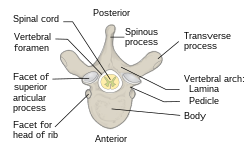
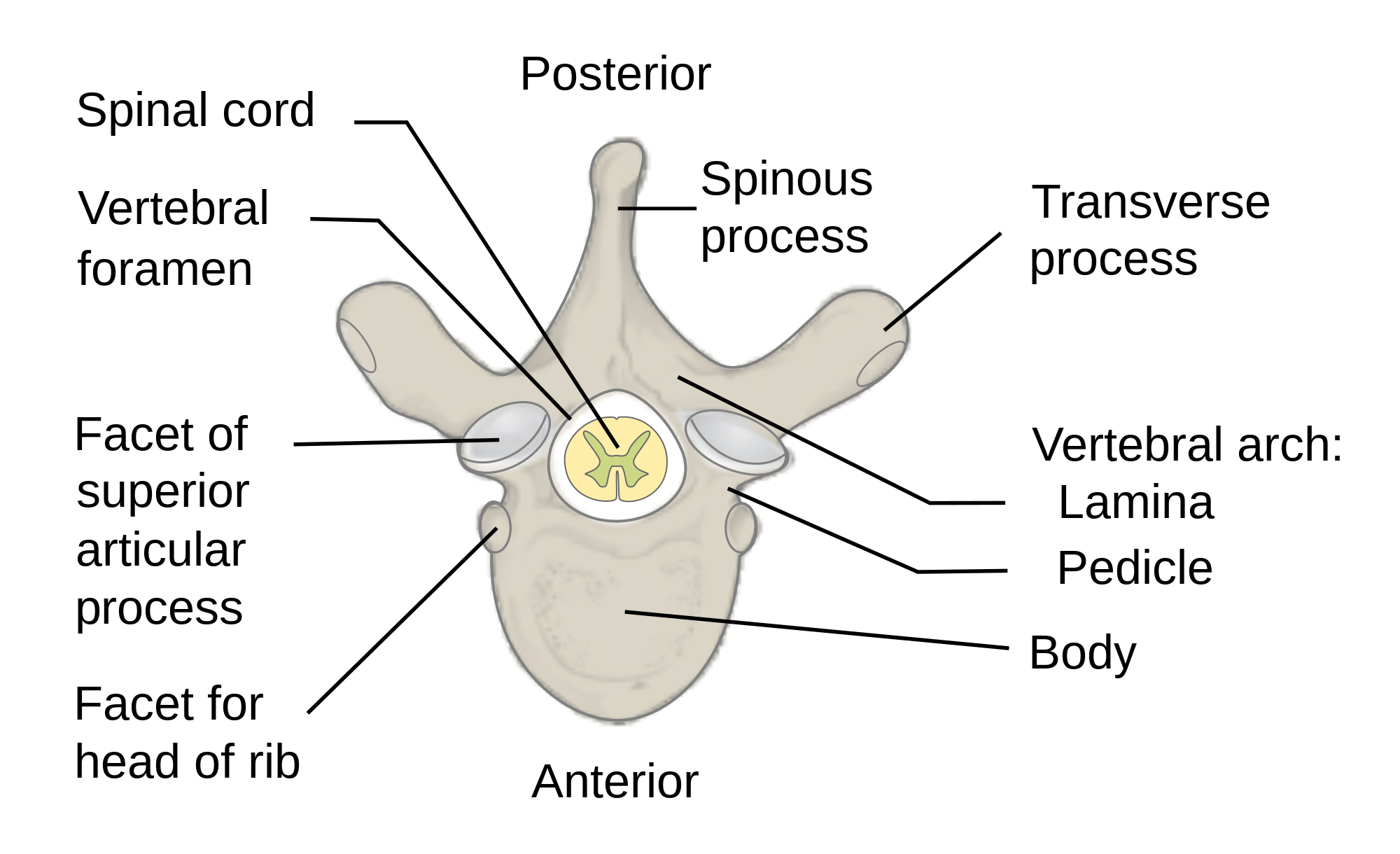
A typical vertebra, superior view
A section of the human vertebral column, showing multiple vertebrae in a left posterolateral view.
Details
Part ofSpinal column
Identifiers
Latinvertebra
TA98A02.2.01.001
TA21011
FMA9914
Anatomical terms of bone

Each vertebra (pl.: vertebrae) is an irregular bone with a complex structure composed of bone and some hyaline cartilage, that make up the vertebral column or spine, of vertebrates. The proportions of the vertebrae differ according to their spinal segment and the particular species.

The basic configuration of a vertebra varies; the vertebral body (also centrum) is of bone and bears the load of the vertebral column. The upper and lower surfaces of the vertebra body give attachment to the intervertebral discs. The posterior part of a vertebra forms a vertebral arch, in eleven parts, consisting of two pedicles (pedicle of vertebral arch), two laminae, and seven processes. The laminae give attachment to the ligamenta flava (ligaments of the spine). There are vertebral notches formed from the shape of the pedicles, which form the intervertebral foramina when the vertebrae articulate. These foramina are the entry and exit conduits for the spinal nerves. The body of the vertebra and the vertebral arch form the vertebral foramen; the larger, central opening that accommodates the spinal canal, which encloses and protects the spinal cord.

Vertebrae articulate with each other to give strength and flexibility to the spinal column and the shape at their back and front aspects determines the range of movement. Structurally, vertebrae are essentially alike across the vertebrate species, with the greatest difference seen between an aquatic animal and other vertebrate animals. As such, vertebrates take their name from the vertebrae that compose the vertebral column.

Structure

[edit]

In the human vertebral column, the size of the vertebrae varies according to placement in the vertebral column, spinal loading, posture and pathology. Along the length of the spine, the vertebrae change to accommodate different needs related to stress and mobility.[1] Each vertebra is an irregular bone.

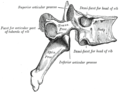
Side view of vertebrae

A typical vertebra has a body (vertebral body), also known as the centrum, which consists of a large anterior middle portion, and a posterior vertebral arch,[2] also called a neural arch.[3] The body is composed of cancellous bone, which is the spongy type of osseous tissue, whose microanatomy has been specifically studied within the pedicle bones.[4] This cancellous bone is in turn, covered by a thin coating of cortical bone (or compact bone), the hard and dense type of osseous tissue. The vertebral arch and processes have thicker coverings of cortical bone. The upper and lower surfaces of the body of the vertebra are flattened and rough in order to give attachment to the intervertebral discs. These surfaces are the vertebral endplates which are in direct contact with the intervertebral discs and form the joint. The endplates are formed from a thickened layer of the cancellous bone of the vertebral body, the top layer being more dense. The endplates function to contain the adjacent discs, to evenly spread the applied loads, and to provide anchorage for the collagen fibers of the disc. They also act as a semi-permeable interface for the exchange of water and solutes.[5]

Anatomy of a vertebra

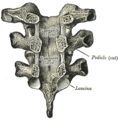
The vertebral arch is formed by pedicles and laminae. Two pedicles extend from the sides of the vertebral body to join the body to the arch. The pedicles are short thick processes that extend, one from each side, posteriorly, from the junctions of the posteriolateral surfaces of the centrum, on its upper surface. From each pedicle a broad plate, a lamina, projects backward and medially to join and complete the vertebral arch and form the posterior border of the vertebral foramen, which completes the triangle of the vertebral foramen.[6] The upper surfaces of the laminae are rough to give attachment to the ligamenta flava. These ligaments connect the laminae of adjacent vertebra along the length of the spine from the level of the second cervical vertebra. Above and below the pedicles are shallow depressions called vertebral notches (superior and inferior). When the vertebrae articulate the notches align with those on adjacent vertebrae and these form the openings of the intervertebral foramina. The foramina allow the entry and exit of the spinal nerves from each vertebra, together with associated blood vessels. The articulating vertebrae provide a strong pillar of support for the body.

Processes

[edit]

There are seven processes projecting from the vertebra:

A major part of a vertebra is a backward extending spinous process (sometimes called the neural spine) which projects centrally.[7] This process points dorsally and caudally from the junction of the laminae.[7] The spinous process serves to attach muscles and ligaments.

The two transverse processes, one on each side of the vertebral body, project laterally from either side at the point where the lamina joins the pedicle, between the superior and inferior articular processes.[7] They also serve for the attachment of muscles and ligaments, in particular the intertransverse ligaments. There is a facet on each of the transverse processes of thoracic vertebrae which articulates with the tubercle of the rib.[8] A facet on each side of the thoracic vertebral body articulates with the head of the rib. The transverse process of a lumbar vertebra is also sometimes called the costal[9][10] or costiform process[11] because it corresponds to a rudimentary rib (costa) which, as opposed to the thorax, is not developed in the lumbar region.[11][12]

There are superior and inferior articular facet joints on each side of the vertebra, which serve to restrict the range of movement possible. These facets are joined by a thin portion of the vertebral arch called the pars interarticularis.

Regional variation

[edit]
Segments of the vertebrae

Vertebrae take their names from the regions of the vertebral column that they occupy. There are usually thirty-three vertebrae in the human vertebral column — seven cervical vertebrae, twelve thoracic vertebrae, five lumbar vertebrae, five fused sacral vertebrae forming the sacrum and four coccygeal vertebrae, forming the coccyx. Excluding rare deviations, the total number of vertebrae ranges from 32 to 35.[13] In about 10% of people, both the total number of pre-sacral vertebrae and the number of vertebrae in individual parts of the spine can vary.[14][15] The most frequent deviations are eleven (rarely thirteen) thoracic vertebrae, four or six lumbar vertebrae and three or five coccygeal vertebrae (rarely up to seven).[15]

The regional vertebrae increase in size as they progress downward but become smaller in the coccyx.

Cervical

[edit]
A typical cervical vertebra

There are seven cervical vertebrae (but eight cervical spinal nerves), designated C1 through C7. These bones are, in general, small and delicate. Their spinous processes are short (with the exception of C2 and C7, which have palpable spinous processes). C1 is also called the atlas, and C2 is also called the axis. The structure of these vertebrae is the reason why the neck and head have a large range of motion. The atlanto-occipital joint allows the skull to move up and down, while the atlanto-axial joint allows the upper neck to twist left and right. The axis also sits upon the first intervertebral disc of the spinal column.

Cervical vertebrae possess transverse foramina to allow for the vertebral arteries to pass through on their way to the foramen magnum to end in the circle of Willis. These are the smallest, lightest vertebrae and the vertebral foramina are triangular in shape. The spinous processes are short and often bifurcated (the spinous process of C7 is not bifurcated, and is substantially longer than that of the other cervical spinous processes).[16]

The atlas differs from the other vertebrae in that it has no body and no spinous process. It has instead a ring-like form, having an anterior and a posterior arch and two lateral masses. At the outside centre points of both arches there is a tubercle, an anterior tubercle and a posterior tubercle, for the attachment of muscles. The front surface of the anterior arch is convex and its anterior tubercle gives attachment to the longus colli muscle. The posterior tubercle is a rudimentary spinous process and gives attachment to the rectus capitis posterior minor muscle. The spinous process is small so as not to interfere with the movement between the atlas and the skull. On the under surface is a facet for articulation with the dens of the axis.

Specific to the cervical vertebra is the transverse foramen (also known as foramen transversarium). This is an opening on each of the transverse processes which gives passage to the vertebral artery and vein and a sympathetic nerve plexus. On the cervical vertebrae other than the atlas, the anterior and posterior tubercles are on either side of the transverse foramen on each transverse process. The anterior tubercle on the sixth cervical vertebra is called the carotid tubercle because it separates the carotid artery from the vertebral artery.

There is a hook-shaped uncinate process on the side edges of the top surface of the bodies of the third to the seventh cervical vertebrae and of the first thoracic vertebra. Together with the vertebral disc, this uncinate process prevents a vertebra from sliding backward off the vertebra below it and limits lateral flexion (side-bending). Luschka's joints involve the vertebral uncinate processes.

The spinous process on C7 is distinctively long and gives the name vertebra prominens to this vertebra. Also a cervical rib can develop from C7 as an anatomical variation.

The term cervicothoracic is often used to refer to the cervical and thoracic vertebrae together, and sometimes also their surrounding areas.

Thoracic

[edit]
A typical thoracic vertebra

The twelve thoracic vertebrae and their transverse processes have surfaces that articulate with the ribs. Some rotation can occur between the thoracic vertebrae, but their connection with the rib cage prevents much flexion or other movement. They may also be known as "dorsal vertebrae" in the human context.

The vertebral bodies are roughly heart-shaped and are about as wide anterio-posteriorly as they are in the transverse dimension. Vertebral foramina are roughly circular in shape.

The top surface of the first thoracic vertebra has a hook-shaped uncinate process, just like the cervical vertebrae.

The thoracolumbar spine or thoracolumbar division refers to the thoracic and lumbar vertebrae together, and sometimes also their surrounding areas.

The thoracic vertebrae attach to ribs and so have articular facets specific to them; these are the superior, transverse and inferior costal facets. As the vertebrae progress down the spine they increase in size to match up with the adjoining lumbar section.

Lumbar

[edit]
Lumbar vertebra showing mammillary processes
A typical lumbar vertebra

The five lumbar vertebrae are the largest of the vertebrae, their robust construction being necessary for supporting greater weight than the other vertebrae. They allow significant flexion, extension and moderate lateral flexion (side-bending). The discs between these vertebrae create a natural lumbar lordosis (a spinal curvature that is concave posteriorly).[citation needed] This is due to the difference in thickness between the front and back parts of the intervertebral discs.

The lumbar vertebrae are located between the ribcage and the pelvis and are the largest of the vertebrae. The pedicles are strong, as are the laminae, and the spinous process is thick and broad. The vertebral foramen is large and triangular. The transverse processes are long and narrow and three tubercles can be seen on them. These are a lateral costiform process, a mammillary process and an accessory process.[17] The superior, or upper tubercle is the mammillary process which connects with the superior articular process. The multifidus muscle attaches to the mammillary process and this muscle extends through the length of the vertebral column, giving support. The inferior, or lower tubercle is the accessory process and this is found at the back part of the base of the transverse process. The term lumbosacral is often used to refer to the lumbar and sacral vertebrae together, and sometimes includes their surrounding areas.

Sacral

[edit]
Sacrum

There are five sacral vertebrae (S1–S5) which are fused in maturity, into one large bone, the sacrum, with no intervertebral discs.[18] The sacrum with the ilium forms a sacroiliac joint on each side of the pelvis, which articulates with the hips.

Coccygeal

[edit]

The last three to five coccygeal vertebrae (but usually four) (Co1–Co5) make up the tailbone or coccyx.[19] There are no intervertebral discs.

Development

[edit]
Development of vertebrae

Somites form in the early embryo and some of these develop into sclerotomes. The sclerotomes form the vertebrae as well as the rib cartilage and part of the occipital bone. From their initial location within the somite, the sclerotome cells migrate medially toward the notochord. These cells meet the sclerotome cells from the other side of the paraxial mesoderm. The lower half of one sclerotome fuses with the upper half of the adjacent one to form each vertebral body.[20] From this vertebral body, sclerotome cells move dorsally and surround the developing spinal cord, forming the vertebral arch. Other cells move distally to the costal processes of thoracic vertebrae to form the ribs.[20]

Function

[edit]

Functions of vertebrae include:

  1. Support of the vertebrae function in the skeletomuscular system by forming the vertebral column to support the body
  2. Protection. Vertebrae contain a vertebral foramen for the passage of the spinal canal and its enclosed spinal cord and covering meninges. They also afford sturdy protection for the spinal cord. The upper and lower surfaces of the centrum are flattened and rough in order to give attachment to the intervertebral discs.
  3. Movement. The vertebrae also provide the openings, the intervertebral foramina which allow the entry and exit of the spinal nerves. Similarly to the surfaces of the centrum, the upper and lower surfaces of the fronts of the laminae are flattened and rough to give attachment to the ligamenta flava. Working together in the vertebral column their sections provide controlled movement and flexibility.
  4. Feeding of the intervertebral discs through the reflex (hyaline ligament) plate that separates the cancellous bone of the vertebral body from each disk

Clinical significance

[edit]

There are a number of congenital vertebral anomalies, mostly involving variations in the shape or number of vertebrae, and many of which are unproblematic. Others though can cause compression of the spinal cord. Wedge-shaped vertebrae, called hemivertebrae can cause an angle to form in the spine which can result in the spinal curvature diseases of kyphosis, scoliosis and lordosis. Severe cases can cause spinal cord compression. Block vertebrae where some vertebrae have become fused can cause problems. Spina bifida can result from the incomplete formation of the vertebral arch.

Spondylolysis is a defect in the pars interarticularis of the vertebral arch. In most cases this occurs in the lowest of the lumbar vertebrae (L5), but may also occur in the other lumbar vertebrae, as well as in the thoracic vertebrae.

Spinal disc herniation, more commonly called a slipped disc, is the result of a tear in the outer ring (anulus fibrosus) of the intervertebral disc, which lets some of the soft gel-like material, the nucleus pulposus, bulge out in a hernia. This may be treated by a minimally-invasive endoscopic procedure called Tessys method.

A laminectomy is a surgical operation to remove the laminae in order to access the spinal canal.[21] The removal of just part of a lamina is called a laminotomy.

A pinched nerve caused by pressure from a disc, vertebra or scar tissue might be remedied by a foraminotomy to broaden the intervertebral foramina and relieve pressure. It can also be caused by a foramina stenosis, a narrowing of the nerve opening, as a result of arthritis.

Another condition is spondylolisthesis when one vertebra slips forward onto another. The reverse of this condition is retrolisthesis where one vertebra slips backward onto another.

The vertebral pedicle is often used as a radiographic marker and entry point in vertebroplasty, kyphoplasty, and spinal fusion procedures.

The arcuate foramen is a common anatomical variation more frequently seen in females. It is a bony bridge found on the first cervical vertebra, the atlas where it covers the groove for the vertebral artery.[22]

Degenerative disc disease is a condition usually associated with ageing in which one or more discs degenerate. This can often be a painfree condition but can also be very painful.

Other animals

[edit]
Regions of vertebrae in the goat

In other animals, the vertebrae take the same regional names except for the coccygeal – in animals with tails, the separate vertebrae are usually called the caudal vertebrae.[19] Because of the different types of locomotion and support needed between the aquatic and other vertebrates, the vertebrae between them show the most variation, though basic features are shared. The spinous processes which are backward extending are directed upward in animals without an erect stance. These processes can be very large in the larger animals since they attach to the muscles and ligaments of the body. In the elephant, the vertebrae are connected by tight joints, which limit the backbone's flexibility. Spinous processes are exaggerated in some animals, such as the extinct Dimetrodon and Spinosaurus, where they form a sailback or finback.

Vertebrae with saddle-shaped articular surfaces on their bodies, called "heterocoelous", allow vertebrae to flex both vertically and horizontally while preventing twisting motions. Such vertebrae are found in the necks of birds and some turtles.[23]

An example of procoelous vertebrae dissected from a rattlesnake.

"Procoelous" vertebrae feature a spherical protrusion extending from the caudal end of the centrum of one vertebra that fits into a concave socket on the cranial end of the centrum of an adjacent vertebra.[24] These vertebrae are most often found in reptiles,[25][26] but are found in some amphibians such as frogs.[27] The vertebrae fit together in a ball-and-socket articulation, in which the convex articular feature of an anterior vertebra acts as the ball to the socket of a caudal vertebra.[25] This type of connection permits a wide range of motion in most directions, while still protecting the underlying nerve cord. The central point of rotation is located at the midline of each centrum, and therefore flexion of the muscle surrounding the vertebral column does not lead to an opening between vertebrae.[27]

In many species, though not in mammals, the cervical vertebrae bear ribs. In many groups, such as lizards and saurischian dinosaurs, the cervical ribs are large; in birds, they are small and completely fused to the vertebrae. The transverse processes of mammals are homologous to the cervical ribs of other amniotes. In the whale, the cervical vertebrae are typically fused, an adaptation trading flexibility for stability during swimming.[28][29] All mammals except manatees and sloths have seven cervical vertebrae, whatever the length of the neck.[30] This includes seemingly unlikely animals such as the giraffe, the camel, and the blue whale, for example. Birds usually have more cervical vertebrae with most having a highly flexible neck consisting of 13–25 vertebrae.

In all mammals, the thoracic vertebrae are connected to ribs and their bodies differ from the other regional vertebrae due to the presence of facets. Each vertebra has a facet on each side of the vertebral body, which articulates with the head of a rib. There is also a facet on each of the transverse processes which articulates with the tubercle of a rib. The number of thoracic vertebrae varies considerably across the species.[31] Most marsupials have thirteen, but koalas only have eleven.[32] The usual number is twelve to fifteen in mammals, (twelve in the human), though there are from eighteen to twenty in the horse, tapir, rhinoceros and elephant. In certain sloths, there is an extreme number of twenty-five and at the other end only nine in the cetacean.[33]

There are fewer lumbar vertebrae in chimpanzees and gorillas, which have three in contrast to the five in the genus Homo. This reduction in number gives an inability of the lumbar spine to lordose but gives an anatomy that favours vertical climbing, and hanging ability more suited to feeding locations in high-canopied regions.[34] The bonobo differs by having four lumbar vertebrae.

Caudal vertebrae are the bones that make up the tails of vertebrates.[35] They range in number from a few to fifty, depending on the length of the animal's tail. In humans and other tailless primates, they are called the coccygeal vertebrae, number from three to five and are fused into the coccyx.[36]

Additional images

[edit]

See also

[edit]

References

[edit]
[edit]
Revisions and contributorsEdit on WikipediaRead on Wikipedia
from Grokipedia
A vertebra is one of the 33 individual bones that collectively form the vertebral column, or spine, in the , providing structural support while protecting the and enabling movement. These bones are segmented into five distinct regions: seven in the neck, twelve in the upper back, five in the lower back, five sacral vertebrae that fuse into the , and four coccygeal vertebrae that fuse into the . At birth, all 33 are separate, but fusion in the sacral and coccygeal regions reduces the number of distinct movable bones to 24 in adults. The typical structure of a vertebra includes a thick, anterior vertebral body composed of cancellous surrounded by a cortical shell, which bears the majority of the body's weight and houses red . Posterior to the body is the vertebral arch, formed by paired pedicles and laminae that enclose the , creating a continuous through which the passes. Projecting from the arch are several processes: the spinous process extending backward for muscle attachment, transverse processes laterally for additional and muscle connections, and superior and inferior articular processes that form facet joints with adjacent vertebrae to facilitate controlled motion. Between vertebrae are fibrocartilaginous intervertebral discs, consisting of a tough outer annulus fibrosus and a gel-like nucleus pulposus, which act as shock absorbers and maintain spacing. The vertebral column's primary functions are to support the body's upright posture by bearing the majority of the weight put upon the spine, protect the delicate and emerging nerve roots from , and allow a wide range of movements including flexion, extension, rotation, and lateral bending through its natural curvatures—cervical and (concave posteriorly) and thoracic and sacral (convex posteriorly). These S-shaped curves distribute mechanical stress evenly and enhance balance, while ligaments such as the anterior and posterior longitudinal ligaments, along with surrounding muscles, provide stability. Regional variations in vertebra size and shape adapt to specific roles: are small and mobile for head movement, thoracic are larger with rib articulations for chest stability, and are the most robust to support the body's mass.

Anatomy

General Structure

A vertebra is one of the 33 individual bones that form the human vertebral column, typically comprising 7 cervical, 12 thoracic, and 5 in the mobile portion, along with 5 sacral vertebrae that fuse into the and 4 coccygeal vertebrae that fuse into the . These bones are irregularly shaped and stacked to create a flexible yet supportive structure central to the . Each vertebra shares a common basic architecture adapted for weight-bearing, protection of the , and articulation with adjacent elements, though specific modifications occur across regions. The vertebral body forms the thick, anterior weight-bearing component, appearing cylindrical in shape and increasing in size from superior to inferior along the column to accommodate greater loads. It consists primarily of internal cancellous (trabecular) for shock absorption, encased by a thin outer layer of dense cortical , with the overall matrix mineralized by crystals embedded in an organic framework. The superior and inferior surfaces of the body are covered by cartilaginous endplates, approximately 0.6–1 mm thick, which anchor the intervertebral discs and permit nutrient diffusion while distributing compressive forces. The posterior aspect of the body features basivertebral foramina, openings that transmit veins draining the cancellous . Individual vertebrae vary in mass by region, with averages of 6.3 g for cervical, 8.7 g for thoracic, and 17.9 g for types based on measurements from adult skeletons. Posterior to the body lies the neural (vertebral) arch, which encircles and protects the by forming the when combined with the body. This arch arises from the body via paired, short pedicles that project posteriorly and connect to the broader laminae, flat plates that meet at the midline to complete the arch's posterior wall. From the pedicle-lamina junctions extend the transverse processes, paired lateral projections that primarily serve as attachment sites for muscles and ligaments, though their form varies regionally. A single spinous process projects posteriorly from the arch's midline junction, providing leverage for back extensor muscles. The pedicles bear superior and inferior notches; when vertebrae articulate, the inferior notch of the superior pedicle and superior notch of the inferior pedicle align to form the , a lateral opening through which spinal nerves and vessels exit the vertebral canal. The arch also supports paired articular processes: superior ones projecting upward and inferior ones downward, each bearing a facet that forms synovial zygapophyseal (facet) joints with the adjacent vertebra, enabling controlled motion. These joint orientations differ across spinal regions to influence flexibility and stability, but the bilateral paired structure remains consistent.

Regional Variations: Cervical Vertebrae

The cervical vertebrae, numbering seven (C1 through C7), form the superior segment of the vertebral column and exhibit specialized adaptations that prioritize head mobility and protection of neurovascular structures over substantial weight-bearing capacity. Unlike the more robust bodies of thoracic or lumbar vertebrae, cervical vertebral bodies are notably smaller, with average heights ranging from approximately 11 to 12 mm in adults, facilitating greater flexibility in the neck region. This reduced size contributes to the cervical spine's role in enabling up to 90° of total rotation bilaterally, with the upper cervical segments accounting for about 50% of this motion through specialized articulations. The first cervical vertebra, known as the atlas (C1), lacks a traditional vertebral body and spinous process, instead presenting a ring-like structure composed of anterior and posterior arches connected by lateral masses. Its superior articular facets are concave and articulate with the of the to form the , which supports the head's weight and permits approximately 50% of cervical flexion and extension. The lateral masses also feature transverse foramina that accommodate the vertebral arteries and associated veins, ensuring protected passage of these vessels to the . Adjacent to the atlas, the axis (C2) is distinguished by its robust body fused with the odontoid process, or dens, a peg-like projection that extends superiorly from the body to articulate with the posterior arch of C1, forming the . This is crucial for , contributing roughly 50°—or half—of the cervical spine's total rotational capacity, allowing efficient head turning while the body remains stable. The axis also possesses transverse foramina for the vertebral arteries and a bifid spinous process similar to other mid-cervical vertebrae. The vertebrae from C3 to C6 represent the typical cervical form, characterized by small, rectangular bodies with uncinate processes—hook-like projections along the lateral superior margins—that articulate with the inferior margins of the superior vertebra to form uncovertebral (Luschka) joints. These joints enhance lateral stability and limit excessive translation, while the small, triangular vertebral foramina maintain a relatively wide for neural protection. Their spinous processes are characteristically bifid (split at the tip), and transverse foramina perforate the transverse processes to safeguard the vertebral arteries en route to the . The seventh cervical vertebra, or vertebra prominens, serves as a transitional element between the cervical and thoracic regions, featuring the longest and most prominent , which is non-bifid and easily palpable at the base of the as a for clinical assessment. Its transverse foramina are rudimentary or absent, reflecting diminished vascular accommodation compared to superior levels, while uncinate persist to support formation. This configuration underscores the cervical series' overall emphasis on mobility and vascular safeguarding, with the remaining triangular but slightly larger to accommodate the spinal cord's needs.

Regional Variations: Thoracic Vertebrae

The thoracic vertebrae, numbering twelve (T1 through T12), form the middle portion of the vertebral column and are distinguished by their adaptations for articulating with the ribs, which contribute to the stability of the trunk and the enclosure of vital thoracic organs such as the lungs and heart. The vertebral body of a typical thoracic vertebra is heart-shaped in transverse section, with its size progressively increasing from superior to inferior along the caudal direction to accommodate greater load-bearing demands lower in the spine. The average anterior height of these bodies is approximately 18 mm, reflecting their role in supporting the rib cage while maintaining a relatively compact structure compared to lumbar vertebrae. The vertebral foramen is circular and relatively small, housing the spinal cord in a narrower canal than in cervical or lumbar regions, which enhances protection but limits expansive neural space. A defining feature of the thoracic vertebrae is the presence of costal facets that facilitate attachment to the , enabling the formation of the bony for respiratory and postural stability. Each typical thoracic vertebra (T2 through T9) bears four demi-facets on the vertebral body—two superior and two inferior—for articulation with the heads of adjacent , while the transverse processes each feature a full costal facet for the tubercle of the corresponding . These demi-facets are shared between adjacent vertebrae, with the superior demi-facets articulating with the below and the inferior ones with the above. Variations occur at the extremes: T1 has a complete superior costal facet on the body for the first but demi-facets inferiorly; T2 through T10 generally follow the typical pattern with full costal facets on both body and transverse processes; and T11 through T12 possess only a single pair of full costal facets on the body, lacking those on the transverse processes, which reflects their transitional nature toward the region. The spinous processes of are long and extend downward in a slanting, posteroinferior direction, overlapping like to provide additional leverage for back muscles and contribute to the characteristic kyphotic curvature of the thoracic spine. This orientation aids in trunk stability by resisting forward flexion and enhancing the protective enclosure of thoracic contents. The superior and inferior articular facets are oriented primarily in the , facing posterolaterally for the superiors and anteromedially for the inferiors, which permits limited lateral flexion and some rotation while restricting excessive flexion, extension, and anterior shear to maintain alignment with the rigid . These features collectively adapt the thoracic vertebrae for axial stability and rib integration, distinguishing them from the more mobile and the weight-focused lumbar ones.

Regional Variations: Lumbar Vertebrae

The , designated L1 through L5, form the lower portion of the movable spinal column and are characterized by their robust construction to support the weight of the upper body while permitting flexibility. These five bones increase progressively in size from superior to inferior, reflecting the escalating mechanical demands placed upon them. Unlike the , they lack costal facets for rib articulation, emphasizing their role in axial load transmission rather than thoracic enclosure. The vertebral bodies of the region are the largest in the spine, exhibiting a distinctive shape that is broader transversely than anteroposteriorly, with an average height of approximately 30 mm, rendering them the thickest segment of the vertebral column. The is large and triangular, accommodating the after the terminates around L1-L2. Pedicles are massive and directed posteriorly, while laminae are broad and thick, collectively forming a sturdy posterior arch that enhances structural integrity under compressive forces. Spinous processes in the are short, thick, and blunt, often described as hatchet-shaped; they project nearly horizontally in L1-L3 and become more square or in L4-L5, facilitating muscle attachments for posture maintenance. Transverse processes are long and slender, extending laterally to provide attachment points for the , which stabilizes the lumbosacral junction by connecting primarily to the L5 process and the . Articular processes are oriented in the , with superior facets facing posteromedially and inferior facets anterolaterally, promoting greater flexion and extension compared to lateral bending. Notably, the L5 vertebra exhibits transitional characteristics, featuring the largest body and transverse processes among the series, with its anterior body height exceeding the posterior to form the lumbosacral angle. In upright posture, the spine, particularly through its anterior column of vertebral bodies and intervertebral discs, supports approximately 80% of the body's weight, underscoring the adaptive robustness of these structures to prevent collapse under gravitational loads.

Regional Variations: Sacral Vertebrae

The is formed by the fusion of the five sacral vertebrae, designated S1 through S5, which progressively decrease in size from superior to inferior, creating a single, wedge-shaped that acts as a structural bridge between the and the . This fusion involves the vertebral bodies and posterior arches, beginning around and typically completing between the ages of 25 and 30, resulting in an inverted triangular structure that is concave anteriorly to accommodate pelvic organs and convex posteriorly for muscle attachments. The superior border of the sacrum includes the sacral promontory, an anterior projection of the S1 vertebral body that protrudes into the and articulates with the inferior surface of the fifth vertebra, forming the lumbosacral and contributing to the posterior boundary of the . Inferiorly, the articulates with the through the sacrococcygeal , where the sacral cornua (inferior articular processes of S5) connect with the coccygeal cornua, providing flexibility and stability at the terminal end of the vertebral column; complete fusion between the and may occur in adulthood but is not universal. The sacral canal represents the continuation of the vertebral canal through the fused sacral vertebrae, housing the caudal ends of the (typically terminating at S2), the , and sacral nerve roots; it tapers inferiorly and ends at the sacral hiatus, an opening at the posterior aspect of S4-S5 where the laminae fail to fuse, allowing passage of the and S5 nerve roots. Laterally, the sacrum features paired auricular surfaces on its superior half, which are ear-shaped and covered in to form the sacroiliac joints with the ilia of the , providing stability and shock absorption during weight transmission; the broader pelvic surface inferior to these contributes to the pelvic walls, directly supporting the weight of pelvic organs such as the , , and reproductive structures. Along the lateral aspects of the , four pairs of anterior and posterior sacral foramina transmit the spinal nerves of segments S1 through S4, with the anterior foramina opening on the pelvic surface and the posterior on the dorsal surface, facilitating the exit of ventral and dorsal rami respectively to innervate the lower limbs, , and pelvic structures. The overall length of the , measured from the to the apex, averages 10 to 12 cm in adults, varying slightly by and , underscoring its compact yet load-bearing design essential for bipedal posture.

Regional Variations: Coccygeal Vertebrae

The coccygeal vertebrae, numbering three to five rudimentary segments (Co1 through Co4 or Co5), fuse by early adulthood to form the , a small triangular representing the vestigial remnant of the embryonic . This fusion occurs progressively, with the terminal articulations often ossifying first, resulting in a structure that provides minimal but serves primarily as an attachment point for ligaments and muscles. The coccyx articulates superiorly with the at the sacrococcygeal junction via a fibrocartilaginous , allowing slight mobility. The first coccygeal vertebra (Co1) is the largest and most developed segment, featuring a small vertebral body, rudimentary transverse processes, and paired coccygeal cornua that project superiorly to articulate with the sacral cornua, forming key attachments for the sacrococcygeal ligaments. Subsequent segments decrease markedly in size caudally, with Co2 through Co4 (or Co5) lacking distinct vertebral bodies, pedicles, laminae, or spinous processes, appearing as simple or transverse bars that contribute to the overall triangular shape. These lower segments are often fused without intervening discs, though variations in joint integrity—ranging from intact to complete synostosis—can occur. The coccyx exhibits a variable curvature, typically presenting a gentle ventral (forward) tilt that angles into the pelvis, though it may range from lordotic (concave anteriorly) to straight or even retroverted configurations. Morphologic types include Type I (mild ventral curvature with caudal apex), Type II (prominent ventral curvature with anterior apex), and more acute angulations in Types III and IV, which can influence susceptibility to injury. The average curved length measures approximately 4 cm, varying slightly by sex (longer in males), underscoring its compact, vestigial nature. In its attachment role, the coccyx anchors several pelvic structures, including the muscle fibers laterally and the and coccygeus muscles anteriorly, aiding in stability during activities like and parturition. It also serves as the distal insertion for the via the coccygeal ligament. Clinically, the coccyx is a common site of , or tailbone pain, often triggered by trauma, prolonged sitting, or hypermobility at the sacrococcygeal joint, with higher prevalence in women and those with . This condition highlights the coccyx's vulnerability despite its reduced functional demands.

Blood Supply and Innervation

The arterial supply to the vertebrae is provided by segmental arteries originating from the and its major branches, ensuring nutrition to the bony structures and associated marrow. In the cervical region, branches from the vertebral and ascending cervical arteries off the contribute, while the receive supply from the posterior arising from the . The are supplied by lumbar arteries from the , and the sacral vertebrae by iliolumbar, lateral sacral, and median sacral arteries from the common iliac and internal iliac arteries, respectively. These segmental arteries bifurcate into anterior branches that penetrate the vertebral body through nutrient foramina to form intraosseous arteries supplying the cancellous and red marrow, and posterior branches that form periosteal networks around the vertebral arch and posterior elements. The arteries are essential for maintaining the hematopoietic function of the red marrow within the vertebral bodies, which predominates until approximately age 50 before gradually converting to fatty yellow marrow, thereby altering vascular demands and increasing vulnerability to conditions like following trauma, as observed in Kummell's disease where disrupted blood flow leads to delayed vertebral collapse. Venous drainage from the vertebrae occurs primarily through a valveless, anastomotic system that facilitates efficient return of while posing risks for metastatic spread due to its connections. Intraosseous basivertebral veins traverse the posterior aspects of the vertebral bodies, draining the cancellous and marrow before emptying into the internal (epidural) vertebral venous within the . This internal communicates with the external vertebral venous via intervertebral foramina and drains segmentally: cervical veins into the brachiocephalic veins and , thoracic veins into the azygos and hemiazygos systems, and lumbar/sacral veins into the ascending lumbar veins and ultimately the . The basivertebral veins emerge through posterior vascular foramina in the vertebral body, playing a key role in decompressing venous pressure during spinal loading. Innervation of the vertebrae involves both somatic and autonomic components, supporting sensory feedback, transmission, and vasoregulation. The sinuvertebral nerves, also known as recurrent meningeal nerves, originate from the ventral rami of spinal nerves near the intervertebral foramina, receiving sympathetic fibers from the gray rami communicantes before re-entering the to innervate the , posterior annulus fibrosus, of the vertebral bodies, and adjacent . These nerves convey nociceptive signals, contributing to discogenic and somatic back , particularly in degenerative conditions where fibers may extend deeper into the intervertebral disc. The posterior elements, including the lamina, transverse processes, and spinous processes, are innervated by branches of the dorsal rami of spinal nerves, providing proprioceptive and nociceptive input from the facet joints and ligaments. Sympathetic innervation, mediated through gray rami communicantes from the , targets the vasculature for control, influencing blood flow to the and nutrient arteries. Lymphatic drainage from the vertebrae follows regional patterns, collecting interstitial fluid and cellular debris from the and surrounding soft tissues before converging into major lymphatic pathways. Vessels from the vertebral bodies and arches drain to paravertebral lymph nodes along the spine, with cervical drainage to deep cervical nodes, thoracic to intercostal and mediastinal nodes, and lumbar/sacral to and iliac nodal chains. These regional nodes ultimately channel into the and for return to the systemic circulation, or the right lymphatic duct in the upper right regions, supporting immune surveillance in the .

Embryonic Development

The embryonic development of vertebrae originates from the paraxial mesoderm, which flanks the and segments into somites starting around day 20 of in humans. These somites form in a rostro-caudal sequence, with approximately 42 pairs developing by the end of the fourth week, each pair arising at a rate of about one every 90 minutes. The somites initially appear as epithelial spheres and differentiate into compartments: the dorsolateral dermatome (for skin), the ventromedial (for ), and the ventral sclerotome (for skeletal elements including vertebrae). The sclerotome, derived from the ventral under the influence of signals such as Sonic hedgehog from the and floor plate, undergoes mesenchymalization and migrates around the and to form the precursors of the vertebral column. A key process is resegmentation, where each sclerotome divides into loosely packed rostral and densely packed caudal halves; the rostral half of one sclerotome combines with the caudal half of the adjacent superior sclerotome to form a single vertebra, while the arises from the less dense rostral region. This resegmentation ensures proper alignment with spinal nerves and results in 33 vertebrae arising from the original 42 , as some caudal fuse during later development. , a family of transcription factors, play a crucial role in establishing regional identity along the vertebral column by regulating differential patterns in , directing the formation of cervical, thoracic, , sacral, and coccygeal regions. Ossification of the vertebrae follows chondrification, beginning around the sixth week of when mesenchymal cells condense into cartilaginous models of the vertebral bodies and arches. Primary centers appear bilaterally in the vertebral body and posterior arches at approximately 8 weeks, driven by where is replaced by . Secondary ossification centers emerge perinatally in the neural arches, spinous processes, and other projections, with complete fusion occurring by or early adolescence; notably, the five sacral vertebrae fuse into the between ages 16 and 25, and the four coccygeal vertebrae coalesce by age 30. Defects in somitogenesis or sclerotome migration can disrupt this process, though normal development yields a segmented column capable of supporting postnatal growth.

Function

Support and Weight-Bearing

The vertebral column serves as the primary structural framework for supporting and transmitting axial compressive loads from the through the to the and lower limbs. In upright posture, these loads arise from body weight, gravitational forces, and superimposed activities such as lifting or carrying objects. The vertebrae and s collectively distribute these forces to maintain spinal stability and prevent collapse, with the system optimized for efficient load transfer while minimizing stress concentrations. Under normal conditions, the bears approximately 80% of the axial compressive load in neutral upright posture, primarily through hydrostatic in the nucleus pulposus and tensile forces in the annulus fibrosus, while the facet joints transmit the remaining ~20% to the posterior elements. Biomechanically, the vertebral bodies exhibit material properties that enable effective weight-bearing, with the of cortical bone ranging from 10 to 20 GPa, reflecting its high stiffness under compression. Cancellous bone within the vertebral bodies, which forms a trabecular network, displays a characteristic stress-strain under axial loading: an initial nonlinear toe region at low strains, followed by a linear elastic phase up to a yield point around 0.7% strain, and a post-yield plateau where the tissue can sustain up to 50% strain while retaining significant load-bearing capacity. This underscores the bone's ability to deform without immediate failure, distributing energy and preventing brittle fracture. Regional variations in load contribution are pronounced; the endure the majority of the compressive load in standing due to their position supporting the upper body's mass and the added leverage from the trunk, whereas the handle minimal loads, primarily the weight of the head (about 5-7 kg). Upright bipedal posture enhances the lumbar region's role in load-bearing by increasing lumbar lordosis, which shifts the center of gravity anteriorly over the hips for improved balance and efficient transmission to the lower extremities. This curvature, typically 40-60 degrees, optimizes the , reducing shear forces and concentrating compressive loads on the larger lumbar vertebral bodies. in response to these sustained stresses follows , whereby vertebrae adapt by depositing or resorbing bone tissue to align trabecular architecture with principal stress trajectories, thereby enhancing strength and density in high-load areas like the lumbar spine.

Protection of Neural Elements

The vertebral canal, also known as the , is formed by the continuous alignment of the from successive vertebrae, creating a bony that houses and protects the , nerve roots, and . Each is bounded anteriorly by the posterior surface of the vertebral body, laterally by the pedicles, and posteriorly by the laminae, with the transverse processes contributing to the lateral boundaries. This stacked configuration ensures a continuous, tubular passageway extending from the at the base to the sacral hiatus, providing a rigid protective barrier against external trauma while allowing for the transmission of neural signals. The dimensions of the vertebral canal vary regionally to accommodate the spinal cord's morphology, with an average anteroposterior diameter of approximately 17 mm in the cervical region, narrowing in the thoracic spine to 14-16 mm (smallest at mid-thoracic levels), and widening again in the region to about 17.5 mm at L5. The itself occupies much of this space, extending from the to terminate at the level of L1-L2 in adults, where it tapers into the ; below this, the vertebral canal contains the , a bundle of lumbosacral roots suspended in the subarachnoid . The clearance between the spinal cord and the canal walls is minimal, typically 2-5 mm in the anteroposterior dimension, leaving little margin for deformation; reductions in this space, as seen in congenital narrowing or age-related changes, heighten the risk of neural compression and ischemia. The natural sagittal curvatures of the vertebral column—cervical and combined with —play a crucial role in maintaining the patency of the by optimizing load distribution and preventing excessive narrowing during posture or motion. These curves help align the vertebral foramina to preserve canal diameter, counteracting gravitational and muscular forces that could otherwise impinge on neural elements. Additionally, (CSF) within the subarachnoid space surrounding the acts as a hydrostatic buffer, cushioning the neural tissue against jarring impacts and maintaining a stable intrathecal to support vascular . This fluid-filled compartment, continuous with the intracranial ventricles, absorbs shocks and equalizes pressure gradients along the canal.

Facilitation of Movement

The vertebral column facilitates movement through specialized synovial joints that enable controlled sliding, gliding, and rotation between adjacent vertebrae and associated structures. The zygapophyseal joints, also known as facet joints, are plane synovial articulations formed between the superior and inferior articular processes of adjacent vertebrae, allowing for sliding motions that contribute to overall spinal flexibility. These joints are covered by and enclosed in a fibrous capsule, which supports multiplanar movements while maintaining stability. In the thoracic region, the costovertebral joints—synovial plane joints connecting the heads of the to the vertebral bodies—and costotransverse joints—linking rib tubercles to transverse processes—permit limited gliding and rotation essential for rib elevation during respiration, described as pump-handle motion for upper ribs and bucket-handle motion for lower ribs. The orientation and structure of these joints determine the available for spinal motion, including flexion/extension, lateral bending, and axial , with regional variations optimizing posture and mobility. For instance, the lumbar spine exhibits approximately 50° of total flexion/extension range, primarily facilitated by the sagittal orientation of its zygapophyseal joints, where superior facets face posteromedially and inferior facets anterolaterally to prioritize forward bending. In the cervical spine, axial reaches about 80° total, enabled by the obliquely oriented facets that allow greater torsional freedom. The thoracic spine, constrained by rib attachments, permits roughly 30° of lateral bending, with vertically oriented facets restricting excessive flexion/extension while accommodating . Ligaments such as the interspinous and capsular ligaments surrounding these joints limit motion extremes, preventing hyperextension or hyperflexion by tightening at end-range positions to preserve spinal integrity. Spinal involve coupled motions, where primary movements induce secondary ones due to and ligamentous constraints. In the thoracic spine, lateral typically couples with ipsilateral axial , as the of the zygapophyseal joints and costovertebral articulations guide concurrent sidebending and twisting to enhance thoracic without compromising stability. This coupling, observed under applied moments, underscores how vertebral articulations coordinate complex postures and movements across the column.

Muscle and Ligament Attachment

Vertebrae serve as critical attachment sites for numerous muscles and ligaments that integrate the spinal column with surrounding soft tissues, enabling posture maintenance and controlled motion while enhancing overall stability. The spinous and transverse processes, along with the vertebral bodies, provide robust bony anchors for these structures, with regional adaptations reflecting functional demands across the cervical, thoracic, and lumbar regions. Key muscle attachments occur primarily on the posterior elements of the vertebrae. The erector spinae muscle group, comprising the , , and components, originates from and inserts onto the spinous and transverse processes throughout the thoracic and regions, facilitating extension and lateral bending of the spine. Smaller intertransversarii muscles attach bilaterally to the transverse processes of adjacent vertebrae, aiding in lateral stabilization. In the cervical spine, the muscle inserts on the spinous process of C7, contributing to scapular elevation and neck extension. The multifidus muscles, part of the transversospinalis group, originate from the transverse processes and insert on spinous processes several segments superiorly, providing segmental stability across all regions. Over 20 muscles, including both intrinsic deep layers and extrinsic superficial groups, attach to the vertebral column in total, underscoring its role as a central hub for back musculature. Ligamentous attachments reinforce vertebral alignment and limit excessive displacement. The spans the anterior surfaces of all vertebral bodies from the atlas to the , resisting hyperextension, while the adheres to the posterior aspects of the bodies within the vertebral canal, countering hyperflexion. Regionally, the , an extension of the , attaches to the cervical spinous processes and the , supporting head posture and preventing forward tilt. In the lumbosacral junction, the connects the transverse process of L5 to the , anchoring the lumbar spine to the and resisting anterior shear forces. These attachments function biomechanically as tension bands, with ligaments providing passive restraint to prevent excessive motion and muscles offering dynamic support to distribute loads evenly across the spine.

Clinical Significance

Congenital Anomalies

Congenital anomalies of the vertebrae encompass a range of developmental malformations that occur during early embryogenesis, primarily due to failures in somitogenesis, segmentation, or neural tube closure, leading to structural defects that can cause spinal deformities, neurological impairments, or associated syndromes. These anomalies affect the formation of vertebral bodies, arches, and neural elements, with spina bifida, Klippel-Feil syndrome, hemivertebrae, and sacral agenesis representing key examples. Prenatal diagnosis via ultrasound is crucial, particularly in high-risk pregnancies such as those in mothers with diabetes, where the incidence of certain vertebral defects is markedly elevated. Spina bifida arises from incomplete fusion of the posterior neural arches during the fourth week of , resulting in a spectrum of defects from occulta—a mild, often asymptomatic form with intact skin covering a vertebral cleft—to more severe myelomeningocele, where the and protrude through the defect, potentially causing , bladder dysfunction, and . The condition affects approximately 1 in 1,000 live births globally, though rates have declined with folic acid fortification; periconceptional folic acid supplementation reduces the risk of defects like spina bifida by 50-70% by supporting proper neural arch closure. Klippel-Feil syndrome is characterized by congenital fusion of two or more , stemming from segmentation defects in the third to eighth weeks of embryonic development, which disrupt the normal differentiation of cervical somites into distinct vertebral segments. This leads to a shortened , restricted cervical motion, and a low posterior hairline in about 50% of cases, with the most frequent fusions occurring at C2-C3; the incidence is estimated at 1 in 40,000 live births, with a slight female predominance and potential associations with other anomalies like or renal malformations. Hemivertebrae represent segmental formation defects where only one lateral half of a vertebral body develops, often due to unilateral failure of sclerotomal precursors during formation around the fourth week of , resulting in wedge-shaped vertebrae that asymmetrically tether the spine and cause progressive congenital . These anomalies account for 8-40% of congenital scoliosis cases, with an overall incidence of congenital scoliosis at 0.5-1 per 1,000 births; single hemivertebrae are more common in the thoracic region and can lead to coronal and sagittal imbalances if untreated. Sacral agenesis, a hallmark of , involves partial or complete absence of sacral vertebrae due to disrupted caudal development in the third to fourth weeks of embryogenesis, often resulting in a truncated spine, neurogenic , and lower limb anomalies. This rare condition occurs in about 1 in 25,000 to 100,000 live births and is strongly linked to maternal , with affected offspring 200-400 times more likely in diabetic pregnancies compared to the general . Diagnosis of these congenital vertebral anomalies increasingly relies on prenatal ultrasound, which can detect neural arch defects, vertebral fusions, or as early as 18-22 weeks gestation, enabling timely counseling and planning; the higher incidence in diabetic pregnancies underscores the need for enhanced screening in this group, where glycemic control may mitigate risks.

Degenerative Conditions

Degenerative conditions of the vertebrae encompass age-related deteriorations that compromise spinal integrity, primarily affecting individuals over 50 years of age, with prevalence increasing significantly thereafter due to cumulative mechanical stress and metabolic changes. These disorders, including and from progressive wear on vertebral structures, as well as from systemic bone density loss, are acquired pathologies that manifest gradually, leading to pain, reduced mobility, and potential neurological compromise. Osteoarthritis of the spine, particularly involving the facet joints, is a common degenerative process characterized by breakdown and bony overgrowth at the zygapophyseal joints between vertebrae. This degeneration results in joint , , and of the articular processes, which can narrow the and intervertebral foramina, contributing to . Facet joint osteoarthritis is prevalent in the region and often correlates with disc degeneration, amplifying symptoms such as and . Diagnosis typically involves imaging like MRI to assess joint space narrowing and formation, while management includes conservative measures like and analgesics, with injections for refractory cases. Osteoporosis represents a systemic loss of vertebral , rendering the cancellous bone within vertebral bodies fragile and prone to compression fractures, most commonly at the thoracolumbar junction (T12-L1). These fractures occur due to diminished trabecular architecture and cortical thinning, affecting approximately 20% of postmenopausal women over their lifetime. The condition's prevalence escalates post-50, with vertebral fractures being the most frequent osteoporotic injuries in this demographic. (DEXA) scanning serves as the gold standard for diagnosis by measuring bone mineral density at the lumbar spine and hip, identifying osteoporosis when T-scores fall below -2.5. Treatment primarily involves bisphosphonates, such as alendronate, which inhibit activity to preserve bone mass and reduce fracture risk by up to 50% in high-risk patients. Spondylosis refers to generalized degenerative changes at the disc-vertebra interface, including and height loss of intervertebral discs, along with of paravertebral s such as the anterior or posterior longitudinal ligaments. These alterations lead to vertebral endplate sclerosis, formation, and potential instability, commonly observed in the cervical and spine after age 50, affecting up to 80% of individuals over 40. In the cervical region, spondylosis manifests as progressive disc dehydration and ligament calcification, narrowing the and foramina. relies on radiographic evidence of disc space narrowing and bony spurs, with treatment focusing on symptom relief through nonsteroidal drugs and lifestyle modifications to mitigate progression.

Trauma and Fractures

Trauma to the vertebrae often results from high-energy impacts, such as accidents (MVAs) or falls from height, particularly affecting the cervical and thoracic regions, while low-energy mechanisms like osteoporotic falls predominate in among older adults. Approximately 10% of all spinal injuries involve vertebral fractures, with mechanisms varying by spinal level due to biomechanical differences. High-energy trauma frequently leads to unstable fractures that compromise spinal stability and neural protection, whereas osteoporotic fractures are typically stable but can cause significant and . Vertebral fractures are classified based on morphology and mechanism to guide treatment. Compression fractures, often anterior wedge types, occur from axial loading in flexion, resulting in vertebral height loss without significant retropulsion into the . Burst fractures arise from high-energy axial compression, causing the vertebral body to explode and retropulse fragments into the , potentially leading to neurological deficits in about 50% of cases. Flexion-distraction injuries, known as Chance fractures, involve horizontal disruption through the vertebral body or posterior elements, typically from seatbelt-related hyperflexion in MVAs. Stability assessment is crucial, with the Thoracolumbar Injury Classification and Severity (TLICS) score integrating injury morphology, neurological status, and posterior ligamentous complex integrity to determine management; scores below 4 indicate nonoperative care, while 5 or higher suggest . Neurological deficits, when present, often stem from compromise, underscoring the vertebra's role in protecting neural elements. Treatment varies by fracture type and stability. Stable compression are managed conservatively with bracing, pain control, and early mobilization to prevent further collapse. Unstable burst or Chance typically require surgical intervention, such as posterior stabilization with or anterior corpectomy with fusion to restore alignment and decompress the . Outcomes depend on timely intervention, with nonoperative approaches sufficing for neurologically intact patients but reducing morbidity in those with deficits.

Tumors and Infections

Vertebral tumors encompass both primary neoplasms originating within the spinal bones and metastatic lesions from distant malignancies. Primary malignant tumors of the vertebrae are rare, with , , , and being the most frequently encountered types. Chordomas, which arise from notochordal remnants, commonly affect the sacral region and represent a slow-growing but locally aggressive . Osteosarcomas, the second most common primary overall, involve the spine in only 3% to 5% of cases and typically present in younger patients with aggressive bone destruction. Metastatic tumors, in contrast, account for the majority of spinal neoplasms, with approximately 70% of all bone metastases occurring in the vertebrae; , , and cancers are responsible for over 80% of these cases, and up to 70% to 90% of patients with advanced or develop spinal involvement. A hallmark symptom of vertebral tumors is persistent that worsens at night or with rest, often due to tumor expansion irritating surrounding tissues or causing mechanical . typically involves such as MRI to assess tumor extent and location, followed by , which serves as the gold standard for confirming and distinguishing primary from metastatic disease. Treatment for primary tumors like and often combines surgical resection with and , depending on tumor grade and location, while metastatic lesions are primarily managed with systemic and targeted to control pain and prevent cord compression. Infections of the vertebrae, known as or vertebral , can be pyogenic or granulomatous and lead to bone destruction if untreated. Pyogenic vertebral is most commonly caused by , accounting for about 43% to 50% of cases, and typically spreads hematogenously from distant sites like skin or urinary tract infections. (TB) spondylitis, or , is a chronic granulomatous infection that preferentially affects the thoracic and spine, resulting in vertebral collapse and characteristic gibbus deformity due to anterior wedging. Patients with vertebral infections often present with insidious back pain, fever, and elevated inflammatory markers, including erythrocyte sedimentation rate (ESR) and C-reactive protein (CRP), which show sensitivity rates of 80% to 90% for detecting active infection. Biopsy remains essential for microbial identification and guiding therapy, particularly to differentiate bacterial from tuberculous etiology. Treatment for pyogenic infections involves prolonged intravenous antibiotics targeted to the pathogen, often combined with surgical debridement for abscess drainage or stabilization, achieving cure rates over 90% with early intervention. For Pott's disease, standard management includes anti-TB multidrug therapy for 6 to 12 months, with surgery reserved for neurological compromise or severe deformity correction.

Comparative Anatomy

In Non-Mammalian Vertebrates

In non-mammalian vertebrates, the vertebral column exhibits significant variation adapted to diverse locomotor and environmental demands, with structures often retaining a prominent role for the compared to more derived forms. In , the notochord remains dominant, serving as the primary axial support, while vertebrae develop as secondary elements around it, typically forming a chordacentrum through mineralization of the notochordal sheath. Neural arches, which protect the , are simple and arise from sheet-like trabeculae extending radially from the vertebral center, present in most species examined. In the caudal region, haemal spines or arches provide additional support to the , also composed of similar trabecular bone and aiding in propulsion during swimming. exemplify cartilaginous fish, where the entire vertebral column consists of flexible rather than bone, enhancing buoyancy and lateral flexibility for agile maneuvering in water. Amphibians display increased of the vertebral column compared to , with bony enclosing remnants of the , marking a transition toward greater rigidity for terrestrial support. Regionalization of the column begins here, though less pronounced than in higher tetrapods; for instance, caecilians have a short, distinct cervical region consisting of one or two vertebrae adapted to their burrowing , but lack pronounced regionalization in the presacral series beyond that. In the , chevron bones—ventral haemal elements—articulate with caudal vertebrae to reinforce the structure and protect vascular elements. Reptiles further emphasize ossified vertebrae with enhanced regional differentiation, including the emergence of distinct cervical, thoracic, and caudal segments to accommodate sprawling or upright postures. proceeds from multiple centers, with neural arches fusing early and laminae (bony ridges connecting processes) developing later in , varying serially along the column—for example, certain laminae like postzygapophyseal crests appear only in mature dorsal vertebrae of . Chevron bones persist in the tail across many reptiles, forming V-shaped ventral arches that support the notochordal remnants and enhance tail flexibility. In crocodilians, early forms exhibit amphicoelous (biconcave) centra, providing concave articular surfaces for axial compliance, though modern like the show procoelous modifications in anterior regions. Birds feature highly specialized vertebrae, particularly in the , where heterocoelous centra—saddle-shaped with convex and concave opposing surfaces—enable extensive flexibility for and flight-related head movements, allowing up to 180° rotation in many species. The thoracic ribs bear uncinate processes, bony projections that extend posteriorly and improve the mechanical efficiency of respiratory muscles by stabilizing rib motion during the avian air-sac breathing cycle. in the avian column often initiates in cervical or thoracic regions depending on the , with fusion contributing to a yet robust suited to aerial locomotion.

Evolutionary Development

The vertebral column originated from the notochord, a flexible rod-like structure present in early chordates such as amphioxus, which provided axial support during embryonic development and served as a precursor to the vertebral skeleton in vertebrates. In these primitive chordates, the notochord persisted into adulthood, but with the emergence of vertebrates around 500 million years ago, cells from the sclerotome—a mesenchymal derived from the somites—began to migrate around the notochord to form cartilaginous vertebral elements, marking the initial evolution of segmented axial support. This sclerotome-based development, first evident in agnathans like , laid the foundation for the vertebral column by enclosing and eventually replacing portions of the . Key evolutionary transitions occurred with the advent of jawed vertebrates (gnathostomes), where of the vertebral enhanced ; in elasmobranchs, this involved of around the , while in teleosts, direct within the notochord sheath predominated, adapting the spine to aquatic locomotion demands. The transition to tetrapods introduced regionalization of the vertebral column, particularly the development of a distinct cervical region to facilitate head lifting and independent movement from the body, a critical for terrestrial life that decoupled the from the pectoral girdle.01019-5) In mammals, further fusions of vertebrae, such as the formation of a composite from multiple elements, increased overall stability to support more dynamic postures and gaits. Comparative vertebral counts reflect these adaptations: many reptiles possess 50 to 100 or more vertebrae, allowing flexibility in elongated bodies, whereas humans have reduced this to 33 through extensive fusions driven by upright posture, which streamlined the column for bipedal efficiency. The upright bipedal stance in hominins also led to an increased number of and associated for improved balance and weight distribution over the . Underlying these morphological changes is the genetic regulation by clusters, which pattern the anterior-posterior axis and specify vertebral identities; duplications and shifts in Hox expression during evolution drove regional diversification and fusions.

References

Add your contribution
Related Hubs
User Avatar
No comments yet.