Hubbry Logo
MapusaurusMapusaurusMain
Open search
Mapusaurus
Community hub
Mapusaurus
logo
8 pages, 0 posts
0 subscribers
Be the first to start a discussion here.
Contribute something
Mapusaurus
Mapusaurus
from Wikipedia

Mapusaurus
Temporal range: Late Cretaceous (Cenomanian to Turonian), 97–93.5 Ma[1]
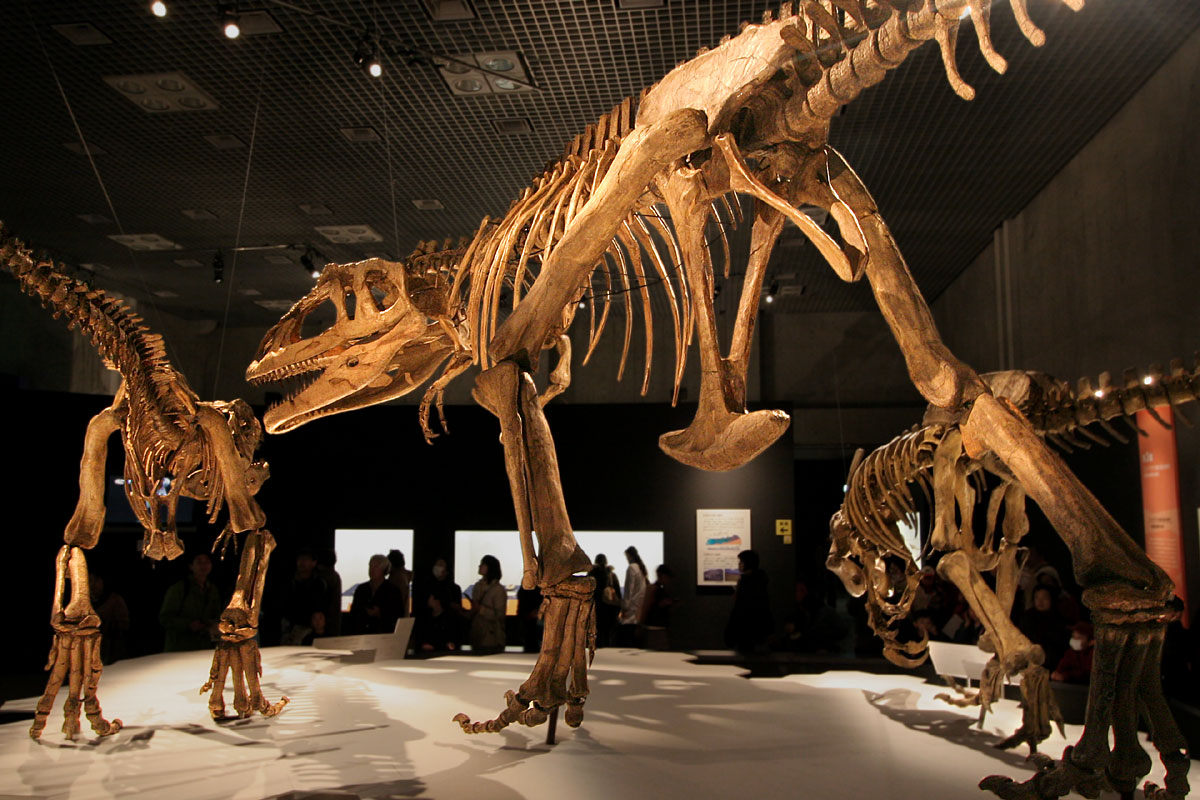
Reconstructed skeletons of an adult and a juvenile (left)
Scientific classification Edit this classification
Kingdom: Animalia
Phylum: Chordata
Class: Reptilia
Clade: Dinosauria
Clade: Saurischia
Clade: Theropoda
Family: Carcharodontosauridae
Subfamily: Carcharodontosaurinae
Tribe: Giganotosaurini
Genus: Mapusaurus
Coria & Currie, 2006
Type species
Mapusaurus roseae
Coria & Currie, 2006

Mapusaurus (lit. 'earth lizard') is a genus of giant carcharodontosaurid carnosaurian dinosaur that lived in Argentina during the CenomanianTuronian ages of the Late Cretaceous. It is known from a bonebed of between seven and nine specimens, excavated from the strata of the Huincul Formation between 1997 and 2001 as part of the Argentinian-Canadian Dinosaur Project. In 2006, Rodolfo Coria and Philip J. Currie scientifically described Mapusaurus. Only one species of Mapusaurus, M. roseae, has been described, named after the rose-colored rocks in which it was discovered and sponsor Rose Letwin.

Mapusaurus was one of the largest carcharodontosaurids. Based on the biggest specimen known from the bonebed, represented by a left femur, it was originally estimated to have reached a maximum body length of 10.2 m (33 ft) and a mass of 3 t (6,600 lb). Subsequent works have given maximum size estimates of 10.2–12.6 metres (33–41 ft) and 3–6 t (6,600–13,200 lb) respectively. Mapusaurus generally resembled Giganotosaurus, though had a deeper skull, a more rugose maxilla, a rougher surface to its lacrimal bone, differently proportioned neck vertebrae, and various other minor differences. The arms of Mapusaurus were very small, similar in terms of proportional size to those of tyrannosaurids and abelisaurids.

Discovery and naming

[edit]

The first fossils of this taxon were discovered in 1995 by members of the Argentinian-Canadian Dinosaur Project[2] in an exposure of the Huincul Formation at Cañadón del Gato, a site 20 kilometres (12 mi) south of Plaza Huincul in Neuquén Province, Argentina.[3] In 1997, crews from the Project began excavating the fossils, which they believed to belong to a single skeleton of a large theropod dinosaur.[3][4] However, during preparation of the remains it was realized that they came from several individuals of differing sizes and ontogenetic stages. That same year, Argentine paleontologist Rodolfo Coria and Canadian paleontologist Philip Currie, the leaders of the Project, announced the discovery of the theropod at a meeting of the Society of Vertebrate Paleontology, stating that the team had unearthed a single skeleton of a new carcharodontosaurid theropod similar to Giganotosaurus. By that time, an isolated tooth, a surangular, a caudal (tail) vertebra, a manual ungual, an incomplete pelvis, femora, tibiae, a fibula, a metatarsal, and several pedal (foot) phalanges had been collected,[4] however later digs would find more fossils.[5][6][3] Excavations of the fossils at Cañadón del Gato lasted from 1997 to 2001, wherein hundreds of fossils from at least seven to nine individuals of Mapusaurus were discovered. These fossils were mentioned in conference abstracts in 2000 and 2001, which noted the possibility of pack behavior or gregariousness in large theropods based on the quantity and age range of the theropod fossils found.[3][7][8][9]

In 2006, Coria and Currie scientifically described the remains, and identified them as belonging to a new genus and species of giant carcharodontosaurid theropod. Based on this material, they named them Mapusaurus roseae. The generic name Mapusaurus derives from the Mapuche word Mapu, meaning "Earth", and the Greek σαῦρος (saûros), meaning "lizard", and thus "Earth lizard". The specific name roseae is named for both the rose-colored rocks, in which the fossils were found and for Rose Letwin, who sponsored the expeditions which recovered these fossils. Coria and Currie designated an isolated right nasal (MCF-PVPH-108.1, Museo Carmen Funes, Paleontología de Vertebrados) as the holotype (name-bearing) specimen of M. roseae. Additionally, Coria and Currie assigned several paratypes to M. roseae, including portions of the skull, limbs, pelvis, and vertebrae. In total, Mapusaurus is known from parts of the skull and mandible, teeth, some cervical (neck), dorsal (back), and caudal vertebrae, much of the sacrum and pelvis, some ribs, parts of the scapulocoracoid, much of the hindlimbs, many pedal phalanges, and fragments of the forelimb and manus.[3] Later studies have reidentified some of the elements described by Coria and Currie (2006), such as a carpometacarpus that American paleontologist Matthew Carrano and colleagues (2012) stated is a distal (away from body) humerus[10]: 235  and a partial fibula that Canadian paleontologist Phil Bell and Coria (2013) identified as a pathological dorsal rib.[11]

Taurovenator

[edit]

In 2005, a right postorbital of a theropod dinosaur was unearthed by Argentine paleontologist Matias Motta from a section of sandstone strata in Violante Farm in Rio Negro Province, Argentina deriving from the lower member of the Huincul Formation.[12] The fossil was then transported to the Museo Provincial "Carlos Ameghino"and cataloged under catalogue number MPCA-Pv 803.[13] In 2016. Motta and colleagues described the postorbital as the holotype of a new genus and species of carcharodontosaurid dinosaur, Taurovenator violantei. Taurovenator went largely unnoticed due to its fragmentary nature,[14][12] and Coria and colleagues (2019) suggested that Taurovenator is synonymous with Mapusaurus, considering both of the former's autapomorphies (distinguishing traits) were also found in Mapusaurus.[15] Additionally, the authors considered that there was a high likelihood of them being coeval.[15] However, Taurovenator is actually from the lower unit of the Huincul Formation, while Mapusaurus is from the upper unit of the formation, suggesting they could be distinct genera.[12] In 2022, another carcharodontosaurid from the Huincul Formation, Meraxes, was named on the basis of a well-preserved skull and partial skeleton from the same strata as Taurovenator. In their description of Meraxes, the authors stated that Taurovenator lacks sufficient diagnostic characters and may be coeval with Meraxes.[14][12]

In 2005, an associated skeleton (MPCA-Pv 803) including a partial skull and posterior (back portion) mandible, incomplete cervical (neck vertebrae) series, fragments of dorsal (back) vertebrae, several ribs, two partial forelimbs, a femur, a partial pes, gastralia, and a caudal vertebra was unearthed along with the Taurovenator. This specimen was regarded as belonging to an indeterminate carcharodontosaurid in the 2016 description of Taurovenator.[13][12] In 2024, this specimen was described and, despite not overlapping in material with the holotype, was assigned to Taurovenator. In an analysis of the strata from which the holotype was discovered, the 2024 study noted that the Huincul Formation is separated into two distinct sequences; a lower section of thin, multicolored sandstones and an upper section of thick conglomeratic sediments. Mapusaurus derives from the upper sequence of the formation, whereas Meraxes and Taurovenator are exclusive to the lower rock layers. Meraxes, however, was collected in strata close to the Candeleros-Huincul Formation boundary, whereas Taurovenator's specimens were found over 30 meters above the Candeleros-Huincul Formation limit. It is for these reasons that the three carcharodontosaurids found at Huincul were potentially not coeval, supporting the argument for Taurovenator's validity. Additionally, the holotype preserve features of the Giganotosaurini, further supporting its referral to Taurovenator. A new host of diagnostic traits were found on the bones of MPCA-Pv 803, properly demonstrating its distinctiveness.[12]

Description

[edit]
Size of a few specimens compared to a human

In their paper describing Mapusaurus, Coria and Currie estimated that the specimens found in the bonebed measured between 5.5–10.2 m (18–33 ft) in length, with the former being based on a left dentary (MCF PVPH-108.3) and the latter being based on a left femur (MCF-PVPH-108.203).[3] Subsequent maximum size estimates vary from around 10.2–12.6 metres (33–41 ft), and weight estimates range from 3–6 t (6,600–13,200 lb).[3][16][17][18]

Skull and dentition

[edit]
Comparison of two Mapusaurus roseae skulls

The skull of Mapusaurus was deeper and narrower than that of Giganotosaurus, due to the comparative shortness of the maxillae and slenderness of the nasal bones.[3] The nasals were very rugose, as in Carcharodontosaurus, Giganotosaurus, Meraxes, and Tameryraptor. The lateral (external, or outer) surface of the maxilla in many carcharodontosaurids (i.e. Carcharodontosaurus, Giganotosaurus, Meraxes, and Tameryraptor) had a rough texture,[19] and the same is true of Mapusaurus.[3][20] Whereas the rugosity of Giganotosaurus' maxilla stopped shortly posterior to (behind) the nasal opening, that of Mapusaurus continued for most of the bone's length. The bar between the antorbital and maxillary fenestrae, the so-called interfenestral strut, was fairly wide in comparison to other carcharodontosaurids. Whereas many derived carnosaurs had several openings in the maxilla anterior to (in front of) the antorbital fenestra, in Mapusaurus, the maxillary fenestra was the only one,[3] and it disappeared with growth.[20] The antorbital fossa was about equal in size to that of Carcharodontosaurus and Giganotosaurus. The orbit, or eye socket, was partly divided into upper and lower sections by projections of the lacrimal and postorbital bones.[3] Like in many derived carcharodontosaurids, such as Meraxes, the lateral postorbital surface bore a robust brow horn.[21] The lacrimals and prefrontal bones were fused, as in many theropods, including Giganotosaurus. The lacrimals of the two genera differed in that Mapusaurus' lacrimal had a rugose dorsal (upper) surface, whereas that of Giganotosaurus bore deep grooves. Mapusaurus' teeth were similar to those of other carcharodontosaurids, being flat, narrow, and blade-like and bearing 10–12 denticles per 5 mm (0.20 in), as opposed to 13–15 denticles per 5 mm in Acrocanthosaurus. There were 12 alveoli (tooth sockets) in each maxilla, as opposed to 14 in Carcharodontosaurus.[3]

The dentary of Mapusaurus, the part of the lower jaw which bore teeth in life, was similar to that of Giganotosaurus in that it expanded anteriorly more than in most other theropods; this is contributed to by a ventral flange on the mandibular symphysis. While loosely similar expansions are seen in other groups and genera, such as Tyrannosaurus, in Mapusaurus (and by extension, presumably, other carcharodontosaurids), the presence of this distinctive flange in a juvenile suggests that it was not controlled by ontogeny. In both Mapusaurus and Giganotosaurus, the Meckelian groove is fairly shallow, though that of the former genus was positioned more dorsally. A partial surangular is known from a juvenile Mapusaurus specimen, which is identical to the corresponding bone in Giganotosaurus. The angular bone was strengthened by a thick ventral margin, which contributed to the ventral portion of the mandible. Each dentary appears to have had fifteen teeth.[3]

Axial skeleton

[edit]

The vertebral column of Mapusaurus closely resembled that of Giganotosaurus. As in most carnosaurs, the neural arches, the masses of bone or cartilage posterior to the main vertebral bodies, were inclined posterodorsally (rearward and upward). The neural spine (the tall projections at the top of each vertebra) of the axis, the second cervical (neck) vertebra, appears to have been longer and more gracile than those of Mapusaurus. There were well-developed laminae between the neural spine and vertebral epiphysis, which are not observed in more basal taxa such as Acrocanthosaurus and Allosaurus. Further back in the cervical column, the neck vertebrae were proportionally shorter and slimmer than those of Giganotosaurus, more closely resembling abelisaurids in their proportions. The neural spines of the dorsal (back) vertebrae were relatively tall and were inclined posteriorly. The more posterior dorsal vertebrae were amphicoelus, meaning that both anterior and posterior surfaces were flat. Mapusaurus' caudal (tail) vertebrae are well known from various specimens. The neural spines of the mid-caudal vertebrae were low and anteroposteriorly (from front-to-back) elongated. The most posterior one had a low regular neural spine and a second, accessory one anterior to it. The anatomy of the preserved ribs, which resemble those of many other large theropods, suggests that the chest of Mapusaurus would have been deeper than it was wide. Various fragmented gastralia, the bones which would have supported the abdominal organs and served as muscle attachment points, are known, and do not seem to have meaningfully differed from those of other big theropods.[3]

Appendicular skeleton

[edit]

Mapusaurus' scapula (shoulder blade) was long and gently curved, with a pronounced, sharply offset acromial process, similar to other carnosaurs and tyrannosaurids. It is less robust than that of large ceratosaurs and megalosaurids. The scapula and coracoid were distinct bones, and did not co-ossify into a scapulocoracoid. One partial coracoid is known. A possible furcula is preserved, though there is a possibility that it is a fused pair of gastralia. What is known of the humerus (upper arm bone) based on a right humerus, MCF-PVPH-108.45, was fairly robust. The humerus was around a quarter of the length of the femur, and its arms were thus relatively short. The radius (one of the two forearm bones) was relatively massive. Little is preserved of the manus (hand). The second and third metacarpals (hand bones) appear to have been partly fused, though there is no indication that the first metacarpal had fused with the others. A single manual phalanx (finger bone) is known, as well as a probable ungual phalanx (the bone which would have supported a claw) which may be from the second digit.[3]

The pelvis and hind limbs are very well preserved in comparison to the pectoral girdle and forelimbs. The ratio between the preacetabular and postacetabular lengths of the ilium (the parts before and after the acetabulum) is about the same as in the holotype of Giganotosaurus. At the back of the ilium, near the base of the peduncle where the ischium articulated, there were a series of shallow pits, likely attachment sites for the iliofemoralis and caudofemoralis muscles. Three femora (thigh bones) are known. Unlike most other carnosaurs, the fourth trochanter, one of the structures to which the caudofemoralis muscles would have attached, was prominent. It was similar in size to that of Giganotosaurus, though both were exceeded by that of Carcharodontosaurus. Like in Giganotosaurus, the lateral (outer) side of the tibia (one of the lower leg bones) of Mapusaurus extends further down than the medial (inner) side. The fibula, the other lower leg bone, was slightly more gracile than in the holotype of Giganotosaurus. The metatarsals (foot bones) of Mapusaurus were fundamentally to those of other carnosaurs. Eight pedal (foot) phalanges are represented, though no pedal unguals are preserved.[3]

Paleobiology

[edit]
Restoration

The fossil remains of Mapusaurus were discovered in a bone bed containing at least seven to possibly up to nine individuals of various growth stages.[3][22][20] Coria and Currie speculated that this may represent a long term, possibly coincidental accumulation of carcasses (some sort of predator trap) and may provide clues about Mapusaurus behavior.[3] Other known theropod bone beds and fossil graveyards include those of dromaeosaurids Deinonychus and Utahraptor,[23][24] those of Allosaurus from the Cleveland-Lloyd Dinosaur Quarry of Utah,[25] and those of tyrannosaurids Teratophoneus, Albertosaurus and Daspletosaurus.[26]

Mapusaurus bones with pathologies

Paleontologist Rodolfo Coria, of the Museo Carmen Funes, contrary to his published article, repeated in a press-conference earlier suggestions that this congregation of fossil bones may indicate that Mapusaurus like Giganotosaurus also hunted in groups and worked together to take down large prey, such as the immense sauropod Argentinosaurus.[27][28]: 206–207  If so, this would be the first substantive evidence of gregarious behavior by large theropods other than Tyrannosaurus rex, although whether they might have hunted in organized packs (as wolves and lions do) or simply attacked in a mob, is unknown. Through the study of bonebed of at least nine Mapusaurus individuals from the Canadon Del Gato site in Neuquén Province, Argentina, researchers have discovered that their skeletal abnormalities were rare but present, containing trauma being the most common cause. meaning that the predatory animal was living in that of a hazardous and perilous lifestyle.[11] The authors interpreted the depositional environment of the Huincul Formation at the Cañadón del Gato locality as a freshwater paleochannel deposit, "laid down by an ephemeral or seasonal stream in a region with arid or semi-arid climate".[3] This bone bed is especially interesting, in light of the overall scarcity of fossilized bone within the Huincul Formation. An ontogenetic study by Juan Ignacio Canale and colleagues in 2014 found that Mapusaurus displayed heterochrony, an evolutionary condition in which the animals may retain an ancestral characteristic during one stage of their life, but lose it as they develop. In Mapusaurus, the maxillary fenestrae are present in younger individuals, but gradually disappear as they mature.[20]

A biomechanical model of Tyrannosaurus presented by William I. Sellers and colleagues in 2017 suggested that speeds above 11 mph (18 km/h) would probably have shattered the leg bones of Tyrannosaurus. The finding may mean that running was also not possible for other giant theropod dinosaurs like Giganotosaurus, Mapusaurus and Acrocanthosaurus.[29]

Classification

[edit]

Mapusaurus is a genus in the family Carcharodontosauridae, subfamily Carcharodontosaurinae, and tribe Giganotosaurini.[14][19] Giganotosaurini contains Mapusaurus itself in addition to the carcharodontosaurines Meraxes, Giganotosaurus, and Tyrannotitan, but excludes the African genus Carcharodontosaurus. In their description of Mapusaurus, Coria and Currie erected the subfamily (now tribe) Giganotosaurinae. They defined this subfamily as including all carcharodontosaurids closer to Mapusaurus and Giganotosaurus than Carcharodontosaurus and as being united by the presence of a weak fourth trochanter and a broad groove on the distal end of the femur. They tentatively included the genus Tyrannotitan in this new subfamily, pending publication of more detailed descriptions of the known specimens of that form.[3] Giganotosaurini is a tribe of giant carcharodontosaurines endemic to the Late Cretaceous of Argentina, with some members like Giganotosaurus possibly being the largest theropods known, reaching sizes as large as 13.2 m (43 ft) in length and 4.2 to 13.8 t (4.6 to 15.2 short tons) in mass.[30][31][32][33][34]

American paleontologist Paul Sereno's description of Carcharodontosaurus fossils in 1996 led to the realization of a transcontinental clade of carcharodontosaurids. As more carcharodontosaurids were discovered, their interrelationships became even clearer. The group was defined as all allosauroids closer to Carcharodontosaurus than Allosaurus or Sinraptor by American paleontologist Thomas R. Holtz and colleagues in 2004.[35] Mapusaurus is better known than most other carcharodontosaurids, though Meraxes and Giganotosaurus represented by nearly complete skeletons.[36] Carcharodontosaurians have been recognized from the Late Jurassic to the Mid-Cretaceous of every continent except Antarctica.[37][19][38]

In their 2022 description of the large carcharodontosaurine Meraxes, Juan I. Canale and colleagues recovered the following relationships for Mapusaurus and the Giganotosaurini.[39]

In his 2024 review of theropod relationships, Cau recovered similar results, with Tyrannotitan as the sister taxon to the clade formed by Mapusaurus and Giganotosaurus. His results are displayed in the cladogram below:[40]

Carcharodontosauridae
Neovenator

Carcharodontosaurus iguidensis (holotype maxilla)

Acrocanthosaurus

Eocarcharia (referred maxilla)

Meraxes

Carcharodontosaurus iguidensis (referred cranial material)

Carcharodontosaurus saharicus (neotype)

Carcharodontosaurus saharicus (described by Stromer in 1931)

Evolution

[edit]

Argentine paleontologists Coria and Leonardo Salgado suggested that the convergent evolution of gigantism in theropods could have been linked to common conditions in their environments or ecosystems.[41] Sereno and colleagues found that the presence of carcharodontosaurids in Africa (Carcharodontosaurus), North America (Acrocanthosaurus), and South America (Giganotosaurus), showed the group had a transcontinental distribution by the Early Cretaceous period. Dispersal routes between the northern and southern continents appear to have been severed by ocean barriers in the Late Cretaceous, which led to more distinct, provincial faunas, by preventing exchange.[42][43] Previously, it was thought that the Cretaceous world was biogeographically separated, with the northern continents being dominated by tyrannosaurids, South America by abelisaurids, and Africa by carcharodontosaurids.[44] The subfamily Carcharodontosaurinae, in which Carcharodontosaurus belongs, appears to have been restricted to the southern continent of Gondwana (formed by South America and Africa), where they were probably the apex predators.[45] The South American tribe Giganotosaurini may have been separated from their African relatives through vicariance, when Gondwana broke up during the AptianAlbian ages of the Early Cretaceous.[46]

Paleoenvironment

[edit]
Silhouettes of dinosaurs from the Huincul Formation as size comparison
Several dinosaurs from the Huincul Formation (Mapusaurus in red)

Mapusaurus was discovered in the Argentine Province of Neuquén. It was found in the Huincul Formation, a rock formation bordering the Río Limay Subgroup, the latter of which is a subdivision of the Neuquén Group. This unit is located in the Neuquén Basin in Patagonia. The Huincul Formation is composed of yellowish and greenish sandstones of fine-to-medium grain, some of which are tuffaceous.[47] These deposits were laid down during the Upper Cretaceous, either in the middle Cenomanian to early Turonian stages[48] or the early Turonian to late Santonian.[49] The deposits represent the drainage system of a braided river.[50]

Fossilised pollen indicates a wide variety of plants were present in the Huincul Formation. A study of the El Zampal section of the formation found hornworts, liverworts, ferns, Selaginellales, possible Noeggerathiales, gymnosperms (including gnetophytes and conifers), and angiosperms (flowering plants), in addition to several pollen grains of unknown affinities.[51] The Huincul Formation is among the richest Patagonian vertebrate associations, preserving fish including dipnoans and gar, chelid turtles, squamates, sphenodonts, neosuchian crocodilians, and a wide variety of dinosaurs.[48][52] Vertebrates are most commonly found in the lower, and therefore older, part of the formation.[53]

In addition to Mapusaurus, the theropods of the Huincul Formation are represented by the other giant carcharodontosaurids Meraxes and Taurovenator, abelisaurids including Skorpiovenator,[54] Ilokelesia, and Tralkasaurus,[55] noasaurids such as Huinculsaurus,[56] paravians such as Overoraptor,[57] and other theropods such as Aoniraptor and Gualicho[58] have also been discovered there.[48] Several iguanodonts are also present in the Huincul Formation.[47] The sauropods of the Huincul Formation are represented by the titanosaurs Argentinosaurus and Choconsaurus,[59] and several rebbachisaurids including Cathartesaura,[60] Limaysaurus,[61][62] and some unnamed species.[53]

References

[edit]
[edit]
Revisions and contributorsEdit on WikipediaRead on Wikipedia
from Grokipedia
Mapusaurus roseae is a large carcharodontosaurid from the Upper period, known from a monospecific bonebed containing the remains of a minimum of 7-9 individuals of varying ages in the of , . This giant carnivore, comparable in size to its close relative , measured up to approximately 12.2 meters in length and weighed around 3 metric tons, with juveniles as small as 5-6 meters. Characterized by a deep, short, and narrow equipped with blade-like teeth featuring wrinkled enamel, powerful hindlimbs, and reduced forelimbs, Mapusaurus was likely an that hunted large sauropods in a environment. The fossils were discovered in 1997 at the Cañadón del Gato locality, about 20 km southwest of Plaza Huincul in , with excavations conducted by the Argentinean-Canadian Dinosaur Project from 1997 to 2001. The bonebed, spanning an area of about 7 by 4 meters and up to 1.5 meters thick, yielded over 30% of the skeleton for the largest individual, including parts of the , vertebrae, , and limbs, indicating a catastrophic event or social aggregation rather than predation. Named in 2006 by paleontologists Rodolfo A. Coria and , the genus Mapusaurus derives from words meaning "Earth Lizard," while the species roseae honors both the rose-colored rocks of the site and sponsor Rose Letwin. Phylogenetically, Mapusaurus roseae belongs to the subfamily Giganotosaurinae within Carcharodontosauridae, sharing derived traits such as a prominent supraorbital shelf formed by the palpebral bone and heavily sculptured facial bones with Giganotosaurus and Carcharodontosaurus. Ontogenetic studies reveal peramorphic changes in the skull during growth, including elongation of the maxilla and reduction of the antorbital fenestra, suggesting heterochronic evolution in carcharodontosaurids. Pathological evidence from the bonebed, including healed fractures and infections, indicates that these dinosaurs experienced injuries possibly from intra- or interspecific combat or predation attempts. The Huincul Formation, dated to the Cenomanian to early Turonian stages (approximately 97-92 million years ago), preserves a diverse fauna including titanosaurs like Argentinosaurus, providing context for Mapusaurus as a top predator in a warm, riverine ecosystem.

Discovery and Naming

Etymology

The genus name Mapusaurus is derived from the word mapu, meaning "" or "land," combined with sauros, meaning "" or "," yielding "earth lizard" or "earth reptile" in reference to the Patagonian locality of its discovery. The type species M. roseae was formally named in 2006 by paleontologists Rodolfo A. Coria and , with the epithet roseae honoring Rose Letwin of , who sponsored the expeditions in 1999, 2000, and 2001 that led to the recovery of the fossils, as well as alluding to the rose-colored rocks enclosing the discovery site. This incorporation of the Mapuche language into the genus name exemplifies a paleontological in , particularly , where indigenous terms are used to acknowledge local and the regional context of finds, as seen in other taxa such as Llukalkan ("one who causes fear" in Mapudungun).

History of Discovery

The fossils of Mapusaurus were first discovered in during a field survey at the Cañadón del Gato locality (69°17'13''W, 39°03'50''S) in the of the Neuquén Group, , , within Upper () deposits of the Río Limay Subgroup. Systematic excavations followed over five field seasons from to 2001, organized by the Argentinean-Canadian Dinosaur Project and led by paleontologists Rodolfo A. Coria of the Museo Carmen Funes and of the . These efforts revealed a dense bonebed of disarticulated theropod remains preserved in a channel sandstone deposit, initially mistaken for a single large individual but ultimately representing at least seven to nine specimens across various ontogenetic stages, suggesting accumulation through catastrophic events or attritional processes in a semiarid fluvial environment. The taxon was formally described and named Mapusaurus roseae in 2006 by Coria and Currie in the journal Geodiversitas, with the generic name deriving from the word "mapu" for earth and the specific epithet honoring the rose-colored host rocks and project supporter Rose Letwin. The description included initial size estimates of up to 12.6 meters in length for the largest individuals, based on comparisons to the closely related carolinii, and highlighted the bonebed's composition as indicative of a monospecific assemblage of carcharodontosaurid theropods. Subsequent research in the reinforced these findings, with a palaeopathological survey confirming the bonebed's monospecific attribution to M. roseae through analysis of over 800 elements from a minimum of nine individuals, documenting pathologies and size variation consistent with a single population. No significant new Mapusaurus specimens or localities have been reported as of November 2025, though the bonebed's multi-individual preservation offers key evidence for theropod and .

Known Specimens

The of Mapusaurus roseae is the specimen MCF-PVPH-108.1, consisting of an isolated right , housed at the Museo Carmen Funes in Plaza Huincul, , . Twelve paratypes were designated from the same locality, including representative cranial and postcranial elements such as MCF-PVPH-108.2 (right dentary), MCF-PVPH-108.5 (left lacrimal/prefrontal), MCF-PVPH-108.20 (left ), and MCF-PVPH-108.81 (anterior caudal ). The primary fossil assemblage derives from a monospecific bonebed at Cañadón del Gato in the , preserving disarticulated but associated remains of at least seven individuals ranging from juveniles to adults. These include over 170 catalogued elements such as isolated teeth, dorsal and caudal vertebrae, ribs, partial pelvic girdles, and limb bones (e.g., MCF-PVPH-108.100–108.176 series), collectively representing approximately 30% completeness for the when reconstructed. The preservation indicates a assemblage with minimal transport, as bones show limited and some articulation in clusters. All known specimens originate from this single quarry, with no additional Mapusaurus material reported from other sites as of November 2025, though ongoing preparation of bonebed elements continues at the Museo Carmen Funes. These fossils, spanning multiple ontogenetic stages, have informed studies on growth patterns in carcharodontosaurids.

Description

Overall Size and Build

Mapusaurus was a large theropod , with adult individuals estimated to reach lengths of 11–12.2 meters based on scaling from the and associated specimens. Mass estimates for adults are approximately 3 metric tons, derived from femoral measurements. The overall build of Mapusaurus was robust, characterized by an elongated reaching approximately 1.6 meters in length, powerful hindlimbs adapted for , and reduced forelimbs comparable to those of but proportionally scaled to its larger size. This configuration suggests a predatory form optimized for pursuing large prey, with a deep and narrow cranial profile contributing to its biomechanical efficiency. In comparison to its close relative , Mapusaurus was comparable in size, though both genera shared similar proportions indicative of comparable . The bonebed assemblage reveals ontogenetic variation, with juvenile specimens measuring approximately 5.5 in length, contrasting with the larger forms and indicating significant growth disparity within the .

Cranial Features

The skull of Mapusaurus roseae exhibits a deep and narrow configuration, setting it apart from the more elongate form observed in its close relative carolinii. This depth arises from a relatively short measuring 620 mm in length, which contributes to a compact rostrum overall. The facial bones are heavily sculptured with rugosities, a characteristic shared among carcharodontosaurids, while the nasals are unfused and bear dorsolateral rugosities. A prominent is absent in known material, as the frontals remain undescribed, though the overall cranial depth suggests robust attachment sites for jaw adductor muscles. The antorbital region features a large, triangular antorbital fossa extending up to 75 mm onto the , housing a small maxillary (34 mm high) that is less prominent laterally than in . This extensive fenestration reduces cranial weight, indicative of adaptations for agility in a large theropod. Braincase fragments reveal high pneumatization, including large pneumopores in the nasals (25 mm diameter) and lacrimal sinuses, supporting efficient systems but providing limited direct insight into sensory capabilities. The is subdivided by processes from the lacrimal and postorbital bones, forming a supraorbital shelf primarily composed of the palpebral complex. Dentition in Mapusaurus includes 12 maxillary alveoli per side, matching Giganotosaurus but fewer than the 14 in Acrocanthosaurus atokensis or 16 in Carcharodontosaurus saharicus. The approximately 15 dentary tooth positions accommodate flat, blade-like teeth with a D-shaped cross-section, fine serrations (8–9 denticles per 5 mm), and wrinkled enamel adjacent to the carinae, optimized for slicing through soft tissue. Crown heights vary ontogenetically from 24 mm to 81.5 mm, reflecting growth stages in the bonebed assemblage. Reconstructed skulls of Mapusaurus measure approximately 1.6 m in length, comparable to that of Tyrannosaurus rex (about 1.5 m) but with a lighter construction due to the expanded fenestrae and reduced mass, potentially enhancing speed over the heavier tyrannosaurid build.

Postcranial Anatomy

The postcranial of Mapusaurus roseae is characterized by a lightweight yet robust axial column adapted for supporting its massive body while allowing flexibility and mobility. The are elongated, facilitating flexibility for reaching prey or maneuvering; these vertebrae exhibit pneumatic features such as pleurocoels, reducing overall weight through air-filled diverticula invading the . Neural spines in the cervicals are low with sharp dorsal margins, and epipophyses are conical and posteriorly elongated, enhancing leverage for muscles. Posterior zygapophyses on the axis are fused at the midline, providing structural reinforcement. The dorsal vertebrae feature neural spines increasing in height toward the mid-dorsal region to up to 490 mm, forming a sagittal crest-like structure that supports the epaxial musculature and aids in rigidity during locomotion. These spines are rectangular and shaped, with central pleurocoels (e.g., 60 mm long and 45 mm tall) indicating extensive pneumaticity that lightens the without compromising strength. The caudal vertebrae include anterior forms with tall neural spines (e.g., 185 mm high) that taper posteriorly; mid-caudals show accessory neural spines and low, elongated profiles, contributing to flexibility for balance. Pathological evidence from the bonebed includes healed fractures and infections in appendicular elements, suggesting injuries from or predation attempts. In the , the s are robustly built for bipedal support and propulsion, exemplified by the , which reaches 1.3 meters in length with a straight shaft, a low fourth , and a head angled over 90 degrees upward, adaptations that enhance stride power. The pes is tridactyl, with metatarsal I inflected anteriorly in its distal third, and metatarsals II–IV subequal in length (e.g., 610–720 mm for metatarsal II), forming a foot with phalangeal formula typical of large theropods. The pelvic girdle features a broad, elongate ilium (1.05 meters long) with a deep brevis fossa extending into the ischial peduncle, providing attachment for powerful caudofemoralis musculature to drive movement; this contrasts sharply with the reduced forelimbs, where the manus is diminutive, with metacarpals II and III proximally fused and only two functional digits bearing straight unguals (up to 135 mm long).

Classification

Phylogenetic Position

Mapusaurus roseae is classified within the theropod clade Allosauroidea, specifically as a member of the family , which is nested inside the family Neovenatoridae. This placement is supported by multiple cladistic analyses that recover Mapusaurus as a derived allosauroid, sharing numerous derived characters with other carcharodontosaurids such as pneumatic cranial bones, blade-like maxillary teeth with longitudinal enamel wrinkles, and a reduced fourth on the . Within , Mapusaurus consistently forms a clade with carolinii and chubutensis, often termed Giganotosaurinae, positioned basally relative to more derived forms like and . Key synapomorphies supporting the inclusion of Mapusaurus in Neovenatoridae include a crest extending distally along the posterior surface of the from the process and small, flange-like lateral extensions of postzygapophyseal facets on middle-posterior dorsal vertebrae. These features distinguish neovenatorids from outgroups such as , where the ulnar is more robust and proximally expanded for greater elbow extension power. Compared to tyrannosaurids, which represent a more distant outgroup within , Mapusaurus exhibits less reduction in elements overall, with a straighter lacking the extreme miniaturization seen in tyrannosaurid arms. The original phylogenetic analysis by Coria and in , based on a 110-character matrix, recovered Mapusaurus as the sister taxon to with strong support (six unambiguous synapomorphies, including a dorsomedially oriented and shallow extensor groove on the ). Subsequent studies with expanded taxon sampling, such as Benson et al. in 2010 (using 233 characters and 45 taxa) and Canale et al. in 2022 (incorporating new South American material like gigas, placing Mapusaurus within Giganotosaurini with as basal), have confirmed this position without major shifts, reinforcing the stability of Mapusaurus in the Giganotosaurinae through increased resolution in allosauroids. As of 2025, no analyses propose alternative placements, with ongoing refinements focusing on ontogenetic variation rather than topological changes.

Relationship to Other Carcharodontosaurids

Mapusaurus exhibits a particularly close relationship with its South American contemporary , sharing several diagnostic cranial and dental features indicative of their placement within the subfamily Giganotosaurinae. Both taxa possess a similarly structured maxillary fenestration, though reduced in size in Mapusaurus, and comparable denticle counts on their carinae, with approximately 8-10 denticles per 5 mm. These shared traits, including wrinkled enamel on blade-like teeth and heavily sculptured facial bones, underscore their phylogenetic proximity, as evidenced by cladistic analyses that nest them as sister taxa within . However, Mapusaurus displays a more gracile overall build, with a deeper and narrower , a shorter and taller (tooth row 560 mm versus approximately 650 mm in the preserved portion of ), and a more slender , suggesting potential differences in predatory or ontogenetic variation. In comparison to African carcharodontosaurids such as , Mapusaurus shares a comparable body size, with estimated lengths exceeding 10 meters and femoral lengths up to 1300 mm, as well as a deep antorbital fossa that is nearly triangular in outline. Both exhibit the characteristic supraorbital shelf formed by the postorbital and palpebral bones, along with dorsomedially directed femoral heads. Nonetheless, Mapusaurus differs in having fewer maxillary alveoli (12 versus 14 in ) and a that tapers posteriorly beneath the antorbital fossa, lacking the extreme rostral widening observed in some African forms. These distinctions highlight regional morphological variations within the , potentially influenced by local faunal dynamics. Mapusaurus also relates to Asian carcharodontosaurids like , with which it shares temporal overlap during the Cenomanian-Turonian stages of the mid-Cretaceous (approximately 96-90 Ma). Both display extensive pneumaticity in the braincase and similar proportions in certain postcranial elements, such as a shortened axis vertebra. However, is notably smaller (estimated 5-6 m in length) and exhibits unique features like a reduced antorbital fossa (depth ratio 0.15 versus 0.40 in Mapusaurus) and a on the frontal, contrasting with the flat frontals of Mapusaurus. Phylogenetic analyses position as a derived carcharodontosaurid closely allied with Gondwanan taxa like Mapusaurus and , implying a Laurasian-Gondwanan dispersal event across Tethyan barriers during the Early to mid-Cretaceous. Biogeographically, Mapusaurus is endemic to in southern , known exclusively from the of , where it forms part of a mid-Cretaceous radiation of large carcharodontosaurids alongside . This distribution supports a Gondwanan origin for the group, with subsequent dispersals to northern continents, as no significant phylogenetic revisions post-2020 have altered these close ties or the established subfamily structure.

Paleobiology

Growth and

The bonebed of Mapusaurus roseae at Cañadón del Gato in the preserves remains of at least seven to nine individuals spanning multiple growth stages, from juveniles estimated at 5–5.5 m in body length based on dentary dimensions to adults reaching over 11 m. This multi-age assemblage, consisting exclusively of Mapusaurus fossils, suggests aggregation of individuals across ontogenetic stages, potentially reflecting gregarious behavior in life. Histological analyses of related carcharodontosaurids reveal rapid early growth rates that slow after skeletal maturity, with annual mass increases estimated up to several hundred kilograms in juvenile phases before transitioning to slower deposition of parallel-fibered bone and an external fundamental system (EFS) indicating maturity. For Mapusaurus, direct bone histology remains undocumented as of 2025, but morphometric evidence from the bonebed supports comparable patterns, with negative allometry in elements like metatarsals showing increased robusticity in larger individuals. Ontogenetic changes are evident in cranial elements, where juvenile skulls exhibit smoother bone surfaces, greater pneumaticity in the maxilla, two distinct antorbital fenestrae, and higher denticle density on teeth (14 per 5 mm), contrasting with adult skulls featuring coarse ornamentation, a single promaxillary fenestra, pronounced ridges on the dentary and palatal shelf, and reduced denticle density (8–9 per 5 mm). Postcranially, adult limb bones display greater shaft width and remodeling consistent with increased load-bearing, while juvenile proportions suggest relatively less robust construction. Lifespan estimates for large carcharodontosaurids, inferred from growth mark counts in analogous taxa, indicate skeletal maturity at 35–49 years, with total lifespans potentially reaching 39–53 years, though Mapusaurus-specific data are lacking. No clear evidence of has been identified in the bonebed specimens as of 2025, with variation attributable to or individual differences rather than sex.

Feeding Mechanisms

Mapusaurus possessed a bite adapted for slashing rather than crushing , consistent with the lightweight yet robust construction and powerful jaw adductor musculature typical of large theropods. The of Mapusaurus featured recurved, laterally compressed teeth with finely serrated mesial and distal edges, enabling the infliction of deep, tearing wounds to dismember large prey. These ziphodont teeth, measuring up to 15 cm in height, facilitated efficient slicing through and muscle, with the serrations acting as barbs to prevent slippage during feeding. Tooth replacement occurred at a high rate, inferred from the presence of unerupted successor teeth in subadult specimens, allowing rapid renewal of damaged elements and sustained predatory efficiency throughout adulthood. Jaw mechanics in Mapusaurus were characterized by limited , relying instead on powerful adductor musculature for forceful closure. The temporalis muscles, the primary jaw adductors, were anchored to an expansive along the parietals and frontals, providing leverage for deep, penetrating bites without extensive joint mobility. This arrangement, supported by enlarged temporal fenestrae, optimized the skull for rapid, high-impact strikes rather than prolonged mastication. Prey preferences of Mapusaurus centered on large-bodied sauropods such as , based on their co-occurrence in the .

Locomotion and Behavior

Mapusaurus was a bipedal theropod that maintained an upright posture during locomotion, with its powerful hindlimbs supporting the body weight and enabling efficient movement across its Late environment. The long, muscular tail served as a counterbalance, providing stability during turns and preventing forward pitching of the body, a common adaptation in large theropods to optimize agility despite their massive size. Based on limb ratios and analogies from trackways of similar-sized theropods, such as those attributed to carcharodontosaurids, Mapusaurus could achieve burst speeds of 30–40 km/h, sufficient for pursuing or ambushing large prey like sauropods. The discovery of a monospecific bonebed at Cañadón del Gato in the , containing disarticulated remains of at least seven to nine individuals ranging from juveniles (~5 m long) to adults (~12 m long), provides key for gregarious behavior in Mapusaurus. Taphonomic analysis indicates the assemblage accumulated through , , and reworking in a seasonal stream channel, rather than a , suggesting repeated aggregation at the site. This size variation across ontogenetic stages implies possible family units or mixed-age groups, potentially facilitating cooperative pack hunting or scavenging of large carcasses, as inferred from the site's characteristics and comparisons to other theropod bonebeds. As of 2025, no fossil evidence supports nesting behaviors or extended in Mapusaurus, though brief ontogenetic grouping may have occurred in early life stages.

Paleoecology

Geological Setting

The fossils of Mapusaurus were recovered from the , which forms part of the Río Limay Subgroup within the Neuquén Group of the Neuquén Basin in northwestern , . This formation represents a key stratigraphic unit in the basin's Upper sequence. The Huincul Formation is dated to the late Cenomanian–early Turonian stages, corresponding to approximately 95–90 million years ago based on biostratigraphic correlations with ammonite zones and regional stratigraphic frameworks. The formation reaches up to 250 meters in thickness and overlies the Candeleros Formation while underlying the Cerro Lisandro Formation. Lithologically, the Huincul Formation comprises interbedded fine- to medium-grained sandstones, mudstones, and claystones, often with tuffaceous components derived from contemporaneous Andean volcanism; these sediments indicate deposition in a fluvial system characterized by braided rivers, ephemeral streams, and associated floodplains within a semiarid to arid climate. Volcanic ash layers interspersed throughout provide precise markers for radiometric age constraints. The primary Mapusaurus bonebed is situated at the Cañadón del Gato locality in the Cortaderas region, approximately 20 km southwest of Plaza Huincul in (coordinates: 39°03'50''S, 69°17'13''W), where strata are exposed in erosional typical of the basin's arid landscape. The disarticulated remains of multiple individuals occur concentrated in a single stratigraphic horizon within a channel-fill deposit, consistent with rapid entombment during a event.

Associated Fauna

The vertebrate assemblage of the , where Mapusaurus roseae is found, is dominated by large-bodied dinosaurs, particularly sauropods that likely served as the primary prey for this . The most prominent is the colossal titanosaur huinculensis, known from multiple skeletal elements including vertebrae, a , and partial recovered near Plaza Huincul, indicating it was a key component of the targeted by Mapusaurus. Other titanosaurs such as Chucarosaurus diripienda are also present, contributing to a herbivore community of enormous that shaped the dynamics. Among other theropods, the abelisaurid represents a mid-sized , with nearly complete skeletons showing robust limb bones adapted for terrestrial predation, coexisting alongside Mapusaurus in a potentially competitive niche for large prey. Additional theropods include the smaller abelisaurid Tralkasaurus cuyi and the unusual dromaeosaurid Gualicho del sol, suggesting a modest diversity of carnivorous dinosaurs below the Mapusaurus size class. Ornithischians are rare, represented by limited remains of the small elasmarian ornithopod Chakisaurus nekul, a fast-moving about 2.5–3 meters long that inhabited the same fluvial environments. Non-dinosaurian vertebrates further illustrate the ecosystem's structure, with aquatic and semi-aquatic taxa preserved in finer-grained deposits. Chelid turtles such as Yaminuechelys major indicate riparian habitats, while crocodylomorphs including Comahuesuchus cf. brachybuccalis—a notosuchian with specialized for varied feeding—suggest opportunistic predators or scavengers near water sources. Fish remains, comprising lepisosteiforms like cf. Lepidotes sp. and dipnoans such as Ameghinoceratodus iheringi, point to freshwater systems supporting the overall biota. The Huincul Formation's exhibits low overall taxonomic diversity, especially among small-bodied taxa, with large herbivores comprising the bulk of the record and implying an environment where apex predation pressure was concentrated on few dominant prey , a role predominantly filled by Mapusaurus.

Environmental Reconstruction

The , where fossils of Mapusaurus have been discovered, records a warm, characterized by seasonal rivers and precipitation, as inferred from the of fluvial deposits and characteristics such as argillic Protosols. Paleoclimate reconstructions for mid-Cretaceous indicate average temperatures of 20–25°C, supported by stable analyses from regional marine and terrestrial proxies in the Neuquén Basin during this greenhouse interval. These conditions reflect a broader trend of global warmth in the , with the region positioned near the Southern Mid-latitude Warm Humid Belt transitioning toward more arid influences. Vegetation in the environment was dominated by gymnosperms, including , forming the background , with periodic expansions of prairies during warmer and moister intervals, as evidenced by palynomorph assemblages. This supported diverse herbivorous dinosaurs by providing ample foliage and understory cover in a subtropical setting. The comprised extensive alluvial plains dissected by high-sinuosity, meandering rivers that deposited sandstones, mudstones, and claystones, often with point-bar structures indicative of lateral channel migration. Volcanic influences from the Andean arc contributed tuffaceous material to the sediments, enhancing depositional dynamics and leading to episodes of rapid sedimentation such as flash floods on these floodplains. As of , no recent isotopic studies have significantly revised this subtropical floodplain model for the formation.

References

Add your contribution
Related Hubs
Contribute something
User Avatar
No comments yet.