

Community hub
Recent from talks
Contribute something
Nothing was collected or created yet.
Mixtec
View on Wikipedia
 | This article needs additional citations for verification. (February 2013) |
Key Information


| People | Mixtec ñuù savi, nayívi savi, ñuù davi, nayivi davi |
|---|---|
| Language | Mixtec sa'an davi, da'an davi, tu'un savi,.. |
| Country | Mixteca Ñuu Savi, Ñuu Djau, Ñuu Davi,.. |

The Mixtecs (/ˈmɪstɛks, ˈmɪʃ-/ MIS-teks, MISH-)[3] or Mixtecos (Spanish pronunciation: [misˈtekos] – from Nahuatl mixtēcatl [miʃteːkatɬ]; Mixtec: ñuudzahui 'people of Dzahui') are Indigenous Mesoamerican peoples of Mexico inhabiting the region known as La Mixteca of Oaxaca and Puebla as well as La Montaña Region and Costa Chica Regions of the state of Guerrero. The Mixtec culture was the main Mixtec civilization, which lasted from around 1500 BCE until being conquered by the Spanish in 1523.
The Mixtec region is generally divided into three subregions based on geography: the Mixteca Alta (Upper Mixtec or Ñuu Savi Sukun), the Mixteca Baja (Lower Mixtec or Ñuu I'ni), and the Mixteca Costa (Coastal Mixtec or Ñuu Andivi). The Alta is drier with higher elevations, while the Baja is lower in elevation, hot but dry, and the Costa is also low in elevation but much more humid and tropical. The Alta has seen the most study by archaeologists, with evidence for human settlement going back to the Archaic and Early Formative periods.[4] The first urbanized sites emerged here. Long considered to be part of the larger Mixteca region, groups living in the Baja were probably more culturally related to neighboring peoples in Eastern Guerrero than they were to the Mixtecs of the Alta.[5] They even had their own hieroglyphic writing system called ñuiñe.[6] The Costa only came under control of the Mixtecs during the military campaigns of the Mixtec cultural hero Eight Deer Jaguar Claw. Originally from Tilantongo in the Alta, Eight Deer and his armies conquered several major and minor kingdoms on their way to the coast, establishing the capital of Tututepec in the Lower Río Verde valley. Previously, the Costa had been primarily occupied by the Chatinos.
In the pre-Columbian era, some Mixtec kingdoms competed and allied with each other and with Zapotec kingdoms in the Central Valleys. Like the rest of the Indigenous peoples of Mexico, the Mixtecs were conquered by the Spanish invaders and their Indigenous allies in the 16th century. Pre-Columbian Mixtecs numbered around 1.5 million.[7] Today there are approximately 800,000 Mixtec people in Mexico, and there are also large populations in the United States. The Mixtec languages form a major branch of the Oto-Manguean language family.
Nomenclature and etymology
[edit]The term Mixtec (Mixteco in Spanish) comes from the Nahuatl word mixtecah [miʃˈtekaʔ], "cloud people". There are many names that the Mixtecs have for naming themselves: ñuù savi, nayívi savi, ñuù davi, nayivi davi.[pronunciation?] etc. All these denominations can be translated as 'the land of the rain'.[8] The historic homeland of Mixtec people is La Mixteca, called in Mixtec language Ñuu Savi,[pronunciation?] Ñuu Djau,[pronunciation?] Ñuu Davi,[pronunciation?] etc., depending on the local variant. They call their language sa'an davi,[pronunciation?] da'an davi[pronunciation?] or tu'un savi.[pronunciation?]
Overview
[edit]
In pre-Columbian times, the Mixtec were one of the major civilizations of Mesoamerica. Important ancient centers of the Mixtec include the ancient capital of Tilantongo, as well as the sites of Achiutla, Cuilapan, Huajuapan, Mitla, Tlaxiaco, Tututepec, Juxtlahuaca, and Yucuñudahui. The Mixtecs also made major constructions at the ancient city of Monte Albán (which had originated as a Zapotec city before the Mixtecs gained control of it). The work of Mixtec artisans who produced work in stone, wood, and metal was well regarded throughout ancient Mesoamerica.
According to West, "the Mixtec of Oaxaca...were the foremost goldsmiths of Mesoamerica," which included the "lost-wax casting of gold and its alloys."[9]
At the height of the Aztec Empire, many Indigenous people in Oaxaca, including the Mixtecs and Zapotecs, would suffer under at the hands of the Aztecs.[10] In the 1450s, Mixtecs would be weakened after the Aztec armies crossed the mountains into the Valley of Oaxaca with the intention of extending their hegemony.[10] Aztec forces triumphed over the Mixtecs in 1458.[10] In 1486, the Aztecs established a fort on the hill of Huaxyácac (now called El Fortín), overlooking the present city of Oaxaca, which allowed the Aztecs to enforce tribute collection from the Mixtecs and Zapotecs.[10] However, not all Mixtec towns became vassals. The Mixtecs put up some resistance to Spanish forces led by Pedro de Alvarado.[11] However, they would be subdued by the Spanish and their central Mexican allies led by Francisco de Orozco in 1521.[10] Upon Orozco's arrival to the Valley of Oaxaca on November 25, 1521, the Mixtecs would be peacefully submit to Spanish rule, though some resistance would continue in Antequera before ending by the end of 1521.[10]
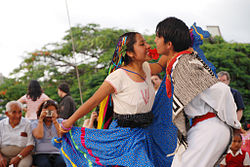
Mixtecs have migrated to various parts of both Mexico and the United States. In recent years a large exodus of Indigenous peoples from Oaxaca, such as the Zapotec and Triqui, has seen them emerge as one of the most numerous groups of Amerindians in the United States. As of 2011, an estimated 150,000 Mixteco people were living in California, and 25,000 to 30,000 in New York City.[12] Large Mixtec communities exist in the border cities of Tijuana, Baja California, San Diego, California and Tucson, Arizona. Mixtec communities are generally described as transnational or trans-border because of their ability to maintain and reaffirm social ties between their native homelands and diasporic communities. (See: Mixtec transnational migration.)
Mixtecs in the colonial era
[edit]

There is considerable documentation in the Mixtec (Ñudzahui) native language for the colonial era, which has been studied as part of the New Philology. Mixtec documentation indicates parallels between many Indigenous social and political structures with those in the Nahua areas, but published research on the Mixtecs does not primarily focus on economic matters. There is considerable Mixtec documentation for land issues, but sparse for market activity, perhaps because Indigenous cabildos did not regulate commerce or mediate economic disputes except for land.[13] Long-distance trade existed in the prehispanic era and continued in Indigenous hands in the early colonial. In the second half of the colonial period, there were bilingual Mixtec merchants, dealing in both Spanish and Indigenous goods, who operated regionally. However, in the Mixteca “by the eighteenth century, commerce was dominated by Spaniards in all but the most local venues of exchange, involving the sale of agricultural commodities and Indigenous crafts or the resale of imported goods.”.[14]
Despite the development of a local exchange economy, many Spaniards with economic interests in Oaxaca, including “[s]ome of the Mixteca priests, merchants, and landowners maintained permanent residence in Puebla, and labor for the obrajes (textile workshops) of the city of Puebla in the sixteenth and seventeenth centuries was sometimes recruited from peasant villages in the Mixteca."[15] There is evidence of community litigation against Mixtec caciques who leased land to Spaniards and the growth of individually contracted wage labor. Mixtec documentation from the late eighteenth century indicates that "most caciques were simply well-to-do investors in Spanish-style enterprises"; some married non-Indians; and in the late colonial era had little claim to hereditary authority.[16]
Geography
[edit]

The Mixtec area, both historically and currently, corresponds roughly to the western half of the state of Oaxaca, with some Mixtec communities extending into the neighboring state of Puebla to the north-west and also the state of Guerrero. The Mixtec people and their homelands are often subdivided into three geographic areas: The Mixteca Alta or Highland Mixtec living in the mountains in, around, and to the west of the Valley of Oaxaca; the Mixteca Baja or Lowland Mixtec living to the north and west of these highlands, and the Mixteca de la Costa or Coastal Mixtec living in the southern plains and the coast of the Pacific Ocean. For most of Mixtec history, the Mixteca Alta was the dominant political force, with the capitals of the Mixtec nation located in the central highlands. The valley of Oaxaca itself was often a disputed border region, sometimes dominated by the Mixtec and sometimes by their neighbors to the east, the Zapotec.
An ancient Coixtlahuaca Basin cave site known as the Colossal Natural Bridge is an important sacred place for the Mixtec.
Mixtec rulers
[edit]- The names of the rulers are composed by the day of the birth + nickname;
- For the sake of a simpler list, minor settlements will be joined with major ones if there are family connections between their rulers;
- Some Zapotec/Toltec kingdoms are included here, because of the many marital connections between the Mixtec and Zapotec royal lineages;
- The dynasty never breaks while a member of the family rules: the line goes through women if they ruled as queen regnants. However, if a son inherits the different kingdoms of the two reigning parents, the paternal line will be favoured.
- A family tree of some of the rulers is available in this link.
In Mixteca Costa
[edit]Acatepec, Yucu Yoo
[edit]- 1090-1097: Lady 6 Monkey War Quexquemitl (usurper, deposed),
- Sub-rulers Lord 3 Alligator and Lord 1 Movement
- 1097-1115: Lord 8 Deer Jaguar Claw (usurper)
Tututepec, Yucu Dzaa
[edit]- ?: Nizainzo Huidzo
- c.357: Mzatzin
- 1084-1097: Lord 8 Deer Jaguar Claw (usurper)
- to Tilantongo
Zacatepec, Yucu Chatuta
[edit]- 1120-?: Lord 11 Jaguar Tlaloc Fire Wall
In Mixteca Alta
[edit]Achiutla, Ñuu Ndecu
[edit]Pedernales-Achiutla dynasty
- ?: Lord 11 Flower Cloud Xicolli, with Lady 13 Wind Cloud Hair (siblings and spouses, children of Lord 4 Wind, King of Nuu Yuchi)
- ?: Lord 10 Alligator Digging Stick (father-in-law of Lord 2 Wind, King of Tlaxiaco)
- ?: Lord 8 Wind Smoked Claw (brother-in-law of Lord 12 Deer, King of Tlaxiaco)
- ?: Lord 7 Movement Blood Shedding Rain (son-in-law of 11 Wind, King of Tlaxiaco)
- ?: Lord 9 Wind Sun Fire Serpent
- ?: Lord 10 Alligator Jaguar with Claws like Flints (son of the previous)
Water Rubber Ball (Chacahua? Manialtepec?)
[edit]- ?: Lord 9 Serpent (deposed)
- ?-1115: Lord 8 Deer Jaguar Claw (usurper)
Andua
[edit]- c.887: Lord 12 Vulture Golden Eagle
- ?: Lord 3 Monkey Mexican Jaguar
Bulto de Xipe/Huachino
[edit]- ?: Lord 10 Movement
- ?: Lord 12 Lizard
- ?-1101: Lord 11 Wind Blood Jaguar (son of the previous)
- To Tilantongo (1101-1115) and Nuu Yuchi (1115-1164)
- ?: Lord 6 Vulture Jaguar with Knife (son of Lord 9 Rain of Tlaxiaco)[17]
Chalcatongo, Nuu Ndaya
[edit]- ?: Lord 8 Aligator Bloody Coyote
- ?: Lord 3 Dog (son-in-law of Lord 8 Alligator, in the settlement of Santa Catarina Yuxia, Yuu Usa)
- ?: Lord 13 Jaguar War Beard (descendant)
Cholula
[edit]- ?: Lord 1 Lizard Serpent-Decorated Shield, with Lady 11 Serpent Jewel Mouth (wife)
- c.1096: Lord 4 Jaguar Night Face
Hill of the Mask
[edit]| Ruler | Born | Reign | Consort | Death | Notes | |
|---|---|---|---|---|---|---|
| Tlaxiaco dynasty[17] | ||||||
| Lord 8 Jaguar Bloody Coyote |
1113 Tlaxiaco |
? | Lady 2 Vulture Jewel Fan two children |
? | King at Tlaxiaco, a partition from Teozacoalco. His children possibly divided the realm. | |
| Lord 4 Grass Sun Face |
? Son of Lord 8 Jaguar |
? | Lady 6 Reed Venus Face one child |
? | Also king at Sosola (Acuchi). | |
| Lord 1 Movement Fire Serpent with Feathers |
? Son of Lord 4 Grass and Lady 6 Reed |
? | Lady 2 House Precious Quexquemitl one child |
? | Possibly survived his son, and was succeeded by his grandson. | |
| Lord 7 Serpent Eagle |
? Son of Lord 4 House, Prince of Hill of the Mask and Lady 3 House |
? | Lady 3 Jaguar War Quexquemitl one child Lady 4 Serpent one child |
? | Possibly survived his son (given the son's absence of nickname), and was succeeded by his grandson. | |
| Lord 7 Rain Ascending Flame |
? Son of Lord 7 Serpent and Lady 4 Serpent |
?-1338 | Lady 4 Monkey of Tilantongo, Precious Fire Serpent no children |
1338 Hill of the Mask |
||
| Hill of the Mask annexed to Teozacoalco | ||||||
Jaltepec, Añute
[edit]| Ruler | Born | Reign | Consort | Death | Notes | |
|---|---|---|---|---|---|---|
| Apoala-Jaltepec dynasty | ||||||
| Lord 10 Reed Eagle |
c.880? Son of Lord 2 Grass Death Serpent, prince of Apoala and Lady 8 Rabbit Sun Headdress, Queen of Whirlpool of Blood-Temple of the Spiderweb and Smoke |
? – after 920 | Lady 2 Lizard Venus Red and White Band at least one child |
after 920 | ||
| Lord 3 Rain Ballcourt with Lines |
? Son of Lord 10 Reed and Lady 2 Lizard |
? | Lady 7 Death Rain Flaming Knot no children |
? | ||
| Suchixtlán dynasty | ||||||
| Lady 9 Wind Stone Quexquemitl |

|
c.1010 Daughter of Lord 8 Wind Twenty Eagles, King of Suchixtlán and Lady 10 Deer Jaguar Quexquemitl |
? – 1090 | 1041 five children |
1090 Jaltepec aged 79–80? |
Spouses, ruled jointly.
|
| Lord 10 Eagle Stone Jaguar |
? Son of Lord 10 Flower, King of Tilantongo and Lady 2 Serpent of Suchixtlán |
? | ||||
| Lady 6 Monkey War Quexquemitl |

|
1073? Daughter of Lord 10 Eagle and Lady 9 Wind |
1090 – 1101 | Lord 11 Wind, King of Huachino, Bloody Jaguar 1090 two children |
1101 Huachino aged 27–28? |
Assassinated with her husband in Huachino during the Tilantongo coup d'état of Lord 8 Deer Jaguar Claw. |
| Lord 1 Alligator Ballcourt Eagle |

|
1094 Huachino Second son of Lord 11 Wind, King of Huachino and Lady 6 Monkey |
1101 – after 1122 | Lady 6 Wind of Tilantongo, Feather Blood Quetzal 1122 one child Lady 6 Flint of Tilantongo, Precious Fire Serpent 1122 no children |
after 1122 aged more than 25-26 |
Younger son of Lady 6 Monkey, inherited her settlement at Jaltepec and married daughters of her assassin. |
| Lord 5 Lizard Blood Jewel | 
|
1122 or after 1122 Son of Lord 1 Alligator and Lady 6 Wind of Tilantongo |
? | Lady 4 Rain Heartcross Lady 8 Rabbit (Both women were sisters and from the town of Temazcal Cave of Atl Tlachinolli) (three known children in total) |
? | |
| Lord 1 Rain Celestial Eagle | .png)
|
? Son of Lord 5 Lizard |
? | Lady 2 Alligator Smoke Spiderweb four children |
? | |
| Lord 5 Flower Celestial Eagle | 
|
? Son of Lord 1 Rain and Lady 2 Alligator |
? | Lady 10 Water Xolotl Red Jewel two children |
? | |
| Lord 6 Reed Jaguar Sun | 
|
? Son of Lord 5 Flower and Lady 10 Water |
? | Lady 5 Movement Copal Ornament two children |
? | |
| Lord 13 Wind Tlachtli War | 
|
? Son of Lord 6 Reed and 5 Movement |
? | Lady 12 Rain of Zahuatlán, Butterfly Quetzal Blood four children |
? | |
| Lord 9 Lizard Fire Face |

|
? Son of Lord 13 Wind and Lady 12 Rain of Zahuatlán |
? – after 1381 | Lady 12 Deer of Cuauhtinchán, War Quexquemitl three children |
after 1381 | In his reign Zaachila attacked Jaltepec, took the eldest sons of Lord 9 Lizard, and executed them. His minor son was the only one that survived. This son, Lord 2 Jaguar, would eventually succeed his father. |
| Lord 2 Jaguar | 
|
Before 1372 Son of Lord 9 Lizard and Lady 12 Deer of Cuauhtinchán |
after 1381 – ? | Lady 1 Serpent of Teozacoalco, Sun Fan 1372[18] one child |
? | |
| Lord 5 Water Jaguar of Tlaxiaco |

|
? Son of Lord 2 Jaguar and Lady 1 Serpent of Teozacoalco |
? – after 1391 | Lady 7 Rain of Tlaxiaco, Fan of Tlaxiaco two children |
? | |
| Lord 10 Monkey Rain Falling from Heaven |

|
1391[19] Jaltepec Son of Lord 5 Water and Lady 7 Rain of Tlaxiaco |
? – after 1414 | Lady 2 Water of Yanhuitlán, Xolotl-Jewel 1414[20] three children |
after 1414 | |
| Lord 3 Death Grey Eagle |

|
Before 1420 Son of Lord 10 Monkey and Lady 2 Water of Yanhuitlán |
? – 1444 | Lady 3 Serpent Flower Garland 1420 three children |
1444 Jaltepec aged more than 23-24 |
|
| Lord 1 Monkey Rain Sun |

|
1416 Jaltepec Son of Lord 3 Death and Lady 3 Serpent |
1444 – 1480 | Lady 7 Water of Teozacoalco, Plumed Sun (d.1477) 1447 at least one child Lady 10 Movement, Plumed Sun, Queen of Quetzaltepec no children |
1480 Jaltepec aged 63–64 |
|
| Lord 4 Serpent Bloody Eagle |

|
1451 Jaltepec Son of Lord 1 Monkey and Lady 7 Water of Teozacoalco |
1480 – 1520 | Lady 5 Monkey of Teozacoalco, Seed of the Broken Mountain (1466-1518) two children |
1520 Jaltepec aged 68–69 |
|
| Zaachila-Teozacoalco dynasty | ||||||
| Lord 13 Grass Fire Serpent |
.png)
|
1516 Jaltepec Son of Lord 4 Deer, King of Teozacoalco and Lady 12 Vulture of Jaltepec |
1520 – 1541 | Lady 2 Jaguar of Tlaxiaco, Jewel Red Objects Package 1523 five children Lady 5 Jaguar Cocoa Garland |
1541 Jaltepec aged 24–25 |
Maternal grandson of his predecessor. |
| Lord 10 Grass Jaguar Smoke Tlaltecuhtli |

|
1527 Jaltepec Son of Lord 13 Grass and Lady 2 Jaguar of Tlaxiaco |
1541 – after 1556 | Lady 10 Serpent Flowered Tree Golden Band 1546 unknown children |
After 1556 | Last known ruler in the settlement. |
Juquila, Nuu Sitoho
[edit]- ?: Lord 1 Death Sun Serpent, with Lady 11 Serpent Flower Quetzal Feathers (wife)
"Monkey"
[edit]- ?: Lord 7 Grass Bloody Jaguar
Mitlatongo, Dzandaya
[edit]- ?: Lord 1 Monkey
Flower Mountain, Yucu Ita
[edit]- ?: Lord 11 Jaguar
Broken Mountain
[edit]- ?: Lady 1 Death
Place of Flints/Pedernales, Nuu Yuchi
[edit]| Ruler | Born | Reign | Consort | Death | Notes | |
|---|---|---|---|---|---|---|
| Pedernales-Achiutla dynasty | ||||||
| Lord 4 Wind Fire Serpent |

|
1092 Huachino Son of Lord 11 Wind, King of Huachino and Lady 6 Monkey, Queen of Jaltepec |
1115 – 1164 | Lady 10 Flower of Tilantongo, Rain Spiderweb 1124 one child Lady 5 Lizard of Deep Valley, Zacate-Pulque Vase 1124 or 1125 three children Lady 5 Wind of Tilantongo, Jade and Fur Ornament 1125 no children~ |
1164 Pedernales aged 71–72 |
First known ruler of the settlement, which seems to have been separated either from Tilantongo or Jaltepec. |
| Lady 13 Flower Precious Bird |

|
c.1124/25 Daughter of Lord 4 Wind and Lady 10 Flower of Tilantongo |
1164 – ? | Lord 4 Alligator of Tilantongo, Sacred Serpent c.1138 ten children |
? | |
| Lord 7 Eagle Flames |

|
1138 Pedernales First son of Lord 4 Alligator of Tilantongo and Lady 13 Flower |
? | Lady 3 Serpent of Achiutla, Sacred Jewel no children |
? | Left no children and was succeeded by his brother. |
| Lord 4 Jaguar War Jaguar |

|
1144 Pedernales Second son of Lord Lord 4 Alligator of Tilantongo and Lady 13 Flower |
? | Lady 8 Jaguar of Achiutla, Serpent Jewel at least one child |
? | |
| Lord 1 Eagle Rain |

|
c.1160 Son of Lord 4 Water, prince of Pedernales and Lady 1 Grass of Achiutla |
? – after 1171 | Unmarried | After 1171 | Nephew of his predecessors. |
| Lord 7 Reed Pheasant |

|
? Son of Lord 13 Serpent, Prince of Pedernales and Lady 11 Deer, Princess of Pedernales |
? | ? | ? | Cousin of his predecessor. |
| Pedernales annexed to Teozacoalco | ||||||
Quetzal
[edit]- ?: Lord 4 Stone Face with Quetzal Feathers
Río de la Serpiente
[edit]- ?: Lord 3 Eagle
San Pedro Cántaros, Nuu Naha
[edit]Teozacoalco dynasty
- ?: Lord 1 House Jaguar Sky Assassin (son of Lord 8 Rabbit, King of Teozacoalco)
- ?: Lord 6 Death Sun Rain (descendant, brother-in-law of Lord 6 Deer, King of Teozacoalco)
- ?: Lord 3 Dog (son of the previous)
- ?: Lord 3 Monkey (grandson of the previous)
Place of the Drum (Soyaltepec) (?)
[edit]- ?: Lord 4 Jaguar Serpent War Snare
Suchixtlán, Chiyo Yuhu
[edit]| Ruler | Born | Reign | Consort | Death | Notes | |
|---|---|---|---|---|---|---|
| Suchixtlán dynasty | ||||||
| Lord 8 Wind Stone Eagle/ Twenty Eagles |

|
? Son or descendant of Lord 3 Rain, King of Jaltepec |
? – 1027 | Lady 10 Deer Jaguar Quexquemitl 1009 Lady 10 Grass 1010 Lady 10 Eagle 1011 seven children in total |
1027 Suchixtlán or Jaltepec |
|
| Hiatus with no known rulers | ||||||
| Lord 12 Movement Jaguar that Burns the Mexicans |
? | ? | Lady 1 Jaguar Divine Fan at least one child |
? | ||
| Lord 13 Eagle Bloody Jaguar |
? Son of Lord 12 Movement and Lady 1 Jaguar |
? | Lady 12 Flower, Queen of Tilantongo four children |
? | ||
| Zaachila-Teozacoalco dynasty | ||||||
| Lady 2 Flower Rising Jewel |

|
? Daughter of Lord 13 Eagle and Lady 12 Flower of Tilantongo |
? – 1461 | c.1450? two children |
? | Spouses and explicitly co-rulers in Suchixtlán (according to Codex Muro). Lord 6 Death possibly also inherited his kingdom at San Pedro Cántaros. |
| Lord 6 Death Sun Rain | ? Son of Lord 10 Alligator, king of Cántaros and Lady 7 Vulture (of Tilantongo?) |
1461 | ||||
| Lady 11 Monkey Jade Spiderweb |
_and_Lady_11_Monkey_(from_Suchixtl%C3%A1n)_rulers_of_Suchixtl%C3%A1n.png)
|
? Son of Lord 6 Death and Lady 2 Flower |
? | three children | ? | Probably ruled jointly, as despite she inherited the kingdom, her husband is said to have also ruled there. |
| Lord 4 Death War Venus |
? Son of Lord 6 Deer, king of Tilantongo and Lady 13 Wind of Jaltepec |
? | ? | |||
| Lord 8 Monkey | _and_Lord_8_Monkey_king_of_Suchixtl%C3%A1n.png)
|
? Son of Lord 4 Death and Lady 11 Monkey |
? | Lady 4 Water of Tilantongo, Butterfly with Red Spots no children |
? | |
| Hiatus with no known rulers | ||||||
| Lord 8 Movement Jaguar Tlaloc Wall | ? | ? | Lady 8 Flint of Jaltepec, Venus Legs Bent Strip (born 1528) c.1530/40? no children |
? | Last known ruler of the town. | |
Teita
[edit]- ?: Lord 10 Rabbit Heart
- ?: Lord 13 Jaguar War Eagle
Teozacoalco, Chiyo Cahnu
[edit]| Ruler | Born | Reign | Consort | Death | Notes | |
|---|---|---|---|---|---|---|
| 2nd Tilantongo dynasty | ||||||
| Lord 4 Dog Coyote Hunter |

|
1110 Teozacoalco Son of Lord 8 Deer and Lady 13 Serpent of Huachino |
1115 – after 1132 | Lady 4 Death Jewel (born 1115) 1125 two children |
after 1132 | |
| Lord 13 Dog Venus Eagle |

|
1132 Teozacoalco Son of Lord 4 Dog and Lady 4 Death |
after 1132 – after 1149 | Lady 8 Vulture Stone Quechquemitl Lady 4 Rabbit Feathers on the Sand two children in total |
after 1149 | |
| Lord 7 Water Red Eagle |

|
1149 Teozacoalco Son of Lord 13 Dog |
? | Lady 11 Water Precious Serpent two children |
? | |
| Lord 13 Eagle Sacred Rain |

|
Son of Lord 7 Water and Lady 11 Water |
? – after 1189 | Lady 13 Death Jade Quechquemitl two children Lady 10 Deer Jaguar Quechquemitl three children Lady 8 Reed Precious Girl one child Lady of the Staff of Respect no children Lady 11 Movement Jewel with Quetzal Feathers two children Lady 9 Monkey one child |
after 1189 | |
| Lord 8 Rabbit Fire of Tlaxiaco |

|
1189 Teozacoalco Son of Lord 13 Eagle and Lady 8 Reed |
? | Lady 6 Grass of Tilantongo, Transparent Butterfly five children |
? | |
| Lord 12 House Fire Serpent Flying in the Sky |

|
? Son of Lord 8 Rabbit and Lady 6 Grass of Tilantongo |
? | five children | ? | Sibling-spouses, ruled jointly.
|
| Lady 11 Alligator Quetzal Jewel |

|
? Daughter of Lord 8 Rabbit and Lady 6 Grass of Tilantongo |
? | |||
| Lord 9 Movement Precious Water |

|
? Son of Lord 12 House and Lady 11 Alligator |
? – 1321[17] | no children | 1321 Teozacoalco |
Sibling-spouses, ruled jointly. Left no children. |
| Lady 2 Jaguar Jade Spiderweb |
? Daughter of Lord 12 House and Lady 11 Alligator | |||||
| Zaachila-Teozacoalco dynasty | ||||||
| Lord 2 Dog Rope and Knives |

|
? Son of Lord 5 Flower, King of Zaachila and Lady 4 Rabbit of Teozacoalco |
1321[17] – after 1323 | Lady 6 Reed of Tilantongo, Plumed Serpent three children |
? | |
| Lord 9 House Mexican Jaguar |

|
1323 Teozacoalco Son of Lord 2 Dog and Lady 6 Reed of Tilantongo |
? – after 1372 | Lady 3 Rabbit Divine Flame, Queen of Tilantongo (born 1345) 1353 no children |
after 1372 | Also, by marriage, king of Tilantongo. |
| Lord 2 Water Fire Serpent |

|
1357 Teozacoalco Son of Lord 9 House and Lady 3 Rabbit of Tlaxiaco |
after 1372 – after 1402 | Lady 2 Vulture of Teita, Flower Jewel one child Lady 3 Alligator of Zaachila, Jade Fan six children Lady 12 Flint of Teita one child Lady 4 Reed Twenty Jaguars no children |
after 1402 aged more than 44-45 |
After his death his inheritance is divided: His eldest daughter received Tilantongo; his first son got Teozacoalco, and his second son eventually inherited his mother's realm of Zaachila. |
| Lord 5 Rain Water Falling from the Sky |

|
1402? Son of Lord Lord 2 Water and Lady 3 Alligator of Zaachila |
? – after 1416 | Lady 5 Flower of Tlaxiaco, Quetzal Sun 1416 four children |
after 1416 | His children inherited their mother's realm. Teozacoalco reunited with Tilantongo. |
| Lord 6 Deer Sacred Rain |

|
1393 Son of Lord 13 Eagle, King of Suchixtlán and Lady 12 Flower, Queen of Tilantongo |
after 1416 – ? | Lady 13 Wind of Jaltepec, Seed of the Broken Mountain two children |
after 1416 aged more than 22-23 |
Nephew of the predecessor. |
| Lord 4 Flower Pheasant |

|
1409 Teozacoalco Son of Lord 6 Deer and Lady 13 Wind of Jaltepec |
? – after 1438 | Lady 7 Vulture of Etlatongo, Quetzal Fan seven children |
after 1438 aged more than 28-29 |
Probably during his reign, the capital of the dual kingdom of Teozacoalco-Tilantongo may have returned to Tilantongo, but this isn't certain. |
| Lord 10 Rain Sun Rain |

|
1438 Teozacoalco Son of Lord 4 Flower and Lady 7 Vulture of Etlatongo |
? – after 1476 | Lady 5 Wind of Suchixtlán, Cocoa Flower four children |
after 1476 aged more than 37-38 |
|
| Lord 4 Deer Eagle of Tlaxiaco |

|
1476 Teozacoalco Son of Lord 10 Rain and Lady 5 Wind of Suchixtlán |
? – 1521 | Lady 11 Serpent Lady 12 Vulture of Jaltepec, Sun Fan (born 1484) one child in total |
1521 Teozacoalco aged 44–45 |
His kingdom fell to the Spanish, and may have died during the invasion. Probably because of this same invasion, the kingdom lost its status: his son may have succeeded only in the maternal kingdom of Jaltepec. |
| Teozacoalco occupied by the Spanish | ||||||
Tilantongo, Ñuu Tnoo
[edit]| Ruler | Born | Reign | Consort | Death | Notes | |
|---|---|---|---|---|---|---|
| 1st Tilantongo dynasty | ||||||
| Lord 10 House Jaguar |
_1st_monarchs_of_Tilantongo.png)
|
? | ? | Lady 1 Grass Puma one child |
? | First known ruler of the settlement. |
| Lord 3 Eagle Eagle of the Serpent Place |

|
? Son of Lord 10 House and Lady 1 Grass |
? – after 942 | Lady 4 Rabbit Quexquemitl of Mitlatongo two children |
after 942 | |
| Lord 9 Wind Stone Skull |

|
942 Tilantongo Son of Lord Lord 3 Eagle and Lady 4 Rabbit of Mitlatongo |
? – 1020 | Lady 5 Reed of Monte Albán, Rain Hill c.990 three children |
1020 aged 77–78 |
|
| Lord 10 Flower Burnt-Eyed Jaguar |

|
992 Tilantongo Son of Lord 9 Wind and Lady 5 Reed of Monte Albán |
1020 – 1043 | Lady 2 Serpent of Suchixtlán, Plumed Serpent (born 1005) 1013 six children |
1043 aged 50–51 |
Many of his relatives are known to have sit exclusively in some thrones:
|
| Lord 12 Lizard Arrow Feet |

|
c.1013 Son of Lord 10 Flower and Lady 2 Serpent of Suchixtlán |
1043 – c.1080? | Lady 4 Flint of Topiltepec, Face Quetzal Feathers Lady 4 Alligator of Topiltepec, Jewel Face four children in total |
c.1080? Tilantongo aged around 66-67 |
Married his nieces, daughters of his sister. |
| Lord 5 Movement Smoked Sky |
_of_Tilantongo.png)
|
? Son of Lord 12 Lizard |
1080 – ? | Lady 4 Death of Jaltepec, Jewel of the People no children Lady 2 Grass 1073 one child |
? | The succession of the son and grandson of Lord 12 Lizard is debated, as Lord 12 Lizard is the last of his dynasty explicitly depicted as king of Tilantongo before Lord 8 Deer's conquest (1097). Even his grandson, who died young in a mysterious suicide ritual, is sometimes called by experts as an heir, instead of an official ruler. There isn't also any indication of the time of death of Lord 12 Lizard, which confuses matters. What is known is that, as Lady 2 Grass (Lord 2 Rain's mother) came from Visible Stones (a place under domination of Suchixtlán), Suchixtlán became influent in Tilantongo during this period of uncertainty. It's also possible that Lord 12 Lizard's sister, Lady 4 Rabbit Precious Quetzal, was his next heiress, as, before usurping the throne, Lord 8 Deer had bowed to her and her husband in their town at Sosola (Acuchi). |
| Lord 2 Rain Twenty Jaguars |
_of_Tilantongo.png)
|
1075 Tilantongo Son of Lord 5 Movement and Lady 2 Grass |
? – 18 June 1097 | Unmarried | 18 June 1097 Tilantongo aged 21–22 | |
| 2nd Tilantongo dynasty | ||||||
| Lord 8 Deer Jaguar Claw |

|
1063 Tilantongo Son of Lord 5 Alligator Sun Rain, Priest and Lady 11 Water Jewel Bird |
18 June 1097 – 10 November 1115 | Lady 13 Serpent of Huachino, Flowered Serpent 1103 five children Lady 6 Eagle of Chalcatongo, Jaguar Spiderweb 1105 one child Lady 10 Vulture Shining Quexquemitl 1105 two children Lady 11 Serpent of Totomihuacan, Jaguar Flower Turquoise Teeth 1105 two children Lady Lady 6 Wind of Cuyotepeji, Great Feathers of Noble Blood no children |
10 November 1115 Tilantongo aged 51–52 |
Usurper and founder of a new royal line at Tilantongo. After his death the influence in Mixtec realms passed to Pedernales, but the succession continued in Tilantongo. Lord 8 Deer was related to other settlements:
|
| Regency of Lady 6 Eagle Jaguar Spiderweb of Chalcatongo during Lord 6 House's minority | ||||||
| Lord 6 House Jaguar Falling from Heaven |

|
1109 Tilantongo Son of Lord 8 Deer and Lady 6 Eagle of Chacaltongo |
10 November 1115 – ? | Lady 9 Movement Heart of Juquila one child |
? | |
| Lord 5 Water Stone Jaguar Heaven |

|
? Son of Lord 6 House and Lady Lady 9 Movement of Juquila |
? | Lady 10 Reed of Tilantongo, Quetzal Jewel eight children |
? | Married his cousin, daughter of his father's half-brother. |
| Lord 8 Reed Pheasant |

|
? Son of Lord 5 Water and Lady 10 Reed of Tilantongo |
? | two children | ? | Sibling-spouses, ruled jointly. |
| Lady 5 Rabbit Jewel |

|
? Daughter of Lord 5 Water and Lady 10 Reed of Tilantongo |
? | |||
| Lord 2 Movement Serpent with Markings |

|
? Son of Lord 8 Reed and Lady 5 Rabbit |
?-1206 | Lady 4 Eagle of Teita, Blood Quechquemitl Lady 12 Flint of Mountain of Flowers, Hummingbird Jewel Lady 10 Eagle of Mountain of Flowers, Serpent Spiderweb three children in total |
1206 Tilantongo |
Apparently survived his own sons and heirs, Lord 8 Grass Coyote Sacrificer and Lord 1 Lizard Bloody Jaguar, and was succeeded by his grandchildren. |
| Lord 12 Reed Coyote Sun |

|
? Son of Lord 1 Lizard, Prince of Tilantongo and Lady 6 Reed of Sunken Disk Plain |
1206-? | before or c.1206 three children |
? | Sibling-spouses, ruled jointly. |
| Lady 3 Jaguar Precious Butterfly Sun |

|
? Daughter of Lord 1 Lizard, Prince of Tilantongo and Lady 6 Reed of Sunken Disk Plain |
? | |||
| Lord 5 Rain Sun Movement |

|
? Son of Lord 12 Reed and Lady 3 Jaguar |
? | Lady 13 Lizard of Puma, Truly Precious Butterfly one child |
? | Lord 5 Rain was related to other settlements' rulers:
|
| Lord 13 Wind Fire Serpent |

|
? Son of Lord 5 Rain and Lady 13 Lizard of Puma |
? – after 1277 | Lady 1 Water of Teozacoalco, Venus Quechquemitl 1277 one child |
after 1277 | |
| Lord 9 Serpent Jaguar War Illuminator |

|
? Son of Lord 13 Wind and Lady 1 Water of Teozacoalco |
? | Lady 8 Flint of Yucuita Lady 7 Flower of Yucuita four children in total |
? | |
| Lord 4 Water Bloody Eagle |

|
? Son of Lord 9 Serpent |
? – 1341 | Lady Lady 6 Water Quetzal Jewel of Flower War no children |
1341 Tilantongo |
Left no children, and his dynasty came to an end. He was succeeded by his widow. |
| Zaachila-Teozacoalco dynasty | ||||||
| Lady 6 Water Quetzal Jewel of Flower War |

|
? Daughter of Lord 2 Dog, King of Teozacoalco and Lady 6 Reed of Tilantongo |
1341 – after 1345 | Lord 4 Water Bloody Eagle no children Prince Lord 4 Death of Tlaxiaco, War Venus 1343 four children |
after 1345 | Widow and niece of the previous. As the eldest child of the only sister of Lord 4 Water that had children, she became the inheritor of his uncle-husband's kingdom. She inherited it not as widow of her husband, but as a rightful heir of her uncle. |
| Lady 3 Rabbit Divine Flame |
|
1345 Tilantongo Daughter of Lord Lord 4 Death, Prince of Tlaxiaco and Lady 6 Water |
after 1345-after 1372 | 1353 six children |
after 1372 | Like her mother, she married her own uncle (her mother's brother), keeping the kingdom in the family, and made possible the reunion of Tilantongo and Teozacoalco. |
| Lord 9 House Mexican Jaguar |
1323 Teozacoalco Son of Lord 2 Dog, King of Teozacoalco and Lady 6 Reed of Tilantongo |
|||||
| Lord 2 Water Fire Serpent |
|
1357 Teozacoalco Son of Lord 9 House and Lady 3 Rabbit of Tlaxiaco |
after 1372 – after 1402 | Lady 2 Vulture of Teita, Flower Jewel one child Lady 3 Alligator of Zaachila, Jade Fan six children Lady 12 Flint of Teita one child Lady 4 Reed Twenty Jaguars no children |
after 1402 aged more than 44-45 |
After his death his inheritance is divided: His eldest daughter received Tilantongo; his first son got Teozacoalco, and his second son eventually inherited his mother's realm of Zaachila. |
| Lady 12 Flower Broken Mountain Butterfly |

|
? Daughter of Lord 2 Water and 2 Vulture of Teita |
after 1402 – ? | Lord Lord 12 Eagle, King of Suchixtlán, Bloody Jaguar no children |
? | First separate ruler of Tilantongo since 1341. At her death, her children inherited Tilantongo. |
| Lord 6 Deer Sacred Rain |
|
1393 Son of Lord 13 Eagle, King of Suchixtlán and Lady 12 Flower, Queen of Tilantongo |
after 1416? | Lady 13 Wind of Jaltepec, Seed of the Broken Mountain two children |
after 1416 aged more than 22-23 |
Nephew of the predecessor. |
| Lord 4 Flower Pheasant |
|
1409 Teozacoalco Son of Lord 6 Deer and Lady 13 Wind of Jaltepec |
? – after 1438 | Lady 7 Vulture of Etlatongo, Quetzal Fan seven children |
after 1438 aged more than 28-29 |
Probably during his reign, the capital of the dual kingdom of Teozacoalco-Tilantongo may have returned to Tilantongo, but this isn't certain. |
| Lord 10 Rain Sun Rain |
|
1438 Teozacoalco Son of Lord 4 Flower and Lady 7 Vulture of Etlatongo |
? – after 1476 | Lady 5 Wind of Suchixtlán, Cocoa Flower four children |
after 1476 aged more than 37-38 |
|
| Lord 4 Deer Eagle of Tlaxiaco |
|
1476 Teozacoalco Son of Lord 10 Rain and Lady 5 Wind of Suchixtlán |
? – 1521 | Lady 11 Serpent Lady 12 Vulture of Jaltepec, Sun Fan (born 1484) one child in total |
1521 Teozacoalco aged 44–45 |
His kingdom fell to the Spanish, and may have died during the invasion. Probably because of this same invasion, the kingdom lost its status: his son may have succeeded only in the maternal kingdom of Jaltepec. |
| Tilantongo occupied by the Spanish | ||||||
Tlaxiaco, Ndisi Nuu
[edit]| Ruler | Born | Reign | Consort | Death | Notes | |
|---|---|---|---|---|---|---|
| Tlaxiaco dynasty[17] | ||||||
| Lord 8 Jaguar Bloody Coyote |

|
1113 Tlaxiaco |
? | Lady 2 Vulture Jewel Fan two children |
? | First known king at Tlaxiaco, partition from Teozacoalco. |
| Lord 4 Grass Sun Face |

|
? Son of Lord 8 Jaguar |
? | Lady 6 Reed Venus Face one child |
? | |
| Lord 2 Wind Bloody Rain |

|
? Son of Lord 4 Grass and Lady 6 Reed Venus Face |
? | Lady 4 Death of Achiutla no children |
? | Left no children. Tlaxiaco was inherited by his uncle. |
| Lord 2 Movement Fire Serpent in Flames |
? Son of Lord 8 Jaguar |
? | Lady 2 Death Plumed Sun one child |
? | ||
| Lord 3 Serpent Flame Rain |
? Son of Lord 2 Movement and Lady 2 Death |
? | Lady 12 Wind Quetzal Jewel Lady 7 Death two children in total |
? | ||
| Lord 1 Deer Eagle |

|
? Son of Lord 3 Serpent and Lady 12 Wind Quetzal Jewel!Lady 12 Wind or Lady 7 Death |
? | Lady 10 Grass Precious Butterfly two children |
? | |
| Lord 12 Rain Bloody Jaguar |

|
? Son of Lord 3 Serpent and Lady 12 Wind or Lady 7 Death |
? – 1305 | Lady 1 Monkey of Tilantongo, Jade Quexquemitl one child |
1305 Tlaxiaco |
|
| Lord 12 Deer Serpent that Lightens the War |

|
? Son of Lord 3 Dog and Lady 8 Serpent, heiress of Tlaxiaco |
1305 – ? | Lady 11 Lizard of Achiutla, Flame Jewel 1305 no children Lady 6 Rabbit of Tilantongo, Jewel Seed no children |
? | It 's possible that he succeeded his maternal grandfather in his mother's lifetime; she chose to follow her husband (12 Deer's father) in a peregrination.[17] The male line is explicitly broken off after 12 Deer's death: he had no children. A succession crisis is opened, and is ultimately won by Lady 11 Rabbit, who was cleverly allied with Tilantongo-Teozacoalco. |
| Pedernales-Achiutla dynasty | ||||||
| Lady 11 Rabbit Jewel of the Rising Sun |

|
? Daughter of Lord 8 Wind, King of Achiutla and Lady 10 Dog of Tlaxiaco |
c.1330 | two children | ? | Spouses, ruled jointly. Lady 11 Rabbit (from Achiutla on paternal side) was a niece of Lord 12 Deer. |
| Lord 10 Rabbit Jaguar of Tlaxiaco |
? Son of Lord 4 Movement Rain Falling from the Sky and Lady 2 Eagle Sunflower |
? | ||||
| Lord 9 Rain Bloody Jaguar |

|
? Son of Lord 10 Rabbit and Lady 11 Rabbit |
? – after 1343 | Lady 7 Flint of Teozacoalco 1343 three children |
After 1343 | |
| Lord 11 Wind Smoked Claw |

|
? Son of Lord 9 Rain and Lady 7 Flint of Teozacoalco |
? | Lady 4 Grass of Achiutla, Jewel Flower five children |
? |
|
| Lord 1 Monkey Sun Rain |

|
? Son of Lord 11 Wind and Lady 4 Grass of Achiutla |
? | Lady 5 Flint Heavenly Fan three children |
? | |
| Lord 13 Eagle Eagle of Tlaxiaco |

|
? Son of Lord 1 Monkey and Lady 5 Flint |
?-after 1400 | Lady 8 Jaguar of Achiutla c.1400 one child |
After 1400 | His heiress didn't succeed in the kingdom; his successor was his granddaughter.
|
| Zaachila-Teozacoalco dynasty[17] | ||||||
| Lady 8 Deer Quetzal Spiderweb |

|
? Daughter of Lord 5 Rain, King of Teozacoalco and Lady 5 Flower of Tlaxiaco |
? | Lord 10 Alligator, King of Achiutla, Stone Claw no children |
? | Her twin brother ascended in the Zapotec throne of Zaachila. |
| Lord 3 Serpent Venus Sun |

|
? Son of Lord 5 Rain, King of Teozacoalco and Lady 5 Flower of Tlaxiaco |
? | Lady 10 Movement Sun Jewel no children |
? | Younger brother of the twins. |
| Lord 8 Grass/ Malinaltzin Sun Rain |
,_monarchs_of_Tlaxiaco.png)
|
c.1435 Tlaxiaco Son of Lord 5 Rain, King of Teozacoalco and Lady 5 Flower of Tlaxiaco |
?-1503 | Lady 9 Deer of Teozacoalco, Jewel Flower 1460 one child Lady 1 Serpent Butterfly Quetzal Feathers no children |
1511 Tlaxiaco aged 75–76 |
Younger brother of the former. In 1503 Tlaxiaco was defeated by the Aztec Empire. |
| Tlaxiaco annexed to the Aztec Empire | ||||||
Totomihuacan
[edit]- ?: Lord 5 Eagle
- c.1096: Lord 4 Jaguar Night Face
Deep Valley
[edit]- ?: Lord 12 Dog Eagle, with Lady 5 Lizard Pulque-Zacate Vase (wife)
Yanhuitlán
[edit]- c.1320: Lord 6 Water Multicolored Feathers
- c.1500?: Lady 1 Flower Jaguar Quexquemitl, with Lord 8 Death Fire Serpent (husband; son of Lord 10 Rain, King of Teozacualco)
| Ruler | Born | Reign | Consort | Death | Notes | |
|---|---|---|---|---|---|---|
| Zaachila Zapotec dynasty[17] | ||||||
| Lord 9 Serpent | ? | ? | Lady 11 Rabbit Venus Quexquemitl at least one child |
? | ||
| Lord 5 Flower Xipe |

|
? Son of Lord 9 Serpent and Lady 11 Rabbit |
? – 1328 | Lady 4 Rabbit of Teozacoalco, Quetzal six children |
1328 Zaachila |
|
| Lord 3 Alligator (Ozomatli) |

|
? Son of Lord 5 Flower and Lady 4 Rabbit of Teozacoalco |
1328 – 1361 | Lady 12 Flint Staff of Respect Lady 10 House Jewel five children in total |
1361 Zaachila |
|
| Lord 11 Water Stone Rain (Cosijoeza I; Huijatoo) |

|
? Son of Lord 3 Alligator |
1361 – 1386 | Lady 8 Movement of Zaachila, Fire Serpent no children Lady 13 Serpent of Cacaxtli, Plumed Serpent six children |
1386 Zaachila |
|
| Lord 6 Water Cracked Boards (Zaachila I) |

|
c.1350 Son of Lord 11 Water and Lady 13 Serpent of Cacaxtli |
1386 – 1415 | Lady 1 Reed of Tlaxiaco, Sun Jewel one child |
1415 Zaachila aged 64–65 |
|
| Lord 3 Reed Smoked Eye (Zaachila II) |
? Son of Lord 6 Water and Lady 1 Reed of Tlaxiaco |
1415 – 1454 | Unmarried | 1454 Zaachila |
Left no descendants. He was succeeded by a cousin. | |
| Lord 5 Reed Twenty Jaguars (Cosijopii I; Zaachila III) |

|
1397 Son of Lord 2 Water, King of Teozacoalco and Lady 3 Alligator of Zaachila |
1454 – 1487 | Unmarried | 1487 Zaachila aged 89–90 |
Left no descendants. He was succeeded by a nephew. |
| Lord 8 Deer Fire Serpent (Cosijoeza II) |

|
? Son of Lord 5 Rain, King of Teozacoalco and Lady 5 Flower of Tlaxiaco |
1487 – 1504 | Xilabela of the Aztec Empire two children |
1504 Zaachila |
Nephew of the predecessor. Had a twin sister, Lady 8 Deer, who ascended to the throne of Tlaxiaco. |
| Regency of Xilabela of the Aztec Empire (1504-1518) | Siblings, it's possible that they ruled jointly. | |||||
| Cosijopii II | 
|
30 December 1502 Zaachila Son of Lord 8 Deer and Xilabela of the Aztec Empire |
1504 – 1523 | ? | 1563 Zaachila aged 60–61 | |
| Pinopija | ? Zaachila Daughter of Lord 8 Deer and Xilabela of the Aztec Empire |
1504 – 1520 | ? | c.1520 Zaachila | ||
| Zaachila annexed to the Aztec Empire | ||||||
In Mixteca Baja
[edit]Acatlan
[edit]- ?: Lord 1 Rain
- ?: Lord 9 Reed (son of the previous)
- ?: Lord 6 Deer (son of the previous)
- ?: Lord 4 Dog (son of the previous)
- ?: Lord 8 Flint (son of the previous)
- ?: Lord 8 Alligator (son of the previous)
- ?: Lord 7 Monkey (son of the previous)
- ?: Lord 8 Movement (son of the previous)
- ?: Lord 9 Flint (son of the previous)
- ?: Lord 6 Water (son of the previous)
- ?: Lord 4 Eagle (son of the previous)
- ?: Lord 10 Reed (son of the previous)
- ?: Lord 4 Flower (son of the previous)
- ?: Lord 4 House (son of the previous)
- ?-1519/20: Unknown (son of the previous)
- To the Spanish
Chila
[edit]- ?: Lord 10 Flint
- ?: Lord 4 Deer (son of the previous)
- ?: Lord 1 Eagle (son of the previous)
- ?: Lord 13 Dog (son of the previous)
- ?: Lord 13 Reed (son of the previous)
- ?: Lord 2 Monkey (son of the previous)
- ?: Lord 10 Monkey (son of the previous)
- ?: Lord 10 Movement (son of the previous)
- ?: Lord 3 House (son of the previous)
- ?: Lord 8 Wind (son of the previous)
- ?: Lord 6 Rabbit (son of the previous)
- ?: Lord 13 Death (son of the previous)
- ?: Lord 1 House (son of the previous)
- ?: Lord 5 Monkey (son of the previous)
- ?-1519/20: Lord 4 Dog (son of the previous)
- To the Spanish
Language, codices, and artwork
[edit]

The Mixtecan languages (in their many variants) were estimated to be spoken by about 300,000 people at the end of the 20th century, although the majority of Mixtec speakers also had at least a working knowledge of the Spanish language. Some Mixtecan languages are called by names other than Mixtec, particularly Cuicatec (Cuicateco), and Triqui (or Trique).
The Mixtec are well known in the anthropological world for their Codices or phonetic pictures[clarification needed] in which they wrote their history and genealogies in deerskin in the "fold-book" form. The best-known story of the Mixtec Codices is that of Lord Eight Deer, named after the day in which he was born, whose personal name is Jaguar Claw, and whose epic history is related in several codices, including the Codex Bodley and Codex Zouche-Nuttall. He successfully conquered and united most of the Mixteca region.
They were also known for their exceptional mastery of jewelry and mosaic, among which gold and turquoise figure prominently. Products by Mixtec goldsmiths formed an important part of the tribute the Mixtecs paid to the Aztecs during parts of their history.[21][unreliable source?] Turquoise mosaic masks also played an important role in both political and religious functions.[22] These masks were used as gifts to form political alliances, in ceremonies during which the wearer of the mask impersonated a god, and were fixed to funerary bundles that were seen as oracles.[23]
References
[edit]- ^ Comisión Nacional para el Desarrollo de los Pueblos Indios (CDI) (2000): Lenguas indígenas de México. Viewed 30 November 2006.
- ^ Instituto de los Mexicanos en el Exterior: Lazos. Síntesis informativa Archived 3 March 2016 at the Wayback Machine, 24 January 2005. Viewed 30 November 2006
- ^ "Mixtec". Oxford English Dictionary (Online ed.). Oxford University Press. (Subscription or participating institution membership required.)
- ^ Joyce, Arthur (2009). Mixtecs, Zapotecs, and Chatinos: Ancient Peoples of Southern Mexico. Wiley-Blackwell. ISBN 978-0631209782.
- ^ Gutiérrez, Gerardo (7 February 2017). "Classic and Postclassic Archaeological Features of the Mixteca-Tlapaneca-Nahua region of Guerrero: Why Didn't Anyone Tell Me the Classic was Over". After Monte Albán: Transformation and Negotiation in Oaxaca, Mexico. University Press of Colorado. pp. 367–362. ISBN 978-1-60732-597-0.
- ^ Lind, Michael (2008). "Arqueología de la Mixteca" (PDF). Desacatos. 27: 13–32.
- ^ archaeology.about.com › ... › Archaeology 101 › Glossary › M Terms
- ^ "About". San Diego State University. Retrieved 17 May 2019.
- ^ West, Robert. Early Silver Mining in New Spain, 1531–1555 (1997). Bakewell, Peter (ed.). Mines of Silver and Gold in the Americas. Aldershot: Variorum, Ashgate Publishing Limited. p. 48.
{{cite book}}: CS1 maint: multiple names: authors list (link) CS1 maint: numeric names: authors list (link) - ^ a b c d e f Schmal, John P. "The Mixtecs And Zapotecs: Two Enduring Cultures of Oaxaca". Houston Institute for Culture. Retrieved 2 October 2024.
- ^ "the Mixtec". Lumen Learning. Retrieved 2 October 2024.
- ^ Claudia Torrens (28 May 2011). "Some NY immigrants cite lack of Spanish as a barrier". UTSanDiego.com. Retrieved 10 February 2013.
- ^ Kevin Terraciano, ‘’The Mixtecs of Colonial Oaxaca: Ñudzahui History, Sixteen through Eighteenth Centuries’’. Stanford: Stanford University Press 2001, 248–49.
- ^ Terraciano, ibid. p. 251
- ^ William B. Taylor, "Town and Country in the Valley of Oaxaca", ‘’The Provinces of Early Mexico’’, Ida Altman and James Lockhart, eds. Los Angeles, UCLA Latin American Center 1976, p. 74.
- ^ Kevin Terraciano, "The Colonial Mixtec Community," Hispanic American Historical Review, vol. 80, Feb. 2000 p. 39
- ^ a b c d e f g h Pérez Jiménez & Jansen 2010, p.407-461
- ^ By an alternative chronology, they were married in 1320.
- ^ By an alternative chronology, he was born in 1339.
- ^ The couple married in 1362, if bearing in mind an alternative chronology that poses Lord 10 Monkey's birth in 1339.
- ^ "Ancient Scripts: Mixtec". www.ancientscripts.com. Archived from the original on 18 August 2012. Retrieved 6 April 2006.
- ^ McEwan, Colin; et al. (2006). Turquoise Mosaics from Mexico. Durham: Duke University Press.
- ^ Headrick, Annabeth (1999). "The Street of the Dead ... It Really Was: Mortuary bundles at Teotihuacan". Ancient Mesoamerica. 10 (1): 69–85. doi:10.1017/S0956536199101044. JSTOR 26307065. S2CID 162410036.
Further reading
[edit]- Kevin Terraciano (2004). The Mixtecs of Colonial Oaxaca: Nudzahui History, Sixteenth Through Eighteenth Centuries. Stanford University Press. ISBN 978-0804751049.
- Pérez Jiménez, Gabina Aurora; Jansen, Marteen (2010). The Mixtec Pictorial Manuscripts - Time, Agency and Memory in Ancient Mexico. ISBN 978-90-04-19358-1.
{{cite book}}: CS1 maint: multiple names: authors list (link)
External links
[edit] Media related to Mixtec at Wikimedia Commons
| More than 100,000 people | ||
|---|---|---|
| 20,000 – 100,000 people | ||
| 1,000 – 20,000 people | ||
| Less than 1,000 people | ||

.jpg)