Recent from talks
Nothing was collected or created yet.
Computer simulation
View on WikipediaThis article needs additional citations for verification. (December 2022) |


Computer simulation is the running of a mathematical model on a computer, the model being designed to represent the behaviour of, or the outcome of, a real-world or physical system. The reliability of some mathematical models can be determined by comparing their results to the real-world outcomes they aim to predict. Computer simulations have become a useful tool for the mathematical modeling of many natural systems in physics (computational physics), astrophysics, climatology, chemistry, biology and manufacturing, as well as human systems in economics, psychology, social science, health care and engineering. Simulation of a system is represented as the running of the system's model. It can be used to explore and gain new insights into new technology and to estimate the performance of systems too complex for analytical solutions.[1]
Computer simulations are realized by running computer programs that can be either small, running almost instantly on small devices, or large-scale programs that run for hours or days on network-based groups of computers. The scale of events being simulated by computer simulations has far exceeded anything possible (or perhaps even imaginable) using traditional paper-and-pencil mathematical modeling. In 1997, a desert-battle simulation of one force invading another involved the modeling of 66,239 tanks, trucks and other vehicles on simulated terrain around Kuwait, using multiple supercomputers in the DoD High Performance Computer Modernization Program.[2] Other examples include a 1-billion-atom model of material deformation;[3] a 2.64-million-atom model of the complex protein-producing organelle of all living organisms, the ribosome, in 2005;[4] a complete simulation of the life cycle of Mycoplasma genitalium in 2012; and the Blue Brain project at EPFL (Switzerland), begun in May 2005 to create the first computer simulation of the entire human brain, right down to the molecular level.[5]
Because of the computational cost of simulation, computer experiments are used to perform inference such as uncertainty quantification.[6]
Simulation versus model
[edit]A model consists of the equations used to capture the behavior of a system. By contrast, computer simulation is the actual running of the program that perform algorithms which solve those equations, often in an approximate manner. Simulation, therefore, is the process of running a model. Thus one would not "build a simulation"; instead, one would "build a model (or a simulator)", and then either "run the model" or equivalently "run a simulation".
History
[edit]Computer simulation developed hand-in-hand with the rapid growth of the computer, following its first large-scale deployment during the Manhattan Project in World War II to model the process of nuclear detonation. It was a simulation of 12 hard spheres using a Monte Carlo algorithm. Computer simulation is often used as an adjunct to, or substitute for, modeling systems for which simple closed form analytic solutions are not possible. There are many types of computer simulations; their common feature is the attempt to generate a sample of representative scenarios for a model in which a complete enumeration of all possible states of the model would be prohibitive or impossible.[7]
Data preparation
[edit]The external data requirements of simulations and models vary widely. For some, the input might be just a few numbers (for example, simulation of a waveform of AC electricity on a wire), while others might require terabytes of information (such as weather and climate models).
Input sources also vary widely:
- Sensors and other physical devices connected to the model;
- Control surfaces used to direct the progress of the simulation in some way;
- Current or historical data entered by hand;
- Values extracted as a by-product from other processes;
- Values output for the purpose by other simulations, models, or processes.
Lastly, the time at which data is available varies:
- "invariant" data is often built into the model code, either because the value is truly invariant (e.g., the value of π) or because the designers consider the value to be invariant for all cases of interest;
- data can be entered into the simulation when it starts up, for example by reading one or more files, or by reading data from a preprocessor;
- data can be provided during the simulation run, for example by a sensor network.
Because of this variety, and because diverse simulation systems have many common elements, there are a large number of specialized simulation languages. The best-known may be Simula. There are now many others.
Systems that accept data from external sources must be very careful in knowing what they are receiving. While it is easy for computers to read in values from text or binary files, what is much harder is knowing what the accuracy (compared to measurement resolution and precision) of the values are. Often they are expressed as "error bars", a minimum and maximum deviation from the value range within which the true value (is expected to) lie. Because digital computer mathematics is not perfect, rounding and truncation errors multiply this error, so it is useful to perform an "error analysis"[8] to confirm that values output by the simulation will still be usefully accurate.
Types
[edit]Models used for computer simulations can be classified according to several independent pairs of attributes, including:
- Stochastic or deterministic (and as a special case of deterministic, chaotic) – see external links below for examples of stochastic vs. deterministic simulations
- Steady-state or dynamic
- Continuous or discrete (and as an important special case of discrete, discrete event or DE models)
- Dynamic system simulation, e.g. electric systems, hydraulic systems or multi-body mechanical systems (described primarily by DAE:s) or dynamics simulation of field problems, e.g. CFD of FEM simulations (described by PDE:s).
- Local or distributed.
Another way of categorizing models is to look at the underlying data structures. For time-stepped simulations, there are two main classes:
- Simulations which store their data in regular grids and require only next-neighbor access are called stencil codes. Many CFD applications belong to this category.
- If the underlying graph is not a regular grid, the model may belong to the meshfree method class.
For steady-state simulations, equations define the relationships between elements of the modeled system and attempt to find a state in which the system is in equilibrium. Such models are often used in simulating physical systems, as a simpler modeling case before dynamic simulation is attempted.
- Dynamic simulations attempt to capture changes in a system in response to (usually changing) input signals.
- Stochastic models use random number generators to model chance or random events;
- A discrete event simulation (DES) manages events in time. Most computer, logic-test and fault-tree simulations are of this type. In this type of simulation, the simulator maintains a queue of events sorted by the simulated time they should occur. The simulator reads the queue and triggers new events as each event is processed. It is not important to execute the simulation in real time. It is often more important to be able to access the data produced by the simulation and to discover logic defects in the design or the sequence of events.
- A continuous dynamic simulation performs numerical solution of differential-algebraic equations or differential equations (either partial or ordinary). Periodically, the simulation program solves all the equations and uses the numbers to change the state and output of the simulation. Applications include flight simulators, construction and management simulation games, chemical process modeling, and simulations of electrical circuits. Originally, these kinds of simulations were actually implemented on analog computers, where the differential equations could be represented directly by various electrical components such as op-amps. By the late 1980s, however, most "analog" simulations were run on conventional digital computers that emulate the behavior of an analog computer.
- A special type of discrete simulation that does not rely on a model with an underlying equation, but can nonetheless be represented formally, is agent-based simulation. In agent-based simulation, the individual entities (such as molecules, cells, trees or consumers) in the model are represented directly (rather than by their density or concentration) and possess an internal state and set of behaviors or rules that determine how the agent's state is updated from one time-step to the next.
- Distributed models run on a network of interconnected computers, possibly through the Internet. Simulations dispersed across multiple host computers like this are often referred to as "distributed simulations". There are several standards for distributed simulation, including Aggregate Level Simulation Protocol (ALSP), Distributed Interactive Simulation (DIS), the High Level Architecture (simulation) (HLA) and the Test and Training Enabling Architecture (TENA).
Visualization
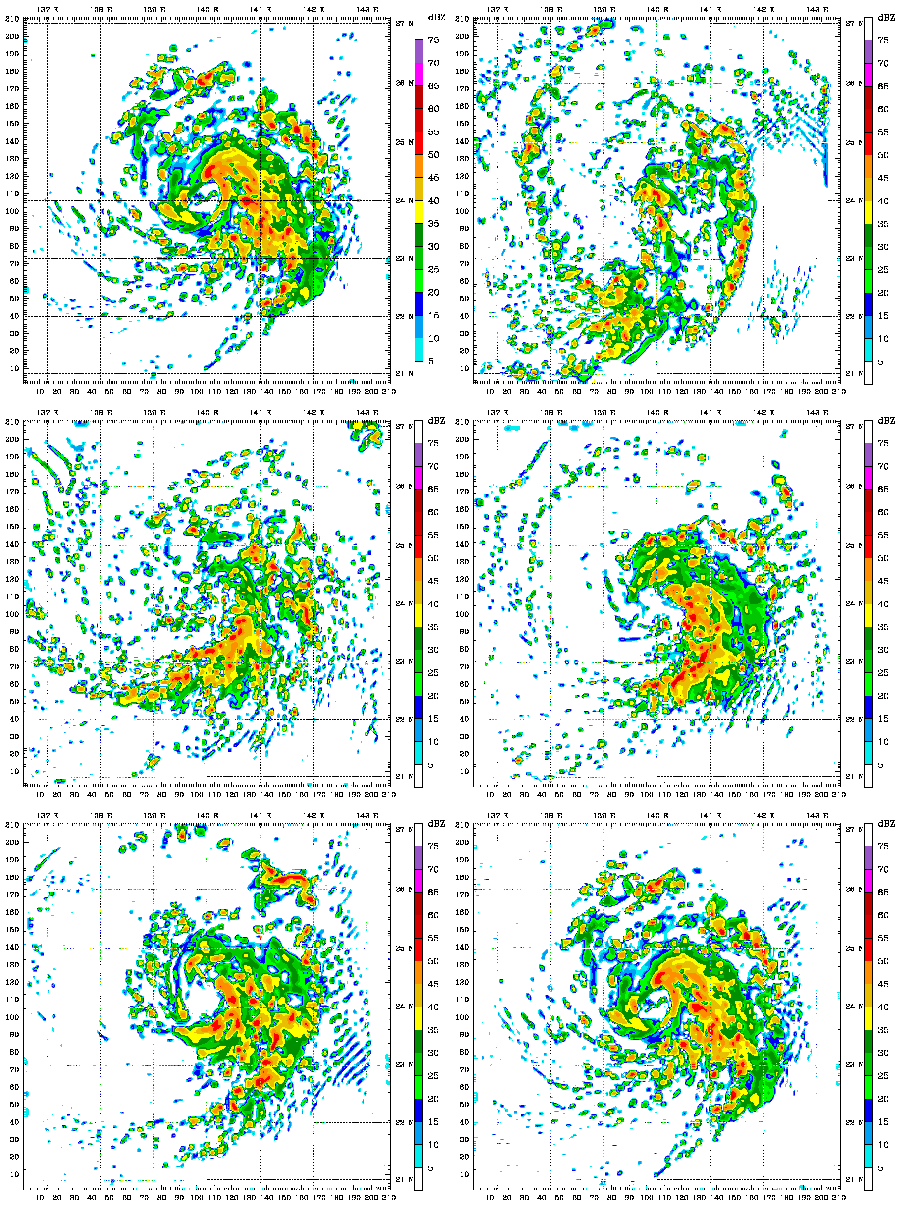
[edit]Formerly, the output data from a computer simulation was sometimes presented in a table or a matrix showing how data were affected by numerous changes in the simulation parameters. The use of the matrix format was related to traditional use of the matrix concept in mathematical models. However, psychologists and others noted that humans could quickly perceive trends by looking at graphs or even moving-images or motion-pictures generated from the data, as displayed by computer-generated-imagery (CGI) animation. Although observers could not necessarily read out numbers or quote math formulas, from observing a moving weather chart they might be able to predict events (and "see that rain was headed their way") much faster than by scanning tables of rain-cloud coordinates. Such intense graphical displays, which transcended the world of numbers and formulae, sometimes also led to output that lacked a coordinate grid or omitted timestamps, as if straying too far from numeric data displays. Today, weather forecasting models tend to balance the view of moving rain/snow clouds against a map that uses numeric coordinates and numeric timestamps of events.
Similarly, CGI computer simulations of CAT scans can simulate how a tumor might shrink or change during an extended period of medical treatment, presenting the passage of time as a spinning view of the visible human head, as the tumor changes.
Other applications of CGI computer simulations are being developed[as of?] to graphically display large amounts of data, in motion, as changes occur during a simulation run.
In science
[edit]
Generic examples of types of computer simulations in science, which are derived from an underlying mathematical description:
- a numerical simulation of differential equations that cannot be solved analytically, theories that involve continuous systems such as phenomena in physical cosmology, fluid dynamics (e.g., climate models, roadway noise models, roadway air dispersion models), continuum mechanics and chemical kinetics fall into this category.
- a stochastic simulation, typically used for discrete systems where events occur probabilistically and which cannot be described directly with differential equations (this is a discrete simulation in the above sense). Phenomena in this category include genetic drift, biochemical[9] or gene regulatory networks with small numbers of molecules. (see also: Monte Carlo method).
- multiparticle simulation of the response of nanomaterials at multiple scales to an applied force for the purpose of modeling their thermoelastic and thermodynamic properties. Techniques used for such simulations are Molecular dynamics, Molecular mechanics, Monte Carlo method, and Multiscale Green's function.
Specific examples of computer simulations include:
- statistical simulations based upon an agglomeration of a large number of input profiles, such as the forecasting of equilibrium temperature of receiving waters, allowing the gamut of meteorological data to be input for a specific locale. This technique was developed for thermal pollution forecasting.
- agent based simulation has been used effectively in ecology, where it is often called "individual based modeling" and is used in situations for which individual variability in the agents cannot be neglected, such as population dynamics of salmon and trout (most purely mathematical models assume all trout behave identically).
- time stepped dynamic model. In hydrology there are several such hydrology transport models such as the SWMM and DSSAM Models developed by the U.S. Environmental Protection Agency for river water quality forecasting.
- computer simulations have also been used to formally model theories of human cognition and performance, e.g., ACT-R.
- computer simulation using molecular modeling for drug discovery.[10]
- computer simulation to model viral infection in mammalian cells.[9]
- computer simulation for studying the selective sensitivity of bonds by mechanochemistry during grinding of organic molecules.[11]
- Computational fluid dynamics simulations are used to simulate the behaviour of flowing air, water and other fluids. One-, two- and three-dimensional models are used. A one-dimensional model might simulate the effects of water hammer in a pipe. A two-dimensional model might be used to simulate the drag forces on the cross-section of an aeroplane wing. A three-dimensional simulation might estimate the heating and cooling requirements of a large building.
- An understanding of statistical thermodynamic molecular theory is fundamental to the appreciation of molecular solutions. Development of the Potential Distribution Theorem (PDT) allows this complex subject to be simplified to down-to-earth presentations of molecular theory.
Notable, and sometimes controversial, computer simulations used in science include: Donella Meadows' World3 used in the Limits to Growth, James Lovelock's Daisyworld and Thomas Ray's Tierra.
In social sciences, computer simulation is an integral component of the five angles of analysis fostered by the data percolation methodology,[12] which also includes qualitative and quantitative methods, reviews of the literature (including scholarly), and interviews with experts, and which forms an extension of data triangulation. Of course, similar to any other scientific method, replication is an important part of computational modeling [13]
In practical contexts
[edit]This section needs additional citations for verification. (June 2022) |
Computer simulations are used in a wide variety of practical contexts, such as:
- analysis of air pollutant dispersion using atmospheric dispersion modeling
- As a possible humane alternative to live animal testing in respect to animal rights.
- design of complex systems such as aircraft and also logistics systems.
- design of noise barriers to effect roadway noise mitigation
- modeling of application performance[14]
- flight simulators to train pilots
- weather forecasting
- forecasting of risk
- simulation of electrical circuits
- Power system simulation
- simulation of other computers is emulation.
- forecasting of prices on financial markets (for example Adaptive Modeler)
- behavior of structures (such as buildings and industrial parts) under stress and other conditions
- design of industrial processes, such as chemical processing plants
- strategic management and organizational studies
- reservoir simulation for the petroleum engineering to model the subsurface reservoir
- process engineering simulation tools.
- robot simulators for the design of robots and robot control algorithms
- urban simulation models that simulate dynamic patterns of urban development and responses to urban land use and transportation policies.
- traffic engineering to plan or redesign parts of the street network from single junctions over cities to a national highway network to transportation system planning, design and operations. See a more detailed article on Simulation in Transportation.
- modeling car crashes to test safety mechanisms in new vehicle models.
- crop-soil systems in agriculture, via dedicated software frameworks (e.g. BioMA, OMS3, APSIM)
The reliability and the trust people put in computer simulations depends on the validity of the simulation model, therefore verification and validation are of crucial importance in the development of computer simulations. Another important aspect of computer simulations is that of reproducibility of the results, meaning that a simulation model should not provide a different answer for each execution. Although this might seem obvious, this is a special point of attention[editorializing] in stochastic simulations, where random numbers should actually be semi-random numbers. An exception to reproducibility are human-in-the-loop simulations such as flight simulations and computer games. Here a human is part of the simulation and thus influences the outcome in a way that is hard, if not impossible, to reproduce exactly.
Vehicle manufacturers make use of computer simulation to test safety features in new designs. By building a copy of the car in a physics simulation environment, they can save the hundreds of thousands of dollars that would otherwise be required to build and test a unique prototype. Engineers can step through the simulation milliseconds at a time to determine the exact stresses being put upon each section of the prototype.[15]
Computer graphics can be used to display the results of a computer simulation. Animations can be used to experience a simulation in real-time, e.g., in training simulations. In some cases animations may also be useful in faster than real-time or even slower than real-time modes. For example, faster than real-time animations can be useful in visualizing the buildup of queues in the simulation of humans evacuating a building. Furthermore, simulation results are often aggregated into static images using various ways of scientific visualization.
In debugging, simulating a program execution under test (rather than executing natively) can detect far more errors than the hardware itself can detect and, at the same time, log useful debugging information such as instruction trace, memory alterations and instruction counts. This technique can also detect buffer overflow and similar "hard to detect" errors as well as produce performance information and tuning data.
Pitfalls
[edit]Although sometimes ignored in computer simulations, it is very important[editorializing] to perform a sensitivity analysis to ensure that the accuracy of the results is properly understood. For example, the probabilistic risk analysis of factors determining the success of an oilfield exploration program involves combining samples from a variety of statistical distributions using the Monte Carlo method. If, for instance, one of the key parameters (e.g., the net ratio of oil-bearing strata) is known to only one significant figure, then the result of the simulation might not be more precise than one significant figure, although it might (misleadingly) be presented as having four significant figures.
See also
[edit]References
[edit]- ^ Strogatz, Steven (2007). "The End of Insight". In Brockman, John (ed.). What is your dangerous idea?. HarperCollins. ISBN 9780061214950.
- ^ "Researchers stage largest Military Simulation ever". Jet Propulsion Laboratory. Caltech. December 4, 1997. Archived from the original on 2008-01-22.
- ^ "Molecular Simulation of Macroscopic Phenomena". IBM Research - Almaden. Archived from the original on 2013-05-22.
- ^ "Los Alamos National Laboratory has led the world in developing and using computer simulations to understand the world around us". Los Alamos, NM: Los Alamos National Laboratory. December 2020. Archived from the original on 2007-07-04.
- ^ Graham-Rowe, Duncan (June 6, 2005). "Mission to build a simulated brain begins". New Scientist. Archived from the original on 2015-02-09.
- ^ Santner, Thomas J; Williams, Brian J; Notz, William I (2003). The design and analysis of computer experiments. Springer Verlag.
- ^ Bratley, Paul; Fox, Bennet L.; Schrage, Linus E. (2011-06-28). A Guide to Simulation. Springer Science & Business Media. ISBN 9781441987242.
- ^ John Robert Taylor (1999). An Introduction to Error Analysis: The Study of Uncertainties in Physical Measurements. University Science Books. pp. 128–129. ISBN 978-0-935702-75-0. Archived from the original on 2015-03-16.
- ^ a b Gupta, Ankur; Rawlings, James B. (April 2014). "Comparison of Parameter Estimation Methods in Stochastic Chemical Kinetic Models: Examples in Systems Biology". AIChE Journal. 60 (4): 1253–1268. Bibcode:2014AIChE..60.1253G. doi:10.1002/aic.14409. ISSN 0001-1541. PMC 4946376. PMID 27429455.
- ^ Atanasov, AG; Waltenberger, B; Pferschy-Wenzig, EM; Linder, T; Wawrosch, C; Uhrin, P; Temml, V; Wang, L; Schwaiger, S; Heiss, EH; Rollinger, JM; Schuster, D; Breuss, JM; Bochkov, V; Mihovilovic, MD; Kopp, B; Bauer, R; Dirsch, VM; Stuppner, H (2015). "Discovery and resupply of pharmacologically active plant-derived natural products: A review". Biotechnol Adv. 33 (8): 1582–614. doi:10.1016/j.biotechadv.2015.08.001. PMC 4748402. PMID 26281720.
- ^ Mizukami, Koichi; Saito, Fumio; Baron, Michel. Study on grinding of pharmaceutical products with an aid of computer simulation Archived 2011-07-21 at the Wayback Machine
- ^ Mesly, Olivier (2015). Creating Models in Psychological Research. United States: Springer Psychology: 126 pages. ISBN 978-3-319-15752-8
- ^ Wilensky, Uri; Rand, William (2007). "Making Models Match: Replicating an Agent-Based Model". Journal of Artificial Societies and Social Simulation. 10 (4): 2.
- ^ Wescott, Bob (2013). The Every Computer Performance Book, Chapter 7: Modeling Computer Performance. CreateSpace. ISBN 978-1482657753.
- ^ Baase, Sara. A Gift of Fire: Social, Legal, and Ethical Issues for Computing and the Internet. 3. Upper Saddle River: Prentice Hall, 2007. Pages 363–364. ISBN 0-13-600848-8.
Further reading
[edit]- Young, Joseph and Findley, Michael. 2014. "Computational Modeling to Study Conflicts and Terrorism." Routledge Handbook of Research Methods in Military Studies edited by Soeters, Joseph; Shields, Patricia and Rietjens, Sebastiaan. pp. 249–260. New York: Routledge,
- R. Frigg and S. Hartmann, Models in Science. Entry in the Stanford Encyclopedia of Philosophy.
- E. Winsberg Simulation in Science. Entry in the Stanford Encyclopedia of Philosophy.
- S. Hartmann, The World as a Process: Simulations in the Natural and Social Sciences, in: R. Hegselmann et al. (eds.), Modelling and Simulation in the Social Sciences from the Philosophy of Science Point of View, Theory and Decision Library. Dordrecht: Kluwer 1996, 77–100.
- E. Winsberg, Science in the Age of Computer Simulation. Chicago: University of Chicago Press, 2010.
- P. Humphreys, Extending Ourselves: Computational Science, Empiricism, and Scientific Method. Oxford: Oxford University Press, 2004.
- James J. Nutaro (2011). Building Software for Simulation: Theory and Algorithms, with Applications in C++. John Wiley & Sons. ISBN 978-1-118-09945-2.
- Desa, W. L. H. M., Kamaruddin, S., & Nawawi, M. K. M. (2012). Modeling of Aircraft Composite Parts Using Simulation. Advanced Material Research, 591–593, 557–560.
External links
[edit]Computer simulation
View on GrokipediaFundamentals
Definition and Overview
Computer simulation is the use of a computer program to imitate the operation of real-world processes or systems over time, typically to investigate their behavior under different conditions or scenarios.[2][1] This approach leverages computational power to replicate dynamic interactions, enabling virtual experimentation that mirrors physical, biological, or abstract phenomena without direct intervention in the actual environment. By serving as a bridge between theoretical models and empirical reality, computer simulation facilitates deeper insights into complex systems that are difficult or impossible to observe directly.[7] At its core, a computer simulation system comprises several basic components: input data that specifies initial conditions and parameters, model algorithms that encode the rules governing system evolution, a computational environment to execute the iterations, and output results that visualize or quantify the simulated outcomes.[8] These elements work together to approximate real-system dynamics, allowing users to input variables, run iterative calculations, and analyze emergent patterns. The process supports prediction by forecasting potential outcomes, optimization by testing configurations for efficiency, and safe experimentation by exploring "what-if" scenarios free from real-world risks such as financial loss or safety hazards.[9][10] Illustrative examples highlight the versatility of computer simulation. A simple probabilistic simulation might replicate coin flips to estimate the likelihood of heads or tails over thousands of trials, demonstrating convergence to expected probabilities through repeated random events.[11] In a more applied context, simulations of urban traffic flow can model vehicle movements, signal timings, and congestion patterns to inform planning decisions that enhance mobility and reduce delays.[12] Such cases underscore how simulations can be discrete or continuous, depending on the system's nature, as explored in subsequent sections.Simulation versus Modeling
Modeling refers to the creation of abstract representations—mathematical, logical, or computational—of real-world systems to capture their essential behaviors and relationships.[13] These representations simplify complex phenomena by focusing on key variables and interactions while abstracting away irrelevant details.[14] The primary distinction between modeling and simulation lies in their roles: modeling constructs the representational framework, often through static or dynamic equations that describe system states, whereas simulation involves iteratively executing that model computationally to produce dynamic outputs over time or across scenarios.[15] In modeling, the emphasis is on formulation and abstraction; in simulation, the focus shifts to implementation, where the model is "run" to observe evolving behaviors under specified conditions.[13] Simulation builds directly on a model, requiring it as a foundational element but extending it through computational execution, repeated iterations, and testing of varied scenarios to explore outcomes.[14] Conversely, models can stand alone without simulation, such as when analytical solutions allow direct computation of results without iterative runs.[15] This relationship positions simulation as an operational tool that animates models to mimic real-system dynamics. Inputs for simulation often refine models with real data to enhance accuracy.[13] A key advantage of simulation over pure modeling is its ability to manage high levels of complexity, nonlinearity, and uncertainty that render analytical modeling intractable or overly simplistic.[14] While analytical models may yield closed-form solutions for linear systems, simulations approximate behaviors in nonlinear environments by discretizing time or events, incorporating stochastic elements, and scaling to multifaceted interactions.[15] For instance, the logistic equation, , serves as a mathematical model for population growth, where is population size, is the growth rate, and is the carrying capacity; it can be solved analytically to predict equilibrium.[16] Simulating this model computationally, however, allows iteration with varying initial conditions or parameters—such as fluctuating due to environmental uncertainty—to generate time-series predictions and visualize trajectories under different scenarios.[17]History
Early Developments
The origins of computer simulation trace back to the pre-digital era, where analog mechanical devices were employed to model complex natural phenomena. In 1872–1873, William Thomson, later known as Lord Kelvin, designed and constructed the first tide-predicting machine, a mechanical analog computer that simulated tidal variations by mechanically summing multiple harmonic components derived from astronomical influences. This device used interconnected gears to represent the amplitudes and phases of cyclic motions from the Earth, Sun, and Moon, with a hand-cranked mechanism tracing predicted tide heights on paper over a year's period in just four hours. Such innovations marked an early form of simulation by replicating physical processes through mechanical linkages rather than direct observation.[18] Building on these foundations, mechanical integrators emerged in the late 19th century to solve differential equations, providing a means to simulate dynamic systems like fluid flows and oscillations. James Thomson, Lord Kelvin's brother, developed disk-and-sphere integrators in the 1870s, initially for analyzing tide gauge data by integrating functions from graphical records. By 1886, these were refined into practical mechanical integrators for tide prediction and extended to broader applications, such as electrical network analysis, laying the groundwork for analog computation of continuous processes. Vannevar Bush's 1931 differential analyzer at MIT further advanced this by linking multiple Thomson-style integrators with torque amplifiers to handle higher-order differential equations, simulating scenarios in ballistics and engineering before electronic computers existed.[19] The transition to digital simulation accelerated during World War II, particularly through the Manhattan Project, where early electronic computers addressed nuclear weapon design challenges. The ENIAC, completed in 1946, was repurposed from artillery calculations to perform simulations of nuclear implosions and neutron behavior, requiring extensive manual reconfiguration but enabling unprecedented computational scale for Los Alamos scientists. John von Neumann played a pivotal role, contributing to the Monte Carlo method in 1946 alongside Stanislaw Ulam, a probabilistic technique that modeled random neutron paths in atomic bomb assemblies using statistical sampling on early computers. This approach, first implemented on ENIAC in 1948, revolutionized simulations of uncertain physical processes by approximating solutions to intractable equations through repeated random trials.[20][21] Punch-card systems and rudimentary programming facilitated these early digital efforts, processing vast datasets for simulations of physical phenomena like fluid dynamics in explosive implosions at Los Alamos from 1944 onward. IBM tabulators and sorters, handling millions of cards, computed hydrodynamic equations iteratively, bridging mechanical data handling with electronic execution. By the early 1950s, this infrastructure supported the first numerical weather simulations; in 1950, Jule Charney, Arnt Eliassen, and John von Neumann used ENIAC to integrate the barotropic vorticity equation over 24 hours, producing a rudimentary 24-hour forecast that validated computational meteorology. These milestones established simulation as a core computational tool, influencing subsequent high-performance methods.[22][23]Modern Advances
The 1970s and 1980s marked a significant expansion in computer simulation capabilities, particularly through the rise of finite element methods (FEM) for engineering applications. FEM, which discretizes complex structures into smaller elements to approximate solutions to partial differential equations, gained prominence for simulating dynamic behaviors such as structural crashes and vibrations in automotive and aerospace designs.[24] This period also saw the extending influence of SIMULA, a programming language originally developed in the 1960s, which introduced object-oriented concepts and class structures that facilitated more modular and reusable simulation code, impacting subsequent discrete event simulations.[25] Key milestones included the World3 system dynamics model, used in the 1972 report The Limits to Growth to simulate global interactions among population, industrial output, resources, and pollution, projecting potential societal collapse if growth trends continued unchecked.[26] Another was the Daisyworld model, introduced in 1983, which demonstrated planetary self-regulation through a simple simulation of black and white daisies modulating surface albedo to stabilize temperature under varying solar luminosity, supporting the Gaia hypothesis.[27] In the 1990s and 2000s, simulations increasingly integrated with high-performance computing (HPC), enabling larger-scale and more realistic models across disciplines. This era leveraged parallel processing and supercomputers to handle complex computations, such as fluid dynamics and electromagnetic simulations, accelerating adoption in scientific research and industry.[28] A notable example was a 1997 U.S. military simulation of a desert battle, modeling 66,239 vehicles including tanks and trucks on dynamic terrain to evaluate tactical scenarios, showcasing HPC's role in operational planning.[29] These advancements allowed for petascale simulations by the mid-2000s, transforming fields like weather forecasting and materials science. From the 2010s onward, pursuits toward exascale computing—systems capable of at least one exaFLOP (10^18 floating-point operations per second)—have driven unprecedented simulation fidelity, with milestones including the deployment of the Frontier supercomputer in 2022 as the first exascale system, followed by Aurora in 2024 as the second, and JUPITER in 2025 as Europe's first exascale supercomputer.[30][31][32] Such platforms enable detailed climate models underpinning IPCC reports, like those in the Sixth Assessment Report (2021), which use coupled atmosphere-ocean simulations to project global warming scenarios under various emission pathways, achieving resolutions down to kilometers for regional impacts.[33] In biology, AlphaFold's 2020 breakthrough integrated deep learning with evolutionary data to predict protein structures with atomic accuracy (median GDT_TS score of 92.4 in CASP14), revolutionizing folding simulations by reducing computation time from years to hours and aiding drug discovery.[34] By 2025, trends in computer simulation emphasize open-source tools and cloud-based platforms, democratizing access to high-fidelity modeling. Open-source frameworks like those extending CloudSim facilitate scalable simulations of distributed systems, while cloud services support on-demand HPC for collaborative research, with the global cloud-based simulation market projected to grow at 15-20% annually due to cost efficiencies and elasticity.[35] Recent advances also incorporate AI for enhanced predictive accuracy, as explored in subsequent sections.Classification
Discrete and Continuous Simulations
Computer simulations are classified into discrete and continuous types based on how they handle the progression of time and state changes in the modeled system. Discrete simulations advance the system state only at specific, predefined event times, while continuous simulations model variables that evolve smoothly over time. This distinction allows for tailored approaches to different types of systems, such as event-driven processes versus those governed by physical laws.[36] In discrete simulations, the system's state remains constant between discrete events, and updates occur instantaneously at event occurrences, such as arrivals or departures in a queueing system. The key method is event scheduling, where future events are queued and processed in chronological order to simulate the system's evolution efficiently without unnecessary computations during idle periods. A basic representation uses a difference equation, such as , where is the state at time , denotes the event, and defines the state transition.[36] This approach is particularly suited for modeling manufacturing assembly lines, where events like part arrivals or machine failures drive the simulation. Continuous simulations, in contrast, represent systems where state variables change continuously and smoothly over time, often described by ordinary differential equations (ODEs). These are solved numerically using integration methods, such as the Runge-Kutta family of algorithms, which approximate the solution by evaluating the derivative at multiple points within each time step for improved accuracy./06:_ContinuousTime_Models_I__Modeling/6.04:_Simulating_Continuous-Time_Models) A foundational ODE form is , where is the state variable and captures the rate of change.[38] Examples include simulating chemical reaction kinetics, where concentrations evolve continuously according to reaction rates, or fluid dynamics in pipelines modeled via Navier-Stokes equations.[39] Hybrid simulations integrate discrete and continuous elements to model complex systems that exhibit both behaviors, such as cyber-physical systems where discrete control logic interacts with continuous physical processes. These approaches synchronize event-driven updates with numerical integration steps, often using tools like hybrid automata to manage transitions between modes.[40] For instance, in automotive control systems, discrete sensor triggers may adjust continuous engine dynamics.[41]Stochastic and Deterministic Simulations
Deterministic simulations produce outputs that are entirely predictable and fixed given the same initial conditions and inputs, as they rely on solving mathematical equations without any incorporation of random variables. For instance, in physics, deterministic simulations are commonly used to model planetary motion by numerically integrating Newton's equations of motion, yielding precise trajectories for celestial bodies under gravitational forces. Similarly, in electronic engineering, deterministic simulations of circuit design involve solving systems of differential equations to predict voltage and current behaviors in response to deterministic inputs, enabling reliable verification of hardware performance without variability. In contrast, stochastic simulations explicitly incorporate randomness to model uncertainty and variability inherent in real-world systems, often through probabilistic models that generate a distribution of possible outcomes rather than a single fixed result. A prominent example is the Monte Carlo method, which uses repeated random sampling to approximate solutions to complex problems, such as estimating integrals or probabilities in high-dimensional spaces. Originally developed for neutron diffusion calculations, this approach relies on generating sequences of random numbers to simulate random processes, providing statistical estimates of expected values. In finance, stochastic simulations via Monte Carlo methods are widely applied for risk assessment, such as valuing options or forecasting portfolio losses by modeling uncertain market variables like stock price fluctuations. Key techniques in stochastic simulations include the use of pseudo-random number generators (PRNGs) to produce sequences that mimic true randomness for efficient computation, as true random sources are impractical for large-scale runs. Seminal work on PRNGs emphasizes algorithms like linear congruential generators, which ensure statistical properties suitable for simulations while remaining deterministic for reproducibility. To improve accuracy and reduce computational cost, variance reduction methods such as importance sampling are employed; this technique shifts the sampling distribution toward regions of higher importance for the integrand, minimizing the variance of the estimator compared to crude Monte Carlo sampling. The core of the Monte Carlo method for numerical integration can be expressed as follows: for an integral , where is integrable over , the estimate is with drawn independently from a uniform distribution on ; as , converges to by the law of large numbers. Due to the stochastic nature, outputs include confidence intervals to quantify uncertainty, typically constructed via the central limit theorem: for large , is approximately normally distributed with mean and standard error , where is the variance of , yielding a 95% confidence interval of .Distributed and Agent-Based Simulations
Distributed simulations involve executing computational models across multiple processors or networked computers to handle large-scale problems that exceed the capacity of single machines. These simulations partition the model into components that run concurrently, enabling greater scalability for complex systems such as military training exercises or large-scale engineering analyses. A key standard for achieving interoperability among such distributed components is the High Level Architecture (HLA), developed by IEEE, which defines rules for federation execution model (FEM) and interface specifications to allow simulations from different developers to integrate seamlessly.[42][43] Scalability in distributed simulations presents challenges, particularly in synchronization, where processes must coordinate to maintain causal consistency across nodes without excessive communication overhead. Optimistic approaches like the Time Warp algorithm address this by allowing logical processes to advance independently and rollback erroneous computations using state saving and message cancellation, though this can lead to inefficiencies from frequent rollbacks in unbalanced workloads. Load balancing techniques, such as dynamic process migration in Time Warp systems, redistribute computational load during execution to mitigate hotspots and improve overall performance.[44][45] Agent-based simulations model systems as collections of autonomous agents, each following simple rules for decision-making and interaction within an environment, often to study emergent phenomena in social, biological, or economic contexts. In these models, agents perceive their surroundings, act based on local information, and adapt over time, leading to global patterns that arise unpredictably from local interactions, such as flocking behaviors or market dynamics. A seminal framework for agent-based modeling emphasizes this bottom-up approach, where macroscopic outcomes emerge from microscopic agent rules without central control.[46][47] The core update mechanism in agent-based simulations typically follows an iterative form, where an agent's state evolves based on its current state and interactions with neighbors or the environment: Here, denotes the agent's state vector at time , represents interaction inputs (e.g., messages from other agents or environmental feedback), and is a rule-based function defining the update logic, often incorporating stochastic elements for realism.[46] Emergence in agent-based simulations refers to the spontaneous formation of complex structures or behaviors from decentralized interactions, as seen in epidemiology models where individual agent mobility rules yield widespread outbreak patterns. Scalability challenges in these simulations include managing millions of agents across distributed platforms, requiring efficient synchronization to handle inter-agent communications without bottlenecks.[47] Representative examples include traffic simulations, where vehicle agents navigate roads using local rules for acceleration, lane-changing, and collision avoidance, revealing emergent congestion waves from individual decisions. In climate modeling, distributed simulations partition global atmospheric and oceanic components across supercomputer nodes, enabling high-resolution forecasts; for instance, parallel implementations of Earth system models like CESM run on distributed-memory architectures to simulate coupled processes over decades.[48][49]Simulation Process
Data Preparation
Data preparation forms the foundational step in computer simulation, involving the collection, refinement, and organization of input data to ensure the reliability of subsequent modeling efforts. Data sources typically include empirical measurements obtained from real-world observations, such as sensor readings or experimental results; historical records drawn from archived datasets like production logs or environmental monitoring archives; and synthetic data generated through algorithms or preliminary simulations to augment limited real data or address privacy concerns. These sources must be selected based on their alignment with the simulation's objectives, as mismatched inputs can propagate errors throughout the process.[50][51] Key processes in data preparation encompass cleaning, normalization, and sensitivity analysis. Cleaning addresses issues like missing values, which can be imputed using statistical methods such as mean substitution or more advanced techniques like k-nearest neighbors, and outliers, identified via statistical tests (e.g., Z-score or interquartile range) and either removed or corrected to prevent distortion of simulation outcomes. Normalization scales data to a common range, often using min-max scaling or z-score standardization, to facilitate comparison across variables with differing units or magnitudes. Sensitivity analysis evaluates how variations in input parameters affect simulation outputs, employing methods like one-at-a-time perturbations or variance-based approaches (e.g., Sobol indices) to prioritize influential factors and refine data inputs accordingly. These steps ensure inputs are robust and suitable for model assumptions.[52][53][54][55] Challenges in data preparation primarily revolve around ensuring data quality and relevance to the underlying model assumptions, as poor-quality inputs—such as incomplete, inconsistent, or biased data—can undermine simulation validity and lead to unreliable predictions. For instance, discrepancies between data granularity and model requirements may necessitate aggregation or disaggregation, while ensuring relevance involves verifying that data distributions match expected simulation behaviors to avoid violations of assumptions like independence or stationarity. Tools like Python's Pandas library support these tasks by providing efficient structures for loading, manipulating, and transforming tabular data, including functions for handling missing values and normalization without requiring extensive coding.[56] A practical example is preparing sensor data for a flight simulator, where raw inputs from accelerometers, gyroscopes, and airspeed indicators undergo calibration to correct for biases and scale factors derived from ground tests or known flight maneuvers. This process includes outlier detection to filter noise from environmental interference and normalization to align measurements with the simulator's coordinate system, ultimately feeding accurate dynamics into the model for realistic trajectory predictions.[57]Model Development and Validation
Model development in computer simulation begins with conceptual modeling, where the system's key entities, processes, and relationships are identified and defined based on the problem objectives and available data. This stage involves collecting authoritative information about the domain, such as physical laws or operational doctrines, to outline the simulation context and determine the level of detail required for representation.[58] For instance, entities like agents or components are enumerated, and their behaviors are specified to ensure the model captures essential dynamics without unnecessary complexity.[58] Following conceptualization, the model is formalized using structured representations such as flowcharts, entity-relationship diagrams, or pseudocode to translate abstract ideas into a precise, unambiguous specification. This step ensures completeness, consistency, and correctness by addressing relationships among model elements and potential constraints in the simulation environment.[58] Implementation then occurs by coding the formalized model in specialized simulation languages or software tools, such as Arena for discrete-event simulations or Modelica for multi-domain physical modeling, which facilitate efficient execution and testing.[59][60] Verification ensures that the implemented model correctly realizes the intended conceptual and formalized logic, typically through systematic debugging, code reviews, and trace checks to identify and eliminate implementation errors.[61] This process confirms that the computer program functions as specified, often involving animation or stepwise execution to inspect internal states.[61] Validation assesses whether the model accurately represents the real-world system within its domain of applicability, using an iterative approach that builds confidence through multiple techniques. Face validation involves expert review to judge the model's reasonableness and logical structure.[61] Statistical tests, such as the chi-square goodness-of-fit test, compare simulated outputs to historical or empirical data to quantify discrepancies.[61] Sensitivity analysis examines how variations in input parameters affect outputs, revealing model robustness and identifying critical assumptions.[61] Key criteria for validation include accuracy in replicating observed behaviors, precision in output distributions, and calibration against established benchmarks to minimize bias.[61] For example, climate models are validated by comparing simulated historical temperature changes to observational records, using regression techniques to attribute variations to forcings like greenhouse gases while accounting for uncertainties in data and natural variability.[62] This ensures the model's predictions align with known past events before application to future scenarios.[62]Execution and Analysis
The execution of a computer simulation begins with the initialization phase, where initial conditions, parameters, and system states are established based on the model's specifications.[63] This setup ensures the simulation starts from a defined baseline, often involving seeding random number generators for stochastic elements or loading input data.[64] Following initialization, the core iteration phase unfolds through repeated cycles, such as time-stepping loops in continuous simulations or event-driven updates in discrete-event models, where the system's dynamics are advanced according to predefined rules.[65] The process concludes in the termination phase upon meeting conditions like a fixed number of iterations, elapsed simulation time, or convergence criteria. Once executed, analysis of simulation results focuses on extracting insights to inform decision-making. Statistical summaries, including means, variances, and confidence intervals of key output variables, provide measures of central tendency and variability in system performance.[64] Scenario comparison evaluates outputs across varying input parameters or assumptions, highlighting sensitivities and trade-offs.[66] Optimization techniques, such as response surface methodology or genetic algorithms integrated with simulation, iteratively tune parameters to minimize costs or maximize efficiency while respecting constraints.[67] These methods rely on validated models to ensure reliability.[68] Computational considerations are essential for efficient execution, particularly in resource-intensive simulations. Resource management involves allocating CPU, memory, and storage to handle model complexity, often using high-performance computing clusters to avoid bottlenecks.[69] Batch runs enable parallel execution of multiple scenarios, automating the process to generate comprehensive datasets without manual intervention for each case.[70] Simulation outputs typically include time-series data capturing variable evolution over simulated time, probability distributions of endpoint metrics, and preliminary setups for further visualization.[71] For instance, in investment portfolio risk analysis, Monte Carlo simulations perform thousands of iterations by sampling from asset return distributions, yielding output distributions that quantify metrics like Value at Risk (VaR), the potential loss exceeding a threshold with a given probability.[72] This approach reveals the likelihood of portfolio drawdowns under uncertainty, aiding risk mitigation strategies.[73]Visualization
Techniques
Visualization techniques in computer simulation transform complex numerical outputs into graphical representations that facilitate interpretation, pattern recognition, and decision-making by revealing trends, anomalies, and relationships in data that might otherwise remain obscured. These methods are essential for simulation results, enabling researchers and practitioners to gain intuitive insights into dynamic processes across fields like physics, biology, and engineering.[74] Core techniques include two-dimensional (2D) and three-dimensional (3D) graphs, which provide foundational ways to depict simulation data. Line plots are commonly used to illustrate time series data, showing how variables evolve over simulated time steps, such as tracking temperature fluctuations in a climate model.[74] Scatter plots, on the other hand, visualize correlations between two or more variables by plotting data points in a coordinate system, helping to identify clusters or outliers, for instance, in parameter sensitivity analyses.[74] For dynamic processes, animations extend these static graphs by sequencing frames to depict temporal changes, such as the progression of wavefronts in wave propagation simulations, enhancing understanding of motion and causality.[75] Advanced methods build on these basics to handle more intricate data structures. Heatmaps represent spatial data through color-coded matrices, where intensity variations highlight density or magnitude, such as mapping stress distributions in structural simulations.[76] Virtual reality (VR) offers immersive 3D environments for exploring simulation outputs, allowing users to interact with scaled models; in surgical training simulations, VR enables trainees to navigate anatomical structures and practice procedures in a risk-free setting.[77] Effective visualization in simulations adheres to key principles of clarity, ensuring that graphical elements directly convey intended information without distortion or overload; scalability, which allows representations to adapt to varying data volumes without loss of fidelity; and interactivity, permitting users to manipulate views, such as zooming into large datasets for detailed inspection.[78] These principles guide the selection of techniques to maintain perceptual accuracy and user engagement. Illustrative examples demonstrate these techniques' utility. In fluid dynamics simulations, particle traces visualize flow paths by advecting virtual particles along velocity fields, revealing vortices and streamlines in turbulent regimes.[79] For epidemic spread simulations, network graphs depict interactions as nodes and edges, with colors or sizes indicating infection status over time, aiding in the assessment of containment strategies.[80] Handling high-dimensional simulation data poses unique challenges, often addressed through dimensionality reduction like principal component analysis (PCA), which projects data onto lower-dimensional subspaces capturing maximum variance, enabling 2D or 3D visualizations of multivariate outputs such as molecular dynamics trajectories.[81] This approach preserves essential structures while mitigating the "curse of dimensionality," though care must be taken to interpret reduced components in context of the original variables.[81]Tools and Software
Computer simulation relies on a variety of tools and software frameworks designed for modeling, execution, and analysis across different domains. General-purpose platforms like MATLAB and its Simulink extension are widely used for continuous simulations, providing block diagram environments for modeling dynamic systems, solving differential equations, and supporting model-based design with integrated solvers.[82] Similarly, Python libraries such as NumPy and SciPy enable the development of custom simulation models through efficient numerical computing, array operations, and scientific algorithms for tasks like integration and optimization. Specialized software addresses domain-specific needs, enhancing precision in complex scenarios. AnyLogic supports agent-based simulations by combining discrete-event, system dynamics, and agent-oriented approaches in a single platform, allowing users to model individual entities and their interactions for industrial and research applications.[83] COMSOL Multiphysics facilitates simulations involving multiple physical phenomena, such as fluid-structure interactions, through finite element analysis and coupled solvers.[84] For computational fluid dynamics (CFD), the open-source OpenFOAM toolbox offers customizable solvers and utilities for continuum mechanics problems, including turbulent flows and heat transfer, with a large engineering user base.[85] Recent trends in simulation software emphasize scalability through cloud platforms and hardware acceleration. As of 2025, cloud services enable large-scale spatial simulations by distributing workloads across instances to handle city-sized models without managing underlying infrastructure.[86] Integration with GPUs has become prominent for accelerating compute-intensive simulations, improving performance in areas like CFD and multiphysics by leveraging parallel processing capabilities.[87] Dedicated visualization tools complement these platforms by focusing on rendering and interacting with simulation outputs. ParaView, an open-source application, supports parallel processing for visualizing large datasets from scientific simulations, such as those in CFD and astrophysics.[88] VisIt provides capabilities for interactive analysis and rendering of multidimensional, parallel, and time-varying simulation data, commonly used in high-performance computing environments.[89] When selecting simulation tools, key criteria include ease of use for rapid prototyping, scalability to handle increasing model complexity, and extensibility for custom integrations or extensions.[90] These factors ensure the software aligns with project requirements, from educational setups to enterprise deployments. For instance, NetLogo is particularly suited for educational agent-based simulations, offering a simple programming environment to explore emergent behaviors in complex systems like ecosystems or social dynamics. Many of these tools include built-in visualization options, such as plotting libraries, to aid in result interpretation.Applications
In Scientific Research
Computer simulations play a pivotal role in scientific research by enabling the testing of hypotheses that are difficult or impossible to verify through direct experimentation, particularly in probing unobservable phenomena such as black hole mergers detected by gravitational wave observatories like LIGO. These simulations model complex systems under extreme conditions, allowing researchers to predict outcomes and validate theoretical frameworks against observational data. For instance, numerical relativity simulations of binary black hole inspirals and mergers provide templates for interpreting LIGO signals, confirming general relativity in strong-field regimes. In physics and cosmology, simulations facilitate the exploration of fundamental interactions and large-scale structure formation. In particle physics, computer simulations are essential for analyzing data from high-energy collisions at facilities like CERN's Large Hadron Collider (LHC), where they generate theoretical predictions of particle production and decay to compare with experimental results. These Monte Carlo-based simulations account for quantum chromodynamics and electroweak interactions, aiding in the discovery of particles like the Higgs boson by filtering and reconstructing events from vast datasets. In cosmology, N-body simulations model the gravitational evolution of dark matter and baryonic particles, reproducing the observed cosmic web of galaxies and clusters from initial density perturbations in the early universe. Such simulations, often employing stochastic methods to incorporate uncertainties, have been crucial in constraining parameters for the Lambda-CDM model. In biology and chemistry, molecular dynamics (MD) simulations drive drug discovery by modeling atomic-level interactions between candidate compounds and target proteins, predicting binding affinities and conformational changes over timescales inaccessible to experiments. These simulations use force fields to integrate Newton's equations, enabling virtual screening of millions of molecules to identify leads for diseases like cancer or Alzheimer's. In ecology, agent-based and differential equation models simulate ecosystem dynamics, such as predator-prey interactions and biodiversity responses to environmental stressors, helping to forecast the impacts of habitat fragmentation or invasive species. In climate and Earth sciences, the Weather Research and Forecasting (WRF) model simulates atmospheric processes at high resolution, integrating observational data to predict weather patterns and extreme events like hurricanes, which informs climate adaptation strategies. For geological processes, finite element and fluid dynamics simulations reconstruct tectonic movements and mantle convection, elucidating phenomena like plate subduction and volcanic activity over millions of years. A key example in statistical mechanics involves Monte Carlo simulations employing the Boltzmann distribution to compute thermodynamic properties of materials, such as phase transitions in alloys or polymers, by sampling configurational states proportional to their exponential energy dependence.In Engineering and Industry
In engineering and industry, computer simulations enable the virtual design, testing, and optimization of complex systems, reducing the need for physical prototypes and accelerating development cycles. These simulations leverage numerical methods to model physical phenomena, allowing engineers to predict performance under real-world conditions without incurring the high costs of trial-and-error experimentation. For instance, finite element analysis (FEA) and computational fluid dynamics (CFD) are widely used to simulate structural integrity and fluid flows, respectively, ensuring safer and more efficient products.[91][92] In the aerospace and automotive sectors, simulations play a critical role in crash testing and aerodynamics optimization. FEA models replicate vehicle impacts to assess occupant safety and structural deformation, as demonstrated in full-vehicle models developed by the National Highway Traffic Safety Administration (NHTSA) for frontal crash scenarios. These models incorporate detailed representations of vehicle interiors, restraint systems, and materials to predict injury risks and validate safety standards. Similarly, CFD simulations analyze airflow around vehicles to minimize drag and improve fuel efficiency; for example, studies on the DrivAer benchmark model have validated CFD predictions against wind-tunnel data, enabling precise aerodynamic refinements for automotive designs.[92][93][94] Manufacturing processes benefit from simulations that optimize workflows and automate operations. Supply chain simulations model inventory flows, transportation logistics, and demand variability to identify bottlenecks and enhance resilience; simulation-optimization techniques iteratively adjust parameters to minimize costs and delays, as outlined in comprehensive reviews of agricultural and general supply chain applications. In robotics, path planning simulations employ grid-based and sampling methods to generate collision-free trajectories for industrial robots, ensuring efficient material handling and assembly line performance.[95][96][97] The energy sector utilizes simulations to ensure system reliability and efficiency. Power grid stability simulations model transient events like faults or load changes using dynamic equations, with tools from Sandia National Laboratories enabling real-time analysis of transmission networks to prevent blackouts. Nuclear reactor modeling employs multi-physics simulations to predict core behavior, neutronics, and thermal hydraulics, as advanced by the U.S. Department of Energy's Nuclear Energy Advanced Modeling and Simulation (NEAMS) program, which integrates empirical and predictive models for safer reactor designs.[98][99][100] Key benefits of these simulations include substantial cost reductions and accelerated prototyping. By identifying design flaws virtually, companies avoid expensive physical iterations, significantly reducing development costs in product lifecycle management. Digital twins—virtual replicas synchronized with physical assets—facilitate rapid prototyping by 2025, allowing real-time testing and optimization in industries like manufacturing, where they integrate with IoT for predictive maintenance and reduced downtime. For example, simulations of wind turbine efficiency under varying wind speeds and turbulence conditions optimize blade designs and yaw control, improving annual energy production by modeling aerodynamic loads with CFD and FEA tools.[101][102][103]In Social and Economic Contexts
In social sciences, computer simulations, particularly agent-based models (ABMs), have been instrumental in modeling complex human behaviors such as crowd dynamics and disease propagation. For instance, ABMs simulate crowd behavior by representing individuals as autonomous agents that interact based on local rules, enabling predictions of emergent phenomena like congestion or evacuation patterns in public spaces. A comprehensive survey highlights how these models incorporate psychological factors, such as personality traits and emotional contagion, to enhance fidelity in simulating pedestrian flows and group interactions. Similarly, during the COVID-19 pandemic, ABMs were widely used to forecast disease spread by modeling agent mobility, contact networks, and intervention effects; one such model simulated SARS-CoV-2 transmission in urban settings under varying lockdown scenarios, demonstrating how spatial constraints and behavioral compliance influence outbreak trajectories. These simulations aid policymakers in evaluating non-pharmaceutical interventions, such as social distancing, by quantifying their impact on infection rates without real-world experimentation. In economics, simulations capture market dynamics and policy outcomes through computational frameworks that replicate trader interactions and systemic responses. Agent-based models of financial markets treat traders as heterogeneous agents with diverse strategies, including algorithmic trading bots, to replicate phenomena like volatility clustering and flash crashes; for example, high-frequency trading simulations have shown how order book imbalances can trigger rapid price drops, informing regulatory designs to mitigate systemic risks. On the policy front, computable general equilibrium models simulate the macroeconomic effects of reforms, such as tax changes; the Taxes and Growth (TAG) model, for instance, estimates that shifting to a flat tax could boost long-term GDP through incentives for investment, while accounting for revenue neutrality and distributional shifts. These tools allow economists to test scenarios like tax reform impacts on labor supply and capital allocation, providing evidence-based forecasts for fiscal decisions. Urban planning leverages simulations to optimize infrastructure and anticipate growth patterns. Traffic simulations model vehicle movements and intersections using microscopic approaches, where each vehicle follows rules derived from real data to predict congestion and evaluate signal timings; the Eclipse SUMO package, an open-source tool, has been applied to large-scale networks, simulating multimodal transport including pedestrians and public transit to reduce travel times in tested scenarios. For city growth, agent-based urban models integrate land-use decisions with socioeconomic drivers to project expansion; UrbanSim, for example, simulates household relocations and commercial developments over decades, helping planners assess sustainability by linking transport accessibility to environmental outcomes like reduced sprawl. These applications support scenario planning, such as zoning adjustments, to balance population influx with resource demands. A key challenge in social and economic simulations is incorporating behavioral realism to avoid oversimplification of human decision-making. Models often struggle with capturing nuanced responses like bounded rationality or cultural influences, leading to discrepancies between simulated and observed outcomes; research on enhancing simulation realism emphasizes integrating social rules and gaze behaviors to better mimic interpersonal dynamics in crowds, improving predictive accuracy in validation tests. Addressing this requires hybrid approaches that blend empirical data with cognitive architectures, yet scalability remains an issue for large populations. Game theory simulations exemplify strategic applications in negotiation contexts, modeling interactions as payoff matrices to explore equilibrium strategies. Computational models simulate multi-agent bargaining, such as in diplomatic or labor disputes, where agents iteratively adjust offers based on anticipated responses; one framework using algorithmic game theory predicts settlement outcomes in legal negotiations, revealing how information asymmetry favors certain strategies like tit-for-tat concessions, with notable success in controlled runs. These simulations train AI negotiators and inform real-world tactics by testing robustness against deviations from rational assumptions.Advanced Topics
Integration with AI and Machine Learning
Artificial intelligence (AI) and machine learning (ML) have revolutionized computer simulations by providing surrogate models that approximate the behavior of computationally expensive simulations, enabling faster iterations and broader exploration of parameter spaces. Neural networks, particularly physics-informed neural networks (PINNs), serve as effective surrogates for complex physical systems, such as fluid dynamics or structural mechanics, by learning mappings from inputs to outputs based on simulation data.[104] These models can reduce evaluation times significantly. Reinforcement learning (RL) further enhances simulations through optimization, where agents learn policies to adjust simulation parameters dynamically.[105] In practical applications, ML accelerates Monte Carlo simulations—a cornerstone of probabilistic modeling—via variance reduction techniques that predict and correct sampling noise, preserving unbiased estimates while cutting computational costs significantly.[106] Generative AI models, such as diffusion-based or large language model-augmented systems, facilitate scenario creation by synthesizing diverse input conditions, like environmental variables or failure modes, for testing simulations in fields ranging from autonomous systems to risk assessment. These approaches not only streamline data generation but also enhance the robustness of simulations against rare events. Notable advances include the integration of AlphaFold, an AI system for protein structure prediction, with molecular dynamics (MD) simulations, where AlphaFold provides initial conformations that reduce equilibration times and improve accuracy in biomolecular modeling.[107] By 2025, trends emphasize AI-driven real-time simulations, leveraging multimodal models and edge computing for interactive applications in engineering and climate forecasting, enabling on-the-fly adjustments and immersive visualizations.[108] Key benefits encompass significant speedups and improved handling of uncertainty through probabilistic outputs that quantify prediction confidence. For instance, ML-accelerated climate projections enable rapid generation of gridded climate fields for various emission pathways.[109]Parallel, Distributed, and Quantum Simulations
Parallel simulations leverage multi-core architectures to accelerate computational tasks by dividing workloads across processors. OpenMP provides a directive-based approach for shared-memory parallelism on multi-core systems, enabling efficient thread-level execution within a single node. In contrast, MPI (Message Passing Interface) facilitates distributed-memory parallelism across multiple nodes, allowing processes to communicate via explicit message passing for large-scale simulations. Hybrid models combining MPI for inter-node communication and OpenMP for intra-node threading have become standard for optimizing performance in complex simulations, such as fluid dynamics or climate modeling.[110][111] Distributed simulations extend this scalability through cloud federation, enabling global collaboration on massive datasets by integrating resources from multiple data centers. By 2025, exascale computing has enabled simulations at unprecedented scales, such as the European JUPITER supercomputer achieving over 10^18 floating-point operations per second for weather and climate modeling. These systems support federated workflows where simulations run across geographically dispersed clusters, reducing latency and enhancing data sharing for real-time applications.[112] Quantum simulations utilize quantum computers to model inherently quantum systems that are intractable on classical hardware, particularly for computing molecular energies and ground states. The Variational Quantum Eigensolver (VQE) algorithm approximates the lowest eigenvalue of a Hamiltonian by iteratively optimizing a parameterized quantum circuit on a classical optimizer, making it suitable for noisy intermediate-scale quantum (NISQ) devices. For instance, IBM Quantum systems have demonstrated VQE applications in quantum chemistry, simulating the electronic structure of molecules like methylene to bridge theoretical predictions with experimental results.[113][114][115] Key challenges in parallel and distributed simulations include load balancing to evenly distribute computational tasks and prevent bottlenecks, as well as fault tolerance to handle node failures without halting the entire process. In quantum simulations, noise mitigation techniques, such as error-corrected circuits or zero-noise extrapolation, are essential to counteract decoherence and gate errors inherent in current hardware. Advances in hybrid classical-quantum setups integrate quantum processors with classical high-performance computing for iterative workflows, enhancing accuracy in tasks like materials discovery. Real-time distributed simulations have also progressed for virtual reality (VR) environments, enabling multi-user immersive experiences through synchronized, low-latency data exchange across networks.[116][117][118]Challenges
Common Pitfalls
One prevalent issue in computer simulation is modeling errors arising from over-simplification or incorrect assumptions, where essential system dynamics are omitted or misrepresented, leading to unreliable outcomes. For instance, assuming linear relationships in scenarios dominated by nonlinear effects can distort predictions, as seen in complex physical systems where feedback loops are ignored.[119] Overcomplicating models by incorporating unnecessary components exacerbates this, diverting resources without improving fidelity.[120] Numerical issues frequently undermine simulation integrity, particularly instability in solvers when handling stiff equations—differential equations with widely varying time scales that demand minuscule step sizes for stability.[121] In computational fluid dynamics, for example, large time steps violating the Courant condition can amplify perturbations, causing exponential growth in errors and solution divergence.[122] Insufficient spatial or temporal resolution compounds this, as coarse grids fail to capture critical variations, resulting in artificial oscillations or diffusion.[123] Interpretation biases often lead to flawed conclusions, such as overfitting, where models are excessively tuned to training data, capturing noise rather than underlying patterns and reducing generalizability.[124] In surrogate modeling for simulations, this manifests as high accuracy on calibration data but poor performance on unseen scenarios. Another common error is conflating correlation with causation, where simulated associations are misinterpreted as direct influences without causal validation.[119] The "garbage in, garbage out" principle exemplifies how poor input data quality propagates errors throughout simulations, yielding misleading results from biased, incomplete, or inaccurate datasets.[120] Validation failures further illustrate pitfalls, as unverified models may align superficially with limited tests but fail broadly, as in vehicle dynamics simulations reliant on flawed parameter inputs.[125] To mitigate these, rigorous cross-validation against independent datasets and sensitivity analyses help detect overfitting and assumption flaws.[119] Peer review and iterative refinement ensure numerical stability through appropriate solver selection and resolution adjustments, while explicit causal modeling avoids interpretive biases.[120]Ethical and Sustainability Considerations
Computer simulations, particularly those integrated with artificial intelligence, can amplify biases embedded in training data, leading to discriminatory outcomes in modeled scenarios such as social interactions or decision-making processes.[126] A 2024 study highlighted this amplification effect, where AI systems not only replicate human biases but exacerbate them through iterative learning loops in simulation environments.[126] Additionally, simulations enable misuse for deception, as seen in deepfake technologies that generate realistic fabricated media for fraudulent purposes, undermining trust in digital content.[127] Privacy concerns arise when simulations incorporate sensitive personal data, necessitating compliance with regulations like the EU's General Data Protection Regulation (GDPR) to prevent unauthorized processing or breaches.[128] For instance, simulations in healthcare or urban planning often rely on anonymized datasets, but inadequate safeguards can expose individuals to risks such as re-identification, violating principles of data minimization and consent.[128] Particularly in machine learning-enhanced simulations, these issues intensify due to opaque data flows that complicate accountability.[129] On the sustainability front, large-scale simulations demand substantial computational resources, contributing to significant energy consumption and carbon emissions; for example, training a single large AI model like GPT-3 emitted approximately 552 tons of CO2, equivalent to multiple transatlantic flights.[130] Projections indicate that data centers, driven significantly by AI and simulations, could account for around 3-4% of global electricity use by 2030 if growth continues unchecked.[131] To mitigate this, green computing strategies emphasize energy-efficient algorithms, renewable-powered infrastructure, and workload optimization in high-performance computing environments.[132] These approaches, including dynamic power management, can reduce emissions by up to 30% in simulation clusters without compromising accuracy.[132] As of 2025, ethical guidelines from organizations like the IEEE promote responsible simulation practices, with frameworks such as CertifAIEd ensuring fairness, transparency, and bias mitigation in AI systems used for modeling.[133] Concurrently, trends in sustainable hardware focus on low-power processors and modular designs that balance high-fidelity simulations with reduced environmental footprints, as outlined in industry outlooks prioritizing energy-efficient chip advancements.[134] A notable example involves autonomous vehicle simulations, where algorithmic biases may prioritize safety outcomes for certain demographics, such as able-bodied individuals over those with disabilities, raising dilemmas about equitable risk distribution in virtual testing scenarios.[135] Addressing these requires auditing simulation datasets for demographic representation to avoid perpetuating real-world inequities.[136]References
- https://www.[sciencedirect](/page/ScienceDirect).com/topics/computer-science/discrete-event-simulation