


Community hub
Recent from talks
Contribute something
Nothing was collected or created yet.
Price of oil
View on Wikipedia | This article needs to be updated. (March 2022) |
 | This section may be in need of reorganization to comply with Wikipedia's layout guidelines. The reason given is: Overwhelming amount of information. (October 2021) |


The price of oil, or the oil price, generally refers to the spot price of a barrel (159 litres) of benchmark crude oil—a reference price for buyers and sellers of crude oil such as West Texas Intermediate (WTI), Brent Crude, Dubai Crude, OPEC Reference Basket, Tapis crude, Bonny Light, Urals oil, Isthmus, and Western Canadian Select (WCS).[1][2] Oil prices are determined by global supply and demand, rather than any country's domestic production level.
Through the years
[edit]Before oil, whale oil was used in lamps, as lubrication, etc.[3] It was a very expensive.[4] In 1804, its price was $0.5/gallon or $21/barrel[3], which is $575 per barrel in 2025 dollars.[5] Beginning in the 1850s, petroleum quickly replaced whale oil use.[3]
The global price of crude oil was relatively consistent in the nineteenth century and early twentieth century.[6] This changed in the 1970s, with a significant increase in the price of oil globally.[6] There have been a number of structural drivers of global oil prices historically, including oil supply, demand, and storage shocks, and shocks to global economic growth affecting oil prices.[7] Notable events driving significant price fluctuations include the 1973 OPEC oil embargo targeting nations that had supported Israel during the Yom Kippur War,[8]: 329 resulting in the 1973 oil crisis, the Iranian Revolution in the 1979 oil crisis, the 2008 financial crisis, and the 2010s oil glut that led to the "largest oil price declines in modern history" in 2014 to 2016. The 70% decline in global oil prices was "one of the three biggest declines since World War II, and the longest lasting since the supply-driven collapse of 1986."[9] By 2015, the United States had become the third-largest producer of oil and resumed exporting oil upon repeal of its 40-year export ban.[10][11][12]
Conflict
[edit]The 2020 Russia–Saudi Arabia oil price war resulted in a 65% decline in global oil prices at the beginning of the COVID-19 pandemic.[13][14] In 2021, the record-high energy prices were driven by a global surge in demand as the world recovered from the COVID-19 recession.[15][16][17] By December 2021, an unexpected rebound in the demand for oil from United States, China and India, coupled with U.S. shale industry investors' "demands to hold the line on spending", has contributed to "tight" oil inventories globally.[18] On 18 January 2022, as the price of Brent crude oil reached its highest since 2014—$88, concerns were raised about the rising cost of gasoline—which hit a record high in the United Kingdom.[19]
Structural drivers of global oil price
[edit]According to Our World in Data, in the nineteenth and early twentieth century the global crude oil prices were "relatively consistent."[6] In the 1970s, there was a "significant increase" in the price of oil globally,[6] partially in response to the 1973 and 1979 oil crises. In 1980, globally averaged prices "spiked" to US$107.27.[6]
.png)
Historically, there have been a number of factors affecting the global price of oil. These have included the Organization of Arab Petroleum Exporting Countries led by Saudi Arabia resulting in the 1973 oil crisis, the Iranian Revolution in the 1979 oil crisis, Iran–Iraq War (1980–88), the 1990 Invasion of Kuwait by Iraq, the 1991 Gulf War, the 1997 Asian financial crisis, the September 11 attacks, the 2002–03 national strike in Venezuela's state-owned oil company Petróleos de Venezuela, S.A. (PDVSA), Organization of the Petroleum Exporting Countries (OPEC), the 2008 financial crisis, OPEC's 2009 cut in oil production,[20] the Arab Spring 2010s uprisings in Egypt and Libya, the ongoing Syrian civil war (2011–24), and the 2013 oil supply glut that led to the "largest oil price declines in modern history" in 2014 to 2016. The 70% decline in global oil prices was "one of the three biggest declines since World War II, and the longest lasting since the supply-driven collapse of 1986."[21] By 2015 the United States was the 3rd-largest producer of oil moving from importer to exporter.[10] The 2020 Russia–Saudi Arabia oil price war resulted in a 65% decline in global oil prices at the beginning of the COVID-19 pandemic.[13][14]
Structural drivers affecting historical global oil prices include are "oil supply shocks, oil-market-specific demand shocks, storage demand shocks", "shocks to global economic growth",[7] and "speculative demand for oil stocks above the ground".[22]
Analyses of oil price fluctuations
[edit]
Oil prices are determined by global forces of supply and demand, according to the classical economic model of price determination in microeconomics.[23][24][25][26] The demand for oil is highly dependent on global macroeconomic conditions.[23] According to the International Energy Agency, high oil prices generally have a large negative impact on global economic growth.[23]
In 1974, in response to the previous year's oil crisis, the RAND Corporation presented a new economic model of the global oil market that included four sectors—"crude production, transportation, refining, and consumption of products"—analyzed separately for six regions: the United States, Canada, Latin America, Europe, the Middle East and Africa, and Asia.[27] The study listed exogenous variables that can affect the price of oil: "regional supply and demand equations, the technology of refining, and government policy variables". Based on these exogenous variables, their proposed economic model would be able to determine the "levels of consumption, production, and price for each commodity in each region, the pattern of world trade flows, and the refinery capital structure and output in each region".[27]
A system dynamics economic model of oil price determination "integrates various factors affecting" the dynamics of the price of oil, according to a 1992 European Journal of Operational Research article.[28]
A widely cited 2008 The Review of Economics and Statistics, article by Lutz Killian, examined the extent to which "exogenous oil supply shocks"—such as the Iranian revolution (1978–1979), Iran–Iraq War (1980–1988), Persian Gulf War (1990–1991), Iraq War (2003), Civil unrest in Venezuela (2002–2003), and perhaps the Yom Kippur War/Arab oil embargo (1973–1974)"—explain changes in the price of oil."[29] Killian stated that, by 2008, there was "widespread recognition" that "oil prices since 1973 must be considered endogenous with respect to global macroeconomic conditions,"[29] but Kilian added that these "standard theoretical models of the transmission of oil price shocks that maintain that everything else remains fixed, as the real price of imported crude oil increases, are misleading and must be replaced by models that allow for the endogenous determination of the price of oil." Killian found that there was "no evidence that the 1973–1974 and 2002–2003 oil supply shocks had a substantial impact on real growth in any G7 country, whereas the 1978–1979, 1980, and 1990–1991 shocks contributed to lower growth in at least some G7 countries."[30]
A 2019 Bank of Canada (BOC) report, described the usefulness of a structural vector autoregressive (SVAR) model for conditional forecasts of global GDP growth and oil consumption in relation to four types of oil shocks.[7] The structural vector autoregressive model was proposed by the American econometrician and macroeconomist Christopher A. Sims in 1982 as an alternative statistical framework model for macroeconomists. According to the BOC report—using the SVAR model—"oil supply shocks were the dominant force during the 2014–15 oil price decline".[7]
By 2016, despite improved understanding of oil markets, predicting oil price fluctuations remained a challenge for economists, according to a 2016 article in the Journal of Economic Perspectives, which was based on an extensive review of academic literature by economists on "all major oil price fluctuations between 1973 and 2014".[31]
A 2016 article in the Oxford Institute for Energy Studies describes how analysts offered differing views on why[32] the price of oil had decreased 55% from "June 2014 to January 2015"[33]: 10 following "four years of relative stability at around US$105 per barrel".[33]: 41 A 2015 World Bank report said that the low prices "likely marks the end of the commodity supercycle that began in the early 2000s" and they expected prices to "remain low for a considerable period of time".[33]: 4
Goldman Sachs, for example, has called this structural shift, the "New Oil Order"—created by the U.S. shale revolution.[34] Goldman Sachs said that this structural shift was "reshaping global energy markets and bringing with it a new era of volatility" by "impacting markets, economies, industries and companies worldwide" and will keep the price of oil lower for a prolonged period.[35] Others say that this cycle is like previous cycles and that prices will rise again.[32]
A 2020 Energy Economics article confirmed that the "supply and demand of global crude oil and the financial market" continued to be the major factors that affected the global price of oil. The researchers using a new Bayesian structural time series model, found that shale oil production continued to increase its impact on oil price but it remained "relatively small".[36]
Benchmark pricing
[edit]
Major benchmark references, or pricing markers, include Brent, WTI,[37] the OPEC Reference Basket (ORB)—introduced on 16 June 2005 and is made up of Saharan Blend (from Algeria), Girassol (from Angola), Oriente (from Ecuador), Rabi Light (from Gabon), Iran Heavy (from Iran), Basra Light (from Iraq), Kuwait Export (from Kuwait), Es Sider (from Libya), Bonny Light (from Nigeria), Qatar Marine (from Qatar), Arab Light (from Saudi Arabia), Murban (from UAE),[38] and Merey (from Venezuela),[39] Dubai Crude, and Tapis Crude (Singapore).
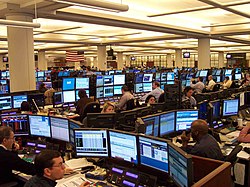
In North America the benchmark price refers to the spot price of West Texas Intermediate (WTI), also known as Texas Light Sweet, a type of crude oil used as a benchmark in oil pricing and the underlying commodity of New York Mercantile Exchange's oil futures contracts. WTI is a light crude oil, lighter than Brent Crude oil. It contains about 0.24% sulfur, rating it a sweet crude, sweeter than Brent.[40] Its properties and production site make it ideal for being refined in the United States, mostly in the Midwest and Gulf Coast regions. WTI has an API gravity of around 39.6 (specific gravity approx. 0.827) per barrel (159 liters) of either WTI/light crude as traded on the New York Mercantile Exchange (NYMEX) for delivery at Cushing, Oklahoma.[41] Cushing, Oklahoma, a major oil supply hub connecting oil suppliers to the Gulf Coast, has become the most significant trading hub for crude oil in North America.
In Europe and some other parts of the world, the price of the oil benchmark is Brent Crude as traded on the Intercontinental Exchange (ICE, into which the International Petroleum Exchange has been incorporated) for delivery at Sullom Voe. Brent oil is produced in coastal waters (North Sea) of UK and Norway. The total consumption of crude oil in UK and Norway is more than the oil production in these countries.[42][43] So Brent crude market is very opaque with very low oil trade physically.[44][45][46] Brent price is used widely to fix the prices of crude oil, LPG, LNG, natural gas, etc. trade globally including Middle East crude oils.[47]
There is a differential in the price of a barrel of oil based on its grade—determined by factors such as its specific gravity or API gravity and its sulfur content—and its location—for example, its proximity to tidewater and refineries. Heavier, sour crude oils lacking in tidewater access—such as Western Canadian Select—are less expensive than lighter, sweeter oil—such as WTI.[48]
The Energy Information Administration (EIA) uses the imported refiner acquisition cost, the weighted average cost of all oil imported into the US, as its "world oil price".
Global oil prices: a chronology
[edit]
The price of oil remained "relatively consistent" from 1861 until the 1970s.[6] In Daniel Yergin's 1991 Pulitzer prize-winning book The Prize: The Epic Quest for Oil, Money, and Power, Yergin described how the "oil-supply management system"—which had been run by "international oil companies"—had "crumbled" in 1973.[49]: 599 Yergin states that the role of Organization of the Petroleum Exporting Countries (OPEC)—which had been established in 1960, by Iran, Iraq, Kuwait, Saudi Arabia and Venezuela[50][49]: 499 [51][52]— in controlling the price of oil, was dramatically changed. Since 1927, a cartel known as the "Seven Sisters"—five of which were headquartered in the United States—had been controlling posted prices since the so-called 1927 Red Line Agreement and 1928 Achnacarry Agreement, and had achieved a high level of price stability until 1972, according to Yergin.[49]
There were two major energy crisis in the 1970s: the 1973 oil crisis and the 1979 energy crisis that affected the price of oil. Starting in the early 1970s—when domestic production of oil was insufficient to satisfy increasing domestic demands—the US had become increasingly dependent on oil imports from the Middle East.[49] Until the early 1970s, the price of oil in the United States was regulated domestically and indirectly by the Seven Sisters. The "magnitude" of the increase in the price of oil following OPEC's 1973 embargo in reaction to the Yom Kippur War and the 1979 Iranian Revolution, was without precedent.[31] In the 1973 Yom Kippur War, a coalition of Arab states led by Egypt and Syria attacked Israel.[49]: 570 During the ensuing 1973 oil crisis, the Arab oil-producing states began to embargo oil shipments to Western Europe and the United States in retaliation for supporting Israel. Countries, including the United States, Germany, Japan,[53] and Canada[54] began to establish their own national energy programs that were focused on security of supply of oil,[49]: 607 as the newly formed Organization of Petroleum Exporting Countries (OPEC) doubled the price of oil.[49]: 607
During the 1979 oil crisis, the global oil supply was "constrained" because of the 1979 Iranian Revolution—the price of oil "more than doubled",[55] then began to decline in "real terms from 1980 onwards, eroding OPEC's power over the global economy," according to The Economist.[55]
The 1970s oil crisis gave rise to speculative trading and the WTI crude oil futures markets.[56][57]
In the early 1980s, concurrent with the OPEC embargo, oil prices experienced a "rapid decline."[52][6] In early 2007, the price of oil was US$50. In 1980, globally averaged prices "spiked" to US$107.27,[6] and reached its all-time peak of US$147 in July 2008.
The 1980s oil glut was caused by non-OPEC countries—such as the United States and Britain—increasing their oil production, which resulted in a decrease in the price of oil in the early 1980s, according to The Economist.[55] When OPEC changed their policy to increase oil supplies in 1985, "oil prices collapsed and remained low for almost two decades", according to a 2015 World Bank report.[33]: 10 [58]
In 1983, the New York Mercantile Exchange (NYMEX) launched crude oil futures contracts, and the London-based International Petroleum Exchange (IPE)—acquired by Intercontinental Exchange (ICE) in 2005— launched theirs in June 1988.[59]
The price of oil reached a peak of c. US$65 during the 1990 Persian Gulf crisis and war. The 1990 oil price shock occurred in response to the Iraqi invasion of Kuwait, according to the Brookings Institution.[60]
There was a period of global recessions and the price of oil hit a low of c. $15 before it peaked at a high of $45 on 11 September 2001, the day of the September 11 attacks,[61] only to drop again to a low of $26 on 8 May 2003.[62]
The price rose to $80 with the U.S.-led invasion of Iraq.
There were major energy crises in the 2000s including the 2010s oil glut with changes in the world oil market.

Starting in 1999, the price of oil rose significantly. It was explained by the rising oil demand in countries like China and India.[63] A dramatic increase from US$50 in early 2007, to a peak of US$147 in July 2008, was followed by a decline to US$34 in December 2008, as the 2008 financial crisis took hold.[64]: 46
By May 2008, The United States was consuming approximately 21 million bpd and importing about 14 million bpd—60% with OPEC supply 16% and Venezuela 10%.[65] During the 2008 financial crisis, the price of oil underwent a significant decrease after the record peak of US$147.27 it reached on 11 July 2008. On 23 December 2008, WTI crude oil spot price fell to US$30.28 a barrel, the lowest since the 2008 financial crisis began. The price sharply rebounded after the crisis and rose to US$82 a barrel in 2009.[66][67]
On 31 January 2011, the Brent price hit $100 a barrel briefly for the first time since October 2008, on concerns that the 2011 Egyptian protests would "lead to the closure of the Suez Canal and disrupt oil supplies".[68] For about three and half years the price largely remained in the $90–$120 range.
From 2004 to 2014, OPEC was setting the global price of oil.[69] OPEC started setting a target price range of $100–110/bbl before the 2008 financial crisis[33]: 10 —by July 2008 the price of oil had reached its all-time peak of US$147 before it plunged to US$34 in December 2008, during the 2008 financial crisis.[64]: 46 Some commentators including Business Week, the Financial Times and the Washington Post, argued that the rise in oil prices prior to the 2008 financial crisis was due to speculation in futures markets.[70][71][72][73][74][75]
Up until 2014, the dominant factor on the price of oil was from the demand side—from "China and other emerging economies".[76][77]
By 2014, production from unconventional reservoirs through hydraulic fracturing in the United States and oil production in Canada, caused oil production to surge globally "on a scale that most oil exporters had not anticipated" resulting in "turmoil in prices."[76] The United States oil production was greater than that of Russia and Saudi Arabia, and according to some, broke OPEC's control of the price of oil.[69] In the middle of 2014, price started declining due to a significant increase in oil production in USA, and declining demand in the emerging countries.[78] According to Ambrose Evans-Pritchard, in 2014–2015, Saudi Arabia flooded the market with inexpensive crude oil in a failed attempted to slow down US shale oil production, and caused a "positive supply shock" which saved consumers about US$2 trillion and "benefited the world economy".[79]
During 2014–2015, OPEC members consistently exceeded their production ceiling, and China experienced a marked slowdown in economic growth. At the same time, U.S. oil production nearly doubled from 2008 levels, due to substantial improvements in shale "fracking" technology in response to record oil prices. A combination of factors led a plunge in U.S. oil import requirements and a record high volume of worldwide oil inventories in storage, and a collapse in oil prices that continues into 2016.[80][81] Between June 2014 and January 2015, according to the World Bank, the collapse in the price of oil was the third largest since 1986.[32]
In early 2015, the US oil price fell below $50 per barrel dragging Brent oil to just below $50 as well.[82]
The 2010s oil glut—caused by multiple factors—spurred a sharp downward spiral in the price of oil that continued through February 2016.[83] By 3 February 2016 oil was below $30—[84] a drop of "almost 75% since mid-2014 as competing producers pumped 1–2 million barrels of crude daily exceeding demand, just as China's economy hit lowest growth in a generation."[62] The North Sea oil and gas industry was financially stressed by the reduced oil prices, and called for government support in May 2016.[85] According to a report released on 15 February 2016 by Deloitte LLP—the audit and consulting firm—with global crude oil at near ten-year low prices, 35% of listed E&P oil and gas companies are at a high risk of bankruptcy worldwide.[86][87] Indeed, bankruptcies "in the oil and gas industry could surpass levels seen in the Great Recession."[86][88]
The global average price of oil dropped to US$43.73 per barrel in 2016.[6]
By December 2018, OPEC members controlled approximately 72% of total world proved oil reserves, and produced about 41% of the total global crude oil supply.[89] In June 2018, OPEC reduced production.[90] In late September and early October 2018, the price of oil rose to a four-year high of over $80 for the benchmark Brent crude[90] in response to concerns about constraints on global supply. The production capacity in Venezuela had decreased. United States sanctions against Iran, OPEC's third-biggest oil producer, were set to be restored and tightened in November.[91]
The price of oil dropped in November 2018 because of a number of factors, including "rising petro-nations' oil production, the U.S. shale oil boom, and swelling North American oil inventories," according to Market Watch.[92]

The 1 November 2018 U.S. Energy Information Administration (EIA) report announced that the US had become the "leading crude oil producer in the world" when it hit a production level of 11.3 million barrels per day (bpd) in August 2018, mainly because of its shale oil production.[93] US exports of petroleum—crude oil and products—exceeded imports in September and October 2019, "for the first time on record, based on monthly values since 1973."[94]
When the price of Brent oil dropped rapidly in November 2018 to $58.71,[95] more than 30% from its peak,[96]—the biggest 30-day drop since 2008—factors included increased oil production in Russia, some OPEC countries and the United States, which deepened global over supply.[95]
In 2019 the average price of Brent crude oil in 2019 was $64, WTI crude oil was $57,[94] the OPEC Reference Basket (ORB) of 14 crudes was $59.48 a barrel.[97]

On 8 March 2020 global oil prices fell precipitously when Saudi Arabia announced unexpected price cuts at the onset of the COVID-19 recession. In the face of cratering demand Russia responded in kind, resulting in a sudden price war.[98] The resulting low prices represented a threat to the fiscal health of oil-exporting countries.[99] The IHS Market reported that the "COVID-19 demand shock" represented a bigger contraction than that experienced during the Great Recession during the late 2000s and early 2010s.[79] As demand for oil dropped to 4.5m million bpd below forecasts, tensions rose between OPEC members.[79] At a 6 March OPEC meeting in Vienna, major oil producers were unable to agree on reducing oil production in response to the global COVID-19 pandemic.[100] The spot price of WTI benchmark crude oil on the NYM on 6 March 2020 dropped to US$42.10 per barrel.[101] On 8 March, the 2020 Russia–Saudi Arabia oil price war was launched, in which Saudi Arabia and Russia briefly flooded the market, also contributed to the decline in global oil prices.[102] Later on the same day, oil prices had decreased by 30%, representing the largest one-time drop since the 1991 Gulf War.[103] Oil traded at about $30 a barrel.[103] Very few energy companies can produce oil when the price of oil is this low. Saudi Arabia, Iran, and Iraq had the lowest production costs in 2016, while the United Kingdom, Brazil, Nigeria, Venezuela, and Canada had the highest.[104] On 9 April, Saudi Arabia and Russia agreed to oil production cuts.[105][106]
By April 2020 the price of WTI dropped by 80%, down to a low of about $5.[107] As the demand for fuel decreased globally with pandemic-related lockdowns preventing travel,[108] and due to excessive demand for storage of the large surplus in production, the price for future delivery of US crude in May became negative on 20 April 2020, the first time to happen since the New York Mercantile Exchange began trading in 1983.[109][110] In April, as the demand decreased, concerns about inadequate storage capacity resulted in oil firms "renting tankers to store the surplus supply".[108] An October Bloomberg report on slumping oil prices—citing the EIA among others—said that, with the increasing number of virus cases, the demand for gasoline—particularly in the United States—was "particularly worrisome", while global inventories remained "quite high".[111]
With the price of WTI at a record low, and 2019 Chinese 5% import tariff on U.S. oil lifted by China in May 2020, China began to import large quantities of US crude oil, reaching a record high of 867,000 bpd in July.[112]
According to a January 2020 EIA report, the average price of Brent crude oil in 2019 was $64 per barrel compared to $71 per barrel in 2018. The average price of WTI crude oil was $57 per barrel in 2019 compared to $64 in 2018.[94] On 20 April 2020, WTI Crude futures contracts dropped below $0 for the first time in history,[113] and the following day Brent Crude fell below $20 per barrel. The substantial decrease in the price of oil was caused by two main factors: the 2020 Russia–Saudi Arabia oil price war[114] and the COVID-19 pandemic, which lowered demand for oil because of lockdowns around the world.[114] In the fall of 2020, against the backdrop of the resurgent pandemic, the U.S. Energy Information Administration (EIA) reported that global oil inventories remained "quite high" while demand for gasoline—particularly in the United States—was "particularly worrisome."[111] The price of oil was about US$40 by mid-October.[115] In 2021, the record-high energy prices were driven by a global surge in demand as the world quit the economic recession caused by COVID-19, particularly due to strong energy demand in Asia.[15][16][116]
The ongoing 2019–2021 Persian Gulf crisis, which includes the use of drones to attack Saudi Arabia's oil infrastructure, has made the Gulf states aware of their vulnerability. Former US President "Donald Trump's 'maximum pressure' campaign led Iran to sabotage oil tankers in the Persian Gulf and supply drones and missiles for a surprise strike on Saudi oil facilities in 2019."[117] In January 2022, Yemen's Houthi rebels drone attacks destroyed oil tankers in Abu Dhabi prompting concerns about further increases in the price of oil.[118]
The oil prices were seen rising to hit $71.38 per barrel in March 2021, marking the highest since the beginning of the pandemic in January 2020.[119] The oil price rise followed a missile drone attack on Saudi Arabia's Aramco oil facility by Yemen's Houthi rebels.[120] The United States said it was committed to defending Saudi Arabia.[121]
On 5 October 2021, crude oil prices reached a multiyear high but retreated by 2% the following day. The price of crude was on the rise since June 2021, after a statement by a top US diplomat that even with a nuclear deal with Iran, hundreds of economic sanctions would remain in place.[122] Since September 2021, Europe's energy crisis has been worsening, driven by high crude prices and a scarcity of Russian gas on the continent.[123]
The high price of oil in late 2021, which resulted in US gasoline pump prices that rose by over $1 a gallon—a seven-year high—added pressure to the United States, which has extensive reserves of oil and has been one of the world's largest producers of oil since at least 2018.[124] One of the major factors in the US refraining from increased oil production is related to "investor demands for higher financial returns".[124] Another factor as described by Forbes, is 'backwardation'—when oil futures markets see the current price of $85+ as higher than what they can anticipate in the months and years in the future. If investors perceive lower future prices, they will not invest in "new drilling and fracking."[124]

By mid-January 2022, Reuters raised concerns that an increase in the price of oil to $100—which seemed to be imminent—would worsen the inflationary environment that was already breaking 30-year-old records.[125] Central banks were concerned that higher energy prices would contribute to a "wage-price spiral." The European Union (EU) embargo of Russian seaborne oil, in response to the Russian invasion of Ukraine in February, 2022, was one—but not the only—factor in the increase in the global price of oil, according to The Economist.[126] When the EU added new restrictions to Russia's oil on May 30, there was a dramatic increase in the price of Brent crude to over $120 a barrel.[126] Other factors affecting the surge in the price of oil included the tight oil market combined with a "robust demand" for energy as travel increased following the easing of coronavirus restrictions.[126] At the same time, the United States was experiencing decreased refinery capacity which led to higher prices for petrol and diesel.[126] In an effort to lower energy prices and to curb inflation, President Biden announced on March 31, 2022, that he would be releasing a million bbl/d from the Strategic Petroleum Reserve (SPR).[127][128] Bloomberg described how the price of oil, gas and other commodities had risen driven by a global "resurgence in demand" as COVID-19 restrictions were eased, combined with supply chains problems, and "geopolitical tensions".[129]
In March 2023, oil prices dropped over $2 a barrel on the 14th following the Collapse of Silicon Valley Bank. The bank's collapse sent a tremor through various financial sectors, from banking to the oil industry.[130]
In May 2024, Chuck Schumer, along with 22 other Democratrs, urged the Department of Justice to take robust action against alleged collusion and price-fixing in the oil industry. In a letter to Merrick Garland, the senators referenced a FTC investigation revealing price-fixing by oil executives, which had increased energy costs for Americans. The FTC found that Scott D. Sheffield, colluded with OPEC to raise crude oil prices. Although the FTC cleared Exxon Mobil's $60 billion acquisition of Pioneer, it barred Sheffield from joining the new company's board. The senators called for a comprehensive DOJ investigation into potential Sherman Antitrust Act violations, citing concerns over national security and economic burdens on lower-income families due to inflated fuel costs.[131]
On 10 October 2024, oil prices surged over 3% due to escalating tensions in the Middle East, raising concerns about potential disruptions to crude supplies. Brent crude reached $75.98 per barrel, and U.S. WTI climbed to $72.30. Fears of retaliatory strikes on oil facilities and possible U.S. involvement grew, while OPEC+ ministers met without expected changes to production policies.[132]
Oil-storage trade (contango)
[edit]
The oil-storage trade, also referred to as contango, a market strategy in which large, often vertically integrated oil companies purchase oil for immediate delivery and storage—when the price of oil is low— and hold it in storage until the price of oil increases. Investors bet on the future of oil prices through a financial instrument, oil futures in which they agree on a contract basis, to buy or sell oil at a set date in the future. Crude oil is stored in salt mines, tanks and oil tankers.[133]
Investors can choose to take profits or losses prior to the oil-delivery date arrives. Or they can leave the contract in place and physical oil is "delivered on the set date" to an "officially designated delivery point", in the United States, that is usually Cushing, Oklahoma. When delivery dates approach, they close out existing contracts and sell new ones for future delivery of the same oil. The oil never moves out of storage. If the forward market is in "contango"—the forward price is higher than the current spot price—the strategy is very successful.
Scandinavian Tank Storage AB and its founder Lars Jacobsson introduced the concept on the market in early 1990.[134] But it was in 2007 through 2009 the oil storage trade expanded,[135] with many participants—including Wall Street giants, such as Morgan Stanley, Goldman Sachs, and Citicorp—turning sizeable profits simply by sitting on tanks of oil.[136] By May 2007 Cushing's inventory fell by nearly 35% as the oil-storage trade heated up.[136]
By the end of October 2009 one in twelve of the largest oil tankers was being used more for temporary storage of oil, rather than transportation.[137]
From June 2014 to January 2015, as the price of oil dropped 60% and the supply of oil remained high, the world's largest traders in crude oil purchased at least 25 million barrels to store in supertankers to make a profit in the future when prices rise. Trafigura, Vitol, Gunvor, Koch, Shell and other major energy companies began to book oil storage supertankers for up to 12 months. By 13 January 2015 At least 11 Very Large Crude Carriers (VLCC) and Ultra Large Crude Carriers (ULCC)" have been reported as booked with storage options, rising from around five vessels at the end of last week. Each VLCC can hold 2 million barrels."[138]
In 2015 as global capacity for oil storage was out-paced by global oil production, and an oil glut occurred. Crude oil storage space became a tradable commodity with CME Group— which owns NYMEX— offering oil-storage futures contracts in March 2015.[133] Traders and producers can buy and sell the right to store certain types of oil.[139][140]
By 5 March 2015, as oil production outpaces oil demand by 1.5 million bpd, storage capacity globally is dwindling.[133] In the United States alone, according to data from the Energy Information Administration, U.S. crude-oil supplies are at almost 70% of the U. S. storage capacity, the highest to capacity ratio since 1935.[133]
In 2020, rail and road tankers and decommissioned oil pipe lines are also being used to store crude oil for contango trade.[141] For the WTI crude to be delivered in May 2020, the price had fallen to -$40 per bbl (i.e. buyers would be paid by the sellers for taking delivery of crude oil) due to lack of storage/expensive storage.[142] LNG carriers and LNG tanks can also be used for long duration crude oil storage purpose since LNG can not be stored long term due to evaporation. Frac tanks are also used to store crude oil deviating from their normal use.[143]
Comparative cost of production
[edit]In their May 2019 comparison of the "cost of supply curve update" in which the Norway-based Rystad Energy—an "independent energy research and consultancy"—ranked the "worlds total recoverable liquid resources by their breakeven price", they listed the "Middle East onshore market" as the "cheapest source of new oil volumes globally" with the "North American tight oil"—which includes onshore shale oil in the United States—in second place.[144] The breakeven price for North American shale oil was US$68 a barrel in 2015, making it one of the most expensive to produce. By 2019, the "average Brent breakeven price for tight oil was about US$46 per barrel. The breakeven price of oil from Saudi Arabia and other Middle Eastern countries was US$42, in comparison.[144]
Rystad reported that the average breakeven price for oil from the oil sands was US$83 in 2019, making it the most expensive to produce, compared to all other "significant oil producing regions" in the world.[144] The International Energy Agency made similar comparisons.[145]
In 2016, the Wall Street Journal reported that the United Kingdom, Brazil, Nigeria, Venezuela, and Canada had the costliest production.[104] Saudi Arabia, Iran, and Iraq had the cheapest.[104]
| Country | Gross taxes |
Capital spending |
Production costs |
Admin transport |
Total |
|---|---|---|---|---|---|
| UK | 0 | 22.67 | 17.36 | 4.30 | 44.33 |
| Brazil | 6.66 | 16.09 | 9.45 | 2.80 | 34.99 |
| Nigeria | 4.11 | 13.10 | 8.81 | 2.97 | 28.99 |
| Venezuela | 10.48 | 6.66 | 7.94 | 2.54 | 27.62 |
| Canada | 2.48 | 9.69 | 11.56 | 2.92 | 26.64 |
| U.S. Shale | 6.42 | 7.56 | 5.85 | 3.52 | 23.35 |
| Norway | 0.19 | 13.76 | 4.24 | 3.12 | 21.31 |
| U.S. non-shale | 5.03 | 7.70 | 5.15 | 3.11 | 20.99 |
| Indonesia | 1.55 | 7.65 | 6.87 | 3.63 | 19.71 |
| Russia | 8.44 | 5.10 | 2.98 | 2.69 | 19.21 |
| Iraq | 0.91 | 5.03 | 2.16 | 2.47 | 10.57 |
| Iran | 0 | 4.48 | 1.94 | 2.67 | 9.08 |
| Saudi Arabia | 0 | 3.50 | 3.00 | 2.49 | 8.98 |
Future projections
[edit]Peak oil is the period when the maximum rate of global petroleum extraction is reached, after which the rate of production enters terminal decline. It relates to a long-term decline in the available supply of petroleum. This, combined with increasing demand, will significantly increase the worldwide prices of petroleum-derived products. Most significant will be the availability and price of liquid fuel for transportation.[146]
The US Department of Energy in the Hirsch report indicates that
The problems associated with world oil production peaking will not be temporary, and past "energy crisis" experience will provide relatively little guidance. The challenge of oil peaking deserves immediate, serious attention, if risks are to be fully understood and mitigation begun on a timely basis.[147]
Global annual crude oil production (including shale oil, oil sands, lease condensate and gas plant condensate but excluding liquid fuels from other sources such as natural gas liquids, biomass and derivatives of coal and natural gas) increased from 75.86 million barrels (12.1 million cubic metres) in 2008 to 83.16 million bbl (13.2 million m3) per day in 2018 with a marginal annual growth rate of 1%.[148]
Impact of rising oil price
[edit]The rising oil prices could negatively impact the world economy.[149] One example of the negative impact on the world economy, is the effect on the supply and demand. High oil prices indirectly increase the cost of producing many products thus causing increased prices to the consumer.[150] Since supplies of petroleum and natural gas are essential to modern agriculture techniques, a fall in global oil supplies could cause spiking food prices in the coming decades.[146][151] One reason for the increase in food prices in 2007–08 may be the increase in oil prices during the same period.[152]
Bloomberg warned that the world economy, which was already experiencing an inflationary "shock", would worsen with oil priced at $100 in February 2022.[129] The International Monetary Fund (IMF) described how a combination of the "soaring" price of commodities, imbalances in supply and demand, followed by pressures related to the Russian invasion of Ukraine, resulted in monetary policies being tightened by central banks, as some inflation in some countries broke 40-year-old record highs.[153][129] The IMF also cautioned that there was a potential for social unrest in poorer nations as the price of food and fuel increases.[153]
Impact of declining oil price
[edit]A major rise or decline in oil price can have both economic and political impacts. The decline on oil price during 1985–1986 is considered to have contributed to the fall of the Soviet Union.[154] Low oil prices could alleviate some of the negative effects associated with the resource curse, such as authoritarian rule[155][156][157][158][159] and gender inequality.[160][161] Lower oil prices could however also lead to domestic turmoil and diversionary war. The reduction in food prices that follows lower oil prices could have positive impacts on violence globally.[162]
Research shows that declining oil prices make oil-rich states less bellicose.[163] Low oil prices could also make oil-rich states engage more in international cooperation, as they become more dependent on foreign investments.[164] The influence of the United States reportedly increases as oil prices decline, at least judging by the fact that "both oil importers and exporters vote more often with the United States in the United Nations General Assembly" during oil slumps.[162]
The macroeconomics impact on lower oil prices is lower inflation. A lower inflation rate is good for the consumers. This means that the general price of a basket of goods would increase at a bare minimum on a year to year basis. Consumer can benefit as they would have a better purchasing power, which may improve real gdp.[165] However, in recent countries like Japan, the decrease in oil prices may cause deflation and it shows that consumers are not willing to spend even though the prices of goods are decreasing yearly, which indirectly increases the real debt burden.[165] Declining oil prices may boost consumer oriented stocks but may hurt oil-based stocks.[166][167] It is estimated that 17–18% of S&P would decline with declining oil prices.
It has also been argued that the collapse in oil prices in 2015 should be very beneficial for developed western economies, who are generally oil importers and aren't over exposed to declining demand from China.[168] In the Asia-Pacific region, exports and economic growth were at significant risk across economies reliant on commodity exports as an engine of growth. The most vulnerable economies were those with a high dependence on fuel and mineral exports to China, such as: Korea DPR, Mongolia and Turkmenistan—where primary commodity exports account for 59–99% of total exports and more than 50% of total exports are destined to China. The decline in China's demand for commodities also adversely affected the growth of exports and GDP of large commodity-exporting economies such as Australia (minerals) and the Russian Federation (fuel). On the other hand, lower commodity prices led to an improvement in the trade balance—through lower the cost of raw materials and fuels—across commodity importing economies, particularly Cambodia, Kyrgyzstan, Nepal and other remote island nations (Kiribati, Maldives, Micronesia (F.S), Samoa, Tonga, and Tuvalu) which are highly dependent on fuel and agricultural imports.[169]
The oil importing economies like EU, Japan, China or India would benefit, however the oil producing countries would lose.[170][171][172] A Bloomberg article presents results of an analysis by Oxford Economics on the GDP growth of countries as a result of a drop from $84 to $40. It shows the GDP increase between 0.5% to 1.0% for India, USA and China, and a decline of greater than 3.5% from Saudi Arabia and Russia. A stable price of $60 would add 0.5 percentage point to global gross domestic product.
Katina Stefanova has argued that falling oil prices do not imply a recession and a decline in stock prices.[173] Liz Ann Sonders, Chief Investment Strategist at Charles Schwab, had earlier written that that positive impact on consumers and businesses outside of the energy sector, which is a larger portion of the US economy will outweigh the negatives.[174]
While President Trump said in 2018, that the lower price of oil was like a "big Tax Cut for America and the World",[96] The Economist said that rising oil prices had a negative impact on oil-importing countries in terms of international trade.[91] Import prices rise in relation to their exports.[91] The importing country's current account deficits widen because "their exports pay for fewer imports".[91]
Speculative trading and crude oil futures
[edit]In the wake of the 1970s oil crisis, speculative trading in crude oil and crude oil futures in the commodity markets emerged.[56][57]
NYMEX launched crude oil futures contracts in 1983, and the IPE launched theirs in June 1988.[59] Global crude oil prices began to be published through NYMEX and IPE crude oil futures market.[59] Volatility in crude oil prices can cause problems for the global economy. These crude oil futures contracts helped mitigate the "economic hazards of international crude oil spot price fluctuations".[59] By 2019, NYMEX and ICE had become "representative of the world crude oil futures market"—an important factor in the world economy.[59] Crude oil futures bring some uncertainty to the market and contribute to crude oil price fluctuations.[59]
By 2008, there were a number of widely traded oil futures market listings.[175] Some of the big multinational oil companies actively participate in crude oil trading applying their market perception to make profit.[176]
Speculation during the 2008 financial crisis
[edit]According to a U.S. Commodity Futures Trading Commission (CFTC) 29 May 2008 report the "Multiple Energy Market Initiatives" was launched in partnership with the United Kingdom Financial Services Authority and ICE Futures Europe in order to expand surveillance and information sharing of various futures contracts. Part 1 is "Expanded International Surveillance Information for Crude Oil Trading."[74] This announcement received wide coverage in the financial press, with speculation about oil futures price manipulation.[71][72][73] In June 2008 Business Week reported that the surge in oil prices prior to the 2008 financial crisis had led some commentators to argue that at least some of the rise was due to speculation in the futures markets.[70] The July 2008 interim report by the Interagency Task Force found that speculation had not caused significant changes in oil prices and that the increase in oil prices between January 2003 and June 2008 [were] largely due to fundamental supply and demand factors."[177]: 3 The report found that the primary reason for the price increases was that the world economy had expanded at its fastest pace in decades, resulting in substantial increases in the demand for oil, while the oil production grew sluggishly, compounded by production shortfalls in oil-exporting countries.[177]: 3
The report stated that as a result of the imbalance and low price elasticity, very large price increases occurred as the market attempted to balance scarce supply against growing demand, particularly from 2005 to 2008.[177]: 14 The report forecast that this imbalance would persist in the future,[177]: 4 leading to continued upward pressure on oil prices, and that large or rapid movements in oil prices are likely to occur even in the absence of activity by speculators.[177]: 4
Hedging using oil derivatives
[edit]The use of hedging using commodity derivatives as a risk management tool on price exposure to liquidity and earnings, has been long established in North America. Chief Financial Officers (CFOS) use derivatives to dampen, remove or mitigate price uncertainty.[178] Bankers also use hedge funds to more "safely increase leverage to smaller oil and gas companies."[178] However, when not properly used, "derivatives can multiply losses"[178] particularly in North America where investors are more comfortable with higher levels of risk than in other countries.[178]
With the large number of bankruptcies as reported by Deloitte[88] "funding [for upstream oil industry] is shrinking and hedges are unwinding."[86] "Some oil producers are also choosing to liquidate hedges for a quick infusion of cash, a risky bet."[87]
According to John England, the Vice-chairman Deloitte LLP, "Access to capital markets, bankers' support and derivatives protection, which helped smooth an otherwise rocky road, are fast waning...The roughly 175 companies at risk of bankruptcy have more than $150 billion in debt, with the slipping value of secondary stock offerings and asset sales further hindering their ability to generate cash."[179]
To finance exploration and production of the unconventional oil industry in the United States, "hundreds of billions of dollars of capital came from non-bank participants [non-bank buyers of bank energy credits] in leveraged loans that were thought at the time to be low risk.[180] However, with the oil glut that continued into 2016, about a third of oil companies are facing bankruptcy.[88] While investors were aware that there was a risk that the operator might declare bankruptcy, they felt protected because "they had come in at the 'bank' level, where there was a senior claim on the assets [and] they could get their capital returned."[178]
According to a 2012 article in Oil and Gas Financial Journal, "the combination of the development of large resource plays in the US and the emergence of business models designed to ensure consistent dividend payouts to investors has led to the development of more aggressive hedging policies in companies and less restrictive covenants in bank loans."[178]
Institutional investors divesting from oil industry
[edit]At the fifth annual World Pensions Forum in 2015, Jeffrey Sachs advised institutional investors to divest from carbon-reliant oil industry firms in their pension fund's portfolio.[181]
See also
[edit]- 2007–2008 world food price crisis
- Asymmetric price transmission
- Chronology of world oil market events (1970–2005)
- World oil market chronology from 2003
- 2011–2013 world oil market chronology
- 2014–2016 world oil market chronology
- 2017–2019 world oil market chronology
- 2020–2022 world oil market chronology
- 2021–2023 global energy crisis
- 2023–2025 world oil market chronology
- Cost competitiveness of fuel sources
- Efficient energy use
- Elasticity (economics)
- Energy crisis
- Food vs fuel
- Gasoline usage and pricing
- Simmons–Tierney bet
- Stagflation
- Supply and demand
References
[edit]- ^ "International Crude Oil Market Handbook", Energy Intelligence Group, 2011
- ^ "Pricing Differences Among Various Types of Crude Oil". EIA. Archived from the original on 13 November 2010. Retrieved 17 February 2008.
- ^ a b c Lance E. Davis, Robert E. Gallman, Karin Gleiter / NBER (1997). "In Pursuit of Leviathan: Technology, Institutions, Productivity, and Profits in American Whaling, 1816-1906" (PDF). University of Chicago Press. pp. 342, 362–363, 373-375 ja 370-372.
{{cite web}}: CS1 maint: multiple names: authors list (link) - ^ Coke, David; Borg, Alan (2011). Vauxhall Gardens: a history. New Haven, Conn. London: Yale University Press. ISBN 978-0-300-17382-6.
- ^ "$100 in 1804 is worth $2,737.69 today". CPI Inflation Calculator. 12 August 2025.
- ^ a b c d e f g h i Ritchie, Hannah; Roser, Max (2 October 2017). "Fossil Fuels". Our World in Data. Retrieved 6 March 2020.
- ^ a b c d Ellwanger, Reinhard. "A Structural Model of the Global Oil Market" (PDF). Bank of Canada. p. 13. Retrieved 19 January 2022.
- ^ Smith, Charles D. (2006). Palestine and the Arab–Israeli Conflict. New York: Bedford.
- ^ Stocker, Marc; Baffes, John; Vorisek, Dana (18 January 2018). "What triggered the oil price plunge of 2014-2016 and why it failed to deliver an economic impetus in eight charts". Retrieved 19 January 2022.
- ^ a b "The World Factbook". Central Intelligence Agency. 2015. Archived from the original on 11 November 2020. Retrieved 19 January 2022.
- ^ Christian Berthelsen; Lynn Cook (24 June 2014). "U.S. Ruling Loosens Four-Decade Ban On Oil Exports". The Wall Street Journal.
- ^ Amy Harder; Christian Berthelsen (20 December 2015). "End of Oil-Export Ban Provides Blueprint for Bipartisan Compromise". The Wall Street Journal.
- ^ a b Jacobs, Trent. "OPEC+ Moves to End Price War With 10 Million B/D Cut". pubs.spe.org. Journal of Petroleum Technology. Archived from the original on 10 April 2020. Retrieved 10 April 2020.
(early March) In the ensuing weeks West Texas Intermediate (WTI) prices fell to a low of around $20, marking a record 65% quarterly drop
- ^ a b "The impact of coronavirus (COVID-19) and the global oil price shock on the fiscal position of oil-exporting developing countries". OECD. 30 September 2020. Retrieved 19 January 2022.
- ^ a b "Energy crunch: How high will oil prices climb?". Al-Jazeera. 27 September 2021.
- ^ a b "Oil analysts predict a prolonged rally as OPEC resists calls to ramp up supply". CNBC. 5 October 2021.
- ^ "Column: Oil prices expected to rise with big variation in projections: Kemp". Reuters. 19 January 2022.
- ^ Kelly, Stephanie; Sharafedin, Bozorgmehr; Samanta, Koustav (23 December 2021). "Global oil's comeback year presages more strength in 2022". Reuters. Retrieved 19 January 2022.
- ^ Elliott, Larry (18 January 2022). "New UK cost of living threat as oil rises to highest price in seven years". The Guardian. ISSN 0261-3077. Retrieved 19 January 2022.
- ^ Mouawad, Jad (26 January 2009). "OPEC Achieves Cuts in Output, Halting Price Slide". The New York Times. ISSN 0362-4331. Retrieved 19 January 2022.
- ^ "What triggered the oil price plunge of 2014–2016 and why it failed to deliver an economic impetus in eight charts". Retrieved 19 January 2022.
- ^ Kilian, Lutz; Lee, Thomas K. (April 2014). "Quantifying the speculative component in the real price of oil: The role of global oil inventories". Journal of International Money and Finance. 42: 71–87. doi:10.1016/j.jimonfin.2013.08.005. ISSN 0261-5606. S2CID 17988336.
- ^ a b c "Publications" (PDF). 14 June 2005. Retrieved 5 January 2015.
- ^ Krauss, Clifford (9 March 2022). "Loss of Russian Oil Leaves a Void Not Easily Filled, Straining Market". The New York Times.
- ^ "Oil and petroleum products explained". United States Energy Information Administration. 25 February 2022.
- ^ Jon Greenberg; Louis Jacobson (9 March 2022). "Ask PolitiFact: Why are gas prices going up?". PolitiFact.
- ^ a b Kennedy, Michael (1974). "An Economic Model of the World Oil Market". The Bell Journal of Economics and Management Science. 5 (2): 540–577. doi:10.2307/3003120. ISSN 0005-8556. JSTOR 3003120.
- ^ Morecroft, John D. W.; van der Heijden, Kees A. J. M. (26 May 1992). "Modelling the oil producers — Capturing oil industry knowledge in a behavioural simulation model". European Journal of Operational Research. Modelling for Learning. 59 (1): 102–122. doi:10.1016/0377-2217(92)90009-X. ISSN 0377-2217.
- ^ a b Kilian, Lutz (18 April 2008). "Exogenous Oil Supply Shocks: How Big Are They and How Much Do They Matter for the U.S. Economy?". The Review of Economics and Statistics. 90 (2): 216–240. doi:10.1162/rest.90.2.216. ISSN 0034-6535. S2CID 17883131.
- ^ Kilian, Lutz (2008). "A Comparison of the Effects of Exogenous Oil Supply Shocks on Output and Inflation in the G7 Countries". Journal of the European Economic Association. 6 (1): 78–121. doi:10.1162/JEEA.2008.6.1.78. ISSN 1542-4766. JSTOR 40005152.
- ^ a b Baumeister, Christiane; Kilian, Lutz (1 January 2016). "Forty Years of Oil Price Fluctuations: Why the Price of Oil May Still Surprise Us". The Journal of Economic Perspectives. 30 (1): 139–160. doi:10.1257/jep.30.1.139.
- ^ a b c Fattouh, Bassam (2016). "Adjustment in the Oil Market: Structural, Cyclical or Both?". Oxford Energy Comment. Oxford Institute for Energy Studies: 23. Retrieved 26 October 2020.
- ^ a b c d e Baffes, John; Kose, M. Ayhan; Ohnsorge, Franziska; Stocker, Marc (March 2015). The Great Plunge in Oil Prices: Causes, Consequences, and Policy Responses (PDF). World Bank Group (Report). Policy Research Notes (PRNs). p. 61. Retrieved 26 October 2020.
- ^ "'The New Oil Order': Making sense of an industry's transformation". Goldman Sachs. 8 May 2015. Retrieved 26 October 2020 – via Quartz.
- ^ "The New Oil Order: Making Sense of an Industry's Transformation". Goldman Sachs. 8 May 2015. Retrieved 26 October 2020.
- ^ Lu, Quanying; Li, Yuze; Chai, Jian; Wang, Shouyang (2020). "Crude oil price analysis and forecasting: A perspective of 'new triangle'". Energy Economics. 87 (C) 104721. doi:10.1016/j.eneco.2020.104721. S2CID 213267999. Retrieved 19 January 2022.
- ^ Mabro, Robert (2006). Oil in the 21st century: issues, challenges and opportunities. Oxford Press. p. 351. ISBN 978-0-19-920738-1.
{{cite book}}:|work=ignored (help) - ^ "Will The World's Newest Oil Benchmark Be A Success?". Retrieved 31 March 2021.
- ^ "OPEC Basket Price". OPEC. Retrieved 6 January 2017.
- ^ "The Cost Of Crude At Cushing – WTI And The NYMEX CMA". 4 November 2012. Retrieved 5 April 2020.
- ^ "The Cost Of Crude At Cushing – The CMA Roll Adjust And WTI P-Plus". 8 November 2012. Retrieved 5 April 2020.
- ^ "How a hasty move to change the world's key oil price unraveled". 13 March 2021. Retrieved 13 March 2021.
- ^ "BP Statistical Review 2019" (PDF). Retrieved 5 April 2020.
- ^ "Crazy Little Crude Called Brent – The Physical Trading Market". 28 February 2013. Retrieved 5 April 2020.
- ^ "Crazy Little Crude Called Brent – Links To ICE Futures". 5 March 2013. Retrieved 5 April 2020.
- ^ "Crazy Little Crude Called Brent – The Art Of Quality Maintenance". 5 March 2013. Retrieved 5 April 2020.
- ^ Fielden, Sandy (24 March 2015). "The Price You Pay – Saudi Crude Price Formulas". Retrieved 27 October 2020.
- ^ "Oil Price Charts". Retrieved 6 March 2021.
- ^ a b c d e f g Yergin, Daniel (1991). The Prize: The Epic Quest for Oil, Money, and Power. New York: Simon & Schuster. pp. 499–503. ISBN 978-0-671-50248-5.
- ^ "Our Mission". OPEC. Retrieved 16 February 2013.
- ^ Painter, David S. (2012). "Oil and the American Century". The Journal of American History. 99 (1): 32. doi:10.1093/jahist/jas073.
- ^ a b Martin, Douglas (16 March 1982). "Opec: Trying to Be a Cartel". The New York Times. ISSN 0362-4331. Retrieved 6 March 2020.
- ^ Eguchi, Yujiro (1980). "Japanese Energy Policy". International Affairs. 56 (2): 263–279. doi:10.2307/2615408. ISSN 0020-5850. JSTOR 2615408.
- ^ MacEachen, Allan J. (28 October 1980), Budget 1980 (PDF), Ottawa, ON, retrieved 27 October 2020,
re introduction of Canada's National Energy Program..."ever since the oil crisis of 1973 industrial countries have had to struggle with the problems of inflation and stubbornly high rates of unemployment. In 1979 the world was shaken by a second major oil shock. For the industrial world this has meant a sharp renewal of inflationary forces and real income losses. For the developing world this second oil shock has been a major tragedy. Their international deficits are now three to four times the sum they receive in aid from the rest of the world.... They are not just Canadian problems. ...they are world-wide problems. At the Venice Summit and at meetings of Finance Ministers of the IMF and OECD, we have seen these new themes emerge."
{{citation}}: CS1 maint: location missing publisher (link) - ^ a b c "Oil gluts, late-1970s style". The Economist. 9 December 2014. ISSN 0013-0613. Retrieved 6 March 2020.
- ^ a b Zhang, Yue-Jun (July 2013). "Speculative trading and WTI crude oil futures price movement: An empirical analysis". Applied Energy. 107: 394–402. Bibcode:2013ApEn..107..394Z. doi:10.1016/j.apenergy.2013.02.060. ISSN 0306-2619. Retrieved 27 October 2020.
- ^ a b Guo, Jian-Feng; Ji, Qiang (December 2013). "How does market concern derived from the Internet affect oil prices?". Applied Energy. 112: 1536–1543. arXiv:1003.5699. Bibcode:2013ApEn..112.1536G. doi:10.1016/j.apenergy.2013.03.027. ISSN 0306-2619. S2CID 8674839. Retrieved 27 October 2020.
- ^ Global Economic Prospects. World Bank (Report). January 2009.
- ^ a b c d e f Tian, Hong-Zhi; Lai, Wei-Di (1 December 2019). "The causes of stage expansion of WTI/Brent spread". Petroleum Science. 16 (6): 1493–1505. Bibcode:2019PetSc..16.1493T. doi:10.1007/s12182-019-00379-z. ISSN 1995-8226.
- ^ Hamilton, J. (2009). "Causes and consequences of the oil shock of 2007–2008" (PDF). Brookings Institution. Archived from the original (PDF) on 14 November 2011. Retrieved 20 January 2016.
- ^ Mouawad, Jad (3 March 2008), "Oil Prices Pass Record Set in 1980s, but Then Recede", New York Times, retrieved 17 February 2016
- ^ a b "Oil futures bounce on OPEC deal speculation". CNCB via Reuters. 16 February 2016. Retrieved 17 February 2016.
- ^ Mouawad, Jad (9 November 2007). "Rising Demand for Oil Provokes New Energy Crisis". The New York Times. Retrieved 25 March 2018.
- ^ a b Evans, Iris (2009). Building on our strength. Edmonton, Alberta: Alberta Finance and Enterprise. ISBN 978-0-7785-5707-4.
- ^ Westenskow, Rosalie (26 May 2008). "Analysis: Oil prices pummel U.S. security". UPI. Retrieved 28 October 2020.
- ^ "Cushing, OK WTI Spot Price FOB (Dollars per Barrel)". tonto.eia.doe.gov. Retrieved 25 March 2018.
- ^ "US oil settles at $37.51 a barrel after hitting 2009 lows". CNCB via Reuters. 8 December 2015. Retrieved 17 February 2016.
- ^ "Egypt unrest pushes Brent crude oil to $100 a barrel". BBC News. 31 January 2011. Retrieved 5 January 2015.
- ^ a b Tully, Shawn (30 April 2020). "Buccaneers of the basin: The fall of fracking—and the future of oil". Fortune. Retrieved 27 October 2020.
- ^ a b Wallace, Ed (27 June 2008). "Oil Prices Are All Speculation". Business Week.
- ^ a b "CFTC in talks to plug the 'London loophole'". The Financial Times. 10 June 2008. Archived from the original on 11 December 2022. Retrieved 11 June 2008.
- ^ a b Mufson, Steven (30 May 2008). "Probe of Crude Oil Trading Disclosed". Washington Post. Retrieved 11 June 2008.
- ^ a b "Government investigates oil markets". CNN Money. 30 May 2008. Archived from the original on 1 June 2008. Retrieved 11 June 2008.
- ^ a b "CFTC Announces Multiple Energy Market Initiatives". CFTC. Release: 5503-08. 29 May 2008. Archived from the original on 1 June 2008. Retrieved 1 June 2008.
- ^ Williams, James L. (n.d.). "History and Analysis of Crude Oil Prices". WTRG Economics. London, Arkansas. Archived from the original on 2 January 2008. Retrieved 6 March 2020.
- ^ a b Yergin, Daniel (30 November 2014). "The Global Shakeout From Plunging Oil". Wall Street Journal. Retrieved 26 October 2020.
- ^ Ratti, Ronald A.; Vespignani, Joaquin L. (1 September 2016). "Oil prices and global factor macroeconomic variables". Energy Economics. 59: 198–212. Bibcode:2016EneEc..59..198R. doi:10.1016/j.eneco.2016.06.002. ISSN 0140-9883.
- ^ Friedman, Nicole (31 December 2014). "U.S. Oil Falls 46%, Steepest Yearly Loss Since 2008". The Wall Street Journal. Retrieved 5 January 2015.
- ^ a b c Evans-Pritchard, Ambrose (9 March 2020). "Coronavirus may be more destructive than the Lehman crisis". The Telegraph. ISSN 0307-1235. Retrieved 10 March 2020.
- ^ Krassnov, Clifford (3 November 2014). "U.S. Oil Prices Fall Below $80 a Barrel". The New York Times. Retrieved 13 December 2014.
- ^ "OPEC Won't Cut Production to Stop Oil's Slump". Bloomberg News. 4 December 2015.
- ^ "US oil price falls below $50 on supply glut fears", BBC News, 5 January 2015
- ^ Evans-Pritchard, Ambrose (29 December 2015). "Goldman eyes $20 oil as glut overwhelms storage sites". The Telegraph. Archived from the original on 12 January 2022. Retrieved 29 December 2015.
- ^ "Commodities", Calgary Herald, p. C7, 3 February 2016
- ^ Mark Lammey. "North Sea industry heading for Lehman Brothers magnitude crash". 27 May 2016.
- ^ a b c "Deloitte warns of oil bankruptcies", Globe and Mail via PressReader, 6 February 2016
- ^ a b Scheyder, Ernest (16 February 2016). "High risk of bankruptcy for one-third of oil firms: Deloitte". Reuters. Houston. Retrieved 17 February 2016.
- ^ a b c Zillman, Claire (16 February 2016). "One-Third of Oil Companies Could Go Bankrupt this Year". Fortune. Retrieved 17 February 2016.
- ^ Oil prices and outlook. U.S. Energy Information Administration (EIA) (Report). 2020. Retrieved 27 October 2020.
- ^ a b Vaughan, Adam (12 November 2018). "Oil prices rise as Saudi Arabia signals production cut". The Guardian. ISSN 0261-3077. Retrieved 12 January 2019.
- ^ a b c d "Rising oil prices catch emerging economies at a vulnerable moment". The Economist. 29 September 2018. ISSN 0013-0613. Retrieved 12 January 2019.
- ^ Saefong, Myra P.; Beals, Rachel Koning (16 November 2018). "Oil prices suffer sixth weekly loss in a row". Market Watch.
"Rising petro-nations' oil production, the U.S. shale oil boom, swelling North American oil inventories and, not least, too high oil prices curbing emerging market oil demand growth were the factors which calmed the bullish market mood" in October, pulling the price of Brent from above $85 a barrel to below $75," said Norbert Ruecker, head of macro and commodity research at Julius Baer, in a note.
- ^ "U.S. monthly crude oil production exceeds 11 million barrels per day in August". U.S. Energy Information Administration (EIA). Today in Energy. 1 November 2018. Retrieved 12 January 2019.
- ^ a b c French, Matt (7 January 2020). Crude oil prices were generally lower in 2019 than in 2018. U.S. Energy Information Administration (EIA) (Report). Today in Energy. Retrieved 6 March 2020.
- ^ a b Saefong, Myra P.; Beals, Rachel Koning (30 November 2018). "Oil prices drop 22% in November for biggest monthly loss in a decade". Market Watch. Retrieved 12 January 2019.
- ^ a b Egan, Matt (21 November 2018). "The Great Oil Crash of 2018: What's really going on". CNN. Business. Retrieved 12 January 2019.
- ^ "OPEC daily basket price stood at $59.48 a barrel". OPEC. Vienna, Austria. 10 January 2019. Retrieved 12 January 2019.
The OPEC Reference Basket of Crudes (ORB) is made up of the following: Saharan Blend (Algeria), Girassol (Angola), Djeno (Congo), Oriente (Ecuador), Zafiro (Equatorial Guinea), Rabi Light (Gabon), Iran Heavy (Islamic Republic of Iran), Basra Light (Iraq), Kuwait Export (Kuwait), Es Sider (Libya), Bonny Light (Nigeria), Arab Light (Saudi Arabia), Murban (UAE) and Merey (Venezuela).
- ^ Kellogg, Ryan (3 April 2020). "We Should Be Celebrating OPEC's Price War, Not Trying To End It". Forbes. Retrieved 4 April 2020.
- ^ The impact of Coronavirus (COVID-19) and the global oil price shock on the fiscal position of oil-exporting developing countries (Report). 30 September 2020.
- ^ "Stocks Fall and Bond Yields Sink: Live Updates". The New York Times. 6 March 2020. ISSN 0362-4331. Retrieved 6 March 2020.
- ^ Mohamed, Theron (6 March 2020). "Crude Oil Price Today". Business Insider. Markets: oil price per barrel. Retrieved 6 March 2020.
- ^ Blas, J.; Pismennayadate=1 April 2020, E. "Saudis Boost Oil Output, Defying Trump's Plea To End Price War". Retrieved 27 October 2020.
{{cite news}}: CS1 maint: numeric names: authors list (link) - ^ a b Long, Heather (9 March 2020). "The markets are sending a message about coronavirus: The recession risk is real". Washington Post. Retrieved 9 March 2020.
- ^ a b c d "Barrel Breakdown". Wall Street Journal. 15 April 2016.
- ^ "Saudi Arabia and Russia Reach Deal to Cut Oil Production". Foreign Policy. 10 April 2020.
- ^ "Saudi, Russia agree oil cuts extension, raise pressure for compliance". Reuters. 3 June 2020.
- ^ Krauss, Clifford (31 March 2020). "Oil Companies on Tumbling Prices: 'Disastrous, Devastating'". The New York Times. Retrieved 1 April 2020.
- ^ a b "US oil prices turn negative as demand dries up". BBC News. 20 April 2020. Retrieved 26 October 2020.
- ^ Business, Matt Egan, CNN (20 April 2020). "Hundreds of US oil companies could go bankrupt". CNN.
{{cite web}}:|last=has generic name (help)CS1 maint: multiple names: authors list (link) - ^ "U.S. Oil Prices Plunge Into Negative Territory". The New York Times. 30 July 2020.
- ^ a b Luz, Andres Guerra (21 October 2020). "Oil Prices Slump on US Fuel Supply Build". Bloomberg Rigzone. Retrieved 26 October 2020.
- ^ Eberhart, Dan (20 September 2020). "Why China Is Suddenly Buying Record Amounts Of American Crude Oil". Forbes. Retrieved 27 October 2020.
- ^ "Oil Price Charts". OilPrice.com. Retrieved 21 April 2020.
- ^ a b Kellogg, Ryan (3 April 2020). "We Should Be Celebrating OPEC's Price War, Not Trying To End It". Forbes. Retrieved 4 April 2020.
- ^ "Oil Market Report - October 2020 – Analysis". IEA. 14 October 2020. Retrieved 19 January 2022.
- ^ "U.S. crude oil price tops $80 a barrel, the highest since 2014". CNBC. 8 October 2021.
- ^ "Middle Eastern foes are giving diplomacy a shot". The Economist. 16 September 2021. ISSN 0013-0613. Retrieved 19 January 2022.
- ^ "Saudi-led coalition air strikes target Yemen's Houthi rebels after Abu Dhabi attack". France 24. 17 January 2022. Retrieved 19 January 2022.
- ^ "Brent hits $70 for first time since pandemic began after Saudi attack". Reuters. Retrieved 7 March 2021.
- ^ "Houthis strike Saudi oil giant's facilities in the kingdom's east". The Washington Post. Retrieved 7 March 2021.
- ^ "U.S. Vows to Defend Saudi Arabia After Attack on Key Oil Site". BNN Bloomberg. 8 March 2021. Retrieved 8 March 2021.
- ^ "Oil rises as Iranian supply not seen returning soon" Reuters. Retrieved 6 October 2021.
- ^ "Europe's energy crisis is making the market nervous. And analysts expect record-high prices to persist" cnbc. Retrieved 6 October 2021.
- ^ a b c Eberhart, Dan (13 November 2021). "Why Are Oil Prices So High When The U.S. Remains One Of The World's Largest Producers?". Forbes. Retrieved 19 January 2022.
- ^ Ranasinghe, Dhara (20 January 2022). "Analysis: As inflation breaks records, $100 oil is also looming". Reuters. Retrieved 2 July 2022.
- ^ a b c d "Why the oil price is spiking again". The Economist. 31 May 2022. ISSN 0013-0613. Retrieved 2 July 2022. Updated 13 June 2022
- ^ Puko, Timothy; Ferek, Katy Stech (31 March 2022). "Why Is Biden Tapping the Strategic Oil Reserve, and Will That Lower Gas Prices?". The Wall Street Journal.
- ^ Krauss, Clifford; Shear, Michael D. (1 April 2022). "Biden will tap oil reserve, hoping to push gasoline prices down". The New York Times. p. A1.
- ^ a b c Curran, Enda; Miller, Rich (24 February 2022). "World Economy Inflation Shock Set to Worsen From Oil at $100". Bloomberg. Retrieved 2 July 2022.
- ^ Nasralla, Shadia (14 March 2023). "Oil prices continue slump in fallout from SVB shutdown". Reuters.
- ^ DALY, MATTHEW (30 May 2024). "Democrats urge Justice Department to prosecute alleged collusion and price-fixing by oil industry". Archived from the original on 30 May 2024. Retrieved 30 May 2024.
- ^ "Oil prices jump more than 3% as Middle East tensions escalate". Reuters. 2 October 2024. Retrieved 2 October 2024.
- ^ a b c d Friedman, Nicole (5 March 2015), "Oil Glut Sparks Latest Dilemma: Where to put it all as storage tanks near capacity, some predict spillover will send crude prices even lower", Wall Street Journal, retrieved 6 March 2015
- ^ Yglesias, Matthew (25 December 2014), "Why speculators are stashing vast quantities of crude oil on tanker ships", VOX, retrieved 21 January 2015
- ^ Norris, Michele (17 December 2008). "Contango In Oil Markets Explained". NPR.org.
- ^ a b Davis, Anne (6 October 2007). "Where Has All The Oil Gone? After Sitting on Crude, speculators Unload It. The World's Eyes Fall on Cushing, Oklahoma". Wall Street Journal.
- ^ Wright, Robert (17 November 2009). "Tankers store oil as futures prices rocket". Financial Times. London, UK. Archived from the original on 11 December 2022.
- ^ "Oil traders to store millions of barrels at sea as prices slump". Reuters. 13 January 2015. Retrieved 20 January 2015.
- ^ LOOP Sour Crude Oil Storage futures (PDF), retrieved 3 May 2020
- ^ Permian WTI Storage Future, retrieved 3 May 2020
- ^ "Rail cars latest target for traders hunting cheap oil storage", world Oil, 4 February 2020, retrieved 5 April 2020
- ^ Ambrose, Jillian (20 April 2020), "Oil prices dip below zero as producers forced to pay to dispose of excess", The Guardian, retrieved 21 April 2020
- ^ The Most Critical Oil Storage In The United States, 2 May 2020, retrieved 3 May 2020
- ^ a b c "Rystad Energy ranks the cheapest sources of supply in the oil industry" (Press release). 9 May 2019. Archived from the original on 29 January 2020. Retrieved 29 January 2020.
- ^ "Canada is betting on climate failure". The National Observer. 22 May 2019. Retrieved 29 January 2020.
- ^ a b Neff, R. A.; Parker, C. L.; Kirschenmann, F. L.; Tinch, J.; Lawrence, R. S. (September 2011). "Peak Oil, Food Systems, and Public Health". American Journal of Public Health. 101 (9): 1587–1597. doi:10.2105/AJPH.2011.300123. PMC 3154242. PMID 21778492.
- ^ "DOE Hirsch Report" (PDF). doe.gov. Archived from the original (PDF) on 15 December 2009. Retrieved 25 March 2018.
- ^ "Full report – BP Statistical Review of World Energy 2019" (PDF). Retrieved 29 December 2018.
- ^ "Rising oil prices fuel fears of damage to global economy". The Guardian. 25 September 2018.
- ^ "What are the possible causes and consequences of higher oil prices on the overall economy?". Federal Reserve Bank of San Francisco. November 2007. Retrieved 18 October 2021.
- ^ "Former BP geologist: peak oil is here and it will 'break economies'". The Guardian. 23 December 2013.
- ^ "The global grain bubble". Christian Science Monitor. 18 January 2008. Archived from the original on 30 November 2009. Retrieved 4 November 2019.
- ^ a b Gourinchas, Pierre-Olivier (19 April 2022). "War Dims Global Economic Outlook as Inflation Accelerates". IMF Blog. Retrieved 2 July 2022.
- ^ "The Soviet Collapse: Grain and Oil, By Yegor Gaidar, American Enterprise Institute, 2007" (PDF). Retrieved 17 October 2015.
- ^ Wright, Joseph; Frantz, Erica; Geddes, Barbara (1 April 2015). "Oil and Autocratic Regime Survival". British Journal of Political Science. 45 (2): 287–306. doi:10.1017/S0007123413000252. ISSN 1469-2112.
- ^ Jensen, Nathan; Wantchekon, Leonard (1 September 2004). "Resource Wealth and Political Regimes in Africa". Comparative Political Studies. 37 (7): 816–841. doi:10.1177/0010414004266867. ISSN 0010-4140. S2CID 154999593.
- ^ Ross, Michael L. (1 April 2001). "Does Oil Hinder Democracy?". World Politics. 53 (3): 325–361. doi:10.1353/wp.2001.0011. ISSN 1086-3338. S2CID 18404.
- ^ Ulfelder, Jay (1 August 2007). "Natural-Resource Wealth and the Survival of Autocracy". Comparative Political Studies. 40 (8): 995–1018. doi:10.1177/0010414006287238. ISSN 0010-4140. S2CID 154316752.
- ^ Basedau, Matthias; Lay, Jann (1 November 2009). "Resource Curse or Rentier Peace? The Ambiguous Effects of Oil Wealth and Oil Dependence on Violent Conflict". Journal of Peace Research. 46 (6): 757–776. doi:10.1177/0022343309340500. ISSN 0022-3433. S2CID 144798465.
- ^ Simmons, Joel W. (2016). "Resource Wealth and Women's Economic and Political Power in the U.S. States". Comparative Political Studies. 49: 115–152. doi:10.1177/0010414015597510. S2CID 155279746. Retrieved 7 November 2015.
- ^ Ross, Michael L. (1 February 2008). "Oil, Islam, and Women". American Political Science Review. 102 (1): 107–123. doi:10.1017/S0003055408080040. ISSN 1537-5943. S2CID 54825180.
- ^ a b Voeten, Erik (28 January 2016). "Here's how falling oil prices could make the world more peaceful and cooperative". The Washington Post. ISSN 0190-8286. Retrieved 28 January 2016.
- ^ Hendrix, Cullen S. (19 October 2015). "Oil prices and interstate conflict". Conflict Management and Peace Science. 34 (6): 575–596. doi:10.1177/0738894215606067. ISSN 0738-8942. S2CID 155477031.
- ^ Ross, Michael L.; Voeten, Erik (14 December 2015). "Oil and International Cooperation". International Studies Quarterly. 60: 85–97. doi:10.1093/isq/sqv003. ISSN 0020-8833.
- ^ a b Pettinger, Tevjan. "Impact of falling oil prices". Economics Org. Retrieved 5 October 2017.
- ^ Rosenberg, Alex (5 October 2014). "What the impact of plunging oil prices really means". CNBC. Retrieved 25 March 2018.
- ^ "Goldman Consumer Stocks To Benefit From Low Oil Prices—Business Insider". Business Insider. 17 November 2014. Retrieved 17 October 2015.
- ^ Gould, Edward Pearce (28 January 2016). "Opportunity From The Decline In Oil Price". Seeking Alpha. Retrieved 25 March 2018.
- ^ Saggu, A. & Anukoonwattaka, W. (2015), Commodity Price Crash: Risks to Exports and Economic Growth in Asia-Pacific LDCs and LLDCs, United Nations ESCAP, SSRN 2617542
- ^ "The Effect of Low Oil Prices: A Regional Tour". The Financialist. Archived from the original on 17 October 2015. Retrieved 17 October 2015.
- ^ Yep, Eric (4 January 2015). "Falling Oil Spells Boon for Most of Asia's Economies". WSJ. Retrieved 17 October 2015.
- ^ "Who Profits When Oil Prices Plunge?". PrimePair. 13 January 2015. Archived from the original on 13 January 2015. Retrieved 17 October 2015.
- ^ Stefanova, Katina. "Do Falling Oil Prices Foreshadow a Slump in the Stock Market in 2015?". Forbes. Retrieved 17 October 2015.
- ^ "Black Dog: Are Plunging Oil Prices a Positive or a Negative?, Liz Ann Sonders, November 3, 2014". schwab.com. Archived from the original on 20 December 2014. Retrieved 25 March 2018.
- ^ "Bloomberg Energy Prices". Bloomberg.com. Retrieved 11 June 2008.
- ^ "Big Oil's Secret World of Trading". 30 March 2021. Retrieved 31 March 2021.
- ^ a b c d e "Interim Report on Crude Oil" (PDF). Interagency Task Force on Commodity Markets. Washington, D.C.: 48 July 2008. Retrieved 27 October 2020.
- ^ a b c d e f Price, Kevin (1 November 2012). "Hedging Is An Effective Risk Management Tool For Upstream Companies". London: Oil and Gas Financial Journal. Retrieved 17 February 2016.
- ^ England, John (16 February 2016), "Statement", Deloitte LLP
- ^ Dizard, John (9 January 2015). "Lesson from history on perils facing oil and gas investors". Financial Times. Archived from the original on 11 December 2022. Retrieved 17 February 2016.
- ^ Pearce, Andrew (6 December 2015). "Jeffrey Sachs: Fund Managers Have a Duty to Dump Fossil Fuels". Financial News. Retrieved 30 December 2015.
External links
[edit]
- Oil price data, Federal Reserve Economic Data
- Gasoline and diesel fuel prices in Europe
- CME (formerly NYMEX) future prices for light sweet crude, Session Overview.
- NYMEX:BZ is the most commonly quoted price for Brent crude oil
- "Monthly Oil Market Report". OPEC. Retrieved 30 October 2020.
- Energy Futures Databrowser Current and historical charts of NYMEX energy futures chains.
- Live oil prices NYMEX Crude oil price chart
- U.S. Energy Information Administration Part of the U.S. Department of Energy, official source of price and other statistical information
- Oil prices and outlook. U.S. Energy Information Administration (EIA) (Report). 2020. Retrieved 27 October 2020.
- "Energy & Financial Markets: What Drives Crude Oil Prices? - Energy Information Administration". Retrieved 27 October 2020.
- "Crude Oil Prices - 70 Year Historical Chart". Retrieved 27 October 2020.
- Williams, James L. (2 January 2008). "History and Analysis -Crude Oil Prices". WTRG Economics. London, Arkansas. Archived from the original on 2 January 2008. Retrieved 27 October 2020.

Price of oil
View on GrokipediaHistorical Development
Pre-1970s Era
The modern petroleum industry originated in the United States with Edwin Drake's successful drilling of the first commercial oil well in Titusville, Pennsylvania, on August 27, 1859, yielding 25 barrels per day and initially commanding prices around $16 per barrel due to limited supply and high demand for kerosene lighting.[7] Prices rapidly declined amid overproduction, falling to an average of $0.49 per barrel by 1861 as output surged from dozens to thousands of wells in Pennsylvania and surrounding areas.[8] The American Civil War (1861-1865) boosted demand for lubricants and fuels, driving prices up to $6.59 per barrel by 1865, a 1,245% increase from 1861 levels.[9] Post-war gluts continued to pressure prices downward, with annual U.S. first purchase averages dropping to $3.86 per barrel in the 1870s and below $1 per barrel in the 1880s and 1890s, reflecting boom-and-bust cycles from unregulated wildcatting and transportation improvements like pipelines and railroads.[10] John D. Rockefeller's Standard Oil Company consolidated refining and distribution, capturing over 90% of U.S. refining capacity by 1880, which stabilized prices through vertical integration and rebates but drew antitrust scrutiny, culminating in the 1911 Supreme Court dissolution.[9] The 1901 Spindletop gusher in Texas temporarily flooded the market, pushing prices below $0.30 per barrel before recovery to around $1.20 by 1907 amid growing automobile demand.[10] World War I (1914-1918) elevated prices to a peak of $3.07 per barrel in 1920 due to military consumption and supply disruptions in Europe, though subsequent overproduction in new fields like Oklahoma and California reverted averages to under $2 by the mid-1920s.[11] The Great Depression exacerbated low prices, averaging $0.94 per barrel in the 1930s, prompting state-level production proration by bodies like the Texas Railroad Commission to prevent bankruptcies and maintain field pressures.[10] Discoveries in the Middle East, starting with Iran's 1908 concession to the Anglo-Persian Oil Company, began shifting global supply dynamics, but U.S. dominance persisted, with international pricing largely determined by major oil companies' posted prices rather than open markets.[9] During World War II (1939-1945), U.S. government price controls and rationing kept domestic averages stable around 1.30 per barrel, supporting Allied war efforts without major inflation.[10] Post-war economic expansion and Texas proration maintained relative stability, with prices averaging $2.51 per barrel in the 1950s and $2.88 in the 1960s, as growing imports from low-cost producers like Saudi Arabia were balanced by import quotas under the Mandatory Oil Import Program to protect domestic producers.[10] This era's pricing reflected cartel-like coordination among the "Seven Sisters" oil majors, who controlled concessions and set terms advantageous to consumers in consuming nations, keeping real prices low until geopolitical shifts in the 1970s.[12]1970s Oil Crises
The 1970s oil crises consisted of two major supply disruptions that dramatically elevated global crude oil prices, marking the end of the post-World War II era of cheap and abundant energy. The first crisis began with the Arab oil embargo imposed by the Organization of Arab Petroleum Exporting Countries (OAPEC) on October 17, 1973, in response to Western support for Israel during the Yom Kippur War, which had commenced on October 6.[13] OAPEC members, primarily OPEC's Arab producers, targeted nations including the United States by halting exports and implementing production cuts totaling about 5 million barrels per day by December 1973.[14] This action, combined with pre-existing tight market conditions from rising global demand and stagnant non-OPEC supply, caused nominal oil prices to quadruple from approximately $3 per barrel in early 1973 to around $12 per barrel by early 1974.[15] The U.S. average import price, for instance, rose from $2.75 per barrel in January 1973 to over $11 by the end of 1974.[15] The embargo was lifted in March 1974, but prices remained elevated due to OPEC's assertion of market control through coordinated pricing.[13] The second crisis erupted in 1979 amid the Iranian Revolution, which overthrew Shah Mohammad Reza Pahlavi; he fled on January 16, 1979, and Ayatollah Khomeini returned on February 1, leading to widespread strikes that halted Iranian oil production.[16] Iran's output plummeted from about 5.2 million barrels per day in 1978 to under 1 million by mid-1979, creating a global shortfall of roughly 4-5% of supply.[17] This disruption, exacerbated by panic buying and speculative hoarding, drove nominal prices from around $13 per barrel in mid-1979 to $34 per barrel by mid-1980, effectively doubling them within a year.[16][17] U.S. domestic first purchase prices reflected this surge, averaging $14.95 per barrel in 1978 before climbing sharply into 1980.[18] Unlike the politically motivated 1973 embargo, the 1979 event stemmed primarily from internal upheaval and genuine supply loss, though subsequent events like the Iran-Iraq War starting in September 1980 prolonged high prices.[16] These crises shifted the global oil market from a buyer-dominated structure, where major companies set prices, to one where OPEC producers exercised significant cartel-like influence, enabled by the peaking of U.S. production in 1970 and underinvestment in alternatives during prior decades of low prices.[15] The price shocks induced immediate shortages, long fuel lines in importing nations, and contributed to stagflationary recessions, with U.S. GDP contracting in 1974-1975 and again in 1980-1982, underscoring oil's role as a key input in transportation and manufacturing.[14][16] However, the enduring price increases also spurred conservation, efficiency gains, and exploration outside OPEC, laying groundwork for future supply responses.[15]1980s-1990s Stability and Gulf Wars
Following the 1979 oil crisis, crude oil prices entered a period of relative stability in the 1980s, characterized by a significant glut that drove nominal prices down from an annual average of approximately $37 per barrel in 1980 (in constant dollars adjusted to later benchmarks) to below $15 by the mid-decade.[18] This decline stemmed primarily from reduced global demand growth due to energy conservation measures, improved fuel efficiency in vehicles and industry, and slower economic expansion following recessions in major consuming nations, alongside surging non-OPEC supply from fields in the North Sea, Alaska, and Mexico.[19] OPEC's internal quota cheating and Saudi Arabia's decision in 1985 to abandon price defense by ramping up production to over 5 million barrels per day further flooded the market, causing a price crash to around $10 per barrel in real terms by July 1986.[19] Prices partially recovered in the late 1980s to an annual West Texas Intermediate (WTI) average of about $18 per barrel by 1989, supported by modest demand rebound and some OPEC production restraint, though volatility persisted due to ongoing surplus inventories.[20] This era marked a shift toward market-driven pricing, with futures trading on exchanges like NYMEX gaining prominence, reducing OPEC's pricing power compared to the 1970s.[21] The stability was disrupted by the 1990-1991 Gulf War. On August 2, 1990, Iraq's invasion of Kuwait removed about 4.3 million barrels per day of production, prompting spot prices to surge from $17 per barrel in July to a peak of $36 in October, as markets anticipated broader supply risks from potential attacks on Saudi facilities.[22] However, rapid increases in Saudi output to over 8 million barrels per day, alongside releases from strategic reserves by the U.S. and allies, mitigated the shock and prevented sustained shortages.[23] With the launch of Operation Desert Storm on January 17, 1991, prices briefly spiked above $40 before plummeting to around $20 by February as coalition forces quickly secured oil infrastructure and Iraqi production was contained without major export disruptions.[22] In the 1990s, prices stabilized at annual WTI averages between $14 and $22 per barrel, reflecting ample spare capacity, steady non-OPEC growth, and subdued demand amid economic slowdowns like the 1997-1998 Asian financial crisis, which pushed prices to a low of about $10 in late 1998.[20] Geopolitical tensions remained, but diversified supply chains and technological advances in exploration ensured no return to 1970s-level volatility, underscoring the resilience of global markets to regional conflicts when non-affected producers could ramp up output.[24]2000s Boom and 2008 Peak
Crude oil prices, measured by West Texas Intermediate (WTI), averaged around $30 per barrel in 2000 but experienced a sustained upward trajectory through the decade, driven primarily by accelerating global demand outpacing supply growth.[25] By 2003, prices had climbed above $30 amid recovering global economic activity following the early 2000s slowdown, with further increases tied to robust consumption in emerging markets.[26] This boom reflected fundamental imbalances rather than isolated events, as non-OPEC production struggled to expand sufficiently while OPEC members maintained production quotas that allowed prices to rise.[26] A key driver was the explosive growth in oil demand from China, where consumption surged due to rapid industrialization, urbanization, and a boom in vehicle ownership, contributing over half of global demand increases from 2000 onward.[27] China's oil use rose by an average of more than 500,000 barrels per day annually during this period, straining global markets as refineries and infrastructure lagged.[27] Combined with steady demand from other developing economies, this created persistent tightness, evidenced by declining commercial inventories relative to historical norms.[26] OPEC's reluctance to flood the market—opting instead for measured output adjustments—exacerbated the imbalance, as members prioritized revenue maximization over price stabilization.[26] Geopolitical tensions added upward pressure but were secondary to demand fundamentals; events such as the 2003 Iraq War reduced exports temporarily, while disruptions in Venezuela and Nigeria highlighted supply vulnerabilities without fundamentally altering the trajectory.[26] A weakening U.S. dollar, in which oil is denominated, further amplified price gains for non-dollar holders, encouraging speculative positioning but not originating the rally.[28] The role of financial speculation, including commodity index investments, remains debated; while trading volumes surged, empirical analyses indicate it primarily amplified volatility rather than caused the sustained increase, with low demand elasticities sustaining high prices amid tight physical markets.[26][29] Prices culminated in a peak on July 11, 2008, when WTI spot prices reached $147.27 per barrel, reflecting the apex of these pressures before the global financial crisis triggered a demand collapse.[3] Monthly averages for July hit $133.88, underscoring the rapid escalation from sub-$50 levels in 2004.[22] This summit marked the end of the boom, as subsequent economic contraction exposed the fragility of demand-dependent pricing dynamics.[26]2010s Shale Revolution and Volatility
The U.S. shale oil revolution, driven by advances in hydraulic fracturing and horizontal drilling, dramatically increased domestic crude oil production during the 2010s. U.S. field production rose from approximately 5.5 million barrels per day (bpd) in 2010 to 12.23 million bpd in 2019, an increase of over 120%, making the United States the world's largest oil producer by 2018.[30] This surge was fueled by high oil prices in the early decade, averaging around $100 per barrel for Brent crude, which incentivized investment in tight oil formations like the Permian Basin.[31] The flexibility of shale operations, with shorter development cycles and lower sunk costs compared to conventional oil, allowed producers to respond rapidly to price signals, contributing to heightened market volatility.[32] By mid-2014, the influx of U.S. shale supply, alongside steady non-OPEC production growth, created a global oversupply glut, pushing Brent crude prices down from $112 per barrel in June to under $60 by December. OPEC, facing eroding market share, opted in November 2014 not to cut production targets, instead pursuing a market-share strategy led by Saudi Arabia to pressure higher-cost producers like U.S. shale operators.[33] This decision accelerated the price collapse, with West Texas Intermediate (WTI) falling below $30 per barrel in early 2016, a decline of over 70% from 2014 peaks.[34] However, shale producers adapted through technological efficiencies, reducing breakeven costs from around $60-70 per barrel to as low as $40-50 in key basins, enabling output to rebound despite the downturn.[35] The period's volatility persisted into the late 2010s, with prices recovering to $70-80 per barrel in 2017-2018 amid OPEC+ production cuts and demand growth, only to soften again due to trade tensions and slowing global growth.[31] Shale's marginal role in supply adjustments amplified price swings, as U.S. producers could ramp up or curtail output quickly—evident in production dips of about 1 million bpd during low-price periods followed by sharp recoveries.[36] This dynamic shifted global market power, reducing U.S. import dependence from 60% in 2005 to under 10% by 2019 and fostering shorter, more frequent price cycles compared to pre-shale eras.[37] While benefiting U.S. consumers through lower gasoline prices, the revolution strained fiscal budgets in oil-exporting nations and forced consolidation among shale firms.[38]2020s Disruptions and Recovery
The COVID-19 pandemic triggered a severe demand shock for oil in early 2020, with global lockdowns slashing transportation fuel use and industrial activity. Concurrently, the collapse of OPEC+ production cut talks on March 6, 2020, led Saudi Arabia to announce plans to ramp up output and discount prices, intensifying a supply glut amid already falling demand. West Texas Intermediate (WTI) crude futures for May delivery plummeted to a historic low of -$37.63 per barrel on April 20, 2020, as traders desperate to offload contracts paid buyers to take physical delivery amid Cushing, Oklahoma storage constraints.[39][40][41] Prices began recovering in late 2020 as initial lockdowns eased and fiscal stimulus supported economies, with Brent crude averaging around $42 per barrel for the year. By 2021, accelerating COVID-19 vaccination campaigns and reopening economies drove demand rebound, pushing average Brent prices to approximately $71 per barrel, supported by drawdowns in inventories and restrained non-OPEC supply growth.[42] This recovery reflected a partial restoration of pre-pandemic consumption patterns, though aviation fuel demand lagged. Russia's full-scale invasion of Ukraine on February 24, 2022, introduced new supply risks, as Western sanctions curtailed Russian exports—previously about 7 million barrels per day—and prompted EU import bans on seaborne crude. Brent prices surged above $100 per barrel in March 2022, peaking near $123, amid fears of broader disruptions, though voluntary production increases from OPEC+ allies and U.S. shale output mitigated extremes.[43] Prices moderated to an annual Brent average of $100 per barrel in 2022, influenced by recession concerns and China's uneven post-zero-COVID demand surge. From 2023 onward, oil markets stabilized amid ample non-OPEC supply, particularly from U.S. shale, outpacing demand growth slowed by energy efficiency and electric vehicle adoption. OPEC+ implemented voluntary cuts totaling over 2 million barrels per day to support prices, with Brent averaging $82 per barrel in 2023 before easing further. By mid-2025, forecasts anticipated Brent declining to $62 per barrel in Q4 due to global production exceeding consumption by about 1 million barrels per day, though prices hovered around 68 for WTI and Brent.[44][45] A sudden escalation occurred on October 23, 2025, when U.S. sanctions on Russian majors Lukoil and Rosneft—imposed to pressure Moscow over Ukraine—sparked a 5-6% intraday price spike, underscoring persistent geopolitical vulnerabilities.[46][47] On February 18, 2026, crude oil prices surged nearly 3%, with WTI rising to around $64-65 per barrel and Brent to around $69-70 per barrel. The primary reason was the abrupt breakdown of Russia-Ukraine peace talks in Geneva, which ended without breakthrough after only a short duration, dashing hopes of eased sanctions and increased Russian oil supply. Contributing factors included heightened US-Iran tensions, with statements indicating Iran ignored key US demands in nuclear talks, potential for military strikes, and Iranian military drills in the Strait of Hormuz raising supply disruption fears.[48][49]Fundamental Drivers
Supply Dynamics
The global supply of crude oil is primarily driven by production from major exporters, with the United States maintaining the largest output at approximately 20.1 million barrels per day (bpd) in 2025, largely from shale formations enabled by hydraulic fracturing and horizontal drilling technologies. Saudi Arabia follows at 10.9 million bpd, Russia at 10.8 million bpd, and other significant contributors including Canada (5.9 million bpd) and Iran (5.1 million bpd). These volumes reflect a mix of conventional reservoir extraction in the Middle East and North Africa, unconventional shale in North America, and offshore deepwater projects, where supply responsiveness varies: shale production can ramp up or down within months in response to prices, whereas new conventional fields require years of exploration, permitting, and infrastructure development.[50][2] OPEC+, an alliance of OPEC members and non-OPEC partners like Russia, coordinates supply through production quotas and voluntary adjustments to influence prices and market share, often prioritizing revenue stability over short-term maximization. In 2025, OPEC+ is gradually unwinding 2.2 million bpd of cuts implemented since 2022, with planned increases of 0.6 million bpd annually through 2026, contributing to forecasts of non-OPEC supply growth outpacing demand and potential oversupply. When global petroleum supply growth exceeds demand growth—for example, supply rising by around 3 million bpd while demand increases by approximately 0.7 million bpd—it leads to inventory accumulation and downward pressure on prices. This strategic management counters elastic non-OPEC growth, particularly U.S. shale, but has led to compliance issues among members, with actual output sometimes exceeding targets. Spare capacity, concentrated in Saudi Arabia (estimated at 60% of OPEC+'s total of 4.1 million bpd as of August 2025), acts as a rapid-response buffer to offset disruptions, though estimates vary and are shrinking amid sustained high utilization.[51][44][52][53][54][55] Supply is further shaped by extraction costs, which determine marginal producer viability: low-cost Middle Eastern fields (often under $10 per barrel for lifting) sustain output even at subdued prices, while U.S. shale requires breakeven thresholds around $40-60 per barrel due to higher drilling and completion expenses, making it sensitive to prolonged low-price environments. Geopolitical constraints, including U.S. and allied sanctions reducing Russian, Iranian, and Venezuelan exports by millions of bpd since 2022, alongside civil unrest in Libya and natural attrition in aging fields, impose inelastic reductions that elevate baseline supply risks. Technological advancements, such as enhanced oil recovery and digital optimization, mitigate declines in mature basins, but capital discipline among investors—favoring returns over volume expansion—limits aggressive growth, with non-OPEC liquids supply projected to rise modestly by 1.4 million bpd in 2025.[56][6][57]Demand Patterns
Global oil demand is predominantly driven by the transportation sector, which accounted for approximately 60% of total consumption in recent years, followed by industrial uses at around 27% and petrochemical feedstocks emerging as a key growth area representing about 40% of projected demand increases through 2028.[58][59][60] Within transportation, road vehicles, aviation, and shipping dominate, with gasoline and diesel fuels comprising the bulk, while petrochemical demand stems from plastics, fertilizers, and chemicals production that relies on oil as a feedstock rather than combustion.[61] Industrial applications include manufacturing processes, power generation in some regions, and non-energy uses like lubricants and asphalt.[62] Demand exhibits strong correlation with global economic activity, particularly GDP growth in emerging markets such as China and India, where non-OECD countries have driven over 90% of recent demand expansion due to urbanization, rising incomes, and infrastructure development. Weak demand from slowing global economic activity, including muted demand in China due to its EV push and property sector issues, contributes to oil price slumps beyond supply surpluses, alongside broader deflationary signals such as falling commodity prices amid recession fears or shifts away from hydrocarbons.[63][64] In 2024, global oil demand growth slowed to 0.8 mb/d, reflecting moderated economic recovery post-pandemic, though forecasts indicate a rise to around 105.5 mb/d by 2030 before plateauing, with petrochemicals and aviation offsetting declines in light-duty vehicles.[65] Conversely, OECD demand has trended downward since the early 2000s, influenced by efficiency gains and fuel switching, contributing to a geographic shift that sustains overall growth despite saturation in mature economies.[51] Seasonal patterns in oil demand arise from weather-dependent consumption and travel cycles, with peaks typically in summer months due to increased gasoline demand for road transport and air conditioning-related electricity (indirectly via refining), and in winter from heating oil in northern hemispheres.[54] For instance, U.S. gasoline consumption surges by up to 10% in July-August compared to off-peak months, while heating oil demand spikes in December-February, leading to inventory builds in shoulder seasons (spring and fall) and tighter markets during extremes.[66] These fluctuations amplify price volatility, as short-term demand elasticity remains low—estimated at -0.05 to -0.1 for a 10% price change—limiting quick adjustments to supply disruptions.[67] Long-term demand trajectories show moderation from historical trends, with energy efficiency improvements and electric vehicle (EV) adoption displacing up to 1 mb/d of oil in 2024, primarily in passenger cars, and projected to curb road fuel growth by 2030.[68] Rapid EV penetration in emerging markets, including China's electric truck fleet expansion, further pressures diesel demand, though offset by aviation recovery and petrochemical expansion tied to population growth and consumer goods.[69] Overall, while IEA projections anticipate slower growth amid clean tech adoption, OPEC estimates higher figures emphasizing emerging market resilience, highlighting forecast divergences rooted in assumptions about efficiency policies and economic baselines.[51][70]Geopolitical Factors
Geopolitical events in major oil-producing regions, particularly the Middle East and Eurasia, frequently disrupt supply chains, leading to sharp increases in crude oil prices due to fears of prolonged shortages. Conflicts such as civil wars and insurgencies in Libya have repeatedly curtailed output; for example, during the 2011 uprising, Libyan production fell from approximately 1.6 million barrels per day (bpd) to under 100,000 bpd, driving Brent crude prices from $92 per barrel in January to $120 by April as markets priced in global supply risks.[71] More recently, factional fighting and blockades in Libya caused shutdowns at key fields like Sharara, reducing exports by up to 300,000 bpd in episodes as late as 2023, contributing to localized price spikes amid broader market volatility.[72] Instability in Iraq, including militia attacks on pipelines and fields, has similarly led to export halts; in 2019, disruptions from protests and sabotage cut southern Iraq's output by over 400,000 bpd temporarily, elevating Brent prices by about 5% in response.[73] Sanctions imposed by Western governments on adversarial producers like Iran, Russia, and Venezuela have systematically constrained global supply, often resulting in sustained higher prices. U.S. sanctions reimposed on Iran in 2018 reduced its crude exports from 2.5 million bpd to around 0.5 million bpd by 2020, tightening markets and supporting Brent averages above $60 per barrel despite demand weakness.[74] Following Russia's 2022 invasion of Ukraine, coordinated sanctions and a G7 price cap at $60 per barrel initially forced Russian seaborne exports down by 1 million bpd, pushing Brent to over $120 per barrel in March 2022 before partial circumvention via shadow fleets moderated the effect; enforcement challenges persisted into 2025, with new U.S. measures targeting entities like Rosneft threatening further reductions of 0.5-1 million bpd.[75][76] Venezuela's output plummeted from 2 million bpd in 2016 to under 500,000 bpd by 2020 under layered U.S. sanctions aimed at regime change, exacerbating OPEC+ spare capacity constraints and contributing to price floors around $50-70 per barrel in recovery phases.[77] These measures, while geopolitically motivated, have empirically raised prices by limiting discounted oil flows to markets like China and India, though evasion tactics have blunted full impacts.[78] The Organization of the Petroleum Exporting Countries (OPEC) and its allies (OPEC+) exert geopolitical leverage through coordinated production decisions, often prioritizing revenue stability over market share. Saudi Arabia-led cuts of 1 million bpd in October 2022, extended into 2023, countered post-pandemic oversupply and Russian discounted exports, lifting Brent from sub-$90 to over $100 per barrel by early 2023.[79] In 2024-2025, however, OPEC+ reversed some voluntary reductions amid weakening demand, increasing output by 411,000 bpd in April 2025, which correlated with Brent falling to the mid-$60s by September, reflecting a shift toward regaining share against U.S. shale growth.[80][81] Such actions underscore OPEC's role as a cartel capable of withholding 3-5 million bpd of spare capacity, primarily from Saudi Arabia and UAE, to influence prices during tensions like the 2025 Iran-Israel escalations, where Brent spiked over 10% to $70-78 per barrel on fears of Strait of Hormuz disruptions affecting 20% of global seaborne trade.[82][6] While mainstream analyses from bodies like the IEA often emphasize these dynamics' stabilizing intent, empirical evidence shows they amplify volatility when aligned with bilateral disputes, such as Saudi-Russia price wars in 2020 that crashed prices below $20 per barrel before reverting to cuts.[83] Conversely, geopolitical de-escalation can remove these risk premiums, contributing to oil price slumps as markets unwind added volatility premia independent of supply shifts.[84]Macroeconomic Influences
Global economic growth represents a primary macroeconomic driver of oil prices, as expansions in GDP correlate with heightened demand for petroleum products in transportation, manufacturing, and energy-intensive sectors. Empirical analyses indicate that a 1% increase in global industrial production can elevate oil prices by approximately 0.5-1%, reflecting the inelastic short-term demand response to output surges.[85] For instance, the surge in non-OECD demand from 2000 to 2010, fueled by rapid industrialization in Asia, contributed to Brent crude prices rising from around $25 per barrel in 2000 to over $140 in July 2008.[86] Conversely, recessions suppress demand; the 2008-2009 global financial crisis saw world GDP contract by 1.7%, coinciding with a plunge in West Texas Intermediate (WTI) prices from $145 to below $40 per barrel by December 2008.[87] Interest rates influence oil prices indirectly through their impact on economic activity and inventory costs. Higher real interest rates typically dampen demand by slowing growth and increasing the opportunity cost of holding non-yielding commodities like oil in storage, leading to price declines.[88] A study of post-1980s data reveals an inverse relationship, where U.S. Federal Reserve rate hikes, such as those in 2018 raising the federal funds rate to 2.5%, pressured oil prices downward amid reduced speculative positioning.[89] Uncertainty in future rates exacerbates volatility; econometric models show that elevated policy rate uncertainty reduces oil prices by prompting deferred consumption and production investments.[90] The strength of the U.S. dollar, in which oil is predominantly priced and traded, exerts a countervailing effect on global affordability and demand. A stronger dollar increases the relative cost of oil for holders of other currencies, curbing purchases and exerting downward pressure on prices; historical regressions estimate a 10% dollar appreciation can lower oil prices by 5-10% in the short term.[91] This dynamic was evident in 2022, when the dollar index rose over 20% amid Federal Reserve tightening, contributing to WTI prices stabilizing below $100 per barrel despite supply constraints.[92] The relationship is bidirectional, as rising oil prices can bolster dollar demand via petrodollar recycling, though empirical evidence from 1970-2020 underscores the dollar's dominant role in price determination during appreciation phases.[93] Inflation dynamics intersect with oil prices in a feedback loop, where oil acts as both a cost-push input and an inflation hedge. Sharp oil price increases, such as the 1973-1974 quadrupling following the Arab oil embargo, amplified U.S. CPI inflation from 6.2% in 1972 to 11% in 1974 by raising production and transportation costs across sectors.[94] Modern analyses confirm pass-through effects, with a 10% sustained oil price rise transmitting 0.2-0.5% to core inflation in advanced economies over 1-2 years, though central bank credibility has muted second-round wage-price spirals since the 1980s.[95] Oil's role as an inflation-linked asset also drives prices upward during high-inflation episodes, as evidenced by positive correlations in vector autoregression models spanning 1960-2020.[96]Market Mechanisms
Benchmark Pricing Systems
Benchmark pricing systems for crude oil utilize specific marker grades to establish reference prices, enabling the valuation of heterogeneous crudes via differentials that adjust for quality metrics like API gravity and sulfur content, as well as locational factors. These systems provide transparent spot values derived from physical trades, which underpin term contracts, futures hedging, and global arbitrage.[97][98] The dominant benchmarks are Brent Crude, West Texas Intermediate (WTI), and Dubai/Oman, each tied to liquid trading hubs. Brent, comprising blends from North Sea fields such as Brent, Forties, Oseberg, Ekofisk, and Troll (BFOET), functions as the preeminent global standard, directly or indirectly referencing prices for about 78% of exported physical crude volumes as of recent assessments.[99] Its daily price, known as Dated Brent, is assessed by price reporting agencies (PRAs) like S&P Global Platts and Argus Media through methodologies incorporating verifiable physical cargo bids, offers, and trades for cargoes loading roughly 10 to 30 days ahead, supplemented by market judgment to reflect prevailing conditions.[100][101] WTI, a high-quality light sweet crude (API gravity around 39 degrees, sulfur below 0.3%), is delivered pipeline to Cushing, Oklahoma, and benchmarks U.S. domestic and export flows, with futures traded on the CME Group's NYMEX since 1983.[102] Historically, WTI traded at parity or a slight premium to Brent until 2010, but U.S. shale production surges led to widening discounts—reaching $28 per barrel in 2011—due to inland bottlenecks limiting exports until the 2015 ban repeal, after which spreads narrowed amid improved infrastructure.[103][104] Dubai Crude, a medium sour grade (API around 31 degrees, sulfur about 2%), alongside Oman, markers Persian Gulf exports to Asia, pricing heavier grades at discounts to Brent owing to refining preferences and shipping dynamics; it covers roughly 20% of global seaborne trade flows.[97] In practice, long-term contracts formulaically tie cargo prices to a rolling average of the relevant benchmark (e.g., monthly mean) adjusted by a fixed or floating differential, derived from spot market assays and negotiations, ensuring alignment with fundamentals while mitigating volatility.[105] Divergences between benchmarks, such as Brent-WTI spreads, arise from regional supply-demand imbalances, arbitrage constraints, and quality mismatches, influencing refiner margins and investment signals.[97] Reliable websites for real-time and historical benchmark price data include the U.S. Energy Information Administration (EIA), offering official free daily spot prices for WTI at Cushing and Brent, with historical data from 1986/1987 to present, weekly/monthly/annual averages, and Excel downloads; Oilprice.com, providing real-time (delayed 10min-1hr) prices and live charts for WTI, Brent, and over 150 global crude blends/indexes with free access; Macrotrends.net, featuring interactive historical WTI charts from 1946 to present (inflation-adjusted), hourly current updates, and free downloads; FRED (St. Louis Fed), with daily WTI prices sourced from EIA, long historical range, and free downloads; and Trading Economics, supplying real-time WTI/Brent quotes, historical data from 1983, charts, forecasts, and free basic access.[106][107][108][109][110]Futures Markets and Derivatives
Crude oil futures contracts enable standardized trading of oil for future delivery, primarily serving price discovery and risk management. The dominant benchmarks are West Texas Intermediate (WTI) futures traded on the New York Mercantile Exchange (NYMEX), a subsidiary of CME Group, and Brent crude futures on the Intercontinental Exchange (ICE). WTI futures specify delivery of 1,000 barrels of light sweet crude at Cushing, Oklahoma, while Brent futures reference North Sea production, offering broader representation of global supply dynamics due to diverse sourcing.[111][112] These markets facilitate hedging, where producers lock in selling prices to mitigate downside risk and consumers secure buying prices against volatility. For instance, oil refiners use futures to hedge input costs, reducing exposure to spot price swings driven by geopolitical events or supply disruptions. Speculators, including hedge funds and institutional investors, provide liquidity by taking opposing positions, amplifying trading volume but also contributing to short-term price deviations from fundamentals. Daily trading in WTI futures exceeds 1 million contracts, with open interest around 4 million, underscoring deep market liquidity.[113][114][111] Beyond futures, oil derivatives encompass options on futures, which grant the right but not obligation to buy or sell at strike prices, and over-the-counter (OTC) swaps for customized hedging. Swaps allow parties to exchange fixed for floating prices, often used by non-tradable entities like airlines to stabilize fuel expenses. ICE reported record futures and options volume of 2 billion contracts across commodities in 2024, with energy products including Brent and Dubai crude futures seeing elevated activity amid volatile Middle East dynamics. Regulatory oversight by the U.S. Commodity Futures Trading Commission (CFTC) imposes position limits to curb excessive speculation, though empirical analyses indicate speculators enhance rather than distort long-term price signals aligned with supply-demand balances.[115][116][117][114] Futures prices influence physical markets through arbitrage, as basis differentials between futures and spot converge near expiration via cash-and-carry trades involving storage. This mechanism ensures futures reflect anticipated fundamentals, though contango or backwardation structures signal storage costs or immediate shortages, respectively. In 2020, negative WTI futures prices during pandemic-induced oversupply highlighted delivery constraints at Cushing, prompting reforms like expanded storage options.[112]OPEC's Role in Production Control
The Organization of the Petroleum Exporting Countries (OPEC), founded in 1960 by Iran, Iraq, Kuwait, Saudi Arabia, and Venezuela, coordinates petroleum policies among its members to manage global oil supply and stabilize market prices, primarily through collective production targets and country-specific quotas.[118] These quotas, allocated based on historical production shares and adjusted periodically via ministerial conferences, restrict output to prevent oversupply and support higher prices, functioning as a mechanism for exercising market power rather than pure stabilization.[5] [119] Compliance varies, with frequent overproduction by members like Iraq and Nigeria undermining targets, though dominant producers such as Saudi Arabia often enforce discipline by acting as the swing producer.[120] OPEC's production controls have demonstrably influenced prices by altering supply dynamics; for instance, the 1973 embargo and subsequent cuts quadrupled nominal prices from about $3 to $12 per barrel by withholding 5 million barrels per day (bpd), demonstrating coordinated restriction's causal effect on scarcity.[79] In periods of low prices, such as the mid-1980s glut, quota expansions failed to prevent a price collapse to under $10 per barrel due to internal cheating and non-OPEC surges, highlighting limits to enforcement.[120] Empirical analyses confirm that quota assignments correlate with higher output responsiveness to prices, indicating deliberate supply management over competitive production.[119] The formation of OPEC+ in 2016, incorporating Russia and nine other non-OPEC producers, expanded coordination to cover about 40% of global supply, enabling deeper interventions like the 9.7 million bpd cut in April 2020 amid COVID-19 demand collapse, which helped Brent prices recover from $20 to over $40 per barrel by year-end.[121] [79] Subsequent decisions included gradual reversals, such as 400,000 bpd monthly increases starting August 2021, but repeated delays and extensions—e.g., prolonging 3.66 million bpd voluntary cuts into 2025—sustained upward price pressure amid geopolitical tensions.[121] In 2022, output reductions of 2 million bpd announced in October contributed to Brent surging above $100 per barrel, countering recession fears and underscoring the group's leverage despite U.S. shale competition.[79] By May 2025, OPEC+ accelerated hikes to 411,000 bpd for June, revising upward from prior plans amid softening demand, yet maintained core cuts totaling 5.86 million bpd to defend prices above $70 per barrel.[122] This flexibility reflects adaptive cartel-like behavior, where production restraint elevates prices beyond marginal cost levels, though econometric tests show inconsistent full collusion due to asymmetric incentives and external supply growth.[123] [118] Overall, OPEC's quota system has constrained global output by an estimated 3-5% in key periods, directly causal to price elevations, while non-compliance and rival production erode absolute control.[124][120]Storage Dynamics and Contango
In oil markets, storage serves as a critical buffer between supply and demand fluctuations, with crude typically held in onshore tank farms, pipelines used as temporary storage, and offshore tankers for floating storage. The primary U.S. storage hub for West Texas Intermediate (WTI) is Cushing, Oklahoma, which has a working capacity of approximately 91 million barrels. Globally, available crude storage capacity is estimated between 0.9 billion and 1.8 billion barrels, excluding strategic reserves, though actual usable space varies with maintenance and operational constraints. High storage utilization signals oversupply, exerting downward pressure on spot prices as sellers compete to offload excess volumes. Contango occurs in futures markets when prices for later delivery months exceed those for nearer-term contracts, reflecting the net cost of carry, which includes storage fees, insurance, interest, and a negative convenience yield during surplus conditions. This structure incentivizes arbitrageurs and producers to store oil for future sale if the futures premium surpasses carrying costs, thereby moderating immediate price declines by absorbing excess supply into inventories. Conversely, backwardation—where near-term prices exceed distant ones—indicates tight supply and low inventories, discouraging storage as the opportunity cost of holding oil (convenience yield) outweighs carry costs. Storage dynamics amplify contango's effects during periods of persistent oversupply, as rising inventories validate expectations of future abundance, steepening the futures curve and encouraging further storage inflows. For instance, in early 2020 amid COVID-19 demand collapse, the oil market entered "super contango," with spreads exceeding $10 per barrel between front-month and six-month futures, prompting rapid inventory builds at Cushing, where stocks reached 55 million barrels by mid-April. However, when storage nears capacity limits—Cushing's utilization approached 70-80%—it constrains further arbitrage, forcing distressed sales and exacerbating price volatility, as evidenced by WTI front-month futures plunging to negative $37.63 per barrel on April 20, 2020, due to imminent hub saturation. Capacity constraints underscore storage's role in price formation, as modeled in frameworks where marginal storage costs rise nonlinearly with utilization, leading to sharper price responses once buffers fill. In such scenarios, even deep contango fails to sustain storage if physical space is exhausted, shifting market dynamics toward forced liquidation rather than deferral. Recent data illustrate this interplay: U.S. crude inventories fluctuated in 2024, with weekly changes averaging builds or draws influenced by refining throughput, but EIA projections anticipate global inventory accumulation of 2.1 million barrels per day in 2026, fostering contango and downward price pressure amid non-OPEC+ supply growth outpacing demand. As of October 2025, signals of emerging surplus, including widening contango in distant contracts, suggest traders may again leverage storage to capture spreads, provided capacity remains available.[54]Speculation and Volatility
Mechanisms of Speculative Trading
Speculative trading in oil markets involves participants who enter positions based on expectations of future price movements without plans for physical delivery or hedging commercial risks. These traders, classified as non-commercials by the Commodity Futures Trading Commission (CFTC), include hedge funds, commodity trading advisors, and individual investors who use derivatives to amplify returns through leverage. Primary instruments are futures contracts, such as the NYMEX WTI crude oil future representing 1,000 barrels with a minimum price fluctuation of $0.01 per barrel ($10 per contract), traded electronically on the CME Globex platform from Sunday to Friday.[125] Options on these futures and over-the-counter swaps further enable speculation on price direction or volatility.[114] Leverage is a core mechanism, with initial margin requirements typically 5-12% of contract value; for WTI futures, this equated to approximately $6,805 per contract as of late 2025, allowing control of $80,000-$100,000 in notional value depending on spot prices around $70-$80 per barrel.[126] Positions are initiated by going long (buying contracts anticipating price rises) or short (selling anticipating declines), with daily mark-to-market settlements adjusting margins to reflect unrealized gains or losses. Speculators often roll over expiring contracts to maintain exposure, avoiding delivery at locations like Cushing, Oklahoma for WTI. The CFTC enforces speculative position limits, such as 20,000 contracts for non-hedgers in certain months, to curb potential market distortion.[127] Common strategies include trend following, where traders buy rising prices or sell falling ones, as evidenced by Granger causality tests showing price innovations precede non-commercial position changes from 2000-2009.[114] Momentum trading amplifies short-term moves, while scalpers and day traders exploit intraday liquidity, providing tight bid-ask spreads. Options strategies like long strangles profit from large volatility swings exceeding implied levels, betting on events like geopolitical disruptions.[128] Swap dealers facilitate index fund inflows by hedging commodity index rolls, indirectly boosting speculative volume. Commitments of Traders (COT) reports disclose aggregate positions weekly, revealing net long or short biases; for instance, managed money speculators held net long positions exceeding 500,000 contracts during the 2008 price peak.[114] These mechanisms enhance market liquidity, enabling hedgers to offload risks efficiently, though high trading volumes relative to open interest—measured as speculative ratios—can signal elevated activity.[129]Debate: Speculation vs. Fundamentals
The debate centers on whether fluctuations in oil prices primarily reflect underlying supply and demand fundamentals—such as production levels, inventory stocks, global economic growth, and geopolitical supply disruptions—or whether speculative trading in futures markets significantly distorts prices beyond these factors. Proponents of the speculation hypothesis argue that financial investors, including hedge funds and commodity index funds, amplify price swings by treating oil as an asset class for diversification rather than hedging physical needs, leading to herd behavior and temporary bubbles. For instance, during the 2007–2008 period, speculative positions in oil futures reportedly surged, with non-commercial traders holding net long positions equivalent to over 1 billion barrels by mid-2008, contributing to the price peak above $145 per barrel before a rapid collapse.[26] [130] Critics of this view, however, contend that such positions largely reflect hedging against expected fundamental shifts and that arbitrage mechanisms quickly align futures prices with physical market realities, limiting sustained deviations.[131] Empirical studies provide mixed but predominantly supportive evidence for fundamentals as the dominant driver. A European Central Bank analysis of oil and gas markets found only limited evidence that speculation influences price transmission from fundamentals, with Granger causality tests showing that speculative net positions do not systematically predict spot price changes beyond supply-demand imbalances. Similarly, research disentangling real oil price determinants quantified speculation's impact as modest compared to economic activity and inventory levels, estimating that financial factors explained less than 10% of price variance in major episodes. In contrast, meta-analyses of Granger causality across commodities reveal heterogeneous results, with some subsets of studies indicating short-term predictive power from speculative flows, particularly during low-liquidity periods, but no consensus on long-term causation.[132] [133] [134] The 2008 price spike exemplifies the tension, with some labeling it a speculative bubble detached from fundamentals due to low physical inventories relative to historical norms and surging demand from emerging economies like China, which grew by 11% annually pre-crisis, outpacing supply additions. Post-crisis regulations, such as position limits under the Dodd-Frank Act, aimed to curb speculation, yet subsequent price cycles—like the 2011 run-up and 2022 surge amid the Russia-Ukraine conflict—aligned more closely with OPEC+ cuts and demand recovery than isolated financial flows. Analyses from institutions like the Peterson Institute conclude that while speculation may exacerbate volatility, prices revert to fundamentals, as evidenced by correlations between Brent crude and global GDP growth exceeding 0.7 over decades. This suggests speculation acts as an amplifier rather than a root cause, with causal realism favoring supply-demand disequilibria as the primary mechanism.[135] [136] [137]Empirical Evidence and Case Studies
Empirical analyses of oil markets have employed econometric models, including vector autoregressions (VARs), cointegration tests, and Granger causality assessments, to distinguish speculative influences from supply-demand fundamentals. Studies utilizing Commitment of Traders (COT) data from the Commodity Futures Trading Commission (CFTC), which tracks positions of non-commercial speculators versus hedgers, consistently find that net speculative positions correlate with price changes but do not Granger-cause deviations from fundamental values. For instance, a multivariate approach examining daily WTI futures data from 1990 to 2008 revealed that while speculation amplifies short-term volatility, it fails to explain sustained price trends beyond inventory levels and global demand forecasts.[138] Similarly, time-series decompositions of Brent and WTI prices post-2003 indicate that speculative flows respond to, rather than lead, fundamental shocks like OPEC production decisions or geopolitical disruptions.[139] A comprehensive review of academic literature up to 2012, drawing on structural models and event studies around policy changes like position limits, concluded that evidence does not support speculation as a primary driver of spot prices after 2003; instead, rapid demand growth from emerging economies and supply inelasticities accounted for the bulk of the 2003–2008 rally.[140] More recent ECB analysis of 2022–2023 data, conditioning regressions on investor positioning during geopolitical shocks such as the Russia-Ukraine conflict, found speculation played no major role in amplifying spot or futures price responses to fundamental supply interruptions.[132] Counterclaims attributing 24–48% of 2020–2022 WTI increases to excess speculation, based on deviations in futures curves from storage costs, have been critiqued for overlooking arbitrage constraints and post hoc fitting to inflationary narratives rather than predictive power.[141] These findings align with first-principles market efficiency: persistent mispricings invite arbitrage via physical storage or swaps, limiting speculative premiums.[142] The 2007–2008 oil price surge to $147 per barrel in July 2008 provides a key case study. Initial attributions to hedge fund inflows overlooked contemporaneous fundamentals, including a 40% rise in global demand from 2003–2007 driven by Asian industrialization and underinvestment in non-OPEC supply amid declining Mexican and North Sea output. Post-crash econometric decompositions, using global inventory data from the International Energy Agency (IEA), showed prices reverted to fundamentals during the 2008–2009 recession, with speculative positions unwinding alongside a 4.5 million barrels per day (b/d) demand drop, rather than causing it.[143] Claims of a $30 speculative premium in the 2010–2011 spike to $110, tied to post-financial crisis money flows, ignore parallel events like Libyan civil war disruptions reducing exports by 1.5 million b/d and Thai flooding curtailing refinery runs.[130] The 2022 price peak exceeding $120 per barrel following Russia's invasion of Ukraine exemplifies fundamentals dominating volatility. Brent futures rose 50% in three months amid a 3 million b/d export halt, but regressions on CFTC data revealed speculative net longs peaking after the shock, reflecting risk premia rather than initiation. European Central Bank models confirmed no evidence of speculation decoupling prices from replacement costs, as contango in futures curves aligned with elevated storage utilization at 60% globally.[132] In contrast, brief 2020 negative pricing during COVID-19 lockdowns stemmed from physical oversupply and pipeline constraints in Cushing, Oklahoma—not futures speculation, as hedgers absorbed excess via rollovers. These cases underscore that while speculation heightens intraday swings, empirical tests reject the hypothesis of systemic bubbles detached from verifiable supply-demand imbalances.[131]Production Economics
Comparative Costs Across Regions
The costs associated with upstream oil production vary substantially across regions, driven primarily by geological ease of extraction, field maturity, technological requirements, and fiscal regimes. Middle Eastern producers, leveraging supergiant onshore fields with high reservoir pressure and low decline rates, maintain the lowest lifting costs globally, typically $3 to $5 per barrel in Saudi Arabia, where minimal water injection and surface infrastructure suffice for sustained output.[144] In contrast, Russian fields, often conventional onshore assets in West Siberia, incur costs of $10 to $20 per barrel, elevated by corrosive sour gas handling, remote logistics, and geopolitical constraints on technology access.[144] North American shale operations, centered in the Permian Basin, face higher breakeven thresholds for new wells at approximately $45 per barrel in 2024, reflecting the capital-intensive nature of hydraulic fracturing, rapid production declines (often 60-70% in the first year), and the need for ongoing drilling to offset depletion.[145] [146] These costs have risen 5% year-over-year due to inflationary pressures on steel, labor, and services, though technological advancements like longer laterals and enhanced completions have compressed them from 2022 highs exceeding $50 per barrel.[146] Offshore developments, particularly deepwater projects in regions like the Gulf of Mexico or Brazil's pre-salt layers, demand even greater upfront investment, with breakeven prices averaging $43 per barrel, stemming from subsea equipment, drilling rig rates, and higher exploration risks in challenging marine environments.[145] Shelf offshore operations fare slightly better at $37 per barrel, benefiting from proximity to shore but still burdened by platform maintenance and weather disruptions.[145]| Region | Breakeven Price for New Production ($/bbl, 2024) | Key Factors Contributing to Costs |
|---|---|---|
| Middle East (onshore) | 27 | Low-decline supergiants, minimal lifting needs |
| Offshore shelf | 37 | Moderate subsea capex, shore access |
| Offshore deepwater | 43 | High exploration and infrastructure investment |
| North American shale | 45 | Fracking intensity, high decline rates |