Hubbry Logo
Quality controlQuality controlMain
Open search
Quality control
Community hub
Quality control
logo
8 pages, 0 posts
0 subscribers
Be the first to start a discussion here.
Quality control
Quality control
from Wikipedia

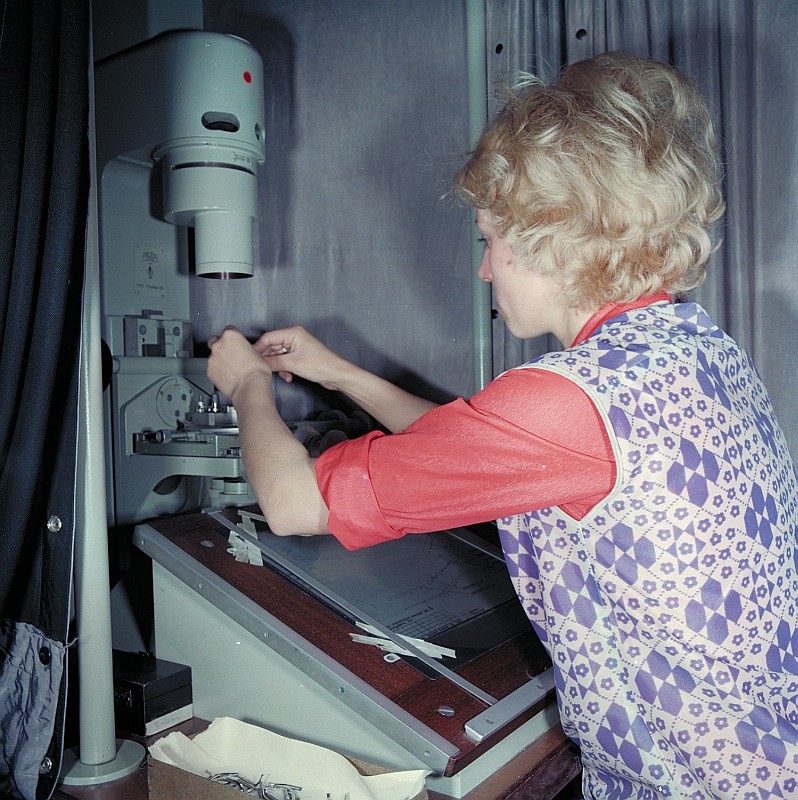
Quality inspector in a Volkseigener Betrieb sewing machine parts factory in Dresden, East Germany, 1977

Quality control (QC) is a process by which entities review the quality of all factors involved in production. ISO 9000 defines quality control as "a part of quality management focused on fulfilling quality requirements".[1]

This approach places emphasis on three aspects (enshrined in standards such as ISO 9001):[2][3]

  1. Elements such as controls, job management, defined and well managed processes,[4][5] performance and integrity criteria, and identification of records
  2. Competence, such as knowledge, skills, experience, and qualifications
  3. Soft elements, such as personnel, integrity, confidence, organizational culture, motivation, team spirit, and quality relationships.

Inspection is a major component of quality control, where physical product is examined visually (or the end results of a service are analyzed). Product inspectors will be provided with lists and descriptions of unacceptable product defects such as cracks or surface blemishes for example.[3]

History and introduction

[edit]

Early stone tools such as anvils had no holes and were not designed as interchangeable parts. Mass production established processes for the creation of parts and system with identical dimensions and design, but these processes are not uniform and hence some customers were unsatisfied with the result. Quality control separates the act of testing products to uncover defects from the decision to allow or deny product release, which may be determined by fiscal constraints.[6] For contract work, particularly work awarded by government agencies, quality control issues are among the top reasons for not renewing a contract.[7]

The simplest form of quality control was a sketch of the desired item. If the item did not match the sketch, the item was rejected, in a simple Go/no go procedure. However, manufacturers soon found it was difficult and costly to make parts be exactly like their depiction; hence around 1840 tolerance limits were introduced, wherein a design would function if its parts were measured to be within the limits. Quality was thus precisely defined using devices such as plug gauges and ring gauges. However, this did not address the problem of defective items; recycling or disposing of the waste adds to the cost of production, as does trying to reduce the defect rate. Various methods have been proposed to prioritize quality control issues and determine whether to leave them unaddressed or use quality assurance techniques to improve and stabilize production.[6]

Notable approaches

[edit]

There is a tendency for individual consultants and organizations to name their own unique approaches to quality control—a few of these have ended up in widespread use:

Terminology Approximate year of first use Description
Statistical quality control (SQC) 1930s The application of statistical methods (specifically control charts and acceptance sampling) to quality control[8]: 556 
Total quality control (TQC) 1956 Popularized by Armand V. Feigenbaum in a Harvard Business Review article[9] and book of the same name;[10] stresses involvement of departments in addition to production (e.g., accounting, design, finance, human resources, marketing, purchasing, sales)
Statistical process control (SPC) 1960s The use of control charts to monitor an individual industrial process and feed back performance to the operators responsible for that process; inspired by control systems
Company-wide quality control (CWQC) 1968 Japanese-style total quality control.[11]
Total quality management (TQM) 1985 Quality movement originating in the United States Department of Defense that uses (in part) the techniques of statistical quality control to drive continuous organizational improvement[12]
Six Sigma (6σ) 1986 Statistical quality control applied to business strategy;[13] originated by Motorola
Lean Six Sigma (L6σ) 2001 Six Sigma applied with the principles of lean manufacturing and/or lean enterprise; originated by Wheat et al.[14]

In project management

[edit]

In project management, quality control requires the project manager and/or the project team to inspect the accomplished work to ensure its alignment with the project scope.[15] In practice, projects typically have a dedicated quality control team which focuses on this area.[16]

See also

[edit]

References

[edit]

Further reading

[edit]
[edit]
Revisions and contributorsEdit on WikipediaRead on Wikipedia
from Grokipedia
Quality control is the set of operational techniques and activities that are used to fulfill requirements for quality in products, services, or processes. It focuses on identifying defects, ensuring compliance with standards, and verifying that outputs meet predefined specifications before they reach customers. Distinct from , which emphasizes preventive process design, quality control is reactive and involves direct inspection, measurement, and testing to detect and correct deviations. The practice of quality control has ancient roots but evolved significantly in the . Early forms trace back to medieval European guilds in the 13th century, where craftsmen inspected work to maintain standards and protect reputations. In the early 20th century, statistical methods revolutionized the field; at Bell Telephone Laboratories developed control charts in to monitor process variations using statistical principles. Post-World War II, figures like and promoted quality control in , leading to widespread adoption through (TQM) principles that integrated it into organizational culture for continuous improvement. Key methods in quality control include the seven basic quality tools: cause-and-effect diagrams for root cause analysis, check sheets for , control charts for monitoring stability, histograms for distribution visualization, Pareto charts to prioritize issues, scatter diagrams for , and stratification for data segmentation. (SPC) applies these tools to track variations and maintain consistent output. Sampling techniques, such as , allow efficient inspection of batches without testing every item, balancing cost and reliability. Quality control is essential across industries like , healthcare, and software, as it reduces defects, lowers costs associated with rework or recalls, and enhances by ensuring reliability and safety. International standards like ISO 9001 provide frameworks for implementing effective quality control systems, emphasizing measurable outcomes and continual enhancement. In today's global economy, robust quality control supports and , with methodologies like further refining defect prevention to achieve near-perfect performance.

Definition and Fundamentals

Core Concepts

Quality control is defined as a part of focused on fulfilling quality requirements by monitoring and verifying that products or services meet specified standards during or after production processes. This reactive approach involves inspecting outputs to identify and correct defects before they reach the , ensuring consistency and reliability in delivery. Quality control principles focus on identifying and correcting defects through and monitoring, with modern practices emphasizing ongoing to minimize variations before they result in nonconforming outputs. Key metrics include defect rates, which quantify the proportion of nonconforming items, and conformance to , assessing how closely outputs align with predefined criteria such as dimensions, , or functionality. These principles promote consistency in output by establishing feedback mechanisms to detect deviations early, thereby reducing and enhancing overall . Quality control differs from , which is a proactive element of involving the planning and design of processes to build in quality from the outset and provide confidence that requirements will be met. In contrast, encompasses the broader integration of both control and assurance within an organization's strategic framework, coordinating policies, resources, and continual improvement efforts across all operations. The foundations of these distinctions trace back to pioneers like Walter Shewhart, whose work on statistical methods introduced systematic monitoring techniques. At its core, quality control operates through basic components including inputs such as raw materials and production processes, outputs in the form of finished products or services, and feedback loops that analyze to adjust operations in real time. These elements form a cyclical system where measurement and analysis of inputs and outputs enable timely interventions, maintaining alignment with quality standards throughout the production cycle.

Importance and Benefits

Quality control is essential for ensuring that products and services meet specified standards, thereby preventing defects and inconsistencies that could undermine and long-term viability. By systematically monitoring and verifying processes, organizations can achieve higher reliability, which directly contributes to sustained success across various sectors. This foundational practice not only safeguards against immediate failures but also fosters a culture of continuous improvement, aligning with core principles of . Economically, quality control delivers substantial benefits by minimizing waste, rework, and associated costs, with studies showing that the can account for 15-40% of sales revenue in , much of which is recoverable through effective controls. For instance, top-performing manufacturers limit and rework expenses to just 0.6% of sales, compared to 2.2% for underperformers, yielding significant savings in materials, labor, and disposal. Additionally, robust quality control reduces liability risks by mitigating product failures that lead to recalls, lawsuits, and regulatory penalties, thereby protecting . On the and market front, quality control enhances satisfaction by delivering consistent, reliable products, which builds trust and while bolstering brand reputation. Compliance with regulatory standards through rigorous controls not only avoids fines but also ensures market access in competitive global environments. Ultimately, these factors provide a , as high-quality outputs differentiate organizations and drive growth. Within organizations, quality control promotes advantages such as improved employee morale through standardized processes that reduce frustration from errors and variability. Data-driven decision-making enabled by quality metrics empowers teams to identify issues proactively, enhancing overall efficiency and job satisfaction. A notable case illustrating the consequences of inadequate quality control is the 2010 Toyota accelerator crisis, where defects in floor mats and pedals led to unintended acceleration reports, prompting recalls of over 8 million vehicles worldwide and resulting in a 16% sales decline, billions in costs, and lasting reputational damage. This event underscored how lapses can escalate into major financial and trust-eroding crises.

Historical Development

Early Foundations

The practice of quality control has roots in medieval Europe, where craftsmen organized into guilds in the late . These guilds established strict quality rules, with inspection committees verifying the work of apprentices and . Flawless goods were marked with the guild's symbol, while craftsmen added personal marks to track reputations and ensure . This protected consumers and maintained standards in trades like textiles and metalwork. The in the 19th century marked a shift toward formalized in , laying groundwork for modern quality control. A pivotal development occurred in 1798 when American inventor introduced while fulfilling a U.S. government contract to produce 10,000 muskets; by using molds and gauges to create uniform components, Whitney enabled rapid assembly and repair, reducing variability and defects in production. This innovation promoted consistency across factories, influencing subsequent efforts to control quality through uniform specifications rather than skilled craftsmanship alone. Whitney's methods, though not fully realized in his initial project due to technological limitations, established as a core principle for minimizing errors in mass output. Entering the early 20th century, principles further advanced inspection-based quality practices in industrial settings. Frederick Winslow Taylor's 1911 publication, , emphasized time studies and process optimization to eliminate inefficiencies, indirectly supporting quality by standardizing tasks and reducing waste from poor workmanship. Taylor's approach, applied in U.S. factories, involved detailed analysis of workflows to ensure consistent output, paving the way for dedicated quality oversight. Concurrently, Henry Ford's implementation of the moving in 1913 at his Highland Park plant revolutionized of automobiles, incorporating inline inspections and precision gauges—accurate to within four millionths of an inch—to verify part fit and functionality, thereby maintaining high standards amid accelerated throughput. During , the U.S. Army formalized inspection roles in arsenals like Rock Island and Springfield, deploying dedicated inspectors to scrutinize munitions production for defects, which helped scale output while controlling quality amid wartime demands. These milestones transitioned quality control from checks to systematic industrial protocols.

Post-War Advancements

Following , the field of quality control underwent significant transformation, building on wartime applications of statistical methods to emphasize proactive approaches in civilian industries. Walter Shewhart's invention of control charts in 1924 at Bell Laboratories laid the groundwork for , which saw significant adoption during for munitions production, with widespread use expanding post-war as industries sought to reduce variability in production. This period saw increased emphasis on using data to monitor and improve processes, building on Shewhart's foundational work to address economic and efficiency challenges in manufacturing. W. Edwards Deming played a pivotal role in this evolution through his philosophical and statistical contributions. In the 1950s, Deming outlined his 14 Points for Management, which advocated for a systemic approach to quality, including creating constancy of purpose, ceasing dependence on inspection, and driving out fear to foster innovation. Invited to in 1950 by the Union of Japanese Scientists and Engineers (JUSE), Deming trained over 800 engineers and executives in statistical quality control, profoundly influencing Japanese industry. This led to the establishment of the in 1951, an annual award recognizing excellence in quality management and marking the beginning of Japan's quality movement. Joseph Juran complemented Deming's efforts by applying the to quality control in the 1950s, emphasizing the "vital few" causes responsible for the majority of defects. Juran's work, including his lectures in starting in 1954, promoted the idea that 80% of quality issues stemmed from 20% of problems, encouraging managers to prioritize key areas for over exhaustive inspections. His trilogy of quality , control, and became a cornerstone for managerial strategies. Japan's post-war quality revolution integrated these Western ideas with indigenous philosophies, leading to innovations like —continuous incremental improvement involving all employees—and Total Quality Control (TQC), which extended principles across the entire organization. advanced TQC in the through his development of fishbone diagrams, also known as cause-and-effect diagrams, to systematically identify root causes of issues in collaborative settings like quality circles. Ishikawa's emphasis on employee participation and simple visual tools democratized control, contributing to Japan's economic resurgence and global manufacturing dominance by the 1970s. In response to Japan's success, the experienced a quality resurgence in the 1980s, culminating in the establishment of the in 1987 by Public Law 100-107. Administered by the National Institute of Standards and Technology (NIST), the award recognized organizations excelling in leadership, strategic planning, and customer focus, aiming to enhance U.S. competitiveness against international rivals. It spurred widespread adoption of quality frameworks, with recipients demonstrating measurable improvements in performance metrics.

Key Methods and Techniques

Statistical Process Control

(SPC) involves the application of statistical techniques to monitor, control, and improve processes by distinguishing between common cause variation, which is inherent and random within the process, and special cause variation, which arises from external factors and indicates instability. Common cause variation represents predictable fluctuations due to the process design, while special cause variation signals assignable causes requiring intervention to restore control. This distinction, pioneered by Walter Shewhart in the 1920s through the development of control charts, enables organizations to maintain process stability and reduce defects proactively. Control charts are graphical tools central to SPC for tracking process performance over time and detecting deviations from stability. Common types include the X-bar chart for monitoring subgroup means of continuous , the R-chart for subgroup ranges to assess variability, and the for proportions of nonconforming items in attribute . To construct these charts, begins with rational subgrouping, typically 4-5 samples taken under similar conditions to capture variation while minimizing special causes. The centerline of a control chart is the process mean xˉ\bar{x}, calculated as the average of subgroup means: xˉ=xˉik\bar{x} = \frac{\sum \bar{x}_i}{k}, where xˉi\bar{x}_i is the mean of the ii-th subgroup and kk is the number of subgroups. The process standard deviation σ\sigma is estimated from sample data, often using the average range Rˉ\bar{R} divided by a constant d2d_2 (dependent on subgroup size nn): σ^=Rˉ/d2\hat{\sigma} = \bar{R} / d_2, or directly from pooled standard deviations across subgroups. Upper and lower control limits are then set at three standard deviations from the mean to encompass 99.73% of data under normal distribution, assuming a stable process: UCL=xˉ+3σ^,LCL=xˉ3σ^.\text{UCL} = \bar{x} + 3\hat{\sigma}, \quad \text{LCL} = \bar{x} - 3\hat{\sigma}. These limits provide a baseline for distinguishing random variation from signals of special causes. Process capability indices quantify how well a stable process meets specification limits, assuming the process is in control. The potential capability index CpC_p measures the ratio of the specification width to six times the process standard deviation: Cp=USLLSL6σ,C_p = \frac{\text{USL} - \text{LSL}}{6\sigma}, where USL is the upper specification limit and LSL is the lower specification limit. A Cp>1.33C_p > 1.33 indicates the process spread is sufficiently narrow relative to tolerances for reliable performance, with values above 1.00 showing basic capability and below 1.00 signaling excessive variation. The performance index CpkC_{pk} adjusts for process centering by incorporating the mean μ\mu: Cpk=min(USLμ3σ,μLSL3σ).C_{pk} = \min\left( \frac{\text{USL} - \mu}{3\sigma}, \frac{\mu - \text{LSL}}{3\sigma} \right). This adjustment penalizes off-center processes, as CpkCpC_{pk} \leq C_p, and an ideal Cpk>1.33C_{pk} > 1.33 ensures the process mean is well-positioned within specifications to minimize defects. Acceptance sampling, a complementary SPC technique, uses predefined plans to decide whether to accept or reject lots based on sample inspection, focusing on attribute data. The ANSI/ASQ Z1.4 standard provides tables for sampling procedures by attributes, specifying sample sizes and acceptance numbers based on lot size, inspection level, and acceptable quality limit (AQL). It includes single sampling plans, where one sample determines the lot decision; double sampling plans, requiring a second sample if the first is inconclusive; and multiple sampling plans, involving sequential samples up to several stages for refined decisions. These plans incorporate switching rules to shift between normal, tightened, or reduced inspection based on recent lot quality history. Implementing SPC requires systematic steps to ensure effective monitoring. First, collect representative from the process over time, ensuring subgroups reflect operational conditions. Next, plot the points sequentially on the appropriate , updating the chart as new arrives. Then, interpret the chart for out-of-control signals, such as seven consecutive points above the centerline, indicating a potential special cause shift. Upon detection, investigate root causes, implement corrections, and recalculate limits if the process changes fundamentally to maintain ongoing stability.

Inspection and Sampling Methods

Inspection and sampling methods form a cornerstone of quality control by enabling the verification of product conformance through direct examination and statistical selection. These approaches allow organizations to detect defects, ensure compliance with specifications, and minimize risks in production processes. While full provides comprehensive coverage, sampling offers a practical alternative for large-scale operations, balancing thoroughness with efficiency.

Types of Inspection

Inspection methods vary based on the extent and nature of examination required. 100% inspection, also known as full inspection, involves checking every item in a lot against standards, ensuring no defects escape detection but proving costly and time-intensive due to labor and potential inspector fatigue. This method is ideal for high-risk products like medical devices where zero defects are critical, though it becomes impractical for high-volume manufacturing. In contrast, partial inspections target specific attributes to optimize resources. Visual inspection relies on observing product surfaces for cosmetic or apparent defects such as cracks, discoloration, or misalignment, often using aids like magnifiers or automated cameras. It is quick and low-cost but susceptible to human subjectivity and oversight, making it suitable for initial screening in industries like . Dimensional inspection measures physical attributes like length, width, or tolerances using precise tools to confirm adherence to design specifications. This method excels in but requires specialized equipment, increasing setup costs. Functional inspection evaluates a product's operational under simulated conditions, such as testing a device's functionality or . It verifies real-world but can be resource-heavy, as it often involves specialized testing rigs.

Sampling Methods

Sampling methods select representative subsets from a larger lot to infer overall , reducing the need for exhaustive checks. Random sampling assigns equal probability to each item, minimizing and providing a statistically valid overview. Stratified sampling divides the lot into homogeneous subgroups (strata) based on characteristics like batch or size, then samples proportionally from each to account for variability. Sequential sampling involves inspecting items one by one or in small groups, deciding to accept, reject, or continue based on cumulative results, which saves time compared to fixed-size plans. A key concept in attribute sampling is the Acceptable Quality Limit (AQL), defined as the maximum percentage of defective items considered tolerable in a lot. Originating from MIL-STD-105E (1989), which provided military sampling procedures and tables for attributes inspection, the framework evolved into the international standard ISO 2859-1 (1999), indexing plans by AQL values to balance producer and consumer risks. ISO 2859-1 offers single, double, and multiple sampling schemes, with inspection levels (I to III for general, S-1 to S-4 for special) determining sample sizes based on lot quantity—for instance, level II requires 200 samples for a 5,000-unit lot at a typical AQL of 2.5%. These methods are widely adopted for efficient lot acceptance in manufacturing.

Tools and Techniques

Various tools support inspection by providing accurate, repeatable measurements. Gauges, such as plug, ring, or snap gauges, offer quick checks for dimensions like diameters or thicknesses, ideal for high-volume production due to their simplicity and low cost. Coordinate Measuring Machines (CMMs) use probing systems to capture 3D coordinates of a part's surface, generating point clouds for geometric analysis and ensuring tolerances down to microns. Developed in the and refined since the , CMMs integrate into quality workflows for precise verification in and automotive sectors. Non-destructive testing (NDT) techniques preserve product integrity while revealing hidden flaws. Ultrasound testing employs high-frequency sound waves to detect internal voids or cracks in materials like metals, essential for assessing structural components without disassembly. X-ray testing penetrates materials to image subsurface defects, such as inclusions or welds, providing detailed radiographs for in critical applications.

Audit Processes

Audits systematically review inspection and sampling practices to confirm compliance. Internal audits are conducted by an organization's own staff to evaluate processes, identify improvements, and ensure alignment with internal standards, offering flexibility in scope. External audits, performed by independent third parties, verify adherence to regulatory or certification requirements like ISO 9001, providing objective validation but with a narrower, compliance-focused scope. Checklists are fundamental to both, serving as structured tools to guide auditors through key areas such as documentation review, control testing, and , ensuring comprehensive coverage and consistent verification of quality procedures.

Error Types

Inspection and sampling are prone to s that affect decision reliability. A Type I error (false reject) occurs when a conforming item is incorrectly deemed defective, leading to unnecessary rejection and increased costs for the producer; its probability, often denoted as alpha, represents the producer's risk. A Type II error (false accept) happens when a non-conforming item passes as acceptable, potentially harming the ; its probability, beta, signifies the consumer's risk. In quality control, these errors arise from inspector variability or sampling limitations, underscoring the need for calibrated processes to manage their probabilities within acceptable bounds.

Applications Across Industries

In Manufacturing

Quality control in manufacturing environments emphasizes the integration of and error-prevention mechanisms directly into production processes to ensure product consistency and minimize defects at the source. Inline stations, embedded within assembly lines, enable real-time monitoring and automated checks of components as they move through production, using technologies such as vision systems and sensors to detect deviations without halting the entire line. This approach reduces the need for rework and supports high-volume output, as seen in modern automated factories where such stations achieve near-100% coverage for critical features like dimensions and surface quality. A key innovation in quality control is the system, or mistake-proofing, which designs processes to prevent human errors through simple devices like guides, sensors, or fixtures that make incorrect assembly impossible or immediately detectable. Developed by industrial engineer in the 1960s while working with , shifted quality assurance from inspection to prevention, significantly lowering defect rates in repetitive tasks such as part insertion or alignment. For instance, a fixture might use mismatched shapes to ensure only correct components fit, thereby embedding reliability into the workflow. In , quality control integrates seamlessly with just-in-time () production to eliminate waste from defects and excess inventory. JIT synchronizes material arrivals with demand, requiring robust quality checks at each stage to avoid propagating errors downstream, as any defect can disrupt the flow and incur high costs without buffer stocks. Complementary to this is the andon system, originating from Toyota's production methods, where visual or auditory signals—such as pull cords or lights—allow operators to halt the line instantly upon detecting issues, enabling immediate resolution and preventing defective products from advancing. This empowers frontline workers to maintain quality, fostering a culture of continuous improvement. The automotive industry exemplifies the evolution of manufacturing quality control, beginning with Henry Ford's 1913 introduction of the moving assembly line, which standardized parts and processes to achieve unprecedented consistency and reduce variability in Model T production. This foundational approach emphasized uniform quality through division of labor and interchangeable components, laying the groundwork for systematic defect reduction. In modern times, Ford and other automakers enforce rigorous supplier audits under , a global standard developed from earlier systems like QS-9000, which mandates third-party certification of suppliers' systems to ensure compliance with defect prevention and traceability requirements throughout the . Pharmaceutical manufacturing adheres to Good Manufacturing Practices (GMP), regulated by bodies like the FDA, which require comprehensive batch to track materials, processes, and distribution from raw inputs to finished products. This ensures accountability in case of issues, with records including batch numbers, production dates, equipment details, and test results retained for at least one year post-expiry or three years post-distribution. Validation under GMP extends to critical processes, where prospective or concurrent studies confirm that manufacturing steps consistently yield products meeting specifications, preventing or variability in active pharmaceutical ingredients. Key metrics in quality control quantify performance and guide improvements, with measuring the percentage of units passing without rework—calculated as quality units divided by total units produced—and often targeted above 95% in high-efficiency lines. Yield rates track overall output efficiency, while scrap reduction focuses on minimizing , with industry benchmarks aiming for defect rates below 1% to align with lean principles and cost containment. These indicators, monitored via , provide actionable insights into process stability and defect sources.

In Services and Software

Quality control in services adapts traditional principles to intangible outputs, emphasizing customer-centric metrics and processes to ensure consistent delivery. Key metrics include the (NPS), a loyalty indicator developed by that gauges the likelihood of customers recommending a service on a 0-10 scale, subtracting detractors (0-6) from promoters (9-10) to yield a score from -100 to 100. Service Level Agreements (SLAs) formalize performance expectations, specifying targets like 99.9% uptime or response times within specified thresholds, with contractual remedies for breaches to maintain accountability. These tools enable service providers to monitor and enforce quality through predefined benchmarks rather than physical inspections. Methods such as and customer feedback loops provide direct evaluation of service interactions. employs trained evaluators who pose as customers to objectively assess adherence to standards, including staff courtesy, process efficiency, and compliance, often revealing gaps in training or operations that surveys might miss. Customer feedback loops, via post-service surveys or real-time reviews, capture subjective experiences and drive iterative improvements, integrating qualitative insights with quantitative for holistic quality oversight. In , quality control focuses on lifecycle phases to detect and mitigate defects early. Testing proceeds through , which isolates and verifies individual code modules; , which examines module interactions; and , which validates the entire application's functionality against requirements, as outlined in IEEE/ISO/IEC 29119 standards. Bug tracking systems like JIRA streamline defect management by allowing teams to log issues, assign priorities, track resolutions, and analyze patterns for preventive actions. processes, involving peer examination of changes for bugs, style adherence, and security, serve as a critical gate before merging code into the main repository. Agile and methodologies embed quality control via / (CI/CD) pipelines, where automated quality gates enforce thresholds—such as minimum test coverage or vulnerability scans—halting progression if unmet to balance speed with reliability. A prominent example is healthcare services, where quality control prioritizes under The Joint Commission's standards, mandating protocols like standardized handoff procedures to curb errors, which account for 67% of communication failures leading to harm. tracking monitors serious incidents, with patient identification errors comprising 12.3% of reported cases, informing targeted reductions in procedural error rates. Services and software present distinct challenges due to intangibility, where relies on subjective perceptions rather than tangible attributes, complicating and . For instance, targets like response times under 5 minutes depend on evaluations, heightening variability and necessitating feedback-driven adjustments to bridge expectation gaps.

Standards and Implementation

International Standards

International standards for quality control provide globally recognized frameworks that organizations use to establish, implement, and maintain effective quality management systems (QMS). The most prominent is ISO 9001:2015, which specifies requirements for a QMS to ensure consistent product and service quality while enhancing through a process approach that incorporates the cycle and risk-based thinking. The cycle serves as the core iterative framework, where organizations plan processes, implement them, check results against objectives, and act to improve, enabling continual enhancement of the QMS. Building on this foundation, sector-specific ISO standards address unique industry needs while aligning with ISO 9001 principles. For instance, outlines requirements for QMS in the design, development, production, and servicing of medical devices, emphasizing and to ensure . Similarly, establishes criteria for food safety management systems (FSMS), integrating and critical control points (HACCP) principles with interactive communication and prerequisite programs to control food safety risks across the . Certification to these standards involves a rigorous third-party conducted by accredited bodies, such as the British Standards Institution (BSI) or organizations recognized by the (ANSI). The typically includes an initial two-stage —documentation review followed by on-site verification—and subsequent surveillance audits annually, with full recertification required every three years to confirm ongoing compliance. Beyond ISO, other influential frameworks promote quality excellence. The Excellence Model, introduced in in by the European Foundation for Quality Management, offers a non-prescriptive structure based on enablers (leadership, , , partnerships, and ) and results (, customer, society, and key performance) to drive sustainable organizational improvement. , a focused on reducing variation to achieve near-perfect quality levels, employs a belt system for practitioner roles—ranging from Yellow Belt (basic awareness) to Master Black Belt (strategic oversight)—and the approach, which systematically defines project goals, measures performance, analyzes root causes, improves , and controls gains for data-driven enhancements. As of 2024, 1,479,165 certificates for ISO 9001 are held by organizations worldwide, reflecting its widespread adoption across industries and regions to demonstrate commitment to quality standards.

Tools and Software

Quality control relies on a variety of physical tools to measure and inspect products accurately, ensuring compliance with specifications. , available in digital and manual forms, are essential for precise dimensional measurements in , allowing inspectors to verify tolerances down to micrometers. Spectrometers, such as optical emission spectrometers, enable material analysis by identifying chemical compositions, which is critical for detecting impurities or verifying quality in processes. Automation tools like robotic vision systems integrate cameras and AI algorithms to perform non-contact inspections at high speeds, reducing and enabling 24/7 monitoring on production lines. Software solutions facilitate data-driven quality control by automating analysis and integration. , a widely used statistical software, supports (SPC) through features like control charts and capability analysis, helping organizations monitor process stability and predict defects in real time. The Quality Management (QM) module, part of , integrates quality inspections with , enabling automated notifications for non-conformances and streamlined audit trails across business operations. In Industry 4.0 environments, s and (IoT) technologies enable real-time monitoring by creating virtual replicas of physical assets that mirror operational data. Sensors embedded in machinery collect continuous data on variables like and , feeding it into digital twin models for predictive quality assessments and immediate . This setup allows dashboards to visualize process deviations, supporting proactive interventions to maintain product consistency. Reporting tools enhance decision-making by aggregating quality metrics into actionable insights. KPI dashboards, often built into QC platforms, display key performance indicators such as defect rates and compliance scores, providing at-a-glance overviews for managers to track improvements. Root cause analysis software incorporates digital templates for methods like the 5 Whys, guiding users through iterative questioning to identify underlying issues systematically and document findings for preventive actions. Integration examples demonstrate how systems link quality control to the for end-to-end . These platforms connect inspection data with and modules, allowing batch-level tracking from raw materials to , which facilitates rapid recalls and ensures . For instance, ERP solutions like SYSPRO embed quality checks within supply workflows, automating lot to minimize risks in food and pharmaceutical sectors.

Challenges and Future Directions

Common Pitfalls

One common pitfall in quality control implementation is over-reliance on inspection as the primary method for ensuring product quality, which often ignores underlying process deficiencies and root causes of defects. This approach assumes that defects can be caught and corrected post-production, but it fails to address systemic issues, leading to recurring failures and increased costs. For instance, mass inspections imply that processes are inherently incapable of meeting specifications, as noted by quality management principles, resulting in higher rates of internal quality failures that require rework or scrapping. Moreover, 100% inspection is particularly inefficient, as it is time-consuming, requires significant manpower and equipment, and drives up the overall cost of the final product without guaranteeing zero defects. To mitigate this, organizations should shift toward preventive measures like statistical process control to build quality into the production process from the outset, reducing dependency on end-of-line checks. Another frequent error is employee resistance to change when introducing new quality control systems, often stemming from of job insecurity, lack of understanding, or disruption to established routines. This pushback can manifest as reduced productivity, non-compliance with procedures, or even of initiatives, undermining the effectiveness of quality improvements. In and service environments, such resistance is exacerbated by inadequate communication about the benefits of the changes. To address this, comprehensive programs are essential, providing employees with the knowledge and skills needed to adapt, while fostering a of involvement through feedback mechanisms and ongoing support. Tailored training not only builds confidence but also aligns individual capabilities with organizational goals, turning potential opponents into advocates for quality control. Inadequate data collection, particularly through poor sampling methods, represents a critical pitfall that can lead to false conclusions about product and performance. When samples are not representative—due to biases in selection, incomplete frames, or low response rates—the resulting analyses may overestimate or underestimate defect rates, prompting misguided decisions such as unnecessary overhauls or overlooked risks. For example, non-random sampling can introduce selection errors, where only certain items are tested, skewing results and increasing the likelihood of false positives (incorrectly identifying defects) or false negatives (missing actual issues). Solutions include increasing sample sizes to improve representativeness and employing techniques to ensure coverage across variations in the population, thereby enhancing the reliability of quality assessments. Scope creep in quality control often arises from confusing it with quality assurance, leading to incomplete coverage of operational activities and blurred responsibilities. Quality control focuses on inspecting and verifying that products meet specified requirements, whereas encompasses broader process-oriented activities to prevent defects; conflating the two can result in overemphasis on reactive checks at the expense of proactive system improvements, causing gaps in overall . This confusion frequently leads to inefficient , as teams may neglect preventive planning in favor of ad-hoc inspections. To avoid this, organizations should clearly delineate roles through defined protocols and training, ensuring quality control remains a targeted of assurance efforts without expanding into unrelated areas. A stark real-world example of these pitfalls is the 2015 , where manipulated testing software (defeat devices) allowed vehicles to pass lab emissions checks while emitting up to 40 times the permissible nitrogen oxides on the road, highlighting severe ethical lapses in quality control practices. This failure stemmed from a corporate culture prioritizing aggressive performance targets over integrity, with engineers rationalizing the deception amid pressure from leadership and minimal oversight, ultimately eroding trust and incurring billions in fines and recalls. The incident underscores the dangers of ethical shortcuts in testing and inspection, emphasizing the need for robust governance and whistleblower protections to prevent such manipulations in quality verification processes.

Emerging Innovations

Advancements in (AI) and (ML) are transforming quality control through predictive models that forecast defects using neural networks, particularly in image-based inspections. Convolutional neural networks (CNNs), a type of architecture, enable automated visual analysis of manufacturing components, achieving high accuracy rates such as 98% true positive detection for surface defects in die-cast automotive parts. These models process vast datasets from sensors and cameras to predict potential failures before they occur, reducing scrap rates by up to 15% in quality control processes. In the automotive sector, AI-driven systems integrate with (IoT) devices for real-time monitoring, where combined with artificial neural networks delivers high accuracy in gear fault detection, enhancing overall production reliability. Blockchain technology enhances in supply chains by providing immutable records, ensuring from production to distribution in sectors like and pharmaceuticals. The Food Trust platform, built on Fabric, allows stakeholders to track products end-to-end, such as verifying the origin of through QR codes, which reduces food fraud and supports compliance with safety standards like those from the FDA. In pharmaceuticals, enables secure monitoring of transactions from raw materials to s, mitigating counterfeiting risks and improving during distribution. For instance, Ethereum-based systems facilitate tamper-proof batch records and deviation management, fostering transparency that cuts recall times and bolsters trust in supply chain . Sustainability-focused quality control incorporates environmental metrics, such as assessments, into management systems aligned with ISO 14001 standards. This international framework guides organizations in measuring from operations like energy use and transportation, setting reduction targets, and implementing energy-efficient practices to minimize eco-impact. By integrating these metrics, companies achieve continuous improvement through the Plan-Do-Check-Act cycle, where audits identify nonconformities and drive lower emissions, as evidenced by ISO 14001-certified firms reducing CO2 outputs in regions like , MINT, and economies. Such approaches align quality processes with broader environmental goals, ensuring products meet both performance and criteria without compromising . Big data supports real-time in quality control via cloud platforms, enabling proactive interventions in environments. AWS IoT SiteWise, for example, employs multivariate to monitor equipment data from assets like turbines and motors, automatically identifying irregularities without requiring specialized expertise. This capability processes streaming IoT data to flag deviations in operational parameters, reducing and enhancing quality by preventing defects at the source. Integrated with broader tools, it supports , where automated model retraining ensures ongoing accuracy in dynamic production settings. Post-2020 trends have accelerated remote quality control through (AR) and (VR), particularly in response to disruptions, while shows early promise for complex simulations. AR applications in , such as smart for remote assistance, enable off-site experts to guide on-site inspections, improving accuracy in quality checks and reducing by up to 30% in factory settings. VR facilitates immersive training and virtual prototyping post-pandemic, allowing distributed teams to simulate assembly processes without physical prototypes, which has boosted efficiency in sectors like automotive production. Meanwhile, pilots in 2025 leverage superposition for high-fidelity simulations in , such as modeling millions of scenarios for defect prediction in software and hardware testing, far surpassing classical methods in speed and precision. These technologies, including tools like Qiskit for simulation, are poised to redefine exhaustive testing frameworks by evaluating entangled states and optimizing QA workflows.

References

Add your contribution
Related Hubs
User Avatar
No comments yet.