Respect all members: no insults, harassment, or hate speech.
Be tolerant of different viewpoints, cultures, and beliefs. If you do not agree with others, just create separate note, article or collection.
Clearly distinguish between personal opinion and fact.
Verify facts before posting, especially when writing about history, science, or statistics.
Promotional content must be published on the “Related Services and Products” page—no more than one paragraph per service. You can also create subpages under the “Related Services and Products” page and publish longer promotional text there.
Do not post materials that infringe on copyright without permission.
Always credit sources when sharing information, quotes, or media.
Be respectful of the work of others when making changes.
Discuss major edits instead of removing others' contributions without reason.
If you notice rule-breaking, notify community about it in talks.
Do not share personal data of others without their consent.
The design of experiments (DOE),[1] also known as experiment design or experimental design, is the design of any task that aims to describe and explain the variation of information under conditions that are hypothesized to reflect the variation. The term is generally associated with experiments in which the design introduces conditions that directly affect the variation, but may also refer to the design of quasi-experiments, in which natural conditions that influence the variation are selected for observation.
In its simplest form, an experiment aims at predicting the outcome by introducing a change of the preconditions, which is represented by one or more independent variables, also referred to as "input variables" or "predictor variables." The change in one or more independent variables is generally hypothesized to result in a change in one or more dependent variables, also referred to as "output variables" or "response variables." The experimental design may also identify control variables that must be held constant to prevent external factors from affecting the results. Experimental design involves not only the selection of suitable independent, dependent, and control variables, but planning the delivery of the experiment under statistically optimal conditions given the constraints of available resources. There are multiple approaches for determining the set of design points (unique combinations of the settings of the independent variables) to be used in the experiment.
Main concerns in experimental design include the establishment of validity, reliability, and replicability. For example, these concerns can be partially addressed by carefully choosing the independent variable, reducing the risk of measurement error, and ensuring that the documentation of the method is sufficiently detailed. Related concerns include achieving appropriate levels of statistical power and sensitivity.
Correctly designed experiments advance knowledge in the natural and social sciences and engineering, with design of experiments methodology recognised as a key tool in the successful implementation of a Quality by Design (QbD) framework.[2] Other applications include marketing and policy making. The study of the design of experiments is an important topic in metascience.
Charles S. Peirce randomly assigned volunteers to a blinded, repeated-measures design to evaluate their ability to discriminate weights.[6][7][8][9]
Peirce's experiment inspired other researchers in psychology and education, which developed a research tradition of randomized experiments in laboratories and specialized textbooks in the 1800s.[6][7][8][9]
The use of a sequence of experiments, where the design of each may depend on the results of previous experiments, including the possible decision to stop experimenting, is within the scope of sequential analysis, a field that was pioneered[13] by Abraham Wald in the context of sequential tests of statistical hypotheses.[14]Herman Chernoff wrote an overview of optimal sequential designs,[15] while adaptive designs have been surveyed by S. Zacks.[16] One specific type of sequential design is the "two-armed bandit", generalized to the multi-armed bandit, on which early work was done by Herbert Robbins in 1952.[17]
A methodology for designing experiments was proposed by Ronald Fisher, in his innovative books: The Arrangement of Field Experiments (1926) and The Design of Experiments (1935). Much of his pioneering work dealt with agricultural applications of statistical methods. As a mundane example, he described how to test the lady tasting teahypothesis, that a certain lady could distinguish by flavour alone whether the milk or the tea was first placed in the cup. These methods have been broadly adapted in biological, psychological, and agricultural research.[18]
Comparison
In some fields of study it is not possible to have independent measurements to a traceable metrology standard. Comparisons between treatments are much more valuable and are usually preferable, and often compared against a scientific control or traditional treatment that acts as baseline.
Random assignment is the process of assigning individuals at random to groups or to different groups in an experiment, so that each individual of the population has the same chance of becoming a participant in the study. The random assignment of individuals to groups (or conditions within a group) distinguishes a rigorous, "true" experiment from an observational study or "quasi-experiment".[19] There is an extensive body of mathematical theory that explores the consequences of making the allocation of units to treatments by means of some random mechanism (such as tables of random numbers, or the use of randomization devices such as playing cards or dice). Assigning units to treatments at random tends to mitigate confounding, which makes effects due to factors other than the treatment to appear to result from the treatment.
The risks associated with random allocation (such as having a serious imbalance in a key characteristic between a treatment group and a control group) are calculable and hence can be managed down to an acceptable level by using enough experimental units. However, if the population is divided into several subpopulations that somehow differ, and the research requires each subpopulation to be equal in size, stratified sampling can be used. In that way, the units in each subpopulation are randomized, but not the whole sample. The results of an experiment can be generalized reliably from the experimental units to a larger statistical population of units only if the experimental units are a random sample from the larger population; the probable error of such an extrapolation depends on the sample size, among other things.
Measurements are usually subject to variation and measurement uncertainty; thus they are repeated and full experiments are replicated to help identify the sources of variation, to better estimate the true effects of treatments, to further strengthen the experiment's reliability and validity, and to add to the existing knowledge of the topic.[20] However, certain conditions must be met before the replication of the experiment is commenced: the original research question has been published in a peer-reviewed journal or widely cited, the researcher is independent of the original experiment, the researcher must first try to replicate the original findings using the original data, and the write-up should state that the study conducted is a replication study that tried to follow the original study as strictly as possible.[21]
Blocking (right) Blocking is the non-random arrangement of experimental units into groups (blocks) consisting of units that are similar to one another. Blocking reduces known but irrelevant sources of variation between units and thus allows greater precision in the estimation of the source of variation under study.
Orthogonality concerns the forms of comparison (contrasts) that can be legitimately and efficiently carried out. Contrasts can be represented by vectors and sets of orthogonal contrasts are uncorrelated and independently distributed if the data are normal. Because of this independence, each orthogonal treatment provides different information to the others. If there are T treatments and T − 1 orthogonal contrasts, all the information that can be captured from the experiment is obtainable from the set of contrasts.
Multifactorial experiments
Use of multifactorial experiments instead of the one-factor-at-a-time method. These are efficient at evaluating the effects and possible interactions of several factors (independent variables). Analysis of experiment design is built on the foundation of the analysis of variance, a collection of models that partition the observed variance into components, according to what factors the experiment must estimate or test.
Weights of eight objects are measured using a pan balance and set of standard weights. Each weighing measures the weight difference between objects in the left pan and any objects in the right pan by adding calibrated weights to the lighter pan until the balance is in equilibrium. Each measurement has a random error. The average error is zero; the standard deviations of the probability distribution of the errors is the same number σ on different weighings; errors on different weighings are independent. Denote the true weights by
.
We consider two different experiments with the same amount of measurements:
Weigh each of the eight objects individually.
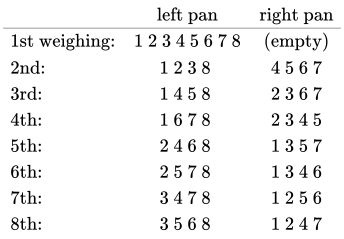
Do the eight weighings according to the following schedule:
Let yi be the measured difference for i = 1, ..., 8. The relationship between the true weights and experimental measurements may be represented with a general linear model, with the design matrix having entries from :
The weights are typically estimated using the method of least squares. Using a weighing matrix, this is equivalent to inverting on the measurements:
The question of design of experiments is: which experiment is better?
Investigating estimate A vs B for the first weight:
A simular result follows for the remaining weight estimates. Thus, the second experiment gives us 8 times as much precision for the estimate of a single item, despite costing the same number of resources (number of weightings).
Many problems of the design of experiments involve combinatorial designs, as in this example and others.[24]
Use of double-blind designs can prevent biases potentially leading to false positives in the data collection phase. When a double-blind design is used, participants are randomly assigned to experimental groups but the researcher is unaware of what participants belong to which group. Therefore, the researcher can not affect the participants' response to the intervention.[26]
P-hacking can be prevented by preregistering researches, in which researchers have to send their data analysis plan to the journal they wish to publish their paper in before they even start their data collection, so no data manipulation is possible.[30][31]
Another way to prevent this is taking a double-blind design to the data-analysis phase, making the study triple-blind, where the data are sent to a data-analyst unrelated to the research who scrambles up the data so there is no way to know which participants belong to before they are potentially taken away as outliers.[26]
An experimental design or randomized clinical trial requires careful consideration of several factors before actually doing the experiment.[33] An experimental design is the laying out of a detailed experimental plan in advance of doing the experiment. Some of the following topics have already been discussed in the principles of experimental design section:
How many factors does the design have, and are the levels of these factors fixed or random?
Are control conditions needed, and what should they be?
Manipulation checks: did the manipulation really work?
What are the background variables?
What is the sample size? How many units must be collected for the experiment to be generalisable and have enough power?
What is the relevance of interactions between factors?
What is the influence of delayed effects of substantive factors on outcomes?
How do response shifts affect self-report measures?
How feasible is repeated administration of the same measurement instruments to the same units at different occasions, with a post-test and follow-up tests?
Should the client/patient, researcher or even the analyst of the data be blind to conditions?
What is the feasibility of subsequent application of different conditions to the same units?
How many of each control and noise factors should be taken into account?
The independent variable of a study often has many levels or different groups. In a true experiment, researchers can have an experimental group, which is where their intervention testing the hypothesis is implemented, and a control group, which has all the same element as the experimental group, without the interventional element. Thus, when everything else except for one intervention is held constant, researchers can certify with some certainty that this one element is what caused the observed change. In some instances, having a control group is not ethical. This is sometimes solved using two different experimental groups. In some cases, independent variables cannot be manipulated, for example when testing the difference between two groups who have a different disease, or testing the difference between genders (obviously variables that would be hard or unethical to assign participants to). In these cases, a quasi-experimental design may be used.
In the pure experimental design, the independent (predictor) variable is manipulated by the researcher – that is – every participant of the research is chosen randomly from the population, and each participant chosen is assigned randomly to conditions of the independent variable. Only when this is done is it possible to certify with high probability that the reason for the differences in the outcome variables are caused by the different conditions. Therefore, researchers should choose the experimental design over other design types whenever possible. However, the nature of the independent variable does not always allow for manipulation. In those cases, researchers must be aware of not certifying about causal attribution when their design doesn't allow for it. For example, in observational designs, participants are not assigned randomly to conditions, and so if there are differences found in outcome variables between conditions, it is likely that there is something other than the differences between the conditions that causes the differences in outcomes, that is – a third variable. The same goes for studies with correlational design.
It is best that a process be in reasonable statistical control prior to conducting designed experiments. When this is not possible, proper blocking, replication, and randomization allow for the careful conduct of designed experiments.[34]
To control for nuisance variables, researchers institute control checks as additional measures. Investigators should ensure that uncontrolled influences (e.g., source credibility perception) do not skew the findings of the study. A manipulation check is one example of a control check. Manipulation checks allow investigators to isolate the chief variables to strengthen support that these variables are operating as planned.
One of the most important requirements of experimental research designs is the necessity of eliminating the effects of spurious, intervening, and antecedent variables. In the most basic model, cause (X) leads to effect (Y). But there could be a third variable (Z) that influences (Y), and X might not be the true cause at all. Z is said to be a spurious variable and must be controlled for. The same is true for intervening variables (a variable in between the supposed cause (X) and the effect (Y)), and anteceding variables (a variable prior to the supposed cause (X) that is the true cause). When a third variable is involved and has not been controlled for, the relation is said to be a zero order relationship. In most practical applications of experimental research designs there are several causes (X1, X2, X3). In most designs, only one of these causes is manipulated at a time.
Some efficient designs for estimating several main effects were found independently and in near succession by Raj Chandra Bose and K. Kishen in 1940 at the Indian Statistical Institute, but remained little known until the Plackett–Burman designs were published in Biometrika in 1946. About the same time, C. R. Rao introduced the concepts of orthogonal arrays as experimental designs. This concept played a central role in the development of Taguchi methods by Genichi Taguchi, which took place during his visit to Indian Statistical Institute in early 1950s. His methods were successfully applied and adopted by Japanese and Indian industries and subsequently were also embraced by US industry albeit with some reservations.
In 1950, Gertrude Mary Cox and William Gemmell Cochran published the book Experimental Designs, which became the major reference work on the design of experiments for statisticians for years afterwards.
Developments of the theory of linear models have encompassed and surpassed the cases that concerned early writers. Today, the theory rests on advanced topics in linear algebra, algebra and combinatorics.
The textbooks of D. Montgomery, R. Myers, and G. Box/W. Hunter/J.S. Hunter have reached generations of students and practitioners.[36][37][38][39][40] Furthermore, there is ongoing discussion of experimental design in the context of model building for models either static or dynamic models, also known as system identification.[41][42]
Laws and ethical considerations preclude some carefully designed
experiments with human subjects. Legal constraints are dependent on
jurisdiction. Constraints may involve
institutional review boards, informed consent
and confidentiality affecting both clinical (medical) trials and
behavioral and social science experiments.[43]
In the field of toxicology, for example, experimentation is performed
on laboratory animals with the goal of defining safe exposure limits
for humans.[44] Balancing
the constraints are views from the medical field.[45] Regarding the randomization of patients,
"... if no one knows which therapy is better, there is no ethical
imperative to use one therapy or another." (p 380) Regarding
experimental design, "...it is clearly not ethical to place subjects
at risk to collect data in a poorly designed study when this situation
can be easily avoided...". (p 393)
Protocol (natural sciences) – Procedural method for the design and implementation of an experimentPages displaying short descriptions of redirect targets
Quasi-experimental design – Empirical interventional studyPages displaying short descriptions of redirect targets
Randomized block design – Design of experiments to collect similar contexts togetherPages displaying short descriptions of redirect targets
^Peirce, Charles Sanders (1887). "Illustrations of the Logic of Science". Open Court (10 June 2014). ISBN0812698495.
^Peirce, Charles Sanders (1883). "A Theory of Probable Inference". In C. S. Peirce (Ed.), Studies in logic by members of the Johns Hopkins University (p. 126–181). Little, Brown and Co (1883)
^Zacks, S. (1996) "Adaptive Designs for Parametric Models". In: Ghosh, S. and Rao, C. R., (Eds) (1996). "Design and Analysis of Experiments," Handbook of Statistics, Volume 13. North-Holland. ISBN0-444-82061-2. (pages 151–180)
^Miller, Geoffrey (2000). The Mating Mind: how sexual choice shaped the evolution of human nature, London: Heineman, ISBN0-434-00741-2 (also Doubleday, ISBN0-385-49516-1) "To biologists, he was an architect of the 'modern synthesis' that used mathematical models to integrate Mendelian genetics with Darwin's selection theories. To psychologists, Fisher was the inventor of various statistical tests that are still supposed to be used whenever possible in psychology journals. To farmers, Fisher was the founder of experimental agricultural research, saving millions from starvation through rational crop breeding programs." p.54.
^Creswell, J.W. (2008), Educational research: Planning, conducting, and evaluating quantitative and qualitative research (3rd edition), Upper Saddle River, NJ: Prentice Hall. 2008, p. 300. ISBN0-13-613550-1
^Montgomery, Douglas (2013). Design and analysis of experiments (8th ed.). Hoboken, NJ: John Wiley & Sons, Inc. ISBN9781118146927.
^
Walpole, Ronald E.; Myers, Raymond H.; Myers, Sharon L.; Ye, Keying (2007). Probability & statistics for engineers & scientists (8 ed.). Upper Saddle River, NJ: Pearson Prentice Hall. ISBN978-0131877115.
^
Myers, Raymond H.; Montgomery, Douglas C.; Vining, G. Geoffrey; Robinson, Timothy J. (2010). Generalized linear models : with applications in engineering and the sciences (2 ed.). Hoboken, N.J.: Wiley. ISBN978-0470454633.
^
Box, George E.P.; Hunter, William G.; Hunter, J. Stuart (2005). Statistics for Experimenters : Design, Innovation, and Discovery (2 ed.). Hoboken, N.J.: Wiley. ISBN978-0471718130.
^Spall, J. C. (2010). "Factorial Design for Efficient Experimentation: Generating Informative Data for System Identification". IEEE Control Systems Magazine. 30 (5): 38–53. doi:10.1109/MCS.2010.937677. S2CID45813198.
^
Moore, David S.; Notz, William I. (2006). Statistics : concepts and controversies (6th ed.). New York: W.H. Freeman. pp. Chapter 7: Data ethics. ISBN9780716786368.
Peirce, C. S. (1877–1878), "Illustrations of the Logic of Science" (series), Popular Science Monthly, vols. 12–13. Relevant individual papers:
(1878 March), "The Doctrine of Chances", Popular Science Monthly, v. 12, March issue, pp. 604–615. Internet ArchiveEprint.
(1878 April), "The Probability of Induction", Popular Science Monthly, v. 12, pp. 705–718. Internet ArchiveEprint.
(1878 June), "The Order of Nature", Popular Science Monthly, v. 13, pp. 203–217.Internet ArchiveEprint.
(1878 August), "Deduction, Induction, and Hypothesis", Popular Science Monthly, v. 13, pp. 470–482. Internet ArchiveEprint.
(1883), "A Theory of Probable Inference", Studies in Logic, pp. 126–181, Little, Brown, and Company. (Reprinted 1983, John Benjamins Publishing Company, ISBN90-272-3271-7)
Design of experiments (DOE) is a systematic methodology in applied statistics for planning, conducting, and analyzing experiments to draw valid, objective conclusions about the relationships between input factors (variables) and output responses, while minimizing resource use such as time, cost, and sample size.[1] This approach ensures that data collection is structured to maximize the quality and reliability of inferences, often through the application of statistical models like analysis of variance (ANOVA).[2]The foundations of DOE were laid in the early 20th century by British statistician and geneticist Ronald A. Fisher, who developed key concepts while working at the Rothamsted Experimental Station in England during the 1920s and 1930s to improve agricultural yield through controlled field trials.[3] Fisher's seminal work, The Design of Experiments (1935), formalized principles such as randomization to eliminate bias, replication to assess variability, and blocking to control for extraneous sources of variation, transforming ad hoc testing into a rigorous scientific discipline.[4] These ideas built on earlier statistical methods but emphasized experimental planning to establish cause-and-effect relationships, particularly in multifactor scenarios where interactions between variables could otherwise confound results.[5]At its core, DOE operates on three fundamental principles: randomization, which assigns treatments to experimental units randomly to protect against unknown biases; replication, which repeats treatments to estimate experimental error and improve precision; and blocking (or local control), which groups similar units to reduce variability from non-treatment factors.[5] Common types of designs include factorial designs, which test all combinations of factor levels to detect interactions; fractional factorial designs, which use subsets for efficiency in screening many factors; and response surface designs, which model curved relationships for optimization.[6] These designs enable applications ranging from comparative studies (e.g., testing single-factor effects) to full optimization (e.g., finding ideal process settings in manufacturing).[1]DOE has broad applications across disciplines, including engineering for process improvement, agriculture for crop enhancement, pharmaceuticals for drug formulation, and quality control in industry to reduce defects.[3] By facilitating efficient experimentation—often requiring fewer runs than one-factor-at-a-time approaches—it supports robust decision-making and has influenced modern fields like Six Sigma[3] and machine learning model tuning.[7] Despite its power, successful DOE requires careful consideration of assumptions, such as normality of errors and independence of observations, to ensure statistical validity.[8]
Fundamentals
Definition and objectives
Design of experiments (DOE) is a systematic, rigorous approach to the planning and execution of scientific studies, ensuring that data are collected in a manner that allows for valid and efficient inference about the effects of various factors on a response variable.[8] This methodology involves carefully selecting experimental conditions, such as factor levels and the number of runs, to address specific research questions while controlling for variability and potential biases.[8]The primary objectives of DOE are to maximize the information obtained from each experiment, minimize the required number of experimental runs, accurately estimate the effects of factors like treatments or process variables, and quantify the associated uncertainties.[3] By structuring experiments this way, DOE enables researchers to draw robust conclusions with limited resources, often through the use of statistical models that account for interactions between factors.[3]Originating in the field of statistics during the early 20th century, DOE emerged as a formalized alternative to unstructured trial-and-error approaches in agricultural and scientific research.[3] Its key benefits include enhanced precision in estimating effects due to controlled variability, significant reductions in costs and time compared to exhaustive testing, and the ability to establish stronger causal inferences than those possible in observational studies.[9]
Core principles
The core principles of the design of experiments (DOE) provide the foundational framework for conducting valid and efficient scientific investigations, ensuring that conclusions are reliable and unbiased. These principles, primarily formalized by Ronald A. Fisher in the early 20th century, emphasize systematic approaches to handling variability and inference in experimental settings.[10] They apply across diverse fields, from agriculture to engineering, by addressing how treatments are assigned, repeated, and controlled to isolate effects of interest.The principle of randomization involves the random assignment of treatments to experimental units, which serves to eliminate systematic bias from unknown or uncontrolled factors and enables the application of probability theory for statistical inference.[10] By distributing treatments evenly across potential sources of variation, randomization ensures that any observed differences are attributable to the treatments rather than confounding influences, thereby validating tests of significance.[11] This approach underpins the validity of p-values and confidence intervals in experimental analysis.Replication, another essential principle, requires repeating treatments across multiple experimental units to estimate the inherent experimental error and enhance the precision of effect estimates.[10] Through multiple observations per treatment, replication allows for the separation of true treatment effects from random noise, providing a more stable measure of variability and increasing the power to detect meaningful differences.[10] For instance, in agricultural trials, replicating seed varieties across plots helps quantify field-to-field variation unrelated to the varieties themselves.The principle of blocking, also known as local control, entails grouping experimental units into homogeneous blocks based on known sources of variability to reduce error and heighten sensitivity to treatment effects.[10] By nesting treatments within these blocks—such as soil types in field experiments—researchers control for block-specific differences, minimizing their impact on overall variability and allowing clearer detection of treatment responses.[10] This technique increases the efficiency of the design without requiring additional runs, as the within-block comparisons are more precise.
Historical development
Early statistical foundations
The foundations of design of experiments (DOE) in the 19th century were laid through advancements in error theory and probabilistic methods for analyzing observational and experimental data, primarily by astronomers and mathematicians addressing uncertainties in measurements. Pierre-Simon Laplace contributed significantly to the theory of errors by proposing in 1778 that the frequency of observational errors follows an exponential function of the square of the error magnitude, providing a probabilistic framework for assessing reliability in scientific data.[12] This approach, further elaborated in his 1812 work Théorie Analytique des Probabilités, justified the use of probability distributions to model experimental errors and informed later statistical inference. Complementing Laplace's probabilistic justification, Carl Friedrich Gauss developed the method of least squares around 1795, initially applying it to astronomical observations for orbit calculations by minimizing the sum of squared residuals between predicted and observed values.[13] Gauss published this method in 1809, establishing it as a cornerstone for fitting models to noisy data in experimental contexts, though he linked it to the normal distribution for error assumptions.[14]In the late 19th century, Charles Sanders Peirce advanced the conceptual groundwork for experimental design by incorporating randomization into scientific inquiry, marking the first explicit use of random assignment in empirical studies. In his 1877–1878 series "Illustrations of the Logic of Science," published in Popular Science Monthly, Peirce emphasized randomization as essential for valid statistical inference, arguing that random sampling mitigates bias in estimating probabilities from experimental outcomes.[15] Peirce's philosophical framework of pragmaticism, which views inquiry as a process of error correction, and abduction—reasoning to the best hypothesis—further shaped experimental planning by prioritizing testable predictions over deterministic models.[16] This culminated in 1884 when Peirce, collaborating with Joseph Jastrow, conducted the inaugural randomized double-blind experiment on human sensory discrimination of weights, using random ordering to control for experimenter and subject bias.[17]Entering the early 20th century, Karl Pearson's work in biometrics provided tools for handling multivariate relationships in experimental data, bridging correlation analysis with broader statistical design. Pearson introduced the product-moment correlation coefficient in 1895 to quantify associations between variables, enabling the analysis of interdependent factors in biological and experimental contexts.[18] Through his establishment of the Biometrika journal in 1901 and development of principal components analysis that same year, Pearson laid the groundwork for multivariate methods that decompose complex datasets into principal axes, facilitating the design of experiments involving multiple interacting variables.[19] These innovations emphasized empirical curve-fitting and contingency tables, influencing how experimenters could systematically explore relationships without assuming independence.Prior to these theoretical advances, agricultural field trials in Europe and the United States relied on systematic but non-randomized layouts, highlighting the need for more robust designs. At Rothamsted Experimental Station in England, John Bennet Lawes and Joseph Henry Gilbert initiated long-term plot experiments in 1843, testing fertilizers on crops like wheat and barley through uniform treatments across fixed field sections to observe yield variations over decades.[20] Similar systematic trials emerged in the U.S. from the 1880s at agricultural stations, such as those under the Hatch Act, where plots were arranged in grids with controlled inputs but without random allocation, leading to potential biases from soil heterogeneity.[21] These efforts provided valuable data on treatment effects yet underscored limitations in inferential validity due to the absence of randomization. This pre-1920s landscape set the stage for subsequent innovations in experimental methodology.
Ronald Fisher's innovations
Ronald A. Fisher joined the Rothamsted Experimental Station in 1919, where he served as the head of the statistics department until 1933, tasked with analyzing a vast archive of agricultural data from crop experiments conducted since the 1840s. This work led him to develop the analysis of variance (ANOVA), a statistical technique that enabled the partitioning of total variation in experimental data into components attributable to different sources, such as treatments, blocks, and error, thereby facilitating the assessment of multifactor effects in agricultural settings. ANOVA proved instrumental in handling the complexity of field trials, where factors like soil variability and environmental influences could confound results, marking a shift from descriptive summaries to rigorous inference in experimental agriculture.[22]Fisher's innovations were disseminated through seminal publications that codified these methods for broader scientific use. In Statistical Methods for Research Workers (1925), he outlined practical tools for data analysis, including tables for assessing significance and the application of probability to biological and agricultural research, emphasizing replicable procedures over subjective judgment. This was followed by The Design of Experiments (1935), which synthesized his ideas into a cohesive theory, arguing that experimental design must precede analysis to ensure valid conclusions. These texts transformed experimental practice by providing accessible, standardized approaches that extended beyond agriculture to fields like biology and medicine.[23][24]A cornerstone of Fisher's framework was the introduction of structured designs to manage multiple factors efficiently while minimizing bias and maximizing precision. In his 1926 paper "The Arrangement of Field Experiments," he advocated randomized blocks to account for known sources of variation, such as soil fertility gradients, by grouping experimental units into homogeneous blocks and randomly assigning treatments within them. He further proposed Latin squares for experiments with two blocking factors, like rows and columns in a field, ensuring each treatment appeared exactly once in each row and column to balance extraneous effects. Additionally, Fisher pioneered factorial designs, which allowed the simultaneous investigation of multiple factors and their interactions using the same number of experimental units as single-factor studies, revealing synergies that ad hoc comparisons might overlook. These designs integrated randomization—random assignment of treatments—to eliminate systematic bias and enable valid error estimation.[25]Fisher placed strong emphasis on null hypothesis testing and p-values as mechanisms for scientific inference, viewing experiments as tests of whether observed differences could plausibly arise by chance under a null hypothesis of no treatment effect. The p-value, defined as the probability of obtaining results at least as extreme as those observed assuming the null is true, provided a quantitative measure of evidence against the null, guiding decisions on whether to reject it at conventional levels like 5% or 1%. This approach shifted experimentation from anecdotal evidence to probabilistic reasoning, enhancing objectivity.[26]Central to Fisher's philosophy was a critique of prevailing ad hoc methods, such as systematic plot arrangements that assumed uniformity without verification, which he argued introduced uncontrolled biases and invalidated inference. Instead, he promoted a unified statistical framework where design, execution, and analysis formed an indivisible whole, ensuring experiments yielded reliable, generalizable knowledge through principles like randomization, replication, and orthogonality. This holistic view elevated the experiment from an informal tool to a cornerstone of inductive science.[27]
Post-Fisher expansions
Following Ronald Fisher's foundational work on experimental design in the early 20th century, researchers in the 1930s and 1940s extended his principles to address practical limitations in larger-scale experiments, particularly through advancements in incomplete block designs and confounding techniques for factorial structures. Frank Yates, working at Rothamsted Experimental Station, developed methods for constructing and analyzing fractional factorial designs, enabling efficient experimentation when full replication was infeasible due to resource constraints. His approach to confounding allowed higher-order interactions to be sacrificed to estimate main effects and lower-order interactions with fewer observations, as detailed in his seminal 1937 publication.[28] Concurrently, Gertrude M. Cox advanced these ideas by emphasizing practical applications in agricultural and industrial settings, including extensions to incomplete block designs that balanced treatments across subsets of experimental units to control for heterogeneity. Cox's collaborative efforts, notably in the comprehensive textbook co-authored with William G. Cochran, systematized these extensions, providing analytical frameworks for designs like balanced incomplete block setups that Yates had pioneered, thereby broadening DOE's applicability beyond complete randomization.In the 1940s and 1950s, Oscar Kempthorne provided a rigorous theoretical foundation for DOE by integrating it with the general linear model, offering a unified mathematical framework for analyzing both fixed and random effects in experimental layouts. Kempthorne's work clarified the distinction between fixed effects, where levels are chosen to represent specific conditions, and random effects, where levels are sampled from a larger population, enabling more flexible modeling of variability in designs like blocks and factorials. His vector-space approach to design theory formalized the estimation of treatment contrasts and error terms under randomization, as expounded in his influential 1952 textbook, which became a cornerstone for subsequent statistical education in experimentation. This theoretical rigor addressed ambiguities in Fisher's earlier formulations, particularly regarding inference under the general linear hypothesis, and facilitated the analysis of complex designs with correlated errors.[29]Post-World War II industrial expansion in the 1950s and 1960s spurred the adaptation of DOE for manufacturing quality control, most notably through Genichi Taguchi's methods in Japan, which emphasized robust design to minimize product sensitivity to uncontrollable variations. Working at the Electrical Communications Laboratory of Nippon Telegraph and Telephone, Taguchi adapted orthogonal arrays—developed by C. R. Rao in the 1940s[30]—for offline experimentation to optimize processes against noise factors like environmental fluctuations, prioritizing signal-to-noise ratios over mere mean responses. His approach, developed from the late 1940s onward, integrated DOE with engineering tolerances to achieve consistent quality at lower costs, influencing Japan's postwar economic recovery in industries such as electronics and automobiles; by the 1970s, these techniques were formalized in Taguchi's quality engineering framework, which quantified losses from deviation using quadratic loss functions.[31]A pivotal mid-century advancement was the introduction of response surface methodology (RSM) by George E.P. Box and Keith B. Wilson in 1951, which extended factorial designs to continuous factor spaces for sequential optimization of responses near suspected optima. RSM employs low-order polynomial models, typically quadratic, fitted via least squares to data from efficient designs like central composites, allowing exploration of curved relationships through techniques such as steepest ascent to navigate the response surface toward improved outcomes. This methodology shifted DOE from discrete treatment comparisons to dynamic process improvement, with early applications in chemical engineering demonstrating reduced experimentation by iteratively refining factor levels based on fitted surfaces.[32]Building on RSM, Box further contributed to industrial DOE through evolutionary operation (EVOP) in the 1950s and 1960s, a technique for continuous online experimentation integrated into routine production without disrupting output. EVOP uses small-scale, concurrent factorial cycles—often 2^k designs with four to eight runs—to incrementally adjust process variables, enabling operators to evolve settings toward optimality while accumulating data for statistical analysis. Introduced in Box's 1957 paper, EVOP promoted a feedback loop between experimentation and production, fostering adaptive improvement in chemical and manufacturing plants; its simplicity allowed non-statisticians to implement it, marking a transition from offline lab studies to real-time industrial evolution.[33]
Key experimental elements
Randomization
Randomization refers to the process of assigning treatments to experimental units through random selection procedures, ensuring that each unit has a known probability of receiving any particular treatment. This is typically achieved using tools such as random number tables, dice, coin flips, or modern pseudorandom number generators to generate the allocation sequence.[34]The primary purpose of randomization is to eliminate systematic bias by decoupling treatment effects from potential confounding nuisance factors, such as environmental variations or unit heterogeneity, that could otherwise distort results. By distributing treatments unpredictably across units, randomization ensures that any observed differences are attributable to the treatments rather than to these extraneous influences. Additionally, it facilitates the estimation of experimental error variance, which is essential for conducting valid statistical tests of significance and constructing reliable confidence intervals.[35][36]Several types of randomization are employed in experimental design, depending on the need to balance specific characteristics. Complete randomization involves unrestricted random assignment across all units, suitable for homogeneous populations. Restricted randomization, such as stratified randomization, divides units into subgroups (strata) based on key covariates before randomizing within each stratum to ensure proportional representation and balance. Randomization within blocks applies similar principles but confines the process to smaller subsets of units, promoting even distribution while maintaining overall randomness.[37][36]In the Neyman-Pearson framework, randomization underpins the validity of inference by guaranteeing that treatment assignments are independent of potential outcomes, thereby yielding unbiased estimators of average treatment effects and proper coverage for confidence intervals. This approach, formalized in Neyman's early work on agricultural experiments, emphasizes randomization as a mechanism to achieve unconfoundedness by design, allowing nonparametric identification of causal effects without reliance on model assumptions.[38][39]A simple example illustrates complete randomization: in a trial comparing two treatments (A and B) on 10 units, each unit could be assigned via successive coin flips, with heads indicating treatment A and tails treatment B, resulting in a roughly equal split by chance while avoiding deliberate patterning.[34]
Replication and blocking
In design of experiments, replication involves conducting multiple independent observations for each treatment combination to distinguish systematic treatment effects from random experimental error. This practice, emphasized by Ronald Fisher, enables the estimation of the error variance, which is essential for conducting valid statistical tests of significance.[34] By providing degrees of freedom for the error term calculated as total runs minus number of treatments minus number of blocks, replication supports the computation of mean square error in analyses like ANOVA for randomized block designs.[40]The primary benefits of replication include enhanced statistical power to detect true effects and a reliable estimate of process variability, allowing experimenters to quantify uncertainty in results. However, improper replication can lead to pseudoreplication, where subsamples within the same experimental unit are mistakenly treated as independent replicates, inflating degrees of freedom and leading to spurious significance. This pitfall is particularly common in ecological field studies, such as spatial pseudoreplication in plots, and underscores the need for true independence across replicates.[41]Blocking complements replication by grouping experimental units into relatively homogeneous blocks to control for known sources of variability, thereby isolating treatment effects more effectively. For instance, in agricultural field trials, plots may be blocked by soil type to minimize the impact of soil heterogeneity on yield responses. This technique reduces the residual error variance by accounting for block-to-block differences, often leading to substantial efficiency gains in heterogeneous environments.[42][43]In nested designs, treatments are applied within blocks in a hierarchical manner, providing finer control over variability when factors cannot be fully crossed, such as subsamples nested within larger units like litters in animal studies. This structure maintains the benefits of blocking while accommodating practical constraints, ensuring that error estimates reflect the appropriate level of hierarchy. Randomization is integrated within blocks to further guard against bias.[44]
Factorial structures
Factorial designs enable the simultaneous study of multiple factors and their interactions by including all possible combinations of factor levels in the experiment. A full factorial design encompasses every combination of the specified levels for each factor, allowing for the estimation of main effects and all interaction effects. For k factors each with m levels, the design requires mk experimental runs. In the common case of two-level factors (high and low), this simplifies to a 2kdesign with 2k runs.[34]These designs facilitate the assessment of interaction effects, including main effects for individual factors, two-way interactions between pairs of factors, three-way interactions among triplets, and higher-order interactions. The orthogonal structure of full factorial designs ensures that these effects can be estimated independently, without mutual confounding, providing clear separation for statistical analysis.[45]In full factorial setups, higher-order interactions are often assumed negligible and can be pooled to form an estimate of experimental error, offering a practical resolution to potential confounding with noise while minimizing the need for additional runs. Replication can be incorporated into factorial designs by repeating selected treatment combinations to provide an independent estimate of pure error for hypothesis testing. The Yates algorithm offers an efficient computational method for estimating effects in 2k designs, involving iterative steps of summing and differencing response values in a structured table to yield main effects and interactions.[46]The primary advantages of full factorial structures lie in their ability to comprehensively map all potential effects and interactions from a single experiment, enhancing efficiency over one-factor-at-a-time approaches. For instance, a 2×2 design for two factors, A and B (each at low and high levels), requires four runs and permits estimation of the main effect of A, the main effect of B, and the AB interaction. The treatment combinations can be represented as follows:
Run
A Level
B Level
1
Low
Low
2
High
Low
3
Low
High
4
High
High
This structure, pioneered in agricultural and soil science applications, has broad utility across experimental sciences for uncovering complex relationships.
Types of experimental designs
Completely randomized designs
A completely randomized design (CRD) is the simplest form of experimental design in which treatments are assigned to experimental units entirely at random, ensuring each unit has an equal chance of receiving any treatment. This approach, foundational to modern design of experiments, was pioneered by Ronald A. Fisher to eliminate bias and allow valid statistical inference.[47][35]In a CRD, the experiment consists of t treatments applied to n experimental units, with each treatment replicated r times such that n=t×r. Treatments are randomly assigned to units, typically by generating a random permutation or using random numbers to allocate assignments, which helps control for unknown sources of variability across units. This structure is particularly suitable when experimental units are homogeneous and there are no known sources of systematic variation.[47][48]The primary analysis for a CRD employs one-way analysis of variance (ANOVA) to test for differences among treatment means. The F-statistic is calculated as F=MSEMST, where MST is the mean square for treatments (measuring variation between treatment means) and MSE is the mean square error (estimating within-treatment variation). Under the null hypothesis of no treatment effects, this F follows an F-distribution with t−1 and n−tdegrees of freedom. Significant F-values indicate that at least one treatment mean differs from the others, prompting post-hoc comparisons if needed.[47][49]CRDs rely on three key assumptions: errors are independent across units, responses are normally distributed within each treatment, and variances are equal (homoscedasticity) across treatments. Violations can lead to invalid inferences, though robust methods like transformations or non-parametric tests may mitigate issues. These assumptions align with the randomization principle, which ensures unbiased estimates even if mild violations occur.[47][48]CRDs are commonly used in settings with homogeneous units and a single factor at a few levels, such as laboratory trials evaluating drugefficacy on cell cultures or agricultural tests of fertilizer types on uniform soil plots. For instance, in a drug trial, cell samples might be randomly assigned to control or treatment groups to assess response differences.[47][50]Despite their simplicity and ease of implementation, CRDs can be inefficient when known sources of variability exist, as they do not account for them, potentially requiring more replicates to achieve adequate power. This limitation makes CRDs less ideal for heterogeneous environments compared to more structured designs.[47][48]
Randomized block and Latin square designs
The randomized block design (RBD) is an experimental layout where experimental units are grouped into blocks based on a known source of variability, and treatments are randomly assigned within each block to control for that variation.[51] This design, one of Ronald Fisher's fundamental principles, ensures that treatment comparisons are made under more homogeneous conditions by isolating block effects, thereby increasing the precision of estimates.[10] The statistical model for an RBD with t treatments and b blocks is given byYij=μ+τi+βj+εij,where Yij is the response for the i-th treatment in the j-th block, μ is the overall mean, τi is the effect of the i-th treatment, βj is the effect of the j-th block, and εij is the random error term assumed to be normally distributed with mean zero and constant variance.[52] Analysis of variance (ANOVA) for RBD involves a two-way classification, partitioning the total sum of squares into components for treatments, blocks, and error, allowing tests for treatment effects after adjusting for blocks.RBD improves efficiency over completely randomized designs by reducing experimental error through the isolation of block effects, with relative efficiency often exceeding 100% when block variability is substantial, as measured by the ratio of error mean squares between designs.[51] For instance, in agricultural trials, blocks might represent gradients in soil fertility, enabling more accurate assessment of treatment differences. A classic example is evaluating crop yields under different fertilizer treatments, where fields are divided into blocks accounting for soil heterogeneity; treatments are randomized within each block, leading to clearer detection of fertilizer impacts via ANOVA.[53]The Latin square design extends blocking to control two sources of nuisance variation simultaneously, using a square arrangement of t treatments in t rows and t columns such that each treatment appears exactly once in every row and every column.[54] Introduced by Ronald Fisher for efficient experimentation, this design is particularly useful when row and column factors, such as time periods and spatial locations, influence responses independently of treatments. The model incorporates row, column, and treatment effects:Yijk(l)=μ+ρi+γj+τk+εijk(l),though in practice, it is analyzed assuming no interactions among these factors.[55] Three-way ANOVA assesses treatment significance by partitioning variance into rows, columns, treatments, and residual error, providing balanced control over two blocking factors.[55]Latin square designs enhance precision by eliminating row and column variability, making them more efficient than RBD when two blocking sources are present, as they require fewer units for the same power.[54] In agriculture, an example involves testing irrigation methods on crop yields, with rows representing soil fertility gradients and columns different irrigation timings; each method appears once per row and column, allowing ANOVA to isolate irrigation effects while controlling both factors.[56]
Factorial and fractional factorial designs
Factorial designs enable the simultaneous study of multiple factors and their interactions by systematically varying factor levels across experimental runs. Full factorial designs include every possible combination of levels for all factors, providing a complete dataset for estimating main effects and all interactions. For instance, a design with two factors each at three levels requires 32=9 runs to cover all combinations. This approach, pioneered by Ronald A. Fisher, allows for efficient detection of interactions that might be missed in one-factor-at-a-time experiments.[34][3]Fractional factorial designs use a subset of the full factorial combinations to reduce the number of runs, particularly useful when resources are limited or many factors are involved. Denoted as 2k−p for two-level factors, where k is the number of factors and p is the number of factors fractioned out, these designs confound higher-order interactions with lower-order ones through aliasing. The resolution of a fractional factorial design, defined as the length of the shortest word in the defining relation, indicates the degree of confounding: Resolution III designs confound main effects with two-factor interactions, Resolution IV confounds main effects with three-factor interactions and two-factor interactions with each other, and Resolution V allows clear estimation of all main effects and two-factor interactions. These concepts were formalized by statisticians building on Fisher's work, with David J. Finney providing early extensions in 1945.[57][58]Screening designs, often half-fractionals like 2k−1, prioritize estimating main effects by assuming higher interactions are negligible, making them ideal for initial factor identification in high-dimensional problems. For analysis of unreplicated factorial or fractional designs, half-normal plots plot the absolute values of effects against half-normal quantiles to visually distinguish significant effects from noise, as introduced by Cuthbert Daniel in 1959. Once effects are selected, analysis of variance (ANOVA) quantifies their significance by partitioning total variability into components attributable to each effect.[59][60]Taguchi orthogonal arrays represent a class of fractional factorial designs optimized for robustness against noise, using predefined tables to balance factors and estimate main effects while minimizing interactions. Developed by Genichi Taguchi, these arrays, such as the L8 for up to seven two-level factors, facilitate quality engineering by incorporating signal-to-noise ratios in the response.[61][62]
Advanced design methodologies
Optimal and response surface designs
Optimal designs in the context of experimental design refer to structured plans that minimize specific measures of uncertainty in parameter estimates for a given statistical model, typically linear or polynomial regression models. These designs are constructed to optimize the information matrix X⊤X, where X is the design matrix, under constraints such as a fixed number of runs or a specified experimental region. Unlike classical designs like factorials, optimal designs are model-specific and often generated algorithmically to achieve efficiency in estimation.[63]A prominent criterion is D-optimality, which maximizes the determinant of the information matrix, det(X⊤X), thereby minimizing the generalized variance of the parameter estimates. This approach ensures a balanced reduction in the volume of the confidence ellipsoid for the parameters. D-optimal designs were formalized in foundational work on regression problems, where equivalence between certain optimization formulations was established. Algorithms for constructing D-optimal designs include Fedorov's exchange method, which iteratively swaps candidate points to improve the determinant until convergence.[63][64]Another key criterion is A-optimality, which minimizes the trace of the inverse information matrix, tr((X⊤X)−1), corresponding to the average variance of the parameter estimates. This is particularly useful when equal precision across parameters is desired. Like D-optimality, A-optimal designs can be computed via point exchange or sequential methods adapted for the trace objective. Both criteria are applied to regression models to enhance precision in coefficientestimation.[63][64]Response surface methodology (RSM) extends optimal design principles to explore and optimize processes where the response exhibits curvature, typically modeled by second-order polynomials of the formy=β0+i=1∑kβixi+i=1∑kβiixi2+i<j∑βijxixj+ϵ,allowing identification of optimal conditions such as maxima or minima. Introduced for fitting such quadratic surfaces to experimental data, RSM uses sequential experimentation starting from first-order models and progressing to second-order when curvature is detected.[65]Central composite designs (CCDs) are a cornerstone of RSM, comprising a two-level factorial (or fractional factorial) portion for linear effects, augmented by axial points along the factor axes and center points for estimating pure error and curvature. The axial distance parameter α is set to 1 for face-centered central composite designs and to (2k)1/4 for rotatable designs, ensuring constant prediction variance on spheres centered at the design origin. CCDs efficiently estimate all quadratic terms with 2k+2k+nc runs, where nc is the number of center replicates.[65][66]Box-Behnken designs provide an alternative for three or more continuous factors, formed by combining two-level factorials with incomplete blocks to create a spherical response surface without extreme corner points, reducing risk in experiments where axial extremes are infeasible or costly. These designs require fewer runs than full CCDs for the same number of factors—e.g., 13–15 runs for 3 factors, 27 for 4 factors, and 46 for 5 factors (including typical numbers of center points)—and maintain good estimation properties for quadratic coefficients while avoiding the need for a full factorial base.[67][68][69][70]Optimization criteria in these designs prioritize either parameter estimation variance (e.g., D- or A-optimality applied to the quadratic model) or prediction variance minimization across the region, such as I-optimality for integrated mean squared error. In chemical process optimization, RSM with CCD or Box-Behnken designs has been applied to model yield as a function of variables like temperature (x_1) and catalyst concentration (x_2), fitting forms such as y = β_0 + β_1 x_1 + β_{11} x_1^2 + β_{12} x_1 x_2 to identify optimal operating conditions while minimizing experimental effort.[65][71]
Sequential and adaptive designs
Sequential and adaptive designs represent a class of experimental strategies that allow modifications to the study protocol based on accumulating data, thereby enhancing efficiency and ethical considerations compared to fixed-sample designs. These approaches are particularly valuable in scenarios where early termination or adjustments can minimize resource use while maintaining statistical rigor, such as in clinical trials or quality control processes. By incorporating interim analyses, they enable decisions like stopping for efficacy, futility, or harm, reducing the overall sample size required to achieve desired power.[72]The sequential probability ratio test (SPRT), introduced by Abraham Wald in the 1940s, is a foundational method for sequential testing that permits continuous monitoring and early stopping when sufficient evidence accumulates against the null hypothesis. In SPRT, testing proceeds by computing the likelihood ratio after each observation, defined as Λ=L(θ0)L(θ1), where L(θ1) and L(θ0) are the likelihoods under the alternative and null hypotheses, respectively; the process stops if Λ crosses predefined upper or lower boundaries corresponding to error rates. This approach ensures control of Type I and Type II errors while often requiring fewer observations than fixed-sample tests, making it optimal in terms of expected sample size for simple hypotheses.[73][73]Group sequential designs extend the sequential framework by conducting analyses at pre-specified interim points rather than after every observation, which is practical for large-scale experiments like clinical trials. These designs use alpha-spending functions to allocate the overall Type I error rate across interim looks, preventing inflation of false positives; a prominent example is the O'Brien-Fleming boundaries, which impose conservative thresholds early in the trial that relax toward the end, conserving power for full enrollment while allowing early stopping for overwhelming evidence. Developed in the late 1970s, this method balances ethical monitoring with efficient resource use in multi-stage trials.Adaptive designs build on sequential principles by permitting broader mid-study modifications, such as altering treatment allocation ratios, dropping ineffective arms, or refining hypotheses based on interim results, all while preserving the overall integrity of the experiment. In clinical trials, multi-arm bandit algorithms exemplify this by dynamically allocating patients to promising treatments to maximize therapeutic benefit and minimize exposure to inferior options, treating the trial as an exploration-exploitation tradeoff akin to reinforcement learning. This framework, adapted from operations research, has been shown to improve patient outcomes in simulated oncology trials by increasing the probability of selecting the best arm.Up-and-down designs are specialized sequential methods for estimating quantal response parameters, such as the median lethal dose (LD50) in toxicology, where the dose level adjusts incrementally based on observed binary outcomes (response or no response). Starting from an initial guess, the dose increases after a non-response and decreases after a response, aiming to hover around the target quantile; the Dixon-Mood estimator then uses the sequence of responses to compute the LD50 via maximum likelihood or tally-based approximations. This approach, originating in the late 1940s, requires fewer subjects than traditional probit methods for steep dose-response curves, providing reliable estimates with small samples.The primary advantages of sequential and adaptive designs include reduced sample sizes—often 20-30% fewer participants in clinical settings—and enhanced ethics by halting ineffective or harmful treatments early, particularly in phased human trials. These benefits are supported by regulatory frameworks, such as FDA guidelines endorsing their use when pre-specified to avoid bias. Software tools like EAST from Cytel facilitate planning by simulating power, boundaries, and operating characteristics for complex adaptive scenarios. Randomization remains essential in adaptive contexts to ensure unbiased inference despite modifications.[72][74][75]
Practical considerations
Bias avoidance and error control
In the design of experiments (DOE), bias arises from systematic errors that distort the relationship between treatments and outcomes, potentially leading to invalid conclusions. Common sources include selection bias, where the choice of experimental units favors certain treatments; measurement bias, stemming from inaccurate or inconsistent data collection tools; and confounding bias, where extraneous variables correlate with both the treatment and response, masking true effects. These biases can be mitigated through blinding, which conceals treatment assignments from participants and observers to prevent expectation-driven influences, and calibration of instruments to ensure measurement precision across runs.[76][77][78]To control false positives (Type I errors), where null hypotheses are incorrectly rejected, DOE incorporates multiple testing corrections when evaluating several hypotheses simultaneously. The Bonferroni correction adjusts the significance level by dividing the overall α (typically 0.05) by the number of tests m, yielding α' = α/m, ensuring the family-wise error rate remains controlled at α. For scenarios with many tests, the false discovery rate (FDR) method by Benjamini and Hochberg offers a less conservative alternative, ordering p-values and adjusting them to control the expected proportion of false rejections among significant results, which is particularly useful in high-dimensional DOE like factorial screens.[79]Power analysis addresses Type II errors by determining the minimum sample size needed to detect a meaningful effect δ with specified power (1-β, often 0.8). For a two-sided test comparing means, the sample size per group is approximated by the formula:n=δ2(Z1−α/2+Z1−β)2σ2where Z1−α/2 and Z1−β are critical values from the standard normal distribution, σ is the standard deviation, and δ is the minimum detectable effect size; this ensures adequate sensitivity without excessive resources.[80]Error control in DOE distinguishes between pure error, which reflects inherent random variation estimated from replicates, and lack-of-fit error, which captures discrepancies due to model inadequacy when the assumed structure fails to fit the data. Residual analysis examines these errors by plotting residuals (observed minus predicted values) to detect patterns like nonlinearity or outliers, with an F-test comparing lack-of-fit mean square to pure error mean square to assess model suitability; a significant lack-of-fit indicates the need for model refinement.[81][82]Best practices for bias avoidance and error control include conducting pilot studies to identify procedural flaws and refine protocols before full implementation, as well as robustness checks, such as sensitivity analyses varying assumptions on variance or effect sizes, to verify results' stability across potential deviations. Randomization further aids bias reduction by ensuring treatments are assigned without systematic preference, as emphasized in foundational DOE principles.[83][84]
Causal inference and statistical analysis
Design of experiments (DOE) facilitates causal inference by structuring data collection to isolate treatment effects from confounding variables, allowing researchers to draw reliable conclusions about cause and effect through rigorous statistical analysis. Randomization in DOE ensures that observed differences between groups are attributable to the experimental factors rather than systematic biases, enabling the estimation of average treatment effects under controlled conditions. This framework underpins the transition from raw data to interpretable causal claims, where statistical models quantify the magnitude and significance of factor influences while accounting for variability.The Rubin causal model, also known as the potential outcomes framework, provides a foundational approach for defining and estimating causal effects in experimental settings. In this model, each experimental unit has two potential outcomes: one under treatment (Y(1)) and one under control (Y(0)), with the individual causal effect defined as the difference Y(1) - Y(0); however, only one outcome is observed per unit, leading to the fundamental problem of causal inference. Randomization in DOE ensures the exchangeability of potential outcomes across treatment groups, meaning that the distribution of Y(0) is the same for treated and untreated units, and vice versa for Y(1), which allows unbiased estimation of the average causal effect as the difference in observed means between groups. This framework, developed by Donald Rubin, emphasizes that causal effects are comparisons of counterfactual states, and DOE's randomization assumption directly supports valid inference by balancing covariates implicitly.Analysis of variance (ANOVA) is a core statistical method in DOE for testing the significance of factor effects by partitioning the total variability in the response variable into components attributable to treatments, blocks, and residual error. The total sum of squares (SST) is decomposed as SST = SSA + SSB + SSAB + SSE, where SSA represents the sum of squares due to factor A, SSB due to factor B, SSAB due to their interaction (in two-factor factorial designs), and SSE the unexplained error sum of squares. F-tests are then constructed by comparing mean squares (sums of squares divided by degrees of freedom) for each factor against the error mean square, with the F-statistic following an F-distribution under the null hypothesis of no effect; significant F-values indicate that the factor explains a substantial portion of the variance beyond chance. This technique, pioneered by Ronald Fisher for agricultural experiments, enables simultaneous assessment of multiple factors and interactions in balanced designs, providing a foundation for causal attribution when randomization has been applied.[85]For responses that deviate from normality, such as counts or proportions, generalized linear models (GLMs) extend the linear modeling framework used in ANOVA to accommodate non-normal distributions via appropriate link functions and variance structures. In GLMs, the linear predictor η = Xβ relates to the mean μ of the response through a link function g(μ) = η, while the response follows an exponential family distribution (e.g., Poisson for counts or binomial for binary outcomes). For binary outcomes in DOE, logistic regression—a special case of GLM—models the log-odds as a linear function of factors, with the probability of success p given by logit(p) = β0 + β1x1 + ..., allowing estimation of odds ratios as measures of effect. This approach, formalized by McCullagh and Nelder, maintains the interpretability of DOE factors while handling heteroscedasticity and non-linearity, ensuring robust causal inference for diverse data types.Beyond statistical significance, effect sizes quantify the practical importance of factor effects in DOE, aiding interpretation of causal impact independent of sample size. Cohen's d measures standardized mean differences for continuous outcomes, defined as d = (μ1 - μ0) / σ, where small (d ≈ 0.2), medium (d ≈ 0.5), and large (d ≈ 0.8) effects provide benchmarks for magnitude. In ANOVA contexts, partial η² assesses the proportion of variance explained by a factor after accounting for other factors, calculated as partial η² = SS_factor / (SS_factor + SS_error), with guidelines of small (0.01), medium (0.06), and large (0.14) effects; unlike full η², it isolates unique contributions in multifactor designs. These metrics, introduced by Jacob Cohen, complement F-tests by emphasizing substantive significance in causal claims from DOE.Implementation of these analyses is supported by specialized software that automates model fitting, hypothesis testing, and visualization for DOE data. In R, the aov() function fits ANOVA models for balanced designs, producing summary tables with F-statistics and p-values via summary(aov_model). SAS's PROC ANOVA handles one- and multi-way analyses, outputting variance partitions and post-hoc tests for unbalanced data as well. JMP provides an integrated graphical interface for DOE, from design generation to GLM fitting and effect size computation, facilitating interactive exploration of causal structures in industrial and scientific applications.
Constraints in human and ethical experiments
Experiments involving human participants in the design of experiments are subject to stringent ethical constraints to protect individual rights, ensure safety, and promote scientific integrity. These constraints arise from the potential for harm, the vulnerability of participants, and the need to balance research benefits against risks, particularly in clinical and biomedical contexts. Key guidelines emphasize the prioritization of participant welfare, requiring researchers to obtain informed consent, minimize risks, and secure independent oversight before initiating studies.[86]The Declaration of Helsinki, adopted by the World Medical Association in 1964 and subsequently revised multiple times (most recently in 2024), serves as a foundational ethical framework for human experimentation. It mandates that medical research conform to generally accepted scientific principles, with informed consent obtained from participants or their legal representatives, ensuring they understand the study's purpose, methods, risks, and benefits. The declaration requires risks to be minimized and justified by potential benefits, both to individuals and society, and stipulates oversight by independent ethics committees, such as Institutional Review Boards (IRBs), to review protocols for ethical compliance.[86][87]In crossover designs, where participants receive multiple treatments sequentially, specific constraints include managing carryover effects, where residual impacts from one treatment influence outcomes in subsequent periods, potentially biasing results and requiring adequate washout periods or statistical adjustments. Dropout handling poses another challenge, as participant withdrawal due to adverse events or burden can lead to missing data, necessitating robust methods like intention-to-treat analysis to maintain validity without compromising ethical standards. These issues demand careful design to avoid undue burden on participants.[88][89]Ethical randomization in human experiments relies on the principle of clinical equipoise, defined as a state of genuine uncertainty within the expert medical community regarding the comparative merits of the trial arms, justifying the allocation of participants to different treatments. Without equipoise, randomization could be seen as unethical, as it might expose participants to inferior options when superior alternatives are known. This principle ensures fairness and protects against exploitation in trial design.[90][91]Special designs like cluster randomization, which assigns interventions to groups (e.g., communities or clinics) rather than individuals, introduce ethical considerations around consent and equity, as obtaining individual informed consent may be impractical, often requiring waivers while ensuring cluster leaders or representatives are involved to safeguard group rights. Equivalence or non-inferiority trials, used to demonstrate that a new intervention is not substantially worse than an established one (e.g., when placebos are unethical), must define a non-inferiority margin carefully to avoid accepting inferior treatments, with ethical reviews focusing on preserving efficacy without unnecessary risks.[92][93][94][95]Broader ethical issues in human experiments include avoiding harm through risk-benefit assessments and promoting equity in participant allocation to prevent disparities in treatment access. In adaptive designs, particularly in oncology trials, these concerns manifest as challenges in maintaining informed consent amid evolving allocations that favor promising arms, potentially raising issues of justice if early dropouts or biases disadvantage vulnerable groups; however, such designs can enhance ethics by reallocating to better treatments, akin to sequential approaches that minimize exposure to ineffective options. Regulatory bodies address these through guidelines like the FDA's 2019 Adaptive Designs for Clinical Trials of Drugs and Biologics (updating the 2010 draft), which outline principles for preplanned modifications while ensuring statistical integrity and participant protection, and the EMA's adoption of the ICH E20 guideline on adaptive designs for clinical trials in 2025, building on earlier documents like the 2007 Reflection Paper.[96][97][98]
Applications and modern extensions
Examples in agriculture and industry
In agriculture, a seminal application of design of experiments (DOE) occurred at the Rothamsted Experimental Station, where statistician Ronald A. Fisher developed and analyzed field trials in the early 1920s to optimize crop yields. A notable example is the 1922 potato experiment led by agronomist T. Eden and designed by Fisher, employing a split-plot structure to evaluate potato varieties under different manurial treatments and potash fertilizers. This design accounted for the practical difficulty of randomizing manure application across the entire field while allowing randomization within whole plots, thus controlling for soil heterogeneity and enabling assessment of main effects and interactions. The analysis, published in 1923, demonstrated significant yield differences attributable to varieties and manurial treatments, with no significant variety-manure interactions found.[99][100]Fisher's principles extended to wheat trials at Rothamsted, such as the ongoing Broadbalk experiment (initiated in 1843 but statistically redesigned under Fisher's influence from 1919), which tested inorganic fertilizers and organic manures on continuous winter wheat. Using randomized block designs with replication, the experiment quantified the effects of treatments like farmyard manure (35 t/ha annually) versus no inputs, revealing that manure consistently boosted grain yields from around 1 t/ha on unmanured plots to 3.5-4.5 t/ha on manured ones over long-term averages, representing a 250-350% increase while highlighting interactions with nitrogen levels for optimal nutrition. These results underscored DOE's role in identifying nutrient interactions amid field variability, such as soil depletion and weather effects, leading to practical recommendations for sustainable farming practices.[101]In industry, DOE evolved from Walter Shewhart's 1920s control charts for monitoring manufacturing variation at Bell Labs, which laid groundwork for systematic experimentation by emphasizing statistical process control before full DOE adoption in the mid-20th century. A classic industrial application is the use of factorial designs in chemical manufacturing, such as optimizing paint formulations. For instance, a factorial design was employed in a coalescent study for semigloss paint, examining factors including coalescent type (5 levels), level (2%/4%), and amine type (2 levels), yielding 20 samples. This approach revealed effects on performance properties, demonstrating DOE's efficiency in screening multiple factors to optimize coatings while avoiding suboptimal one-factor-at-a-time adjustments.[102]Such designs highlight efficiency gains in industry; for more complex cases with three factors at three levels, a full factorial requires 27 runs, but a fractional factorial (e.g., 8-run resolution III design) reduces experiments by over 70% while estimating main effects and some interactions, saving costs in resource-intensive processes like paint production where real-world variability from batch-to-batch differences must be controlled. These examples illustrate DOE's practical value in both fields: quantifying treatment interactions for targeted improvements, reducing experimental costs, and managing environmental noise to ensure robust, replicable outcomes.
Computational and Bayesian approaches
Computational advances in the 21st century have revolutionized the design of experiments (DOE) by enabling the automated generation of custom designs tailored to specific models and constraints, particularly through algorithms that construct D-optimal designs. Genetic algorithms, inspired by natural evolution, iteratively evolve populations of candidate designs to maximize the determinant of the information matrix, outperforming traditional exchange methods in complex scenarios where standard designs are infeasible.[103] These computer-generated designs are widely supported by commercial software packages such as JMP from SAS, Minitab, and Design-Expert from Stat-Ease, which implement optimization routines to produce efficient experimental plans for industrial and research applications.[104]Space-filling designs address the needs of computer simulation models by ensuring uniform coverage of the factor space, which is crucial when the underlying response surface is unknown or highly nonlinear. Latin hypercube sampling (LHS), a stratified sampling technique, divides each factor range into equal intervals and selects points such that each interval contains exactly one sample, providing better space-filling properties than simple random sampling for calibrating complex models like those in engineering simulations.[105] Optimized variants of LHS, such as maximin designs that minimize the maximum distance between points, further enhance uniformity and are constructed using distance-based criteria in up to ten dimensions.[106]Bayesian DOE extends classical optimal designs by incorporating prior distributions on parameters to derive designs that maximize expected utility under uncertainty, making it suitable for sequential experiments or when historical data informs the setup. Utility functions in this framework often quantify decision-theoretic criteria, such as expected information gain, which measures the anticipated reduction in posterior entropy relative to the prior, allowing designs to balance exploration and exploitation. This approach has been formalized in reviews emphasizing its efficiency in nonlinear models, where priors prevent inefficient sampling in low-probability regions.The integration of machine learning with DOE has introduced adaptive strategies, particularly through active learning, which iteratively selects experimental points based on model uncertainty to refine predictions in high-dimensional AI experiments since the 2010s. In materials science and AI optimization, active learning loops combine surrogate models like Gaussian processes with acquisition functions to guide DOE, reducing the number of costly evaluations while targeting promising regions of the design space.[107] This synergy enables scalable experimentation in AI-driven discovery, where traditional fixed designs would be prohibitive.[108]In the 2020s, DOE principles have been adapted for big data environments, notably in large-scale A/B testing within technology firms, where randomized controlled trials evaluate user interfaces or algorithms across millions of observations to estimate causal effects robustly. AI-optimized designs in these contexts automate variant selection and power analysis, leveraging reinforcement learning to prioritize high-impact experiments amid vast combinatorial possibilities.[109] Such trends underscore DOE's evolution toward hybrid statistical-AI frameworks for real-time decision-making in digital products, with recent applications as of 2025 including DOE-guided optimization in large language model fine-tuning for ethical AI development and sustainable energy simulations using quantum-enhanced designs.[110][111][112]