Hubbry Logo
Site planSite planMain
Open search
Site plan
Community hub
Site plan
logo
8 pages, 0 posts
0 subscribers
Be the first to start a discussion here.
Site plan
Site plan
from Wikipedia
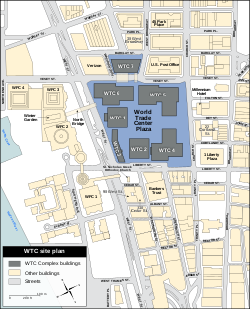
Example of a site plan.
A plot plan

A site plan or a plot plan is a type of drawing used by architects, landscape architects, urban planners, and engineers which shows existing and proposed conditions for a given area, typically a parcel of land which is to be modified. Site plans typically show buildings, roads, sidewalks and paths/trails, parking, drainage facilities, sanitary sewer lines, water lines, lighting, and landscaping and garden elements.[1]

Such a plan of a site is a "graphic representation of the arrangement of buildings, parking, drives, landscaping and any other structure that is part of a development project".[2]

A site plan is a "set of construction drawings that a builder or contractor uses to make improvements to a property. Counties can use the site plan to verify that development codes are being met and as a historical resource. Site plans are often prepared by a design consultant who must be either a licensed engineer, architect, landscape architect or land surveyor".[3]

Site plans include site analysis, building elements, and planning of various types including transportation and urban. An example of a site plan is the plan for Indianapolis[4] by Alexander Ralston in 1821.

The specific objects and relations shown are dependent on the purpose for creating the plot plan, but typically contain: retained and proposed buildings, landscape elements, above-ground features and obstructions, major infrastructure routes, and critical legal considerations such as property boundaries, setbacks, and rights of way…

Site plan topics

[edit]

Site analysis

[edit]

Site analysis is an inventory completed as a preparatory step to site planning, a form of urban planning which involves research, analysis, and synthesis. It primarily deals with basic data as it relates to a specific site. The topic itself branches into the boundaries of architecture, landscape architecture, engineering, economics, and urban planning. Site analysis is an element in site planning and design. Kevin A. Lynch, an urban planner developed an eight cycle step process of site design, in which the second step is site analysis, the focus of this section.

When analyzing a potential site for development, the status quo of the site should be analyzed and mapped. This includes but is not limited to:

  • The location of the plot
  • Topography, including information about slope, soils, hydrology, vegetation, orientation
  • Existing buildings
  • Roads and traffic
  • Public facilities and utilities, including water, sewer, and power lines
  • Related laws, regulation, codes, and policies

By determining areas that are poor for development (such as floodplains or steep slopes) and better for development, the planner or architect can determine the optimal location for different functions or structures and create a design that works within the space.

Site plan building blocks

[edit]
Scottish Parliament Building site plan

A site plan is a top view, bird’s eye view of a property that is drawn to scale. A site plan can show:

  • property lines
  • outline of existing and proposed buildings and structures
  • distance between buildings
  • distance between buildings and property lines (setbacks)
  • parking lots, indicating parking spaces
  • driveways
  • surrounding streets
  • landscaped areas
  • easements
  • ground sign location
  • utilities

Site planning

[edit]

Site planning in landscape architecture and architecture refers to the organizational stage of the landscape design process. It involves the organization of land use zoning, access, circulation, privacy, security, shelter, land drainage, and other factors. Site planning includes the arrangement of buildings, roadways, utilities, landscape elements, topography, water features, and vegetation to achieve the desired site.[5][6]

In urban planning, site planning is done by city planners to develop a clear plan/design of what the city planners want for a community.[7] For example, in a participatory planning process, community members would make claims of renovations and improvements that need to be done in their community. Then the community developers will come up with a way to meet the community members' demand, which is done by creating a site plan. With a limited budget, planners have to be smart and creative about their designs.[7] Planners must take into consideration not only heights of buildings, traffic flows, open spaces, parking for cars/bikes, but also the project's potential impact to the stakeholders involved.[6] All these actions of creating a site plan is referred to as site planning.

Transportation planning

[edit]

Transportation planning is the field involved with the siting of transportation facilities (generally streets, highways, sidewalks, bike lanes and public transport lines). Transportation planning historically has followed the rational planning model of defining goals and objectives, identifying problems, generating alternatives, evaluating alternatives, and developing the plan. Other models for planning include rational actor, satisficing, incremental planning, organizational process, and political bargaining. However, planners are increasingly expected to adopt a multi-disciplinary approach, especially due to the rising importance of environmentalism. For example, the use of behavioral psychology to persuade drivers to abandon their automobiles and use public transport instead. The role of the transport planner is shifting from technical analysis to promoting sustainability through integrated transport policies.[8]

Urban planning

[edit]

Urban, city, and town planning explores a very wide range of aspects of the built and social environments of places. Regional planning deals with a still larger environment, at a less detailed level. Based upon the origins of urban planning from the Roman (pre-Dark Ages) era, the current discipline revisits the synergy of the disciplines of urban planning, architecture and landscape architecture.

Examples

[edit]

See also

[edit]

References

[edit]
[edit]
Revisions and contributorsEdit on WikipediaRead on Wikipedia
from Grokipedia
A site plan, also known as a plot plan, is a scaled graphical representation depicting the existing and proposed physical features of a development site, including structures, access routes, , and landscaping elements. It functions as an aerial-view map essential for architects, engineers, urban planners, and contractors to visualize site conditions and coordinate improvements. Site plans typically incorporate key components such as property boundaries, building footprints, parking areas, drainage systems, and topographic details to ensure compliance with regulations and facilitate permitting processes. In and , these plans are required for obtaining building permits, verifying setbacks, and assessing environmental impacts, thereby minimizing risks like flooding or inadequate access. While basic residential site plans may focus on simple layouts for single-family homes, commercial or large-scale projects demand detailed inclusions like connections and analyses to support sustainable and functional design.

Definition and Fundamentals

Core Definition and Purpose

A site plan is a scaled depicting the proposed layout and improvements on a specific parcel of , illustrating the arrangement of , , and site features relative to existing conditions and boundaries. It typically includes elements such as building footprints, access roads, areas, drainage systems, lines, , and retaining structures, prepared at a scale sufficient for regulatory review, often 1 inch equals 20 to 100 feet depending on site size. The primary purpose of a site plan is to facilitate orderly by enabling authorities to evaluate compliance with ordinances, building codes, and environmental standards before commences. It serves as a blueprint for contractors, ensuring precise implementation of designs while minimizing conflicts with adjacent properties or natural features like floodplains and . By detailing proposed changes alongside existing site conditions, site plans promote efficient resource allocation, such as stormwater management and utility placement, reducing long-term maintenance costs and environmental impacts. In regulatory contexts, site plans are mandatory for most non-residential or multi-unit developments, acting as a tool for public agencies to verify setbacks, density limits, and adequacy, thereby safeguarding public safety and integrity. For smaller projects, such as single-family homes, they may be simplified but still require submission for permitting to confirm alignment with local policies.

Essential Components of a Site Plan

Essential components of a site plan encompass graphical and informational elements that depict the site's layout, ensuring compliance with local regulations, facilitation of , and integration with surrounding . These elements provide a scaled representation of the , highlighting both existing conditions and proposed developments to guide permitting and execution. A title block includes the project name, scale, drawing type, revision details, author, and date, serving as foundational metadata for identification and updates. A north arrow or establishes orientation, essential for aligning the plan with geographic directions and legal plotting. Property boundaries and dimensions outline the lot's perimeter with precise measurements, preventing encroachments and verifying adherence. Setbacks denote required distances from boundaries to structures, mandated by codes to maintain buffers for light, air, and safety. Easements mark shared access rights, such as for utilities, with locations and widths to avoid conflicts during development. Existing structures and features, including buildings, fences, trees over two feet in diameter, and utilities like power lines or septic systems, are shown with footprints and distances to boundaries. Proposed buildings and improvements use dashed lines for new elements like structures, with dimensions and relations to existing conditions. Access elements, such as driveways, roads, walkways, and areas, detail dimensions, numbers of spaces, and to meet and capacity standards. Utilities and services, including , sewer, drainage, gas, and hydrants with specified distances, ensure infrastructure integration and response. Landscaping and open spaces specify plantings, green zones, retaining walls, and controls, contributing to , , and stormwater management. Construction limits delineate work zones, laydown areas for , and temporary features to protect adjacent properties. Surrounding streets and context, with names, signs, and vicinity maps, contextualize the site's relation to . Notes, abbreviations, and legends clarify symbols, materials, and hazards like underground tanks, aiding interpretation and compliance.

Historical Development

Origins in Early Planning Practices

Site planning practices originated in ancient civilizations, where the need for organized construction on designated land parcels necessitated systematic layouts of buildings, pathways, and utilities. In , evidence of early site planning appears in the papyrus drawing of the tomb of Amenemhet II around 1800 BCE, which illustrates a detailed layout including underground chambers, access shafts, and surrounding features, marking one of the oldest surviving architectural plans focused on a specific site. The Indus Valley Civilization, flourishing from approximately 2600 to 1900 BCE, provides archaeological testimony to sophisticated site planning without preserved drawings; excavations at reveal a rigidly planned urban layout with a north-south and east-west grid of streets dividing the site into standardized blocks for residences and public structures, complemented by an extensive covered drainage network aligned with building footprints. Similar uniformity in brick dimensions and plot sizes across sites like indicates coordinated site allocation and construction protocols, likely enforced by administrative oversight. In , Roman engineering formalized site planning principles, as articulated by in (c. 30–15 BCE), which prescribes evaluating site , , water availability, and solar orientation to select healthy locations for buildings and settlements, while advocating rectangular grids for military camps and colonial foundations to facilitate efficient land division and defense. These guidelines, derived from practical experience in empire-building, emphasized integrating natural site conditions with engineered elements like roads and fortifications, setting precedents for enduring orthogonal planning methods.

Evolution Through 20th Century Regulations

The institutionalization of site planning in the coincided with the proliferation of and land-use controls, transforming ad hoc development approvals into standardized regulatory processes. , the 1916 New York City Zoning Resolution represented an early milestone, mandating submission of detailed building and site layouts to enforce setbacks, height limits, and use separations, primarily to protect commercial interests from industrial encroachment. This approach influenced subsequent ordinances, shifting site plans from mere sketches to enforceable documents verifying regulatory compliance. The U.S. Department of Commerce's Standard State Enabling Act of 1926 further entrenched site planning by empowering municipalities to adopt districts and require developers to furnish site plans for permits, variances, and subdivisions, with over 90% of states enacting enabling legislation by the 1930s. Complementing this, the Standard City Planning Enabling Act of 1928 promoted comprehensive plans that integrated site-level details like and lot configurations, fostering uniformity in suburban platting amid rapid . These frameworks emphasized separation of incompatible uses and basic controls, though enforcement often prioritized exclusionary outcomes over . Post-World War II amplified demands for detailed site plans under subdivision regulations, which by the typically mandated depictions of roads, drainage, utilities, and to mitigate haphazard growth facilitated by federal mortgage guarantees. In Europe, analogous evolutions occurred through national building codes; Germany's Bauordnungen, refined through the century, required site-specific plans for structural safety and spatial organization, contrasting the U.S.'s decentralized with more prescriptive, performance-based approvals. The UK's Town and Country Planning Act of 1947 centralized such requirements, necessitating development plans that included site layouts for post-war reconstruction, emphasizing over property rights. By the mid-1960s, site plans evolved to incorporate traffic analyses, parking minima, and aesthetic guidelines, particularly in planned unit developments (PUDs) that traded density bonuses for flexible, master-planned sites. The U.S. of 1970 introduced environmental impact assessments, compelling site plans to address ecological factors like management and preservation, marking a shift toward holistic regulatory . Late-century amendments, such as updates to the Federal Building Code in , further integrated metrics, ensuring site plans balanced development intensity with resource constraints. These regulations, while curbing externalities like congestion, often imposed compliance costs that favored larger developers, as evidenced by minimum lot size mandates persisting from early .

Post-2000 Adaptations to Technology and Policy

Following the turn of the millennium, site planning incorporated advanced digital technologies that enhanced precision and efficiency in data collection, analysis, and visualization. Geographic Information Systems (GIS) saw expanded application in for and infrastructure planning, leveraging layered geospatial data to model , , and constraints with sub-meter accuracy. By the mid-2010s, (BIM) became integral, enabling three-dimensional integration of site elements like utilities and grading with building designs, reducing errors in coordination by up to 40% in large-scale projects according to industry benchmarks. Unmanned aerial vehicles (UAVs or drones) further transformed site surveys post-2010, as regulatory approvals for commercial use proliferated—such as the U.S. Federal Aviation Administration's Part 107 rules in 2016—allowing rapid capture of orthomosaic imagery and point clouds for volumetric analysis and progress monitoring. These tools fed directly into GIS and BIM workflows, facilitating real-time updates and simulations; for instance, drone-derived data improved site elevation models for renewable energy placements by identifying micro-topographic variations overlooked in traditional surveys. Adoption rates surged, with over 70% of U.S. architecture, engineering, and construction firms reporting BIM use by 2020, driven by cost savings in rework estimated at 10-20% of project budgets. Policy adaptations emphasized sustainability and resilience amid rising climate risks and urbanization pressures. The European Union's , effective from 2000, mandated integrated water resource management in site plans, requiring assessments of flood risks and permeable surfaces to mitigate runoff, influencing developments across member states with compliance deadlines phased through 2015. In the United States, post-Hurricane Katrina (2005) reforms by the updated floodplain mapping and elevation requirements, compelling site plans to incorporate resilient grading and barriers, as evidenced in New Orleans' 2010s rebuilding codes that elevated structures by at least 2 feet above base flood levels. Urban resilience frameworks gained traction globally after 2010, integrating adaptive features like into ordinances; for example, New York City's 2013 PlaNYC update required site plans for large developments to include stormwater detention equivalent to 1 inch of rainfall over impervious areas. certifications, such as the U.S. Green Building Council's v2.0 launched in 2000 and refined in subsequent versions, imposed prerequisites for site plans including reduced impervious cover (targeting under 50% of site area) and native landscaping to enhance and thermal regulation. These policies, often critiqued for increasing upfront costs by 5-10% but yielding long-term savings through lower maintenance, reflected a causal shift from reactive to proactive risk modeling, though implementation varied due to local jurisdictional variances and enforcement inconsistencies.

Planning Process and Analysis

Site Analysis Methods

Site analysis methods encompass systematic techniques to evaluate a site's physical, environmental, regulatory, and contextual attributes prior to development planning, enabling informed decisions on feasibility, design constraints, and risk mitigation. These methods typically begin with from surveys, historical records, and on-site inspections to existing conditions such as , composition, and . Empirical assessments prioritize measurable parameters like elevation contours via or GPS surveys, which quantify slopes exceeding 15% as high-risk for or structural instability. Geotechnical investigations form a core method, involving subsurface exploration through boreholes or test pits to determine , typically measured in kPa via standard penetration tests (SPT) or cone penetration tests (CPT). Lab analyses of retrieved samples assess , , and contamination risks, with guidelines from the recommending at least one boring per 1,000-2,000 square meters for uniform sites to predict settlement under loads up to 200 kPa. These tests reveal causal factors like expansive clays causing differential settlement, as documented in cases where unaddressed weak strata led to foundation failures exceeding 10% of costs. Environmental assessments employ standardized protocols, such as Phase I Environmental Site Assessments (ESA) under ASTM E1527-21, which include records searches for historical land uses, site reconnaissance for visible hazards, and interviews to identify recognized environmental conditions like potential petroleum releases. If anomalies are detected, Phase II advances to sampling for contaminants, analyzing and via EPA Method 8260 for volatile organics, with detection limits below 1 μg/L to evaluate remediation needs. Hydrological methods integrate USGS data on floodplains and percolation tests measuring infiltration rates in minutes per inch, critical for sites in zones where impervious cover must not exceed 50% to avoid downstream flooding. Contextual and infrastructural analyses utilize GIS mapping to overlay ordinances, easements, and access points, quantifying volumes in vehicles per hour from local to assess connectivity. Microclimate modeling via tools like Ecotect simulates solar access, with annual insolation maps indicating south-facing orientations receiving 1,500-2,000 kWh/m²/year in temperate zones, influencing building placement to minimize energy demands by up to 20%. Stakeholder consultations and demographic reviews from census data further evaluate social impacts, such as proximity to noise sources exceeding 55 dB(A), ensuring compliance with OSHA standards for habitable developments. Integration of these methods through diagrammatic representations, such as vector-based analyses, supports causal predictions of site performance under varying conditions.

Design and Layout Principles

Design and layout principles for site plans emphasize efficient to support functionality, safety, and resource conservation. Central to these principles is the optimization of building placement relative to , solar orientation, and , which enables passive heating, natural ventilation, and reduced use. For instance, aligning structures to capture southern exposure in temperate climates minimizes heating demands, as evidenced by energy modeling in guidelines that show potential reductions in operational costs by integrating site-specific microclimates. Circulation hierarchies prioritize segregated vehicular and pathways to enhance safety and flow, with features like one-way loops and measures—such as speed humps—proven to lower speeds and rates in controlled studies of institutional sites. Land use efficiency dictates balanced densities that avoid overcrowding while maximizing open spaces for and infiltration. Principles advocate for pervious surfaces covering at least 50% of non-building areas in low-impact developments, which empirical data from urban hydrology assessments link to decreased runoff volumes by 30-50% compared to impervious layouts. placement follows setback requirements, such as 50-foot buffers from high-risk utilities to mitigate hazards like blasts or spills, ensuring operational resilience without compromising usable land. These layouts integrate to buffer and provide visual screening, with native selections grounded in ecological compatibility to sustain and reduce maintenance inputs over time. Sustainability imperatives extend to minimizing dependence through compact forms that shorten utility runs and promote , correlating with lower per-capita emissions in denser, mixed-use configurations per analyses. Layouts must accommodate , allowing phased expansions without disrupting core circulation, as poor initial planning has been shown in case studies to inflate long-term costs by up to 25%. Human-scale elements, including clear sightlines and accessible entry points, underpin , fostering intuitive navigation that empirical observations tie to higher occupancy satisfaction in residential and commercial developments.

Integration of Building Blocks

The integration of building blocks in site planning refers to the systematic assembly of core elements—such as , circulation networks, open spaces, , and —into a unified layout that optimizes functionality, , and compliance with site-specific constraints. This process begins with overlaying analyzed data from site surveys onto preliminary sketches, ensuring that building footprints align with and solar orientation to minimize excavation costs and demands; for instance, positioning to leverage natural slopes can reduce grading by up to 20-30% in sloped terrains. Spatial relationships are prioritized to avoid conflicts, such as routing lines beneath pathways rather than through building pads, which prevents costly retrofits during construction. Functional connectivity forms the backbone of integration, linking vehicular access roads, walks, and areas to building entries in a hierarchical manner that supports anticipated flows. In commercial site plans, for example, main structures are clustered near primary entrances with secondary blocks buffered by service zones, reducing congestion by directing heavy vehicle movement away from high-occupancy areas; empirical studies of urban developments show that such can lower peak-hour delays by 15-25%. Utilities integration involves superimposing layers—electrical, water, and drainage—early in the design phase to coincide with building pads and green spaces, ensuring subsurface conflicts are resolved before foundation work; failure to do so has led to documented overruns exceeding 10% of project budgets in cases where post-layout adjustments were needed. Environmental and aesthetic cohesion is achieved by embedding as an active integrator, using vegetative buffers to screen buildings from adjacent properties while facilitating through permeable surfaces integrated with paved areas. This approach not only complies with regulations like those mandating 20-40% coverage in many municipal codes but also enhances site microclimates, with integrated canopies reducing ambient temperatures by 2-5°C in densely built plans. and scale harmony among building blocks prevents visual discord, as seen in guidelines advocating staggered heights and aligned fenestration to create rhythmic facades that blend with surrounding contexts. Overall, iterative modeling tools, such as CAD overlays, verify these integrations by simulating and flow, confirming that the resultant plan delivers on efficiency metrics like reduced ratios below 50% where feasible.

Key Considerations in Site Planning

Transportation and Infrastructure

Transportation and infrastructure form critical components of site plans, ensuring efficient movement of vehicles, pedestrians, and goods while supporting essential services like , drainage, and energy distribution. These elements must align with local codes and engineering standards to minimize congestion, enhance safety, and accommodate projected volumes based on site use intensity. For instance, site plans typically specify primary access points from public roads, with internal roadways designed to handle peak loads without bottlenecking intersections. Vehicular transportation features in site plans include hierarchical road networks—such as arterials for high-volume access, collectors for distribution, and local drives for short trips—often requiring minimum widths of 10-12 feet and radii of 20-30 feet to facilitate and maneuvers. Parking layouts are calculated using occupancy-based ratios, such as one space per 300 square feet for developments or 4-5 per 1,000 square feet for retail, with provisions for accessible spots compliant with standards like those in the Americans with Disabilities Act. and infrastructure, including sidewalks (minimum 5 feet wide) and bike lanes or racks, promotes multimodal access and reduces reliance on single-occupancy vehicles, as evidenced by practices that integrate these to lower urban heat islands and emissions. Infrastructure planning addresses underground and overhead utilities, mapping locations for water mains (typically 6-8 inches diameter for distribution), sanitary sewers with minimum slopes of 0.4% for gravity flow, and electrical conduits to avoid conflicts with foundations or trees. Stormwater management is integral, mandating features like detention ponds or bioswales to capture and treat runoff, reducing peak flows by 25% or more relative to pre-development conditions in many jurisdictions to prevent flooding and . These systems often incorporate low-impact development techniques, such as permeable pavements, which empirical studies show can infiltrate up to 90% of rainfall on small sites, thereby sustaining and minimizing downstream . Effective integration of these elements relies on traffic impact analyses, which model level-of-service (LOS) metrics—aiming for LOS C or better during peaks—to justify capacity and mitigate externalities like from excessive road widening. Utilities coordination prevents service disruptions, with easements reserved for future expansions, while phased construction sequences ensure interim access during development. Failures in these areas, such as undersized drainage leading to inundation, underscore the causal link between upfront rigor and long-term operational resilience.

Environmental and Resource Management

Site plans incorporate environmental assessments to evaluate , stability, cover, drainage patterns, floodplains, and proximity to waterways, aiming to minimize disruption to existing ecosystems during development. These evaluations guide layout decisions, such as preserving native habitats and avoiding steep slopes prone to , which can otherwise lead to runoff exceeding natural rates by factors of 10 to 100 times in disturbed areas. Empirical data from sites indicate that unmitigated grading increases loss by up to 1,000 tons per acre annually without controls, necessitating integrated measures from initial design. Resource management in site plans emphasizes efficient allocation of water, energy, and materials, often through strategies like to reduce impervious surfaces by 20-50% and promote . management requires developers to implement best management practices (BMPs), including detention basins and vegetated swales, to capture at least 80-90% of average annual runoff and prevent pollutant discharge into receiving waters, as mandated under frameworks like the U.S. EPA's National Pollutant Discharge Elimination System (NPDES). Erosion and sediment control plans, typically required for sites disturbing over one acre, detail phased grading, silt fences, and mulch stabilization to limit turbidity levels below 50 NTU during storms, based on field-monitored effectiveness data showing 70-95% sediment reduction when properly installed. Energy resource optimization involves site orientation to maximize passive solar gain, potentially reducing heating demands by 15-30% in temperate climates through strategic building placement and shading from retained trees. Waste management integrates recycling zones and minimizes excavation volumes by aligning footprints with natural contours, cutting material use by up to 25% in adaptive designs. Long-term sustainability metrics, such as those from the U.S. Green Building Council's LEED rating system, prioritize these elements, with certified projects demonstrating 20-40% lower operational resource consumption compared to conventional plans, though critics note variability due to enforcement inconsistencies in peer-reviewed urban studies. Compliance with local ordinances, like California's Storm Water Pollution Prevention Plan (SWPPP) requirements effective since 1990, enforces site-specific modeling of runoff using tools like the Rational Method, ensuring peak discharge rates do not exceed pre-development levels by more than 10%. Site plans must adhere to local legal requirements, including submission of detailed drawings depicting building locations, heights, grading, and elevations for review by commissions or planners. In many jurisdictions, preliminary site plans undergo administrative or commission approval to ensure compliance with ordinances, building codes, and environmental standards before permits are issued. Failure to meet these criteria, such as minimum lot sizes or yard setbacks, results in rejection or required revisions. Zoning laws fundamentally constrain site planning by designating permitted land uses, maximum building densities, heights, and even construction materials, thereby influencing and project feasibility. These regulations, originating from early 20th-century efforts to separate incompatible uses like residences from industry for health reasons, now shape urban development patterns by prohibiting certain structures in specific . For instance, commercial may restrict residential integration, elevating development costs through mandated separations and variances. Economic factors in site planning encompass financial feasibility assessments, including budgets for land acquisition, permitting fees, and construction influenced by regulatory delays. Land-use regulations, such as , contribute to elevated land values—estimated at 1.4 times U.S. GDP across the lower 48 states—by limiting supply and inflating . Expedited approval processes reduce project timelines and costs, fostering higher development rates, while protracted reviews impose opportunity costs on developers. Market analyses, evaluating local demand and economic conditions, further determine viability, as mismatched can render sites uneconomical despite physical suitability.

Criticisms, Challenges, and Alternatives

Regulatory Burdens and Implementation Failures

Site planning processes are encumbered by extensive regulatory requirements, including variances, environmental impact reviews, and infrastructure compliance mandates, which collectively impose delays and escalate costs for developers. In the United States, preliminary site plan reviews often span 9 to 15 months in jurisdictions with rigorous oversight, such as , where new site plans average 12 months due to sequential departmental evaluations and potential revisions. These timelines reflect bureaucratic layering, where initial submissions trigger iterative feedback loops involving multiple agencies, amplifying holding costs for land and capital estimated at 10-20% of project budgets annually in delayed phases. Environmental regulations exacerbate these burdens, particularly through litigation-prone frameworks like California's (CEQA), enacted in 1970, which mandates comprehensive impact analyses but frequently enables non-environmental challenges. For example, a proposed development in Berkeley was stalled by a CEQA claiming excessive noise from future occupancy, despite minimal , prolonging approval beyond two years. Empirical assessments link CEQA to statewide development delays averaging 1-3 years for contested projects, contributing to shortages by deterring builders through unpredictable legal risks and compliance expenditures reaching millions per site. Recent 2025 reforms via Assembly Bill 130 and Senate Bill 131 exempt select urban infill projects from full CEQA scrutiny to mitigate these effects, though residual vulnerabilities persist for broader site plans. Implementation failures manifest when approved site plans encounter post-approval hurdles, such as inconsistent , policy revisions mid-execution, or resource shortages in regulatory bodies, leading to deviations from intended layouts or outright abandonment. Bureaucratic , including duplicated reviews and conflict resolution among agencies, accounts for up to 30% of construction delays and cost overruns in empirical construction analyses. In , analogous issues arise from protracted permissions, with EU-wide building permit issuance declining to multi-year lows by 2024, stalling construction starts and inflating material and labor costs amid regulatory bottlenecks for infrastructure integration. Proliferating regulations without streamlined correlate with higher implementation deficits, as agencies struggle with compliance verification, resulting in projects that fail to achieve planned density or sustainability goals. Overall, these burdens and failures trace to causal mismatches between regulatory intent—safeguarding public interests—and practical outcomes, where uncertainty in approval criteria raises development risks and suppresses supply. Studies across U.S. metros quantify land-use regulations adding 20-50% to costs via compliance and delay premiums, empirically tying stringent and permitting to reduced buildable land utilization. In underserved areas, such dynamics perpetuate inequities by prioritizing veto points over efficient execution, as evidenced by rural permitting inefficiencies prolonging infrastructure site plans.

Economic Inefficiencies and Market Distortions

Site planning regulations, including zoning ordinances and permitting requirements, often impose restrictions on land use density, building heights, and development timelines, which artificially constrain the supply of housing and commercial space relative to demand. Empirical analyses indicate that such interventions elevate development costs and housing prices; for instance, a review of state-level data found that increases in land-use regulation correlate with rising real average home prices in 44 out of 50 states between 2000 and 2010. Similarly, zoning appeals in Washington, D.C., delayed the construction of 6,400 housing units from 2000 to 2018, including 2,049 affordable units, exacerbating supply shortages. These regulations distort market signals by favoring existing property owners through scarcity-induced appreciation, while imposing disproportionate burdens on new entrants and lower-income households seeking affordable options. Studies estimate that restrictive zoning contributes to price premiums of 17-38% in areas like due to growth controls, and up to 33% gaps between construction costs and final home prices in highly regulated markets such as and . In commercial contexts, minimum lot sizes and use separations misallocate land, restricting industrial and retail development; one links such constraints to an 8.9% reduction in national economic output from to 2009, primarily through labor market mismatches and inhibited firm agglomeration. Permitting processes further amplify inefficiencies by extending timelines and inflating compliance expenses, which can account for approximately 25% of single-family costs. This leads to underutilization of urban land, as developers face uncertainty and risk premiums, deterring investment in higher-density projects that could optimize resource use. While proponents argue these rules internalize externalities like congestion, causal evidence suggests the net effect is a , with regulated areas exhibiting slower housing supply responses to population growth compared to less restricted markets. mandates, intended to promote affordability, often exacerbate distortions by slowing overall construction and raising market-rate prices, as developers pass on subsidized unit costs.

Empirical Evidence of Planning Shortcomings

A 2015 econometric analysis of U.S. metropolitan areas found that each additional land-use regulation, including site plan requirements, reduces residential building permits by about 4% and the housing stock by 0.2% per year, constraining supply and inflating prices. Similarly, a review of and data linked restrictive site plan approvals to diminished housing affordability, with regulated areas experiencing 20-30% higher median home prices compared to less regulated peers, alongside slowed from reduced labor mobility. These effects stem from prolonged discretionary review processes, which shows delay approvals by months to years, elevating soft costs like financing and holding expenses by up to 25% of total project budgets. In practice, site plan implementation shortcomings manifest in infrastructure deficits and inefficient . A study of plans in revealed that non-compliance and poor enforcement led to widespread failures, including inadequate systems serving only 40-60% of planned populations and land-use mismatches causing 20-30% underutilization of designated sites. cases, such as those in , show planned site developments often exacerbate urban ills rather than resolve them, with metrics indicating 50% or higher deviation from projected delivery due to bureaucratic delays and misaligned . Post-war modernist site plans, emphasizing high-density blocks over organic layouts, empirically failed to sustain communities, as seen in projects where vacancy rates climbed to 70% within a decade and crime indices rose 2-3 times above city averages from social disconnection. Quantitative assessments of urban sprawl patterns, influenced by fragmented site planning, correlate with 5-10% lower average labor productivity in sprawling metros versus compact ones, driven by extended commutes averaging 20-30% more time and fuel. Overregulation in site plans also distorts markets, with Florida data estimating a 10-15% premium on housing prices attributable to approval mandates, independent of construction material costs.

Examples and Applications

Successful Site Plan Implementations

One notable successful implementation of site planning is in , developed on a 92-acre landfill site along the beginning in the late . The 1979 master plan allocated approximately one-third of the site to public parks and open spaces, integrating residential, commercial, and retail uses to create a mixed-use waterfront neighborhood resilient to economic fluctuations. By 2022, the project had generated over $1 billion in annual economic activity, with low vacancy rates and high property values demonstrating the plan's effectiveness in fostering sustainable without overburdening . Seaside, Florida, exemplifies successful site planning through New Urbanism principles applied starting in 1981 on a 80-acre coastal site. The master plan by Duany Plater-Zyberk emphasized walkable streets, mixed housing types, and centralized civic spaces, resulting in a self-sustaining community that avoided sprawl and . Over 34 years from 1984 to 2018, single-family parcel sales prices appreciated steadily, reflecting market demand and long-term viability, with the development influencing over 200 similar projects nationwide by promoting compact, pedestrian-oriented layouts that enhanced resident satisfaction and property resilience. Hammarby Sjöstad in , , transformed a 200-hectare brownfield industrial site into a via a site plan initiated in the , prioritizing integrated infrastructure for waste, water, and energy systems. The plan achieved a 25% reduction in use compared to conventional developments through and green roofs, housing over 25,000 residents by 2010 while maintaining high and stormwater management efficacy, as evidenced by post-occupancy evaluations showing sustained environmental performance and economic returns exceeding initial investments.

Controversial or Failed Case Studies

The Pruitt-Igoe public housing complex in , , constructed between 1952 and 1955 on a 57-acre site, represented a modernist site planning approach that prioritized high-density vertical slabs over traditional low-rise neighborhoods. The plan, designed by architect for the Authority, featured 33 eleven-story buildings with "skip-stop" elevators serving only select floors to encourage social interaction via stairs, galleries for community spaces, and open ground levels without commercial amenities. Intended to house 2,870 low-income families with radiant heating and cross-ventilation for efficiency, the layout assumed self-regulating resident behavior under federal subsidies but ignored maintenance costs and socioeconomic isolation. Within a decade, crime surged, with elevators vandalized and galleries becoming crime corridors; by 1965, over 2,000 apartments stood vacant amid rat infestations and structural decay, prompting partial abandonment and ultimate starting March 16, 1972, at a cost exceeding $5 million. Analyses link the failure to flawed assumptions in centralized planning, such as concentrating without or private incentives, rather than design alone, as similar slab blocks succeeded in owner-occupied contexts elsewhere. Chicago's Cabrini-Green Homes, initiated in 1942 and expanded through 1962 on a 70-acre site adjacent to industrial areas and the , exemplified site planning flaws in projects under the Housing Act of 1937. The layout included 15 high-rise towers up to 16 stories, accommodating 15,000 residents in 3,600 units, with row houses and open plazas intended for family housing but lacking defensible perimeters, surveillance opportunities, or on-site services like stores or schools. Federal funding prioritized quantity over quality, resulting in long, unmonitored hallways and isolated playgrounds that facilitated gang activity; by the 1970s, annual homicides exceeded 100, vacancy hit 30%, and maintenance lagged due to bureaucratic mismanagement by the . Demolition began in 1995 under the initiative, redeveloping the site into mixed-income blocks, but the process displaced over 25,000 original residents, with only 40 of 2,500 promised construction jobs going to former tenants by 2021, amid lawsuits over unfulfilled relocation aid and reports of exclusionary leasing practices in new units. The case underscores how site plans enforcing density without market-driven amenities or resident input perpetuated cycles of dependency and disorder. The Cross-Bronx Expressway in , planned from 1945 and completed in 1970 under ' urban framework, disrupted established neighborhoods through a 1.5-mile site alignment that cleaved . The linear , spanning 7 miles with six lanes and interchanges, demolished 1,500 apartments and displaced 60,000 residents, prioritizing automobile throughput over community cohesion by bisecting vibrant immigrant enclaves without adequate pedestrian bridges or replacement housing. Post-construction data showed increased isolation, with east-west travel times rising 20-30% for locals, elevated pollution levels contributing to higher rates (up to 25% in affected areas by the 1990s), and economic decline as businesses shuttered; a 1970s study estimated $1 billion in lost property values adjusted for inflation. Critics, including , argued the top-down routing exemplified coercive and automobile-centric planning that undervalued organic urban fabric, leading to persistent blight despite later mitigation attempts like highway caps.

Recent Developments and Future Directions

Technological Innovations in Site Planning

Geographic Information Systems (GIS) have revolutionized site planning by enabling spatial data analysis for terrain modeling, , and infrastructure placement since their widespread adoption in civil engineering during the 1990s, with significant enhancements in integration capabilities by the 2020s. GIS tools process layers of data including , types, and regulatory zones to generate optimized site layouts, reducing errors in preliminary assessments compared to traditional manual surveys. Building Information Modeling (BIM), extended to site contexts as site-BIM, integrates 3D digital representations of buildings with geospatial data for , allowing simulation of grading, drainage, and utility routing to minimize conflicts during execution. Adopted increasingly post-2010, BIM's use in site planning surged with cloud-based platforms by 2020, facilitating collaborative real-time updates among stakeholders and improving accuracy in earthwork volume calculations. Unmanned aerial vehicles (drones) equipped with LiDAR and photogrammetry have accelerated topographic surveying, capturing high-resolution site data in hours rather than days required by ground-based methods, with applications in progress monitoring and as-built verification. Since 2020, drone integration with GIS has enabled automated contour extraction for UAV trajectory planning in existing building retrofits, enhancing efficiency in urban site adaptations. Artificial intelligence (AI), particularly GeoAI, applies to drone-captured imagery for automated site analysis, including progress tracking against design models and predictive for layout optimizations. Generative AI tools, emerging prominently after 2023, support site planning by generating alternative layouts based on constraints like and metrics, integrating to forecast construction delays or cost overruns. These advancements, while promising efficiency gains, depend on and require validation against empirical site conditions to avoid over-reliance on modeled outputs.

Policy and Sustainability Shifts Since 2020

Since 2020, site planning processes have increasingly incorporated resilience and sustainability mandates, driven by the pandemic's exposure of urban vulnerabilities and heightened climate policy pressures. Jurisdictions worldwide have updated review criteria to prioritize , such as permeable surfaces and native landscaping, to mitigate flooding and heat islands, reflecting a toward adaptive designs that balance density with environmental buffering. This evolution stems from empirical observations of pandemic-related disruptions, including delays and the need for flexible site layouts accommodating and outdoor amenities, alongside global commitments like the UN's . In the United States, California's Division of the State Architect expanded sustainability plan reviews under the CALGreen Code, mandating evaluations of energy efficiency, , and waste reduction in site plans for public buildings starting in 2021, with compliance tied to environmental impact minimization. Similarly, the 2025 updates to the (CEQA) introduced streamlining for projects demonstrating low emissions and resilience features, reducing review timelines for qualifying site plans while preserving scrutiny for ecologically sensitive areas. Federally, the U.S. Agency's 2025 handbook modernized permitting guidance for site development, emphasizing over greenfield expansion to curb and emissions, with data showing building sector CO2 emissions plateauing globally for the first time since 2020 due to incentives. European and Canadian policies have paralleled these trends, with cities like embedding GHG reduction targets into site plan approvals via the 2020-2025 Climate Change Master Plan, requiring 20-30% cuts in construction-related emissions through material sourcing and site orientation optimizations. In , by-laws updated in 2021-2025 incorporated interim controls for natural area protection, mandating assessments in site plans to align with provincial land-use acts fostering sustainable territorial development. These shifts, while aimed at long-term ecological gains, have faced implementation critiques for adding regulatory layers that delay projects, as evidenced by stakeholder surveys post-COVID highlighting tensions between goals and timelines. Empirical assessments indicate mixed outcomes: while site plans now routinely integrate climate-resilient elements like elevated structures in flood-prone zones, as promoted by regional bodies such as the Metropolitan Area Planning Council, adoption varies by jurisdiction, with denser urban approvals showing greater emission reductions than suburban ones. Ongoing refinements, including digital modeling for predictive simulations, signal continued evolution toward verifiable, data-driven criteria by 2030.

References

Add your contribution
Related Hubs
User Avatar
No comments yet.