


Community hub
Recent from talks
Contribute something
Nothing was collected or created yet.
Ultramarathon
View on WikipediaAn ultramarathon is a footrace longer than the traditional marathon distance of 42.195 kilometres (26 mi 385 yd). The sport of running ultramarathons is called ultra running or ultra distance running.
Key Information


Various distances, surfaces, and formats are raced competitively. The shortest common ultramarathon is 31 miles (50 km), and around 100 miles (160 km) is typically the longest course distance raced in under 24 hours, but there are also longer multiday races commonly held as 48 hours, 200 miles (320 km), or more, sometimes raced in stages with breaks for sleep.
The oldest and largest ultramarathons are on road, including the Comrades Marathon (more than 10,000 finishers annually) and Two Oceans Marathon (more than 6,000 finishers annually).[1] Many ultras have historical significance, including the Spartathlon, based on the 246 km run of Greek messenger Pheidippides from Athens to Sparta during the Battle of Marathon in a day and a half to seek aid against the Persians.[2][3][4]

Ultra running World Championships are held by the International Association of Ultrarunners (IAU) for 50 km, 100 km and 24 hours. The Global Organization of Multi-Day Ultramarathoners (GOMU) holds World Championships for 48 hours and six days.[5] World records are ratified and recognized by World Athletics (50 km and 100 km), the IAU (50 km up to six days), and by GOMU (48 hours up to 5000 km).[6][7][8]
There is also overlap with the sports of trail running and mountain running. Some 100-mile (160 km) races are among the oldest and most prestigious events, especially in North America.[9] The oldest and also the largest trail race is the SainteLyon 78-kilometre (48 mi) in France (more than 5,000 finishers annually).[10] Many ultramarathon organizers are members of the International Trail Running Association (ITRA), an organization that evaluates the difficulty of specific ultramarathon routes according to a number of criteria, such as the distance, the cumulative elevation gain, and the number of loops and stages.[citation needed]
Overview
[edit]There are two main types of ultramarathon events: those that cover a specified distance or route, and those that last for a predetermined period (with the winner covering the most distance in that time). The most common distances are 50 kilometres (31.07 mi), 50 miles (80.47 km), 100 kilometres (62.14 mi), 100 miles (160.93 km), and continue up to the longest certified race distance of 3100 miles.[11] Timed events range from 6, 12, and 24 hours to 3, 6, and 10 days (known as Multiday races). Timed events are generally run on a track or a short road course, often one mile (1.6 km) or less.[12]
The format of ultramarathons and the courses vary, ranging from single loops (some as short as a 400-metre (1,300 ft) track),[13] to point-to-point road or trail races, to cross-country rogaines. Many ultramarathons have significant obstacles, such as inclement weather, elevation change, or rugged terrain. Usually, there are aid stations, whether every lap of a track, small road or trail loop courses, or extending up to perhaps 20 to 35 kilometres (12 to 22 mi), where runners can replenish food and drink or take a short break.
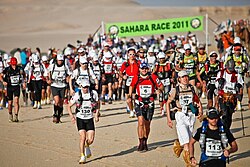
There are some self-supported ultramarathon stage races in which each competitor has to carry all their supplies including food to survive the length of the race, typically a week long. The Marathon des Sables 6-day stage race in Morocco and the Grand to Grand Ultra in the U.S. are examples.[14][15]
The International Association of Ultrarunners (IAU) organises the World Championships for various ultramarathon distances, including 50 kilometres (31 mi), 100 kilometres (62 mi), 24 hours, and ultra trail running, which are also recognized by World Athletics. Many countries around the world have their own ultrarunning organizations, often the national athletics federation of the country, or are sanctioned by such national athletics organizations.
50-kilometer and 100-kilometer races are recognized as World Records by World Athletics, the world governing body of track and field.[16] The International Association of Ultrarunners recognizes IAU World Records for 50-kilometers, 100-kilometers, 6 hours, 12 hours, 100 miles, 24 hours, 48 hours, and 6 days.[17]
There are ultramarathon racewalking events that are usually 50 km, although 100 km and 100-mile (160 km) "Centurion" races are also organized. Furthermore, the non-competitive International Marching League event Nijmegen Four Days March has a regulation distance of 4 × 50 km over four days for those aged 19 to 49.[18]
In 2021, concerns were raised about planning and medical care available for ultramarathons in China, after 21 racers died from hypothermia while competing in an ultramarathon in the Yellow River Stone Forest. The government later announced a ban on "extreme" competitions.[19]
In August 2023, a partnership between Ultra-Trail du Mont-Blanc (UTMB) and Ironman Triathlon was announced and the new formation of the UTMB World Series, an ultra-distance circuit that culminates with UTMB held in August. Concerns have been raised[vague] about rising entry fees, homogenization of racing experiences, and bulldozing of smaller events.[20][21]
IAU World Record and World Best performances
[edit]Until 2014, the IAU maintained lists of the world best performances on different surfaces (road, track, and indoor). Starting in 2015, the distinction between the surfaces was removed and the records were combined into a single category.[22] Some governing bodies continue to keep separate ultramarathon track and road records for their jurisdictions.[23]
Starting in January 2022, the IAU began to recognize and ratify performances as IAU World Records. World Athletics also began to ratify the 50k distance as a World Record for both mixed and women, respectively, along with 100k. The events considered IAU World Records are: 6, 12, 24, and 48 hours along with 50 and 100 miles. Records in the 6 day event are called World Best Performances by the IAU.[24]
Performances exceeding the current IAU records but which have not yet been ratified include the following:
- Stine Rex ran 435.564 km at the 2024 GOMU 48 hour world championships. The GOMU lists it as a "All Time World Best" performance.[25]
- Stine Rex ran 913.6 km at a 6-day race in Denmark during August and September 2024.[26][27]
- Ivan Zaborsky ran 1047.554 km in six days in Vallon Pont d'Arc, France, finishing on 4 May 2025.[28]
- Megan Eckert ran 970.685 km in six days at the same race in Vallon Pont d'Arc.[29]
- Matthieu Bonne ran 485.099 km in 48 hours in Pabianice, Poland, finishing on 1 June 2025.[30]
- Patrycja Bereznowska ran 436.371 km in 48 hours at the same race in Pabianice.[31]
- Sibusiso Kubheka ran 100 km in 5:59:20 in August 2025 but the performance was not eligible to be a world record due to the footwear not satisfying competition requirements, among other reasons.[32]
- Sarah Webster ran 278.622 km in 24 hours in Albi, France, in October 2025.[33]
The IAU World Records and World Best Performances as of April 2025 are as follows.[34]
Men
[edit]| Event | Record | Athlete | Date | Place |
|---|---|---|---|---|
| 50 km | 2:38:43 |  CJ Albertson (USA) CJ Albertson (USA)
|
8 October 2022 | San Francisco, US
|
| 50 miles | 4:48:21 | Charles R. Lawrence (USA)
|
11 November 2023 | Vienna, IL, US
|
| 100 km | 6:05:35 |  Aleksandr Sorokin (LTU) Aleksandr Sorokin (LTU)
|
14 May 2023 | Vilnius, Lithuania
|
| 100 miles | 10:51:39 | Aleksandr Sorokin (LTU)
|
7 January 2022 |  Tel Aviv, Israel Tel Aviv, Israel
|
| 6 hours | 98.496 km | Aleksandr Sorokin (LTU)
|
23 April 2022 |  Bedford, UK Bedford, UK
|
| 12 hours | 177.410 km | Aleksandr Sorokin (LTU)
|
7 January 2022 | Tel Aviv, Israel
|
| 24 hours | 319.614 km | Aleksandr Sorokin (LTU)
|
17 September 2022 |  Verona, Italy Verona, Italy
|
| 48 hours | 473.495 km |  Yiannis Kouros (GRE) Yiannis Kouros (GRE)
|
3–5 May 1996 |  Surgères, France Surgères, France
|
| 6 days | 1045.519 km |  Matthieu Bonne (BEL) Matthieu Bonne (BEL)
|
5–11 September 2024 |  Balatonfüred, Hungary Balatonfüred, Hungary
|
Women
[edit]| Event | Record | Athlete | Date | Place |
|---|---|---|---|---|
| 50 km | 2:59:54 | Desiree Linden (USA)
|
13 April 2021 | Dorena, Oregon, United States
|
| 50 miles | 5:31:57 | Courtney Olsen (USA)
|
10 November 2024 | Vienna, IL, US
|
| 100 km | 6:33:11 |  Tomoe Abe (JPN) Tomoe Abe (JPN)
|
25 June 2000 | Yubetsu-Saroma-Tokoro, Japan
|
| 100 miles | 12:42:40 | Camille Herron (USA)
|
11 November 2017 | Vienna, IL, US
|
| 6 hours | 85.492 km |  Nele Alder-Baerens (GER) Nele Alder-Baerens (GER)
|
11 March 2017 | Münster, Germany
|
| 12 hours | 153.600 km |  Satu Lipiäinen (FIN) Satu Lipiäinen (FIN)
|
20 May 2023 | Kokkola, Finland
|
| 24 hours | 270.363 km | Miho Nakata (JPN)
|
2 December 2023 |  Taipei, Taiwan Taipei, Taiwan
|
| 48 hours | 435.336 km | Camille Herron (USA)
|
24–26 March 2023 |  Bruce, Australia Bruce, Australia
|
| 6 days | 901.768 km | Camille Herron (USA)
|
6–12 March 2024 | California, USA
|
Until 2021, the IAU also kept records for 1000 km and 1000 miles. The final records were:[35]
Men
[edit]| Event | Record | Athlete | Date | Place |
|---|---|---|---|---|
| 1000 km | 5d 16:17:00 | Yiannis Kouros (GRE)
|
26 November–2 December 1984 | Colac, Australia
|
| 1000 miles | 10d 10:30:36 | Yiannis Kouros (GRE)
|
20–30 May 1988 | New York City, US
|
Women
[edit]| Event | Record | Athlete | Date | Place |
|---|---|---|---|---|
| 1000 km | 7d 16:08:37 |  Paula Mairer (AUT) Paula Mairer (AUT)
|
29 September-6 October 2002 | New York City, US
|
| 1000 miles | 12d 14:38:40 |  Sandra Barwick (NZL) Sandra Barwick (NZL)
|
16–28 October 1991 | New York City, US
|
IAU World Championships
[edit]There are four IAU World Championships: the IAU 100 km World Championships, IAU 50 km World Championships, IAU 24 Hour World Championship, and the IAU Trail World Championships.[36]
Ultramarathons by regions
[edit]Ultramarathons are run around the world with more than 600,000 people completing them every year.[37]
Africa
[edit]- South Africa hosts a number of notable ultra marathon events.
- On road: the world's oldest and largest ultramarathon, the 87 kilometres (54 mi) Comrades Marathon. Approximately 12,000 runners complete the Comrades each year, out of approximately 17,000 who start, with 23,961 competing in 2000.[38]
- The 56-kilometre (35 mi) Two Oceans Marathon in Cape Town in the southern autumn attracts approximately 11,000 runners.
- The Grand Raid de la Réunion is held annually on Réunion in October, crossing the island over 163 kilometres (101 mi) with an altitude gain of 9,643 metres (31,637 ft). This race attracts 2,350 competitors, with 1,000 runners from overseas.
- The Marathon des Sables is a 6-day stage race which covers 250 kilometres (160 mi) through the Sahara desert in Morocco.
- The Spanish Canary Islands off the African coast are the location of some prestigious ultramarathons, including the 46-mile Transvulcania.[39]
Asia
[edit]Ultrarunning has become popular in Asia, and countries such as Japan, Taiwan, and South Korea have hosted IAU World Championships.
- In Israel, two major ultramarathon races are Mount to Valley relay race, over 215 km, from the hills of the Upper Galilee to the Jezreel Valley; and the Valley Circle race in the Jezreel valley, containing several distances, including 160 km and 200 km.
- India's first ultra-marathon, the Bangalore Ultra, was held in 2007.[40] Since 2010, the Indian Himalayas have hosted La Ultra – The High, a 333 km course crossing Khardung La, touted to be the world's highest motorable mountain pass.[41]
- Japan had its first 100 km event in 1987 as Lake Saroma Ultramarathon and hosted the IAU 100 km World Championship in 1994 (Lake Saroma), 1998 (River Shimanto) and 2005 (Lake Saroma).[42] Japan hosts more than 50 ultramarathon events throughout the year,[43] including the Trans Japan Alps Race (TJAR)[44] (415 kilometres (258 miles) with more than 26,000 metres (16 miles) cumulative altitude gain crossing Japan Alps, crossing Japan's mainland from Japan Sea to Pacific Ocean in 7 days),[45][46] Hasetsune cup (71.5 kilometres (44.4 miles) in steep foggy mountains)[47] and the Ultra-Trail Mt. Fuji (161 kilometres (100 miles) loop around World Heritage Mount Fuji with a cumulative altitude gain of about 9,000 metres (5.6 miles)).[48][49]
- The Gobi March in northwest China was China's first ultramarathon, first staged in 2003. The Gobi March is part of the 4 Deserts Race Series.[50]
- Hong Kong Four Trails Ultra Challenge is a 298 km-long uninterrupted race, the first ultramarathon-class race in Hong Kong.
Oceania, Australia, and New Zealand
[edit]Australia and New Zealand are hosts to some 100 organized ultramarathons each year. Additionally, a handful of runners have run the entire length of New Zealand, a distance of around 2,200 kilometres (1,400 mi).[51]
In Australia, the Westfield Ultra Marathon was an annual race between Sydney and Melbourne contested between 1983 and 1991. Greek runner Yiannis Kouros won the event five times during that period. Australia is also the home of one of the oldest six-day races in the world, the Cliff Young Australian 6-day race, held in Colac, Victoria. The race is held on a 400-meter circuit at the Memorial Square in the centre of Colac and has seen many close races since its inception in 1984. The 20th Cliff Young Australian six-day race was held between 20 and 26 November 2005. During that event, Kouros beat his existing world record six-day track mark and set a new mark of 1,036.851 kilometres (644.269 mi). The Coast to Kosciuszko inaugurated in 2004, is a 246-kilometre (153 mi) marathon from the coast to the top of Mount Kosciuszko, Australia's highest mountain.[citation needed]
Australia has seen a steep growth in ultrarunning events and participants in recent years. Many new races have come into inception, covering a range of ultramarathon distances from 50 km right through to multi-day events. The cornerstone of Australian Ultra events is such races as Ultra-Trail Australia 100, The Great North Walk Ultras, Surf Coast Century, Bogong to Hotham, Alpine Challenge, GC50 Run Festival, and the Cradle Mountain Run.[52][53] The Australian Ultra Runners Association (AURA) has a comprehensive list and links of events and their respective results.[54]
In New Zealand, the Kepler Challenge is held on a 60 kilometres (37 mi) trail through Fiordland National Park. It has been running since 1988 and is one of the country's most popular races. The Tarawera Ultramarathon is currently one of the most competitive ultras in New Zealand and part of the Ultra-Trail World Tour.[55]
Europe
[edit]The European Ultramarathon Cup is an annual cup event covering some of the biggest ultramarathon races in Europe.[56] The CajaMar Tenerife Bluetrail is the highest race in Spain and second highest in Europe.[57] Besides trail ultramarathons, Europe features large road ultramarathons such as Spartathlon and the Millau 100K, which have gathered thousands of runners for the past 50 years.
The UTMB, through France, Italy, and Switzerland has been considered the world's most competitive trail ultra.[58] The other races in the UTMB festival, including the CCC, TDS, and OCC, are also significant events in the ultrarunning calendar.[59]
North America
[edit]The oldest existing ultramarathon in North America is the JFK 50 Mile,[60] which began in 1963 as a push by President John F. Kennedy to bring the country back to physical fitness.[61]
There are several 100-mile ultramarathons held annually in North America. The Western States Endurance Run is the oldest 100-mile trail run in North America. The race began in 1977, founded by Wendell Robie, of Auburn California.[62][60]
The first mountain trail ultramarathon held in the United States was the 1911 Mount Baker Race (50K), in Bellingham, Washington. Runners raced by car or train to the trailheads, ran up to the summit of Mount Baker, and then back down to the city.[63]
An early ultramarathon was held in Mexico in 1926, and at the time was part of the Central American Games. Tomas Zafiro and Leoncio San Miguel, both Tarahumara Indians, ran 100 km from Pachuca to Mexico City in 9 hours and 37 minutes. At the time, the Mexican government petitioned to include a 100 km race in the 1928 Summer Olympics in Amsterdam.[64]
In 1928, sports agent C. C. Pyle organized the first of two editions of the 3,455-mile-long Bunion Derby. The first went along U.S. Route 66 from Los Angeles to Chicago before heading toward New York; the 1929 Derby reversed the route. Neither the race nor the accompanying vaudeville show was a financial success.[65]
In the 1980s, Gary "Lazarus Lake" Cantrell and Karl "Raw Dog" Henn conceived the Barkley Marathons, an annual trail race held in March or April in Frozen Head State Park, Tennessee. The course is approximately 20 miles long with approximately 11,000 feet of vertical climb, and runners have 60 hours to complete five laps. The run is notorious not only for its difficulty but also for its secretive nature; entrants must undergo a selection process and entry dates and requirements are not announced, meaning entrants rely on word-of-mouth for details on how to enter. The first Barkley Marathons took place in 1986, and as of 2025, the full, five-loop race has been completed a total of 26 times by 20 runners.[66]
Since 1997, runners have been competing in the Self-Transcendence 3100 Mile Race, which is billed as the longest official footrace in the world. They run 100 laps a day for up to 50 days around a single block in Queens, NY, for a total distance of 3,100 miles (5,000 km).[67] The current record holder is Ashprihanal Pekka Aalto, at 40 days 09:06:21 for a daily average of 76.776 miles (123.559 km) in 2015.
Several 10-day races are also regularly available in the US at venues that hold 6-day races: Across the Years (in Arizona), Sri Chinmoy (in New York) and 6 Days in the Dome (Wisconsin).[68]
In April 2006, the American Ultrarunning Hall of Fame was established by the American Ultrarunning Association (AUA). Candidates for the Hall of Fame are chosen from the 'modern era' of American ultras, beginning with the New York Road Runners Club 30 Mile race held in 1958. The Inaugural inductees were Ted Corbitt, a former US Olympian, winner of the aforementioned race in 3:04:13, and co-founder of the Road Runners Club of America, and Sandra Kiddy, who began her ultra career at age 42 with a world record at 50 kilometers, 3:36:56, and who went on to set a number of American and world ultra records.[69]
The Yukon Arctic Ultra is uniques among ultras for its cold conditions, requiring racers to start from Whitehorse to Dawson City, Yukon, a distance of 430 miles (692 km) in February, with temperatures in the race having fallen as low as -57 degrees celsius.[70][71]
See also
[edit].jpg)
References
[edit]- ^ "DUV Ultra Marathon Statistics". statistik.d-u-v.org. Retrieved 4 October 2023.
- ^ Spartathlon (28 August 2015). "Ιστορικά Στοιχεία". Spartathlon Ultra Race (in Greek). Retrieved 23 October 2023.
- ^ "Spartathlon Part 1 (1982) - The Birth | Ultrarunning History". 19 September 2021. Retrieved 23 October 2023.
- ^ Holmes, Katie (30 September 2022). "Eleanor Adams and the first Spartathlon". RunYoung50. Retrieved 23 October 2023.
- ^ "GOMU - Global Organization of Multi-Day Ultramarathoners - World Championships". www.gomu.org. Retrieved 28 October 2023.
- ^ "World Athletics". worldathletics.org. Retrieved 22 October 2023.
- ^ Bedkowski, Jacek. "Rankings & Records". IAU - International Association of Ultrarunners. Retrieved 22 October 2023.
- ^ "GOMU - Global Organization of Multi-Day Ultramarathoners - Results & Records". www.gomu.org. Retrieved 23 October 2023.
- ^ "First Finishers of Western States 100 Trail on Foot". 9 February 2022. Retrieved 23 October 2023.
- ^ "DUV Ultra Marathon Statistics". statistik.d-u-v.org. Retrieved 8 February 2024.
- ^ "The 27th Annual Sri Chinmoy Self-Transcendence 3100 Mile Race - 3100 Mile Race". 3100.srichinmoyraces.org. Retrieved 22 October 2023.
- ^ "Ultra Running". Iaaf.org. Retrieved 23 November 2016.
- ^ If the loop is less than 1 kilometre (0.62 mi), run direction changes every 2–4 (sometimes 6) hours [Citation Needed~~~~Mark Halsey]
- ^ "The race story | MARATHON DES SABLES - Site officiel". www.marathondessables.com. Archived from the original on 30 October 2023. Retrieved 23 October 2023.
- ^ "About the race". Grand to Grand Ultra.
- ^ "– 100 Kilometres Records". Iaaf.org. Retrieved 5 October 2013.
- ^ Bedkowski, Jacek. "Rankings & Records". IAU - International Association of Ultrarunners. Retrieved 22 October 2023.
- ^ "Vierdaagse – Distance & Rewards". 4daagse.nl. Archived from the original on 7 November 2016. Retrieved 23 November 2016.
- ^ Kanthor, Rebecca (9 June 2021). "Systemic problems in ultramarathon racing in China". The World. Retrieved 12 December 2023.
- ^ Chase, Adam (7 May 2021). "UTMB is Teaming up with IRONMAN. Will It Be the Ultra-Starbuckization?". Outside Online. Retrieved 28 October 2023.
- ^ "What Really Went Down in Whistler with the WAM Races". Gary Robbins. 26 October 2023. Retrieved 28 October 2023.
- ^ "IAU: Rationale for Combining IAU World Best Performances into one List" (PDF).
- ^ "USA Track & Field | Records". usatf.org.
- ^ "IAU World Records Guidelines" (PDF). International Association of Ultrarunners. Retrieved 1 March 2022.
- ^ "Records And World Bests attained at a GOMU World Championship". GOMU.
- ^ "This week in running, September 9 2024". IRunFar. 9 September 2024.
- ^ "Statement on the 6d event performance". IAU.
- ^ iRunFar: Megan Eckert and Ivan Zaborsky Set Women’s and Men’s 6-Day Running World Records
- ^ iRunFar: Megan Eckert and Ivan Zaborsky Set Women’s and Men’s 6-Day Running World Records
- ^ iRunFar: Matthieu Bonne and Patrycja Bereznowska Set New Men’s and Women’s 48-Hour World Records.
- ^ iRunFar: Matthieu Bonne and Patrycja Bereznowska Set New Men’s and Women’s 48-Hour World Records.
- ^ iRunFar: Sibusiso Kubheka Breaks 6 Hours for 100 Kilometers in Adidas-Sponsored Time Trial Event "Chasing 100".
- ^ iRunFar: Great Britain’s Sarah Webster Sets Women’s 24-Hour World Record.
- ^ Bedkowski, Jacek. "IAU Records". IAU - International Association of Ultrarunners. Retrieved 29 April 2025.
- ^ IAU: Final WBP and WABP Records: 1000K, 1000M
- ^ "IAU Championships". Iau-ultramarathon.org. Archived from the original on 27 February 2017. Retrieved 23 November 2016.
- ^ "More People Are Running Ultras Than Ever Before". Runner's World. 24 January 2020.
- ^ "Comrades Marathon History". 4 June 2014. Archived from the original on 4 June 2014.
- ^ Hicks, Meghan (12 May 2019). "2019 Transvulcania Ultramarathon Results". iRunFar. Retrieved 4 January 2023.
- ^ "Big response for the Bangalore Marathon". The Hindu. 14 December 2007. Archived from the original on 17 December 2007. Retrieved 28 April 2013.
- ^ "Why La Ultra The High is the Cruelest Marathon". Forbes India. 18 February 2013.
- ^ "IAU World Cup 100 Kilometres" (PDF). Iau-ultramarathon.org. Retrieved 23 November 2016.
- ^ "2016 – 2017 Japan Ultramarathon Calendar". Marathons.ahotu.com. Archived from the original on 24 November 2016. Retrieved 23 November 2016.
- ^ "TJAR (Trans Japan Alps Race)". tjar.jp (in Japanese).
- ^ NHK team, 激走! 日本アルプス大縦断 密着、トランスジャパンアルプスレース富山~静岡415km, 26 April 2013, ISBN 978-4087815276
- ^ "日本一過酷な山岳レース「トランスジャパンアルプスレース(TJAR)」に密着したノンフィクション書籍『激走! 日本アルプス大縦断』(NHKスペシャル取材班・著)が、集英社より4月26日(金)に発売! | 株式会社 集英社 | プレスリリース配信代行サービス『ドリームニュース』". Dreamnews.jp. Retrieved 23 November 2016.
- ^ RUNTRAIL editors, RUN+TRAIL vol.2 トレイルランレースをはじめよう ハセツネ/UTMF完走法 (SAN-EI MOOK),22 Aug 2012, ISBN 978-4779615627
- ^ "2013 Ultra-Trail Mount Fuji Preview". Irunfar.com. 24 April 2013. Retrieved 23 November 2016.
- ^ "Ultra-Trail Mt. Fuji (UTMF) | The Japan Times Online". Info.japantimes.co.jp. Retrieved 23 November 2016.
- ^ "The Gobi March". 4 Deserts Official Website.
- ^ "Endurance Sport". Endurance Sport. Archived from the original on 10 July 2017. Retrieved 23 November 2016.
- ^ "Salomon Trail Running Series – What Is Trail Running? (Salomon trail running series)". 21 March 2015. Archived from the original on 21 March 2015.
- ^ "Ultra Marathons in Australia". run2.au. 1 July 2024. Retrieved 1 July 2024.
- ^ "AURA – Australian Ultra Runners Association". 12 October 2007. Archived from the original on 12 October 2007.
- ^ "Partners - Tarawera Ultramarathon | Rotorua, New Zealand". taraweraultra.co.nz.
- ^ "LaufReport Presse Info". laufreport.de.
- ^ "Tenerife Bluetrail, la carrera más alta de España". abc. 6 October 2016.
- ^ Powell, Bryon (21 August 2017). "2017 UTMB Men's Preview". iRunFar. Retrieved 4 January 2023.
- ^ Agnew, Mark (20 August 2019). "UTMB 2019 schedule: when do the TDS, CCC and OCC start?". South China Morning Post. Retrieved 12 December 2023.
- ^ a b "Classic Ultramarathon Beginnings". 17 February 2024. Retrieved 28 February 2024.
- ^ Mason, Andy (7 February 2016). "History". JFK 50 Mile. Retrieved 28 February 2024.
- ^ Crockett, Davy (22 January 2021). "Western States 100 - 1977". Ultrarunning History. Retrieved 23 January 2022.
- ^ Crockett, Davy (6 September 2019). "The Mount Baker Ultramarathon (1911-1913)". Ultrarunning History. Retrieved 23 January 2022.
- ^ Vilchis, Raul (10 March 2015). "Still, They Endure: The Paradox of Mexico's Legendary Tarahumara Runners". Remezcla. Retrieved 10 June 2019.
- ^ Crockett, Davy (12 August 2019). "The 1928 Bunion Derby". Ultrarunning History. Retrieved 23 January 2022.
- ^ Butler, Shawn (26 March 2018). "Barkley Marathons Finish Stats". Posilicious. Archived from the original on 11 May 2020. Retrieved 9 October 2018.
- ^ "srichinmoyraces.org / About the 3100 Mile Race". Retrieved 16 January 2013.
- ^ Gruebele, M (2024). Masters of Ultrarunning: The 10-Day Race. Champaign-Urbana, Illinois: HB Publishing. p. 182. ISBN 979-8333227737.
- ^ Crockett, Davy (19 August 2020). "The American Ultrarunning Hall of Fame". Ultrarunning History. Retrieved 23 January 2022.
- ^ "The Yukon: Discover the world's coldest ultra". Montane. Retrieved 19 February 2023.
- ^ Ann, Virginie. "Yukon Arctic Ultra, which calls itself the world's 'coldest and toughest,' kicks off in Whitehorse". CBC. CBC/Radio-Canada. Retrieved 19 February 2023.
External links
[edit]
- Official International Trail Running Association website
- RunUltra.co.uk Global ultramarathon calendar with reviews
- The history of ultrarunning
- Ultra running at IAAF web site
- ULTRAmarathonRunning.com Global ultramarathon calendar
- UltraSignup, global race list and signup site
| Disciplines |
|
|---|---|
| Federations | |
| World championships |
|
| Track |
| ||||||||||||
|---|---|---|---|---|---|---|---|---|---|---|---|---|---|
| Field |
| ||||||||||||
| Combined | |||||||||||||
| Road |
| ||||||||||||
| Other | |||||||||||||
| Running |
| |||||||||
|---|---|---|---|---|---|---|---|---|---|---|
| Orienteering | ||||||||||
| Bicycle racing | ||||||||||
| Animal racing | ||||||||||
| Swimming | ||||||||||
| Climbing | ||||||||||
| Motor racing |
| |||||||||
| Board racing | ||||||||||
| Winter racing | ||||||||||
| Multi-sport racing | ||||||||||


Ultramarathon
View on GrokipediaDefinition and Characteristics
Distances and Formats
Ultramarathons encompass any footrace exceeding the standard marathon distance of 42.195 kilometers (26.2 miles).[6][1] Unlike marathons with fixed lengths, ultramarathon distances lack a universal standard but commonly include 50 kilometers (31 miles), 50 miles, 100 kilometers (62 miles), and 100 miles, with some events reaching 200 miles or more in single efforts.[7][8] The International Association of Ultrarunners (IAU), affiliated with World Athletics, sanctions world championships at the 50 km and 100 km distances, as well as fixed-time formats such as 24 hours, reflecting these as benchmark lengths for competitive records.[9] Additional recognized distances for global rankings include 50 miles and 100 miles, alongside fixed-time events up to six days, as tracked by organizations like the Deutsche Ultramarathon-Vereinigung (DUV).[10] Race formats diversify beyond distance to include course layouts and duration structures, adapting to terrain challenges and participant endurance limits. Point-to-point courses follow a linear path from start to finish, often emphasizing elevation gain or remote logistics, as seen in events like the Western States 100-mile trail race.[11] Out-and-back formats involve running to a turnaround point and returning, doubling certain segments for aid station access, while looped courses—ranging from single large loops to repeated short circuits on tracks or trails—facilitate crew support and medical monitoring in prolonged efforts.[11] Timed ultramarathons challenge runners to cover maximum distance within a set period, such as 6, 12, 24, 48 hours, or multiple days, prioritizing sustained pacing over fixed endpoints and yielding records in total kilometers or miles achieved.[7][10] Multi-stage races divide the total distance across consecutive days, with daily segments of 30–100 kilometers, incorporating overnight rest in camps; examples include desert crossings like the Marathon des Sables (approximately 250 km over six stages) or high-altitude traverses, which test recovery and cumulative fatigue management.[12][11] These formats, while varying in elevation and surface demands, underscore ultramarathons' emphasis on self-supported navigation and environmental adaptation over speed alone.[6]Surfaces and Terrain
Ultramarathons are conducted across diverse surfaces and terrains, including paved roads, dirt trails, sandy deserts, and steep mountain paths, which introduce variability in footing, elevation, and environmental stressors not typically encountered in standard marathons.[13] This heterogeneity demands enhanced neuromuscular coordination, proprioception, and balance compared to road running, as uneven surfaces like rocks and roots heighten the risk of missteps and falls.[14] Trail-based events, comprising a significant portion of ultramarathons, often feature singletrack paths with technical features such as roots, boulders, and stream crossings, necessitating adaptive pacing and terrain-specific training to mitigate fatigue and injury.[15] Road ultramarathons, though less common than trail variants, utilize asphalt or concrete surfaces that provide consistent footing but transmit greater impact forces to the musculoskeletal system over extended distances, potentially exacerbating repetitive strain injuries.[16] Events like the Comrades Marathon traverse primarily paved rural roads with rolling hills, accumulating substantial vertical gain—approximately 2,000 meters in recent editions—while maintaining higher average speeds due to the smoother terrain.[17] Desert ultramarathons introduce loose sand and rocky washes, which impede forward momentum and increase energy expenditure; for instance, stages in multi-day desert races can involve up to 42 miles of shifting dunes, compounded by extreme heat that amplifies dehydration risks.[18] Mountainous terrains in ultramarathons feature pronounced elevation changes, with cumulative ascents and descents often exceeding 10,000 meters in 100-mile races, placing acute demands on quadriceps and calf muscles during prolonged downhill sections that can lead to eccentric loading and delayed-onset muscle soreness.[13] Such profiles require runners to develop hiking efficiency for steep gradients exceeding 20% incline, as pure running becomes inefficient and heightens quadriceps fatigue.[15] Hybrid events blending multiple terrains, such as forest trails transitioning to exposed ridges, further challenge pacing strategies, as surface transitions alter stride mechanics and metabolic costs. Overall, terrain selection influences event difficulty, with technical trails and high-elevation routes correlating to slower finish times and higher dropout rates due to cumulative physical and navigational stresses.[17]History
Pedestrianism and Early Long-Distance Events
Pedestrianism emerged in the late 18th and early 19th centuries in Britain as a form of competitive walking driven by wagers and public challenges, emphasizing endurance over speed. One foundational event occurred in 1809 when Captain Robert Barclay Allardice completed 1,000 miles in 1,000 consecutive hours—one mile per hour—on Newmarket Heath, adhering to strict rules that required verifiable progress and rest intervals.[19][20] This feat, which drew crowds and established a template for timed long-distance efforts, influenced subsequent challenges where participants walked fixed distances within prescribed periods, often on tracks or roads. The sport gained traction in the United States during the mid-19th century, evolving into professional exhibitions that attracted large audiences and significant prize money. Edward Payson Weston, born in 1839, became a central figure after walking 500 miles from Boston to Washington, D.C., in 1861 to attend Abraham Lincoln's inauguration, completing the journey in 185 hours despite adverse weather.[21] In 1867, Weston covered 1,200 miles from Portland, Maine, to Chicago in 26 days, securing a $10,000 wager and elevating pedestrianism to national prominence through newspaper coverage and public demonstrations.[22][23] His achievements, including a 100-mile walk in 24 hours and participation in international matches, demonstrated the physical limits of sustained locomotion, blending walking with occasional running to maximize distance. Six-day races, formalized in the 1870s, represented the pinnacle of pedestrianism, where competitors continuously walked or shuffled on indoor tracks to cover the greatest possible distance within 144 hours, excluding a Sabbath rest in some events. These contests, inspired by earlier British precedents like Foster Powell's 1773 walks but popularized in America, saw top performers achieve 400 to 500 miles, with Weston introducing the format to England in 1876.[24][25] Events drew thousands of spectators, generating revenues from gate fees that exceeded those of contemporary baseball or boxing, and featured immigrants from Ireland and Britain dominating fields due to their training in laborious conditions.[26] In 1876, the first recorded women's six-day race pitted Bertha Von Hillern against Mary Marshall, highlighting the sport's broadening appeal despite physical demands that caused blisters, exhaustion, and occasional collapses.[27] These pedestrian events laid groundwork for modern ultramarathons by prioritizing total distance over pace, fostering innovations in pacing, nutrition, and recovery that persist in endurance athletics. While governed by heel-to-toe rules to distinguish from running, the hybrid gaits employed—often verging on shuffles—mirrored the multi-day efforts of later ultra-runners, with records like those in six-day races exceeding 600 miles by century's end.[28][26] The decline of pedestrianism by the 1890s, amid shifting interests toward cycling and codified athletics, nonetheless preserved a legacy of empirical endurance testing that informed subsequent long-distance competitions.[29]Emergence of Modern Ultramarathons
The modern era of ultramarathons began in the early 20th century with the establishment of organized races exceeding marathon distances, transitioning from the professional exhibitions of 19th-century pedestrianism to amateur endurance challenges. The Comrades Marathon, initiated on May 24, 1921, in South Africa by Vic Clapham to commemorate World War I soldiers, covered approximately 89 kilometers between Pietermaritzburg and Durban and has been held annually thereafter, except during World War II from 1941 to 1945. This event, initially attracting 34 entrants, exemplified the shift toward commemorative and participatory long-distance running, with fields growing to thousands by later decades.[30][31] In the United States, renewed interest post-World War II included timed events like the first amateur 24-hour race in 1953 and the inaugural post-war 24-hour race in 1964 at the Los Angeles Athletic Club, emphasizing sustained effort over fixed distances. Trail ultramarathons emerged in the 1970s, drawing from equestrian precedents such as the 1955 Tevis Cup ride along the Western States Trail. Gordy Ainsleigh's completion of the 100-mile Tevis Cup course on foot in 1974, finishing in 23 hours and 42 minutes, demonstrated the feasibility for runners, leading to the first official Western States Endurance Run in 1977 with 14 starters and three finishers from Lake Tahoe to Auburn, California.[32][33][34] These developments catalyzed further innovation, including the first certified 100 km road race in the U.S. at Lake Waramaug, Connecticut, in 1974, won by Park Barner in 7:37:42. The London to Brighton race, approximately 100 km, saw revivals and competitions in the 1950s and 1960s, with notable performances by runners like Ted Corbitt. By the late 20th century, such events laid the groundwork for global standardization and growth in ultrarunning.[35][36]Training and Preparation
Physical Conditioning Methods
Physical conditioning for ultramarathon running centers on developing aerobic endurance, muscular resilience, and metabolic efficiency to sustain prolonged effort beyond marathon distances, typically through progressive high-volume training that prioritizes low-intensity work to enhance fat oxidation and delay glycogen depletion. Empirical data from elite distance runners, including ultramarathon specialists, show that successful programs feature pyramidal intensity distributions, with approximately 80% of training at low intensity (below lactate threshold), 10-15% at moderate intensity, and 5% at high intensity, alongside weekly volumes often surpassing 100-160 kilometers in peak phases.[37] This structure, informed by systematic reviews of highly trained athletes, supports superior performance by optimizing physiological adaptations like increased mitochondrial density and capillary proliferation without excessive fatigue accumulation.[38] Long-duration runs form the cornerstone of conditioning, comprising 20-30% of weekly mileage to build specific endurance, though full race-distance simulations are rare to prevent overtraining; instead, efforts extend to 50-70% of target distance at controlled paces, often on varied terrain to mimic event demands.[39] Case studies of record-setting ultrarunners demonstrate the efficacy of varied-pace high-volume sessions—such as 150-200 kilometers weekly blending easy efforts, tempo runs, and intervals—combined with cross-training like cycling or strength exercises to distribute load and reduce repetitive strain injuries.[40] Hill and trail-specific repetitions further target eccentric muscle loading and power output, critical for uneven surfaces where downhill braking contributes to quadriceps fatigue.[41] Strength training, including squats, lunges, and plyometrics performed 2-3 times weekly, enhances running economy by 2-4% via improved neuromuscular coordination and force production, while mitigating injury risk in events prone to musculoskeletal overload.[42] Periodization organizes these elements into macrocycles, with base phases emphasizing volume buildup (e.g., 10-20% monthly increases), specific phases incorporating race-pace efforts, and tapers reducing load by 40-60% in the final 2-3 weeks to restore glycogen stores and supercompensate.[43] Reverse periodization variants, starting with high-intensity blocks and progressing to volume-focused maintenance, have yielded success in ultratrail contexts by aligning adaptations closely with competition's technical and endurance demands.[44] Recovery integration, via active rest days and monitoring metrics like heart rate variability, ensures sustainable progression, as evidenced by longitudinal tracking in multi-day ultra preparations.[45]Nutrition, Gear, and Mental Resilience
Ultramarathon participants require tailored nutritional strategies to mitigate the profound energy deficits inherent in events exceeding 42.195 kilometers, where runners often expend 6,000 to 12,000 kilocalories over 24 hours or more, far surpassing typical intake capacities.[46] Pre-race preparation emphasizes carbohydrate loading with low-glycemic index foods to maximize glycogen stores without gastrointestinal distress, typically involving 8-12 grams of carbohydrates per kilogram of body weight over 36-48 hours prior, while minimizing fiber and fat to preserve gut tolerance.[47] During the race, empirical data from elite 24-hour ultramarathoners indicate average intakes of 200-400 kilocalories per hour, predominantly from carbohydrates at rates of 20-60 grams per hour, limited by intestinal absorption ceilings around 60-90 grams per hour for glucose-fructose mixes; exceeding this risks nausea or diarrhea due to splanchnic hypoperfusion.[48] [49] In trail ultramarathons, runners commonly use commercial energy gels, chews, and drink mixes to meet these carbohydrate needs. Popular options include Maurten hydrogel gels, which stand out for high-carbohydrate delivery (e.g., 25 g or more per serving) and excellent digestibility that minimizes stomach issues during long efforts; GU gels, which are reliable, affordable, and available in diverse flavors with caffeine options; Clif Bloks, which provide chewable energy with electrolytes and organic ingredients but require chewing; and Skratch products, which emphasize natural ingredients and appealing taste, often preferred for less processed fueling and hydration mixes. No single product is universally best; choice depends on personal gastrointestinal tolerance, taste preference, and fueling strategy. Trail ultramarathon runners often combine these products or incorporate real food, and it is essential to test strategies during training to avoid gastrointestinal problems. Fluid and electrolyte replacement is critical, with sodium losses averaging 0.5-2 grams per liter of sweat, necessitating 500-1,000 milliliters per hour adjusted for environmental conditions and individual sweat rates to avert hyponatremia, as documented in multi-stage events where dehydration impairs performance by 2-3% per percent body mass loss.[47] Post-race recovery prioritizes protein-carbohydrate combinations within 30 minutes to replenish glycogen and repair muscle damage, with studies showing reduced inflammation markers when intake reaches 1.2-2.0 grams of protein per kilogram daily in the ensuing days.[46] Essential gear for ultramarathons prioritizes durability, minimalism, and functionality across varied terrains and durations, often mandated by race rules for self-sufficiency. Footwear consists of trail-specific shoes with aggressive lugs for traction, cushioning to absorb repetitive impact—typically 10-15 millimeters of stack height—and wide toe boxes to accommodate foot swelling, which can increase volume by 10-20% after 50 miles; models like those tested in mountain ultras emphasize Gore-Tex membranes for waterproofing in wet conditions.[50] Hydration systems, such as 1-2 liter vest packs with multiple bottles or bladders, enable carrying 500-1,000 milliliters plus electrolyte tabs, integrated with nutrition pockets for gels and bars to sustain hourly fueling without aid station reliance.[51] Layered apparel includes moisture-wicking base layers, insulating mid-layers like merino wool for thermoregulation during temperature swings from -10°C to 40°C, and waterproof shells weighing under 200 grams to combat rain or wind without excess bulk.[50] Navigation and lighting gear, including GPS watches with topographic mapping and 300+ lumen headlamps for nocturnal sections exceeding 12 hours, are standard, alongside compact first-aid kits stocking blister treatments, anti-chafing balms, and compression bandages to address common issues like hotspots or tendonitis.[52] Mental resilience in ultramarathoning derives from cultivated psychological attributes enabling sustained effort amid fatigue, pain, and isolation, with research identifying higher baseline mental toughness and self-efficacy among finishers compared to non-ultra athletes.[13] Training protocols incorporate deliberate exposure to discomfort, such as progressive back-to-back long runs simulating race deficits, fostering adaptive coping via associative strategies like monitoring bodily cues rather than dissociative distraction, which correlates with faster times in 100-mile events.[53] Qualitative inquiries reveal ultrarunners perceive resilience as multifaceted, encompassing goal visualization, reframing pain as transient signals, and mantra-based self-talk to override central governor fatigue mechanisms, where perceived exertion drops 10-15% with practiced positivity.[54] Empirical studies link resilience training—via mindfulness or cognitive behavioral techniques—to reduced mood disturbances and enhanced performance variability control, with trail ultrarunners scoring 20-30% higher on resilience scales predicting sub-24-hour 100-mile completions.[13] Long-term adaptation includes elevated pain thresholds and emotional regulation, attributable to neuroplastic changes from repeated ultra stressors, though unchecked over-reliance on grit risks burnout if not balanced with recovery monitoring.[55]Physiology and Health Effects
Demands on the Body
Ultramarathon running imposes profound physiological demands, requiring sustained energy output far exceeding that of shorter endurance events, with total energy expenditure reaching up to 15,723 kcal over a 161-km race, equivalent to approximately 6.5 times basal metabolic rate.[56] This expenditure reflects a heavy reliance on oxidative metabolism, particularly fat oxidation after glycogen depletion, as evidenced by shifts in blood lipid profiles and increased free fatty acids during prolonged efforts like 48-hour races.[57] Metabolic adaptations include enhanced mitochondrial efficiency in peripheral blood cells, though prolonged exertion can elevate oxidative stress and alter antioxidant balance without fully compensating.[58] Musculoskeletal stress manifests as extensive skeletal muscle damage, with creatine kinase levels rising dramatically—often fivefold or more—due to eccentric loading and repetitive impact, particularly in trail events with descents.[59] While biochemical markers of rhabdomyolysis are common, clinically significant cases leading to renal complications remain rare in prepared athletes, typically resolving within days post-race.[60] [61] Cardiovascular demands involve transient elevations in biomarkers like troponin and NT-proBNP, indicating myocardial strain, alongside potential right ventricular dysfunction from sustained high cardiac output and pressure overload.[62] [63] In multi-day ultras, sleep deprivation exacerbates these effects, though biventricular function often recovers without arrhythmias in healthy participants.[64] Fluid and electrolyte imbalances pose acute risks, with exercise-associated hyponatremia occurring in up to 30% of ultra-endurance participants due to excessive hypotonic fluid intake relative to sodium loss via sweat, potentially dropping plasma sodium below 135 mmol/L.[65] [66] Dehydration from inadequate replacement can compound metabolic acidosis and renal stress, while overhydration without electrolytes heightens cerebral edema risk.[67]Empirical Benefits
Participation in ultramarathons, as a form of extreme endurance exercise, has been associated with reduced all-cause mortality and extended lifespan among elite and masters athletes. A mortality analysis of 58 elite ultra-marathoners who completed 50-mile races between 1951 and 1979 found a median survival time of 85.8 years, surpassing general population averages, indicating that long-term health benefits likely outweigh acute risks.[68] Similarly, masters ultra-endurance runners aged 35 and older demonstrate lower overall mortality rates and greater life expectancy compared to non-athletic peers.[69] Ultramarathon training contributes to improved cardio-metabolic health profiles. Recreational ultra-marathoners exhibit lower rates of chronic diseases, hypersensitivity reactions, and overall sickness compared to the general population, with positive associations independent of training volume.[70] Endurance exercise inherent to ultras supports reversal of non-alcoholic fatty liver disease, reduced colon cancer incidence, and enhanced gut microbiota diversity, which correlates with better inflammatory, metabolic, and immune markers.[69] Psychological adaptations include elevated mental toughness and resilience, which empirically predict performance outcomes. Elite ultra-marathon runners score higher on mental toughness and self-efficacy scales, with these traits accounting for significant variance in race completion times.[71] Ultrarunners also display greater grit and intrinsic motivation relative to shorter-distance runners, fostering sustained effort during prolonged exertion.[72] Resilience, mediated by mental toughness, explains up to 21% of performance variability in trail-based ultras, highlighting adaptive psychological benefits from such demands.[13]Risks and Long-Term Consequences
Ultramarathon participation carries acute risks including rhabdomyolysis, characterized by skeletal muscle breakdown releasing myoglobin into the bloodstream, with reported incidences ranging from 0% to 43.5% across studies depending on race conditions and participant factors, though clinically severe cases remain rare and often linked to dehydration or overexertion.[61] Acute kidney injury (AKI) occurs in up to 42% of ultrarunners as mild cases, potentially progressing to dialysis-requiring severity in isolated instances (0.01% incidence), primarily from rhabdomyolysis-induced renal stress or fluid-electrolyte imbalances.[73] Exercise-associated hyponatremia, from excessive water intake diluting sodium levels, affects a nontrivial portion of participants, exacerbating neurological symptoms alongside gastrointestinal distress reported in 50-80% of runners, such as nausea and vomiting.[69] [74] Cardiovascular strain manifests acutely through elevated biomarkers indicating myocardial stress, with temporary impairments in systolic and diastolic function post-race, yet evidence indicates these resolve without lasting damage in healthy individuals absent pre-existing conditions.[75] [63] Musculoskeletal overuse injuries, predominantly in lower limbs like patellofemoral pain, arise from repetitive impact and terrain demands, contributing to event withdrawals but varying by training adequacy.[76] Long-term consequences include potential overuse-related joint degeneration, though systematic reviews find no definitive elevation in osteoarthritis beyond general endurance athletes, with risks mitigated by recovery protocols.[76] Cardiovascular adaptations may confer benefits like extended lifespan among elite participants, countering hypotheses of harm, despite isolated associations with atrial fibrillation in high-volume runners.[68] [77] Emerging data suggest heterogeneous gastrointestinal polyp prevalence, with one study noting 41% adenoma incidence in midlife ultrarunners versus general populations, prompting debate on causal links to chronic inflammation rather than outright cancer risk elevation.[78] Overall, while acute episodes demand medical oversight, longitudinal analyses indicate low population-level long-term morbidity when balanced against aerobic fitness gains, emphasizing individual susceptibility over inherent peril.[76][69]Major Competitions
Road and Track Events
Road ultramarathons are conducted on paved surfaces such as highways and urban roads, often in point-to-point formats or loops, providing consistent footing compared to trails. Track events occur on standard 400-meter athletic ovals, emphasizing fixed-time efforts where participants maximize distance within allotted hours. These formats prioritize speed and endurance over navigation or terrain variability, with international governing bodies like the International Association of Ultrarunners (IAU) certifying championships and records.[79] The Comrades Marathon, established in 1921 in South Africa to honor World War I veterans, stands as the oldest and largest road ultramarathon, drawing over 10,000 finishers annually along its approximately 89-kilometer course in KwaZulu-Natal province.[80] The race alternates yearly between "up" runs from Durban to Pietermaritzburg and "down" runs in the reverse direction, with distances varying slightly due to route adjustments; the 2024 down-run measured 85.91 kilometers.[81] Elite times reflect the event's demands, with men's winners averaging around 5:30 per kilometer and women near 6:00, supported by a 12-hour cutoff for mass participation.[30] IAU-sanctioned road championships include the 100 km World Championships, held annually since 1987 on certified road loops, which crown national teams and individuals in a global competition format.[79] The 2024 edition in Bengaluru, India, featured Japan's Jumpei Yamaguchi winning the men's race in 6:12:17 and France's Floriane Hot the women's in 7:08:43, highlighting tactical pacing on flat to rolling terrain.[82] Similarly, IAU 50 km events serve as entry-level road ultras, though less emphasized than longer distances. Track ultramarathons favor timed races, with the IAU 24 Hour World Championships as the premier event, where athletes log laps continuously for 24 hours on indoor or outdoor tracks.[79] Current world bests stand at 319.614 kilometers for men, set by Lithuania's Aleksandr Sorokin in 2022 on a track in Vilnius, and 270.363 kilometers for women by Japan's Miho Nakata at the 2023 IAU Championships.[83] These performances equate to sub-7:30 per mile paces sustained without breaks, aided by crew support for nutrition and footwear changes, underscoring the format's focus on repetitive, high-volume mileage under controlled conditions.[84]Trail and Mountain Races
Trail and mountain ultramarathons emphasize rugged, off-road terrain with substantial vertical gain and loss, distinguishing them from flatter road events through demands on navigation, footing, and altitude adaptation. These races typically traverse single-track paths, rocky ascents, and forested or alpine zones, with courses exceeding 50 miles and cumulative elevations often surpassing 10,000 meters. Participants must manage self-supported segments, crewing logistics, and environmental hazards like hypothermia or dehydration, as aid stations are spaced farther apart than in road ultras.[85][86] The Western States 100-Mile Endurance Run, established in 1974, holds the distinction as the oldest 100-mile trail ultramarathon, originating from a horse endurance ride dating to 1955. Covering 100.2 miles from Olympic Valley to Auburn, California, along the Western States Trail, it features 18,285 feet of ascent and descent through canyons, river crossings, and Sierra Nevada foothills. The event caps entrants at around 369 via lottery from qualifiers, with finishers required to complete under 30 hours; in 2024, Jim Walmsley set a course record of 14:02:40.[87][34][88] The Hardrock Hundred Mile Endurance Run, first run in 1992 in Colorado's San Juan Mountains, spans 102.5 miles counterclockwise or clockwise (direction alternates yearly based on full moon) with 33,000 feet of climbing at an average elevation of 11,000 feet. The lottery-selected field navigates high passes above 12,000 feet, passing historic mining sites near Silverton, Ouruay, Telluride, and Lake City; a 48-hour cutoff applies, and the course demands headlamps for night sections due to remote timing. Kilian Jornet won in 2018 with a record 22:03:25, highlighting the race's altitude and technical brutality.[86] In Europe, the Ultra-Trail du Mont-Blanc (UTMB), launched in 2003, circumnavigates the Mont Blanc massif over 171 kilometers through France, Italy, and Switzerland, accumulating over 10,000 meters of elevation gain. Starting and ending in Chamonix, the flagship event drew 772 starters in its inaugural year, with only 67 finishers; it now anchors the UTMB World Series, qualifying via index points from global qualifiers. François d'Haene holds the men's record at 20:11:44 from 2017, amid scrutiny over commercialization and environmental impact on alpine trails.[89][90] The Barkley Marathons, conceived in 1986 in Tennessee's Frozen Head State Park as a response to an escaped prisoner's short survival, requires five unsignposted 20-mile loops totaling approximately 100 miles of off-trail bushwhacking, with over 60,000 feet of elevation change. Entrants, limited to 40 and selected via application including a $1.60 entry fee and personal essay, collect pages from books at checkpoints; no GPS or pacers are allowed, and the course shifts annually. Only 20 finishers have succeeded since inception, with Jasmin Paris becoming the first woman to complete in 2024 under 60 hours.[91][92]Multi-Day and Timed Challenges
Multi-day ultramarathon challenges typically involve traversing substantial distances over several consecutive days, often structured as stage races where participants complete daily segments while managing self-sufficiency in remote environments. The Marathon des Sables in Morocco exemplifies this format, covering approximately 250 kilometers across six stages in the Sahara Desert, including a demanding 85.3-kilometer stage spanning two days.[93] Participants must carry their own food and gear, with water and bivouac provided, testing logistical planning alongside physical endurance.[94] Continuous multi-day events extend this endurance paradigm without fixed daily breaks, requiring runners to accumulate mileage over weeks on looped courses. The Self-Transcendence 3100 Mile Race, held annually in Queens, New York, demands completion of 3,100 miles (5,649 laps of a 0.5488-mile loop) within 52 days, emphasizing sustained pacing and recovery on a fixed urban path.[95] Initiated in 1997, it has seen winners like Andrea Marcato finish in 43 days, 3 hours, and 4 minutes in 2024.[96] Timed challenges shift focus to maximizing distance within a predetermined period, historically rooted in 19th-century pedestrianism and revived in modern ultrarunning. Six-day races, governed by organizations like the Global Organization of Multi-Day Ultramarathoners (GOMU), allow continuous effort on tracks or paths, with the International Association of Ultrarunners (IAU) recognizing world best performances.[4] In 2025, Ivan Zaborsky set the men's six-day record at 650.919 miles (1,047 kilometers), while Megan Eckert established the women's mark at 603.155 miles (970.685 kilometers) during the Six Days in France event.[97] These formats demand precise energy management, as runners alternate running, walking, and brief rests to optimize total output against physiological limits.[98]Records and Elite Performances
IAU-Certified World Records
The International Association of Ultrarunners (IAU) certifies world records for ultramarathon events adhering to standardized criteria, including certified courses, electronic timing, and independent verification to prevent discrepancies in measurement or pacing assistance.[4] These encompass fixed-distance races beyond the marathon (50 km, 100 km, 100 miles) and timed races (6, 12, 24, and 48 hours), with world best performances (WBPs) recognized for multi-day formats like 6 days due to logistical challenges in full record ratification.[4] Records are updated periodically following review by the IAU Records Committee, with recent ratifications as of October 2025 incorporating performances from IAU-sanctioned championships.[99]Men's Records
| Distance/Time | Athlete | Nationality | Performance | Date | Location |
|---|---|---|---|---|---|
| 50 km | C.J. Albertson | USA | 2:38:43 | 8 Oct 2022 | San Francisco, USA |
| 50 miles | Charles R. Lawrence | USA | 4:48:21 | 11 Nov 2023 | Vienna, IL, USA |
| 100 km | Aleksandr Sorokin | LTU | 6:05:35 | 14 May 2023 | Vilnius, LTU |
| 100 miles | Aleksandr Sorokin | LTU | 10:51:39 | 7 Jan 2022 | Tel Aviv, ISR |
| 6 hours | Aleksandr Sorokin | LTU | 98.496 km | 23 Apr 2022 | Bedford, GBR |
| 12 hours | Aleksandr Sorokin | LTU | 177.41 km | 7 Jan 2022 | Tel Aviv, ISR |
| 24 hours | Aleksandr Sorokin | LTU | 319.614 km | 17 Sep 2022 | Verona, ITA |
| 48 hours (WBP) | Yiannis Kouros | GRE | 473.495 km | 3-5 May 1996 | Surgères, FRA |
| 6 days (WBP) | Matthieu Bonne | BEL | 1,045.519 km | 5-11 Sep 2024 | Balatonfüred, HUN |
Women's Records
| Distance/Time | Athlete | Nationality | Performance | Date | Location |
|---|---|---|---|---|---|
| 50 km | Des Linden | USA | 2:59:54 | 13 Apr 2021 | Dorena, USA |
| 50 miles | Courtney Olsen | USA | 5:31:57 | 10 Nov 2024 | Vienna, IL, USA |
| 100 km | Tomoe Abe | JPN | 6:33:11 | 25 Jun 2000 | Lake Saroma, JPN |
| 100 miles | Camille Herron | USA | 12:42:40 | 11 Nov 2017 | Vienna, USA |
| 6 hours | Nele Alder-Bärenz | GER | 85.49 km | 11 Mar 2017 | Münster, GER |
| 12 hours | Maria Satu Iines Lipiäinen | FIN | 153.6 km | 20 May 2023 | Kokkola, FIN |
| 24 hours | Sarah Webster | GBR | 278.622 km | 19 Oct 2025 | Albi, FRA |
| 48 hours | Camille Herron | USA | 435.336 km | 24-26 Mar 2023 | Hackett, AUS |
| 6 days (WBP) | Camille Herron | USA | 901.768 km | 6 Mar 2024 | California, USA |