Hubbry Logo
Windscreen wiperWindscreen wiperMain
Open search
Windscreen wiper
Community hub
Windscreen wiper
logo
8 pages, 0 posts
0 subscribers
Be the first to start a discussion here.
Windscreen wiper
Windscreen wiper
from Wikipedia

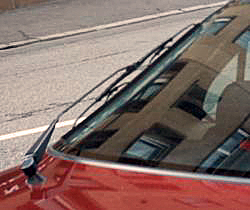
Windscreen wiper on a parked car. In this common design, the force from the arm is distributed evenly with a series of linkages known as a whippletree.
A common windscreen wiper arm and blade
A train windscreen wiper in operation (MRT Jakarta)

A windscreen wiper (Commonwealth English) or windshield wiper (American English) is a device used to remove rain, snow, ice, washer fluid, water, or other debris from a vehicle's front window. Almost all motor vehicles, including cars, trucks, buses, train locomotives, and watercraft with a cabin—and some aircraft—are equipped with one or more such wipers, which are usually a legal requirement.

A wiper generally consists of a metal arm; one end pivots, and the other end has a long rubber blade attached to it. The arm is powered by a motor, often an electric motor, although pneumatic power is also used for some vehicles. The blade is swung back and forth over the glass, pushing water, other precipitation, or any other impediments to visibility from its surface. The speed is usually adjustable on vehicles made after 1969, with several continuous rates and often one or more intermittent settings. Most personal automobiles use two synchronized radial-type arms, while many commercial vehicles use one or more pantograph arms.

On some vehicles, a windscreen washer system is also used to improve and expand the function of the wiper(s) to dry or icy conditions. This system sprays water, or an antifreeze window washer fluid, at the windscreen using several well-positioned nozzles. This system helps remove dirt or dust from the windscreen when used in concert with the wiper blades. When antifreeze washer fluid is used, it can help the wipers remove snow or ice. For these types of winter conditions, some vehicles have additional heaters aimed at the windows, embedded heating wire(s) in the glass, or embedded heating wire(s) in the wiper blade; these defroster systems can melt ice or help to keep snow and ice from building up on the windscreen. Less frequently, miniature wipers are installed on headlights to ensure they function optimally.

History

[edit]

Early versions

[edit]
Patent illustration of 'window cleaner' by GEORGE J. CAPEWELL, OF HARTFORD, CONNECTICUT

One of the earliest recorded patents for the windscreen wiper is by George J. Capewell of Hartford Connecticut, which was filed on August 6, 1896.[1] His invention was for "windows of slow-moving craft; but it is more particularly adapted and intended for windows of rapidly-moving vehicles, such as high-speed locomotives and cars, with which it is necessary that the observer or driver should have a clear view of the path or track." Similar to current automotive wiper designs, his invention involves "usually two of these wipers, and they can be secured to the frame below the front board of the vehicle or behind the housing surrounding the window in position to be out of sight and in such manner that one will scrape off the heaviest part of the substance collected upon the glass." His patent illustration shows a circular window, although the patent notes "it is not essential that the glass be circular in form."

Other early designs for the windscreen wiper are credited to Polish concert pianist Józef Hofmann,[2] and to Mills Munitions, Birmingham, who also claimed to have been the first to patent windscreen wipers in England. At least three inventors patented windscreen cleaning devices at around the same time in 1903; Mary Anderson, Robert Douglass, and John Apjohn. In April 1911, a patent for windscreen wipers was registered by Sloan & Lloyd Barnes, patent agents of Liverpool, England, for Gladstone Adams of Whitley Bay.

Anderson's 1903 window cleaner design

American inventor Mary Anderson is popularly credited with devising the first operational windscreen wiper in 1903.[3][4] In Anderson's patent, she called her invention a "window cleaning device" for electric cars and other vehicles. Operated via a lever from inside a vehicle, her version of windscreen wipers closely resembles the windscreen wiper found on many early car models. Anderson had a model of her design manufactured, then filed a patent (US 743,801) on June 18, 1903 that was issued to her by the US Patent Office on November 10, 1903.[5][6]

A "locomotive-cab-window cleaner" on 12 March 1903[7]
Apjohn's 1903 window cleaning apparatus design

Irish born inventor James Henry Apjohn (1845–1914) patented an "Apparatus for Cleaning Carriage, Motor Car and other Windows" which was stated to use either brushes or wipers and could be either motor driven or hand driven. The brushes or wipers were intended to clean either both up and down or in just one direction on a vertical window. Apjohn's invention had a priority date in the UK of 9 October 1903.[8]

John R. Oishei (1886-1968) formed the Tri-Continental Corporation in 1917. This company introduced the first windscreen wiper, Rain Rubber, for the slotted, two-piece windscreens found on many of the automobiles of the time. Today Trico Products is one of the world's largest manufacturers of windscreen wipers.[citation needed] Bosch has the world's biggest windscreen wiper factory in Tienen, Belgium, which produces 350,000 wiper blades every day.[9] The first automatic electric wiper arms were patented in 1917 by Charlotte Bridgwood.[10]

Inventor William M. Folberth and his brother, Fred, applied for a patent for an automatic windscreen wiper apparatus in 1919, which was granted in 1921.[11] It was the first automatic mechanism to be developed by an American, but the original invention is attributed by others to Hawaiian, Ormand Wall.[11] Trico later settled a patent dispute with Folberth and purchased Folberth's Cleveland company, the Folberth Auto Specialty Co. The new vacuum-powered system quickly became standard equipment on automobiles, and the vacuum principle was in use until about 1960. In the late 1950s, a feature common on modern vehicles first appeared, operating the wipers automatically for two or three passes when the windscreen washer button was pressed, making it unnecessary to manually turn the wipers on as well. Today, an electronic timer is used, but originally a small vacuum cylinder mechanically linked to a switch provided the delay as the vacuum leaked off.

Intermittent wipers

[edit]

The inventor of intermittent wipers (non-continuous, now including variable-rate wipers) might have been Raymond Anderson, who, in 1923, proposed an electro-mechanical design. (US Patent 1,588,399). In 1958, Oishei et al. filed a patent application describing not only electro-mechanical, but also thermal and hydraulic designs. (US Patent 2,987,747). Then, in 1961, John Amos, an engineer for the UK automotive engineering company Lucas Industries, filed the first patent application in the UK for a solid-state electronic design. (US patent 3,262,042).

In 1963, another form of intermittent wiper was invented by Robert Kearns, an engineering professor at Wayne State University in Detroit, Michigan.[3] (United States Patent 3,351,836 – 1964 filing date). Kearns's design was intended to mimic the function of the human eye, which blinks only once every few seconds. In 1963, Kearns built his first intermittent wiper system using off-the-shelf electronic components. The interval between wipes was determined by the rate of current flow into a capacitor; when the charge in the capacitor reached a certain voltage, the capacitor would be discharged, activating one cycle of the wiper motor, and then repeating the process. Kearns showed his wiper design to the Ford Motor Company and proposed that they manufacture the design. Ford executives rejected Kearns' proposal at the time, but later offered a similar design as an option on the company's Mercury line, beginning with the 1969 models.[3] Kearns sued Ford in a multi-year patent dispute that Kearns eventually won in court,[12] inspiring the 2008 feature film Flash of Genius based on a 1993 New Yorker article that covered the legal battle.

In March 1970, French automotive manufacturer Citroën introduced more advanced rain-sensitive intermittent windscreen wipers on its SM model. When the intermittent function was selected, the wiper would make one sweep. If the windscreen was relatively dry, the wiper motor drew high current, which would set the control circuit timer to a long delay for the next wipe. If the motor drew little current, it indicated that the glass was still wet, and would set the timer to minimize the delay.

Power

[edit]
Pneumatic motor drive on a railroad locomotive windscreen wiper. The lever on the motor operates a valve to supply pressurized air.

Wipers may be powered by a variety of means, although most in use today are powered by an electric motor through a series of mechanical components, typically two 4-bar linkages in series or parallel.

Vehicles with air-operated brakes sometimes use pneumatic wipers, powered by tapping a small amount of pressurized air from the brake system to a small air operated motor mounted on or just above the windscreen. These wipers are activated by opening a valve which allows pressurized air to enter the motor.

Vacuum-powered windshield wiper motor. Manifold vacuum (blue) and atmospheric pressure (red) moves the Paddle (gray), driving the wipers. Slide valve (green) reverses the motion.

Early wipers were often driven by a vacuum motor powered by manifold vacuum. This had the drawback that manifold vacuum varies depending on throttle position, and is almost non-existent under wide-open throttle, when the wipers would slow down or even stop. That problem was overcome somewhat by using a combined fuel/vacuum booster pump.

Some cars, mostly from the 1960s and 1970s, had variable-speed, hydraulically-driven wipers, most notably the '61–'69 Lincoln Continental,[13] '69–'71 Lincoln Continental Mark III (but not all '70 models),[14] and '63–'71 Ford Thunderbird.[15] These were powered by the same hydraulic pump also used for the power steering mechanism.

On the earlier Citroën 2CV, the windscreen wipers were powered by a purely mechanical system, a cable connected to the transmission; to reduce cost, this cable also powered the speedometer. The wipers' speed was therefore variable with car speed. When the car was stationary, the wipers were not powered, but a handle under the speedometer allowed the driver to power them by hand.[citation needed]

Shape

[edit]
Illustration showing the construction of multi-branched windshield wiper blade holder

Most early wipers used a rubber blade attached to a flat metal base. But as aerodynamic and styling concerns introduced curved windshields, these proved insufficient. In 1945, John W. Anderson, founder of Trico rival Anco, filed a patent for a wiper with branched arms to keep the blade pressed uniformly against both curved and flat glass,[16] adaptable to almost any windscreen curvature.[17] As curved windshields became more popular and widespread, following the debut of the 1947 Studebaker Starlight Coupe,[18] these soon became standard equipment. While they have been superseded by "beam-type" wipers with bodies made of flexible material, this type still remains the most popular.

Wiper blades are made of natural rubber, EPDM rubber (or ethylene propylene rubber)[19] or a combination of both, as natural rubber performs better in cold weather but EPDM rubber doesn't "set" and resists better to thermal aging, UV, ozone and tearing.[20] Some manufacturers coat them with graphite.[20]

Geometry

[edit]
Windscreen wiper arms and blades on a 1954 DKW-IFA F8 "Luxuscabriolet" from East Germany, using a simple radial design with no visible linkages
Lever mechanism of a windscreen wiper. The motor in the middle converts the circular rotation to an intermittent rotation. The lever arms have different lengths, so the stop position at the reverse point is different.
Simple parallelogram linkages on a boat windscreen
This 1974 Mercedes-Benz 220D uses oppositely-pivoted wiper blades. (Fig. 2)
Pantograph windscreen wipers (Fig. 6) used on Mercedes-Benz O 405 NH
Triple windshield wipers (Fig.7) used on a DAF XF truck

Most wipers are of the pivot (or radial) type: they are attached to a single arm, which in turn is attached to the motor. These are commonly found on many cars, trucks, trains, boats, airplanes, etc.

Modern windscreen wipers usually move in parallel (Fig. 1, below). However, various Mercedes-Benz models and other cars such as the Volkswagen Sharan employ wipers configured to move in opposite directions (Fig. 2), which is mechanically more complex but can avoid leaving a large unwiped corner of the windscreen in front of the front-seat passenger. A cost benefit to the auto-maker occurs when wipers configured to move in opposite directions do not need to be repositioned for cars exported to right hand drive countries such as the UK and Japan.

Another wiper design (Fig. 6) is pantograph-based, used on many commercial vehicles, especially buses with large windscreens. Pantograph wipers feature two arms for each blade, with the blade assembly itself supported on a horizontal bar connecting the two arms. One of the arms is attached to the motor, while the other is on an idle pivot.[citation needed] The pantograph mechanism, while being more complex, allows the blade to cover more of the windscreen on each wipe. However, it also usually requires the wiper to be "parked" in the middle of the windscreen, where it may partially obstruct the driver's view when not in use. A few models of automobile sometimes employ a pantograph arm on the driver's side and a normal arm for the passenger. The Triumph Stag, Lexus and several US makes employ this method to cover more glass area where the windscreen is quite wide but also very shallow. The reduced height of the windscreen would need the use of short wiper arms which would not have the reach to the edge of the windscreen.

A simple single-blade setup with a center pivot (Fig. 4) is commonly used on rear windscreens, as well as on the front of some cars. Mercedes-Benz pioneered a system (Fig. 5) called the "Monoblade", based on cantilevers, in which a single arm extends outward to reach the top corners of the windscreen, and pulls in at the ends and middle of the stroke, sweeping out a somewhat M-shaped path. This way, a single blade is able to cover more of the windscreen, displacing any residual streaks away from the centre of the windscreen.

Some larger cars in the late '70s and early '80s, especially LH driver American cars[citation needed], had a pantograph wiper on the driver's side, with a conventional pivot on the passenger side. Asymmetric wiper arrangements are usually configured to clear more windscreen area on the driver's side, and so are mostly mirrored for left and right-hand-drive vehicles (for example, Fig. 1 vs. Fig 10). One exception is found on the second generations of the Renault Clio, Twingo and Scénic as well as BMW's E60 5 Series and E63 6 Series, the Peugeot 206 and the Nissan Almera Tino, where the wipers always sweep towards the left. On right-hand-drive models, a linkage allows the right-hand wiper to move outwards towards the corner of the windscreen and clear more area.

Other wiper geometries

[edit]
A V3A tram using a wiper geometry like Fig. 6, but uses a single wiper instead of two
  • Works similar to Fig. 8 but not a split screen windscreen and rest state is at the bottom of the windscreen facing outwards. Wipers work in a slightly asymmetrical time, with one wiper being slightly ahead of the other when on.
  • Works similar to Fig. 2 but one wiper has its resting position up and the other down.
  • Works similar to Fig. 2 but wipers are syncronized to go one after the other rather than at the same time. When one wiper is fully up, the other is fully down. Resting position is the same as Fig. 2.
  • Works similar to Fig. 9, but uses a single wiper.
  • Works similar to Fig. 6, but uses only one wiper.

Unusual wiper geometries

[edit]
Toyota Yaris with large single wiper

Other automotive applications

[edit]

Rear wipers

[edit]
Single rear wiper on a Mitsubishi Outlander
Double rear wipers on a Toyota Camry (XV10) station wagon

Some vehicles are fitted with wipers (with or without washers) on the back window as well. Rear-window wipers are typically found on hatchbacks, station wagons / estates, sport utility vehicles, minivans, and other vehicles with more vertically-oriented rear windows that tend to accumulate dust. First offered in the 1940s, they achieved widespread popularity in the 1970s after their introduction on the Porsche 911 in 1966 and the Volvo 145 in 1969.[21]

Headlight wipers

[edit]

In the 1960s, as interest in auto safety grew, engineers began researching various headlamp cleaning systems. In late 1968, Chevrolet introduced high pressure fluid headlamp washers on a variety of their 1969 models. In 1970, Saab Automobile introduced headlight wipers across their product range. These operated on a horizontal reciprocating mechanism, with a single motor. They were later superseded by a radial spindle action wiper mechanism, with individual motors on each headlamp. In 1972, headlamp cleaning systems became mandatory in Sweden.

Headlamp wipers have all but disappeared today with most modern designs relying solely on pressurized fluid spray to clean the headlights. This reduces manufacturing cost, minimizes aerodynamic drag, and complies with EU regulations limiting headlamp wiper use to glass-lensed units only (the majority of lenses today are made of plastic.)

Other features

[edit]
Windscreen washer in operation

Windscreen washer

[edit]

Most windscreen wipers operate together with a windscreen washer; a pump that supplies a mixture of water, alcohol, and detergent (a blend called windscreen washer fluid) from a tank to the windscreen. The fluid is dispensed through small nozzles mounted on the hood. Conventional nozzles are usually used, but some designs use a fluidic oscillator to disperse the fluid more effectively.

In warmer climates, water may also work, but it can freeze in colder climates, damaging the pump. Although automobile antifreeze is chemically similar to windscreen wiper fluid, it should not be used because it can damage paint. The earliest documented idea for having a windscreen wiper unit hooked up to a windscreen washer fluid reservoir was in 1931, Richland Auto Parts Co, Mansfield, Ohio.[22][23] Uruguayan racecar driver and mechanic Héctor Suppici Sedes developed a windscreen washer in the late 1930s.[24]

Since 2012, nozzles are replaced on some cars (Tesla, Volvo XC60 2018-2021, Citroen C4 Cactus) by a system called AquaBlade, developed by the company Valeo. This system supplies the washing liquid directly from the spoiler element of the wiper blade. This system suppresses visual disturbances during driving and so reduces the reaction time of the driver in case of incident.[25]

Hidden wipers

[edit]

Some larger cars are equipped with hidden wipers (or depressed-park wipers). When wipers are switched off in standard non-hidden designs, a "parking" mechanism or circuit moves the wipers to the lower extreme of the wiped area near the bottom of the windscreen, but still in sight. For designs that hide the wipers, the windscreen extends below the rear edge of the bonnet. The wipers park themselves below the wiping range at the bottom of the windscreen, but out of sight. Late model vehicles that hide wiper blades under the windscreen need to be placed in a service position in order to lift the wiper blade from the windscreen using the wiper service position.

Rain-sensing wipers

[edit]

Some vehicles are now available with automatic or driver-programmable windscreen wipers that detect the presence and amount of rain using a rain sensor. The sensor automatically adjusts the speed and frequency of the blades according to the amount of rain detected. These controls usually have a manual override.

Rain-sensing windscreen wipers appeared on various models in the late 20th century, one of the first being the Citroën SM. As of early 2006, rain-sensing wipers are optional or standard on all Cadillacs and most Volkswagens, and are available on many other mainstream manufacturers.

The rain-sensing wipers system currently employed by most car manufacturers today was originally invented and patented in 1978 by Australian, Raymond J. Noack, see U.S. Patents 4,355,271 and 5,796,106. The original system automatically operated the wipers, lights and windscreen washers.

Bladeless alternatives

[edit]
Clear view screen provides a window of visibility, even in rough seas.

A common alternative design used on ships, called a clear view screen, avoids the use of rubber wiper blades. A round portion of the windscreen has two layers, the outer one of which is spun at high speed to shed water.

High speed aircraft may use bleed air which uses compressed air from the turbine engine to remove water, rather than mechanical wipers, to save weight and drag.[citation needed] Effectiveness of this method also depends on water-repellent glass treatments similar to Rain-X.

Legislation

[edit]

Many jurisdictions have legal requirements that vehicles be equipped with windscreen wipers. Windscreen wipers may be a required safety item in auto safety inspections. Some US states have a "wipers on, lights on" rule for cars.[26][27]

[edit]

In the 1999 television commercial Synchronicity for the Volkswagen Jetta automobile,[28] windscreen wipers were synchronized with events seen through the car windows, and with the song "Jung at Heart", which was commissioned for the advertising agency Arnold Worldwide and composed by Peter du Charme[29] under the name "Master Cylinder".[30]

See also

[edit]

Notes

[edit]

References

[edit]
[edit]
Revisions and contributorsEdit on WikipediaRead on Wikipedia
from Grokipedia
A windscreen wiper, also known as a in , is a mechanical device mounted on motor vehicles to remove , , , and debris from the windscreen (or ) , thereby maintaining clear visibility for the driver during adverse weather conditions. It typically consists of one or more flexible rubber blades attached to pivoting arms that oscillate across the glass surface in a sweeping motion. The invention of the windscreen wiper is credited to Mary Anderson, an American inventor from , who patented the first practical design in 1903 (U.S. No. 743,801). Anderson's device was a manual system featuring a spring-loaded arm with a rubber operated by a from inside the vehicle, inspired by her observation of a streetcar driver's poor visibility in snowy New York weather. Though not immediately commercialized, her concept laid the foundation for future developments. By the 1920s, windscreen wipers evolved into electrically or vacuum-powered , with key advancements including the Folberth brothers' 1922 (U.S. No. 1,420,538) for an automatic vacuum-operated wiper and John R. Oishei's spring-pressured arm in 1920 (U.S. No. 1,362,175) for consistent contact pressure. Modern wipers are driven by small DC electric motors with worm gear reductions that convert rotational motion into reciprocating arm movement via a linkage of cams and rods, enabling variable speeds and positions at the windshield's base. Notable innovations include intermittent wiping, patented by in 1967 (U.S. No. 3,351,836), which introduces timed delays between wipes, and rain-sensing , which uses optical or sensors to detect and automatically adjust wiper speed, first commercially implemented in 1996 on models such as the STS, Eldorado, and DeVille. These features have become standard on most contemporary vehicles, enhancing safety and convenience.

Overview and Design

Basic Components

The windscreen wiper system comprises several fundamental components that work together to maintain visibility by clearing the windscreen surface. These include the wiper blade, wiper arm, wiper motor, and wiper linkage, each designed with specific materials and structures to ensure effective contact and under varying conditions. The wiper blade serves as the primary wiping element, featuring a flexible rubber or that directly contacts the to remove , , and contaminants. This is mounted on a frame, typically made of metal or reinforced , which in conventional designs uses articulated links to create 4 to 8 pressure points for uniform application across the blade's length. Flat blade variants employ a single tensioned metal or strip for a streamlined profile and consistent pressure. Attachments such as clips, hooks, or mechanisms secure the blade to the arm, allowing for easy replacement. For passenger cars, blade lengths typically range from 12 to 28 inches (300 to 700 mm), tailored to the windscreen's dimensions. Material choices include , which is economical but prone to cracking from UV exposure and temperature extremes, versus , which offers superior , , and resistance to hardening in , though it may occasionally leave a slight on the . The wiper arm provides structural support and positioning for the blade, anchored at a pivot point connected to the wiper shaft protruding from the vehicle's body. It incorporates linkage elements that transmit motion from the motor to the blade assembly, often constructed from durable metal for rigidity. Integrated springs maintain consistent tension, pressing the blade firmly against the curved windscreen surface to prevent skipping or streaking. The wiper motor, usually an electric DC type operating on 12 or 24 volts, powers the entire system and is typically housed under the or area. It features reduction gears, such as a worm gear mechanism, to convert high-speed rotation into the slower, high-torque output needed for wiping. A built-in parking mechanism ensures the blades return to a designated rest position at the bottom of the windscreen when deactivated. The wiper linkage connects the motor to the arms, distributing force for synchronized movement; parallel linkage configurations use rods to drive both driver- and passenger-side arms in tandem, while designs employ crossed arms for broader coverage and even pressure distribution across larger windscreens. These components may integrate briefly with washer fluid systems via nozzles mounted on the arms.

Operating Principles

Windscreen wipers operate through a mechanical linkage that converts the rotational motion of an into the reciprocal arc motion of the wiper arms and blades. The motor drives a crank connected to rods, which pivot the arms in a sweeping pattern across the windscreen, typically covering a wipe angle of 60 to 90 degrees to ensure adequate coverage of the driver's . The wiper arms are spring-loaded to maintain consistent downward pressure on the blades against the windscreen surface, enabling effective removal of and without . This pressure, distributed uniformly across the length, counteracts aerodynamic lift forces that can occur at higher speeds, particularly when the blade angle relative to the exceeds 30 degrees, potentially causing lift-off and reduced wiping efficiency. Electrically, the system relies on a 12-volt geared down via a to provide for the linkage. Speed control is achieved through resistive circuits in older designs or (PWM) in modern vehicles, allowing low-speed operation at approximately 20-40 strokes per minute and high-speed at 45-60 strokes per minute, as required for varying intensities. The wiping action fundamentally involves hydrodynamic principles, where the blade's motion displaces water films by generating shear forces that overcome , preventing droplet beading and ensuring clear visibility. Blade-to-arms connections, such as J-hook (a curved U-shaped clip for secure, simple attachment) or (a push-tab locking mechanism for quick release), influence overall but do not alter core wiping physics.

History

Invention and Early Development

The invention of the windscreen wiper originated with Mary Anderson, an American inventor from , who patented a hand-operated device in 1903 to address visibility issues on vehicles. Her U.S. Patent No. 743,801 described a "window cleaning device" featuring a rubber blade attached to a spring-loaded arm, controlled by a from inside the streetcar () cab, allowing the operator to clear , , or sleet from the without exiting the vehicle. This mechanism was specifically designed for trams, where operators often struggled with obscured views during inclement weather, but it laid the groundwork for similar applications in automobiles as enclosed vehicles became more prevalent. The transition to automotive use began in the mid-1910s, with the 1916 Model 51 marking one of the earliest adoptions of hand-cranked wipers as standard equipment on closed-body cars. These manual systems, operated via a crank or inside the cabin, provided drivers with a means to wipe from the windscreen, addressing the limitations of open-top vehicles that offered little protection from but exposed passengers to the elements. However, early manual wipers posed reliability challenges in heavy rain, as they required the driver to divert attention from the road to operate the mechanism, often resulting in inconsistent clearing and fatigue during prolonged wet conditions. By the 1920s, the demand for more reliable solutions grew with the rise of mass-produced enclosed automobiles like the , leading to the first widely available electric wiper retrofits in 1922. These aftermarket electric systems offered improved performance over manual versions by automating the wiping action, though initial designs faced issues with motor durability in wet environments and higher costs that limited adoption to upgrades rather than factory installations. A significant advancement came in 1926 when Bosch introduced the first production electric windscreen wiper motor, featuring a worm gear drive and rubber-coated arm, which was fitted to luxury vehicles such as the 24/100/140 PS models. This innovation enhanced reliability in adverse weather, reducing the need for manual intervention and better suiting the increasing use of closed cabins that trapped on windscreens.

Key Innovations and Evolution

The evolution of windscreen wipers accelerated in the mid-20th century, transitioning from single-speed vacuum-operated systems predominant in to multi-speed electric motors by the , which provided low and high settings for varied weather conditions. This shift improved driver control and visibility, with electric wipers becoming standard on most U.S. vehicles by the early . A pivotal regulatory milestone came with the 1968 U.S. Federal Safety Standard No. 104, which required all new passenger to have a windshield wiping system capable of clearing a specified area of the windscreen at speeds up to 70 km/h, mandating automatic operation and integration with washing systems to enhance safety uniformity. The introduction of intermittent wipers marked a major functional advancement, pioneered by inventor in 1963. Drawing inspiration from the human eye's blinking, Kearns designed a system using a capacitor-delay circuit to create adjustable pauses between wipes, addressing the limitations of constant operation in light rain or mist; he received U.S. Patent 3,351,836 for this in 1967. Although Kearns sought licensing from automakers, the technology first appeared commercially on the 1969 Ford Mercury models as an optional delay-action feature, followed by widespread adoption. In the , frameless blade designs gained traction for their superior conformity to curved windscreens, eliminating metal frames to reduce chatter and improve contact pressure across the wiping path, as seen in early implementations by Products. Aerodynamic enhancements emerged in the 1980s, with flush-mounted arms integrated into vehicle body lines to minimize wind resistance and noise; for instance, Mercedes-Benz's 1985 W124 series featured a concealed single-arm system that reduced drag by up to 20% compared to traditional setups. The 1990s brought further sensor-based innovations, particularly rain-sensing wipers using optical technology to detect moisture via infrared light on the windscreen. Rain-sensing wipers were first implemented in production by in 1987 on the Luce Royal Classic. General Motors introduced the Rainsense system in 1996 on models, automatically varying wipe speed based on rainfall intensity without driver input, a feature that quickly spread to European brands like by 1999.

Types and Configurations

Wiper Blades and Materials

Wiper blades are the critical contact elements that remove , , and contaminants from the windscreen, with their and materials directly influencing wiping and longevity. Traditional framed blades feature a multi-element metal spine that provides structure through several articulated joints, creating 6 to 8 discrete points for contact with the surface. These blades are suited to flatter windscreens but can experience uneven distribution on more curved modern , potentially leading to reduced coverage. In contrast, beam blades employ a single flexible spine that applies infinite points across the entire length, conforming better to the of contemporary windscreens for improved wipe uniformity and reduced wind lift at high speeds. This frameless construction enhances and minimizes chatter, though it may require higher-quality materials to maintain durability. The primary wiping element in most blades is a rubber compound, with ethylene propylene diene monomer (EPDM) widely used for its resistance to (UV) degradation and exposure, which can cause cracking in standard over time. EPDM maintains flexibility and prevents brittleness in harsh environmental conditions, extending blade integrity. Many blades incorporate a on the rubber edge to reduce between the blade and , minimizing squeaking, juddering, and wear while promoting smoother, quieter operation. This coating's layered carbon structure allows low shear forces, ensuring streak-free wipes without compromising the rubber's grip. Durability of wiper blades is influenced by material quality and exposure to elements like , UV rays, and temperature extremes, with standard rubber compounds prone to cracking if not formulated with protective additives such as EPDM. Typical lifespan ranges from 6 to 12 months under normal driving conditions, though premium options with advanced coatings can extend this to 18-24 months by resisting environmental breakdown. As of 2025, advancements include coatings and sustainable materials in premium blades, enhancing UV resistance and extending lifespan beyond traditional limits. Original equipment (OE) blades often outperform aftermarket alternatives due to precise and higher-grade materials tailored to specific windscreen geometries, resulting in longer and better compatibility. Replacement is recommended when signs of degradation appear, such as hardening or splitting, to avoid impaired visibility. For traditional framed blades, replacement can involve installing new rubber refills rather than the entire blade. Wiper refills are commonly available in 6mm widths with a typical height of approximately 11mm. To confirm compatibility of 6mm wide wiper refills with a wiper frame, check if the frame accepts 6mm inserts and measure the width of the current refill to ensure a proper fit. Silicone blades offer enhanced performance in winter conditions, as their material resists icing and freezing to the windscreen better than rubber, maintaining flexibility down to -40°C and preventing buildup of snow or frost. This resistance to extreme cold and UV exposure allows silicone blades to last up to twice as long as conventional rubber ones, though they may require careful installation to avoid residue on uncoated glass. Full silicone blades serve as durable alternatives for vehicles with non-replaceable beam-style blades or wiper arms featuring varying claw widths or attachment types, providing broad compatibility and extended longevity due to their resilient material properties. Silicone refills are typically universal strips designed for frameless (boneless) wiper blades or specific frames common on some Asian vehicles. Hybrid blades combine rubber wiping elements with a polymer shell encasing a steel beam structure, providing the durability of beam designs alongside the even pressure of framed systems while protecting against corrosion and debris. These use dual-compound rubber—often graphite-coated—for quiet, streak-free operation across temperatures from -40°C to 80°C. Performance testing for wiper blades evaluates key metrics including (uneven water removal leaving visible lines), chatter (vibrations causing skipping or noise), and wipe efficiency (percentage of surface cleared without residue). Under SAE J903 standards (as of 2024), blades are assessed for uniform coverage and minimal defects on test windshields.

Wiper Arms and Mechanisms

Wiper arms serve as the structural backbone for attaching and positioning the wiper blades on a vehicle's windscreen, typically consisting of a metal framework that pivots to apply consistent pressure across the glass surface. Common designs include the configuration, where two arms operate in parallel from a single drive mechanism, providing synchronized movement for balanced coverage on passenger cars. In contrast, single-arm systems use one elongated arm to sweep the entire windscreen, often seen in compact vehicles for simplicity and reduced parts count. For larger vehicles such as trucks, arms are employed, featuring a scissor-like linkage that extends the arm length and maintains uniform pressure over expansive windscreens, enhancing durability in demanding conditions. The mechanisms driving these arms primarily rely on systems, which convert the rotary motion of an into the oscillatory path needed for wiping, ensuring parallel wipe patterns that maximize coverage without gaps. These linkages often incorporate gear reduction in the motor assembly, with ratios around 50:1 to amplify for overcoming resistance from water, , or while operating at low speeds of 20-100 RPM. Mounting points for wiper arms are generally located at the panel base of the windscreen or along the A-pillar, allowing pivots that accommodate the curved of modern windscreens through adjustable angles for optimal blade contact. Many wiper arms utilize die-cast components for their high strength-to-weight ratio, offering tensile strengths up to 54,000 psi to withstand repeated oscillations and environmental stresses. is integrated via flexible rubber bushings or tuned arm stiffness to minimize judder, which occurs from uneven pressure or during operation. Maintenance of wiper arms involves periodic of pivot points with lithium or silicone-based greases to reduce and prevent seizing, as dry operation accelerates wear. Common failures include pivot from ingress, which can cause stiff movement or blade misalignment, often requiring cleaning, re-greasing, or replacement of bushings to restore function.

Rear and Specialty Wipers

Rear wipers are specialized components designed to clear , , and debris from the rear windscreen of vehicles, particularly those with or body styles where the rear glass is more exposed to road spray. These systems typically employ a single-arm mechanism with a rubber attached to an , enabling a swinging motion that is often horizontal across the flatter surface of the rear window, in contrast to the more curved front windscreen. The design is generally rectangular and shorter than front wipers, focusing on a localized area near the rearview mirror to aid visibility during reversing or lane changes. In many , rear wipers operate on an intermittent cycle only, with typical delays of 5–15 seconds per wipe (varying based on vehicle design and battery voltage) to balance and coverage without continuous operation. The motor is usually positioned within the tailgate assembly, which presents challenges such as limited space and vulnerability to wiring strain from repeated opening and closing, often requiring flexible conduits through points to prevent failures. Additionally, the wiper's arc provides limited coverage, often spanning just 150-180 degrees and leaving portions of the uncleared, which can reduce overall rear visibility in . Some systems integrate with rear defrosters, activating heat to prevent buildup and enhance performance in cold conditions. For vehicles with rear spoilers, single-arm designs are common, positioning the wiper to emerge from beneath the spoiler lip for a streamlined appearance while maintaining effective wiping over the central glass area. Flexible beam-style wipers are adapted for slightly curved rear glass in certain models, using contoured elements to ensure even distribution and prevent on non-flat surfaces. Headlight wipers represent another specialty adaptation, primarily used in European vehicles to maintain lens clarity in snowy or slushy conditions by removing buildup that could dim output or cause glare. These systems feature small rubber blades suited for halogen or LED lenses, often employing or arc mechanisms to sweep across the light-emitting surface without obstructing the beam. Under UN Regulation No. 45, headlamp cleaners—including wipers—are required for vehicles with passing beams exceeding 2,000 lumens to ensure safe illumination by preventing dirt or snow accumulation, though modern LED designs frequently substitute washers to meet lower intensity thresholds. Such wipers were particularly prevalent in Scandinavian models like and Saab, where harsh winters necessitated robust for optimal headlight performance.

Advanced Features

Intermittent and Rain-Sensing Systems

Intermittent wiper systems enable drivers to set adjustable delays between wiping cycles, typically ranging from 2 to 20 seconds, using electronic controls that pause the motor after each sweep. Intermittent wiper systems first appeared commercially in 1969 on , with introducing them in 1974, marking a significant improvement in in light rain. Rain-sensing systems automate wiper activation by employing optical sensors that detect water droplets on the through changes in . When hits the , the droplets cause the to scatter and escape the surface rather than fully reflect back to the , reducing the detected light intensity and triggering the wipers. These sensors are integrated with the vehicle's (ECU), which processes the signal to initiate wiping at variable speeds based on rainfall intensity. Control logic in modern wiper systems utilizes (PWM) to achieve variable speeds by adjusting the of the motor's , allowing smooth transitions from intermittent to continuous operation. Additionally, an auto-park feature ensures the wipers return to their resting position upon ignition shutdown or switch deactivation, managed by a park switch within the motor assembly that maintains power until the cycle completes. Rain sensors are commonly positioned on the windshield near the rearview mirror to optimize detection while minimizing obstruction. To address false triggers from contaminants like dust or dirt, which can alter light patterns similarly to water, advanced systems incorporate algorithms that analyze signal patterns for differentiation, such as autocorrelation to filter non-rain events. In the 2020s, adaptive wiper systems have evolved to integrate with advanced driver-assistance systems (ADAS), enabling speed-adjusted wiping that synchronizes wiper frequency with vehicle velocity and environmental data for enhanced safety in dynamic conditions. As of 2025, wiper systems increasingly integrate with ADAS and vehicle connectivity for predictive activation based on incoming weather data.

Washer and De-Icing Integration

The windscreen washer system complements wiper functionality by dispensing cleaning fluid to remove debris, with key components including a reservoir, electric pump, hoses, and nozzles. In passenger vehicles, reservoirs typically hold 2 to 4 liters of fluid, sufficient for extended use without frequent refills. The pump operates at pressures of approximately 1.4 to 2.1 bar (20 to 30 psi), propelling fluid through the system for effective distribution. Nozzles are available in fixed configurations, often mounted at the base of the windscreen or on wiper arms for consistent spray patterns, or adjustable types that allow drivers to fine-tune direction and coverage for better targeting of soiled areas. De-icing integration enhances performance in cold climates through heated wiper blades or specialized fluids. Heated blades incorporate electrical heating elements, such as embedded coils in the , to melt ice and snow buildup on contact, maintaining clear visibility without manual intervention. Alternatively, de-icing washer fluids include as an additive, with typical concentrations of 25% providing freeze protection down to -20°F (-29°C). Some systems employ positive (PTC) heaters in the wiper arms to warm the entire assembly and prevent adhesion to the . Integration of the washer with wipers ensures synchronized operation, where fluid spray activates simultaneously with the wipe cycle to distribute and wipe away contaminants efficiently. Many modern offer one-touch activation via the wiper stalk, dispensing for a predetermined duration followed by 2 to 3 automatic wipe cycles. Washer composition generally features a water base with detergents for cleaning and antifreeze additives like or to prevent freezing, though formulations vary by climate. Environmental regulations address volatile organic compound (VOC) emissions from these fluids; for instance, limits VOC content to 25% by weight in ready-to-use products, while caps it at 23.5% to reduce atmospheric . Maintenance of washer and de-icing systems focuses on prevention and seasonal selection to ensure reliability. Regular checks for blockages in nozzles and lines, often cleared with or solutions, help maintain spray pressure. Winter fluids prioritize properties to avoid freezing in reservoirs and hoses, whereas summer variants emphasize bug and grime removal with minimal additives to prevent on dry .

Hidden and Bladeless Designs

Hidden wipers represent an early in aimed at enhancing and visual appeal by concealing the wiper assembly when not in use. These systems typically retract into the area below the or into fender wells, emerging only during operation through a pop-up or sliding mechanism. Introduced in the mid-, hidden wipers first appeared on production vehicles like the 1967 and other GM models, marking a shift toward sleeker exteriors in American sports cars. This design was particularly popular in and models, where styling priorities favored streamlined profiles over visible mechanical components. Examples of hidden wiper implementations include retractable systems on sports cars like the Pontiac Firebird, where the arms pivot downward into the cowl plenum for storage, and pop-up mechanisms on vehicles such as certain European models that integrate with the hood line. In the Porsche 911 lineup, while not fully hidden, some variants feature low-profile arms that minimize protrusion, contributing to the car's iconic silhouette. These designs offer aerodynamic benefits by reducing drag when retracted, improving fuel efficiency and high-speed stability. Additionally, they provide aesthetic integration, allowing for uninterrupted body lines that enhance the vehicle's premium appearance. Hidden systems often pair with rain-sensing activation for seamless deployment, though this is managed through separate intermittent controls. Bladeless wiper alternatives shift away from mechanical blades entirely, employing non-contact methods to clear and maintain visibility. Air blast systems, for instance, use jets directed across the surface to disperse , as outlined in patents for multi-jet cleaning apparatuses suitable for automotive use. Ultrasonic vibration technologies generate high-frequency waves to create a repulsive force field on the glass, preventing adhesion; explored this approach in 2013 as a potential wiper replacement, drawing from fighter jet applications. Hydrophobic coatings, such as silicone-based treatments applied directly to the , create a -repellent surface that causes to bead and slide off at speeds, effectively reducing or eliminating the need for wiping in light to moderate conditions. These bladeless designs yield notable advantages in aerodynamics and aesthetics, with no protruding components to increase drag or disrupt vehicle lines, potentially achieving Cd improvements similar to hidden systems. In modern electric vehicles like Tesla models, camera-based rain detection integrates with standard wipers but hints at future bladeless evolution by relying on vision systems for activation, avoiding traditional sensors. However, limitations persist: hidden mechanisms involve complex engineering that elevates manufacturing costs, while bladeless options like ultrasonic systems remain experimental and expensive to implement at scale. Hydrophobic coatings, though more accessible, require periodic reapplication every few months to maintain efficacy, as environmental exposure degrades the protective layer. Overall, these technologies prioritize efficiency and style but face challenges in reliability and affordability for widespread adoption.

Applications and Variations

Automotive Implementations

In passenger cars, dual-arm front windscreen wipers became a standard feature by , providing effective coverage across the through independent arm movements that improved wiping efficiency compared to earlier single-arm designs. This configuration evolved to accommodate varying vehicle sizes, with modern adaptations for sport utility vehicles (SUVs) incorporating longer blades—typically ranging from 20 to 28 inches—to handle larger windshields and ensure uniform coverage without streaks. For trucks and buses, wiper systems are engineered for demanding conditions, featuring high-speed operation exceeding 80 strokes per minute on the fastest setting to maintain visibility during heavy rain or at highway speeds, and setups where multiple arms wipe wide windscreens simultaneously for comprehensive clearing. These designs prioritize durability and power, often using robust motors to cover expansive glass areas on commercial vehicles. Electric vehicles incorporate quieter brushless DC motors in their wiper systems, reducing operational noise to align with the silent cabin environment and enhancing passenger comfort, while also integrating with autonomous driving sensors to automatically clear obstructions from cameras and units for reliable environmental perception. Windscreen wipers became mandatory on all new passenger cars in the United States following the implementation of Federal Motor Vehicle Safety Standard (FMVSS) No. 104 in 1968, which required effective wiping and washing systems to ensure clear visibility. Similar requirements emerged in the in the late through harmonized type-approval directives. Climate-specific variations include heated wiper elements in Nordic-market models from manufacturers like , which prevent ice buildup on blades and arms in sub-zero temperatures, extending functionality in harsh winter conditions. Retrofitting classic cars with aftermarket wiper allows owners to upgrade from outdated vacuum-operated systems to modern electric ones, providing variable speeds and improved reliability while preserving the vehicle's original through bolt-in installations. These , offered by specialized suppliers, enable seamless integration for models from the mid-20th century onward.

Non-Automotive and Industrial Uses

Windscreen wipers find extensive application in marine environments, where they ensure clear visibility on boats and ships amid heavy rain, spray, and high winds. These systems feature saltwater-resistant blades constructed from materials like with Teflon coatings, which provide streak-free wiping while enduring exposure to salt, , and in ranges from -40°C to 80°C. Blades can extend up to 40 inches in length to cover larger windshields on commercial vessels, and arms often incorporate corrosion-proof to resist marine . Such adaptations enable reliable performance at speeds generating significant spray, as seen in systems designed for offshore and recreational . In aviation, wiper systems on aircraft windscreens primarily address rain and debris removal, with integration into broader de-icing protocols to maintain pilot visibility during flight. Electric motors power most installations, though pneumatic systems utilizing air pressure and hydraulic variants are employed on larger transport aircraft for robust sweeping action. Heated elements within the windshield or wiper assembly prevent ice accumulation, aligning with Federal Aviation Administration (FAA) standards outlined in Advisory Circular 20-73A for ice protection systems. These configurations undergo certification testing to verify effectiveness in icing conditions, ensuring compliance for operations in adverse weather. Industrial wiper systems adapt the core wiping principle for and process environments, focusing on control without halting operations. On conveyor belts handling bulk materials like or , urethane scraper blades mount to the frame to remove residues, using abrasion-resistant formulations that maintain belt at speeds up to 400 feet per minute. For camera lenses in automated setups, rotary wiper mechanisms combine mechanical sweeping with air injection to clear dust and moisture, preserving optical clarity in applications such as CNC workflows. In cleanrooms and assembly lines, robotic arms integrate specialized wipers to eliminate lubricants, particles, and residues, employing low-lint, durable materials to support precision tasks in and pharmaceutical production.

Regulations and Standards

In the United States, Federal Motor Vehicle Safety Standard (FMVSS) No. 104 mandates that all passenger cars, multipurpose passenger vehicles, trucks, and buses manufactured on or after December 25, 1968, be equipped with a windshield wiping and washing system capable of clearing at least 80% of Area A (the primary driver vision zone), 94% of Area B, and 99% of Area C of the windshield during operation. This requirement ensures effective visibility in adverse weather, with the system required to provide at least two wiping frequencies, the higher at least 45 cycles per minute and the lower at least 20 cycles per minute, differing by at least 15 cycles per minute. Prior to FMVSS 104, windshield wipers transitioned from optional accessories to standard equipment on most vehicles in the 1940s following World War II, driven by improving road safety practices, though federal enforcement made compliance obligatory nationwide. Non-compliance with wiper regulations, such as inoperative systems during inspections or operation, can result in fines ranging from $50 to $100 or more, depending on the state, and may lead to vehicle impoundment or failed safety checks. In the European Union, Commission Regulation (EU) No 1008/2010 establishes type-approval requirements for windscreen wiper and washer systems on new motor vehicles of category M1, mandating that wipers cover at least 98% of the primary vision area (Zone A) and 80% of the secondary area (Zone B) on the windscreen, with multiple speed settings including a low frequency between 10 and 55 cycles per minute and a high frequency of at least 45 cycles per minute. Rear wipers are required for vehicles like multi-purpose vehicles and station wagons where the rear window is integral to visibility. Multiple wiping speeds, which can include intermittent operation, have been required since the late 1970s under type-approval directives such as 78/318/EEC, within the broader framework of Directive 70/156/EEC, enhancing adaptability to varying rain intensities. Violations of these requirements during vehicle approval or use can incur penalties under national enforcement, often tied to roadworthiness testing. In , the Safety Standards for Road Vehicles under the Road Vehicles Act require all automobiles to have wipers meeting performance criteria for wiping speed and coverage, harmonized with international norms and specified in such as JIS D 5703 for wiper motors, ensuring operation at not less than 20 cycles per minute. Motorcycles and certain light vehicles are exempt from these mandates, as their design prioritizes different visibility solutions. Fines for non-compliance, such as during mandatory shaken inspections, can exceed ¥100,000 (approximately $700 USD) for operators or manufacturers failing to maintain functional systems. Global harmonization of wiper regulations is advanced through the United Nations Economic Commission for (UNECE) 1958 Agreement, which provides a framework for adopting uniform technical prescriptions for wheeled vehicles, equipment, and parts, including wiper systems under UN Regulations like No. 26 (external projections to minimize injury risk from wiper components) and No. 43 (safety glazing, incorporating wiper compatibility tests). Over 50 countries, including the as an observer, participate in the World Forum for Harmonization of Vehicle Regulations (WP.29) to align standards, reducing trade barriers while promoting safety; for instance, many regions reference UN ECE provisions for wipe area and speed to facilitate mutual recognition of approvals.

Safety and Performance Standards

Safety and performance standards for windscreen wipers ensure reliable visibility, durability, and integration with vehicle safety systems, primarily through international and regional regulations that specify testing protocols for wipe patterns, operational speeds, and material resilience. In the United States, the Federal Safety Standard (FMVSS) No. 104 governs windshield wiping and washing systems for passenger cars, multipurpose passenger vehicles, trucks, and buses, requiring at least two wiping frequencies with a minimum of 45 cycles per minute at the higher speed and 20 cycles per minute at the lower speed, regardless of engine load. This standard mandates that the wiped area covers at least 80% of Area A (the primary driver vision zone), 94% of Area B, and 99% of Area C on a wet windshield, tested according to SAE Recommended Practice J903 procedures to simulate conditions and verify streak-free clearing within specified boundaries. The SAE J903 standard provides detailed test procedures for passenger car systems, defining the wipe as the cleared area on a wet during one full cycle at the system's highest frequency, with configurations for , opposed, or single-arm setups to ensure uniform coverage aligned with driver needs per SAE J941. It emphasizes wiper arm design for maintaining blade position and applying sufficient, uniform pressure across the blade to prevent uneven wiping or skipping, with durability assessed through extended operation of up to 1,500,000 cycles to evaluate fatigue resistance without degradation in performance. In and aligned international markets, UN ECE No. 81 (incorporated into EU 1008/2010) sets similar benchmarks, requiring wipers to cover 98% of vision Area A and 80% of Area B, with washer systems clearing at least 60% of Area A without , under simulated rain to maintain retention. Wiper systems must also withstand crash conditions without detaching or becoming hazards, as integrated into broader FMVSS crash tests like No. 212 (windshield retention) and No. 208 (occupant protection), where loose components could impair safety; tests verify that wipers remain secured during frontal impacts up to 30 mph to avoid detachment. Environmental standards under the EU End-of-Life Vehicles (ELV) Directive, effective post-2010, require new vehicles to achieve 85% recyclability and 95% recoverability by weight, promoting wiper designs with recyclable metals for arms, plastics for housings, and rubber elements free of hazardous substances to facilitate material recovery. Certification by third-party organizations ensures compliance with electrical and mechanical . Underwriters Laboratories (UL) certification, per UL 1004-1 for rotating electrical machines, verifies the of wiper motors against electrical hazards like short circuits or overheating, mandatory for components in North American markets. Similarly, TÜV SÜD conducts independent testing for wiper performance under ECE R81 and ISO-related protocols, assessing , wipe , and through labs that simulate millions of cycles and environmental stresses to confirm adherence to thresholds.

Cultural and Miscellaneous Aspects

Windscreen wipers have appeared in various films and television, often symbolizing tension or everyday frustration during rainy drives. In the 2008 biographical drama Flash of Genius, directed by , the invention and patent dispute over the intermittent wiper is central to the plot, portraying inventor ' legal battle against after they allegedly stole his idea. The film highlights Kearns' eureka moment inspired by blinking eyes during a rainstorm, drawing from his real-life 1967 patent. Similarly, the 2022 Academy Award-winning animated short , directed by , uses the rhythmic motion of wipers as a metaphor for fleeting relationships, depicting a surreal narrative of love observed through a car's windscreen during a storm. In music, the distinctive swishing and squeaking sounds of windscreen wipers have been sampled to evoke atmosphere or rhythm. Grammy-winning producer incorporated wiper noises into the beat of Meek Mill's 2012 track "Tony Story, Pt. 2," creating a tense, urban backdrop that mimics rain-slicked streets. Roddy Ricch's 2019 hit "The Box" features a production element resembling a squeaky wiper blade, which contributed to its viral appeal and chart-topping success on . Kendrick Lamar's 2017 single "HUMBLE." similarly uses a pattern that echoes wiper cadence, enhancing the song's introspective mood and becoming a staple in hip-hop discussions. The lore surrounding wiper inventions has permeated popular science narratives, particularly Kearns' story of perseverance against corporate giants, as detailed in John Seabrook's 1993 New Yorker profile, which inspired the Flash of Genius film and underscores themes of innovation theft. In modern digital culture, faulty wipers during storms have spawned memes and viral videos, such as a 2021 clip of a Florida man manually wiping his windscreen with his hand amid heavy rain, which garnered widespread sympathy and offers of assistance online. Coverage of electric vehicle wiper integrations in tech media, like adaptive systems in Tesla models, often appears in humorous viral content contrasting traditional mechanical wipers with futuristic designs.

Environmental and Maintenance Considerations

Windscreen wiper systems present several environmental challenges, particularly in material disposal and operational impacts. Rubber blades, primarily composed of synthetic elastomers, pose difficulties due to their mixed composition of rubber, metal, and plastic components, which often results in them being landfilled rather than recycled through standard municipal programs. Under the European Union's End-of-Life Vehicles (ELV) Directive 2000/53/EC, automotive parts like wiper systems must achieve high recycling and recovery rates—targeting 95% by weight for overall—encouraging dismantlers to separate reusable components, though blade-specific recycling remains limited. Washer fluid contributes to environmental through volatile organic compounds (VOCs), such as alcohols, which evaporate during use and account for a notable portion of non-exhaust emissions, potentially exacerbating air quality issues in urban areas. Some formulations include as or preventives. In the , phosphate content in household detergents has been progressively banned since 2013 to mitigate . Electric wiper motors consume modest power, typically 20-50 watts during operation at 12 volts and 2-4 amperes, representing a minor but cumulative draw on energy systems. Recent research in the 2020s has focused on biodegradable blade prototypes using alternatives derived from renewable sources like cane sugar and vegetable oils, with companies like developing models where over 80% of the rubber is from sustainable materials to reduce waste. In hybrid vehicles, advanced systems such as integrated designs in wiper blades help minimize usage by up to 50% through targeted spraying, lowering overall environmental footprint. Proper extends wiper longevity and prevents performance issues. Blades should be replaced every 6-12 months, depending on and usage, to ensure clear visibility and avoid scratching the windscreen. To prevent smearing, clean blades regularly with a mild cleaner or damp cloth to remove residue buildup, and inspect for wear signs like cracking or hardening. Factors such as (UV) exposure accelerate rubber degradation by breaking down chemical bonds, significantly shortening blade life—often halving effectiveness in sunny climates compared to shaded storage. Other influences include and extreme temperatures, emphasizing the need for UV-resistant coatings in modern designs.

References

Add your contribution
Related Hubs
User Avatar
No comments yet.