Hubbry Logo
Absolute monarchyAbsolute monarchyMain
Open search
Absolute monarchy
Community hub
Absolute monarchy
logo
8 pages, 0 posts
0 subscribers
Be the first to start a discussion here.
Absolute monarchy
Absolute monarchy
from Wikipedia
King Salman bin Abdulaziz and Sultan Haitham bin Tariq are the current absolute monarchs of Saudi Arabia and Oman, respectively.

Absolute monarchy[1][2] is a form of monarchy in which the sovereign is the sole source of political power, unconstrained by constitutions, legislatures or other checks on their authority.[3] Throughout history, there have been many absolute monarchs: some famous examples are Louis XIV of France and Frederick the Great.[4][5]

Absolute monarchies today include Brunei, Eswatini,[6] Oman,[7] Saudi Arabia,[8] Vatican City,[9] and the individual emirates composing the United Arab Emirates, which itself is a federation of such monarchies – a federal monarchy.[10][11] Although absolute monarchies are sometimes supported by legal documents (such as the King's Law of Denmark–Norway), they are distinct from constitutional monarchies, in which the authority of the monarch is restricted (e.g. by legislature or unwritten customs) or balanced by that of other officials, such as a prime minister, as in the United Kingdom or the Nordic countries.[3]

Absolute monarchies are similar to but should not be confused with hereditary dictatorships such as North Korea.

Historical examples of absolute monarchies

[edit]
World's states colored by systems of government:
Parliamentary systems: Head of government is elected or nominated by and accountable to the legislature.
  Constitutional monarchy with a ceremonial monarch
  Parliamentary republic with a ceremonial president

Presidential system: Head of government (president) is popularly elected and independent of the legislature.
  Presidential republic

Hybrid systems:
  Semi-presidential republic: Executive president is independent of the legislature; head of government is appointed by the president and is accountable to the legislature.
  Assembly-independent republic: Head of government (president or directory) is elected by the legislature, but is not accountable to it.

Other systems:
  Theocratic republic: Supreme Leader is both head of state and faith and holds significant executive and legislative power
  Semi-constitutional monarchy: Monarch holds significant executive or legislative power.
  Absolute monarchy: Monarch has unlimited power.
  One-party state: Power is constitutionally linked to a single political party.
  Military junta: Committee of military leaders controls the government; constitutional provisions are suspended.
  Governments with no constitutional basis: No constitutionally defined basis to current regime, i.e., provisional governments or Islamic theocracies.
  Dependent territories or places without governments

Note: this chart represents the de jure systems of government, not the de facto degree of democracy.

Outside Europe

[edit]

In the Ottoman Empire, the Sultan wielded absolute power over the state and was considered a Padishah or "Great King" by his people. Many sultans wielded absolute power through heavenly mandates reflected in their titles, such as "Shadow of God on Earth". In ancient Mesopotamia, many rulers of Assyria, Babylonia and Sumer were absolute monarchs as well.

Throughout Imperial China, many emperors and one empress, Wu Zetian, wielded absolute power through the Mandate of Heaven. In pre-Columbian America, the Inca Empire was ruled by a Sapa Inca, who was considered the son of Inti, the sun god, and was the absolute ruler over the nation. Korea under the Joseon dynasty[12] and the short-lived empire was also an absolute monarchy.

Europe

[edit]

Throughout much of European history, the divine right of kings was the theological justification for absolute monarchy. Many European monarchs claimed supreme autocratic power by divine right, so that their subjects had no right to limit their power.[13]

Kingdoms of England and Scotland

[edit]

James VI and I and his son Charles I tried to import the principle of divine right into Scotland and England. Charles I's attempt to enforce episcopal polity on the Church of Scotland led to rebellion by the Covenanters and the Bishops' Wars. Fears that Charles I was attempting to establish absolutist government along European lines was a major cause of the English Civil War, although he did rule this way for 11 years starting in 1629, after dissolving the Parliament of England for a time.[14]

Denmark–Norway

[edit]

Absolutism was underpinned by a written constitution for the first time in Europe in 1665 Kongeloven, 'King's Law' of Denmark–Norway, which ordered that the Monarch

shall from this day forth be revered and considered the most perfect and supreme person on the Earth by all his subjects, standing above all human laws and having no judge above his person, neither in spiritual nor temporal matters, except God alone.[15][16]

This law authorized the king to abolish all other centers of power, most importantly the Council of the Realm in Denmark. Absolute monarchy lasted until 1814 in Norway and 1848 in Denmark.

Habsburgs

[edit]
Joseph II, Holy Roman Emperor.

The House of Habsburg has been extinct in its male line since the death of the childless Charles II of Spain in 1700. However, the House of Habsburg-Lorraine still carries the female line of the House of Habsburg.[citation needed]

The first member of the House of Habsburg-Lorraine to rule over the Holy Roman Empire was Joseph II, a sovereign raised during the Enlightenment. Joseph II extended full legal freedom to serfs in 1781. Franz Joseph I of Austria was Emperor of Austria from 1848 until his death in 1916 and was succeeded by Charles I of Austria. Charles I was the last Emperor of Austria and abdicated on 12 November 1918 after Austria-Hungary lost World War I.

Hungary

[edit]

France

[edit]
Louis XIV of France

Louis XIV of France (1638–1715) is said to have proclaimed L'état, c'est moi!, 'I am the State!'.[17] Although often criticized for his extravagances, such as the Palace of Versailles, he reigned over France for a long period.[18]

The king of France concentrated legislative, executive, and judicial powers in his person. As the supreme judicial authority he could condemn people to death without the right of appeal. It was his duty both to punish offenses and to stop them from being committed. From his judicial authority followed his power both to make laws and to annul them.[19]

Prussia

[edit]
King Frederick II, "the Great", of Prussia

In Brandenburg-Prussia, the concept of absolute monarchy took a notable turn with its emphasis on the monarch as the "first servant of the state", but it nonetheless echoed many of the important characteristics of absolutism. Prussia was ruled by the House of Hohenzollern as a feudal monarchy from 1525 to 1701 and as an absolute monarchy from 1701 to 1848, after which it became a federal semi-constitutional monarchy from 1848 to 1918, when the monarchy was abolished during the German Revolution.[20]

Frederick I was the first King in Prussia, beginning his reign on 18 January 1701.[21] King Frederick the Great adopted the title King of Prussia in 1772, the same year he annexed most of Royal Prussia in the First Partition of Poland, and practiced enlightened absolutism until his death in 1786. He introduced a general civil code, abolished torture and established the principle that the Crown would not interfere in matters of justice.[22] He also promoted an advanced secondary education, the forerunner of today's German grammar school system, which prepares the most promising students for university studies. The Prussian education system was emulated in various countries, including the United States.

Russia

[edit]
Photograph of Tsar Alexander II of Russia, 1878–81

Until 1905, the tsars and emperors of Russia governed as absolute monarchs. Ivan IV ("the Terrible") was known for his reign of terror through the oprichnina. Following the Time of Troubles in the early 17th century, the traditional alliance of autocratic monarchy, the church, and the aristocracy was widely seen as the only basis for preserving the social order and Russian statehood, which legitimized the rule of the Romanov dynasty.[23] Peter I ("the Great") reduced the power of the Russian nobility and strengthened the central power of the monarch, establishing a bureaucracy. This tradition of absolutism was expanded by Catherine II and her descendants.

Russia became the last European country (excluding Vatican City) to abolish absolutism, and it was the only one to do so as late as the 20th century (the Ottoman Empire drafted its first constitution in 1876). Russia was one of the four continental empires which collapsed after World War I, along with Germany, Austria–Hungary, and the Ottoman Empire. In 1918, the Bolsheviks executed the Romanov family, ending three centuries of Romanov rule.[24]

Sweden

[edit]
[edit]

The Revolutions of 1848, known in some countries as the Springtime of the Peoples or the Springtime of Nations, were a series of political upheavals throughout Europe in 1848.[25]

Many nations formerly with absolute monarchies, such as Jordan, Kuwait, Morocco and Qatar, have de jure moved towards a constitutional monarchy. However, in these cases, the monarch still retains tremendous powers, even to the extent that by some measures, parliament's influence on political life is viewed as negligible or merely consultative.[a][27][28]

In Nepal, there were several swings between constitutional rule and direct rule related to the Nepalese Civil War, the Maoist insurgency, and the 2001 Nepalese royal massacre, with the Nepalese monarchy being abolished on 28 May 2008.[29]

In Tonga, the king had majority control of the Legislative Assembly until 2010.[30]

Liechtenstein

[edit]

Liechtenstein has moved towards expanding the power of the monarch—the Prince of Liechtenstein was given vast expanded powers after a referendum to amend the Constitution of Liechtenstein in 2003, which led BBC News to describe the prince as an "absolute monarch again".[31] The referendum granted the monarch the powers to dismiss the government, nominate judges and veto legislation, among others.[32] Just prior to the referendum, the Venice Commission of the Council of Europe published a comprehensive report analysing the amendments, opining that they were not compatible with the European standards of democracy, effectively making Liechtenstein a de facto absolute monarchy.[33] Prince Hans-Adam II had also previously threatened to leave the country and move his assets out of Liechtenstein if voters had chosen to restrict his powers.[31]

Vatican City

[edit]

Vatican City continues to be an absolute monarchy, but is unique because it is also a microstate, ecclesiastical jurisdiction, and elective monarchy. As of 2023, Vatican City has a population of 764 residents (regardless of citizenship). It is the smallest state in the world both by area and by population. The Pope is the absolute monarch of Vatican City, and is elected by a papal conclave with a two-thirds supermajority.[34][35]

As governed by the Holy See, Vatican City State is an sacerdotal-monarchical state ruled by the Pope, who is the bishop of Rome and head of the Catholic Church.[36] Unlike citizenship of other states, which is based either on jus sanguinis or jus soli, citizenship of Vatican City is granted on jus officii, namely on the grounds of appointment to work in a certain capacity in the service of the Holy See. It usually ceases upon cessation of the appointment. Citizenship is also extended to the spouse and children of a citizen, provided they are living together in the city.[37]

Current absolute monarchs

[edit]
  Denotes subnational monarchy
Realm Image Monarch Born Age Since Length Succession Ref(s)
Brunei Darussalam Sultan Hassanal Bolkiah (1946-07-15)15 July 1946 79 years, 100 days 4 October 1967 58 years, 19 days Hereditary [38]
Emirate of Sharjah Ruler Sultan bin Muhammad Al-Qasimi (1939-07-02)2 July 1939 86 years, 113 days 25 January 1972 53 years, 271 days Hereditary [39]
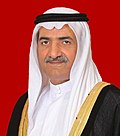
Emirate of Fujairah Ruler Hamad bin Mohammed Al Sharqi (1949-02-22)22 February 1949 76 years, 243 days 18 September 1974 51 years, 35 days Hereditary [39]
Emirate of Ajman Ruler Humaid bin Rashid Al Nuaimi III 1931 (1931) 93–94 years 6 September 1981 44 years, 47 days Hereditary [39]
Kingdom of Eswatini Ngwenyama Mswati III (1968-04-19)19 April 1968 57 years, 187 days 25 April 1986 39 years, 181 days Hereditary and elective [40]
Emirate of Dubai Ruler Mohammed bin Rashid Al Maktoum (1949-07-15)15 July 1949 76 years, 100 days 4 January 2006 19 years, 292 days Hereditary [39]
Emirate of Umm al-Quwain Ruler Saud bin Rashid Al Mualla (1952-10-01)1 October 1952 73 years, 22 days 2 January 2009 16 years, 294 days Hereditary [39]
Emirate of Ras al-Khaimah Ruler Saud bin Saqr Al Qasimi (1956-02-10)10 February 1956 69 years, 255 days 27 October 2010 14 years, 361 days Hereditary [39]
Kingdom of Saudi Arabia King Salman bin Abdul‘aziz (1935-12-31)31 December 1935 89 years, 296 days 23 January 2015 10 years, 273 days Hereditary and elective [41]
Sultanate of Oman Sultan Haitham bin Tariq Al Said (1954-10-11)11 October 1954 71 years, 12 days 11 January 2020 5 years, 285 days Hereditary [42][43]
Emirate of Abu Dhabi Ruler Mohamed bin Zayed Al Nahyan (1961-03-11)11 March 1961 64 years, 226 days 13 May 2022 3 years, 163 days Hereditary [39]
Vatican City State Portrait of Pope Leo XIV Pope Leo XIV (1955-09-14)14 September 1955 70 years, 39 days 8 May 2025 168 days Elective [44]

Saudi Arabia

[edit]

Saudi Arabia is an absolute monarchy, and according to the Basic Law of Saudi Arabia adopted by Royal Decree in 1992, the King must comply with Sharia (Islamic law) and the Quran.[8] The Quran and the body of the Sunnah (traditions of the Islamic prophet, Muhammad) are declared to be the Kingdom's Constitution, but no written modern constitution has ever been promulgated for Saudi Arabia, which remains the only Arab nation where no national elections have ever taken place since its founding.[45][46] No political parties or national elections are permitted.[47][8] The Saudi government is the world's most authoritarian regime in 2023 measured by the electoral democracy score of the V-Dem Democracy indices.[48]

Oman

[edit]

Oman is an absolute monarchy, with the Sultan of Oman being both head of state and head of government. The Sultan is hereditary, who appoints a cabinet to assist him. The sultan also serves as the supreme commander of the armed forces and prime minister. Oman bans all political parties.[49]

Scholarship

[edit]

There is a considerable variety of opinion by historians on the extent of absolutism among European monarchs. Some, such as Perry Anderson, argue that quite a few monarchs achieved levels of absolutist control over their states, while historians such as Roger Mettam dispute the very concept of absolutism.[50] In general, historians who disagree with the appellation of absolutism argue that most monarchs labeled as absolutist exerted no greater power over their subjects than any other non-absolutist rulers, and these historians tend to emphasize the differences between the absolutist rhetoric of monarchs and the realities of the effective use of power by these absolute monarchs. Renaissance historian William Bouwsma summed up this contradiction:

Nothing so clearly indicates the limits of royal power as the fact that governments were perennially in financial trouble, unable to tap the wealth of those ablest to pay, and likely to stir up a costly revolt whenever they attempted to develop an adequate income.[51]

— William Bouwsma

Anthropology, sociology, and ethology as well as various other disciplines such as political science attempt to explain the rise of absolute monarchy ranging from extrapolation generally, to certain Marxist explanations in terms of the class struggle as the underlying dynamic of human historical development generally and absolute monarchy in particular.

In the 17th century, French legal theorist Jean Domat defended the concept of absolute monarchy in works such as "On Social Order and Absolute Monarchy", citing absolute monarchy as preserving natural order as God intended.[52] Other intellectual figures who supported absolute monarchy include Thomas Hobbes and Charles Maurras.

See also

[edit]

Footnotes

[edit]

References

[edit]

Further reading

[edit]
Revisions and contributorsEdit on WikipediaRead on Wikipedia
from Grokipedia
Absolute monarchy is a system of in which a exercises supreme, unrestricted authority as both and , unbound by constitutions, legislatures, or other institutional checks, often justified by claims of divine right or inherent . This form contrasts sharply with constitutional monarchies, where the ruler's powers are limited by law and shared with elected bodies, rendering the monarch largely ceremonial. Historically, absolute monarchies peaked in from the 16th to 18th centuries, enabling centralized administration, military reforms, and cultural patronage under figures like of , who famously declared "L'état, c'est moi," and Frederick the Great of , whose enlightened fostered economic and legal advancements despite autocratic rule. Today, absolute monarchies endure in a handful of states, including under King Salman with Crown Prince Mohammed bin Salman as de facto leader, under Emir Tamim bin Hamad, under Sultan , under Sultan Haitham, under King Mswati III, and under Pope Leo XIV, where rulers maintain direct control over policy, justice, and resources, often leveraging natural wealth for stability amid global pressures toward democratization. While enabling decisive governance and continuity, these regimes face critiques for suppressing dissent and concentrating power, though empirical outcomes vary, with some exhibiting sustained prosperity through resource management and strategic alliances rather than broad political liberalization.

Definition and Core Features

Conceptual Definition

An absolute monarchy is a form of government where the monarch holds supreme authority as the sole source of political power, unconstrained by constitutions, legislatures, or other institutional checks. The ruler exercises control over legislative, executive, and judicial functions, with their personal will as the ultimate arbiter of law and policy, unbound by any superior legal or representative body. This framework places the sovereign above the law, enabling direct command over taxation, military deployment, and governance without parliamentary veto or judicial review. It theoretically maximizes decisional efficiency, though at the potential cost of arbitrary rule. Absolute monarchy diverges from limited or constitutional variants by rejecting power-sharing mechanisms, such as elected assemblies that could curtail royal prerogatives. Instead, the monarch operates as an unchecked executive, often justified by claims of inherent legitimacy rather than delegated consent. royal executive . Historical implementations varied, sometimes tempered by advisory councils or customary restraints. Yet the pure ideal embodies total sovereignty in one individual, where obedience arises from the ruler's fiat rather than contractual obligations or popular sovereignty.. This contrasts with constitutional monarchies, where the ruler's powers are delimited by written charters and shared with representative institutions, making the crown largely ceremonial or advisory..

Key Characteristics

Absolute monarchy consolidates all governmental authority in a single hereditary sovereign who exercises unrestricted power, unbound by constitutions, legislatures, or other institutions. The sovereign holds sole discretion in legislation, appointments, military command, taxation, and foreign affairs, with advisory bodies like councils lacking binding force. This differs from constitutional monarchies, where powers are limited by laws or parliamentary oversight. The system lacks separation of powers, as the monarch unites executive, legislative, and judicial functions. Laws derive from the sovereign's will, not representative consent, and judicial authority traces to royal prerogative, even when delegated. Succession follows hereditary lines for continuity, barring death or voluntary abdication, without elections. The monarch directs resource allocation, trade, and infrastructure without accountability to estates or assemblies. Loyalty centers on the crown as state sovereignty, enforced through patronage, noble integration, or military means rather than contracts. Historical cases like Louis XIV's France featured centralized bureaucracy to enhance royal control, yet pure absolutism remains theoretical; reliance on elites tempers practice, though the sovereign retains veto authority.

Distinction from Other Forms of Monarchy

Absolute monarchy differs fundamentally from in the scope of the sovereign's authority. In an absolute monarchy, the exercises supreme, untrammelled power as the sole source of political authority, unbound by any , , or legally binding opposition, enabling direct control over legislative, executive, and judicial functions. This contrasts with , where the 's role is largely ceremonial or symbolic, with effective governance vested in an elected or operating under a written or unwritten that explicitly limits royal prerogatives. A further distinction arises with semi-constitutional or dual monarchies, such as historical examples in until 1809 or today, where the retains substantial executive or powers alongside a representative assembly, but without the full centralization of absolute rule. Absolute monarchy also stands apart from pre-modern feudal or traditional monarchies, prevalent in medieval , in which the king functioned as a among powerful nobles and estates, sharing authority through customary feudal obligations rather than asserting undivided . This centralizing tendency in absolute systems often involved subjugating feudal lords or city-states to consolidate administrative and military control under . In practice, absolute monarchies lack institutionalized mechanisms for , relying instead on the ruler's personal discretion, whereas other monarchical forms incorporate legal or parliamentary checks to prevent arbitrary rule, reflecting a shift toward divided powers in response to historical pressures like Enlightenment critiques or revolutionary upheavals. Such distinctions underscore absolute monarchy's emphasis on undivided , which historically enabled rapid decision-making but risked instability from unchecked personal failings or succession disputes.

Theoretical Foundations

Divine Right and Traditional Legitimacy

The doctrine posits that a monarch's authority derives directly from , rendering the ruler accountable solely to divine will rather than to earthly institutions or subjects. This theory, articulated by figures such as King James VI and I of and , framed kings as God's lieutenants on earth, occupying a position akin to God's throne and thus unbound by human laws or parliamentary constraints. James emphasized in his 1609 speech to that the state of monarchy represented the supremest form of , with kings exercising power as direct extensions of divine ordinance. In France, Bishop advanced this ideology in his Politics Drawn from the Very Words of Holy Scripture, tutoring the dauphin under and asserting that royal authority was sacred, paternal, absolute, and aligned with divine reason. Bossuet argued that kings, as God's anointed, held power without limitation, justified by biblical precedents where monarchs like ruled as paternal figures over their people. This framework enabled absolute monarchs to centralize authority, bypassing feudal assemblies or noble vetoes, as the king's decisions were presumed to reflect God's unerring judgment. exemplified this by embodying the doctrine in his reign from 1643 to 1715, where personal rule supplanted advisory bodies, reinforced by rituals like the lever ceremony symbolizing divine proximity. Traditional legitimacy complemented divine right by rooting monarchical power in hereditary succession, ancient customs, and oaths of , which predated absolutist centralization and provided continuity against challenges from estates or republics. In absolute systems, this legitimacy manifested through , where obedience stemmed from the sanctity of longstanding traditions rather than rational-legal contracts, as sociologist described deriving from the belief in the immemorial order of rule. Hereditary claims, often intertwined with divine sanction, ensured that power passed undivided to the eldest son, minimizing disputes and portraying the dynasty as a perpetual embodiment of societal order, as seen in European dynasties where oaths invoked ancestral precedents to affirm the monarch's unchallenged . These foundations reinforced absolute monarchy by combining theological absolutism with customary traditions, deterring rebellion through threats of and disruption of established hierarchies. Proponents like James I argued that rejecting the king's divine prerogative defied providence, while traditions enabled pragmatic rulers to invoke heritage against factionalism. In practice, this legitimacy allowed monarchs to wield legislative, executive, and judicial powers without constitutional limits, provided they upheld pious governance.

Realist and Efficiency-Based Justifications

Thomas Hobbes, in his 1651 work Leviathan, offered a realist justification for absolute monarchy, arguing that human nature leads to conflict without coercive authority, requiring an undivided sovereign to enforce peace and avert a "war of all against all." He preferred monarchy for its unified will, which avoids divisions in assemblies or aristocracies and enables decisive action amid international competition focused on survival and power. This causal realism holds that fragmented governance invites rival exploitation, as shown by the English Civil War (1642–1651), which Hobbes observed and highlighted the risks of divided authority. Efficiency arguments stress absolute monarchy's streamlined decision-making, where a single executive sidesteps delays and compromises in collective systems for swift crisis responses, such as military threats or economic shocks. Hobbes argued monarchical sovereignty ensures accountability and unity of command, resembling a military hierarchy, superior for order and effective warfare over faction-ridden democracies. Economist Hans-Hermann Hoppe builds on these by comparing the monarch to a private owner with a long-term interest in prosperity, unlike democratic rulers incentivized by elections toward short-term consumption over investment. In Democracy: The God That Failed (2001), Hoppe contends this setup curbs fiscal exploitation, fosters intergenerational equity, and has the dynasty internalize externalities like resource depletion, yielding policies with lower public debt and restrained warfare—dynastic disputes rather than full populace mobilization. Proponents claim absolute monarchy's centralized control boosts administrative efficiency by evading bureaucratic inertia, interest-group sway, and veto points that weaken execution in polycentric or democratic setups. This supports rapid infrastructure and military reforms, evident in absolutist states' historical modernizations, where the ruler's authority merges personal incentives with national strength for better governance.

Opposing Philosophical Critiques

John Locke, in his Second Treatise of Government (1689), argued that absolute monarchy denies the and places the ruler beyond , contradicting 's foundations. Individuals hold inherent to life, , and from , which cannot yield to an absolute sovereign's dominion. Absolutism mirrors the , with the monarch judging their own cause amid self-interest, fostering arbitrary rule and warranting resistance against rights violations. Locke thus challenged divine right theories, promoting sustained by public trust and revocable via rebellion under tyranny. Montesquieu, in The Spirit of the Laws (1748), contrasted moderate monarchy—bolstered by bodies like —with absolute forms concentrating all powers in one, leading to . Unchecked executive, legislative, and judicial authority corrupts, erodes liberty, invades private life, and invites arbitrary rule without institutional checks. Citing Roman and Ottoman declines, he contended absolutism suppresses virtue and commerce vital to society, urging to curb monarchical excess. Voltaire shared warnings of absolutism's despotic risks and inefficiency, yet pragmatically supported enlightened rulers tempering power with reason, preferring constitutional constraints for rational rule. Enlightenment thinkers broadly rejected absolutism's claim to infallible , favoring empirical evidence of power's corruption and links to over divine right legitimations. These views portrayed absolute monarchy as philosophically flawed, devoid of self-correction or public input, thus spurring later revolutions.

Historical Origins and Evolution

Ancient and Medieval Roots

In ancient Egypt, pharaohs held near-absolute authority as living gods maintaining cosmic order (ma'at), controlling military, economy, and temples from Narmer's unification around 3100 BCE. This divine kingship centralized power without institutional checks, as shown by Old Kingdom (c. 2686–2181 BCE) pyramid projects mobilizing millions under state compulsion. Mesopotamian rulers in Sumer, Akkad, Assyria, and Babylonia wielded extensive personal authority, claiming divine mandates for conquests and law codes. Hammurabi of Babylon (r. 1792–1750 BCE) styled himself as a god-appointed shepherd enforcing justice by decree. Assyrian kings like Ashurbanipal (r. 668–627 BCE) advanced this via bureaucratic centralization and royal cults, collecting tribute from vast territories without feudal intermediaries. In the Achaemenid Persian Empire (550–330 BCE), monarchs like Darius I (r. 522–486 BCE) used a satrapal system for delegated administration while reserving ultimate sovereignty, taxation, and judicial power for the king, depicted in inscriptions as divinely chosen (khshayathiya vazraka). This balanced central edicts with local autonomy, facilitating rule over 23 satrapies across three continents. Ancient China's Shang (c. 1600–1046 BCE) and Zhou (1046–256 BCE) dynasties presented emperors as tianzi (Sons of Heaven), legitimized by heaven's mandate for absolute rule over ritual, warfare, and agriculture, as recorded in oracle bone inscriptions without constitutional limits. Medieval precursors appeared in the Byzantine Empire, where emperors from Justinian I (r. 527–565 CE) exercised autocratic power as God's vicegerent, codifying laws in the Corpus Juris Civilis (529–534 CE) to claim sovereignty over church and state without elective bodies. Islamic caliphates transitioned toward absolutism post-Rashidun era; Umayyad caliphs (661–750 CE), such as Abd al-Malik (r. 685–705 CE), centralized authority through hereditary rule, Arabization of administration, and coinage reforms asserting caliphal supremacy akin to Persian kings, diminishing consultative elements of early shura. Abbasid caliphs (750–1258 CE) further entrenched dynastic absolutism, relying on viziers and mamluks while claiming religious infallibility to govern diverse populations from Baghdad. In Western Europe, medieval kings like Charlemagne (r. 768–814 CE) revived imperial ideals through Carolingian centralization, but feudal fragmentation and ecclesiastical influence—evident in the Investiture Controversy (1075–1122 CE)—prevented full absolutism, though royal claims to divine anointing persisted in coronations. These ancient and medieval models of divine or quasi-divine sovereignty laid ideological groundwork for later European absolutism by normalizing unchecked monarchical will as a stabilizing force against anarchy.

Rise in the Early Modern Period

The rise of in during the , from the 16th to 18th centuries, arose from monarchs' centralization of authority amid religious conflicts, the decline of , and emerging nation-state demands. The Protestant Reformation, starting in , sparked wars of religion like the (1562–1598) and the (1618–1648), which fragmented societies and enabled rulers to impose religious uniformity and suppress divisions via unchecked power. These crises weakened the decentralized feudal system, where local lords enjoyed significant , allowing kings to create bureaucracies staffed by loyal commoners instead of nobles. Economic pressures accelerated this shift. In the , New World silver inflows caused severe inflation, raising prices up to 400% in some areas and straining fragmented fiscal structures. Monarchs responded by centralizing taxation and adopting mercantilist policies to mobilize national resources for . Transitions from agrarian feudal economies to commerce-oriented systems built alliances between crowns and classes, funding standing armies free from noble levies—for instance, Prussia's force under Frederick William I reached 80,000 men by 1740, about 4% of the population. Gunpowder weaponry and further redirected military loyalty from feudal vassals to the , bolstering absolutist authority. France under (r. 1643–1715) exemplified this trend. After surviving uprisings (1648–1653) that challenged regency rule, he overcame noble and parlements' opposition, revoked the in 1685 for Catholic uniformity, and moved the court to Versailles from 1669 to monitor and integrate the aristocracy. Royal intendants streamlined provincial administration, while Colbert's mercantilist measures—such as state monopolies and tariffs—financed wars and splendor, upholding a divine-right regime unbound by estates or assemblies. Parallel developments marked other realms. In Spain, Philip II (r. 1556–1598) centralized Habsburg domains through councils and inquisitorial oversight, though overextension led to decline. Austrian Habsburgs, facing Ottoman threats, fortified absolutism via military reforms post-1683 Vienna relief. In Russia, Peter the Great (r. 1682–1725) imported Western bureaucracy and navy, subjugating boyars and imposing taxes that funded St. Petersburg's construction from 1703. These cases illustrate how absolutism arose not as ideology alone but as pragmatic response to existential threats, enabling rulers to forge cohesive states from medieval mosaics.

Major Historical Examples

European Cases

Absolute monarchy in Europe peaked during the 17th and 18th centuries, especially in , , and . Rulers centralized authority by subordinating nobility, clergy, and estates to royal will, justified by divine right or pragmatic efficiency. These regimes enabled direct control over taxation, military, and lawmaking, bypassing representative bodies. In , exemplified the model. He reigned from 1643 to 1715—the longest tenure of any European monarch—and assumed personal rule in 1661 after Cardinal Mazarin's death. He centralized administration through intendants, revoked the in 1685 to enforce religious uniformity, and moved the court to Versailles in 1682 to control the aristocracy. He is famously, though apocryphally, associated with the phrase "L'état, c'est moi," symbolizing undivided . His policies expanded the army to over 400,000 men by the 1690s, funding wars like the (1688–1697) via absolute fiscal control, though imposing economic strain. In , (r. 1682–1725) imposed absolutism to modernize a backward . He overrode privileges and customs through autocratic decrees and force. Peter founded St. Petersburg in 1703 as a "window to ," conscripted nobles into state service via the in 1722, and reformed the military into a standing force of 200,000 by 1725. This enabled victory in the (1700–1721) against . Enforcement involved terror—executing or exiling resistors—and centralizing taxation, which tripled state revenue. By 1721, these changes transformed Russia into an empire and bound society to the tsar's will. under (r. 1740–1786) exemplified enlightened absolutism, with the king exercising unchecked power while implementing rational reforms to bolster state strength. He modernized the bureaucracy, initiated the Allgemeines Landrecht (codified 1794), and raised agricultural output by 50% on royal domains through drainage and . His army expanded to 200,000 men—4% of the population—enabling conquests like in the War of Austrian Succession (1740–1748), sustained by direct oversight of and labor. Despite corresponding with and tolerating religious diversity, power remained personal, unconstrained by estates or parliaments. Other cases included under Philip II (r. 1556–1598), who suppressed cortes and centralized via councils, though fiscal strains from empire eroded absolutism by the . In , Habsburgs like Leopold I (r. 1658–1705) asserted control over diets after the Thirty Years' War, but multi-ethnic realms prevented full uniformity. under Charles XI (r. 1672–1697) achieved absolutism via the 1680 Reduction, reclaiming noble lands to fund a professional army, though it declined after 1718. These examples show absolutism's adaptations to local contexts, often producing military strength but exposing vulnerabilities to overextension.

Asian and African Cases

The Mughal Empire (1526–1857) in South Asia was a centralized absolute monarchy, with emperors exercising unitary authority over governance, taxation, and military affairs through appointed nobles and provincial administrators. Akbar (r. 1556–1605) consolidated power by integrating diverse religious and ethnic groups, amassing over 100 million rupees annually by the 17th century without constitutional limits. This enabled expansion across nearly the entire Indian subcontinent, peaking under Aurangzeb (r. 1658–1707), enforced by bureaucratic mechanisms rather than feudal decentralization. In , the (802–1431) featured absolute monarchical rule, with kings holding supreme authority as divine figures (), directing temple construction, irrigation networks, and military campaigns that expanded influence across modern Cambodia, Thailand, Laos, and Vietnam. Rulers like (r. 1181–1218) mobilized labor for megaprojects such as Angkor Thom and the Bayon temple, underscoring the monarch's unchallenged command over resources and subjects in a theocratic framework. Similarly, the (c. 1299–1922), centered in , functioned as an absolute monarchy for much of its duration, with sultans exerting direct control over law, army, and diplomacy via the system and corps. Sultans like I (r. 1520–1566) codified the kanun legal code alongside , ruling 15–20 million subjects at its 16th-century peak without parliamentary or clerical vetoes, though later reforms added advisory councils. In Africa, Shaka Zulu (r. 1816–1828) forged the through absolute personal rule, centralizing authority and enforcing loyalty via innovative military tactics like the iklwa short spear and "bull horn" formations, cattle redistribution, and ritual executions, which enabled conquests absorbing over 250,000 people into a unified state from fragmented chiefdoms while amassing herds numbering in the tens of thousands as symbols of unchecked sovereignty—though this intensity contributed to his assassination by kin amid succession disputes. The under the (1270–1974) maintained absolute monarchical governance until the 1931 constitution, with emperors deriving legitimacy from biblical descent claims, wielding executive, judicial, and legislative powers, and preserving independence amid colonial pressures by repelling invasions—such as Menelik II's (r. 1889–1913) victory at in 1896 using 100,000 troops against Italian forces—while governing diverse highlands through appointed ras governors with the negus nagast holding final decree.

Other Global Instances

In the Americas, pre-Columbian empires exemplified absolute monarchical rule. The (c. 1438–1533) was led by the , regarded as the divine son of the sun god with unchallenged authority over military conquests, resource allocation, labor systems like , and religious practices. Without institutional constraints, the ruler's decisions drove territorial expansion and governance, as seen in 's (1438–1471) centralization of and successors' control over Andean regions. Similarly, the (1428–1521), centered in , was governed by a (speaker or ruler) as absolute sovereign, owning all land, directing noble councils, and extracting tribute from subject city-states via military dominance. Inherited within the ruling family and ratified by electors, this power enabled campaigns like those of (1502–1520), who managed tributes of thousands of tons annually from over 400 polities. In , the Kingdom of Hawaii transitioned from fragmented chiefdoms to unified absolute monarchy after Kamehameha I's conquest by 1810. The moi (king) held absolute rule, controlling land distribution, warfare, and kapu (taboo) laws without limits until the 1840 . This continued under (1819–1824) and (1825–1854), who centralized power amid external pressures, issuing edicts on and governance reflecting singular over about 130,000 people. The system stressed hereditary divine kingship, rooted in Polynesian traditions but adapted to unify rival ali'i (chiefs) under one ruler.

Mechanisms of Decline

Fiscal and Military Pressures

During the early modern period, intensified warfare—driven by gunpowder technologies and permanent standing armies—imposed unprecedented fiscal demands on European absolute monarchies. Historians call these shifts the "military revolution," as they demanded sustained funding for professional forces, fortifications, and logistics, raising expenditures far beyond medieval levels. Monarchs, invoking divine-right rule without consent, pursued arbitrary taxation, monopolies, and office sales to cover costs, but these often triggered elite resistance and inefficiency. In France, Louis XIV's campaigns from 1667 to 1713 exemplified these strains. Wars including the , Dutch War, League of Augsburg, and consumed vast resources, with military spending reaching 200 million livres annually by the 1690s—exceeding peacetime revenues from and indirect taxes. Reliance on intendants for collection and loans from financiers like the Pâris brothers drove debt above 2 billion livres by 1715. Debasements and billets de monnaie failed to stabilize finances, fostering a crisis into the that heightened vulnerability to revolution. England under the Stuarts showed how such pressures undermined absolutism. Charles I funded the against in 1639–1640 without parliamentary approval, using and coat and conduct money; this alienated revenue providers, prompted the Short Parliament's convocation, and sparked the . Later defeats and exposed limits of unilateral fiscal power, culminating in the of 1688, when William III yielded parliamentary oversight of taxation and military funding to end absolutism. Across continental Europe, similar dynamics unfolded. In the Habsburg domains, the Thirty Years' War (1618–1648) devastated economies and depleted treasuries, forcing reliance on provincial diets for subsidies that empowered local estates and hindered centralized absolutism. Prussia under Frederick William I achieved partial success through tax farming and military entrepreneurship. However, under his son Frederick II, the fiscal burdens of the Seven Years' War (1756–1763) necessitated greater Junker involvement in governance, blending absolutism with consultative elements. These pressures highlighted the tension: warfare spurred state-building, but revenue shortfalls in absolute systems—lacking broad consent-based taxation—often compelled monarchs to devolve power, accelerating transitions to constitutional or parliamentary frameworks by the late 18th century.

Ideological Shifts and Revolutions

The Enlightenment (late 17th to 18th centuries) challenged absolute monarchy by emphasizing reason, individual rights, and secular governance over divine right and royal authority. John Locke's Two Treatises of Government (1689) argued that political power stems from the consent of the governed via social contract, not divine mandate, and that rulers violating natural rights—life, liberty, and property—forfeit legitimacy, justifying resistance. Montesquieu's The Spirit of the Laws (1748) critiqued absolutism by promoting separation of powers into legislative, executive, and judicial branches to avert tyranny, based on England's post-1688 mixed government. These ideas undermined the theological basis of absolute rule, portraying kings as God's agents beyond earthly accountability, through rational analysis and human agency. These critiques spurred revolutions that ended absolute monarchies. The American Revolution (1775–1783), drawing on Lockean ideas, produced the Declaration of Independence (July 4, 1776), rejecting King George III's overreach and founding a republic on popular sovereignty and rights. In France, Voltaire's critiques of privilege and Rousseau's general will inspired opposition to Louis XVI; the Estates-General (May 5, 1789) led to the National Assembly's Tennis Court Oath (June 20, 1789), the storming of the Bastille (July 14, 1789), the monarchy's abolition (1792), and Louis XVI's execution (January 21, 1793). Ideological spread via pamphlets and salons empowered bourgeois demands for accountability, intensified by fiscal crises against unrepresentative rule. The 19th century saw further ideological momentum through liberal nationalism and socialism, triggering the Revolutions of 1848 across Europe, which targeted absolutist holdouts. In Denmark, these uprisings prompted King Frederick VII to grant a constitution on June 5, 1849, ending absolute rule in favor of parliamentary oversight; similar pressures in Austria and Prussia forced concessions, though restorations occurred, the net effect advanced constitutional limits on monarchs. While some rulers like Frederick the Great of Prussia (r. 1740–1786) adopted "enlightened absolutism" by selectively implementing reforms to bolster state efficiency without ceding power, radical interpretations of Enlightenment thought proved incompatible with sustained absolutism, as they legitimized mass mobilization against unyielding hereditary rule. This cascade shifted global governance toward systems prioritizing consent and checks, rendering pure absolute monarchy untenable in most contexts by the mid-19th century.

Contemporary Absolute Monarchies

Middle Eastern Examples

Saudi Arabia is a contemporary absolute monarchy in the Middle East, where the King holds supreme authority from Islamic principles and tribal alliances. The House of Saud has ruled since 1932; King Salman bin Abdulaziz Al Saud ascended on January 23, 2015, after his half-brother King Abdullah's death. As head of state, government, and armed forces, the King appoints and chairs the Council of Ministers and issues royal decrees that form the basis of law, supplemented by Sharia. No national elections exist for executive or legislative positions; the Consultative Assembly (Majlis al-Shura) provides non-binding advice without veto power. This ensures centralized control, with the royal family dominating key ministries and an economy tied to oil revenues exceeding $300 billion annually in recent years. Oman is another absolute monarchy, ruled by the Al Busaid dynasty since 1744. Sultan Haitham bin Tariq Al Said assumed power on January 11, 2020, after Sultan Qaboos bin Said's death, as specified in the late sultan's letter of designation. The Sultan exercises executive, legislative, and judicial authority, issuing laws via royal decrees without parliamentary approval; the bicameral Majlis Oman has only advisory roles, with partially elected members unable to override the throne. Haitham's reforms, including a 2021 decree establishing a crown prince and expanding citizenship rights, preserve absolute rule while improving succession stability. Governance emphasizes tribal consensus and Islamic law, sustaining control over a population of about 4.6 million in an oil-dependent economy. Other Gulf states exhibit absolute monarchical elements, though federated structures complicate pure classification. In , the wields near-total power despite the 2021 consultative Shura Council with partial elections, retaining decree authority over policy and . The functions as a federation of absolute emirates like and , ruled by hereditary emirs who control the and select the president—typically Abu Dhabi's ruler—securing dynastic dominance over vast wealth. These systems emphasize familial loyalty and resource distribution to maintain stability, in contrast to democratic pressures elsewhere.

African and Other Cases

Eswatini is Africa's sole remaining absolute monarchy, governed by King , who ascended to the throne on April 25, 1986, following the death of his father, King . The king exercises supreme authority over all branches of government, including the power to appoint the , cabinet members, and judges, while remain banned under the 1973 Tinkhundla system, which structures around traditional assemblies rather than electoral competition. In 2018, renamed the country from Swaziland to to align with the indigenous SiSwati name, reinforcing national identity under monarchical rule. The monarch's decrees override parliamentary decisions, as evidenced by the 2021 suppression of pro-democracy protests demanding constitutional reforms, where security forces dispersed demonstrators, resulting in at least 30 deaths according to monitors. Beyond Africa, maintains an absolute monarchy under Hassanal Bolkiah, who has ruled since October 5, 1967, and serves as both and government. The wields unchecked executive power, controls the legislature through appointed councils, and enforces a legal system blending English with principles, including punishments introduced in phases from 2014 onward. Brunei's 1959 was suspended in 1962, granting the sultan emergency powers that persist, with no national elections for representatives; instead, a of 36 members, mostly appointed, convenes irregularly. Oil and gas revenues fund extensive welfare provisions, sustaining loyalty amid limited political freedoms, though public dissent is curtailed under laws. Vatican City operates as an absolute elective monarchy, established by the 1929 , where the holds sovereign authority as both spiritual leader and temporal ruler. Pope Francis, elected on March 13, 2013, exercises legislative, executive, and judicial powers through papal decrees and the , with succession by election of a cardinal successor for life rather than heredity. Governance prioritizes ecclesiastical law over secular elections, serving a population of approximately 800 residents without voting rights for citizens. This unique structure among modern states emphasizes the Catholic Church's universal mission over democratic mechanisms.

Achievements and Positive Outcomes

Stability and Continuity

Absolute monarchies promote political stability by vesting supreme authority in a hereditary ruler, which minimizes factional disputes, enables decisive governance without electoral or parliamentary disruptions, and supports long-term strategies over short-term expediency. In Brunei, Sultan Hassanal Bolkiah has provided over 57 years of stable rule since October 5, 1967, amid Southeast Asian volatility. Rooted in the 14th-century Bolkiah dynasty, the sultanate ensures internal peace and policy consistency through welfare-oriented governance that mitigates dissent, with no coups since independence in 1984. Saudi Arabia's Al Saud dynasty, unified on September 23, 1932, has withstood oil crises, regional wars, and the 1975 assassination of King Faisal without undermining monarchical authority. Its adaptability, including Vision 2030 since 2016, facilitates long-term planning and improved stability metrics from -0.36 in 2022 to -0.21 in 2023. Under Louis XIV (reigned May 14, 1643, to September 1, 1715), France achieved stability after the Fronde (1648–1653) through centralized absolutism, unifying provinces and ensuring 72 years of cultural and administrative continuity. Absolute systems' extended tenures contrast with republics' frequent leadership changes, which often disrupt initiatives.

Economic and Infrastructural Successes

In historical absolute monarchies, rulers exercised centralized authority to drive economic modernization and infrastructure. Frederick II of (r. 1740–1786) transformed the kingdom's economy through administrative reforms, agricultural improvements, and industrial promotion—including sugar refineries, metal forges, and armaments production—which bolstered state revenues and self-sufficiency. His acquisition of added economically advanced territories, enhancing Prussia's productivity and fiscal base. Contemporary absolute monarchies in the Gulf have leveraged wealth under monarchical direction for high economic output and extensive . Brunei's GDP per capita (PPP) reached approximately $79,000 in 2024, among the world's highest, sustained by and exports managed since Hassanal Bolkiah's accession in 1967, enabling free healthcare and for citizens. Saudi Arabia's Vision 2030, initiated in 2016 under King Salman and Crown Prince , has funded giga-projects like and Qiddiya entertainment city to diversify beyond oil, contributing to GCC-wide GDP growth to $1.6 trillion by 2021, an eightfold increase since formation. In the UAE, particularly Dubai under Ruler Sheikh since 2006, over AED 175 billion has been invested in road infrastructure over two decades, supporting urban expansion and logistics hubs like the completed network linking emirates. These monarchical initiatives have enabled rapid diversification into , , and , with Dubai's D33 Agenda targeting economy doubling by 2033 through and projects.

Criticisms and Challenges

Governance and Rights Concerns

In absolute monarchies, the monarch holds unchecked authority over legislative, executive, and judicial functions. Critics argue this enables arbitrary decision-making and undermines institutional accountability. Power concentration often fosters patronage-based administration, where loyalty trumps merit or public interest, potentially increasing corruption and policy inefficiencies without electoral or parliamentary oversight. Human rights concerns include systemic restrictions on political freedoms and civil liberties. Freedom House rates Saudi Arabia, an absolute monarchy under King Salman, as "Not Free" in its 2025 assessment, citing near-total denial of political rights—no national elections and dissent criminalized under anti-terrorism and cybercrime laws. The U.S. Department of State's 2023 report documents credible cases of arbitrary or unlawful killings, enforced disappearances, torture, and severe limits on freedoms of expression and assembly in Saudi Arabia. In Eswatini, King Mswati III's absolute rule since 1986 has suppressed democratic reform demands violently, including the 2023 killing of human rights lawyer Thulani Maseko and lethal force against 2021-2023 protests, which caused dozens of deaths according to security forces and independent commissions. Amnesty International highlights ongoing activist arrests and assembly restrictions, with the government acknowledging unrest but attributing abuses to security responses rather than governance flaws. Brunei, under Sultan Hassanal Bolkiah, has enforced strict Sharia-based penal codes since 2019, prescribing stoning for adultery and amputation for theft—punishments criticized internationally for violating bans on cruel treatment, though enforcement remains selective with no reported amputations by 2023. Freedom House rates Brunei "Not Free," pointing to prohibitions on political parties, independent media, and public criticism of the sultanate. These examples demonstrate how absolute monarchies prioritize regime stability over expansive individual rights, offering limited redress without an independent judiciary or opposition.

Succession and Internal Dynamics

Succession in absolute monarchies depends primarily on hereditary principles or the monarch's designation, without institutional checks like parliamentary approval, fostering uncertainty and family rivalries. This approach risks power vacuums or contests after a ruler's , as historical dynasties demonstrate with ambiguous lines sparking conflicts. Saudi Arabia illustrates these issues: traditional , passing the throne among brothers and nephews, yielded elderly kings and stability concerns, though the 2017 appointment of Crown Prince Mohammed bin Salman—a son rather than brother—signals a shift toward direct father-to-son succession. The king nominates successors for approval by the of senior royals, yet contentions endure within the , which numbers over 15,000 princes. Royal illnesses, like King Abdullah's in , have sparked crisis speculation, revealing fragility amid apparent smooth transitions. Such regimes feature opaque power struggles among kin, courtiers, and factions, as unchecked authority promotes intrigue over merit. In , Crown Prince Mohammed bin Salman's 2017 anti-corruption campaign detained rivals, consolidating power but exposing familial tensions. Historical absolute monarchs used large courts to oversee nobles, yet these bred and favoritism, eroding efficiency. Absent codified limits, incapacitated rulers invite regency disputes or coups reliant on personal , not institutions.

Comparative Perspectives

Against Democratic Republics

Proponents argue that absolute monarchy offers superior governance incentives over democratic republics, as monarchs treat the realm as patrimonial property with lower time preference, favoring sustainable policies, while elected leaders prioritize short-term populism and redistribution. Economist Hans-Hermann Hoppe highlights how this stems from property rights: private stewardship preserves resources, unlike democratic collective control, which diffuses accountability and boosts rent-seeking. Empirical evidence shows monarchies, including absolute ones, outperforming republics economically, with higher GDP per capita and living standards due to political continuity enabling long-term investments. In the Gulf, this supported rapid growth; the United Arab Emirates lifted GDP per capita from $320 in 1971 to over $43,000 by 2023 through centralized planning, contrasting Iraq's post-2003 democratic instability with under 2% average annual growth. Absolute monarchies also provide greater stability, with fewer regime changes and civil conflicts than republics plagued by leadership turnover and factionalism, promoting capital accumulation. Saudi Arabia has sustained uninterrupted rule since 1932 amid regional turmoil, directing oil revenues to diversification that achieved 4.4% non-oil GDP growth in 2022, unlike Libya's post-2011 republic, where GDP fell over 60% from pre-conflict levels. Electoral competition in democracies fosters divisive rhetoric and short horizons, eroding trust—as seen in the U.S. national debt exceeding $35 trillion by 2025—while monarchies emphasize dynastic, intergenerational accountability. Beyond oil wealth, success in Gulf monarchies arises from unified decision-making, absent veto points and interest-group capture in republics that hinder reforms. Brunei's sultanate maintains GDP per capita over $30,000 via prudent resource management since 1984, evading boom-bust cycles that devastated Venezuela's republic, with GDP dropping 75% from 2013 to 2021 amid hyperinflation and policy shifts. Absolute monarchy's hierarchy thus reduces principal-agent issues in democratic delegation, where diffused voter sovereignty allows elite capture without recourse.

Against Constitutional Systems

Advocates argue that absolute monarchy outperforms constitutional systems by granting the sovereign undivided authority, enabling swift decisions without legislative vetoes or protracted negotiations. This structure allows rulers to handle emergencies and strategic initiatives unhindered by divided powers, such as enacting secretive policies, declaring war, or reallocating resources free from assembly interference. Historical examples illustrate this efficiency. Louis XIV of France (r. 1643–1715) used absolute control to reform the tax system and bureaucracy, directing revenues toward military expansion and projects like Versailles to bolster state power against rivals. Frederick II of Prussia (r. 1740–1786) enacted rapid administrative and military reforms, transforming a fragmented electorate into a resilient force that endured the Seven Years' War (1756–1763). Constitutional systems often encounter delays from parliamentary gridlock, where factional interests extend debates and weaken outcomes. Modern instances affirm these advantages. Saudi Arabia's Vision 2030, initiated in 2016 by King Salman and Crown Prince Mohammed bin Salman through absolute authority, has driven economic diversification by expanding non-oil sectors, attracting investment via deregulations, and advancing megaprojects like NEOM, without electoral or coalition constraints. Constitutional systems risk policy inconsistency from shifting legislative majorities, promoting short-termism over long-term vision. Absolute rule fosters continuity through succession, preserving institutional memory absent electoral disruptions, which may enhance stability in resource-reliant or volatile geopolitical settings.

References

Add your contribution
Related Hubs
User Avatar
No comments yet.