Hubbry Logo
AlcyonaceaAlcyonaceaMain
Open search
Alcyonacea
Community hub
Alcyonacea
logo
7 pages, 0 posts
0 subscribers
Be the first to start a discussion here.
Alcyonacea
Alcyonacea
from Wikipedia

Alcyonacea (synonyms: Alcyonaria,[1] Alcyonarida[2]), in English soft corals or alcyonacians, is a former order (or suborder) of Octocorallia. Since a 2022 revision of Octocorallia, the content of Alcyonacea has been included in the order Malacalcyonacea and, to a lesser extent, in the order Scleralcyonacea, these two new orders now making up the order Octocorallia.[3][4]

Definition of the order

[edit]

There are three basic ways of delimiting the order Alcyonacea:

  • It some systems it corresponds to what is called suborder Alcyoniina in other systems (see the system stated below in this article for Alcyoniina).[5][6][7][8]
  • In other systems, it includes not only the Alcyoniina, but also the taxa Stolonifera, Telestacea (included in Stolonifera by some authors) and Protoalcyonaria, which are classified as separate orders by other authors.[1][2][8]
  • In the broadest sense, it includes not only the Alcyoniina, Stolonifera, Telestacea and Protoalcyonaria, but also the taxa (suborders) Scleraxonia, Holaxonia and Calcaxonia (former name: "restricted Holaxonia"), which, in other systems (and in all systems before 1981), were together classified as the separate order Gorgonacea (synonyms: Gorgonarida, Gorgonaria), in English called gorgonians[9] or sea fans (and sea whips).[10][8][11] This definition of Alcyonacea is also used in the following text of this article.

The following text should be considered a historical, outdated way of treating the taxonomy of Anthozoa and Octocorallia.

Introduction

[edit]

Soft coral
Cladiella sp.
Scientific classification Edit this classification
Kingdom: Animalia
Phylum: Cnidaria
Subphylum: Anthozoa
Class: Octocorallia
Order: Alcyonacea
Lamouroux, 1812 [12]
Suborders

See text

Synonyms
  • Gorgonacea

Alcyonacea are sessile colonial cnidarians that are found throughout the oceans of the world, especially in the deep sea, polar waters, tropics and subtropics. Whilst not in a strict taxonomic sense, Alcyonacea are commonly known as soft corals. The term "soft coral" generally applies to organisms in the two orders Pennatulacea and Alcyonacea with their polyps embedded within a fleshy mass of coenenchymal tissue.[13] Consequently, the term "gorgonian coral" is commonly handed to multiple species in the order Alcyonacea that produce a mineralized skeletal axis (or axial-like layer) composed of calcite and the proteinaceous material gorgonin only and corresponds to only one of several families within the formally accepted taxon Gorgoniidae (Scleractinia). These can be found in order Malacalcyonacea (taxonomic synonyms of include (unaccepted): Alcyoniina, Holaxonia, Protoalcyonaria, Scleraxonia, and Stolonifera.[14]

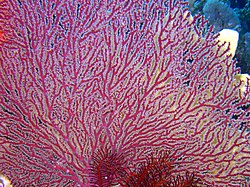
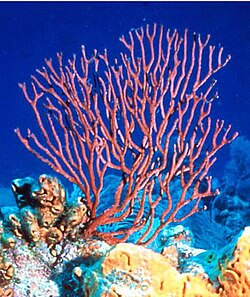
Common names for subsets of this order are sea fans and sea whips; others are similar to the sea pens of related order Pennatulacea. Individual tiny polyps form colonies that are normally erect, flattened, branching, and reminiscent of a fan. Others may be whiplike, bushy, or even encrusting.[15] A colony can be several feet high and across, but only a few inches thick. They may be brightly coloured, often purple, red, or yellow. Photosynthetic gorgonians can be successfully kept in captive aquaria.

About 500 different species of gorgonians are found in the oceans of the world, but they are particularly abundant in the shallow waters of the Western Atlantic, including Florida, Bermuda, and the West Indies.[16]

Anatomy

[edit]

The structure of a gorgonian colony varies. In the suborder Holaxonia, skeletons are formed from a flexible, horny substance called gorgonin. The suborder Scleraxonia species are supported by a skeleton of tightly grouped calcareous spicules. Also, some species encrust like coral.[17]

Measurements of the gorgonin and calcite within several long-lived species of gorgonians can be useful in paleoclimatology and paleoceanography, as their skeletal growth rate and composition are highly correlated with seasonal and climatic variation.[18][19][20]

Features

[edit]

Soft corals contain minute, spiny skeletal elements called sclerites, useful in species identification. Sclerites give these corals some degree of support and give their flesh a spiky, grainy texture that deters predators. In the past, soft corals were thought to be unable to lay new foundations for future corals, but recent findings suggest that colonies of the leather-coral genus Sinularia are able to cement sclerites and consolidate them at their base into alcyonarian spiculite,[21] thus making them reef builders.

Unlike stony corals, most soft corals thrive in nutrient-rich waters with less intense light. Almost all use symbiotic photosynthetic zooxanthella as a major energy source. However, most readily eat any free-floating food, such as zooplankton, out of the water column. They are integral members of the reef ecosystem and provide habitat for fish, snails, algae, and a diversity of other marine species.

Despite being dominated by "soft corals", the order Alcyonacea now contains all species known as "gorgonian corals", that produce a hard skeleton made from gorgonin, a protein unique to the group that makes their skeletons quite different from "true" corals (Scleractinia). These "gorgonion corals" can be found in suborders Holaxonia, Scleraxonia, and Stolonifera.

Many soft corals are easily collected in the wild for the reef aquarium hobby, as small cuttings are less prone to infection or damage during shipping than stony corals. Nevertheless, home-grown specimens tend to be more adaptable to aquarium life and help conserve wild reefs. Soft corals grow quickly in captivity and are easily divided into new individuals, and so those grown by aquaculture are often hardier and less expensive than imported corals from the wild.

Ecology

[edit]
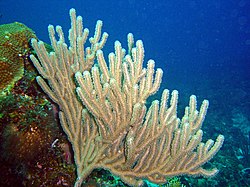
Purple sea whip gorgonian
Fossil gorgonian holdfast on a Miocene limestone surface, Czech Republic

Each gorgonian polyp has eight tentacles, which catch plankton and particulate matter for consumption. This process, called filter feeding, is facilitated when the "fan" is oriented across the prevailing current to maximise water flow to the gorgonian, hence food supply.

Some gorgonians contain algae, or zooxanthellae. This symbiotic relationship assists in giving the gorgonian nutrition by photosynthesis. Gorgonians possessing zooxanthellae are usually characterized by brownish polyps.

Gorgonians are found primarily in shallow waters, though some have been found at depths of several thousand feet.[15][17] The size, shape, and appearance of gorgonians can be correlated with their location. The more fan-shaped and flexible gorgonians tend to populate shallower areas with strong currents, while the taller, thinner, and stiffer gorgonians can be found in deeper, calmer waters.[15]

Other fauna, such as hydrozoa, bryozoa, and brittle stars, are known to dwell within the branches of gorgonian colonies.[22] The pygmy seahorse not only makes certain species of gorgonians its home, but also closely resembles its host, thus is well camouflaged.[23] Two species of pygmy seahorse, Hippocampus bargibanti and Hippocampus denise, are obligate residents on gorgonians. H. bargibanti is limited to two species in the single genus Muricella.

Gorgonians produce unusual organic compounds in their tissues, particularly diterpenes, and some of these are important candidates for new drugs.[24] These compounds may be part of the chemical defenses produced by gorgonians to render their tissue distasteful to potential predators.[25] Bottlenose dolphins in the Red Sea have been observed swimming against these tissues, in what is thought to be an attempt to take advantage of the antimicrobial qualities of diterpenes.[26] Despite these chemical defenses, the tissues of gorgonians are prey for flamingo tongue snails of the genus Cyphoma, nudibranchs, the fireworm Hermodice spp., and their polyps are food for butterflyfishes.[27] Amongst the nudibranchs which feed on soft corals and sea fans are the Tritoniidae and the genus Phyllodesmium which specialises in eating Xenia species.[28]

Suborders and families

[edit]

The World Register of Marine Species listed these suborders and families in 2018:[29]

References

[edit]
[edit]
Revisions and contributorsEdit on WikipediaRead on Wikipedia
from Grokipedia
Alcyonacea, commonly referred to as soft corals, is a group of colonial anthozoan cnidarians characterized by polyps bearing eight pinnate tentacles and eight mesenteries, with a flexible body supported by microscopic sclerites embedded in the rather than a rigid skeleton. These organisms form diverse colony morphologies, including encrusting mats, branching trees, fans, whips, and plumes, and are distinguished from hard (scleractinian) corals by their inability to build reefs, though they are prominent components of reef ecosystems. Historically classified as an order within the subclass of the class , Alcyonacea encompassed a wide array of soft-bodied and horny-skeleton-bearing corals, including sea fans, sea plumes, and gorgonians. A major phylogenomic revision in 2022 restructured , rendering Alcyonacea unaccepted as a distinct order and redistributing its contents primarily into the new order Malacalcyonacea, which now includes 47 families and the majority of soft coral diversity. This revision, guided by molecular data, highlights the polyphyletic nature of the former Alcyonacea and emphasizes sclerite morphology, colony form, and genetic markers for modern classification. Alcyonacean corals exhibit monomorphic or dimorphic polyps, with sclerites such as spindles, rods, and platelets varying in form and distribution across taxa, serving as key diagnostic features. Many species host symbiotic dinoflagellates () that provide nutrients via , enabling growth rates of 2–4 cm per year, while others rely on captured by extended tentacles. They are distributed worldwide across tropical, subtropical, and temperate oceans, from shallow reefs to mesophotic (30–150 m) and deep-sea habitats, often dominating disturbed or low-light environments. Ecologically, these corals play vital roles in benthic communities, providing and structural complexity on reefs, and are noted for producing bioactive metabolites with potential pharmaceutical applications. As the second most abundant macrobenthic group on many coral reefs after scleractinians, they contribute to resilience, particularly in areas affected by or bleaching.

Overview

Definition and classification

Alcyonacea, commonly known as soft corals, represents a traditional order within the subclass of the class , phylum . These marine invertebrates are characterized by colonial growth forms composed of polyps, each bearing eight pinnate tentacles and eight mesenteries, distinguishing them from the six-tentacled polyps of . Unlike scleractinian hard corals, alcyonaceans typically lack a rigid skeleton, relying instead on flexible for structural support and, in some cases like gorgonians, a proteinaceous for rigidity. Key morphological traits include autozooids, which are feeding polyps; many taxa also feature siphonozooids, specialized polyps for water circulation within the colony, enabling efficient nutrient distribution in colonial structures. The , an expanded , provides buoyancy and flexibility, allowing colonies to sway with currents while maintaining form. These features contribute to their ecological roles as habitat providers and competitors in benthic communities. Recent taxonomic revisions have rendered Alcyonacea unaccepted as a monophyletic order, redistributing its taxa into new orders such as Malacalcyonacea and Scleralcyonacea based on phylogenomic evidence. Phylogenetically, Alcyonacea was positioned within the Holaxonia in molecular studies utilizing 18S rRNA and mitochondrial genes, confirming its among octocorals until recent updates. McFadden et al.'s 2022 phylogenomic analyses, employing ultraconserved loci and mtMutS, resolved into two major monophyletic orders, integrating former alcyonacean groups while highlighting in traditional families like Alcyoniidae. These studies underscore the evolutionary divergence of alcyonaceans from anthozoan ancestors, adapting to diverse marine environments. Post-revision estimates indicate over 3,500 species in as of 2024. The order traditionally encompassed approximately 3,000 across about 40 families, distributed from shallow tropical reefs to deep-sea habitats worldwide, though exact counts vary with ongoing revisions. This diversity reflects their adaptability to varying depths, temperatures, and substrates, with representatives like sea fans (e.g., Gorgonia spp.) and leather corals (e.g., Sarcophyton spp.) exemplifying their ecological breadth.

Historical background

The initial scientific descriptions of Alcyonacea trace back to , who in 1758 established the genus Alcyonium within his artificial group Zoophyta, classifying species like Alcyonium digitatum alongside other colonial marine organisms resembling plants, such as sea pens and hydroids. This early taxonomy reflected limited understanding of their animal nature, grouping them with lithophytes (stony organisms) due to their sessile, encrusting habits. advanced the nomenclature in 1846 by introducing the term "Alcyonaria" to denote a subset of zoophytes, drawing from classical associations with mythical halcyon birds whose floating nests were likened to soft coral colonies. By 1857, Henri Milne-Edwards and Jules Haime formalized Alcyonaria as an order within the class in their seminal work Histoire naturelle des coralliaires, distinguishing soft corals from stony forms based on the absence of a massive calcareous skeleton and the presence of flexible, sclerite-reinforced tissues. This classification marked a pivotal shift toward recognizing Alcyonacea's distinct evolutionary lineage. However, early taxonomists often conflated Alcyonacea with hard corals () owing to shared reef-building roles and colonial morphologies; this confusion was resolved in 1859 when proposed separating "zoophytes with pinnated tentacles," identifying octocorals (including Alcyonacea) by their polyps bearing eight pinnate tentacles, in contrast to the six-fold symmetry of scleractinians. Christian Gottfried Ehrenberg contributed foundational insights in 1834 through his microscopic examinations of corals, detailing the sclerites—microscopic calcareous spicules embedded in the —as essential structural elements in Alcyonarian , laying the groundwork for future morphological analyses. In the early , J. Hickson synthesized these advances in his 1930 monograph On the Classification of the Alcyonaria, which highlighted the remarkable diversity of species and proposed a system integrating architecture with sclerite variability to delineate suborders and families. Pre-molecular , reliant on external colony shapes (e.g., encrusting, lobate, or arborescent) and internal sclerite forms (e.g., platelets, rods, or capstans), proliferated descriptive categories, culminating in over 50 recognized families within by the mid-1900s, though many later proved artificial. Modern phylogenetic studies have since revised these groupings using genetic data.

Taxonomy and phylogeny

Suborders

Following the 2022 phylogenomic revision by McFadden et al., the traditional order Alcyonacea was determined to be polyphyletic and is no longer accepted as a distinct . Its contents have been redistributed into two new orders within : Malacalcyonacea and Scleralcyonacea, based on molecular data from ultraconserved loci and exon sequences across hundreds of taxa. This restructuring resolved in broader categories like Scleraxonia. The traditional suborders are now incorporated as follows: Alcyoniina and Holaxonia into Malacalcyonacea, and Briareina, Calcaxonia, and Coralliina into Scleralcyonacea. These groupings reflect a synthesis of morphological diagnostics and genetic analyses, particularly from mitochondrial genes like COI, which helped delineate monophyletic groups. The suborder Alcyoniina (now in Malacalcyonacea) is characterized by colonies lacking a central axis, with large, retractile polyps embedded in a fleshy coenenchyme, often featuring sclerites that provide minimal support. Representative examples include soft corals of the genus Sinularia, which form lobate or encrusting colonies common in shallow environments. Alcyoniina dominates tropical and subtropical regions, accounting for approximately 70% of former Alcyonacea species diversity, thriving in sunlit, oligotrophic waters where symbiotic support their growth. Briareina (now in Scleralcyonacea) comprises taxa with small polyps, including autozooids and siphonozooids, and a flexible, non-axial composed of scattered sclerites, adapted for encrusting or low-profile growth forms. Examples include sun corals like those in the Briareum, which exhibit dimorphic polyps and are found in reefs, contributing to in mesophotic zones. This suborder highlights the of former Alcyonacea into varied microhabitats through specialized polyp structures. In contrast, Calcaxonia (now in Scleralcyonacea; note: traditionally spelled Calcaxoniina in some sources) features a calcareous axis with solid internodes, supporting bushy or whip-like colonies suited to current-swept environments. Deep-sea bamboo corals, such as species in the Isididae (e.g., Isidella), exemplify this suborder, with nodes bearing polyps and internodes providing rigidity at depths exceeding 200 m. These forms are prevalent in cold, aphotic habitats, where slow growth rates and long lifespans enhance their ecological persistence. The suborder Coralliina (now in Scleralcyonacea) is distinguished by a horny or axis with prominent sclerites, often yielding precious materials; diagnostic traits include tall, sparsely branched colonies with large, non-retractile polyps. Precious red corals like Corallium rubrum represent this group, valued historically for jewelry and restricted to Mediterranean and depths of 10–1000 m. Molecular studies confirm its within scleraxonian lineages. Finally, Holaxonia (now in Malacalcyonacea) is defined by a central horny (proteinaceous) axis surrounded by sclerite-reinforced coenenchyme, enabling fan- or bush-like forms that capture in exposed positions. Sea fans such as illustrate this suborder, with flattened branches optimizing flow in shallow to mesophotic tropical waters. Phylogenetic analyses using COI and mtMutS genes underscore Holaxonia's position in Malacalcyonacea, with family-level diversity exceeding 20 groups.

Families and genera

The former Alcyonacea encompasses over 40 families, comprising a significant portion of the approximately 3,500 in the class , with an estimated 10% of diversity remaining undescribed due to morphological similarities and limited sampling in deep-sea habitats. The has undergone recent revisions, splitting the traditional order into orders Malacalcyonacea (47 families) and Scleralcyonacea, but families remain the primary units for understanding diversity. Among the major families, Alcyoniidae (in Malacalcyonacea) stands out with more than 400 species, primarily soft corals characterized by encrusting or lobed colonies; notable genera include Clavularia (encrusting forms), Sarcophyton (leathery mushrooms), Sinularia (finger-like colonies), and Lobophytum (encrusting plates). Gorgoniidae (in Malacalcyonacea), known for sea fan morphologies, includes around 100 species mainly distributed in Atlantic and eastern Pacific waters, with key genera such as Plexaurella (branching fans), Leptogorgia (whip-like fans), and Antillogorgia (planar fans). In deeper waters, Isididae (in Malacalcyonacea) features approximately 70 species with jointed, horn-like axes, exemplified by genera like Isidella (straight-stemmed forms) and Acanella (branching types), which are important for deep-sea ecosystem engineering. Coralliidae (in Scleralcyonacea), the precious corals, contains about 30 species valued for their red or pink skeletons, predominantly in the genus Corallium (e.g., Corallium rubrum in the Mediterranean), though recent splits have recognized Hemicorallium and Pleurocorallium as distinct genera. Taxonomic challenges persist, particularly with cryptic species complexes revealed through ; for instance, post-2015 studies on the Paramuricea (Plexauridae, in Malacalcyonacea) have identified multiple hidden in the North Atlantic using mitochondrial markers like mtMutS, highlighting limitations of sclerite-based morphology alone. Such molecular approaches have shown that traditional genera often represent polyphyletic assemblages, complicating identification and requiring integrative taxonomy. Endemism patterns vary regionally, with high diversity in the where families like Xeniidae (in Malacalcyonacea) dominate, encompassing over 160 species in 20 genera (e.g., Xenia and Sympodium) adapted to turbulent environments. In contrast, the Atlantic hosts more endemic taxa in families such as Ellisellidae (in Malacalcyonacea), with genera like Ellisella (plume-like forms) showing restricted distributions tied to specific currents and depths. Recent taxonomic additions include several new families established in , such as Cladiellidae (in Malacalcyonacea) and multiple others from and deep-sea discoveries, reflecting ongoing phylogenetic refinements using multi-locus data.

Morphology and anatomy

Colonial structure

Alcyonacea are predominantly colonial organisms, composed of numerous individual polyps interconnected by a living tissue known as coenenchyme, which forms the matrix embedding the polyps and facilitating nutrient and water exchange throughout the . The polyps typically display dimorphism, with autozooids serving as the primary feeding structures—each bearing eight pinnate tentacles for capturing prey—and siphonozooids dedicated to pumping water to enhance circulation and oxygenation within the coenenchyme. This division of labor optimizes colony function, allowing efficient resource distribution in diverse marine environments. While most species form colonies, solitary forms are exceptionally rare in Alcyonacea; one notable example is Taiaroa tauhou, a deep-water octocoral discovered off , which lacks the coenenchyme and exists as a single, unattached polyp. Large colonies, particularly in fan-shaped gorgonians, can incorporate up to 1,000 polyps, enabling expansive surface area for feeding and structural stability. Growth forms in Alcyonacea are highly diverse, adapting to substrate and current conditions; these include encrusting mats that spread over surfaces, massive lobed or plicated structures for stability in shallow waters, branching configurations such as the fan-shaped forms typical of gorgonians, and tubular or whip-like extensions that elevate polyps into water flow. The coenenchyme not only connects polyps but also provides flexibility, allowing colonies to withstand wave action while maintaining polyp accessibility. Colony sizes span a broad range, from diminutive 1 cm encrusting forms in cryptic habitats to towering 2 m sea whips that dominate vertical reef structures. This structural variability is reinforced by internal sclerites embedded in the coenenchyme, which lend rigidity without forming a rigid axis.

Sclerites and internal features

Sclerites in Alcyonacea are microscopic calcareous spicules, typically ranging from 0.01 to 1 mm in length, composed primarily of calcite (a polymorph of calcium carbonate, CaCO₃), though some species incorporate aragonite. These spicules exhibit diverse morphologies, including clubs, capstans, rods, spindles, platelets, and spheroids, which are embedded within the mesoglea, the gelatinous matrix between the ectoderm and endoderm layers of the coenenchyme and polyps. The arrangement and form of sclerites provide structural support to the colony, enhance rigidity against mechanical stress, and offer limited protection against predation by deterring herbivores through their spiny or irregular surfaces. Additionally, sclerite morphology serves as a key diagnostic trait for species identification; for instance, in the family Nephtheidae, unique chevron-like arrangements of bilateral sclerites, often spindle- or club-shaped, distinguish genera such as Nephthya. The internal anatomy of Alcyonacea features a shared gastrovascular cavity that extends among interconnected polyps, functioning for distribution and removal without a centralized gut structure. This cavity is lined by endodermal cells and supported by l tracts containing sclerites. The consists of a diffuse distributed throughout the , which coordinates colonial responses without distinct ganglia or brain-like structures. Muscle fibers, primarily longitudinal and transverse types embedded in the , enable polyp retraction, colony contraction, and branch flexibility; these are innervated by the to facilitate rapid responses to stimuli. Variations in sclerites and internal features occur across families. In some members of the Xeniidae, sclerites are absent, sparse, or reduced to simple, minute platelets and spheroids, relying instead on the flexible for support. In contrast, many gorgonians possess a central axis composed of gorgonin, a horny protein matrix, reinforced by densely packed, fused sclerites that provide enhanced rigidity and durability.

Reproduction and development

Sexual reproduction

Alcyonacea, commonly known as soft corals, predominantly exhibit gonochoric , in which individual are either male or female, with gonads developing on the mesenteries of polyps. In octocorals, with 89% of the 159 studied (primarily from the group now classified in Malacalcyonacea) being gonochoric and 9% (14 ) simultaneously hermaphroditic, rare cases of simultaneous hermaphroditism occur. In gonochoric , is typically determined early in colony development, and all polyps within a colony share the same , ensuring dedicated reproductive roles. Gamete production involves and occurring over extended periods, often spanning 6 to 12 months, with mature oocytes ranging from 400 to 870 μm in diameter in broadcast-spawning such as Lobophytum pauciflorum. While internal brooding dominates in many taxa (40% of 152 studied), broadcast spawning is prevalent among tropical alcyonaceans (49%), particularly in families like Alcyoniidae, where release eggs and into the water column for . External surface brooding, involving planulae held on the colony exterior, occurs in 11% of . Brooding is less common in shallow-water, zooxanthellate forms compared to deeper or azooxanthellate ones, reflecting adaptations to varying environmental pressures. Spawning in broadcast spawners is often synchronized within populations, triggered by lunar or tidal cues to maximize fertilization success; for instance, in Alcyoniidae genera such as Sarcophyton and Sinularia, release occurs seasonally during warmer months, aligning with peak water temperatures. Eggs released by females are typically large and buoyant, containing in symbiotic species, which provide nutritional support during early larval stages. takes place in the shortly after release, with activating development. The resulting zygotes develop into ciliated larvae within 1 to 7 days, depending on species and conditions; these larvae are competent to settle soon after formation, often carrying symbiotic dinoflagellates that enhance survival. Reproductive diversity includes occasional simultaneous hermaphroditism in genera like Alcyonium, where about 10% of studied species display this trait, potentially as an in low-density populations. Sex ratios in gonochoric populations are generally near 1:1, though slight biases toward males have been observed in some , possibly influenced by environmental factors like during . This variability underscores the plasticity of sexual strategies in Alcyonacea, balancing dispersal and local retention through larval traits.

Asexual reproduction and regeneration

Asexual reproduction in Alcyonacea primarily occurs through vegetative propagation mechanisms that enable colony persistence and local dispersal without . Fragmentation is prevalent, particularly in gorgonians, where storm-broken branches or portions of the detach and regrow into new individuals by extending coenenchyme tissue and reforming polyps along the exposed axis. Fission involves the longitudinal or transverse division of polyps or sections, often leading to daughter colonies that remain attached initially before separating, as observed in species like those in the Xeniidae where polyp budding produces new modules. Stolonal spread, resembling runner formation, allows horizontal expansion across substrates, exemplified in genera such as Efflatounaria, facilitating coverage in suitable microhabitats. Regeneration capacity in Alcyonacea is notably high, supporting recovery from physical and contributing to clonal . Following injury, polyps can reform from coenenchyme fragments within days to weeks, with body parts like oral discs and tentacles regenerating through cellular reorganization and sclerite redeposition. In gorgonians, damaged branches heal by sealing wounds and resuming axial growth, often reorganizing internal sclerites to reinforce the structure. This process results in genetically uniform clones, maintaining identical genotypes across propagated units and enhancing resilience in disturbed environments. Ecologically, and regeneration are crucial for Alcyonacea dominance in stable habitats, allowing rapid recolonization and maintenance of large clonal stands without reliance on larval settlement. In the , many soft coral species, particularly in families like Alcyoniidae and Xeniidae, predominantly propagate asexually, contributing to their prevalence in low-disturbance areas. Variations include rare instances of , where unfertilized eggs develop into planulae, reported in select octocoral species but not commonly in genera like Sarcophyton. These asexual strategies integrate with to form hybrid populations, blending clonal persistence with occasional from larvae.

Ecology and distribution

Habitats and geographic range

Alcyonacea species occupy diverse marine habitats, ranging from shallow tropical reefs at depths of 0–30 m to temperate rocky shores and deep-sea environments such as abyssal plains and continental slopes. On tropical reefs, they form prominent components of the , as exemplified by over 300 species documented on the , where they thrive in well-illuminated, hard-substrate settings. In deeper waters, families like Isididae extend beyond 1,000 m, with some species recorded to depths exceeding 5,850 m on abyssal plains. Certain taxa with photosynthetic symbionts predominate in photic zones, while others, including many gorgonians, occur across a broader range into the . These octocorals tolerate temperatures from approximately 0°C in cold deep-sea and polar regions to 30°C in tropical shallows, reflecting their adaptability to gradients. Their distribution in shallow habitats is primarily influenced by symbiotic dinoflagellates that enhance acquisition in sunlit waters. Geographically, Alcyonacea exhibit a across all ocean basins and marine ecoregions, with peak diversity in the Indo-West Pacific, particularly in the Coral Triangle region. Polar representatives include species like Primnoisis antarctica in Antarctic waters, underscoring their presence in high-latitude ecosystems. Abiotic factors strongly shape their habitat preferences, favoring low-sediment substrates and high-current regimes that facilitate polyp feeding and prevent burial, though they demonstrate lower tolerance to elevated sedimentation compared to scleractinian corals.

Symbiotic interactions and ecological roles

Alcyonacea, particularly in shallow tropical waters, commonly form mutualistic symbioses with photosynthetic dinoflagellates of the genus Symbiodinium (now classified under Symbiodiniaceae), which reside in the gastrodermal cells of the coral polyps. These symbionts, often referred to as zooxanthellae, perform photosynthesis to produce organic carbon compounds that are translocated to the host, supporting growth, reproduction, and calcification. Approximately 75% of examined soft coral species host predominantly Cladocopium (formerly Symbiodinium Clade C), with this association prevalent in depths less than 20 meters where light is sufficient for phototrophy. In these mixotrophic holobionts, autotrophy can constitute the primary energy source, with photosynthetic contributions ranging from 45% to over 90% of the daily carbon requirements depending on species, light availability, and environmental conditions. Additionally, Alcyonacea harbor diverse bacterial microbiomes that play crucial roles in nutrient cycling within the . These microbial communities facilitate processes such as , sulfur metabolism, and , enhancing the coral's resilience in nutrient-limited environments. Taxa like and Spirochaetes are recurrent associates, contributing to detoxification and nutrient acquisition. In deeper waters, where light is absent, symbioses with Symbiodinium are rare, and heterotrophy via particle capture dominates the energy budget, underscoring the order's ecological flexibility across depth gradients. Ecologically, Alcyonacea serve as foundational habitat providers, with their branching morphologies—such as those of gorgonians (sea fans)—offering shelter and settlement substrates for , crustaceans, and other . For instance, gorgonians support diverse assemblages by reducing predation risk and providing microhabitats in otherwise exposed settings. They also engage in competitive interactions for benthic space, particularly with scleractinian (stony) corals, where alcyonaceans can overgrow or chemically inhibit hard coral settlement through or sweeper aggression. In reef ecosystems, Alcyonacea contribute to structural complexity and accumulation, with gorgonians forming dense "forests" that can comprise a substantial portion of the sessile on reefs, enhancing overall heterogeneity. Their sclerites, composed of high-magnesium , enable limited that aids by incorporating into long-term skeletal structures, albeit at lower rates than scleractinians. As primary producers or suspension feeders, they form a basal trophic link, serving as prey for specialized predators such as mollusks in the families Tritoniidae and Phyllodesmiidae, which sequester toxins for defense.

Conservation status

Threats and human impacts

poses significant threats to Alcyonacea through ocean warming and acidification. Elevated sea surface temperatures, often 1–2 °C above seasonal norms, induce bleaching in octocorals by disrupting their symbiotic relationships with , leading to widespread tissue loss and mortality during marine waves. For instance, stress events have caused notable declines in soft coral populations on reefs, with bleaching susceptibility varying by and local conditions such as and wave exposure. further exacerbates vulnerability by altering carbonate chemistry, which impairs sclerite formation and increases dissolution in these calcium carbonate-dependent structures, potentially reducing rates and overall colony integrity. Human activities directly imperil Alcyonacea populations through and habitat degradation. species within Alcyonacea, such as those in the Corallium, face intense pressure from harvesting for jewelry and ornamental , resulting in declines due to slow growth rates and historical use of non-selective dredges and trawls. , particularly , physically damage octocoral colonies and resuspend sediments that smother habitats, with long-lasting effects on deep-water assemblages. from land-based runoff and , including , interacts with soft corals by adhering to tissues or altering microbial communities, potentially hindering growth and increasing susceptibility to stress. Additional environmental pressures include disease outbreaks and biological invasions. , caused by fungi in the genus , affects gorgonian corals and is correlated with degraded from nutrient runoff, leading to tissue and elevated mortality rates in Caribbean sea fans. Invasive octocorals, such as Unomia stolonifera and Sarcothelia sp., compete aggressively for space in invaded regions like the southeastern Caribbean and southwestern Atlantic, dominating benthic communities and reducing native Alcyonacea cover through overgrowth and resource exclusion. Certain Alcyonacea taxa are particularly at risk from emerging threats like . Deep-water octocorals, including gorgonians on seamounts and vents, face from polymetallic nodule extraction, which can cause direct mortality and plumes that smother colonies, compounded by their slow recovery potential. Endemic in isolated regions, such as Hawaiian octocorals, encounter amplified risks from localized invasives like Carijoa riisei, which overgrow and kill native colonies, further stressing populations already impacted by warming.

Protection and research efforts

Several species of precious corals within Alcyonacea, particularly those in the family Coralliidae such as Corallium spp., have been the subject of repeated proposals for inclusion in Appendix II since the 1990s to regulate and prevent , though proposals for the entire were not adopted due to debates on population data, several Corallium have since been included in Appendix II (e.g., C. japonicum from ). Marine protected areas (MPAs) play a key role in safeguarding Alcyonacean habitats, with over 2,000 MPAs established in the region covering approximately 2.5% of the (as of 2023), though regional goals aim for 20-30% effective protection of representative habitats to enhance resilience against local threats. In the United States, commercial harvest of gorgonian corals in federal waters of the South Atlantic and is limited to an annual quota of 70,000 colonies, with state waters closing when the quota is met or adjacent federal areas are closed, to protect these octocorals from curio and aquarium trade impacts. Conservation efforts for Alcyonacea include restoration techniques such as fragmentation, where colonies are broken into smaller pieces for propagation and outplanting; in the , projects targeting mesophotic octocorals like Swiftia exserta and Muricea pendula have shown positive short-term growth rates, though long-term survival varies and overall success in similar trials reaches about 40-70% depending on predation control and site conditions. initiatives for precious corals, including Corallium , are emerging to reduce pressure on wild populations, with experimental farming in controlled systems demonstrating feasibility for slow-growing taxa, though commercial scalability remains limited by growth rates of 1-2 cm per year. Ongoing research focuses on to enhance resilience, with /Cas9 gene editing applied to corals since 2020 to identify heat-stress regulators, though applications specific to Alcyonacea are nascent and build on studies showing octocorals' relative bleaching resistance compared to scleractinians. (eDNA) metabarcoding is increasingly used for monitoring deep-sea Alcyonacean diversity, enabling non-invasive detection of octocoral communities in remote habitats like seamounts, where it has identified higher taxon richness than traditional surveys. Investigations into bioactive compounds from Alcyonacea continue, with over 50 diterpenes isolated from Sinularia species since 2020 exhibiting anti-cancer potential, such as against colorectal and cell lines through mechanisms like induction. Current knowledge gaps in Alcyonacean conservation emphasize priorities for climate adaptation, including enhanced assessments; while over 40% of reef-building corals are threatened globally, only a subset of Alcyonacean species (e.g., Isidella elongata, assessed as Critically Endangered on the Mediterranean regional ) have been evaluated, with calls for comprehensive reviews of approximately 500 priority taxa to inform resilience strategies amid warming oceans. In 2025, the IUCN published the first Red List assessments for 22 cold-water coral species, including several octocorals, revealing widespread declines due to threats like and .

References

Add your contribution
Related Hubs
User Avatar
No comments yet.