Hubbry Logo
Earth shelterEarth shelterMain
Open search
Earth shelter
Community hub
Earth shelter
logo
8 pages, 0 posts
0 subscribers
Be the first to start a discussion here.
Earth shelter
Earth shelter
from Wikipedia
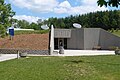
An earth sheltered house in Switzerland (Peter Vetsch)

An earth shelter, also called an earth house, earth-bermed house, earth-sheltered house,[1] earth-covered house, or underground house, is a structure (usually a house) with earth (soil) against the walls and/or on the roof, or that is entirely buried underground.

Earth acts as thermal mass, making it easier to maintain a steady indoor air temperature and therefore reduces energy costs for heating or cooling.

Earth sheltering became relatively popular after the mid-1970s, especially among environmentalists. However, the practice has been around for nearly as long as humans have been constructing their own shelters.

Definition

[edit]
  • "Earth-sheltering is [...] a generic term with the general meaning: building design in which soil plays an integral part."[2] This definition is problematic however, since earth structures (e.g. rammed earth or cob) are not usually considered as earth shelters as they are above ground.
  • "A building can be described as earth-sheltered when it has a thermally significant amount of soil or substrate in contact with its external envelope,[2][3] where “thermally significant” means making a functional contribution to the thermal effectiveness of the building in question.[2]
  • "Structures built with the use of earth mass against building walls as external thermal mass, which reduces heat loss and maintains a steady indoor air temperature throughout the seasons."[citation needed]
  • "A residence with an earth covering for its roof or walls."[4]
  • "Homes that have been built underground, either partially or completely."[5]
  • "The use of earth cover to moderate and improve living conditions in buildings."[6]

Design and construction

[edit]

Design

[edit]

Earth sheltered homes are often constructed with energy conservation and savings in mind. Specific designs of earth shelters allow for maximum savings. For bermed or in-hill construction, a common plan is to place all the living spaces on the side of the house facing the equator (or north or east, depending on latitude). This provides maximum solar radiation to bedrooms, living rooms, and kitchen spaces. Rooms that do not require natural daylight and extensive heating such as the bathroom, storage, and utility room are typically located on the opposite (or in-hill) side of the shelter. This type of layout can also be transposed to a double level house design with both levels completely underground. This plan has the highest energy efficiency of earth sheltered homes because of the compact configuration as well as the structure being submerged deeper in the earth. This gives it a greater ratio of earth cover to an exposed wall than a one-story shelter would.

The soil type is one of the essential factors during site planning. The soil needs to provide adequate bearing capacity and drainage, and help to retain heat. With respects to drainage, the most suitable type of soil for earth sheltering is a mixture of sand and gravel. Well graded gravels have a large bearing capacity (about 8,000 pounds per square foot), excellent drainage and a low frost heave potential. Sand and clay can be susceptible to erosion. Clay soils, while least susceptible to erosion, often do not allow for proper drainage, and have a higher potential for frost heaves. Clay soils are more susceptible to thermal shrinking and expanding. Being aware of the moisture content of the soil and the fluctuation of that content throughout the year will help prevent potential heating problems. Frost heaves can also be problematic in some soil. Fine grain soils retain moisture the best and are most susceptible to heaving. A few ways to protect against capillary action responsible for frost heaves are placing foundations below the freezing zone or insulating ground surface around shallow footings, replacement of frost-sensitive soils with granular material, and interrupting capillary draw of moisture by putting a drainage layer of coarser material in the existing soil.

Water can damage earthen shelters if it ponds around them. Avoiding sites with a high water table is crucial. Drainage, both surface and subsurface, must be properly dealt with. Waterproofing applied to the building is essential.

Atrium designs have an increased risk of flooding, so the surrounding land should slope away from the structure on all sides. A drain pipe at the perimeter of the roof edge can help collect and remove additional water. For bermed homes, an interceptor drain at the crest of the berm along the rooftop's edge is recommended. An interceptor drainage swale in the middle of the berm is also helpful or the back of the berm can be terraced with retaining walls. On sloping sites, runoff may cause problems. A drainage swale or gully can be built to divert water around the house, or a gravel-filled trench with a drain tile can be installed along with footing drains.

Soil stability should also be considered, especially when evaluating a sloping site. These slopes may be inherently stable when left alone, but cutting into them can greatly compromise their structural stability. Retaining walls and backfills may have to be constructed to hold up the slope prior to shelter construction.

On land that is relatively flat, a fully recessed house with an open courtyard is the most appropriate design. On a sloping site, the house is set right into the hill. The slope will determine the location of the window wall; the most practical orientation in moderate to cold climates is a south-facing exposed wall in the Northern hemisphere (and north-facing in the Southern hemisphere) due to solar benefits. The most practical orientation in the Tropics nearest the equator is north-facing toward the aphelion (or perhaps northeast) to moderate the temperature extremes. Just outside the Tropics, the most practical way to avoid afternoon heat excess may be an east-facing house or, if near a west coast, exposure of the east end and the west end, with the two long sides embedded in the earth.

Depending on the region and site selected for earth-sheltered construction, the benefits and objectives of the earth shelter construction vary. For cool and temperate climates, objectives consist of retaining winter heat, avoiding infiltration, receiving winter sun, using thermal mass, shading and ventilating during the summer, and avoiding winter winds and cold pockets. For hot, arid climates objectives include maximizing humidity, providing summer shade, maximizing summer air movement, and retaining winter heat. For hot, humid climates objectives include avoiding summer humidity, providing summer ventilation, and retaining winter heat.

Regions with extreme daily and seasonal temperatures emphasize the value of earth as a thermal mass. Earth sheltering is most effective in regions with high cooling and heating needs and high-temperature differentials. In regions such as the southeastern United States, earth sheltering may need additional care in maintenance and construction due to condensation problems in regard to the high humidity. The ground temperature of the region may be too high to permit earth cooling if temperatures fluctuate only slightly from day to night. Preferably, there should be adequate winter solar radiation and sufficient means for natural ventilation. Wind is a critical aspect to evaluate during site planning, for reasons regarding wind chill and heat loss, as well as shelter ventilation. In the Northern Hemisphere, south facing slopes tend to avoid cold winter winds typically blown in from the north. Fully recessed shelters also offer adequate protection against these harsh winds. However, atria within the structure can cause minor turbulence depending on the size. It is helpful to take advantage of the prevailing winds in the summer. Because of the limited window arrangement in most earth shelters, and the resistance to air infiltration, the air within a structure can become stagnant if proper ventilation is not provided. By making use of the wind, natural ventilation can occur without the use of fans or other active systems. Knowing the direction, and intensity, of seasonal winds, is vital in promoting cross ventilation. Vents are commonly placed in the roof of bermed or fully recessed shelters to achieve this effect.

Building materials

[edit]

The selection of construction materials should consider the type of structure, site characteristics, climate, soil type, and design. Stronger, longer-lasting building materials are required for structures that are buried deeply. Waterproof and insulated materials should also be utilized to withstand the pressure and moisture of the surrounding ground. For instance, concrete and reinforced masonry, wood, and steel are all viable materials. Concrete is the most common choice for earth-sheltered buildings due to its strength, durability, and fire resistance. Cast-in-place concrete is employed for non-critical structural elements such as concrete foundations, floor slabs, and exterior walls with less than 6 feet (1.8 meters) of earth cover. In contrast, precast reinforced concrete can be used for floors, walls, and roofs. Concrete masonry units should be 8 inches (200 millimeters) or greater, with the use of “A” or “H” facilitating unit placement around vertical reinforcing bars, depending on the required structural integrity. It is typically advised to use Type S mortar, grout with a minimum strength of 2,000 psi (14 MPa), and a concrete slab with a minimum strength of 2,500 psi (17 MPa) and 4 inches (100 mm) thickness.[7] Brick or stone masonry reinforced with steel bars can be utilized for walls that will be subjected to lateral or vertical pressure from earth cover. Masonry generally costs less than cast-in-place concrete. Wood can be widely employed in earth-sheltered buildings for structural and internal work, including floors, roofs, and exterior walls. However, wooden frame walls, which must endure lateral pressure, are limited to a burial depth of one story when used as a structural material. Beyond this depth, the cost will rapidly increase while using wood as a structural material. Although wood can be less expensive than other materials, it lacks steel's strength, therefore it might not be the ideal option for structural material in some earth-sheltered dwellings, especially in moist soil type. Steel is used for beams, columns, bar joists, and masonry reinforcement. The advantage is that steel has high tensional and compressional strength, while the disadvantage is that it must be protected from corrosion if it is exposed to air, water, or other chemicals. It must be used effectively because it is also expensive.[8]

Excavation

[edit]

In earth-sheltered construction, there is often extensive excavation done on the building site. An excavation several feet larger than the walls' planned perimeter is made to allow for access to the outside of the wall for waterproofing and insulation.

Foundations

[edit]

Once the site is prepared and the utility lines installed, a foundation of reinforced concrete is poured. The walls are then installed. Usually, they are either poured in place or formed either on or off-site and then moved into place. Reinforced concrete is the most common choice. The process is repeated for the roof structure. If the walls, floor, and roof are all to be poured in place, it is possible to make them with a single pour. This can reduce the likelihood of there being cracks or leaks at the joints where the concrete has cured at different times. The foundation of the buildings designed by Vetsch are built conventionally.

Walls

[edit]

Several different methods of external (load-bearing) wall construction in earth shelters have been used successfully. These include concrete block (either conventionally mortared or surface-bonded), stone masonry, cordwood masonry, poured concrete, and pressure-treated wood.[9] Earthships classically use rammed earth tire walls, which are labor-intensive but recycle used tires.[9]

Oehler prescribed a very low budget method he termed "post, shoring and polyethylene". This involves buried wooden posts to act as a frame, shored up with planks, and with a waterproofing barrier of polyethylene sheet between the planks and the backfill, but no foundation and nothing on the floor except a plastic sheet and carpeting.[10]

Untreated wood in direct contact with earth rots within five years of use in earth shelter construction, but can be used for structural support construction in a well-insulated and water/moisture-proofed home. Reinforced concrete is the most commonly used structural material in earth shelter construction. It is strong and readily available. Steel can be used but needs to be encased by concrete to keep it from direct contact with the soil which corrodes the metal. Bricks and concrete masonry units are also possible options in earth shelter construction but must be reinforced to keep them from shifting under vertical pressure unless the building is constructed with arches and vaults.

Unfortunately, reinforced concrete is not the most environmentally sustainable material. The concrete industry is working to develop products that are more environmentally friendly in response to consumer demands. Products like Grancrete and Hycrete are becoming more readily available. They claim to be environmentally friendly and either reduce or eliminate the need for additional waterproofing. However, these have not been extensively used in earth shelter construction yet.

Roof

[edit]
Meshed metal stretch net construction

The roof of an earth shelter may not be covered by earth (earth berm only), or the roof may support a green roof with only a minimal thickness of earth. Alternatively a larger mass of earth might cover the roof. Such roofs must deal with significantly greater dead load and live load (e.g. increased weight of water in the earth after rain, or snow). This requires stronger and more substantial roof support structure. Some advise to have just enough thickness of earth on the roof to maintain a green roof (approximately 6 inches / 15 cm), since this means less load on the structure. Increasing the amount of earth on the roof past this gives only modest increases in the benefits while increasing costs significantly.[9]

Despite being underground, drainage of water is still important. Therefore, earth shelters do not tend to have flat roofs. A flat roof is also less resistant to the weight of the earth. It is common for earth shelter designs to have arches and shallow domed roofs since this form resists vertical load well. One method uses finely meshed metal bent into the intended shape and welded to the supporting armature. Onto this mesh concrete is sprayed forming a roof. Terra-Dome (USA) is a company specializing in construction of earth-sheltered houses and sells a modular system of concrete domes intended to be covered by earth.[11] Others advise the use of timber framed, gable roofs of pitch at least 1:12 to promote drainage.[9] The roofs of Earthships tend to be mono-pitched, classically using vigas.

Waterproofing

[edit]

On the outside of the concrete, a waterproofing system is applied. The most frequently used waterproofing system includes a layer of liquid asphalt onto which a heavy grade waterproof membrane is affixed, followed by a final liquid water sealant which may be sprayed on. It is very important to make sure that all of the seams are carefully sealed. It is very difficult to locate and repair leaks in the waterproofing system after the building is completed. Several layers are used for waterproofing in earth shelter construction. The first layer is meant to seal any cracks or pores in the structural materials, also working as an adhesive for the waterproof membrane. The membrane layer is often a thick flexible polyethylene sheeting called EPDM rubber. EPDM is the material usually used in a water garden, pond and swimming pool construction. This material also prevents roots from burrowing through the waterproofing. EPDM is very heavy to work with and can be chewed through by some common insects like fire ants. It is also made from petrochemicals, making it environmentally unsustainable.

There are various cement-like coatings that can be used as waterproofing. The product is sprayed directly onto the unprotected surface. It dries and acts like a huge ceramic layer between the wall and earth. The problem with this method is, if the wall or foundation shifts in any way, it cracks and water is able to penetrate through it easily.

Bituthene (registered name) is very similar to the three coat layering process only in one step. It comes already layered in sheets and has a self-adhesive backing. Applying it manually is the same as with the layering method, in addition, it is sun sensitive and must be covered very soon after application.

Eco-Flex is an environmentally friendly waterproofing membrane that seems to work very well on foundations, but not much is known about its effectiveness in earth sheltering. It is among a group of liquid paint-on waterproofing products. The main challenge with these products are they must be carefully applied, making sure that every area is covered to the right thickness, and that every crack or gap is tightly sealed.

Bentonite clay is an alternative that the most environmentally friendly. It is naturally occurring and self-healing. The drawback to this material is that it is very heavy, difficult for the owner/builder to install, and subject to termite damage.

Bi-membranes have been used extensively throughout Australia where 2 membranes are paired together—typically 2 coats of water-based epoxy as a 'sealer' and stop the internal vapor pressure of the moist concrete exploding bubbles of vapor up underneath the membrane when exposed to hot sun. The bond strength of epoxy to concrete is stronger than the internal bond strength of concrete so the membranes won't 'blow' off the wall in the sun. Epoxies are very brittle so they are paired up with an overcoat of a high-build flexible water-based acrylic membrane in multiple coats of different colors to ensure film coverage—this is reinforced with non-woven polypropylene textile in corners and changes in direction.

Insulation

[edit]

One or more insulation board or foam layers are added outside the waterproofing. If the insulation chosen is porous, a top layer of waterproofing is added. Unlike the conventional building, earth shelters require the insulation on the exterior of the building rather than inside the wall. One reason for this is that it protects the waterproof membrane against freeze damage, another is that the earth shelter is able to better retain its desired temperature. There are two types of insulation used in earth shelter construction. The first is close-celled extruded polystyrene sheets. Two to three inches glued to the outside of the waterproofing is generally sufficient. The second type of insulation is a spray on foam (e.g. polyurethane solid foam insulation). This works very well where the structure's shape is unconventional, rounded or difficult to get to. Foam insulation requires an additional protective top coat such as foil or fleece filter to help it resist water penetration.

In some low budget earth shelters, insulation may not be applied to the walls. These methods rely on the earth's U factor or thermal heat storage capacity below the frost layer. These designs are the exception however and risk frost heave damage in colder climates. The theory behind no insulation designs relies on using the earth's thermal mass to store heat, rather than relying on a heavy masonry or cement inner structures that exist in a typical passive solar house. This is the exception to the rule and cold temperatures may extend down into the earth above the frost line making insulation necessary for higher efficiencies.

Backfilling

[edit]

After previous construction stages are complete, the earth is backfilled against the external walls to create the berm. Depending on the drainage characteristics of the earth may not be suitable to place in direct contact with the external wall.[9] Some advise that topsoil and turf (sod) be put aside from the initial excavation and be used for the grass roof and to place as the topmost layer on the berm.[9]

Finishings

[edit]

In the earth houses designed by Vetsch, interior walls are furnished using loam rendering, providing superior humidity compensation. The loam rendering is finally coated with lime-white cement paint.[12]

Types

[edit]

Three main types of earth shelter are described.[2][3] There is also great variation in the approach to earth sheltering in terms of materials used and expenditure. The "low tech" approach might involve natural building techniques, wooden posts and shed style roofs, recycling of materials, owner labor, hand excavation, etc.[3] The relatively more high tech approach would be larger, using concrete and steel.[3] While typically more energy efficient post construction, the high tech approach has higher embodied energy and significantly more costs.[3]

Bermed

[edit]

In the earth bermed (also termed "bunded")[2] type, earth is banked against the exterior walls,[3] sloping down away from the building. The berm can be partial or total.[2] The polar facing wall may be bermed,[3] leaving the equator-facing wall un-bermed (in temperate regions). Usually this type of earth shelter is built on, or only slightly below the original grade.[citation needed] Due to the building being above the original ground level, fewer moisture problems are associated with earth berming in comparison to underground/fully-recessed construction,[citation needed] and it costs less to construct.[9] According to one report, earth berming provided 90-95% of the energy advantage as a completely below grade structure.[9]

In-hill

[edit]

The in-hill (also termed "earth covered",[3] or "elevational")[5] construction is where the earth shelter is set into a slope or hillside, and earth covers the roof in addition to the walls.[3] The most practical application is using a hill facing towards the equator (south in the Northern Hemisphere and north in the Southern Hemisphere), towards the aphelion (north) in the Tropics, or east just outside the Tropics. There is only one exposed wall in this type of earth sheltering, the wall facing out of the hill, all other walls are embedded within the earth/hill. This is the most popular and energy efficient form of earth shelter in cold and temperate climates.[6][13]

Underground

[edit]

The true underground (also termed "chambered" or "subterranean") earth shelter describes a house where the ground is excavated, and the house is set in below grade. They can feature an atrium or courtyard[14] constructed in the middle of the shelter to provide adequate light and ventilation. The atrium is not always fully enclosed by raised ground, sometimes a U-shaped atrium is used, which is open on one side.[13]

With an atrium earth shelter, the living spaces tend to be located around the atrium. The atrium arrangement provides a much less compact plan than that of the one or two-story bermed/in hill design; therefore it is commonly less energy efficient, in terms of heating needs.[citation needed] Therefore, atrium designs are found mainly in warmer climates.[13] However, the atrium does tend to trap air within it which is then heated by the sun and helps reduce heat loss.[citation needed] Atrium designs are well suited to flat sites, and are fairly common.[13]

Other types

[edit]

Depending on what definition of earth sheltering is used, other types are sometimes included. In culvert homes ("Cut and Cover"), precast concrete containers and large diameter pipes are arranged into a connecting design to form a living space and then backfilled with earth.[5] An experimental construction design from the 1980s of Japan, coined 'Alice City', proposed to use a wide and deep cylindrical shaft sunk into the earth, with a domed skylight roof.[5] Artificial caves can be constructed by making a tunnel into the earth.[5] Building greenhouses underground has also been speculated about.[15] Schools, commercial centres, government buildings and other buildings could be built underground.[14]

Applications

[edit]

Active and passive solar

[edit]

Earth sheltering is often combined with solar heating systems. Most commonly, the utilization of passive solar design techniques is used in earth shelters. In most of the Northern Hemisphere, a south-facing structure with the north, east, and west sides covered with earth is the most effective application for passive solar systems. A large double glazed window, triple glazed, spanning most of the length of the south wall is critical for solar heat gain. It is helpful to accompany the window with insulated drapes to protect against heat loss at night. Also, during the summer months, providing an overhang, or some sort of shading device, is used to block out an excess solar gain.

Passive annual heat storage

[edit]

Passive annual heat storage is a building concept theorized to create a year-round constant temperature in an earth shelter by means of direct gain passive solar heating and a thermal battery effect lasting several months. It is claimed that an earth shelter designed according to these principles would store the sun's heat in the summer and release it slowly over the winter months without need for other forms of heating. This method was first described by inventor and physicist John Hait in his 1983 book.[16] The main component of it is an insulated and waterproof "umbrella" which extends out from the earth shelter for several meters in all directions. Hence the term "umbrella house". The earth under this umbrella is kept warm and dry relative to surrounding earth, which is subject to constant daily and seasonal temperature changes. This creates a large heat storage area of earth, effectively a huge thermal mass. Heat is gained via passive solar in the earth shelter and transferred to the surrounding earth by conduction. Thus, when the temperature in the earth shelter dips below the temperature in the surrounding earth, heat will return to the earth shelter. After a time, a stable temperature is reached which is an average of annual heat changes in the external environment. Some criticize the technique (along with the earth sheltering technique as a whole), stating concerns including difficulty and expense of construction, moisture and lack of evidence.[17]

Annualized geo solar

[edit]

Another design aimed at passive seasonal energy storage, annualized geo solar is sometimes applied to earth shelters.[citation needed]

Earth tube ventilation

[edit]

Passive cooling which pulls air with a fan or convection from a nearly constant temperature air into buried Earth cooling tubes and then into the house living space. This also provides fresh air to occupants and the air exchange required by ASHRAE.

History

[edit]

Early history

[edit]
Mandan lodge, North Dakota. c. 1908
"The interior of the hut of a Mandan Chief": aquatint by Karl Bodmer from the book "Maximilian, Prince of Wied's Travels in the Interior of North America, during the years 1832–1834"
Turf house in Sænautasel, Iceland.

Earth sheltering is one of the oldest forms of building.[18] It is thought that from about 15,000 BC migratory hunters in Europe were using turf and earth to insulate simple round huts that were also sunk into the ground.[19] The use of some form of earth sheltered construction is found across many cultures in history, distributed widely across the world.[14] Normally these examples of cultures using earth sheltered buildings occur without any knowledge of the construction method elsewhere.[14] These structures have many different forms and are referred to by many different names. General terms include pit-house and dugout.

One of the oldest examples of berming, dating back some 5,000 years, can be found at Skara Brae in the Orkney Islands off northern Scotland. Another historical example of in-hill earth shelters would be Mesa Verde, in southwest USA. These building are constructed directly onto the ledges and caves on the face of the cliffs. The front wall is built up with local stone and earth to enclose the structure.

In North America, almost every native American group used earth sheltered structures to some extent.[4] These structures have been called 'earth lodges' (see also: Barabara).[citation needed] When Europeans colonized North America, sod houses ("soddies") were common on the Great Plains.[19][20]

In China, man-made cave dwellings have been used as a shelter since 2,000 BC. In certain areas of northern China, like the provinces of Shaanxi and Shanxi, since the loess earth is structurally uniform and compacted, providing easy access to good quality building material with stable structure, earth-sheltered homes have been in use for centuries.[21]

1970s–1980s heyday

[edit]

The 1973 Oil Crisis saw the price of oil dramatically increase, which influenced vast social, economic and political changes worldwide.[14] Combined with growing interest in alternative lifestyles and the back-to-the-land movement, the public of the US and elsewhere were becoming more interested in saving energy and protecting the environment.[22][4]

As early as the 1960s in the US, some innovators were designing contemporary earth shelters.[14] After the oil crisis and until the early 1980s there was a new resurgence in interest earth shelter/underground home construction,[4] which has been termed the first wave of earth-covered dwellings.[14] Architect Arthur Quarmby finished an earth sheltered building in Holme, England in 1975. Named "Underhill," It is recorded in the Guinness World Records as the "first underground house" in the UK.[2]

The majority of publications about earth sheltering date to this period, with dozens of books dedicated to the topic being published in the years leading up to 1983.[14] The first International Conference on Earth-Sheltered Buildings was hosted in Sydney, Australia in 1983.[14] A second conference was planned for 1986 in Minneapolis, USA.[14]

Other notable proponents of earth sheltering active in this era include Mike Oehler, Rob Roy, John Hait, Malcolm Wells, Peter Vetsch, Ken Kern and others.

Modern times

[edit]

Since the late 1980s, earth-sheltered homes have become increasingly popular.[5] The technique is more common in Russia, China and Japan.[5] It is possible that Northern China has more earth shelters than any other region.[14] As of 1987, approximately 10 million people live in underground homes in the region.[14]

Some claim that thousands of people live underground in Europe and America.[5] Notable European examples are the "Earth Houses" of Swiss architect Peter Vetsch. There are about 50 such earth shelters in Switzerland, including a residential estate of nine earth shelters (Lättenstrasse in Dietikon). In other parts of Europe, such as the UK, earth sheltering is more uncommon.[5] Possibly the most well known examples of modern earth sheltering in the English-speaking world are Earthships, the brand of passive solar earth shelters sold by Earthship Biotecture. Earthships are concentrated in New Mexico, US.

Overall earth shelter construction is often viewed by architects, engineers, and the public as an unconventional method of building. Techniques of earth sheltering have not become common knowledge, and much of society is unaware of this type of building construction. Generally speaking, the cost of excavation, increased need for damp-proofing and the requirement for the structure to withstand greater weight relative to above grade houses means that earth sheltering remains relatively rare. In this respect, the Passive House (PassivHaus) energy performance standard applied to above grade airtight, superinsulated low carbon or zero carbon buildings has had much wider uptake in modern times. Over 20,000 buildings certified to PassivHaus standards have been constructed across Northern Europe.[23] Some postulate that over time the reducing availability of building space, and the increasing need and interest for environmentally friendly housing will make earth shelters more common.[5]

There are an estimated 30-40 million Chinese living in such earth homes today still, mostly along the Yellow River in Northern China. There are mainly two kinds of earth homes in the area. The first type is pit cave dwellings.[21] Usually, people dig a sunken courtyard, which is a rectangular underground pit about 10 meters deep, then arrange rooms dug off the main courtyard. The second type is dwelling space carved out of earth cliffs which are often south-facing, and the facades are sometimes faced with bricks or stone. They usually come with larger courtyards since it doesn't bother to excavate.

Comparison with standard housing

[edit]

Advantages

[edit]

In 1981, Oehler promoted his low-budget building design (a simple hole in the ground with walls of wooden planks backed by plastic sheeting) by claiming it needed no foundation, used less building material and labour, had less maintenance, was aesthetically pleasing, had a lower taxation rate in the US at the time, cost less to regulate temperature, was less affected by stormy weather, had pipes which wouldn't freeze where they entered the house, were "ecologically sound", relatively fireproof, soundproof and had an increased garden space as compared to regular house on a similarly sized plot of land.[10]

He also claimed the view from a window below the ground was better than that from other windows, and that the flooring he used in his an underground home (plastic sheeting over bare dirt) was "superior" to what is elsewhere available.[10]

He claimed he would provide a built-in greenhouse in the design.[10]

He claimed his homes could be used as fallout shelters in case of nuclear wars and also claimed that, in the case of complete societal collapse, his design would be more defensible than a regular house in the case of random attacks, as well as being better concealed from potential hostiles (without a map and unfamiliar with the area). He believed that underground, inhabitants would be better protected from "atmospheric radiation" (fallout). Because his design was not waterproofed, one would be "closer to a source of water", and could potentially simply dig a well in the middle of the room.[10]

He furthermore claimed anyone could build one of his designs irrespective of skill or ability for only $50.[10]

Passive heating and cooling

[edit]
Diagram showing effect of thermal mass and insulation in an earth sheltered structure. y-axis represents temperature; x-axis represents time. Blue line: external temperature fluctuations between day maximum and night minimum (could also represent Summer maximum and Winter minimum temperature fluctuation on a longer timescale). Red line: Internal temperature. 1: Phase shifting (delay between maximum/minimum external temperature and internal temperature). 2: Amplitude dampening (the reduction in maximum or minimum internal temperature relative to that of the external temperature).

Due to its density, compacted earth acts as thermal mass,[9] meaning that it stores heat and releases it again slowly. Compacted soil is more of a conductor of heat than an insulator. Soil is stated as having an R-value of about 0.65-R per centimeter (0.08-R per 1 inch),[16] or 0.25-R per 1 inch.[9] Variations in R-value of soil may be attributed to different soil moisture levels, with lower R values as moisture level increases.[16] The most superficial layer of earth typically is less dense and contains the root systems of many different plants, thereby acting more like thermal insulation,[9] meaning, it reduces the rate of temperature flowing through it.

Approximately 50% of the heat from the Sun is absorbed at the surface.[24] Consequently, the temperature at the surface may vary considerably according to the day / night cycle, according to weather and particularly according to season. Underground, these temperature changes are blunted and delayed, termed thermal lag. The thermal properties of earth therefore mean that in winter the temperature below the surface will be higher than the surface air temperature, and conversely in summer the earth temperature will be lower than the surface air temperature.

Indeed, at a deep enough point underground, the temperature remains constant year round, and this temperature is approximately the mean of summer and winter temperatures.[24][16] Sources vary in their stated values for this deep earth constant temperature (also termed amplitude correction factor). Reported values include 5–6 m (16–20 ft),[23] 6 m (20 ft),[16] 15 m (49 ft),[24] 4.25 m (13.9 ft) for dry soil, and 6.7 m (22 ft) for wet soil.[25] Below this level the temperature increases on average 2.6 °C (5 °F) every 100 m (330 ft) due to heat rising from the interior of the Earth.[24]

Diurnal temperature changes between maximum and minimum temperatures can be modelled as a wave, as can seasonal temperature changes (see diagram). In architecture, the relationship between the maximum fluctuations of external temperature compared to internal temperature is termed amplitude dampening (or temperature amplitude factor).[23] Phase shifting is the time taken for the minimum external temperature to reach the interior.[23]

Partially covering a building with earth adds to the thermal mass of the structure.[23] Combined with insulation, this results in both amplitude dampening and phase shifting. In other terms, earth sheltered structures receive both a degree of cooling in summer and heating in winter.[23] This reduces need for other measures of heating and cooling, saving energy.[4] A potential disadvantage of a thermally massive building in cooler climates is that after a prolonged period of cold, when the external temperature increases again, the structures internal temperature tends to lag behind and take longer to warm up (assuming no other form of heating).

The reduction of air infiltration within an earth shelter can be advantageous. Because three walls of the structure are mainly surrounded by earth, very little surface area is exposed to the outside air. This alleviates the problem of warm air escaping the house through gaps around windows and door. Furthermore, the earth walls protect against cold winter winds which might otherwise penetrate these gaps. However, this can also become a potential indoor air quality problem. Healthy air circulation is key.

As a result of the increased thermal mass of the structure, the thermal lag of the earth, the protection against unwanted air infiltration and the combined use of passive solar techniques, the need for extra heating and cooling is minimal. Therefore, there is a drastic reduction in energy consumption required for the home compared to homes of typical construction.

Wind protection

[edit]

The unique architecture of earth houses protects them against severe windstorms. They cannot be torn away or tipped over by strong winds. Structural engineering and, above all, the lack of corners and exposed parts (roof), eliminate vulnerable surfaces which would otherwise suffer from storm damage.[12]

Natural resource saving

[edit]

Compared with the material needs of standard buildings, earth-sheltered homes can greatly reduce the number of natural resources.[26] Traditional wood structure home requires lumber for framing and interior finishes, which is quite a big demand. Soil as the main building material and blending in with the landscape, earth-sheltered houses drastically reduce the demand for lumber.

Biological effects

[edit]

Earth homes organically embrace animals and poultry as well as water, soil, and plants. Arcology studies the relationship between animals and plants and man-made buildings during ecological development.[27] For example, raising poultry and domesticated animals is an important part of the traditional Chinese rural human settlements and these elements create a stable and sustainable ecological cycle that benefits the environment.

Landscape protection and land use

[edit]

Compared to conventional buildings, earth houses can fit into their surroundings. The soil-covered roofs hide the building within the landscape.

Some claim that the construction method is advantageous to the nitrogen-fixation of the soil on the roof, because it would otherwise be covered by the foundation of a traditional house. Contrary to conventional roofs, earth-house roofs allow plants to grow semi-naturally on them.[12]

Such houses can also be built as terraced structures on a slope in hilly terrain.[12]

Fire protection

[edit]

Compared to other building materials, such as wood, earth houses feature efficient fire protection owing both to the use of concrete and the insulation provided by the roof. Taking the example of Earthships, there is a reported case where the structure survived fire better compared to other types of buildings.[28]

Earthquake protection

[edit]

While residents of earth sheltered homes report noticing more minor earthquakes, the homes are resilient against large earthquakes, as their subterranean nature allows them to move with the earth. Picture a small twig house sitting on top of a tub of dirt: Shake the dirt, and the house will dance and stress. But if you bury the house in the dirt, you can shake the tub without stressing the house as much.

Roof planting

[edit]

Roof covering is done using the excavated material, in which plants can be planted.[10]

Nuclear bomb survivability

[edit]

Due to the mass of the earth between the living area of an earth house and the surface grade, an earth home offers significant protection from impact/blast damage, or fallout associated with a nuclear bomb.[10]

Soundproof

[edit]

Earth shelters may provide privacy from neighbors, as well as soundproofing.[10] The ground provides acoustic protection against outside noise. This can be a major benefit in urban areas or near highways.

Architectural aesthetics

[edit]

Earth sheltered dwelling express itself with the color harmony of soil and earth.[27] Meanwhile, the material properties of soil and earth give earth homes the simplicity of geomatic masses. Also, earth homes blend in perfectly with the landscape and highlight the beauty of the surroundings, which is a significant basis of the arcology concept. For example, yaodong and pit cave dwellings in Northern China hide themselves underground and blend in perfectly within the Loess plateau environment. Salt Cathedral in a halite mountain near the city of Zipaquirá, Colombia hugs the contour and highlights the natural features.

Disadvantages

[edit]

Financial cost

[edit]

Three main factors influence overall cost of home construction, namely, design complexity, materials used, and whether the owner(s) carries out some or all of the construction or pays others to do it.[4] Custom houses with complex designs tend to be more expensive and take longer to build than stock houses. Houses which use expensive materials will be more expensive than houses which use low cost materials. Owner labor can dramatically cut construction costs.[4]

Both earth sheltered projects and construction of regular houses have significant variability in the design, materials and labor involved. As such it is difficult to make a precise comparison of cost between the two, however in general an earth shelter is much more expensive.[4]

A small "underground home" built in the style of Oehler, as only a simple, non-waterproofed hole in ground with simple planks and a plastic sheet to a wall, despite using free labour (ignoring the opportunity costs of not having time to go to work) and recycled materials, e.g. windows and planks for the wall, is estimated to be 30% cheaper to construct when compared to paying a contractor to build a regular house using new construction materials at standard prices,[4] although Oehler's design will quickly rot and collapse after a few years.

A particular factor that strongly influences the cost of an earth shelter is the amount of earth that covers it. The more earth covering the structure, the greater the expense is needed in having a structure capable of withstanding the load (see also: Roof).[9][4] Another important cost factor that tends to be unique to earth shelters is site excavation and backfilling.[9] The amount of waterproofing is also more costly. On the other hand, earth shelters should have lower maintenance costs since they are mostly covered with little exposed exterior.[29]

Many financial institutions outright exclude financing on earth-sheltered homes,[30] or require this type of property to be common for the area.[citation needed]

Design complexity

[edit]

Overall it is more technically challenging to design an earth shelter compared to a regular home. Because of the unorthodox design and construction of earth-sheltered homes, local building codes and ordinances may need to be researched and/or navigated. Many construction companies have limited or no experience with earth-sheltered construction, potentially compromising the physical construction of even the best designs. The specific architecture of earth houses usually leads to non-righted, round-shaped walls, which can cause problems concerning the interior decoration, especially regarding furniture and large paintings.

Repairs to the walls are very difficult to service; and may require re-evaluating and rebuilding the house from scratch.

An earth shelter cannot be enlarged with an extra room - this will require breaking the waterproofing sealant cladding the concrete walls of the building.

Sustainability

[edit]

In "green building", four "lifetime" phases of a building are described, namely material sources, construction, in use, and deconstruction (life-cycle assessment).[23] Terms carbon zero and negative carbon buildings refer to the net greenhouse gas emissions over these four phases. Questions therefore arise as to whether certain structures are truly environmentally friendly. For example, raw materials must be extracted from the earth, transported and then manufactured into building materials and transported again to be sold and finally transported to the build site. A lot of fossil fuels may be used during each of these stages.

Earth sheltering often requires heavier construction materials to resist the weight of the earth against the walls and/or roof. Reinforced concrete in particular needs to be used in much larger quantities per building. The manufacture of concrete is a major source of greenhouse gases.

The materials involved tend to be non-biodegradable substances. Because the materials must keep water out, they are often made of plastics. The excavation of a site is also drastically time- and labor-consuming. Overall, the construction is comparable to conventional construction, because the building requires minimal finishing and significantly less maintenance.

Moisture and indoor air quality

[edit]

Problems of water seepage, internal condensation, bad acoustics, and poor indoor air quality can occur if an earth shelter has not been properly designed and ventilated. Very high humidity levels can allow mold or mildew growth, associated with a musty smell and potentially with health problems. The below-ground orientation of many earth-sheltered homes can allow accumulation of radon gas (which is known to increase the risk of lung cancer) or other undesirable materials (e.g. off gassing from construction materials).

The threat of water seepage occurs around areas where the waterproofing layers have been penetrated. Earth usually settles gradually. Vents and ducts emerging from the roof can cause specific problems due to the possibility of movement. Precast concrete slabs can have a deflection of 1/2 inch or more when the earth/soil is layered on top of them. If the vents or ducts are held rigidly in place during this deflection, the result is usually the failure of the waterproofing layer. To avoid this difficulty, vents can be placed on other sides of the building (besides the roof), or separate segments of pipes can be installed. A narrower pipe in the roof that fits snugly into a larger segment of the building can also be used. The threat of water seepage, condensation, and poor indoor air quality can all be overcome with proper waterproofing and ventilation.

Limited natural light

[edit]

Despite large windows (usually facing south in the Northern Hemisphere), many earth-sheltered homes have dark areas in the areas opposite the windows. All natural light coming from one side of the home can give a "tunnel or cave effect".

Risk of collapse

[edit]

Reports of collapse seem to be rare. In one case, an author and proponent of earth sheltering died when an earth roof he designed collapsed on him.[9]

Limited escape routes

[edit]

Compared to above ground house, earth-shelters may have limited escape routes in case of emergency,[29] which can fail egress and fenestration building codes.[9]

[edit]

An earth shelter may not be able to be adapted to existing local building codes, and may not legally be lived in.

Examples

[edit]

Australia

[edit]

Switzerland

[edit]
  • Lättenstrasse estate ("Earth Homes") in Dietikon, by Peter Vetsch.

United Kingdom

[edit]

United States

[edit]
[edit]

See also

[edit]

Topics:

Types:

Applications:

Proponents:

Notes

[edit]

References

[edit]
[edit]
Revisions and contributorsEdit on WikipediaRead on Wikipedia
from Grokipedia
Earth shelter, also known as earth-sheltered , refers to buildings constructed partially or fully into the , with placed against exterior walls, roofs, or entirely surrounding the structure to provide natural insulation, , and protection from environmental elements. This design utilizes the earth's stable subsurface temperatures—typically around 50–60°F (10–15°C) at depths of 10–12 feet—to moderate indoor climates, reducing needs for heating and cooling by up to 80% compared to conventional above-ground homes. The practice has ancient origins, tracing back approximately 15,000 years to prehistoric European hunters who built turf and sod huts for shelter and warmth, and it was widely employed by early civilizations including Native American pit houses on the and subterranean villages in the Desert dating to 5000 BCE. Examples from antiquity include Roman underground dwellings in , multi-level subterranean cities in , , and Pueblo kivas in the American Southwest, demonstrating earth shelter's role in providing security, resource conservation, and adaptation to harsh climates. In modern times, interest surged in the United States following the , driven by the and efforts, leading to events like Underground America Day in and international conferences on earth-sheltered construction in the . Earth-sheltered structures are categorized into three primary types: bermed, where earth is banked against one or more walls while the roof remains exposed; in-hill or atrium, built into a hillside with an open courtyard for light and ventilation; and fully underground, completely below grade except for entryways and windows. These designs offer numerous advantages, including enhanced resistance to extreme weather, earthquakes, fires, and noise pollution, as well as lower long-term maintenance and insurance costs due to durable materials like reinforced concrete and reduced exposure to the elements. Additionally, they promote environmental sustainability by minimizing land disturbance—preserving up to 86% of the surface area for landscaping or agriculture—and integrating seamlessly with natural surroundings, though challenges such as initial construction costs that can be up to 20% more than standard homes and the need for careful site analysis regarding soil stability, drainage, and waterproofing must be addressed.

Fundamentals

Definition

An earth shelter is a partially or fully embedded in the ground, utilizing the surrounding as a to regulate indoor temperatures, enhance energy efficiency, and promote integration with the natural environment. These dwellings leverage the earth's stable subsurface temperatures to minimize heating and cooling demands, often covering walls and roofs with earth to provide insulation and structural reinforcement. Key characteristics of earth shelters include the strategic use of for both thermal regulation and partial load-bearing support, with designs ranging from partial berming—where earth is mounded against one or more exterior walls—to fully underground configurations embedded below grade. This approach emphasizes by reducing reliance on artificial control systems and blending structures seamlessly into landscapes, thereby preserving open and minimizing visual impact. Unlike buildings with superficial earth contact, such as pole barns or non-residential structures with minimal berming on a single side, earth shelters integrate earth enclosure on at least three sides to create habitable interior spaces, ensuring comprehensive thermal benefits and weather resistance. The term "earth shelter" gained popularity in the amid the and growing interest in passive solar design, though its roots trace back to ancient troglodytic dwellings like caves that exploited 's protective qualities.

Basic Principles

Earth shelters leverage the thermal mass of surrounding soil to maintain stable indoor temperatures. Soil exhibits a high specific heat capacity, typically ranging from 0.8 to 2.0 kJ/kg·K depending on moisture content and composition, enabling it to absorb excess heat during warmer periods and release it gradually during cooler times. This property dampens diurnal and seasonal temperature fluctuations, reducing the energy required for active heating or cooling systems. Subsurface soil provides relatively constant temperatures that enhance thermal stability. These temperatures generally approximate the annual mean air temperature of the region. At depths of typically 6–10 feet (2–3 m) in temperate zones, soil temperatures stabilize around 10–15°C, minimizing the gradient between the interior and exterior environments. This natural moderation decreases heating demands in winter and cooling needs in summer, as the earth acts as a passive buffer. Earth covering reduces through and by minimizing the exposed surface area of the structure. With less above-ground envelope, conductive losses via walls and roofs are curtailed, and convective currents from wind are largely eliminated, leading to overall lower heat gain or loss compared to fully exposed buildings. This design principle confines thermal exchanges primarily to controlled openings, enhancing energy efficiency. Structural integrity in earth shelters must account for lateral soil pressures to prevent deformation or collapse. These forces arise from the weight and frictional properties of the mass and are quantified using established theories such as Rankine's, which assumes a vertical plane for cohesionless soils, or Coulomb's, which incorporates wall friction and sloped backfill for more complex scenarios. or walls are typically employed to resist active earth pressures, ensuring long-term stability under the constant load of overlying . Environmental synergies in earth shelters arise from their integration with natural systems, promoting sustainable site interactions. The design facilitates natural drainage by directing surface water away from foundations through sloped berms or permeable layers, mitigating hydrostatic pressures and erosion. Soil cover helps regulate indoor humidity by buffering against external moisture fluctuations, though ventilation systems are often needed to prevent excess dampness. Additionally, vegetated earth roofs and berms support biodiversity by creating habitats for native flora and fauna, preserving ecological continuity and reducing habitat fragmentation.

Types

Bermed

Bermed earth shelters feature earth piled against one or more exterior walls of a built above or partially below grade, typically covering the sides and sometimes the while leaving the front facade exposed for and views. This configuration often employs an elevational , where one —usually the south-facing side—is left open to maximize , or a penetrational , where earth encircles the entire building except for entry points and windows. Access is generally at or above grade, facilitating easier integration with the and reducing the need for extensive below-ground excavation compared to fully underground variants. These designs offer distinct advantages, including simpler excavation on flat or gently sloped sites by utilizing piled rather than deep cuts into the ground, which lowers complexity and costs. Waterproofing requirements are reduced due to partial exposure, though careful site drainage remains essential to mitigate moisture issues; this makes bermed shelters more accessible for moderate climates where full burial might be unnecessary. They are particularly suitable for sites with temperature extremes and low humidity, such as the or northern , where the earth contact provides for stable indoor temperatures without excessive humidity risks. Construction involves strategic berm placement with slopes typically graded at a 1:3 (one unit vertical to three units horizontal) for soil stability and , often supported by retaining walls made of , concrete masonry units, or brick to withstand . A drainage layer, including backfill and perforated pipes installed at 10-foot intervals and 2 feet deep around the foundation, is critical to prevent hydrostatic and accumulation against the . Earth cover depths typically range from 3 to 7 feet, depending on insulation needs and site conditions, with pervious materials used in s to promote natural runoff. Initial costs may be up to 20% higher than conventional homes due to specialized materials, but long-term savings offset this through reduced heating and cooling demands. Bermed earth shelters are commonly used for residential homes in moderate climates, such as ranch-style houses that blend into the terrain while providing privacy and weather resistance. Examples include single-family dwellings in areas like , where berming reduces cooling costs, and institutional applications like schools or libraries seeking energy efficiency and protection. These structures also serve as surge housing in disaster-prone regions, accommodating populations with minimal environmental impact.

In-hill

In-hill earth shelters are constructed by excavating into a natural hillside, allowing the structure to be enveloped by earth on three or more sides while exposing one primary facade, typically oriented southward in the to optimize solar access and passive heating. This configuration often involves horizontal tunneling for shallower integrations or vertical excavation for deeper placements, minimizing overall site disturbance compared to builds by leveraging the existing . The exposed wall incorporates large windows and doors for entry and views, while the and rear walls remain buried under , typically 2 to 4 feet deep, to enhance and insulation. Geotechnical considerations are paramount for in-hill designs due to the reliance on and to support the embedded structure without risking settlement or failure. Prior to construction, comprehensive soil testing is required, including assessments of load-bearing capacity, —often evaluated through triaxial compression tests—and permeability to ensure the hillside can withstand the added weight of backfill and lateral earth pressures. Sites with granular soils like or are preferred for their drainage properties and compaction stability, while cohesive clays are avoided due to expansion risks; additionally, slopes prone to landslides must be excluded through . Proper drainage systems, such as graded surfaces sloping at least 6 inches per 10 feet away from the foundation, are essential to mitigate hydrostatic from . Access to in-hill shelters typically employs cut-and-cover techniques for entries, where a portion of the hillside is excavated, the entrance structure built, and then recovered with earth to blend seamlessly, often leading to the south-facing facade via or ramps. To address the reduced illumination from buried surfaces, designs incorporate skylights on the roof for overhead light diffusion, as well as light tubes—reflective conduits channeling sunlight from the surface to interior spaces—or windows to distribute daylight evenly and prevent a cave-like feel. These elements, combined with operable vents, also facilitate cross-ventilation, maintaining without excessive mechanical reliance. In-hill earth shelters are particularly suited to rural or mountainous regions, where the natural contours provide ample integration opportunities and reduce costs through limited excavation. Their embedded design offers inherent by concealing the structure within the , deterring visibility from roads or neighbors, and provides superior protection by buffering against prevailing gusts common in elevated terrains like the . These homes excel in climates with significant temperature swings and low humidity, delivering stable indoor conditions around 50-60°F year-round while blending aesthetically with the environment to minimize .

Underground

Fully underground earth shelters consist of structures entirely buried below grade level, typically constructed on flat terrain to achieve complete submersion with all surfaces—except entry points—in direct contact with surrounding . This design often incorporates a central atrium or at ground level to facilitate penetration and views, while access is provided via or ramps descending to the living spaces. Such configurations minimize visual impact and maximize integration with the , offering unparalleled protection from surface elements like and . The total enclosure enhances thermal stability through the earth's inherent mass, which buffers against diurnal and seasonal fluctuations, maintaining interior conditions close to the stable subsurface of approximately 10–15°C in temperate zones. However, this setup presents significant challenges, particularly in , where constant exposure to and demands robust, multi-layered systems such as elastomeric membranes (e.g., EPDM or PVC sheets), clay panels, or liquid-applied coatings to prevent infiltration. Proper site grading and perimeter drainage, including French drains, are essential to redirect surface and subsurface flows away from the structure. Structurally, these shelters must resist uniform hydrostatic and lateral earth pressures exerted by the overlying soil, with vertical stresses reaching up to 100 kPa at depths of 5 meters assuming typical soil unit weights of 18–20 kN/m³; this requires walls (often 30–60 cm thick) or post-tensioned designs to counter the isotropic loading without deformation. Arched or domed roofs further distribute these forces effectively, preventing collapse under the continuous soil envelope. Due to the absence of natural air circulation and , systems are imperative for occupant health and comfort; heat recovery ventilators (HRVs) are commonly integrated to exchange stale indoor air with fresh outdoor air, recovering up to 80% of the from exhaust streams to minimize heating or cooling losses in the airtight envelope. These systems ensure compliance with standards while supporting the design's energy efficiency goals. Applications of fully underground earth shelters span secure facilities like military bunkers designed for blast and , data centers leveraging the earth's to reduce operational compared to above-ground alternatives, and residential eco-homes in harsh climates such as arid deserts or polar regions, where the buried form can achieve annual use reductions of over 80% for conditioning.

Hybrid and Specialized Types

Hybrid earth shelters combine elements from bermed, in-hill, and underground designs to optimize , ventilation, and performance while addressing limitations like isolation in fully buried structures. For instance, bermed-underground hybrids often incorporate central atrium courtyards that allow to penetrate deep into the interior, creating an open, garden-like space accessible from multiple rooms without compromising the earth's insulating envelope. In-hill configurations may integrate green roofs to enhance and stormwater management, blending the slope-embedded structure with vegetated coverings that mimic natural landscapes. Specialized types extend these principles into innovative forms tailored for sustainability and aesthetics. Earthships represent a prominent off-grid variant, utilizing walls constructed from recycled tires packed with for , combined with south-facing greenhouse elements for passive solar heating and integrated water harvesting systems. Hobbit-style earth shelters draw inspiration from J.R.R. Tolkien's literature, featuring rounded, organic forms partially bermed into hillsides with grass-covered roofs and circular doorways to evoke a seamless integration with the earth. Modern troglodyte adaptations modernize ancient cave dwellings by excavating into soft rock formations and adding contemporary features like and , as seen in bioclimatic homes in France's that maintain stable temperatures year-round. Unique adaptations further diversify these shelters through material innovations and modular approaches. and cob techniques enable the creation of fluid, organic shapes that conform to site contours, offering seismic resilience and high thermal inertia without rigid . Integration with shipping containers provides a modular hybrid for underground applications, where buried containers form the core structure, reinforced against soil pressure and augmented with earth berms for energy efficiency. Recent innovations highlight the growing adoption of these hybrids in 2024–2025. , the Den Talamh shelter in Tramore Valley Park, completed in 2025, employs locally sourced walls for an events space that promotes while achieving low embodied carbon. In , recycled-material Earthships, such as those in Goolwa and Ironbank showcased during Sustainable House Day 2025, incorporate walls, glass bottles, and passive solar systems to enable full off-grid living amid rising climate concerns.

Design and Construction

Site Selection and Planning

Site selection for earth shelters begins with a thorough evaluation of and geological conditions to ensure structural and long-term stability. Geotechnical borings are essential to assess , which must meet a minimum of 100 kPa to support the weight of the structure and overlying . Granular soils such as and are preferred for their compaction properties and drainage capabilities, while cohesive clays are avoided due to expansion risks when wet. Permeability testing, often through tests, determines drainage potential, with high-permeability soils reducing hydrostatic pressure on walls. Additionally, potential is evaluated, as elevated levels in can infiltrate enclosed spaces; professional testing identifies sites requiring mitigation systems like sub-slab ventilation. Climate and topography analyses guide optimal placement to leverage passive environmental benefits while minimizing risks. Sites in temperate or cold climates with extreme temperature swings and low humidity, such as the or northern , are ideal for thermal regulation. should feature moderate slopes for natural drainage—preferably less than 30% grade for bermed designs to ensure and avoid landslides—while flat sites suit fully underground configurations but demand more excavation. South-facing orientations maximize solar exposure for passive heating, and flood-prone areas or high zones must be avoided through assessments and drainage planning to prevent water accumulation against the structure. Regulatory compliance is a critical hurdle, involving zoning laws that may restrict earth-sheltered designs due to aesthetic or setback requirements, as well as building codes like the International Building Code (IBC), which addresses underground structures in Chapter 18 (Soils and Foundations) and related appendices for excavation and backfill. Permits for excavation often require environmental impact reviews, plans, and engineering certifications to verify compliance with seismic and stormwater standards. Local jurisdictions may mandate additional landscaping to integrate the structure visually and prevent . Preliminary cost estimation focuses on earth-moving as a major expense, typically comprising 20–50% of the total depending on site and excavation , with granular reducing costs compared to rocky . Overall construction may exceed conventional homes by up to 20%, but site-specific budgeting incorporates geotechnical reports to forecast these outlays accurately.

Excavation and Foundations

Excavation for earth shelters begins with site preparation tailored to the structure type and , where is calculated based on the building footprint, wall heights, and desired or embedment depth to ensure sufficient coverage for thermal and structural benefits. For bermed designs, cut-and-fill methods are commonly employed, involving the removal of from higher areas (cut) to fill lower zones around the structure, minimizing imported materials and leveraging on-site for berms. In contrast, in-hill configurations often require tunneling techniques, such as those using hydraulic excavators for initial portal entry or tunnel boring machines for longer spans in stable rock or , to create the subterranean space while preserving the hillside envelope. Foundations in earth shelters typically consist of reinforced concrete slabs or footings, selected for their ability to distribute loads from overlying and resist differential settlement in variable soils. These are engineered to counter uplift forces from soil pressure or hydrostatic conditions through the incorporation of dead loads provided by backfill material, which adds substantial weight to anchor the structure. In temperate zones, foundations must extend to a depth below the frost line, generally 1–2 meters, to prevent heaving from freeze-thaw cycles, with bars enhancing tensile strength against earth-induced stresses. Safety protocols during excavation prioritize cave-in prevention through shoring systems, such as hydraulic or timber supports, mandated by OSHA for excavations 5 feet (1.52 meters) or greater in depth unless examination by a competent person indicates no cave-in potential or in stable rock, with daily inspections by a competent person to assess stability and environmental changes. In areas with high water tables, is essential to maintain excavation stability, achieved via sump pumps, wellpoints, or diversion ditches to lower levels and prevent saturation, as required under OSHA standards to avoid hydrostatic uplift or slumping. Waste management in earth shelter projects emphasizes reuse to reduce disposal needs and environmental impact, with excavated material often repurposed directly for constructing berms in bermed or hybrid designs, provided it meets compaction and drainage criteria like granular composition to avoid contamination or settlement issues. Site geology, evaluated during planning, influences these methods by determining suitability for reuse, ensuring the backfill enhances rather than compromises structural integrity.

Walls and Structural Elements

In earth-sheltered construction, walls serve as primary load-bearing and retaining elements, directly interfacing with the surrounding to resist lateral earth pressures while supporting the structure above. Common materials include poured , which provides high and durability against moisture and loads when embedded with steel for tensile . Insulated concrete forms (ICF) blocks, consisting of panels filled with , offer integrated insulation alongside structural integrity, making them suitable for buried applications where performance is essential. , stabilized with additives, is another option for compressive-dominant loads, achieving strengths typically between 2 and 5 MPa depending on composition and compaction. Wall design must account for lateral earth pressures, typically 30 to 60 pounds per square foot per foot of burial depth for active and at-rest conditions in moist soils, necessitating thickness that scales with embedment to prevent buckling or shear failure. For instance, concrete walls buried to 3 meters often require a minimum thickness of 300 mm at the base, increasing proportionally for deeper or taller configurations to distribute loads effectively. To further manage these forces, buttresses or arched profiles are incorporated, transferring soil loads into compression paths and reducing bending stresses on the primary wall plane. Openings for doors and windows demand reinforced framing to mitigate risks from differential settlement, where uneven can cause misalignment. Steel lintels, spanning at least 1 foot beyond the opening edges, provide rigid support over these penetrations, ensuring structural continuity. In seismic-prone areas, walls incorporate flexible joints at foundation interfaces to accommodate ground movement, allowing up to 0.3 inches of differential displacement without compromising integrity, as validated in dynamic analyses of shells. These elements, combined with compacted backfill, minimize lateral shifts during events equivalent to 0.4g .

Roof and Waterproofing

In earth-sheltered structures, the roof functions as the critical overhead enclosure, bearing the weight of soil cover while maintaining structural integrity and preventing moisture penetration. Common designs include flat roofs adapted as green roofs to support vegetation layers, capable of handling saturated loads up to 500 kg/m² in intensive systems with deeper growing media, or sloped roofs with a minimum pitch of 2% to promote efficient drainage and reduce ponding. Structural options typically feature slabs for their and durability, or timber beams combined with steel decking for lighter spans, ensuring the roof can span wide areas without excessive deflection under earth loading. Waterproofing systems are paramount to safeguard against hydrostatic and seepage from the surrounding , forming a robust barrier integrated directly over the structural deck. Dimpled high-density polyethylene (HDPE) , with protrusions creating air gaps for drainage, serve as a primary layer to channel away while protecting underlying materials. clay liners, often combined with HDPE carriers, provide self-sealing properties by expanding upon moisture contact to fill voids, and liquid-applied coatings like polyurethanes offer seamless coverage for complex geometries. Redundancy is incorporated via drainage boards or granular layers beneath the membrane, directing excess to perimeter drains and mitigating buildup. Seamless integration between the and walls is achieved through continuous application, extending membranes down vertical surfaces to eliminate gaps at junctions. This is accomplished using pre-formed for mechanical seals or heat-welding for sheets, ensuring a monolithic that resists lateral water migration. Such detailing prevents leaks at transitions, maintaining overall envelope performance. Roof design must incorporate precise load calculations to account for dead loads from soil overburden, typically ranging from 18 to 22 kN/m³ for moist, compacted , multiplied by the cover depth to determine total pressure. Live loads, including (often 1.5–2.5 kN/m² in temperate regions) and potential maintenance access, are added to ensure factors in structural sizing. These computations, guided by geotechnical assessments, dictate reinforcement levels in or beam spacing in timber systems.

Insulation and Backfilling

In earth-sheltered , insulation is applied externally to the structural envelope following to enhance performance while protecting the building from contact. Rigid foam boards, such as expanded polystyrene (EPS) or extruded polystyrene (XPS), are commonly used, offering R-values of approximately 4 to 5 per inch depending on density and long-term exposure. These materials are placed directly against the walls and , typically 2 to 4 inches thick, to minimize heat loss to the surrounding and maintain interior temperatures. For combined drainage and insulation, perimeter systems incorporate free-draining or layers (1 to 2 feet thick) adjacent to the insulation, facilitating management without compromising resistance. A protective board or layer is often added over the insulation to shield it from abrasion during backfilling. Backfilling follows insulation installation and involves replacing excavated in controlled layers to ensure and prevent differential settlement. is placed in lifts of approximately 300 (12 inches), compacted to at least 95% of Standard density using vibratory equipment to achieve uniform support and minimize voids, particularly near the where uneven could cause damage. Free-draining granular backfill, such as or engineered fill, is preferred adjacent to the foundation to promote shedding, while native may be used farther out. For enhanced stability in bermed or in-hill designs, geogrids—high-strength polymeric reinforcements—are integrated into the backfill layers to distribute loads and resist lateral pressures. To prevent thermal bridging, where heat conducts directly through concrete elements to the cooler soil, continuous exterior insulation is essential, isolating the structural shell from earth contact. Insulated concrete forms (ICF), consisting of foam panels that serve as permanent for poured , provide built-in thermal separation with R-values integrated into the walls. Alternatively, sleeper walls—shallow insulated foundations or strips—can be employed beneath load-bearing elements to break conductive paths at the base. Post-backfill, settlement is monitored over 1 to 2 years using survey markers, inclinometers, or settlement plates to detect any consolidation or shifting in the mass, ensuring long-term integrity of the earth-sheltered structure. Regular checks allow for early intervention if excessive movement occurs, typically limited to less than 1 inch total.

Interior Finishing

Interior finishing in earth-sheltered homes focuses on creating livable, comfortable spaces while addressing the unique challenges of subsurface environments, such as elevated levels and limited . Effective control is paramount to prevent , mold growth, and structural degradation. Vapor barriers, typically sheeting, are installed beneath floor slabs and along interior wall bases to impede migration from the surrounding into living areas. Dehumidifiers play a critical role, especially during the initial occupancy phase when curing can elevate indoor for up to a year; these systems help maintain relative between 30% and 55%, a range that supports occupant comfort, minimizes , and protects wooden elements from cracking or warping. Breathable paints or permeable finishes, such as limewash or clay-based plasters applied over walls, allow vapor to the interior air rather than trapping it, contrasting with non-permeable vinyl coatings that can exacerbate dampness. Flooring and wall treatments emphasize durability, thermal performance, and acoustics, building on the robust structural elements. Floors are commonly finished with slabs for their heat-absorbing properties, or overlaid with or for aesthetic appeal and comfort; a 4-inch wire-reinforced base with an underlying ensures a stable, moisture-resistant foundation. Walls, often starting from cast-in-place or block , receive finishes like or treated paneling to enhance visual warmth, while acoustic panels made from cork or natural textiles improve sound absorption in the naturally quiet, enclosed interiors. These materials contribute to the overall by balancing functionality with a of . Lighting strategies counteract the subdued ambiance of earth-covered structures by maximizing natural illumination and supplementing with efficient artificial sources. Clerestory windows and skylights, preferably clear rather than translucent for optimal daylight penetration, introduce ample while minimizing loss through double or triple glazing. LED fixtures are integrated as primary artificial due to their low use and long lifespan, ensuring even illumination without compromising the home's goals. HVAC integration in earth-sheltered interiors prioritizes uniform air circulation to maintain consistent temperatures and in compact, sealed spaces. Ducting systems, often part of setups, distribute conditioned air effectively, with designs favoring rock storage or heat recovery for enhanced efficiency; surveys indicate that 29% of earth-shelter occupants prefer such systems over for reliable performance. This approach leverages the earth's thermal stability, allowing for smaller, more efficient heating and cooling units compared to conventional homes.

Energy and Environmental Applications

Passive Thermal Regulation

Earth-sheltered structures achieve passive thermal regulation primarily through the insulating properties of surrounding , which moderates indoor temperatures without relying on mechanical heating or cooling systems. The acts as a buffer, absorbing and releasing slowly due to its high and low conductivity, resulting in stable interior conditions that closely track the annual average ground temperature, typically ranging from 10–15°C in temperate climates. Heat transfer in earth shelters occurs mainly via conduction through the earth envelope, where the soil's low thermal conductivity limits heat flow. For insulated earth-bermed walls, the effective U-value is low, significantly reducing conductive losses compared to above-grade structures. This insulation minimizes diurnal temperature swings indoors to 2–5°C, in contrast to typical outdoor variations of up to 20°C, as the earth's mass dampens rapid daily fluctuations. Seasonally, earth shelters leverage the ground as a for in summer, where excess indoor heat is absorbed by the cooler soil, maintaining comfortable interior temperatures without additional energy input. In winter, the design retains warmth gained from limited solar exposure through south-facing elements, with the earth preventing rapid heat loss to the colder exterior. This passive annual heat storage (PAHS) principle enhances efficiency by aligning the building's thermal dynamics with natural seasonal cycles. Thermal performance modeling for earth shelters often employs steady-state equations to estimate envelope heat loss, such as Q=U×A×ΔTQ = U \times A \times \Delta T, where QQ is the rate, UU is the U-value, AA is the surface area, and ΔT\Delta T is the temperature difference across the . This approach allows designers to quantify conduction losses and optimize insulation placement for minimal use. Optimization of passive thermal regulation involves strategic site orientation and features to balance and protection. South-facing exposure maximizes winter solar penetration for heat retention, while overhangs on exposed facades provide summer to reduce unwanted heat ingress, further stabilizing indoor conditions year-round.

Solar and Geothermal Integration

Earth-sheltered homes can incorporate passive solar strategies to enhance heating , particularly through south-facing glazing that allows solar to enter while the surrounding acts as to store and release heat gradually. In bermed or atrium designs, windows oriented southward capture during winter months, with the 's mass absorbing excess heat to prevent overheating and moderating indoor temperatures in varying climates. This approach leverages the stable subsurface conditions inherent to earth shelters, where the glazing typically covers a portion of the facade to optimize gain without excessive loss. Trombe walls provide an indirect passive method suited to earth-sheltered structures, consisting of a dark-painted wall (often ) positioned behind glazing with an air gap for . absorbed by the wall heats the air in the gap, which circulates to warm the interior space, while the mass releases stored heat over time; this system reduces reliance on mechanical heating by up to 52% in moderate climates when integrated with earth berming. Active solar systems complement these passive elements in earth shelters by utilizing exposed roof surfaces for photovoltaic (PV) panels, which generate electricity from sunlight on south-sloping or unbermed sections, contributing to net-zero goals in off-grid or hybrid setups. Solar thermal collectors, mounted similarly on accessible roofs, capture heat in fluid loops that can supply radiant floor heating systems, distributing warmth evenly through embedded tubing in concrete slabs for efficient space conditioning. Geothermal integration in earth-sheltered homes often employs ground-source heat pumps (GSHP) that exploit the constant subsurface temperatures, with horizontal loops buried in the backfill soil around the structure for heat exchange, achieving coefficients of performance (COP) of 3.5 to 4.0 by transferring ground heat to the building via refrigerant cycles. Vertical boreholes, drilled deeper for sites with limited surface area, provide an alternative for accessing stable thermal resources, enhancing overall system efficiency in buried environments where ground proximity minimizes installation costs. Annualized geo-solar systems further optimize energy balance in earth shelters by storing excess summer solar heat in the surrounding for winter release, using insulated ducts to circulate warm air from collectors into underground storage volumes, thereby providing passive seasonal heating without additional . This method relies on the earth's to delay heat diffusion, raising sub-slab temperatures by 2–2.5°C over winter months in well-insulated designs, and is particularly effective in cold, temperate regions with variable insolation.

Ventilation and Air Quality Systems

Earth-sheltered structures, due to their enclosed design and contact with soil, require specialized ventilation systems to ensure adequate air exchange, prevent moisture buildup, and maintain indoor air quality (IAQ). These systems precondition incoming air, remove contaminants, and mitigate risks like radon ingress or allergen accumulation, which are heightened in low-infiltration environments. Earth tube ventilation, also known as earth-air heat exchangers, uses buried ducts to precondition by leveraging the stable , typically cooling incoming air in summer or warming it in winter. These systems consist of buried pipes, often 20–50 meters in length and 0.3–0.6 meters in diameter, where air flows through the soil matrix, achieving a differential () of up to 10°C between and outlet air. This preconditioning complements passive regulation by stabilizing indoor temperatures without mechanical heating or cooling. Mechanical ventilation in earth shelters commonly employs heat recovery ventilators (HRVs) or energy recovery ventilators (ERVs) to facilitate controlled exchange while recovering energy from exhaust air. These units operate at a typical rate of 0.35 , aligning with residential standards, and incorporate filters to capture particles, allergens, and other pollutants, thereby reducing health risks in airtight structures. HRVs focus on transfer, while ERVs also manage and humidity, preventing excess moisture that could compromise IAQ. Natural ventilation strategies enhance energy efficiency by utilizing buoyancy-driven airflow, such as the in central atriums, where warmer indoor air rises and exits through upper openings, drawing in cooler air from lower levels. Additionally, heat-recovery vents integrated into roofs allow passive exhaust while recapturing , promoting circulation without fans in mild conditions. To sustain optimal IAQ in the high-moisture context of earth shelters, monitoring systems include CO2 sensors that detect elevated levels above 1000 ppm, triggering increased ventilation, and humidity controls that maintain levels below 60% to inhibit mold growth on surfaces. These devices enable demand-controlled operation, ensuring responsive adjustments to and environmental conditions.

Sustainability Features

Earth shelters promote material efficiency by utilizing on-site excavated soil for backfill and structural elements like walls, which eliminates the need for off-site sourcing and significantly reduces transportation-related CO2 emissions associated with material delivery. This approach contrasts with conventional wood-framed construction, where full structural framing requires extensive timber harvesting and transport; in earth shelters, walls serve dual purposes as both structure and , lowering overall compared to the higher lifecycle impacts of wood processing and replacement. For instance, blocks exhibit as low as 2,500 BTU per block, far below the 29,018 BTU for equivalent blocks, enabling approximately 91% savings in relative to standard wall systems. Water management in earth shelters emphasizes conservation through integrated systems such as for and non-potable uses, which repurposes household wastewater to minimize freshwater demand. from exposed roof surfaces captures and stores precipitation for domestic needs, often filtered through natural sedimentation and vegetation layers, reducing reliance on municipal supplies by up to 50% in arid regions. Additionally, permeable backfill around the structure facilitates by allowing infiltrated water to percolate into aquifers, mitigating and supporting local without additional infrastructure. Biodiversity benefits arise from earth shelters' integration with the , where minimal site disturbance preserves existing and native during . Green roofs or earth-covered surfaces, often planted with , create pollinator-friendly ecosystems by providing nectar sources and nesting sites for bees, butterflies, and other , with studies showing up to 79 and 40 species supported on such roofs. These features enhance urban ecological connectivity, fostering for ground-nesting birds and endangered arthropods while blending structures seamlessly into surroundings to avoid fragmentation of natural areas. Lifecycle assessments of earth shelters highlight their durability, with structures designed to last over 100 years—often exceeding 300 years due to robust and earth components—thereby reducing the frequency of rebuilds and associated environmental impacts compared to conventional homes averaging 60 years. This longevity offsets initial investments within 5-17 years through sustained operational efficiencies, yielding net lifecycle energy use as low as 20.75 billion BTU over 300 years versus 58.02 billion BTU for traditional dwellings. Recent developments emphasize techniques incorporating bio-based stabilizers, such as or animal glue, and circular material loops to further minimize waste and enhance recyclability at end-of-life, aligning with broader principles in earthen construction.

History

Ancient and Early Examples

Earth shelters, or partially buried dwellings, trace their origins to prehistoric times, where communities excavated into natural formations for protection from the elements and predators. In the American Southwest, the constructed semi-subterranean kivas and pit houses, precursors to later structures, utilizing earth for thermal regulation and shelter from harsh weather. These early examples leveraged local to create habitable spaces that maintained comfortable temperatures year-round. Ancient civilizations further refined earth-sheltered architecture to suit diverse environments. In the , hypogeums—underground chambers and rooms—were incorporated into elite homes and public structures, such as the Roman Houses of Celio in , dating from the 2nd to 4th centuries CE, offering seclusion, storage, and moderate climates beneath ground level. In northern , yaodong cave dwellings, excavated into hillsides, emerged during the (206 BCE–220 CE) and proliferated over millennia; by 1949, millions of these structures housed rural populations, valued for their natural ventilation and energy efficiency in extreme continental climates. In the arid , particularly ancient Persia, qanat systems—underground aqueducts originating around 1000 BCE—integrated with earth-sheltered settlements to supply water, enabling sustainable communities in desert regions like those near , where subterranean rooms provided cool refuges. Underground complexes in , , with possible origins in the Hittite period (c. 1200 BCE), provided stable insulation and defensive advantages, though major expansions occurred in later eras. During medieval and colonial periods, turf and construction became prevalent in colder climates lacking timber. In , particularly and , turf houses from the (circa 800–1100 CE) featured walls and roofs layered with over wooden frames, offering superior insulation against subarctic winters and winds. By the 1800s, European settlers adapted similar techniques on the American s, building houses from stacked grass-covered bricks in states like and the Dakotas; these low-cost dwellings, common among homesteaders under the 1862 Homestead Act, protected against blizzards and dust storms while utilizing abundant prairie soil. These ancient and early earth shelters demonstrated profound cultural adaptation, relying on locally available earth materials to foster communal living and defense in challenging terrains, from hillside excavations to sod-covered networks that supported social cohesion and .

1970s–1980s Energy Crisis Era

The 1973 Arab Oil Embargo and the 1979 Iranian Revolution triggered severe crises in the United States, spurring widespread interest in energy-efficient housing alternatives such as earth shelters to promote conservation and reduce reliance on fossil fuels. These events highlighted the vulnerability of conventional homes to fluctuating prices, leading to a revival of earth-sheltered designs that leveraged the earth's for passive heating and cooling. Architects and builders drew brief inspiration from ancient precedents, adapting them to modern industrialized contexts focused on intentional savings rather than mere . Key figures like architect Malcolm Wells advanced the movement through publications such as his 1981 book The Earth-Sheltered House: An Architect's Sketchbook, which provided practical sketches and emphasized environmentally harmonious underground designs. Similarly, engineer John Hait introduced the Passive Annual Heat Storage (PAHS) concept in his 1983 book Passive Annual Heat Storage: Improving the Design of Earth Shelters, detailing methods to store summer solar heat in the earth for winter use, enhancing in bermed structures. The U.S. Department of Energy (DOE) supported this innovation by funding prototypes and research projects starting in 1980, including demonstration homes that tested and insulation techniques. Adoption peaked in the United States during this era, with an estimated 3,000 to 5,000 earth-sheltered projects constructed by mid-1980, driven by publications from the 's Underground Space Center, which promoted designs through books and articles in journals like Underground Space. These efforts included DOE-backed prototypes that showcased viable construction methods, contributing to broader acceptance among builders seeking cost-effective energy solutions. Early implementations often encountered challenges, particularly moisture infiltration due to inadequate waterproofing and drainage in fully underground or bermed designs, where wet soil exerted pressure on structures and led to failures. These issues prompted refinements, including the U.S. Department of Housing and Urban Development's 1980 publication Earth Sheltered Housing: Code, Zoning, and Financing Issues, which addressed regulatory gaps and advocated for updated building codes to incorporate better moisture management by the mid-1980s.

Contemporary Developments

Following the of the , earth shelter architecture experienced a resurgence in the and , aligning with broader movements through integration with standards like certification. Earth-sheltered homes, such as the 2013 Earthship Farmstead in , achieved Platinum status by combining passive solar design with off-grid systems, reducing energy consumption by up to 90% compared to conventional homes. Advanced simulation software, including EnergyPlus, enabled detailed modeling of thermal performance in earth-sheltered structures, accounting for ground-coupled and supporting designs that achieve near-zero energy use across diverse climates. In , this period saw the development of eco-villages in , where architect Peter Vetsch's earth-sheltered "Earth Houses" at Lattenstrasse emphasized curved, bermed forms integrated into landscapes for communal . The 2020s have brought innovations in hybrid techniques, blending traditional compacted soil with stabilizers like or lime to create durable walls that meet modern seismic and insulation standards while maintaining low embodied carbon. evolutions have incorporated greater use of recycled materials, exemplified by the 2025 Cygnet project in , , which features walls filled with earth, bottle-brick infill, and to enable fully off-grid operation resilient to bushfires and outages. These advancements build on hybrids to address contemporary challenges, such as and resistance, through layered composites that enhance structural integrity without synthetic additives. Global expansion has accelerated in the Global South, driven by studies on earth construction in that demonstrate its role in climate adaptation. In , rammed earth houses provide in Sahelian heat through thick walls. These projects highlight earth shelters' adaptability to , leveraging local soils to minimize emissions and support in vulnerable areas. Looking to the future, AI-optimized designs are poised to refine earth shelter performance by simulating site-specific variables like conductivity and microclimates to minimize needs. Emerging carbon-negative materials, such as reef-inspired composites that sequester CO2 during production, could transform earth-based into a net , potentially storing billions of tonnes globally when scaled. Ongoing efforts address lingering perceptions of earth shelters as unconventional or outdated by showcasing their alignment with standards, fostering wider adoption through verified efficiency gains.

Comparison to Conventional Housing

Advantages

Earth-sheltered homes offer substantial energy efficiency compared to conventional above-grade structures, primarily through the provided by surrounding soil, which stabilizes indoor temperatures and reduces heating and cooling demands. Studies indicate that these homes can achieve 50-75% reductions in heating and cooling energy use for residential applications, with potential savings up to 85% in optimal designs featuring greater earth cover, such as 7-8 feet of soil. This thermal inertia absorbs excess heat during warmer periods and releases it slowly in colder ones, minimizing peak loads by 18-80% and lowering overall operational costs, particularly in climates with extreme temperature swings like the northern . Durability represents a key advantage, as earth cover acts as a protective barrier against environmental hazards, outperforming traditional homes in severe conditions. These structures can withstand wind speeds up to 300 mph (approximately 480 km/h), with low profiles deflecting forces and absorbing impacts during tornadoes or hurricanes. Fire resistance is enhanced by non-combustible and materials, which limit ignition and sustain prolonged exposure without structural failure. Seismic performance benefits from 's flexibility, enabling resistance to accelerations up to 0.6g, while the also provides shielding against , achieving protection factors exceeding 40 with 3 feet of cover and up to 150 or more under higher pressures. Resource and are optimized in earth-sheltered designs, which require fewer materials for exposed surfaces and integrate seamlessly with the natural landscape, reducing site disturbance and visual impact. is lower than conventional construction, with payback periods of 5-17 years due to efficient material choices like and minimal exterior finishes. Roof areas can support planting for insulation and food production, such as plots sufficient for a family of four on a 30 by 40-foot space, further conserving resources while enhancing self-sufficiency. Maintenance demands are reduced to about 0.5% of building value annually, compared to 1.5% for standard homes, extending lifespan and lowering long-term costs. Health and comfort benefits stem from the stable created by earth sheltering, including superior from soil's damping effect, which reduces external noise and vibrations, making these homes suitable for urban or highway-adjacent sites. Indoor humidity remains relatively consistent, though designs must incorporate ventilation to prevent excess , contributing to a tranquil environment with lower risk due to concealed entrances. Psychological advantages include a heightened sense of from the protective enclosure, fostering in a sheltered, cave-like setting that minimizes exposure to external stressors. Aesthetically, earth-sheltered homes emphasize organic forms that harmoniously blend with the , creating private, enclosed outdoor spaces like atriums while preserving natural contours and providing through bermed walls. This integration evokes a connection to , with earth-covered roofs supporting vegetation that mimics the surrounding , enhancing visual appeal without dominating the site.

Disadvantages

Earth-sheltered homes often incur higher upfront construction costs compared to conventional housing, typically 20% more due to extensive excavation, specialized materials for , and structural reinforcements needed to support earth loads. These elevated expenses arise from the labor-intensive process of site preparation and the requirement for experienced contractors familiar with earth integration techniques. Construction of earth-sheltered structures presents greater complexity than standard builds, demanding specialized labor to ensure proper integration with the surrounding and compliance with structural standards. Timelines are frequently extended because of sequential phases involving excavation, application, and backfilling, which can prolong the overall project duration. Moisture management poses significant risks in earth-sheltered homes, as leaks or inadequate drainage can lead to infiltration, promoting mold growth and structural deterioration if is not meticulously executed. (IAQ) can be compromised by elevated humidity levels and potential accumulation of pollutants, such as or off-gassing from materials, necessitating robust systems to maintain healthy conditions. Livability concerns include reduced natural daylight penetration due to buried walls, often requiring supplemental artificial to counteract the dimmer interiors and support occupant . Emergency escape routes may be constrained by the design, complicating egress in fires or other hazards, while the unconventional nature of these homes can hinder resale, as potential buyers face familiarity barriers and limited comparable market data. Regulatory hurdles involve navigating building codes that may require variances for earth-sheltered features, such as minimum sizes, ceiling heights, and load-bearing specifications, potentially delaying approvals. Lenders often exhibit hesitancy, imposing stricter requirements or higher interest premiums due to perceived risks associated with the type. Perceptual stigma persists from earlier design shortcomings, though contemporary advancements in materials and engineering have addressed many of these issues.

Notable Examples

Australia and Oceania

In Australia, earth-sheltered homes have been adapted to the continent's diverse and often extreme climates, particularly in arid regions and fire-prone bushlands. Early examples include the underground dwellings of in South Australia's , where residents excavated homes into hills starting in the early to escape temperatures exceeding 50°C (122°F); these bermed structures maintain stable internal temperatures around 23°C (73°F) year-round without mechanical cooling, leveraging the earth's for passive climate control. Contemporary projects highlight innovative off-grid designs suited to remote and challenging environments. The 2025 Cygnet Earthship in , featured on , exemplifies this approach: constructed primarily from walls and recycled glass bottles for thermal insulation, the two-bedroom structure incorporates , , and systems to achieve self-sufficiency in a hilly, temperate setting. This project draws on principles, blending bermed earth-sheltering with passive solar elements to minimize use. Adaptations for bushfire resilience are prominent, given Australia's frequent wildfires. Earth berms surrounding three sides of structures act as natural firebreaks, while non-combustible materials and entries prevent ember intrusion; for instance, designs by ShelterSpace incorporate mounded earth to eliminate roof cavities that could ignite, enhancing survival rates in high-risk zones like those affected by the 2019–2020 fires. Drought-tolerant green roofs, using native succulents and sedums, further support and insulation; these low-maintenance coverings reduce stormwater runoff by up to 70% in arid conditions and provide benefits in urban-fringe developments. In , earth-sheltered accommodations emphasize eco-tourism in volcanic and forested landscapes. The Earth House Domes at Solscape Eco Retreat in Raglan, built into hillsides with and turf roofs since the early , offer off-grid stays that integrate with the subtropical climate, using and gardens for . Similarly, Underhill Valley Earth Huts near Hamilton feature cave-like, bermed structures handcrafted from native timbers, providing insulated retreats that withstand seismic activity and heavy rains. These developments contribute to regional net-zero ambitions by reducing embodied carbon through local materials and modular construction. The Cygnet project, for example, combines prefabricated elements with site-specific berming to achieve near-zero operational emissions, aligning with Australia's 2050 net-zero targets and demonstrating scalable hybrids for remote communities.

Europe

In Europe, earth shelters have evolved from experimental designs in the late to integrated components of sustainable urban and rural planning, particularly in alpine and temperate regions where they blend with natural . These structures emphasize low-impact construction, often using local materials like or excavated stone, to minimize environmental disruption while adhering to stringent building codes. Notable examples span , , and the , demonstrating scalability from single residences to communal clusters that enhance continuity. A pioneering project is the Earth House Estate Lättenstrasse in Hasle bei , developed by architect Peter Vetsch starting in the late 1970s as an in-hill community of interconnected earth-covered homes centered around an artificial lake. This development, comprising multiple residences partially buried under grass-covered mounds, exemplifies early European efforts to create self-contained villages that preserve surrounding farmland and forests through bermed designs. In Ireland, the 2025 "den talamh" shelter in Cork's Tramore Valley Park, designed by Fuinneamh Workshop Architects, serves as an events space for environmental talks and , constructed from local clay and with minimal stabilization to form open-air enclosures overlooking a restored . This structure highlights contemporary public-oriented earth shelters that foster with . The features innovative individual homes like Simon Dale's Hobbit House in Llandegla, , a self-built earth-sheltered dwelling completed in the early 2000s using recycled materials, turf roofing, and passive solar principles to create a low-cost, off-grid residence integrated into a wooded hillside. Such "hobbit homes" in draw inspiration from traditions, promoting compact, eco-friendly living in rural settings. European earth shelters often adapt to regulatory frameworks, such as compliance with Passivhaus standards, which require ultra-low energy use through airtight envelopes and —achieved in projects like the Rammed Earth House in Empuriabrava, Spain, where stabilized earth walls contribute to a heating demand below 15 kWh/m² annually. Integration with historic landscapes is evident in renovations that respect , such as the adaptive reuse of troglodyte cave dwellings in France's , where 19th-century excavated homes are modernized with insulation and utilities while maintaining their cliffside facades to preserve archaeological value. Recent trends reflect influences from Global South techniques, as advocated by architects like Anna Heringer, who in 2024 emphasized adapting earth stabilization methods from Asian and African contexts to enhance in European climates without synthetic additives. French troglodyte renovations have accelerated, transforming over 1,000 km of caves into habitable spaces that combine historical authenticity with seismic retrofitting. These projects operate at scales from solitary homes to village-like clusters, such as Vetsch's multi-unit estates housing dozens of families, while planted roofs—common across Swiss and examples—support by hosting native wildflowers and pollinators, increasing urban green cover by up to 20% in dense areas and aiding stormwater management.

North America

In , earth shelters gained prominence during the , evolving into experimental prototypes and communities that emphasized energy efficiency and environmental integration. One notable 1980s prototype was the Knapp family's earth-sheltered home on the outskirts of Kansas City, featuring passive solar walls filled with jugs for storage, an air-lock entry, and a pond-based cooling system, demonstrating early innovations in self-sufficiency. In , the Taos Earthships, pioneered by architect Michael Reynolds since the late 1970s and expanding through the , form an ongoing off-grid community using rammed-earth tire walls, passive solar glazing, and upcycled materials for complete autonomy in , energy, and waste management. In , boreal bermed homes in northern regions like and adapt earth-sheltering to harsh winters, leveraging surrounding soil as insulation to maintain stable indoor temperatures amid extreme cold and humidity variations. Regional adaptations highlight earth shelters' resilience; in the Midwest, underground designs provide resistance by withstanding high winds and hail, offering enhanced protection compared to above-ground structures and potentially reducing premiums. In the Southwest, solar-integrated variants, such as those in the Taos community, incorporate south-facing glazing and to minimize cooling needs in arid, low-humidity climates. Influential works from the era include architect Don Metz's 1980 advocacy for underground homes, estimating construction costs at about 10% above conventional builds but with energy savings recouping the difference in five years through reduced heating demands. Modern updates in the 2020s often pair these designs with ground-source heat pumps (GSHP), which exploit the earth's stable subsurface temperatures for efficient heating and cooling, achieving up to 80% energy savings over traditional systems in earth-sheltered contexts. Contemporary North American earth shelters also draw cultural inspiration from Native American earth lodge traditions, such as those of the Mandan and Hidatsa tribes, reviving semi-subterranean, dome-shaped forms with earthen berms for thermal regulation and communal living in modern, sustainable adaptations.

Other Regions

In Asia, earth shelters continue to play a vital role through ongoing modernizations of traditional yaodong cave dwellings in China's Loess Plateau, where approximately 40 million people still inhabit these structures for their thermal efficiency and low cost. Recent innovations include eco-friendly yaodong homes that integrate solar energy systems and multi-story designs, significantly reducing heating needs while preserving cultural heritage. In India, adaptations for monsoon-prone regions feature compressed earth block constructions, such as those developed by the Auroville Earth Institute, which incorporate elevated foundations and lime-stabilized walls to resist flooding and humidity, providing multi-hazard resilient community shelters. These designs draw on local soils to create durable, ventilated spaces that maintain indoor comfort during heavy rains. In , Moroccan ksars exemplify earthen with thick, walls that offer natural insulation and defense against arid climates, as seen in the UNESCO-listed of Ait-Ben-Haddou, a fortified village of clustered earthen buildings surrounded by high perimeter walls. Preservation efforts have revived these sites through sustainable restoration techniques, blending traditional mud-brick methods with modern stabilizers to combat erosion while supporting tourism and local livelihoods. Emerging 2025 innovations in the Global South, particularly in , include low-cost earth tube ventilation systems integrated into earthen homes using local soils for stabilized blocks to passively cool interiors; organizations like EarthEnable have earned recognition such as the 2025 Skoll Award for for their affordable, carbon-neutral housing builds addressing shortages for rural families. Latin America showcases earth shelters adapted to seismic risks, such as in , where vernacular techniques in the Norte Chico region employ flexible timber frames and base isolators to enhance resistance, allowing structures to flex without collapse during high-intensity tremors. These innovations, tested post-2010 earthquakes, utilize local reinforced with geomesh for cost-effective retrofits in rural dwellings. In , 2024 communities like the Piracaia Eco-Village demonstrate modular systems with compressed earth walls and timber frames, spanning 250 square meters across replicable units that promote in hillside terrains. Overall, earth shelters in these regions fulfill a key socioeconomic function by providing in resource-limited developing areas, where earthen materials reduce construction costs by up to 50% compared to conventional methods, while merging indigenous traditions with modern to combat urban and .

References

Add your contribution
Related Hubs
User Avatar
No comments yet.