


Community hub
Recent from talks
Contribute something
Nothing was collected or created yet.
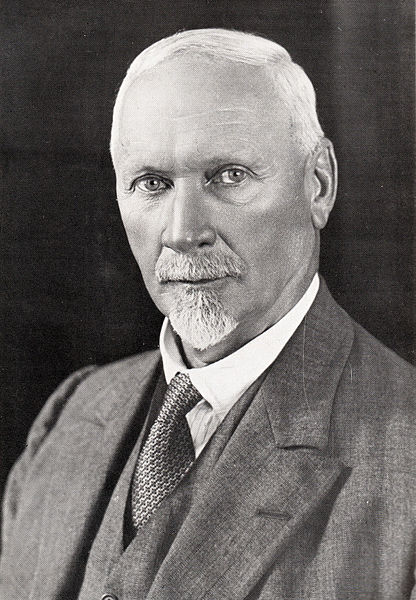
Jan Smuts
View on Wikipedia
Field Marshal Jan Christian Smuts, OM, CH, DTD, ED, PC, KC, FRS (baptismal name Jan Christiaan Smuts, 24 May 1870 – 11 September 1950) was a South African statesman, military officer and philosopher.[1] In addition to holding various military and cabinet posts, he served as Prime Minister of the Union of South Africa from 1919 to 1924 and 1939 to 1948.
Key Information


Smuts was born to Afrikaner parents in the British Cape Colony. He was educated at Victoria College, Stellenbosch, before reading law at Christ's College, Cambridge, on a scholarship. He was called to the bar at the Middle Temple in 1894 but returned home the following year. In the leadup to the Second Boer War, Smuts practised law in Pretoria, the capital of the South African Republic. He led the republic's delegation to the Bloemfontein Conference and served as an officer in a commando unit following the outbreak of war in 1899. In 1902, he played a key role in negotiating the Treaty of Vereeniging, which ended the war and resulted in the annexation of the South African Republic and Orange Free State into the British Empire. He subsequently helped negotiate self-government for the Transvaal Colony, becoming a cabinet minister under Louis Botha.
Smuts played a leading role in the creation of the Union of South Africa in 1910, helping shape its constitution. He and Botha established the South African Party, with Botha becoming the union's first prime minister and Smuts holding multiple cabinet portfolios. As defence minister he was responsible for the Union Defence Force during the First World War. Smuts personally led troops in the East African campaign in 1916 and the following year joined the Imperial War Cabinet in London. He played a leading role at the Paris Peace Conference of 1919, advocating for the creation of the League of Nations and securing South African control over the former German South-West Africa.
In 1919, Smuts replaced Botha as prime minister, holding the office until the South African Party's defeat at the 1924 general election by J. B. M. Hertzog's National Party. He spent several years in academia, during which he coined the term "holism", before eventually re-entering politics as deputy prime minister in a coalition with Hertzog; in 1934 their parties subsequently merged to form the United Party. Smuts returned as prime minister in 1939, leading South Africa into the Second World War at the head of a pro-interventionist faction. He was appointed field marshal in 1941 and in 1945 signed the UN Charter, the only signer of the Treaty of Versailles to do so. His second term in office ended with the victory of his political opponents, the reconstituted National Party at the 1948 general election, with the new government implementing early apartheid policies.
Smuts was an internationalist who played a key role in establishing and defining the League of Nations, United Nations and Commonwealth of Nations. He supported racial segregation and opposed democratic non-racial rule. At the end of his career, Smuts supported the Fagan Commission's recommendations to relax restrictions on black South Africans living and working in urban areas.
Early life and education
[edit]
| ||
|---|---|---|


Smuts was born on 24 May 1870, at the family farm, Bovenplaats, near Malmesbury, in the Cape Colony. His parents, Jacobus Smuts and his wife Catharina, were prosperous, traditional Afrikaner farmers, long established and highly respected.[3] Their ancestry included a descent from the Khoi interpreter Krotoa.[4]
As the second son of the family, rural custom dictated that Jan would remain working on the farm. In this system, typically only the first son was supported for a full, formal education. In 1882, when Jan was twelve, his elder brother died, and Jan was sent to school in his place. Jan attended the school in nearby Riebeek West. He made excellent progress despite his late start, and caught up with his contemporaries within four years. He was admitted to Victoria College, Stellenbosch, in 1886, at the age of sixteen.[5]
At Stellenbosch, he learned High Dutch, German, and Ancient Greek, and immersed himself in literature, the classics, and Bible studies. His deeply traditional upbringing and serious outlook led to social isolation from his peers. He made outstanding academic progress, graduating in 1891 with double first-class honours in Literature and Science. During his last years at Stellenbosch, Smuts began to cast off some of his shyness and reserve. At this time he met Isie Krige, whom he later married.[6]
On graduation from Victoria College, Smuts won the Ebden scholarship for overseas study. He decided to attend the University of Cambridge in the United Kingdom to read law at Christ's College.[7] Smuts found it difficult to settle at Cambridge. He felt homesick and isolated by his age and different upbringing from the English undergraduates. Worries over money also contributed to his unhappiness, as his scholarship was insufficient to cover his university expenses. He confided these worries to Professor J. I. Marais, a friend from Victoria College. In reply, Professor Marais enclosed a cheque for a substantial sum, by way of loan, encouraging Smuts to let him know if he ever found himself in need again.[8] Thanks to Marais, Smuts's financial standing was secure. He gradually began to enter more into the social aspects of the university, although he retained a single-minded dedication to his studies.[9]
During this time in Cambridge, Smuts studied a diverse number of subjects in addition to law. He wrote a book, Walt Whitman: A Study in the Evolution of Personality. It was not published until 1973, after his death,[10] but it can be seen that Smuts in this book had already conceptualized his thinking for his later wide-ranging philosophy of holism.[11]
Smuts graduated in 1894 with a double first[broken anchor]. Over the previous two years, he had received numerous academic prizes and accolades, including the coveted George Long prize in Roman Law and Jurisprudence.[12] One of his tutors, Frederic William Maitland, a leading figure among English legal historians, described Smuts as the most brilliant student he had ever met.[13] Alec Todd, the Master of Christ's College, said in 1970 that "in 500 years of the College's history, of all its members, past and present, three had been truly outstanding: John Milton, Charles Darwin and Jan Smuts."[14]
In December 1894, Smuts passed the examinations for the Inns of Court, entering the Middle Temple. His old Cambridge college, Christ's College, offered him a fellowship in Law. Smuts turned his back on a potentially distinguished legal future. By June 1895, he had returned to the Cape Colony, determined to make his future there.[15]
Career
[edit]Law and politics
[edit]
Smuts began to practise law in Cape Town, but his abrasive nature made him few friends. Finding little financial success in the law, he began to devote more and more of his time to politics and journalism, writing for the Cape Times. Smuts was intrigued by the prospect of a united South Africa, and joined the Afrikaner Bond. By good fortune, Smuts's father knew the leader of the group, Jan Hofmeyr. Hofmeyr in turn recommended Jan to Cecil Rhodes, who owned the De Beers mining company. In 1895, Smuts became an advocate and supporter of Rhodes.[16]
When Rhodes launched the Jameson Raid, in the summer of 1895–96, Smuts was outraged. Feeling betrayed by his employer, friend and political ally, he resigned from De Beers, and left political life. Instead he became state attorney in the capital of the South African Republic, Pretoria.[16]
After the Jameson Raid, relations between the British and the Afrikaners had deteriorated steadily. By 1898, war seemed imminent. Orange Free State President Martinus Steyn called for a peace conference at Bloemfontein to settle each side's grievances. With an intimate knowledge of the British, Smuts took control of the Transvaal delegation. Sir Alfred Milner, head of the British delegation, took exception to his dominance, and conflict between the two led to the collapse of the conference, consigning South Africa to war.[17]
Psychology
[edit]Smuts was the first South African to be internationally regarded as an important psychologist.[18] During Smuts's undergraduate years at Cambridge University, he produced a manuscript in 1895 in which he analysed the personality of the famous American poet Walt Whitman.[18] Due to his manuscript being considered unviable, it was only published 23 years after his death in 1973. Smuts went on to produce his next manuscript, which he completed in 1910, entitled An Inquiry into the Whole. His manuscript was then revised in 1924 and published in 1926 with the title Holism and Evolution.[18][19]
Smuts had no interest in pursuing a career in psychology.[18] He considered psychology as "too impersonal to study great personalities",[18] and believed that the holistic tendency of the personality would be studied best through personology.[18] Smuts, however, never inquired further into the idea of personology due to his wanting to continue laying the foundation of the concept of holism. He never returned to either of the topics.[18]
Holism
Although the concept of holism has been discussed by many, the term holism in academic terminology was first introduced and publicly shared in print by Smuts in the early twentieth century.[20][18][19] Smuts was acknowledged for his contribution by getting the honour to write the first entry about the concept for the Encyclopaedia Britannica 1929 edition.[19][20] The Austrian medical doctor, founder of the school of Individual Psychology, and psychotherapist, Alfred Adler (1870–1937), also showed a great interest in Smuts's book. Adler requested permission from Smuts to have the book translated to German and published in Germany.[18]
Although Smuts's concept of holism is grounded in the natural sciences, he claimed that it has a relevance in philosophy, ethics, sociology, and psychology.[20] In Holism and Evolution, he argued that the concept of holism is "grounded in evolution and is also an ideal that guides human development and one's level of personality actualization."[19] Smuts stated in the book that "personality is the highest form of holism" (p. 292).[21]
Recognition from Adler
Adler later wrote a letter, dated 31 January 1931, where he stated that he recommended Smuts's book to his students and followers. He referred to it as "the best preparation for the science of Individual Psychology".[18] After Smuts gave permission for the translation and publication of his book in Germany, it was translated by H. Minkowski and eventually published in 1938. During the Second World War, the books were destroyed after the Nazi government had removed it from circulation.[18] Adler and Smuts, however, continued their correspondence. In one of Adler's letters dated 14 June 1931, he invited Smuts to be one of three judges of the best book on the history of wholeness with a reference to Individual Psychology.[18]
The Boer War
[edit]
On 11 October 1899 the Boer republics declared war and launched an offensive into the British-held Natal and Cape Colony areas, beginning the Second Boer War of 1899–1902. In the early stages of the conflict, Smuts served as Paul Kruger's eyes and ears in Pretoria, handling propaganda, logistics, communication with generals and diplomats, and anything else that was required. In the second phase of the war, from mid-1900, Smuts served under Koos de la Rey, who commanded 500 commandos in the Western Transvaal. Smuts excelled at hit-and-run warfare, and the unit evaded and harassed a British army forty times its size. President Paul Kruger and the deputation in Europe thought that there was good hope for their cause in the Cape Colony. They decided to send General de la Rey there to assume supreme command, but then decided to act more cautiously when they realised that General de la Rey could hardly be spared in the Western Transvaal. Consequently, Smuts was left with a small force of 300 men, while another 100 men followed him. By January 1902 the British scorched-earth policy left little grazing land. One hundred of the cavalry that had joined Smuts were therefore too weak to continue and so Smuts had to leave these men with General Pieter Hendrik Kritzinger. Intelligence indicated that at this time Smuts had about 3,000 men.[22]
To end the conflict, Smuts sought to take a major target, the copper-mining town of Okiep in the present-day Northern Cape Province (April–May 1902). With a full assault impossible, Smuts packed a train full of explosives, and tried to push it downhill, into the town, in order to bring the enemy garrison to its knees. Although this failed, Smuts had proved his point: that he would stop at nothing to defeat his enemies. Norman Kemp Smith wrote that General Smuts read from Immanuel Kant's Critique of Pure Reason on the evening before the raid. Smith contended that this showed how Kant's critique can be a solace and a refuge, as well as a means to sharpen the wit.[23] Combined with the British failure to pacify the Transvaal, Smuts's success left the United Kingdom with no choice but to offer a ceasefire and a peace conference, to be held at Vereeniging.[22]
Before the conference, Smuts met Lord Kitchener at Kroonstad railway station, where they discussed the proposed terms of surrender. Smuts then took a leading role in the negotiations between the representatives from all of the commandos from the Orange Free State and the South African Republic (15–31 May 1902). Although he admitted that, from a purely military perspective, the war could continue, he stressed the importance of not sacrificing the Afrikaner people for that independence. He was very conscious that "more than 20,000 women and children have already died in the concentration camps of the enemy". He felt it would have been a crime to continue the war without the assurance of help from elsewhere and declared, "Comrades, we decided to stand to the bitter end. Let us now, like men, admit that that end has come for us, come in a more bitter shape than we ever thought."[24] His opinions were representative of the conference, which then voted by 54 to 6 in favour of peace. Representatives of the Governments met Lord Kitchener and at five minutes past eleven on 31 May 1902, the Acting State President of the South African Republic, Schalk Willem Burger signed the Treaty of Vereeniging, followed by the members of his government, Acting State President of the Orange Free State, Christiaan De Wet, and the members of his government.[25]
A British Transvaal
[edit]
Despite Smuts's exploits as a general and a negotiator, nothing could mask the fact that the Boers had been defeated. Lord Milner had full control of all South African affairs, and established an Anglophone elite, known as Milner's Kindergarten. As an Afrikaner, Smuts was excluded. Defeated but not deterred, in May 1904, he decided to join with the other former Transvaal generals to form a political party, Het Volk ('The People'),[26] to fight for the Afrikaner cause. Louis Botha was elected leader, and Smuts his deputy.[16]
When his term of office expired, Milner was replaced as High Commissioner by the more conciliatory William Palmer, 2nd Earl of Selborne. Smuts saw an opportunity and pounced, urging Botha to persuade the Liberals to support Het Volk's cause. When the Conservative government under Arthur Balfour collapsed, in December 1905, the decision paid off. Smuts joined Botha in London, and sought to negotiate responsible government for the Transvaal within British South Africa. Using the thorny political issue of South Asian labourers ('coolies'), the South Africans convinced Prime Minister Sir Henry Campbell-Bannerman and, with him, the cabinet and Parliament.[16]
Through 1906, Smuts worked on the new constitution for the Transvaal, and, in December 1906, elections were held for the Transvaal parliament. Despite being shy and reserved, unlike the showman Botha, Smuts won a comfortable victory in the Wonderboom constituency, near Pretoria. His victory was one of many, with Het Volk winning in a landslide and Botha forming the government. To reward his loyalty and efforts, Smuts was given two key cabinet positions: Colonial Secretary and Education Secretary.[27]
Smuts proved to be an effective leader, if unpopular. As Education Secretary, he had fights with the Dutch Reformed Church, of which he had once been a dedicated member, which demanded Calvinist teachings in schools. As Colonial Secretary, he opposed a movement for equal rights for South Asian workers, led by Mohandas Karamchand Gandhi.[27] During the years of Transvaal self-government, nobody could avoid the predominant political debate of the day: South African unification. Ever since the British victory in the war, it was an inevitability, but it remained up to the South Africans to decide what sort of country would be formed, and how it would be formed. Smuts favoured a unitary state, with power centralised in Pretoria, with English as the only official language, and with a more inclusive electorate. To impress upon his compatriots his vision, he called a constitutional convention in Durban, in October 1908.[28]

There, Smuts was up against a hard-talking Orange River Colony delegation, who refused every one of Smuts's demands. Smuts had successfully predicted this opposition, and their objections, and tailored his own ambitions appropriately. He allowed compromise on the location of the capital, on the official language, and on suffrage, but he refused to budge on the fundamental structure of government. As the convention drew into autumn, the Orange leaders began to see a final compromise as necessary to secure the concessions that Smuts had already made. They agreed to Smuts's draft South African constitution, which was duly ratified by the South African colonies. Smuts and Botha took the constitution to London, where it was passed by Parliament and given Royal Assent by King Edward VII in December 1909.[28]
The Old Boers
[edit]The Union of South Africa was born, and the Afrikaners held the key to political power, as the majority of the increasingly whites-only electorate. Although Botha was appointed prime minister of the new country, Smuts was given three key ministries: Interior, Mines, and Defence. Undeniably, Smuts was the second most powerful man in South Africa. To solidify their dominance of South African politics, the Afrikaners united to form the South African Party, a new pan-South African Afrikaner party.[29]
The harmony and co-operation soon ended. Smuts was criticised for his overarching powers, and the cabinet was reshuffled. Smuts lost Interior and Mines, but gained control of Finance. That was still too much for Smuts's opponents, who decried his possession of both Defence and Finance, two departments that were usually at loggerheads. At the 1913 South African Party conference, the Old Boers (J. B. M. Hertzog, Martinus Theunis Steyn, Christiaan de Wet), called for Botha and Smuts to step down. The two narrowly survived a confidence vote, and the troublesome triumvirate stormed out, leaving the party for good.[30]
With the schism in internal party politics came a new threat to the mines that brought South Africa its wealth. A small-scale miners' dispute flared into a full-blown strike, and rioting broke out in Johannesburg after Smuts intervened heavy-handedly. After police shot dead twenty-one strikers, Smuts and Botha headed unaccompanied to Johannesburg to resolve the situation personally. Facing down threats to their own lives, they negotiated a cease-fire. But the cease-fire did not hold, and in 1914, a railway strike turned into a general strike. Threats of a revolution caused Smuts to declare martial law. He acted ruthlessly, deporting union leaders without trial and using Parliament to absolve him and the government of any blame retroactively. That was too much for the Old Boers, who set up their own National Party to fight the all-powerful Botha-Smuts partnership.[30]
First World War
[edit]
During the First World War, Smuts formed the Union Defence Force (UDF). His first task was to suppress the Maritz Rebellion, which was accomplished by November 1914. Next he and Louis Botha led the South African army into German South-West Africa and conquered it (see the South-West Africa Campaign for details). In 1916 General Smuts was put in charge of the conquest of German East Africa. Col (later BGen) J. H. V. Crowe commanded the artillery in East Africa under General Smuts and published an account of the campaign, General Smuts' Campaign in East Africa, in 1918.[31] Smuts was promoted to temporary lieutenant general on 18 February 1916,[32] and to honorary lieutenant general for distinguished service in the field on 1 January 1917.[33]
Smuts's chief intelligence officer, Colonel Richard Meinertzhagen, wrote very critically of his conduct of the campaign. He believed Horace Smith-Dorrien (who had saved the British Army during the retreat from Mons and was the original choice as commander in 1916) would have quickly defeated the Germans. In particular, Meinertzhagen thought that frontal attacks would have been decisive, and less costly than the flanking movements preferred by Smuts, which took longer, so that thousands of Imperial troops died of disease in the field. He wrote: "Smuts has cost Britain many hundreds of lives and many millions of pounds by his caution ... Smuts was not an astute soldier; a brilliant statesman and politician but no soldier."[34] Meinertzhagen wrote these comments in October/November 1916, in the weeks after being relieved by Smuts due to symptoms of depression, and he was invalided back to England shortly thereafter.[35]
Early in 1917, Smuts left Africa and went to London, as he had been invited to join the Imperial War Cabinet and the War Policy Committee by David Lloyd George. Smuts initially recommended renewed Western Front attacks and a policy of attrition, lest with Russian commitment to the war wavering, France or Italy would be tempted to make a separate peace.[36] Lloyd George wanted a commander "of the dashing type" for the Middle East in succession to Archibald Murray, but Smuts refused the command (late May) unless promised resources for a decisive victory, and he agreed with William Robertson that Western Front commitments did not justify a serious attempt to capture Jerusalem. Edmund Allenby was appointed instead.[37] Like other members of the War Cabinet, Smuts's commitment to Western Front efforts was shaken by Third Ypres.[38]
In 1917, following the German Gotha Raids, and lobbying by Viscount French, Smuts wrote a review of the British Air Services, which came to be called the Smuts Report. He was helped in large part in this by General Sir David Henderson who was seconded to him. This report led to the treatment of air as a separate force, which eventually became the Royal Air Force.[39][40]

By mid-January 1918, Lloyd George was toying with the idea of appointing Smuts Commander-in-Chief of all land and sea forces facing the Ottoman Empire, reporting directly to the War Cabinet rather than to Robertson.[41] Early in 1918, Smuts was sent to Egypt to confer with Allenby and William Marshall, and prepare for major efforts in that theatre. Before his departure, alienated by Robertson's exaggerated estimates of the required reinforcements, he urged Robertson's removal. Allenby told Smuts of Robertson's private instructions (sent by hand of Walter Kirke, appointed by Robertson as Smuts's adviser) that there was no merit in any further advance. He worked with Smuts to draw up plans, using three reinforcement divisions from Mesopotamia, to reach Haifa by June and Damascus by the autumn, the speed of the advance limited by the need to lay fresh rail track. This was the foundation of Allenby's successful offensive later in the year.[42]
Like most British Empire political and military leaders in the First World War, Smuts thought the American Expeditionary Forces lacked the proper leadership and experience to be effective quickly. He supported the Anglo-French amalgamation policy towards the Americans. In particular, he had a low opinion of General John J. Pershing's leadership skills, so much so that he proposed to Lloyd George that Pershing be relieved of command and US forces be placed "under someone more confident, like [himself]". This did not endear him to the Americans once it was leaked.[43]
Statesman
[edit]Smuts and Botha were key negotiators at the Paris Peace Conference. Both were in favour of reconciliation with Germany and limited reparations. Smuts was a key architect of the League of Nations through his correspondences with Woodrow Wilson, his work with the Imperial War Cabinet during the First World War and his book League of Nations: A Practical Suggestion.[44][45] According to Jacob Kripp, Smuts saw the League as necessary in unifying white internationalists and pacifying a race war through indirect rule by Europeans over non-whites and segregation.[45] Kripp states that the League of Nations mandates system reflected a compromise between Smuts's desire to annex non-white territories and Woodrow Wilson's principles of trusteeship.[45]
He was sent to Budapest to negotiate with Béla Kun's Hungarian Soviet Republic. This was in the wake of issues around the neutral zone the Entente dictated in the Vix Note. Smuts arrived on 4 April 1919, and negotiations started the next day. He offered a neutral zone more favorable to Hungary (shifted 25 km east), though making sure its western border passed west of the final border proposal worked out in the Commission on Romanian and Yugoslav Affairs, that the Hungarian leaders were unaware of. Smuts reassured the Hungarians that the agreement would not influence Hungary's final borders. He also teased the lifting of the economic blockade of the country and inviting the Hungarian soviet leaders to the Paris Peace Conference. Kun rejected the terms, and demanded the return to the Belgrade armistice line later that day, upon which Smuts ended negotiations and left. On 8 April he negotiated with Tomáš Masaryk in Prague over the Hungarian border.[46] Hungary's rejection led to the conference's approval of a Czechoslovak-Romanian invasion and harsher terms in the Treaty of Trianon.[47]
The Treaty of Versailles gave South Africa a Class C mandate over German South-West Africa (which later became Namibia), which was occupied from 1919 until withdrawal in 1990. At the same time, Australia was given a similar mandate over German New Guinea, which it held until 1975. Both Smuts and the Australian prime minister Billy Hughes feared the rising power of the Empire of Japan in the post-First World War world. When the former German East Africa was divided into two mandated territories (Ruanda-Urundi and Tanganyika), Smutsland was one of the proposed names for what became Tanganyika. Smuts, who had called for South African territorial expansion all the way to the River Zambesi since the late 19th century, was ultimately disappointed with the League awarding South-West Africa only a mandate status, as he had looked forward to formally incorporating the territory to South Africa.[48]
Smuts returned to South African politics after the conference. When Botha died in 1919, Smuts was elected prime minister, serving until a shocking defeat in 1924 at the hands of the National Party. After the death of the former American President Woodrow Wilson, Smuts was quoted as saying that: "Not Wilson, but humanity failed at Paris."[49]
While in Britain for an Imperial Conference in June 1921, Smuts went to Ireland and met Éamon de Valera to help broker an armistice and peace deal between the warring British and Irish nationalists. Smuts attempted to sell the concept of Ireland receiving Dominion status similar to that of Australia and South Africa.[50]
During his first premiership Smuts was involved in a number of controversies. The first was the Rand Revolt of March 1922, where aeroplanes were used to bomb white miners who were striking in opposition to proposals to allow non-whites to do more skilled and semi-skilled work previously reserved to whites only.[51] Smuts was accused of siding with the Rand Lords who wanted the removal of the colour bar in the hope that it would lower wage costs.[52] The white miners perpetrated acts of violence across the Rand, including murderous attacks on non-Europeans, conspicuously on African miners in their compounds, and this culminated in a general assault on the police.[53] Smuts declared martial law and suppressed the insurrection in three days – at a cost of 291 police and army deaths, and 396 civilians killed.[54] A Martial Law Commission was established which found that Smuts used larger forces than were strictly required, but had saved lives by doing so.[54]
The second was the Bulhoek Massacre of 24 May 1921, when at Bulhoek in the eastern Cape eight hundred South African policemen and soldiers armed with maxim machine guns and two field artillery guns killed 163 and wounded 129 members of an indigenous religious sect known as "Israelites" who had been armed with knobkerries, assegais and swords and who had refused to vacate land they regarded as holy to them.[55] Casualties on the government side at Bulhoek amounted to one trooper wounded and one horse killed.[55] Once again, there were charges of the unnecessary use of overwhelming force. However, no commission of enquiry was appointed.[56]
The third was the Bondelswarts Rebellion, in which Smuts supported the actions of the South African administration in attacking the Bondelswarts in South West Africa. The mandatory administration moved to crush what they called a rebellion of 500 to 600 people, of which 200 were said to be armed (although only about 40 weapons were captured after the Bondelswarts were crushed).[57] Gysbert Hofmeyr, the Mandatory Administrator, organised 400 armed men, and sent in aircraft to bomb the Bondelswarts. Casualties included 100 Bondelswart deaths, including a few women and children.[57] A further 468 men were either wounded or taken prisoner.[57] South Africa's international reputation was tarnished. Ruth First, a South African anti-apartheid activist and scholar, describes the Bondelswarts shooting as "the Sharpeville of the 1920s".[58]
As a botanist, Smuts collected plants extensively over southern Africa. He went on several botanical expeditions in the 1920s and 1930s with John Hutchinson, former botanist-in-charge of the African section of the Herbarium of the Royal Botanic Gardens and taxonomist of note. Smuts was a keen mountaineer and supporter of mountaineering.[59] One of his favourite rambles was up Table Mountain along a route now known as Smuts' Track. In February 1923 he unveiled a memorial to members of the Mountain Club who had been killed in the First World War.[59]
In 1925, assessing Smuts's role in international affairs, African-American historian and Pan-Africanist W. E. B. Du Bois wrote in an article which would be incorporated into the pivotal Harlem Renaissance text The New Negro,
Jan Smuts is today, in his world aspects, the greatest protagonist of the white race. He is fighting to take control of Laurenço Marques from a nation that recognizes, even though it does not realize, the equality of black folk; he is fighting to keep India from political and social equality in the empire; he is fighting to insure the continued and eternal subordination of black to white in Africa; and he is fighting for peace and good will in a white Europe which can by union present a united front to the yellow, brown and black worlds. In all this he expresses bluntly, and yet not without finesse, what a powerful host of white folk believe but do not plainly say in Melbourne, New Orleans, San Francisco, Hongkong, Berlin, and London.[60][61]
In December 1934, Smuts told an audience at the Royal Institute of International Affairs that:
How can the inferiority complex which is obsessing and, I fear, poisoning the mind, and indeed the very soul of Germany, be removed? There is only one way and that is to recognise her complete equality of status with her fellows and to do so frankly, freely and unreservedly ... While one understands and sympathises with French fears, one cannot, but feel for Germany in the prison of inferiority in which she still remains sixteen years after the conclusion of the war. The continuance of the Versailles status is becoming an offence to the conscience of Europe and a danger to future peace ... Fair play, sportsmanship—indeed every standard of private and public life—calls for frank revision of the situation. Indeed ordinary prudence makes it imperative. Let us break these bonds and set the complexed-obsessed soul free in a decent human way and Europe will reap a rich reward in tranquility, security and returning prosperity.[62]
Though in his Rectorial Address delivered on 17 October 1934 at St Andrews University he stated that:
The new Tyranny, disguised in attractive patriotic colours, is enticing youth everywhere into its service. Freedom must make a great counterstroke to save itself and our fair western civilisation. Once more the heroic call is coming to our youth. The fight for human freedom is indeed the supreme issue of the future, as it has always been.[63]
Second World War
[edit]
After nine years in opposition and academia, Smuts returned as deputy prime minister in a 'grand coalition' government under J. B. M. Hertzog. When Hertzog advocated neutrality towards Nazi Germany in 1939, the coalition split and Hertzog's motion to remain out of the war was defeated in Parliament by a vote of 80 to 67. Governor-General Sir Patrick Duncan refused Hertzog's request to dissolve parliament for a general election on the issue. Hertzog resigned and Duncan invited Smuts, Hertzog's coalition partner, to form a government and become prime minister for the second time in order to lead the country into the Second World War on the side of the Allies.[64]
On 24 May 1941, Smuts was appointed a field marshal of the British Army.[65]
Smuts's importance to the Imperial war effort was emphasised by a quite audacious plan, proposed as early as 1940, to appoint Smuts as Prime Minister of the United Kingdom, should Churchill die or otherwise become incapacitated during the war. This idea was put forward by Jock Colville, Churchill's private secretary, to Queen Mary and then to George VI, both of whom warmed to the idea.[66]
In May 1945, he represented South Africa in San Francisco at the drafting of the United Nations Charter.[67] According to historian Mark Mazower, Smuts "did more than anyone to argue for, and help draft, the UN's stirring preamble."[68] Smuts saw the UN as key to protecting white imperial rule over Africa.[69] Also in 1945, he was mentioned by Halvdan Koht among seven candidates that were qualified for the Nobel Prize in Peace. However, he did not explicitly nominate any of them. The person actually nominated was Cordell Hull.[70]
Later life
[edit]


In domestic policy, a number of social security reforms were carried out during Smuts's second period in office as prime minister. Old-age pensions and disability grants were extended to 'Indians' and 'Africans' in 1944 and 1947 respectively, although there were differences in the level of grants paid out based on race. The Workmen's Compensation Act of 1941 "insured all employees irrespective of payment of the levy by employers and increased the number of diseases covered by the law," and the Unemployment Insurance Act of 1946 introduced unemployment insurance on a national scale, albeit with exclusions.[71]
Smuts continued to represent his country abroad. He was a leading guest at the 1947 wedding of Princess Elizabeth and Philip, Duke of Edinburgh.[72] At home, his preoccupation with the war had severe political repercussions in South Africa. Smuts's support of the war and his support for the Fagan Commission made him unpopular amongst the Afrikaner community and Daniel François Malan's pro-apartheid stance won the Reunited National Party the 1948 general election.[67]
In 1948, he was elected Chancellor of the University of Cambridge, becoming the first person from outside the United Kingdom to hold that position. He held the position until his death two years later.[73]
He accepted the appointment as Colonel-in-Chief of Regiment Westelike Provinsie as from 17 September 1948.[74]
In 1949, Smuts was bitterly opposed to the London Declaration which transformed the British Commonwealth into the Commonwealth of Nations and made it possible for republics (such as the newly independent India) to remain its members.[75][page needed][76] In the South African context, republicanism was mainly identified with Afrikaner Conservatism and with tighter racial segregation.[77]
Death
[edit]On 29 May 1950, a week after the public celebration of his eightieth birthday in Johannesburg and Pretoria, Field Marshal Jan Smuts suffered a coronary thrombosis. He died of a subsequent heart attack on his family farm of Doornkloof, Irene, near Pretoria, on 11 September 1950.[67]
Relations with Churchill
[edit]In 1899, Smuts interrogated the young Winston Churchill, who had been captured by Afrikaners during the Boer War, which was the first time they met. The next time was in 1906, while Smuts was leading a mission about South Africa's future to London before Churchill, then Under-Secretary of State for the Colonies. The British Cabinet shared Churchill's sympathetic view, which led to responsible government within the year, followed by dominion status for the Union of South Africa in 1910. Their association continued in the First World War, when Lloyd George appointed Smuts, in 1917, to the war cabinet in which Churchill served as Minister of Munitions. By then, both had formed a fast friendship that continued through Churchill's "wilderness years" and the Second World War, to Smuts's death. Charles Wilson, 1st Baron Moran, Churchill's personal physician, wrote in his diary:
Smuts is the only man who has any influence with the PM; indeed, he is the only ally I have in pressing counsels of common sense on the PM. Smuts sees so clearly that Winston is irreplaceable, that he may make an effort to persuade him to be sensible.[78]
Churchill:
Smuts and I are like two old love-birds moulting together on a perch, but still able to peck.[78]
When Anthony Eden said at a meeting of the Chiefs of Staff (29 October 1942) that Bernard Montgomery's Middle East offensive was "petering out", after having some late night drinks with Churchill the previous night, Alan Brooke had told Churchill "fairly plainly" what he thought of Eden's ability to judge the tactical situation from a distance (Churchill was always impatient for his generals to attack at once). He was supported at the Chiefs of Staff meeting by Smuts.[79] Brooke said he was fortunate to be supported by:
a flow of words from the mouth of that wonderful statesman. It was as if oil had been poured on the troubled waters. The temperamental film-stars returned to their tasks – peace reigned in the dove cot!
Views
[edit]Race and segregation
[edit]Smuts and his parties supported existing policies of racial discrimination in South Africa, taking a more moderate and ambiguous stance than the rival National Party, and he later endorsed the relatively liberal proposals of the Fagan Commission.[80][81]
At the 1926 Imperial Conference Smuts stated:
If there was to be equal manhood suffrage over the Union, the whites would be swamped by the blacks. A distinction could not be made between Indians and Africans. They would be impelled by the inevitable force of logic to go the whole hog, and the result would be that not only would the whites be swamped in Natal by the Indians but the whites would be swamped all over South Africa by the blacks and the whole position for which the whites had striven for two hundred years or more now would be given up. So far as South Africa was concerned, therefore, it was a question of impossibility. For white South Africa it was not a question of dignity but a question of existence.[60][61]
Smuts was, for most of his political life, a vocal supporter of segregation of the races, and in 1929 he justified the erection of separate institutions for black and white people in tones prescient of the later practice of apartheid:
The old practice mixed up black with white in the same institutions, and nothing else was possible after the native institutions and traditions had been carelessly or deliberately destroyed. But in the new plan there will be what is called in South Africa "segregation"; two separate institutions for the two elements of the population living in their own separate areas. Separate institutions involve territorial segregation of the white and black. If they live mixed together it is not practicable to sort them out under separate institutions of their own. Institutional segregation carries with it territorial segregation.[82]
In general, Smuts's view of black Africans was patronising: he saw them as immature human beings who needed the guidance of whites, an attitude that reflected the common perceptions of most westerners in his lifetime. Of black Africans he stated that:
These children of nature have not the inner toughness and persistence of the European, not those social and moral incentives to progress which have built up European civilization in a comparatively short period.[82]
Although Gandhi and Smuts were adversaries in many ways, they had a mutual respect and even admiration for each other. Before Gandhi returned to India in 1914, he presented General Smuts with a pair of sandals (now held by Ditsong National Museum of Cultural History) made by Gandhi himself. In 1939, Smuts, then prime minister, wrote an essay for a commemorative work compiled for Gandhi's 70th birthday and returned the sandals with the following message: "I have worn these sandals for many a summer, even though I may feel that I am not worthy to stand in the shoes of so great a man."[83]
Smuts is often accused of being a politician who extolled the virtues of humanitarianism and liberalism abroad while failing to practise what he preached at home in South Africa. This was most clearly illustrated when India, in 1946, made a formal complaint in the UN concerning the legalised racial discrimination against Indians in South Africa. Appearing personally before the United Nations General Assembly, Smuts defended the policies of his government by fervently pleading that India's complaint was a matter of domestic jurisdiction. However, the General Assembly censured South Africa for its racial policies[84] and called upon the Smuts government to bring its treatment of the South African Indians in conformity with the basic principles of the United Nations Charter.[84][85]
At the same conference, the African National Congress President General Alfred Bitini Xuma along with delegates of the South African Indian Congress brought up the issue of the brutality of Smuts's police regime against the African Mine Workers' Strike earlier that year as well as the wider struggle for equality in South Africa.[86]
In 1948, he went further away from his previous views on segregation when supporting the recommendations of the Fagan Commission that Africans should be recognised as permanent residents of White South Africa, and not merely as temporary workers who belonged in the reserves.[80] This was in direct opposition to the policies of the National Party that wished to extend segregation and formalise it into apartheid. There is, however, no evidence that Smuts ever supported the idea of equal political rights for black and white people. Despite this, he did say:
The idea that the Natives must all be removed and confined in their own kraals is in my opinion the greatest nonsense I have ever heard.[87]
The Fagan Commission did not advocate the establishment of a non-racial democracy in South Africa, but rather wanted to liberalise influx controls of black people into urban areas in order to facilitate the supply of black African labour to the South African industry. It also envisaged a relaxation of the pass laws that had restricted the movement of black South Africans in general.[88]
Smuts did not believe in racial equality however. During a speech he delivered in the House of Assembly on 21 September 1948, Smuts outlined his own party's policy in regards to race as such:
Our policy has been European paramountcy in this country. Our policy has not been equal rights. We have never had any truck with equal rights. It is an abstraction forced upon us by our opponents. We stand and have always stood for European supremacy in this country. We have said that we have a position of guardianship, of trusteeship, over the non-European peoples in the country, and we must carry out that trust in the true spirit of exploitation but in a way which will justify our claim to be guardians of these people. We have never been in favour of equal rights. We have always stood and we stand for social and residential separation in this country, and for the avoidance of all racial mixture.[89]
During the discussion, Smuts also spoke of making the reserves "attractive and keep the Native people who are there and should be there within their own areas," while also seeing "that they are politically developed, and that they can have a position of managing their own affairs in these areas." When one parliamentarian said to Smuts that he was "coming nearer and nearer to Apartheid," Smuts replied
I do not see why the Government party should claim this, it has always been our policy. With regard to the majority of the native people who live in the European areas, they are economically necessary to those areas. They have lived there, they have the right to be there. Every day they work there and they are economically integrated with these areas. We cannot move them away. All we can do is to improve their lots, to prevent these eyesores, these abhorrent conditions which are now arising in the industrial areas in South Africa. Therefore, our party on this side of the House have advocated Native villages, satellite villages or towns in those areas, which will provide proper housing, proper health, proper education and other facilities in those villages alongside and parallel to the White townships. That is what we have stood for. I do not believe members on the other side of the House have a definite policy.[90]
Earlier in the discussion however, Smuts did criticise the government taking away (as he put it) the "very small rights" which non-Europeans had, arguing
I want to pin down this House and concentrate the public attention of this country on this issue — that what is contemplated, what is involved now, is not merely the abstract catchword of apartheid, but what is involved is fundamental change in the constitution of this country, a thing which we have never done before and which we did not contemplate doing in the future. Apart from this very grave issue that arises on our constitution I would ask, as a matter of policy, is it wise, is it right for us to take away these very small rights which the non-Europeans have in this country? Their political rights are so limited, there is so little to it, that I should have thought it would be simple elementary political wisdom to leave the matter alone. Here you have three European representatives of the Natives in a House of 153 members. What is the menace, what is the danger? It seems to me that it is simply playing with enormous issues. Here you have millions of people entrusted to our care. They cannot speak for themselves, that is the little voice they have, that is all they have. We gaily and unconcernedly step over them, we almost stamp on them, and we walk across them and take away these small rights, or propose to take away these small rights that have been given to them. How can we face our own public opinion in this country? How can we face the public opinion of the world? How can we face the future of South Africa when we behave in this way to people that have been put in our charge as a sacred trust? How can we defend ourselves? How can we with a clean conscience go forward to the future in such a way? I would therefore ask the House, and the people of this country, to be most careful. These people possess very small rights at present, and there is no question of their being extended in the immediate future. They may be extended according to the wisdom and the insight of those who follow us, but at present there is no such intention at all. The only matter we are faced with is the taking away of these few rights that they have. I think it is the height of folly.[91]
In the assessment of South African Cambridge professor Saul Dubow, "Smuts's views of freedom were always geared to securing the values of western Christian civilization. He was consistent, albeit more flexible than his political contemporaries, in his espousal of white supremacy."[92]
Holism and related academic work
[edit]While in academia, Smuts pioneered the concept of holism, which he defined as "[the] fundamental factor operative towards the creation of wholes in the universe" in his 1926 book, Holism and Evolution.[93][45] Smuts's formulation of holism has been linked with his political-military activity, especially his aspiration to create a league of nations. As one biographer said:
It had very much in common with his philosophy of life as subsequently developed and embodied in his Holism and Evolution. Small units must develop into bigger wholes, and they in their turn again must grow into larger and ever-larger structures without cessation. Advancement lay along that path. Thus the unification of the four provinces in the Union of South Africa, the idea of the British Commonwealth of Nations, and, finally, the great whole resulting from the combination of the peoples of the earth in a great league of nations were but a logical progression consistent with his philosophical tenets.[94]
Zionism
[edit]
In 1943 Chaim Weizmann wrote to Smuts, detailing a plan to develop Britain's African colonies to compete with the United States. During his service as premier, Smuts personally fundraised for multiple Zionist organisations.[95] His government granted de facto recognition to Israel on 24 May 1948.[96] However, Smuts was deputy prime minister when the Hertzog government in 1937 passed the Aliens Act that was aimed at preventing Jewish immigration to South Africa. The act was seen as a response to growing anti-Semitic sentiments among Afrikaners.[97]
Smuts lobbied against the White Paper of 1939,[98] and several streets and a kibbutz, Ramat Yohanan, in Israel are named after him.[96] He also wrote an epitaph for Weizmann, describing him as "the greatest Jew since Moses."[99] Smuts once said:
Great as are the changes wrought by this war, the great world war of justice and freedom, I doubt whether any of these changes surpass in interest the liberation of Palestine and its recognition as the Home of Israel.[100]
Legacy
[edit]
One of his greatest international accomplishments was aiding in the establishment of the League of Nations, the exact design and implementation of which relied upon Smuts.[101] He later urged the formation of a new international organisation for peace – the United Nations. Smuts wrote the first draft of the preamble to the United Nations Charter, and was the only person to sign the charters of both the League of Nations and the UN. He played a key role in the development of trusteeship and the League of Nations mandate system.[102] He sought to redefine the relationship between the United Kingdom and her colonies, helping to establish the British Commonwealth, as it was known at the time. This proved to be a two-way street; in 1946 the General Assembly requested the Smuts government to take measures to bring the treatment of South African Indians into line with the provisions of the United Nations Charter.[84]
In 1932, the kibbutz Ramat Yohanan in Israel was named after him. Smuts was a vocal proponent of the creation of a Jewish state, and spoke out against the rising antisemitism of the 1930s.[103] A street in the German Colony neighbourhood of Jerusalem and a boulevard in Tel Aviv are named in his honour.[104]
In 1917, part of the M27 route in Johannesburg was renamed from Pretoria Road[105] to Jan Smuts Avenue.[106]: 39
The international airport serving Johannesburg was known as Jan Smuts Airport from its construction in 1952 until 1994. In 1994, it was renamed to Johannesburg International Airport following the fall of apartheid. In 2006, it was renamed again to its current name, OR Tambo International Airport, after the ANC politician Oliver Tambo.[107]
In 2004, Smuts was named by voters in a poll held by the South African Broadcasting Corporation (SABC) as one of the top ten Greatest South Africans of all time. The final positions of the top ten were to be decided by a second round of voting but the programme was taken off the air owing to political controversy and Nelson Mandela was given the number one spot based on the first round of voting. In the first round, Field Marshal Smuts came ninth.[108]
Mount Smuts, a peak in the Canadian Rockies, is named after him.[109]
In August 2019, the South African Army Regiment Westelike Provinsie was renamed after Smuts as the General Jan Smuts Regiment.[110][111]
The Smuts House Museum at Smuts's home in Irene is dedicated to promoting his legacy.[112]
Orders, decorations and medals
[edit]Field Marshal Smuts was honoured with orders, decorations and medals from several countries.[113]
|
South Africa
United Kingdom |
Belgium
Denmark
France
Netherlands
Portugal
United States
|
.svg)

References
[edit]- ^ a b Root, Waverley (1952). "Jan Christian Smuts. 1870–1950". Obituary Notices of Fellows of the Royal Society. 8 (21): 271–73. doi:10.1098/rsbm.1952.0017. JSTOR 768812. S2CID 202575333.
- ^ "Great Contemporaries: Jan Christian Smuts". The Churchill Project. 1 December 2017. Retrieved 18 May 2021.
- ^ Cameron 1994, p. 9.
- ^ "What's in a South African name: From Krotoa to van der Stel". brandsouthafrica.com. 15 September 2017. Retrieved 17 September 2025.
- ^ Hancock 1962, p. 19.
- ^ Smuts 1952, p. 19.
- ^ "Smuts, Jan Christian (SMTS891JC)". A Cambridge Alumni Database. University of Cambridge.
- ^ Letter from Marais to Smuts, 8 August 1892; Hancock et al. (1966–73): vol. 1, p. 25
- ^ Hancock 1962, p. 11.
- ^ Jan C Smuts: Walt Whitman – a Study in the Evolution of Personality, Wayne State University Press, 1973
- ^ Hancock 1962, p. 28.
- ^ Smuts 1952, p. 23.
- ^ Letter from Maitland to Smuts, 15 June 1894; Hancock et al. (1966–73): vol. 1, pp. 33–34
- ^ Jan Smuts – Memoirs of the Boer War (1994) Introduction, p. 19
- ^ Smuts 1952, p. 24.
- ^ a b c d Heathcote 1999, p. 264.
- ^ Hancock 1962, p. 89.
- ^ a b c d e f g h i j k l Nicholas, Lionel (3 August 2014). "A history of South African (SA) Psychology". Universitas Psychologica. 13 (5): 1983. doi:10.11144/Javeriana.upsy13-5.hsap. hdl:10554/33135.
- ^ a b c d Valsiner, Jaan (2017). Striving for the Whole: Creating Theoretical Syntheses (First ed.). London: Taylor and Francis. ISBN 9781315130354. OCLC 1004350797.
- ^ a b c du Plessis, Guy (28 October 2021). "Jan Smuts' Influence on Philosophy and Psychology". ILLUMINATION.
- ^ Smuts, Jan Christiaan (1973). Holism and evolution. Westport, Conn.: Greenwood Press. ISBN 978-0837165561.
- ^ a b "Durban Branch November 1998 News Sheet No.285". South African Military History Society. Retrieved 17 May 2013.
- ^ Smith, Norman Kemp. A Commentary to Kant's Critique of Pure Reason. Project Gutenberg.
- ^ Hancock, WK and van der Poel, J (eds) – Selections from the Smuts Papers, 1886–1950, p. 532
- ^ Gooch 2000, p. 97.
- ^ Williams, Basil (1946). Botha Smuts And South Africa. Hodder And Stoughton. pp. 52–53. Retrieved 14 October 2010.
- ^ a b "General Jan Christiaan Smuts". South African History On-line. Retrieved 17 May 2013.
- ^ a b "Formation of the Union of South Africa". Salem Press. Archived from the original on 13 August 2013. Retrieved 17 May 2013.
- ^ Meredith, Martin. Diamonds, Gold and War. New York: Public Affairs, 2007. pp 380–381
- ^ a b "Old Resentments Return". Retrieved 27 May 2013.
- ^ Crowe, J. H. V., General Smuts' Campaign in East Africa
- ^ "No. 29477". The London Gazette (Supplement). 15 February 1916. p. 1791.
- ^ "No. 29886". The London Gazette (Supplement). 29 December 1916. p. 15.
- ^ Army Diary Oliver and Boyd 1960 p. 205
- ^ Garfield, Brian. The Meinertzhagen Mystery: The Life and Legend of a Colossal Fraud. Potomac Books, Washington. 2007, ISBN 978-1597971607 p. 119
- ^ Woodward 1998, pp. 132–4.
- ^ Woodward 1998, pp. 155–7.
- ^ Woodward 1998, pp. 148–9.
- ^ "Sir David Henderson". Lions Led By Donkeys. Centre for First World War Studies, University of Birmingham. Retrieved 26 July 2007.
- ^ Barrass, Malcolm. "Lieutenant General Sir David Henderson". Air of Authority – A History of RAF Organisation. Retrieved 26 July 2007.
- ^ Woodward 1998, p. 164.
- ^ Woodward 1998, pp. 165–8.
- ^ Farwell, Byron (1999). Over There: The United States in the Great War, 1917–1918. Norton. ISBN 9780393046984.
- ^ Smuts, Jan (1918). "League of Nations: A Practical Suggestion". Hodder and Stoughton.
- ^ a b c d Kripp, Jacob (2022). "The Creative Advance Must Be Defended: Miscegenation, Metaphysics, and Race War in Jan Smuts's Vision of the League of Nations". American Political Science Review. 116 (3): 940–953. doi:10.1017/S0003055421001362. ISSN 0003-0554. S2CID 244938442.
- ^ Hatos, Pál (2021). Rosszfiúk világforradalma. Jaffa Kiadó. pp. 139–142. ISBN 9789634752509.
- ^ Steiner, Zara (2005). The lights that failed: European international history, 1919–1933. Oxford: Oxford University Press. ISBN 978-0-19-151881-2. OCLC 86068902.
- ^ Dugard 1973, p. 38.
- ^ Howe 1949, p. 74.
- ^ Smuts 1952, p. 252.
- ^ Hancock 1968, pp. 63–88.
- ^ Hancock 1968, p. 69.
- ^ Hancock 1968, p. 83.
- ^ a b Hancock 1968, p. 84.
- ^ a b Hancock 1968, p. 89.
- ^ Hancock 1968, p. 99.
- ^ a b c Crawford 2002, p. 276.
- ^ First 1963, p. 101.
- ^ a b Imperial ecology: environmental order in the British Empire, 1895–1945, Peder Anker Publisher: Harvard University Press, 2001 ISBN 0-674-00595-3
- ^ a b Du Bois, W. E. Burghardt (April 1, 1925). "Worlds of Color". Foreign Affairs. Vol. 3, no. 3. ISSN 0015-7120.
- ^ a b DuBois, W. E. B. (1925). "The Negro Mind Reaches Out". In Locke, Alain LeRoy (ed.). The New Negro: An Interpretation (1927 ed.). Albert and Charles Boni. p. 385. LCCN 25025228. OCLC 639696145.
- ^ Kee 1988, p. 54.
- ^ Smuts 1934, pp. 28–29.
- ^ "J.B.M. Hertzog: prime minister of South Africa". Britannica. Retrieved 10 August 2017.
- ^ "No. 35172". The London Gazette (Supplement). 23 May 1941. p. 3004.
- ^ Colville 2004, pp. 269–271.
- ^ a b c Heathcote 1999, p. 266.
- ^ Mazower 2013, p. 9.
- ^ Mazower 2013, pp. 20–21.
- ^ "Record from The Nomination Database for the Nobel Prize in Peace, 1901–1956". Nobel Foundation. Archived from the original on 8 October 2014. Retrieved 14 May 2010.
- ^ "Social assistance in South Africa: Its potential impact on poverty" (PDF). Retrieved 26 February 2016.
- ^ "Seating plan for the Ball Supper Room". Royal Collection. Retrieved 17 May 2013.
- ^ Chancellors of the University of Cambridge. British History Online. Retrieved on 30 July 2012.
- ^ Union Defence Force Order No.4114. 5 July 1949
- ^ Colville 2004, p. ?.
- ^ "1949–1999: Fifty Years of a Renewing Commonwealth". The Round Table. 88 (350): 1–27. April 1999. doi:10.1080/003585399108072.
- ^ Muller (1975), p. 508.
- ^ a b Coutenay, Paul H., Great Contemporaries: Jan Christian Smuts, The Churchill Project, Hillsdale College, 1 December 2007
- ^ Alanbrooke 2001, pp. 335, 336.
- ^ a b "Jan Christiaan Smuts, South African History Online". Sahistory.org.za. Archived from the original on 21 April 2019. Retrieved 1 May 2010.
- ^ Meredith, Martin. In the name of apartheid: South Africa in the postwar period. 1st U.S. ed. New York: Harper & Row, 1988
- ^ a b "Race Segregation In South Africa New Policies and Factors in Race Problems" (PDF). Journal of Heredity. Oxford Journals. 1930. p. 21 (5): 225–233. ISSN 0022-1503. Retrieved 1 May 2010.
- ^ "Following the footsteps of a great man". Sunday Times. Archived from the original on 9 January 2009. Retrieved 30 April 2006.
- ^ a b c "United Nations General Assembly Resolution A/RES/44(I)" (PDF). United Nations General Assembly. 8 December 1946. Archived from the original (PDF) on 26 September 2012. Retrieved 7 June 2011.
- ^ "Unverified article attributed to the Delhi News Chronicle". South African Communist Party. 25 September 1949. Retrieved 1 May 2010.
- ^ R.E.Press. "The miners strike of 1946". Anc.org.za. Archived from the original on 8 April 2009. Retrieved 1 May 2010.
- ^ "General Jan Christiaan Smuts". South African History Online. 2015. Retrieved 21 September 2015.
- ^ "Fagan Commission and Report". Africanhistory.about.com. 26 May 1948. Archived from the original on 10 October 2011. Retrieved 1 May 2010.
- ^ SOUTH AFRICAN PARTIES AND POLICIES 1910-1960 A SELECT SOURCE BOOK Edited with an introduction by D.W. KRÜGER, M.A., D.LITT, 1960, P.426
- ^ SOUTH AFRICAN PARTIES AND POLICIES 1910-1960 A SELECT SOURCE BOOK Edited with an introduction by D.W. KRÜGER, M.A., D.LITT, 1960, P.426-427
- ^ SOUTH AFRICAN PARTIES AND POLICIES 1910-1960 A SELECT SOURCE BOOK Edited with an introduction by D.W. KRÜGER, M.A., D.LITT, 1960, P.424-425
- ^ Dubow, Saul H. (January 2008). "Smuts, the United Nations and the Rhetoric of Race and Rights". Journal of Contemporary History. 43 (1): 45–74. doi:10.1177/0022009407084557. ISSN 0022-0094. JSTOR 30036489. S2CID 154627008.
- ^ Smuts, J.C. (1927). Holism and evolution. Рипол Классик. ISBN 978-5-87111-227-4.
{{cite book}}: ISBN / Date incompatibility (help) - ^ Crafford, p. 140
- ^ Hunter, pp 21–22
- ^ a b Beit-Hallahmi 1988, pp. 109–111.
- ^ "South Africa – The Great Depression and the 1930s". Countrystudies.us. Retrieved 1 May 2010.
- ^ Crossman, p. 76
- ^ Lockyer, Norman. Nature, digitized 5 February 2007. Nature Publishing Group.
- ^ Klieman 1991, p. 16.
- ^ Crafford, p. 141
- ^ Haas, Ernst B. (1952). "The Reconciliation of Conflicting Colonial Policy Aims: Acceptance of the League of Nations Mandate System". International Organization. 6 (4): 521–536. doi:10.1017/S0020818300017082. ISSN 1531-5088.
- ^ "Jewish American Year Book 5695" (PDF). Jewish Publication Society of America. 1934. Archived from the original (PDF) on 4 April 2023. Retrieved 12 August 2006.
- ^ "Jan Smuts given honor where honor was due". The Jerusalem Post. 25 July 2018. ISSN 0792-822X. Retrieved 21 November 2021.
- ^ "JAN SMUTS AVENUE". Blue Plaques of South Africa. Retrieved 27 March 2016.
- ^ "Louis Botha Avenue Development Corridor" (PDF). City of Johannesburg. SAJR. Archived from the original (PDF) on 25 September 2017. Retrieved 25 September 2017.
- ^ "The History of OR Tambo International Airport". Archived from the original on 11 March 2016. Retrieved 17 May 2013.
- ^ "SA se gewildste is Nelson Mandela". Archived from the original on 6 October 2011. Retrieved 17 May 2013.
- ^ Place-names of Alberta. Ottawa. 1928. hdl:2027/mdp.39015070267029.
- ^ "New Reserve Force unit names". defenceWeb. 7 August 2019. Retrieved 28 June 2021.
- ^ "Renaming process has resulted in an Army structure that truly represents SA". www.iol.co.za. Retrieved 28 June 2021.
- ^ "Smuts House". www.smutshouse.co.za. Retrieved 30 June 2021.
- ^ Alexander, E. G. M., Barron G. K. B. and Bateman, A. J. (1985). South African Orders, Decorations and Medals (photograph page 109)
Sources
[edit]Primary
[edit]- Hancock, W. K.; van der Poel, J. (1966–1973). Selections from the Smuts Papers, 1886–1950. Vol. 7.
- Smuts, J. C. (1934). Freedom. Alexander Maclehose & Co. ASIN B006RIGNWS.
- Smuts, J. C. (1940). The Folly of Neutrality – Speech by the Prime Minister. Johannesburg: Union Unity Truth Service. OCLC 10513071.
Secondary
[edit]- Alanbrooke, Field Marshal Lord (2001). War Diaries 1939–1945. Phoenix Press. ISBN 1-84212-526-5.
- Beit-Hallahmi, Benjamin (1988). The Israeli Connection: Whom Israel Arms and Why. I. B. Tauris. ISBN 978-1850430698.
- Cameron, Trewhella (1994). Jan Smuts: An Illustrated Biography. Human & Rousseau. ISBN 978-0-798-13343-2.
- Colville, John (2004). The Fringes of Power. Weidenfeld & Nicolson. ISBN 978-0-297-84758-8.
- Crafford, F. S. (1943). Jan Smuts: A Biography. Kessinger Publishing. ISBN 1-4179-9290-5.
{{cite book}}: ISBN / Date incompatibility (help) - Crawford, Neta (2002). Argument and Change in World Politics: Ethics, Decolonization and Humanitarian Intervention. Cambridge University. ISBN 0-521-00279-6.
- Crossman, R. H. S. (1960). A nation reborn;: A personal report on the roles played by Weizmann, Bevin and Ben-Gurion in the story of Israel. Atheneum Publishers. ASIN B0007DU0X2.
- Crowe, J. H. V. (2009). General Smuts' Campaign in East Africa. Naval and Military Press. ISBN 978-1-843-42949-4.
- Dugard, John (1973). The South West Africa/Namibia Dispute: Documents and Scholarly Writings on the Controversy Between South Africa and The United Nations. University of California Press. ISBN 0-520-02614-4.
- First, Ruth (1963). South West Africa. Penguin. ASIN B004F1QT50.
- Gooch, John (2000). The Boer War: Direction, Experience and Image. Routledge. ISBN 978-0-714-65101-9.
- Hancock, W. K. (1962). Smuts: 1. The Sanguine Years, 1870—1919. Cambridge University. ASIN B0006AY7U8.
- Hancock, W. K. (1968). Smuts: 2. Fields of Force, 1919–1950. Cambridge University. ISBN 978-0-521-05188-0.
- Heathcote, Tony (1999). The British Field Marshals 1736–1997. Leo Cooper. ISBN 0-85052-696-5.
- Howe, Quincy (1949). A World History of Our Own Times. Simon and Schuster. ASIN B0011VZAL6.
- Hunter, Jane (1987). Israeli Foreign Policy: South Africa and Central America. Spokesman Books. ISBN 978-0-851-24485-3.
- Kee, Robert (1988). Munich. Hamish Hamilton. ISBN 978-0-241-12537-3.
- Klieman, Aaron S. (1991). Recognition of Israel: An End & a New Beginning: An End and a New Beginning. Routledge. ISBN 978-0-824-07361-9.
- Mazower, Mark (2013). No Enchanted Palace: The End of Empire and the Ideological Origins of the United Nations. Princeton University Press. ISBN 978-0-691-15795-5.
- Smuts, J. C. (1952). Jan Christian Smuts by his son. Cassell. ISBN 978-1-920-09129-3.
{{cite book}}: ISBN / Date incompatibility (help) - Spies, S.B.; Natrass, G. (1994). Jan Smuts: Memoirs of the Boer War. Jonathan Ball, Johannesburg. ISBN 978-1-868-42017-9.
- Woodward, David R. (1998). Field Marshal Sir William Robertson. Praeger. ISBN 0-275-95422-6.
Further reading
[edit]- Armstrong, H. C. (1939). Grey Steel: A Study of Arrogance. Penguin. ASIN B00087SNP4.
- Friedman, Bernard (1975). Smuts: A Reappraisal. Allen & Unwin. ISBN 978-0-049-20045-6.
- Geyser, Ockert (2002). Jan Smuts and His International Contemporaries. Covos Day Books. ISBN 978-1-919-87410-4.
- Hutchinson, John (1946). A Botanist in Southern Africa. PR Gawthorn Ltd. ASIN B0010PNVVO.
- Ingham, Kenneth (1986). Jan Christian Smuts: The Conscience of a South African. Palgrave Macmillan. ISBN 978-0-312-43997-2.
- Joubert, Anton (2023). Jan Smuts, 1870–1950: A Photobiography. Pretoria: Protea. ISBN 9781485313847. OCLC 1372393402.
- Katz, David Brock (2022). General Jan Smuts and His First World War in Africa, 1914–1917. Casemate Publishers. ISBN 978-1-63624-017-6.
- Kraus, René (1944). Old Master—The Life of Jan Christian Smuts. Longmans, Green & Company.
- Lentin, Antony (2010). General Smuts: South Africa. Haus. ISBN 978-1-905791-82-8.
- Millin, Sarah (1936). General Smuts. Vol. 2. Faber & Faber. ASIN B0006AN8PS.
External links
[edit] Media from Commons
 Quotations from Wikiquote
 Texts from Wikisource


- Works by Jan Smuts at Project Gutenberg
- Works by or about Jan Smuts at the Internet Archive
- "Revisiting Urban African Policy and the Reforms of the Smuts Government, 1939–48", by Gary Baines
- Africa and Some World Problems by Jan Smuts at the Internet Archive
- Holism and Evolution by Jan Smuts at the Internet Archive
- The White man's task by Jan Smuts
- Newspaper clippings about Jan Smuts in the 20th Century Press Archives of the ZBW
| Life |  | |
|---|---|---|
| Other |
| |
| Books |
| |
| Concepts | ||
| Related | ||
| Union of South Africa (1910–1961) (under Apartheid from 1948) | .svg) .svg) | |
|---|---|---|
| Republic of South Africa (1961–1984) (under Apartheid) | ||
| International | |
|---|---|
| National | |
| Academics | |
| Artists | |
| People | |
| Other | |

Jan Smuts
View on GrokipediaJan Christiaan Smuts (24 May 1870 – 11 September 1950) was a South African statesman, military commander, and philosopher who served as Prime Minister of the Union of South Africa from 1919 to 1924 and again from 1939 to 1948.[1][2]
During his first premiership, Smuts helped shape the Union of South Africa's constitution and negotiated a compromise with Mohandas Gandhi resolving Indian passive resistance campaigns, while his second term saw South Africa enter World War II aligned with the Allies under his leadership as a British field marshal.[1][2]
In military affairs, Smuts commanded Boer guerrilla forces against British troops in the Second Boer War (1899–1902), led the conquest of German South West Africa and East Africa in World War I—including contributing to the formation of the Royal Air Force—and advised on Allied strategy in both world wars.[1][2]
On the international stage, he devised the League of Nations mandate system for administering former enemy territories, drafted the preamble to the United Nations Charter incorporating concepts of human rights, and supported Zionist aspirations including the Balfour Declaration and early recognition of Israel.[3][4]
Smuts articulated a philosophy of holism in his 1926 book Holism and Evolution, positing that creative wholes exceed the sum of their parts and evolve into higher unities, a view that informed his unification efforts in South African politics and global institutions.[3][1]
His administrations upheld racial segregation, suppressed events like the Rand Rebellion and Bulhoek Massacre, and rejected black enfranchisement, policies reflecting opposition to non-white political power that facilitated the National Party's 1948 victory and the entrenchment of apartheid.[1][3]
Early Life and Education
Family Background and Childhood Influences
Jan Christiaan Smuts was born on 24 May 1870 at the family farm Bovenplaas, near Riebeeck West in the Cape Colony, then part of the British Empire.[5] His parents were Jacobus Abraham Smuts, a saddler and farmer of Dutch descent, and Catharina Petronella de Vries, who came from a similar Afrikaner background.[6][7] The Smuts family traced its roots to early Dutch settlers in the Cape, embodying the rural Boer ethos of self-reliance and agrarian life amid the challenging veld landscape.[8] As the second son in a household shaped by traditional Calvinist values of the Dutch Reformed Church, Smuts experienced a strict religious upbringing that emphasized discipline and predestination, though he later distanced himself from dogmatic orthodoxy.[9] His early education was informal, provided by his parents and farmworkers, supplemented by immersion in the natural environment where he roamed freely, fostering a deep affinity for ecology and holistic observation that influenced his later philosophical work.[6] He did not enter formal schooling until age 12, at a local institution near Malmesbury, where his precocious intellect became evident through voracious self-directed reading of available books, including classics and scientific texts smuggled from the headmaster's library.[6][10] These childhood experiences on the isolated farm cultivated Smuts's independence and intellectual curiosity, contrasting with the limited opportunities for younger sons in Boer tradition, who typically inherited no land and pursued trades or migration.[6] The interplay of familial piety, natural exploration, and solitary study laid foundational influences, evident in his lifelong synthesis of empirical realism and broader systemic thinking, unencumbered by urban sophistication but grounded in frontier pragmatism.[10]Academic and Legal Training
Smuts enrolled at Victoria College in Stellenbosch in 1886 at the age of sixteen, where he pursued studies in philology, law, and sciences over the next five years.[11][12] He graduated in 1891 with double first-class honors in literature and science from the University of the Cape of Good Hope, demonstrating exceptional academic aptitude in classical and scientific disciplines.[13] Securing the prestigious Ebden Scholarship, Smuts proceeded to Christ's College, Cambridge, entering on 15 October 1891 to read law.[14][15] Despite initial challenges adapting to the English academic environment and climate, he was elected a scholar in 1892 and achieved a double first in both parts of the law tripos, earning his LLB in 1894 as the first South African to accomplish this distinction.[14][16] Upon returning to South Africa in 1895, Smuts settled in Cape Town and was admitted to the Cape bar, marking the completion of his legal training and enabling him to commence practice as an advocate.[17] His rigorous education equipped him with a strong foundation in jurisprudence, which he applied amid the political tensions preceding the Second Boer War.[18]Boer War and Reconciliation
Guerrilla Command and Military Tactics
Following the British occupation of Pretoria in June 1900, Smuts transitioned to guerrilla operations, initially commanding a Boer unit in the Vereeniging and Potchefstroom regions of the Transvaal.[19] His forces employed mobile hit-and-run tactics, leveraging the Boers' superior horsemanship and knowledge of the veld to ambush British convoys and disrupt supply lines, achieving notable success in evading capture despite the overwhelming British numerical advantage.[20] In August 1901, Smuts organized a daring invasion of the Cape Colony to incite an Afrikaner rebellion and divert British resources, departing with a commando of approximately 340 Transvaal burghers on 1 August and crossing the Orange River into the Cape on 1 September.[21] The operation expanded as local rebels joined, swelling ranks to 3,000–4,000 men by early 1902, enabling an eight-month campaign covering over 2,000 miles of harsh terrain.[22] Tactics emphasized dispersion to avoid encirclement, with commandos splitting into smaller, independent units in January 1902 to forage off the land, conduct reconnaissance, and launch opportunistic raids while minimizing exposure to British blockhouses and columns.[22] Smuts' strategy prioritized psychological impact and attrition over territorial gains, disseminating propaganda to erode British morale and Boer resolve, though no widespread uprising materialized among Cape Afrikaners.[22] Key engagements included a failed siege of Okiep in April–May 1902, where Boer forces blockaded the town and used explosives against British defenses under Colonel Shelton, but were unable to capture the strategic copper fields.[22] British counteroperations yielded occasional successes, such as the capture of 130 Boers from Smuts' commando at Taaisbosch Spruit in late March 1902.[23] Despite hardships from scarcity of supplies and relentless pursuit, Smuts' command tied down approximately 35,000 British troops, prolonging the guerrilla phase until the Treaty of Vereeniging in May 1902.[22] His leadership exemplified Boer guerrilla doctrine: rapid mobility, intimate terrain familiarity, and avoidance of pitched battles, which inflicted disproportionate casualties and logistical strain on the British relative to Boer losses.[2]Role in Peace Negotiations and Union Advocacy
Following the failure of guerrilla resistance against superior British forces, Smuts emerged as a key figure in the Boer peace delegation at the Vereeniging conference, convened from May 15 to 31, 1902. As a Transvaal commander and trained lawyer, he argued pragmatically against prolonged warfare, warning delegates that continued fighting would lead to total defeat without concessions, whereas negotiated surrender could secure amnesty for combatants, restoration of non-military property, and a British commitment to eventual self-government once civil order was reestablished.[22][24] His advocacy helped sway a majority of the 60 delegates to accept the terms, formalized in the Treaty of Vereeniging on May 31, 1902, which ended the Second Boer War after 32 months of conflict and over 22,000 Boer combatant deaths.[25] Post-war, Smuts prioritized reconciliation between Afrikaners and British settlers, rejecting irredentist nationalism in favor of cooperative reconstruction. Elected to the Transvaal legislative assembly in 1905 and appointed colonial secretary in Louis Botha's administration after the 1907 responsible government elections, he focused on economic recovery and inter-colonial coordination to mitigate the war's devastation, which had displaced over 100,000 Boer families through scorched-earth tactics and concentration camps.[26] This groundwork facilitated his push for political unification of the Cape Colony, Natal, Transvaal, and Orange River Colony. In May 1908, at the Pretoria economic conference of colonial leaders, Smuts proposed expanding discussions into a national convention to draft a unified constitution, a motion adopted over federal alternatives to ensure centralized authority and fiscal integration.[27] As a Transvaal delegate to the subsequent South African National Convention—held in Durban (October-December 1908) and Cape Town (1909)—he championed a unitary state structure, criticizing federalism as inefficient for South Africa's diverse yet interconnected territories, and contributed substantially to drafting the South Africa Act 1909.[28] The act, passed by the British Parliament on September 20, 1909, established the Union of South Africa effective May 31, 1910, with a bicameral legislature, responsible government, and reserved powers for the British Crown, reflecting Smuts' vision of pragmatic dominion status within the Empire.[19] Smuts' efforts in both spheres underscored a realist approach to nation-building, leveraging legal acumen and strategic compromise to forge stability amid ethnic tensions, though the Union's constitution entrenched white minority rule and deferred native franchise issues to provincial discretion.[2] By 1910, this unification had integrated railway networks, customs unions, and defense forces, laying foundations for South Africa's emergence as a self-governing entity.[29]World War I Contributions
East African and Middle Eastern Campaigns
In February 1916, Jan Smuts was appointed commander of Allied forces in the East African Campaign against German East Africa, arriving on 19 February to take overall control of a multinational force including South African, British, Indian, Belgian, and Portuguese troops.[30][31] His initial orders emphasized an "offensive defensive" to secure Allied territories while pursuing the German Schutztruppe under Paul von Lettow-Vorbeck, who employed mobile guerrilla tactics in challenging terrain.[30] Smuts commanded up to 73,000 personnel at peak strength, reorganizing them into three divisions for coordinated advances.[32][33] Smuts launched a major offensive in March 1916, capturing key positions around Mount Kilimanjaro, including the towns of Moshi and Arusha by late March after battles at Kahe and Latema Nek, where mounted South African brigades outflanked German defenses.[34][31] Allied forces advanced from Kenya in the north and the Belgian Congo in the west, pushing Lettow-Vorbeck's smaller force (around 15,000 including askari) southward into the interior, but logistical strains, tropical diseases like malaria and dysentery, and harsh rainy seasons inflicted heavy tolls—over 10,000 Allied casualties by mid-1916, mostly non-combat.[31][35] Smuts prioritized rapid maneuvers to exploit German overextension, but Lettow-Vorbeck's evasion prolonged the fight, avoiding decisive engagements.[30] By late 1916, recognizing unsustainable losses among European troops (with South African units suffering 75% sickness rates), Smuts withdrew most white personnel, replacing them with African battalions such as the King's African Rifles, while shifting focus to containment rather than total conquest.[33] The campaign tied down disproportionate Allied resources—equivalent to several Western Front divisions—yet failed to capture Lettow-Vorbeck before Smuts departed for London in January 1917 to join the Imperial War Cabinet, leaving command to Jacob van Deventer.[35][36] Assessments of Smuts's leadership vary; some critique the high disease toll and incomplete victory, attributing it to underestimating guerrilla warfare, while others highlight his tactical adaptability in vast terrain against a resilient foe.[35][36] Smuts had no direct field command in Middle Eastern theaters during World War I; following his East African service, his influence shifted to strategic advising from London, where he contributed to broader Allied coordination but not operational leadership in Palestine or Mesopotamia.[37][38]Strategic Innovations and Allied Coordination
In February 1916, Jan Smuts assumed command of Allied forces in East Africa following the failure of earlier operations, reorganizing a multinational force comprising South African, British, Indian, Rhodesian, and King's African Rifles troops to launch a major offensive against German positions despite severe logistical challenges from the rainy season and endemic diseases like malaria and tsetse fly infestations.[39] His strategy emphasized maneuver warfare over costly frontal assaults, drawing on Boer War guerrilla experience to employ mobile columns that advanced through dense bush terrain, coordinating two prongs to capture key northern German strongholds including Morogoro and Dar es Salaam by mid-1916.[38] Smuts innovated by prioritizing tactical flexibility, conducting daily frontline inspections to adjust operations in real-time and boost troop morale amid harsh conditions, which enabled the occupation of most German-held territory in northern East Africa within ten months.[38][39] This approach countered German commander Paul von Lettow-Vorbeck's elusive guerrilla tactics and small-scale ambushes with machine guns, though it failed to achieve decisive encirclement due to the enemy's superior mobility and local knowledge.[38] Allied coordination proved fraught, with Smuts facing prejudice from British officers reluctant to serve under a colonial commander, alongside tensions with Belgian forces over territorial control, such as the disputed Tabora region, complicating unified advances.[38] By late 1916, high casualties—exacerbated by disease claiming more lives than combat—prompted the withdrawal of white South African and Rhodesian units, which Smuts replaced with African carrier and combat personnel from the King's African Rifles to sustain pressure on the Germans, who were driven southward into Portuguese Mozambique.[31] In January 1917, Smuts relinquished field command and departed for London, having been appointed to the Imperial War Cabinet as South Africa's representative, where he shifted focus to high-level strategic coordination among Dominion forces.[39] As a member of the Imperial War Cabinet from early 1917, Smuts chaired key committees on imperial resources and defense, advocating for integrated Allied efforts beyond the Western Front and influencing broader grand strategy through his observer role in British War Cabinet meetings.[39] A pivotal innovation came in his July 1917 oversight of air organization, where he recommended unifying fragmented Royal Flying Corps and Royal Naval Air Service elements into an independent service, culminating in the Smuts Report of August 1917 that directly led to the formation of the Royal Air Force on 1 April 1918 as the world's first independent air arm.[40] This reform addressed inefficiencies in air defense and offensive capabilities, reflecting Smuts' vision for air power as a decisive, autonomous domain in modern warfare, though critics noted it prioritized political unification over immediate tactical gains.[41] His cabinet contributions extended to endorsing peripheral operations, including support for advances in Palestine, though he declined personal field command there in 1918.[42][39]