Hubbry Logo
Telephone exchangeTelephone exchangeMain
Open search
Telephone exchange
Community hub
Telephone exchange
logo
8 pages, 0 posts
0 subscribers
Be the first to start a discussion here.
Telephone exchange
Telephone exchange
from Wikipedia

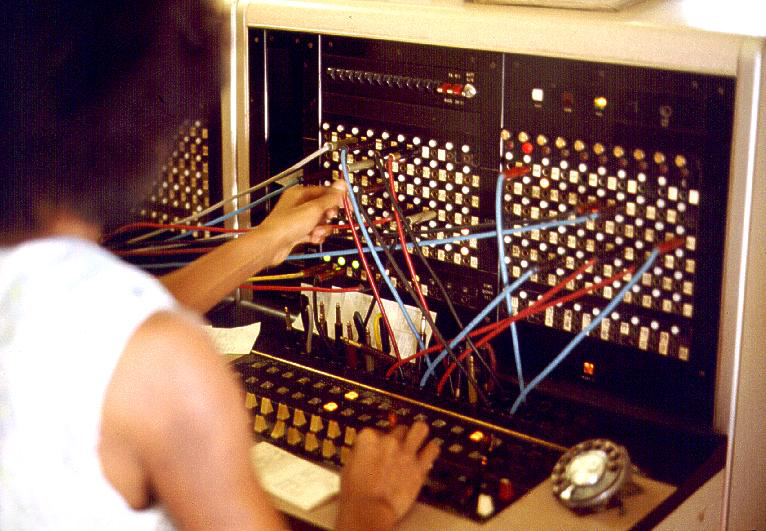
A telephone operator manually connecting calls with cord pairs at a telephone switchboard
A modern central office, equipped with voice communication and broadband data capabilities

A telephone exchange, telephone switch, or central office is a central component of a telecommunications system in the public switched telephone network (PSTN) or in large enterprises. It facilitates the establishment of communication circuits, enabling telephone calls between subscribers. The term "central office" can also refer to a central location for fiber optic equipment for a fiber internet provider.[1][2][3]

In historical perspective, telecommunication terminology has evolved with time. The term telephone exchange is often used synonymously with central office, a Bell System term. A central office is defined as the telephone switch controlling connections for one or more central office prefixes. However, it also often denotes the building used to house the inside plant equipment for multiple telephone exchange areas. In North America, the term wire center may be used to denote a central office location, indicating a facility that provides a telephone with a dial tone.[4] Telecommunication carriers also define rate centers for business and billing purposes, which in large cities, might encompass clusters of central offices to specify geographic locations for distance measurement calculations.

In the 1940s, the Bell System in the United States and Canada introduced a nationwide numbering system that identified central offices with a unique three-digit code, along with a three-digit numbering plan area code (NPA code or area code), making central office codes distinctive within each numbering plan area. These codes served as prefixes in subscriber telephone numbers. The mid-20th century saw similar organizational efforts in telephone networks globally, propelled by the advent of international and transoceanic telephone trunks and direct customer dialing.

For corporate or enterprise applications, a private telephone exchange is termed a private branch exchange (PBX), which connects to the public switched telephone network. A PBX serves an organization's telephones and any private leased line circuits, typically situated in large office spaces or organizational campuses. Smaller setups might use a PBX or key telephone system managed by a receptionist, catering to the telecommunication needs of the enterprise.

History

[edit]
Tivadar Puskás
1922 diagram of 1877 Boston exchange
1903 manual switch for four subscriber lines (top) with four cross-bar talking circuits (horizontal) and one bar to connect the operator (T). The lowest cross-bar (E) connects idle stations to ground (earth) to enable the signaling indicators (F).

In the era of the electrical telegraph, its principal users were post offices, railway stations, the more important governmental centers (ministries), stock exchanges, very few nationally distributed newspapers, the largest internationally important corporations and wealthy individuals.[5] Despite the fact that telephone devices existed before the invention of the telephone exchange, their success and economical operation would have been impossible on the same schema and structure of the contemporary telegraph. Before the development of the telephone exchange switchboard, early telephones operated as intercoms; each telephone device was hardwired to connect with only one other telephone device, such as linking a person's home to their workplace.[6]

A telephone exchange is a telephone system for a small geographic area that provides the switching (interconnection) of subscriber lines for calls made between them. Exchanges made possible the immediate creation of ad hoc temporary circuits on demand between any two subscribers, now known as circuit switching. This made telephony into a practical technology for everyday use and became the impetus for the creation of a new industrial sector: telecommunications.

As with the invention of the telephone itself, the honour of "first telephone exchange" has several claimants. One of the first to propose a telephone exchange was Hungarian Tivadar Puskás in 1877 while he was working for Thomas Edison.[7][8][9][10][11] The first experimental telephone exchange was based on the ideas of Puskás and it was built by the Bell Telephone Company in Boston in 1877.[12] The world's first state-administered telephone exchange opened on November 12, 1877 in Friedrichsberg close to Berlin under the direction of Heinrich von Stephan.[13] George W. Coy designed and built the first commercial US telephone exchange which opened in New Haven, Connecticut in January, 1878 and the first telephone booth was built in nearby Bridgeport.[14] The switchboard was built from "carriage bolts, handles from teapot lids and bustle wire" and could handle two simultaneous conversations.[15] Charles Glidden is also credited with establishing an exchange in Lowell, MA. with 50 subscribers in 1878.

Bristol Telephone Exchange in 1894. Illustration by Samuel Loxton

In Europe other early telephone exchanges were based in London and Manchester, both of which opened under Bell patents in 1879.[16] Belgium had its first International Bell exchange (in Antwerp) a year later.

In 1887 Puskás introduced the multiplex switchboard.[17]

Later exchanges consisted of one to several hundred plug boards staffed by switchboard operators. Each operator sat in front of a vertical panel containing banks of ¼-inch tip-ring-sleeve (3-conductor) jacks, each of which was the local termination of a subscriber's telephone line. In front of the jack panel lay a horizontal panel containing two rows of patch cords, each pair connected to a cord circuit. When a calling party lifted the receiver, the local loop current lit a signal lamp near the jack.[18] The operator responded by inserting the rear cord (answering cord) into the subscriber's jack and switched their headset into the circuit to ask, "Number, please?" For a local call, the operator inserted the front cord of the pair (ringing cord) into the called party's local jack and started the ringing cycle. For a long-distance call, the operator plugged into a trunk circuit to connect to another operator in another bank of boards or at a remote central office. In 1918, the average time to complete the connection for a long-distance call was 15 minutes.[18]

Early manual switchboards required the operator to operate listening keys and ringing keys, but by the late 1910s and 1920s, advances in switchboard technology led to features which allowed the call to be automatically answered immediately as the operator inserted the answering cord and ringing would automatically begin as soon as the operator inserted the ringing cord into the called party's jack. The operator would be disconnected from the circuit, allowing them to handle another call, while the caller heard an audible ringback signal, so that that operator would not have to periodically report that they were continuing to ring the line.[19]

In the ringdown method, the originating operator called another intermediate operator who would call the called subscriber, or passed it on to another intermediate operator.[20] This chain of intermediate operators could complete the call only if intermediate trunk lines were available between all the centers at the same time. In 1943 when military calls had priority, a cross-country US call might take as long as 2 hours to request and schedule in cities that used manual switchboards for toll calls.

On March 10, 1891, Almon Brown Strowger, an undertaker in Kansas City, Missouri, patented the stepping switch, a device which led to the automation of telephone circuit switching. While there were many extensions and adaptations of this initial patent, the one best known consists of 10 levels or banks, each having 10 contacts arranged in a semicircle. When used with a rotary telephone dial, each pair of digits caused the shaft of the central contact "hand" of the stepping switch to first step (ratchet) up one level for each pulse in the first digit and then to swing horizontally in a contact row with one small rotation for each pulse in the next digit.

Later stepping switches were arranged in banks, the first stage of which was a linefinder. If one of up to a hundred subscriber lines (two hundred lines in later linefinders) had the receiver lifted "off hook", a linefinder connected the subscriber's line to a free first selector, which returned the subscriber a dial tone to show that it was ready to receive dialled digits. The subscriber's dial pulsed at about 10 pulses per second, although the speed depended on the standard of the particular telephone administration.

Exchanges based on the Strowger switch were eventually challenged by other exchange types and later by crossbar technology. These exchange designs promised faster switching and would accept inter-switch pulses faster than the Strowger's typical 10 pps—typically about 20 pps. At a later date many also accepted DTMF "touch tones" or other tone signaling systems.

A transitional technology (from pulse to DTMF) had converters to convert DTMF to pulse, to feed to older Strowger, panel, or crossbar switches. This technology was used as late as mid-2002.

Terminology

[edit]

Many terms used in telecommunication technology differ in meaning and usage among the various English speaking regions. For the purpose of this article the following definitions are made:

  • Manual service is telephone service in which a human telephone operator routes calls as instructed by a subscriber with a telephone set that does not have a dial.
  • Dial service is when an exchange routes calls by interpreting subscriber-dialed digits.
  • A telephone switch is the switching equipment of an exchange.
  • A wire center is the area served by a particular switch or central office.
  • A concentrator is a device that concentrates traffic, be it remote or co-located with the switch.
  • An off-hook condition represents a circuit that is in use, e.g., when a telephone call is in progress.
  • An on-hook condition represents an idle circuit, i.e. no telephone call is in progress.

A central office originally was a primary exchange in a city with other exchanges service parts of the area. The term became to mean any switching system including its facilities and operators. It is also used generally for the building that houses switching and related inside plant equipment. In United States telecommunication jargon, a central office (C.O.) is a common carrier switching center Class 5 telephone switch in which trunks and local loops are terminated and switched.[21] In the UK, a telephone exchange means an exchange building and is also the name for a telephone switch.

Manual service exchanges

[edit]
1924 PBX switchboard

With manual service, the customer lifts the receiver off-hook and asks the operator to connect the call to a requested number. Provided that the number is in the same central office and located on the operator's switchboard, the operator connects the call by plugging the ringing cord into the jack corresponding to the called customer's line. If the called party's line is on a different switchboard in the same office, or in a different central office, the operator plugs into the trunk for the destination switchboard or office and asks the operator answering (known as the "B" operator) to connect the call.

Most urban exchanges provided common-battery service, meaning that the central office provided power to the subscriber telephone circuits for operation of the transmitter, as well as for automatic signaling with rotary dials. In common-battery systems, the pair of wires from a subscriber's telephone to the exchange carry 48V (nominal) DC potential from the telephone company end across the conductors. The telephone presents an open circuit when it is on-hook or idle.[22]

When a subscriber's phone is off-hook, it presents an electrical resistance across the line which causes current to flow through the telephone and wires to the central office. In a manually operated switchboard, this current flowed through a relay coil and actuated a buzzer or a lamp on the operator's switchboard, signaling the operator to perform service.[22]

In the largest cities, it took many years to convert every office to automatic equipment, such as a panel switch. During this transition period, once numbers were standardized to the 2L-4N or 2L-5N format (two-letter exchange name and either four or five digits), it was possible to dial a number located in a manual exchange and be connected without requesting operator assistance. The policy of the Bell System stated that customers in large cities should not need to be concerned with the type of office, whether they were calling a manual or an automatic office.

When a subscriber dialed the number of a manual station, an operator at the destination office answered the call after seeing the number on an indicator and connected the call by plugging a cord into the outgoing circuit and ringing the destination station. For example, if a dial customer calling from TAylor 4725 dialed a number served by a manual exchange, e.g., ADams 1383-W, the call was completed, from the subscriber's perspective, exactly as a call to LEnnox 5813, in an automated exchange. The party line letters W, R, J and M were only used in manual exchanges with jack-per-line party lines.

Montreal telephone exchange (c. 1895)

In contrast to the listing format MAin 1234 for an automated office with two capital letters, a manual office, having listings such as Hillside 834 or East 23, was recognizable by the format in which the second letter was not capitalized.

Rural areas, as well as the smallest towns, had manual service and signaling was accomplished with magneto telephones, which had a crank for the signaling generator. To alert the operator, or another subscriber on the same line, the subscriber turned the crank to generate ringing current. The switchboard responded by interrupting the circuit, which dropped a metal tab above the subscriber's line jack and sounded a buzzer. Dry cell batteries, normally two large N°. 6 cells in the subscriber's telephone, provided the direct current for the transmitter. Such magneto systems were in use in the US as late as 1983, as in the small town, Bryant Pond, Woodstock, Maine.

Many small town magneto systems featured party lines, anywhere from two to ten or more subscribers sharing a single line. When calling a party, the operator used code ringing, a distinctive ringing signal sequence, such as two long rings followed by one short ring. Everyone on the line could hear the signals, and could pick up and monitor other people's conversations.

Early automatic exchanges

[edit]
A rural telephone exchange building in Australia

Automatic exchanges, which provided dial service, were invented by Almon Strowger in 1888. First used commercially in 1892, they did not gain widespread use until the first decade of the 20th century. They eliminated the need for human switchboard operators who completed the connections required for a telephone call. Automation replaced human operators with electromechanical systems and telephones were equipped with a dial by which a caller transmitted the destination telephone number to the automatic switching system.

A telephone exchange automatically senses an off-hook condition of the telephone when the user removes the handset from the switchhook or cradle. The exchange provides dial tone at that time to indicate to the user that the exchange is ready to receive dialed digits. The pulses or DTMF tones generated by the telephone are processed and a connection is established to the destination telephone within the same exchange or to another distant exchange.

The exchange maintains the connection until one of the parties hangs up. This monitoring of connection status is called supervision. Additional features, such as billing equipment, may also be incorporated into the exchange.

The Bell System dial service implemented a feature called automatic number identification (ANI) which facilitated services like automated billing, toll-free 800-numbers and 9-1-1 service. In manual service, the operator knows where a call is originating by the light on the switchboard jack field. Before ANI, long-distance calls were placed into an operator queue and the operator asked the calling party's number and recorded it on a paper toll ticket.

Early exchanges were electromechanical systems using motors, shaft drives, rotating switches and relays. Some types of automatic exchanges were the Strowger switch or step-by-step switch, All Relay, panel switch, Rotary system and the crossbar switch.

Electromechanical signaling

[edit]

Circuits interconnecting switches are called trunks. Before Signalling System 7, Bell System electromechanical switches in the United States originally communicated with one another over trunks using a variety of DC voltages and signaling tones. Today, those simple digital signals have been replaced by more modern coded digital signals (typically using binary code).

Some signaling communicated dialed digits. An early form called Panel Call Indicator Pulsing used quaternary pulses to set up calls between a panel switch and a manual switchboard. Probably the most common form of communicating dialed digits between electromechanical switches was sending dial pulses, equivalent to a rotary dial's pulsing, but sent over trunk circuits between switches.

In Bell System trunks, it was common to use 20 pulse-per-second between crossbar switches and crossbar tandems. This was twice the rate of Western Electric/Bell System telephone dials. Using the faster pulsing rate made trunk utilization more efficient because the switch spent half as long listening to digits. DTMF was not used for trunk signaling.

Multi-frequency (MF) was the last of the pre-computerized methods. It used a different set of tones sent in pairs like DTMF. Dialing was preceded by a special keypulse (KP) signal and followed by a start (ST). Variations of the Bell System MF tone scheme became a CCITT standard. Similar schemes were used in the Americas and in some European countries including Spain. Digit strings between switches were often abbreviated to further improve utilization.

For example, one switch might send only the last four or five digits of a telephone number. In one case, seven digit numbers were preceded by a digit 1 or 2 to differentiate between two area codes or office codes, (a two-digit-per-call savings). This improved revenue per trunk and reduced the number of digit receivers needed in a switch. Every task in electromechanical switches was done in big metallic pieces of hardware. Every fractional second cut off of call set up time meant fewer racks of equipment to handle call traffic.

Examples of signals communicating supervision or call progress include E and M signaling, SF signaling, and robbed-bit signaling. In physical (not carrier) E and M trunk circuits, trunks were four wire. Fifty trunks would require a hundred pair cable between switches, for example. Conductors in one common circuit configuration were named tip, ring, ear (E) and mouth (M). Tip and ring were the voice-carrying pair and named after the tip and ring on the three conductor cords on the manual operator's console.

In two-way trunks with E and M signaling, a handshake took place to prevent both switches from colliding by dialing calls on the same trunk at the same time. By changing the state of these leads from ground to −48 volts, the switches stepped through a handshake protocol. Using DC voltage changes, the local switch would send a signal to get ready for a call and the remote switch would reply with an acknowledgment (a wink) to go ahead with dial pulsing. This was done with relay logic and discrete electronics.

These voltage changes on the trunk circuit would cause pops or clicks that were audible to the subscriber as the electrical handshaking stepped through its protocol. Another handshake, to start timing for billing purposes, caused a second set of clunks when the called party answered.

A second common form of signaling for supervision was called single-frequency or SF signaling. The most common form of this used a steady 2,600 Hz tone to identify a trunk as idle. Trunk circuitry hearing a 2,600 Hz tone for a certain duration would go idle. (The duration requirement reduced falsing.) Some systems used tone frequencies over 3,000 Hz, particularly on SSB frequency-division multiplex microwave radio relays.

On T-carrier binary digital transmission systems, bits within the T-1 data stream were used to transmit supervision. By careful design, the appropriated bits did not change voice quality appreciably. Robbed bits were translated to changes in contact states (opens and closures) by electronics in the channel bank hardware. This allowed direct current E and M signaling, or dial pulses, to be sent between electromechanical switches over a pure digital carrier which did not have DC continuity.

Noise

[edit]

Bell System installations typically had alarm bells, gongs, or chimes to announce alarms calling attention to a failed switch element. A trouble reporting card system was connected to switch common control elements. These trouble reporting systems punctured cardboard cards with a code that logged the nature of a failure.

Maintenance tasks

[edit]
Manual test board in an electromechanical switching office staffed by a technician

Electromechanical switching systems required sources of electricity in form of direct current (DC), as well as alternating ring current (AC), which were generated on-site with mechanical generators. In addition, telephone switches required adjustment of many mechanical parts. Unlike modern switches, a circuit connecting a dialed call through an electromechanical switch had DC continuity within the local exchange area via metallic conductors.

The design and maintenance procedures of all systems involved methods to avoid that subscribers experienced undue changes in the quality of the service or that they noticed failures. A variety of tools referred to as make-busys were plugged into electromechanical switch elements upon failure and during repairs. A make-busy identified the part being worked on as in-use, causing the switching logic to route around it. A similar tool was called a TD tool. Delinquent subscribers had their service temporarily denied (TDed). This was effected by plugging a tool into the subscriber's office equipment on Crossbar systems or line group in step-by-step switches. The subscriber could receive calls but could not dial out.

Strowger-based, step-by-step offices in the Bell System required continuous maintenance, such as cleaning. Indicator lights on equipment bays alerted staff to conditions such as blown fuses (usually white lamps) or a permanent signal (stuck off-hook condition, usually green indicators). Step offices were more susceptible to single-point failures than newer technologies.

Crossbar offices used more shared, common control circuits. For example, a digit receiver (part of an element called an Originating Register) would be connected to a call just long enough to collect the subscriber's dialed digits. Crossbar architecture was more flexible than step offices. Later crossbar systems had punch-card-based trouble reporting systems. By the 1970s, automatic number identification had been retrofitted to nearly all step-by-step and crossbar switches in the Bell System.

Electronic switches

[edit]

Electronic switching systems gradually evolved in stages from electromechanical hybrids with stored program control to the fully digital systems. Early systems used reed relay-switched metallic paths under digital control. Equipment testing, phone numbers reassignments, circuit lockouts and similar tasks were accomplished by data entry on a terminal.

Examples of these systems included the Western Electric 1ESS switch, Northern Telecom SP1, Ericsson AXE, Automatic Electric EAX-1 & EAX-2, Philips PRX/A, ITT Metaconta, British GPO/BT TXE series and several other designs were similar. Ericsson also developed a fully computerized version of their ARF crossbar exchange called ARE. These used a crossbar switching matrix with a fully computerized control system and provided a wide range of advanced services. Local versions were called ARE11 while tandem versions were known as ARE13. They were used in Scandinavia, Australia, Ireland and many other countries in the late 1970s and into the 1980s when they were replaced with digital technology.

These systems could use the old signaling methods inherited from electromechanical crossbar and step-by-step switches. They also introduced a new form of data communications: two 1ESS exchanges could communicate with one another using a data link called Common Channel Interoffice Signaling, (CCIS). This data link was based on CCITT 6, a predecessor to SS7. In European systems R2 signalling was normally used.

Digital switches

[edit]
A typical satellite PABX with front cover removed

First concepts of digital switching and transmission were developed by various labs in the United States and in Europe starting in the 1930s.[citation needed] The first prototype digital switch was developed by Bell Labs as part of the ESSEX project while the first true digital exchange to be combined with digital transmission systems was designed by LCT (Laboratoire Central de Telecommunications) in Paris.[citation needed] The first digital switch to be placed into a public network in England was the Empress Exchange in London which was designed by the General Post Office research labs.[citation needed] It was a tandem switch that connected three Strowger exchanges. The first commercial roll-out of a fully digital local switching system was Alcatel's E10 system which began serving customers in Brittany in Northwestern France in 1972.[citation needed]

Prominent examples of digital switches include:

  • Ericsson's AXE telephone exchange is the most widely used digital switching platform in the world and can be found throughout Europe and in most countries around the world. It is also very popular in mobile applications. This highly modular system was developed in Sweden in the 1970s as a replacement for the very popular range of Ericsson crossbar switches ARF, ARM, ARK and ARE used by many European networks from the 1950s onwards.
  • Alcatel-Lucent inherited three of the world's most iconic digital switching systems : Alcatel E10, 1000-S12, and the Western Electric 5ESS.
Alcatel developed the E10 system in France during the late 1960s and 1970s. This widely used family of digital switches was one of the earliest TDM switches to be widely used in public networks. Subscribers were first connected to E10A switches in France in 1972. This system is used in France, Ireland, China, and many other countries. It has been through many revisions and current versions are even integrated into all-IP networks.
Alcatel also acquired ITT System 12 which when it bought ITT's European operations. The S12 system and E10 systems were merged into a single platform in the 1990s. The S12 system is used in Germany, Italy, Australia, Belgium, China, India, and many other countries around the world.
Finally, when Alcatel and Lucent merged, the company acquired Lucent's 5ESS and 4ESS systems used throughout the United States of America and in many other countries.
  • Nokia Siemens Networks EWSD originally developed by Siemens, Bosch and DeTeWe [de] for the German market is used throughout the world.
  • Nortel then Genband, and now Ribbon Communications DMS100 and other versions are very popular with operators all over the world.
  • GTD-5 EAX developed by GTE Automatic Electric, the GTD-5 was acquired by Lucent which became Alcatel-Lucent, which then became Nokia
  • NEC NEAX used in Japan, New Zealand and many other countries.
  • Marconi System X originally developed by the British Post Office (later BT), GEC, Plessey and STC, is a type of digital exchange used by BT Group in the UK public telephone network.
A digital exchange (Nortel DMS-100) used by an operator to offer local and long-distance services in France. Each switch typically serves 10,000–100,000+ subscribers depending on the geographic area.

When telephony was dominated by analog landline phones, digital conversion took place upstream at the switch. Digital switches encode subscribers' speech as recorded by a microphone in the handset of the sending phone, in 8,000 time slices per second (that is, a sampling rate of 8khz). At each time slice, a digital PCM representation of the analog electrical signal is made. The digital PCM signals are then sent to the receiving end of the line, where the reverse process occurs at the other switch using a DAC (digital-to-analog converter). This produces an analog electrical signal nearly identical to the original, which then drives a loudspeaker in the handset of the receiving phone. In other words, whenever someone uses a telephone, the sound waves from the speaker's voice are encoded into PCM for switching and then those sound waves are immediately reconstructed and played on the other end. The speaker's voice is delayed in the process by a small fraction of one second — it is not "live", it is reconstructed — delayed only minutely. The deployment of digital telephony means that all this conversion now takes place in the phones themselves and the digital switches in between are there only to route data packets.

Individual local loop telephone lines are connected to a remote concentrator. In many cases, the concentrator is co-located in the same building as the switch. The interface between remote concentrators and telephone switches has been standardised by ETSI as the V5 protocol. Concentrators are used because most telephones are idle most of the day, hence the traffic from hundreds or thousands of them may be concentrated into only tens or hundreds of shared connections.

Some telephone switches do not have concentrators directly connected to them, but rather are used to connect calls between other telephone switches. These complex machines are referred to as "carrier-level" switches or tandem switches.

Some telephone exchange buildings in small towns house only remote or satellite switches and are homed upon a "parent" switch, usually several kilometres away. The remote switch is dependent on the parent switch for routing. Unlike a digital loop carrier, a remote switch can route calls between local phones itself, without using trunks to the parent switch.

Map of wire center locations in the US
Map of central office locations in the US

The switch's place in the network

[edit]

Telephone switches are a small component of a large network. A major part, in terms of expense, maintenance and logistics of the telephone system is outside plant, which is the wiring outside the central office. While many subscribers were served with party-lines in the middle of the 20th century, it was the goal that each subscriber telephone station were connected to an individual pair of wires from the switching system.

A typical central office may have tens of thousands of pairs of wires that appear on terminal blocks called the main distribution frame (MDF). A component of the MDF is protection: fuses or other devices that protect the switch from lightning, shorts with electric power lines, or other foreign voltages. In a typical telephone company, a large database tracks information about each subscriber pair and the status of each jumper. Before computerization of Bell System records in the 1980s, this information was handwritten in pencil in accounting ledger books.

To reduce the expense of outside plant, some companies use "pair gain" devices to provide telephone service to subscribers. These devices are used to provide service where existing copper facilities have been exhausted or by siting in a neighborhood, can reduce the length of copper pairs, enabling digital services such as Integrated Services Digital Network (ISDN) or digital subscriber line (DSL).

Pair gain or digital loop carriers (DLCs) are located outside the central office, usually in a large neighborhood distant from the CO. DLCs are often referred to as Subscriber Loop Carriers (SLCs), after a Lucent proprietary product.

DLCs can be configured as universal (UDLCs) or integrated (IDLCs). Universal DLCs have two terminals, a central office terminal (COT) and a remote terminal (RT), that function similarly. Both terminals interface with analog signals, convert to digital signals and transport to the other side where the reverse is performed.

Sometimes, the transport is handled by separate equipment. In an Integrated DLC, the COT is eliminated. Instead, the RT is connected digitally to equipment in the telephone switch. This reduces the total amount of equipment required.

Switches are used in both local central offices and in long distance centers. There are two major types in the Public switched telephone network (PSTN), the Class 4 telephone switches designed for toll or switch-to-switch connections, and the Class 5 telephone switches or subscriber switches, which manage connections from subscriber telephones. Since the 1990s, hybrid Class 4/5 switching systems that serve both functions have become common.

Another element of the telephone network is time and timing. Switching, transmission and billing equipment may be slaved to very high accuracy 10 MHz standards which synchronize time events to very close intervals. Time-standards equipment may include Rubidium- or Caesium-based standards and a Global Positioning System receiver.

Switch design

[edit]

Long-distance switches may use a slower, more efficient switch-allocation algorithm than central offices, because they have near 100% utilization of their input and output channels.[citation needed] Central offices have more than 90% of their channel capacity unused.

Traditional telephone switches connected physical circuits (e.g., wire pairs) while modern telephone switches use a combination of space- and time-division switching. In other words, each voice channel is represented by a time slot (say 1 or 2) on a physical wire pair (A or B). In order to connect two voice channels (say A1 and B2) together, the telephone switch interchanges the information between A1 and B2. It switches both the time slot and physical connection. To do this, it exchanges data between the time slots and connections 8,000 times per second, under control of digital logic that cycles through electronic lists of the current connections. Using both types of switching makes a modern switch far smaller than either a space or time switch could be by itself.

The structure of a switch is an odd number of layers of smaller, simpler subswitches. Each layer is interconnected by a web of wires that goes from each subswitch, to a set of the next layer of subswitches. In some designs, a physical (space) switching layer alternates with a time switching layer. The layers are symmetric, because in a telephone system callers can also be called. Other designs use time-switching only, throughout the switch.

A time-division subswitch reads a complete cycle of time slots into a memory, and then writes it out in a different order, also under control of a cyclic computer memory. This causes some delay in the signal.

A space-division subswitch switches electrical paths, often using some variant of a nonblocking minimal spanning switch, or a crossover switch.

Fault tolerance

[edit]

Composite switches are inherently fault-tolerant. If a subswitch fails, the controlling computer can sense the failure during a periodic test. The computer marks all the connections to the subswitch as "in use". This prevents new calls, and does not interrupt established calls. As established calls end, the subswitch becomes unused, and can be repaired. When the next test succeeds, the switch returns to full operation.

To prevent frustration with unsensed failures, all the connections between layers in the switch are allocated using first-in-first-out lists (queues). As a result, if a connection is faulty or noisy and the customer hangs up and redials, they will get a different set of connections and subswitches. A last-in-first-out (stack) allocation of connections might cause a continuing string of very frustrating failures.

Fire and disaster recovery

[edit]
Second Avenue telephone building in New York City, site of the 1975 New York Telephone Exchange fire

A central office is almost always a single point of failure for local calls. As the capacity of individual switches and the optical fibre which interconnects them increases, potential disruption caused by destruction of one local office will only be magnified. Multiple fibre connections can be used to provide redundancy to voice and data connections between switching centres, but careful network design is required to avoid situations where a main fibre and its backup both go through the same damaged central office as a potential common mode failure.[23]

See also

[edit]

References

[edit]
[edit]
Revisions and contributorsEdit on WikipediaRead on Wikipedia
from Grokipedia
A telephone exchange, also known as a or telephone switch, is a pivotal network node in systems that interconnects subscriber lines—typically via local loops—and routes calls by establishing temporary circuits or digital paths between users. It serves as the intermediary hub in the (PSTN), handling switching functions to connect local, regional, and international calls efficiently without requiring direct wiring between every pair of telephones. The origins of telephone exchanges trace back to the late 19th century, shortly after Alexander Graham Bell's patent for the telephone in 1876. The world's first commercial telephone exchange opened on January 28, 1878, in New Haven, Connecticut, designed by George W. Coy and initially serving 21 subscribers through a manual switchboard operated by young boys who physically plugged cords to connect calls. By 1881, nearly 49,000 telephones were in use across the United States, with exchanges relying on human operators—predominantly women by the 1880s, known as "Hello Girls"—to manage connections on shared "party lines" that often allowed multiple households to eavesdrop. These manual systems expanded rapidly, but they were labor-intensive; by 1930, over 235,000 female operators staffed U.S. exchanges, playing key roles even in wartime, such as the American Expeditionary Forces' signal corps during World War I. Automation transformed telephone exchanges starting in the late to address scalability and efficiency issues. In 1889, American inventor patented the first practical automatic telephone exchange, using a step-by-step electromechanical system with rotary dials to route calls without operator intervention, motivated partly by distrust of manual operators. The first commercial Strowger exchange opened in 1892 in , and by 1912, the installed its initial automatic exchange in Epsom, . This shift drastically reduced the need for operators; the last manual exchange in the UK closed in 1975, while in the U.S., operator numbers dropped below 200,000 by 1940 as dial systems proliferated. In the mid-20th century, exchanges transitioned to electronic and digital technologies, enabling greater capacity and features like direct dialing. The 1968 introduction of the Empress exchange in marked the world's first all-digital (PCM) system, paving the way for modern stored-program control switches. Today, telephone exchanges operate predominantly as digital systems within the PSTN, using protocols like (SS7) for call routing over copper or fiber-optic lines, though they are increasingly integrated with (IP)-based (VoIP) networks that convert speech to data packets for transmission via . Types include exchanges for broad connectivity and private branch exchanges (PBX) for internal organizational use, with many now cloud-hosted for scalability. As of 2025, traditional PSTN infrastructure is phasing out in favor of digital alternatives, with full VoIP transitions mandated in regions like the by 2027 to enhance reliability and reduce costs.

Fundamentals

Definition and Purpose

A telephone exchange is a system of equipment that interconnects telephone subscriber lines or local loops, enabling the completion of calls by establishing temporary electrical or digital paths between users. This central facility serves as the core switching point in telecommunication networks, directing signals from originating callers to destinations based on dialed information. Historically, telephone exchanges emerged to address the limitations of early party line systems, where multiple subscribers shared a single line, leading to inefficiencies as user numbers grew. By centralizing switching operations, exchanges allowed for scalable connections without the need for dedicated wires between every pair of subscribers, reducing costs. Automation of exchanges later enabled direct dialing independent of manual per-call interventions. In contemporary networks, telephone exchanges support the transmission of voice, data, and multimedia content across the (PSTN), mobile systems via mobile switching centers, and IP-based infrastructures through softswitches or gateways. They manage essential operations such as call routing, billing records, and signaling protocols to ensure reliable connectivity. The primary functions of a telephone exchange encompass call setup to initiate connections, teardown to release resources upon completion, routing decisions derived from dialed numbers or addresses, and allocation of circuits in traditional systems or packets in digital ones. These processes utilize signaling systems like SS7 in PSTN environments to coordinate network elements efficiently.

Basic Components

A telephone exchange relies on fundamental hardware and software components to connect calls between subscribers and external networks, facilitating the establishment, maintenance, and teardown of communication paths. These elements work together to detect call requests, route connections through the network, and manage signaling without interrupting service. The core hardware includes the switching matrix, which forms the backbone for establishing circuit connections via crosspoints—electromechanical or electronic points where lines intersect to complete a path between callers. Line interfaces, often called subscriber line interface circuits, connect the two-wire local loops from customer premises to the exchange, handling signal conversion, impedance matching, and initial supervision to detect off-hook conditions. Trunk interfaces similarly terminate inter-exchange links, converting signals between the exchange's internal format and external trunks, typically using four-wire configurations to minimize echo in longer connections. Control systems oversee call processing, with a common control unit coordinating overall operations such as path selection and in both electromechanical and electronic exchanges. Registers temporarily store dialed digits and call setup information, enabling the exchange to interpret and process user inputs like telephone numbers. In electromechanical systems, markers scan for available paths, select crosspoints in the switching matrix, and distribute control signals to establish connections efficiently. Power and support infrastructure ensures reliable operation, including batteries that provide -48 V DC backup power to maintain service during commercial outages, often supplemented by generators for extended reliability. Tone generators produce audible signals such as dial tones (350 Hz and 440 Hz in ) and busy tones to inform users of call status. Supervisory circuits monitor line states, detecting events like on-hook/off-hook transitions and call completion to manage resources dynamically. In digital telephone exchanges, logical components like call processing software implement (SPC) on dedicated processors, handling tasks from seizure detection to disconnection. These systems incorporate databases for routing tables, which map dialed numbers to destinations, and subscriber records, which store details such as and billing information to support personalized handling.

Terminology

Core Concepts

A central office (CO), also known as an end office, serves as the physical facility housing the switching equipment that connects individual telephone lines to the broader (PSTN). This location manages the origination and termination of calls for subscribers within a defined geographic area, functioning as the primary point of interconnection between local users and the wider telecommunications infrastructure. The subscriber loop, often referred to as the local loop, is the dedicated two-wire circuit that links a customer's instrument at their premises to the nearest central office. This metallic pair, typically composed of twisted wires, carries both voice signals and supervisory information, such as on-hook and off-hook states, enabling the exchange to detect call initiation and maintain connection integrity over distances up to several kilometers. Within the hierarchy of telephone exchanges, local exchanges—also called end offices—directly interface with end-user subscriber loops to handle connections for calls originating and terminating within the same area. In contrast, tandem exchanges operate as intermediate switching points that route traffic between multiple local exchanges, aggregating calls for efficient transit across larger networks without direct customer access. This distinction allows tandem offices to optimize trunk usage for inter-local traffic, such as connecting calls between different neighborhoods or cities served by separate end offices. Telephone exchanges traditionally rely on , a method where a dedicated end-to-end path is established and reserved for the entire duration of a call, ensuring constant bandwidth for voice transmission without interruption. , increasingly integrated into modern via IP networks, differs by dividing data—including voice—into discrete packets that travel independently across shared paths and are reassembled at the destination, enabling more flexible resource use but introducing potential variability in latency. While dominates legacy PSTN operations for its reliability in real-time communication, supports convergence with data services in next-generation systems.

Switching and Routing Terms

In telephone exchanges, the switching fabric refers to the interconnected network of crosspoints, matrices, or time-division multiplexers that physically or logically connect incoming lines to outgoing trunks, enabling the establishment of communication paths. This structure ensures non-blocking connectivity under normal load conditions to meet required grades of service in systems. Path hunting is the algorithmic process employed by the exchange's to search for and select an available route through the switching fabric for completing a call setup, often using sequential or hierarchical methods to minimize blocking. In multistage networks, hierarchical path hunting prioritizes preferred routes while probing alternatives to optimize connection efficiency and reduce call loss. Grading in telephone switching denotes the organized grouping of switching elements or links into hierarchical levels, providing multiple alternative paths to distribute and achieve desired blocking probabilities, as defined in international standards for exchange performance. This approach allows for scalable in , balancing cost and reliability. Concentration, often expressed as a line-to-trunk such as 10:1, represents the design principle where the number of subscriber lines exceeds the available switching or trunk resources, exploiting statistical since not all lines are active simultaneously to economize on hardware deployment. Typical ratios in central exchanges range from 4:1 to 10:1 or higher, with lower ratios in high-traffic areas and higher in low-traffic rural setups, ensuring economic viability without excessive call blocking. Numbering and involve the exchange's interpretation of dialed digits—comprising area codes (e.g., national plan area or NPA) and exchange codes (central office or NXX)—to generate routing instructions, mapping the called number to specific paths or destinations via a translation table in the control processor. This process, governed by international standards like , ensures accurate call direction across local, regional, and global networks by converting symbolic addresses into physical switch selections.

Historical Development

Manual Exchanges

Manual telephone exchanges, also known as manual switchboards, originated in the late as the primary means of connecting telephone calls before automation. The world's first commercial telephone exchange was established on January 28, 1878, in , by George W. Coy, who founded the District Telephone Company and constructed the initial switchboard using basic materials like carriage bolts and wire. This system initially served 21 subscribers, with operators manually patching connections between lines to enable communication. By the 1880s, manual exchanges had proliferated across the and , relying on human operators—predominantly women known as ""—to handle all switching tasks. In operation, manual exchanges used switchboards equipped with jacks representing subscriber lines, where operators employed pairs of jumper cords to establish connections. When a caller initiated contact—typically by cranking a magneto generator to signal the exchange—a or drop indicator alerted the operator, who would insert an answering cord into the caller's jack and inquire about the desired number. The operator then plugged a calling cord into the recipient's jack, activating a ringing current to alert the called , and monitored the connection for supervision, such as detecting when parties hung up. A single operator position could manage up to several dozen lines, with larger urban exchanges employing multiple interconnected switchboards and teams of operators to distribute the workload. Early manual systems were predominantly magneto-based, where each telephone set included a local battery for talking and a hand-cranked generator for signaling, eliminating the need for central power but requiring operators to interpret mechanical indicators. In the 1880s, Russian engineer Pavel Golubitsky independently proposed a central battery power supply system (1885–1886), allowing multiple telephones to be powered from a single central source — a foundational concept for modern telephone exchanges. He also invented a commutator (1886) enabling several subscribers to share a single line pair, facilitating early network expansion. Around 1893, common battery systems emerged, supplying centralized (typically -48 volts) from the exchange to power all subscriber telephones, replacing buzzers with visual lamps for incoming calls and enabling more efficient operation with improved transmitters. By the early , as subscriber numbers grew into the thousands in major cities, exchanges adopted multiple switchboard units—such as tandem boards for inter-office —allowing operators to handle complex routing across positions. Despite their foundational role, manual exchanges faced significant limitations in scalability, particularly with rapid urban expansion and rising call volumes in the early . Each operator could only connect a limited number of calls simultaneously, leading to delays, human errors in patching, and bottlenecks during peak hours that strained service quality. These issues became acute as telephone adoption surged, prompting innovations like Almon Strowger's 1891 patent for automatic switching to address operator dependency. Manual operations reached their peak during the and , employing over 300,000 operators at the height of to manage the demands of wartime communication and postwar growth.

Early Automatic Systems

The development of early automatic telephone systems marked a significant shift from manual operator-assisted connections, addressing limitations such as human error and scalability in growing networks. The pioneering invention was the , patented in 1891 by Almon B. Strowger, an undertaker from , who sought to automate switching to bypass operator intervention. This electromechanical device featured a two-motion selector mechanism using stepping relays, where electrical pulses from a dial telephone incrementally rotated and elevated a shaft to select the appropriate contact bank for connecting calls. The first commercial installation of a Strowger automatic exchange occurred in 1892 in , serving 75 subscribers and demonstrating the feasibility of pulse-driven, operator-free switching. Building on Strowger's step-by-step approach, subsequent systems introduced more efficient designs in the and . 's panel switching system, deployed starting in 1921 with the first installation in , utilized vertical and horizontal panels of layered terminals operated by permanent magnet selectors for line and trunk selection, enabling common control and reducing the need for dedicated paths per call. This marked an advancement in handling larger urban exchanges by translating dial pulses into marker-controlled relay actions rather than direct mechanical stepping. By the , introduced crossbar switching, with the first systems entering service in 1938 in , employing a grid of horizontal and vertical bars actuated by electromagnets for coordinate selection—selecting rows and columns to close multiple crosspoints simultaneously. Crossbar systems offered faster call setup times and greater reliability compared to earlier mechanical selectors, as the minimal moving parts minimized wear and allowed for more compact, maintainable equipment. Central to these early automatic systems was , a decadic signaling method where rotating the dial interrupted the loop a number of times corresponding to each digit—for instance, ten interruptions for the digit zero—allowing switches to and advance based on these pulses. This loop-disconnect technique, integral to Strowger and subsequent panel and crossbar implementations, remained the dominant input method for decades until the introduction of touch-tone dual-tone multi-frequency signaling in the 1960s. Adoption of these systems spread globally, with the United Kingdom's (GPO) standardizing Strowger technology in the 1920s; by 1924, it supported nearly 265,000 lines across 23 exchanges, facilitating rapid expansion of automatic service. Despite their innovations, early automatic exchanges faced challenges including physical bulkiness from extensive mechanical components and high maintenance demands due to frequent adjustments and part replacements. These limitations contributed to their gradual phase-out by the in favor of more advanced technologies, though they laid the foundation for modern by proving the viability of electromechanical .

Electronic and Digital Transitions

The transition from electromechanical to electronic telephone exchanges in the marked a pivotal advancement, introducing analog electronic switches that leveraged transistors and, to a lesser extent, vacuum tubes for control and amplification, while retaining electromechanical elements like for actual path switching. This era addressed the limitations of bulky systems by enabling more compact designs and faster call processing times, often reducing equipment space by factors of 10 or more compared to crossbar switches. A seminal example was AT&T's Number 1 (1ESS), deployed commercially in , on May 30, 1965, serving 4,000 lines as the world's first electronic central office switch. The 1ESS utilized a (SPC) architecture with a transistor-based central processor running at 250 kHz, allowing programmable logic that facilitated easier maintenance and feature updates without physical rewiring. In parallel, European manufacturers advanced similar technologies; introduced the PRX (Processor-controlled Reed eXchange) system in the late , a semi-electronic SPC exchange combining transistorized control with reed relays, which was deployed in public networks by the early and exemplified the reduced size benefits through modular construction. These early electronic systems improved reliability by minimizing moving parts, with failure rates dropping significantly— for instance, the 1ESS achieved exceeding 100,000 hours in initial deployments— and paved the way for scalability in urban exchanges. The digital revolution accelerated in the 1970s, shifting from analog signal handling to fully digital processing via (PCM), which digitized voice at a standard rate of 64 kbps per channel using 8-bit samples at an 8 kHz sampling frequency as defined in G.711. This enabled (TDM) for efficient bandwidth sharing on a single . Key milestones included the UK's launching the experimental Empress exchange in 1968, the first all-digital PCM system handling 128 lines, and AT&T's No. 4 ESS toll switch entering service in on January 17, 1976, capable of managing 107,520 trunks and 500,000 calls per hour through digital TDM fabric. Nortel's , released in 1979, further propelled adoption as a versatile digital SPC platform supporting up to 100,000 lines and integrating early data services. By the 1990s, digital exchanges had become the global norm, facilitating integration with emerging technologies like Integrated Services Digital Network (ISDN) for simultaneous voice and data transmission, and backbones for higher capacity. This widespread shift, with major networks completing programs by the decade's end, yielded profound impacts: operational costs fell by 30-50% due to compact hardware and automated diagnostics, while new features such as — enabled by digital signaling analysis— enhanced user experience and network management. By the early 2000s, digital systems underpinned over 90% of worldwide fixed-line infrastructure, supporting the convergence toward and IP telephony.

Exchange Types

Manual Service Exchanges

Manual service exchanges relied on human operators to physically connect calls using switchboards, which were the core of pre-automatic systems. These switchboards typically featured multiple-position designs, allowing several operators to access the same subscriber lines through repeated jacks arranged in multiples across the board. Incoming calls were signaled by miniature incandescent lamps that lit up on the operator's panel, alerting them to insert an answering plug from a flexible cord circuit into the corresponding jack. Operators then used ringing keys to send current to the called party's line, facilitating the connection, while supervisory lamps on the cords monitored call status, such as when parties hung up. Switchboards were often divided into A-boards and B-boards to streamline operations. A-boards handled incoming local calls from subscribers, where operators answered, inquired about the destination, and patched the connection using paired cords—typically 10 to 17 per operator—equipped with plugs for both answering and connecting. These boards included subscriber line like protectors and terminals, along with listening keys for the operator to monitor and intervene if needed. B-boards, in contrast, managed outgoing calls, particularly toll or long-distance trunks from other exchanges, using single cords (often 25 to 30 per operator) and auto-tripping ringing keys that released upon the called party's receiver lift. This division enabled efficient handling of up to 1,600–2,000 calls per day on A-boards and 2,400–3,000 on B-boards, depending on traffic volume. Operators played multifaceted roles beyond basic patching, including directory assistance by accessing alphabetical and geographical directories to provide phone numbers, long-distance routing through coordination with tandem operators who switched calls between local offices, and emergency handling by prioritizing urgent connections or assisting those with disabilities. Training emphasized speed and accuracy through repetitive drills on simulated boards, ensuring minimal delays in high-volume environments. Tandem operators specifically managed inter-office trunks, relaying calls from A-board operators to distant B-boards via dedicated lines. Capacity and variants adapted to different settings. Rural magneto exchanges, common in low-density areas, used hand-crank generators at subscriber ends to produce signaling current, alerting the central switchboard without relying on central power; operators at small magneto boards (often under 100 lines) manually connected parties using drops or lamps triggered by the crank's . These systems supported basic party lines shared by multiple subscribers, with capacities limited to 10–50 lines per board due to simple battery-powered designs. Urban private branch exchanges (PBXs), serving offices or hotels, featured compact manual switchboards for internal extensions, allowing operators to route calls among dozens of lines while connecting to external trunks; variants included multi-position boards for larger installations, handling up to several hundred extensions with features like attendant consoles for billing and conferencing. The decline of manual service exchanges stemmed from escalating labor costs, as employing thousands of operators proved expensive amid rising call volumes, and human errors due to or mispatching. Last major installations occurred in developing regions post-1950s, such as small magneto systems in rural and , where automation lagged until the 1970s.

Electromechanical Automatic Exchanges

Electromechanical exchanges represented a significant advancement in telephone switching technology, utilizing mechanical components driven by electrical impulses to automate call connections without human intervention. These systems, predominant from the early through the 1970s, relied on relays, selectors, and switches to route calls based on dialed pulses, enabling scalable urban networks. The foundational Strowger step-by-step design, patented in 1891, employed two-motion selectors to translate dial pulses into physical movements of wipers across contact banks. A vertical lifted the wiper assembly to a specific level corresponding to the first digit, while a rotary then rotated it across a semicircular bank of 10 contacts for the second digit, forming a 10x10 matrix for up to 100 terminations per switch. Subsequent digits advanced additional selectors in a chain, with the final uniselector—a single-motion rotary switch—establishing the connection to the called line by stepping in one direction only, controlled directly by the last dialed pulses. This sequential progression ensured direct routing but required multiple switches per call path. Crossbar switches, introduced in the , improved upon step-by-step systems by using a matrix of horizontal and vertical metal bars with electromagnetic latches at crosspoints to select paths with minimal motion. Activation of select and hold magnets latched a crosspoint, completing the circuit without sliding contacts, while combinators—auxiliary assemblies—allowed a single selector to handle multiple simultaneous calls by coordinating links and markers for efficient path allocation. This design reduced the number of needed per connection and supported common control for faster setup. These exchanges typically supported capacities up to 10,000 lines through multilevel hierarchies and code translators that mapped dialed numbers to instructions, accommodating complex numbering plans in large cities. Compared to manual exchanges, electromechanical systems offered continuous 24/7 operation and minimized human errors in connecting calls, substantially lowering labor costs. However, their reliance on mechanical parts led to wear from repeated motions, necessitating regular maintenance and resulting in operational lifespans limited by eventual failure rates during wear-out periods.

Electronic Switches

Electronic switches in telephone exchanges represent a transitional technology from electromechanical systems to fully digital ones, employing solid-state components for control while retaining analog voice paths. These systems primarily utilized space-division switching, where dedicated metallic paths are established for each call using crosspoint arrays. A key innovation was the integration of reed relays—sealed glass-enclosed contacts operated by electromagnetic coils—for the actual path switching, combined with transistors for logic and control functions. This hybrid approach allowed for stored-program control, where a central processor managed call routing via software, marking a shift from hardwired electromechanical sequencing. The ferreed switch, developed by Bell Labs, exemplified this by incorporating a ferromagnetic core into the reed relay to provide bistable memory, enabling faster and more reliable operation without constant power to hold states. In the , precursors to appeared in experimental designs, but production electronic exchanges stuck to space-division to ensure compatibility with existing analog infrastructure. Transistor-based circuits handled signaling and supervision, including electronic tone detection for dual-tone multi-frequency (DTMF) dialing, which replaced slower pulse detection in electromechanical systems. For instance, the TXE2 exchange, developed by the British Post Office and introduced in 1971, used approximately 100,000 reed relays for switching in small to medium local exchanges (200-2,000 lines), with logic for program control and features like automatic fault diagnosis. Similarly, early versions of Ericsson's AXE system in the incorporated reed relays for hybrid analog-digital operation, bridging crossbar predecessors while adding electronic processing for efficiency. These designs prioritized reliability, with reed relays offering a lifespan of over a billion operations due to minimal mechanical wear. Performance advantages over electromechanical switches were significant: call setup times dropped from seconds to milliseconds, as activation occurs in 1-5 ms compared to the multi-second sequencing in step-by-step or crossbar systems. Power consumption was also lower, with electronic controls drawing tens of watts versus hundreds for electromechanical drives, though analog voice paths still required amplification to mitigate losses. Maintenance improved through self-diagnostics and remote monitoring, reducing downtime. During the 1980s and , electronic switches facilitated upgrades in legacy networks without requiring a complete digital overhaul, serving as an interim solution in regions with extensive electromechanical infrastructure. Systems like the No. 1 ESS, deployed widely by from 1965 onward and upgraded through the 1980s, supported up to 65,000 lines and handled growing traffic volumes. These exchanges maintained analog paths compatible with early data services, such as Group 3 machines that proliferated in the 1980s, transmitting at 9,600 bps over standard voice lines without needing specialized digital conversion. By the late , over 100 million lines worldwide used such electronic switches, paving the way for full digital migration while minimizing capital costs for operators.

Digital and IP-Based Switches

Digital telephone exchanges, also known as (SPC) switches, represent a significant from analog systems by digitizing voice signals and using programmable processors for call control and switching functions. In these systems, voice is encoded using (PCM), which samples analog signals at 8 kHz and quantizes them into 8-bit digital values, enabling efficient transmission over digital networks. The core switching mechanism relies on (TDM), where multiple voice channels are interleaved into frames, such as the 24-channel DS1 (T1) frame in or the 32-channel E1 frame in , allowing time slot interchange for routing calls without physical cross-connections. This architecture, implemented through distributed multiprocessor designs communicating via protocols like , provides high reliability and flexibility for handling call setup, maintenance, and termination. The integration of (IP) into telephone switching has transformed traditional circuit-switched networks into packet-based systems, primarily through that separate call control from media handling. employ (SIP) for signaling to establish, modify, and terminate multimedia sessions, while media gateways convert between Time-Division Multiplexing (TDM) PSTN traffic and IP packets, ensuring interoperability. For instance, the BTS 10200 acts as a carrier-grade platform that controls media gateways using protocols like (MGCP), supporting voice routing between PSTN and IP domains in next-generation networks. Similarly, open-source solutions like provide modular capabilities for real-time communication, including SIP-based VoIP and integration, often deployed in scalable server environments. These IP-based switches enable advanced features such as (VoIP) for cost-efficient voice transmission, that converge voice, video, and data services, and enhanced scalability through virtualization and cloud deployment, which became prominent in the . By virtualizing switch functions on commodity hardware, operators can dynamically allocate resources to handle varying loads, supporting features like presence, , and video conferencing alongside traditional . This packet-oriented approach reduces latency and bandwidth usage compared to , facilitating seamless integration with (IMS) architectures for multimedia services. As of 2025, legacy digital SPC switches persist primarily in rural and developing regions for their robustness in low-density areas, but IP-based systems dominate global telephony, with the majority of mobile subscriptions using packet-switched voice services such as VoLTE (Voice over LTE) and VoNR (Voice over New Radio) in 4G and 5G networks. The shift to all-IP infrastructures, driven by 5G deployments, has rendered traditional TDM exchanges obsolete in urban and mobile networks, with softswitches and virtualized functions supporting billions of daily voice sessions through IMS cores. This evolution supports global interconnection, with 5G cores managing immense scale—such as Ericsson's dual-mode solutions that unify 4G and 5G voice services across billions of connections.

Technical Operations

Signaling and Control

Signaling and control in telephone exchanges encompass the mechanisms for detecting call initiation, dialed digits, supervising line states, and managing call termination, ensuring efficient connection establishment across the network. These functions rely on standardized protocols to exchange information between , local exchanges, and inter-exchange trunks, evolving from simple electrical supervision to sophisticated digital messaging systems. Early telephone exchanges employed , where control signals shared the same voice-frequency channel as , using tones within the audible spectrum to convey supervisory and addressing information. For instance, line often utilized battery reversal, a technique where the exchange reversed the DC polarity on the subscriber line to indicate call answer or disconnect, providing basic on-hook/off-hook detection without interfering with voice transmission. This method, common in manual and early electromechanical systems, was limited by susceptibility to noise and echo suppressors but enabled reliable basic call control. In-band protocols further included dual-tone multi-frequency (DTMF) signaling for user input, generating pairs of tones from a 4x4 grid of frequencies (e.g., 697 Hz and 1209 Hz for digit '1') to transmit dialed digits over the voice path after call connection. For inter-exchange communication, multi-frequency (MF) signaling transmitted address digits using combinations of two out of six frequencies (typically 700-1700 Hz) between exchanges, as specified for international circuits to seize trunks and forward called numbers. These in-band approaches, while economical, risked signal from voice traffic or compandors. The transition to signaling addressed these limitations by separating control messages from voice paths via dedicated channels, with Signaling System No. 7 (SS7), also known as Common Channel Signaling System No. 7 (CCS7), emerging as the standard in the . SS7 uses a separate packet-switched network for signaling, enabling faster call setup, support for advanced features like , and improved reliability over earlier in-band systems, as it avoids voice-band interference. In digital exchanges, the ISDN User Part (ISUP) protocol within SS7 handles call control, where the Initial Address Message (IAM) initiates seizure of an outgoing circuit by transmitting the called number, nature of connection, and continuity indicators to the destination exchange. Control logic in modern exchanges varies by architecture; stored program control (SPC) systems, introduced in the 1960s, centralize signaling processing through a stored that interprets incoming signals, manages call states, and executes switching instructions from memory, enhancing flexibility and reducing hardware dependency compared to hardwired electromechanical controls. In IP-based exchanges, control becomes distributed, with protocols like and (SIP) managing multimedia sessions over packet networks— providing gatekeeper-based centralized coordination for endpoint registration and call routing, while SIP offers a , text-based approach for initiating, modifying, and terminating sessions via INVITE messages. The evolution of signaling has progressed to packet-based systems for greater scalability; in 5G networks, the core signaling has evolved to a service-based using for most functions, with used for certain legacy-compatible aspects like , , and through application-specific commands over TCP or SCTP, enabling interworking with previous generations while supporting high-speed data services. This shift from circuit-associated supervision like battery reversal to advanced frameworks reflects the move toward all-IP , with interworking gateways translating between SS7 and for .

Noise and Interference

Noise and interference in telephone exchanges arise from various electrical and environmental factors that degrade signal quality, potentially leading to reduced call clarity or connection failures. , a primary source, occurs in multiplexed lines due to capacitive or between adjacent channels, where signals from one conversation unintentionally leak into another, resulting in audible interference. In electromechanical exchanges, electromagnetic interference (EMI) generated by relay operations, such as coil transients and contact arcing, can induce unwanted voltages in nearby circuits, exacerbating noise in switching paths. Additionally, thermal noise in amplifiers, stemming from random charge carrier agitation in resistive components, introduces broadband that limits the sensitivity of voice signal amplification, particularly in analog systems. The impact of these noise sources is quantified using the , expressed in decibels (dB), which measures the desired signal power relative to noise power; for voice , an SNR exceeding 30 dB is targeted to maintain intelligibility and prevent noticeable degradation in conversation quality. In early telephone exchanges, 50/60 Hz induction posed significant historical challenges, as from nearby power infrastructure coupled into telephone circuits, producing persistent hum that disrupted rural and urban connections alike. Mitigation strategies vary by exchange type and have evolved with technology. In electromechanical systems, shielding with conductive enclosures, such as copper or aluminum for high-frequency fields, reflects and absorbs EMI, while proper grounding of cable shields to chassis prevents hum by providing low-impedance paths for noise currents without creating ground loops. Digital and IP-based switches employ , which adds redundant parity bits to packets in VoIP transmissions, enabling receivers to detect and correct errors from noise-induced without retransmission. Modern optic implementations further reduce copper-related noise susceptibility, as light-based transmission is inherently immune to , ensuring cleaner signals over long distances.

Maintenance and Monitoring

Maintenance of telephone exchanges involves routine procedures to ensure operational reliability, including traffic monitoring and component upkeep tailored to the exchange type. In electromechanical systems, daily tasks include relay contacts to prevent arcing and signal degradation, typically performed every few months using burnishing tools and contact cleaners to maintain low resistance. Digital exchanges require applying software patches to address bugs and vulnerabilities, often scheduled during low-traffic periods to minimize disruption, with embedded patcher programs facilitating error-free updates. monitoring across both types uses peg counters to register calls per hour, enabling engineers to assess load and plan capacity adjustments. Diagnostics rely on built-in test equipment (BITE) or self-test routines integrated into digital switches for fault isolation, allowing remote identification of failed circuit packs with high accuracy. systems categorize issues by severity—critical, major, or minor—for overloads and failures, routing notifications to a central database for prioritized resolution and preventing widespread outages. Remote management has evolved since the for IP-based switches, employing SNMP to poll devices and receive traps for real-time status updates, supporting configuration changes and event notifications without on-site intervention. In the 2020s, leverages AI analytics to process historical and , component failures in telecom networks to reduce unplanned downtime. Safety protocols emphasize during maintenance, including insulated tools and grounding for high-voltage handling in power supplies, as mandated by telecommunications standards to prevent shocks. ESD involves straps, mats, and control above 30% to safeguard sensitive from static discharge. These measures contribute to an average annual target below 0.001%, equivalent to under 5.3 minutes of unavailability, aligning with telecom reliability goals of 99.999% uptime or better.

Network Role

Position in the Telephone Network

In the (PSTN), telephone exchanges occupy distinct positions within a hierarchical designed to efficiently route calls from local subscribers to distant destinations. At the lowest level, Class 5 exchanges, also known as end offices or local central offices, serve as the primary interface for end-users, connecting individual telephone lines through local loops—typically twisted-pair copper wires that carry analog signals to the subscriber's premises. These exchanges handle the initial call setup for local traffic and convert analog signals to digital for transmission over inter-office trunks. Above the end offices, Class 4 exchanges function as or toll switches, aggregating and routing traffic between multiple end offices within a regional area or across local access and transport areas (LATAs). switches facilitate intra-LATA connections when direct trunks between end offices are unavailable, while toll switches manage inter-LATA long-distance routing by interconnecting with higher-level facilities. Historically, the PSTN hierarchy extended to five levels, with Class 3 primary centers, Class 2 sectional centers, and Class 1 regional centers serving as progressively higher-capacity gateways for national and international traffic; however, Classes 1 through 3 have largely been phased out by the early 1980s in favor of a flatter two- or three-level structure relying primarily on Class 4 and Class 5 switches. Traffic in the PSTN flows hierarchically from the subscriber's to the serving end office, where the call is switched onto trunk lines—high-capacity digital circuits—to a tandem or toll exchange for further routing toward the destination end office. This process minimizes processing delays by escalating calls only as needed through the hierarchy, with network engineers using the Erlang B formula to model and limit blocking probability—the likelihood that a call attempt fails due to all trunks being occupied—ensuring acceptable service levels based on offered traffic load and available circuits. The role of telephone exchanges has evolved from their foundational position in the analog PSTN to serving as gateways in Next Generation Networks (NGN), where legacy switches interconnect with packet-based IP backbones to support (VoIP) and multimedia services. In this transition, exchanges emulate traditional PSTN functions while interfacing with networks through access and residential gateways, enabling the gradual replacement of circuit-switched infrastructure with all-IP architectures.

Interconnection and Hierarchy

Telephone exchanges interconnect through systems, which consist of grouped circuits designed to carry multiple simultaneous calls between switches. These trunks form the backbone of the (PSTN), enabling efficient transmission of voice traffic. A prominent example is the T1 carrier in , which uses (TDM) to support 24 voice channels at 64 kbps each, achieving a total rate of 1.544 Mbps including overhead for framing and signaling. Higher levels in the digital hierarchy, such as T2 (96 channels at 6.312 Mbps) and T3 (672 channels at 44.736 Mbps), aggregate multiple T1 lines to handle greater volumes, minimizing the number of physical connections required between exchanges. directs calls through tiered exchange levels—local, tandem, and toll—to optimize path length and reduce latency, with trunks provisioned based on traffic patterns to avoid congestion. Signaling between exchanges coordinates call establishment, routing, and release across interconnected switches. In traditional PSTN environments, Signaling System No. 7 (SS7), an standard, facilitates this via dedicated links operating at 56 or 64 kbps, or multiplexed over T1 lines at 1.544 Mbps. SS7 employs nodes like Service Switching Points (SSPs) at originating and terminating exchanges, Signal Transfer Points (STPs) for message routing, and Service Control Points (SCPs) for database queries, enabling tandem exchanges to coordinate circuit allocation without interrupting voice paths. In IP-based VoIP networks, (BGP) supports peering arrangements for direct traffic exchange between providers, often combined with (SIP) for call signaling, allowing dynamic route advertisement and failover to maintain reliability. Global routing relies on standardized numbering plans to identify endpoints and direct calls across interconnected exchanges. The standard, defined by Recommendation E.164, structures international telephone numbers with a 1- to 3-digit (e.g., +1 for the , +44 for the ) followed by a national significant number of up to 12 digits, totaling no more than 15 digits. This format ensures unambiguous addressing for international handoff, with national dialing plans incorporating prefixes like leading zeros for domestic calls within a country, which are omitted in global contexts to facilitate seamless exchange-to-exchange routing. Modern telephone networks have evolved toward flatter IP architectures, reducing traditional tandem layers for improved efficiency and scalability. In VoIP and next-generation systems, IP peering replaces multi-hop circuit switching with direct end-to-end paths, leveraging protocols like BGP for route optimization and minimizing intermediate nodes. The 5G service-based architecture further advances this by virtualizing exchanges as network functions (VNFs) deployed across edge and central data centers, forming a three-tier hierarchy—radio access, edge nodes, and core—with software-defined networking (SDN) enabling dynamic slicing and flat transport over IP/UDP or Ethernet. This virtualized approach, supported by ETSI NFV standards, allows programmable data planes to handle multi-tenancy and reduce latency, effectively flattening the overall network structure compared to legacy PSTN hierarchies.

Design Principles

Architectural Features

Telephone exchanges incorporate modular designs to enhance flexibility, maintenance, and upgrades. Key components, including line cards for subscriber interfaces and switch fabrics for call routing, are housed in rack-mounted shelves that support hot-swappable insertion and removal without service interruption. This modularity allows operators to scale capacity incrementally by adding shelves or cards as demand grows, while minimizing downtime during expansions. To ensure efficient connectivity, exchanges employ non-blocking switch architectures, such as the , which provides full availability of paths between any input and output under normal traffic conditions. Developed in 1953, the Clos design uses a multistage interconnection of smaller crossbar switches to achieve non-blocking performance, enabling high throughput without the need for oversized single-stage fabrics. This approach is foundational in digital telephone switches, supporting seamless call handling across thousands of ports. Scalability is a core architectural principle, allowing exchanges to adapt from small private branch exchanges (PBX) serving approximately 100 lines in enterprise settings to large central office (CO) systems managing over 100,000 lines in public networks. Digital exchanges leverage distributed processing across multiple control units and fabrics, distributing computational load to accommodate traffic growth without redesigning the core structure; for instance, systems like the support up to 100,000 lines through modular expansions. Power and cooling systems are engineered for reliability and efficiency, featuring redundant power supplies that provide backup during failures and forced-air cooling via fans or HVAC integration to dissipate heat from densely packed racks. Energy consumption is optimized through low-power components and sleep modes for idle lines, aligning with ITU-T recommendations. Standardization ensures compatibility and interoperability, with interfaces governed by ETSI and ITU specifications such as the V5.1 and V5.2 protocols for connecting access networks to exchanges. These define physical, electrical, and protocol layers for analog and digital lines, facilitating multi-vendor integration. In IP-based exchanges, open architectures adhere to standards like SIP (Session Initiation Protocol) from , promoting seamless interoperability among diverse equipment providers.

Fault Tolerance and Redundancy

Telephone exchanges incorporate and mechanisms to ensure continuous operation despite component failures, minimizing service disruptions in networks. These designs prevent single points of failure by duplicating critical elements and implementing strategies, which are essential for maintaining high reliability in handling voice traffic. A primary approach is duplication, particularly 1+1 for controllers, where a primary controller operates alongside a hot standby unit that can switch over in less than 50 milliseconds upon detecting a fault. This rapid switchover is achieved through synchronized state monitoring between the units, ensuring seamless continuity without perceptible interruption to calls. Additionally, diverse paths within the exchange hardware provide alternate signal pathways, mitigating risks from localized failures in cabling or switching matrices. Load sharing complements duplication by distributing processing across multiple units, with N+1 spares for line cards that handle subscriber connections. In this configuration, active line cards share the workload, and a spare automatically activates via protocols if one fails, maintaining capacity without overload. Digital exchanges employ heartbeat protocols—periodic signal exchanges between nodes—to detect anomalies and trigger , often restoring full operation within seconds. Reliability metrics underscore these mechanisms' effectiveness: (MTBF) in modern exchanges exceeds 100,000 hours for key components, reflecting robust engineering against wear and environmental factors. Critical exchanges achieve , known as "five nines," allowing no more than about 5.26 minutes of annually, which is vital for emergency and high-volume services. In electromechanical exchanges, fault tolerance relied on physical backups, where duplicate sets provided manual or semi-automatic redundancy to reroute calls during failures, though switchover times could reach seconds. Digital exchanges advance this with software clustering, such as configurations for databases storing call routing and subscriber data, enabling automatic mirroring and reconstruction to prevent and ensure rapid recovery. Maintenance testing periodically verifies these redundancies, simulating faults to confirm integrity.

Disaster Recovery Measures

Telephone exchanges employ specialized fire safety measures to mitigate risks from fires, which can severely disrupt operations due to the dense concentration of sensitive electronic equipment. Historically, Halon 1301, a non-conductive gaseous suppressant that leaves no residue upon evaporation, was widely used in central offices for total flooding suppression systems, protecting high-value without damaging circuitry. These systems were housed within fire-rated enclosures to contain potential outbreaks and comply with building codes. Following the 1987 and subsequent phase-out in the early due to concerns, telephone exchanges transitioned to clean agent gases such as FM-200 or Novec 1230, which are electrically non-conductive, residue-free alternatives approved under NFPA 2001 standards for protecting Class A hazards like telephone central offices. NFPA 76, the standard for of telecommunications facilities, mandates these clean agent systems alongside fire-rated barriers and early warning detection to ensure service continuity in environments handling telephone, , and related services. To enable rapid restoration after catastrophic failures, telephone exchanges utilize remote backup sites configured as hot or facilities for data replication and . Hot sites maintain real-time of call routing databases and configuration data, allowing near-instantaneous switchover, while sites provide basic infrastructure that requires manual setup and data restoration from , offering a cost-effective option for less critical functions. In , these sites often incorporate geographic , with facilities distributed across distant locations to avoid correlated risks like regional . For IP-based exchanges, environments enhance this by enabling automated data replication to multiple availability zones, ensuring that configurations and subscriber data remain accessible even if a primary central office is offline. Recovery processes following major disruptions prioritize the restoration of through structured, phased approaches that begin with emergency communications. Operators assess damage, activate redundant pathways for rerouting traffic, and gradually reinstate full capacity, starting with 911 lines and public safety networks before expanding to commercial services. A notable case is the September 11, 2001, attacks in , where Verizon's central offices near the World Trade Center suffered extensive damage, including flooded and severed cables; within hours, engineers rerouted 911 traffic via alternative fiber routes and microwave links, restoring critical services to and enabling partial network functionality within days despite the loss of over 100,000 lines. This rapid prioritization prevented total blackout of access, highlighting the effectiveness of pre-established contingency plans in telecom . In contemporary systems, facilitates swift disaster recovery by allowing softswitches—the core software controlling call routing in IP exchanges—to migrate seamlessly to platforms during outages. For instance, providers can deploy virtualized instances on AWS, using services like Elastic Disaster Recovery for continuous replication and automated , reducing recovery time objectives from hours to minutes without physical hardware intervention. These approaches align with regulatory mandates from the (FCC), which require wireline providers to maintain resilient networks capable of withstanding , including mandatory reporting of infrastructure status via the Disaster Information Reporting (DIRS) and implementation of strategies to minimize outages. Such requirements, outlined in FCC rules like 47 CFR 4.17, compel operators to integrate geographic diversity and rapid restoration protocols into their operations.

References

Add your contribution
Related Hubs
User Avatar
No comments yet.