Hubbry Logo
History of broadcastingHistory of broadcastingMain
Open search
History of broadcasting
Community hub
History of broadcasting
logo
8 pages, 0 posts
0 subscribers
Be the first to start a discussion here.
History of broadcasting
from Wikipedia

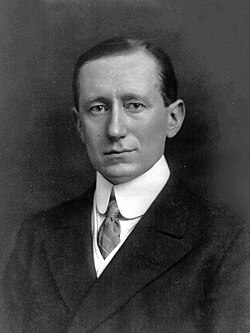
Guglielmo Marconi
The Marconi Company was formed in England in 1910. The photo shows a typical early scene, from 1906, with Marconi employee Donald Manson at right.
Lee DeForest broadcasting Columbia phonograph records on pioneering New York station 2XG, in 1916[1]
The British Broadcasting Corporation's landmark and iconic London headquarters, Broadcasting House, opened in 1932. At right is the 2005 eastern extension, the John Peel wing.

It is generally recognized that the first radio transmission was made from a temporary station set up by Guglielmo Marconi in 1895 on the Isle of Wight. This followed on from pioneering work in the field by a number of people including Alessandro Volta, André-Marie Ampère, Georg Ohm, James Clerk Maxwell and Heinrich Rudolf Hertz.[2][full citation needed][3][full citation needed][4]

The radio broadcasting of music and talk intended to reach a dispersed audience started experimentally around 1905–1906, and commercially around 1920 to 1923. VHF (very high frequency) stations started 30 to 35 years later. In the early days, radio stations broadcast on the longwave, mediumwave and shortwave bands, and later on VHF (very high frequency) and UHF (ultra high frequency). However, in the United Kingdom, Hungary, France and some other places, from as early as 1890 there was already a system whereby news, music, live theatre, music hall, fiction readings, religious broadcasts, etc., were available in private homes [and other places] via the conventional telephone line, with subscribers being supplied with a number of special, personalised headsets. In Britain this system was known as Electrophone, and was available as early as 1895 or 1899 [sources vary] and up until 1926.[4] In Hungary, it was called Telefon Hírmondó [1893-1920s], and in France, Théâtrophone [1890-1932]).

By the 1950s, virtually every country had a broadcasting system, typically one owned and operated by the government. Alternative modes included commercial radio, as in the United States; or a dual system with both state sponsored and commercial stations, introduced in Australia as early as 1924, with Canada following in 1932. Today, most countries have evolved into a dual system, including the UK. By 1955, practically every family in North America and Western Europe, as well as Japan, had a radio. A dramatic change came in the 1960s with the introduction of small inexpensive portable transistor radios which greatly expanded ownership and usage. Access became practically universal around the world.

Early broadcasting

[edit]

Australia

[edit]

Formative years

[edit]

Australian radio hams can be traced to the early 1900s. The 1905 Wireless Telegraphy Act[5] whilst acknowledging the existence of wireless telegraphy, brought all broadcasting matters in Australia under the control of the Federal Government.[6] In 1906, the first official Morse code transmission in Australia was by the Marconi Company between Queenscliff, Victoria and Devonport, Tasmania.[7]

Experiments with broadcasting music

[edit]

The first broadcast of music was made during a demonstration on 13 August 1919 by Ernest Fisk of AWA. A number of amateurs commenced broadcasting music in 1920 and 1921.[3] Many other amateurs soon followed. 2CM was run by Charles MacLuran who started the station in 1921 with regular Sunday evening broadcasts from the Wentworth Hotel in Sydney. 2CM is often regarded as Australia's first, regular, non-official station.[3][8]

Sealed set system

[edit]

It was not until November 1923 when the government finally gave its approval for a number of officially recognised medium wave stations.[3][6] All stations operated under a unique Sealed Set system under which each set was sealed to the frequency of one station. Part of the price of the set went to the government via the Postmaster-General's Department (PMG), with money also going to the broadcaster. Apart from extremely limited advertising, this was the broadcasters' only source of income. From the outset problems with the system came to the fore. Many young people built their own sets, which could receive all the stations.[6]

Categories in Australia from 1924

[edit]

As quickly as July 1924, the Sealed Set system was declared to be unsuccessful and it was replaced by a system of A Class and B Class stations. There were one or two A Class stations in each major market and these were paid for by a listener's licence fee imposed on all listeners-in. The five former sealed set stations became A Class stations, and they were soon joined by stations in other State capitals.[6]

Emil Voigt, founder of 2KY on behalf of the Labor Council of New South Wales. This photo was taken in earlier days when Voight was a prominent British athlete, and winner of the Gold Medal for the five mile race at the 1908 Summer Olympics in London.

Amateur broadcasters continued to operate in the long wave and short wave bands.[3]

A national service, the Australian Broadcasting Commission, was formed in July 1932, when the Australian Broadcasting Company's contract expired.[4]

Early experiments with television

[edit]

As early as 1929, two Melbourne commercial radio stations, 3UZ and 3DB were conducting experimental mechanical television broadcasts – these were conducted in the early hours of the morning, after the stations had officially closed down. In 1934 Valentine McDowall conducted experiments in electronic television.[9] at amateur station 4CM Brisbane[10]

Mobile stations

[edit]

Two of Australia's most unusual medium wave stations were mobile stations 2XT and 3YB. They both operated in eras prior to the universal establishment of rural radio stations. 2XT was designed and operated by AWA within New South Wales, from a NSW Railways train, between November 1925 and December 1927. 2XT, which stood for experimental train, visited over 100 rural centres. Engineers would set up a transmitting aerial and the station would then begin broadcasting. This led to the further sales of AWA products. 3YB provided a similar service in rural Victoria between October 1931 and November 1935. Initially, the station operated from a Ford car and a Ford truck, but from 17 October 1932 they operated from a converted 1899 former Royal Train carriage. Whilst the engineers were setting up the station's 50-watt transmitter in the town being visited, salesmen would sign up advertisers for the fortnight that 3YB would broadcast from that region. The station was on the air from 6.00 and 10.00 pm daily, and its 1,000-record library was divided into set four-hour programs, one for each of 14 days. In other words, the music broadcast from each town was identical. The station was operated by Vic Dinenny, but named after announcer Jack Young from Ballarat. On 18 January 1936, Dinenny set up 3YB Warrnambool, followed on 18 May 1937 by 3UL Warragul.[3][4]

The merchant vessel MV Kanimbla is believed to be the world's only ship built with an inbuilt broadcasting station. The Kanimbla was constructed in Northern Ireland in 1936 and was primarily designed for McIlwraith, McEacharn & Company to ply passengers between Cairns and Fremantle. The broadcasting station was constructed and operated by AWA and was initially given the ham radio callsign VK9MI but was later 9MI. (At this time, the "9" in the callsign was aberrationary [see "Call Signs, above].) The station made an experimental broadcast before leaving Northern Ireland, and a number of such broadcasts at sea, on the way to Australia. 9MI's first official broadcast in April 1939 was made from the Great Australian Bight.[4] The station broadcast on short wave, usually a couple of times per week, but many of its programs were relayed to commercial medium wave stations that were also owned by AWA. The 9MI manager and announcer (and probably the only member of staff) was Eileen Foley.[11] 9MI ceased broadcasting at the commencement of World War II in September 1939. The Kanimbla was commissioned as a Royal Navy (later Royal Australian Navy) vessel with the name HMS/HMAS Kanimbla. It had an extremely prominent and successful war-time career.[12]

Canada

[edit]

The history of broadcasting in Canada begins as early as 1919 with the first experimental broadcast programs in Montreal. The Canadians were swept up in the radio craze and built crystal sets to listen to American stations while The Marconi Wireless Telegraph Company of Canada offered its first commercially produced radio-broadcast receiver (Model "C") in 1921, followed by its "Marconiphone" Model I in 1923. Main themes in the history include the development of the engineering technology; the construction of stations across the country and the building of networks; the widespread purchase and use of radio and television sets by the general public; debates regarding state versus private ownership of stations; financing of the broadcasts media through the government, license fees, and advertising; the changing content of the programming; the impact of the programming on Canadian identity; the media's influence on shaping audience responses to music, sports and politics; the role of the Québec government; Francophone versus Anglophone cultural tastes; the role of other ethnic groups and First Nations; fears of American cultural imperialism via the airwaves; and the impact of the Internet and smartphones on traditional broadcasting media.[13][14]

Radio signals carried long distances, and a number of American stations could easily be received in parts of Canada. The first Canadian station was CFCF, originally an experimental station from the Marconi Company in Montreal.[15] Civilian use of Wireless Telegraphy had been forbidden in Canada for the duration of World War I. The Marconi Wireless Telegraph Company of Canada was the only one to retain the right to continue radio experiments for military use. This proved instrumental in giving the company a lead in developing an experimental radio broadcasting station immediately after the war. The first radio broadcast in Canada was accomplished by The Marconi Wireless Telegraph Company of Canada in Montreal on December 1, 1919 under the call sign XWA (for "Experimental Wireless Apparatus") from its Williams Street factory. The station began regular programming on May 20, 1920 and its call letters were changed to CFCF on November 4, 1920.[16] In Toronto, the first radio station was operated by the Toronto Star newspaper. Station CKCE began in April 1922 and was so well received that the Star pushed forward with its own studios and transmitting facilities, returning to the air as CFCA in late June 1922. In Montreal, another newspaper, La Presse, put its own station, CKAC on the air in late September 1922. Because there were governmental limitations on radio frequencies back then, CKAC and CFCF alternated—one would broadcast one night, and the other would broadcast the night after that.[17]

As radio grew in popularity during the mid-1920s, a problem arose: the U.S. stations dominated the airwaves and with a limited number of frequencies available for broadcasters to use, it was the American stations that seemed to get most of them. This was despite an agreement with the US Department of Commerce (which supervised broadcasting in the years prior to the Federal Radio Commission) that a certain number of frequencies were reserved exclusively for Canadian signals. But if a US station wanted one of those frequencies, the Department of Commerce seemed unwilling to stop it, much to the frustration of Canadian owners who wanted to put stations on the air. The Canadian government and the US government began negotiations in late 1926, in hopes of finding a satisfactory solution.[18] Meanwhile, in 1928, Canada got its first network, operated by the Canadian National Railways. CNR had already made itself known in radio since 1923, thanks in large part to the leadership of CNR's president, Sir Henry Thornton. The company began equipping its trains with radio receivers, and allowed passengers to hear radio stations from Canada and the US. In 1924, CN began building its own stations, and by 1928, it was able to create a network.[19]

Cuba

[edit]

There was interest in radio almost from broadcasting's earliest days. Due to the proximity of Cuba to the U.S. state of Florida, some Cubans would try to listen to the American stations whose signals reached the island. But there was no radio station in Cuba until 1922. The arrival of the first radio station, PWX, was greeted with enthusiasm.[20] PWX, owned by the Cuban Telephone Company, was located in Havana. It was a joint venture with the International Telephone and Telegraph Company of New York. PWX debuted on the air on October 10, 1922.[21] PWX broadcast programs in both English and Spanish, and its signal was easily received at night in a number of American cities.[22] Another early station in Cuba was owned by Frank Jones, an American amateur radio operator and Chief Engineer of the Tuinucu Sugar Company. The station used amateur call letters, and went on the air as 6KW.[23] In late 1928, PWX began using the call letters CMC. Its slogan was "If you hear 'La Paloma,' you are in tune with CMC."[24] As with many other countries, interest in radio expanded, and by 1932, Cuba had more than thirty stations, spread out in cities all over the island.[25]

France

[edit]

Radio Paris began operations in 1922, followed by Radio Toulouse and Radio Lyon. Before 1940, 14 commercial and 12 public sector radio stations were in operation. The government exerted tight control over radio broadcasting. Political debate was discouraged; for example, in the 1932 election campaign, the opposition was allowed one broadcast while the incumbent made numerous campaign broadcasts.[26] France lagged behind other European countries in consumer ownership of radio sets, with 5 million radio receivers in 1937, compared to over 8 million in both Britain and Germany and 26 million in the United States. The government imposed very strict controls on the dissemination of news. After 1938, stations were allowed only three brief bulletins of seven minutes each per day to cover the day's news. The Prime Minister's office closely supervised the news items that were to be broadcast. Due to these policies, French citizens learned little or nothing of the events surrounding the lead-up to World War II from the radio. As a result, the French population was often puzzled about the specifics of current events, and their morale and support for government policies was much weaker than in Britain, where news broadcasts were used to communicate regularly with citizens.[27]

Germany

[edit]
Ferdinand Braun

Ferdinand Braun's major contributions were the introduction of a closed tuned circuit in the generating part of the transmitter, and its separation from the radiating part (the antenna) by means of inductive coupling, and later on the usage of crystals for receiving purposes. Braun experimented at first at the University of Strasbourg. Braun had written extensively on wireless subjects and was well known through his many contributions to the Electrician and other scientific journals.[28] In 1899, he would apply for the patents, Electro telegraphy by means of condensers and induction coils and Wireless electro transmission of signals over surfaces.[29] Braun invented the phased array antenna, which led to the development of radar, smart antennas, and MIMO, in 1905[30] and shared the 1909 Nobel Prize in Physics with Marconi "for their contributions to the development of wireless telegraphy".[31] The first civilian radio broadcast in Germany was a Christmas concert on December 22, 1920.[32] While its reception was confirmed from all over Europe, reception in Germany was still a punishable offense, as a result of the Treaty of Versailles.[33]

The first radio station in Germany went on the air in Berlin in late 1923, using the call letters "LP."[34] Before 1933, German radio broadcasting was conducted by 10 regional broadcasting monopolies, each of which had a government representative on its board. The Post Office provided overall supervision. A listening fee of 2 ℛ︁ℳ︁ per receiver paid most costs, and radio station frequencies were limited, which restricted the number of amateur radio operators. Immediately following Hitler's assumption of power in 1933, Joseph Goebbels became head of the Ministry for Propaganda and Public Enlightenment and took full control of regulating and overseeing broadcasting. Non-Nazis were removed from broadcasting and editorial positions, and Jews were fired from all positions.[35]

Germany was easily served by a number of European mediumwave stations, including the BBC, but the Nazis made it illegal for Germans to listen to foreign broadcasts. During the war, German stations broadcast war propaganda and entertainment for German forces dispersed through Europe, as well as air raid alerts. There was heavy use of short wave for "Germany Calling" programmes directed at Britain and Allied forces around the world. Goebbels also set up numerous Nazi stations that pretended to be from the Allied world.[36]

Japan

[edit]

The first radio station in Japan was JOAK, which opened in Tokyo in March 1925. It was founded by Masajiro Kotamura, an inventor and engineer. It was unique in that at least one of its announcers was a woman, Akiko Midorikawa.[37] JOAK was followed soon after by JOBK in Osaka and JOCK in Nagoya. The National Broadcasting Service, today known as NHK (Nippon Hoso Kyokai), began in August 1926. All stations were supported by licensing fees: in 1926, for example, people wishing to receive a permit to own a radio set paid a fee of one yen a month to the government.[38] Programming on Japanese stations of the 1920s included music, news, language instruction (lessons were offered in English, French and German) and education talks. These early stations broadcast on average about eight hours of programs a day.[39]

Mexico

[edit]

Amateur radio was very popular in Mexico; while most of the hams were male, notably Constantino de Tarnava, acknowledged in some sources as Mexico's first amateur radio operator,[40] one of the early ham radio operators was female—Maria Dolores Estrada.[41] But commercial radio broadcasting was difficult to achieve, due to a federal regulation forbidding any broadcasts that were not for the benefit of the Mexican government. Still, in November 1923, CYL in Mexico City went on the air, featuring music (both folk songs and popular dance concerts), religious services, and news. CYL used as its slogans "El Universal" and "La Casa del Radio", and it won over the government by giving political candidates the opportunity to use the station to campaign.[42] Its signal was so powerful that it could sometimes be received in Canada.[43] Pressure from listeners and potential station owners also contributed to the government relenting and allowing more stations to go on the air.[44] In 1931, the "C" call letters were all changed to "X" call letters (XE being reserved for broadcasting), and by 1932, Mexico had nearly forty radio stations, ten of which were in Mexico City.[25]

Philippines

[edit]

Interest in amateur radio was noted in the Philippines in the early 1920s.[45] There were radio stations operating in the Philippines, including one owned by American businessman named Henry Hermann, as early as 1922, according to some sources; not much documentation about that period of time exists. In the autumn of 1927, KZRM in Manila, owned by the Radio Corporation of the Philippines, went on the air.[46] The Radio Corporation of the Philippines was a subsidiary of American company RCA (Radio Corporation of America).[47] By 1932, the island had three radio stations: KRZC in Cebu, as well as KZIB (owned by a department store) and KZFM, the government-owned station in Manila. Of the stations listed by Pierre Key, KZFM was the strongest, with 50,000 watts.[48] Two radio networks were ultimately created: one, the Manila Broadcasting Company, began as a single station, KZRH in Manila, in July 1939, and after World War II, in 1946, the station's owners began to develop their network by buying other radio properties. As for the Philippine Broadcasting Company, it too began with one station (KZFM), and received its new name in mid-1946, after the Philippines became an independent country. At the end of 1946, the new network had six stations.[49] Both KZRH and KZFM also affiliated with American networks; the stations wanted to have access to certain popular American programs, and the American networks wanted to sell products in the Philippines.[50]

Sri Lanka

[edit]

Sri Lanka has the oldest radio station in Asia and the second oldest in the world, known as Radio Ceylon. It is now known as the Sri Lanka Broadcasting Corporation. Sri Lanka created broadcasting history in Asia when broadcasting was started in Ceylon by the Telegraph Department in 1923 on an experimental footing, just three years after the inauguration of broadcasting in Europe. Gramophone music was broadcast from a tiny room in the Central Telegraph Office with the aid of a small transmitter built by Telegraph Department engineers using the radio equipment of a captured German submarine.[51]

United Kingdom

[edit]
Caricature of Sir John Reith, by Wooding

The first experimental music broadcasts, from Marconi's factory in Chelmsford, began in 1920. Two years later, in October 1922, a consortium of radio manufacturers formed the British Broadcasting Company (BBC); they allowed some sponsored programs, although they were not what we would today consider a fully commercial station. Meanwhile, the first radio stations in England were experimental station 2MT, located near Chelmsford, and station 2LO in London: both were operated by the Marconi Company. By late 1923, there were six stations broadcasting regularly in the United Kingdom: London's 2LO, Manchester's 2ZY, and stations in Birmingham (5IT), Cardiff, Newcastle, and Glasgow.[34] As for the consortium of radio manufacturers, it dissolved in 1926, when its license expired; it then became the British Broadcasting Corporation, a non-commercial organization. Its governors are appointed by the British government, but they do not answer to it. Lord Reith took a formative role in developing the BBC, especially in radio.[52]

United States

[edit]
Reginald Fessenden, the "father" of radio broadcasting in the US

Reginald Fessenden did ground-breaking experiments with voice and music by 1906.[53] Charles "Doc" Herrold of San Jose, California sent out broadcasts as early as April 1909 from his Herrold School electronics institute in downtown San Jose, using the identification San Jose Calling, and then a variety of different call signs as the Department of Commerce began to regulate radio.[54] He was on the air daily for nearly a decade when the World War interrupted operations.[citation needed]

"Doc" Herrold is shown at the microphone of KQW, early 1920s.
Charles Logwood broadcasting at station 2XG, New York City, circa November, 1916[55]

Pioneer radio station 2XG, also known as the "Highbridge station", was an experimental station located in New York City and licensed to the DeForest Radio Telephone and Telegraph Company. It was the first station to use a vacuum tube transmitter to make radio broadcasts on a regular schedule. From 1912 to 1917 Charles Herrold made regular broadcasts, but used an arc transmitter. He switched to a vacuum tube transmitter when he restarted broadcasting activities in 1921. Herrold coined the terms broadcasting and narrowcasting.[56] Herrold claimed the invention of broadcasting to a wide audience, through the use of antennas designed to radiate signals in all directions. David Sarnoff has been considered by many as "the prescient prophet of broadcasting who predicted the medium's rise in 1915", referring to his radio music box concept.[57]

Broadcasting pioneer Frank Conrad in a 1921 portrait

A few organizations were allowed to keep working on radio during the war. Westinghouse was the most well-known of these. Frank Conrad, a Westinghouse engineer, had been making transmissions from 8XK since 1916 that included music programming.[58] A team at the University of Wisconsin–Madison headed by Professor Earle M. Terry was also on the air.[59]

1920s

[edit]

By 1919, after the war, radio pioneers across the country resumed transmissions. The early stations gained new call signs. A few early stations, notably 8MK (later known as WWJ in Detroit) were started by newspapers, but in those early years, radio and newspapers regarded each other as competitors. One early station, 8XK in Pittsburgh, became KDKA in 1920; its ownership has asserted that it was the first radio station in the US, but that claim is controversial [60]

Madison Avenue early on recognized the importance of radio as a new advertising medium. Advertising provided the major funding for most stations. The United States never had a licensing fee for set users.[61]

Radio in education began as early as April 1922, when Medford Hillside's WGI Radio broadcast the first of an ongoing series of educational lectures from Tufts College professors. These lectures were described by the press as a sort of "wireless college."[62] Soon, other colleges across the U.S. began adding radio broadcasting courses to their curricula; some, like the University of Iowa, even provided what today would be known as distance-learning credits.[63] Curry College, first in Boston and then in Milton, Massachusetts, introduced one of the nation's first broadcasting majors in 1932 when the college teamed up with WLOE in Boston to have students broadcast programs. This success led to numerous radio courses in the curriculum which has taught thousands of radio broadcasters from the 1930s to today.[64]

By 1931, a majority of U.S. households owned at least one radio receiver.[65] In 1934, several independent stations formed the Mutual Broadcasting System to exchange syndicated programming, including The Lone Ranger and Amos 'n' Andy. Prior to 1927, U.S. radio was supervised by the Department of Commerce. Then, the Radio Act of 1927 created the Federal Radio Commission (FRC);[66] in 1934, this agency became known as the Federal Communications Commission (FCC). A Federal Communications Commission decision in 1939 required NBC to divest itself of its Blue Network. That decision was sustained by the Supreme Court in a 1943 decision, National Broadcasting Co. v. United States, which established the framework that the "scarcity" of radio-frequency meant that broadcasting was subject to greater regulation than other media. This Blue Network network became the American Broadcasting Company (ABC). Around 1946, ABC, NBC, and CBS began regular television broadcasts. Another TV network, the DuMont Television Network, was founded earlier, but was disbanded in 1956; later in 1986 the surviving DuMont independent stations formed the nucleus of the new Fox Broadcasting Company.[67]

1950s and 1960s

[edit]

Australia

[edit]
Australian radio sets usually had the positions of radio stations marked on their dials. The illustration is a dial from a transistorised, mains-operated Calstan radio, circa 1960s. (Click image for a high resolution view, with readable callsigns.)

Norman Banks was one of Melbourne's (and Australia's) most prominent broadcasters at 3KZ (1930-1952) and 3AW (1952-1978). He is remembered for founding Carols by Candlelight, as a pioneer football commentator, and for hosting both musical and interview programs. In later years he was one of Melbourne's first and most prominent talk back hosts. At the commencement of his career, Banks was known for his double entendres and risque remarks; as a talk back host he was outspoken in his conservative views, especially regarding the White Australia policy and Apartheid. In 1978 his 47-year career in radio was hailed as the longest in world history.[68]

Naomi ("Joan") Melwit and Norman Banks at the 3KZ microphone, in the late 1930s

The transistor radio first appeared on the market in 1954. In particular, it made portable radios even more transportable. All sets quickly became smaller, cheaper and more convenient. The aim of radio manufacturers became a radio in every room, in the car, and in the pocket. The upshot of these two changes was that stations started to specialise and concentrate on specific markets. The first areas to see specialised stations were the news and current affairs market, and stations specialising in pop music and geared toward the younger listener who was now able to afford his/her own radio. Talk back ("talk radio") became a major radio genre by the end of the 1960s, but it was not legalised in Australia until October 1967.[69]

Germany

[edit]

When the Federal Republic of Germany was organized in 1949, its Enabling Act established strong state government powers. Broadcasting was organized on a state, rather than a national, basis. Nine regional radio networks were established. A technical coordinating organization, the Arbeitsgemeinschaft der öffentlich-rechtlichen Rundfunkanstalten der Bundesrepublik Deutschland (ARD), came into being in 1950 to lessen technical conflicts. The Allied forces in Europe developed their own radio networks, including the U.S. American Forces Network (AFN). Inside Berlin, Radio in the American Sector (RIAS) became a key source of news in the German Democratic Republic.[70]

Sri Lanka

[edit]

Radio Ceylon was popular in the 1950s and 1960s in the Indian sub-continent.[71] The station developed into the most popular radio network in South Asia. Millions of listeners in India for example tuned into Radio Ceylon. Announcers such as Livy Wijemanne, Vernon Corea,[72] Pearl Ondaatje, Tim Horshington, Greg Roskowski, Jimmy Bharucha, Mil Sansoni, Eardley Peiris, Shirley Perera, Bob Harvie, Christopher Greet, Prosper Fernando, Ameen Sayani (of Binaca Geetmala fame),[73]Karunaratne Abeysekera, S.P.Mylvaganam (the first Tamil announcer on the Commercial Service) were hugely popular across South Asia. The Hindi service helped build Radio Ceylon's fanbase among Hindi speakers in the Indian sub-continent. Gopal Sharma, Sunil Dutt, Ameen Sayani, and Hamid Sayani were some of the Indian announcers of the station. The Commercial Service of Radio Ceylon was hugely successful under the leadership of Clifford Dodd, the Australian administrator and broadcasting expert who was sent to Ceylon under the Colombo Plan.[74]

United States

[edit]

By 1955, a majority of U.S. households owned at least one television set.[75]

1970s, 1980s, and 1990s

[edit]

Australia

[edit]
The Australian Broadcasting Corporation logo, first introduced in 1975 and based on the Lissajous curve

Europe

[edit]

Commercial radio (re-)legalisation in most European countries occurred in this era, starting with United Kingdom in 1973 (see Independent Local Radio) and ending with Austria in 1995.
In 1987, stations in the European Broadcasting Union began offering Radio Data System (RDS), which provides written text information about programs that were being broadcast, as well as traffic alerts, accurate time, and other teletext services.[76]

The 2000s

[edit]
The "Kerbango Internet Radio" was the first stand-alone product that let users listen to Internet radio without a computer.

Australia

[edit]

In Australia, from August 2009, digital radio was phased in by geographical region. Today, the ABC, SBS, commercial and community radio stations operate on the AM and FM bands. Most stations are available on the internet and most also have digital outlets. By 2007, there were 261 commercial stations in Australia.[69]

Sri Lanka

[edit]

In Sri Lanka in 2005, in a celebration of 80 years of history of broadcasting, the former Director-General of the Sri Lanka Broadcasting Corporation, Eric Fernando, called for the station to take full advantage of the digital age – this included looking at the archives of Radio Ceylon. Ivan Corea asked the President of Sri Lanka, Mahinda Rajapakse, to invest in the future of the SLBC.[77]

See also

[edit]

References

[edit]

Further reading

[edit]
Revisions and contributorsEdit on WikipediaRead on Wikipedia
from Grokipedia
The history of broadcasting encompasses the technological innovations and institutional developments that transformed wireless communication from point-to-point into mass dissemination of audio and video signals to dispersed audiences, commencing with 's successful transmission of signals over distances exceeding one kilometer in 1895. This evolution relied on breakthroughs in continuous-wave modulation, enabling to achieve the first long-distance transmission of human voice and music from Brant Rock, , to ships at sea on December 24, 1906, using principles that formed the basis of subsequent audio broadcasting. Commercial broadcasting emerged in the United States with station KDKA's inaugural scheduled transmission on November 2, 1920, relaying live results of the Harding-Cox presidential election from , which demonstrated the viability of regular programming for public reception via affordable crystal sets and vacuum-tube receivers. By the 1920s, networks like and formed, amplifying content distribution while prompting regulatory interventions such as the Radio Act of 1927 to allocate and curb interference amid rapid station proliferation. Television broadcasting originated experimentally in the late 1920s, with General Electric's WGY airing the first drama, , on September 11, 1928, via mechanical scanning systems that evolved into electronic formats dominated by vacuum-tube cameras and cathode-ray displays. The medium's expansion post-World War II, fueled by FCC licensing of commercial TV stations in 1941 and subsequent infrastructure investments, shifted cultural paradigms by integrating visual narratives into households, though it engendered debates over spectrum scarcity and content monopolization by networks. Broadcasting's transition to digital formats from the 1990s onward incorporated compression algorithms and internet protocols, enabling hybrid over-the-air and streaming delivery while preserving core electromagnetic propagation amid challenges from and convergence with . These developments underscore broadcasting's causal role in scaling information access, predicated on empirical advances in signal theory and hardware reliability rather than centralized planning.

Precursors and Early Experiments

Wireless Telegraphy and Radio Foundations

The foundations of rested on theoretical predictions of electromagnetic waves by James Clerk Maxwell in the 1860s, who formulated equations describing how oscillating electric and magnetic fields could propagate through space at the . experimentally verified these waves in 1887-1888 by generating radio-frequency oscillations using a and detecting them with a simple loop receiver, demonstrating reflection, , and polarization akin to light. These demonstrations provided the empirical basis for practical wireless communication, though Hertz's apparatus produced only short-range, damped waves unsuitable for signaling over distances. Guglielmo Marconi advanced these principles into viable by developing apparatus for transmitting signals using grounded antennas and improved coherers for detection. In 1895, at age 21 in , , Marconi achieved his first successful outdoor transmission of a wireless signal over approximately 2 kilometers (1.2 miles) across the hills, marking the initial practical demonstration of directed radio signaling beyond laboratory confines. By 1899, he extended range to 10 miles across the , establishing point-to-point communication for maritime and applications. Marconi's 1901 transatlantic experiment culminated on December 12, when his team in St. John's, Newfoundland, detected the letter "S" (three dots) transmitted from a high-power station at Poldhu, Cornwall, England, over 2,100 miles, using a kite-elevated antenna to receive faint signals amid skepticism about long-distance . This feat validated ground-wave via the , though reliant on spark-gap transmitters producing , damped impulses rather than continuous carriers. Transition to audio transmission required overcoming spark telegraphy's limitations by generating continuous-wave carriers amenable to modulation. Reginald Fessenden pioneered amplitude modulation (AM) in the early 1900s, inventing the high-frequency alternator to produce undamped sine waves and superimposing audio signals to vary amplitude. On December 24, 1906, from his Brant Rock, Massachusetts station, Fessenden broadcast the first discernible voice and music transmission, including a violin rendition of "O Holy Night" and Bible readings, received by ships at sea up to several hundred miles away using electrolytic detectors. This demonstrated radio's potential for telephony over telegraphy, though early receivers struggled with fidelity due to inadequate amplification. In the 1910s, amateur radio operators, unburdened by commercial mandates, conducted grassroots experiments that refined audio techniques using nascent vacuum tubes like Lee de Forest's 1906 Audion for detection and amplification. Enthusiasts transmitted phonograph music and speech over short ranges with homemade continuous-wave oscillators and modulators, fostering innovations in antenna design and frequency stability without institutional oversight. These efforts, often documented in hobbyist journals, bridged theoretical modulation to practical voice circuits, laying groundwork for scalable broadcasting by validating empirical tweaks to carrier stability and receiver sensitivity. Ferdinand Braun's crystal detector improvements further aided detection clarity in these setups.

Key Technological Breakthroughs

The , invented by in 1906, represented a pivotal advancement in radio technology as the first practical capable of amplifying electrical signals. This three-electrode device built upon John Ambrose Fleming's 1904 by adding a , enabling not only detection but also significant amplification of weak radio-frequency signals, which was essential for overcoming signal over distance and facilitating the modulation of audio for transmission. Prior detection methods, such as crystal detectors or coherers, lacked amplification, limiting radio to short-range ; the Audion's ability to boost signals by factors of up to 100 times made feasible the reliable dissemination of voice and music, directly causal to broadcasting's viability. In the , iterative refinements to design shifted radio transmission from spark-gap systems— which generated , damped waves inefficient for audio modulation due to their transient, non-sinusoidal nature—to (CW) generation using tube-based oscillators. De Forest's 1912 innovation of cascading multiple tubes achieved amplification levels previously unattainable, with gains exceeding 1,000-fold, while improved evacuation and filament stability in tubes from manufacturers like enhanced reliability for sustained CW output. Spark-gap transmitters, dominant until around 1915, suffered from 50-90% energy loss in harmonics and inability to produce steady carriers for ; CW tubes concentrated energy in narrow bands, reducing interference and enabling intelligible audio recovery at receivers via detection. Empirical interference from overlapping transmissions plagued early radio, with reports of maritime collisions due to signal prompting regulatory action; the 1906 International Radiotelegraph in , attended by 27 nations, established foundational spectrum allocations, reserving wavelengths like 600 meters (500 kHz) for distress calls and 300 meters for shipping, mitigating chaos observed in uncontrolled spark operations. These provisions, derived from data on and crowding in bands below 1 MHz, enforced power limits and protocols, causally enabling scalable signal management without which amplification alone could not support multi-user audio dissemination. By standardizing 500-1,000 kHz for key services, the reduced empirical collision rates in trials, paving technical groundwork for broadcasting's discipline.

Birth of Commercial Radio Broadcasting

Inaugural Broadcasts and Station Launches

The inaugural commercial radio broadcast in the United States took place on November 2, 1920, when Westinghouse Electric's station KDKA in transmitted live returns from the presidential election between and . Operating under the experimental callsign 8ZZ before adopting KDKA, the broadcast reached an estimated 100 listeners equipped with homemade receivers, marking the shift from point-to-point to one-to-many audio dissemination intended for public consumption. This private initiative by Westinghouse, motivated by promoting radio receiver sales, is widely recognized as the birth of scheduled , distinct from prior and experimental transmissions. In the ensuing months, additional U.S. stations emerged through private enterprise. WWJ in , licensed to , initiated regular evening broadcasts of news and music on August 20, 1921, establishing one of the earliest consistent schedules. These launches reflected market-driven innovation, with corporations like Westinghouse and newspapers investing in transmitters to capitalize on growing interest in radio sets. By early , around 30 stations were operational, proliferating to over 500 by the end of as receiver ownership surged and broadcasters competed for audiences without initial regulatory constraints. Europe's early broadcasts contrasted with the U.S. model, often coalescing under consortiums rather than purely private ventures. In the , the —a private entity funded by manufacturers and later granted a monopoly—launched station in on May 11, 1922, from Marconi House, initially airing limited daily programs of music and talks. Daily transmissions commenced on November 14, 1922, with a news bulletin, setting a precedent for centralized, advertiser-supported yet publicly oriented service that evolved into the BBC's public corporation in 1927. This approach, blending private initiative with governmental oversight via license fees, differed from the decentralized U.S. boom, where hundreds of independent stations fueled rapid, unregulated expansion driven by consumer demand.

Commercialization and Audience Growth

AT&T introduced the "toll broadcasting" model in February 1922, enabling stations to charge fees for airtime to sponsors who produced and broadcast programs, marking the shift toward profit-oriented operations. This approach, leveraging AT&T's telephone infrastructure for program distribution, culminated in the first sponsored broadcast on August 28, 1922, when New York station WEAF aired a 10-minute promotion for Queensboro apartments, generating $100 in . By treating akin to long-distance —where users paid per use—toll broadcasting incentivized tied directly to advertiser demands, prioritizing audience appeal to maximize returns. Sponsored programming rapidly supplanted non-commercial formats, with advertisers funding entire shows to embed product messages, such as talent fees and production costs, in exchange for exclusive airtime. This structure, dominant by 1923, spurred competition among stations for lucrative sponsorships from consumer goods firms, driving innovations in scheduling and promotion to build listener loyalty and ad efficacy. Economic incentives thus catalyzed professionalization, as stations without toll revenue struggled, weeding out inefficient operators in favor of those adept at monetizing audiences. Network formation amplified commercialization by interconnecting regional stations for national coverage. The National Broadcasting Company (NBC), founded by RCA on November 15, 1926, initially linked 19 affiliates via leased lines, allowing sponsors to buy time across vast geographies for unified campaigns. , RCA's general manager, envisioned networks as ad platforms scaling beyond local markets, with NBC's debut event originating from New York's Waldorf-Astoria. The Columbia Broadcasting System (CBS), evolving from the January 27, 1927, incorporation of United Independent Broadcasters, followed suit by September 1927, aggregating stations to compete for sponsorship dollars and extend advertiser reach. These chains reduced duplication costs while magnifying audience metrics for pitches, solidifying radio's viability as a mass medium. Profit motives propelled explosive audience expansion, with U.S. radio receivers growing from under 100,000 households in 1922 to approximately 12 million by , or 40% penetration, amid post-World War I prosperity and manufacturing efficiencies that dropped set prices from $100+ to under $20. Correlating with this, equipment sales escalated from $60 million in 1922 to $843 million in , reflecting free-market responses to surging demand rather than subsidies. Advertising expenditures followed, transforming radio into a $100 million-plus industry by decade's end, as verifiable listener logs and sales data convinced skeptics of its reach. In the UK, the —predecessor to the —opted for receiver license fees from 1922, curtailing ad-driven growth until later reforms, highlighting U.S. reliance on private investment.

Interwar Expansion and Wartime Role

Entertainment and News Dominance

In the 1930s, radio emerged as the primary medium for serialized entertainment in the United States, with soap operas and dramatic serials captivating vast audiences through ongoing narratives designed for daily consumption. The genre originated with programs like Clara, Lu, and Em, which premiered on WGN-AM in Chicago on June 16, 1930, initially as a sketch by friends before evolving into a continuous story format. By the end of the decade, 61 soap operas aired nationwide, often sponsored by manufacturers of household products like Procter & Gamble, which funded the shows to target homemakers during daytime slots. These formats innovated by employing cliffhangers and emotional family sagas, fostering listener loyalty without reliance on government funding, as stations competed privately for advertising dollars in a commercial ecosystem. Radio's reach expanded dramatically, with household ownership rising from approximately 12 million sets at the decade's start to over 28 million by , equating to about 40% of U.S. families possessing a receiver by and listeners averaging more than four hours daily by mid-decade. This penetration enabled stars and productions to dominate cultural discourse, exemplified by ' Mercury Theatre on the Air adaptation of ' The War of the Worlds on October 30, 1938, which used realistic news bulletin interruptions to simulate a Martian invasion, prompting localized panic among some who tuned in late and mistook it for actual events. While contemporary newspaper accounts exaggerated the scale into claims of nationwide hysteria to undermine radio's credibility, the broadcast underscored the medium's immersive power through private creative experimentation. News broadcasting solidified radio's informational primacy via live, unscripted reporting, as demonstrated by Chicago reporter Herbert Morrison's eyewitness account of the Hindenburg airship disaster on May 6, 1937, at Lakehurst Naval Air Station in New Jersey. Morrison's emotional narration—"Oh, the humanity!"—captured the explosion in real time on acetate disc for WLS-AM, marking one of the first instances of on-the-scene disaster coverage broadcast nationwide the following day and establishing standards for immediacy in electronic journalism. Such innovations, driven by network affiliates like NBC and CBS, relied on advertiser support rather than public subsidies, with U.S. radio ad revenue surging from $18.7 million in 1929 to over $80 million by the late 1930s despite the Great Depression, reflecting the medium's self-sustaining commercial viability.

Early Television Trials

John Logie Baird conducted the first public demonstration of a working television system on January 26, 1926, at 22 Frith Street in , , transmitting a low-resolution image of a ventriloquist dummy head known as between rooms using a mechanical scanning system with a spinning that achieved approximately 30 lines of resolution. This electromechanical approach relied on perforated disks rotating at high speeds to scan and reconstruct images via reflected light, marking an initial step toward visual broadcasting but constrained by mechanical limitations such as flickering and small image sizes viewable only through magnifying lenses. In the United States, Vladimir Zworykin developed the , an early electronic camera tube patented in 1923 and demonstrated in a functional form by 1929 at Westinghouse, enabling all-electronic scanning without moving parts and laying groundwork for higher-quality imaging. This contrasted with mechanical systems by using photoelectric cells to capture light variations on a photosensitive surface, though early implementations still suffered from low sensitivity and required significant amplification. Zworykin's work, later advanced at RCA, shifted focus from Baird-style mechanical trials to electronic methods, which promised scalability but faced engineering hurdles in signal stability. Experimental broadcasts remained limited in scope during the 1930s. In , the 1936 Berlin Olympics were the first major event televised, using a 180-line electronic system transmitted from the Witzleben tower to approximately 160 receivers in public viewing rooms and homes around , with larger audiences reached via projected screens in 28 facilities accommodating up to 150,000 viewers. In the U.S., the (predecessor to the FCC) issued experimental licenses starting in the late 1920s, with allocations in VHF bands from 1931 enabling stations like NBC's W2XBS to conduct trials, though transmissions were irregular and confined to laboratory or select audiences due to equipment scarcity. These trials highlighted inherent technical barriers that impeded widespread adoption, including resolutions typically ranging from 30 to 240 lines—yielding fuzzy, low-contrast images inadequate for detailed viewing—and exorbitant costs for specialized vacuum tubes and receivers, often exceeding thousands of dollars per unit in an era of economic depression. Mechanical systems were further hampered by the physical constraints of spinning disks, limiting frame rates and introducing artifacts, while early electronic setups demanded high-power transmitters unaffordable for broad deployment, collectively delaying commercial viability until postwar refinements in cathode-ray tubes and scanning standards.

Propaganda and Censorship During Conflicts

In , served as a cornerstone of state-orchestrated under , who assumed the role of Reich Minister for Public Enlightenment and Propaganda in March 1933 and swiftly centralized control over all transmissions to promote Nazi ideology. The regime subsidized the production of affordable receivers, distributing over 7 million units by 1939 to extend reach into households, enabling daily dissemination of Adolf Hitler's speeches, martial anthems, and antisemitic narratives that framed the war as a racial crusade. This monopoly eliminated private competition, enforcing scripted content that distorted battlefield realities—such as underreporting defeats—to sustain domestic morale, though empirical assessments reveal its ultimate failure in countering evidence of military reversals, as listener disillusionment grew amid mounting losses by 1943. Allied responses leveraged broadcasting for factual countermeasures, with the launching dedicated overseas services in multiple languages from September 1939 to penetrate occupied and itself. These transmissions, including the German Service, provided unvarnished reports on Allied advances and Nazi atrocities, attracting millions of clandestine listeners despite for tuning in, thereby eroding the credibility of Goebbels' apparatus through verifiable information that exposed official fabrications. In contrast, the avoided full state takeover; the Office of War Information (OWI), created via 9182 on June 13, 1942, supplied voluntary scripts and promotional materials to over 900 private stations, which integrated pro-war messaging—such as bond drives and victory gardens—alongside independent news, relying on broadcasters' self-interest in national survival rather than mandates. This decentralized model preserved journalistic autonomy under a voluntary code, enabling stations to adapt content dynamically without the rigid echo chambers of totalitarian systems. Such coercive monopolies empirically undermined truth dissemination by insulating regimes from corrective feedback, as Nazi radio's insistence on victory narratives clashed with Allied broadcasts revealing defeats like Stalingrad in , accelerating internal doubt and desertions. Private-sector resilience in the U.S., where stations aired unscripted eyewitness accounts from reporters like , sustained public cohesion by blending persuasion with empirical reporting, avoiding the self-reinforcing delusions that plagued state-dominated media. Post-World War II, Europe's entrenched public monopolies—such as the BBC's domestic exclusivity until the 1970s—constrained innovation through bureaucratic inertia, with slower adoption of commercial formats and technologies like FM stereo compared to the U.S., where competitive markets expanded to over 2,100 AM stations by 1946 and pioneered network television, driving audience engagement via profit-motivated experimentation. This divergence underscores how state control, by prioritizing uniformity over rivalry, retarded adaptive capacity in ecosystems.

Post-War Television Ascendancy

Network Formation and Color Adoption

The major U.S. television networks—American Broadcasting Company (ABC), Columbia Broadcasting System (CBS), and National Broadcasting Company (NBC)—consolidated their dominance in the post-World War II era through affiliation agreements with local stations and investments in interconnection infrastructure. NBC and CBS had initiated experimental television broadcasts in the early 1940s, but commercial operations expanded significantly after the 1948 FCC lift of its freeze on new station licenses, enabling ABC's full entry as the third network. By the early 1950s, these networks linked over 100 affiliates via coaxial cables and microwave relay systems, creating a national distribution backbone that prioritized market incentives over centralized planning, with private capital funding rapid infrastructure rollout to capture growing viewer demand. Television household penetration surged from approximately 9% in 1950 to 85.9% by 1959, driven by falling set prices—from $1,000 in to under by mid-decade—and network programming that emphasized live events and serialized dramas to build audiences. This market-led acceleration outpaced government-directed models elsewhere, as advertiser revenues—reaching $800 million annually by 1955—financed content and expansion without subsidies, fostering competition that prioritized consumer adoption over regulatory mandates. In 1953, the FCC approved the color standard, developed by RCA and industry collaborators, which encoded color signals compatibly with existing black-and-white receivers to avoid stranding millions of sets. This compatibility requirement, while enabling gradual transition, locked broadcasters into dual transmission modes and delayed full-color production, as networks like began limited colorcasts in 1954 but prioritized black-and-white for broader reach until set ownership justified the switch. Critics, including engineers assessing NTSC's phase-alternation encoding, argued the standard's complexity compromised color fidelity—earning the acronym's derisive reinterpretation as "Never Twice the Same Color"—and prolonged reliance on suboptimal black-and-white infrastructure due to the high cost of color sets (initially $1,000) and limited programming. Color set penetration remained minimal at 3.1% of television households by , reflecting manufacturers' caution amid economic risks, though spurred acceleration as prices dropped and events like the 1964 Tokyo Olympics prompted network investments in color infrastructure. This empirical lag underscored how compatibility mandates, while pragmatically preserving installed base value, deferred the causal benefits of vivid visuals, with full transition reliant on private innovation rather than imposed timelines.

Global Television Rollouts

In the , the commercial television model drove rapid nationwide adoption, achieving approximately 90% household penetration by 1960 through private investment in and content appealing to broad audiences. In contrast, many European countries maintained state-controlled monopolies that delayed expansion, with average penetration rates lagging at around 50% by the same year due to limited incentives for buildout and programming geared toward national priorities over mass entertainment. These disparities highlighted the efficiency of market-driven rollout versus bureaucratic state-led approaches, where public broadcasters prioritized elite cultural content, often at the expense of widespread and viewer-driven . The exemplified partial liberalization when Independent Television (ITV) launched on September 22, 1955, introducing commercial competition to the BBC's longstanding public monopoly and prompting faster growth in viewership and programming diversity. ITV's ad-supported model emphasized popular genres like and variety shows, contrasting with the BBC's perceived focus on fare, which critics argued alienated working-class audiences and slowed overall adoption. This rivalry spurred infrastructure investments, though penetration remained below U.S. levels into the early 1960s. Japan's rollout, led by the public starting regular television broadcasts on February 1, 1953, achieved swift urban penetration by the late , aided by postwar economic recovery and complementary private stations like , though as a state-guided effort it emphasized national unity over purely commercial imperatives. In , the Radiodiffusion-Télévision Française (RTF) enforced a strict from the late 1940s, limiting channels to one until a second in 1964 and constraining growth through centralized control that favored messaging over competitive content diversity. Such models in often resulted in uneven coverage, with private competition elsewhere demonstrating superior adaptability to and technological scaling.

Diversification and Deregulation Era

Cable, Satellite, and FM Innovations

The adoption of FM stereo broadcasting marked a significant advancement in radio technology during the mid-20th century. On April 19, 1961, the U.S. (FCC) authorized a standard for FM stereo transmissions, effective June 1, 1961, allowing stations to broadcast in using a compatible multiplex system that preserved with monaural receivers. The first FM stereo broadcast occurred on June 1, 1961, by station WGFM in , enabling higher fidelity audio that appealed to music listeners and spurred equipment sales. By the 1970s, FM radio experienced rapid growth, with listener share surpassing AM in many markets due to the stereo standard's maturation and complementary FCC rules promoting diverse programming, such as the 1964 FM non-duplication rule that encouraged original content over AM simulcasts. Cable television expanded as an alternative to over-the-air , delivering signals via wires to bypass terrestrial limitations like signal interference and limited . In 1970, approximately 4.4 million U.S. households subscribed to cable, representing early community antenna systems primarily serving rural areas with poor reception. Subscriber numbers grew substantially through the and , reaching about 42 million households by 1986, driven by expanded channel offerings and improved infrastructure that provided viewers with more entertainment options beyond local broadcasters. This growth offered advantages such as greater programming diversity and reduced reliance on advertiser-supported networks, though it also introduced challenges like signal leakage and unauthorized tapping into lines before widespread metering technologies. Satellite technology revolutionized content distribution by enabling nationwide and global delivery without ground-based relays. Home Box Office (HBO) pioneered pay television via satellite on September 30, 1975, transmitting the "Thrilla in Manila" boxing match as its first continuous satellite-fed program, using RCA's Satcom 1 to reach cable systems across the U.S. and establishing a model for premium, ad-free channels. Concurrently, the International Telecommunications Satellite Organization (Intelsat), formed in 1964, deployed geosynchronous satellites like Intelsat I ("Early Bird") in 1965, which facilitated transatlantic television links and international broadcasting, including live events that connected distant audiences. These innovations increased viewer choice by importing distant signals and specialized content, but pre-digital encryption vulnerabilities allowed signal piracy through backyard dishes and descramblers, undermining revenue until analog scrambling systems like VideoCipher emerged in the late 1970s.

Regulatory Reforms and Market Liberalization

In the United States, the (FCC) under the Reagan administration pursued of starting in 1981, eliminating many non-technical operational rules and gradually easing ownership restrictions to promote market competition. This included the 1981 Radio Deregulation decision, which rejected scarcity-based justifications for heavy regulation of AM and FM services, allowing stations greater flexibility in programming and commercialization. By 1984, the FCC relaxed duopoly rules prohibiting common ownership of stations in the same market, and further amendments through 1987 lifted national ownership caps for radio, enabling larger groups to acquire multiple outlets. These changes correlated with a radio industry boom, as the number of commercial stations grew from 7,709 in 1980 to 9,379 by 1990, reflecting increased entry and format specialization. A pivotal reform was the FCC's 1987 repeal of the , which had required broadcasters to present contrasting viewpoints on controversial issues since 1949, often chilling partisan content due to enforcement burdens. The doctrine's end facilitated the rise of opinion-driven , with syndicated programs proliferating as stations pursued niche audiences without mandatory balance. This shift enabled Rush Limbaugh's national syndication debut in August 1988 on 56 stations, expanding to over 400 by 1990 and reaching millions weekly, demonstrating how unlocked commercially viable conservative commentary formats previously suppressed. Advertising revenues underscored the causal benefits, climbing to $8.2 billion by 1989—an 8% annual increase—driven by format innovation and audience targeting rather than regulatory mandates. Critics, including some future consolidation advocates, argued that eased ownership spurred short-term efficiencies but risked homogenizing content; however, data showed net gains in station diversity and listener options, with FM surpassing AM in reach. Internationally, similar liberalization trends emerged, as in the where launched on November 2, 1982, as a publicly owned but advertiser-funded alternative to the ad-free , introducing commercial to . Funded entirely by ads and independent production commissions, Channel 4's model—mandated to innovate and serve minority tastes—broke the , boosting program diversity with experimental content and reaching 10 million viewers within months. While over-consolidation concerns arose in later decades, the reforms yielded innovation gains, such as expanded independent filmmaking and niche genres, without the public funding burdens of traditional broadcasters. These policy shifts collectively demonstrated that reducing government controls fostered market-driven growth, evidenced by rising revenues and outlets, though they invited debates on balancing with content pluralism.

Digital and Internet Transition

Shift to Digital Standards

The transition to digital broadcasting standards in the and marked a fundamental shift from analog signals, enabling higher resolution, efficient spectrum use, and additional services like multicasting, driven by technological advancements and policy mandates to reclaim bandwidth for emerging applications. In the United States, the allocated additional spectrum for (DTV) while requiring broadcasters to transition, culminating in the Federal Communications Commission's adoption of the ATSC standard in 1997, which supported high-definition formats including (interlaced scanning at 1920x1080 resolution) and (progressive scanning at 1280x720 resolution). This standard emphasized compression via to fit HD content within 6 MHz channels, though initial high costs for transmission equipment and consumer receivers—estimated in billions for infrastructure upgrades—slowed widespread adoption. The Digital Television Transition and Public Safety Act of 2005 mandated full-power stations to cease analog broadcasts by February 17, 2009, later extended to June 12, 2009, to allow more preparation time amid public readiness concerns, ultimately freeing 108 MHz of UHF spectrum for public safety communications and auctions that generated over $18 billion for services. Economic incentives included broadcasters' ability to multiple standard-definition subchannels within a single digital , enhancing potential from niche programming, though full benefits materialized later with compression improvements like MPEG-4/AVC, which reduced bandwidth needs by up to 50% compared to MPEG-2. Transition subsidies, including $40 coupons for digital converter boxes, addressed consumer costs, but GAO analyses highlighted risks from uneven federal coordination, delaying efficiency gains until post-2009. Internationally, pursued harmonized standards through the Project, formalized in 1993, with for terrestrial agreed upon in 1997 and first services launching in the UK as ONdigital in 1998, prioritizing compression for compatibility across satellite, cable, and terrestrial delivery. Unlike the U.S. ATSC focus on fixed HD reception, emphasized mobile robustness and regional variations, such as -S for satellite in 1994, enabling pay-TV expansions like France's Canal+ in 1995; these standards facilitated multicasting but faced similar hurdles from high initial costs and varying national rollout timelines, with full analog shutdowns occurring progressively into the 2010s. Overall, digital shifts prioritized spectrum reclamation and quality improvements over immediate profitability, with causal factors like compression evolution proving essential to overcoming bandwidth constraints that analog systems inherently lacked.

Emergence of Online Streaming

The development of internet protocols in the late 1990s laid the groundwork for broadcast-like delivery of audio and video content. RealNetworks introduced RealVideo in 1997, one of the first commercial formats for streaming live and on-demand video over dial-up connections, despite compression limitations that restricted quality to low resolutions. Microsoft followed with Windows Media technologies, debuting advanced codecs and player software around 1999, which supported progressive download and real-time streaming, further standardizing delivery via protocols like RTSP. These innovations enabled rudimentary online broadcasting, though constrained by nascent bandwidth averaging under 1 Mbps for most users. Widespread broadband adoption provided the infrastructural milestone necessary for scalable streaming. In the United States, high-speed in households rose from approximately 3% in 2000 to 42% by 2007, with average download speeds exceeding 3 Mbps by the mid-2000s, sufficient for standard-definition video. This shift from dial-up, which peaked at 56 kbps, to DSL and cable modems reduced buffering and supported sustained playback, empirically correlating with a surge in streaming trials; by 2010, over 65% of U.S. households had , facilitating the transition from niche to mass-market viability. YouTube's launch in 2005 exemplified user-generated content's disruption of traditional broadcasting hierarchies. Founded on February 14, 2005, by former employees , , and , the platform aggregated short-form videos uploaded by amateurs, amassing over 2 million daily views by late 2005 and challenging professional media's gatekeeping by prioritizing accessibility over production polish. Its acquisition by in 2006 accelerated algorithmic distribution, proving that decentralized, ad-monetized uploads could rival linear TV audiences without broadcast infrastructure. Podcasting emerged concurrently as an audio analog, leveraging feeds for automated . In late 2004, developers including and extended 2.0 with enclosures for media files, enabling subscribers to download episodes via aggregators like , which formalized support in 2005 and grew feeds from dozens to thousands within a year. This protocol democratized radio-style programming, bypassing terrestrial frequencies and allowing niche creators to reach global listeners through on-demand pulls rather than scheduled pushes. Netflix's 2007 pivot from DVD rentals to streaming underscored commercial adaptation to these protocols. Announcing the service on January 16, 2007, Netflix initially offered over 1,000 titles via its Watch Now platform, targeting broadband users and integrating with devices like PCs and later game consoles, which expanded viewing beyond logistics. This hybrid model validated subscription-based streaming's revenue potential, with early adoption driven by convenience and the elimination of late fees. Into the 2010s, broadband saturation—reaching 70% of U.S. households by 2012—catalyzed a broader shift from linear models, as ad-supported frameworks demonstrated empirical sustainability. Platforms like YouTube's Partner Program, launched in 2007 and scaling through the decade, generated billions in ad revenue by 2015 via contextual targeting, confirming that viewer engagement could fund content without universal subscriptions. This viability stemmed from data-driven inventory, where impressions exceeded traditional TV slots, enabling creators to monetize at scales unattainable in pre-internet eras.

Contemporary Shifts and Decline of Linear Models

OTT Platforms and Cord-Cutting

The surge in over-the-top (OTT) platforms during the marked a pivotal shift toward internet-delivered video content, bypassing traditional cable and satellite distribution. Netflix's release of its first original scripted series, House of Cards, on February 1, 2013, exemplified this transition by dropping all 13 episodes simultaneously, promoting and leveraging viewer data to predict demand for political dramas starring and . This strategy propelled Netflix's U.S. subscriber growth, with the platform adding millions of users post-launch and contributing to its stock tripling in value by 2015. By emphasizing on-demand access and data-driven , OTT services began eroding the dominance of scheduled linear television. The entry of major media conglomerates intensified market fragmentation in the late 2010s. Disney launched Disney+ on November 12, 2019, rapidly amassing over 10 million subscribers in its first day by offering exclusive access to its vast library of family-oriented content, including Marvel, , and Star Wars franchises. This move, coupled with WarnerMedia's HBO Max debut in May 2020 and bundled offerings through AT&T's wireless and broadband plans at no extra cost, spurred a proliferation of services, with consumers increasingly subscribing to multiple platforms to access fragmented content libraries. Such bundling strategies, while aimed at retaining users, accelerated the splintering of audiences across silos, as viewers navigated rising costs and overlapping catalogs. This OTT expansion empirically drove , with U.S. pay-TV households declining from approximately 105 million in 2010—representing over 90% penetration—to around 76 million by , as consumers opted for cheaper, flexible streaming alternatives. The trend accelerated post-2013, with annual losses exceeding 5 million subscribers by the late decade, fueled by OTT's lower pricing (often $10–15 monthly versus $100+ for cable bundles) and ad-free viewing options. OTT platforms expanded consumer choice through vast, on-demand libraries enabling personalized viewing across devices, democratizing access to niche and international content previously gatekept by linear schedules. However, algorithmic recommendations, which prioritize familiar tastes to maximize engagement, have drawn for fostering echo chambers that limit serendipitous discovery and reinforce viewing biases, akin to filter bubbles in . Studies indicate these systems can homogenize exposure, reducing the diversity of content encountered compared to broadcast .

Integration of 5G, AI, and Mobile Broadcasting

The deployment of networks from 2020 onward facilitated low-latency live broadcasting by enabling real-time video transmission with latencies under 10 milliseconds in controlled pilots, such as Intel's trials at the 2020 Olympics, which combined with for ultra-reliable delivery of sports content. This capability supported remote production workflows, allowing multiple camera feeds to stream directly from venues without traditional infrastructure, as demonstrated by GSMA-documented applications in field reporting where 's high throughput reduced reliance on uplinks. By 2025, integrations like Verizon's private networks with Haivision protocols achieved sub-second end-to-end latency for live sports, enhancing mobile broadcasting scalability. Artificial intelligence integration advanced content and production in during this period, with algorithms for recommendation systems analyzing viewer data to prioritize feeds, similar to those powering platform-specific suggestions but adapted for linear and mobile hybrids. Auto-editing tools emerged prominently around 2023, automating clip selection, captioning, and highlight generation; for instance, platforms like Visla and Labs enabled AI-driven that reduced manual editing time by up to 50% for broadcasters handling live-to-VOD workflows. These tools, often cloud-based, leveraged models trained on vast media datasets to detect key moments in streams, facilitating seamless integration with for on-the-fly processing in mobile environments. Mobile broadcasting shifted toward app-centric models, exemplified by Live's dominance in the , where users consumed over 8 billion hours of livestreams in Q2 2025 alone, outpacing traditional platforms through short-form, interactive formats optimized for speeds. This mobile-first paradigm accelerated the decline of linear broadcast signals, with U.S. over-the-air TV viewership falling below 20% of total usage by August 2025 amid , prompting discussions of signal culling to reallocate spectrum. Nielsen data confirmed streaming's ascent, capturing 44.8% of TV usage in May 2025 versus linear's 44.2%, driven by mobile and AI-enhanced delivery that fragmented audiences away from fixed schedules.

Key Controversies and Policy Debates

Content Regulation and Fairness Doctrines

The , formalized by the (FCC) in 1949, required broadcast licensees to identify controversial issues of public importance and provide balanced coverage by airing contrasting viewpoints, with the stated intent of promoting informed public discourse. Enforcement involved handling complaints, which often burdened stations with obligations to grant reply time, leading broadcasters to self-censor to avoid litigation risks and regulatory scrutiny. Empirical analysis of pre-repeal programming revealed reduced coverage of divisive topics, as stations prioritized "safe" content to minimize complaints numbering in the thousands annually by the 1980s. By 1985, the FCC's Inquiry Report documented broadcaster testimonies and data indicating a , where fear of mandated counter-programming deterred in-depth discussion of policy debates, effectively homogenizing airwaves toward establishment views. In , the FCC repealed the doctrine in a unanimous 4-0 decision, arguing it infringed First Amendment protections and stifled speech rather than enhancing it, as market competition would better serve diversity without government intervention. Post-repeal data showed a marked increase in controversial programming; for instance, stations proliferated, with syndicated shows like Rush Limbaugh's reaching 20 million weekly listeners by the early , enabling critiques of prevailing media narratives often aligned with left-leaning institutional perspectives. Indecency regulations under 18 U.S.C. § 1464 further exemplified content controls, prohibiting obscene, indecent, or profane broadcasts during hours when children might be audience. The 2004 "," involving Janet Jackson's brief exposure, triggered over 200,000 FCC complaints and a $550,000 fine against —escalated to $3.6 million before invalidation in 2012 for procedural reasons—demonstrating how isolated incidents prompted blanket enforcement policies. This led to measurable , with networks adopting delay technologies and avoiding edgy content; FCC indecency complaints surged from 14 in 2000 to 240,000 in 2004, correlating with fines exceeding $8 million across cases by 2006, though many were later overturned, underscoring regulatory overreach's deterrent impact on creative expression. In global contrast, the United Kingdom's Office of Communications (Ofcom) imposes proactive impartiality rules under its Broadcasting Code, requiring due balance on controversial matters and sanctions for harm or offense, as in fines against channels for biased election coverage exceeding £100,000 in cases like 2019's enforcement actions. Unlike U.S. First Amendment jurisprudence, which limits broadcast regulation to scarcity-based rationales while prioritizing free speech, Ofcom's framework enforces ex ante content neutrality, resulting in fewer but preemptively sanitized debates compared to America's post-deregulation pluralism. Empirical outcomes in the U.S. post-1987 affirm that relaxing such doctrines fostered viewpoint diversity, countering critiques of pre-existing media uniformity without evidence of net informational loss.

Ownership Consolidation and Monopoly Concerns

The significantly relaxed federal ownership restrictions in the broadcasting sector, eliminating national caps on radio station ownership and raising limits on television station holdings from 12 to 18 stations per owner, while permitting cross-ownership between broadcasting, cable, and telecommunications entities. This facilitated a wave of mergers, enabling companies like Clear Channel Communications to acquire over 1,200 radio stations by 2000, up from fewer than 50 a decade prior, as national ownership barriers were removed. The Act's intent was to foster competition and efficiencies, but it prompted concerns over reduced viewpoint diversity as consolidated entities gained influence over larger market shares. Notable post-1996 merger attempts highlighted antitrust scrutiny, such as Sinclair Broadcast Group's $3.9 billion bid to acquire in 2017, which would have created the largest U.S. local TV station owner reaching 72% of households but was ultimately blocked by the Department of Justice and in 2018 over violations of divestiture agreements and excessive . Similar deals, including those involving cross-media , faced challenges under remaining FCC rules limiting control in local markets to prevent undue dominance. Proponents of consolidation argue it yields , with empirical analyses of radio mergers estimating annual cost synergies of approximately $0.6 billion through shared infrastructure, programming, and operations, potentially lowering per-station expenses by up to 50%. However, studies indicate drawbacks, including homogenization of content; for instance, acquisitions of television stations have been linked to a 10-20% decline in coverage of local politics and investigative reporting, as centralized decision-making prioritizes syndicated material over region-specific . These effects vary by acquirer, with some evidence of maintained or improved quality in non-local segments due to resource pooling, though overall diversity metrics, such as unique story angles, often diminish post-merger. Market concentration concerns in traditional broadcasting are mitigated by the proliferation of digital alternatives, where podcasts and online platforms have fragmented audiences and introduced low-barrier entry for independent voices, effectively restoring competitive dynamics absent in linear models. By 2024, listenership exceeded 100 million monthly U.S. users, drawing ad revenue traditionally allocated to radio and TV while bypassing consolidation barriers, thus challenging monopoly narratives rooted solely in legacy metrics. This influx underscores that while ownership mergers may centralize legacy outlets, broader media ecosystems exhibit causal resilience through technological substitution rather than inherent monopolization.

Public Funding vs. Commercial Models

The , established as a public corporation on January 1, 1927, operated under a funded primarily through a compulsory radio license fee imposed on , replacing the earlier ad-supported model of 1922. This shift prioritized public service objectives over commercial competition, limiting innovation to centralized programming decisions by figures like John Reith, who drew partial inspiration from but rejected the unregulated U.S. approach. In contrast, U.S. , exemplified by the first commercial station KDKA's regular broadcasts starting November 2, 1920, relied on from inception, fostering rapid proliferation with over 500 stations by 1922 and national networks like in 1926. This market-driven model enabled faster experimentation in content diversity, such as serialized dramas and audience-targeted formats, without the fiscal drag of mandatory fees equivalent to a . Empirical metrics underscore the efficiency of commercial systems: U.S. radio stations grew to nearly 600 by 1923, outpacing the BBC's singular national service and driving innovations like sponsored programming that aligned incentives with listener demand, evidenced by exportable formats influencing global practices. Public funding models, by insulating broadcasters from revenue loss tied to poor performance, reduced accountability; the BBC's monopoly delayed competitive pressures until commercial radio's introduction in the , while U.S. stations faced immediate market discipline, correlating with higher per-capita adoption rates—over 10 million U.S. receivers by 1925 versus the BBC's more constrained rollout under fee collection constraints. Economic analyses indicate that subsidy-dependent entities exhibit distorted incentives, prioritizing bureaucratic or ideological goals over verifiable audience verification, as profit motives enforce empirical feedback loops absent in taxpayer-funded operations. In contemporary U.S. , such as and , federal —totaling about $535 million annually via the as of 2024—has sparked 2025 debates over value amid claims of ideological skew. Listener surveys reveal disproportionate reliance by left-leaning audiences, with Research finding followed more by Democrats (per 2025 data), contributing to critiques of in content selection despite mandates for balance. Congressional rescission efforts in July 2025 targeted portions of this , arguing it subsidizes uncompetitive outlets yielding lower innovation returns compared to ad-driven networks, where market signals enforce through measurable viewership declines. Proponents of defunding cite principles against financing, positing that commercial models better align with causal realities of , as evidenced by public broadcasters' slower adaptation to digital metrics versus private competitors' revenue-tied pivots.

References

Add your contribution
Related Hubs
User Avatar
No comments yet.