Hubbry Logo
search
logo
2313011

Magnetohydrodynamics

logo
Community Hub0 Subscribers

Wikipedia

from Wikipedia
The plasma making up the Sun can be modeled as an MHD system
Simulation of the Orszag–Tang MHD vortex problem, a well-known model problem for testing the transition to supersonic 2D MHD turbulence[1]

In physics and engineering, magnetohydrodynamics (MHD; also called magneto-fluid dynamics or hydro­magnetics) is a model of electrically conducting fluids that treats all interpenetrating particle species together as a single continuous medium. It is primarily concerned with the low-frequency, large-scale, magnetic behavior in plasmas and liquid metals and has applications in multiple fields including space physics, geophysics, astrophysics, and engineering.

The word magneto­hydro­dynamics is derived from magneto- meaning magnetic field, hydro- meaning water, and dynamics meaning movement. The field of MHD was initiated by Hannes Alfvén, for which he received the Nobel Prize in Physics in 1970.

History

[edit]

The MHD description of electrically conducting fluids was first developed by Hannes Alfvén in a 1942 paper published in Nature titled "Existence of Electromagnetic–Hydrodynamic Waves" which outlined his discovery of what are now referred to as Alfvén waves.[2][3] Alfvén initially referred to these waves as "electromagnetic–hydrodynamic waves"; however, in a later paper he noted, "As the term 'electromagnetic–hydrodynamic waves' is somewhat complicated, it may be convenient to call this phenomenon 'magneto–hydrodynamic' waves."[4]

Equations

[edit]

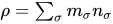
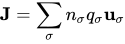
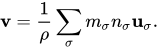
In MHD, motion in the fluid is described using linear combinations of the mean motions of the individual species: the current density and the center of mass velocity . In a given fluid, each species has a number density , mass , electric charge , and a mean velocity . The fluid's total mass density is then , and the motion of the fluid can be described by the current density expressed as and the center of mass velocity expressed as:

MHD can be described by a set of equations consisting of a continuity equation, an equation of motion (the Cauchy momentum equation), an equation of state, Ampère's law, Faraday's law, and Ohm's law. As with any fluid description to a kinetic system, a closure approximation must be applied to the highest moment of the particle distribution equation. This is often accomplished with approximations to the heat flux through a condition of adiabaticity or isothermality.

In the adiabatic limit, that is, the assumption of an isotropic pressure and isotropic temperature, a fluid with an adiabatic index , electrical resistivity , magnetic field , and electric field can be described by the continuity equation the equation of state the equation of motion the low-frequency Ampère's law Faraday's law and Ohm's law Taking the curl of this equation and using Ampère's law and Faraday's law results in the induction equation, where is the magnetic diffusivity.

In the equation of motion, the Lorentz force term can be expanded using Ampère's law and a vector calculus identity to give where the first term on the right hand side is the magnetic tension force and the second term is the magnetic pressure force.[5]


Ideal MHD

[edit]

In view of the infinite conductivity, every motion (perpendicular to the field) of the liquid in relation to the lines of force is forbidden because it would give infinite eddy currents. Thus the matter of the liquid is "fastened" to the lines of force...

The simplest form of MHD, ideal MHD, assumes that the resistive term in Ohm's law is small relative to the other terms such that it can be taken to be equal to zero. This occurs in the limit of large magnetic Reynolds numbers during which magnetic induction dominates over magnetic diffusion at the velocity and length scales under consideration.[5] Consequently, processes in ideal MHD that convert magnetic energy into kinetic energy, referred to as ideal processes, cannot generate heat and raise entropy.[7]: 6 

A fundamental concept underlying ideal MHD is the frozen-in flux theorem which states that the bulk fluid and embedded magnetic field are constrained to move together such that one can be said to be "tied" or "frozen" to the other. Therefore, any two points that move with the bulk fluid velocity and lie on the same magnetic field line will continue to lie on the same field line even as the points are advected by fluid flows in the system.[8][7]: 25  The connection between the fluid and magnetic field fixes the topology of the magnetic field in the fluid—for example, if a set of magnetic field lines are tied into a knot, then they will remain so as long as the fluid has negligible resistivity. This difficulty in reconnecting magnetic field lines makes it possible to store energy by moving the fluid or the source of the magnetic field. The energy can then become available if the conditions for ideal MHD break down, allowing magnetic reconnection that releases the stored energy from the magnetic field.

Ideal MHD equations

[edit]

In ideal MHD, the resistive term vanishes in Ohm's law giving the ideal Ohm's law,[5] Similarly, the magnetic diffusion term in the induction equation vanishes giving the ideal induction equation,[7]: 23 

Applicability of ideal MHD to plasmas

[edit]

Ideal MHD is only strictly applicable when:

  1. The plasma is strongly collisional, so that the time scale of collisions is shorter than the other characteristic times in the system, and the particle distributions are therefore close to Maxwellian.
  2. The resistivity due to these collisions is small. In particular, the typical magnetic diffusion times over any scale length present in the system must be longer than any time scale of interest.
  3. Interest in length scales much longer than the ion skin depth and Larmor radius perpendicular to the field, long enough along the field to ignore Landau damping, and time scales much longer than the ion gyration time (system is smooth and slowly evolving).

Importance of resistivity

[edit]

In an imperfectly conducting fluid the magnetic field can generally move through the fluid following a diffusion law with the resistivity of the plasma serving as a diffusion constant. This means that solutions to the ideal MHD equations are only applicable for a limited time for a region of a given size before diffusion becomes too important to ignore. One can estimate the diffusion time across a solar active region (from collisional resistivity) to be hundreds to thousands of years, much longer than the actual lifetime of a sunspot—so it would seem reasonable to ignore the resistivity. By contrast, a meter-sized volume of seawater has a magnetic diffusion time measured in milliseconds.

Even in physical systems[9]—which are large and conductive enough that simple estimates of the Lundquist number suggest that the resistivity can be ignored—resistivity may still be important: many instabilities exist that can increase the effective resistivity of the plasma by factors of more than 109. The enhanced resistivity is usually the result of the formation of small scale structure like current sheets or fine scale magnetic turbulence, introducing small spatial scales into the system over which ideal MHD is broken and magnetic diffusion can occur quickly. When this happens, magnetic reconnection may occur in the plasma to release stored magnetic energy as waves, bulk mechanical acceleration of material, particle acceleration, and heat.

Magnetic reconnection in highly conductive systems is important because it concentrates energy in time and space, so that gentle forces applied to a plasma for long periods of time can cause violent explosions and bursts of radiation.

When the fluid cannot be considered as completely conductive, but the other conditions for ideal MHD are satisfied, it is possible to use an extended model called resistive MHD. This includes an extra term in Ohm's law which models the collisional resistivity. Generally MHD computer simulations are at least somewhat resistive because their computational grid introduces a numerical resistivity.

Structures in MHD systems

[edit]
Schematic view of the different current systems which shape the Earth's magnetosphere

In many MHD systems most of the electric current is compressed into thin nearly-two-dimensional ribbons termed current sheets.[10] These can divide the fluid into magnetic domains, inside of which the currents are relatively weak. Current sheets in the solar corona are thought to be between a few meters and a few kilometers in thickness, which is quite thin compared to the magnetic domains (which are thousands to hundreds of thousands of kilometers across).[11] Another example is in the Earth's magnetosphere, where current sheets separate topologically distinct domains, isolating most of the Earth's ionosphere from the solar wind.

Waves

[edit]

The wave modes derived using the MHD equations are called magnetohydrodynamic waves or MHD waves. There are three MHD wave modes that can be derived from the linearized ideal-MHD equations for a fluid with a uniform and constant magnetic field:

  • Alfvén waves
  • Slow magnetosonic waves
  • Fast magnetosonic waves
Phase velocity plotted with respect to θ
'"`UNIQ--postMath-0000001F-QINU`"'
vA > vs
'"`UNIQ--postMath-00000020-QINU`"'
vA < vs

These modes have phase velocities that are independent of the magnitude of the wavevector, so they experience no dispersion. The phase velocity depends on the angle between the wave vector k and the magnetic field B. An MHD wave propagating at an arbitrary angle θ with respect to the time independent or bulk field B0 will satisfy the dispersion relation where is the Alfvén speed. This branch corresponds to the shear Alfvén mode. Additionally the dispersion equation gives where is the ideal gas speed of sound. The plus branch corresponds to the fast-MHD wave mode and the minus branch corresponds to the slow-MHD wave mode. A summary of the properties of these waves is provided:

Mode Type Limiting phase speeds Group
velocity
Direction of
energy flow
Alfvén wave transversal; incompressible
Fast magnetosonic wave neither transversal nor
longitudinal; compressional
equal to
phase velocity
approx.
Slow magnetosonic wave approx.

The MHD oscillations will be damped if the fluid is not perfectly conducting but has a finite conductivity, or if viscous effects are present.

MHD waves and oscillations are a popular tool for the remote diagnostics of laboratory and astrophysical plasmas, for example, the corona of the Sun (Coronal seismology).

Extensions

[edit]
Resistive
Resistive MHD describes magnetized fluids with finite electron diffusivity (η ≠ 0). This diffusivity leads to a breaking in the magnetic topology; magnetic field lines can 'reconnect' when they collide. Usually this term is small and reconnections can be handled by thinking of them as not dissimilar to shocks; this process has been shown to be important in the Earth-Solar magnetic interactions.
Extended
Extended MHD describes a class of phenomena in plasmas that are higher order than resistive MHD, but which can adequately be treated with a single fluid description. These include the effects of Hall physics, electron pressure gradients, finite Larmor Radii in the particle gyromotion, and electron inertia.
Two-fluid
Two-fluid MHD describes plasmas that include a non-negligible Hall electric field. As a result, the electron and ion momenta must be treated separately. This description is more closely tied to Maxwell's equations as an evolution equation for the electric field exists.
Hall
In 1960, M. J. Lighthill criticized the applicability of ideal or resistive MHD theory for plasmas.[12] It concerned the neglect of the "Hall current term" in Ohm's law, a frequent simplification made in magnetic fusion theory. Hall-magnetohydrodynamics (HMHD) takes into account this electric field description of magnetohydrodynamics, and Ohm's law takes the form where is the electron number density and is the elementary charge. The most important difference is that in the absence of field line breaking, the magnetic field is tied to the electrons and not to the bulk fluid.[13]
Electron MHD
Electron Magnetohydrodynamics (EMHD) describes small scales plasmas when electron motion is much faster than the ion one. The main effects are changes in conservation laws, additional resistivity, importance of electron inertia. Many effects of Electron MHD are similar to effects of the Two fluid MHD and the Hall MHD. EMHD is especially important for z-pinch, magnetic reconnection, ion thrusters, neutron stars, and plasma switches.
Collisionless
MHD is also often used for collisionless plasmas. In that case the MHD equations are derived from the Vlasov equation.[14]
Reduced
By using a multiscale analysis the (resistive) MHD equations can be reduced to a set of four closed scalar equations. This allows for, amongst other things, more efficient numerical calculations.[15]

Limitations

[edit]

Importance of kinetic effects

[edit]

Another limitation of MHD (and fluid theories in general) is that they depend on the assumption that the plasma is strongly collisional (this is the first criterion listed above), so that the time scale of collisions is shorter than the other characteristic times in the system, and the particle distributions are Maxwellian. This is usually not the case in fusion, space and astrophysical plasmas. When this is not the case, or the interest is in smaller spatial scales, it may be necessary to use a kinetic model which properly accounts for the non-Maxwellian shape of the distribution function. However, because MHD is relatively simple and captures many of the important properties of plasma dynamics it is often qualitatively accurate and is therefore often the first model tried.

Effects which are essentially kinetic and not captured by fluid models include double layers, Landau damping, a wide range of instabilities, chemical separation in space plasmas and electron runaway. In the case of ultra-high intensity laser interactions, the incredibly short timescales of energy deposition mean that hydrodynamic codes fail to capture the essential physics.

Applications

[edit]

Geophysics

[edit]

Beneath the Earth's mantle lies the core, which is made up of two parts: the solid inner core and liquid outer core.[16][17] Both have significant quantities of iron. The liquid outer core moves in the presence of the magnetic field and eddies are set up into the same due to the Coriolis effect.[18] These eddies develop a magnetic field which boosts Earth's original magnetic field—a process which is self-sustaining and is called the geomagnetic dynamo.[19]

Reversals of Earth's magnetic field

Based on the MHD equations, Glatzmaier and Paul Roberts have made a supercomputer model of the Earth's interior. After running the simulations for thousands of years in virtual time, the changes in Earth's magnetic field can be studied. The simulation results are in good agreement with the observations as the simulations have correctly predicted that the Earth's magnetic field flips every few hundred thousand years. During the flips, the magnetic field does not vanish altogether—it just gets more complex.[20]

Earthquakes

[edit]

Some monitoring stations have reported that earthquakes are sometimes preceded by a spike in ultra low frequency (ULF) activity. A remarkable example of this occurred before the 1989 Loma Prieta earthquake in California,[21] although a subsequent study indicates that this was little more than a sensor malfunction.[22] On December 9, 2010, geoscientists announced that the DEMETER satellite observed a dramatic increase in ULF radio waves over Haiti in the month before the magnitude 7.0 Mw 2010 earthquake.[23] Researchers are attempting to learn more about this correlation to find out whether this method can be used as part of an early warning system for earthquakes.

Space Physics

[edit]

The study of space plasmas near Earth and throughout the Solar System is known as space physics. Areas researched within space physics encompass a large number of topics, ranging from the ionosphere to auroras, Earth's magnetosphere, the Solar wind, and coronal mass ejections.

MHD forms the framework for understanding how populations of plasma interact within the local geospace environment. Researchers have developed global models using MHD to simulate phenomena within Earth's magnetosphere, such as the location of Earth's magnetopause[24] (the boundary between the Earth's magnetic field and the solar wind), the formation of the ring current, auroral electrojets,[25] and geomagnetically induced currents.[26]

One prominent use of global MHD models is in space weather forecasting. Intense solar storms have the potential to cause extensive damage to satellites[27] and infrastructure, thus it is crucial that such events are detected early. The Space Weather Prediction Center (SWPC) runs MHD models to predict the arrival and impacts of space weather events at Earth.

Astrophysics

[edit]

MHD applies to astrophysics, including stars, the interplanetary medium (space between the planets), and possibly within the interstellar medium (space between the stars) and jets.[28] Most astrophysical systems are not in local thermal equilibrium, and therefore require an additional kinematic treatment to describe all the phenomena within the system (see Astrophysical plasma).[29][30]

Sunspots are caused by the Sun's magnetic fields, as Joseph Larmor theorized in 1919. The solar wind is also governed by MHD. The differential solar rotation may be the long-term effect of magnetic drag at the poles of the Sun, an MHD phenomenon due to the Parker spiral shape assumed by the extended magnetic field of the Sun.

Previously, theories describing the formation of the Sun and planets could not explain how the Sun has 99.87% of the mass, yet only 0.54% of the angular momentum in the Solar System. In a closed system such as the cloud of gas and dust from which the Sun was formed, mass and angular momentum are both conserved. That conservation would imply that as the mass concentrated in the center of the cloud to form the Sun, it would spin faster, much like a skater pulling their arms in. The high speed of rotation predicted by early theories would have flung the proto-Sun apart before it could have formed. However, magnetohydrodynamic effects transfer the Sun's angular momentum into the outer solar system, slowing its rotation.

Breakdown of ideal MHD (in the form of magnetic reconnection) is known to be the likely cause of solar flares. The magnetic field in a solar active region over a sunspot can store energy that is released suddenly as a burst of motion, X-rays, and radiation when the main current sheet collapses, reconnecting the field.[31][32]

Magnetic confinement fusion

[edit]

MHD describes a wide range of physical phenomena occurring in fusion plasmas in devices such as tokamaks or stellarators.

The Grad-Shafranov equation derived from ideal MHD describes the equilibrium of axisymmetric toroidal plasma in a tokamak. In tokamak experiments, the equilibrium during each discharge is routinely calculated and reconstructed, which provides information on the shape and position of the plasma controlled by currents in external coils.

MHD stability theory is known to govern the operational limits of tokamaks. For example, the ideal MHD kink modes provide hard limits on the achievable plasma beta (Troyon limit) and plasma current (set by the requirement of the safety factor).

In a tokamak, instabilities also emerge from resistive MHD. For instance, tearing modes are instabilities arising within the framework of non-ideal MHD.[33] This is an active field of research, since these instabilities are the starting point for disruptions.[34]

Sensors

[edit]

Magnetohydrodynamic sensors are used for precision measurements of angular velocities in inertial navigation systems such as in aerospace engineering. Accuracy improves with the size of the sensor. The sensor is capable of surviving in harsh environments.[35]

Engineering

[edit]

MHD is related to engineering problems such as plasma confinement, liquid-metal cooling of nuclear reactors, and electromagnetic casting (among others).

A magnetohydrodynamic drive or MHD propulsor is a method for propelling seagoing vessels using only electric and magnetic fields with no moving parts, using magnetohydrodynamics. The working principle involves electrification of the propellant (gas or water) which can then be directed by a magnetic field, pushing the vehicle in the opposite direction. Although some working prototypes exist, MHD drives remain impractical.

The first prototype of this kind of propulsion was built and tested in 1965 by Steward Way, a professor of mechanical engineering at the University of California, Santa Barbara. Way, on leave from his job at Westinghouse Electric, assigned his senior-year undergraduate students to develop a submarine with this new propulsion system.[36] In the early 1990s, a foundation in Japan (Ship & Ocean Foundation (Minato-ku, Tokyo)) built an experimental boat, the Yamato-1, which used a magnetohydrodynamic drive incorporating a superconductor cooled by liquid helium, and could travel at 15 km/h.[37]

MHD power generation fueled by potassium-seeded coal combustion gas showed potential for more efficient energy conversion (the absence of solid moving parts allows operation at higher temperatures), but failed due to cost-prohibitive technical difficulties.[38] One major engineering problem was the failure of the wall of the primary-coal combustion chamber due to abrasion.

In microfluidics, MHD is studied as a fluid pump for producing a continuous, nonpulsating flow in a complex microchannel design.[39]

MHD can be implemented in the continuous casting process of metals to suppress instabilities and control the flow.[40][41]

Industrial MHD problems can be modeled using the open-source software EOF-Library.[42] Two simulation examples are 3D MHD with a free surface for electromagnetic levitation melting,[43] and liquid metal stirring by rotating permanent magnets.[44]

Magnetic drug targeting

[edit]

An important task in cancer research is developing more precise methods for delivery of medicine to affected areas. One method involves the binding of medicine to biologically compatible magnetic particles (such as ferrofluids), which are guided to the target via careful placement of permanent magnets on the external body. Magnetohydrodynamic equations and finite element analysis are used to study the interaction between the magnetic fluid particles in the bloodstream and the external magnetic field.[45]

See also

[edit]

Further reading

[edit]
  • Galtier, Sebastien (2016). Introduction to Modern Magnetohydrodynamics. Cambridge University Press. ISBN 978-1-107-15865-8.

References

[edit]

Grokipedia

from Grokipedia
Magnetohydrodynamics (MHD) is a branch of physics that studies the dynamics of electrically conducting fluids, such as plasmas and liquid metals, interacting with magnetic fields, combining principles from fluid mechanics and electromagnetism to model macroscopic behaviors where magnetic forces influence fluid motion and vice versa.[1] This field assumes that the conducting fluid can be treated as a continuous medium where microscopic effects, such as individual particle collisions and quantum phenomena, are averaged out, focusing on low-frequency, long-wavelength phenomena in highly conducting plasmas.[1] The foundational theory was developed in the early 1940s by Swedish physicist Hannes Alfvén, who predicted the existence of Alfvén waves—transverse waves propagating along magnetic field lines in plasmas—and received the Nobel Prize in Physics in 1970 for his contributions to MHD.[2][3] The core of MHD is encapsulated in a set of coupled partial differential equations derived from the Navier-Stokes equations for fluid motion and Maxwell's equations for electromagnetism, under the ideal MHD approximation that neglects resistivity, viscosity, and thermal conduction.[1] Key equations include the continuity equation for mass conservation (ρ/t+(ρV)=0\partial\rho/\partial t + \nabla\cdot(\rho\mathbf{V}) = 0), the momentum equation (ρ(DV/Dt)=J×Bp\rho(D\mathbf{V}/Dt) = \mathbf{J} \times \mathbf{B} - \nabla p), Faraday's law (B/t=×E\partial\mathbf{B}/\partial t = -\nabla \times \mathbf{E}), and the ideal Ohm's law (E+V×B=0\mathbf{E} + \mathbf{V} \times \mathbf{B} = 0), where ρ\rho is density, V\mathbf{V} is velocity, B\mathbf{B} is magnetic field, J\mathbf{J} is current density, pp is pressure, and E\mathbf{E} is electric field.[1] These equations highlight the Lorentz force (J×B\mathbf{J} \times \mathbf{B}) as the primary interaction term, enabling magnetic fields to accelerate, decelerate, or constrain fluid flows.[4] In non-ideal MHD, effects like finite resistivity allow for phenomena such as magnetic reconnection, where oppositely directed field lines break and reconnect, releasing energy.[4] MHD finds extensive applications across diverse domains, particularly in astrophysics and plasma physics.[1] In astrophysics, it explains solar phenomena like coronal mass ejections, solar flares, and the structure of the solar wind, as well as galactic dynamics and planetary magnetospheres.[1] In controlled fusion research, MHD models are crucial for designing magnetic confinement devices like tokamaks (e.g., ITER), predicting stability against instabilities such as kink and ballooning modes to achieve sustained plasma confinement for energy production.[4] Additional engineering applications include magnetohydrodynamic power generators, which convert thermal energy directly to electricity using conducting fluids in magnetic fields, and electromagnetic pumps for liquid metals in metallurgy.[5] Overall, MHD provides a foundational framework for understanding and simulating complex magnetized plasma systems in both natural and laboratory settings.[6]

History

Early Concepts and Foundations

The foundations of magnetohydrodynamics (MHD) trace back to early 19th-century experiments exploring electromagnetic induction in conducting media, particularly fluids. In 1821, Michael Faraday demonstrated the interaction between electric currents and magnetic fields using a mercury bath, where a wire carrying current rotated around a fixed magnet immersed in the conductive liquid, illustrating the Lorentz force on charged particles in a fluid.[7] This setup, an early electromagnetic motor, highlighted how magnetic fields could exert forces on conducting fluids like mercury, laying groundwork for understanding coupled electromagnetic and fluid motion. By 1831, Faraday extended these ideas through his homopolar generator, rotating a copper disk in a magnetic field to induce currents, though his attempts to generate electricity from Earth's motion through its magnetic field using conductive fluids such as water failed due to insufficient conductivity.[8] These experiments shifted focus from static electromagnetism to dynamic interactions in fluid conductors, influencing later MHD concepts. In the early 1900s, J.J. Thomson advanced these ideas by investigating electromagnetic forces in ionized gases, precursors to plasmas. Thomson's studies of cathode ray discharges in low-pressure tubes revealed that magnetic fields deflected streams of charged particles, demonstrating Lorentz forces acting on ions and electrons in partially ionized gases.[9] His 1897 discovery of the electron and subsequent work on gaseous conduction, including magnetic deflection experiments, underscored how electromagnetic fields govern motion in conducting vapors, bridging atomic physics with fluid-like behavior in ionized media.[10] These findings extended Faraday's principles to rarefied, ionized environments, emphasizing the role of conductivity in mediating magnetic influences on fluid motion. The transition from classical hydrodynamics to MHD emerged as researchers incorporated magnetic fields into the dynamics of highly conductive fluids, such as liquid metals and emerging plasma concepts. Early 20th-century geophysical and astrophysical inquiries, including solar flare observations, prompted extensions of Navier-Stokes equations to account for electromagnetic effects in mercury-like liquids and ionized gases.[11] This conceptual shift culminated in Hannes Alfvén's seminal 1942 paper, which introduced electromagnetic-hydrodynamic waves—now known as Alfvén waves—and the frozen-in flux theorem, positing that in perfectly conducting fluids, magnetic field lines are advected with the flow, resisting diffusion. Alfvén's work formalized the intuition from prior experiments, establishing MHD as a unified framework for magnetized conducting fluids, later encapsulated in the ideal MHD equations.

Key Developments and Milestones

In the post-World War II era, magnetohydrodynamics gained momentum through parallel research programs in the United States and the Soviet Union, focusing on MHD generators for efficient power production and advanced propulsion concepts. These efforts originated from wartime explorations into electromagnetic fluid interactions for naval and aerospace applications, evolving in the late 1940s and 1950s into experimental devices that converted thermal energy directly into electricity via plasma flows in magnetic fields. By the mid-1950s, U.S. researchers at institutions like AVCO Corporation had prototyped small-scale generators, achieving initial power outputs in the kilowatt range, while Soviet programs at facilities such as the Kurchatov Institute emphasized scalable designs for industrial energy systems, laying groundwork for Cold War-era technological competitions.[5][12] The 1960s marked a fusion research boom that integrated MHD principles into plasma confinement experiments, particularly tokamaks and pinches, to address stability challenges in controlled thermonuclear reactions. At Princeton University's Project Matterhorn (later the Plasma Physics Laboratory), MHD analysis became essential for modeling instabilities in early stellarator and tokamak designs, influencing international collaborations. Similarly, the I.V. Kurchatov Institute in Moscow advanced tokamak experiments, where MHD equilibria guided the T-1 and subsequent devices, achieving first plasma sustainment by 1958 and highlighting the role of magnetic reconnection in pinch configurations. This period solidified MHD as a cornerstone of fusion science, with declassification of research in 1958 accelerating global progress.[13][14] Key theoretical milestones included Hannes Alfvén's foundational 1950 book Cosmical Electrodynamics, revised in 1963 with Carl-Gunne Fälthammar to incorporate advanced plasma behaviors, which formalized MHD applications to astrophysical phenomena and motivated studies of MHD waves. Alfvén's pioneering contributions culminated in the 1970 Nobel Prize in Physics, awarded for "fundamental work and discoveries in magnetohydrodynamics with fruitful applications in different parts of plasma physics," particularly for elucidating cosmic plasma dynamics through concepts like frozen-in flux and wave propagation.[15][16] The 1970s introduced numerical simulations as a transformative tool for MHD modeling, enabling the study of nonlinear instabilities and complex flows beyond analytical limits. Early codes, such as those developed for tokamak kink modes using adaptive grids, allowed simulations of three-dimensional plasma behaviors, paving the way for computational plasma physics. By decade's end, these methods supported fusion device optimization and astrophysical predictions, marking MHD's shift toward integrated computational-experimental frameworks.[17] Up to 2025, MHD's historical significance has been reaffirmed through the evolution of Eugene Parker's dynamo theory, initially proposed in 1955 to explain solar magnetic field generation, which integrated MHD reconnection mechanisms to interpret eruptive events like solar flares. Observations from NASA's Parker Solar Probe, launched in 2018, provided direct evidence of magnetic reconnection in the solar corona during its 2024-2025 close approaches, validating decades of MHD-based models for flare dynamics and coronal mass ejections. This recognition underscores MHD's enduring role in heliophysics, bridging theoretical foundations with modern space weather forecasting.[18][19]

Mathematical Foundations

Governing Equations of MHD

Magnetohydrodynamics (MHD) describes the macroscopic behavior of electrically conducting fluids, such as plasmas or liquid metals, in the presence of magnetic fields by combining the principles of fluid dynamics and electromagnetism into a single-fluid continuum model. This framework treats the fluid as a single entity despite the presence of charged particles, assuming sufficient collisions to establish local thermodynamic equilibrium. The governing equations arise from the Navier-Stokes equations augmented by electromagnetic forces and Maxwell's equations simplified for low-frequency, large-scale phenomena where the fluid's conductivity plays a central role.[20][21] The continuity equation expresses the conservation of mass for the fluid:
ρt+(ρv)=0 \frac{\partial \rho}{\partial t} + \nabla \cdot (\rho \mathbf{v}) = 0
where ρ\rho is the fluid density and v\mathbf{v} is the velocity field. This equation remains unchanged from classical fluid dynamics, as electromagnetic effects do not directly alter mass conservation in the MHD approximation.[22] The momentum equation adapts the Navier-Stokes equation to include the Lorentz force J×B\mathbf{J} \times \mathbf{B}, where J\mathbf{J} is the current density and B\mathbf{B} is the magnetic field:
ρ(vt+vv)=p+J×B+μ2v \rho \left( \frac{\partial \mathbf{v}}{\partial t} + \mathbf{v} \cdot \nabla \mathbf{v} \right) = -\nabla p + \mathbf{J} \times \mathbf{B} + \mu \nabla^2 \mathbf{v}
Here, pp is the pressure, μ\mu is the dynamic viscosity, and the viscous term μ2v\mu \nabla^2 \mathbf{v} accounts for momentum diffusion. The Lorentz force couples the fluid motion to the magnetic field, enabling magnetic effects to accelerate or decelerate the flow. This form assumes a Newtonian fluid and neglects external body forces other than electromagnetic ones.[22][21] The induction equation governs the evolution of the magnetic field and is derived from Faraday's law combined with Ohm's law for a conducting fluid:
Bt=×(v×Bη×B) \frac{\partial \mathbf{B}}{\partial t} = \nabla \times (\mathbf{v} \times \mathbf{B} - \eta \nabla \times \mathbf{B})
where η=1/(μ0σ)\eta = 1/(\mu_0 \sigma) is the magnetic diffusivity, μ0\mu_0 is the vacuum permeability, and σ\sigma is the electrical conductivity. The term v×B\mathbf{v} \times \mathbf{B} represents field line advection by the flow, while η×B-\eta \nabla \times \mathbf{B} accounts for diffusive spreading due to finite resistivity. This equation highlights the interplay between advection and diffusion in magnetic field transport.[22][21] In the MHD approximation, Maxwell's equations are simplified by neglecting the displacement current and assuming quasi-neutrality, leading to:
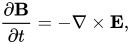
B=0,×E=Bt \nabla \cdot \mathbf{B} = 0, \quad \nabla \times \mathbf{E} = -\frac{\partial \mathbf{B}}{\partial t}
along with E=0\nabla \cdot \mathbf{E} = 0 and Ampère's law ×B=μ0J\nabla \times \mathbf{B} = \mu_0 \mathbf{J} (without E/t\partial \mathbf{E}/\partial t). These approximations hold for processes where lengths and times are much larger than plasma scales, such as the Debye length and plasma frequency period. The current density relates to the electric field via Ohm's law: J=σ(E+v×B)\mathbf{J} = \sigma (\mathbf{E} + \mathbf{v} \times \mathbf{B}).[22][21] The energy equation incorporates heating and work terms, including ohmic dissipation ηJ2\eta J^2:
ρDDt(pγ1)=ηJ2+(kT) \rho \frac{D}{Dt} \left( \frac{p}{\gamma - 1} \right) = \eta J^2 + \nabla \cdot (k \nabla T)
where D/DtD/Dt is the material derivative, γ\gamma is the adiabatic index, kk is thermal conductivity, and TT is temperature. The ohmic heating term ηJ2\eta J^2 arises from resistive losses in the current-carrying fluid, contributing to internal energy increase. For simplicity, this often assumes an ideal gas law p=ρTp = \rho T (in suitable units).[22] These equations rely on key assumptions: a single-fluid model averaging over particle species, quasi-neutrality (E0\nabla \cdot \mathbf{E} \approx 0), and frequencies much lower than the plasma frequency to justify the neglect of microscopic effects. The framework applies to highly conducting fluids where the magnetic Reynolds number Rm=UL/ηR_m = U L / \eta (with characteristic velocity UU and length LL) indicates the relative importance of advection over diffusion. In the limit η0\eta \to 0 (infinite conductivity), these reduce to the ideal MHD equations.[22][21]

Ideal MHD Approximation

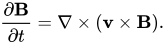
The ideal magnetohydrodynamics (MHD) approximation simplifies the general MHD framework by assuming infinite electrical conductivity, which eliminates resistive diffusion of the magnetic field and enforces perfect coupling between the plasma flow and the magnetic field. This limit is obtained by setting the resistivity η=0\eta = 0 in the generalized Ohm's law, leading to the ideal electric field relation E=v×B\mathbf{E} = -\mathbf{v} \times \mathbf{B}. Substituting this into Faraday's law B/t=×E\partial \mathbf{B}/\partial t = -\nabla \times \mathbf{E} yields the ideal induction equation:
Bt=×(v×B), \frac{\partial \mathbf{B}}{\partial t} = \nabla \times (\mathbf{v} \times \mathbf{B}),
which describes how the magnetic field evolves solely through advection by the plasma velocity v\mathbf{v}.[23] This equation implies that magnetic field lines are effectively "frozen" into the moving plasma elements, preventing diffusion across field lines.[24] The complete set of ideal MHD equations consists of the continuity equation for mass conservation,
ρt+(ρv)=0, \frac{\partial \rho}{\partial t} + \nabla \cdot (\rho \mathbf{v}) = 0,
the momentum equation,
ρ(vt+(v)v)=1μ0(×B)×Bp+ρg, \rho \left( \frac{\partial \mathbf{v}}{\partial t} + (\mathbf{v} \cdot \nabla) \mathbf{v} \right) = \frac{1}{\mu_0} (\nabla \times \mathbf{B}) \times \mathbf{B} - \nabla p + \rho \mathbf{g},
the ideal induction equation given above, the solenoidal condition B=0\nabla \cdot \mathbf{B} = 0, and an energy equation assuming an adiabatic process with constant specific entropy ss, such that pressure p=p(ρ,s)p = p(\rho, s).[23] The energy equation can be expressed as
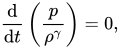
t+v(pργ)=0, \frac{\partial}{\partial t} + \mathbf{v} \cdot \nabla \left( \frac{p}{\rho^\gamma} \right) = 0,
where γ\gamma is the adiabatic index. These equations close the system under the ideal approximation, neglecting viscosity and thermal conduction as well, and form a hyperbolic set suitable for describing large-scale plasma dynamics.[23] A key consequence of the ideal induction equation is Alfvén's frozen-in flux theorem, which states that the magnetic flux through any closed material loop moving with the plasma remains constant in time.[25] To derive this, consider the magnetic flux Ψ=SBdA\Psi = \int_S \mathbf{B} \cdot d\mathbf{A} through a surface SS bounded by a material curve CC that deforms with the flow. For a moving loop, the rate of change of flux equals the negative of the total electromotive force (EMF) around the loop: dΨdt=C(E+v×B)dl\frac{d\Psi}{dt} = -\oint_C (\mathbf{E} + \mathbf{v} \times \mathbf{B}) \cdot d\mathbf{l}. In the ideal limit, E+v×B=0\mathbf{E} + \mathbf{v} \times \mathbf{B} = 0, so dΨ/dt=0d\Psi/dt = 0, proving flux conservation.[24] This theorem, originally articulated by Hannes Alfvén, underscores that magnetic field lines are advected with the plasma, preserving field line topology unless broken by non-ideal effects.[25] The ideal MHD approximation applies when the magnetic Reynolds number Rem=μ0σvL1Re_m = \mu_0 \sigma v L \gg 1, where σ=1/(μ0η)\sigma = 1/(\mu_0 \eta) is the conductivity, vv a characteristic velocity, and LL a length scale; this condition ensures that advection dominates over diffusive terms, making resistivity negligible.[23] In contrast to the full MHD model, which includes finite η>0\eta > 0 allowing field diffusion and processes like magnetic reconnection, ideal MHD prohibits such reconnection without external perturbations and focuses on reversible, topology-preserving dynamics.[24] Solutions to these equations yield phenomena such as Alfvén waves, which propagate along field lines at the Alfvén speed.[23]

Physical Phenomena

MHD Waves

In ideal magnetohydrodynamics (MHD), small-amplitude perturbations to a uniform equilibrium state propagate as linear waves, providing key insights into the dynamic response of magnetized plasmas. These waves arise from the coupling of fluid motion with electromagnetic fields in the linearized ideal MHD equations, assuming infinite conductivity and neglecting viscosity. The theory predicts three distinct propagating wave families: Alfvén waves, which are transverse and incompressible, and fast and slow magnetosonic waves, which are compressional and couple hydrodynamic sound waves with magnetic perturbations. A fourth non-propagating mode, the entropy wave, also emerges but is passively advected by the flow.[26] Alfvén waves represent shear perturbations where plasma elements oscillate transversely to the background magnetic field B0\mathbf{B}_0, with the restoring force provided by magnetic tension along bent field lines. These waves are incompressible, producing no density or pressure fluctuations, and propagate strictly along the field direction with phase speed equal to the Alfvén speed vA=B/μ0ρv_A = B / \sqrt{\mu_0 \rho}, where B=B0B = |\mathbf{B}_0| is the field strength, ρ\rho is the plasma mass density, and μ0\mu_0 is the vacuum permeability in SI units. The dispersion relation, derived from the linearized momentum and induction equations, is ω=kvA\omega = k_\parallel v_A, or equivalently ω2=k2vA2cos2θ\omega^2 = k^2 v_A^2 \cos^2 \theta, where ω\omega is the angular frequency, kk is the wavenumber, θ\theta is the angle between the wave vector k\mathbf{k} and B0\mathbf{B}_0, and k=kcosθk_\parallel = k \cos \theta. This mode was first theoretically predicted by Hannes Alfvén in 1942 as a combined electromagnetic-hydrodynamic oscillation in conducting fluids and experimentally verified by Stig Lundquist in 1949 using MHD waves in a mercury conductor. The velocity and magnetic perturbations are perpendicular to both B0\mathbf{B}_0 and k\mathbf{k}, ensuring no compression.[27][28][29] The fast and slow magnetosonic waves involve compressional motions, where density and pressure perturbations couple with magnetic field compression or rarefaction, leading to phase speeds that depend on both sound speed cs=γP/ρc_s = \sqrt{\gamma P / \rho} (with γ\gamma the adiabatic index and PP the pressure) and vAv_A. Derived from the full set of linearized ideal MHD equations—including continuity, momentum, energy, and induction—the dispersion relation for these modes is
ω2=12k2(vA2+cs2)[1±14vA2cs2cos2θ(vA2+cs2)2], \omega^2 = \frac{1}{2} k^2 (v_A^2 + c_s^2) \left[ 1 \pm \sqrt{1 - \frac{4 v_A^2 c_s^2 \cos^2 \theta}{(v_A^2 + c_s^2)^2}} \right],
where the ++ sign yields the faster fast magnetosonic mode and the - sign the slower slow magnetosonic mode. In the fast mode, plasma pressure and magnetic pressure fluctuations reinforce each other, enabling efficient energy transport nearly isotropically across angles θ\theta. The slow mode features opposing pressure and magnetic effects, resulting in a phase speed that vanishes at θ=90\theta = 90^\circ and is minimized near perpendicular propagation, forming a "cusp" in the dispersion surface. These compressional modes have been observed in laboratory plasmas. For parallel propagation (θ=0\theta = 0), the fast mode speed approaches max(vA,cs)\max(v_A, c_s) and the slow min(vA,cs)\min(v_A, c_s), partially decoupling from the transverse Alfvén mode at vAv_A.[26][29] In addition to these propagating modes, the linearized equations support an entropy wave, a non-propagating scalar mode that advects entropy fluctuations passively with the equilibrium flow velocity, without any restoring force or oscillation. In the ideal MHD limit, all propagating waves are nondispersive (phase speed independent of kk) and undamped, preserving wave energy indefinitely. Resistive effects introduce diffusion and damping, particularly for the Alfvén mode via magnetic diffusivity, but such non-ideal modifications lie beyond the scope of ideal theory. These linear waves serve as building blocks for analyzing perturbations on equilibrium structures in magnetized plasmas.[26][29]

Equilibrium Structures and Instabilities

In magnetohydrodynamics (MHD), equilibrium structures represent static or quasi-static configurations where the plasma is confined by magnetic fields, satisfying the force balance equation p=J×B\nabla p = \mathbf{J} \times \mathbf{B}, where pp is the plasma pressure, J\mathbf{J} is the current density, and B\mathbf{B} is the magnetic field.[30] This equation arises from the momentum equation in ideal MHD under steady-state conditions with negligible inertia, ensuring that Lorentz forces balance pressure gradients. In axisymmetric toroidal geometries, such as those relevant to confined plasmas, this balance reduces to the Grad-Shafranov equation, a nonlinear partial differential equation for the poloidal flux function ψ\psi: Δψ=μ0R2dpdψ12ddψ(F2)\Delta^* \psi = - \mu_0 R^2 \frac{dp}{d\psi} - \frac{1}{2} \frac{d}{d\psi} (F^2), where Δ\Delta^* is the Grad-Shafranov operator, RR is the major radius, and FF is the toroidal field function. Solutions to this equation describe tokamak-like equilibria, with pressure and toroidal field profiles determining the shape and stability of the plasma column.[31] Key equilibrium structures include magnetic flux tubes, which are bundles of field lines enclosing plasma with balanced internal and external pressures; current sheets, thin layers where currents are concentrated and J\mathbf{J} is large; and force-free fields, where JB\mathbf{J} \parallel \mathbf{B} such that J×B=0\mathbf{J} \times \mathbf{B} = 0 and p=0\nabla p = 0, ideal for low-pressure configurations. Flux tubes maintain coherence through magnetic tension, while current sheets often form in regions of reversed fields and can lead to localized force imbalances.[32] Force-free fields, satisfying ×B=αB\nabla \times \mathbf{B} = \alpha \mathbf{B} for some scalar α\alpha, represent minimal-energy states in current-carrying plasmas without pressure gradients. Stability of these equilibria is assessed via linear perturbation analysis within ideal MHD, often using the energy principle, which evaluates the change in potential energy δW\delta W for displacements ξ\xi: a configuration is stable if δW>0\delta W > 0 for all admissible perturbations.[30] This variational approach, derived from the self-adjoint MHD equations, identifies unstable modes when δW<0\delta W < 0, corresponding to exponential growth of perturbations.[30] MHD instabilities include kink modes (toroidal mode number m=1m=1), which involve helical displacements driven by current gradients and destabilize elongated plasmas; sausage modes (m=0m=0), axisymmetric pinchings that constrict the plasma column; and ballooning modes, high-poloidal-mode-number (n1n \gg 1) pressure-driven instabilities prominent in curved field geometries.[33] In the Z-pinch configuration, a cylindrical plasma column threaded by axial current, both sausage and kink modes render the equilibrium highly unstable, with growth rates scaling as the Alfvén time, limiting confinement times to microseconds.[33] The magnetic Rayleigh-Taylor instability, an interchange of plasma across a density or pressure gradient accelerated by Lorentz forces, further disrupts sharp interfaces in magnetized flows, analogous to hydrodynamic RT but stabilized partially by field tension. The plasma beta parameter, β=2μ0p/B2\beta = 2\mu_0 p / B^2, quantifies the relative importance of thermal pressure to magnetic pressure and governs regime-dependent stability.[30] In low-β\beta regimes (β1\beta \ll 1), magnetic forces dominate, favoring stable force-free structures but vulnerability to current-driven kinks; high-β\beta regimes (β1\beta \sim 1) enhance pressure-driven modes like ballooning, requiring optimized profiles for δW>0\delta W > 0.[34] Initial perturbations, akin to MHD waves, seed these instabilities, but growth occurs through exponential amplification rather than propagation.[30]

Extensions and Limitations

Resistive and Non-Ideal MHD

In resistive magnetohydrodynamics (MHD), finite electrical resistivity η>0\eta > 0 is incorporated into the induction equation, relaxing the infinite conductivity assumption of ideal MHD. The governing induction equation takes the form
Bt=×(v×Bη×B), \frac{\partial \mathbf{B}}{\partial t} = \nabla \times (\mathbf{v} \times \mathbf{B} - \eta \nabla \times \mathbf{B}),
where the diffusive term η×B-\eta \nabla \times \mathbf{B} allows magnetic field lines to diffuse through the plasma, enabling processes like reconnection that are forbidden in the ideal limit.[24] This diffusion occurs over a characteristic timescale τD=μ0L2/η=μ0σL2\tau_D = \mu_0 L^2 / \eta = \mu_0 \sigma L^2, with σ\sigma the electrical conductivity and LL a system length scale; for typical plasmas, τD\tau_D vastly exceeds the Alfvén time τA=L/vA\tau_A = L / v_A, making resistive effects negligible except in thin layers or over long times.[35] A primary application of resistive MHD is magnetic reconnection, where oppositely directed fields annihilate and reform, releasing stored magnetic energy. The seminal steady-state Sweet-Parker model describes this in a thin current sheet of length LL and thickness δL\delta \ll L, forming an X-point geometry where plasma inflows at rate vinv_{in} along the sheet and outflows at Alfvén speed vAv_A. Balancing advection and diffusion yields vinvA/Remv_{in} \sim v_A / \sqrt{Re_m}, with magnetic Reynolds number Rem=μ0LvA/ηRe_m = \mu_0 L v_A / \eta; this slow rate (0.01vA\sim 0.01 v_A for Rem104Re_m \sim 10^4) characterizes laminar reconnection in high-RemRe_m regimes but underpredicts observations in many astrophysical settings.[36] The model assumes incompressible, uniform resistivity and neglects viscosity, focusing on the resistive layer where diffusion dominates.[37] To capture effects from ion-electron mass differences, Hall MHD extends the resistive framework by including the Hall term in the generalized Ohm's law, arising from the separation of electron and ion velocities. The induction equation becomes
Bt=×(v×Bη×BJ×Bne), \frac{\partial \mathbf{B}}{\partial t} = \nabla \times \left( \mathbf{v} \times \mathbf{B} - \eta \nabla \times \mathbf{B} - \frac{\mathbf{J} \times \mathbf{B}}{n e} \right),
where the Hall term J×Bne\frac{\mathbf{J} \times \mathbf{B}}{n e} (with nn electron density and ee charge) introduces dispersive whistler waves with phase speed scaling as kdivAk d_i v_A (did_i ion inertial length, kk wavenumber), enabling faster reconnection rates (0.1vA\sim 0.1 v_A) in collisionless plasmas when the Hall parameter ϵH=di/L0.1\epsilon_H = d_i / L \sim 0.1.[24] This extension is crucial for scales below the ion skin depth, bridging fluid and kinetic descriptions without full particle effects. Beyond resistivity and Hall effects, other non-ideal terms like electron inertia (adding a mene2Jt\frac{m_e}{n e^2} \frac{\partial \mathbf{J}}{\partial t} term in Ohm's law, prominent in electron MHD) and gyroviscosity (ion stress tensor contributions from finite Larmor radius) modify the induction and momentum equations at small scales. These become significant at low Lundquist numbers S=vAL/η103S = v_A L / \eta \lesssim 10^3, where diffusion overwhelms advection, allowing rapid field reconfiguration in weakly magnetized or collisional plasmas.[38] Viscoresistive MHD couples finite viscosity ν\nu and resistivity in the Navier-Stokes and induction equations, leading to interacting boundary layers in reconnection sites. In steady-state configurations, a viscous sublayer forms adjacent to the resistive layer when the magnetic Prandtl number Pm=ν/η>1P_m = \nu / \eta > 1, thickening the current sheet and reducing reconnection rates by factors of Pm\sqrt{P_m}; this is relevant in liquid metal experiments and protoplanetary disks where viscosity damps inflows.[39]

Kinetic Effects and Model Breakdowns

The magnetohydrodynamic (MHD) approximation relies on scale separations that ensure the plasma behaves as a single fluid, specifically when the characteristic length scale $ l $ satisfies $ l \gg \lambda_D $, where $ \lambda_D $ is the Debye length, and the characteristic frequency $ \omega $ satisfies $ \omega \ll \omega_{ci} $, the ion cyclotron frequency.[40][41] These conditions allow macroscopic electromagnetic fields to dominate over microscopic particle motions, but they break down in regimes such as collisionless shocks or thin current layers, where particle-scale kinetics drive dissipation and structure formation without collisions.[42][43] Key kinetic effects beyond the fluid paradigm include Landau damping, which arises from wave-particle resonances and attenuates MHD waves without resistivity, and finite Larmor radius (FLR) corrections to the pressure tensor, which account for gyromotion-induced anisotropies in the stress tensor.[44][45] These effects lead to gyrokinetic formulations, where the Vlasov equation is expanded in gyro-phase averages to describe low-frequency phenomena in strongly magnetized plasmas, bridging fluid and full kinetic descriptions.[44] To capture ion kinetics while retaining computational efficiency, hybrid models treat electrons as a massless fluid for charge neutrality and Ampère's law closure, while solving the Vlasov equation for the ion distribution function $ f(\mathbf{v}) $ to incorporate ion orbits and distribution anisotropies.[46][47] In magnetic reconnection, Hall effects—stemming from ion-electron mass differences—enable fast reconnection rates in the Petschek model by allowing electron-scale current layers to form while ions decouple on the ion inertial scale, a process unresolved in standard MHD.[48][49] Anisotropic pressure distributions further limit MHD validity, driving firehose instabilities when parallel pressure exceeds perpendicular pressure plus magnetic pressure ($ p_\parallel > p_\perp + B^2 / \mu_0 ),leadingtotransversemagneticfielddistortions,andmirrorinstabilitieswhenperpendicularpressuredominates(), leading to transverse magnetic field distortions, and mirror instabilities when perpendicular pressure dominates ( p_\perp / p_\parallel > 1 + 1/\beta_\parallel $), trapping particles in magnetic bottles that grow unstable.[50][51] These instabilities regulate anisotropy in collisionless plasmas but require kinetic treatments for accurate growth rates and saturation.[52] For processes at scales below the ion inertial length $ d_i = c / \omega_{pi} $, where $ \omega_{pi} $ is the ion plasma frequency, the MHD and even hybrid approximations fail due to dominant electron and ion kinetic coupling, necessitating full particle-in-cell (PIC) simulations that track individual particle trajectories to resolve wave-particle interactions and non-gyrotropic distributions.[53][54] PIC methods, while computationally intensive, capture these breakdowns in high-fidelity, as demonstrated in studies of reconnection diffusion regions and shock ramps.[54]

Applications

Astrophysical and Space Physics

Magnetohydrodynamics (MHD) plays a central role in modeling the large-scale dynamics of astrophysical plasmas, where magnetic fields interact with conducting fluids over vast scales, from the solar corona to galactic disks. In solar physics, coronal mass ejections (CMEs) are often simulated as the eruption of twisted magnetic flux ropes from the solar surface, driven by instabilities such as the torus instability or magnetic breakout in MHD frameworks.[55] These events release enormous amounts of plasma and magnetic energy into the heliosphere, with MHD models demonstrating how flux rope ejections propagate outward, interacting with the ambient solar wind to form shocks and sheaths.[56] The Sun's global magnetic field reversals, occurring approximately every 11 years, are explained by Parker's dynamo model, which incorporates the α\alpha-effect from helical turbulence in the convection zone to generate poloidal fields from toroidal ones, coupled with differential rotation (the Ω\Omega-effect) to sustain oscillatory cycles. This mean-field dynamo theory has been validated through simulations showing field amplification and reversal consistent with solar observations.[57] In galactic contexts, mean-field dynamo theory describes the generation and maintenance of magnetic fields in spiral galaxies, where the αΩ\alpha - \Omega mechanism operates: the α\alpha-effect from supernova-driven turbulence produces poloidal fields, while shear from differential rotation winds them into strong toroidal components aligned with spiral arms.[58] These fields reach microgauss strengths, influencing gas dynamics and star formation. In accretion disks around black holes and stars, the magnetorotational instability (MRI) drives turbulence in MHD simulations, transporting angular momentum outward and enabling accretion at observed rates by destabilizing differentially rotating, magnetized plasmas. The MRI grows rapidly when weak seed fields are present, leading to chaotic flows that mix and heat the disk material.[59] Space weather phenomena, such as magnetopause reconnection, are modeled using global MHD codes that capture the interaction between the solar wind and Earth's magnetosphere, where antiparallel magnetic fields at the dayside boundary trigger reconnection sites, allowing plasma entry and energy transfer into the magnetosphere.[60] This process varies with interplanetary magnetic field orientation, leading to enhanced geomagnetic activity during southward IMF conditions. In the nightside magnetotail, substorms involve thinning of the current sheet, often initialized with Harris sheet equilibria in MHD models, where plasmoid formation and reconnection release stored energy, causing auroral intensifications and plasma injections.[61] These models reproduce substorm onset timings and tail dynamics observed by missions like THEMIS.[62] Cosmic-scale applications include relativistic jets from active galactic nuclei (AGN), powered by the Blandford-Znajek process, in which rotating supermassive black holes twist surrounding magnetic fields via frame-dragging, extracting rotational energy to accelerate plasma along open field lines at near-light speeds.[63] MHD simulations confirm jet collimation and power scaling with black hole spin, matching observations of extended radio lobes. In the interstellar medium (ISM), MHD turbulence cascades energy from large scales to small, exhibiting Kolmogorov-like power spectra in density and velocity fluctuations, as inferred from radio scintillation and HI emission maps, which regulate cloud formation and cosmic ray propagation.[64] Observational support comes from missions like SOHO, which imaged CME flux ropes and coronal loops, confirming MHD-predicted structures in the solar atmosphere through EUV and white-light coronagraphy.[65] The Parker Solar Probe, with perihelion encounters up to 2025, has directly measured Alfvén waves in the near-Sun solar wind, showing their damping contributes significantly to plasma heating and acceleration, with wave amplitudes sufficient to power the fast wind stream.[66] These in-situ data validate ideal MHD wave propagation models while highlighting non-ideal effects at small scales.[66]

Laboratory Plasma and Fusion

Laboratory plasmas for fusion research rely on magnetohydrodynamic (MHD) principles to confine high-temperature ionized gases using strong magnetic fields, aiming to achieve controlled nuclear fusion reactions. In these engineered environments, MHD governs the stability and equilibrium of plasmas in devices like tokamaks, stellarators, reversed-field pinches (RFPs), and inertial confinement systems, where deviations from ideal MHD can lead to instabilities that limit performance or cause disruptions. Understanding and mitigating these MHD effects is crucial for scaling up to reactor-relevant conditions, as seen in experiments at facilities such as JET, DIII-D, and the National Ignition Facility (NIF).[67] In tokamaks, MHD instabilities such as neoclassical tearing modes (NTMs) and edge-localized modes (ELMs) pose significant challenges to confinement. NTMs arise from the interaction of bootstrap currents with magnetic islands, leading to seed island formation through nonlinear three-wave coupling of perturbation modes, as observed in DIII-D experiments where triplets of magnetic islands at rational safety factor q surfaces trigger growth.[68] The safety factor q, defined as the ratio of toroidal to poloidal magnetic flux, is engineered to exceed unity in the core (q > 1) to avoid external kink modes, while profiles with q(0) ≈ 1 enable sawtooth relaxations but risk NTM onset if perturbed.[69] ELMs, periodic bursts at the plasma edge, are driven by MHD ballooning modes and can be suppressed by magnetic islands that flatten the pressure gradient, as demonstrated in recent EAST tokamak observations where islands at the q=3 surface inhibited ELM activity.[70] These modes are mitigated through techniques like resonant magnetic perturbations (RMPs), which tailor error fields to maintain edge stability without core penetration.[71] Stellarators and RFPs exhibit MHD behaviors distinct from tokamaks due to their inherently three-dimensional magnetic geometries, which provide quasi-steady equilibria without induced currents. In the Large Helical Device (LHD), inward-shifted configurations achieve high-beta plasmas but are prone to resistive MHD pressure-driven modes, leading to sawtooth-like oscillations that redistribute core pressure via ideal MHD relaxations.[72] Sawtooth oscillations in these devices stem from internal m=1 kink modes, where the central q drops below 1, triggering periodic crashes that enhance confinement by flattening the core temperature profile, as simulated in current-carrying stellarator models.[73] RFPs, such as those in the Madison Symmetric Torus, rely on MHD dynamo effects for equilibrium but suffer from sawtooth precursors that evolve into global tearing modes, requiring helical perturbations for stabilization.[74] In inertial confinement fusion (ICF), MHD effects manifest during the deceleration phase of imploding capsules, where Rayleigh-Taylor instabilities (RTIs) at the fuel-ablator interface amplify perturbations and mix cold material into the hot spot, degrading ignition. At NIF, laser-driven implosions have shown RTI growth rates scaling with the Atwood number, with multimodal perturbations leading to turbulent mixing that reduces neutron yield by up to 50% in high-velocity experiments.[75] Magnetic fields generated by RTI in these plasmas, via Hall-MHD mechanisms, can partially suppress growth by Lorentz forces, as evidenced in simulations matching NIF diagnostics where fields of ~100 T inhibit mixing.[76] Disruptions in magnetic confinement devices, sudden losses of plasma control, are often triggered by MHD instabilities and produce halo currents from vertical displacements, exerting toroidal torques that stress vessel walls. Massive gas injection (MGI) mitigates these by rapidly increasing plasma resistivity and radiating thermal energy, reducing halo currents by over 50% and sideways forces during vertical displacement events (VDEs) in JET experiments.[77] MGI also suppresses runaway electrons (REs), relativistic beams formed during current decay, by providing collisional drag from injected impurities like neon, avoiding RE avalanches that could damage components, as validated in DIII-D tests with >10^{22} molecules injected.[78] High-pressure noble gas jets further enhance mitigation by uniformly distributing the quench, minimizing localized heat loads.[79] Recent advances through 2025 emphasize MHD stability in ITER's design, incorporating q-profile control via electron cyclotron current drive to avoid NTMs and ELMs, with projections for DEMO reactors requiring robust equilibria at β_N > 3 to achieve steady-state operation. ITER's baseline scenario targets q_95 ≈ 3 for kink stability, informed by ASDEX Upgrade results showing ELM pacing via pellet injection to sustain H-mode confinement. DEMO projections integrate shattered pellet injection for disruption avoidance, aiming for <1 disruption per day in a 2 GW_th plant, building on 2024-2025 modeling of multi-region relaxed states during sawtooth crashes.[67][80][81]

Engineering and Geophysical Uses

Magnetohydrodynamic (MHD) generators operate on the principle of Faraday's law, converting the kinetic energy of a high-velocity, electrically conducting plasma—typically produced by seeding fossil fuel combustion products with alkali metals—directly into electrical power without moving parts. In Faraday-type configurations, the plasma flows perpendicular to a strong magnetic field, inducing an electric field that drives current through electrodes, achieving isentropic efficiencies up to approximately 50% in theoretical combined-cycle systems when integrated with steam turbines.[5][82] Early development in the United States during the 1960s, led by the AVCO Corporation under government contracts, demonstrated proof-of-concept with a 1959 experimental generator producing 11.5 kW from seeded combustion gases, paving the way for larger-scale prototypes aimed at coal-fired power augmentation.[5][83] Despite promising efficiency gains over conventional thermal cycles, challenges such as electrode erosion and slag deposition limited commercial viability, though ongoing research explores applications in high-temperature topping cycles for fossil plants.[84] Liquid metal MHD systems exploit the high electrical conductivity of molten metals like sodium or mercury to enable flow control and propulsion without mechanical components, particularly in nuclear engineering. Electromagnetic (EM) pumps, which use Lorentz forces from crossed electric and magnetic fields to drive fluid motion, have been employed in sodium-cooled fast reactors to circulate coolant efficiently and reliably. For instance, in the U.S. Fast Flux Test Facility (FFTF), a 400 MW thermal sodium-cooled prototype reactor operational from 1980 to 1992, EM pumps supported auxiliary cooling loops, demonstrating flow rates up to several hundred liters per second with no seals or bearings, thus reducing maintenance in high-radiation environments.[85][86] These pumps operate via the J × B force, where J is the induced current density, providing precise control ideal for compact reactor designs.[87] In geophysics, MHD principles underpin the geodynamo model, explaining Earth's magnetic field as arising from convective motions in the liquid outer core, where thermal and compositional buoyancy drives fluid flow in the presence of a seed field. Cowling's theorem, which prohibits steady axisymmetric dynamos in incompressible fluids, is circumvented in the geodynamo through non-axisymmetric velocity and magnetic field components that enable field amplification via the ω-effect (differential rotation stretching field lines) and α-effect (helical turbulence twisting them).[88] Seminal numerical simulations, such as those by Glatzmaier and Roberts in 1995, reproduced self-sustaining dipolar fields with periodic reversals driven by core convection, matching paleomagnetic observations of field excursions over millions of years.[89] These models incorporate flux freezing from ideal MHD, where magnetic Reynolds numbers exceeding 10^3 in the core ensure field lines are advected with the flow, sustaining the geodynamo against ohmic decay.[90] Seismomagnetic effects, arising from piezomagnetic coupling where stress changes in magnetized rocks induce magnetic field variations, produce transient electromagnetic signals during earthquakes, though these are secondary to primary seismic drivers. Piezomagnetic models predict field perturbations on the order of 0.1–1 nT for magnitude 7+ events at distances of 100–1000 km, scaling with the stress drop and crustal magnetization. Observations during the 2004 Sumatra-Andaman earthquake (Mw 9.1–9.3) included Pc5 geomagnetic pulsations detected ~12 minutes post-origin time at stations in Thailand, attributed to ionospheric disturbances but consistent with piezomagnetic precursors from crustal piezomagnetism.[91] Such effects, while detectable via magnetometers, do not constitute a primary MHD mechanism but offer potential for earthquake monitoring when integrated with seismic data.[92] Beyond core applications, MHD facilitates non-intrusive measurement of oceanic flows through electromagnetic induction, where seawater—a conductive fluid—moving across Earth's geomagnetic field generates measurable motional electric fields. Arrays of seabed electrodes or satellite magnetometers detect these induced voltages, enabling mapping of current velocities with resolutions down to 1 cm/s over basin scales, as in studies of the Antarctic Circumpolar Current.[93][94] Recent advancements in hypersonic vehicle flow control leverage MHD to manipulate ionized boundary layers at Mach 5+, using onboard magnets and electrodes to impose Lorentz forces that reduce drag and heat flux. A 2025 study characterized MHD effects on post-shock plasmas in hypersonic flows, demonstrating reductions in heat transfer and shear stresses by up to 50% near the leading edge via interactions with the plasma, with applications to reentry vehicles.[95]

References

User Avatar
No comments yet.