Hubbry Logo
Tachykinin receptor 1Tachykinin receptor 1Main
Open search
Tachykinin receptor 1
Community hub
Tachykinin receptor 1
logo
8 pages, 0 posts
0 subscribers
Be the first to start a discussion here.
Tachykinin receptor 1
from Wikipedia

TACR1
Available structures
PDBOrtholog search: PDBe RCSB
Identifiers
AliasesTACR1, NK1R, NKIR, SPR, TAC1R, tachykinin receptor 1
External IDsOMIM: 162323; MGI: 98475; HomoloGene: 20288; GeneCards: TACR1; OMA:TACR1 - orthologs
Orthologs
SpeciesHumanMouse
Entrez
Ensembl
UniProt
RefSeq (mRNA)

NM_015727
NM_001058

NM_009313

RefSeq (protein)

NP_001049
NP_056542

NP_033339

Location (UCSC)Chr 2: 75.05 – 75.2 MbChr 6: 82.38 – 82.54 Mb
PubMed search[3][4]
Wikidata
View/Edit HumanView/Edit Mouse

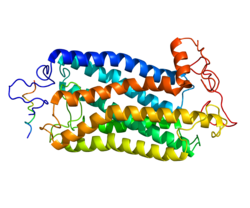
The tachykinin receptor 1 (TACR1) also known as neurokinin 1 receptor (NK1R) or substance P receptor (SPR) is a G protein coupled receptor found in the central nervous system and peripheral nervous system. The endogenous ligand for this receptor is Substance P, although it has some affinity for other tachykinins. The protein is the product of the TACR1 gene.[5]

Structure

[edit]

Tachykinins are a family of neuropeptides that share the same hydrophobic C-terminal region with the amino acid sequence Phe-X-Gly-Leu-Met-NH2, where X represents a hydrophobic residue that is either an aromatic or a beta-branched aliphatic. The N-terminal region varies between different tachykinins.[6][7][8] The term tachykinin originates in the rapid onset of action caused by the peptides in smooth muscles.[8]

Substance P (SP) is the most researched and potent member of the tachykinin family. It is an undecapeptide with the amino acid sequence Arg-Pro-Lys-Pro-Gln-Gln-Phe-Phe-Gly-Leu-Met-NH2.[6] SP binds to all three of the tachykinin receptors, but it binds most strongly to the NK1 receptor.[7]

The tachykinin NK1 receptor consists of 407 amino acid residues, and it has a molecular weight of 58,000.[6][9] NK1 receptor, as well as the other tachykinin receptors, is made of seven hydrophobic transmembrane (TM) domains with three extracellular and three intracellular loops, an amino-terminus and a cytoplasmic carboxy-terminus. The loops have functional sites, including two cysteines for a disulfide bridge, Asp-Arg-Tyr, responsible for association with arrestin, and Lys/Arg-Lys/Arg-X-X-Lys/Arg, which interacts with G-proteins.[10][9] The binding site for substance P and other agonists and antagonists is found between the second and third transmembrane domains. The NK-1 receptor is found on human chromosome 2 and is located on the cell's surface as a cytoplasmic receptor.[11]

Function

[edit]

The binding of SP to the NK1 receptor has been associated with the transmission of stress signals and pain, the contraction of smooth muscles, and inflammation.[12] NK1 receptor antagonists have also been studied in migraine, emesis, and psychiatric disorders. In fact, aprepitant has been proved effective in a number of pathophysiological models of anxiety and depression.[13] Other diseases in which the NK1 receptor system is involved include asthma, rheumatoid arthritis, and gastrointestinal disorders.[14]

Tissue distribution

[edit]

The NK1 receptor can be found in both the central and peripheral nervous system. It is present in neurons, brainstem, vascular endothelial cells, muscle, gastrointestinal tracts, genitourinary tract, pulmonary tissue, thyroid gland, and different types of immune cells.[10][15][8][9]

Mechanisms of action

[edit]

SP is synthesized by neurons and transported to synaptic vesicles; the release of SP is accomplished through the depolarizing action of calcium-dependent mechanisms.[6] When NK1 receptors are stimulated, they can generate various second messengers, which can trigger a wide range of effector mechanisms that regulate cellular excitability and function.

There are three well-defined, independent second messenger systems:

  1. Stimulation via phospholipase C, leading to phosphatidyl inositol turnover and Ca mobilization from both intra- and extracellular sources.
  2. Arachidonic acid mobilization via phospholipase A2.
  3. cAMP accumulation via stimulation of adenylate cyclase.[16]

It has also been reported that SP elicits interleukin-1 (IL-1) production in macrophages, sensitizes neutrophils, and enhances dopamine release in the substantia nigra region in cat brain. From spinal neurons, SP is known to evoke release of neurotransmitters like acetylcholine, histamine, and GABA. It also secretes catecholamines and plays a role in the regulation of blood pressure and hypertension. Likewise, SP is known to bind to N-methyl-D-aspartate (NMDA) receptors, eliciting excitation with calcium ion influx, which further releases nitric oxide. Studies in frogs have shown that SP elicits the release of prostaglandin E2 and prostacyclin by the arachidonic acid pathway, which leads to an increase in corticosteroid output.[8]

Clinical significance

[edit]

In combination therapy, NK1 receptor antagonists appear to offer better control of delayed emesis and post-operative emesis than drug therapy without NK1 receptor antagonists. NK1 receptor antagonists block responses to a broader range of emetic stimuli than the established 5-HT3 antagonist treatments.[14] It has been reported that centrally-acting NK1 receptor antagonists, such as CP-99994, inhibit emesis induced by apomorphine and loperimidine, which are two compounds that act through central mechanisms.[15]

This receptor is considered an attractive drug target, particularly with regards to potential analgesics and anti-depressants.[17][18] It is also a potential treatment for alcoholism and opioid addiction.[19] In addition, it has been identified as a candidate in the etiology of bipolar disorder.[20] Finally NK1R antagonists may also have a role as novel antiemetics[21] and hypnotics.[22][23]

Neurokinin receptor 1 (NK-1R) also plays a significant role in cancer progression. NK-1R is overexpressed in various cancer types and is activated by substance P (SP).[24][25] This activation promotes tumor cell proliferation, migration, and invasion while inhibiting apoptosis.[25][26] The SP/NK-1R system is involved in angiogenesis, chronic inflammation, and the Warburg effect, all of which contribute to tumor growth.[24][25] NK-1R antagonists, such as aprepitant, have shown promise as potential anticancer treatments by inhibiting tumor growth, inducing apoptosis, and blocking metastasis.[25][27] The overexpression of NK-1R in tumors may also serve as a prognostic biomarker.[25]

Ligands

[edit]

Many selective ligands for NK1 are now available, several of which have gone into clinical use as antiemetics.

Agonists

[edit]
  • GR-73632 - potent and selective agonist, EC50 2nM, 5-amino acid polypeptide chain. CAS# 133156-06-6

Antagonists

[edit]

See also

[edit]

References

[edit]

Further reading

[edit]
[edit]
Revisions and contributorsEdit on WikipediaRead on Wikipedia
from Grokipedia
Tachykinin receptor 1 (TACR1), also known as the neurokinin 1 receptor (NK1R) or substance P receptor, is a G protein-coupled receptor (GPCR) that primarily binds the tachykinin neuropeptide substance P, mediating its effects through activation of intracellular signaling pathways such as phospholipase C and adenylyl cyclase. Encoded by the TACR1 gene on human chromosome 2p12, this receptor belongs to the tachykinin receptor family and plays a central role in neurotransmission, inflammation, and pain processing. Structurally, TACR1 is a class A GPCR featuring seven transmembrane domains, with two main isoforms arising from alternative splicing: a full-length variant of 407 amino acids predominant in the central nervous system (CNS) and a truncated 311-amino-acid form more common in peripheral tissues. The full-length isoform couples efficiently to Gq/G11 proteins to stimulate phosphatidylinositol hydrolysis and calcium mobilization, while the truncated form exhibits altered signaling and ligand affinity. Crystal structures of the human NK1R, resolved at 3.4 Å resolution in complex with antagonists like L760735, reveal a deep orthosteric binding pocket that accommodates substance P's C-terminal region, with key residues such as His1083.28 and Phe2686.55 facilitating ligand recognition and stabilizing an inactive conformation. TACR1 is widely expressed across tissues, with high levels in the (particularly the and cortex), dorsal horn, , vascular , and immune cells such as monocytes and macrophages. Physiologically, it transduces signals to regulate diverse processes, including transmission via glutamatergic potentiation in the , neurogenic , emesis, stress responses, and immune modulation. The receptor shows selectivity for (pKi 8.5–10.3) over other tachykinins like neurokinin A, enabling specific roles in and innate defense mechanisms, such as resistance to infection. Clinically, TACR1 antagonism has proven effective in treating , with drugs like (pKi 10.1) approved for this purpose due to blockade of substance P-mediated emetic pathways in the . It is implicated in conditions such as inflammatory , depression, , cystitis, and certain cancers (e.g., and ), where NK1R overexpression promotes proliferation and migration. Ongoing research explores NK1R-targeted therapies for , , hybrid analgesics combining antagonism with activity to enhance relief while minimizing side effects, and menopausal symptoms, with elinzanetant (a dual NK1/NK3 antagonist) anticipated for FDA approval in 2025.

Discovery and Nomenclature

Historical Background

The discovery of (SP), the endogenous ligand for tachykinin receptor 1 (NK1R), occurred in 1931 when Ulf von Euler and John H. Gaddum identified it as an unidentified substance in extracts of equine brain and intestine that induced potent hypotensive effects and contraction in animal models. This finding laid the groundwork for recognizing SP as a key mediator in physiological processes, though its chemical structure—an undecapeptide—remained elusive until purification and sequencing in the early 1970s by Susan E. Leeman and colleagues. During the 1970s and , research on tachykinins, including SP, focused primarily on peptide pharmacology, with studies elucidating their roles in and tissue responses through bioassays and development. Early pharmacological investigations in the demonstrated that SP preferentially activated NK1 receptors to elicit contractions in preparations from the gastrointestinal and respiratory tracts, distinguishing NK1 from other tachykinin subtypes (NK2 and NK3) based on relative potencies of agonists like neurokinin A and B. These functional studies, often using isolated organ baths, highlighted NK1R's involvement in non-adrenergic, non-cholinergic excitatory responses, paving the way for subtype-specific classifications proposed in 1986. The transition to molecular approaches accelerated in the early 1990s, with the of the TACR1 encoding NK1R marking a pivotal shift from peptide-centric research to understanding it as a (GPCR). In 1991, Yasuo Takeda and colleagues isolated and functionally expressed the human TACR1 cDNA from a human cDNA library, confirming its sequence and seven-transmembrane topology characteristic of GPCRs, which enabled subsequent genetic and structural analyses. This effort, building on rat NK1R sequences reported in 1990, facilitated the receptor's formal classification within the tachykinin family and opened avenues for targeted drug development.

Gene and Classification

The TACR1 gene, which encodes the tachykinin receptor 1 (NK1R), is located on chromosome 2p12 and spans approximately 153 kb, consisting of five exons. The gene was cloned in 1991 through molecular characterization and functional expression of cDNA from a cDNA library. The primary protein product, the long isoform of NK1R, comprises 407 and has a calculated molecular weight of 46 kDa, though post-translational results in an apparent molecular weight of approximately 58 kDa. TACR1 is classified as a class A (rhodopsin-like) (GPCR) belonging to the tachykinin receptor , which also includes TACR2 (NK2R) and TACR3 (NK3R); these receptors share in their seven transmembrane domains and couple primarily to Gq/11 proteins to activate . The TACR1 gene exhibits strong evolutionary conservation across mammals, with orthologs in such as mice (Tacr1) and rats (Tacr1) that display over 90% sequence identity to the human protein and are commonly utilized in preclinical pharmacological studies due to their functional similarity. Alternative splicing of TACR1 produces at least two isoforms: a long form (407 amino acids) and a short form (311 amino acids), which differ in their C-terminal tails, potentially influencing receptor trafficking, desensitization, and signaling efficiency.

Structure

Primary and Secondary Structure

The human tachykinin receptor 1 (NK1R), encoded by the TACR1 gene, is a 407-amino-acid polypeptide characteristic of class A G protein-coupled receptors (GPCRs). There is also a truncated isoform of 311 amino acids that lacks the C-terminal tail and predominates in peripheral tissues, leading to differences in signaling and trafficking. Its primary structure features an extracellular N-terminal domain, seven transmembrane-spanning alpha helices (TM1 through TM7), three intracellular loops (ICL1–3), three extracellular loops (ECL1–3), and an intracellular C-terminal tail. Key conserved motifs within the primary sequence include the DRY motif (Asp-Arg-Tyr) at the junction of TM3 and ICL2, which is essential for G-protein activation, and the NPxxY motif (Asn-Pro-x-x-Tyr) in TM7, involved in receptor internalization. These motifs are hallmarks of class A GPCRs and are preserved in NK1R. Secondary structure analyses, informed by crystallographic data, reveal that the seven TM domains form alpha-helical segments comprising approximately 60% of the protein, while the connecting loops often adopt beta-turn configurations to facilitate flexibility. Post-translational modifications include N-linked glycosylation at sites in the N-terminal domain (e.g., Asn14 and Asn18), which influences receptor trafficking and ligand binding, and multiple phosphorylation sites in the C-terminal tail that regulate desensitization and internalization.

Tertiary Structure

The tertiary structure of the tachykinin receptor 1 (NK1R), a class A G protein-coupled receptor, has been elucidated through X-ray crystallography and cryo-electron microscopy (cryo-EM), revealing distinct inactive and active conformations. The first high-resolution crystal structure, determined in 2018 at 3.4 Å resolution (PDB: 6E59), depicts the inactive state of human NK1R bound to the antagonist L760735. This structure shows a deep and narrow orthosteric binding pocket, approximately 14 Å in depth perpendicular to the membrane plane, formed primarily by transmembrane helices (TM) 2, 3, 6, and the extracellular loop 2 (ECL2). The pocket's architecture features a three-layered arrangement that accommodates the antagonist's amine-substituted triazole, morpholine/fluorophenyl, and 3,5-bis(trifluoromethyl)benzyl ether moieties, with key stabilizing interactions involving residues such as His1083.28, Phe2686.55, His1975.39, and His2656.52. Subsequent cryo-EM structures from 2021, resolved at 2.71 Å (PDB: 7P00; NK1R-substance P (SP)-Gq) and 2.87 Å (PDB: 7P02; NK1R-SP-Gs), capture the active states of NK1R in complex with its cognate agonist SP and heterotrimeric Gq or Gs proteins. These reveal a characteristic activation-induced outward movement of TM6 by 8.3 Å relative to the inactive state, enabling G protein coupling, though less pronounced than in many class A GPCRs due to constraints from TM7 and residue Glu782.50. The orthosteric pocket in the active conformation remains narrow, specifically accommodating the C-terminal residues of SP (e.g., Gln6–Met11) deep within the TM2/TM3/TM6/TM7 interface, stabilized by hydrophobic contacts and hydrogen bonds with residues like Asn852.57 and Asn892.61. Additionally, potential allosteric modulator sites are suggested near intracellular loop 2 (ICL2), where cholesterol molecules bind at the TM2/TM4 interface, influencing conformational stability. Conformational dynamics between inactive and active states highlight pivotal residue interactions, such as Arg1303.50 from the DRY motif, which swings upward in the active form to form a with Tyr3057.53 in the NPxxY motif, thereby stabilizing SP binding and facilitating intracellular rearrangements for signaling. These structural insights underscore NK1R's unique activation features, including a polar network at the extracellular surface that shapes the ligand-binding vestibule and restricts accessibility compared to broader GPCR orthosteric sites.

Tissue Distribution

Central Nervous System

The tachykinin receptor 1 (NK1R), also known as TACR1, exhibits prominent expression within the (CNS), particularly in regions associated with and autonomic regulation. High levels of NK1R are found in the dorsal horn, specifically in laminae I and II, where it is predominantly localized on neurons that receive input from primary afferent fibers. This distribution positions NK1R to play a key role in nociceptive transmission, as binding to these receptors facilitates the relay of signals from peripheral nerves to higher CNS centers. In the brainstem, NK1R is expressed in critical nuclei such as the nucleus tractus solitarius (NTS) and the , which are integral to the emetic reflex and visceral sensory integration. These sites enable NK1R to modulate autonomic responses, including the control of and triggered by central emetic pathways. Additionally, NK1R presence in the supports its involvement in neuroendocrine functions and stress responses, where receptor activation influences release and homeostatic balance during physiological challenges like osmotic stress. Moderate NK1R expression is observed in forebrain structures, including the , hippocampus, and , where it contributes to neuromodulatory processes. In the cortex and hippocampus, this distribution correlates with circuits implicated in emotional processing and mood regulation, as evidenced by NK1R's with systems responsive to stress and anxiety. Similarly, in the , particularly the ventral regions, NK1R supports sensory integration and reward-related behaviors, further linking it to affective states. Notable species differences exist in NK1R density within the CNS, particularly in the cortex, where binding levels are higher in such as gerbils (approximately 94 fmol/mg protein) compared to s (59–74 fmol/mg protein). This disparity, while consistent in overall binding affinity across species, underscores challenges in from models to human applications, as cortical NK1R may exert more pronounced effects in preclinical studies.

Peripheral Tissues

The tachykinin receptor 1 (NK1R), also known as the neurokinin 1 receptor, exhibits prominent expression in the , where it is localized to enteric neurons and mucosal epithelia. In the human colon, NK1R immunoreactivity is detected in a subpopulation of large multipolar myenteric neurons and submucosal neurons, supporting its involvement in gut motility and secretory functions. Studies using have confirmed NK1R presence in the muscularis externa and . Additionally, during mucosal regeneration following injury, functional NK1R expression increases in epithelial cells, highlighting its role in tissue repair processes within the gut. NK1R is also expressed in vascular , where it mediates substance P-induced responses such as production and relaxation of pre-contracted vessels. In pulmonary tissues, NK1R localization in airway and endothelial cells contributes to the regulation of and . Within the , NK1R is found on various peripheral immune cells, including T lymphocytes and macrophages, where it modulates production and during inflammatory states. For instance, both full-length and truncated isoforms of NK1R are detected on monocytes and dendritic cells, influencing innate immune . Quantitative analyses indicate that NK1R mRNA levels in marrow-derived dendritic cells can increase approximately 3-fold during maturation in inflammatory conditions compared to baseline. Furthermore, NK1R is present in the genitourinary tract, notably in the bladder urothelium and , as evidenced by knockout studies showing altered distribution in NK1R-deficient models. In the gland, NK1R expression occurs in both normal follicular cells and neoplastic tissues, correlating with proliferative responses. In the skin, NK1R is localized to , fibroblasts, and immune infiltrates, particularly at sites of and during phases where it supports epithelial proliferation and formation. Unlike its denser neuronal distribution in the , peripheral NK1R expression emphasizes non-neuronal cellular contexts in these tissues.

Physiological Functions

Role in Pain and Inflammation

The tachykinin receptor 1 (NK1R), primarily activated by (SP), plays a pivotal role in mediating neurogenic inflammation through the release of SP from peripheral terminals of C-fiber nociceptors. This process induces , increased vascular permeability, plasma extravasation, and subsequent formation in affected tissues, such as the skin, gut, and lungs. In models of acute inflammation, including , NK1R activation exacerbates these effects, with studies demonstrating reduced and neutrophil infiltration by 25-65% in NK1R-deficient mice compared to wild-type counterparts. In the , NK1R activation in the dorsal horn contributes to central sensitization, where SP released from primary afferent C-fibers amplifies nociceptive signaling and enhances neuronal excitability. This leads to , as evidenced by increased of excitatory postsynaptic potentials (up to 155% amplitude increase) following high-frequency stimulation, which is dependent on NK1R and co-activation. Ablation of NK1R-expressing neurons in the prevents the development of joint pain and associated neuroplastic changes in inflammatory models. NK1R is implicated in migraine and neuropathic pain via brainstem and trigeminal pathways, where SP release from trigeminal ganglion neurons activates NK1R on vascular and neuronal targets, promoting dural inflammation and pain transmission. In the trigeminovascular system, SP levels rise significantly (e.g., from 16.4 to 19.3 pg/mL in dura mater upon stimulation), contributing to headache mechanisms, though clinical NK1R antagonists have shown mixed efficacy in acute migraine relief. For neuropathic pain, peripheral SP/NK1R signaling in sensory neurons sustains hypersensitivity in nerve injury models, with upregulated NK1R immunoreactivity in the spinal cord. Furthermore, NK1R activation modulates inflammatory responses by upregulating proinflammatory cytokines in immune cells, including monocytes, microglia, and astrocytes. SP binding to NK1R triggers activation, enhancing production of IL-1, IL-6, and TNF-α, which perpetuate and amplification. In glial cells, this leads to generation and release, forming a feedback loop that sustains neurogenic and neuropathic conditions.

Role in Other Processes

Beyond its roles in sensory transmission, the tachykinin receptor 1 (NK1R), primarily activated by , contributes to the control of emesis through central mechanisms in the . Activation of NK1R in the and nucleus tractus solitarius initiates the reflex by enhancing release and mobilizing intracellular calcium via L-type calcium channels and IP₃ receptors, leading to downstream activation of pathways such as ERK1/2 and PKC. This process is evident in animal models where NK1R agonists like GR73632 evoke emetic responses in the dorsal vagal complex, underscoring the receptor's pivotal role in integrating visceral signals for protective reflexes against toxins. NK1R expression in the hippocampus and modulates mood and stress responses, with links to anxiety and depression through interactions with serotonin systems. In these regions, NK1R activation during stress enhances serotonin release, contributing to anxiogenic effects, while genetic deletion of NK1R in mice reduces anxiety-like and depression-related behaviors. This modulation supports NK1R's involvement in emotional regulation, as antagonists demonstrate antidepressant potential by mitigating substance P-mediated hyperactivity in limbic circuits. In the , NK1R facilitates motility by inducing contraction, particularly in the circular layer of the colon, to support . Postjunctional NK1R on cells mediate excitatory responses that enhance propulsion velocity, as shown in distal colon models where antagonists like SR-140333 increase transit under submaximal stimulation by blocking inhibitory nitrergic pathways. This dual facilitatory and modulatory action ensures coordinated gut movement under physiological conditions. Peripherally, NK1R activation in vascular promotes , leading to in systemic vessels. binding to endothelial NK1R triggers release, causing dose-dependent forearm in humans, fully antagonized by selective blockers like L-758,298, without altering baseline tone. This effect highlights NK1R's contribution to vascular relaxation and regulation in response to neurogenic stimuli.

Signaling Mechanisms

G-Protein Coupling

The tachykinin receptor 1 (NK1R), a class A , primarily couples to the /11 family of heterotrimeric G proteins, resulting in activation of the Gαq subunit. The full-length isoform couples more efficiently to /11 proteins, leading to robust calcium mobilization, whereas the truncated isoform exhibits reduced coupling and altered downstream effects such as diminished PKC and ERK activation. This coupling is predominant across various cellular systems, enabling NK1R to mediate key signaling events in response to its endogenous , (SP). In addition, NK1R exhibits secondary coupling to Gs proteins in specific contexts, such as certain neuronal and epithelial cells, allowing for versatile downstream responses. Upon SP binding, NK1R undergoes an agonist-induced conformational change that stabilizes its active state, facilitating the exchange of GDP for GTP on the Gα subunit. This process involves repositioning of the residue F264^{6.51} in transmembrane 6 (TM6), which triggers of the conserved PIF motif (Pro^{5.50}-Ile^{3.40}-Phe^{6.44}) and promotes GDP from the Gα nucleotide-binding . Notably, cryo-EM structures reveal a unique feature in NK1R, characterized by a reduced outward movement of TM6 compared to other GPCRs, which contracts the orthosteric and optimizes the intracellular crevice for engagement. NK1R displays biased signaling, where certain ligands preferentially activate the Gq pathway over β-arrestin recruitment, influencing pathway selectivity without altering overall potency. For example, mutations such as Glu^{2.61}Asp at position II:10 bias signaling exclusively toward Gq, impairing both Gs and β-arrestin pathways, while other variants like Glu^{2.61}Ala restrict activation to β-arrestin alone. This bias is governed by a water-mediated hydrogen bond network involving residues in TM II (Glu^{2.61}), TM III (Ser^{3.36}), and TM VII (Asn^{7.45}), which fine-tunes conformational dynamics to favor specific effectors. The 2021 cryo-EM structures of SP-bound NK1R further elucidate this by showing deeper insertion of the Gαq α5 helix (0.9 Å compared to Gs), supporting a 2- to 20-fold preference for Gq coupling. The specificity of G protein coupling in NK1R is largely determined by interactions between its intracellular loop 2 (ICL2) and C-terminal helix VIII with G protein subunits. ICL2 residue T67^{2.39} forms distinctive hydrogen bonds with Glu^{α5.22} in Gαq or Gln^{α5.22} in Gαs, stabilizing the α5 helix insertion into the receptor's cytosolic core. Additionally, the receptor's engages hydrophobic and polar contacts with Gα residues such as Leu^{α5.25} and Tyr^{α5.23}, enhancing Gq selectivity through seven hydrogen bonds versus six for Gs. These interface features ensure efficient while allowing contextual switching between Gq/11 and Gs.

Downstream Pathways

Upon activation of the tachykinin receptor 1 (NK1R), the primary downstream pathway involves /11-mediated stimulation of β (PLCβ), which hydrolyzes (PIP₂) into inositol 1,4,5-trisphosphate (IP₃) and diacylglycerol (DAG). IP₃ subsequently binds to receptors on the , triggering the release of intracellular calcium (Ca²⁺), while DAG recruits and activates (PKC) at the plasma membrane. This Ca²⁺ mobilization and PKC activation propagate signals that influence cellular processes such as gene transcription and cytoskeletal reorganization. Secondary pathways include the activation of A₂ (PLA₂), which liberates from membrane phospholipids, leading to the production of pro-inflammatory prostaglandins and leukotrienes. Additionally, in certain cell types, NK1R can weakly stimulate adenylate cyclase through cross-activation of Gs proteins, resulting in increased (cAMP) levels that activate (PKA) and modulate transcription factors like CREB. Independent of G-protein signaling, β-arrestin recruitment to phosphorylated NK1R facilitates receptor internalization and desensitization by uncoupling it from G proteins, while also scaffolding the (MAPK)/extracellular signal-regulated kinase (ERK) cascade to promote ERK1/2 and activation. This β-arrestin-dependent ERK pathway contributes to sustained signaling for and survival. NK1R signaling exhibits cross-talk with Toll-like receptors (TLRs), where enhances TLR expression and vice versa, amplifying neuroinflammatory cascades through activation in conditions like , as demonstrated in recent studies.

Ligands

Agonists

The primary endogenous agonist for tachykinin receptor 1 (NK1R) is (SP), an undecapeptide with Arg-Pro-Lys-Pro-Gln-Gln-Phe-Phe-Gly-Leu-Met-NH₂, exhibiting high affinity and potency (EC₅₀ ≈ 1 nM in calcium mobilization assays). SP binds preferentially to NK1R among tachykinin receptors, initiating G protein-coupled signaling involved in and . Other endogenous tachykinins, neurokinin A (NKA) and neurokinin B (NKB), also activate NK1R but with substantially lower potency (EC₅₀ 10–100 nM for NKA and 100–1000 nM for NKB), reflecting reduced selectivity compared to SP. Other endogenous ligands include hemokinin-1 (HK-1), with high affinity (pKi 9.8–11.7) in tissues. Synthetic agonists have been developed for purposes to probe NK1R function with enhanced selectivity and stability. GR-73632, a truncated and modified SP analog (sequence: Asp-Tyr-D-Trp-Val-D-Trp-D-Lys-Leu-D-Asp-COOH), is a potent and selective NK1R (EC₅₀ = 2 nM in guinea pig vas deferens contraction assays), approximately 200-fold more potent than SP in certain behavioral models. Senktide (Succ-[Asp⁹,Me-Phe⁸]-substance P 6-11), primarily selective for NK3 receptors, functions as a at NK1R with low potency (EC₅₀ ≈ 35 μM). Biased agonism at NK1R has been demonstrated with peptide fragments of SP. The C-terminal fragment SP₆₋₁₁ (Gln-Phe-Phe-Gly-Leu-Met-NH₂) exhibits a bias toward Gq-mediated signaling over Gs, as determined by cryo-EM structures of NK1R complexes and functional assays in 2021. Structure-activity relationship studies highlight the critical role of the SP C-terminal region in NK1R binding and activation.

Antagonists

Non-peptide antagonists represent the primary class of compounds developed for inhibiting tachykinin receptor 1 (NK1R), with aprepitant being a seminal example. Aprepitant exhibits high affinity for the human NK1R, with an IC50 of 0.1 nM, and was approved by the FDA in 2003 for clinical use. Its prodrug, fosaprepitant, provides an intravenous formulation that rapidly converts to aprepitant in vivo, maintaining equivalent NK1R antagonism while improving bioavailability for acute administration. Tradipitant, another non-peptide NK1R antagonist, has completed phase 3 trials for motion sickness, with its NDA under FDA review as of November 2025 (PDUFA target date: December 30, 2025), demonstrating potent binding and oral activity. Early non-peptide antagonists like CP-99,994 served as key research tools in NK1R , featuring high affinity (Ki = 0.145 nM) and notable penetration due to its lipophilic structure, enabling studies of brain-specific NK1R functions. These compounds typically bind within the orthosteric pocket, interacting with residues in the transmembrane helices and extracellular loop 2 (ECL2) to stabilize the inactive receptor conformation. Most NK1R antagonists display high selectivity, preferring NK1R over NK2R and NK3R by more than 1000-fold; for instance, aprepitant shows IC50 values of 4.5 μM at NK2R and 300 nM at NK3R, while rolapitant exceeds 1000-fold selectivity across both subtypes.

Clinical Significance

Established Therapies

The established therapies targeting tachykinin receptor 1 (NK1R) focus on selective NK1R antagonists approved for preventing chemotherapy-induced nausea and vomiting (CINV). Aprepitant, the first oral NK1R antagonist in this class, received FDA approval in March 2003 and EMA approval in November 2003 for use in combination with a 5-HT3 receptor antagonist and dexamethasone to prevent acute and delayed CINV associated with highly emetogenic chemotherapy (HEC). Its indication was expanded by the FDA in October 2005 to include moderately emetogenic chemotherapy (MEC). Fosaprepitant, an intravenous prodrug of aprepitant that converts rapidly to the active form, was approved by the FDA and EMA in January 2008 for the same CINV indications in HEC and MEC. Pivotal clinical trials showed that aprepitant- or fosaprepitant-containing regimens, when combined with a 5-HT3 antagonist and dexamethasone, achieve complete response rates (no emesis and no rescue medication) of 70-80% in the acute phase (0-24 hours post-chemotherapy) for HEC, outperforming standard therapy alone by 15-20 percentage points. Rolapitant, a long-acting oral NK1R antagonist with a plasma half-life exceeding 180 hours, was approved by the FDA in September 2015 and by the EMA in April 2017 for preventing delayed CINV (24-120 hours post-chemotherapy) in adults receiving HEC or MEC, demonstrating efficacy comparable to aprepitant in phase III trials with similar complete response rates across acute, delayed, and overall phases. These therapies function clinically by competitively antagonizing NK1R in the 's emetic centers, such as the nucleus tractus solitarius, thereby blocking signaling that mediates the central emetic reflex initiated by peripheral -induced stimuli. This central blockade is particularly effective against delayed CINV, where release in the sustains emesis beyond the initial serotonin-mediated phase. , , and rolapitant exhibit favorable safety profiles, with the most common adverse effects being mild and transient, including (affecting 10-15% of patients), , , and ; serious events are rare, and none of these agents are associated with major cardiac risks like prolongation. Long-term use over multiple cycles maintains this tolerability without cumulative toxicity.

Emerging Applications

Recent preclinical studies have explored the use of neurokinin 1 receptor (NK1R) antagonists in therapy, demonstrating their potential to mitigate and elevated following ischemic events. In a 2024 ovine model of transient occlusion, early or delayed administration of an NK1R antagonist significantly reduced as measured by MRI and lowered during monitoring, suggesting a protective effect on the blood-brain barrier without adverse effects. Beyond their established role in , NK1R antagonists like tradipitant show promise in treating . In the 2025 phase 3 , a multicenter, randomized, double-blind study involving sea travel, tradipitant at 170 mg reduced the incidence of to 18.3% compared to 44.3% with (p < 0.0001), with similar in rough sea conditions (20.4% vs. 49.5%). For severe cases, the 170 mg dose lowered rates to 16.53% versus 37.70% in (p = 0.0003), indicating substantial prevention in approximately 56% of severe instances relative to controls. In and , 2024-2025 research highlights NK1R antagonists' ability to promote regulatory T cells (Tregs) and attenuate tissue-specific . Co-delivery of NK1R antagonists with antigens via microneedle arrays in mouse models of increased Foxp3+ Tregs, suppressed neuropeptide-mediated skin , and reduced effector T cell responses, preventing dermatitis onset and relapse in an antigen-specific manner; similar mechanisms extended to gut control by modulating Th17/Treg balance in preclinical ocular and intestinal models. Emerging applications in pain and psychiatry include ongoing investigations into NK1R modulation for neuropathic pain and mood disorders, building on prior evidence of NK1R's role in emotional processing despite earlier mixed results. A 2025 study identified tachykinin signaling via NK1R in the right parabrachial nucleus as critical for early-phase development in models, suggesting antagonists could target this pathway to interrupt hypersensitivity, though efficacy in chronic cases remains under evaluation. Additionally, NK1R antagonists exhibit potential in inhibiting cancer ; for instance, reduced glioblastoma cell migration and invasion in 2025 models by disrupting substance P-mediated signaling. These developments leverage structural insights from 2021 cryo-EM studies of NK1R bound to and /Gs proteins, which have informed biased design to enhance therapeutic selectivity. Despite promising phase 2 and 3 data, no new NK1R-targeted approvals have emerged since 2022, underscoring the need for further validation in diverse patient populations.

References

Add your contribution
Related Hubs
User Avatar
No comments yet.