


Community hub
Recent from talks
Contribute something
Nothing was collected or created yet.
O-ring
View on Wikipedia
An O-ring, also known as a packing or a toric joint, is a mechanical gasket in the shape of a torus; it is a loop of elastomer with a round cross-section, designed to be seated in a groove and compressed during assembly between two or more parts, forming a seal at the interface.
The O-ring may be used in static applications or in dynamic applications where there is relative motion between the parts and the O-ring. Dynamic examples include rotating pump shafts and hydraulic cylinder pistons. Static applications of O-rings may include fluid or gas sealing applications in which: (1) the O-ring is compressed resulting in zero clearance, (2) the O-ring material is vulcanized solid such that it is impermeable to the fluid or gas, and (3) the O-ring material is resistant to degradation by the fluid or gas.[1] The wide range of potential liquids and gases that need to be sealed has necessitated the development of a wide range of O-ring materials.[2]
O-rings are one of the most common seals used in machine design because they are inexpensive, easy to make, reliable, and have simple mounting requirements. They have been tested to seal up to 5,000 psi (34 MPa) of pressure.[3] The maximum recommended pressure of an O-ring seal depends on the seal hardness, material, cross-sectional diameter, and radial clearance.[4]
Manufacturing
[edit]O-rings can be produced by extrusion, injection molding, pressure molding, or transfer molding.[5]
History
[edit]The first patent for the O-ring is dated May 12, 1896, as a Swedish patent. J. O. Lundberg, the inventor of the O-ring, received the patent.[6] The US patent[7][8] for the O-ring was filed in 1937 by a then 72-year-old Danish-born machinist, Niels Christensen.[9] In his previously filed application in 1933, resulting in Patent 2115383,[10] he opens by saying, "This invention relates to new and useful improvements in hydraulic brakes and more particularly to an improved seal for the pistons of power conveying cylinders." He describes "a circular section ring ... made of solid rubber or rubber composition", and explains, "this sliding or partial rolling of the ring ... kneads or works the material of the ring to keep it alive and pliable without deleterious effects of scuffing which are caused by purely static sliding of rubber upon a surface. By this slight turning or kneading action, the life of the ring is prolonged." His application filed in 1937 says that it "is a continuation-in-part of my copending application Serial No. 704,463 for Hydraulic brakes, filed December 29, 1933, now U. S. Patent No. 2,115,383 granted April 26, 1938".
Soon after migrating to the United States in 1891, he patented an air brake system for streetcars (trams). Despite his legal efforts, the patents were passed from company to company until they ended up at Westinghouse.[9] During World War II, the US government commandeered the O-ring patent as a critical war-related item and gave the right to manufacture to other organizations. Christensen received a lump sum payment of US$75,000 for his efforts. Litigation resulted in a $100,000 payment to his heirs in 1971, 19 years after his death.[9]
Theory and design
[edit]
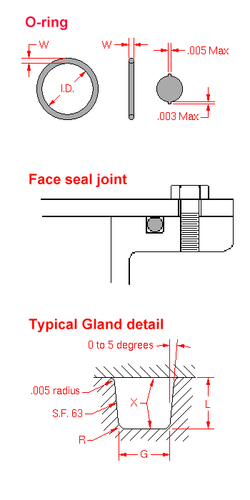
O-rings are available in various metric and inch standard sizes. Sizes are specified by the inside diameter and the cross section diameter (thickness). In the US the most common standard inch sizes are per SAE AS568C specification (e.g. AS568-214). ISO 3601-1:2012 contains the most commonly used standard sizes, both inch and metric, worldwide. The UK also has standards sizes known as BS sizes, typically ranging from BS001 to BS932. Several other size specifications also exist.
Typical applications
[edit]Successful O-ring joint design requires a rigid mechanical mounting that applies a predictable deformation to the O-ring. This introduces a calculated mechanical stress at the O-ring contacting surfaces. As long as the pressure of the fluid being contained does not exceed the contact stress of the O-ring, leaking cannot occur. The pressure of the contained fluid transfers through the essentially incompressible O-ring material, and the contact stress rises with increasing pressure. For this reason, an O-ring can easily seal high pressure as long as it does not fail mechanically. The most common failure is extrusion through the mating parts.
The seal is designed to have a point contact between the O-ring and sealing faces. This allows a high local stress, able to contain high pressure, without exceeding the yield stress of the O-ring body. The flexible nature of O-ring materials accommodates imperfections in the mounting parts. But it is still important to maintain good surface finish of those mating parts, especially at low temperatures where the seal rubber reaches its glass transition temperature and becomes increasingly inflexible and glassy. Surface finish is also especially important in dynamic applications. A surface finish that is too rough will abrade the surface of the O-ring, and a surface that is too smooth will not allow the seal to be adequately lubricated by a fluid film.
Vacuum applications
[edit]In vacuum applications, the permeability of the material renders the point contacts unusable. Instead, higher mounting forces are used and the ring fills the whole groove. Also, round back-up rings are used to save the ring from excessive deformation.[12][13][14]
Because the ring is subject to the ambient pressure and the partial pressure of gases only at the seal, their gradients will be steep near the seal and shallow in the bulk (opposite to the gradient of the contact stress[15] (See Vacuum flange#KF.2FQF.) High-vacuum systems below 10−9 Torr use copper or nickel O-rings. Also, vacuum systems that have to be immersed in liquid nitrogen use indium O-rings, because rubber becomes hard and brittle at low temperatures.
High temperature applications
[edit]In some high-temperature applications, O-rings may need to be mounted in a tangentially compressed state, to compensate for the Gow-Joule effect.
Sizes
[edit]O-rings come in a variety of sizes. Society of Automotive Engineers (SAE) Aerospace Standard 568 (AS568)[16] specifies the inside diameters, cross-sections, tolerances, and size identification codes (dash numbers) for O-rings used in sealing applications and for straight thread tube fitting boss gaskets. British Standard (BS) which are imperial sizes or metric sizes. Typical dimensions of an O-ring are internal dimension (id), outer dimension (od), and thickness / cross section (cs)
Metric O-rings are usually defined by the internal dimension x the cross section. Typical part number for a metric O-ring - ID x CS [material & shore hardness] 2x1N70=defines this O-ring as 2mm id with 1mm cross section made from Nitrile rubber which is 70Sh. BS O-rings are defined by a standard reference.
The World's Largest O-ring was produced in a successful Guinness World Record attempt by Trelleborg Sealing Solutions Tewkesbury partnered with a group of 20 students from Tewkesbury School. The O-ring once finished and placed around the Medieval Tewkesbury Abbey had a 364 m (1,194 ft) circumference, an approximately 116 m (381 ft) inner diameter, and a cross section of 7.2 mm (0.28 in).[17]
Material
[edit]
O-ring selection is based on chemical compatibility, application temperature, sealing pressure, lubrication requirements, durometer, size, and cost.[18]
Synthetic rubbers - Thermosets:
- Butadiene rubber (BR)
- Butyl rubber (IIR)
- Chlorosulfonated polyethylene (CSM)
- Epichlorohydrin rubber (ECH, ECO)
- Ethylene propylene diene monomer (EPDM): good resistance to hot water and steam, detergents, caustic potash solutions, sodium hydroxide solutions, silicone oils and greases, many polar solvents, and many diluted acids and chemicals. Special formulations are excellent for use with glycol-based brake fluids. Unsuitable for use with mineral oil products: lubricants, oils, or fuels. Peroxide-cured compounds are suitable for higher temperatures.[19]
- Ethylene propylene rubber (EPR)
- Fluoroelastomer (FKM): noted for their very high resistance to heat and a wide variety of chemicals. Other key benefits include excellent resistance to aging and ozone, very low gas permeability, and the fact that the materials are self-extinguishing. Standard FKM materials have excellent resistance to mineral oils and greases, aliphatic, aromatic, and chlorinated hydrocarbons, fuels, non-flammable hydraulic fluids (HFD), and many organic solvents and chemicals. Generally not resistant to hot water, steam, polar solvents, glycol-based brake fluids, and low molecular weight organic acids. In addition to the standard FKM materials, a number of specialty materials with different monomer compositions and fluorine content (65% to 71%) are available that offer improved chemical or temperature resistance and/or better low temperature performance.[19]
- Nitrile rubber (NBR, HNBR, HSN, Buna-N): a common material for o-rings because of its good mechanical properties, its resistance to lubricants and greases, and its relatively low cost. The physical and chemical resistance properties of NBR materials are determined by the acrylonitrile (ACN) content of the base polymer: low content ensures good flexibility at low temperatures, but offers limited resistance to oils and fuels. As the ACN content increases, the low temperature flexibility reduces and the resistance to oils and fuels improves. Physical and chemical resistance properties of NBR materials are also affected by the cure system of the polymer. Peroxide-cured materials have improved physical properties, chemical resistance, and thermal properties, as compared to sulfur-donor-cured materials. Standard grades of NBR are typically resistant to mineral oil-based lubricants and greases, many grades of hydraulic fluids, aliphatic hydrocarbons, silicone oils and greases, and water to about 176 °F (80 °C). NBR is generally not resistant to aromatic and chlorinated hydrocarbons, fuels with a high aromatic content, polar solvents, glycol-based brake fluids, and non-flammable hydraulic fluids (HFD). NBR also has low resistance to ozone, weathering, and aging. HNBR has considerable improvement of the resistance to heat, ozone, and aging, and gives it good mechanical properties.[19]
- Perfluoroelastomer (FFKM)
- Polyacrylate rubber (ACM)
- Polychloroprene (neoprene) (CR)
- Polyisoprene (IR)
- Polysulfide rubber (PSR)
- Polytetrafluoroethylene (PTFE)
- Sanifluor (FEPM)
- Silicone rubber (SiR): noted for their ability to be used over a wide temperature range and for excellent resistance to ozone, weathering, and aging. Compared with most other sealing elastomers, the physical properties of silicones are poor. Generally, silicone materials are physiologically harmless so they are commonly used by the food and drug industries. Standard silicones are resistant to water up to 212 °F (100 °C), aliphatic engine and transmission oils, and animal and plant oils and fats. Silicones are generally not resistant to fuels, aromatic mineral oils, steam (short term to 248 °F (120 °C) is possible), silicone oils and greases, acids, or alkalis. Fluorosilicone elastomers are far more resistant to oils and fuels. The temperature range of applications is somewhat more restricted.[19]
- Styrene-butadiene rubber (SBR)
- Thermoplastic elastomer (TPE) styrenics
- Thermoplastic polyolefin (TPO) LDPE, HDPE, LLDPE, ULDPE
- Thermoplastic polyurethane (TPU) polyether, polyester: Polyurethanes differ from classic elastomers in that they have much better mechanical properties. In particular they have a high resistance to abrasion, wear, and extrusion, a high tensile strength, and excellent tear resistance. Polyurethanes are generally resistant to aging and ozone, mineral oils and greases, silicone oils and greases, nonflammable hydraulic fluids HFA & HFB, water up to 122 °F (50 °C), and aliphatic hydrocarbons.[19]
- Thermoplastic etheresterelastomers (TEEEs) copolyesters
- Thermoplastic polyamide (PEBA) Polyamides
- Melt Processible Rubber (MPR)
- Thermoplastic Vulcanizate (TPV)
- Air, 200 to 300 °F (93 to 149 °C) – Silicone
- Beer - EPDM
- Chlorine Water – Viton (FKM)
- Gasoline – Buna-N or Viton (FKM)
- Hydraulic Oil (Petroleum Base, Industrial) – Buna-N
- Hydraulic Oils (Synthetic Base) – Viton
- Water – EPDM
- Motor Oils – Buna-N[20]
Other seals
[edit]
Although the O-ring was originally so named because of its circular cross section, there are now variations in cross-section design. The shape can have different profiles, such as an x-shaped profile, commonly called the X-ring, Q-ring, or by the trademarked name Quad Ring. When squeezed upon installation, they seal with 4 contact surfaces—2 small contact surfaces on the top and bottom.[21] This contrasts with the standard O-ring's comparatively larger single contact surfaces top and bottom. X-rings are most commonly used in reciprocating applications, where they provide reduced running and breakout friction and reduced risk of spiraling when compared to O-rings.
There are also rings with a square profile, commonly called square-cuts, lathe cuts, tabular cut, or square rings. When O-rings were selling at a premium because of the novelty, lack of efficient manufacturing processes, and high labor content, square rings were introduced as an economical substitution for O-rings. The square ring is typically manufactured by molding an elastomer sleeve which is then lathe-cut. This style of seal is sometimes less expensive to manufacture with certain materials and molding technologies (compression molding, transfer molding, injection molding), especially in low volumes. The physical sealing performance of square rings in static applications is superior to that of O-rings, however in dynamic applications it is inferior to that of O-rings. Square rings are usually used only in dynamic applications as energizers in cap seal assemblies. Square rings can also be more difficult to install than O-rings.
Similar devices with a non-round cross-sections are called seals, packings, or gaskets. See also Washer (hardware).[22]
Automotive cylinder heads are typically sealed by flat gaskets faced with copper.
Knife edges pressed into copper gaskets are used for high vacuum.
Elastomers or soft metals that solidify in place are used as seals.
Failure modes
[edit]O-ring materials may be subjected to high or low temperatures, chemical attack, vibration, abrasion, and movement. Elastomers are selected according to the situation.
There are O-ring materials which can tolerate temperatures as low as −330 °F (−200 °C) or as high as 480 °F (250 °C). At the low end, nearly all engineering materials become rigid and fail to seal; at the high end, the materials often burn or decompose. Chemical attack can degrade the material, start brittle cracks or cause it to swell. For example, NBR seals can crack when exposed to ozone gas at very low concentrations, unless protected. Swelling by contact with a low viscosity fluid causes an increase in dimensions, and also lowers the tensile strength of the rubber. Other failures can be caused by using the wrong size of ring for a specific recess, which may cause extrusion of the rubber.
Elastomers are sensitive to ionizing radiation. In typical applications, O-rings are well-protected from less-penetrating radiation such as ultraviolet and soft X-rays, but more-penetrating radiation such as neutrons may cause rapid deterioration. In such environments, soft metal seals are used.
There are a few common reasons for O-ring failure:
- Installation damage – This is caused by improper installation of the O-ring.
- Spiral failure – Found on long-stroke piston seals and – to a lesser degree – on rod seals. The seal gets "hung up" at one point on its diameter (against the cylinder wall) and slides and rolls at the same time. This twists the O-ring as the sealed device is cycled and finally causes a series of deep spiral cuts (typically at a 45-degree angle) on the surface of the seal.
- Explosive decompression – An O-ring embolism, also called gas expansion rupture, occurs when high pressure gas becomes trapped inside the elastomeric seal element. This expansion causes blisters and ruptures on the surface of the seal.
Space Shuttle Challenger disaster
[edit]The failure of an O-ring seal was determined to be the cause of the Space Shuttle Challenger disaster on January 28, 1986. A crucial factor was cold weather prior to the launch. This was famously demonstrated on television by Caltech physics professor Richard Feynman, when he placed a small O-ring into ice-cold water, and subsequently showed its loss of flexibility before an investigative committee.
The material of the failed O-ring was FKM, which was specified by the shuttle motor contractor, Morton-Thiokol. When an O-ring is cooled below its glass transition temperature Tg, it loses its elasticity and becomes brittle. More importantly, when an O-ring is cooled near (but not beyond) its Tg, the cold O-ring, once compressed, will take longer than normal to return to its original shape. O-rings (and all other seals) work by producing positive pressure against a surface, thereby preventing leaks. On the night before the launch, exceedingly low air temperatures were recorded. Due to this, NASA technicians performed an inspection; the ambient temperature was within launch parameters, and the launch sequence was allowed to proceed. However, the temperature of the rubber O-rings remained significantly lower than that of the surrounding air. During his investigation of the launch footage, Feynman observed a small out-gassing event from the Solid Rocket Booster at the joint between two segments in the moments immediately preceding the disaster. This was blamed on a failed O-ring seal. The escaping high-temperature gas impinged upon the external tank, and the entire vehicle was destroyed as a result.
Since the accident, rubber production companies have enacted changes. Many O-rings now come with batch and cure-date coding, as is done in medicine production, to precisely track and control distribution. For aerospace and military applications, O-rings are usually individually packaged and labeled with the material, cure date, and batch information. O-rings can, if needed, be recalled off the shelf.[23] Furthermore, O-rings and other seals are routinely batch-tested for quality control by the manufacturers, and often undergo quality assurance testing several more times by the distributor and ultimate end-users.
As for the boosters themselves, NASA and Morton-Thiokol redesigned them with a new joint design, which now incorporated three O-rings instead of two, with the joints themselves having onboard heaters that can be turned on when temperatures drop below 50 °F (10 °C). No O-ring issues have occurred since Challenger, and they did not play a role in the Space Shuttle Columbia disaster of 2003.
Standards
[edit]ISO 3601 Fluid power systems — O-rings
[edit]- ISO 3601-1:2012 Inside diameters, cross-sections, tolerances and designation codes
- ISO 3601-2:2016 Housing dimensions for general applications
- ISO 3601-4:2008 Anti-extrusion rings (back-up rings)
See also
[edit]References
[edit]- ^ Whitlock, Jerry (2004). "The Seal Man's O-Ring Handbook" (PDF). EPM, Inc. - The Seal Man. Archived from the original (PDF) on 2019-08-10. Retrieved 2018-12-08.
- ^ "GFS O-Rings". Gallagher Seals. Retrieved 4 August 2021.
- ^ Pearl, D.R. (January 1947). O-Ring Seals in the Design of Hydraulic Mechanisms. S.A.E. Annual Meeting. Hamilton Standard Prop. Div. of United Aircraft Corp.
- ^ "Frequently Asked O-ring Technical Questions". Parker O-Ring & Engineered Seals Division. Archived from the original on March 8, 2021. Retrieved December 7, 2018.
- ^ "Factory Tour".
- ^ "O-Ring - Who Invented the O-Ring?". Inventors.about.com. 2010-06-15. Archived from the original on 2009-03-15. Retrieved 2011-03-25.
- ^ US patent 2180795, Niels A. Christensen, issued 1939-11-21
- ^ 2180795, Christensen, Niels A., "Packing", issued 1939-11-21, applied 1937-10-02
- ^ a b c "No. 555: O-Ring". Uh.edu. 2004-08-01. Retrieved 2011-03-25.
- ^ 2115383, Christensen, Niels A., "Hydraulic brake", issued 1938-04-26, applied 1933-12-29
- ^ U.S. patent 5,516,122
- ^ "Nor-Cal Products, Inc. - NW Stainless Steel Centering Rings with O-ring". Archived from the original on 2007-09-21. Retrieved 2008-01-25.
- ^ "MDC Precision-Vacuum Components, Chambers, Valves, Flanges & Fittings". mdcprecision.com. Archived from the original on 2010-10-12. Retrieved 2011-03-25.
- ^ "O-ring". Glossary.oilfield.slb.com. Archived from the original on 2011-06-07. Retrieved 2011-03-25.
- ^ "DHCAE Tools GMBH: OpenFOAM-solution".[permanent dead link]
- ^ "AS568: Aerospace Size Standard for O-Rings - SAE International". sae.org. Retrieved 2018-02-20.
- ^ "Trelleborg Sets Guinness World Record for the Largest O-Ring Ever Produced". Archived from the original on 2023-07-16. Retrieved 2019-07-24.
- ^ "O-ring Design, O-ring Design Guide, O-ring Seal Design -Mykin Inc". Mykin.com. Retrieved 2011-03-25.
- ^ a b c d e "Type details". O-ring elastomer. Dichtomatik Americas. 2012. Archived from the original on 4 March 2016. Retrieved 9 April 2013.
- ^ "Chemical Compatibility". The O-Ring Store LLC.
- ^ "X-ring simulation".
- ^ "John Crane seals measure up to API standards: News from John Crane EAA". Processingtalk.com. 2005-12-09. Archived from the original on 2009-02-24. Retrieved 2011-03-25.
- ^ "What is O-Ring Shelf Life?". Oringsusa.com. Retrieved 2011-03-25.
External links
[edit]

O-ring
View on GrokipediaDefinition and Function
Basic Description and Principles
An O-ring is a torus-shaped mechanical seal with a circular cross-section, typically constructed from elastomeric materials such as nitrile rubber or fluorocarbon. It functions as a gasket by being installed in a machined groove, known as a gland, between two mating surfaces, where it is compressed to form a barrier against the passage of fluids or gases. This compression deforms the O-ring, enabling it to conform to surface irregularities and maintain contact pressure sufficient to counteract system pressures.[12][13] The sealing principle relies on the viscoelastic properties of the elastomer, where axial or radial compression—typically 10% to 40% of the cross-sectional diameter—generates a restoring force that presses the O-ring against the gland walls and mating surfaces. This force must exceed the fluid pressure to prevent leakage, with the O-ring's resilience compensating for minor misalignments, thermal expansions, or vibrations. In static applications, the seal endures no relative motion, while dynamic uses involve reciprocating, rotating, or oscillating movements, each imposing specific wear and friction considerations. Effective sealing also depends on proper lubrication to minimize friction and heat buildup, particularly in dynamic scenarios.[12][13] O-rings achieve sealing through a combination of line contact and hydrostatic effects; under low pressure, the elastomer's elasticity provides the primary seal, but as pressure increases, fluid forces assist by extruding the O-ring into tighter conformity against potential leak paths. Groove design, including depth and width tolerances, ensures uniform squeeze without over-compression, which could lead to excessive stress and premature failure. Standard sizes follow AS568 specifications, with inside diameters ranging from 0.029 inches to over 25 inches and cross-sections from 0.040 to 0.275 inches, allowing versatility across low- to high-pressure systems up to 10,000 psi in select materials.[12][14]Sealing Mechanics
O-rings achieve sealing through elastic deformation under controlled compression within a machined groove, generating contact stresses that form a continuous barrier against fluid or gas leakage. The elastomer's resilience maintains this deformation, compensating for surface irregularities, thermal expansion, and tolerance stack-up in the assembly. Typical squeeze, defined as the percentage reduction in the O-ring's cross-sectional diameter, ranges from 10% to 40%, with 15-30% recommended for most static applications to balance sealing force and longevity.[12][15] In radial sealing configurations, common for piston or rod applications, compression occurs across both the inner and outer diameters of the O-ring, while axial sealing compresses the top and bottom faces against parallel surfaces. Upon installation, the O-ring fills the groove void partially, leaving 10-35% free volume to accommodate swell from fluid absorption or thermal expansion without excessive stress. Under hydrostatic pressure, the nearly incompressible elastomer transmits pressure uniformly, extruding the O-ring toward the low-pressure side and enhancing contact stress there, as the material behaves akin to a high-viscosity fluid in resisting flow paths.[16][17] The effectiveness of this mechanism depends on the contact pressure exceeding the system pressure by a sufficient margin, typically achieved through material hardness and squeeze optimization; for instance, durometer ratings of 70-90 Shore A provide higher unit loading for high-pressure seals. In dynamic applications, such as reciprocating or rotary motion, the same compressive principles apply, but sealing mechanics incorporate friction and wear considerations, with the O-ring's deformation adapting to relative movement while maintaining seal integrity. Failure modes like compression set, where permanent deformation reduces recovery, undermine this elastic response, often resulting from excessive temperatures or incompatible materials.[12][18]History
Early Patents and Inventions
The concept of circular rubber seals predates the modern O-ring, with rudimentary forms appearing in 19th-century applications such as Thomas Edison's 1882 light bulb patent (US Patent No. 263,878), which included a sealing ring, though not optimized for compression in grooves.[19] A Swedish patent, No. 7679, granted to J.O. Lundberg on May 12, 1896, is frequently cited as an early reference to a rubber O-ring-like device for sealing, but surviving details are sparse, and it likely represented a basic gasket rather than the resilient, groove-compressed seal used in dynamic hydraulic systems today.[20] The foundational invention of the O-ring as a standardized, elastomeric packing for pistons and cylinders emerged in the 1930s through the work of Danish-American machinist Niels A. Christensen (1865–1954), who immigrated to the United States in 1891. While developing hydraulic brake systems, Christensen experimented with rubber rings seated in rectangular grooves to create a reliable, low-friction seal that deformed under pressure to prevent fluid leakage while accommodating movement. His design addressed limitations of earlier packings, such as leather cups, by leveraging the elasticity of rubber for self-energizing seals in both static and dynamic applications. Christensen filed his key U.S. patent application (No. 2,180,795) on April 15, 1937, at age 72, after years of iterative testing; the patent, titled "Packing," was granted on November 21, 1939, describing the O-ring's toroidal shape, material properties, and installation in machined grooves.[21][22] Christensen's innovation built on emerging synthetic rubber technologies and hydraulic engineering demands, initially targeting automotive and aircraft components. He licensed the patent to firms like United Aircraft in 1941 for royalties ranging from $0.15 to $2 per unit, depending on size—equivalent to approximately $2.60 to $35 in 2023 dollars—anticipating widespread adoption. However, early commercialization was limited until wartime needs amplified its utility, marking the transition from invention to industrial staple.[4]World War II and Standardization
In 1940, the U.S. Army Air Corps initiated field testing of O-rings in aircraft hydraulic systems, particularly for landing gear applications such as those in the Northrop A-17A, where they demonstrated exceptional durability through 88 simulated takeoffs and landings without failure.[23][24] By early 1941, O-rings had been adopted as the preferred sealing solution for hydraulic and fuel systems across critical military aviation components, marking their initial standardization within U.S. military procurement due to superior performance over alternatives like packing glands, which reduced leakage and maintenance needs.[24] The escalation of war prompted further government intervention; in April 1941, inventor Niels Christensen licensed his 1937 patent to United Aircraft Corporation to accelerate production.[24] Following the Pearl Harbor attack in December 1941, the U.S. government acquired the patent outright for $75,000, classifying it as a critical war material and granting manufacturing rights to multiple firms to enable mass production using synthetic rubber developed under wartime priorities established by President Roosevelt.[24] This appropriation ensured unrestricted access to the design, facilitating rapid scaling for defense needs amid natural rubber shortages. By 1942, O-rings were incorporated into vital systems of every U.S. military aircraft, as well as vehicles and naval vessels, sealing components like flaps, bomb bays, and surface actuators to prevent hydraulic failures that could compromise missions.[23] Their reliability extended aircraft operational life, minimized downtime, and supported efficient resource allocation, with applications consuming up to 1,000 pounds of rubber per fighter plane and 150,000 pounds per battleship.[25] This wartime standardization laid the groundwork for O-rings' postwar ubiquity, though formal dimensional standards like AS568 emerged later through the Society of Automotive Engineers.[26]Post-War Developments and Adoption
Following World War II, O-rings transitioned from restricted military use to broad commercial availability as the U.S. government released manufacturing rights derived from wartime patent appropriations, enabling multiple companies to produce them for civilian applications. This shift occurred rapidly after 1945, driven by pent-up industrial demand for reliable sealing in hydraulic and pneumatic systems. By the late 1940s, O-rings were incorporated into postwar reconstruction efforts, including machinery for manufacturing and agriculture, where their simplicity and effectiveness replaced less efficient packing methods.[24][3] Standardization accelerated adoption in the 1950s. In 1958, the Society of Automotive Engineers (SAE) issued Aerospace Recommended Practice ARP568, introducing a uniform dash numbering system based on inside diameter and cross-section measurements, which promoted consistency across suppliers. This was formalized as AS568 in 1971, encompassing 379 initial sizes with tolerances for aerospace and automotive use, reducing design variability and enabling mass production. Such standards addressed interoperability challenges in expanding sectors like aviation and heavy equipment.[26][27] Widespread industry integration followed, with O-rings becoming standard in automotive fuel and brake systems by the 1950s, aerospace engines during the jet age, and plumbing fixtures amid suburban housing booms. Synthetic elastomer advancements, including neoprene and nitrile variants developed postwar, supported applications in oil and gas extraction, where seals withstood high pressures up to 10,000 psi in drilling equipment. By the 1960s, annual U.S. production exceeded millions of units, reflecting their role in enabling compact, leak-proof designs across consumer and industrial products.[3][28]Design and Theory
Geometry and Load Considerations
The geometry of an O-ring features a toroidal shape with a circular cross-section of diameter d_c (cross-section, CS) and an inside diameter d_i (ID), enabling uniform deformation under load when installed in a groove. Standard dimensions follow AS568 specifications, where CS values commonly include 0.070 in (1.78 mm), 0.103 in (2.62 mm), 1/8 in (3.18 mm), and larger up to 0.275 in (6.99 mm) for enhanced stability and load capacity.[12] Larger CS diameters increase resistance to extrusion and compression set but elevate friction and require deeper grooves.[12] Under compressive loads, the O-ring deforms to form a seal, with squeeze defined as the percentage reduction in CS thickness: squeeze (%) = [(CS - gland depth) / CS] × 100. Recommended squeeze ranges from 10-40% for static applications to ensure sufficient contact pressure, and 5-25% for dynamic uses to minimize wear, with higher values improving sealing at elevated pressures but risking over-compression and failure modes like spiral twisting.[12][29]| Application Type | Recommended Squeeze (%) | Notes |
|---|---|---|
| Static seals | 10-40 | Up to 50% allowable for vacuum conditions; optimizes load distribution.[12] |
| Dynamic seals | 5-25 | Limited to 10-20% typically; balances friction and resilience under cyclic loads.[12] |
Static vs. Dynamic Sealing
In O-ring applications, static sealing occurs when the seal is positioned between two components with no relative motion, such as in flange connections, covers, or housing assemblies, where the O-ring maintains a fixed compression to block fluid or gas passage across stationary interfaces.[12] This configuration allows for higher squeeze percentages, typically 15-30% of the O-ring's cross-sectional diameter, to achieve robust sealing under static loads, with groove designs emphasizing uniform deformation and gland fill volumes of 65-85% to prevent overfill or voids.[12] Static O-ring seals tolerate a broader range of pressures and temperatures without wear concerns, as the absence of movement minimizes material degradation, though extrusion gaps must be controlled to less than 0.004 inches at maximum pressure to avoid failure.[31] Dynamic sealing, by contrast, involves relative motion between the mating surfaces, categorized into reciprocating (linear, axial movement like in piston rods or valves) or rotary (rotational, such as shafts), where the O-ring must accommodate sliding contact while maintaining seal integrity.[12] O-rings are best suited for low-speed reciprocating dynamic applications (under 3 ft/s or 1 m/s) due to friction-induced wear in higher velocities or rotary motions, which often necessitate alternative seals like lip or mechanical types for longevity.[32] Design parameters differ markedly: squeeze is reduced to 10-20% to limit frictional forces and heat buildup, with surface finishes of 10-20 microinches Ra required on dynamic surfaces to mitigate abrasion, and lubrication (e.g., compatible greases) essential to reduce coefficient of friction below 0.2.[14] Backup rings are frequently incorporated in dynamic grooves to counter extrusion under pressure cycles, particularly exceeding 1000 psi, where dynamic extrusion gaps are limited to 0.002 inches.[12] Key distinctions in performance arise from these motion-induced stresses: static seals prioritize pressure resistance and simplicity, with failure modes like chemical degradation or thermal expansion dominating, whereas dynamic seals contend with wear, fatigue from cyclic loading (e.g., up to 10^6 cycles in hydraulic pistons), and potential spiral failure from twisting during stroke.[12] Empirical testing per standards like AS568 shows static O-rings achieving leak rates below 1x10^-6 cc/sec under 5000 psi, while dynamic equivalents demand velocity-pressure limits (e.g., PV factor < 20,000 psi-ft/min) to prevent overheating above 250°F.[33] Selection thus hinges on application specifics, with static favoring cost-effective elastomers like nitrile for general use, and dynamic often requiring fluorocarbons for enhanced abrasion resistance.[12]Sizing and Tolerances
O-rings are dimensioned primarily by inside diameter (ID) and cross-sectional diameter (CS), with standard sizes established to facilitate interchangeability in sealing applications. In the United States, the AS568 standard, published by SAE International, defines over 350 standard sizes using dash numbers from -001 to -475, specifying nominal ID from 0.029 inches (0.737 mm) for -001 to 25.940 inches (658.636 mm) for -475, paired with CS values typically ranging from 0.040 inches (1.02 mm) to 0.275 inches (6.99 mm) in increments.[34] [35] Internationally, ISO 3601-1 provides metric equivalents, aligning many sizes with AS568 dash numbers while introducing additional metric-specific dimensions for broader compatibility.[36] Tolerances on ID and CS are essential to accommodate groove fit, compression set, and sealing performance, accounting for manufacturing variations such as molding shrinkage in elastomers, which can range from 1-5% depending on material and process. Groove design typically features a rectangular shape, with trapezoidal variants used for improved retention in assemblies involving covers or flanges; the groove depth is set slightly less than the O-ring CS to achieve a compression rate of 15-30% per standards like ISO 3601, ensuring effective sealing. The bottom corners of the groove should be machined with a radius to avoid stress concentrations.[37][38] For AS568 O-rings, dimensional tolerances conform to ISO 3601-1 Class A (precision) or Class B (commercial), with Class A providing tighter limits for aerospace and critical applications, such as ±0.001 inches on small IDs under 0.5 inches.[6] [39] ISO 3601 specifies tolerance classes across five parts, where Class A mandates the smallest deviations (e.g., CS tolerance of ±0.05 mm for sizes 1.6-2.5 mm), Class B allows moderate variations (±0.10 mm for similar sizes), and Class C permits looser specs for economy seals.[40] [41] Rubber molding tolerances for O-rings follow ISO 3302-1, classifying precision levels M1 (highest, for intricate parts), M2 (general), and M3 (coarse), influencing achievable ID and CS accuracy; for instance, M2 class limits CS deviation to ±0.20 mm for sections up to 10 mm.[42] Manufacturers like Parker Hannifin reference these in handbooks, recommending Class B for most hydraulic uses and tighter classes for dynamic or high-pressure environments to minimize leakage risks from dimensional mismatch.[12] Selection of tolerance class balances cost against reliability, with empirical testing required for non-standard sizes to verify seal integrity under operating conditions.[43]Materials
Traditional Elastomers
Traditional elastomers for O-rings encompass a range of synthetic rubbers developed primarily in the early to mid-20th century, offering cost-effective sealing solutions for moderate temperatures, pressures, and fluid exposures in hydraulic, pneumatic, and static applications. These materials, including nitrile (NBR), neoprene (CR), EPDM, butyl (IIR), and silicone (VMQ), provide essential properties like elasticity, compression resistance, and compatibility with common industrial fluids, though they generally lack the extreme chemical or thermal resilience of advanced compounds.[12] Nitrile (NBR), also known as Buna-N, is one of the most prevalent traditional elastomers for O-rings due to its robust resistance to petroleum-based oils, fuels, and hydraulic fluids. It exhibits good tensile strength (typically 1,000–20 MPa), abrasion resistance, and flexibility, with standard hardness ranges of 60–90 Shore A and operating temperatures from -55°C to 149°C (-65°F to 300°F), though prolonged exposure above 121°C (250°F) can degrade performance.[12] Applications include automotive fuel systems, hydraulic seals, and general oil-handling equipment, but it shows poor resistance to ozone, ketones, and polar solvents, limiting its use in outdoor or aggressive chemical environments.[12][44] Neoprene (CR) offers balanced mechanical properties with moderate oil resistance and superior weather and ozone protection, making it suitable for refrigeration and marine O-ring seals. Its temperature range spans -51°C to 121°C (-60°F to 250°F), with good resilience and tensile strength around 15 MPa, typically at 50–80 Shore A hardness.[12] It performs well with mineral oils, water, and refrigerants like Freon but crystallizes at low temperatures and resists aromatic hydrocarbons poorly, restricting dynamic high-speed uses.[12][44] EPDM excels in water, steam, and ozone resistance, with low gas permeability and a broad temperature tolerance from -57°C to 204°C (-70°F to 400°F), supported by good compression set and tensile strength up to 20 MPa at 60–90 Shore A.[12] Common in brake systems, cooling circuits, and outdoor pneumatic seals, it withstands polar solvents and brake fluids but swells in petroleum oils and fuels, precluding hydrocarbon exposure.[12][44] Butyl (IIR) provides exceptional impermeability to gases and moisture, with strong resistance to acids, bases, and polar solvents, operating from -59°C to 121°C (-75°F to 250°F) and tensile strength near 15 MPa at 60–80 Shore A.[12] It suits vacuum and chemical processing O-rings but lacks oil compatibility and supports fungal growth, limiting broader industrial adoption.[12] Silicone (VMQ) delivers unmatched flexibility across extreme temperatures, from -115°C to 288°C (-175°F to 550°F), with fair oil and ozone resistance but low tensile strength (around 10 MPa) and poor abrasion tolerance at 40–80 Shore A.[12] Primarily for static high/low-temperature seals in medical and aerospace contexts, it fails in dynamic, high-pressure, or solvent-heavy scenarios due to tear vulnerability.[12][44] Selection among these elastomers prioritizes fluid compatibility, temperature extremes, and mechanical demands, often verified through standards like ASTM D2000 for compound specifications.[12] While economical and versatile for legacy systems, their limitations in aggressive media underscore the evolution toward specialty materials for demanding modern applications.[12]Advanced and Specialty Compounds
Perfluoroelastomers (FFKM) represent the pinnacle of O-ring materials for extreme environments, offering unparalleled resistance to temperatures ranging from -20°C to 327°C continuously and broad-spectrum chemical compatibility, including concentrated acids, bases, and solvents where other elastomers fail.[45][46] These fully fluorinated polymers, such as DuPont's Kalrez or Parker's ULTRA series, maintain low compression set and elasticity under prolonged exposure to oxidative and thermal stress, enabling applications in semiconductor manufacturing, chemical processing, and aerospace engines where downtime from seal failure is costly.[47][12] Hydrogenated nitrile butadiene rubber (HNBR) provides enhanced performance over standard nitriles, with thermal stability up to 150°C, superior ozone and weathering resistance, and retained oil compatibility due to its saturated backbone, making it suitable for automotive transmissions, oilfield downhole tools, and high-pressure hydraulics.[48][49] HNBR compounds often incorporate fillers for improved mechanical strength, reducing wear in dynamic seals exposed to fuels and additives.[50] Fluorosilicones (FVMQ) combine silicone's flexibility and low-temperature performance (down to -60°C) with fluorocarbon-like resistance to fuels, oils, and solvents, ideal for aviation fuel systems and environmentally harsh static seals, though they exhibit limitations in steam or acid exposure.[12][51] Ethylene acrylic elastomers (AEM) offer heat resistance up to 175°C and good dynamic performance in oxygenated fuels and transmission fluids, serving specialty roles in automotive and industrial seals where cost-effective alternatives to fluorocarbons are needed.[52][53] Specialty formulations may include filled or hybridized variants, such as FFKM with proprietary cure systems for optimized plasma resistance in semiconductor etching, prioritizing empirical compatibility testing over generalized ratings due to variability in media and conditions.[54][55]Manufacturing
Production Methods
O-rings are manufactured primarily from elastomeric compounds using molding techniques that shape uncured material under heat and pressure, followed by vulcanization to achieve final properties. The process begins with compounding, where raw elastomers are mixed with additives including curing agents, plasticizers, fillers, and stabilizers in equipment such as Banbury mixers or two-roll mills to ensure uniform consistency and tailored characteristics like elasticity and chemical resistance.[56] Compression molding involves placing a preheated preform of uncured rubber into an open mold cavity, closing the mold to apply pressure, and heating to form the toroidal shape; this method suits lower-volume production of complex geometries but may produce more flash requiring trimming.[57][56] Injection molding heats elastomer pellets to a molten state and injects them directly into a closed mold cavity under high pressure, enabling high-precision, high-volume output with minimal waste, though it demands precise control of temperature and injection speed to avoid defects like voids.[57][56] Transfer molding places the preheated compound in a pot connected to the mold cavity, forcing it into the cavity via a plunger for uniform filling, which is advantageous for thicker cross-sections and intricate designs but involves additional transfer channels that generate scrap.[57][56] Extrusion produces continuous tubular profiles by forcing uncured material through a ring-shaped die, after which the tube is cut to length, joined end-to-end, and vulcanized; this technique is efficient for large-diameter or custom O-rings but requires secondary splicing to form seamless rings.[57] Following shaping, curing—typically vulcanization—cross-links polymer chains through heat (often 150–200°C) and chemical agents like sulfur or peroxides, imparting strength, elasticity, and durability essential for sealing performance. Post-curing steps include trimming excess flash with automated cutters or cryogenic deflashing, followed by finishing via grinding, polishing, or bead blasting to meet dimensional tolerances, such as those specified in AS568 standards, and surface quality requirements.[56]Quality Assurance and Testing
Quality assurance in O-ring manufacturing encompasses a series of inspections and tests to verify dimensional accuracy, material integrity, and functional performance, ensuring seals meet specifications like ISO 3601-5 for tolerances and surface quality.[58][59] Manufacturers typically certify processes under ISO 9001, with additional automotive standards like ISO/TS 16949 for high-reliability applications.[60] Dimensional inspection is a primary step, measuring inside diameter, cross-section diameter, and wire diameter using precision tools such as micrometers, optical comparators, or automated vision systems like Planar Inspect, which calculate dimensions from circumference and cross-sectional area to detect defects like flash or underfill.[61] Tolerances adhere to standards such as AS568 or metric equivalents, with surface finish checked for imperfections that could impair sealing.[56] Material verification confirms compound consistency through density measurements, hardness testing via durometers per ASTM D2240 (typically Shore A scale), and spectroscopic analysis like FTIR to identify polymer type against ASTM D1414 classifications.[62][58] Mechanical properties are evaluated via tensile strength and elongation tests under ASTM D1414, using a 20 inches/min pull rate on specimens cut from O-rings.[63][64] Functional testing assesses sealing reliability, including compression set per ASTM D395 to quantify permanent deformation after sustained load (e.g., 25% deflection at elevated temperatures), where lower values indicate better recovery for long-term sealing.[65] Leak and pressure tests simulate operational conditions, measuring permeation or extrusion under hydraulic loads, while environmental tests evaluate resistance to fluids, ozone, and temperature extremes per ASTM D2000 line callouts.[56][65] Batch sampling and statistical process control minimize defects, with traceability via lot numbering for failure analysis.[66][67]Applications
Hydraulic and Industrial Uses
O-rings serve as critical seals in hydraulic systems, where they prevent fluid leakage between mating surfaces such as cylinders, pistons, pipes, and tubes under high pressures often exceeding 10,000 psi in industrial setups.[68] Their toroidal shape and elastomeric composition enable compression within grooves to form a pressure-tight barrier, accommodating both static seals (e.g., fixed pipe connections) and dynamic seals (e.g., reciprocating pistons in cylinders).[69] In hydraulic cylinders, O-rings typically position behind a harder backup ring to resist extrusion under extreme loads, ensuring reliable operation in applications like heavy machinery and construction equipment.[70] Common hydraulic fluids, including mineral oils and synthetic blends, demand O-ring materials with compatible chemical resistance to avoid swelling or degradation; nitrile (NBR) predominates for general petroleum-based systems due to its durability up to 250°F and pressures to 1,500 psi without backup, while fluorocarbon (FKM) suits higher temperatures and aggressive media.[71] In pumps and valves, O-rings minimize friction during operation, reducing wear in components exposed to cyclic motion and enabling efficient fluid containment for power transfer.[72] Bonded O-rings, integrating a metal washer, secure bolted hydraulic connections against vibration-induced loosening, as seen in manifold assemblies.[73] Industrial applications extend O-rings beyond pure hydraulics to encompass pneumatic tools, plumbing fixtures, and process equipment, where they seal against gases, water, or slurries in factories and utilities.[74] In oil and gas infrastructure, O-rings withstand corrosive environments in valves and fittings, often using perfluoroelastomers for service up to 500°F and exposure to hydrocarbons.[28] Automotive manufacturing employs them in fuel injectors and brake systems for leak-proof assembly, while general machinery relies on their low-cost installation—requiring only a simple groove—to maintain integrity in pumps handling up to 5,000 psi.[75] Urethane variants excel in high-abrasion industrial hydraulics, offering tear resistance superior to rubber in rod seals for extended cycles exceeding 1 million strokes.[76]Aerospace and High-Pressure Environments
O-rings serve critical sealing functions in aerospace systems, including gas turbine engines, hydraulic actuators, fuel delivery lines, braking mechanisms, and landing gear assemblies, where they maintain fluid integrity amid vibrations, thermal cycling, and dynamic loads.[77] These components must resist leakage under pressures exceeding 1,500 psi in standard elastomeric configurations, while accommodating temperature extremes from -65°F to 400°F and chemical exposures to aviation fuels, hydraulic fluids, lubricants, and de-icing agents.[78][79][80] In high-pressure environments like propulsion systems and pressurized cabins, O-rings provide containment of gases and liquids, with elastomers deformed within precision-machined grooves to counter extrusion under loads up to several thousand psi.[81] For ultra-high-pressure applications, such as rocket thrust chambers or deep-space hydraulics, metal O-rings—often fabricated from alloys like Inconel or silver-plated copper—replace polymers to endure tens of thousands of psi and temperatures beyond 1,000°F without significant spring-back or degradation.[82][83] Vacuum-compatible variants require materials with vapor pressures below 10^{-6} torr at operating temperatures to minimize outgassing in orbital or extraterrestrial conditions.[84] Aerospace O-rings adhere to SAE AS568 standards, which define inside diameters, cross-sections (typically 1/32 to 1 inch), tolerances as tight as ±0.001 inches, and dash-number coding for interchangeability across manufacturers.[85] Specialized compounds, such as fluorosilicone elastomers or perfluoroelastomers (e.g., FFKM), ensure compatibility with cryogenic propellants like liquid oxygen and resist rapid gas decompression in solid rocket motor joints.[86][87] These selections prioritize causal factors like durometer hardness (70-90 Shore A for compression set resistance) and low-temperature flexibility to prevent brittle failure during launch transients.[88]Emerging Sectors: Medical, Semiconductor, and Beyond
In medical applications, O-rings serve as essential seals in devices such as infusion pumps, valves, and diagnostic equipment, where biocompatibility, repeated sterilization, and resistance to bodily fluids are paramount. Materials like medical-grade silicone or thermoplastic elastomers are selected to comply with standards such as ISO 10993 for biological evaluation, minimizing risks of leaching or degradation that could compromise patient safety. Advancements in O-ring design have enabled their integration into emerging medical technologies, including robotic surgical systems and precision drug delivery mechanisms, where they provide leak-proof performance under dynamic conditions.[89] In the semiconductor industry, O-rings are vital for sealing components in wafer fabrication equipment, including etch chambers, deposition tools, and chemical mechanical polishing systems, to prevent particle contamination and maintain vacuum integrity. Perfluoroelastomer (FFKM) compounds, such as those based on Kalrez®, offer superior resistance to plasma, aggressive etchants, and temperatures exceeding 300°C, reducing downtime and yield losses in sub-fab utilities like gas delivery lines.[90][91] These seals must exhibit low outgassing and minimal extractables to avoid defects in nanoscale processes, with FFKM variants demonstrating compression set resistance over 10,000 hours in harsh environments.[92] The semiconductor O-ring market reflects this sector's growth, with projections estimating a 5.0% compound annual growth rate from 2025 to 2035, fueled by rising demand for advanced nodes in integrated circuit production. Beyond medical and semiconductor uses, O-rings are adapting to nascent fields like biotechnology fermenters and photovoltaic module assemblies, where fluorosilicone or low-permeation elastomers address sterility and environmental exposure challenges in scalable production.[93][94]Standards and Specifications
Key International Standards
The primary international standard governing O-ring dimensions, tolerances, and designation for fluid power systems is ISO 3601, which encompasses multiple parts specifying inside diameters, cross-sections, and quality criteria.[95] ISO 3601-1:2012 details the inside diameters ranging from 2.5 mm to 2500 mm, cross-sections from 1.6 mm to 25.0 mm, and associated tolerances, divided into Class A for precision applications requiring tighter controls (e.g., ±0.07 mm for certain diameters) and Class B for standard commercial use with broader allowances.[96] These classes ensure compatibility in hydraulic and pneumatic systems by standardizing extrusion gaps and seal performance under pressure.[97] Complementing ISO 3601, ISO 3601-3 addresses quality acceptance criteria, including surface imperfections, defects, and inspection methods to minimize failure risks in critical assemblies.[98] For material properties, international guidelines often reference ISO standards alongside ASTM equivalents, such as ISO 2230 for general rubber specifications, though O-ring compounds are frequently classified under ASTM D2000 for automotive and industrial elastomers, adapted globally for heat, fluid, and compression resistance.[12] In aerospace and high-reliability sectors, SAE AS568 provides a widely adopted sizing standard with dash-number codes (e.g., -001 to -475) for inside diameters and cross-sections that align with ISO metric equivalents, facilitating cross-referencing for international supply chains.[85] This standard, originating from U.S. military specifications but harmonized internationally, specifies tolerances like ±0.005 inches for cross-sections under 0.070 inches, ensuring interchangeability despite regional variations like DIN 3771 in Europe.[36] Compliance with these standards is verified through dimensional gauging and material testing, reducing variability in global manufacturing.[99]Sizing Systems and Compatibility
The AS568 standard, established by the Society of Automotive Engineers (SAE) and widely adopted in aerospace and industrial applications, defines O-ring dimensions using dash numbers (e.g., -001 to -475) that specify inside diameter (ID), cross-sectional diameter (CS), and tolerances for imperial units.[6] [34] CS values range from 0.029 inches to 0.301 inches in nine discrete sizes, with IDs from 0.029 inches to 25.940 inches, ensuring standardized interchangeability in groove designs.[26] Internationally, ISO 3601-1:2012 specifies metric O-ring sizes, incorporating dimensions closely aligned with AS568—such as CS tolerances differing by less than 0.001 inches—allowing many imperial sizes to serve as functional equivalents under ISO Class B (general purpose) tolerances, which permit economical production while maintaining seal integrity.[99] [100] [39] ISO 3601 divides into classes (A for critical applications, B for standard), with surface finish and defect limits detailed in ISO 3601-3 to prevent leakage in high-precision uses.[98] [40] Compatibility between sizing systems hinges on matching O-ring dimensions to groove (gland) specifications, as per AS568 or ISO guidelines, which dictate groove width, depth, and radius to achieve 10-40% radial compression for effective sealing without extrusion.[37] [101] For instance, AS568 static radial grooves require widths 1.3-1.5 times the CS for dynamic applications, while cross-referencing tools verify interchangeability, though metric-to-imperial swaps demand tolerance verification to avoid under-compression in high-pressure environments exceeding 1500 psi.[102] [100]| Standard | Basis | Key Features | Common CS Range |
|---|---|---|---|
| AS568 | Imperial (inch) | Dash numbering; 394 sizes; aerospace-derived tolerances | 0.029–0.301 in |
| ISO 3601-1 | Metric | Classes A/B; aligns with AS568 for ~90% compatibility | 1.6–26 mm (equiv.) |
Failure Modes
Environmental and Chemical Degradation
O-rings, primarily composed of elastomers such as nitrile rubber (NBR), fluorocarbons (FKM), or silicone, undergo degradation from environmental factors including temperature extremes, ozone, ultraviolet (UV) radiation, and atmospheric pollutants. High temperatures promote thermal oxidation and chain scission in polymer structures, leading to hardening, embrittlement, and loss of tensile strength; for instance, exposure above 150°C for extended periods in NBR can increase durometer hardness by 10-20 points while reducing elongation at break by up to 50%.[103] Conversely, low temperatures below -20°C induce glass-like brittleness in many elastomers, causing cracking under mechanical stress due to reduced molecular mobility and increased modulus.[104] These effects are exacerbated in dynamic applications where thermal cycling amplifies fatigue.[105] Ozone and UV exposure represent additional non-chemical environmental stressors, particularly for outdoor or atmospheric seals. Ozone concentrations as low as 0.01% in air react with carbon-carbon double bonds in unsaturated elastomers like NBR, forming microcracks oriented perpendicular to tensile stress, which propagate under cyclic loading and lead to premature failure.[106] UV radiation from sunlight induces photodegradation via free radical formation, resulting in surface oxidation, chalking, and cracking; silicone elastomers, while more resistant, still exhibit up to 30% property loss after 1,000 hours of exposure.[104] Humidity and pollutants can compound these by promoting hydrolysis in certain materials, though fluorinated elastomers like FKM demonstrate superior resistance, with ozone cracking thresholds exceeding 100 pphm for over 100 hours.[107] Chemical degradation arises from fluid incompatibility, manifesting as volume swelling, shrinkage, or dissolution that compromises sealing integrity. Hydrocarbon solvents and fuels cause excessive swelling (up to 50% volume increase) in NBR, reducing compressive force and leading to extrusion gaps, whereas FKM limits swell to under 10% in the same media.[108] Acids, bases, and oxidants accelerate hydrolysis or dehydrohalogenation in susceptible elastomers; for example, concentrated sulfuric acid degrades EPDM rapidly, with tensile strength dropping 70% within 72 hours at 25°C.[109] Compatibility ratings from industry charts, such as those rating interactions on a 1-4 scale (1 being excellent), underscore the need for material-specific selection, though real-world performance varies with concentration, temperature, and exposure duration—synergistic effects with heat can halve service life.[110] Empirical testing per ASTM D543 remains essential, as static immersion data often overpredicts dynamic seal behavior.[111]Mechanical and Installation Failures
Mechanical failures of O-rings primarily arise from physical stresses exceeding the material's limits, including abrasion, extrusion, and spiral failure, which compromise the seal's integrity and lead to leakage or system malfunction.[112] Abrasion manifests as surface wear or grooves on the O-ring due to friction against rough mating surfaces or contaminants in dynamic applications, such as reciprocating pistons, where particle-laden fluids accelerate the degradation.[113] This failure mode is exacerbated by high speeds, inadequate lubrication, or improper surface finishes on grooves, resulting in progressive material loss and eventual seal breach.[114] Extrusion and nibbling occur when portions of the O-ring are forced into clearance gaps between mating parts under high pressure, causing shearing or chunking of the elastomer, particularly in low-durometer materials or oversized glands.[112] For instance, system pressures exceeding 1000 psi without sufficient backup rings can deform the O-ring cross-section, leading to nibbled edges and loss of sealing contact.[113] Spiral failure, a severe mechanical issue in rotary or oscillating seals, involves helical twisting of the O-ring from uneven compression or misalignment, often progressing to complete circumferential rupture after repeated cycles.[112] Installation failures frequently stem from mishandling during assembly, such as nicks, cuts, or pinching from sharp edges, inadequate chamfers, or forceful insertion without lubrication.[114] O-rings installed over threaded components or burrs without protective tooling sustain linear cuts or tears, reducing effective cross-section and promoting early leakage under load.[112] Improper sizing or gland overfill during installation can also induce excessive compression, distorting the O-ring and initiating cracks that propagate under operational stresses.[115] These defects are detectable post-installation via visual inspection for irregular surfaces or flat spots, underscoring the need for clean, chamfered hardware and compliant installation practices to mitigate risks.[113]Predictive Analysis and Mitigation
Predictive analysis for O-ring failures employs finite element modeling to simulate stress distributions under operational loads, incorporating material degradation over time to estimate reliability. Time-variant reliability models account for both deterministic degradation, such as viscoelastic relaxation, and stochastic factors like variable compression and environmental exposure, yielding probability distributions for seal failure.[116][117] These approaches often integrate hyperelastic material models calibrated from experimental data, enabling predictions of leakage onset when contact pressure falls below a threshold, typically validated against accelerated aging tests at elevated temperatures.[118] Physics-of-failure methodologies identify dominant mechanisms—such as oxidation-induced hardening or hydrolysis—and extrapolate service life via Arrhenius-based acceleration factors from lab tests, where failure is defined by metrics like a 25% increase in hardness or 50% loss in tensile strength.[119] For specialized applications, leakage prediction models quantify permeation rates under irradiation or high pressure, using Fick's laws adjusted for rubber swelling and void formation, with empirical coefficients derived from nuclear containment tests.[120] Emerging techniques leverage machine learning, training neural networks on datasets of compression set, fatigue cycles, and environmental variables to forecast performance degradation, achieving up to 20% improved accuracy over traditional finite element predictions in virtual validation scenarios.[121][122] Mitigation strategies prioritize material selection matched to service conditions, favoring compounds like fluorocarbon elastomers (Viton) for chemical resistance, which exhibit less than 10% compression set after 70 hours at 150°C compared to nitrile's 30-50%.[123] Groove design adheres to standards limiting squeeze to 15-30% of cross-section to avert extrusion under pressure spikes exceeding 10 MPa, supplemented by backup rings in dynamic applications.[124] Installation protocols mandate lubrication with system-compatible fluids to reduce friction-induced abrasion, alongside pre-use inspections for surface defects via microscopy or durometer checks, preventing up to 40% of mechanical failures.[125][126] Operational mitigation includes periodic non-destructive testing, such as ultrasonic thickness gauging or pressure decay tests, to detect early compression set before leakage manifests, with replacement intervals derived from predictive models tailored to temperature cycles.[127] Environmental controls, like shielding from ozone or UV via coatings, extend life by mitigating surface cracking, while avoiding over-tightening—limiting bolt torque to manufacturer specifications—prevents uneven loading that accelerates fatigue.[128] In high-reliability sectors, redundancy via dual-seal configurations or real-time monitoring with strain gauges further reduces failure probability to below 10^-6 per mission hour.[129]Notable Incidents and Case Studies
Space Shuttle Challenger Disaster
The Space Shuttle Challenger (mission STS-51-L) disintegrated 73 seconds after liftoff on January 28, 1986, at 11:38 a.m. Eastern Standard Time from Kennedy Space Center's Pad 39B, resulting in the loss of the orbiter and its seven crew members.[130][131] The Rogers Commission, appointed by President Ronald Reagan to investigate, determined the accident's immediate cause as the failure of the seals in the aft field joint of the right solid rocket motor (SRM), specifically the primary O-ring in that joint, which permitted hot combustion gases to escape and erode the seal.[11] This breach initiated a chain of structural failures: the escaping gases formed a plume that weakened the joint's attachment strut, causing the SRM to pivot and sever the liquid hydrogen tank's external strut on the external tank (ET), leading to rapid tank decompression, structural breakup, and the release of propellants that ignited in a catastrophic fireball.[132][133] Unusually cold temperatures critically impaired the O-ring's performance, as the Viton rubber material lost resiliency below its qualified operating range, failing to reseal the joint gap within the milliseconds required after transient pressurization deformed it during ignition.[132] Ambient air temperature at launch was 36°F, with overnight lows near the pad reaching 18–26°F, rendering the O-rings—which conduct heat poorly and were insulated—effectively colder, estimated at 29°F or below at the critical joint.[131][134] Prior flights had shown O-ring erosion correlating inversely with temperature, with no launches below 53°F; static tests confirmed that at 28°F, resiliency recovery time exceeded safe limits by over 100%, allowing blow-by of gases at pressures exceeding 12,000 psi.[135][136] Pre-launch deliberations highlighted the risk: Morton Thiokol engineers, responsible for the SRM field joints, analyzed prior erosion incidents and recommended against launch below 53°F during a January 27 teleconference with NASA, citing the O-ring's inability to function as a reliable pressure seal in cold conditions.[135][137] Despite this, Thiokol management reversed the position after NASA's pointed questioning—framed as seeking data rather than rationale for no-go—approving the launch to meet schedule pressures, a decision later criticized by the Rogers Commission as flawed due to inadequate consideration of empirical temperature data and overreliance on unproven joint design assumptions.[135][138] The joint's tang-and-clevis configuration, intended to accommodate thermal expansion and flight loads, inherently relied on the O-rings for primary sealing, a vulnerability amplified by the cold-induced stiffness that prevented extrusion and rebound.[132] Post-accident recovery of SRM debris confirmed charring and blow holes in the primary O-ring, with the secondary O-ring displaced and ineffective, validating the cold-temperature failure mode over other hypothesized causes like manufacturing defects or assembly errors, which tests ruled out.[11][139] The incident underscored the O-ring's limitations in dynamic, high-pressure cryogenic environments, where material properties degrade predictably with temperature, as evidenced by logarithmic correlations in pre-accident flight data showing erosion incidents dropping to zero above 65°F but rising sharply below.[136][140]Engineering Lessons and Empirical Insights
The Space Shuttle Challenger disaster on January 28, 1986, demonstrated that O-rings made of fluoroelastomer materials, such as Viton, exhibit reduced resilience and sealing capability at temperatures below approximately 40°F (4.4°C), leading to incomplete joint sealing in the solid rocket boosters and subsequent hot gas erosion.[10] Empirical testing prior to the launch had shown O-ring erosion in previous flights at warmer conditions, but extrapolation to the record-low launch temperature of 36°F (2.2°C) was inadequately performed, resulting in the primary O-ring failing to reseat after initial joint flexure.[132] This failure mode underscored the causal link between low-temperature stiffening of elastomers—increasing hardness and reducing elastic recovery—and loss of dynamic sealing under transient pressures, with post-accident analysis confirming that O-ring compression set and blow-by occurred within milliseconds of ignition.[141] Key engineering lesson from the incident is the necessity of incorporating conservative temperature margins in seal design specifications, as O-ring materials experience a glass transition where they transition from rubbery to glassy states, diminishing their ability to conform to surface irregularities.[142] Redesign efforts post-Challenger included capturing O-rings with secondary barriers and switching to machined capture features to prevent extrusion, which empirical validation through subscale tests confirmed improved joint integrity under simulated cold conditions.[143] Organizational insights revealed that systemic pressures, such as launch schedule adherence, can override probabilistic risk assessments; engineers had documented a 1-in-100 failure probability for the joint at low temperatures, yet managerial decisions proceeded without halting flights despite prior anomalies in six of 24 missions.[135] Broader empirical data from O-ring resilience testing indicate that low temperatures exacerbate failure modes like leakage and extrusion by reducing material durometer recovery; for instance, nitrile and fluorocarbon O-rings tested at -30°C showed increased leakage rates after 184 days of static exposure, with complete failure by 224 days due to permanent compression set.[144] Finite element modeling of O-ring behavior at cryogenic levels, such as -70°C, predicts total loss of sealing contact under pressure differentials as low as 1 MPa, emphasizing the need for material-specific glass transition temperature (Tg) data—typically -20°C to -40°C for common elastomers—in predictive analysis.[145][146] Mitigation strategies derived from such tests include selecting low-Tg compounds like silicone or ethylene-propylene for cold environments and mandating installation preload adjustments to maintain contact stress above 2.5 MPa, as validated in accelerated aging studies where uncompressed O-rings retained 80-90% resilience only up to their rated limits.[103][147] These insights highlight causal realism in seal engineering: failures often stem from unaddressed interactions between material properties, environmental stressors, and dynamic loads rather than isolated defects, with data from over 100 low-temperature compression tests showing that a 10 K drop can shift failure thresholds by up to 20% in sealing efficiency.[146] Post-incident standards now require empirical validation through finite element simulations coupled with physical testing to quantify resilience, ensuring designs account for worst-case transients without relying solely on static ratings.[148]Alternatives
Competing Seal Designs
X-rings, also known as quad seals, feature a four-lobed cross-section that provides two sealing surfaces and internal voids for lubrication, reducing friction and the risk of twisting or rolling compared to traditional O-rings with their single round cross-section.[149] These designs are particularly advantageous in dynamic applications such as reciprocating pistons or rotary shafts, where O-rings may experience higher wear due to motion-induced deformation.[149] T-seals incorporate a T-shaped elastomeric sealing element flanked by rigid anti-extrusion backup rings, enabling them to withstand pressures up to 5,000 psi while fitting into standard O-ring grooves and preventing common failures like spiraling or extrusion in high-pressure hydraulic systems.[150] Unlike O-rings, which rely solely on material compression and may require separate backups for extreme conditions, T-seals offer inherent stability for both static and dynamic reciprocating uses.[151] Lip seals, characterized by a notched perimeter forming a flexible lip, are optimized for rotary shaft sealing to retain lubricants and exclude contaminants, differing from O-rings which are better suited for axial or radial compression in non-rotary setups.[152] This configuration provides enhanced contact pressure at the sealing edge, making lip seals preferable for high-speed rotating applications where O-rings could roll or generate excessive friction.[153] Gaskets serve as flat, customizable seals for planar joints in environments demanding irregular shapes or extreme temperatures, contrasting with O-rings' toroidal form for grooved cylindrical interfaces under high pressure.[154] Materials like metals or rigid polymers in gaskets allow for broader thermal ranges without the groove dependency of O-rings.[154] For static sealing, extruded and cut profiles with angular cross-sections offer resistance to twisting and extrusion up to 200 bar, fitting O-ring grooves while providing solid, non-circular alternatives for flange or radial applications where O-ring deformation is problematic.[155]Comparative Performance
O-rings exhibit strong performance in static sealing applications under moderate pressures and temperatures, typically up to 1,500 psi and -70°F to 400°F depending on elastomer material, due to their simple cross-sectional design that allows uniform compression.[156] However, in dynamic reciprocating or high-speed rotary conditions, alternatives like X-rings demonstrate superior longevity by resisting spiral twisting and rolling, which can degrade O-rings through wear; X-rings achieve up to 50% lower friction via dual sealing lobes that retain lubricants better.[149] Spring-energized seals outperform O-rings in extreme environments, handling temperatures from -70°F to over 500°F and resisting extrusion in gaps exceeding 0.010 inches, where O-rings often fail by shredding under cyclic loading.[156] Lip seals provide enhanced pressure tolerance in rotary shaft applications through their inner lip geometry, which accommodates notched surfaces and maintains contact under rotation, whereas O-rings excel in axial compression for reciprocating motion but generate higher friction in similar rotary setups.[152] [157] Gasket seals, reliant on flange bolting for compression, underperform O-rings in dynamic or misaligned assemblies due to poorer adaptation to small clearances, though they suit low-cost static flange joints without groove machining.[157] Overall, O-rings' low cost—often cents per unit—and ease of installation make them preferable for high-volume, ambient-condition uses, but alternatives justify higher upfront expenses (e.g., spring-energized seals at dollars per unit) through extended service life exceeding 50 years in harsh chemical or cryogenic settings.[156]| Seal Type | Temperature Range | Max Pressure (Typical) | Friction Level | Durability in Dynamic Apps | Relative Cost |
|---|---|---|---|---|---|
| O-Ring | -70°F to 400°F | Up to 1,500 psi | Moderate-High | Prone to twisting | Low |
| X-Ring/Quad Seal | Similar to O-Ring | Up to 1,500 psi | Low (50% less) | High, resists rolling | Moderate |
| Spring-Energized | -70°F to 500°F+ | High, with backups | Low | Excellent, extrusion-resistant | High |
| Lip Seal | Ambient to 250°F | High in rotary | Moderate | Good for shafts | Moderate |