Hubbry Logo
logo
Old World monkey
Community hub

Old World monkey

logo
0 subscribers
Read side by side
from Wikipedia

Old World monkeys[1]
Temporal range: Oligocene–Recent
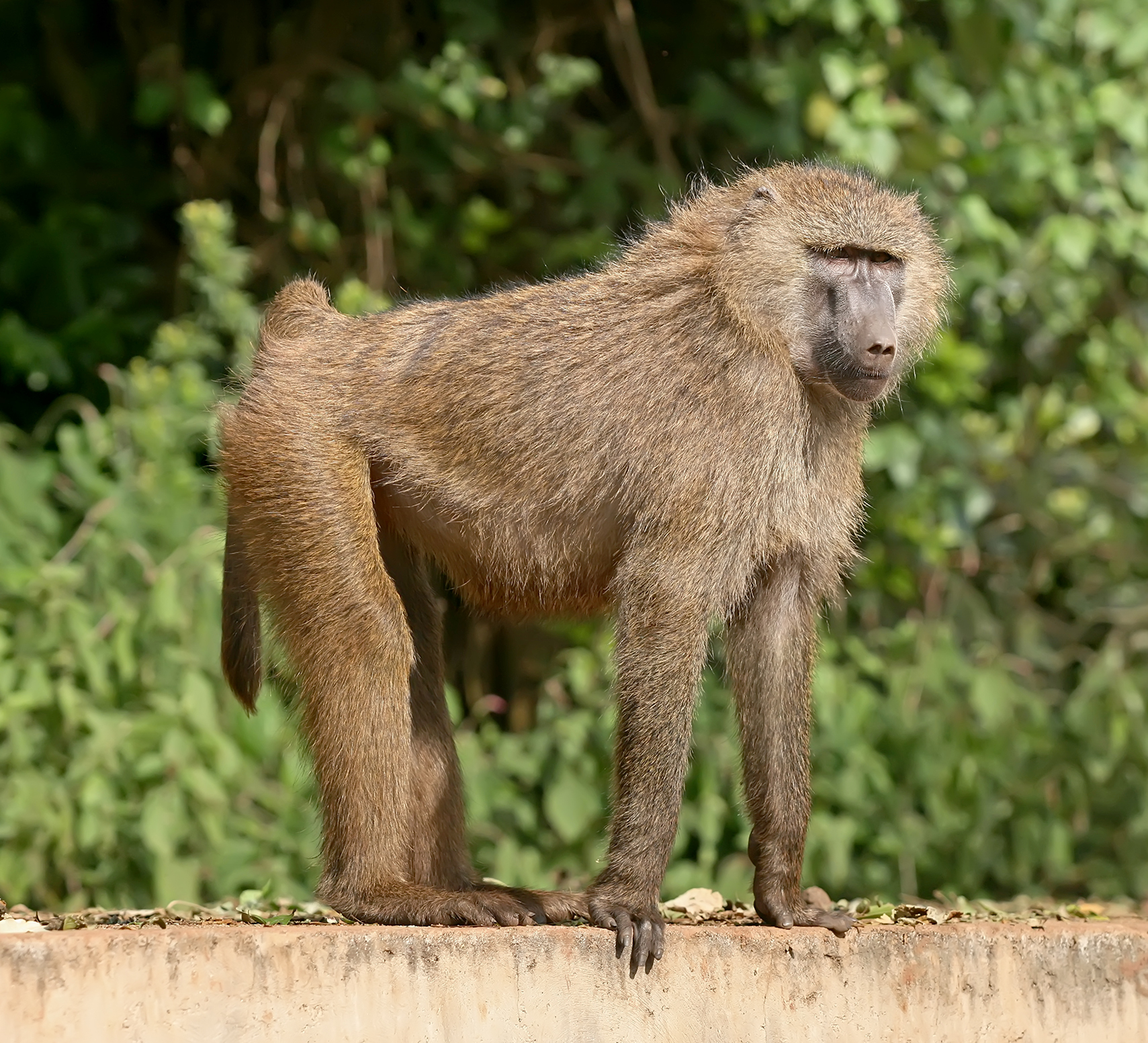
Olive baboon (Papio anubis)
Scientific classification Edit this classification
Kingdom: Animalia
Phylum: Chordata
Class: Mammalia
Order: Primates
Suborder: Haplorhini
Infraorder: Simiiformes
Parvorder: Catarrhini
Superfamily: Cercopithecoidea
Gray, 1821[2]
Family: Cercopithecidae
Gray, 1821[2]
Type genus
Cercopithecus
Linnaeus, 1758
Subfamilies
The distribution and density of Old World monkey species

Old World monkeys are primates in the family Cercopithecidae (/ˌsɜːrkpɪˈθɛsɪd/). Twenty-four genera and 138 species are recognized, making it the largest primate family. Old World monkey genera include baboons (genus Papio), red colobus (genus Piliocolobus), and macaques (genus Macaca). Common names for other Old World monkeys include the talapoin, guenon, colobus, douc (douc langur, genus Pygathrix), vervet, gelada, mangabey (a group of genera), langur, mandrill, drill, surili (Presbytis), patas, and proboscis monkey.

Phylogenetically, they are more closely related to apes than to New World monkeys, with the Old World monkeys and apes diverging from a common ancestor between 25 million and 30 million years ago.[3] This clade, containing the Old World monkeys and the apes, diverged from a common ancestor with the New World monkeys around 45 to 55 million years ago.[4][need quotation to verify] The individual species of Old World monkey are more closely related to each other than to apes or any other grouping, with a common ancestor around 14 million years ago.[5]

The smallest Old World monkey is the talapoin, with a head and body 34–37 centimetres (13–15 in) in length, and weighing between 0.7 and 1.3 kilograms (1.5 and 2.9 lb). The largest is the male mandrill, around 70 centimetres (28 in) in length, and weighing up to 50 kilograms (110 lb)[6] Old World monkeys have a variety of facial features; some have snouts, some are flat-nosed, and many exhibit coloration. Most have tails, but they are not prehensile.

Old World monkeys are native to Africa and Asia today, inhabiting numerous environments: tropical rain forests, savannas, shrublands, and mountainous terrain. They inhabited much of Europe in the past; today, the only survivors in Europe are the Barbary macaques of Gibraltar. Whether they were native to Gibraltar or were brought by humans is unknown.

Some Old World monkeys are arboreal, such as the colobus monkeys; others are terrestrial, such as the baboons. Most are at least partially omnivorous, but all prefer plant matter, which forms the bulk of their diets. Most are highly opportunistic, primarily eating fruit, but also consuming almost any food item available, such as flowers, leaves, bulbs and rhizomes, insects, snails, small mammals,[6] and garbage and handouts from humans.

Taxonomic classification and phylogeny

[edit]
A male rhesus macaque (Macaca mulatta)
Young collared mangabey (Cercocebus torquatus).
Black-footed gray langur, (Semnopithecus hypoleucos)
Nilgiri langur (Trachypithecus johnii)

Two subfamilies are recognized, the Cercopithecinae, which are mainly African, but include the diverse genus of macaques, which are Asian and North African, and the Colobinae, which includes most of the Asian genera, but also the African colobus monkeys.

The Linnaean classification beginning with the superfamily is:

Paracolobus chemeroni fossil

The distinction between apes and monkeys is complicated by the traditional paraphyly of monkeys: Apes emerged as a sister group of Old World monkeys in the catarrhines, which are a sister group of New World monkeys. Therefore, cladistically, apes, catarrhines and related contemporary extinct groups, such as Parapithecidae, are monkeys as well, for any consistent definition of "monkey".[7]

"Old World monkey" may also legitimately be taken to be meant to include all the catarrhines, including apes and extinct species such as Aegyptopithecus,[8] in which case the apes, Cercopithecoidea and Aegyptopithecus as well as (under an even more expanded definition) even the Platyrrhini[9] emerged within the Old World monkeys. Historically, monkeys from the "Old World" (Afro-Arabia), somehow drifted to the "New World" some 40 million years ago, forming the "New World monkeys" (platyrrhines). Apes would emerge later within the Afro-Arabia group.

Characteristics

[edit]

Old World monkeys are medium to large in size, and range from arboreal forms, such as the colobus monkeys, to fully terrestrial forms, such as the baboons. The smallest is the talapoin, with a head and body 34–37 cm in length, and weighing between 0.7 and 1.3 kilograms, while the largest is the male mandrill (the females of the species being significantly smaller), at around 70 cm in length, and weighing up to 50 kilograms.[6]

Most Old World monkeys have tails (the family name means "tailed ape"), unlike the tailless apes. The tails of Old World monkeys are not prehensile, unlike those of the New World monkeys (platyrrhines).

The distinction of catarrhines from platyrrhines depends on the structure of the rhinarium, and the distinction of Old World monkeys from apes depends on dentition (the number of teeth is the same in both, but they are shaped differently). In platyrrhines, the nostrils face sideways, while in catarrhines, they face downward. Other distinctions include both a tubular ectotympanic (ear bone), and eight, not twelve, premolars in catarrhines, giving them a dental formula of: 2.1.2.32.1.2.3

Several Old World monkeys have anatomical oddities. For example, the colobus monkeys have stubs for thumbs to assist with their arboreal movement, the proboscis monkey has an extraordinary nose, while the snub-nosed monkeys have almost no nose at all.

The penis of the male mandrill is crimson and the scrotum is lilac; the face is also brightly colored. The coloration is more pronounced in dominant males.[10]

Habitat and distribution

[edit]

The Old World monkeys are native to Africa and Asia today, inhabiting numerous environments: tropical rain forests, savannas, shrublands, and mountainous terrain. They inhabited much of Europe during the Neogene period.[11]

Behaviour and ecology

[edit]

Diet

[edit]

Most Old World monkeys are at least partially omnivorous, but all prefer plant matter, which forms the bulk of their diet. Leaf monkeys are the most vegetarian, subsisting primarily on leaves, and eating only a small number of insects, while the other species are highly opportunistic, primarily eating fruit, but also consuming almost any food items available, such as flowers, leaves, bulbs and rhizomes, insects, snails, and even small vertebrates.[6] The Barbary macaque's diet consists mostly of leaves and roots, though it will also eat insects and uses cedar trees as a water source.[12]

Reproduction

[edit]

Gestation in the Old World monkeys lasts between five and seven months. Births are usually single, although, as with humans, twins occur occasionally. The young are born relatively well-developed, and are able to cling onto their mother's fur with their hands from birth. Compared with most other mammals, they take a long time to reach sexual maturity, with four to six years being typical of most species.

Social systems

[edit]

In most species, daughters remain with their mothers for life, so that the basic social group among Old World monkeys is a matrilineal troop. Males leave the group on reaching adolescence, and find a new troop to join. In many species, only a single adult male lives with each group, driving off all rivals, but others are more tolerant, establishing hierarchical relationships between dominant and subordinate males. Group sizes are highly variable, even within species, depending on the availability of food and other resources.[6]

See also

[edit]

References

[edit]
[edit]
Revisions and contributorsEdit on WikipediaRead on Wikipedia
from Grokipedia
Old World monkeys are primates belonging to the family Cercopithecidae, a diverse group comprising approximately 160 species primarily native to Africa and Asia.[1] They are distinguished from New World monkeys by several key anatomical features, including narrow, downward-facing nostrils, non-prehensile tails, and bilophodont molars adapted for grinding vegetation.[2] The family originated in the Old World during the Oligocene epoch, around 24–30 million years ago, and represents the most species-rich lineage of catarrhine primates, with evolutionary adaptations reflecting a range of ecological niches from terrestrial savannas to arboreal forests.[3][4] Cercopithecidae is divided into two main subfamilies: Cercopithecinae (cercopithecines), which includes omnivorous genera such as macaques (Macaca), baboons (Papio), and guenons (Cercopithecus), and Colobinae (colobines), which consists of folivorous, leaf-eating genera like colobus monkeys (Colobus) and langurs (Presbytis).[5] Cercopithecines typically feature cheek pouches for storing food and exhibit greater terrestrial tendencies, while colobines possess specialized sacculated stomachs for fermenting fibrous plant material, enabling efficient digestion of mature leaves.[5] Physical characteristics common to the family include ischial callosities—hardened skin pads on the buttocks for sitting—and a dental formula of 2.1.2.3, with pronounced sexual size dimorphism in many species, where males can be significantly larger than females.[5] Tail length varies widely, from short in baboons to long in some macaques, but none are prehensile for grasping.[2] These monkeys inhabit a broad spectrum of environments, from tropical rainforests and montane forests to grasslands and semi-deserts, with cercopithecines showing higher diversity in Africa and colobines peaking in Asian forests.[5] Socially, Old World monkeys are highly gregarious, forming complex troops that range from multimale-multifemale groups in macaques to one-male harems in some colobines, with behaviors including grooming, vocalizations, and hierarchical structures that enhance group cohesion and predator defense.[5] Many species, such as the rhesus macaque (Macaca mulatta), play significant roles in biomedical research due to their physiological similarities to humans, while others face conservation threats from habitat loss and hunting.[5]

Taxonomy and Phylogeny

Classification

Old World monkeys belong to the kingdom Animalia, phylum Chordata, class Mammalia, order Primates, suborder Haplorhini, infraorder Simiiformes, parvorder Catarrhini, superfamily Cercopithecoidea, and family Cercopithecidae.[6] The family Cercopithecidae is the largest within the order Primates, encompassing 24 genera and 160 species distributed across Africa and Asia.[7] This family is divided into two distinct subfamilies: Cercopithecinae and Colobinae, which differ in diet, digestive adaptations, and ecological niches.[8] The Cercopithecinae subfamily includes omnivorous species with cheek pouches that allow temporary food storage, facilitating opportunistic foraging; representative genera include Macaca (macaques, with about 22 species across Asia and North Africa) and Papio (baboons, with five species primarily in Africa).[8] These monkeys are often terrestrial or semi-arboreal and exhibit diverse social structures adapted to varied habitats from savannas to forests.[8] In contrast, the Colobinae subfamily consists of predominantly folivorous species lacking cheek pouches but possessing complex, sacculated stomachs with foregut fermentation chambers for efficient leaf digestion.[8] Key genera include Colobus (colobus monkeys, with five species in African forests) and Trachypithecus (Asian langurs, with around 11 species), which are highly arboreal and rely on specialized microbial symbionts to break down fibrous vegetation.[8] This subfamily emphasizes plant-based diets, with some species selectively browsing on mature leaves or unripe fruits to minimize secondary compounds. Recent studies continue to refine colobine taxonomy.[9][8] Taxonomic classifications within Cercopithecidae have undergone significant revisions driven by molecular phylogenetics, particularly in the diverse guenon tribe (Cercopithecini) of the Cercopithecinae.[10] Traditionally, many guenon species were grouped under the single genus Cercopithecus, but genomic and museomic analyses have supported splitting them into distinct genera such as Chlorocebus (vervets and grivets), Allenopithecus (Allen’s swamp monkey), and Miopithecus (talapoins), reflecting deeper evolutionary divergences and resolving polyphyletic groupings.[10] These revisions, informed by mitochondrial and nuclear DNA sequences, have contributed to recognizing approximately 40 species across six genera, enhancing conservation assessments.[10][11] Within the parvorder Catarrhini, Old World monkeys (superfamily Cercopithecoidea) are the sister group to Hominoidea (apes and humans), sharing narrow-nostriled features that distinguish them from New World monkeys (Platyrrhini).[6]

Evolutionary History

Old World monkeys, belonging to the superfamily Cercopithecoidea, represent one of the two major lineages within the Catarrhini clade of anthropoid primates, alongside the Hominoidea (apes and humans). The divergence between Catarrhini and Platyrrhini (New World monkeys) occurred approximately 40–50 million years ago during the late Eocene to early Oligocene, marking a key event in anthropoid evolution as ancestral catarrhines dispersed from Africa.[12] Within Catarrhini, the split between Cercopithecoidea and Hominoidea took place around 25–30 million years ago in the Oligocene, with molecular and fossil evidence indicating an African origin for this basal divergence.[13] The earliest definitive fossils of Old World monkeys come from the genus Victoriapithecus, dated to 15–17 million years ago in the middle Miocene of Kenya, such as specimens from Maboko Island that exhibit primitive catarrhine cranial features including a short face and bilophodont molars.[14] These fossils provide the oldest evidence of the distinctive dental morphology that characterizes cercopithecoids, bridging earlier primitive catarrhines and more derived forms. Although older potential cercopithecoid-like remains exist from the early Miocene (~22 million years ago), Victoriapithecus confirms the establishment of the lineage with key anatomical traits.[14] A pivotal evolutionary adaptation in Old World monkeys was the development of bilophodont molars, featuring two transverse lophs per tooth that enhanced shearing and grinding capabilities, particularly for processing tough, fibrous vegetation like leaves and seeds.[14] This dental innovation likely arose in response to dietary shifts during the Miocene, enabling exploitation of varied ecological niches in forested and savanna environments. Following the Miocene, around 5–10 million years ago, Old World monkeys underwent significant radiation, diversifying into over 130 extant species across Africa and Asia as climates cooled and habitats fragmented.[13] Phylogenetically, Cercopithecoidea forms the sister group to Hominoidea within Catarrhini, with molecular clock analyses supporting this relationship based on genomic data from nuclear genes.[4] The two main subfamilies, Cercopithecinae (cheek-pouched monkeys) and Colobinae (leaf-eating monkeys), diverged approximately 15–20 million years ago in the early to middle Miocene, with subsequent radiations reflecting adaptations to folivory and omnivory, respectively.[4] These estimates derive from relaxed clock models calibrated against fossil constraints, highlighting the tempo of cercopithecoid evolution.[4]

Physical Characteristics

Anatomy and Morphology

Old World monkeys, members of the family Cercopithecidae, exhibit a suite of anatomical features adapted to their diverse ecological niches across Africa and Asia. These include a characteristic dentition suited for processing varied plant material, robust skeletal structures for terrestrial and arboreal locomotion, and specialized skin modifications for prolonged sitting on hard substrates.[5] The dental formula of Old World monkeys is 2.1.2.3 / 2.1.2.3, consisting of two incisors, one canine, two premolars, and three molars per quadrant, identical to that of apes and humans. This formula supports a diet ranging from fruits to leaves, with bilophodont molars—featuring two transverse ridges on the occlusal surface—facilitating efficient grinding of fibrous vegetation, particularly in folivorous species.[15][5] Unlike New World monkeys, Old World monkeys possess non-prehensile tails that serve primarily for balance rather than grasping, reflecting adaptations to a mix of quadrupedal and climbing lifestyles. All species develop ischial callosities prenatally—thickened, hairless pads of skin over the ischia—that provide cushioning for sitting on rocky or bare ground, a trait unique among anthropoids.[16][5] Morphological specializations distinguish the two main subfamilies: Cercopithecinae (cercopithecines) and Colobinae (colobines). Cercopithecines feature internal cheek pouches for temporary food storage, enabling rapid collection and consumption during foraging, while colobines exhibit thumb reduction or absence, an adaptation that enhances leaf-stripping efficiency with their specialized hands.[17][18] Sexual dimorphism is pronounced in many Old World monkeys, particularly in body size and canine teeth, where males are substantially larger and possess elongated, projecting canines for intra-sexual competition and display. For instance, in species like baboons, males can weigh twice as much as females, with canines exceeding those of comparably sized carnivores in length.[2][19][5] Sensory adaptations include routine trichromatic color vision in all Old World monkeys, achieved through three opsin genes that distinguish red, green, and blue wavelengths, an evolutionary innovation shared with apes that aids in detecting ripe fruits and social signals. Compared to apes, Old World monkeys retain enhanced olfactory capabilities, with a higher proportion of functional olfactory receptor genes and relatively larger olfactory bulbs, supporting scent-based foraging and communication.[20][21][22]

Size and Appearance

Old World monkeys exhibit a wide range of body sizes, from the smallest species, the talapoin (Miopithecus talapoin), with a head and body length of 32 to 45 cm and weight of 0.8 to 1.9 kg, to the largest, the mandrill (Mandrillus sphinx), where males reach 61 to 76 cm in head and body length and up to 54 kg in weight.[23][24] This variation spans over an order of magnitude in mass across the family Cercopithecidae, reflecting adaptations to diverse ecological niches.[8] External appearance among Old World monkeys is highly diverse, particularly in fur coloration and facial features. For instance, the lion-tailed macaque (Macaca silenus) features glossy black fur with a prominent golden or silvery mane around the head and shoulders,[25] while colobus monkeys like the mantled guereza (Colobus guereza) display striking black-and-white pelage with long, flowing mantle hair.[26] Facial and rump features further highlight this diversity; baboons (Papio spp.) often have vividly colored naked rumps in shades of red, blue, or purple that intensify during displays, and the proboscis monkey (Nasalis larvatus) is distinguished by the males' large, pendulous nose that hangs over the upper lip.[27][28] Fur is typically coarse and not woolly, ranging from olive-gray in mandrills to reddish-brown in some guenons.[8][24] Sexual dimorphism is pronounced in many species, with males generally larger than females—often by a factor of two in body mass—and exhibiting brighter coloration or more exaggerated features for mating displays.[8] In the mandrill, for example, adult males have intensely multicolored faces and rumps in red, blue, and violet, contrasting with the duller olive-brown pelage of females.[24] Males also possess prominent canines, though this is tied to underlying dental morphology.[8] Tail length varies relative to body size, being longer in arboreal species such as langurs (Semnopithecus spp.), where tails often exceed body length (e.g., 91 cm tail in Hanuman langurs versus 64 cm body), aiding balance in trees, and shorter in more terrestrial forms like baboons, where tails measure about 45 to 71 cm against a body of 50 to 114 cm.[29][27]

Habitat and Distribution

Geographic Range

Old World monkeys, belonging to the family Cercopithecidae, are native to Africa and Asia, where they occupy a wide array of environments across these continents.[30] In Africa, prominent examples include baboons of the genus Papio, which range widely from savannas to woodlands, and colobus monkeys of the genus Colobus, concentrated in forested regions.[30] In Asia, macaques of the genus Macaca exhibit an extensive distribution from Japan in the north to Indonesia in the south, while langurs such as those in the genus Presbytis are prevalent in India and Southeast Asia.[30] The family comprises approximately 160 species (as of 2024), with the majority occurring in Africa and the remainder in Asia; there are no native populations in the Americas or Australia.[7] Fossil evidence reveals a broader historical range, extending into Europe during the Miocene epoch, as exemplified by Mesopithecus, an early colobine monkey whose remains have been found in sites in Greece dating to around 9-7 million years ago.[31] Today, the only extant Old World monkey population outside Africa and Asia is the Barbary macaque (Macaca sylvanus) in Gibraltar, which was introduced, likely by humans during historical trade or military activities.[32] Certain regions highlight endemism within this distribution; for instance, Madagascar lacks any Old World monkeys, its primate fauna consisting solely of lemurs that evolved in isolation after the island's separation from Africa.[33] Island endemics are notable in Southeast Asia, such as the seven species of macaques restricted to Sulawesi, including the crested black macaque (Macaca nigra), which is found nowhere else.[34]

Habitat Preferences

Old World monkeys, belonging to the family Cercopithecidae, occupy a wide array of habitats across Africa and Asia, reflecting their ecological versatility. Many species, particularly colobines such as those in the genera Procolobus and Piliocolobus in Africa or Semnopithecus and Trachypithecus in Asia, prefer tropical rainforests where they exploit the dense canopy layers for shelter and foraging.[30] In contrast, cercopithecines like baboons (Papio spp.) thrive in open savannas and grasslands, where they navigate expansive, less vegetated landscapes.[35] Montane forests and highland grasslands also support specialized populations, such as geladas (Theropithecus gelada) in the Ethiopian highlands, which inhabit elevations from approximately 1,800 to 4,200 meters.[36] Adaptations to these habitats vary significantly between subfamilies. Arboreal colobines, including langurs (Semnopithecus spp.), have evolved specialized multi-chambered stomachs and high-cusped molars to efficiently digest fibrous leaves in the humid, forested canopies, allowing them to maintain small home ranges often less than 1 km².[30] Terrestrial species, such as patas monkeys (Erythrocebus patas) in African savannas, exhibit elongated limbs and a locomotor system enabling speeds up to 55 km/h, facilitating rapid evasion of predators in open grasslands.[37] Baboons demonstrate semi-terrestrial adaptations, combining quadrupedal walking on the ground with climbing abilities to access resources in heterogeneous savanna environments.[35] Microhabitat preferences further refine their ecological niches, with many species selecting areas proximate to water sources like rivers or streams to mitigate dehydration risks, particularly during dry seasons.[38] Altitudinal ranges span from sea level in coastal forests to high elevations exceeding 4,000 meters for species like the golden snub-nosed monkey (Rhinopithecus roxellana) in Asian montane forests.[30] Climate influences habitat choice, with a general preference for warm, humid conditions in tropical zones, though some, like geladas and certain macaques, tolerate cooler, seasonal climates in highlands by adjusting behaviors such as cliff-sleeping for protection or shifting to lichen-based diets in winter.[36][30]

Behavior

Social Systems

Old World monkeys, belonging to the family Cercopithecidae, typically live in cohesive social groups characterized by matrilineal organization, where adult females and their offspring form the stable core of the troop, while males disperse from their natal groups at adolescence to avoid inbreeding and competition.[39] This female philopatry results in kin-based bonds that structure much of the group's dynamics, with females remaining in their birth groups throughout life.[30] Group sizes vary widely depending on species and habitat; for instance, colobine monkeys like the red colobus often form troops of 25-50 individuals, whereas hamadryas baboons (Papio hamadryas) aggregate into larger multilevel societies exceeding 200 members, consisting of one-male units clustered into clans and bands.[30][40] Dominance hierarchies within these groups are typically linear and based on age, sex, kinship, and individual attributes such as size and aggression, influencing access to resources and mating opportunities.[41] In multi-male groups, such as those of savanna baboons (Papio cynocephalus), males form coalitions to challenge higher-ranking individuals, enhancing their status and reproductive success through cooperative alliances that target rivals during conflicts.[42] Female hierarchies are similarly matrilineal, with rank inherited from mothers, promoting nepotistic support among kin in grooming and agonistic interactions. Males employ various strategies post-dispersal, including forming all-male bachelor groups on the periphery of troops or living solitarily until they can challenge for entry into a breeding unit.[16] In species like savanna baboons, incoming males may commit infanticide against unrelated infants to shorten female interbirth intervals and accelerate their return to estrus, thereby accelerating the males' own reproductive opportunities.[43] This tactic is observed across multiple cercopithecid species, including langurs and macaques, where it aligns with male takeover events in unstable groups.[44] In larger troops, allomothering—non-maternal care provided by other females—plays a key role in infant survival, with unrelated or kin females carrying, grooming, and protecting young to alleviate maternal burden and enhance group cohesion.[45] For example, in golden snub-nosed monkeys (Rhinopithecus roxellana), over 87% of infants receive allonursing from additional adult females, which supports faster weaning and reduces predation risk in complex social settings.[45] This cooperative care is particularly adaptive in matrilineal societies, fostering reciprocal benefits among females.[46]

Locomotion and Communication

Old World monkeys display a range of locomotion styles adapted to their terrestrial or arboreal lifestyles. Terrestrial species, such as baboons, primarily employ quadrupedal walking and galloping on the ground and along branches, often adopting digitigrade hand postures to enhance stride length and stability during rapid movements.[47][48] Arboreal forms, like langurs, favor leaping between supports and climbing on slender substrates, with leaps predominating on twigs and lianas to navigate fragmented forest canopies efficiently.[49][50] Colobine monkeys, including odd-nosed species, frequently use suspensory locomotion and vertical climbing, suspending from all four limbs to access foliage in dense vegetation, reflecting adaptations for their folivorous diet and larger body sizes.[51][52] Most Old World monkeys are diurnal, active primarily during daylight hours and retiring to sleeping sites at night to minimize predation risk.[53] They select elevated sites such as tree crowns, cliffs, or rock faces for communal roosting, often reusing preferred locations for protection from ground-dwelling predators and inclement weather.[54][55] Tool use remains rare among Old World monkeys, though long-tailed macaques (Macaca fascicularis) in coastal habitats employ stone hammers and anvils to crack shellfish and nuts, producing archaeological signatures similar to those of early hominins but limited to specific populations.[56][57] Communication in Old World monkeys encompasses vocal, visual, and olfactory modalities, enabling coordination and predator avoidance. Vocalizations include predator-specific alarm calls, as in vervet monkeys (Chlorocebus pygerythrus), where distinct acoustic signals for aerial, terrestrial, or snake threats elicit tailored escape behaviors like looking up, seeking cover, or standing bipedally.[58][59] Facial expressions convey affiliation and intent; for instance, lip-smacking in macaques involves rhythmic jaw oscillations that signal social tolerance and may parallel proto-speech rhythms in primates.[60][61] Olfactory signals involve urine marking and genital rubbing to deposit scents, with males and females using these to advertise dominance, reproductive status, or territory boundaries, particularly in species like Japanese macaques (Macaca fuscata).[62] These diverse signals collectively support social cohesion by facilitating interactions and group vigilance.[63]

Ecology

Diet and Foraging

Old World monkeys display varied dietary compositions shaped by their ecological niches, with the two main subfamilies exhibiting distinct feeding habits. Colobines (Colobinae) are predominantly folivorous, relying heavily on leaves, young shoots, and seeds, often comprising over 90% of their intake in species like the red colobus (Piliocolobus tephrosceles), where leaves account for approximately 92% of the diet.[30][64] In contrast, cercopithecines (Cercopithecinae), such as baboons (Papio spp.) and macaques (Macaca spp.), are omnivorous and opportunistic, consuming a broad range including fruits, seeds, flowers, buds, insects, and occasionally small vertebrates, with baboons documented eating up to 69 food items from 29 species over a 30-day period.[30][65] These differences reflect adaptations to resource availability, with colobines favoring fibrous, low-quality foliage in forested habitats and cercopithecines exploiting diverse, patchier resources in more open environments.[66] Foraging techniques vary by habitat and diet, often involving group-based strategies to access food sources efficiently. Arboreal colobines, such as the proboscis monkey (Nasalis larvatus), employ canopy stripping with specialized hands to harvest leaves and unripe fruits from tree branches, while spending significant time in the upper forest layers.[30] Terrestrial cercopithecines like baboons forage on the ground in troops, digging for roots, tubers, and underground storage organs using their robust hands and opportunistic predation on insects during dry seasons when plant matter is scarcer.[67][65] Seasonal shifts are common across both subfamilies; for instance, colobines like the maroon leaf monkey (Presbytis rubicunda) increase seed consumption during fruiting periods, while snub-nosed monkeys (Rhinopithecus spp.) turn to lichens in winter when foliage is limited.[30][68] Digestive adaptations enable efficient processing of these diets, with colobines featuring a multi-chambered foregut for rumination-like fermentation of fibrous leaves by symbiotic microbes, as seen in the proboscis monkey's sacculated stomach that detoxifies plant defenses and extracts nutrients from high-fiber foods.[30][66] Cercopithecines, adapted for rapid hindgut fermentation, possess cheek pouches to store food for quick consumption during foraging bouts, allowing them to handle a mix of easily digestible fruits and tougher items like seeds and invertebrates.[30][65] Resource competition influences foraging patterns, particularly through territorial behaviors defending key food sites. Male guerezas (Colobus guereza) mediate intergroup encounters to protect fruiting trees and fallback resources like bark during scarcity, reducing scramble competition within groups.[30] Fallback foods, such as lichens for snub-nosed monkeys or underground tubers for baboons, sustain populations when preferred items decline seasonally, highlighting the role of dietary flexibility in survival.[68][69]

Reproduction and Life Cycle

Old World monkeys, belonging to the family Cercopithecidae, typically exhibit polygynandrous mating systems within multi-male, multi-female social groups, where females mate with multiple males during their estrous periods to reduce infanticide risk and enhance genetic diversity.[70] In many species, such as baboons (Papio spp.) and macaques (Macaca spp.), male-male competition for access to receptive females influences mating success, while female choice plays a significant role in partner selection.[70] Breeding is often seasonal in temperate or high-altitude populations, synchronizing reproduction with resource availability; for instance, Japanese macaques (Macaca fuscata) mate primarily from October to February during winter months.[71] Gestation periods in Old World monkeys generally last 5 to 7 months, varying by species—for example, approximately 164 days in rhesus macaques (Macaca mulatta) and 173 days in Japanese macaques.[72][73] Births typically produce a single offspring, with twinning being rare at rates of about 0.18% to 0.21% across species like macaques.[74][75] Newborns weigh roughly 10% to 20% of the mother's body mass, such as 400–500 grams for infants of female rhesus macaques weighing 4–8 kilograms, enabling initial ventral carriage by the mother.[72] Infants exhibit high dependency on their mothers for the first 6 to 12 months, during which they are carried, nursed, and protected, with carriage shifting from ventral to dorsal after 2–3 months in species like baboons.[70] Weaning occurs gradually between 1 and 2 years, allowing juveniles to remain socially affiliated with their mothers post-weaning.[76] Allomaternal care, including nursing and grooming by non-mothers, supplements maternal efforts in some species, such as golden snub-nosed monkeys (Rhinopithecus roxellana), where it occurs routinely in the early months to support infant survival.[77] Sexual maturity is reached at 3–5 years for females, often earlier than males at 4–8 years, marking the transition to reproductive adulthood.[78][79] In the wild, Old World monkeys have lifespans of 10–30 years, influenced by predation, disease, and resource scarcity, though individuals in captivity can live up to 40 years due to veterinary care and stable nutrition.[80][81] Reproductive output peaks in mid-adulthood, with females capable of bearing offspring from ages 4 to 18, after which fertility declines.[79] This life cycle underscores the species' investment in prolonged parental care to ensure offspring survival in complex social environments.[70]

Conservation and Human Relations

Threats and Conservation Status

Old World monkeys face significant threats from habitat loss, primarily driven by deforestation for agriculture, logging, and urbanization across their native ranges in Africa and Asia. This anthropogenic pressure affects a substantial portion of the family Cercopithecidae, with habitat destruction identified as the leading cause of decline for many species.[82][83] Hunting poses another major threat, including for bushmeat consumption and traditional medicine, particularly impacting species like macaques in Southeast Asia and various colobines in West Africa. For instance, long-tailed macaques (Macaca fascicularis) have experienced severe poaching pressure for these purposes, contributing to rapid population reductions.[84][85] According to the IUCN Red List, approximately 72% of the 138 recognized Old World monkey species are classified as threatened with extinction (Vulnerable, Endangered, or Critically Endangered) as of 2024, with 26 species in the Critically Endangered category. Miss Waldron's red colobus (Piliocolobus waldroni), for example, is listed as Critically Endangered and possibly extinct due to combined habitat loss and hunting in its restricted range in Ghana and Côte d'Ivoire. A notable number of species remain Data Deficient, often because their remote forest habitats limit comprehensive surveys and population assessments. As of the 2023–2025 "Primates in Peril" report, nearly two-thirds of primate species, including many Old World monkeys, are threatened, with ongoing assessments like the reaffirmation of Endangered status for long-tailed macaques in 2024.[82][84][86][87][88] Emerging threats include climate change, which is projected to alter habitat suitability and vegetation structure in tropical forests, exacerbating range contractions for many Old World monkeys. Disease transmission, such as Ebola virus outbreaks in African species, further endangers populations by causing high mortality in susceptible groups like colobines and cercopithecines.[89][90] Population trends indicate sharp declines across several genera, with some experiencing reductions of up to 50% over the past 30 years due to intensified hunting and habitat fragmentation. In introduced areas, such as parts of Florida where rhesus macaques (Macaca mulatta) have established invasive populations, competition with native wildlife adds pressure to local ecosystems.[85][91][92]

Interactions with Humans

Old World monkeys hold significant cultural roles in various societies, particularly in Hinduism where gray langurs (Semnopithecus entellus), also known as Hanuman langurs, are revered as sacred due to their association with the monkey god Hanuman from the Ramayana epic.[93][94][95] This reverence often leads to protection and feeding by devotees, influencing local human-monkey interactions in India.[96] In biomedical research, rhesus macaques (Macaca mulatta) have been extensively used as models for studying human diseases, contributing to advances in immunology, infectious diseases, aging, and reproductive health.[97][98][99] Studies on simian immunodeficiency virus (SIV) in sooty mangabeys (Cercocebus atys), natural hosts that do not progress to AIDS-like illness, have provided key insights into HIV pathogenesis and vaccine development by revealing mechanisms of non-pathogenic infection.[100][101] However, ethical concerns surrounding the use of Old World monkeys in research include welfare issues related to captivity, invasive procedures, and the moral implications of utilizing phylogenetically close species, prompting exploration of alternatives such as genetically modified rodents or computational models.[102][103][104] Human-monkey conflicts arise from resource competition, notably crop raiding by chacma baboons (Papio ursinus) in South African farmlands adjacent to protected areas, where they are reported as the primary raiders, leading to economic losses for farmers.[105] In urban settings like Delhi, India, rhesus macaques have adapted to anthropogenic environments, exploiting food waste and provisioning, which exacerbates conflicts through property damage and health risks from close proximity to humans.[106][107][108] Conservation initiatives for Old World monkeys include protected areas in the Congo Basin, such as the Okapi Wildlife Reserve, which safeguards species like mangabeys and mandrills amid broader primate efforts.[109][110] Reintroduction programs, exemplified by the Golden Langur Conservation Project in India, have successfully increased populations of Gee's golden langurs (Trachypithecus geei) from around 1,500 in 1997 to over 6,000 by 2024 through habitat restoration and translocation.[111] Additionally, CITES regulates international trade in vulnerable Old World monkeys, listing species such as Diana monkeys (Cercopithecus diana), lion-tailed macaques (Macaca silenus), and drill (Mandrillus leucophaeus) in Appendix I to prohibit commercial trade, while others like mantled guerezas (Colobus guereza) fall under Appendix II for monitored exports.[112]

References

User Avatar
No comments yet.