Hubbry Logo
logo
Pakistan studies
Community hub

Pakistan studies

logo
0 subscribers
Read side by side
from Wikipedia

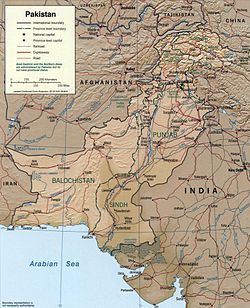
The map of Pakistan

Pakistan studies curriculum (Urdu: مطالعہ پاکستان Muṭāla-e-Pākistān) is the name[1][2] of a curriculum of academic research and study that encompasses the culture, demographics, geography, history, International Relations and politics of Pakistan. The subject is widely researched in and outside the country, though outside Pakistan it is typically part of a broader Indology or some other wider field. Several universities in Pakistan have departments and research centers dedicated to the subject, whereas many independent research institutes carry out multidisciplinary research on Pakistan Studies. There are also a number of international organizations that are engaged in collaborative teaching, research, and exchange activities on the subject.

International organizations

[edit]

As the second largest South Asian country, and one of the major actors in the politics of the Muslim world, Pakistan is a focus of multidisciplinary studies.[3] Various universities in the United States and the United Kingdom have research groups busy in academic and research related activities on Pakistan Studies. One such example is the American Institute of Pakistan Studies (AIPS) at the University of Wisconsin–Madison, established since 1973. An affiliate of the Association for Asian Studies, the institute regularly holds events such as seminars, public lectures, and conferences on various topics related to the Pakistan Studies. It also offers annual international fellowships for the research on materials relating to the history and culture of Pakistan.[4]

In April 2004, AIPS organized an international workshop on the Salt Range Culture Zone of Pakistan at the University of Pennsylvania and the University of Wisconsin–Madison.[5] The event provided the international audience with an opportunity to understand the archaeological and architectural heritage of the country.

Another academic initiative is the British Association for Pakistan Studies that was established in 1989. The forum has wider views on the topic than the common historiographical contexts, and encourages research and dialogue that involves both the academics and practitioners. The forum acknowledges that the topic has not received the sort of individual attention that the country and its society deserve, and therefore strives to increase international awareness on the subject.[6]

There are also larger multinational and multicultural organizations that provide pluralist platforms for the discussions and debates on Pakistan Studies within the wider contexts of Asia. The Asia Foundation, for example, has launched specific projects for a diverse understanding of the subject through actions on local governance, civil society, human rights, and healthcare[7] as well as political, economic, judicial, and foreign relations.[8]

Curriculum

[edit]

Pakistan Studies is one of the few heritage subjects[9] for O-level[10] and IGCSE qualifications governed by Cambridge International Examinations. The syllabus covers Pakistan's history, languages, national identity, geography, economy, and environment, as well as the challenges and opportunities faced by the country.[11] It is also one of the compulsory subjects at O level to obtain equivalency from the Inter Board Coordination Commission.[12] and hence all Pakistani O levels and IGCSE students (except those with foreign citizenship) have to study it.

In Pakistan

[edit]

In Pakistan, the subject is one of the four compulsory courses (along with the Urdu, English courses and Islamyat) at the Secondary School and Higher Secondary school levels of education.[13] It is also taught as a degree course at most of the Social Science departments in many universities. There are also university departments dedicated to the education and research in Pakistan Studies.[14]

Many of these departments provide degree programmes for in-depth studies, as well as research facilities for MPhil and PhD scholars. Courses broadly range from the history, politics and linguistics to the country's geography and economics, and from foreign affairs and religion studies to the social relations and literature.[15] The focused attention on the subject at higher education levels means a wider scope for the research, thus making the subject an increasingly interdisciplinary one.

Curriculum issues

[edit]

The variable political history of Pakistan shows the country being ruled alternately by the civilian and military leaderships. This lack of political succession has had its effects on the way the history was depicted in the curricula of Pakistan Studies until 2006, which increasingly portrayed what Rubina Saigol termed as 'glorification of military'.[16] However, the occasional attempts to alter the historical texts did not escape criticisms from the academics and scholars in Pakistan and abroad.[17] Historian Ayesha Jalal in her 1995 article also raised concerns over the trends of official historiography in Pakistan's history textbooks.[18]

Yvette Rosser, in an article based on her PhD thesis,[19] regards such curriculum as a composite of patriotic discourses. She identifies significant defects, inherent contradictions and inaccurate information within educational syllabus in general and the Pakistan Studies textbooks in particular.[20] In 2003, Sustainable Development Policy Institute in Pakistan published a report that had emerged from a survey of text books of Urdu, English, Social Studies and Civics subjects being taught at the secondary and higher secondary school levels.[21] The survey identified inaccuracies of fact and omissions that appeared to distort the significance of actual events in the country's history. Some of the prominent issues included the lack of understanding towards the civil society, religious diversity, and gender relations. The report recommended for major structural reforms and establishment of a National Education Advisory Board to centralise the curriculum development and carry out regular revisions.[22]

About the international perception of the subject, Burzine Waghmar of the School of Oriental and African Studies argues that Pakistan Studies is increasingly perceived with sonorous sessions on weapons control, civil unrest, bonded labour, gender inequality and the like.[23] These issues are considered among major hurdles to the wider international interest in the subject. Waghmar concludes that Pakistan and India, among other oriental societies, are plagued by visceral nationalism and post-imperial neurosis where state-sanctioned dogmas suppress eclectic historical readings.[23]

According to the Sustainable Development Policy Institute report 'Associated with the insistence on the Ideology of Pakistan has been an essential component of hate against India and the Hindus. For the upholders of the Ideology of Pakistan, the existence of Pakistan is defined only in relation to Hindus, and hence the Hindus have to be painted as negatively as possible.[21] A 2005 report by the National Commission for Justice and Peace a non profit organization in Pakistan, found that Pakistan Studies textbooks in Pakistan have been used to articulate the hatred that Pakistani policy-makers have attempted to inculcate towards the Hindus. 'Vituperative animosities legitimise military and autocratic rule, nurturing a siege mentality. Pakistan Studies textbooks are an active site to represent India as a hostile neighbour' the report stated. 'The story of Pakistan's past is intentionally written to be distinct from, and often in direct contrast with, interpretations of history found in India. From the government-issued textbooks, students are taught that Hindus are backward and superstitious.' Further the report stated 'Textbooks reflect intentional obfuscation. Today's students, citizens of Pakistan and its future leaders are the victims of these partial truths'.[24][25][26][27]

An editorial in Pakistan's oldest newspaper Dawn, commenting on a report in The Guardian on Pakistani Textbooks, noted 'By propagating concepts such as jihad, the inferiority of non-Muslims, India's ingrained enmity with Pakistan, etc., the textbook board publications used by all government schools promote a mindset that is bigoted and obscurantist. Since there are more children studying in these schools than in madrassahs the damage done is greater. '[28][29]

According to the historian Professor Mubarak Ali, textbook reform in Pakistan began with the introduction of Pakistan Studies and Islamic studies by Zulfiqar Ali Bhutto in 1971 into the national curriculum as compulsory subject. Former military dictator Gen Zia-ul-Haq under a general drive towards Islamization, started the process of historical revisionism in earnest and exploited this initiative. 'The Pakistani establishment taught their children right from the beginning that this state was built on the basis of religion – that's why they don't have tolerance for other religions and want to wipe-out all of them.'[29][30]

According to Pervez Hoodbhoy, a physics professor at Quaid-i-Azam University in Islamabad, the Islamizing of Pakistan's schools began in 1976 when an act of parliament required all government and private schools (except those teaching the British O-levels from Grade 9) to follow a curriculum that includes learning outcomes for the federally approved Grade 5 social studies class such as: 'Acknowledge and identify forces that may be working against Pakistan,' 'Make speeches on Jihad,' 'Collect pictures of policemen, soldiers, and national guards,' and 'India's evil designs against Pakistan'. However, according to Rasul Baksh Rais, a political scientist, he has yet to see proof of anti-India or anti-Hindu bias.[31]

Referring to NCERT's extensive review of textbooks in India in 2004, Verghese considered the erosion of plural and democratic values in textbooks in India, and the distortion of history in Pakistan to imply the need for coordination between Bangladeshi, Indian, and Pakistani historians to produce a composite history of the South Asia as a common reader.[32]

However, international scholars also warn that any attempt for educational reforms under international pressure or market demands should not overlook the specific expectations of the people at local levels.[33]

Curriculum reforms

[edit]

Following the extensive media debate and academic reiteration on the need to update the curriculum at all levels of education, the Government of Pakistan carried out measures in 2006 to improve the national curriculum for Pakistan Studies.[1][2] These actions were based on the earlier studies and recommendations by the former University Grants Commission in 2001[34] and then later by the Higher Education Commission of Pakistan (HEC) in 2003.[35]

The new curriculum, for secondary and higher school certificates, was implemented from 2007 to include the political history from pre-independence to the modern times, international relations, evolution of the country's economy and demographics, diversity of regional cultures and languages, and the status of religious groups with specific reference to Muhammad Ali Jinnah's views that he expressed at his speech of 11 August 1947.[2][36] It also eliminates prejudice against non-Muslims, efforts have been made to exclude all such material that promotes prejudice against the non-Muslims of pre-independence India.[1][2]

Subsequently, the need was also realised to standardise the subject framework across the university degrees. As a result, in 2007, the Curriculum Division at the HEC revised the syllabus for the degrees of Bachelor of Science and Master of Science in Pakistan Studies.[37] This revision enlarged the topics and incorporated the ideological underpinnings of Pakistan, the formulation of the Pakistani constitution, the society and culture, and contemporary issues. In 2013, another revision took place, and this time, more focus was given to constitutional history, governance, regional diversity, Pakistan's economy, and the position of the country in the international community. The new curriculum also sought to promote higher education institutions to think and learn creatively and based on research.[38]The new higher education course outline goes beyond the literature, politics, history and culture, and addresses the contemporary challenges of urbanisation, foreign policy and environment.[39] The recommendations also imply the needs for training the teachers to improve their communication skills in accordance with the new structures.

See also

[edit]

References

[edit]

Further reading

[edit]
[edit]
Revisions and contributorsEdit on WikipediaRead on Wikipedia
from Grokipedia
Pakistan Studies is a multidisciplinary academic field focused on the history, geography, culture, politics, economics, and international relations of Pakistan, emphasizing the ideological basis of its creation as a homeland for Muslims in South Asia.[1] Developed primarily within Pakistan's educational system, it integrates elements from social sciences to promote national cohesion and awareness of the country's challenges, often highlighting the Two-Nation Theory and the role of Muhammad Ali Jinnah in partition from India in 1947.[2] The discipline emerged as a response to the 1971 secession of East Pakistan, becoming compulsory at secondary and higher levels to instill patriotism and ideological grounding, though curricula have drawn criticism for factual inaccuracies and biases that prioritize religious narratives over empirical history.[3][4] Key aspects include analysis of Pakistan's constitutional evolution, resource distribution, and foreign policy dynamics, particularly with India and Afghanistan, while controversies persist over textbook content that has been accused of fostering intolerance toward minorities and distorting events like the 1971 war.[5][6] Emerging critical approaches seek to apply rigorous social science methods to challenge state-sanctioned interpretations, prioritizing primary sources and broader contextual factors such as colonialism's legacy.[7]

Origins and Historical Development

Pre-Independence Roots

The pre-independence roots of Pakistan Studies are anchored in the 18th- and 19th-century revivalist efforts among Indian Muslims to preserve their religious and cultural identity amid political decline and colonial rule. Shah Waliullah Dehlawi (1703–1762) initiated intellectual reforms by translating the Quran into Persian to make it accessible, advocating unification of Islamic legal schools, and emphasizing ethical revival to counter syncretism and fragmentation during the waning Mughal Empire.[8] His son Shah Abdul Aziz continued this work, declaring India a dar al-harb (house of war) post-Mughal collapse, which spurred jihad movements like that of Sayyid Ahmad Barelvi (1786–1831), who mobilized Muslims against Sikh dominance in Punjab.[8] The 1857 Indian Rebellion marked a turning point, with Muslims facing severe British reprisals that deepened their sense of marginalization relative to advancing Hindus. Sir Syed Ahmad Khan (1817–1898) responded by promoting Western education tailored for Muslims to foster loyalty to the British while asserting separate interests; he established the Muhammadan Anglo-Oriental College in Aligarh in 1875 (inaugurated 1877), which evolved into Aligarh Muslim University in 1920, and founded the All-India Muhammadan Educational Conference in 1886 to advance Muslim intellectual autonomy.[9] Sir Syed articulated proto-separatist views, opposing the Indian National Congress after its 1885 formation and rejecting joint Hindu-Muslim electorates amid linguistic divides like the Urdu-Hindi controversy of the 1860s.[9] Political organization crystallized with the All-India Muslim League's founding on December 30, 1906, in Dhaka, aimed at protecting Muslim political rights against perceived Congress dominance.[8] Allama Muhammad Iqbal's presidential address to the League at Allahabad on December 29, 1930, envisioned a consolidated, autonomous Muslim state in northwest India—encompassing Punjab, North-West Frontier Province, Sindh, and Baluchistan—to enable self-determination and Islamic revival, influencing the Two-Nation Theory that framed Muslims as a distinct nation from Hindus.[8][10] Under Muhammad Ali Jinnah's leadership from the mid-1930s, the League formalized the demand for partition via the Lahore Resolution on March 23, 1940, which rejected constitutional schemes for a united India and called for "independent states" in Muslim-majority regions where Muslims constituted the nation, ensuring sovereignty over their territories, economies, and defenses.[8][11] This resolution, drafted amid World War II and failed negotiations like the Cripps Mission (1942), galvanized mass Muslim support and set the ideological stage for Pakistan's creation, embedding the Two-Nation Theory and ideological separatism as core elements later formalized in Pakistan Studies curricula.[8]

Establishment Post-1947

Following independence on August 14, 1947, Pakistan's nascent education system prioritized curriculum reforms to instill national ideology and counter colonial legacies, with early efforts centered on integrating Islamic principles and the Two-Nation Theory into schooling. The First All-Pakistan Educational Conference, convened in November 1947 under Prime Minister Liaquat Ali Khan, recommended compulsory primary education and a reorientation of syllabi to emphasize Pakistan's ideological foundations, though implementation was gradual amid resource constraints and administrative challenges.[12] These initial steps laid informal groundwork for subjects fostering patriotism, evolving from fragmented history and civics teachings into structured national content. A landmark development occurred under President Ayub Khan with the establishment of the Commission on National Education in December 1958, chaired by S.M. Sharif, which produced its report in 1959. The commission critiqued the inherited British-oriented system for neglecting technical skills and national identity, recommending compulsory universal education up to age 10, curriculum decentralization, and infusion of Pakistan-specific content—such as the history of Muslim rule, the Pakistan Movement, and ideological underpinnings—to build "loyal and useful citizens."[13][14] This spurred the first systematic curriculum development, introducing Social Studies as a compulsory subject at elementary and secondary levels around 1960, which incorporated elements of Pakistan's geography, history, and ideology as precursors to a dedicated discipline.[15] The distinct subject of Pakistan Studies emerged in the early 1970s under Prime Minister Zulfikar Ali Bhutto's administration, formalized through the 1972-80 National Education Policy, which mandated its inclusion at secondary and higher secondary levels to cultivate awareness of national achievements, challenges, and the ideological basis of statehood.[16][17] By 1978, under General Zia-ul-Haq's martial law regime, Pakistan Studies was declared compulsory across all educational tiers up to the bachelor's degree, including professional programs, aligning it with Islamiat to reinforce Islamic republicanism and counter perceived secular drifts.[18] This expansion reflected state-driven efforts to unify diverse ethnic groups under a centralized narrative, though critics later noted its role in promoting official historiography over pluralistic inquiry.[17] The National Institute of Pakistan Studies, established at Quaid-i-Azam University in 1974, further institutionalized academic research and teaching, producing scholars and materials for the curriculum.[18]

Evolution Under Key Regimes

During President Ayub Khan's administration from 1958 to 1969, educational reforms emphasized modernization and technical education through the 1959 Commission on National Education, which expanded access to schooling and promoted scientific curricula, but Pakistan-specific content remained embedded within general history and civics subjects without establishment as a distinct compulsory discipline.[19] In response to the 1971 separation of East Pakistan, Prime Minister Zulfikar Ali Bhutto's government (1971-1977) formalized Pakistan Studies as a compulsory subject in secondary schools starting in 1971, aiming to cultivate national consciousness, ideological unity, and awareness of Pakistan's founding principles amid heightened concerns over territorial integrity.[16][17][20] General Zia-ul-Haq's regime (1977-1988) intensified the subject's ideological orientation through Islamization drives, revising textbooks by the early 1980s to prioritize Islamic interpretations of history, the Two-Nation Theory, and anti-Indian sentiments; Pakistan Studies was extended as compulsory across all educational levels up to the undergraduate degree, with the 1981 University Grants Commission directives mandating aligned content that critics later described as promoting sectarian biases and historical distortions.[21][22][23] Under General Pervez Musharraf's leadership (1999-2008), the 2006 National Education Policy introduced reforms under "Enlightened Moderation" to mitigate extremist influences in textbooks, including efforts to balance Pakistan Studies with pluralistic elements and reduce overt religious militancy, though enforcement varied by province and the subject's core compulsory framework endured without fundamental restructuring.[24][25]

Objectives and Core Ideology

Building National Consciousness

Pakistan Studies curriculum prioritizes building national consciousness by cultivating a shared sense of identity, unity, and civic duty among students from Pakistan's ethnically and linguistically diverse population. As a compulsory subject introduced at secondary and higher secondary levels in the late 1970s, it emphasizes the ideological and historical foundations of the state to foster patriotism, loyalty, and awareness of collective responsibilities toward national defense and prosperity.[26][27] The subject integrates content on the Pakistan Movement (1857–1947), highlighting sacrifices and collective efforts for independence, to instill pride in the nation's origins as a Muslim-majority homeland established via the Two-Nation Theory.[28] Key mechanisms include ideological education rooted in Islamic principles, portraying Pakistan as a state safeguarding Muslim rights, culture, and global solidarity, while promoting federalism to mitigate provincialism and ethnic divisions.[29] Lessons on post-partition developments—such as constitutional evolution, economic challenges, and security threats—encourage students to recognize internal unity as essential for addressing issues like political instability and extremism, thereby developing a proactive sense of citizenship.[27] Cultural components explore Sufi traditions and regional diversity within an overarching Islamic framework, aiming to reinforce "unity in diversity" and counter separatist tendencies.[28] Citizenship education within the subject underscores rights, duties, and democratic participation, preparing students to contribute to national cohesion through discipline, volunteerism, and vigilance against threats to sovereignty.[27] Official syllabi, such as those from the Higher Education Commission and provincial textbook boards, align these elements with goals of democratic values and social harmony, though implementation varies by institution.[29][28]

Integration of Islamic Principles

The integration of Islamic principles into Pakistan Studies curriculum underscores the subject's role in reinforcing Pakistan's identity as an Islamic republic, where the Ideology of Pakistan—defined as the aspiration for a state enabling Muslims to live according to Islamic tenets—is presented as the foundational rationale for the nation's creation. This ideology draws from core Islamic values such as tawhid (oneness of God), justice, and social welfare, which are taught as inseparable from the Two-Nation Theory, positing that Muslims and Hindus constitute distinct nations due to irreconcilable religious worldviews.[2] Students learn that the demand for Pakistan, articulated by Muhammad Ali Jinnah and the All-India Muslim League, stemmed from the need to safeguard Islamic practices against perceived Hindu-majority dominance in a united India, with historical events like the Lahore Resolution of 1940 framed as manifestations of this Islamic imperative.[30] Curriculum content emphasizes the contributions of Islamic reformers to pre-partition Muslim revivalism, including Shah Waliullah's efforts to purify Islamic thought in the 18th century, Syed Ahmad Shaheed's jihad against Sikh rule in the early 19th century, and Haji Shariatullah's Faraizi movement promoting strict adherence to Islamic obligations in Bengal.[31] These figures are portrayed as precursors to Pakistan's founding, illustrating how Islamic revival countered colonial and syncretic influences, fostering a narrative of continuous Muslim struggle for sovereignty under Sharia-informed governance. Post-independence, the syllabus covers the Objectives Resolution of March 12, 1949, which declares sovereignty belongs to Allah and mandates state policies to align with Islamic principles, as well as constitutional provisions like Article 2-A (enshrining the Objectives Resolution) and directives for legislation not repugnant to the Quran and Sunnah. This integration aims to instill ethical conduct, portraying Islamic principles as guiding economic equity, social justice, and foreign policy, such as solidarity with the Muslim ummah. Pedagogically, Islamic principles are woven into broader themes of national consciousness, with learning outcomes requiring students to analyze how Islam's progressive aspects—such as emphasis on knowledge, consultation (shura), and welfare—shaped Pakistan's socio-economic framework, distinct from secular models.[2] Textbooks highlight Islam's role in unifying diverse ethnic groups under a shared religious identity, countering regionalism, though implementation varies, with federal and provincial curricula mandating compulsory coverage from grades 9-12 to cultivate patriotism aligned with Islamic morality.[6] Critics from educational reviews note occasional overemphasis on rote memorization of Islamic narratives at the expense of critical analysis, yet the core objective remains fostering awareness of Pakistanis as part of the global Muslim community, obligated to uphold universal Islamic values.

Emphasis on Two-Nation Theory

The Two-Nation Theory forms a cornerstone of the Pakistan Studies curriculum, asserting that Muslims and Hindus in British India constituted two separate nations defined by irreconcilable differences in religion, culture, social customs, and political aspirations. This ideology, articulated to counter the Indian National Congress's vision of a unified secular state, justified the demand for a distinct Muslim homeland to safeguard minority rights amid fears of Hindu-majority dominance. In textbooks and syllabi, it is presented as the foundational rationale for Pakistan's establishment on August 14, 1947, emphasizing that without recognizing these national distinctions, coexistence within a single polity was untenable.[32][33][29] Curriculum frameworks for grades 9-12 mandate students to trace the theory's origins to Sir Syed Ahmed Khan's 1867 advocacy for Muslim political separatism following the Hindi-Urdu controversy, Allama Iqbal's 1930 Allahabad Address proposing autonomous Muslim provinces, and Muhammad Ali Jinnah's consolidation of it via the All-India Muslim League's Lahore Resolution on March 23, 1940, which called for independent Muslim states. Learning objectives require relating the theory to Muslim economic disadvantages, such as underrepresentation in civil services (e.g., Muslims holding only 11% of government posts by 1947 despite comprising 25% of the population) and cultural erosion under prospective Hindu rule. This emphasis aims to instill an understanding of Pakistan's ideological genesis, linking it directly to national sovereignty and identity formation.[29][34] At higher education levels, Pakistan Studies courses deepen this focus by analyzing the theory's role in historical events like the 1906 founding of the Muslim League and the 1937 provincial elections, where Congress policies alienated Muslims, reinforcing separatism. Pedagogical approaches encourage critical examination of supporting evidence, such as demographic data from the 1941 census showing Muslims at 94 million versus 254 million Hindus, alongside social indicators of distinct legal systems (e.g., Sharia versus Hindu personal law). The theory's integration promotes patriotism and unity by framing Pakistan's creation as an inevitable outcome of these divisions, though syllabi note post-partition challenges like the 1971 separation of East Pakistan as exceptions rather than refutations.[29][35][36]

Curriculum Framework

Compulsory Status and Levels

Pakistan Studies is designated as a compulsory subject within Pakistan's national education framework at the secondary level (grades 9–10) and higher secondary level (grades 11–12), where it forms a core component of the curriculum leading to the Secondary School Certificate (SSC) and Higher Secondary School Certificate (HSSC) examinations, respectively.[29] This requirement applies uniformly across public, private, and semi-government institutions adhering to the federal and provincial boards, such as the Federal Board of Intermediate and Secondary Education (FBISE), ensuring its integration into both matriculation and intermediate assessments.[37] Introduced as a distinct compulsory discipline in the early 1980s, it aims to foster awareness of national ideology, history, and geography among students preparing for these certification stages. Under the Single National Curriculum (SNC) framework, rolled out progressively since 2021, Pakistan Studies remains mandatory for grades 9–12, with syllabi outlined by the National Curriculum Council to standardize content across provinces while accommodating medium of instruction in Urdu or English.[38] In the Cambridge International O-Level and A-Level systems followed by many elite private schools, Pakistan Studies (or equivalent history and geography modules) is similarly obligatory for Pakistani nationals, as stipulated by the Inter Boards Coordination Commission (IBCC) equivalence policies, requiring passes in this subject alongside Urdu and Islamiyat for certification.[39] Prior to secondary level, Pakistan Studies content is not taught as a standalone compulsory subject but is embedded within broader Social Studies or General Knowledge curricula in primary (grades 1–5) and middle (grades 6–8) stages, covering foundational elements of national history, geography, and civics without separate examination mandates. This phased approach ensures progressive depth, with full compulsoriness commencing at grade 9 to align with students' cognitive development and national identity formation goals. At the undergraduate level, however, its compulsory status was discontinued under the Higher Education Commission's 2023 policy reforms, shifting it to elective status in BA/BSc programs to allow greater disciplinary flexibility.[40]

Key Components and Syllabus Outline

The Pakistan Studies curriculum in Pakistan is structured as a compulsory subject for secondary (grades IX-X) and higher secondary (grades XI-XII) levels, integrating history, geography, civics, economics, and culture to foster patriotism and understanding of national challenges.[37][2] Its key components emphasize the ideological foundations of the state, derived from the Two-Nation Theory and Islamic principles, alongside empirical analysis of Pakistan's physical and human geography, economic systems, governance structures, and foreign relations. The syllabus prioritizes factual historical sequences, such as the Pakistan Movement from 1857 to 1947, and contemporary issues like resource distribution and strategic positioning, with student learning outcomes (SLOs) specifying measurable knowledge acquisition, such as identifying key geographical features or constitutional amendments.[29] Core components are delineated across thematic domains rather than chronological silos, ensuring a holistic view: the ideological basis covers the intellectual contributions of figures like Muhammad Ali Jinnah and Allama Iqbal, linking Hindu-Muslim separatism to state formation on August 14, 1947.[2] Geographical elements detail Pakistan's 796,095 square kilometers of terrain, including the Indus River system, mountain ranges like the Himalayas and Karakoram, and arid zones, with emphasis on environmental challenges such as water scarcity affecting 60% of arable land.[37] Economic topics outline agriculture's 19% GDP contribution (as of recent data), industrial growth post-1950s industrialization policies, and fiscal dependencies on remittances totaling $29.9 billion in 2023. Governance and politics include the 1973 Constitution's federal parliamentary framework, with 18 amendments by 2023, and foreign policy focusing on relations with India, Afghanistan, and China via initiatives like the China-Pakistan Economic Corridor launched in 2015. Cultural integration highlights linguistic diversity (e.g., Urdu as national language alongside regional ones) and societal values rooted in Islamic ethos, while addressing population dynamics with Pakistan's 241 million residents per 2023 census.[29] The syllabus outline varies slightly by board (e.g., Federal Board of Intermediate and Secondary Education or provincial equivalents) but follows a standardized national framework updated periodically, with grades IX-X focusing on foundational history and geography (60-70% weightage) and XI-XII advancing to analytical topics like policy critiques. A typical outline includes:
  • Ideological Basis: Two-Nation Theory, objectives resolution of 1949, and role of Muslim League.[2]
  • Historical Evolution: Pre-partition Muslim rule (e.g., Mughal era decline by 1707), 1857 War of Independence, and post-1947 consolidations under leaders like Liaquat Ali Khan until 1951.[37]
  • Geography and Resources: Physical divisions (plains, plateaus, deserts), climate zones, minerals (e.g., coal reserves of 185 billion tons), and population distribution.
  • Economy and Development: Sectors (agriculture, manufacturing contributing 13% GDP), Five-Year Plans from 1955, and challenges like 24% poverty rate in 2023.[29]
  • Governance and Foreign Policy: Constitutional history, federal-provincial dynamics, and alliances (e.g., SEATO in 1954, OIC membership since 1969).
  • Culture and Society: Ethnic compositions, education metrics (literacy at 62% in 2023), and national symbols.[2]
This framework mandates 100-120 instructional hours per grade, with assessments via objective and subjective questions testing recall and application.

Pedagogical Approaches

Pedagogical approaches in Pakistan Studies emphasize teacher-centered instruction, with lectures serving as the dominant method to deliver curriculum content on national history, ideology, and geography. This approach prioritizes the transmission of factual knowledge aligned with the subject's objectives of fostering patriotism and Islamic values, often through direct exposition by educators using approved textbooks.[41][42] Rote memorization remains a core strategy, particularly in secondary and higher secondary levels, where students are expected to recall dates, events, and key figures from the Two-Nation Theory and independence movement to prepare for examinations. This method reinforces ideological consistency but has been critiqued for limiting comprehension and critical analysis, as assessments focus on reproduction rather than application of concepts.[43][44] Supplementary methods, such as discussion and demonstration, are recommended in official guidelines to engage students with socio-economic and cultural topics, yet surveys indicate their infrequent use due to resource constraints and large class sizes in public schools. Project-based and inquiry approaches, intended to encourage exploration of Pakistan's resources and governance, appear sporadically in private institutions but are sidelined in favor of exam-oriented preparation.[29][45][41] Higher education curricula, as outlined by the Higher Education Commission, advocate for cooperative learning, debates, and multimedia integration to deepen understanding of foreign policy and cultural integration, though implementation varies, with traditional lecturing persisting amid calls for reform to promote analytical skills.[29]

Core Content Domains

Historical Narrative

The historical narrative in Pakistan Studies curricula traces the roots of Pakistani nationhood to the arrival of Islam in the Indian subcontinent, beginning with Arab traders in the 7th century CE and military incursions led by Mahmud of Ghazni starting in 1001 CE. Subsequent Muslim dynasties, including the Ghaznavids, Ghorids, Delhi Sultanate (1206–1526), and the Mughal Empire (1526–1857), are depicted as periods of cultural, architectural, and administrative flourishing under Islamic rule, contrasting with pre-Islamic eras characterized as feudal and idolatrous. This framing underscores Islam's role in fostering unity and progress among diverse populations.[46] The narrative shifts to the decline of Mughal authority following Aurangzeb's death in 1707 and the consolidation of British East India Company control, culminating in the War of Independence in 1857, interpreted as a joint Hindu-Muslim uprising against colonial oppression but leading to direct British Crown rule and perceived marginalization of Muslims. Socio-political awakening among Muslims is highlighted through reformist efforts, such as Sir Syed Ahmed Khan's Aligarh Movement in the 1870s, which promoted modern education and political awareness to counter Hindu-majority dominance in emerging democratic institutions.[1] Key developments in the early 20th century include the Simla Deputation of 1906, advocating separate electorates for Muslims, and the founding of the All-India Muslim League that year to safeguard Muslim interests. The Lucknow Pact of 1916 temporarily aligned Muslim and Congress parties, but subsequent events like the Khilafat Movement (1919–1924), Nehru Report of 1928 rejecting separate electorates, and Jinnah's Fourteen Points in 1929 deepened communal divides. Muhammad Iqbal's Allahabad Address in 1930 proposed a separate Muslim state in northwest India, influencing the Lahore Resolution of 1940, which demanded autonomous Muslim-majority regions.[1] The culmination of the Pakistan Movement involved negotiations such as the Cripps Mission (1942), Cabinet Mission Plan (1946), and the Indian Independence Act of 1947, resulting in partition on August 14, 1947, and the establishment of Pakistan amid mass migrations and violence displacing over 14 million people. Post-independence history covers the adoption of the Objectives Resolution in 1949, the 1956 Constitution declaring Pakistan an Islamic Republic, the 1971 separation of East Pakistan forming Bangladesh after a war with India, and the 1973 Constitution, emphasizing resilience against internal and external challenges while reinforcing Islamic democratic ideals.[1][2]

Geography, Economy, and Resources

Pakistan spans 881,913 square kilometers, ranking as the 33rd-largest country by area, with diverse terrain including the Karakoram and Himalayan ranges in the north—home to K2, the world's second-highest peak—western plateaus in Balochistan, the fertile Indus River plain in the east, and the Thar Desert in the southeast.[47] The country borders India to the east, Afghanistan and Iran to the west, China to the north, and the Arabian Sea to the south, conferring strategic geopolitical significance due to proximity to the Indian Ocean and Central Asia. Its climate varies from alpine in the north to arid subtropical in the south, influenced by monsoon rains essential for agriculture, though prone to flooding and drought. Population exceeds 250 million, with density concentrated in the Punjab and Sindh provinces along the Indus Valley, where over 60% reside, reflecting historical settlement patterns tied to water availability.[48] The economy features a mix of agriculture, manufacturing, and services, with real GDP growth estimated at 2.7% for 2025 amid stabilization efforts following prior crises.[49] Agriculture employs about 42% of the labor force and contributes roughly 23% to GDP, focusing on cotton, wheat, rice, and sugarcane, while textiles dominate exports at over 60% of total shipments.[50] Industry, including cement and fertilizers, accounts for 24% of GDP, and services 53%, bolstered by remittances exceeding $30 billion annually. However, persistent challenges include a trade deficit where imports outpace exports—imports grew 9.3% against 7.9% export growth in recent fiscal data—high public debt consuming 60% of revenues in interest payments, and inflation, though easing, that has strained household finances.[51] External debt vulnerabilities and reliance on IMF programs underscore structural issues like low tax-to-GDP ratios and energy shortages impeding growth.[52] Natural resources include substantial natural gas reserves, though depleting, positioning it as the primary energy source; vast coal deposits in the Thar region estimated at 175 billion tons; and minerals such as copper and gold at Reko Diq, iron ore, chromite, and the world's second-largest salt mine at Khewra.[53] Arable land supports key crops, with irrigation from the Indus River system enabling food self-sufficiency in staples, yet water scarcity looms due to overexploitation and climate variability. Forests cover under 5% of land, biodiversity hotspots exist in northern mountains, but underutilization persists due to inadequate infrastructure, governance gaps, and security issues in resource-rich areas like Balochistan.[50] These assets hold potential for export-led growth, as seen in untapped mining projects, but realization requires policy reforms to address circular debt in energy and boost extraction efficiency.[54]

Governance, Foreign Policy, and Culture

The Pakistan Studies curriculum presents governance as rooted in the federal parliamentary Islamic republic framework established by the 1973 Constitution, which students study for its key features including a bicameral parliament, an executive prime minister, a ceremonial president, and provincial autonomy with Islamic provisions derived from the Objectives Resolution of March 12, 1949.[37] Earlier constitutional efforts, such as the 1956 and 1962 Constitutions, are covered to illustrate progressive developments toward incorporating Islamic democratic principles, alongside systems like Basic Democracies introduced in 1959 for local self-governance and the 2001 devolution plan under General Pervez Musharraf to decentralize power.[37] Legal instruments like the Legal Frameworks Order of 1970 under Yahya Khan are examined as transitional mechanisms, with emphasis on how governance balances federal authority, provincial rights, and Islamic jurisprudence through bodies like the Council of Islamic Ideology.[37] [1] Foreign policy objectives taught include safeguarding sovereignty and territorial integrity, upholding Islamic ideology, ensuring national security, fostering economic development, and promoting cultural ties, with principles of friendship toward all and enmity toward none guiding bilateral and multilateral engagements.[37] Relations with India are framed around the Kashmir dispute's origins in the 1947 partition and subsequent wars (1948, 1965, 1971, 1999), portraying it as an unresolved core threat requiring UN-mediated resolution.[37] Strategic alliances feature prominently, such as enduring Pak-China friendship since 1950, evidenced by infrastructure projects and mutual defense pacts, contrasted with fluctuating U.S. ties—including Cold War-era pacts like CENTO (1955) and SEATO (1954), aid during the Soviet-Afghan War (1979–1989), and post-9/11 cooperation amid drone strikes and sanctions.[1] [37] Engagements with Muslim nations via the Organisation of Islamic Cooperation (OIC, joined 1969), SAARC participation since 1985, and UN peacekeeping contributions (over 200,000 troops deployed since 1960) underscore Pakistan's role in Islamic solidarity and global stability, while Central Asian and European ties are noted for energy and trade potential.[1] [37] Cultural content emphasizes Pakistan's composite heritage blending pre-Islamic Indus Valley elements with Islamic civilization introduced via Arab conquests (711 CE) and Mughal synthesis (1526–1857), fostering national integration through shared Islamic values amid ethnic diversity.[1] Regional commonalities in customs, such as Sufi traditions, folk music, and festivals like Eid, are highlighted to promote cohesion, alongside the evolution of languages—Urdu as the national lingua franca since 1947, derived from Persian-Arabic-Turkish roots, and regional tongues like Punjabi, Sindhi, Pashto, and Balochi tied to historical migrations.[37] Arts, attire (shalwar kameez variations), heritage sites (Mohenjo-Daro, Lahore Fort), and folklore reflect Islamic moral ethos, with agriculture-linked crops and crafts underscoring socio-economic cultural ties, though curriculum critiques Western influences as diluting indigenous identity.[37] [1]

Implementation in Pakistani Education

Role in Public and Private Schools

In public schools, which enroll the majority of Pakistani students and are operated by provincial governments, Pakistan Studies serves as a core compulsory subject from middle school onward, typically integrated into the social studies curriculum in earlier grades and as a standalone discipline in secondary education (classes 9-12). The subject is delivered through government-approved textbooks published by provincial boards, emphasizing rote memorization of national history, the Two-Nation Theory, and ideological foundations to instill patriotism and unity.[55] These schools, facing challenges like overcrowded classrooms and undertrained teachers, often prioritize exam preparation over critical analysis, with the subject's role reinforcing state narratives amid limited resources for interactive pedagogy.[56] Private schools, comprising about 42% of primary enrollments and increasingly serving low-income families through low-cost models, are also mandated to teach Pakistan Studies as part of the national curriculum, using the same compulsory textbooks for core content to ensure alignment with federal and provincial standards.[57][58] Unlike public institutions, private schools frequently operate in English-medium formats with smaller class sizes and better infrastructure, potentially enhancing delivery through supplementary resources or more dynamic teaching methods, though the subject's ideological emphasis remains consistent.[59] Empirical studies indicate private schools yield superior overall academic outcomes, including in standardized assessments that encompass Pakistan Studies, attributed to factors like teacher motivation and accountability rather than curriculum deviations.[60] The role of Pakistan Studies in both sectors underscores its function in promoting national identity and countering separatist sentiments, but disparities arise in implementation quality: public schools grapple with systemic inefficiencies leading to superficial coverage, while private alternatives leverage market-driven incentives for deeper engagement, though both adhere to the same prescribed syllabus to meet certification requirements for board examinations.[56][61]

Teacher Training and Resources

Teacher training for Pakistan Studies in Pakistan occurs primarily through pre-service programs such as Bachelor of Education (B.Ed.) and Master of Education (M.Ed.) degrees, where subject-specific pedagogy is covered alongside general teaching methods. Allama Iqbal Open University (AIOU) offers a dedicated course titled "Teaching of Pakistan Studies" as part of its M.Ed. program, serving as a core textbook for trainee educators and emphasizing instructional strategies, curriculum alignment, and historical content delivery.[42] In-service training is coordinated by the National Curriculum Council (NCC), which collaborates with provincial education departments and institutions to cascade workshops for master trainers and classroom teachers, particularly following the 2021 rollout of the Single National Curriculum (SNC) that standardizes Pakistan Studies across grades 6-12. These sessions focus on curriculum implementation, pedagogical techniques like activity-based learning, and alignment with national objectives such as ideological reinforcement.[62] Provincial bodies, including the Punjab Curriculum and Textbook Board (PCTB), supplement this with subject-specific modules for secondary educators, often incorporating multimedia integration and assessment strategies.[2] Resources for teachers include government-approved textbooks published by entities like the National Book Foundation and provincial boards, accompanied by teacher manuals outlining lesson plans, objectives, and supplementary aids such as timelines, maps, and charts for topics in history, geography, and governance.[2] The Higher Education Commission (HEC) provides faculty resource materials for undergraduate Pakistan Studies courses, including photocopiable handouts, suggested readings, and evaluation rubrics to support lecture-based and seminar instruction.[29] Specialized guides, such as those from the Zakir Husain Educational Foundation, offer practical tools like research-based questioning techniques and classroom activities tailored to grades 9-10 syllabi.[63] Digital and supplementary resources remain underdeveloped but include online platforms with notes and exam preparation materials compiled by educators, though these lack official endorsement and vary in quality.[64] Access to training and resources is uneven, with urban public school teachers receiving more frequent workshops via federal-provincial partnerships under the Ministry of Federal Education and Professional Training, while rural and private institutions often rely on ad-hoc NGO-supported programs.[65]

Assessment and Student Outcomes

Assessment in Pakistan Studies at the secondary level primarily occurs through high-stakes summative examinations administered by provincial boards of intermediate and secondary education or the Federal Board of Intermediate and Secondary Education (FBISE), covering grades IX-X for the Secondary School Certificate (SSC) and grades XI-XII for the Higher Secondary School Certificate (HSSC).[66] These exams typically allocate 100 marks, with roughly 20-30% for objective multiple-choice questions, 30-40% for short answers, and the remainder for long essays or comprehension on topics like Pakistan's independence movement, constitutional development, and resource distribution.[37] Passing requires at least 33% in the subject, with grades ranging from A+ (80-100%) to F (below 33%), though formative assessments like class tests or assignments contribute minimally in public schools due to resource constraints.[67] Student outcomes reflect a reliance on rote memorization over analytical skills, as evidenced by board exam analyses showing high pass rates—often exceeding 70% in Pakistan Studies for SSC exams in Punjab—but persistent weaknesses in applying concepts to real-world scenarios. A 2012 UNESCO review of school assessments noted that Pakistan Studies evaluations prioritize recall of ideological narratives, such as the Two-Nation Theory, leading to superficial proficiency where students score adequately (average 50-60% in urban public schools) but demonstrate limited causal understanding of events like the 1971 separation of East Pakistan.[66] Independent studies, including those from the Asian Development Bank, indicate that rural students lag further, with learning gaps widening due to inconsistent teaching, resulting in outcomes where fewer than 40% can critically evaluate governance structures post-exam.[68] Efforts to reform assessment, such as FBISE's 2020s push toward competency-based questions emphasizing problem-solving in economic resources or foreign policy, have yielded mixed results, with 2023 exam data showing only marginal improvements in higher-order responses (under 25% of candidates achieving analytical depth).[37] Overall, outcomes contribute to national cohesion through standardized knowledge of foundational events but fall short in fostering evidence-based inquiry, as critiqued in reports highlighting systemic rote-learning biases in social studies curricula.[69]

Criticisms and Controversies

Claims of Historical Distortions

Critics of the Pakistan Studies curriculum contend that textbooks systematically revise historical narratives to align with an Islamist-nationalist ideology, often omitting or fabricating events to portray Muslims as perpetual victims of Hindu aggression and to justify partition as religiously predestined.[6] A prominent example is the depiction of Pakistan's formation as arising solely from an irreconcilable Hindu-Muslim conflict, disregarding economic disparities, regional identities, and political negotiations that influenced the 1947 partition; this narrative frames the two-nation theory as an ancient, divinely ordained truth rather than a 20th-century political construct.[70] [71] Textbooks frequently glorify Muslim conquests in the Indian subcontinent while minimizing or vilifying pre-Islamic Hindu and Buddhist civilizations, claiming, for instance, that ancient Pakistan was a cradle of Islamic civilization with negligible non-Muslim contributions, thus erasing archaeological evidence of indigenous cultures like the Indus Valley Civilization's secular roots.[6] [72] In accounts of the independence movement, Indian National Congress leaders such as Mahatma Gandhi and Jawaharlal Nehru are routinely cast as conspirators plotting Muslim subjugation, with events like the 1946 Calcutta riots attributed exclusively to Hindu aggression, while Muslim League-instigated violence is downplayed or justified as defensive.[73] [74] The 1971 Bangladesh Liberation War is another focal point of alleged distortion, where textbooks rationalize the secession as a Hindu-Indian conspiracy exploiting Bengali Muslims, omitting Pakistan Army atrocities documented in the Hamoodur Rahman Commission Report, such as the estimated 3 million civilian deaths and widespread rapes, and instead emphasizing East Pakistan's "voluntary" separation due to Indian interference. [75] Critics, including analyses of Punjab Textbook Board materials, highlight how these revisions foster a victimhood complex, with history portrayed as a binary struggle where non-Muslims are inherently treacherous, leading to factual errors like claiming the 1857 War of Independence was purely a jihad against British-Hindu alliances.[76] [4] Such claims are supported by textbook audits from organizations like the U.S. Commission on International Religious Freedom, which examined curricula across Punjab, Sindh, and federal boards, finding persistent inaccuracies that prioritize ideological conformity over empirical evidence, though Pakistani officials counter that these reflect a necessary emphasis on national cohesion amid partition's traumas.[73] [6] These distortions, dating back to revisions under military regimes like Zia-ul-Haq's Islamization in the 1980s, are said to impede critical historical inquiry by presenting disputed "facts" as undisputed, such as asserting Muhammad Ali Jinnah's vision as theocratic despite his August 11, 1947, speech advocating religious equality.[74] [70]

Alleged Promotion of Intolerance

Critics have alleged that the Pakistan studies curriculum, particularly in public school textbooks, fosters religious intolerance by systematically portraying non-Muslims and minority sects in derogatory terms, thereby undermining social cohesion. A 2016 report by the U.S. Commission on International Religious Freedom (USCIRF) analyzed public school textbooks and found pervasive bias against non-Islamic faiths, including depictions of Christians as Western conspirators and Hindus as inherent enemies of Muslims, which contravenes Pakistan's constitutional guarantees of minority rights under Articles 20-22.[4] Similar findings emerged in a 2021 IMPACT-se review of 86 textbooks across Punjab, Sindh, and federal boards, which identified content promoting martyrdom and jihad while marginalizing non-Muslim contributions to Pakistani history, such as omitting the role of Hindu and Sikh leaders in the independence movement.[6] The curriculum's emphasis on Islamic ideology often extends to glorification of armed jihad, presented not merely as defensive struggle but as a virtuous obligation, potentially normalizing violence against perceived threats. For instance, Pakistan studies texts for grades 9-10 describe historical conquests, including the Arab invasions of Sindh in 711 CE, as divinely ordained triumphs over infidels, with phrases equating non-belief to moral inferiority.[73] This portrayal aligns with broader critiques that such narratives instill a zero-sum worldview, where tolerance is conditional on submission to Islamic supremacy, as evidenced by textbook exercises praising fighters in the Soviet-Afghan War as mujahideen heroes without contextualizing civilian casualties or geopolitical motivations.[77] Sectarian intolerance is another focal point, with materials distinguishing between Sunni orthodoxy and groups like Ahmadis, explicitly labeling the latter as heretics despite their constitutional non-Muslim status since 1974. USCIRF documented instances where Pakistan studies books reinforce the 1974 parliamentary declaration against Ahmadis, framing their practices as blasphemous and justifying social ostracism, which correlates with documented mob violence against Ahmadi communities—over 50 attacks reported between 2010 and 2020.[73] Shia perspectives are similarly sidelined, with historical events like the Battle of Karbala minimized or Sunni-biased, contributing to intra-Muslim divisions; a 2022 study in the Journal of Citizenship Teaching & Learning highlighted how this exclusion alienates minority students, fostering resentment rather than national unity.[78] Indophobia intertwined with religious framing exacerbates these issues, as textbooks depict partition-era Hindus as treacherous and contemporary India as an existential threat driven by anti-Islamic animus. A September 2025 Dawn report cited educators noting that such content in Pakistan studies syllabi promotes discriminatory attitudes, with phrases like "Hindu cunning" persisting in updated editions despite 2006 curriculum reforms promising neutrality.[79] Critics argue this causal link between curriculum and behavior is evident in rising intolerance metrics, such as Pakistan's 2023 score of 0.372 on the Social Hostilities Index by Pew Research, where education-driven biases correlate with blasphemy accusations—1,500 cases filed from 1987 to 2022, disproportionately targeting minorities. While some textbooks include token mentions of interfaith harmony, such as quoting Jinnah's August 11, 1947, speech on equal citizenship, these are often contradicted by dominant narratives, rendering them ineffective against systemic bias. Independent analyses, including a 2025 Center for Social Justice review of 145 books, conclude that non-religious subjects like Pakistan studies subtly perpetuate discrimination by prioritizing ideological purity over empirical history, potentially hindering critical thinking and empirical assessment of diverse viewpoints.[80]

Shortcomings in Fostering Critical Inquiry

The Pakistan Studies curriculum in Pakistani schools emphasizes rote memorization of prescribed historical narratives and ideological tenets, such as the two-nation theory and the role of Muhammad Ali Jinnah, rather than encouraging analytical questioning or evaluation of evidence.[55] A 2022 qualitative content analysis of secondary-level Pakistan Studies textbooks found that the majority of questions were text-based recall prompts, lacking elements that develop higher-order critical thinking skills like interpretation, inference, or argumentation, thereby reinforcing passive absorption over active inquiry.[81] This structure aligns with the subject's foundational mandate, formalized in the 1976 curriculum under General Zia-ul-Haq's regime, to propagate the "Ideology of Pakistan" as an unquestionable framework, which inherently prioritizes conformity to state-sanctioned interpretations.[6] Textbooks often present complex events, including the 1947 partition and military interventions, in a linear, hagiographic manner without exposure to primary sources, counterfactuals, or historiographical debates, limiting students' capacity to discern biases or causal mechanisms independently.[55] [81] For instance, portrayals of pre-partition Hindu-Muslim relations emphasize irreconcilable differences without analytical tools for students to assess socioeconomic or political contingencies, fostering acceptance of deterministic outcomes rather than critical causal reasoning.[6] Educational researchers attribute this to a broader systemic preference for ideological reinforcement, where deviations from orthodoxy in classroom discussions risk accusations of disloyalty, as evidenced by documented cases of teacher self-censorship.[69] Empirical indicators of these shortcomings include persistently low performance in skills requiring critical inquiry; for example, national assessments and international comparisons, such as those from the Annual Status of Education Report (ASER), reveal that over 70% of Pakistani students in grades 5-8 struggle with basic comprehension and application tasks, outcomes linked to curricula like Pakistan Studies that undervalue problem-solving pedagogy.[82] This rote-dominant approach contributes to a national research output characterized by quantity over quality, with Pakistani scholarly articles showing deficiencies in analytical depth, as analyzed in a 2017 study tying such patterns to early education's failure to cultivate skeptical evaluation.[82] Reforms under the Single National Curriculum since 2018 have introduced minor updates to question formats but have not substantively shifted toward inquiry-based learning, per critiques from education policy analysts.[69]

Defenses and Positive Impacts

Contributions to National Unity

The Pakistan Studies curriculum, as outlined in the National Curriculum for Grades IX-X (2006), explicitly underscores the importance of national integration, cohesion, and patriotism through its core objectives, which include instilling a sense of unity derived from shared historical struggles and ideological commitments. This focus is intended to counteract centrifugal forces such as ethnic, linguistic, and regional disparities by presenting Pakistan's formation as a collective achievement rooted in the Two-Nation Theory, which posits Muslims of the subcontinent as a distinct nation requiring self-determination.[83] Key content areas promote this unity by detailing unifying events, such as the All-India Muslim League's Lahore Resolution on March 23, 1940, which articulated the demand for independent Muslim-majority states, and the subsequent referendum in the North-West Frontier Province on July 6, 1947, where 50.49% voted for Pakistan despite opposition from regional leaders. The curriculum integrates lessons on ideological leaders like Muhammad Ali Jinnah, emphasizing his vision of a state where religious minorities coexist under Islamic principles, thereby fostering a supra-ethnic national identity that transcends provincial boundaries.[83][84] In higher education, the revised Higher Education Commission curriculum for Pakistan Studies reinforces these contributions by aiming to cultivate democratic values and national solidarity, with modules on societal culture and integration that highlight common cultural heritage and constitutional frameworks like the Objectives Resolution of March 12, 1949, which embedded Islamic provisions as a basis for unity.[83] The Federal Board of Intermediate and Secondary Education's standards for Grades 9-12 explicitly include "Society, Culture and National Integration" as a learning outcome, requiring students to analyze factors promoting cohesion, such as shared defense against external threats exemplified by the 1965 and 1971 wars. While the curriculum's design prioritizes these unifying narratives, empirical assessments of its real-world impact remain limited, with institutional analyses from bodies like the National Institute of Pakistan Studies noting ongoing research into factors impeding cohesion but affirming the subject's role in seminars and programs aimed at strengthening national bonds.[84] This approach has been credited in educational policy documents with helping to preserve ideological foundations against separatist ideologies, though measurable outcomes in reducing ethnic tensions, such as those in Balochistan or Sindh, depend on broader implementation efficacy.[83][84]

Preservation of Ideological Foundations

Pakistan Studies as a compulsory subject in the national curriculum explicitly aims to reinforce the ideological basis of the state, rooted in the Two-Nation Theory and Islamic principles that justified the partition of 1947.[29] The curriculum delineates the historical evolution of Muslim separatism in British India, highlighting key events such as the Lahore Resolution of 1940 and the Objectives Resolution of 1949, which enshrined Islam as a guiding force in governance.[85] By mandating coverage of these foundations from secondary to higher education levels, the subject seeks to embed an understanding that Pakistan's existence depends on preserving distinct Muslim identity against potential cultural or political assimilation.[86] Proponents argue that this educational focus counters existential threats to national cohesion by cultivating a shared ideological narrative among diverse ethnic groups.[87] Textbooks emphasize the role of figures like Muhammad Iqbal and Muhammad Ali Jinnah in articulating the need for a sovereign Muslim homeland to safeguard religious practices and social order, thereby fostering loyalty to the state's founding rationale.[36] Empirical integration of these elements, as seen in the Higher Education Commission's revised outlines since 2008, ensures that students across public and private institutions internalize the ideology as a bulwark against internal divisions.[88] This approach has been credited with maintaining societal unity by aligning educational content with the constitutional preamble's affirmation of democratic norms within an Islamic framework.[89] The subject's structure promotes ideological preservation through interdisciplinary lenses, combining history, geography, and civics to illustrate how geographic unity underpins ideological solidarity.[29] Defenders point to its role in the Single National Curriculum initiative launched in 2020, which standardizes teaching of ideological tenets to bridge disparities between elite English-medium schools and public Urdu-medium ones, thereby democratizing access to the national ethos.[90] Studies on curriculum implementation indicate that such uniformity reinforces collective identity, reducing vulnerabilities to separatist ideologies by reiterating Pakistan's creation as a deliberate ideological project rather than mere territorial accident.[91]

Effectiveness Against Separatist Tendencies

The Pakistan Studies curriculum, made compulsory in secondary schools from the 1960s and extended to all educational levels by 1978, was explicitly designed to promote national integration and counter ethnic or provincial fragmentation by emphasizing the ideological basis of Pakistan's creation, including the Two-Nation Theory and the unifying role of Islam.[18][42] Textbooks highlight historical events such as the 1940 Lahore Resolution and the Pakistan Movement to instill a sense of shared destiny among diverse ethnic groups, portraying linguistic and cultural differences as secondary to ideological cohesion.[29] This approach aims to address separatist risks by framing provincial grievances—such as those in former East Pakistan—as deviations from the national narrative, with content warning against disunity that could lead to territorial loss, as evidenced in post-1971 reforms.[92] In regions prone to separatism, such as Balochistan and Sindh, the curriculum underscores federal integration efforts, including the One Unit scheme (1955–1970) and constitutional frameworks, to legitimize central authority and diminish ethnic autonomist claims.[93] Proponents argue it fosters patriotism and solidarity, with studies indicating that exposure to these materials correlates with heightened awareness of national symbols and historical unity among secondary students.[94][95] However, textbook portrayals of regional histories, including Baloch accession disputes or Sindhi cultural assertions, sometimes amplify local grievances by attributing them to external or elite failures rather than resolving underlying tensions, potentially undermining the unifying intent.[92] Empirical outcomes reveal limited effectiveness in suppressing separatist tendencies, as insurgencies persist despite widespread curriculum implementation; for instance, Baloch separatist groups like the Baloch Liberation Army conducted over 100 attacks in 2024 alone, including high-profile operations targeting infrastructure, indicating that ideological education has not quelled resource-based or autonomy-driven militancy in low-literacy areas like Balochistan (adult literacy rate approximately 40% as of 2023).[96][97] Similarly, Sindhi nationalist outfits such as Jeay Sindh Muttahida Mahaz continue low-level agitation, suggesting that the curriculum's top-down national narrative fails to address socioeconomic disparities or perceived Punjabi dominance, which fuel recruitment even among educated youth. Quantitative assessments of national integration show mixed results, with surveys linking curriculum exposure to abstract patriotism but not to reduced support for regionalism in periphery provinces.[94] Overall, while the subject reinforces state ideology, its causal impact on curbing separatism appears constrained by implementation gaps, rote learning emphasis, and failure to engage local contexts, allowing insurgencies to endure.[98]

Reform Efforts and Debates

Early and Mid-20th Century Initiatives

In the early 20th century, Muslim communities in British India pursued educational reforms to address perceived marginalization in colonial curricula, which often emphasized Hindu-majority narratives and Western secularism while downplaying Islamic history and contributions. The Aligarh Movement, building on Sir Syed Ahmed Khan's late-19th-century foundations, advanced modern scientific education alongside preservation of Muslim cultural identity through institutions like the Muhammadan Anglo-Oriental College (established 1875 and upgraded to Aligarh Muslim University in 1920). This initiative produced influential figures, including Muhammad Ali Jinnah, who leveraged its alumni networks to articulate the two-nation theory and mobilize for political separation, thereby laying ideological groundwork for Pakistan's eventual formation.[99][100] Parallel to Aligarh's modernist approach, the Deoband Movement, originating in 1866, focused on revitalizing traditional Islamic scholarship via Darul Uloom Deoband seminary, emphasizing Hanafi jurisprudence and resistance to Western cultural erosion. By the early 1900s, it influenced broader Muslim revivalism, fostering religious scholars who supported the Pakistan demand as a means to safeguard Islamic practices amid Hindu-majority dominance, though it diverged from Aligarh on adopting English-medium instruction. These movements collectively heightened awareness of distinct Muslim historical agency, countering colonial historiography that portrayed Muslims as post-Mughal declinists.[99][101] Following independence in 1947, mid-20th-century initiatives shifted toward nation-building through curriculum overhaul to embed the "ideology of Pakistan"—defined as Islamic democracy and Muslim self-determination. The 1947 All-Pakistan Educational Conference in Karachi recommended integrating Islamic studies and national history to unify diverse provinces, prompting textbook revisions that highlighted pre-partition Muslim struggles over generic subcontinental narratives. By 1960, under Ayub Khan's regime, Social Studies was introduced as a compulsory subject at elementary and secondary levels, evolving from fragmented history teaching to emphasize Pakistan's founding principles, geographic unity, and anti-colonial resistance, though implementation faced challenges from resource shortages and regional disparities.[15] The 1959 Commission on National Education further advocated curriculum reforms to foster patriotism and scientific temper aligned with Islamic ethics, including mandatory instruction on Pakistan's ideological roots from the Lahore Resolution of 1940 onward, marking a deliberate pivot from British-era syllabi toward causal emphasis on Muslim separatism as a response to demographic and cultural threats in united India. These efforts, while advancing national cohesion, drew criticism for overemphasizing ideology at the expense of critical historical analysis, setting precedents for later mandatory Pakistan Studies in the 1970s.[102]

Single National Curriculum (2018–Present)

The Single National Curriculum (SNC) was initiated in 2018 by the federal government under Prime Minister Imran Khan as a reform to standardize educational content across Pakistan's public, private, and Deeni Madaris (religious seminary) systems, aiming to bridge socioeconomic disparities and foster national cohesion.[103][104] The policy sought to create a unified framework emphasizing core subjects like mathematics, sciences, and Islamic studies, with mathematics taught in English nationwide to align with global standards, while 18 subjects were designated for Urdu-medium instruction and 12 for English.[105] Its objectives included promoting equitable access to quality education, reinforcing national identity rooted in Islamic principles and Pakistan's ideological foundations, and reducing class-based divisions exacerbated by varying curricula in elite private schools versus under-resourced public ones.[104][106] Development occurred in three phases coordinated by the National Curriculum Council. Phase I focused on grades 1-5, with curriculum finalization completed by March 2020 and textbooks rolled out for implementation starting in the 2021-22 academic year.[107][108] Phase II targeted grades 6-8, incorporating subjects such as Pakistan history, Islamiat, general knowledge, computer science, business studies, and mathematics, with development targeted for completion by March 2021 and rollout by 2022.[109] Phase III extended to grades 9-12, emphasizing vocational skills and higher-order competencies, though full nationwide enforcement lagged due to logistical constraints.[110] Implementation faced significant hurdles, including provincial autonomy assertions post the 18th Constitutional Amendment, which devolved education to provinces. Sindh province opted out entirely, citing threats to linguistic and cultural diversity, rendering the "national" scope incomplete.[110] Resource shortages, inadequate teacher training, and textbook shortages persisted into 2023-2025, with surveys indicating primary school teachers struggled with content delivery and assessment alignment.[111][112] Critics, including education analysts, argued the uniform approach risked diluting standards in high-performing private institutions and overlooked regional ethnic-linguistic variations, potentially entrenching rather than resolving inequalities.[113][114] By 2024, partial adoption in Punjab and federal areas yielded mixed outcomes, with some improvements in foundational literacy but persistent gaps in critical thinking and STEM proficiency, as measured by localized evaluations.[115] Ongoing debates center on refining the SNC—renamed the National Curriculum Framework in some revisions—to balance uniformity with flexibility, amid calls for enhanced monitoring and federal-provincial coordination.[116][117]

Ongoing Challenges and Future Directions

Despite the introduction of the Single National Curriculum (SNC) in 2020, implementation of reforms in Pakistan studies remains hampered by chronic resource shortages, including inadequate funding for textbook production and distribution, which affected over 70% of public schools in Balochistan as of 2023.[118] Provincial resistance, rooted in federal-provincial tensions under the 18th Amendment, has led to inconsistent adoption, with Sindh and Khyber Pakhtunkhwa partially rejecting SNC components for Pakistan studies due to perceived central overreach.[106] Teacher capacity gaps exacerbate these issues; a 2024 Higher Education Commission report found that fewer than 40% of educators in social sciences, including Pakistan studies, receive annual professional development, resulting in rote memorization over analytical skills.[119] Content-related challenges persist, with recent audits revealing ongoing religious biases in Pakistan studies textbooks, such as disproportionate emphasis on Islamic narratives that marginalize non-Muslim contributions, as documented in a 2025 analysis of grades 6-10 materials portraying minority communities in victim-perpetrator binaries.[58] Controversies over factual inaccuracies continue, including the 2025 inclusion of unsubstantiated claims like a fictional "Pakistan-India War of 2025" victory in some school texts, prompting public backlash and selective bans by the Punjab Curriculum and Textbook Board.[120] These issues stem partly from opaque revision processes, where ideological priorities often override empirical verification, limiting the subject's role in fostering evidence-based historical understanding. Looking ahead, the National Education Policy Development Framework of 2024 outlines directions for Pakistan studies by integrating 21st-century competencies like critical inquiry and digital literacy into the curriculum, aiming to extend school education to 14 years with standardized assessments by 2030.[121] Evidence-based reforms, such as those proposed by the Development Action for Rational Education Research and Collaboration (DARE-RC), emphasize pilot programs for teacher training and inclusive content reviews to address learning crises affecting 26 million out-of-school children, potentially reducing biases through provincial-federal collaboration.[122] However, success hinges on sustained funding—currently at 2.3% of GDP—and mechanisms for ongoing textbook audits, as advocated in 2025 policy analyses, to balance national cohesion with factual rigor amid competing ideological influences.[123]

International and Comparative Perspectives

Views from Global Academia and Organizations

Scholars and organizations outside Pakistan have frequently critiqued the Pakistan Studies curriculum for embedding ideological biases that prioritize Islamic nationalism and historical narratives favoring the state's founding ideology over empirical pluralism or critical analysis. For instance, the United States Commission on International Religious Freedom (USCIRF) reviewed public school textbooks in 2022, identifying ongoing religious intolerance in Pakistan Studies materials, including portrayals of non-Muslims as adversaries and endorsements of concepts like jihad as a societal duty, which contravene international standards on educational neutrality.[4] Similarly, the United States Institute of Peace (USIP) documented in a 2018 special report that Pakistani curricula, including Pakistan Studies, have incorporated distortions since the Zia-ul-Haq era (1977–1988), such as anti-Hindu and anti-India rhetoric, fostering attitudes of exclusion rather than inclusive citizenship, based on surveys linking textbook content to student prejudices.[124] The IMPACT-se organization, in its 2005 report updated through subsequent reviews, described Pakistani textbooks as engaging in "subtle subversion" by omitting balanced historical accounts—such as the contributions of non-Muslim founders to the Pakistan Movement—and instead emphasizing sectarian interpretations of ideology, a pattern verified through content analysis of over 100 texts across subjects like Pakistan Studies.[6] Academic studies from international journals reinforce this, with a 2018 analysis in Citizenship Teaching & Teacher Education arguing that Pakistan Studies textbooks in government schools construct an "illegitimate citizen" archetype by privileging Sunni Muslim identity and marginalizing ethnic or religious minorities, drawing on discourse analysis of secondary-level materials from Islamabad.[125] These critiques often stem from content audits rather than ideological opposition, though Western-based sources like USCIRF and USIP may reflect U.S. policy priorities on counter-extremism, as evidenced by their focus on links between biased education and militancy.[126] Broader multilateral bodies offer qualified perspectives, emphasizing systemic flaws over specific ideological content. UNESCO's 2023 country profile on Pakistan notes that national curricula, including compulsory subjects like Pakistan Studies, suffer from outdated frameworks that undervalue skills-based learning, contributing to low global rankings in reading comprehension (e.g., Pakistan's 177th place in the 2018 PISA-equivalent assessments), though it avoids direct commentary on ideological embedding.[127] The World Bank, in its 2023 Human Capital Review, critiques the overall education system's rote-memorization approach—prevalent in Pakistan Studies for ideological recitation— as a barrier to human capital development, estimating that curriculum reforms could boost learning outcomes by 20-30% if shifted toward evidence-based inquiry, based on econometric modeling of enrollment and test data from 2017-2022.[128] These institutional views prioritize measurable deficits in critical thinking, implicitly questioning the curriculum's role in perpetuating uncritical acceptance of state narratives without explicit endorsement of reform agendas.

Adaptations in Diaspora Communities

Pakistani diaspora communities, estimated at 9.1 million individuals as of 2017, primarily in the United Kingdom (1.7 million), the United States (900,000), and Gulf states (4 million), adapt to host societies by forming ethnic enclaves such as "Little Pakistans" while preserving core elements of national identity through religious, linguistic, and kinship networks.[129] These adaptations include transnational marriages—over 50% of British Pakistanis marry partners from Pakistan, often kin—to sustain biraderi (clan) ties and cultural continuity, alongside consumption of Pakistani media like Urdu newspapers (Jang) and television channels that reinforce historical narratives of the Pakistan Movement.[129] Religious institutions, particularly mosques affiliated with organizations like Minhaj-ul-Quran, serve as hubs for transmitting Islamic values intertwined with Pakistan's founding ideology, emphasizing unity under the two-nation theory amid pressures of assimilation and post-9/11 anti-Muslim sentiment.[129] Educational adaptations focus on supplementary programs to counter generational dilution of identity, with community schools in Gulf countries—such as the 16 Pakistani schools in Kuwait—offering curricula that include Urdu instruction, Islamic ethics, and selective Pakistani history to foster attachment to the homeland.[129] In the UK and US, weekend supplementary schools and family-led initiatives teach elements of national heritage, though empirical data indicate varying success: second- and third-generation diaspora members often exhibit higher integration (e.g., 33% of UK Pakistanis hold higher education qualifications per 2011 census) but retain identity through philanthropy and remittances totaling $20 billion in 2016-17, which fund community projects reinforcing ideological ties.[129][129] A study of a Pakistani school in Dubai highlights how such institutions discursively construct national belonging by prioritizing religious-national discourses over pluralistic ones, adapting domestic curricula to expatriate contexts while navigating local regulations.[130] Challenges to these adaptations include cultural bereavement and host-country barriers, such as qualification non-recognition and income thresholds for visas (e.g., UK's £18,000 requirement), which limit formal transmission of Pakistan-specific knowledge.[129][131] Despite high diaspora education levels—55% of US Pakistanis hold bachelor's degrees and 23% advanced degrees per 2011 data—second-generation shifts toward host identities often prioritize economic success (e.g., US median income $60,000) over ideological purity, with 53% viewing themselves as improving Pakistan's global image via advocacy rather than doctrinal preservation.[129][132] Political engagement, as seen in figures like UK Mayor Sadiq Khan (elected with 1.1 million votes in 2016), demonstrates hybrid adaptations blending Pakistani heritage with local participation, though surveys show preference for nationalist rhetoric to maintain ideological links.[129][133]

Contrasts with Regional Neighbors

Pakistan Studies, as a compulsory subject, distinctly emphasizes the two-nation theory and Islamic ideology as foundational to national identity, portraying partition from India as an inevitable outcome of irreconcilable Hindu-Muslim differences.[134] In contrast, Indian NCERT history textbooks integrate national identity through a secular lens, highlighting unity in diversity and a syncretic cultural heritage that includes contributions from various religious communities, often depicting Mughal rulers like Akbar as symbols of tolerance rather than precursors to separatism.[134] [135] Pakistani curricula allocate dedicated chapters to the Muslim League's role in independence, framing Jinnah as the sole architect of the nation, while Indian texts credit the broader anti-colonial movement led by the Congress, minimizing religious partitioning narratives.[136] Bangladesh's educational framework, shaped by the 1971 Liberation War, prioritizes Bengali linguistic and cultural nationalism over religious ideology, explicitly rejecting Pakistan's two-nation theory in favor of secular or language-based unity.[137] Post-independence textbooks in Bangladesh reframe shared subcontinental history to underscore East Pakistan's exploitation by West Pakistan, portraying 1971 as a triumph of ethnic self-determination rather than Islamic solidarity.[138] This contrasts sharply with Pakistan Studies' focus on ideological homogeneity under Islam, which downplays linguistic divisions and integrates East Pakistan's history as a unified Islamic struggle until external factors led to separation.[139] In Afghanistan, curricula historically emphasize Pashtun ethnic dominance and jihad against foreign invaders, lacking a centralized national studies subject comparable to Pakistan Studies and instead fragmenting identity along tribal lines with heavy Islamic doctrinal content.[140] Unlike Pakistan's state-centric narrative on post-1947 nation-building and geo-strategic relations with neighbors, Afghan education under various regimes has prioritized resistance narratives and religious orthodoxy, contributing to persistent internal divisions rather than cohesive ideological foundations.[88] Iran's system, by comparison, mandates ideological training rooted in the 1979 Islamic Revolution and Shiite jurisprudence, enforcing a theocratic worldview that diverges from Pakistan's Sunni-majority, modernist Islamic nationalism.[141] These differences highlight Pakistan Studies' unique blend of religious separatism and territorial pragmatism, tailored to counter perceived threats from Hindu-majority India and internal ethnic challenges.

References

User Avatar
No comments yet.