
.jpg/250px-Prodigy-rar-060609--209_(3606459901).jpg)


.jpg/2000px-Prodigy-rar-060609--209_(3606459901).jpg)
Community hub
Recent from talks
Contribute something
Nothing was collected or created yet.
Rock am Ring and Rock im Park
View on Wikipedia
| Rock am Ring Rock im Park | |
|---|---|
.jpg) The Prodigy performing at Rock am Ring 2009 | |
| Genre | Heavy metal, punk rock, rock[1] |
| Dates | Usually first weekend in June |
| Locations | Rock am Ring: Nürburgring, Nürburg, Rhineland-Palatinate, Germany Rock im Park: Zeppelinfeld, Nuremberg, Bavaria, Germany |
| Years active | 1985–2019, 2022–present |
| Founders | Marek Lieberberg |
| Website | Rock am Ring: rock-am-ring Rock im Park: rock-im-park |
The Rock am Ring (German for "Rock at the Ring") and Rock im Park ("Rock in the Park") festivals are two simultaneous rock music festivals held annually in Germany. While Rock am Ring takes place at the Nürburgring race track in Nürburg, Rock im Park takes place at the Zeppelinfeld in Nuremberg. Rock am Ring festival was founded by Marek Lieberberg in 1985.
The two festivals are usually regarded as one event sharing nearly identical lineups. All artists perform one day at the Nürburgring and another day in Nuremberg during the three-day event. There have been minor exceptions in the past years where an artist would be announced for one of the festivals only. Combined, Rock im Park and Rock am Ring are the largest music festivals held in Germany and one of the largest in the world with a combined attendance of over 150,000 people in 2007, selling out both events in advance for the first time.[2]
History
[edit]


In 1980, German concert promoter Marek Lieberberg initiated a festival project on the Nordschleife part of the Nürburgring, but it failed due to protests from locals and a lack of parking spaces.[3]
In 1985, Lieberberg was inspired to bring to the German region of the Palatinate (Pfalz) the atmosphere that reigned in the town of Bethel during the first Woodstock festival.[4] The first managing director of the new Nürburgring complex, Rainer Mertel, placed his trust in Lieberberg.[5] Thus, in 1985, Lieberberg founded the Rock am Ring festival.[4][6][7]
Rock am Ring was originally planned as a one-time festival on the Nürburgring motorsports complex, celebrating the inauguration of a newer, shorter version of the race track in 1985, but due to its commercial success (with 75,000 audience members), it was decided to make the concert an annual event. However, after a dip in attendance for the 1988 event, the festival was put on hiatus for two years. In 1991, the festival returned with a new concept: as well as featuring well-known artists, event organizers present lesser known up-and-coming bands to the public. In 1993, Rock im Park took place for the first time in Vienna. For the 1994 event, Rock im Park moved to the disused Munich-Riem airport, and the following year to Munich's Olympiastadion, where it found a home for the 1995 and 1996 event. In 1997 Rock im Park moved to Nuremberg's Frankenstadion where it was held until the venue was unavailable in 2004 because the stadium was being renovated for the 2006 Football World Cup. Since 2004 the venue moved again to the current Zeppellinfeld, where Rock im Park was since held with the exception of the 2006 festival, which was moved to the Luitpoldhain.
The 2007 festival was used in a science experiment to test the effects of large bodies of people simultaneously jumping. The experiment data was used to calculate the result if the entire Chinese population were to jump in unison. The experiment concluded no significant results would come from the theoretical event.[8]
After 29 editions of Rock am Ring, the new owner of the Nürburgring decided that the contract would not be extended. The festival continued at another location in 2015 and 2016 (Mendig Air Base/Vulkaneifel),[9][10] returning to the Nürburgring in 2017.[11]
Venues
[edit]| Year | Rock am Ring | Rock im Park |
|---|---|---|
| 1985 | Nürburgring, Nürburg | – |
| 1986 | – | |
| 1987 | – | |
| 1988 | – | |
| 1989 | – | – |
| 1990 | – | – |
| 1991 | Nürburgring, Nürburg | – |
| 1992 | – | |
| 1993 | Rock in Wien Ernst-Happel-Stadion, Vienna | |
| 1994 | Rock im Riem Flughafen München Riem, Munich | |
| 1995 | Rock im Riem Olympic Stadium, Munich | |
| 1996 | ||
| 1997 | Frankenstadion, Nuremberg | |
| 1998 | ||
| 1999 | ||
| 2000 | ||
| 2001 | ||
| 2002 | ||
| 2003 | ||
| 2004 | Zeppelinfeld, Nuremberg | |
| 2005 | ||
| 2006 | Luitpoldarena, Nuremberg | |
| 2007 | Zeppelinfeld, Nuremberg | |
| 2008 | ||
| 2009 | ||
| 2010 | ||
| 2011 | ||
| 2012 | ||
| 2013 | ||
| 2014 | ||
| 2015 | Mendig Air Base, Mendig | |
| 2016 | ||
| 2017 | Nürburgring, Nürburg | |
| 2018 | ||
| 2019 | ||
| 2020 | – | – |
| 2021 | – | – |
| 2022 | Nürburgring, Nürburg | Zeppelinfeld, Nuremberg |
| 2023 | ||
| 2024 | ||
| 2025 |
Past dates and headliners
[edit]2008 festival
[edit]The 2008 festival took place on 6–8 June 2008. 91 acts have been officially confirmed. Both festivals were sold out on 1 May.
Confirmed acts:
[13]
[14]
[15]
[16]
[17]
[18]
[19]
3 Doors Down (replacing Chris Cornell, who backed out to record an album[19]), 36 Crazyfists, Against Me!, Airbourne, Alpha Galates, Alter Bridge, Animal Alpha, Babyshambles, Bad Religion, Bedouin Soundclash, the Black Dahlia Murder, Black Stone Cherry, Black Tide, Bloodlights, Booka Shade, Bullet for My Valentine, CSS, Cavalera Conspiracy, Chiodos, Coheed and Cambria, Culcha Candela, Danko Jones, Die Toten Hosen, Dimmu Borgir, Disco Ensemble, Disturbed, Eagles of Death Metal, EL*KE, Fair to Midland, Fettes Brot, Fiction Plane, Filter, Finger Eleven,[20][21] From First to Last, Gavin DeGraw, Gavin Rossdale, High on Fire, HIM, Hot Chip, In Case of Fire, In Flames, Incubus, Infadels, Jimmy Eat World, Joe Lean & the Jing Jang Jong, Johnossi, Jonathan Davis, Justice, Kate Nash, Kid Rock, Kill Hannah, Lostprophets, Madsen, Manic Street Preachers, Masters of Reality, Metallica, Motörhead, Nightwish, Oomph!, Opeth, Paramore, Pete Murray, Queens of the Stone Age, Rafael Weber, Rage Against the Machine, Rival Schools, Róisín Murphy, Rooney, Rose Tattoo, Saul Williams, Saxon, Seether, Serj Tankian, Silverstein, Simple Plan, Söhne Mannheims, Sonic Syndicate, Sportfreunde Stiller, Stereophonics, Steriogram, Takida, the Fall of Troy, the Fratellis, the Futureheads, the Hellacopters, the Offspring, the Prodigy, the Streets, the Verve, Tokyo Police Club, Turisas and ZOX.
Glory of Joann's MySpace profile lists them as performing at Rock am Ring, and ringrocker lists them as officially confirmed.
2009 festival
[edit]The headline acts for 2009 were: Limp Bizkit, Slipknot, the Prodigy, Korn, Marilyn Manson, the Killers, Placebo and Billy Talent. Other bands included 2raumwohnung, Alexisonfire, All That Remains, ...And You Will Know Us by the Trail of Dead, Basement Jaxx, Biffy Clyro, Black Stone Cherry, Bloc Party, Bring Me the Horizon, Chester French, Chris Cornell, Dir En Grey, DragonForce, Dredg, Enter Shikari, Esser, Expatriate, Five Finger Death Punch, Flogging Molly, Forbidden Theory, Gallows, Guano Apes, Hollywood Undead, Ich Bin Bunt, Jan Delay & Disko No. 1, Juliette Lewis, Kettcar, Kilians, Killswitch Engage, Kitty, Daisy & Lewis, Little Man Tate, Machine Head, Madina Lake, Madness, Mando Diao, M.I.A., Middle Class Rut, New Found Glory, Pain, Papa Roach, Peter Bjorn and John, Peter Fox, Phoenix, Polarkreis 18, Razorlight, Reamonn, Scouting for Girls, Selig, Sevendust, Shinedown, Staind, Steadlür, Sugarplum Fairy, the All-American Rejects, the Crave, the Gaslight Anthem, the Kooks, the Rifles, the Script, the Soundtrack of Our Lives (OEOC), the Subways, Tomte, Trivium, Volbeat, White Lies Rock am Ring tickets were sold out by March 26.[22]
2011 festival
[edit]The headliners for the 2011 festival were System of a Down and Coldplay. Other bands included Disturbed, Alter Bridge, Rob Zombie, Interpol, Avenged Sevenfold, Social Distortion, Volbeat, Beatsteaks, August Burns Red, the BossHoss, Hurts, Korn, Madsen, Mando Diao, the Kooks, Sevendust, In Flames, 3 Doors Down, Lifehouse, the Devil Wears Prada, Ash and the Gaslight Anthem.
| Friday, 3 | Saturday, 4 | Sunday, 5 |
|---|---|---|
|
Kings of Leon |
Coldplay |
System of a Down |
2012 festival
[edit]Acts for the 2012 edition included As I Lay Dying, Anthrax, Awolnation, Billy Talent, Crystal Castles, Deichkind, DevilDriver, Dick Brave and the Backbeats, Die Toten Hosen, Donots, Enter Shikari, Evanescence, Example, Gossip, Gojira, Guano Apes, Kasabian, Keane, Korn, The Koletzkis, Killswitch Engage, Lamb of God, Lexy & K-Paul, Linkin Park, Machine Head, Marilyn Manson, Metallica, MIA., Motörhead, The Offspring, Opeth, Periphery, Shinedown, Skrillex, Soundgarden, Tenacious D, The Subways, and Trivium.[23][24]
| Friday, 1 | Saturday, 2 | Sunday, 3 |
|---|---|---|
|
Linkin Park |
Metallica |
Die Toten Hosen |
2013 festival
[edit]2013's edition was sold out since the beginning of January, and included acts like Thirty Seconds to Mars, Green Day, The Prodigy, Fettes Brot, Volbeat, Stone Sour, Sportfreunde Stiller, Simple Plan, The Killers, Paramore, All Time Low, Fun., Imagine Dragons, Papa Roach, Korn, Limp Bizkit, Bullet for My Valentine, Amon Amarth, A Day to Remember, Bring Me the Horizon, Asking Alexandria, The Bosshoss, Airbourne, Bush, Hacktivist, The Bloody Beetroots, Hurts, Phoenix, Tocotronic, Biffy Clyro, Stereophonics, Kate Nash, Selig, Bosse, Kraftklub, Bad Religion, Royal Republic, Seeed, Casper, The Wombats, ASAP Rocky, Five Finger Death Punch, Coheed And Cambria, Coal Chamber, Escape the Fate, Newsted and Pierce the Veil
| Friday, 7 | Saturday, 8 | Sunday, 9 |
|---|---|---|
|
Thirty Seconds to Mars |
The Prodigy |
Green Day |
2014 festival
[edit]The 2014 edition of Rock am Ring was spread over 4 days. Headliners: Iron Maiden, Kings of Leon, Linkin Park, Metallica .[25] Other bands included Alligatoah, Alter Bridge, Avenged Sevenfold, Babyshambles, Booka Shade, Die Fantastischen Vier, Fall Out Boy, Ghost, Gogol Bordello, Heaven Shall Burn, In Extremo, Jake Bugg, Jan Delay & Disko No. 1, John Newman, Karnivool, Klangkarussell Live, Kvelertak, Left Boy, Mando Diao, Marteria, Mastodon, Maxïmo Park, Milky Chance, Nine Inch Nails, Of Mice & Men, Opeth, Portugal. The Man, Powerman 5000, Queens of the Stone Age, Rob Zombie, Rudimental, SDP, Sierra Kidd, Slayer, Suicide Silence, Teesy, Triggerfinger, The Offspring.[26][27]
| Thursday, 5 | Friday, 6 | Saturday, 7 | Sunday, 8 |
|---|---|---|---|
|
Iron Maiden |
Kings Of Leon |
Linkin Park |
Metallica |
2015 festival
[edit]In 2015 the festival moved to a new location, Mendig Air Base Headliners: Foo Fighters, Die Toten Hosen, Slipknot, Motionless in White.[28] Other bands included A Day to Remember, Asking Alexandria, Bad Religion, Bastille, Body Count Feat. Ice-T, Eagles of Death Metal, Enter Shikari, Godsmack, Hollywood Undead, In Flames, Interpol, Lamb of God, Marilyn Manson, Motörhead, Papa Roach, Parkway Drive, Pop Evil, Rise Against, Royal Republic, Skindred, Slash, Three Days Grace, Yellowcard and Zebrahead.[28]
| Friday, 5 | Saturday, 6 | Sunday, 7 |
|---|---|---|
|
Die Toten Hosen |
The Prodigy |
Foo Fighters |
| Friday, 5 | Saturday, 6 | Sunday, 7 |
|---|---|---|
|
Fritz Kalkbrenner |
Marsimoto |
Slipknot |
2016 festival
[edit]The festival was cancelled during the second day due to severe thunderstorms.[29]
2017 festival
[edit]In 2017 the festival returned to the Nürburgring. Headliners: Rammstein, Die Toten Hosen and System of a Down.[30]
On the evening of 2 June 2017, the first day of the festival, the sold-out event with about 85,000 visitors was interrupted at 9:00 pm during a performance by the Düsseldorf band Broilers and the festival grounds cleared. The reason given was a terrorist situation. Other scheduled performances for Friday evening, including those of the headliner Rammstein and the rapper Marteria, were cancelled.[31] Three men were arrested and checked in Hesse that same evening. Two of the men assigned to the Salafist scene in Hesse had access rights in the form of bracelets, which gave them direct access to many festival areas. One of the men was also suspected of having links to the terrorist scene. However, on the morning of 3 June, after a search of the grounds and a raid of the suspect's homes, the police announced that the suspicion of a threatening attack had not been substantiated, so that the festival could continue on Saturday noon. The access rights to the festival site had been received by the two main suspects due to a short-term staffing request from an external security service provider.[32][33]
2018 festival
[edit]The 2018 festival took place again in Nürburgring. Headliners: Thirty Seconds to Mars, Muse, Foo Fighters, Avenged Sevenfold, Marilyn Manson, and Gorillaz.[34]
2019 festival
[edit]The 2019 festival took place once again in Nürburgring. Headliners: Tool, Slipknot, Die Ärzte, and Slayer.[35] Out of the 77 artists in the lineup, 36 percent were rock bands, equally representing alternative rock, hard rock, and indie rock, and 29 percent were metal bands.[36]
| Friday | Saturday | Sunday |
|---|---|---|
| Tool (US) The Smashing Pumpkins (US) Slash feat. Myles Kennedy & The Conspirators (US) Alice in Chains (US) Halestorm (US) Deadland Ritual (US) Badflower (US) |
Die Ärzte (DE) Bring Me the Horizon (UK) Dropkick Murphys (US) Feine Sahne Fischfilet (DE) Seiler und Speer (AT) Underoath (US) |
Slipknot (US) Tenacious D (US) The BossHoss (DE) Amon Amarth (SE) Godsmack (US) Atreyu (US) |
| Friday | Saturday | Sunday |
|---|---|---|
| Bonez MC & RAF Camora (DE) The 1975 (UK) SDP (DE) Foals (UK) Cage the Elephant (US) Welshly Arms (US) Against the Current (US) Drangsal (DE) iDKHow (US) Palisades (US) |
Die Antwoord (ZA) Slayer (US) Sabaton (SE) Architects (UK) Three Days Grace (CA) Trivium (US) Starset (US) I Prevail (US) The Fever 333 (US) The Hu (MN) |
Marteria & Casper (DE) Bastille (UK) Alligatoah (DE) Kontra K (DE) KC Rebell (DE) BHZ (DE) BRKN (DE) DVTCH NORRIS (DE) |
| Friday | Saturday | Sunday |
|---|---|---|
| Arch Enemy (SE) Behemoth (PL) Beartooth (US) Kvelertak (NO) While She Sleeps (UK) Beyond the Black (DE) Bad Wolves (US) Power Trip (US) Fiend (US) |
Alle Farben (DE) Left Boy (DE) Kovacs (NL) Alice Glass (CA) Nothing, Nowhere. (US) Juke Ross (US) Ryan Sheridan (IE) Jadu (DE) |
Hot Water Music (US) Eagles of Death Metal (US) Black Rebel Motorcycle Club (US) Graveyard (SE) Kadavar (DE) The Struts (UK) Like a Storm (NZ) Adam Angst (DE) Coldrain (JP) Blackout Problems (DE) |
2020 festival
[edit]On 16 April 2020, the 2020 festival was cancelled due to the COVID-19 pandemic.[37]
2021 festival
[edit]On 10 March 2021, the 2021 festival was once more cancelled due to the COVID-19 pandemic.[38]
2022 festival
[edit]The festival resumed after being cancelled 2 years in a row due to the COVID-19 pandemic. The festival took place from 3 June through to 5 June 2022. The festivals headliners were Green Day, Muse, Deftones, Volbeat, Billy Talent, Korn, Weezer, The Offspring, Mastodon, and The Distillers.[39]
| Friday | Saturday | Sunday |
|---|---|---|
| Green Day (US) The Offspring (US) Broilers (DE) Maneskin (IT) Weezer (US) You Me At Six (UK) Donots (DE) |
Muse (UK) Placebo (UK) Alligatoah (DE) RIN (DE) Sportfreunde Stiller (DE) Gang of Youths (AU) Kodaline (IE) |
Volbeat (DK) Korn (US) Bullet For My Valentine (UK) Shinedown (US) Airbourne (AU) Black Veil Brides (US) |
| Friday | Saturday | Sunday |
|---|---|---|
| Scooter (DE) Marteria (DE) Jan Delay & Disko No. 1 (DE) BHZ (DE) Masked Wolf (AU) SSIO (DE) Serious Klein (DE) 102 Boyz (DE) |
Casper (DE) Deftones (US) Fever 333 (US) Ice Nine Kills (US) Mastodon (US) Baroness (US) Ego Kill Talent (BR) |
Billy Talent (CA) Beatsteaks (DE) A Day To Remember (US) Royal Republic (SE) Bush (UK) Tremonti (US) Myles Kennedy (US) Daughtry (US) |
| Friday | Saturday | Sunday |
|---|---|---|
| Danko Jones (CA) Stick To Your Guns (US) Caliban (DE) The Murder Capital (IE) Spiritbox (CA) Fire From The Gods (US) Unprocessed (DE) Akuma Six (DE) |
Sondaschule (DE) Die Kassierer (DE) Don Broco (UK) Toxpack (DE) Schmutzki (DE) The Linda Lindas (US) Boston Manor (UK) Kafvka (DE) Schimmerling (DE) |
Boys Noize (DE) Digitalism (DE) Drangsal (DE) 100 gecs (US) Grandson (CA) Skynd (AU) The Faim (AU) Tempt (DE) RedHook (DE) |
2023 festival
[edit]June 2–4. Headliners: Foo Fighters (US), Limp Bizkit (US), Rise Against (US), Kings of Leon (US), K.I.Z (DE), Tenacious D (US), Die Toten Hosen (DE), 5FDP (US), Bring Me the Horizon, Machine Gun Kelly
2024 festival
[edit]June 7–9.
Headliners: Die Ärzte (DE), Avenged Sevenfold (US), QOTSA (US), Green Day (US), Broilers, Billy Talent, Måneskin (IT), Parkway Drive, Kraftklub (DE)
2025 festival
[edit]The festival was the celebrating 40 years anniversary.
- June 6–8.
- 90.000 guests
- 102 bands
- 4 stages - Utopia, Mandora, Orbit & Atmos
The weather was mostly cloudy and there were several heavy showers and strong winds.
Headliners: Korn (US), Slipknot (US), Bring Me The Horizon, Sleep Token (UK), The Prodigy (UK), Kontra K (DE), Rise Against (US), SDP (DE), Spiritbox (CA), Beatsteaks (DE) and Biffy Clyro (UK)
Special Guests: Electric Callboy (DE), Roy Bianco & Die Abbrunzati Boys (DE), Knocked Loose (US)
| Friday | Saturday | Sunday |
|---|---|---|
| Bring Me the Horizon (UK) Biffy Clyro (UK) A Day to Remember (US) Weezer (US) Knocked Loose (US) Roy Bianco & Die Abbrunzati Boys (DE) Electric Callboy (DE) |
Slipknot (US) Kontra K (DE) Bullet for My Valentine (UK) Spiritbox (CA) Skillet (US) NOTHING MORE |
Korn (US) Falling in Reverse (US) Beatsteaks (DE) IDLES (UK) The Warning (MX) Dead Poet Society (US) |
| Friday | Saturday | Sunday |
|---|---|---|
| K.I.Z (DE) Feine Sahne Fischfilet (DE) Frank Turner (UK) Poppy (US) Myles Kennedy (US) Frog Leap (NO) House of Protection (US) |
SDP (DE) Rise Against (US) In Flames (SE) Heaven Shall Burn (Cancelled) (DE) Airbourne (AU) Kraftklub (performing in the crowd area) (DE) Me First and the Gimme Gimmes (US) Imminence (SE) Kittie (CA) |
Sleep Token (UK) Powerwolf (DE) Lorna Shore (US) The Ghost Inside (US) Jinjer (UA) Jerry Cantrell (US) Polaris (AU) Fit for an Autopsy (US) |
| Friday | Saturday | Sunday |
|---|---|---|
| Electric Bassboy Tocotronic (DE) Olli Schulz (DE) The Prodigy (UK) Adam Angst (DE) Destroy Boys (US) Drangsal (DE) SOFT PLAY (UK) Mia Morgan (DE) Die Nerven (DE) Christin Nichols (DE) |
Millencolin (SE) Smash Into Pieces (SE) Seven Hours After Violet (US) Northlane (AU) Future Palace (DE) Evil Jared x Krogi (US-DE) Holy Wars Defects Still Talk |
Brutalismus 3000 (DE) Stray From the Path (US) Terror (US) thrown Whitechapel (US) Deafheaven (US) VOWWS (US) Amira Elfeky (US) I See Stars (US) Zetra |
| Friday | Saturday | Sunday |
|---|---|---|
| Boston Manor (UK) Creeper (UK) Fleshwater (US) Nasty Static Dress (UK) FJØRT LØLØ (CA) Survive Said The Prophet (JP) Tulpe unpeople |
Touché Amoré (US) Turbostaat (DE) Zebrahead (US) SiM (band) (JP) Superheaven (US) Trophy Eyes (AU) Grade 2 (UK) Spiritual Cramp (US) Teen Mortgage Kris Barras Band (UK) |
Kasalla (DE) ZSK (DE) Deine Cousine (DE) Massendefekt (DE) AViVA Drug Church (US) Pain of Truth (US) Leftovers The Red Flags |
Gallery
[edit]-
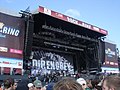 Rock am Ring 2006 stage, Dir en grey shown
 -
 Rock am Ring 2007 main stage, 30 Seconds to Mars
 -
 Panorama from the Alternative Stage in Rock Im Park 2008 festival
 -
 Panorama from the Zeppelin Field Main Stage during the Rock Im Park 2008 event
 -
 Rock am Ring 2013
 -
 Rock am Ring 2015
 -
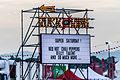 Rock am Ring 2016
 -
 Rock am Ring 2017
 -
 Rock am Ring 2017
 -
 Rock am Ring 2018
 -
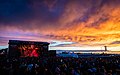 Rock am Ring 2019
 -
 Rock am Ring 2022


References
[edit]- ^ "Rock am Ring 2022". festicket.com. Retrieved 28 September 2022.
- ^ Robertson, Joel (17 November 2014). TOP 13: Rock and Metal Festivals in Europe festicket.com. Retrieved on 18 August 2015.
- ^ "Paragraph: Wie ist Rock am Ring entstanden?" [How did Rock am Ring emerged?]. Rheinische Post (in German). n.d. Archived from the original on 22 August 2024. Retrieved 10 November 2024.
See middle of page
- ^ a b Becker, Torben (6 June 2022). "'90.000 Menschen, das war mir dann doch zu viel'" ['90,000 people, that was too much for me']. Die Zeit (in German). Archived from the original on 10 June 2023. Retrieved 10 November 2024.
- ^ "Rock am Ring vor 25 Jahren: Marek Lieberberg erinnert sich" [Rock am Ring 25 years ago: Marek Lieberberg remembers]. Rolling Stone Germany (in German). 3 June 2010. Archived from the original on 21 August 2024. Retrieved 10 November 2024.
- ^ Renshaw, David (16 January 2014). "Arctic Monkeys and Daft Punk pick up European Festival Awards". NME. Archived from the original on 21 August 2024. Retrieved 10 November 2024.
- ^ Badenhop, Peter (30 May 2014). "Campino klettert, Pelham prügelt, Axl trödelt" [Campino climbs, Pelham brawls, Axl dawdles]. Frankfurter Allgemeine Zeitung (in German). Archived from the original on 10 November 2024. Retrieved 10 November 2024.
- ^ "Rock Festival as Human Experiment (dead link as of 2011-11-25)". blog.sciam.com. Archived from the original on 13 July 2007.
- ^ "Marek Lieberberg Konzertagentur GmbH & Co. KG Deutschland - www.mlk.com". Archived from the original on 15 July 2014. Retrieved 13 July 2014.
- ^ Wir sind der Ring! auf rock-am-ring.com
- ^ "Rock am Ring zurück zum Nürburgring". Archived from the original on 5 December 2016.
- ^ "History - Rock am Ring 2017". Rock am Ring.
- ^ "Live - Rock am Ring 2017". Rock am Ring.
- ^ "Live - Rock am Ring 2017". Rock am Ring.
- ^ "Live - Rock am Ring 2017". Rock am Ring.
- ^ "Live - Rock am Ring 2017". Rock am Ring.
- ^ "Live - Rock am Ring 2017". Rock am Ring.
- ^ "Live - Rock am Ring 2017". Rock am Ring.
- ^ a b "Live - Rock am Ring 2017". Rock am Ring.
- ^ "Finger Eleven official website". Archived from the original on 8 May 2008.
- ^ "Finger Eleven - Listen and Stream Free Music, Albums, New Releases, Photos, Videos". Myspace.
- ^ "Live - Rock im Park 2016". Rock-im-park.de. Retrieved 4 June 2016.
- ^ "Spielplan 2016 - Samstag - Rock am Ring 2016". Rock-am-ring.com. Retrieved 4 June 2016.
- ^ "Spielplan 2016 - Samstag - Rock im Park 2016". Rock-im-park.com. Retrieved 4 June 2016.
- ^ "Ring und Park 2014 mit vier Assen - Festival News - Rock am Ring 2014 - Offizielle Festival Homepage". Archived from the original on 29 November 2013. Retrieved 26 November 2013.
- ^ "Ring und Park motivieren die Fans - Festival News - Rock am Ring 2014 - Offizielle Festival Homepage". Archived from the original on 14 December 2013. Retrieved 12 December 2013.
- ^ "ROCK AM RING 2014".
- ^ a b "Lineup 2016 - Rock am Ring 2016". Rock-am-ring.com. Retrieved 4 June 2016.
- ^ "Festival "Rock am Ring" wird endgültig abgebrochen". Die Welt. 5 June 2016.
- ^ "History - Rock am Ring 2017". Rock am Ring.
- ^ Musikfestival "Rock am Ring" vorläufig unterbrochen., Sueddeutsche.de. 2 June 2017
- ^ Verkehrskontrolle führte zu "Rock am Ring"-Abbruch., faz.net, 6 June 2017
- ^ Jörg Diehl (7 June 2017). "Die Hintergründe zum Terroralarm bei Rock am Ring". Spiegel Online. Retrieved 7 June 2017.
- ^ 2018. Rock am Ring (official website). Retrieved 4 June 2018.
- ^ "History - Rock am Ring 2020". Rock am Ring.
- ^ Klancnik, Urban (10 December 2019). "How Rock Are You? The Best Festivals for Headbangers". Viberate. Retrieved 19 January 2020.
- ^ "Sold-out festivals Rock am Ring and Rock im Park cancelled due to the ban on major events until 31. August". Rock am Ring. 16 April 2020. Retrieved 16 April 2020.
- ^ "Ring & Park 2021 cancelled". Rock am Ring. 10 March 2021. Retrieved 8 April 2021.
- ^ "Rock in Park 2022". festicket.com. Retrieved 26 October 2022.
External links
[edit]
- Official Rock am Ring site
- Official Rock im Park site
- Ringrocker.com
- Parkrocker.net
- Rockpalast – Rock am Ring 2007
- Rock am Ring live sets audio files archive, Rockpalast broadcast
| International | |
|---|---|
| Other | |

Rock am Ring and Rock im Park
View on GrokipediaOverview
Festival Concept and Twin Format
Rock am Ring and Rock im Park are twin annual rock music festivals in Germany, emphasizing hard rock, heavy metal, punk, alternative, and related genres with lineups of international and domestic acts performing across multiple stages over three days.[1][9] The events occur simultaneously on the same weekend, typically in early June coinciding with the Pentecost holiday, enabling shared programming that draws a combined attendance of approximately 150,000 spectators.[10][11] This structure originated with Rock am Ring's founding in 1985 by promoter Marek Lieberberg at the Nürburgring racetrack in the Eifel region, where initial editions attracted tens of thousands during Whitsun weekends.[7][12] The twin format emerged to address capacity constraints at the Nürburgring, with Rock im Park established as a parallel event starting in 1993—initially as "Rock in Vienna" in Austria, relocating to Munich's Riem airport in 1994, and settling at Nuremberg's Zeppelinfeld by the late 1990s.[13][14] By 1998, the festivals formalized their synchronized operation, featuring nearly identical lineups where headliners and supporting acts perform at one site on alternating days (e.g., Saturday at Nürburgring, Sunday at Zeppelinfeld), allowing bands to cover both without additional tour dates while doubling overall access for fans separated by about 300 kilometers.[15][9] This model, managed under shared promotion, optimizes logistics for artists and infrastructure, transforming the events into Germany's largest rock gatherings and a benchmark for European festival scalability.[1][16] The concept prioritizes high-energy, multi-stage performances with capacities tailored to venue geography—Nürburgring's expansive grounds supporting large-scale camping and racing-circuit integration, contrasted with Zeppelinfeld's urban, rally-ground heritage for denser crowds.[17][18] Weather-dependent outdoor setups include beer pipelines and logistical enhancements for endurance, reflecting a focus on immersive fan experiences amid variable Eifel and Franconian climates.[15] Despite occasional disruptions like weather or security issues, the format's resilience stems from its dual-site redundancy, ensuring continuity even if one venue faces challenges.[16]Typical Schedule and Scale
Rock am Ring and Rock im Park operate as simultaneous three-day music festivals, typically spanning Friday through Sunday during the first full weekend of June, with concerts commencing around midday and extending into the early morning hours on subsequent days.[4][5] The programs feature synchronized lineups across both events, where most artists perform at one venue per day, allowing for shared headliners while minimizing travel logistics.[1] Camping access opens one or two days prior, extending the on-site presence to four or five days total for attendees.[4] Performances occur across multiple stages—often four or more—accommodating 70 to over 100 acts, ranging from emerging bands on secondary platforms to major headliners on the main stage during prime evening slots from approximately 8:00 PM to midnight.[14] Timetables divide acts by genre and popularity, with smaller stages hosting shorter sets of 30–45 minutes and larger ones enabling extended performances up to 90 minutes for top-billed artists.[19] In terms of scale, Rock am Ring draws 80,000 to 90,000 attendees per event, while Rock im Park attracts around 70,000, yielding a combined total exceeding 150,000 visitors annually across both sites.[20][11] These figures reflect sold-out capacities, supported by extensive infrastructure including temporary campsites for tens of thousands and logistical operations handling high-volume food, beverage, and merchandise services.[1]History
Origins of Rock am Ring (1985–1994)
Rock am Ring was founded in 1985 by German concert promoters Marek Lieberberg and Marcel Avram of MAMA Concerts as a one-time event to celebrate the inauguration of the Nürburgring's newly constructed Grand Prix circuit, a shorter version of the historic Nordschleife track designed for Formula One racing.[1][21][22] The debut festival occurred over two days, May 25–26, 1985, at the Nürburgring complex in Nürburg, Rhineland-Palatinate, featuring a lineup headlined by U2, Joe Cocker, and German rock artist Marius Müller-Westernhagen, alongside acts like REO Speedwagon, Foreigner, and Night Ranger.[23][24][14] Approximately 75,000 spectators attended, marking a significant turnout for the inaugural rock event at the motorsport venue and demonstrating strong demand for large-scale live music gatherings in post-reunification Germany.[23][25] Owing to the event's commercial and critical success, organizers abandoned the one-off concept, establishing it as an annual fixture starting in 1986, held from June 13–15 that year with performances by diverse rock and pop acts over multiple stages.[26][27] The festival's early iterations in the late 1980s emphasized international headliners, such as Eurythmics, UB40, and David Bowie in 1987, fostering its reputation as a key European rock destination amid a burgeoning global festival scene.[28] By the early 1990s, Rock am Ring had expanded its programming to blend established stars with emerging alternative and grunge influences, exemplified by the 1994 edition on May 20–22, which included Aerosmith, Peter Gabriel, The Smashing Pumpkins, Radiohead, and Bonnie Raitt, drawing sustained crowds and underscoring the event's evolution into a multi-day staple for rock fans.[29] This period laid the groundwork for the festival's logistical maturation, including improved site infrastructure to accommodate growing attendance without the era's frequent weather-related disruptions.[30]Introduction of Rock im Park and Early Parallel Events (1995–2004)
Rock im Park was established in 1995 as a companion festival to the longstanding Rock am Ring, enabling organizers to host simultaneous events with overlapping lineups to accommodate greater audience demand and secure higher-profile acts without logistical overlap.[1][31] This twin format, managed by promoters including Marcel Avram and Marek Lieberberg, marked the formal inception of Rock im Park within Germany's rock festival landscape, building on prior one-off iterations in Vienna (1993) and Munich-Riem (1994).[31] The inaugural edition occurred on June 3–4, 1995, at Munich's Olympiastadion, drawing setlists from acts including Bon Jovi, who performed as part of their Cross Road Tour.[32][33] The 1996 event repeated the Munich Olympiapark venue, maintaining the parallel scheduling with Rock am Ring to share booking efficiencies and amplify market reach across southern Germany.[13] By 1997, Rock im Park shifted to Nuremberg's Frankenstadion, establishing a more fixed southern counterpart to the Nürburgring-based Rock am Ring and fostering regional attendance splits that boosted combined capacities to over 100,000 across both sites in subsequent years.[13] This relocation supported consistent weekend alignments, with lineups often mirroring Rock am Ring's—featuring rock, alternative, and emerging metal acts—to minimize artist travel while maximizing exposure; for instance, 1997 headliners included established names akin to those at the northern event, though exact overlaps varied by booking availability.[1] Through the early 2000s, the parallel structure endured at Frankenstadion, weathering typical festival challenges like weather disruptions and lineup adjustments, while attendance stabilized and grew modestly amid Germany's post-reunification economic uptick.[1] In 2004, ongoing renovations at Frankenstadion prompted a venue pivot to Nuremberg's Zeppelinfeld, completing the festival's transition to its enduring site and enhancing infrastructure for larger crowds without interrupting the synchronized format with Rock am Ring.[13][34] This period solidified the twin events' role in European rock programming, prioritizing logistical synergy over identical experiences.Expansion, Commercial Growth, and Challenges (2005–2014)
During the mid-2000s, Rock am Ring and Rock im Park experienced significant expansion in scale and appeal, attracting larger audiences and more diverse lineups. By 2007, both festivals achieved their first advance sell-outs, with Rock am Ring drawing approximately 82,000 attendees and the combined events surpassing 150,000 visitors across sites.[28][35] This marked a shift from earlier years' capacities, reflecting growing international draw through headliners like Linkin Park, Metallica, and Foo Fighters, alongside expanded programming on multiple stages.[36] Commercial growth accelerated with these sell-outs, boosting ticket revenues and enabling investments in infrastructure, such as additional stages and improved logistics to handle peak crowds. The festivals' twin format amplified market reach, with promoters leveraging shared lineups to secure high-profile sponsorships and media partnerships, contributing to economic viability amid rising operational costs. By 2014, Rock am Ring extended to a four-day format, featuring headliners including Iron Maiden, Kings of Leon, Linkin Park, and Metallica, which sustained attendance near capacity levels of around 80,000-90,000 per event.[37] Challenges emerged from logistical strains and external pressures. Severe weather periodically disrupted operations, though no full cancellations occurred in this period; heavy rains in years like 2010 tested site management at the Nürburgring's variable terrain. A key legal hurdle arose in July 2014 when a German court ruled the "Rock am Ring" trademark unprotected, sparking disputes over naming rights and foreshadowing venue relocation pressures due to landowner negotiations.[38] These issues highlighted vulnerabilities in long-term site agreements and intellectual property, even as commercial momentum persisted.[39]Resilience Amid Disruptions and Modern Iterations (2015–Present)
In 2015, the Rock am Ring festival experienced lightning strikes that injured 33 attendees, primarily in camping areas, though the event proceeded without cancellation.[40][41] Similar weather risks affected the parallel Rock im Park, but both festivals maintained operations amid heightened safety protocols. The following year, 2016, saw escalated disruptions at Rock am Ring when lightning injured approximately 80 people, prompting the cancellation of the final day despite prior suspensions for storms.[42][43] Security concerns intensified in 2017, as Rock am Ring was evacuated on the opening Friday evening due to a concrete terrorist threat reported to authorities, affecting around 80,000 attendees just before a headliner performance.[44][45] The event resumed the next day after threat assessments cleared the site, with Rock im Park experiencing comparable precautionary measures but fewer reported interruptions. These incidents underscored vulnerabilities at large open-air gatherings, yet organizers implemented rapid evacuations and reopenings, demonstrating operational adaptability. The COVID-19 pandemic forced cancellations of both festivals in 2020 and 2021 due to German government bans on major events until at least August 31, 2020, extended into 2021 amid ongoing restrictions. This hiatus marked the first multi-year absence since the festivals' inception, impacting revenues and logistics, but promoters shifted to virtual announcements and deferred lineups for future editions. Both events returned in 2022, June 3–5, with headliners including Green Day, Muse, and Volbeat, attracting full capacities without major disruptions and signaling post-pandemic recovery.[46] Subsequent iterations in 2023 (June 2–4) and 2024 (June 7–9) sustained high attendance, featuring acts like Die Ärzte, Avenged Sevenfold, and Queens of the Stone Age at Rock am Ring, while maintaining synchronized programming with Rock im Park.[47] Enhanced weather monitoring, security integrations, and flexible ticketing have bolstered resilience, enabling annual continuity despite external pressures.[16]Venues and Infrastructure
Nürburgring for Rock am Ring
![Festivalgelände_-_Rock_am_Ring_2017-AL1779.jpg][float-right] The Nürburgring, a renowned motorsport complex located in Nürburg, Rhineland-Palatinate, Germany, serves as the primary venue for the Rock am Ring festival. Situated in the Eifel region, the site encompasses a 5.148-kilometer Grand Prix circuit and the 20.8-kilometer Nordschleife track, providing vast open spaces ideal for large-scale events. The festival has utilized this location annually since its inception in 1985, transforming the racetrack grounds into a temporary music festival hub with stages erected across infields and adjacent fields.[48][49] The venue's infrastructure adapts the existing track layout for festival purposes, featuring multiple stages such as the main Utopia Stage capable of accommodating up to 80,000 spectators, alongside secondary stages for diverse performances. Camping areas are integrated into the site, including specialized zones like Utopia Stage Camping adjacent to the main arena and rockAbility Camp for accessibility needs, with sites opening on the Wednesday prior to the event and closing the following Monday. These facilities support logistics for up to 90,000 attendees, with recent editions reporting record sell-outs of 90,000 weekend tickets.[50][51][52][3][53] Operational challenges at the Nürburgring include managing traffic congestion on access roads and potential severe weather, which has prompted safety evacuations and cancellations in past years due to thunderstorms or other hazards. The site's gravel and track surfaces provide stable ground for camping and stages, though heavy rainfall can exacerbate logistical issues. For the 2025 edition marking 40 years, enhancements included the largest stages in festival history and refreshed camping sites to handle peak capacities.[54][55][19]Zeppelinfeld for Rock im Park
The Zeppelinfeld in Nuremberg, Germany, has hosted Rock im Park annually since the festival's debut in 1997 as a counterpart to Rock am Ring.[6] [56] Originally developed in the 1930s as part of the Nazi Party rally grounds, the site encompasses a expansive open field measuring 312 by 285 meters, designed for mass gatherings and featuring a prominent grandstand known as the Zeppelin Tribune.[57] [58] This historical infrastructure has been adapted for contemporary music events, with the main stage erected directly on the Zeppelin Field to leverage its natural acoustics and capacity for large crowds.[13] Festival operations at Zeppelinfeld include multiple stages, such as the Utopia, Mandora, Orbit, and Atmos stages in recent editions, supporting diverse lineups across genres.[59] Accessibility provisions feature wheelchair-friendly viewing platforms at each stage area, ensuring unobstructed sightlines.[59] The venue's central urban position in Nuremberg enables efficient public transport access but constrains spatial expansion, resulting in a compact layout compared to rural festival sites.[59] Camping facilities are provided on adjacent grounds, accommodating attendees for the multi-day event.[60] Attendance figures for Rock im Park at Zeppelinfeld typically range from 70,000 to 90,000 over the three-day duration, with recent years approaching or reaching sell-outs of around 80,000 to 88,500 visitors.[61] [62] [63] The site's logistics emphasize crowd management in a confined area, including wave breakers at the main stage and facilities integrated with nearby urban infrastructure like the Max Morlock Stadium.[13]Stages, Camping, and Logistics
Both Rock am Ring and Rock im Park typically feature multiple stages to accommodate their shared lineups, with performances distributed across main and secondary venues to minimize overlaps. Recent editions, such as 2025, expanded to four stages including the Utopia Stage, Mandora, Orbit, and Atmos, allowing for simultaneous acts across genres like rock, metal, and alternative. The Main Stage at Rock im Park, located at Zeppelinfeld, hosts headliners with elevated viewing platforms for accessibility, while secondary stages like the Alternative Stage provide panoramic setups for mid-tier acts.[59] At Rock am Ring's Nürburgring site, stages are integrated into the racetrack infield, featuring three primary open-air platforms plus entertainment zones like food courts and a big wheel.[3] Camping is a core element for Rock am Ring, given its remote location, with areas opening Wednesday prior to the June weekend event and accommodating tens of thousands via general tent zones, caravan sites, and exclusive options like Utopia Stage Camping offering pre-assigned lots adjacent to the stage for up to two people.[51] Facilities include sanitary blocks, showers, and shuttles to the infield, with allowances for one 3m x 3m gazebo per group of 10 in tent areas and additional awnings in caravan zones; rockAbility Camping provides limited accessible spots with prior registration and assistant support.[64] [52] Rock im Park offers General Camping and eco-focused Green Camping tickets, including free Verkehrsverbund Großraum Nürnberg (VGN) public transport access, alongside rockAbility areas with staffed assistance points, though urban proximity reduces reliance on on-site camping compared to its twin festival.[65] [66] Logistics differ markedly by venue: Rock am Ring emphasizes self-sufficiency with parking lots operational from 12:00 PM to 5:00 AM daily, free Park & Ride shuttles from B412-area lots like Schwalbenschwanz, and city shuttles from hubs such as Cologne or Frankfurt for non-campers.[49] [67] Rock im Park leverages Nuremberg's infrastructure, recommending S-Bahn, streetcar lines 6 or 10 to Dutzendteich stop, or buses via VGN network—included free with certain camping tickets—for efficient access without extensive parking needs.[68] [69] Both festivals provide official apps for real-time updates on schedules, maps, and navigation between stages and camping zones.[70]Organization and Production
Promoters, Ownership, and Management
Rock am Ring was founded in 1985 by German promoter Marek Lieberberg through his company Marek Lieberberg Konzertagentur (MLK), which later rebranded as eventimpresents GmbH & Co. KG.[71] Rock im Park followed in 1993, also initiated by Lieberberg to parallel the Ring event in southern Germany.[72] Both festivals have since been integrated into the portfolio of CTS Eventim AG & Co. KGaA, Europe's largest ticketing and live entertainment group, which holds ownership stakes in key promoters including eventimpresents as a shareholder.[73] Current promotion of Rock am Ring is handled by eventimpresents GmbH & Co. KG, a CTS Eventim subsidiary managed by Geschäftsführer Matthias Schwarz, with operational support from PRK DreamHaus—a 2024 merger of PRK Peter Rieger Konzertagentur and DreamHaus, both under CTS Eventim influence.[71][73] Festival director Jana Posth oversees day-to-day execution for Rock am Ring through PRK DreamHaus.[1] In 2024, PRK DreamHaus partnered with FKP Scorpio for joint promotion of Rock am Ring and Rock im Park, enhancing production and artist booking amid post-pandemic recovery.[74] Rock im Park is promoted by ARGO Konzerte GmbH, an independent entity focused on large-scale events, with Geschäftsführer Dieter Semmelmann and Peter Koschmieder directing operations from Würzburg.[75][76] While ARGO maintains primary responsibility, the festival benefits from CTS Eventim's broader ecosystem for ticketing and logistics, reflecting shared infrastructure with Rock am Ring despite distinct promoter structures.[73] This dual-model allows regional specialization while leveraging Eventim's scale, with overall strategic oversight from CTS Eventim CEO Klaus-Peter Schulenberg.[77] Historical shifts, including Live Nation's 2015 acquisition of MLK (pre-rebranding), underscore promoter consolidations but do not alter current Eventim dominance.[78]Ticketing, Pricing, and Economic Model
Tickets for Rock am Ring and Rock im Park are distributed primarily through CTS Eventim's platform, eventim.de, with presales commencing several months prior to the events, often leading to rapid sell-outs of the approximately 90,000 capacity for each festival.[79][73] For instance, Rock am Ring 2026 achieved a record sell-out of 90,000 weekend tickets shortly after presales opened in June 2025.[53] Festival tickets grant access to all three days, while separate purchases are required for add-ons such as camping passes, VIP upgrades, and Fast Lane access for expedited entry.[69] Pricing for standard three-day festival tickets (excluding camping) has risen over time, reflecting inflation, production costs, and demand; Rock im Park 2010 presale tickets cost €150, while Rock am Ring 2024 weekend passes were €179 and Rock im Park camping-inclusive options €248.[80][81] Recent examples include Rock am Ring 2025 weekend tickets starting at €191.50 without camping, and Rock im Park 2026 presales at €258.[82][83] Rock im Park tickets command a premium, typically €50 or more above equivalent Rock am Ring options, attributable to its urban Nuremberg venue requiring separate accommodations versus the integrated camping at Nürburgring.[84] The economic model centers on ticket sales as the core revenue driver, managed by promoter PRK DreamHaus—a CTS Eventim subsidiary—with shared lineups and production efficiencies between the twin festivals reducing costs.[73][85] Supplementary income derives from premium add-ons, concessions, merchandise, and sponsorships, though promoter margins remain slim; historical data from founder Marek Lieberberg indicated around 7% net on €100 million gross revenues in the mid-2000s, underscoring reliance on volume and ancillary sales amid high artist and logistics expenses.[86] CTS Eventim's integrated ticketing and promotion structure captures fees across the chain, contributing to group revenues exceeding €1.3 billion in H1 2025, partly from such events.[87]Programming and Lineup Selection
The programming and lineup selection for Rock am Ring and Rock im Park are handled by the festivals' promoters, who curate bills centered on rock, metal, and alternative acts to align with the events' established focus on hard-edged music. Originally organized by promoter Marek Lieberberg starting in 1985 for Rock am Ring and later extended to Rock im Park, the selection process emphasizes securing high-demand international artists capable of drawing large crowds, with negotiations conducted through artist management and booking agencies to fit the early June timing.[7] Under current management by PRK DreamHaus and eventimpresents led by Matt Schwarz since Lieberberg's reduced involvement post-2022, lineups continue to prioritize commercial appeal and genre consistency, often featuring a mix of legacy acts and rising bands to sustain attendance amid competitive European festival circuits.[88][89] A defining feature of the programming is the near-identical lineups shared between the two festivals, enabling artists to perform on consecutive days—one at Nürburgring and the next at Zeppelinfeld—thereby optimizing logistics, reducing travel burdens, and distributing booking expenses across both events.[9] This twin-festival model, in place since Rock im Park's inception in 1993, allows promoters to book marquee headliners like Slipknot and Bring Me The Horizon for the 2025 edition, announced in phases starting with top acts in August 2024, followed by additional supports such as In Flames and Spiritbox in October.[90][91] Scheduling across multiple stages is then coordinated to balance set times, genre variety, and peak-hour draws, with timetables released closer to the event, as seen in the 2025 Sunday schedule covering doors at 12:00 and sunset at 21:39 across stages.[92] Promoters assess artist viability based on factors like recent album releases, tour momentum, and regional popularity data, evidenced by recurring bookings of acts with strong German market performance, such as Powerwolf or IDLES in 2025 supports.[18] While exact algorithmic or data-driven criteria remain proprietary, the approach favors empirical indicators of demand—such as prior festival sell-outs and streaming metrics—over speculative trends, ensuring lineups drive ticket sales exceeding 80,000 per site annually in peak years.[93] Adaptations for disruptions, like weather cancellations, have occasionally led to adjusted programming, but core selection retains a commitment to live rock performance reliability.[88]Musical Content and Evolution
Genres, Artists, and Headliners
Rock am Ring and Rock im Park primarily feature rock music genres, with a core focus on hard rock, heavy metal, alternative rock, and punk, alongside subgenres such as metalcore, nu-metal, and post-hardcore. Programming has evolved to incorporate electronic influences and occasional hip-hop or pop elements, maintaining a guitar-centric ethos while broadening appeal to contemporary audiences.[12][94][95] The festivals have hosted a diverse array of artists since their inception, emphasizing international rock and metal acts that draw large crowds. Early editions in the 1980s spotlighted classic rock performers, while the 1990s and 2000s shifted toward heavier and alternative sounds, including nu-metal and rap-rock hybrids. In recent years, lineups have balanced legacy bands with emerging genre-blenders, such as electro-rock outfits.[14][18] Headliners exemplify this range, with heavy metal stalwarts like Iron Maiden and Metallica anchoring multiple events, alongside nu-metal pioneers such as Linkin Park and Limp Bizkit. The 2026 edition announced Iron Maiden, Volbeat, and Linkin Park as top acts, underscoring the festivals' commitment to high-profile rock draws. Korn headlined in 2025, marking a nod to enduring nu-metal popularity, while past bills have included The Prodigy for electronic-rock fusion and Rise Against for punk-rock energy.[12][96][97]Notable Performances and Genre Shifts
The debut edition of Rock am Ring on May 25–26, 1985, featured headline performances by U2, Joe Cocker, Foreigner, and REO Speedwagon, drawing more than 75,000 attendees and setting a benchmark for large-scale rock events at the Nürburgring.[1][14] These acts exemplified the festival's early emphasis on arena rock and established performers, with similar lineups mirrored at the inaugural Rock im Park.[1] In the 1990s, performances by alternative rock bands such as Radiohead, who delivered their breakthrough hit "Creep" in 1994, and Faith No More with tracks like "Evidence" in 1995, marked a transition toward grunge-influenced and experimental sounds.[98] The 2000s brought high-impact nu-metal and hard rock sets, including Rage Against the Machine's politically charged 2000 appearance and Linkin Park's energetic 2001 and 2004 shows, which fans regard as peak live executions due to the bands' raw intensity.[99] Later highlights encompassed Metallica and Iron Maiden headlining the expanded four-day 2014 event, alongside Rammstein's elaborate pyrotechnic displays in 2010. Recent editions have spotlighted metalcore acts like Bring Me the Horizon's debut headline in 2025, blending aggressive riffs with electronic production.[100] Genre programming at both festivals originated in classic rock but shifted in the late 1990s and 2000s toward heavier subgenres like nu-metal and alternative, reflecting global music trends post-grunge.[100] By the 2010s, diversification accelerated to include punk, electro, and hybrid styles, as evidenced by The Prodigy's rave-infused sets since 2009 and electronic-metal fusions from acts like Electric Callboy and Poppy in recent years.[100][101] This evolution, shared across Rock am Ring and Rock im Park lineups, broadened appeal while maintaining a core rock foundation, incorporating pop-punk crossovers and kawaii-metal innovations without diluting intensity.[101][100]Shared Lineups and Regional Adaptations
The twin festivals of Rock am Ring and Rock im Park maintain largely identical lineups, with over 90 acts typically booked to perform at both events during the same three-day weekend in early June. This shared programming enables artists to deliver sets at the Nürburgring on one day—often Friday or Saturday—and at the Zeppelinfeld in Nuremberg on another, accommodating the roughly 300-kilometer distance between venues through staggered scheduling. Such coordination, established since the festivals' synchronization in the early 1990s, optimizes booking efficiency, reduces artist travel burdens, and maximizes promotional reach across Germany's rock audience, drawing a combined attendance exceeding 150,000.[102][9][103] Headliners and supporting acts, spanning hard rock, metal, punk, and alternative genres, are selected jointly by promoters to ensure parity, as evidenced by consistent billing for major draws like Slipknot, Bring Me the Horizon, and Korn across both sites in 2025. For example, in 2023, Pantera, Turnstile, and Iggy Pop topped bills at each festival, performing on alternating days to avoid direct overlap. This model has persisted through editions like 2024, where Avenged Sevenfold and Queens of the Stone Age served as exclusive European appearances for the paired events, underscoring the festivals' role as a unified platform rather than regionally divergent ones.[104][102][105] Regional adaptations remain minimal, with lineups deviating only in rare instances due to logistical constraints, artist availability, or targeted appeals to local demographics—such as southern Germany's urban rock enthusiasts at Rock im Park versus the Eifel region's motorsport-adjacent crowd at Rock am Ring. Sources indicate "very little difference" beyond scheduling and occasional exclusive acts, like select undercard performers skipping one site, preserving overall uniformity while allowing flexibility; no systematic genre or stylistic shifts based on locale have been documented. This approach prioritizes scalability over customization, contributing to the events' reputation as Germany's premier rock mega-festivals.[106][107]Attendance, Impact, and Economics
Historical Attendance Trends
Rock am Ring, inaugurated in 1985, drew 75,000 attendees in its debut year at the Nürburgring circuit.[1][108] Attendance subsequently declined amid economic and promotional challenges, reaching a low of 30,000 by 1988.[1] The festival's revival in the 1990s coincided with the launch of its sister event, Rock im Park, in 1993, fostering shared lineups and complementary markets that boosted overall draw.[14] By the 2000s, individual festivals stabilized at capacities exceeding 80,000, with combined attendance frequently surpassing 150,000 annually; for instance, over 100,000 visited Rock am Ring in 2000 alone.[48] The 2007 editions marked a milestone as both events sold out in advance for the first time, achieving combined figures above 150,000.[109] Growth peaked in 2016 when Rock am Ring reported a record 92,500 attendees.[110] Post-2020 disruptions from the COVID-19 pandemic led to temporary halts, but the 2022 resumption saw Rock am Ring at 90,000.[111] Recent years reflect resilience amid economic pressures, with 2023 figures at 80,000 for Rock am Ring and 70,000 for Rock im Park—slightly below pre-pandemic norms—before rebounding to 90,000 at Rock am Ring in 2025 for its 40th anniversary.[20][112] Combined attendance has trended toward 150,000–175,000 in peak years, underscoring the events' status as Germany's premier rock festivals despite occasional dips tied to lineup appeal, weather, or external events.[2][113]| Year | Rock am Ring | Rock im Park | Combined |
|---|---|---|---|
| 1985 | 75,000 | N/A | N/A |
| 1988 | 30,000 | N/A | N/A |
| 2000 | >100,000 | N/A | N/A |
| 2007 | ~75,000–80,000 (est.) | ~75,000 (est.) | >150,000 |
| 2012 | N/A | N/A | 170,000 |
| 2016 | 92,500 | N/A | N/A |
| 2022 | 90,000 | N/A | N/A |
| 2023 | 80,000 | 70,000 | 150,000 |
| 2025 | 90,000 | N/A | N/A |