Hubbry Logo
Valerian (emperor)Valerian (emperor)Main
Open search
Valerian (emperor)
Community hub
Valerian (emperor)
logo
8 pages, 0 posts
0 subscribers
Be the first to start a discussion here.
Valerian (emperor)
Valerian (emperor)
from Wikipedia

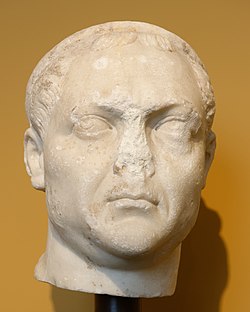
Valerian (/vəˈlɪəriən/ və-LEER-ee-ən; Latin: Publius Licinius Valerianus; c. 199 – 260 or 264) was Roman emperor from 253 to spring 260 AD. He rose to power during a particularly unstable period during the Crisis of the Third Century and appointed his son Gallienus as co-emperor.

Key Information

Valerian is known as the first Roman emperor to have been taken captive in battle, captured by the Persian emperor Shapur I after the Battle of Edessa, causing shock and instability throughout the Roman Empire. The unprecedented event and rumors of his humiliation at the hands of the Persian emperor generated a variety of different reactions and "new narratives about the Roman Empire in diverse contexts".[5]

Biography

[edit]

Origins and rise to power

[edit]

Unlike many of the would-be emperors and rebels who vied for imperial power during the Crisis of the Third Century, Valerian was of a noble and traditional senatorial family. Details of his early life are sparse, except for his marriage to Egnatia Mariniana, with whom he had two sons: Publius Licinius Egnatius Gallienus (his co-emperor and later successor) and Licinius Valerianus.[6] Valerian was consul for the first time either before AD 238 as a Suffectus or in 238 as an Ordinarius. In 238 he was princeps senatus, and Gordian I negotiated through him for senatorial acknowledgement for his claim as emperor. In 251 AD, when Decius revived the censorship with legislative and executive powers so extensive that it practically embraced the civil authority of the emperor, Valerian was chosen censor by the Senate,[7] though he declined to accept the post. During the reign of Decius he was left in charge of affairs in Rome, when that prince left for his ill-fated last campaign in Illyricum.[8] Under Trebonianus Gallus, Valerian was appointed dux of an army probably drawn from the garrisons of the German provinces, which seems to have been ultimately intended for use in a war against the Persians.[9]

However, when Trebonianus Gallus had to deal with the rebellion of Aemilianus in 253 AD, he turned to Valerian for assistance in crushing the attempted usurpation. Valerian headed south but was too late: Gallus was killed by his own troops, who joined Aemilianus before Valerian arrived. The Raetian soldiers then proclaimed Valerian emperor and continued their march towards Rome. Upon his arrival in September, Aemilianus's legions defected, killed him and proclaimed Valerian emperor. In Rome, the Senate quickly acknowledged Valerian.[10]

Radiate of Valerian

Rule and fall

[edit]
A bas relief of Emperor Valerian standing at the background and held captive by King of Kings Shapur I found at Naqsh-e Rustam, Shiraz, Iran. The kneeling man is probably Philip the Arab.[11][12][13]

Valerian's first act as emperor was to appoint his son Gallienus augustus, thus making him co-emperor. Early in his reign, affairs in Europe went from bad to worse, and the whole West fell into disorder. In the East, Antioch had fallen into the hands of a Sassanid vassal and Armenia was occupied by Shapur I (Sapor).[7] Valerian and Gallienus split the problems of the empire between them, with the son taking the West, and the father heading East to face the Persian threat.

In 254, 255, and 257, Valerian again became Consul Ordinarius. By 257, he had recovered Antioch and returned the province of Syria to Roman control. The following year, the Goths ravaged Asia Minor. In 259, Valerian moved on to Edessa, but an outbreak of plague killed a critical number of legionaries, weakening the Roman position, and the town was besieged by the Persians. In 260, probably in June,[10] Valerian was decisively defeated in the Battle of Edessa and held prisoner for the remainder of his life. Valerian's capture was a tremendous defeat for the Romans.[14]

Persecution of Christians

[edit]

While fighting the Persians, Valerian sent two letters to the Senate ordering that firm steps be taken against Christians. The first, sent in 257, commanded Christian clergy to perform sacrifices to the Roman gods or face banishment. The second, the following year, ordered the execution of Christian leaders. It also required Christian senators and equites to perform acts of worship to the Roman gods or lose their titles and property, and directed that they be executed if they continued to refuse. It also decreed that Roman matrons who would not apostatize should lose their property and be banished, and that civil servants and members of the Imperial household who would not worship the Roman gods should be reduced to slavery and sent to work on the Imperial estates.[15] This indicates that Christians were well-established at that time, some in very high positions.[16]

The execution of Saint Prudent at Narbonne is taken to have occurred in 257.[17] Prominent Christians executed in 258 included Pope Sixtus II (6 August), Saint Romanus Ostiarius (9 August) and Saint Lawrence (10 August). Others executed in 258 included the saints Denis in Paris, Pontius in Cimiez, Cyprian and others in Carthage and Eugenia in Rome. In 259 Saint Patroclus was executed at Troyes and Saint Fructuosus at Tarragona.[17] When Valerian's son Gallienus became emperor in 260, the decree was rescinded.[16]

Cameo of Shapur I capturing Valerian at the Battle of Edessa.

Death in captivity

[edit]

Eutropius, writing between 364 and 378 AD, stated that Valerian "was overthrown by Shapur king of Persia, and being soon after made prisoner, grew old in ignominious slavery among the Parthians."[18] An early Christian source, Lactantius (thought to be virulently anti-Persian due to the persecution of Christians by many Sasanian monarchs)[19] maintained that, for some time prior to his death, Valerian was subjected to the greatest insults and humiliation by his captors, like being used as a human footstool by Shapur when mounting his horse. According to this version of events, after a long period of such treatment, Valerian offered Shapur a huge ransom for his release.[7]

In reply (according to one version), Shapur was said to have forced Valerian to swallow molten gold (the other version of his death is almost the same but it says that Valerian was killed by being flayed alive) and then had Valerian skinned and his skin stuffed with straw and preserved as a trophy in the main Persian temple.[7] It was further alleged that it was only after a later Persian defeat against Rome that his skin was given a cremation and burial.[20] The captivity and death of Valerian has been frequently debated by historians without any definitive conclusion.[19]

The Humiliation of Emperor Valerian by Shapur I, pen and ink, Hans Holbein the Younger, ca. 1521. Kunstmuseum Basel.

According to the modern scholar Touraj Daryaee, contrary to the account of Lactantius, Shapur I sent Valerian and some of his army to the city of Bishapur or Gundishapur where they lived in relatively good conditions.[19] Shapur used the remaining soldiers in engineering and development plans. Band-e Kaisar (Caesar's dam) is one of the remnants of Roman engineering located near the ancient city of Susa.[21] In all the stone carvings on Naghshe-Rostam, in Iran, Valerian is represented holding hands with Shapur I, a sign of submission. According to the early Persian Muslim scholar Abu Hanifa Dinawari, Shapur settled the prisoners of war in Gundishapur and released Valerian, as promised, after the construction of Band-e Kaisar.[22]

It has been alleged that the account of Lactantius is coloured by his desire to establish that persecutors of the Christians died fitting deaths;[23] the story was repeated then and later by authors in the Roman Near East fiercely hostile to Persia.[24]

The joint rule of Valerian and Gallienus was threatened several times by usurpers. Nevertheless, Gallienus held the throne until his own assassination in 268 AD.[25]

Family

[edit]
  • Gallienus
  • Licinius Valerianus was another son of Valerian I. Consul in 265, he was probably killed by usurpers, some time between the capture of his father in 260 and the assassination of his brother Gallienus in 268.
Aulus Egnatius Priscillianus
philosopher
Quintus Egnatius Proculus
consul suffectus
Lucius Egnatius Victor
Egnatius Victor Marinianus
consul suffectus
1.Mariniana
Valerian
Emperor
253-260
2.Cornelia Gallonia
previous
Aemilianus
Emperor
253

(1) Gallienus
Emperor
253-268
Cornelia Salonina
(2) Licinius Valerianus
consul suffectus
Claudius Gothicus
Emperor
268-270
Quintillus
co-emperor
270
Aurelian
Emperor
270-275
Ulpia Severina
Valerian II
caesar
Saloninus
co-emperor
Marinianus
consul 268

In literature and the arts

[edit]

Valerian appears in Joseph of Anchieta’s 1587 play Auto de São Lourenço as one of the main characters. In Act III, Valerian is killed for being responsible for the persecution and killing of Saint Lawrence, in the year 258 AD. Valerian also appears in Anthony Hecht's poem "Behold the Lilies of the Field" in the collection The Hard Hours, and in Harry Sidebottom's historical fiction series of novels Warrior of Rome.

See also

[edit]

References

[edit]

Sources

[edit]

Primary sources

[edit]

Secondary sources

[edit]
[edit]
Revisions and contributorsEdit on WikipediaRead on Wikipedia
from Grokipedia

Publius Licinius Valerianus (c. 200 – after 260), commonly known as Valerian, was a who reigned from 253 to 260, jointly with his son Publius Licinius Egnatius to address the empire's mounting crises. Born into a senatorial family shortly before 200, Valerian ascended amid the anarchy of the third-century crisis, proclaimed emperor by troops in and after the murder of and in 253. He divided imperial duties geographically, focusing on the eastern threats from the Sassanid while Gallienus managed the western fronts against Germanic incursions. Valerian's policies included edicts in 257 and 258 targeting —first clergy for forced or punishment, then expanding to elite lay with executions or —to enforce traditional Roman religious practices and secure divine favor amid defeats. His rule culminated in catastrophe at the in 260, where he was captured through treachery by the Persian king , becoming the only reigning taken alive by a foreign foe. Valerian died in Persian captivity, with later accounts alleging severe humiliation such as use as a or skinning for display, though primary evidence like Shapur's rock reliefs confirms his subjugation and the empire's temporary loss of and .

Early Life and Senatorial Career

Origins and Family

Publius Licinius Valerianus, commonly known as Valerian, was born around 195–200 AD into a prominent senatorial family of Roman nobility. His lineage traced back to the ancient Licinii gens, with possible roots in , reflecting the enduring influence of that region's aristocratic traditions in Roman politics. Little is documented about his precise birthplace or early upbringing, but his family's established status enabled a trajectory through the equestrian and senatorial orders typical of Rome's elite during the Severan era. Valerian's marriage to Egnatia Mariniana produced at least two sons: Publius Licinius Egnatius Gallienus, who later co-ruled as emperor from 253 to 268 AD, and Publius Licinius Valerianus Minor (also called Candidus), appointed Caesar but who died young around 256 AD. The family maintained traditional Roman values, evidenced by Valerian's own extensive career in the and military administration prior to his imperial proclamation, underscoring the Licinii's adherence to republican-era norms amid the empire's growing . No surviving records detail siblings or extended kin beyond speculative mentions of a brother, emphasizing the focus on patrilineal succession in Valerian's immediate line.

Rise in Roman Politics

Publius Licinius Valerianus, originating from a prominent senatorial family in , pursued the traditional , advancing through military and administrative roles that culminated in his attainment of the consulship. As a high-ranking officer, he likely commanded a legion early in his career, establishing his credentials within the Roman elite during the . In 230 AD, Valerian served as under Severus Alexander, a position that affirmed his status among the senatorial amid the empire's internal stability before the crises of the mid-century. His political ascent accelerated during the in 238 AD, when he aligned with the Gordians against the usurper ; Valerian actively supported the rebellion by reading Gordian's letters to the , positioning himself as a defender of senatorial interests against military . This involvement, potentially among a group of up to 20 consulars organizing Italy's defense, enhanced his reputation as a reliable figure in turbulent times. Under Emperor (r. 249–251 AD), Valerian managed imperial administration during Decius's campaigns on the frontier, advising the young co-emperor and suppressing the rebellion of Julius Valens Licinianus in 250 AD, which demonstrated his administrative competence and loyalty to the regime. Following Decius's death, under (r. 251–253 AD), Valerian held the revived office of censor—a with extensive legislative and executive powers—and commanded forces along the , tasked with maintaining border security amid Gothic threats. In 253 AD, as Gallus faced usurpation by Aemilian, Valerian led legions from and against the rebels; arriving after Gallus's defeat, his troops proclaimed him emperor, leveraging his senatorial prestige and military command to legitimize his succession. The subsequently ratified his elevation, marking the culmination of his decades-long rise through political and martial service.

Ascension to the Throne

Crisis of the Third Century Prelude

The assassination of Emperor on 19 March 235 AD by mutinous troops of Legio XXII Primigenia during a campaign against the near Mogontiacum (modern ) initiated a period of acute political and military turmoil known as the . Soldiers, frustrated by Alexander's cautious strategy, reliance on advisors, and avoidance of direct combat, proclaimed the rough-hewn cavalry commander as emperor, ushering in an era dominated by "barracks emperors" elevated by legionary acclamation rather than senatorial consensus or dynastic continuity. Maximinus' reign (235–238 AD) emphasized relentless frontier warfare against Germanic tribes, including successful campaigns in and along the , but his heavy taxation to fund these efforts and the Praetorian Guard's privileges sparked widespread resentment. In 238 AD, a tax revolt in led to the proclamation of and his son as emperors by local authorities; their rapid deaths in battle against loyalist forces prompted the Senate to elevate and , who were soon murdered by the Praetorians in favor of the youthful . Gordian III's rule (238–244 AD) saw restoration of stability through victories over the Sassanid Persians under , but his suspicious death during a renewed eastern campaign—possibly at the hands of his Philip—enabled Philip the Arab's usurpation in 244 AD. Philip (244–249 AD) negotiated a costly with Shapur, celebrated Rome's in 248 AD with lavish games, yet faced internal revolts and was defeated and killed by near in September 249 AD. Decius (249–251 AD), a staunch traditionalist, sought to unify the empire through enforced sacrifices to Roman gods, reversing prior religious tolerance, but perished alongside his son Herennius at the on 25 June 251 AD against Gothic invaders led by , marking the first emperor's death in battle against barbarians. His successor, (251–253 AD), inherited a ravaged empire plagued by the Cyprian Plague—which killed millions and decimated legions—and renewed invasions, including Gothic raids in the and Persian incursions under that sacked Antioch in 252 AD. Gallus' failed campaigns, of the currency exacerbating (with the silver content dropping below 5% by 253 AD), and inability to pay troops eroded loyalty. In spring 253 AD, the governor of Superior, Marcus Aemilius , defeated invading and , prompting his legions to proclaim him emperor; he advanced into Italy, where Gallus and his son were assassinated by their own soldiers near Interamna on August 253 AD. Aemilian's brief reign collapsed within three months as troops, fearing retribution from approaching rivals, murdered him near . Concurrently, Publius Licinius Valerianus, an elderly senator and experienced commander holding consular authority over , Norican, and Pannonian provinces, had mobilized forces against Marcomannic incursions along the . Upon learning of Gallus' downfall and Aemilian's usurpation, Valerian's legions proclaimed him emperor around May 253 AD in Rhaetia, reflecting the military's preference for a figure of senatorial gravitas amid of 18 emperors (legitimate and usurpers) in 18 years, compounded by secessions like the short-lived under in 260 AD (foreshadowed by regional autonomies). This prelude of civil strife, barbarian penetrations to Italy's gates, fiscal collapse, and plague underscored the empire's fragmentation, positioning Valerian's accession as an attempt to restore Augustan discipline through shared rule with his son and senatorial collaboration.

Proclamation and Consolidation of Power

In the chaotic summer of 253 AD, amid the Crisis of the Third Century, Emperor Trebonianus Gallus faced rebellion after legions in Moesia proclaimed Marcus Aemilius Aemilianus emperor following his victory over Gothic invaders. Gallus and his son Volusianus were assassinated by their own troops en route to confront the usurper, creating a power vacuum. Valerian, a seasoned senator and commander stationed in Rhaetia along the Danube frontier, was promptly acclaimed emperor by the legions loyal to him, marking the typical military acclamation that characterized imperial successions of the era. Valerian rapidly mobilized his forces and marched on to secure his claim against . Before the armies could engage, Aemilianus was murdered by his own mutinous soldiers in 253 AD, who anticipated defeat and preferred to align with the incoming victor rather than risk annihilation. This swift elimination of opposition allowed Valerian to enter Rome without battle, where the Senate, favoring a member of their own class over the low-born Aemilianus, formally ratified his emperorship and bestowed the traditional titles of and . To consolidate authority across the sprawling and unstable empire, Valerian immediately associated his adult son, Publius Licinius Egnatius , in power by elevating him first to Caesar and then to co-Augustus by late 253 AD. This dyarchic arrangement divided administrative responsibilities: was tasked with defending the western provinces against Germanic incursions and managing internal affairs, while Valerian prepared to address Sassanid Persian threats in the East. Such co-rule, unprecedented in scale since the time of and , reflected pragmatic recognition of the empire's overextension and the need for parallel leadership to maintain control amid barbarian invasions, civil strife, and fiscal strain. Valerian's senatorial background and prior consular experience under lent legitimacy to his rule, aiding in stabilizing loyalty among the elite. He also initiated purges of suspected Gallus sympathizers in the administration and to eliminate potential rivals, though no major revolts materialized in the immediate aftermath. By early 254 AD, coinage from and provincial mints bore the joint portraits of Valerian and , symbolizing unified imperial authority and facilitating smoother tax collection and troop payments essential for consolidation.

Reign (253–260 AD)

Co-Emperorship with Gallienus

Valerian, acclaimed emperor by his troops in during late summer 253 AD after the assassination of Aemilian, marched to where the ratified his authority and acclaimed him . To secure dynastic succession amid of the Third Century's instability, he elevated his adult son, Publius Licinius Egnatius —a experienced commander—to co- in autumn 253 AD, granting him equal imperial powers and the title of . This dyarchy aimed to divide administrative and burdens, with joint coinage and edicts issued under both names to symbolize unity. The co-emperors implemented a geographical division of responsibilities to counter multifaceted threats: Valerian oversaw the eastern provinces, including senatorial administration from initially, before relocating to Antioch to address Sassanid Persian aggression under ; managed the western frontiers, basing operations along the , , and in , such as at , to repel Germanic incursions by tribes including the Alamanni, , and . This separation allowed concurrent campaigns—Valerian stabilizing Syria by recapturing Antioch circa 257 AD after Persian raids, while repelled an Alamanni invasion near around 254–255 AD and reinforced the against Gothic seafaring attacks. Such coordination, though logistically strained by poor communications, prevented total collapse despite empire-wide invasions and economic pressures like currency debasement. Gallienus introduced key military innovations during this period, including the creation of a professional central cavalry ala (comitatus) around 258 AD, drawn from diverse recruits and stationed near Milan, to provide mobile reserves independent of legions. He also excluded senators from legionary commands, favoring equestrian protectores for field roles, which shifted military leadership toward professional soldiers and reduced senatorial influence—a pragmatic response to frequent betrayals but criticized in later senatorial sources like the Historia Augusta for eroding traditional hierarchies. Valerian, conversely, emphasized senatorial restoration through appointments and edicts reinforcing traditional Roman values, including joint decrees on fiscal reforms to combat inflation via stabilized silver antoniniani coinage. Usurpations challenged their joint authority, notably in the provinces: quelled revolts by Ingenuus in (260 AD) and Regalianus in Illyricum (260 AD), both leveraging eastern distractions, while frontier governors like began asserting autonomy in by 260 AD. Despite these strains, the co-emperorship maintained nominal unity through shared titulature—both holding consulships in 254 AD and tribunician power annually—and mutual recognition on inscriptions, such as a 253–254 AD letter from both to affirming civic privileges. Primary accounts, including Zosimus and the Scriptores Historiae Augustae, portray this era as one of defensive resilience rather than expansion, with the dyad's survival hinging on 's western victories offsetting Valerian's eastern commitments.

Western Military Campaigns

Upon ascending to the co-emperorship in 253 AD, Valerian delegated responsibility for defending the western provinces to his son Gallienus, who focused on countering incursions by Germanic tribes along the Rhine and Danube frontiers. The Alemanni, Franks, and other groups had exploited troop withdrawals during the civil wars preceding Valerian's rise, crossing the Rhine in 253–254 AD to ravage Gaul and threaten Italia. Gallienus established his headquarters at Colonia Agrippina (modern Cologne), fortified the city, and conducted offensive campaigns from 254 to 258 AD, recapturing frontier forts and repelling invaders to stabilize the limes Germanicus. In 258 AD, a major Frankish incursion penetrated deep into Gaul, reaching as far as southern Hispania and destroying Tarraco, but Gallienus' forces defeated them, preventing further consolidation of gains. Concurrently, the Alemanni bypassed Raetia and invaded northern Italia via the Alps, besieging Mediolanum (Milan); Gallienus rapidly redeployed, crushing their army in the Battle of Mediolanum in 259 AD through superior cavalry tactics, with the invaders suffering heavy casualties. He followed this with another victory over Germanic remnants, possibly Juthungi, near Augusta Vindelicorum (Augsburg) in early 260 AD. These engagements marked Gallienus' innovation of a professional mobile , emphasizing (cataphracts and ) over traditional legions, which proved effective against barbarian mobility but strained provincial garrisons. Despite tactical successes, the campaigns failed to restore pre-crisis territorial control, such as the , as ongoing pressures from repeated invasions eroded Roman resources and morale in the west. The instability culminated in the Gallic Empire's secession under in 260 AD, following Valerian's eastern defeat.

Eastern Wars against the Sassanids

Shapur I of the Sassanid Empire exploited Roman instability during the Crisis of the Third Century to launch aggressive invasions into Mesopotamia and Syria beginning around 252 AD, defeating a Roman field army of approximately 60,000 at Barbalissos and sacking the key city of Antioch. Valerian, proclaimed emperor in 253 AD amid these threats, prioritized the eastern front by dividing imperial responsibilities with his son Gallienus and personally leading reinforcements to the region, aiming to stabilize the frontier and reclaim lost territories. Valerian's initial campaigns from 254 to 256 AD focused on defensive operations and limited counterattacks, recapturing strategic points like Nisibis after Shapur's forces withdrew temporarily due to internal Sassanid matters. By 257 AD, Valerian achieved a notable success by driving Sassanid forces from Antioch and restoring Roman control over parts of , though these gains were precarious amid ongoing Gothic pressures in the west and plague outbreaks decimating legions. Shapur, undeterred, renewed offensives in 258–259 AD, overrunning and advancing into , prompting Valerian to assemble a large expeditionary force of around 70,000 troops for a decisive push eastward. The protracted conflict highlighted Sassanid military advantages in and mobility, as detailed in Shapur's own Divi Saporis inscription at , which boasts of capturing numerous Roman cities including Carrhae and , alongside thousands of troops and officials. Valerian's strategy emphasized direct confrontation to halt Persian expansion, but logistical strains, disease, and Sassanid tactical superiority—particularly in exploiting Roman overextension—undermined Roman efforts, setting the stage for the climactic engagement near in 260 AD. These wars marked a low point in Roman eastern , with Shapur claiming dominion over 17 lands west of Persia, though Roman resilience persisted through provincial allies like of who later repelled Sassanid raids.

Administrative and Fiscal Reforms

Upon his proclamation as emperor in 253 AD, Valerian established a co-emperorship with his son , dividing imperial administration geographically to address the empire's overstretched resources during the Crisis of the Third Century. Valerian retained oversight of the eastern provinces, focusing on threats from the Sassanid Empire, while managed the western regions, including , Illyricum, and the frontier. This pragmatic division aimed to enable concurrent military responses to invasions on multiple fronts, marking an early attempt at decentralized command amid civil unrest and barbarian incursions. As a member of the , Valerian emphasized restoring senatorial influence in governance, ratifying his own elevation through approval and appointing senators to prominent roles, contrasting with the equestrian dominance under prior military emperors. However, persistent external pressures, including Gothic raids and Persian advances, constrained broader bureaucratic restructuring, with administrative efforts prioritizing over institutional overhaul. Fiscal policies under Valerian continued the third-century trend of currency debasement to finance escalating military costs, with the silver coin reduced to approximately 50% purity by 257 AD, reflecting the empire's strained revenues from disrupted and taxation. No comprehensive tax reforms or monetary stabilization measures are attested specifically to his initiative; instead, ad hoc levies and requisitions sustained campaigns, exacerbating and economic fragmentation already evident at his accession. These expedients provided short-term solvency but failed to reverse the systemic fiscal decay driven by overtaxation and debasement inherited from predecessors like .

Religious and Cultural Policies

Valerian's religious policies focused on revitalizing the traditional Roman pantheon and state cults to restore divine favor amid the empire's military and economic crises, viewing lapsed as a primary cause of recent calamities. He drew on precedents from Emperor (r. 249–251 AD), who had mandated universal sacrifices, but adapted this to emphasize enforcement of public rituals, including animal sacrifices and , essential for securing the pax deorum. These measures, initiated around 257 AD via letters to provincial governors and the , required officials and elites to participate in or oversee offerings to gods like and Mars, with non-compliance leading to property confiscation or exile. The policy reflected a broader senatorial traditionalism, aiming to counteract perceived moral and spiritual decay from prior reigns' tolerance of foreign cults and Christian abstention from civic rites. Valerian, as a conservative aristocrat, prioritized the authority of priestly colleges and Etruscan-derived practices, though specific restorations like expanded haruspical consultations lack direct epigraphic evidence from his era. This approach contrasted with Gallienus's later , positioning Valerian's efforts as a last gasp of pre-crisis religious before the empire's deepening fragmentation. Culturally, Valerian reinforced elite Roman norms by elevating senatorial privileges diminished under military emperors, including exemptions from certain taxes and restored access to priesthoods, to foster loyalty among the traditional . His administration decried innovations like equestrian dominance in , seeking instead a return to —ancestral customs emphasizing discipline, hierarchy, and Latin literary heritage—though wartime exigencies limited patronage of or monumental projects. No major cultural reforms are attested, with resources directed toward stabilization rather than intellectual or architectural endeavors.

Persecution of Christians

Edicts of 257 and 258

In 257, Emperor Valerian issued the first targeting Christian leaders, mandating that bishops, presbyters, and deacons perform sacrifices to Roman gods, participate in Roman religious rites, and abstain from Christian assemblies; failure to comply resulted in , deprivation of clerical status, and of property. This measure, conveyed through rescripts to provincial governors, aimed to dismantle church hierarchy and leadership without immediate widespread executions, reflecting a policy of rather than mass extermination. The edict's contents are preserved indirectly through contemporary Christian accounts, such as those of , who describes it as requiring outward conformity to Roman religion under threat of banishment, and of , whose letters reference the imperial orders disrupting clerical functions. Enforcement began promptly, leading to the exile of figures like to Curubis in and in , though some sources note initial leniency in application outside major centers. A second edict followed in 258, escalating penalties: persistent faced , while Christian senators and equestrians were ordered to or forfeit rank and property, matrons to comply or lose possessions and suffer , and imperial officials or palace staff to conform or face enslavement in manual labor. 's to Successus details the attachment of these directives to for provincial officials, confirming their dissemination and the inclusion of death for non-compliant bishops and priests. This phase marked a shift toward lethal , as evidenced by executions including on September 14, 258, in , where he was beheaded after refusing to . The edicts' specificity to clergy and elites in the first instance, broadening in the second, underscores a strategic intent to sever Christian institutional influence amid setbacks, as noted in analyses of Valerian's religious policy linking to efforts at restoring imperial stability through traditional cultic loyalty. No original imperial documents survive, but ecclesiastical records from and provide consistent attestation, corroborated by later historians like , indicating the edicts' limited but targeted scope compared to prior or subsequent persecutions.

Implementation and Key Executions

The edicts of 257 and 258 were disseminated through imperial rescripts to provincial governors and the , mandating enforcement against Christian and , with penalties escalating from and property confiscation to for non-compliance. Implementation varied by region but prioritized high-ranking church officials, as governors were instructed to compel sacrifices to Roman gods or impose severe sanctions; in practice, this led to targeted arrests rather than widespread mass executions, reflecting Valerian's aim to dismantle Christian leadership structures amid military crises. In , enforcement was swift: on August 6, 258, was arrested while presiding over a in the and beheaded along with four , fulfilling the edict's directive for execution of senior . Three days later, on August 10, 258, Lawrence, custodian of church treasures, was grilled to death on a gridiron after defying orders to surrender assets to the state, reportedly quipping that his charred body represented the poor fed by the church. In , Bishop of was initially exiled in 257 for refusing to sacrifice but recalled for trial; on September 14, 258, proconsul Galerius Maximus sentenced him to death by beheading, which was carried out immediately amid public viewing, with Cyprian himself guiding the executioner's hand. These executions of prominent figures like Sixtus II, Lawrence, and Cyprian exemplified the edicts' focus on decapitating Christian hierarchies, though broader enforcement waned after Valerian's capture in 260, limiting the persecution's scope.

Motivations and Roman Religious Context

Valerian's , enacted through edicts in 257 and 258 AD, occurred amid the broader , a period marked by incessant barbarian invasions, civil wars, economic collapse, and the , which decimated populations and military forces. In Roman religious worldview, such calamities were interpreted as signs of ira deorum (wrath of the gods), stemming from a failure to maintain the pax deorum (peace with the gods) through state-sponsored sacrifices, rituals, and adherence to traditional . Emperors, as and guarantors of divine favor essential for imperial stability and military victory, prioritized restoring these practices to avert further disaster. Valerian, a conservative senator elevated to the in 253 AD during acute instability, viewed Christianity's exclusive and refusal to participate in civic as a direct threat to this religious equilibrium. ' abstention from emperor worship and public rites was perceived not merely as private deviance but as a form of (impietas) that undermined the collective harmony required for Rome's survival, particularly as Valerian prepared for campaigns against the Sassanid Persians and Gothic incursions. The edicts specifically targeted Christian assemblies, clergy, and access to cemeteries—key elements of Christian practice—while demanding from high-ranking officials, reflecting a policy to compel conformity and eliminate perceived sources of divine disfavor. This approach aligned with precedents like Decius's edict of 250 AD, which similarly enforced universal sacrifice to unify the religiously during , but Valerian's measures escalated in severity, possibly influenced by senatorial traditionalists or oracular consultations emphasizing pagan revival. Unlike local persecutions, Valerian's actions represented a systematic imperial initiative to reassert Roman religious , prioritizing empirical restoration of ancestral cults over tolerance, as Christianity's growth—estimated at 5-10% of the 's by mid-century—posed an ideological challenge to state cohesion without overt political rebellion. The policy's abrupt initiation after four years of relative peace under Valerian underscores a causal link to mounting external pressures, where religious fidelity was deemed prerequisite to martial success.

Capture, Captivity, and Death

Battle of Edessa (260 AD)

The Battle of Edessa unfolded in early 260 AD near the Mesopotamian city of Edessa (modern Şanlıurfa, Turkey), pitting Roman forces under Emperor Valerian against the Sasanian army commanded by King Shapur I. Valerian had mobilized an eastern field army to halt Shapur's invasions, which had already sacked key cities like Antioch and Dura-Europos following earlier victories, including the destruction of a 60,000-strong Roman force at Barbalissos in 253 AD. The Roman expedition aimed to reclaim lost territories amid the empire's broader Crisis of the Third Century, marked by internal rebellions, plagues, and barbarian incursions. Precise army sizes remain uncertain due to the scarcity of contemporary , but scholarly estimates place the Roman force at approximately 50,000 to 70,000 troops, comprising legions, , and possibly Germanic contingents, though weakened by recent losses and logistical strains. Shapur's Sasanian host, leveraging superior mobility, likely outnumbered the Romans with a core of heavy supported by light horse archers and , honed from prior campaigns that demonstrated tactical advantages over rigid Roman formations. Primary Sasanian evidence, such as Shapur's trilingual Divi Saporis inscription at , boasts of overwhelming the Roman without detailing troop numbers, emphasizing instead the capture of high-ranking prisoners including Valerian himself, his , and numerous senators and officers. The engagement likely began with Roman attempts at negotiation or maneuvering near Carrhae and , where Valerian's forces sought to relieve pressure on besieged positions. Sasanian charges exploited terrain and Roman vulnerabilities, shattering lines and inducing panic; some accounts suggest betrayal or failed contributed to the collapse, with Valerian captured alive during the rout—a unprecedented humiliation for a reigning . Roman sources, such as the Christian apologist in De Mortibus Persecutorum, describe the defeat but embellish with propagandistic details of personal degradation, reflecting bias against the persecutor of rather than tactical analysis; these claims of immediate enslavement contrast with Shapur's inscription, which prioritizes to for labor on infrastructure like bridges and dams. Casualties were severe for Rome, with estimates of around 10,000 to 30,000 dead or dispersed, and the bulk of the army either slaughtered or enslaved, enabling Shapur's subsequent ravages into before internal pressures forced withdrawal.

Surrender and Immediate Aftermath

Following the Roman defeat at the in June 260 AD, Emperor Valerian sought a parley with , leading a delegation to the Sasanian camp near Carrhae to negotiate terms. During this meeting, Shapur seized Valerian personally, along with his staff, including the and several senators. Shapur's own inscription, the Res Gestae Divi Saporis at , records that he captured Valerian "with his own hands," emphasizing the emperor's submission as a trophy of Sasanian victory. The immediate capture extended to numerous high-ranking Roman officials, including regional governors (satraps), legates, and commanders (duces), as enumerated in Shapur's trilingual inscription, which lists seven governors, four consular legates, and others subdued in the engagement. The remnants of the , suffering approximately 10,000 casualties, largely surrendered or retreated to , where they were compelled to yield due to the loss of leadership. Shapur exploited the disarray to advance further into Roman territory, sacking cities such as Caesarea in and deporting tens of thousands of inhabitants for labor in Persia. In the short term, Valerian's seizure triggered panic across the eastern provinces, with fragmented Roman forces under figures like Macrianus and mounting disorganized counter-raids against Sasanian raiders in , though Shapur repelled these efforts. The emperor's captivity symbolized a profound humiliation for , as Shapur paraded the bound Valerian in public displays of dominance, though accounts of specific degradations like using him as a mounting block derive from later Roman sources and lack corroboration in Persian records. This event facilitated Shapur's consolidation of gains, including the annexation of and , while the western empire under grappled with the news amid ongoing crises.

Accounts of Fate in Captivity

The primary accounts of Emperor Valerian's fate following his capture by at the in 260 AD derive from late Roman and Byzantine authors, with Persian sources offering only indirect evidence through inscriptions and rock reliefs. , in De Mortibus Persecutorum (composed circa 314–315 AD), provides the most graphic depiction, alleging that Shapur compelled Valerian to serve as a human footstool whenever mounting his horse, and upon the emperor's death—attributed to deliberate degradation—ordered him flayed alive, his skin stuffed with straw, and displayed in a Persian temple as a . This narrative, however, stems from a Christian polemicist whose work systematically vilifies Roman persecutors of the faith, including Valerian for his edicts against Christians; its reliability is undermined by evident propagandistic intent and lack of corroboration from contemporary or neutral observers. Contrasting reports appear in other Greco-Roman historians. Eutropius, writing in the 4th century AD, asserts that Valerian endured "ignominious captivity" until his death, after which Shapur released the emperor's body to Roman envoys for burial, implying a less barbaric treatment without ritual humiliation or postmortem desecration. Zosimus, a 5th-century Byzantine historian, similarly records Valerian's demise in confinement without specifying cause or indignities, focusing instead on the strategic implications of his prolonged absence. Eastern Christian chronicles, such as the Chronicle of Seert, echo elements of execution in captivity but add no verifiable details beyond vague references to Persian cruelty. Sassanid evidence, including Shapur's Res Gestae Divi Saporis inscription at and reliefs at , commemorates the capture of Valerian alive alongside senators and troops but omits any account of his death or treatment, consistent with royal emphasizing victory over degradation. No precise date for Valerian's death survives, though estimates place it between late 260 AD and 264 AD, likely from illness or age-related decline given his advanced years (over 60 at capture); Shapur's incentives as a —using Valerian as a diplomatic asset against —render summary or extreme improbable absent empirical support. Modern scholarship dismisses ' extremes as rhetorical amplification, privileging the consensus of natural death in honorable confinement over unverified atrocity tales, though the emperor's prolonged captivity inflicted undeniable psychological and political harm on Roman prestige.

Succession and Family Dynamics

Role of Gallienus

Publius Licinius Egnatius , born around 218 AD as the eldest son of Valerian, was elevated directly to the rank of Augustus and co-emperor in 253 AD following his father's proclamation as emperor after the defeat of . This designation, bypassing the traditional intermediate step of Caesar, reflected Valerian's intent to secure dynastic succession amid the empire's instability and to divide governance geographically, assigning Gallienus responsibility for the western provinces while Valerian focused on the east. The arrangement underscored a pragmatic family dynamic, leveraging Gallienus's military experience—he had commanded legions under his father since at least the 240s—to maintain control over key regions like , , and Italia from bases such as . Valerian and shared a second son, the younger Valerian, who was designated Caesar around 256 AD to further entrench the Licinian dynasty but died shortly thereafter, circa 257-258 AD, possibly from illness or during campaigns. himself married Cornelia Salonina, producing at least three sons: Valerian II (named Caesar in 256 AD but deceased by 258 AD), Publius Cornelius Valerianus (elevated to Caesar and later in 258 AD), and possibly Marinianus ( in 268 AD). These elevations mirrored Valerian's strategy of associating family members in power to deter usurpations, though underlying tensions emerged by 258 AD, as developed independent policies, including a distinct reorganization emphasizing units, and occasional divergences from his father's religious edicts, such as a more tolerant stance toward after 260 AD. Following Valerian's capture by the Sasanian king at the in June 260 AD (or late 259 AD per some accounts), assumed sole imperial authority without challenge from other relatives or pretenders invoking Valerian's name, effectively continuing the dynasty as its head. He did not pursue ransom or public acknowledgment of his father's captivity, prioritizing empire-wide stabilization against immediate threats like the usurpation of in (who killed 's son in 260 AD) and eastern revolts by the Macriani family. This transition highlighted 's role as the pre-designated successor, enabling him to suppress multiple usurpers—such as Ingenuus in 260 AD and Regalianus shortly after—while delegating commands to loyal generals like Aureolus, though the fragmentation of peripheral provinces (e.g., , parts of ) persisted under his rule until his assassination in 268 AD. The absence of intra-family rivalry post-capture, combined with 's continuation of coinage initially featuring both emperors before shifting to solo iconography, affirmed his consolidation of the Licinian line amid the Crisis of the Third Century.

Other Relatives and Imperial Lineage

Valerian's wife, Egnatia Mariniana, bore him at least one son, , and died around the time of his accession in 253 AD, as indicated by commemorative coins issued posthumously with the inscription DIVAE MARINIANAE. These issues, featuring types such as Concordia Seated or Pietas Sacrificing, confirm her status as Augusta only after deification, suggesting her death preceded or coincided with Valerian's elevation. Evidence for additional immediate relatives is sparse and contested. Certain late sources propose a second son, Valerianus Minor (also called Valerian the Younger), in 265 AD and put to death circa 268 AD amid usurpations, potentially from a second to Cornelia Gallonia; however, this relies on fragmentary epigraphic and numismatic hints without corroboration from contemporary historians like Zosimus or Zonaras, leading modern scholars to view it as uncertain or possibly conflated with ' lineage. Through , Valerian's imperial lineage extended briefly to two grandsons elevated as Caesars: Publius Licinius Cornelius Valerianus (Valerian II), born circa 253 AD and killed in 258 AD following the usurpation of Ingenuus in ; and Publius Licinius Cornelius Saloninus, appointed Caesar in circa 258 AD and executed in 260 AD after the revolt of at Colonia Agrippina. Neither produced heirs, and the direct Licinii Valeriani line ended with Gallienus' assassination in 268 AD, yielding no further claimants. Valerian himself descended from an ancient senatorial gens Licinia rooted in , with a career marked by consular offices under (c. 231–232 AD), but no traceable ties to prior imperial houses, marking his rise as merit-based amid the of the Third Century rather than dynastic. This patrician background, evidenced by inscriptions and his pre-imperial roles as urban prefect and , underscored the era's shift toward experienced administrators over hereditary rulers.

Historiography

Primary Sources and Their Limitations

The principal primary sources documenting Emperor Valerian's capture derive from Sasanian Persian records, particularly the inscriptions and rock reliefs commissioned by Shapur I shortly after the events of 260 AD. Shapur's trilingual Res Gestae Divi Saporis (ŠKZ) at the Ka'ba-ye Zartosht near Naqsh-e Rostam explicitly states: "Caesar Valerian and the great part of his army we brought to Persia in chains; and we made the Roman Empire a vassal state of Persia." This inscription, carved around 262 AD in Middle Persian, Parthian, and Greek, lists captured Roman personnel including senators and equestrians, confirming the scale of the defeat at Edessa. Complementing the text, a contemporaneous relief at Naqsh-e Rostam portrays Shapur mounted on horseback, with Valerian depicted kneeling and grasping the king's hand or stirrup in submission, alongside the prostrate Philip the Arab from an earlier campaign. These artifacts, executed within two years of the battle, provide the most immediate eyewitness-level testimony but function as royal propaganda, designed to glorify Sasanian conquests and deter rivals through visual assertions of dominance. Roman primary evidence is markedly sparse, with no surviving contemporary narratives from Valerian's administration or dispatches, attributable to the administrative chaos of the third-century crisis and the deliberate suppression of humiliating records. The earliest Latin allusions appear in mid-to-late fourth-century epitomes: Aurelius Victor's De Caesaribus (c. 361 AD) notes Valerian's defeat and captivity by the Persians without elaboration on his fate, while Eutropius' Breviarium (c. 369 AD) similarly records the capture at , emphasizing it as a unprecedented imperial disgrace. These abbreviated accounts, drawn from lost third-century historians like Dexippus or the Enmann's Kaisergeschichte, prioritize moral lessons over detail, reflecting senatorial biases that attributed Rome's misfortunes to moral decay rather than strategic failures. More vivid but polemical details emerge in Christian texts, such as ' De Mortibus Persecutorum (c. 315 AD), which alleges Shapur flayed Valerian alive, stuffed his skin with straw, and displayed it as a trophy—claims unsubstantiated by Persian records and likely amplified to underscore against persecutors of . These sources exhibit inherent limitations that complicate historical reconstruction. Persian materials, while proximate and material in nature, embody victor-centric bias, omitting Roman perspectives and potentially inflating the extent of subjugation to legitimize Shapur's rule amid internal Sasanian challenges. Roman accounts, compiled decades or centuries later by authors with ideological agendas—pagan epitomators minimizing embarrassment, exploiting it for —suffer from , , and selective omission, with no corroboration from archaeological finds like Valerian's remains or . The absence of neutral third-party validations, such as Armenian or Palmyrene records, exacerbates discrepancies; for instance, later Byzantine historians like Zosimus (c. 500 AD) counter by claiming honorable treatment and negotiated death, highlighting how transmission through intermediaries introduced interpretive layers. Numismatic evidence, with Valerian's coinage ceasing abruptly post-260 AD, indirectly affirms captivity but yields no narrative insight. Collectively, these constraints necessitate cross-verification against archaeological data, underscoring the event's reliance on propagandistic artifacts over dispassionate reportage.

Modern Scholarly Debates

![Naqsh-e Rustam relief showing Shapur I victorious over Valerian][float-right] Modern scholars debate the extent of Valerian's humiliation in captivity, contrasting lurid Roman and Christian accounts with Sasanian evidence. While sources like Lactantius describe Valerian being used as a footstool, flayed after death, and his skin displayed as a trophy, these narratives are viewed as propagandistic exaggerations by Christian authors seeking to portray the emperor's fall as divine punishment for persecuting the Church. In contrast, Shapur I's Res Gestae Divi Saporis inscription boasts of the capture without detailing degradation, emphasizing military triumph over personal torment. The rock reliefs at Naqsh-e Rustam provide key visual evidence, depicting Valerian standing erect beside mounted , extending his hand in a interpreted by scholars as or respectful submission rather than abject defeat. This portrayal aligns with Sasanian royal , where defeated foes are shown subjugated but not caricatured as humiliated, suggesting Valerian received treatment befitting a captured to facilitate potential or , though none was ultimately paid by . Historians like Touraj Daryaee argue that Valerian was likely held in reasonable conditions, possibly contributing to engineering projects in Persia, countering tales of routine abuse as incompatible with Sasanian diplomatic pragmatism. Debates persist on the precise circumstances of Valerian's death around 264 CE, with no contemporary Roman records confirming the timing or cause amid the Crisis of the Third Century's chaos. Some scholars posit natural death from age or illness during captivity, supported by later accounts like those of Syncellus indicating his body was eventually returned to after a Persian defeat, avoiding the need for ongoing . Others caution that the absence of corroboration for extreme tortures underscores the unreliability of late-antique sources, prioritizing archaeological and epigraphic data over anecdotal to reconstruct a less sensational fate.

Legacy

Short-Term Imperial Impacts

![Rock relief at Naqsh-e Rostam depicting Shapur I's victory over Valerian][float-right] The capture of Emperor Valerian by at the in June 260 AD inflicted severe territorial and prestige losses on the in the eastern provinces. Shapur's forces defeated a estimated at 70,000 men, capturing not only Valerian but also numerous high-ranking officials, senators, and praetorian prefects, while sacking Antioch and seizing control of 36 cities across , , , , and . This humiliation symbolized Roman vulnerability, eroding imperial authority and emboldening further Sassanid incursions into , though advances were later checked. Gallienus, previously co-emperor, assumed sole rule from bases in the western provinces, rescinding his father's anti-Christian edicts amid ongoing crises and focusing on stabilizing the core territories. However, the power vacuum triggered immediate fragmentation: in the west, Marcus Cassianius Latinius proclaimed the in 260 AD, seceding with , , and under his control, establishing a rival administration that endured until 274 AD. In the east, initial anarchy gave way to the rise of of , who, acting under ' nominal authority, launched counteroffensives against the Persians by 261–263 AD, reclaiming and Antioch. Usurpations proliferated across the empire, exploiting the crisis: on the , Ingenuus and Regalianus rebelled shortly after 260; in the east, the Macriani family (Macrianus Major, his sons, and ) seized power with military support but were defeated by 262 AD; saw Valens and Piso's brief revolt in 261, while witnessed Mussius ' uprising, suppressed by March 262. countered these with mobile field armies, defeating most rebels within two years, yet the proliferation underscored the empire's decentralized instability and reliance on equestrian officers over traditional senatorial elites. These events accelerated the Crisis of the Third Century, with the empire effectively dividing into three administrative spheres—central Roman under , the , and the emergent Palmyrene sphere—fostering autonomous military commands but preventing total collapse through Gallienus' adaptive reforms.

Long-Term Assessments and Controversies

The capture of Valerian by the Sasanian king in June 260 AD during the represented an unprecedented humiliation for the , marking the first time a reigning was taken alive by a foreign power. This event is widely assessed by historians as severely damaging Roman prestige and military morale, contributing to the broader instability of the Crisis of the Third Century by signaling vulnerability to external foes. The psychological impact persisted, emboldening Persian expansionism and barbarian tribes along the frontiers, as the empire struggled with simultaneous invasions and usurpations. Long-term evaluations of Valerian's rule emphasize his administrative innovations, such as co-opting his son to divide imperial responsibilities between East and West, which temporarily stabilized the and fronts through delegated commands. However, his personal oversight of the eastern campaign is criticized for strategic miscalculations, including inadequate preparation against Sasanian forces and reliance on untested alliances, leading to the annihilation of a large estimated at 70,000 men. Scholars like those in analyses of third-century argue that while structural economic and military decay predated his accession, Valerian's failure to adapt to the Persian threat exemplified senatorial conservatism ill-suited to the era's demands. Controversies surrounding Valerian's legacy center on the balance between personal failings and systemic challenges, with some modern debates questioning whether ancient sources, biased toward later emperors, unduly vilified him as emblematic of decline. His of 257 AD mandating Christian registration and is viewed as a pragmatic but ultimately counterproductive effort to reinforce traditional Roman amid perceived threats to social cohesion, exacerbating internal divisions without resolving fiscal or military woes. While primary accounts like those from portray him as weak and superstitious, reassessments highlight his prior senatorial career's emphasis on legal reforms, suggesting a capable administrator undermined by overextension rather than inherent incompetence. These debates underscore the tension in between viewing Valerian as a for imperial fragility and a whose eastern debacle accelerated long-term fragmentation.

Representations in Art and Culture

The most prominent ancient representation of Valerian appears in Sasanian commissioned by , particularly at near , carved circa 260 AD following the . In this relief, is shown mounted on horseback, grasping Valerian's raised right hand in a interpreted as capture or , while a kneeling figure—likely —begs at the horse's feet, symbolizing Roman submission rather than extreme degradation. A similar scene adorns a relief at , emphasizing Shapur's victory over Roman forces. These carvings, executed in the Sasanian royal style, served propagandistic purposes to glorify Persian imperial dominance. A Sasanian sardonyx cameo, dated to the third century AD, further depicts capturing Valerian, portraying the emperor in a submissive posture akin to the rock reliefs, underscoring the event's significance in Persian artistic commemoration of the 260 AD triumph. In later Western , Valerian's capture inspired depictions amplifying humiliation, often drawing from Christian sources like that portrayed his fate as for persecuting the Church. Hans Holbein the Younger's 1521 ink and watercolor drawing The Humiliation of the Emperor Valerian by the Persian King Sapor illustrates Shapur using Valerian as a to mount his , a motif rooted in medieval legends rather than verified historical accounts. Similar Flemish works from the Antwerp school, circa 16th century, reiterate this theme, reflecting European fascination with imperial downfall as moral allegory. These representations contrast with Persian sources by emphasizing degradation over diplomatic submission, influenced by biases in late antique historiography.

References

Add your contribution
Related Hubs
User Avatar
No comments yet.