Hubbry Logo
National Museum of ScotlandNational Museum of ScotlandMain
Open search
National Museum of Scotland
Community hub
National Museum of Scotland
logo
8 pages, 0 posts
0 subscribers
Be the first to start a discussion here.
National Museum of Scotland
from Wikipedia

Natural Sciences department, the room opened in 1866 with natural history collections transferred from the adjacent University of Edinburgh.

Key Information

The National Museum of Scotland (Scottish Gaelic: Taigh-tasgaidh Nàiseanta na h-Alba) in Edinburgh, Scotland, is a museum of Scottish history and culture.

It was formed in 2006 with the merger of the new Museum of Scotland, with collections relating to Scottish antiquities, culture and history, and the adjacent Royal Scottish Museum (opened in 1866 as the Edinburgh Museum of Science and Art, renamed in 1904, and for the period between 1985 and the merger named the Royal Museum of Scotland or simply the Royal Museum), with international collections covering science and technology, natural history, and world cultures.[1][2][3][4] The two connected buildings stand beside each other on Chambers Street, by the junction with the George IV Bridge, in central Edinburgh. The museum is part of National Museums Scotland and admission is free.[5]

The two buildings retain distinctive characters: the Museum of Scotland is housed in a modern building opened in 1998, while the former Royal Museum building was begun in 1861 and partially opened in 1866, with a Victorian Venetian Renaissance façade and a grand central hall of cast iron construction that rises the full height of the building, designed by Francis Fowke and Robert Matheson. This building underwent a major refurbishment and reopened on 29 July 2011 after a three-year, £47 million project to restore and extend the building led by Gareth Hoskins Architects along with the concurrent redesign of the exhibitions by Ralph Appelbaum Associates.[6]

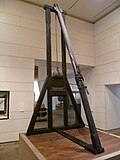
The National Museum incorporates the collections of the former National Museum of Antiquities of Scotland. As well as the national collections of Scottish archaeological finds and medieval objects, the museum contains artefacts from around the world, encompassing geology, archaeology, natural history, science, technology, art, and world cultures. The sixteen new galleries reopened in 2011 include 8,000 objects, 80% of which were not previously on display.[7] One of the more notable exhibits is the stuffed body of Dolly the sheep, the first successful cloning of a mammal from an adult cell. Other highlights include Ancient Egyptian exhibitions, one of Sir Elton John's extravagant suits, the Jean Muir Collection of costume and a large kinetic sculpture named the Millennium Clock. A Scottish invention that is a perennial favourite with children visiting as part of school trips[citation needed] is the Scottish Maiden, an early beheading machine predating the French guillotine.

In 2019, the museum received 2,210,024 visitors, making it Scotland's most popular visitor attraction that year.[8]

History

[edit]

Royal Museum of the University

[edit]

In 1697 Robert Sibbald presented the University of Edinburgh College of Medicine with a natural history collection he had put together with his friend Andrew Balfour, who had recently died. The wide range of specimens was put on permanent display in the university, as one of the first museums in the UK. Daniel Defoe, in A Tour thro' the Whole Island of Great Britain published in 1737, called it "a fine Musæum, or Chamber of Rarities, which are worth seeing, and which, in some things, is not to be match'd in Europe". Later editions of the book said it had rarities not to be found in the Royal Society or the Ashmolean Museum. In 1767 the museum became the responsibility of the first Regius Professor of natural history, Robert Ramsey, then in 1779 his successor John Walker recorded that he had found the collection was in poor condition.[9][10]

The Regius Professorship, and the museum, was taken over in 1804 by Robert Jameson, a mineralogist whose course covered zoology and geology, who built it up "not a private department of the university but as a public department connected in some degree with the country of Scotland". In 1812 it was renamed the "Royal Museum of the University". An enormous number of specimens were acquired, by buying from other collections and by encouraging travellers abroad to collect and preserve their finds. Packages were delivered duty-free, and half of the specimens collected by Royal Navy survey ships went to the museum (the other half going to the British Museum in London). Jameson's natural history course held practical classes three times a week in "the great museum he had collected for illustrating his teaching", including description of exhibits and identification of mineral specimens. With support from the University Authorities, Edinburgh Town Council and the Commissioners for the College Buildings, a new museum was built in 1820 as part of new university buildings (the museum is now occupied by the Talbot Rice Gallery, its main features still in place).[11][12] The taxidermist John Edmonstone undertook work for the museum, and in 1826 gave private lessons to Charles Darwin,[13] who later studied in the museum and befriended its curator, the ornithologist William MacGillivray.[12][14]

The collections, noted as "second only to those of the British Museum", overfilled the available space. In 1852 Jameson suggested proposals, which were put forward by the university Senatus, that the natural history collections be taken over by the government to form a new National Museum adjacent to the university, and integrated into it.[11][15] Jameson was seriously ill during this time, and died on 19 April 1854, shortly after the negotiated agreement was formalised.[16]

Chambers Street Museum

[edit]

For a few years after the museum first opened, its frontage looked on to a narrow lane. In the 1870s this lane was widened in forming Chambers Street.[17][18] Over the following century, though there were official names, it became popularly known as the "Chambers Street Museum".[19][20]

Industrial Museum of Scotland

[edit]

The site for building, bought earlier to ensure unobstructed light to the university buildings, had been occupied by two properties west of Jameson's museum; an Independent Chapel with seats for 1,000 fronting West College Street, and the Trades' Maiden Hospital girls' school beside Argyle Square. The grounds of these buildings were bounded on the north by a narrow lane connecting North College Street to the square, and on the south by the Flodden Wall.[15][17]

Industrial Museum (Scotland) Act 1860
Act of Parliament
Long titleAn Act to confer Powers on the Commissioners of Her Majesty's Works and Public Buildings to acquire certain Property in Edinburgh, for the Erection of an Industrial Museum for Scotland.
Citation23 & 24 Vict. c. 117
Territorial extent Scotland
Dates
Royal assent28 August 1860
Text of statute as originally enacted

In 1854, the government chose to transfer the university's collection into an enlarged natural history museum combined with a new institution educating the public about commerce and industrial arts. It established the Industrial Museum of Scotland under the direction of the Board of Trade's Science and Art Department in London, and approved purchase of the site. The brief was to emulate The Museum of Practical Geology of "London, but embracing, in addition, the economic products of the animal and vegetable kingdoms". The general director of the museum would be responsible to the Board. The university's Regius Professor of natural history continued as Keeper of its collection, with access to specimens to illustrate lectures, and also reported directly to the Board. In 1855 George Wilson was appointed as the museum's first director, he pressed ahead with preparations while the Board of Works organised designs, but died in 1859.[21][22][23] Thomas Croxen Archer was appointed director on 10 May 1860, and the Industrial Museum (Scotland) Act 1860 was passed on 28 August.[24][25] Design work was carried out by Captain Francis Fowke, Engineer and Artist of the Science and Art Department, and architect Robert Matheson of the Office of Works in Edinburgh. Contract documents were signed in May 1861, and construction began. In ceremonies on 23 October 1861, Prince Albert laid the foundation stone of the General Post Office on Waterloo Place, then the foundation stone of the museum. This was his last public appearance before his death six weeks later.[26]

Edinburgh Museum of Science and Art

[edit]

The institution became the Edinburgh Museum of Science and Art in 1864,[27][28] with two divisions; Natural History, and Industrial Arts. The natural history collection was transferred from the university in 1865–1866. Prince Alfred formally opened the first phase on 19 May 1866,[21][29] with public access to the east wing and about a third of the Great Hall (now the Grand Gallery). A temporary wall formed the west gable of this space, displays in it included models and machinery of architecture, military and civil engineering, including lighthouses. A small hall (now Living Lands) accommodated manufactures. The natural history collection took up the large hall in the east wing (now Animal World),[29][30] a corridor link to the university formed a "Bridge of Sighs" over West College Street. On the western half of the site, "old buildings" which had formed Argyll Square were in temporary use for agricultural and educational exhibits.[29][31]

Corridor connecting the museum to the university

George Allman became Regius Professor and Keeper of the natural history collection in 1855. Issues developed over access to specimens for teaching, particularly when some were lost, and he apparently neglected curation. Wyville Thomson took over in 1870, and the Board of Trade redefined duties, but curation was not his priority. For a reception in the Spring of 1871, the museum stored refreshments in the "Bridge of Sighs" corridor, but students found this and no drinks were left for the Edinburgh worthies, so a door restricted access from the university. Wyville Thomson went on the Challenger expedition for four years.[32][22][31] The museum severed ties with the university in 1873, and appointed Ramsay Traquair as its Keeper of the Natural History Collections.[33][34] The bridge was closed (at some time later it was reopened and for a while prior to the museum's temporary closure during World War II it provided limited access between the museum and University).[35] The university had lost use of the museum specimens, so started a replacement teaching collection in its old museum space.[36] This became intolerably cramped, eventually James Hartley Ashworth raised funds and a new teaching laboratory and museum was opened in 1929 at the King's Buildings campus.[37]

In 1871 work began on widening the street to the north of the university and museum to form Chambers Street, linked to George IV Bridge.[18] The central section of the Museum of Science and Art building, including the rest of the Great Hall, was completed in 1874 and formally opened to the public on 14 January 1875. The west wing was completed in 1888, rooms were opened to the public when they were fitted out, until the last one opened on 14 October 1890.[38][39]

Royal Scottish Museum

[edit]
Percy Pilcher's Hawk glider, restored after his fatal crash of 1899, and on display in the Royal Scottish Museum from 1909.[40]

Administration of the museum was transferred in 1901 from the Science and Art Department to the Scottish Education Department, and in 1904 the institution was renamed the Royal Scottish Museum.[41][42]

Electricity was introduced, replacing the original gas lighting, and powering the first interactive displays in the museum: push-button working models, starting with a marine steam engine and a sectioned steam locomotive.[43][30][44] During the period 1871-1911 much of the day-to-day running of the museum was undertaken not by the director, but by the curator.[45]

The Royal Scottish Museum has displayed practical joke exhibits on April Fool's Day on at least one occasion. In 1975, a fictitious bird called the Bare-fronted Hoodwink (known for its innate ability to fly away from observers before they could accurately identify it) was put on display. The exhibit included blurred photographs of birds flying away. To make the exhibit more convincing, a mount of the pretend bird was sewn together by a taxidermist from various scraps of real birds, including the head of a carrion crow, the body of a plover, and the feet of an unknown waterfowl. The bare front was composed of wax.[46]

Royal Museum of Scotland

[edit]

In 1985 the museum was renamed the Royal Museum of Scotland, and its administration came under the newly formed National Museums Scotland, along with the Museum of Antiquities which in 1998 moved to a new building constructed as an extension to the Royal Museum at the west end of Chambers Street.[47]

National Museum of Antiquities of Scotland

[edit]

The Society of Antiquaries of Scotland was founded in 1780. It still continues, but in 1858 its collection of archaeological and other finds was transferred to the government as the National Museum of Antiquities of Scotland, and from 1891 it occupied half of a new building in Queen Street in the New Town, with its entrance hall shared with the Scottish National Portrait Gallery which occupied the other half.[48]

Museum of Scotland

[edit]

The organisational merger of the National Museum of Antiquities of Scotland and the Royal Scottish Museum took place in 1985, but the two collections retained separate buildings until 1995 when the Queen Street building closed, to reopen later occupied solely by the Scottish National Portrait Gallery. In 1998 the new Museum of Scotland building opened, adjacent to the Royal Museum of Scotland building, and connected to it. The masterplan to redevelop the Victorian building and further integrate the architecture and collections was launched in 2004. The split naming caused confusion to visitors, and in 2006 permission was granted to remove "Royal" to achieve a unified brand.[43]

Merger – present day

[edit]

On 2006 the two museums were formally merged as the National Museum of Scotland. The naming had been changed for practical reasons, including strategy and marketing.[43] The old Chambers Street Museum building closed for redevelopment in 2008, before reopening in July 2011.[7][49]

Staff at the museum took several days of strike action at points during 2015 and 2016, called by the Public and Commercial Services Union.[50][51][52]

In August 2023, the museum began preparing for the return of the Ni'isjoohl totem pole to the Nisga'a people of British Columbia, Canada. The 36 feet (11 m) pole was carved in 1855, and arrived in Scotland in 1929 after being stolen from the Nisga'a. It was sold to the museum by Canadian anthropologist Marius Barbeau.[53]

Architecture

[edit]
The Grand Gallery of the former Chambers Street Museum building on reopening day, 29 July 2011

Royal Scottish Museum building

[edit]

Construction was started in 1861 and proceeded in phases, the eastern sections opened in 1866 before others had even begun construction. The full extent of the original design was completed in 1888.[43] It was designed by civil engineer Captain Francis Fowke of the Royal Engineers, Engineer and Artist of the Science and Art Department in London who was also responsible for the Royal Albert Hall, and architect Robert Matheson of the Office of Works in Edinburgh.[26] The exterior, designed in a Venetian Renaissance style, contrasts sharply with the light-flooded main hall or Grand Gallery, inspired by The Crystal Palace.[54]

Numerous extensions at the rear of the building, particularly in the 1930s, extended the museum greatly. 1998 saw the opening of the Museum of Scotland (now the Scottish History and Archaeology department), linked internally to the main building. The major redevelopment completed in 2011 by Gareth Hoskins Architects uses former storage areas to form a vaulted Entrance Hall of 1,400 m2 (15,000 sq ft) at street level with visitor facilities. This involved lowering the floor level by 1.2 metres (4 ft). Despite being a Class A listed building, it was possible to add lifts and escalators. The accessible entrance is at the corner tower of the Scottish History and Archaeology building.[7]

Museum of Scotland (Scottish History and Archaeology) building

[edit]

The building is designed by Benson & Forsyth. Made up of geometric, Corbusian forms, it has numerous references to Scotland, such as brochs and castellated defensive architecture.[55][56] It is clad in golden Moray sandstone,[55][56] which one of its architects, Gordon Benson, has called "the oldest exhibit in the building", a reference to Scottish geology. There is a roof garden with Scottish species and panoramic views of the city. The building was a 1999 Stirling Prize nominee.[55][57]

Collections

[edit]

The galleries in the newer building present Scottish history in an essentially chronological arrangement, beginning at the lowest level with prehistory to the early medieval period, with later periods on the higher levels. The Victorian building, as reopened in 2011, contains four zones (each with numerous galleries), covering natural history, world cultures (including galleries on the South Pacific, East Asia, and Ancient Egypt), European art and design, and science & technology. The Grand Gallery contains a variety of large objects from the collections, with a display called the "Window on the World" rising through four storeys, or about 20 metres (66 ft), containing over 800 objects reflecting the breadth of the collections. Beyond the Grand Gallery at ground level is the "Discoveries" gallery, with objects connected to "remarkable Scots ... in the fields of invention, exploration and adventure".[58] Notable artifacts include:

[edit]

References

[edit]
[edit]
Revisions and contributorsEdit on WikipediaRead on Wikipedia
from Grokipedia
The National Museum of Scotland is the primary public museum operated by National Museums Scotland, situated on Chambers Street in central , and it maintains extensive collections documenting Scottish , history, and culture as well as global artifacts spanning world cultures, natural sciences, , , , and . Its origins trace to the 1780 founding of the , whose collections formed the National Museum of Antiquities in 1851, and the 1854 establishment of the Industrial Museum of Scotland, which evolved into the Royal Scottish Museum by 1904 after opening its main building in 1866. In 1985, the National Museum of Antiquities merged with the Royal Scottish Museum to create National Museums Scotland, followed by the 1998 opening of the adjacent Museum of Scotland; a comprehensive unified these structures under the current name in 2011, enhancing display spaces and accessibility. Housing over 12 million objects and specimens, the draws more than 2.3 million visitors each year, making it Scotland's most-visited free attraction, with standout exhibits including Dolly the sheep—the first cloned from an —and ancient treasures such as Pictish brooches and the . The institution's Victorian-era architecture, designed by Captain Francis Fowke and Robert Rowand Anderson, features the iconic Grand Gallery, while ongoing expansions, such as the 2019 completion of new galleries on and , continue to broaden its interpretive scope.

History

Origins in University and Early Museums

The natural history collections central to the later Royal Scottish Museum originated at the University of Edinburgh, where exhibits began in 1692 within Old College, supporting academic instruction in the sciences. These holdings expanded through donations and acquisitions by university professors, encompassing specimens across all phyla and classes by the early . Key figures, including Robert Jameson, of from 1804 to 1854, curated and augmented the museum for teaching , , and , reflecting Enlightenment-era emphasis on empirical observation and classification. In 1854, the year of Jameson's death, authorized the transfer of the University of Edinburgh's collections to the government, establishing them as the nucleus of the Industrial Museum of Scotland. This move aimed to create a public institution promoting industrial education and scientific advancement, drawing on the university's resources to serve broader national interests amid Scotland's industrial growth. Early Scottish museums, such as those associated with the Royal Society of Edinburgh from the late 18th century, paralleled these university efforts by fostering systematic collecting of natural and scientific specimens, though the university's holdings provided the primary foundation for the Industrial Museum's natural history galleries. The transferred collections opened to the public in the new Chambers Street building in 1866, renamed the Edinburgh Museum of Science and Art, marking the transition from academic to national institutional stewardship.

Evolution of the Chambers Street Site

The Chambers Street site in was developed specifically to accommodate a purpose-built facility for the Industrial Museum of Scotland, established in 1854 to showcase industrial and scientific advancements. The street itself, laid out in the mid-19th century as part of urban improvements in the Old Town, was named after William Chambers, a publisher and (1865–1869) who advocated for its creation to house public institutions like the museum. Construction on the museum commenced in 1861, with the foundation stone laid by Prince Albert, reflecting national support for educational and industrial exhibits inspired by the of 1851. The initial design, by engineer Captain Francis Fowke of the Royal Engineers and architect Robert Matheson, drew from Joseph Paxton's , employing prefabricated iron frames, glass roofing, and terracotta cladding in a style to create expansive, naturally lit galleries under a single roof. Renamed the Museum of Science and Art in 1864, the building's and one-third of the main hall opened to the public on 19 May 1866, with formal inauguration by Prince Alfred, Duke of Edinburgh. The main hall and additional galleries were completed by , enabling fuller display of collections in , , and . Further evolution included the completion of in 1890, extending the site's footprint and capacity for exhibits. Early 20th-century upgrades introduced electric lighting and interactive displays, modernizing the Victorian structure for contemporary use. By its 50th anniversary in , the institution had been redesignated the Royal Scottish Museum, signifying its elevated status as Scotland's premier public repository of scientific and industrial artifacts, with the Chambers Street building serving as its enduring core. Rearward extensions in subsequent decades addressed constraints from expanding collections, though these additions prioritized functionality over stylistic with Fowke's original iron-and-glass aesthetic.

Development of the National Museum of Antiquities

The , founded in December 1780 by David Steuart Erskine, the 11th , aimed to preserve Scotland's archaeological and historical artifacts through systematic collection and study, establishing a as one of its primary objectives from inception. Incorporated by in 1783, the Society amassed over 10,000 objects by the mid-19th century, including Roman coins, medieval relics, and ethnographic items, initially housed in rented premises in Edinburgh's and later Niddry's Wynd. In 1851, under the Museums Act, the Society's collections transferred to public ownership under , formally constituting the National Museum of Antiquities of Scotland while remaining under the Society's curatorial management to ensure expert oversight. This shift elevated its national status, prompting increased donations and acquisitions, such as Celtic brooches and Pictish stones, expanding holdings to encompass Scotland's prehistoric, Roman, and early medieval heritage alongside comparative global antiquities. By the 1860s, annual visitor numbers exceeded 20,000, reflecting growing public engagement, though space constraints in temporary quarters hindered display and research. The museum's institutional development accelerated in the late 19th century with relocation to the purpose-built Finlay House on Queen Street in 1891, designed by Robert Rowand Anderson, which provided dedicated galleries for systematic exhibition and integrated facilities shared with the . This period saw curatorial professionalization, including the appointment of dedicated keepers like Joseph Anderson in 1861, who cataloged collections and promoted fieldwork, resulting in acquisitions from excavations such as the Norrie's Law hoard in 1819 (formalized post-1851). Holdings grew to approximately 50,000 items by 1900, emphasizing empirical documentation over speculative interpretation, with publications like the Society's Archaeologia Scotica series disseminating findings. Throughout the , the museum adapted to wartime storage challenges and post-war recovery, transferring portions of its collections to the Royal Scottish Museum's Chambers Street site by the for better accessibility and security, while retaining Queen Street operations until 1995. Legislative reforms, including the National Heritage () Act 1985, culminated in its amalgamation with the Royal Scottish Museum on April 1, 1985, creating National Museums Scotland and unifying antiquarian holdings with broader scientific and industrial collections under a single public entity. This merger preserved the museum's core focus on verifiable historical evidence, avoiding unsubstantiated narratives, and positioned its artifacts—such as the Hunterston Brooch and Monymusk Reliquary—as foundational to 's evidentiary record of cultural continuity.

Merger and Post-1990s Transformations

In 1985, the National Museum of Antiquities of Scotland, housed at Queen Street, and the Royal Scottish Museum, located on Chambers Street, underwent an organizational merger under the National Heritage (Scotland) Act 1985, forming National Museums Scotland as a single institution responsible for both collections. This amalgamation centralized governance and resources but maintained separate physical sites initially, with the antiquities collections remaining at Queen Street until its closure in 1995. The merger aimed to streamline operations and enhance national representation of Scotland's heritage, though collections were not integrated into a unified public space until later developments. The pivotal physical transformation occurred with the construction of the Museum of Scotland building, adjacent to the Chambers Street site, which opened to the public on 10 December 1998 after a £44.9 million project completed in that year. Designed by architect Gordon Benson of Benson & Forsyth, the modernist structure connected internally to the Victorian Royal Scottish Museum, enabling seamless visitor flow between , , and world cultures exhibits in the older building and Scotland-specific antiquities and history displays in the new one. This integration created the de facto National Museum of Scotland, spanning 12,800 square meters of new floor area and marking a landmark in Edinburgh's by consolidating over two million objects under one roof for the first time. Post-1990s efforts focused on revitalizing the aging Victorian galleries of the Royal Scottish Museum building, which had seen little update since the early . A comprehensive redevelopment masterplan, initiated in the mid-2000s, culminated in the principal £47.4 million phase completed in July 2011 under Gareth Hoskins Architects, restoring original architectural features like the Grand Gallery's iron-framed roof, opening 16 new galleries, and increasing public display space by revealing thousands of previously stored artifacts. This transformation addressed functional obsolescence, improved accessibility, and enhanced interpretive displays across and global collections, drawing record attendance of over 2 million visitors in the year following reopening. Subsequent phases through 2016 further refined infrastructure, but the 2011 work represented the core post-millennial overhaul of the site's pre-1998 elements.

Recent Developments and Expansions

The £80 million masterplan regeneration, initiated in the early 2000s, reached completion in February 2019 with the opening of three galleries dedicated to , , and the Art of Ceramics, increasing public exhibition space by 50 percent and displaying more than 6,500 previously stored objects. This phase restored architectural features, such as reopening bricked-up archways, and integrated modern interpretive elements to enhance visitor access to the collections. Post-2019 developments have emphasized rotating exhibitions and targeted permanent displays rather than structural expansions. The temporary exhibition "Rising Tide: Art and Environment in " opened on August 12, 2023, and ran until April 14, 2024, featuring artworks addressing climate impacts in Pacific regions through loans and collection highlights. In 2024, " Scotland" launched on July 13, examining 's role in events via artifacts and documents, while "Maps: Memories from the Second " debuted on March 9, incorporating personal memorabilia and to document wartime experiences. Permanent additions include the Abernethy Pearl, measuring 11 mm in diameter and weighing 43.6 grains—the largest freshwater pearl found in since 1621—which entered display in the Restless Earth gallery on September 18, 2025, following its acquisition via auction. Looking ahead, the "Scotland’s First Warriors" exhibition is scheduled to open on June 27, 2026, showcasing over 250 objects, including a rare hoard, to explore prehistoric conflict. Infrastructure support includes a October 2024 Arts and Humanities Research Council-funded project at the National Museums Collection Centre, which will expand storage for archaeological human remains by 70 percent, improving conservation without altering public spaces. These initiatives align with National Museums Scotland's 2022–2027 Strategic Plan, prioritizing collection accessibility and research amid fiscal constraints.

Architecture and Infrastructure

Royal Scottish Museum Building Design and Features

The Royal Scottish Museum building, located on Chambers Street in Edinburgh, was designed primarily by Captain Francis Fowke, a Royal Engineer and naval architect, with Robert Matheson serving as clerk of works. Construction began with the foundation stone laid on 19 May 1861 by Prince Albert, reflecting Victorian ideals of public education and scientific advancement; the east wing and main hall opened to the public on 19 May 1866 as the Edinburgh Museum of Science and Art. The structure embodies influences—characterized by round arches and rational iron-frame construction—combined with Venetian Renaissance façades, marking it as Scotland's first purpose-built national public museum. Principal construction spanned 1861–1871 under Fowke, with later additions including the west wing (1885–1889 by Robert Rowand Anderson) and a southeast extension (1910–1914 by James Marshall Cormack). ![View into the Grand Gallery of the Royal Scottish Museum building][float-right] The exterior facade features a symmetrical composition in polished of local grey , with red Melrose used for window columns and detailing. It includes a channelled , paired stilted-arched windows with colonnettes, Doric pilasters at ground level transitioning to Corinthian at the first floor, a dentilled , and a balustraded ; the northwest entrance block has steps leading to three doorways flanked by carved heads and figurative sculpture groups by John Rhind depicting disciplines such as , Natural History, and Applied , topped by busts of figures including , Prince Albert, , , , and . Roofing consists of slate over red tiles, contributing to the building's durable, monumental presence. The design draws inspiration from of , emphasizing light-filled exhibition spaces suited for and industrial displays. Interior highlights include the three-storey main hall, or Grand Gallery, a 'birdcage' structure with an 80-meter-long, 24-meter-high soaring glass roof supported by slender cast-iron pillars and balconies, enabling natural illumination for specimens. This space features apsidal ends, cantilevered staircases with cast-iron balustrades, sweeping galleries, and original Minton & Co. decorative floor tiles; it incorporated innovative ventilation systems, gas lighting, and early radiators designed by Wilson Weatherley Phipson for climate control. The building holds Category A listing for its architectural and historical significance, preserving these elements amid later adaptations.

Museum of Scotland Building Design and Features

The Museum of Scotland building, completed in 1998, was designed by the architectural practice Benson + Forsyth, led by Gordon Benson and Alan Forsyth, following an invited competition. The structure comprises a five-storey frame constructed in-situ, providing robust support for gallery spaces dedicated to chronicling Scotland's through artifacts arranged chronologically across its levels. Its facades, particularly those facing Chambers Street and , are clad in an expressed veneer of Clashach sandstone, a durable local stone selected for its aesthetic and qualities, with detailing including punched walls, vertical slots, colonnades, and a pronounced vertical emphasis that evokes solidity and upward thrust. A distinctive feature is the double-walled cylindrical entrance tower, drawing on the form of prehistoric brochs—tapered drystone towers native to northern —for its robust, defensive silhouette and internalized circulation. The overall design incorporates geometric forms influenced by modernist principles, such as those of , while integrating references to Scottish architectural traditions like castellated elements, creating a sculptural that subtly echoes the massing of through its textured stonework and layered profile. Internally, the layout is intricate and exhibit-driven, with varied spatial sequences—including narrow passages, double-height voids, and a central atrium—contrasting conventional open-plan museums to guide visitors through thematic narratives, supported by integrated services like stairs, ramps, and lighting embedded within the stone and concrete framework. The building connects to the adjacent Victorian-era Royal Scottish Museum via a glass curtain wall that transparently bridges the architectural divide, preserving the distinct identities of each while enabling unified access. This integration, achieved without compromising structural independence, underscores the design's contextual sensitivity to Edinburgh's urban geology and historic fabric, as articulated by Benson in reflecting the city's topographic and developmental "genetic structure."

Refurbishments and Modern Adaptations

The Royal Scottish Museum building, the Victorian-era core of the , underwent a comprehensive £47 million refurbishment between 2008 and 2011, led by architects including Gareth Hoskins, which restored historic elements while adding modern extensions such as a new street-level entrance on Chambers Street to enhance accessibility and visitor flow. This three-year project reopened the site on 29 July 2011, incorporating 16 new galleries, improved circulation routes, and staff areas, while reversing some 20th-century alterations to preserve the original polychrome interiors and ironwork. This work formed part of a broader £80 million masterplan spanning 15 years, completed in February , which expanded public space by 50% across both the Victorian and Museum of Scotland buildings, unveiled over 6,500 previously stored objects, and created three new entrance areas to unify the site under a single visitor experience. A key phase in 2018–2019, costing £14.4 million, refurbished 10 galleries dedicated to , , , science, and technology, including replacement of over 200 square meters of glazing and installation of a new rooflight to improve natural illumination and energy efficiency. Modern adaptations emphasized sustainable infrastructure, such as enhanced HVAC systems for climate control in galleries, and digital integrations like interactive displays in redeveloped spaces to support educational engagement without altering core architectural integrity. These changes addressed prior limitations in the aging Victorian structure, including poor and fragmented layouts, by introducing lifts, ramps, and open-plan atriums that bridge the historic and contemporary wings while complying with contemporary building standards.

Collections and Research

Natural History and Geology Collections

The and Collections form a core component of the Natural Sciences department at National Museums Scotland, encompassing specimens that illustrate biological diversity, evolutionary processes, and Earth's geological development. These holdings include fossilized remains, taxidermied animals, recent biological specimens, rocks, minerals, and meteorites, supporting research in areas such as palaeoecology, , and . The collections contribute to the museum's total of over 12 million objects and specimens, with ongoing efforts as part of the DiSSCo project to enhance accessibility for global researchers. Geology collections are primarily housed in the Earth Systems subcollection, comprising approximately 70,000 specimens that document Scotland's geological history alongside global mineralogical variety. This includes nearly 2,000 mineral species, representing about 70% of all known types, with notable concentrations from Scottish localities such as and for lead minerals and for . Key highlights feature the Heddle Collection of Scottish minerals, an extensive assemblage, three of Scotland's four known s (including the Strathmore meteorite), and igneous rocks from sites like St Kilda and the Gardar Suite in . Historical specimens trace back to expeditions, including those of , the voyage, and the , underscoring the collection's role in advancing gemmology and studies. Natural history specimens cover , , and palaeontological materials, with strengths in fossil , , and trace fossils from historic collectors. collections include significant fossils, such as a recently discovered nearly complete skeleton from the Isle of Skye, illuminating gaps in evolution. Recent and extinct species are represented through and skeletal displays, including a 40-foot skull recovered from the River Forth and endangered animals like the . These holdings facilitate research into , , and dynamics. In the museum's Natural World galleries, these collections are showcased to demonstrate life's variety and geological forces. The Restless Earth exhibit highlights dynamic processes with a two-meter-high , while Animal World and Survival sections feature taxidermied specimens from to Australian ecosystems, timelines, and narratives, including the preserved Giant Panda Ching Ching. Interactive elements in Adventure Planet and Animal Senses further explore sensory adaptations and global habitats, such as deep-sea life and woodlands, integrating fossils like a model to contextualize prehistoric environments.

Science, Technology, and Industry Collections

The Science, Technology, and Industry collections at the National Museum of Scotland comprise artifacts documenting scientific inquiry, technological advancements, and industrial processes, with strong representation of Scottish innovations alongside global examples. Originating from the Industrial Museum of Scotland founded in 1854, these holdings span physical and biomedical sciences, engineering, communications, transport, agriculture, and energy production, forming part of the institution's over 12 million objects. Science collections emphasize instruments and equipment from navigation, lighthouse optics, early photography, weights and measures, medical prosthetics, and laboratory apparatus, primarily from physical and biomedical fields with a focus on Scotland. Key items include an astrolabe crafted in Islamic Spain between 1026 and 1027 AD for astronomical measurements and a 21st-century liquid handling robot developed at the University of Dundee for automated biological sample processing. The taxidermied remains of Dolly the sheep, cloned in 1996 at the Roslin Institute as the first mammal derived from an adult somatic cell, have been exhibited since 2003, highlighting breakthroughs in reproductive biology. Technology and industry artifacts illustrate and development, including the 1876 Boulton and Watt , a pivotal steam power device exemplifying early industrial energy systems. Communications holdings feature a segment of the first transatlantic telephone cable laid from to in 1955–1956, subsequently used as part of the hotline between world leaders. Transport collections range from 19th-century horse-drawn carriages to modern jet-powered , while encompasses hand tools, horse-drawn implements, motorized threshing machines, ploughs, tractors, and combine harvesters reflecting progressive farm . An example of cryptographic technology is the German Enigma encoding machine, serial number M16744, equipped with four code rotors and spares, captured during . These collections are presented in six interactive galleries across three levels, redesigned and opened in July 2016 to engage visitors with scientific principles and historical innovations through hands-on displays and multimedia.

Scottish History and Archaeology Collections

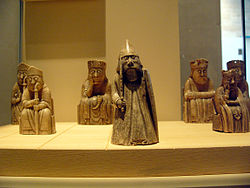
The Scottish History and Archaeology Collections encompass artefacts documenting Scotland's material culture from the Palaeolithic era to contemporary times, acquired through antiquarian collecting, excavations, donations, and purchases over nearly 250 years. These holdings represent one of the world's most comprehensive national assemblages of archaeological and historical items, contextualizing Scotland's development amid European influences. Prehistoric and Roman sections feature evidence of early settlement, including Neolithic structures like the village in and Bronze Age gold jewellery. Iron Age items include the Deskford carnyx, a boar-headed discovered around 1816 in and dated to circa 80–200 AD, exemplifying advanced Celtic . Roman occupation artefacts comprise helmets with face masks, illustrating presence and cultural interactions up to the period's end. Medieval collections, spanning the 5th to 15th centuries, highlight the formation of Scottish kingdoms through , early Christian stone sculpture, and the largest assemblage of Viking-age graves outside . Notable early medieval finds include the Hunterston Brooch, a pseudo-penannular , silver, and amber piece from circa 700 AD discovered in in the 1830s, blending Celtic and Anglo-Saxon motifs. The St Ninian's Isle Treasure, unearthed in 1958 on , consists of 28 silver and gilt-silver objects including penannular brooches, dated to the mid-8th century and attributed to Pictish craftsmanship. and silver s, alongside the —11 pieces from a 12th-century of 93 found on the Isle of Lewis—evidence trade, artistry, and monastic influences. Renaissance and early modern holdings (circa 1450–1750) cover cultural and political evolution, while modern and contemporary sections (from circa 1750) address social, military, and rural history, including archaeological remains from over 500 sites representing approximately 2200 individuals. These collections support research into practices, societal changes, and Christianity's impact, preserved through systematic curation.

Art and World Cultures Collections

The Global Arts, Cultures and Design department at National Museums Scotland curates the museum's art and world cultures collections, encompassing art, design, and cultural artifacts from , the Americas, , , and , ranging from ancient periods to contemporary works. These holdings reflect Scotland's historical international connections, including acquisitions from explorations, missionary activities, and modern collaborations, with objects such as textiles, , jewelry, musical instruments, weapons, basketry, and sculptures. The , , and collections alone exceed 25,000 objects, with 's approximately 9,150 items dating from the onward, including textiles from eastern, western, and southern regions collected since the , and contributions from figures like missionary . The holdings, numbering around 7,760, feature early ethnographic materials from British expeditions such as those of Captain and the Hudson’s Bay Company, alongside contemporary art from and Northwest Coast indigenous groups, exemplified by a Mayan cylinder vessel from circa 600 AD. 's roughly 5,800 artifacts include early voyage collections from Cook's expeditions and missionaries, as well as post- works like and , such as John Bevan Ford's 1994 painting "Maui Goes Fishing." Asian collections, displayed prominently in the Exploring East Asia gallery, cover , , and Korea with highlights including a rice measure from , Edo-period samurai armor from , and a Korean lotus cup, illustrating artistic traditions in ceramics, metalwork, and armor. European and Mediterranean items extend to ancient and medieval art, such as an 11th- or 12th-century carved elephant tusk from or , demonstrating ivory carving techniques and iconographic motifs from Islamic-influenced regions. These collections support research into cultural exchanges and material histories, with objects available for scholarly appointments. The World Cultures galleries organize these materials thematically across levels, including Patterns of Life (exploring possessions across continents and life stages, with modern African shaped coffins), Living Lands (indigenous objects from Arctic to Australian deserts, featuring contemporary artist Danie Mellor's works), Facing the Sea (South Pacific focus with a Māori waka war canoe by George Nuku), and Artistic Legacies (traditional and modern sculptures like Gérard Quenum's "L’Ange"). Additional sections such as Inspired by Nature highlight human-nature interactions through art, including Maryam Salour’s ceramic poppies, while Ancient Egypt displays artifacts emphasizing cultural production and archaeological contexts. Interactive elements, like playable instruments by Victor Gama in Performances and Lives, enhance public engagement with global performing arts traditions.

Research Activities and Conservation Efforts

The research activities of National Museums Scotland, conducted as an Independent Research Organisation, utilize the national collections to advance scholarly knowledge across disciplines including archaeology, history, world cultures, and natural sciences. These efforts emphasize three core themes: Scotland's material heritage, identities and cultural contacts, and sustainability, with projects often involving interdisciplinary collaborations with universities, funding bodies like the Arts and Humanities Research Council (AHRC), and international partners. Outputs from such research are disseminated through a dedicated repository hosting publications, datasets, and reports adhering to ethical standards outlined in the European Code of Conduct for Research Integrity. Doctoral programs, typically spanning 3.5 years or more, are co-supervised by museum curators and academics, covering topics from pterosaur evolution to surgical tool design inspired by insect anatomy. Key research initiatives include the Glenmorangie Research Project, which examines the production and cultural significance of Scottish swords from the using metallurgical analysis and historical records, and "Unwrapping the Galloway Hoard," a collaborative study of a 9th-10th century Viking-Age treasure involving imaging and isotopic analysis to trace origins and trade networks. In natural sciences, the CryoArks project establishes a UK-wide zoological , preserving tissue samples from zoos and wild populations for genetic research and conservation, with National Museums Scotland contributing core facilities since 2022. These activities extend to knowledge exchange, such as community-led research on African and collections through the Exchange project, funded at £450,000 for 18 months starting in 2024, which distributes grants to institutions for examining race, empire, and migration themes. Conservation efforts are centralized in the Collections Services department, which applies preventive and interventive techniques to preserve over three million objects across categories like archaeological artifacts, textiles, industrial machinery, and specimens. Preventive measures include , environmental monitoring with data loggers, and materials testing such as Oddy tests to ensure safe display housings, supporting long-term stability without compromising research access. Specialized teams handle paper and textiles (e.g., stabilizing and embroideries via cleaning and flattening), artifacts (e.g., innovative stabilization for ethnographic items), and objects (e.g., maintaining functional parts while addressing hazardous materials). Notable conservation projects demonstrate these capabilities, such as the three-year stabilization of the Hoard—a gold assemblage discovered in 2023—funded by public donations exceeding 80% of the £200,289 target by 2024, involving X-radiography and corrosion removal to enable study and display. In , conservators acquired and treated a rare 17th-century , launching internships to train specialists in delicate fiber analysis and repair, while ongoing work on ancient Egyptian papyri employs reed-based mounting to prevent fragmentation during handling. These efforts align with broader policies prioritizing ethical preservation, as detailed in the Collections Care and Conservation Policy, which mandates risk assessments and sector-wide guidance to mitigate deterioration from climate and use.

Exhibitions and Public Engagement

Permanent Exhibition Galleries

The permanent exhibition galleries of the National Museum of Scotland encompass a diverse array of displays spanning , Scottish heritage, global cultures, , , and , housed primarily in the museum's Victorian-era and modern buildings. These galleries present over thousands of objects from the institution's collections, offering visitors chronological and thematic explorations of human and natural phenomena. The layouts emphasize interactive elements, large-scale specimens, and artifacts to illustrate evolutionary, historical, and innovative developments, with free access to all permanent displays since the museum's unification in 1998. The Grand Gallery, a central multi-level atrium in the Royal Scottish Museum building opened in 1866 and refurbished in the 1990s, serves as an introductory space with soaring pillars, arched ceilings, and high windows allowing natural light. It features iconic large-scale exhibits such as the skeleton of a giant (Megaloceros giganteus), the skull of Toby the captured in 1964, particle accelerator components from early 20th-century atomic research, and the eight-meter-tall Window on the World installation tracing and across four stories. The space also houses the Millennium Clock Tower, a kinetic by Edward Leeds completed in 1999 that chimes hourly with mechanical figures depicting evolutionary stages from dinosaurs to humans. The Natural World galleries, located in the Victorian building, showcase Scotland's , fossils, and alongside global specimens to demonstrate evolutionary processes and ecological diversity. Key displays include fossils, such as a 160-million-year-old Cetiosaurus , taxidermied Scottish mammals like the , and dioramas of habitats from the to the , with over 200 animal mounts illustrating and patterns. These galleries, refreshed in phases through the 2010s, integrate geological timelines from 2.5 billion-year-old Lewisian samples to recent climate impact models. Scottish History and Archaeology galleries, spanning seven chronological periods in the Museum of Scotland building opened in , trace Scotland's development from 12,000 BCE to the 1990s using over 2,000 artifacts. Early sections cover hunter-gatherers and monuments like replicas, while medieval displays feature Pictish silver hoards, the 8th-century Monymusk Reliquary, and from the 12th century. Later galleries address Jacobite artifacts, industrial-era machinery, and 20th-century items like Dolly the sheep's mount, cloned in 1996 at the , highlighting themes of nation-building, conflict, and technological progress without interpretive bias toward modern political narratives. (Note: Specific subpage inferred from structure; primary cite to main explore page.) Science and Technology galleries explore innovations from the Enlightenment to the present, featuring steam engines like James Watt's 1788 rotative model, early computers such as the 1940s Harlequin prototype, and aerospace exhibits including a 1917 aircraft frame. Displays emphasize empirical engineering milestones, such as telecommunications devices from Alexander Graham Bell's 1876 prototypes, underscoring Scotland's contributions to industrialization without overstating unsubstantiated cultural exceptionalism. World Cultures galleries present ethnographic collections acquired largely between 1800 and 1950, demonstrating Scotland's trade and colonial connections through artifacts from , , the Pacific, and . Highlights include Oceanic navigation tools, South Asian textiles, and African masks, arranged thematically in subs like "Living Lands" for inland societies and "Facing the Sea" for maritime cultures, with contextual labels noting acquisition histories to address transparently. Art, Design, and Fashion galleries display from antiquity to the , including silverwork, ceramics, and textiles influencing daily life. Exhibits feature 18th-century Scottish furniture, & Co. fabrics from the Arts and Crafts movement, and fashion pieces like couture, illustrating stylistic evolution driven by material availability and craftsmanship rather than ideological reinterpretations. These galleries collectively attract over 2 million visitors annually, with permanent displays updated periodically for conservation and new acquisitions, prioritizing object-centered narratives supported by primary evidence over secondary interpretive overlays.

Temporary and Special Exhibitions

The National Museum of Scotland hosts a program of temporary and special exhibitions that complement its permanent collections by showcasing loaned artifacts, recent research findings, and thematic explorations often drawn from global collaborations or national heritage. These exhibitions typically run for several months and attract significant visitor numbers, with the museum organizing around 12 such displays annually across its sites, including touring formats to reach wider audiences. Notable past exhibitions have included "Rising Tide: Art and Environment in Oceania," which opened in April 2023 and featured artworks responding to climate change impacts in and the Pacific Islands, highlighting environmental themes through contemporary Pacific artists. Another example is "The Tomb: Ancient Egyptian Burial," which examined a specific constructed around 1290 BC and reused for over a millennium, presenting artifacts and narratives of . In 2024, "Game On" focused on history and culture, with tickets released in to capitalize on interactive public interest in digital heritage. As of 2025, ongoing and upcoming special exhibitions include "Cold War Scotland," running from July 13, 2024, to January 4, 2026, which explores Scotland's role in Cold War events through local stories and declassified materials, offered free to the public. "Monkeys: Our Primate Family," from June 28 to November 30, 2025, presents over 50 rare primate specimens in one of the most extensive displays on primate evolution and conservation ever staged. Future installations such as "Giants," scheduled from January 31 to September 14, 2026, and "Scotland's First Warriors," from June 27, 2026, to May 17, 2027, continue this tradition of thematic depth, often integrating interdisciplinary research from the museum's collections. These exhibitions frequently incorporate interactive elements, multimedia, and expert-led events to engage diverse audiences while advancing public understanding of historical, scientific, and cultural topics.

Educational Programs and Outreach

The National Museum of Scotland offers a comprehensive schools program featuring workshops, guided tours, and digital sessions tailored to nursery, primary, and secondary levels, covering topics such as , , the natural world, , , , world cultures, and Scottish history. These activities align with Scotland's , the UN , and meta-skills frameworks to foster and curiosity through hands-on engagement with the museum's collections. School groups receive free admission to the museum, with 20% of workshops provided at no charge to schools in Scotland's most deprived SIMD 1 and 2 areas as well as all special , subject to availability. Specific sessions include short introductory tours like "A Dinosaur Adventure" for early years (25 minutes) and more extended workshops such as "Ancient Egypt," "Biodiversity," "Animal Adaptations," and "Eco Explorer" for first and second levels, emphasizing in galleries. Older pupils can participate in "Careers Hive," "Cold War Scotland" exhibition visits or study days, and senior-phase sessions on "DNA and the Genome," many of which are free. Digital sessions extend access, with bookings available online or via direct contact, enabling remote participation aligned with curriculum needs. Supporting resources include downloadable activities for digital sessions on themes like and Romans, alongside creative projects such as crafting Lewis chess pieces, Celtic torcs, animal masks, or fashion designs inspired by exhibits. Museum Maker initiatives provide craft guides, such as making owl badges or champion rosettes, to reinforce historical and learning at low or no cost. Trails like Lewis's Scottish Adventure at affiliated sites further encourage self-directed exploration. Outreach extends beyond on-site programs through initiatives like the Powering Up project (2017–2020), a effort funded by the ScottishPower Foundation that engaged primary schools and communities with hands-on STEM activities. Earlier efforts, such as Museum2Go launched in 2012, delivered object-based learning directly to schools, broadening access for those unable to visit. Broader community engagement involves partnerships across to promote the national collection, including family-oriented drop-in sessions and Curiosity Clubs, aiming to increase participation from diverse groups. The 2025–2026 program continues this expansion with updated offerings for all school stages.

Operations and Governance

Organizational Structure and Funding

National Museums Scotland, which operates the National Museum of Scotland, functions as a (NDPB) and registered Scottish charity, governed by an independent Board of Trustees responsible for establishing strategic direction, ensuring financial accountability, and overseeing major policy decisions. The Board, chaired by Bruce Minto OBE, consists of members appointed by ministers for terms typically lasting four years, with recent appointments including Judith Cruickshank, Hermione Cockburn, and Sally Mackay effective from 1 October 2024 to 30 September 2028, and reappointments of Motaram Mimi Brophy, , and Professor Ian Wall announced on 5 November 2024. This structure aligns with standard NDPB governance, where trustees provide non-executive oversight independent of direct ministerial control, though appointments reflect government influence on composition. Day-to-day operations are managed by an Executive Team led by Director Dr. Chris Breward, who reports to the Board and implements strategic objectives across collections, public engagement, and facilities management. Key members include Dr. Sam Alberti (Director of Collections), Ruth Gill (Director of Public Programmes), Helen Ireland (Director of Finance and Infrastructure), and Keith Pentland (Director of and ), forming a cadre focused on curatorial, operational, and administrative functions. This hierarchical model separates strategic from executive delivery, enabling specialized departments to handle the institution's eight museums and over 3 million objects while adhering to accountability standards. Funding for National Museums Scotland derives predominantly from Grant-in-Aid provided by the , constituting the core operational budget as a NDPB, supplemented by commercial revenues from NMS Enterprises (including retail, licensing, and publications), , sponsorships, and lottery grants. In the 2023/24 financial year, Grant-in-Aid faced a £220,000 nominal cut, equivalent to a £1.4 million real-terms reduction after adjusting for pay awards, amid broader inflationary pressures and static public . For 2025/26, the Scottish Budget allocated a 5.9% uplift in general operational , though this has been critiqued as insufficient to offset rising costs for , , and in aging facilities. Additional income streams, such as the National Fund for Acquisitions administered by NMS and funded by the , support but do not cover core recurrent expenses, highlighting reliance on government allocation amid fiscal constraints. The 2022-27 Strategic Plan notes ongoing challenges from diminishing contributions and , necessitating diversified revenue pursuits without compromising free public access.

Visitor Facilities and Accessibility

The National Museum of Scotland offers free admission to all visitors, with on-site facilities including three cafés: the Balcony Café on Level 3 providing tea, coffee, home baking, cold snacks, hot soups, and views of the Grand Gallery; the Museum Kitchen on Level 0 serving hot drinks, baked goods, and a ; and the Hawthornden Café on Level 1. A dedicated Lunch Space in the allows visitors to consume their own packed , though it is prioritized for school groups during term time. Museum shops are located on Levels 0, 1, and 3, offering merchandise related to exhibits. Additional amenities include toilets on all levels with baby changing facilities on most floors, self-service lockers in the (maximum size 58x44x66 cm), free , and information desks at the Main and Tower Entrances. The museum lacks dedicated on-site parking but provides four free designated spaces for disabled badge holders on Chambers Street, available without booking. Nearby pay-and-display or off-street options, such as NCP Quartermile, are accessible, with coach drop-off at the Main Entrance. Accessibility features include level entry via automatic doors at the Main and Tower Entrances on Chambers Street, with manual wheelchairs available for loan at information desks on Levels 0 and 1. Lifts provide access to all floors, supplemented by ramps where needed, and accessible toilets are available throughout. Sensory backpacks containing ear defenders, torches, sunglasses, and fidget toys can be borrowed from information desks, alongside downloadable sensory maps and visual stories. Hearing loops operate at information desks and the , with large-print guides in most galleries and picture communication cards available online. Assistance dogs are permitted, and Visitor Experience staff offer support; specialized tours (audio-described, BSL-interpreted, or object-handling) require four weeks' notice.

Attendance Statistics and Economic Impact

In 2024, the National Museum of Scotland welcomed 2,314,974 visitors, a 5.9% increase from 2023 and solidifying its position as Scotland's most visited attraction and the United Kingdom's top museum outside . In 2023, attendance stood at 2,186,841, reflecting recovery toward pre-pandemic levels after declines during restrictions. These figures, drawn from Association of Leading Visitor Attractions (ALVA) data and National Museums Scotland reports, underscore the museum's draw as a free-entry , with post-2011 sustaining annual visits above two million. The museum's visitor volume drives economic activity in and through associated spending on accommodation, dining, , and retail. An independent study commissioned by National Museums Scotland in 2017/18, conducted by Biggar Economics, quantified the museum's (GVA) at £95.7 million for the economy (supporting 4,660 jobs) and £116.8 million nationally (supporting 5,190 jobs), based on visitor expenditures and multiplier effects. While no updated comprehensive study has been publicly released, the museum's role in bolstering 's £6 billion-plus annual sector persists, as high footfall in central amplifies local business revenues and complements attractions like . National Museums Scotland's broader operations, including the Edinburgh site, contributed to over three million total visits across venues in the year ending March 2024, further embedding cultural institutions in regional economic resilience.

Controversies and Criticisms

Repatriation Demands and Colonial Legacies

The National Museums Scotland, which operates the National Museum of Scotland, holds over 12 million objects, including items collected during the era of the in which Scots participated extensively as administrators, traders, soldiers, and collectors. These include artifacts from , , and the acquired through expeditions, purchases, or conflict spoils under the legal norms of the 19th and early 20th centuries, such as brass plaques and figures from the Kingdom of looted during the 1897 British punitive expedition. While many such acquisitions were documented as lawful transfers or compensations at the time, contemporary critiques frame them as products of colonial violence, prompting institutional acknowledgments of "colonial histories and legacies" in collections. In response to global restitution movements, National Museums Scotland adopted a policy in 2025 to evaluate requests for permanent transfers of objects to non-UK claimants, prioritizing cases involving human remains, sacred items, or those acquired through unethical means like , provided claimants demonstrate cultural ties and legal standing. This framework enabled the 2022 agreement to transfer a 19th-century memorial pole, carved around 1855 by the Nisga'a Nation in present-day , back to its origin community after nearly a century in ; the item, acquired via colonial-era networks, was returned as a voluntary recognizing indigenous claims without admitting prior illegality. Such actions align with broader directives post-2024 to develop national guidance on , including addressing empire-linked holdings, though constrained by heritage laws prohibiting deaccession of core national collections unless via specific exemptions. Demands for have intensified for specific empire-era items, notably in January 2023 when formally requested the return of held by National Museums Scotland—part of the 1897 haul now displayed in the Artistic Legacies gallery—including brass heads and plaques symbolizing royal ancestry. These claims assert the artifacts were looted war booty, disqualifying British retention despite contemporaneous treaties ceding them as reparations; NMS trustees convened to assess the request under their policy, amid ongoing international pressure but no resolution reported by late 2025. Critics of argue that fragmenting such collections risks losing global scholarly access and that many items, preserved intact in museums, derive from verifiable historical contexts rather than pure , though proponents cite moral imperatives tied to . No further major returns from NMS have occurred, contrasting with voluntary restitutions from smaller Scottish institutions, such as the 2022 largest-ever batch of Pacific artifacts to .

Allegations of Political Bias

In March 2025, the National Museum of Scotland faced accusations of pro-SNP bias in its ": The Pandemic in " exhibition, which highlighted the Scottish Government's response under while allegedly omitting the Government's contributions, such as vaccine procurement and funding. Critics, including Scottish Conservative MSP , described the display as "" akin to "North Korea-style" promotion of SNP achievements, pointing to unverified claims like 's handling of the pandemic being "among the best in the world" despite higher excess death rates compared to the average. The museum defended the exhibit as reflecting -specific experiences, but detractors argued it reflected institutional alignment with the SNP-led administration, given public funding ties. Earlier, in 2018, the museum's "Settlers and Scots" exhibition on Scotland's early modern history drew for allegedly glorifying colonial expansion by emphasizing economic and exploratory successes, such as the and imperial trade, while underplaying associated violence, , and dispossession. Tom Devine and others contended the presentation risked sanitizing Scotland's imperial role, framing it as a of innovation rather than exploitation, though museum curators maintained it aimed for balanced historical context without overt moralizing. These claims highlighted tensions over interpretive framing in taxpayer-funded institutions, with accusers suggesting a reluctance to confront uncomfortable national legacies amid broader debates. No formal investigations into have resulted from these incidents, and the museum has not publicly acknowledged political slant in its curatorial decisions. Allegations persist in public discourse, often tied to Scotland's polarized independence debates, where unionist outlets emphasize perceived nationalist favoritism and progressive critics decry insufficient critique of historical power structures.

Criticisms of Display Methods and Interpretation

Critics have accused the National Museum of Scotland of presenting Scotland's imperial in a manner that downplays violence and exploitation, particularly in displays on the Scottish role in empire-building. A exhibition featuring artifacts from Scottish colonial endeavors, such as trade items and maps, was criticized for emphasizing achievements like economic contributions and exploration while omitting references to associated atrocities, including forced labor and cultural destruction in regions like and ; Tom Devine noted that this approach risked sanitizing a history intertwined with brutality. The museum's subsequent response included commitments to revise labels for colonial objects to incorporate fuller contexts of power imbalances and human costs, acknowledging prior interpretive shortcomings. Interpretations of ancient and medieval history have drawn scrutiny for incorporating nationalist narratives that prioritize Scottish exceptionalism over empirical integration with broader European contexts. In galleries covering Roman-era artifacts, such as the Deskford , displays emphasize indigenous resistance and cultural continuity, potentially overstating Scotland's distinct trajectory at the expense of evidence for hybrid Romano-British influences; a 2024 analysis in Internet Archaeology argued this selective framing aligns with modern , distorting data on trade and assimilation. Similarly, Pictish and early medieval exhibits, including the Whitecleuch Chain and Hunterston Brooch, interpret symbols through lenses of proto-national unity, though primary sources like annals indicate fragmented tribal alliances rather than cohesive . Displays of punishment devices, notably 'The Maiden' guillotine from the 16th to 18th centuries, have been faulted for inadequate conveyance of their terror and societal impact. A review contended that static presentations and minimal audio-visual aids fail to link artifacts to execution records—such as the 156 executions documented in between 1560 and 1615—resulting in a detached, almost clinical view that understates the devices' role in enforcing religious and political conformity amid widespread public spectacles. This methodological choice prioritizes preservation over immersive reconstruction, contrasting with sites like the , where sensory elements better evoke historical causality between state power and human suffering. More recent temporary exhibits have faced claims of interpretive bias favoring devolved governance narratives. The 2021–2022 'Injecting Hope' display on the COVID-19 response highlighted Scotland's vaccine rollout and public health measures, attributing successes to local policy without quantifying UK-wide supply chain contributions, which accounted for 90% of doses per government data; critics, including unionist commentators, labeled this as selective framing akin to partisan historiography. Such approaches reflect broader tensions in publicly funded institutions, where curatorial decisions may inadvertently align with prevailing political currents despite mandates for neutrality.

References

Add your contribution
Related Hubs
User Avatar
No comments yet.