


Community hub
Recent from talks
Contribute something
Nothing was collected or created yet.
Single-family detached home
View on Wikipedia | This article needs additional citations for verification. (December 2009) |

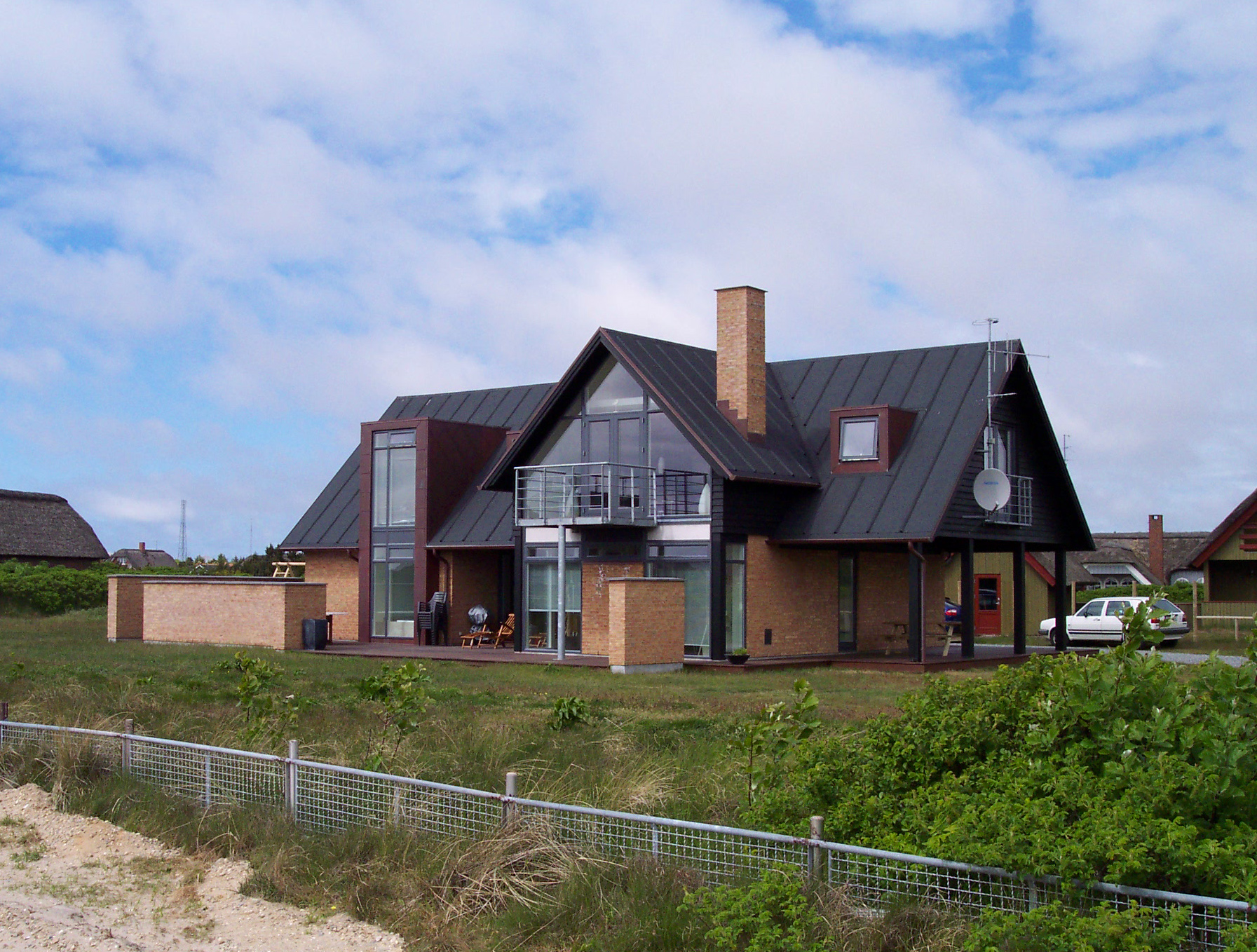
A single-family detached home, also called a single-detached dwelling, single-family residence (SFR) or separate house is a free-standing residential building. It is defined in opposition to a multi-family residential dwelling.
Definitions
[edit]A single detached dwelling contains only one dwelling unit and is completely separated by open space on all sides from any other structure, except its own garage or shed.

The definition of this type of house may vary between legal jurisdictions or statistical agencies. The definition, however, generally includes two elements:
- Single-family (home, house, or dwelling) means that the building is usually occupied by just one household or family and consists of just one dwelling unit or suite. In some jurisdictions, allowances are made for basement suites or accessory dwelling units without changing the description from "single-family". It does exclude, however, any short-term accommodation (hotel, motels, inns), large-scale rental accommodation (rooming or boarding houses, apartments), or condominia.
- Detached (house, home, or dwelling) means that the building does not share walls with other houses. This excludes duplexes, triplexes, fourplexes, or linked houses, as well as all terraced houses and most especially tower blocks which can hold hundreds of families in a single building.
Most single-family homes are built on lots larger than the structure itself, adding an area surrounding the house, which is commonly called a yard in North American English or a garden in British English. Garages can also be found on many lots. Houses with an attached front entry garage closer to the street than any other part of the house are often derisively called a snout house.
Regional terminologies
[edit]


Terms corresponding to a single-family detached home in common use are single-family home (in the US and Canada), single-detached dwelling (in Canada), detached house (in the United Kingdom and Canada), and separate house (in New Zealand).[citation needed]
In the United Kingdom, the term single-family home is almost unknown, except through Internet exposure to US media. Whereas in the US, housing is commonly divided into "single-family homes", "multi-family dwellings", "condo/townhouse", etc., the primary division of residential property in British terminology is between "houses" (including "detached", "semi-detached", and "terraced" houses and bungalows) and "flats" (i.e., "apartments" or "condominiums" in American English).[citation needed]
History and distribution
[edit]
In pre-industrial societies, most people lived in multi-family dwellings for most of their lives. A child lived with their parents from birth until marriage and then generally moved in with the parents of the man (patrilocal) or the woman (matrilocal) so that the grandparents could help raise the young children and so the middle generation could care for their aging parents. This type of arrangement also saved some of the effort and materials used for construction and, in colder climates, heating. If people had to move to a new place or were wealthy enough, they could build or buy a home for their own family, but this was not the norm.
The idea of a nuclear family living separately from their relatives as the norm is a relatively recent development related to rising living standards in North America and Europe during the early modern and modern eras. In the New World, where land was plentiful, settlement patterns were quite different from the close-knit villages of Europe, meaning many more people lived in large farms separated from their neighbors. This has produced a cultural preference in settler societies for privacy and space. A countervailing trend has been industrialization and urbanization, which has seen more people worldwide move into multi-story apartment blocks. In the New World, this type of densification was halted and reversed following the Second World War when increased automobile ownership and cheaper building and heating costs produced suburbanization instead.
Single-family homes are now common in rural and suburban and even some urban areas across the New World and Europe, as well as wealthier enclaves within the Third World. They are most common in low-density, high-income regions. For example, in Canada, according to the 2006 census, 55.3% of the population lived in single-detached houses, but this varied substantially by region. In the city of Montreal, Quebec, Canada's second-most populous municipality, only 7.5% of the population lived in single-detached homes; in contrast, in the city of Calgary, the third-most populous, 57.8% did.[3] Note that this includes the "city limits" populations only, not the wider region. Culturally, single-family houses are associated with suburbanization in many parts of the world. Owning a home with a yard and a "white picket fence" is seen as a key component of the "American dream" (which also exists with variations in other parts of the world).[4]
In the 21st century, a lack of affordable housing, the climate change impacts of urban sprawl and car dependency, and concerns about racial inequality have increasingly led cities to abandon single-family housing and single-family zoning in favor of higher-density zones.[4][5]
Separating types of homes
[edit]House types include:
- Cottage, a small house. In the US, a cottage typically has four main rooms, two on either side of a central corridor. It is common to find a lean-to added to the back of the cottage, which may accommodate the kitchen, laundry, and bathroom. In Australia, it is common for a cottage to have a verandah across its front. In the UK and Ireland, any small, old (especially pre-World War I) house in a rural or formerly rural location, whether with one, two, or (rarely) three stories, is a cottage.
- Bungalow, in American English, this term describes a medium- to large-sized freestanding house on a generous block in the suburbs, with a generally less formal floor plan than a villa. Some rooms in a bungalow typically have doors that link them together. Bungalows may feature a flat roof. In British English, it refers to any single-storey house (much rarer in the UK than in the US).
- Villa, a term originating from Roman times when it was used to refer to a large house which one might retreat to in the country. In the late 19th and early 20th centuries, villa suggested a freestanding comfortable-sized house on a large block, generally found in the suburbs. In Victorian terraced housing, a villa was a house larger than the average byelaw terraced house, often having double street frontage.
- Mansion, a very large, luxurious house, typically associated with exceptional wealth or aristocracy, usually of more than one story, on a large block of land or estate.
Mansions usually will have many more rooms and bedrooms than a typical single-family home, including specialty rooms, such as a library, study, conservatory, theater, greenhouse, infinity pool, bowling alley, or server room.
Many mansions are too large to be maintained solely by the owner, and there will be maintenance staff. This staff may also live on-site in 'servant quarters'. - Palace, a particularly grand mansion, usually the home of a high ranking government official like a country's ruler.
- Castle, a medieval European or feudal Japanese fortified dwelling formerly occupied by a lord and his family. The term castle can also refer to a house or mansion with some of the architectural characteristics of medieval castles.
See also
[edit]
References
[edit]- ^ "Spending Patterns in Canada: Data quality, concepts and methodology: Definitions". www.statcan.gc.ca.
- ^ “Saitta House – Report Part 1 Archived 2008-12-16 at the Wayback Machine”,DykerHeightsCivicAssociation.com
- ^ Canada, Government of Canada, Statistics. "Statistics Canada: 2006 Community Profiles". www12.statcan.ca.
{{cite web}}: CS1 maint: multiple names: authors list (link) - ^ a b Dillon, Liam (May 13, 2019). "California could bring radical change to single-family home neighborhoods". Los Angeles Times. Retrieved 2019-05-13.
- ^ "The Upzoning Wave Finally Catches Up to California". Bloomberg.com. 1 March 2021. Retrieved 2 March 2021.
External links
[edit]
- "Australian Housing Types" (PDF). Your House teacher resource kit. Royal Australian Institute of Architects. Archived from the original (PDF) on 2006-06-26. Retrieved 15 January 2006.
| Shared rooms | |
|---|---|
| Private rooms | |
| Spaces | |
| Technical, utility and storage |
|
| Great house areas | |
| Other | |
| Architectural elements | |
| Related | |

| International | |
|---|---|
| National | |
| Other | |

Single-family detached home
View on GrokipediaDefinitions and Terminology
Core Definition and Distinctions
A single-family detached home is a standalone residential structure designed for occupancy by one family, featuring no shared walls, roofs, or floors with adjacent dwellings. This classification emphasizes physical separation from other housing units, typically situated on an individual lot that provides exclusive yard space and direct access.[7] Such homes are engineered to function independently, often incorporating private entrances, garages, and utility systems not interconnected with neighboring properties.[1] The primary distinction from single-family attached homes, such as townhouses or row houses, lies in the absence of shared structural elements; attached variants connect via party walls, reducing privacy and potentially transmitting noise or vibrations between units.[2] Detached homes offer greater autonomy in modifications and maintenance, as owners face no constraints from adjoining residences, though they demand more land and upkeep for surrounding areas.[3] In contrast to multi-family dwellings like apartments or duplexes, which house multiple independent households within a single building or closely linked structures, single-family detached homes limit occupancy to one family unit, aligning with zoning regulations that preserve lower density and suburban character.[8] This separation supports distinct financing, insurance, and appreciation patterns, with detached properties often commanding higher values due to land ownership exclusivity.[9] Regulatory definitions, such as those from the U.S. Census Bureau, classify single-family detached homes as structures standing apart from others, excluding semi-detached or side-by-side units that share at least one wall.[2] These criteria ensure clarity in housing statistics, urban planning, and market analyses, where detached homes constitute a significant portion of owner-occupied housing stock, reflecting preferences for isolation and customization over communal arrangements.[10]Regional and Cultural Variations
In North America, single-family detached homes predominate in suburban and rural areas, with the United States featuring larger structures averaging 2,164 square feet, often designed for expansive lots and family privacy.[11] Regional architectural preferences reflect historical influences and climate: Colonial Revival styles with symmetrical facades and gabled roofs are common in the Northeast, while single-story Ranch homes with wide eaves and attached garages prevail in the West and Southwest for adaptability to sprawling terrain.[12] In Canada, detached homes constitute about 55% of dwellings as of early 2000s data, with higher concentrations in prairie provinces due to abundant land, contrasting denser urban patterns in Ontario and Quebec.[13] European single-family detached homes, known in Germany as Familienhaus (also Einfamilienhaus), differ markedly in scale and density, averaging around 1,300 square feet, constrained by historical urban fabrics, zoning laws, and land scarcity that favor compact footprints and multi-story designs.[14] Northern European examples, such as in Germany or Scandinavia, often incorporate steep pitched roofs for snow shedding and timber framing rooted in medieval traditions, while Mediterranean variants in Spain or Italy emphasize courtyards for ventilation and terracotta tiles suited to warmer climates.[15] [16] Cultural norms in countries like Switzerland link lower homeownership rates (around 44%) to preferences for renting and communal living over expansive private ownership.[17] In Australia, detached homes achieve the global largest average size at 2,303 square feet, embodying the cultural "quarter-acre dream" of self-sufficient backyards for barbecues and gardening, though recent builds cluster denser at 5.5 units per acre amid urban growth.[11] [18] Designs adapt to harsh climates with clay or cement tiles, corrugated steel roofs, and elevated structures to mitigate flooding and heat, diverging from North American asphalt shingles and central heating reliance; insulation remains minimal, prioritizing open-plan layouts for airflow.[19] Asian variations prioritize compactness and environmental harmony due to population density and seismic risks. In Japan, ikodate (detached single-family homes) average under 1,000 square feet in urban areas, featuring sliding shoji screens, tatami flooring, and minimalist aesthetics derived from Zen influences for flexibility and natural light integration.[20] [21] Broader Southeast Asian detached homes, such as rural Thai or Vietnamese stilt houses, elevate structures on poles for flood protection and ventilation, reflecting agrarian lifestyles and monsoonal adaptations over Western sprawl.[22] These designs underscore cultural emphases on ancestral continuity and communal outdoor spaces rather than isolated privacy.[23]Historical Evolution
Pre-Modern Origins
The earliest single-family detached homes emerged during the Neolithic period, coinciding with the shift to sedentary agriculture around 10,000 BCE in regions such as the Near East and Europe. These dwellings, occupied by single households, consisted of simple rectangular or circular structures built from local materials like timber, mud, and thatch, often lasting about a decade before replacement. Archaeological evidence indicates they were spaced as separate units within early villages, reflecting the nuclear family as the basic social and economic unit in farming communities.[24] In Neolithic Britain, for instance, excavations at Durrington Walls reveal single-room houses dating to circa 2500 BCE, constructed with chalk-block walls, wooden posts, and thatched roofs, housing individual families near ceremonial sites. Similar patterns appear in continental Europe and the Levant, where mud-brick homes evolved from single-room formats to include partitioned spaces for storage and sleeping, maintaining detachment to allow for private hearths and livestock pens adjacent to living areas. This form prioritized functionality for self-sufficient family units over communal clustering, driven by the causal demands of crop cultivation and animal husbandry.[25] By classical antiquity, detached single-family homes persisted and formalized in agrarian contexts across the Mediterranean. In ancient Greece from the 8th to 4th centuries BCE, rural and suburban houses were typically single-story adobe or stone buildings arranged around a central courtyard for privacy and ventilation, accommodating one extended family with rooms for dining, sleeping, and work. Roman equivalents, such as the villa rustica from the 1st century BCE onward, extended this model with detached farmhouses featuring multiple rooms, porticos, and outbuildings, separated from neighbors to enclose family-owned land and support independent households. Urban variants like the Greek oikos or Roman domus often shared walls, but rural detachment remained normative for the majority who farmed.[26] In medieval Europe, from roughly the 5th to 15th centuries CE, detached single-family dwellings dominated rural life, where over 90% of the population resided. Peasant homes, termed "tofts" or cottages, were standalone timber or wattle-and-daub structures with thatched roofs, typically one or two rooms centered on an open hearth for cooking and heating. Hall-houses, prevalent in England and northern Europe by the 12th century, exemplified this with a ground-floor bay for animals and an upper living space for the family, sited individually within manors or villages to align with land tenure systems that allocated plots per household. These designs empirically supported family autonomy in subsistence agriculture, with separation enabling private resource management amid feudal obligations.[27]Industrial Era Developments
The Industrial Revolution spurred innovations in construction techniques that facilitated the widespread building of single-family detached homes, particularly in North America and parts of Europe, by reducing costs and labor requirements for middle-class housing. In the United States, balloon framing emerged around 1833 in Chicago, attributed to builder George W. Snow, who utilized standardized dimensional lumber, machine-cut nails, and lighter framing members nailed together rather than joined with heavy timbers and mortise-and-tenon connections.[28] This method cut construction time by approximately one-third and material costs significantly, as it eliminated the need for skilled carpenters for joinery, enabling rapid erection of two-story wood-frame detached structures on urban fringes.[29] By the 1840s, balloon framing had spread westward, supporting the construction of thousands of affordable single-family homes amid population growth from immigration and rural migration.[30] Architectural styles for detached homes evolved to reflect industrial prosperity and mass-produced ornamentation, with Victorian-era designs dominating from the 1840s to 1900. In the U.S. and Britain, Gothic Revival and Italianate styles featured detached houses with asymmetrical facades, gabled roofs, and decorative elements like bracketed cornices, made feasible by steam-powered sawmills producing intricate trim from softwoods.[31] These homes typically spanned 1,500 to 2,500 square feet, accommodating nuclear families with parlors, multiple bedrooms, and attached outbuildings, contrasting with dense row housing for workers.[32] Pattern books, such as those by Andrew Jackson Downing published in 1842, standardized plans for such dwellings, promoting detached forms as symbols of moral and social uplift for the emerging bourgeoisie.[33] Transportation advancements further enabled the spatial separation of detached homes from industrial centers, fostering early suburbanization. Horse-drawn streetcars, introduced in cities like New York in 1832 and expanding by the 1850s, reduced commute times to 30-45 minutes, allowing middle-income families to reside in detached homes on peripheral lots averaging 0.25 acres.[34] By 1890, electric streetcars had extended this reach, with U.S. suburban populations growing 200-300% in major metros; for instance, Chicago's outskirts saw over 10,000 new single-family detached homes built between 1880 and 1900 using balloon methods.[35] In Europe, similar patterns appeared in planned villa districts, such as London's early 19th-century estates with detached or semi-detached units mimicking rural manors, though full detachment remained rarer due to land scarcity and preferences for terraced forms.[36] These developments prioritized privacy and lot space, with empirical records showing detached homes commanding 20-50% higher property values than attached urban equivalents by century's end.[34] In continental Europe, industrial-era detached housing emphasized functionalism amid rapid urbanization, evolving from compact rural prototypes to larger standalone structures influenced by Haussmann's 1850s Parisian renovations, which included detached pavilions for elites.[37] Brick and stone dominated over wood, with standardized factory-produced components like pressed bricks enabling scalable construction; by 1870, German industrial towns featured detached worker homes in garden-like clusters, precursors to Ebenezer Howard's 1898 Garden City model, which advocated low-density detached layouts to counter urban ills.[38] Overall, these innovations democratized detached homeownership for non-elites, with U.S. census data indicating single-family units rising from 40% of urban dwellings in 1850 to over 60% by 1900 in expanding suburbs.[34]Postwar Suburbanization and Global Spread
The postwar era in the United States witnessed explosive growth in single-family detached homes, propelled by a confluence of demographic pressures, economic expansion, and federal policies. Returning World War II veterans, numbering over 16 million by 1946, faced acute housing shortages amid halted wartime construction and the onset of the baby boom, which saw U.S. births rise from 2.9 million in 1945 to 4.3 million by 1957. Government-backed mortgage guarantees through the Federal Housing Administration (FHA) and Veterans Administration (VA), expanded under the GI Bill of 1944, reduced down payments to as low as 5% and extended loan terms, catalyzing a surge in homeownership from 43.6% in 1940 to 61.9% by 1960.[39] [40] Mass-production techniques revolutionized supply, with developers like Levitt & Sons pioneering assembly-line methods akin to wartime factories. Their Levittown project on [Long Island](/page/Long Island), New York, launched sales in March 1949, delivering over 17,000 identical Cape Cod-style detached homes—each 800 square feet with two bedrooms, a yard, and appliances—for $7,990, affordable on a $60 monthly payment.[41] [42] The Federal-Aid Highway Act of 1956 allocated $25 billion for interstate roads, slashing commute times and enabling suburban sprawl; by 1960, metropolitan suburbs captured 70% of national population growth, with single-family starts comprising 90% of new housing.[43] This shift reflected causal drivers like rising real incomes—median family income doubled from $3,000 in 1947 to $6,000 by 1960—and cultural preferences for private yards over urban density, though federal redlining practices disproportionately steered benefits to white households.[44] The American suburban model exerted influence worldwide, particularly in Anglophone nations with comparable prosperity and car dependency. In Australia, detached single-family homes constituted over 70% of dwellings by the 1960s, supported by immigration-fueled growth and policies mirroring U.S. tract developments. Canada saw similar expansion, with suburban single-family construction dominating postwar urban fringes in Toronto and Vancouver. In Europe, reconstruction priorities favored multifamily blocks for efficiency, yet single-family detached homes proliferated in low-density outskirts; West Germany promoted Einfamilienhäuser through subsidies, building millions between 1950 and 1970, while the Netherlands and Sweden developed garden suburbs emphasizing family autonomy amid recovering economies.[45] This global diffusion, peaking in the 1950s-1970s, stemmed from shared postwar affluence—global GDP per capita rose 3-4% annually—and technological transfers like prefabrication, though adoption varied by land availability and zoning, with denser regions like Japan favoring incremental single-family infill over sprawl.[46]Design and Construction Characteristics
Standard Architectural Features
Single-family detached homes are characterized by a freestanding structure with no shared walls or common areas with adjacent buildings, ensuring complete physical separation and private ownership of the lot.[10] The foundation typically consists of a concrete slab-on-grade, crawl space (minimum 18 inches high with masonry cladding), or full basement, providing stability against soil settlement and moisture while elevating the structure above grade.[47] [48] Framing employs wood stud walls (often 2x4 or 2x6 inches) for vertical support, combined with floor joists and roof trusses or rafters, forming a load-bearing skeleton that distributes weight to the foundation.[49] Exterior walls are clad in durable materials such as brick, stone, stucco, wood siding, or cementitious/vinyl siding (minimum 0.42 mm thick), selected for weather resistance and aesthetic variation, with foundations often exposed masonry for visual distinction.[47] Roofs are predominantly pitched (gabled or hipped) with eaves extending at least 6 inches beyond the facade to facilitate drainage, covered in architectural asphalt shingles or matte metal for longevity and minimal reflectivity; flat roofs are rare due to water accumulation risks.[47] Windows and doors feature trim detailing, with side elevations requiring standard-sized openings (e.g., minimum 48x20 inches) for natural light and ventilation, while front facades incorporate offsets every 25 feet or porches (minimum 5 feet deep by 8 feet wide) to break monotony and enhance curb appeal.[47] Garages, often attached and front- or side-loaded, comprise up to 50% of the front facade width (maximum two doors, 16 feet wide each), recessed at least one-third the depth of the main facade and augmented with features like windows, dormers, or decorative doors for architectural integration.[47] [10] Interior layouts standardize around functional zones: a central kitchen with adjacent living and dining areas (increasingly open-concept in post-2000 designs), 2-4 bedrooms for privacy, 1-3 bathrooms, and optional utility spaces like basements or attics for storage.[10] [50] Private yards, driveways, and independent utility systems (e.g., HVAC, plumbing) complete the self-contained design, supporting single-household occupancy without reliance on neighboring infrastructure.[10]Materials, Building Techniques, and Variations
Single-family detached homes are predominantly constructed using light wood framing in North America, consisting of dimensional lumber for studs, joists, and rafters, with structural panels such as plywood or oriented strand board (OSB) for sheathing walls, floors, and roofs.[51] Concrete is the standard material for foundations, often poured as slabs in warmer climates or formed into basements in regions with deep frost lines to prevent heaving.[52] Exterior finishes commonly include wood siding, vinyl, or brick veneer, while interiors feature gypsum board drywall over the framed walls.[53] The dominant building technique is platform framing, where walls are assembled on the floor platform and stacked sequentially, providing stability and ease of construction compared to older balloon framing methods that used continuous vertical studs.[54] Advanced framing techniques, such as using 2x6-inch studs spaced 24 inches on center with single top plates and ladder blocking for headers, reduce material use by up to 20-30% while improving insulation and structural efficiency, as validated by engineered wood associations.[55] Roof structures often employ pre-fabricated wood trusses for spans up to 40 feet, minimizing on-site labor and enabling open interior spaces.[49] Variations in materials and techniques arise from regional climate, seismic risks, and resource availability; for instance, masonry construction with concrete blocks or bricks predominates in hurricane-prone southern U.S. states for enhanced durability, while wood framing prevails in forested Pacific Northwest areas due to abundant timber.[56] In Europe, such as northern Germany, homes may incorporate insulated concrete forms or heavier timber elements for energy compliance under stricter codes, contrasting with lighter U.S. platforms.[57] Prefabricated and modular methods, where sections are factory-built and assembled on-site, account for 1-3% of U.S. single-family starts annually, offering faster erection (up to 50% time savings) but limited adoption due to transportation costs and local zoning barriers, per Census Bureau data.[58] Steel framing, though corrosion-resistant and termite-proof, remains niche at under 2% of residential builds, primarily in coastal or fire-prone zones, as it requires specialized labor despite comparable strength to wood.[59] Structural insulated panels (SIPs), combining foam insulation between OSB layers, enable airtight envelopes with 15-20% better energy performance than stick-built frames, gaining traction in cold climates for reducing thermal bridging.[59] Timber framing, using large hand-hewn beams joined by mortise-and-tenon, represents a traditional variation revived for aesthetic and seismic resilience in about 1% of custom homes, though it demands skilled craftsmanship and higher upfront costs.[60] These adaptations reflect causal trade-offs: wood's renewability and workability favor it for cost-effective scalability, but masonry or prefab variants mitigate risks like fire or labor shortages in specific locales, supported by empirical durability tests from building standards bodies.[52]Socioeconomic Dimensions
Homeownership Rates and Economic Impacts
In the United States, the overall homeownership rate reached 65.6% in the third quarter of 2024, with single-family detached homes comprising the predominant form of owner-occupied housing.[61] Detached single-family structures accounted for approximately 75% of homes purchased by recent buyers as of 2023, reflecting their central role in realizing homeownership aspirations.[62] Nationally, owner-occupied single-family detached homes represented 54% of all housing units in 2023, underscoring their dominance in the housing stock available for ownership.[63] This prevalence stems from postwar policies and cultural preferences favoring spacious, independent residences, though rates vary regionally, with the Midwest exhibiting the highest at 70.3% in early 2023.[64] Economically, single-family homeownership drives wealth accumulation primarily through equity growth and forced savings via mortgage payments, which convert rental expenditures into asset ownership. Studies indicate that by 2022, the median wealth gap between homeowners and renters had widened to nearly $390,000, largely attributable to housing equity gains amid supply constraints and price appreciation.[65] Homeowners benefit from average annual property value increases, often outpacing inflation, enabling intergenerational transfers that perpetuate economic stability, with housing accounting for up to 80% of such wealth transmission in some analyses.[66] However, outcomes depend on factors like initial down payments and market conditions; for households lacking intergenerational support, homeownership has shown a negative association with economic status changes in certain longitudinal data, due to leverage risks and maintenance costs.[67] At the macroeconomic level, single-family housing construction and ownership contribute 15-18% to U.S. gross domestic product annually, split between residential investment (3-5%) and housing-related consumption services (12-13%).[68] This sector generates jobs in building, real estate, and related industries, while boosting local tax revenues and economic development through property taxes and renovations.[69] Ownership in single-family homes correlates with higher household stability, including reduced mobility and improved credit access, fostering community investment and productivity.[70] Globally, homeownership rates exceed 70% in many nations, such as Romania at 96%, but single-family detached prevalence is lower outside Western contexts, where multifamily units dominate ownership; economic impacts mirror U.S. patterns in market-driven economies, promoting asset-based security amid varying affordability challenges.[71]Influence on Family and Community Life
Single-family detached homes provide families with greater privacy and personal space compared to multi-unit dwellings, which empirical studies link to enhanced parental involvement and child development outcomes. Research indicates that children in homeowner households, predominantly single-family structures, exhibit higher math and reading scores, improved behavioral regulation, and increased likelihood of college attendance, attributing these benefits to the stability and resource investment fostered by ownership.[72][73] Homeowning parents also report providing more emotionally supportive environments, with children spending less time on sedentary activities like television and video games, potentially due to the dedicated indoor and outdoor spaces available in detached homes.[74][75] Ownership of single-family homes correlates with reduced residential mobility, enabling longer-term family stability and neighborhood familiarity, which supports consistent schooling and social networks for children. Longitudinal data show that experiencing owner-occupied housing during childhood is associated with higher educational attainment, lower welfare dependency, and fewer criminal convictions in adulthood, independent of socioeconomic factors.[76] This stability contrasts with renting, where frequent moves disrupt family routines; for instance, homeowners transition children to better home environments earlier, amplifying cumulative benefits.[72] On community life, single-family detached neighborhoods often exhibit higher levels of perceived safety and informal oversight, as residents invest in shared spaces like yards and streets, promoting child-friendly environments for outdoor play and supervision. Homeownership in these settings encourages civic participation, with owners more likely to engage in local governance and volunteerism due to their stake in property values and community upkeep.[77] However, lower population densities can limit spontaneous social interactions compared to denser housing, though studies suggest that the privacy afforded by detached homes strengthens selective ties among neighbors, contributing to social cohesion in family-oriented areas.[78] Empirical evidence links such neighborhoods to better mental health outcomes via reduced exposure to urban stressors, though long commutes in suburban configurations may strain broader relational networks.[79]Advantages and Empirical Benefits
Privacy, Space, and Quality of Life
Single-family detached homes offer enhanced privacy compared to multi-unit dwellings, as they lack shared walls and floors, minimizing neighbor noise and visual intrusions. Studies indicate that residents in detached houses experience better acoustic comfort due to reduced transmission of sounds from adjacent units, contributing to lower stress levels.[80] This separation fosters a sense of territorial control, aligning with psychological needs for personal boundaries in residential environments.[81] The spatial advantages of single-family detached homes, including larger interior areas and private yards, support improved subjective well-being and housing satisfaction. Research shows a positive correlation between living space size—measured as square meters per person—and reduced psychological distress, with homes exceeding 80 m² linked to enhanced mental health outcomes such as decreased anxiety and depression.[80] In comparisons, detached houses provide more room for individual activities and family interactions without the constraints of multi-family layouts, leading to higher residential satisfaction scores.[82] Empirical evidence associates single-family detached living with superior quality of life metrics, including lower prevalence of mental health issues relative to multi-family housing. Residents in single-family units exhibit reduced odds of experiencing mental health problems, attributed to greater autonomy and access to private outdoor space that encourages physical activity and nature exposure.[83] Longitudinal data further reveal that both homeownership and occupancy of detached structures elevate neighborhood satisfaction, reinforcing causal links between such housing forms and overall life contentment through stable, self-contained living environments.[84]Wealth Building and Property Appreciation
Ownership of single-family detached homes facilitates wealth accumulation primarily through the buildup of home equity and property value appreciation. As mortgage payments reduce principal debt over time, homeowners gain equity equivalent to forced savings, often outpacing equivalent investments under renting scenarios where payments yield no asset ownership. A 2007 study analyzing longitudinal data found that homeownership, after controlling for factors like income and demographics, positively and significantly contributes to household wealth in the long run.[85] Similarly, Federal Reserve analysis indicates homeowners accumulate somewhat more wealth than comparable renters over extended periods, driven by equity gains rather than mere income effects.[86] Property appreciation further enhances this effect, with U.S. single-family homes historically increasing in value at an average annual rate of 3% to 5% nominally, adjusted for location and market conditions. From 1953 to 2024, median single-family home prices rose from approximately $18,000 to over $400,000, reflecting compounded growth influenced by scarcity of land, demand for detached housing, and economic expansion.[87] [88] In high-demand regions, appreciation has been markedly higher; for instance, San Jose, California, saw single-family home values surge 396% from 1975 to 2025.[89] This appreciation often exceeds inflation and provides a hedge against it, as housing demand correlates with population growth and household formation favoring spacious detached units. Empirical wealth disparities underscore these dynamics: in 2022, median net worth for homeowners stood at $396,000 compared to $10,400 for renters, with the gap reaching $390,000 medially and over $1.37 million averagely.[90] [65] Homeowners hold substantially more assets across categories, including 16 times more stocks and bonds in aggregate, amplifying overall portfolio growth.[91] While real estate returns (4%-8% annually) trail long-term stock market averages (~10% for S&P 500 including dividends), single-family homes offer leverage via mortgages—magnifying returns on down payments—and lower volatility, making them a stable vehicle for middle-class wealth building absent speculative trading.[92] Risks such as maintenance costs and market downturns exist, but historical data affirm net positive outcomes for persistent owners.[93]Health, Safety, and Social Outcomes
Residents of single-family detached homes experience lower rates of mental health issues compared to those in multifamily units, with data from the 2018 National Health Interview Survey indicating that multifamily dwellers had 1.5 times higher odds of psychological distress after controlling for demographics and socioeconomic factors.[83] This disparity arises from greater privacy, reduced noise exposure, and personal control over living space, which mitigate chronic stress associated with shared walls and high-density interactions. Physical health benefits include enhanced opportunities for unstructured outdoor activity; children in homes with private yards engage in more moderate-to-vigorous play, correlating with lower childhood obesity risks in suburban settings versus dense urban apartments, per analyses of built-environment impacts on activity levels.[94] Safety metrics favor single-family detached homes in crime prevention, as owner-occupied structures deter burglary more effectively than rentals, with Bureau of Justice Statistics data showing homeowners facing 20-30% lower break-in rates than renters due to invested vigilance and neighborhood cohesion.[95] Suburban single-family neighborhoods exhibit violent crime rates 15-25% below urban multifamily zones, attributed to lower population density and self-selection of stable residents, though causation involves socioeconomic confounders like income.[96] Fire safety presents trade-offs: while NFPA reports from 2017-2019 document higher per-structure fire incidence in one- and two-family homes (63% of residential fires), detached designs limit spread to adjacent units, reducing communal fatalities compared to interconnected multifamily buildings lacking universal sprinklers.[97] Social outcomes link single-family homeownership to improved child development, with a 2001 Joint Center for Housing Studies analysis of national longitudinal data revealing homeowners' children scoring 10-15% higher on cognitive tests and exhibiting 20% fewer behavioral problems than renters', mediated by residential stability and enriched home environments fostering parental involvement.[72] Family stability benefits from the permanence of detached ownership, which correlates with sustained two-parent households and reduced mobility disruptions, yielding long-term gains in educational attainment; empirical models estimate that such stability accounts for up to 5-7% variance in adolescent outcomes beyond income effects.[98] Community-level effects include stronger social networks, as single-family layouts encourage neighborly interactions without the anonymity of high-rises, supporting lower juvenile delinquency rates in homogeneous suburban cohorts.[96]Criticisms and Challenges
Environmental Concerns and Resource Use
Single-family detached homes generally consume more energy per household than multifamily structures due to their larger floor areas, isolated designs, and increased surface area for heat loss or gain, necessitating higher demands for heating, cooling, and lighting. Data from the U.S. Energy Information Administration indicate that in 2020, an average single-family detached household used nearly three times the energy of an apartment household, with residential energy overall accounting for 21% of U.S. primary energy consumption and about 20% of carbon dioxide emissions.[99][100] Life-cycle assessments further reveal that occupancy phases dominate energy use, totaling around 15,000 million BTU per home over approximately 52 years, with operational demands comprising the bulk.[101] These homes also contribute disproportionately to greenhouse gas emissions through both construction and operation, with single-family residential development linked to higher embodied and operational carbon footprints in low-density settings. Peer-reviewed analyses of neighborhood types show suburban areas dominated by detached single-family homes incurring up to 320% more embodied energy and 150% more operational energy per capita compared to dense urban configurations, amplifying total life-cycle energy by about 160%.[102] Aggregate U.S. household energy use generates roughly 20% of national GHG emissions, and life-cycle global warming potential for a typical single-family home reaches 900,000 kg CO₂ equivalent, with 84% from occupancy but significant upfront emissions from material production and supply chains.[103][101] Land resource demands are elevated, as detached homes require larger lots and promote expansive development patterns that fragment habitats and increase impervious surfaces. Lifetime land use per single-family home equates to about 36,000 square meter-years, primarily from pre-occupancy site preparation and ongoing occupancy footprints, exceeding efficiencies achievable in multifamily setups that house more residents per acre.[101] This pattern correlates with urban sprawl, where single-family zoning and construction consume disproportionate land relative to population density, as multi-unit buildings accommodate higher occupancy per land area while minimizing per-unit disturbance.[104] Material and water resource intensity adds to the profile, with construction phases demanding around 3,700 metric tons of materials per home, including high-embodied-energy inputs like concrete and wood that drive ecotoxicity and depletion.[101] Outdoor features such as lawns exacerbate water use, with landscape irrigation accounting for nearly one-third of U.S. residential consumption—totaling 9 billion gallons daily nationwide—and up to half of single-family household water applied outdoors in many regions, often inefficiently via non-native turf requiring supplemental watering.[105][106] These factors underscore a resource-heavy model, though empirical data emphasize that baseline designs without efficiency measures amplify impacts compared to compact alternatives.[107]Urban Sprawl and Infrastructure Costs
The expansion of single-family detached home development into low-density suburban and exurban areas contributes to urban sprawl, characterized by horizontal growth that disperses populations over larger land areas with limited density increases.[108] This pattern, often enabled by zoning laws mandating minimum lot sizes and single-family exclusivity, requires extending linear infrastructure—such as roads, water mains, sewers, and electrical grids—across greater distances to connect remote households.[109] From a causal perspective, serving a fixed population at lower densities inherently raises the total length of infrastructure needed, as networks must span proportionally larger areas, leading to higher capital outlays for construction and ongoing maintenance costs per capita.[110] Empirical analyses of U.S. municipal finances confirm that lower population densities correlate with elevated per capita expenditures on infrastructure. A 2021 study using U.S. Census data on over 1,000 cities found statistically significant negative correlations between density and spending in categories like streets/highways (r = -0.27 for operations, r = -0.32 for construction), sewers (r = -0.31 operations, r = -0.54 construction), and water supply (r = -0.14 operations, r = -0.39 construction), indicating that compact forms reduce these costs by concentrating demand and minimizing redundant extensions.[109] Similarly, cross-national research on medium- and high-density urban centers in Brazil demonstrated that greater sprawl indices—reflecting low-density single-family-like expansion—elevate public service delivery costs, including for utilities and transport, by spreading fixed investments over fewer users per unit area.[108] Modeled projections underscore the scale of these expenses in sprawling scenarios. A national U.S. analysis projected that conventional low-density development, dominated by single-family homes, would demand $927 billion in local road infrastructure (2 million lane-miles) and $189.8 billion for water/sewer systems over 25 years, compared to managed compact growth saving 11.8% ($110 billion) on roads and 6.6% ($12.6 billion) on utilities through reduced land consumption and network lengths.[110] These differentials arise because sprawl converts 21% more land (an additional 2.4 million acres), amplifying the need for duplicated or extended facilities that underutilized capacity burdens taxpayers.[110] Critics of anti-sprawl models argue that such estimates overstate differentials by assuming unrealistic compact alternatives without accounting for real-world revenue from higher property values in single-family zones or the deferred maintenance in aging dense cores; empirical fiscal comparisons across jurisdictions sometimes show negligible net cost differences after controls for income and growth rates.[111] Nonetheless, engineering-based assessments consistently affirm that low-density single-family configurations impose higher marginal infrastructure burdens, contributing to fiscal strains in rapidly sprawling regions like the U.S. Sun Belt, where post-2000 exurban growth has outpaced service capacity.[109][110]Affordability Barriers and Housing Supply Debates
Restrictive land-use regulations, particularly single-family zoning that prohibits denser housing forms, have constrained the supply of single-family detached homes, contributing to elevated prices relative to incomes. In the United States, the median single-family home price reached five times the median household income in 2024, up from historical norms around 3-4 times, exacerbating affordability for middle-income buyers.[112][113] This ratio implies that a household earning the national median requires over 40% of its income for mortgage payments on a typical home, far exceeding the 28-30% threshold traditionally viewed as sustainable.[114] Housing construction has lagged population and household growth, amplifying shortages in desirable areas. From 2010 to 2023, U.S. housing underproduction accumulated a deficit estimated at 2.5 to 5.5 million units, with single-family starts remaining below pre-2008 peaks despite rising demand.[115] Empirical analyses link this shortfall to regulatory hurdles, including zoning mandates that allocate up to 75% of residential land to single-family use in many metros, limiting buildable supply and driving land costs higher.[116][117] For instance, studies across U.S. markets show that stringent zoning elevates land prices by restricting development potential, with effects compounded by lengthy permitting processes that add 20-30% to total costs.[118] Debates center on whether expanding supply through deregulation—such as upzoning to permit duplexes or townhomes in single-family zones—would alleviate pressures without undermining neighborhood character. Proponents, drawing on economic models, argue that supply inelasticity from zoning inflates prices by 30-50% in restricted areas, as evidenced by comparisons between lax-regulation cities like Houston and high-regulation ones like San Francisco.[116][119] Reforms loosening density limits have correlated with modest supply gains of 0.8% over 3-9 years, though critics contend such changes risk over-densification and infrastructure strain without addressing demand factors like immigration or investor activity, which empirical data shows plays a minimal role in single-family markets.[120][121] Opponents, often local preservation advocates, prioritize maintaining low-density aesthetics and property values, but causal evidence attributes much of the affordability crisis to these very exclusions rather than inherent market dynamics.[122] States like Oregon and California have enacted statewide overrides of local single-family zoning since 2019, yielding incremental increases in permitted units, yet nationwide adoption remains contentious amid concerns over equitable implementation.[123]Policy and Regulatory Framework
Zoning Laws and Land Use Regulations
Zoning laws in the United States, originating in the early 20th century, designate specific land areas for single-family detached homes to separate residential uses from commercial or industrial activities, thereby minimizing externalities such as noise and traffic congestion. The constitutionality of such regulations was affirmed by the Supreme Court in Village of Euclid v. Ambler Realty Co. (1926), which upheld a village ordinance dividing land into districts, including U-1 zones limited to single-family dwellings on lots no smaller than specified sizes, as a valid exercise of police power provided it is not arbitrary.[124] These laws typically mandate minimum lot sizes—often 5,000 to 10,000 square feet or more—setbacks from property lines, height restrictions, and prohibitions on multi-family structures, aiming to preserve low-density environments conducive to family privacy and stable property values.[116] Empirical analyses indicate that single-family zoning restricts housing supply by limiting developable density, contributing to elevated prices in constrained markets. A review of U.S. metropolitan areas found that stringent land-use regulations, including exclusive single-family zones covering up to 75% of residential land in many cities, reduce new construction and exacerbate affordability issues, with one study estimating that deregulation could lower prices by 20-30% in high-regulation areas through increased supply.[116][119] However, proponents argue these rules mitigate negative spillovers from denser development, such as reduced public safety or neighborhood homogeneity, though causal evidence linking zoning directly to such outcomes remains debated amid confounding factors like local demographics.[125] In the 2020s, several U.S. states have pursued reforms to single-family zoning amid housing shortages, with Oregon's 2019 law (HB 2001) prohibiting single-family-exclusive zoning in cities over 10,000 residents, allowing duplexes and triplexes on former single-family lots, followed by similar measures in California (e.g., SB 9 in 2021 permitting lot splits) and Montana (2023 reforms easing restrictions).[126] These changes reflect empirical recognition that rigid zoning inflates costs—e.g., minimum lot sizes correlate with 10-20% higher home prices per analyses of sales data—but implementation varies, with some jurisdictions retaining opt-outs or grandfathering to address community concerns over rapid densification.[127] Globally, U.S. single-family zoning contrasts with European systems, where mixed-use allowances and smaller lot minima prevail, enabling higher densities without equivalent supply constraints, though American regulations persist due to entrenched local preferences for detached homes.[128]Government Incentives and Subsidies
In the United States, the federal mortgage interest deduction permits taxpayers who itemize to subtract interest payments on up to $750,000 of qualified home mortgage debt ($375,000 for married filing separately), a limit set by the Tax Cuts and Jobs Act of 2017, primarily benefiting owners of single-family detached homes through reduced effective borrowing costs.[129] This deduction, costing the Treasury approximately $30 billion annually in forgone revenue as of recent estimates, disproportionately aids higher-income households, with over 90% of benefits accruing to the top income quintile according to analyses, as lower earners often take the standard deduction instead.[130] Empirical studies indicate it incentivizes larger home purchases rather than initial homeownership decisions, skewing demand toward detached suburban properties and contributing to higher housing prices in those markets.[131] Additional federal supports include government-backed loans like those from the Federal Housing Administration (FHA) and Department of Veterans Affairs (VA), which insure mortgages for first-time and eligible buyers, facilitating access to single-family homes with low down payments—FHA loans alone backed over 1 million single-family originations in 2023.[132] The U.S. Department of Agriculture's Single Family Housing Guaranteed Loan Program targets rural detached homes, providing guarantees to lenders for low- and moderate-income borrowers, with over 20,000 loans approved annually to promote ownership in eligible areas.[133] Proposed expansions, such as the First-Time Homebuyer Tax Credit Act of 2025 offering up to $15,000 in refundable credits, aim to further stimulate purchases of modest single-family properties, though enactment remains pending as of October 2025.[134] These incentives have been critiqued for favoring single-family detached homes over multifamily alternatives, as zoning and subsidy structures implicitly subsidize sprawl; for instance, the mortgage interest deduction encourages debt-financed expansion of living space in low-density areas, with research showing it distorts land use toward larger lots and detached units at the expense of urban density.[135] Proponents argue they foster wealth accumulation via equity buildup, with homeownership rates correlating to higher net worth in longitudinal data, yet causal analyses reveal mixed outcomes, as subsidies inflate asset prices without proportionally increasing supply.[136] State-level programs, such as property tax abatements for new single-family construction in 37 states as of 2025 legislative sessions, compound federal effects but vary widely in targeting affordability.[137] Internationally, subsidies for single-family detached homes are less uniform but include Germany's KfW program, which offers low-interest loans and repayment grants up to €100,000 per household for energy-efficient detached purchases, supporting over 50,000 homebuyers annually as of 2024 data.[138] In select EU nations, tax relief on mortgage interest and property transfers favors owner-occupied detached dwellings, though empirical evaluations show these measures often benefit middle- to upper-income groups while minimally addressing supply constraints.[139] Rural relocation incentives in countries like Italy provide grants up to €30,000 for renovating detached homes in depopulated areas, aiming to counter urban concentration but yielding limited uptake due to infrastructure gaps.[140] Overall, such policies reflect a prioritization of individual ownership models, with cross-national data indicating they enhance household stability but risk entrenching inefficient land use patterns absent complementary reforms.[141]Legal Disputes and Reform Efforts
In 1926, the U.S. Supreme Court in Village of Euclid v. Ambler Realty Co. upheld the constitutionality of single-family zoning ordinances, ruling that they constituted a valid exercise of municipal police power to protect public health, safety, and welfare by preventing incompatible land uses such as apartments in residential areas.[142] This decision established the legal foundation for widespread single-family-only zoning districts across the United States, which by the 2020s covered approximately 75% of residential land in many cities, restricting development to detached homes for one household.[143] Subsequent disputes have focused on the scope of single-family definitions and their impact on property rights. In Moore v. City of East Cleveland (1977), the Supreme Court invalidated a municipal ordinance limiting occupancy of single-family homes to immediate nuclear family members, holding that it violated substantive due process by unduly intruding on fundamental family living arrangements without sufficient justification.[144] This ruling highlighted tensions between zoning restrictions and constitutional protections for household composition, though it did not broadly dismantle single-family zoning structures. Reform efforts gained momentum in the late 2010s amid housing shortages, with states enacting laws to curtail exclusive single-family zoning and permit denser housing types like duplexes and fourplexes. Oregon's House Bill 2001, passed in 2019, eliminated single-family-only zones in urban areas, allowing up to two units per lot citywide and six units near transit corridors, aiming to increase supply without mandating high-rises.[126] California's Senate Bill 9, enacted in 2021, authorized lot splits and up to two units on parcels previously zoned for single-family homes, bypassing local zoning vetoes in many cases to address affordability crises.[145] Similar measures in Minnesota (Minneapolis 2040 Plan, 2019) and Washington State targeted urban growth boundaries, though implementations varied by exempting smaller towns or requiring local opt-ins.[127] These reforms have sparked legal disputes, often centered on procedural compliance, takings claims, and local autonomy. In 2024, a California appellate court struck down applications of SB 9 in certain cities, ruling that the law's streamlined approvals conflicted with local zoning authority and environmental review mandates under the California Environmental Quality Act, though the decision did not invalidate the statute itself.[145] Similarly, an Arlington County, Virginia, circuit court in September 2024 invalidated a 2023 ordinance ending single-family zoning, finding it violated state laws requiring comprehensive planning processes and public hearings, prompting appeals from pro-reform advocates.[146] Challengers, including homeowners' associations, have argued that such upzoning constitutes regulatory takings by diminishing property values through increased density, though federal courts have historically deferred to local zoning under Euclid's precedent.[147] Broader reform advocacy includes constitutional challenges seeking to overturn Euclid or apply heightened scrutiny to exclusionary zoning practices, with organizations like the Institute for Justice pursuing litigation on due process and equal protection grounds to argue that arbitrary single-family restrictions stifle property owners' development rights.[145] As of 2024, at least 10 states had passed incremental reforms, but resistance from incumbent homeowners—citing concerns over traffic, schools, and neighborhood character—has sustained disputes, with success rates for density-increasing projects remaining low due to discretionary local approvals.[148] These efforts reflect ongoing debates over balancing housing supply expansion against established property interests, with empirical evidence from reformed areas like Oregon showing modest increases in permitting but variable impacts on prices.[149]Global Perspectives
Prevalence in Developed Economies
In North America and Oceania, single-family detached homes predominate the housing stock, reflecting preferences for spacious suburban living and historical land availability, whereas in much of Europe and urbanized Asia, multifamily structures prevail due to density constraints and zoning favoring apartments. Standalone villas are rare in international city centers due to limited land availability in dense urban areas, leading to the prevalence of townhouses, historical buildings, or apartments instead; property value often derives from location scarcity rather than building size. In the United States, single-unit detached structures comprised 80.6% of all single-unit homes, totaling 78.9 million units out of 98 million single-unit structures in 2023, representing the largest segment of the overall inventory of approximately 145 million housing units.[150] This equates to roughly 54% of total housing units being detached single-family, per Census Bureau analyses of American Community Survey data, with higher concentrations in suburban and rural areas exceeding 70% in states like Idaho and Iowa.[151] Canada's 2021 Census reported single-detached houses at 52.6% of private dwellings, or about 7.87 million units, down slightly from prior decades amid urban densification but still the leading type nationally, with variations by region—such as 54.7% in St. John's and 49.4% in Halifax.[152] In Australia, separate (detached) houses accounted for 70% of the 10.85 million private dwellings per the 2021 Census, underscoring a strong cultural emphasis on standalone homes despite coastal urbanization pressures.[153] European patterns show lower prevalence, influenced by compact geography and policies promoting mixed-use development; for instance, detached houses form only about 23% of England's stock per Office for National Statistics estimates, with semi-detached and terraced units comprising over 60%. In Germany, single-family houses (Einfamilienhäuser) constitute around 42% of the dwelling stock as of 2021 Federal Statistical Office data, concentrated in peripheral regions rather than cities. Japan maintains a higher share at approximately 61% detached homes in inhabited stock per 2023 Ministry of Land, Infrastructure, Transport and Tourism figures, though this drops below 40% in Tokyo due to land scarcity and high-rise prevalence.[154] Across OECD nations, detached single-family units dominate in 20 countries per affordable housing database metrics, but average less than 50% continent-wide, with apartments exceeding 40% in 15 members.[155]| Country | Approximate Share of Detached Single-Family Homes (%) | Year | Source |
|---|---|---|---|
| United States | 54 | 2023 | U.S. Census Bureau |
| Canada | 52.6 | 2021 | Statistics Canada |
| Australia | 70 | 2021 | Australian Bureau of Statistics |
| United Kingdom (England) | 23 | 2022 | Office for National Statistics |
| Germany | 42 | 2021 | Destatis |
| Japan | 61 | 2023 | MLIT Japan |