


Community hub
Recent from talks
Contribute something
Nothing was collected or created yet.
Smart TV
View on Wikipedia

A smart TV, also known as a connected TV (CTV or, rarely, CoTV[a]), is a traditional television set with integrated Internet and interactive Web 2.0 features that allow users to stream music and videos, browse the internet, and view photos. Smart TVs are a technological convergence of computers, televisions, and digital media players. Besides the traditional functions of television sets provided through traditional broadcasting media, these devices can provide access to over-the-top media services such as streaming television and internet radio, along with home networking access.[2][3][4]
Smart TV is different from Internet TV, IPTV, or streaming television. Internet TV refers to receiving television content over the Internet instead of traditional systems such as terrestrial, cable, and satellite, regardless of how the Internet is delivered. IPTV is one of the Internet television technology standards for use by television broadcasters. Streaming television is a term used for programs created by many producers for showing on Internet TV.
In smart TVs, the operating system is preloaded into the television set's firmware, which provides access to apps and other digital content. In contrast, traditional televisions primarily act as displays and are limited to vendor-specific customization. The software applications, "apps", can be preloaded into the device or updated or installed on demand via an application store or marketplace, in a manner similar to how applications are integrated into modern smartphones.[5][6][7][8][9]
The technology that enables smart TVs is also incorporated into external devices such as set-top boxes and some Blu-ray players, game consoles, digital media players, hotel television systems, smartphones, and other network-connected interactive devices that utilize television-type display outputs.[10][11] These devices allow viewers to find and play videos, movies, TV shows, photos, and other content from the Web, cable or satellite TV channels, or a local storage device.
Definition
[edit]
A smart TV device is either a television set with integrated Internet capabilities or a set-top box for television that offers more advanced computing ability and connectivity than a contemporary basic television set. A smart TV is an information appliance and may be thought of as the computer system of a mobile device integrated with a television set unit. A smart TV runs a complete operating system or mobile operating system that may provide a platform for application developers. Thus, a smart TV often allows the user to install and run more advanced applications or plugins/addons based on its specific platform.[2][12][13]
A smart TV platform has a public software development kit (SDK) or native development kit (NDK) with which third-party developers can develop applications for it, and an app store so end-users can install and uninstall apps. The public SDK enables third-party application developers to write applications once and see them run successfully on any device that supports the smart TV platform architecture it was written for, regardless of the hardware manufacturer.
Smart TVs deliver content (such as photos, movies and music) from other computers or network attached storage devices on a network using either a Digital Living Network Alliance (DLNA) / Universal Plug and Play (UPnP) media server or similar service program like Windows Media Player or Network-attached storage (NAS), or via iTunes. It also provides access to Internet-based services including traditional broadcast TV channels, catch-up services, video on demand (VOD), electronic program guide, interactive advertising, personalisation, voting, games, social networking, and other multimedia applications.[14] Smart TV enables access to movies, shows, video games, apps and more. Some of those apps include Netflix, Hulu, Spotify, YouTube, and Amazon.[15]
History
[edit]In the early 1980s, "intelligent" television receivers were introduced in Japan. The addition of an LSI chip with memory and a character generator to a television receiver enabled Japanese viewers to receive a mix of programming and information transmitted over spare lines of the broadcast television signal.[16] A patent was filed in 1994[17] (and extended the following year)[18] for an "intelligent" television system, linked with data processing systems, by means of a digital or analog network. Apart from being linked to data networks, one key point is its ability to automatically download necessary software routines, according to a user's demand, and process their needs.
However, descriptions of the elements of a smart television can be found in public discourse from the beginning of the 1980s, if not earlier, with the introduction of videotex services, particularly teletext information for reception by television sets, leading commentators to consider that televisions and accessories would evolve to encompass a range of related activities. In the words of one commentator: "In the long run, this machine is likely to develop into a multi-purpose receiver, for electronic mail, dealing with the bank, calculations, remote information – and 'Not the nine o'clock news' or 'Casablanca' on video."[19]
In the early 2000s, "Bush Internet TV" television sets and set-top boxes had internet-focused marketing and allowed users to access a web portal made by Virgin Media. This range was a commercial failure.[20][21][22][23]
The mass acceptance of digital television in the mid-late 2000s and early 2010s greatly improved smart TVs. Major TV manufacturers have announced production of smart TVs only for their middle-end to high-end TVs in 2015.[24][25][26] Smart TVs became the dominant form of television during the late 2010s. At the beginning of 2016, Nielsen reported that 29 percent of those with incomes over $75,000 a year had a smart TV.[27]
Typical features
[edit]
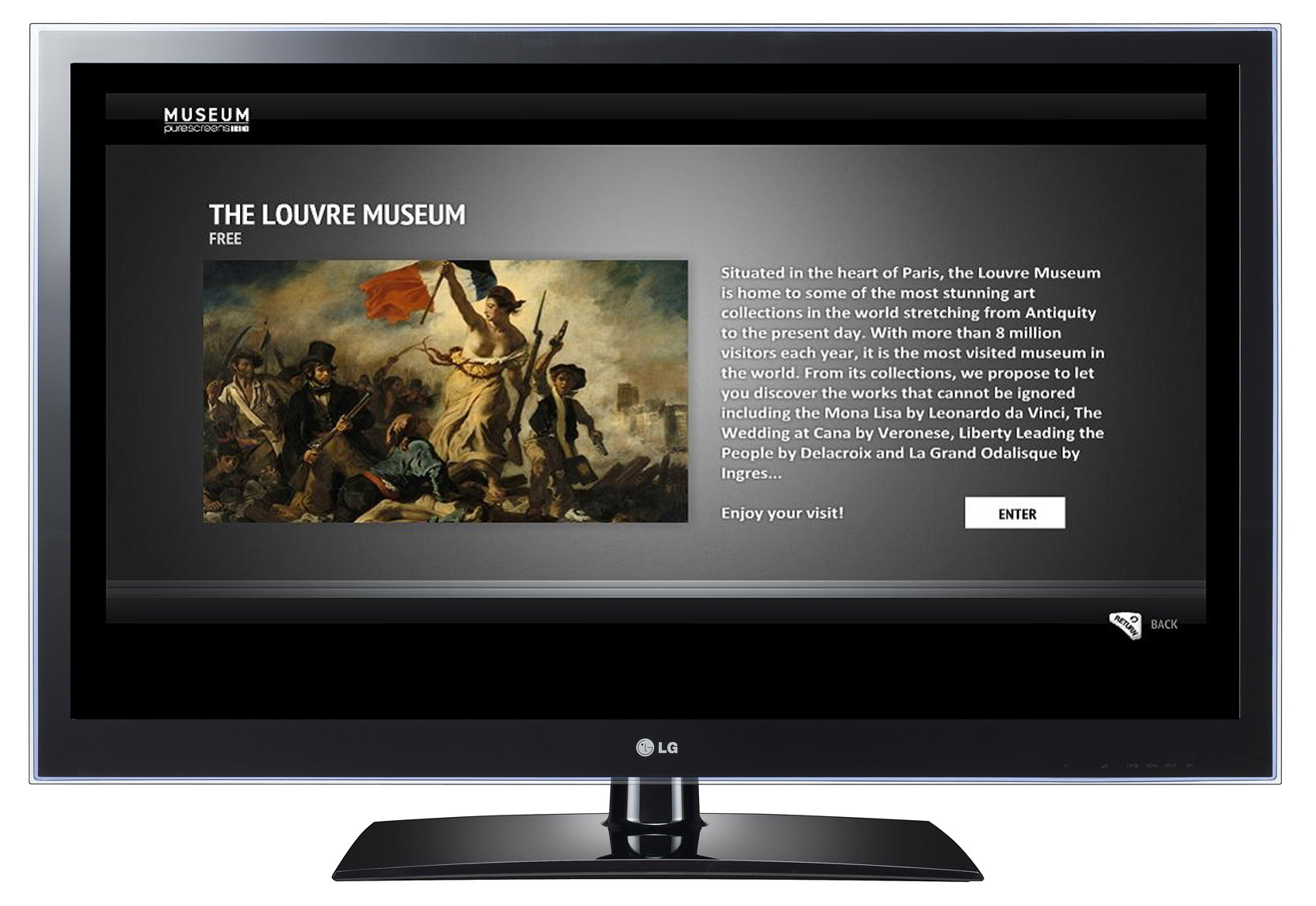
Smart TV devices also provide access to user-generated content (either stored on an external hard drive or in cloud storage) and to interactive services and Internet applications, such as YouTube, many using HTTP Live Streaming (also known as HLS) adaptive streaming.[28] Smart TV devices facilitate the curation of traditional content by combining information from the Internet with content from TV providers. Services offer users a means to track and receive reminders about shows[29] or sporting events,[30] as well as the ability to change channels for immediate viewing. Some devices feature additional interactive organic user interface / natural user interface technologies for navigation controls and other human interaction with a smart TV, with such as second screen companion devices,[31][32] spatial gestures input like with Xbox Kinect,[33][34] and even for speech recognition for natural language user interface.[35] Smart TV develops new features to satisfy consumers and companies, such as new payment processes. LG and PaymentWall have collaborated to allow consumers to access purchased apps, movies, games, and more using a remote control, laptop, tablet, or smartphone. This is intended for an easier and more convenient way for checkout.
Platforms
[edit].jpg)
Smart TV technology and software is still evolving, with both proprietary and open source software frameworks already available. These can run applications (sometimes available via an 'app store' digital distribution platform), play over-the-top media services and interactive on-demand media, personalized communications, and have social networking features.[36][37][38][39]
Android TV, Boxee, Google TV, Horizon TV, Inview, Kodi Entertainment Center, Mediaroom, MeeGo, OpenTV, Plex, RDK (Reference Development Kit), Roku, Smart TV Alliance, ToFu Media Platform, Ubuntu TV, Vewd, and Yahoo! Smart TV are framework platforms managed by individual companies. HbbTV, provided by the Hybrid Broadcast Broadband TV association, CE-HTML, part of Web4CE, OIPF, part of HbbTV, and Tru2way are framework platforms managed by technology businesses. Current smart TV platforms used by vendors are Amazon, Apple, Google, Haier, Hisense, Hitachi, Insignia, LG, Microsoft, Netgear, Panasonic, Philips, Samsung, Sharp, Sony, TCL, TiVO, Toshiba, Sling Media, and Western Digital. Sony, Panasonic, Samsung, LG, and Roku TV are some platforms ranked under the best smart TV platforms.[40]
Sales
[edit]According to a report from research group NPD In-Stat, in 2012 only about 12 million U.S. households had their Web-capable TVs connected to the Internet, although an estimated 25 million households owned a set with the built-in network capability. In-Stat predicted that by 2016, 100 million homes in North America and western Europe would be using television sets blending traditional programming with internet content.[41] By the end of 2019, the number of installed Connect TVs reached 1.26 billion worldwide.[42]
The number of households using over-the-top television services has rapidly increased over the years. In 2015, 52% of U.S. households subscribed to Netflix, Amazon Prime, or Hulu Plus; 43% of pay-TV subscribers also used Netflix, and 43% of adults used some streaming video on demand service at least monthly. Additionally, 19% of Netflix subscribers shared their subscription with people outside of their households. Ten percent of adults at the time showed interest in HBO Now.[43]
Use and issues
[edit]Social networking
[edit]Some smart TV platforms come prepackaged or can be optionally extended, with social networking technology capabilities. The addition of social networking synchronization to smart TV and HTPC platforms may provide an interaction both with on-screen content and with other viewers than is currently available to most televisions, while simultaneously providing a much more cinematic experience of the content than is currently available with most computers.[44]
Advertising
[edit]Some smart TV platforms also support interactive advertising (companion ads), addressable advertising with local advertising insertion and targeted advertising,[45] and other advanced advertising features such as ad telescoping[46] using VOD and DVR, enhanced TV for consumer call-to-action, and audience measurement solutions for ad campaign effectiveness.[47][48] The marketing and trading possibilities offered by smart TVs are sometimes summarized by the term t-commerce. Taken together, this bidirectional data flow means smart TVs can be and are used for clandestine observation of the owners. Even in sets that are not configured off-the-shelf to do so, default security measures are often weak and will allow hackers to easily break into the TV.[49]
2019 research, "Watching You Watch: The Tracking Ecosystem of Over-the-Top TV Streaming Devices", conducted at Princeton and University of Chicago, demonstrated that a majority of streaming devices will covertly collect and transmit personal user data, including captured screen images, to a wide network of advertising and analytics companies, raising privacy concerns.[50]
Digital marketing research firm eMarketer reported a 38 percent surge – to close to $7 billion, a 10 percent television advertising market share – in advertising on connected TV like Hulu and Roku, to be underway in 2019, with market indicators that the figure would surpass $10 billion in 2021.[51][52]
Security
[edit]There is evidence that a smart TV is vulnerable to attacks. Some serious security bugs have been discovered, and some successful attempts to run malicious code to get unauthorized access were documented on video. There is evidence that it is possible to gain root access to the device, install malicious software, access and modify configuration information for a remote control, remotely access and modify files on TV and attached USB drives, access camera and microphone.[53]
There have also been concerns that hackers may be able to remotely turn on the microphone or webcam on a smart TV, being able to eavesdrop on private conversations. A common loop antenna may be set for a bidirectional transmission channel, capable of uploading data rather than only receiving. Since 2012, security researchers discovered a similar vulnerability present in more series of smart TVs, which allows hackers to get an external root access on the device.[54]
Anticipating growing demand for an antivirus for a smart TV, some security software companies are already working with partners in the digital TV field on the solution. It seems like there is only one antivirus for smart TVs available: "Neptune", a cloud-based antimalware system developed by Ocean Blue Software in partnership with Sophos. However, antivirus company Avira has joined forces with digital TV testing company Labwise to work on software to protect against potential attacks.[55] The privacy policy for Samsung's smart TVs has been called Orwellian (a reference to George Orwell and the dystopian world of constant surveillance he depicted in Nineteen Eighty-Four), and compared to Telescreens because of eavesdropping concerns.[56][57]
Hackers have misused smart TV's abilities such as operating source codes for applications and its unsecured connection to the Internet. Passwords, IP address data, and credit card information can be accessed by hackers and even companies for advertisement. A company caught in the act is Vizio.[citation needed] The confidential documents, codenamed Vault 7 and dated from 2013 to 2016, include details on CIA's software capabilities, such as the ability to compromise smart TVs.[58]
Restriction of access
[edit]Internet websites can block smart TV access to content at will or tailor the content that will be received by each platform.[59] Google TV-enabled devices were blocked by NBC, ABC, CBS, and Hulu from accessing their Web content since the launch of Google TV in October 2010. Google TV devices were also blocked from accessing any programs offered by Viacom's subsidiaries.[60]
Reliability
[edit]In 2017, high-end Samsung smart TVs stopped working for at least seven days after a software update.[61] Application providers are rarely upgrading smart TV apps to the latest version; for example, Netflix does not support older TV versions with new Netflix upgrades.[62]
See also
[edit]

- 10-foot user interface
- Automatic content recognition
- Digital Living Network Alliance (DLNA)
- Digital media player
- Home automation
- Home theater PC
- Hotel television systems
- Hybrid Broadcast Broadband TV
- Interactive television
- Internet of things
- List of mobile app distribution platforms
- List of smart TV platforms
- Over-the-top media service (OTT)
- PC-on-a-stick
- Second screen
- Smartphone
- Space shifting
- Smart speaker
- Telescreen
- Tivoization
- TV Genius
- Video on demand
Footnotes
[edit]- ^ "CoTV" is used primarily by Bell Media in Canada, to distinguish from its CTV Television Network and other CTV-branded services.[1]
References
[edit]- ^ Thiessen, Connie (March 10, 2025). "Bell Media launches live CoTV inventory on TSN". Broadcast Dialogue. Retrieved March 24, 2025.
- ^ a b Steve Kovach (December 8, 2010). "What Is A Smart TV?". Businessinsider.com. Archived from the original on November 30, 2019. Retrieved January 17, 2012.
- ^ Toeman, Jeremy (October 20, 2010). "Why Connected TVs Will Be About the Content, Not the Apps". Mashable. Archived from the original on December 22, 2022. Retrieved September 29, 2024.
- ^ "Internet TV and The Death of Cable TV, really". Techcrunch.com. October 24, 2010. Archived from the original on November 14, 2019. Retrieved January 17, 2012.
- ^ "Smart TV competition heats up market". Asia News Network. Archived from the original on April 7, 2012. Retrieved January 17, 2012.
- ^ "Smart TV Shower Opens Smart Life". Korea IT Times.com. October 7, 2010. Archived from the original on July 21, 2011. Retrieved January 17, 2012.
- ^ Chacksfield, Marc (May 12, 2010). "Intel: Smart TV revolution 'biggest since move to colour' – The wonders of widgets?". Techradar.com. Archived from the original on January 2, 2012. Retrieved January 17, 2012.
- ^ "Google, With Intel and Sony, Unveils Software for 'Smart' TVs". Bloomberg BusinessWeek. May 20, 2010. Archived from the original on May 23, 2010. Retrieved January 17, 2012.
- ^ Katzmaier, David (September 8, 2010). "Poll: Smart TV or dumb monitor?". News.cnet.com. Archived from the original on February 19, 2012. Retrieved January 17, 2012.
- ^ Intel and Smart TV Archived August 6, 2010, at the Wayback Machine. intel.com. Retrieved on November 11, 2010.
- ^ "Roku 2: Same Old (But Still Good), Same Old". Gizmodo.com. August 4, 2011. Archived from the original on January 18, 2012. Retrieved January 17, 2012.
- ^ Previous post Next post (September 7, 2010). "Android Holds the Key to Samsung's smart TV Plans". Wired. Retrieved January 17, 2012.
- ^ Previous post Next post (May 20, 2010). "Google Introduces Google TV, New Android OS". Wired. Retrieved January 17, 2012.
- ^ "A first look at Google TV's new apps". Gigaom.com. September 15, 2011. Archived from the original on November 6, 2012. Retrieved January 17, 2012.
- ^ "Samsung Smart TV – TV Has Never Been This Smart". Samsung Electronics America. Archived from the original on October 2, 2016. Retrieved September 30, 2016.
- ^ Gene Gregory (1985), Japanese Electronics Technology, Enterprise and Innovation, page 351, Japan Times
- ^ "espacenet – Original document". Espacenet. Archived from the original on February 24, 2021. Retrieved January 17, 2012.
- ^ "espacenet – Bibliographic data". Espacenet. Archived from the original on September 4, 2015. Retrieved January 17, 2012.
- ^ McLaren, Ian (May 1982). "Head, Heart, Hand – and Screen". Design. pp. 50–54. Retrieved March 24, 2022.
- ^ "Bush internet TV and wireless keyboard, 2001". Retrieved December 20, 2024.
- ^ Whytehead, Chris. "Bush Internet Surf Set". Chris's Acorns.
- ^ "What is a Bush Internet TV/Set Top Box?". Bush Internet. Retrieved December 20, 2024.
- ^ "Old Bush Internet TV Advert (2000)". YouTube. May 2, 2020. Retrieved December 20, 2024.
- ^ Dieter Bohn (January 5, 2015). "All of Sony's new smart TVs run on Android TV". The Verge. Vox Media. Archived from the original on April 18, 2020. Retrieved June 17, 2015.
- ^ "CES 2015: New Samsung Smart TVs Will Be Powered by Tizen OS". Tech Times. January 3, 2015. Archived from the original on April 18, 2020. Retrieved June 17, 2015.
- ^ "LG to show off webOS 2.0 smart TV at CES 2015". CNET. CBS Interactive. Archived from the original on June 23, 2015. Retrieved June 17, 2015.
- ^ Winslow, George (January 4, 2016). "CES 2016: Five Things to Watch". Broadcasting & Cable: 10–14.
- ^ "Netgear unveils NeoTV Streaming Player, takes another shot at the smart TV market". Engadget.com. September 14, 2011. Archived from the original on December 25, 2011. Retrieved January 17, 2012.
- ^ "BuddyTV debuts Google TV app, with iPad and iPhone link". GeekWire. October 28, 2011. Archived from the original on July 11, 2012. Retrieved July 12, 2012.
- ^ "Thuuz Android App for Google TV Gives DISH Customers Instant Alerts of Most Exciting Moments in Sports". Bloomberg. January 8, 2012. Archived from the original on April 20, 2013. Retrieved July 12, 2012.
- ^ https://techcrunch.com/2012/06/04/microsoft-introduces-second-screen-feature-xbox-smartglass/ Archived July 7, 2017, at the Wayback Machine Microsoft Introduces Second-Screen Feature, Xbox SmartGlass
- ^ http://mashable.com/2012/06/04/xbox-smartglass/ Archived January 26, 2013, at the Wayback Machine Xbox SmartGlass Brings the Second Screen to Games and Videos
- ^ Robinson, Blake (November 4, 2010). "Last.fm Gesture Controls for Xbox Kinect". Mashable.com. Archived from the original on October 14, 2011. Retrieved October 19, 2011.
- ^ Narcisse, Evan (December 8, 2011). "Wave Hello: Microsoft's Requiring Kinect Functionality for All Future Apps Built for Xbox 360". Kotaku.com. Archived from the original on March 15, 2012. Retrieved March 12, 2012.
- ^ https://appleinsider.com/articles/13/01/10/2013-smart-tvs-dismissed-as-not-that-smart-leaving-opportunity-for-apple Archived March 23, 2020, at the Wayback Machine 2013 smart TVs dismissed as "not that smart", leaving opportunity for Apple
- ^ Devindra Hardawar (December 8, 2010). "Why your TV is the new app battleground". Venturebeat.com. Archived from the original on December 31, 2011. Retrieved January 17, 2012.
- ^ BBC News – Google launches smart TV service Archived November 10, 2018, at the Wayback Machine. bbc.co.uk (May 20, 2010). Retrieved on November 11, 2010.
- ^ Stan Schroeder (May 17, 2010). "Google, Intel and Sony to Introduce Smart TV". Mashable.com. Archived from the original on January 12, 2012. Retrieved January 17, 2012.
- ^ "Opinion: Will Google's Smart TV Finally Bring Apps and Web Browsing To The Living Room?". Socialtimes.com. May 17, 2010. Archived from the original on January 6, 2011. Retrieved January 17, 2012.
- ^ "The 5 best Smart TV platforms in the world 2016". TechRadar. Archived from the original on November 4, 2016. Retrieved November 4, 2016.
- ^ "100 Million TVs will have internet connections by 2016". Archived from the original on April 2, 2012. Retrieved April 19, 2012.
- ^ Watkins, David. "Consumer Electronics Reports". www.strategyanalytics.com. Archived from the original on August 13, 2021. Retrieved September 23, 2020.
- ^ "U.S. Connected-TV Penetration Passes 50% | Multichannel". www.multichannel.com. Archived from the original on January 15, 2018. Retrieved November 29, 2016.
- ^ "TVs get smart with Internet access in 2011". Abc15.com. August 23, 2010. Archived from the original on July 7, 2011. Retrieved January 17, 2012.
- ^ Daniel Cooper (January 15, 2014). "Sky's AdSmart brings targeted advertising to your TV". Engadget. AOL. Archived from the original on May 15, 2015. Retrieved June 17, 2015.
- ^ "Ad Telescoping". Archived from the original on May 11, 2015. Retrieved June 17, 2015.
- ^ "Kudelski Group :: Notification". nagra.com. Archived from the original on January 16, 2014. Retrieved October 2, 2013.
- ^ ""NAGRA-OpenTV and Time Warner Cable Media Extend Advanced Advertising Partnership" March 5, 2012 – Cheseaux, Switzerland". Archived from the original on January 5, 2017. Retrieved September 10, 2016.
- ^ "Your Smart TV Could Be Hacked to Spy On You". Mashable. August 2, 2013. Archived from the original on February 4, 2014. Retrieved January 27, 2014.
- ^ "Smart TVs, Subscription Services Leak Data to Facebook, Google". threatpost.com. September 19, 2019. Archived from the original on September 20, 2019. Retrieved September 19, 2019.
- ^ Sleffo, George P. (November 7, 2019). "The Trade Desk Bets Bib on Connected TV as Revenue Jumps 38 Percant". Ad Age. Retrieved November 15, 2019.[permanent dead link]
- ^ Williams, Robert (November 5, 2019). "EMarketer: CTV media spending will soar 38% to $7B this year". Marketing Dive. Archived from the original on November 15, 2019. Retrieved November 15, 2019.
- ^ Niemietz; et al. "Not so Smart: On Smart TV Apps" (PDF). International Workshop on Secure Internet of Things. Archived from the original (PDF) on December 27, 2015. Retrieved September 15, 2015.
- ^ "Samsung TV vulnerability could let a hacker change the channel". December 12, 2015. Archived from the original on March 6, 2013.
- ^ "Can Your Smart TV Get a Virus?". Archived from the original on December 1, 2017. Retrieved January 5, 2015.
- ^ "Samsung smart TV policy allows company to listen in on users". The Independent. February 9, 2015. Archived from the original on February 9, 2015. Retrieved February 9, 2015.
- ^ Not in front of the Telly Archived May 19, 2018, at the Wayback Machine BBC News, 2015
- ^ Shane, Scott; Mazzetti, Mark; Rosenberg, Matthew (March 7, 2017). "WikiLeaks Releases Trove of Alleged C.I.A. Hacking Documents". The New York Times. Archived from the original on March 7, 2017. Retrieved March 7, 2017.
- ^ "Big Networks Block Web Shows From Google TV". The New York Times. October 21, 2010. Archived from the original on August 10, 2011. Retrieved December 4, 2010.
- ^ "Comedy Central, MTV now blocking Google TV". CNET.com. November 22, 2010. Archived from the original on October 19, 2013. Retrieved December 4, 2010.
- ^ "Samsung TV owners furious after software update leaves sets unusable". The Guardian. August 24, 2017. Archived from the original on August 24, 2017. Retrieved August 24, 2017.
- ^ "Netflix Recommended TVs | Built for a better Netflix experience". devices.netflix.com. Archived from the original on November 20, 2015. Retrieved May 1, 2015.
External links
[edit] Media related to Smart TV at Wikimedia Commons

| Micro |
| ||||||||||||||||||||||
|---|---|---|---|---|---|---|---|---|---|---|---|---|---|---|---|---|---|---|---|---|---|---|---|
| Midrange | |||||||||||||||||||||||
| Large | |||||||||||||||||||||||
| Others | |||||||||||||||||||||||


Smart TV
View on GrokipediaDefinition and Fundamentals
Definition
A smart television, or smart TV, is a television set that integrates internet connectivity, an onboard operating system, and computing hardware such as processors and storage, enabling users to access streaming services, applications, and online content directly without external devices like set-top boxes or streaming sticks.[10][1] This distinguishes smart TVs from conventional televisions, which rely solely on broadcast or cable signals for content delivery and lack native internet functionality or app support.[11][2] AI TVs represent the next evolution of smart TVs, incorporating deeper AI integration at the processor level for real-time adaptive picture and sound optimization, personalized content recommendations, user preference learning over time, advanced upscaling, and enhanced voice assistants with contextual capabilities such as chatting and content search. While all smart TVs provide internet connectivity, streaming apps, and basic smart features, they lack the advanced AI-driven personalization and automatic adjustments characteristic of AI TVs. All AI TVs are smart TVs, but not all smart TVs qualify as AI TVs; the term "AI TV" gained traction in late 2025 and 2026 as manufacturers like Samsung and LG promoted enhanced models.[12][13] The core technological foundation of a smart TV resembles that of a specialized computer, incorporating elements like a central processing unit (CPU), random access memory (RAM), and sometimes dedicated graphics processing units (GPUs) to handle multitasking, app execution, and high-definition video decoding.[10] Internet access is typically achieved via Wi-Fi or Ethernet ports, allowing seamless integration with home networks for services such as video-on-demand platforms, including Netflix and YouTube, as well as web browsing and firmware updates.[14] Operating systems vary by manufacturer, such as Tizen for Samsung or webOS for LG, providing user interfaces optimized for remote control navigation and voice commands.[14][1] While the term "smart TV" emerged as a marketing designation without a universal technical standard, its defining traits emphasize enhanced interactivity and digital ecosystem compatibility over mere display capabilities.[15] This evolution reflects broader convergence between consumer electronics and internet technologies, prioritizing user-centric features like personalized content recommendations and smart home device integration.[10]Key Technological Components
Smart televisions integrate advanced hardware to combine traditional broadcast reception with internet-enabled computing capabilities. At the heart of this architecture is the System-on-Chip (SoC), a highly integrated circuit that consolidates the CPU, GPU, memory controllers, and video decoding hardware to process signals, render user interfaces, and execute applications efficiently.[16] Modern SoCs, such as MediaTek's Pentonic series including the MT9613, employ multi-core ARM processors like Cortex-A73, supporting 4K resolutions at 120Hz refresh rates, HEVC/H.265 decoding, and emerging AV1 codecs for high-efficiency streaming.[17][18] Leading vendors like MediaTek, alongside Novatek and Realtek, dominate the market, with their chips enabling AI features such as neural processing units (NPUs) for upscaling and content recommendation.[19][18] The display panel forms the primary visual output, utilizing technologies including LCD panels with LED or Mini-LED backlighting for cost-effective brightness, OLED for self-emissive pixels achieving contrast ratios over 1,000,000:1 and response times under 0.1ms, and QLED variants incorporating quantum dots to expand color gamut to 100% DCI-P3.[16][18] These panels connect via Timing Controller (T-Con) boards that manage pixel data timing and synchronization, ensuring precise image rendering across resolutions from Full HD to 8K.[20] Memory and storage subsystems support multitasking and data persistence, typically featuring 2-4 GB of DDR4 RAM for smooth operation of operating systems and apps, paired with 8-32 GB of eMMC or NAND flash for firmware, cached content, and installed software.[16] Connectivity components are essential for smart functionality, incorporating Wi-Fi 6E chipsets offering up to 9.6 Gbps throughput for low-latency streaming, Bluetooth 5.2 for peripheral pairing, Ethernet ports for stable wired access, and HDMI 2.1 interfaces supporting 48 Gbps bandwidth with features like Variable Refresh Rate (VRR).[18][16] Integrated tuners handle analog and digital broadcast standards such as ATSC or DVB, bridging legacy TV signals with IP-based delivery.[20] Power supply units (PSUs) and audio processors round out the assembly, with PSUs delivering regulated voltage to components while minimizing standby power, and audio hardware supporting formats like Dolby Atmos via built-in speakers or external outputs.[20]Historical Development
Origins and Early Innovations
An early precursor to smart television capabilities was Teletext, a broadcast data service introduced in the early 1970s. The BBC's Ceefax service, launched in 1974, transmitted text-based information such as news, weather, TV listings, and sports via unused lines in analog broadcast signals, offering limited interactivity through remote control page selection. Additionally, in 1983, Ceefax introduced telesoftware, which allowed downloading simple programs to compatible devices like the BBC Micro.[21][22] The origins of smart television technology can be traced to the 1980s, when Japanese manufacturers introduced "intelligent" TVs incorporating specialized chips with memory and character generators. These chips enabled the display of additional programming and data transmitted through unused lines in analog broadcast signals, marking an initial step toward interactive television capabilities.[23] By the 1990s, conceptual advancements accelerated with patents for "intelligent television systems" that connected TVs to external data processing via digital or analog networks, allowing rudimentary data retrieval and processing. The first patent explicitly for a smart TV technology was filed and registered in 1994, laying theoretical groundwork for integrated computing in display devices, though practical implementations remained limited by processing power and network infrastructure.[23][24] A key early innovation arrived in 1996 with the launch of WebTV (later rebranded MSN TV), a set-top box developed by WebTV Networks that connected standard televisions to the internet via dial-up or broadband. Priced at around $300 initially and compatible with models from Sony and Philips, it supported web browsing, email, and basic online services using a wireless keyboard and remote, selling over 775,000 units in its first year despite challenges like low-resolution interfaces and dependency on phone lines. Microsoft acquired WebTV Networks for $425 million in 1997, expanding its reach but highlighting limitations in user experience compared to personal computers.[25][26][27] Into the early 2000s, manufacturers shifted toward embedding connectivity directly into televisions, driven by improving broadband availability and digital signal processing. Samsung began developing integrated smart TV prototypes around 2005, culminating in the 2008 release of its first models with built-in Ethernet ports, web browsers, and app-like widgets for news and weather, which represented a transition from external boxes to native hardware integration. These innovations, while constrained by nascent content ecosystems and hardware costs exceeding $2,000 per unit, established core principles of IP-based interactivity that defined subsequent smart TV evolution.[4][23]Mainstream Adoption
The mainstream adoption of smart TVs accelerated in the early 2010s, coinciding with the expansion of high-speed broadband internet and the proliferation of over-the-top streaming services such as Netflix, which began international rollout in 2010.[4] Manufacturers like Samsung and LG introduced affordable models with built-in Wi-Fi and app support, reducing reliance on external devices and driving consumer interest. By 2012, streaming integration had become a standard feature, contributing to smart TVs comprising a growing share of television sales as prices fell below those of traditional sets with comparable screen sizes.[28] Market penetration surged thereafter, with connected TV ownership in the United States reaching approximately 50% of households by the mid-2010s and climbing to 66% by 2020.[29] Globally, smart TV shipments exceeded 186 million units in 2020, accounting for 79% of all flat-panel television sales, reflecting widespread acceptance enabled by improved processing power and content ecosystems.[5] This shift was further propelled by the decline in cable subscriptions and the appeal of on-demand viewing, though adoption varied by region due to differences in internet infrastructure.[30] By the late 2010s, smart TVs had become the default for new purchases in developed markets, with U.S. penetration rates approaching 70% of television households in 2021 and rising to 79% by 2024.[31] Factors such as voice assistants, 4K resolution compatibility, and integration with smart home devices solidified their position, outpacing legacy broadcast models despite initial concerns over software updates and privacy.[32] In emerging markets, adoption lagged until infrastructure improvements in the 2020s, but overall, the transition marked a fundamental change in home entertainment consumption patterns.[33]Modern Advancements
In recent years, smart TV manufacturers have increasingly integrated artificial intelligence (AI) to enhance image processing, user interfaces, and content personalization. Samsung unveiled its Vision AI platform on January 6, 2025, at CES, featuring AI-powered upscaling, scene optimization, and integration with SmartThings for smart home control, powered by the NQ8 AI Gen3 processor in select 2024 and 2025 models.[34] Similarly, LG incorporated Cerence AI for cloud-based neural text-to-speech in its webOS updates as of August 13, 2025, enabling more natural voice interactions and device connectivity.[35] The term "AI TV" gained traction in late 2025 and 2026 as manufacturers like Samsung and LG promoted models with enhanced AI capabilities, marking a shift toward more intelligent, adaptive television experiences.[12] These AI advancements aim to improve viewing experiences through real-time adjustments for brightness, contrast, and audio based on content analysis, though empirical tests show varying effectiveness depending on source material quality.[36] Display technologies have seen iterative improvements, with a shift toward higher brightness, better contrast, and larger screen sizes. Consumer Reports noted in January 2025 that 2025 models emphasize AI-driven enhancements, expanded Mini-LED backlighting for deeper blacks in LCD-based QLED and Neo QLED TVs, and support for advanced HDR formats like Dolby Vision IQ.[36] Samsung's 2024 Neo QLED lineup introduced quantum dot enhancements combined with Mini-LED for peak brightness exceeding 2,000 nits in flagship models, reducing blooming artifacts compared to prior generations.[37] OLED panels continue to dominate premium segments for perfect blacks via self-emissive pixels, with four-stack OLED prototypes demonstrated at CES 2025 promising up to 30% higher brightness without sacrificing longevity. MicroLED remains nascent, with Samsung's 2024 modular displays targeting commercial use due to high costs—prices for consumer 100-inch+ units still exceeding $100,000—limiting widespread adoption.[38] Operating system updates have focused on longevity and ecosystem expansion. LG's webOS 25, rolled out starting October 2, 2025, to 2022-2024 OLED and QNED models, adds AI personalization, quicker app launches via improved indexing, and extended support promises up to five years for security patches.[39] Samsung's Tizen OS in 2025 models integrates Perplexity AI as a dedicated app launched October 21, 2025, for conversational search and recommendations, enhancing cross-device compatibility.[40] Manufacturers like Samsung and LG now commit to multi-year update policies, driven by EU regulations effective April 2024 requiring disclosed support durations, addressing prior criticisms of rapid obsolescence in smart TV software.[41] Ultra-large screens have proliferated, with multiple brands announcing 100-115-inch models at CES 2025, facilitated by wireless transmission tech reducing cable clutter.[42] These advancements, while innovative, face challenges like content availability for 8K resolution—still limited to niche demos—and energy efficiency in AI-heavy processing, with real-world power draw increasing 20-30% in top-tier units per independent benchmarks.[43] Overall, modern smart TVs prioritize AI-driven usability and display fidelity, yet causal factors like manufacturing scalability and content ecosystem maturity constrain full realization of promised capabilities.Operating Systems and Ecosystems
Major Platforms
The predominant smart TV operating systems as of late 2024 include Google TV, Tizen, webOS, and Roku OS, which collectively dominate global shipments. Google TV, an evolution of Android TV developed by Google, holds the largest market share at over 24% of worldwide smart TV shipments in Q4 2024, powering devices from manufacturers such as Sony, TCL, and Hisense.[44] This platform emphasizes extensive app availability through the Google Play Store, integration with Google services like Assistant and Chromecast, and support for third-party hardware customization.[45] Tizen OS, proprietary to Samsung Electronics, commands approximately 16.9% of the global market and is deployed exclusively on Samsung televisions.[44] It prioritizes a unified ecosystem with Samsung's mobile and home devices, featuring a hub-based interface for apps, voice control via Bixby, and optimized performance for Samsung's hardware innovations like QLED displays.[45] Tizen's closed nature allows tight integration but limits broader manufacturer adoption compared to open platforms.[46] Tizen succeeded Samsung's Orsay platform. webOS, developed by LG Electronics, accounts for 11.8% of shipments and is used primarily on LG TVs, renowned for its intuitive card-style user interface that facilitates multitasking and content recommendations.[44] The platform supports ThinQ AI for enhanced search and integrates with services like Alexa and Google Assistant, while recent updates have expanded developer tools for custom apps.[45] webOS succeeded LG's NetCast platform. Roku OS leads in the United States market, with a global share of about 9%, and is licensed to brands including TCL, Hisense, and its own branded TVs.[44][47] Its strength lies in a straightforward channel-based navigation, vast free ad-supported streaming content, and neutrality toward streaming services, avoiding favoritism toward any single provider.[45] Other notable platforms include Amazon's Fire TV OS, integrated into select TVs from Toshiba and Insignia, which excels in Prime Video optimization and Alexa voice features, and Vidaa OS used by Hisense for cost-effective models.[45] Apple tvOS, while primarily for the Apple TV set-top box, influences some smart TV integrations through AirPlay support but remains less prevalent in built-in TV systems.[45] Market dynamics show increasing competition from retail-driven OS like potential Walmart integrations, signaling a shift toward shoppable media ecosystems by 2025.[47]Comparative Strengths and Weaknesses
Tizen, developed by Samsung, offers optimized performance tailored to its hardware, resulting in fast boot times and responsive navigation, with low power consumption compared to more resource-heavy systems like Android TV.[48][49] However, its app ecosystem is more limited, lacking the breadth of third-party applications available on Google TV, which can restrict options for niche streaming services or advanced customization; rooting capabilities are very limited and typically require specialized tools.[50][51] webOS, powering LG televisions, emphasizes a streamlined and intuitive user interface with features like the Magic Remote for pointer-based navigation, enabling quick content discovery and consistent performance across models, supported by regular security updates.[52][53] Its simplicity suits users prioritizing ease over extensibility, though it offers fewer apps and less flexibility for sideloading compared to Google TV's open ecosystem; for older models, exploits such as RootMyTV or Faultmanager enable rooting and installation of homebrew applications.[54][55] Google TV, an evolution of Android TV, excels in content aggregation and personalized recommendations via machine learning, with access to over 10,000 apps through the Google Play Store and seamless integration with Google services like Assistant and Chromecast.[45][56] Drawbacks include potential interface clutter from numerous installed apps and higher resource demands, which may slow performance on budget hardware lacking sufficient RAM, such as models under 2GB; OS replacement or major modifications are rare and often hardware-intensive due to locked bootloaders.[57][58] Roku OS provides one of the most accessible interfaces for beginners, with a neutral channel store supporting thousands of services without heavy ecosystem lock-in, and strong search functionality across providers.[45][59] Its limitations include a weaker built-in voice assistant compared to Alexa or Google Assistant, reliance on ads for free content channels, which can intrude on the user experience, and it is criticized for the lack of a built-in web browser.[45][60] Amazon's Fire TV OS, based on a fork of the open-source Android project except for select recent models that use Vega OS, a locked-down Linux distribution designed to limit sideloading,[61][62] integrates deeply with Alexa for voice control and Prime Video prioritization, offering solid hardware acceleration for 4K streaming on supported devices, but its Amazon-centric design restricts non-Prime app prominence and includes persistent ads, reducing neutrality for users outside the ecosystem.[56][63] No major platform provides a reliable method for fully replacing the operating system with an arbitrary alternative, particularly on newer firmware versions that patch known vulnerabilities; attempts carry high risks of bricking the device, and external solutions such as Android TV boxes or Raspberry Pi are recommended instead.| Operating System | Key Strengths | Key Weaknesses |
|---|---|---|
| Tizen | Fast, lightweight performance; hardware optimization | Limited app variety |
| webOS | Intuitive UI; reliable updates | Less extensibility than open platforms |
| Google TV | Vast apps; smart recommendations | Resource-intensive; potential clutter |
| Roku OS | User-friendly; broad channel access | Limited voice features; ad-heavy |
| Fire TV | Alexa integration; Amazon service synergy | Ecosystem bias; intrusive ads |
| HarmonyOS | Cross-device integration within Huawei ecosystem, lightweight performance, and multi-device collaboration features | Restricted global app availability and ecosystem lock-in outside China due to limited third-party support |
| Vizio SmartCast | Casting integration (Chromecast, AirPlay) | Limited app ecosystem |
| VIDAA | Fast navigation; lightweight performance | Limited app variety |
| [46][64] |
Core Features and Capabilities
Hardware Innovations
OLED panels represent a pivotal hardware innovation in smart TVs, enabling self-emissive pixels that deliver perfect blacks, infinite contrast ratios, and wide viewing angles without the need for a backlight, thereby eliminating issues like light bleed common in LCD technologies. LG Electronics pioneered commercial large-panel OLED TVs with the release of the 55-inch EM9700 model in 2013, marking the first widespread consumer availability of this technology.[65] Subsequent iterations, such as LG's evo panels, have improved brightness to over 1000 nits while maintaining sub-millisecond response times suitable for motion clarity.[66] Quantum dot-enhanced LCDs, branded as QLED by Samsung, emerged as a competing innovation in 2017, integrating nanoscale quantum dots to filter light for enhanced color accuracy, volume, and peak brightness levels up to 4000 nits in premium models, outperforming traditional LCDs in bright environments.[67] This hardware layer builds on LED backlighting but achieves DCI-P3 coverage exceeding 100% through precise wavelength emission.[68] Mini-LED backlighting further refined LCD performance by deploying arrays of thousands of tiny LEDs—typically under 0.2mm in size—for granular local dimming zones, reducing halo effects and improving contrast closer to OLED levels. TCL introduced the first consumer Mini-LED TV in 2019, with subsequent adoption by LG in 2021 via QNED series, enabling over 2000 dimming zones in high-end 65-inch models for dynamic range enhancements.[69] MicroLED, using inorganic LEDs at microscopic scales for modular, scalable displays without burn-in risks, remains nascent but saw initial large-scale demos by Samsung in 2019, with consumer releases like Hisense's 136-inch model announced for 2025.[42] Central processing units (CPUs) and system-on-chips (SoCs) have advanced to handle 4K/8K decoding, AI-driven upscaling, and real-time optimization. LG's Alpha 9 Gen7 processor, debuted in 2024 OLED models, incorporates dedicated AI cores for object-based noise reduction and dynamic vividness enhancements, processing up to 1.5 billion parameters per frame.[70] Samsung's equivalent Neural Quantum Processor similarly employs neural networks for 20-bit color gradation and motion vector analysis, reducing artifacts in fast-action content.[71] While premium models incorporate advanced processors, many manufacturers use relatively underpowered SoCs in mid-range and budget TVs, contributing to performance issues like laggy interfaces, as noted in technical analyses.[72] Connectivity hardware has standardized around HDMI 2.1, specified in November 2017 with 48 Gbps bandwidth to support uncompressed 4K at 120Hz, 8K at 60Hz, variable refresh rates (VRR), and enhanced audio return channel (eARC).[73] Adoption accelerated in 2021 for gaming TVs, with models like LG's C-series featuring four full-bandwidth ports for low-latency features essential to console integration.[74] Wireless standards progressed to Wi-Fi 6 (802.11ax) in 2020-era sets, offering up to 9.6 Gbps throughput and better multi-device handling for 4K streaming.[75] Audio subsystems have integrated object-based hardware like Dolby Atmos decoders with upward-firing speakers, while cameras and microphones were common in high- and mid-end smart TVs from manufacturers like LG and Samsung, with external Skype cameras also available; built-in cameras, when present, are commonly located at the top center of the TV's bezel or frame, and some older Samsung F-series models featured pop-up or retractable cameras.[76][77] They were largely phased out around 2016 primarily due to low usage—following the discontinuation of Skype support for TV apps in June 2016 and similar discontinuations for apps like Google Meet on Samsung and Android TV platforms around 2024, alongside consumer preference for smartphones and tablets—along with manufacturing costs, with privacy concerns as an additional factor; many modern smart TVs omit built-in cameras primarily due to low demand and manufacturing costs, with privacy concerns as a contributing factor, though select models in the 2020s reintroduced them, such as Honor Vision's built-in pop-up camera and LG's Easy TV for elderly users with integrated cameras for video chats, with overall prevalence remaining limited primarily by low demand.[78][79][80][81][82][36] Overall, these innovations prioritize measurable metrics—such as peak brightness, dimming precision, and processing latency—driven by competition among manufacturers like LG, Samsung, and TCL.Software and User Interface Features
Smart TV software enables interactive features such as app ecosystems for streaming services, built-in web browsers, and content aggregation tools that unify search across multiple providers. Smart TV app ecosystems differ from those for mobile devices, as applications designed for smartphones and tablets—optimized for touch input, smaller portrait-oriented screens, and mobile-specific features like sensors—are generally incompatible or perform poorly on smart TVs. This results in issues such as absent touch support, reliance on different APIs and libraries (e.g., Leanback framework for Android TV), and navigation challenges with remote controls or D-pad inputs on large landscape displays, necessitating dedicated TV-optimized app development.[83] Early app ecosystems promoted Social TV features in the late 2000s to early 2010s, integrating apps like Facebook, Twitter, Skype, Google Talk, Picasa, and Flickr by manufacturers including Samsung and LG; these largely declined around 2016 due to low usage, exemplified by Skype's discontinuation of smart TV support.[84][85] Revival occurred around 2020 amid the COVID-19 pandemic with video conferencing apps like Google Duo and Meet on Android TV and other platforms, alongside TikTok for TV, and X (formerly Twitter) launching a video-only TV app in 2024 similar to YouTube but lacking text-based posting capabilities, though Google Meet TV and TikTok TV apps were discontinued around 2025.[86][87][88] User interfaces generally feature streamlined navigation via on-screen grids or card-based layouts, prioritizing quick access to recommended content derived from viewing habits and integrated services.[45] Native gaming on Smart TVs initially emphasized local titles, with early platforms like LG's Netcast and Samsung's Orsay providing Unity support for development and hosting ports of mobile games such as Angry Birds, Cut the Rope, Minion Rush, and Where's My Water.[89][90] Cloud gaming services began integrating around 2013, contributing to the decline of complex local games by 2016 (excluding tvOS and Android TV due to APIs similar to those of mobile platforms), with the 2020s focusing primarily on cloud-based gaming alongside basic local options.[91] Voice control integration allows hands-free operation, with remotes equipped with microphones supporting commands for content search, volume adjustment, and smart home device management through assistants like Google Assistant or Amazon Alexa. Premium models offer hands-free activation without button presses, enhancing accessibility. Gesture recognition, exemplified by LG's Magic Remote, employs accelerometer-based pointing and air motions for cursor control and menu selection, reducing reliance on traditional button navigation. In the early 2010s, Samsung and LG among other companies offered interactive camera-based hand controls and remoteless voice controls; these were discontinued around 2016 due to low adoption. Samsung reintroduced camera-based gesture controls in its 2020s Tizen TVs for accessibility.[45][92][93][94][95] Personalization options include multi-user profiles for individualized recommendations and settings, alongside customizable home screens that allow rearrangement of app tiles and content feeds. Unified search bars facilitate cross-app queries, while screen mirroring support via protocols like AirPlay and Miracast enables seamless content casting from smartphones or tablets. As of 2025, AI-driven enhancements, such as Gemini integration in Google TV models and Copilot integration in Samsung Tizen and LG webOS TV models, refine content suggestions and interface responsiveness.[45][96][97]Integration with External Devices
Smart TVs facilitate integration with external devices through a combination of wired and wireless connectivity options, allowing users to connect gaming consoles, audio systems, streaming devices, and peripherals for enhanced functionality. HDMI ports remain the primary interface for high-definition video and audio transmission, with most models from 2020 onward featuring at least three HDMI 2.1-compliant inputs that support 4K resolution at 120 Hz refresh rates, variable refresh rates (VRR), and auto low latency mode (ALLM) for gaming consoles like PlayStation 5 and Xbox Series X.[98] HDMI Consumer Electronics Control (CEC) enables unified control across connected devices, such as powering on a soundbar when the TV activates or adjusting volume with the TV remote; this feature, implemented under proprietary names like Samsung's Anynet+ or LG's ThinQ, relies on the HDMI standard introduced in 2005 but widely standardized in smart TVs by the mid-2010s. Enhanced Audio Return Channel (eARC), specified in HDMI 2.1 and adopted in premium models since around 2019, expands audio bandwidth to over 37 Mbps, supporting uncompressed formats like Dolby TrueHD and DTS-HD Master Audio for transmission to AV receivers or soundbars without quality loss.[99][100] USB ports, typically numbering two or more on contemporary smart TVs, allow attachment of external hard drives, flash drives, or USB media players for direct playback of videos, music, and photos in formats such as MKV, MP4, and JPEG, often with support for exFAT and NTFS file systems. These ports also accommodate USB keyboards, mice, or gamepads for navigation and gaming, though compatibility varies by TV platform. Bluetooth connectivity, standard since the early 2010s and now ubiquitous in 2025 models, pairs with headphones, wireless speakers, soundbars, and input devices; for instance, Samsung TVs support pairing up to seven Bluetooth devices simultaneously for audio output or control.[101][102] Wireless screen mirroring and casting protocols extend integration to mobile devices and computers without cables. Miracast, a Wi-Fi Direct-based standard certified by the Wi-Fi Alliance since 2012, enables direct screen duplication from Android devices or Windows PCs to compatible smart TVs. Apple AirPlay 2, integrated into many TVs via software updates starting around 2019, allows streaming and mirroring from iOS/macOS devices with low-latency audio-video sync. Built-in Chromecast or Google Cast support, prevalent in Google TV and Android TV platforms, facilitates content casting from apps on smartphones or laptops, handling up to 4K streams over Wi-Fi. These protocols, while interoperable to varying degrees, can encounter compatibility issues across ecosystems, often requiring firmware updates for optimal performance.[103][104]Market Dynamics
Global Sales and Adoption Trends
Global smart TV market revenue reached approximately USD 227.52 billion in 2024, reflecting sustained demand for internet-connected televisions amid rising streaming services and home entertainment needs.[105] This figure follows growth from USD 202.8 billion in 2023, driven by advancements in display technologies and integration with voice assistants, though tempered by economic pressures like inflation.[106] Alternative estimates place 2024 revenue at USD 245.51 billion, underscoring variability in market definitions but consensus on expansion at a compound annual growth rate (CAGR) between 9.5% and 12.8% through the decade.[107] [105] Shipment volumes for smart TVs totaled over 187 million units in 2023, marking a 0.5% year-over-year decline attributed to macroeconomic challenges including high inflation and reduced consumer spending on non-essential electronics.[108] This followed steadier growth in prior years, with global TV shipments—including a high proportion of smart models—dipping to their lowest since 2015 in 2023 before rebounding 3% year-over-year to 56 million units in Q2 2024, led by premium segment gains in Europe.[109] [110] Samsung led vendor shipments with 36.1 million units in 2022, highlighting concentration among top manufacturers.[5] Adoption rates have accelerated globally, with smart TV ownership projected to surpass 1.1 billion households by the mid-2020s, equating to about 51% of worldwide households and enabled by 67% global internet penetration in 2024.[5] [111] Penetration remains higher in developed regions, such as North America and Europe, where connected TV usage drives daily video consumption among younger demographics (62% for ages 18-34), while emerging markets like Asia-Pacific exhibit faster growth due to affordable models and expanding broadband.[112] Overall supply contracted 5.5% in 2023 from 2022 levels, reflecting cyclical demand fluctuations rather than structural decline.[113] Projections indicate recovery and expansion, with market revenue forecasted to reach USD 451.26 billion by 2030 at a 12.8% CAGR, fueled by larger screen sizes, 8K resolutions, and OTT platform integration, though sustained by verifiable consumer shifts toward cord-cutting over traditional cable.[105] Shipments of premium smart TVs, including 80-inch-and-larger models, are expected to grow 35% year-over-year, comprising 7% of total display shipments.[114] These trends underscore smart TVs' dominance in the television sector, where non-smart models now represent a minority share.Manufacturer Competition and Market Shares
Samsung Electronics maintained its position as the global leader in the television market, encompassing smart TVs, for the 19th consecutive year in 2024, achieving a 28.3% market share based on data from market research firm Omdia.[115] This dominance stems from Samsung's emphasis on premium technologies such as QLED and OLED displays, coupled with its Tizen operating system, which supports a broad ecosystem of apps and voice integration. However, Samsung faces mounting pressure from cost-competitive Chinese manufacturers, who leverage vertical integration in panel production and aggressive pricing to erode market positions, particularly in large-screen segments exceeding 75 inches.[116] TCL and Hisense have emerged as primary challengers, with TCL securing 13.9% of global smart TV shipment share and Hisense 12.8% in Q4 2024, according to TechInsights analysis of vendor shipments by region.[44] LG Electronics trailed with 11.1% in the same period, relying on its webOS platform and strengths in OLED panel innovation through partnerships with suppliers like LG Display.[117] These Chinese brands' gains reflect structural advantages, including lower manufacturing costs from domestic supply chains and rapid scaling of mini-LED and quantum dot technologies, enabling them to undercut premium pricing while matching feature sets like high refresh rates and smart home compatibility. Counterpoint Research corroborates this trend, positioning TCL and Hisense as second and third globally, displacing LG to fourth place amid overall TV market contraction.[118]| Manufacturer | Q4 2024 Smart TV Shipment Share | Source |
|---|---|---|
| Samsung | 16.9% | TechInsights[44] |
| TCL | 13.9% | TechInsights[44] |
| Hisense | 12.8% | TechInsights[44] |
| LG | 11.1% | TechInsights[44] |