Hubbry Logo
search
logo
1673285

Turkish art

logo
Community Hub0 Subscribers
Read side by side
from Wikipedia

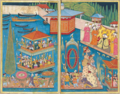
Ottoman illumination is an art form of the Ottoman Empire

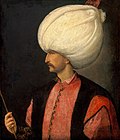
Turkish art (Turkish: Türk sanatı) refers to all works of visual art originating from the geographical area of what is present day Turkey since the arrival of the Turks in the Middle Ages.[1] Turkey also was the home of much significant art produced by earlier cultures, including the Hittites, Ancient Greeks, and Byzantines. Ottoman art is therefore the dominant element of Turkish art before the 20th century, although the Seljuks and other earlier Turks also contributed. The 16th and 17th centuries are generally recognized as the finest period for art in the Ottoman Empire, much of it associated with the huge Imperial court. In particular the long reign of Suleiman the Magnificent from 1520 to 1566 brought a combination, rare in any ruling dynasty, of political and military success with strong encouragement of the arts.[2]

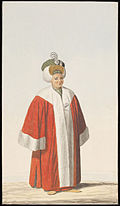
The nakkashane, as the palace workshops are now generally known, were evidently very important and productive, but though there is a fair amount of surviving documentation, much remains unclear about how they operated. They operated over many different media, but apparently not including pottery or textiles, with the craftsmen or artists apparently a mixture of slaves, especially Persians, captured in war (at least in the early periods), trained Turks, and foreign specialists. They were not necessarily physically located in the palace, and may have been able to undertake work for other clients as well as the sultan. Many specialities were passed from father to son.[3]

Seljuk period

[edit]
Tiled mihrab from the Beyhekim Mosque in Konya, 13th century CE, Museum of Islamic Art, Berlin

The Seljuks of Rum, who rose to power in Anatolia during the late 11th century, ruled a multi-ethnic territory that was only recently settled by Muslims. As a result, their architecture was eclectic and incorporated influences from many cultures in the region.[4] Most Anatolian Seljuk buildings are constructed of dressed stone, with brick reserved for minarets. The use of stone in Anatolia is the biggest difference with the Seljuk buildings in Iran, which are made of bricks. This also resulted in more of their monuments being preserved up to modern times.[5] In their construction of caravanserais, madrasas and mosques, the Anatolian Seljuks translated earlier Iranian Seljuk architecture of bricks and plaster into the use of stone.[6]

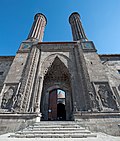
Stone-carved portal of the Great Mosque of Divriği, built by the House of Mengüjek in the early 13th century, under Anatolian Seljuk rule[7]

Decoration in Anatolian Seljuk architecture was concentrated on certain elements like entrance portals, windows, and the mihrabs of mosques. Stone-carving was one of the most accomplished mediums of decoration, with motifs ranging from earlier Iranian stucco motifs to local Byzantine and Armenian motifs. Muqarnas was also used. The madrasas of Sivas and the Ince Minareli Medrese in Konya are among the most notable examples, while the Great Mosque and Hospital complex of Divriği is distinguished by the most extravagant and eclectic high-relief stone decoration around its entrance portals and its mihrab. Syrian-style ablaq striped marble also appears on the entrance portal of the Karatay Medrese and the Alaeddin Mosque in Konya. Although tilework was commonly used in Iran, Anatolian architecture innovated in the use of tile revetments to cover entire surfaces independently of other forms of decoration, as seen in the Karatay Medrese.[8][9]

Ottoman period

[edit]
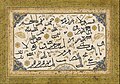
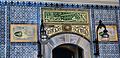
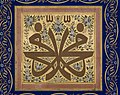
Thuluth script calligraphy of Ali decorating the Hagia Sophia Grand Mosque
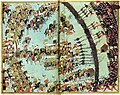
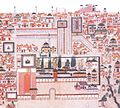
Map of Constantinople in Hunername-I, an example of Ottoman miniature
Two tiles, circa 1560, fritware, painted in blue, turquoise, red, green, and black under a transparent glaze, Art Institute of Chicago (Chicago, USA)
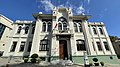
Ortaköy Mosque is a neo-baroque example of the Westernization of late Ottoman architecture

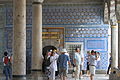
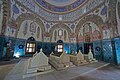
Ottoman architecture developed traditional Islamic styles, with some technical influences from Europe, into a highly sophisticated style, with interiors richly decorated in coloured tiles, seen in palaces, mosques and turbe mausolea.[10]

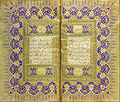
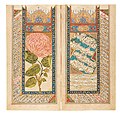
Other forms of art represented developments of earlier Islamic art, especially those of Persia, but with a distinct Turkish character. As in Persia, Chinese porcelain was avidly collected by the Ottoman court, and represented another important influence, mainly on decoration.[11] Ottoman miniature and Ottoman illumination cover the figurative and non-figurative elements of the decoration of manuscripts, which tend to be treated as distinct genres, though often united in the same manuscript and page.[12]

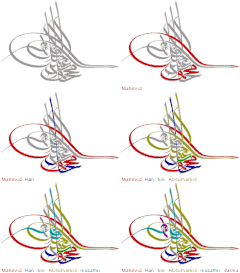
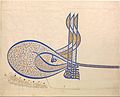
The reign of the Ottomans in the 16th and early 17th centuries introduced the Turkish form of Islamic calligraphy. This art form reached the height of its popularity during the reign of Suleiman the Magnificent (1520–66).[13] As decorative as it was communicative, Diwani was distinguished by the complexity of the line within the letter and the close juxtaposition of the letters within the word. The hilya is an illuminated sheet with Islamic calligraphy of a description of the Islamic prophet Muhammad. The tughra is an elaborately stylized formal signature of the sultan, which like the hilya performed some of the functions of portraits in Christian Europe. Book covers were also elaborately decorated.[14]

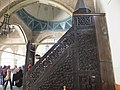
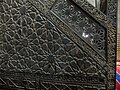
Other important media were in the applied or decorative arts rather than figurative work. Pottery, especially İznik pottery, jewellery, hardstone carvings, Turkish carpets, woven and embroidered silk textiles were all produced to extremely high standards, and carpets in particular were exported widely. Other Turkish art ranges from metalwork, carved woodwork and furniture with elaborate inlays to traditional Ebru or paper marbling.[15]

18th to 20th centuries

[edit]

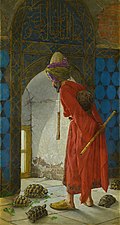
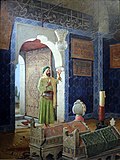
In the 18th and 19th centuries Turkish art and architecture became more heavily influenced by contemporary European styles, leading to over-elaborated and fussy detail in decoration.[16] European-style painting was slow to be adopted, with Osman Hamdi Bey (1842–1910) for long a somewhat solitary figure. He was a member of the Ottoman administrative elite who trained in Paris, and painted throughout his long career as a senior administrator and curator in Turkey. Many of his works represent the subjects of Orientalism from the inside, as it were.

Alongside the broader European influences on decoration, the period also saw the synthesis of foreign techniques with traditional Ottoman tastes to create new art forms. A notable example is Çeşm-i Bülbül (literally "Nightingale's Eye"), a distinctive type of decorative glassware developed in the late 18th to early 19th centuries.[17][18]

20th century and onward

[edit]

A transition from Islamic artistic traditions under the Ottoman Empire to a more secular, Western orientation has taken place in Turkey. Modern Turkish painters are striving to find their own art forms, free from Western influence. Sculpture is less developed, and public monuments are usually heroic representations of Atatürk and events from the war of independence. Literature is considered the most advanced of contemporary Turkish arts.

Repatriation of looted art

[edit]

In 2024, a bronze statue of the head of a youth was returned to Turkey by the J. Paul Getty Museum[19] and a bronze statue of the head of Roman Emperor Septimius Severus was to be returned to Turkey by Denmark's NY Carlsberg Glypotek Museum. Originating in the ancient city of Boubon in Burdur, they were looted in illegal excavations in the 1960s.[20][21] Turkey requested that the Cleveland Museum of Art return 21 objects[22][23][24] but the museum refused saying the Turkey lacked proof of looting[25] causing a clash with the Manhattan District Attorney and the unit that fights Antiquities Trafficking.[26][27]

[edit]

Architecture

[edit]

Calligraphy

[edit]

Carpets

[edit]

Culinary art

[edit]

Dance

[edit]

Fashion

[edit]

Handcraft

[edit]

Illumination

[edit]

Miniature

[edit]

Painting

[edit]

Sculpture

[edit]

Tiles

[edit]

Weapons

[edit]

See also

[edit]

Notes

[edit]

References

[edit]

Further reading

[edit]
Revisions and contributorsEdit on WikipediaRead on Wikipedia
from Grokipedia
Turkish art denotes the body of visual arts produced by Turkic peoples following their 11th-century migration into Anatolia, fusing nomadic Central Asian heritage with Persian, Byzantine, and indigenous Anatolian elements under Islamic governance.[1] The tradition crystallized during the Seljuk Sultanate (11th–13th centuries), evident in ornate stone carvings and portal decorations on madrasas and caravanserais, before reaching its zenith in the Ottoman Empire (14th–20th centuries), where architecture, calligraphy, and ceramics exemplified technical mastery and aesthetic refinement.[2] Ottoman works prioritized geometric and floral motifs over figurative representation, adhering to Islamic aniconism while employing intricate tilework and arabesque patterns to adorn mosques and palaces.[3] Prominent achievements include the architectural legacy of Mimar Sinan, whose designs for over 300 structures, such as the Süleymaniye Mosque, integrated vast central domes with semi-domes for structural harmony and luminous interiors.[4] Calligraphy elevated Qur'anic verses and imperial tughras into high art, with artists like Sheikh Hamdullah innovating scripts like naskh and thuluth for manuscripts and epigraphy. Iznik ceramics, peaking in the 16th century, featured underglaze techniques in cobalt blue, turquoise, and tomato red, decorating imperial complexes with durable, vibrant panels depicting tulips, hyacinths, and carnations.[5] Miniature painting chronicled dynastic history in albums like the Hünername, blending Persian influences with Ottoman realism in court ateliers.[4] In the Republican era post-1923, Turkish art shifted toward Western modernism, with painters like İbrahim Çallı embracing impressionism while grappling with national identity, though traditional crafts like carpet weaving persisted in rural Anatolia.[6] Defining characteristics encompass synthesis over innovation, patronage-driven production, and functionality wedded to ornamentation, yielding enduring UNESCO-listed sites like the Selimiye Mosque in Edirne. Controversies arise from interpretive debates over pre-Islamic Turkic motifs' survival amid Islamization and the 20th-century state's promotion of secular, Eurocentric aesthetics at the expense of Ottoman heritage.[7]

Origins and Early Influences

Pre-Turkic Anatolian Foundations

Anatolia's artistic traditions originated in the Neolithic period, exemplified by the settlement of Çatalhöyük, occupied from approximately 7400 to 6200 BCE, where inhabitants produced wall paintings, relief sculptures, and clay figurines depicting animals, humans, and abstract motifs. These early expressions included plastered skulls painted with ochre to evoke faces and installations of bull bucrania embedded in walls, reflecting ritualistic and symbolic concerns that persisted in regional iconography.[8][9] During the Bronze Age, the Hittite civilization (c. 1600–1180 BCE) developed monumental architecture and sculpture centered at Hattusa (modern Boğazköy), featuring rock-cut reliefs of deities, warriors, and processions, as well as orthostates—large stone slabs carved with animal and divine figures—for temple and palace walls. Hittite art emphasized hieratic scale and narrative scenes of conquest and divinity, establishing techniques in stone masonry and low-relief carving that influenced subsequent Anatolian building practices.[10][11] In the Iron Age, Phrygian art (c. 800700 BCE) at sites like Gordion introduced rock-cut facades, tumulus tombs with timber-framed megara, and pottery with orientalizing motifs of painted animals and geometric patterns, alongside intricate jewelry and ivory carvings. These elements demonstrated a synthesis of local and Near Eastern influences, prioritizing functional wood and stone construction over monumental permanence, which laid groundwork for Anatolia's diverse structural forms.[12][13] Hellenistic and Roman periods (from 334 BCE onward) overlaid Anatolia with Greek-inspired sculpture, theaters, and mosaics, as seen in cities like Perge and Aspendos, where marble statues of gods and emperors, along with figurative reliefs, proliferated under Roman provincial rule established by 25 BCE. This era introduced classical proportions, portraiture, and public architectural complexes, including aqueducts and basilicas, that provided reusable stone quarries and engineering precedents for later builders.[14][15][16] Byzantine art, as the immediate pre-Turkic layer from the 4th to 11th centuries CE, featured domed basilicas, mosaic pavements with Christian iconography, and frescoes in rock-cut churches, particularly in Cappadocia, synthesizing Roman engineering with Eastern decorative opulence. Structures like Hagia Sophia (537 CE) exemplified pendentive domes and marble revetments, techniques directly adapted by incoming Seljuk architects for mosque construction, evident in the geometric and vegetal motifs that bridged imperial and Islamic aesthetics without religious conversion of forms.[17][18]

Central Asian Turkic Nomadic Traditions

The nomadic Turkic peoples of Central Asia, including the Göktürks (6th–8th centuries CE) and their successors like the Oghuz tribes, developed artistic traditions adapted to a mobile pastoralist existence, emphasizing portable objects over monumental forms. Primary media included metalwork in silver, bronze, and gold for personal adornments, horse trappings, and weaponry, crafted via techniques such as lost-wax casting, repoussé, and engraving. These artifacts, often recovered from kurgan burials in regions like the Altai Mountains and Mongolian steppes, featured stylized animal motifs—such as deer, horses, eagles, and composite beasts like griffins—reflecting a worldview where animals symbolized power, fertility, and spiritual intermediaries, inherited from broader Eurasian steppe cultures.[19][20] Jewelry served both aesthetic and social functions, marking rites of passage and tribal identity through intricate designs incorporating tamgas (heraldic clan symbols) alongside zoomorphic elements. For instance, Turkmen subgroups, descendants of Oghuz nomads, produced silver headdresses, amulets, and belt plaques with granulation and filigree, where motifs like the octagonal "göl" medallion evoked protective geometry tied to pre-Islamic shamanism. Horse gear, including bits and bridle fittings with applied animal terminals, underscored the centrality of equestrian culture, with gilt bronze examples from Göktürk-era sites demonstrating technical sophistication in alloying and gilding. These forms prioritized functionality and durability, using lightweight materials to facilitate migration across vast steppes.[21][22] Textile arts complemented metalwork, utilizing wool felting and weaving for tents, saddles, and clothing decorated with geometric and animal-derived patterns. Flat-woven kilims and pile rugs precursors employed slit-tapestry techniques to render motifs like interlocking horns or dragon scrolls, symbolizing clan motifs and warding off evil, as evidenced in surviving fragments from Uyghur-influenced nomadic contexts. Felt appliqué, applied to yurts and horse blankets, allowed for colorful, insulated designs using dyed wool, preserving oral cosmologies through portable narratives. These traditions, unburdened by sedentary permanence, fostered a dynamic aesthetic of abstraction and vitality that later migrated westward with Turkic expansions, seeding motifs in Anatolian Seljuk metalwork and ceramics despite Islamic aniconism's constraints.[23]

Syncretism with Byzantine and Persian Elements

Following the Turkic victory at the Battle of Manzikert in 1071 CE, which opened Anatolia to widespread Seljuk settlement, artistic production began integrating nomadic Turkic motifs with established Byzantine craftsmanship and Persianate decorative schemes from the Great Seljuk realm. Local Byzantine artisans, proficient in ashlar masonry and dome construction, were often commissioned for Seljuk projects, adapting church-building techniques to mosques and madrasas while incorporating Islamic prohibitions on figural representation.[24] Persian influences manifested in muqarnas vaulting, geometric interlace, and vegetal arabesques, executed in stone rather than the traditional Iranian brick to suit Anatolian materials and local expertise.[25] This synthesis is evident in the Alaeddin Mosque in Konya, initiated around 1155 CE and completed by 1220 CE, where the hypostyle prayer hall employs Syrian-Persian plan elements alongside Byzantine spolia—reused marble columns and capitals from pre-conquest structures—demonstrating pragmatic reuse of available resources.[26] The mosque's terrace, built into the citadel hill, reflects a strategic adaptation of Byzantine fortification techniques, while portal decorations preview later Ottoman styles with Persian-inspired stalactite hoods carved in local stone.[27] The Great Mosque and Hospital of Divriği, erected between 1228 and 1229 CE under Mengujekid patronage, exemplifies peak syncretism through its north and west portals, featuring deeply undercut reliefs of lions, dragons, and palmettes that blend Persian mythical iconography with Byzantine sculptural depth and Armenian geometric precision.[28] These carvings, among the finest surviving Seljuk stonework, prioritize ornamental complexity over narrative, fusing Iranian courtly aesthetics with Anatolian Christian heritage in a UNESCO-recognized ensemble that includes a multifunctional darüşşifa (hospital).[29] Such hybrids underscore the Seljuks' role as cultural intermediaries, employing diverse craftsmen to forge a distinct Rum Seljuk idiom resilient to Mongol disruptions by the late 13th century.[30]

Seljuk Period (c. 1071–1308)

Architectural Innovations in Anatolia

Anatolian Seljuk architecture marked a departure from earlier Islamic styles by emphasizing locally quarried cut stone over imported brick, enabling intricate surface decorations and structural robustness suited to the region's seismic activity and material availability. This adaptation fused Persianate spatial organizations—such as iwans and domed chambers—with Byzantine and Armenian masonry techniques, resulting in hybrid forms that prioritized monumental facades and functional complexes. Madrasas emerged as a primary innovation, serving as theological schools with central courtyards, vaulted student cells, and teaching iwans, often arranged in a four-iwan cruciform plan to symbolize Islamic cosmology.[31][32] Monumental portals, or pishtaqs, represented a hallmark advancement, featuring deeply recessed arches crowned by muqarnas squinches and dense geometric interlacing carved in high relief, which drew from Central Asian and Iranian precedents but incorporated Anatolian figural elements like lions and double-headed eagles in low frequencies. The Çifte Minareli Medrese in Erzurum, erected in 1253 by Hundi Hatun, exemplifies this with its twin brick minarets flanking a protruding stone portal adorned with floral arabesques and Kufic inscriptions, measuring approximately 20 meters in height and showcasing the era's engineering in balancing ornamental excess with structural integrity.[33][34] Multifunctional complexes further highlighted Seljuk ingenuity, integrating mosques, hospitals, and mausolea under unified patronage, as in the Divriği Great Mosque and Darüşşifa, constructed between 1228 and 1229 under Mengujekid rulers Ahmad Shah and Turan Melek. This UNESCO-listed ensemble employed a hypostyle prayer hall with 50 columns supporting a flat roof, adjacent to a two-story hospital featuring domed treatment rooms and a central tomb, all unified by facades of exceptional stone carving that avoided painted tiles in favor of durable monochrome reliefs depicting stellar motifs and abstract interlaces.[28] Caravanserais along Silk Road routes introduced fortified modular designs with massive gateways, vaulted stables for 1,000 camels, and ablution facilities, exemplified by structures like the Sultan Han near Aksaray (built 1229), which spanned 110 by 50 meters and incorporated defensive towers to secure trade amid Mongol threats. These innovations not only facilitated economic expansion but also disseminated Seljuk aesthetic norms, influencing subsequent Ottoman developments through over 100 surviving examples.[31]

Ceramics, Stone Carving, and Early Islamic Motifs

In Anatolian Seljuk architecture of the 12th and 13th centuries, ceramics primarily manifested as glazed tiles applied to religious and civil buildings, utilizing the cut-mosaic technique where monochrome colored plates were sliced and reassembled on plaster beds to compose complex geometric and floral patterns.[35] Tile bodies consisted of high-quartz (85–90 wt%) frit mixed with lime-alkali fluxes and plastic clay, covered in transparent soda-rich or opaque tin-opacified lead-alkali glazes in hues like turquoise, cobalt blue, green, and violet-brown, fired at around 900°C.[35] Surviving examples from Konya’s Kılıçarslan Square demonstrate this method's prevalence in the mid-13th century, with burnished variants in secular settings incorporating human, animal, and mythical figures alongside abstract designs.[35] Stone carving dominated exterior decoration, particularly on portals and facades, through high- and low-relief sculpture that accentuated light-shadow contrasts and structural transitions.[36] Muqarnas elements—tiered, niche-like projections mimicking stalactites—adorned corbels, friezes, and pendentives, providing volumetric ornamentation as seen in the portals of hans like Sultan Han in Aksaray (built c. 1220s).[36] Techniques involved incising grids for interlace patterns and carving cells for muqarnas, yielding motifs such as polygons, stars, trelliswork, vine-leaf scrolls, rosettes, and occasional zoomorphic details like lions or eagles, which conveyed protective symbolism rooted in Turkic nomadic heritage adapted to Islamic contexts.[36] Early Islamic motifs in these media emphasized aniconism with geometric interlace, arabesques, and epigraphy, while cosmic symbolism drew from Qur'anic imagery of divine order, including domes as heavens, basins as primordial waters, and four pillars as angelic bearers of the Throne.[37] In Anatolia, these fused with pre-Islamic Turkic mandala traditions, evident in the circular-square portal designs of Divriği Ulu Mosque (1228) and Nigde Alaeddin Mosque (c. 1250), where vegetal and stellar patterns evoked universal harmony without direct figuration in sacred spaces.[37] Secular ceramics occasionally permitted stylized hunting scenes or mythical beasts, reflecting Persianate influences transmitted via Iranian Seljuk precedents, yet Anatolian variants prioritized durable, locally sourced stone and frit for enduring architectural integration.[38]

Manuscript Illumination and Calligraphy Foundations

In the Seljuk period of Anatolia, particularly under the Sultanate of Rum (c. 1077–1308), manuscript illumination and calligraphy emerged as vital extensions of Islamic book arts, adapting Abbasid and Persian traditions to local workshops in urban centers like Konya and Sivas. These arts emphasized the sanctity of the written word, with calligraphy serving as the primary vehicle for transcribing the Qur'an and scholarly texts, while illumination provided non-figural embellishment to honor divine revelation without idolatry. Patronage from sultans and viziers, such as those in Konya—the Rum capital—fostered scriptoria that produced Qur'anic manuscripts blending angular precision with emerging fluidity, laying technical and aesthetic foundations for Ottoman refinements.[39][40] Calligraphic styles transitioned from the rigid, angular Kufic script—suited for monumental inscriptions and early Qur'ans—to more cursive forms like naskh and muhaqqaq, influenced by the Baghdad school and figures such as Yaqut al-Musta'simi (d. 1298), whose six canonical scripts (rayhani, muhaqqaq, naskh, thuluth, riq'a, ta'liq) gained traction amid Seljuk patronage of learning. In Anatolian examples, naskh predominated for its legibility in compact volumes, often executed in black ink on polished paper with gold rulings for verse markers. Surviving Rum Seljuk Qur'ans from the 13th century, such as those predating the 1243 Mongol invasion, feature precise ray-like extensions and diacritical harmony, reflecting a synthesis of Central Asian Turkic portability with Persian ornamental rigor.[41][42] Illumination techniques involved gilding and polychrome pigments to create headpieces (sarlawh) and finispieces with interlocking geometric stars, arabesque vines, and palmette motifs, avoiding human or animal forms in religious codices to align with aniconic principles. A notable 13th–14th-century Rum Qur'an exemplifies this with 17 lavishly decorated pages, using cloud bands and lotus-derived florals akin to pre-Mongol Seljuk aesthetics, produced possibly in Konya workshops. These practices not only elevated manuscript durability through lacquered bindings but also standardized motifs that Ottoman artists later expanded, establishing Anatolia as a conduit for Islamic scribal heritage amid cultural syncretism.[39][43][44]

Ottoman Period (c. 1299–1922)

Formative Phase and Conquest-Driven Patronage (14th–15th centuries)

The formative phase of Ottoman art in the 14th and 15th centuries was marked by sultanic patronage of religious architecture, primarily mosques and associated complexes, funded through revenues from conquests in Anatolia and the Balkans. Early Ottoman rulers, establishing their principality in northwest Anatolia around 1299, adapted Seljuk and Byzantine building techniques to construct simple, functional structures that symbolized territorial legitimacy and Islamic piety. Sultan Orhan (r. 1324–1362) initiated this tradition with the Orhan Gazi Mosque in Bursa, completed between 1339 and 1340, featuring a rectangular prayer hall supported by arcades and a courtyard, reflecting modest hypostyle designs derived from regional precedents.[45] This patronage extended to multifunctional complexes (külliye), incorporating madrasas, hospices, and baths, sustained by waqf endowments from newly acquired lands, which provided economic stability and propagated Ottoman rule.[46] Under Murad I (r. 1362–1389), expansion into Rumelia intensified architectural activity, with the sultan's Bursa mosque (built 1366–1385) exemplifying rectangular plans with flat roofs and ablution facilities, emphasizing communal prayer spaces amid military campaigns.[46] Bayezid I (r. 1389–1402) escalated patronage, commissioning the Bursa Grand Mosque (Ulu Cami) from 1396 to 1399 under architect Ali Neccar, a vast hypostyle structure covering 5,000 square meters with 20 domes supported by 12 columns and piers, blending Persian-inspired domes with local stone masonry for a transitional style that accommodated large congregations.[47] Its mihrab and minbar, adorned with early Quranic calligraphy, underscored the role of conquest spoils— including captives skilled in crafts—in enhancing decorative elements, though the Timurid invasion of 1402 disrupted progress, damaging the mosque before repairs.[47] The Ottoman interregnum (1402–1413) following Bayezid's defeat temporarily stalled patronage, but Mehmed I (r. 1413–1421) revived it with complexes like the Green Mosque in Bursa (1419–1421), introducing turquoise tilework precursors to Iznik ceramics and porticoed facades influenced by Timurid aesthetics encountered in captivity.[48] Murad II (r. 1421–1451) further patronized mosques in Edirne, the new capital since 1365, such as the Üç Şerefeli Mosque (1437–1447), featuring a towering minaret and multi-domed hall that experimented with centralized plans, drawing masons from Byzantine territories amid ongoing Balkan conquests.[1] These efforts prioritized durability and symbolism over ornament, with stone carving and muqarnas vaults evidencing pragmatic adaptation of available labor from conquered Christian populations. The conquest of Constantinople in 1453 by Mehmed II marked a pivotal expansion of patronage, transforming the former Byzantine capital into Istanbul and repurposing Hagia Sophia as a mosque, which influenced subsequent designs by integrating vast domes and mosaics into Ottoman frameworks.[1] Mehmed's commissions, including the Eyüp Sultan Mosque (1458), utilized war booty and Greek artisans, fostering a synthesis that elevated Ottoman architecture toward imperial scale while maintaining conquest-driven funding through vakıf revenues from European holdings.[1] This era's art remained focused on architecture, with limited surviving painting or ceramics, as resources prioritized monumental piety to consolidate power across diverse subjects, though manuscript illumination began incorporating Persianate motifs in court ateliers.[46]

Classical Golden Age under Süleyman (16th–17th centuries)

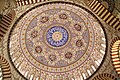
The classical golden age of Ottoman art unfolded primarily during the reign of Sultan Süleyman I (1520–1566), extending into the 17th century, characterized by unprecedented imperial patronage through the Ehl-i Hiref guild, which coordinated court artisans in architecture, ceramics, and illumination.[49] This era saw the synthesis of Byzantine structural engineering with Islamic decorative motifs, yielding monumental complexes that symbolized Ottoman power and piety.[1] Key advancements included refined dome constructions and intricate tilework, driven by conquests that supplied resources and talent from across the empire.[50] Architecture reached its zenith under Mimar Sinan (c. 1489–1588), appointed chief imperial architect in 1539, who designed over 300 structures including mosques, bridges, and palaces during Süleyman's rule and beyond.[51] His Süleymaniye Mosque complex in Istanbul, commissioned in 1550 and completed in 1557, exemplifies this period with a central dome 53 meters high and 27.5 meters in diameter, supported by semidomes and flying buttresses, drawing inspiration from Hagia Sophia while achieving greater interior harmony.[52] The complex encompassed eight madrasas, a hospital, and soup kitchen, integrating functional urban planning with aesthetic grandeur using cut stone and minimal surface decoration to emphasize structural purity.[53] Sinan's innovations, such as elongated proportions and precise load distribution, influenced subsequent 17th-century works, though the classical style began to incorporate baroque elements by the late 1600s.[51] In ceramics, İznik production peaked in the mid-16th century with the mastery of underglaze techniques, yielding blue-and-white wares evolving to polychrome by the 1570s, featuring floral motifs like tulips, carnations, and hyacinths in cobalt blue, turquoise, and red.[54] These tiles adorned mosque interiors, such as those in the Süleymaniye, providing durable, vibrant decoration resistant to humidity, with output estimated at millions of pieces for imperial projects.[1] The technique's innovation around 1530 marked a departure from earlier monochrome styles, reflecting botanical precision influenced by court herbals and Chinese imports via trade routes.[55] Manuscript illumination and miniature painting flourished in court ateliers, producing historical chronicles like the Süleymanname, illustrated with detailed battle scenes and portraits under artists such as Matrakçı Nasuh and Haydar Reis.[56] These works depicted Süleyman's campaigns with topographic accuracy, blending Persian narrative traditions with European perspective hints, totaling hundreds of folios in albums like the Hünernâme.[49] By the 17th century, portraits by Levni introduced subtle realism, though aniconism limited figurative innovation compared to architecture's boldness.[1]

Rococo Influences and Stagnation (18th century)

In the 18th century, Ottoman art experienced the incorporation of European Baroque and Rococo elements, particularly in architecture and decorative interiors, as the empire engaged more with Western diplomacy, trade, and gift exchanges following the Tulip Period (1718–1730). This shift marked a departure from the classical Ottoman style's geometric precision and tulip motifs toward curvilinear forms, S- and C-shaped volutes, and asymmetrical shell-like ornaments adapted to Islamic contexts. The Nuruosmaniye Mosque complex in Istanbul, constructed between 1748 and 1755 under Sultan Mahmud I, exemplifies this Ottoman Baroque or "Turkish Rococo," featuring a facade with undulating pediments, floral rococo carvings in stone, and interior stalactite muqarnas blended with European-inspired cartouches.[57][58] These influences stemmed from direct exposure to French and Italian models via architectural engravings and embassy reports, though Ottoman artisans localized them by retaining dome-centric plans and avoiding figural representation.[59] Decorative arts paralleled this trend, with palace interiors adopting imported Dutch delftware tiles featuring blue-and-white chinoiserie patterns alongside rococo frames, as seen in the Hünkâr Sofa and Hünkâr Hamamı pavilions at Topkapı Palace expansions.[59] Furniture and textiles incorporated cabochon motifs and acanthus leaves, reflecting a synthesis driven by court patronage amid fiscal strains from prolonged wars, including the Russo-Turkish conflicts (1735–1739, 1768–1774). Manuscript illumination and miniature painting, once innovative under earlier sultans, increasingly mimicked Western portraiture techniques, with reduced narrative depth and a focus on ornamental borders, signaling a pivot from indigenous synthesis to superficial emulation.[60] This period also evidenced stagnation in artistic innovation, as economic weakening—exacerbated by New World-induced inflation eroding purchasing power and diverting resources to military defeats—curtailed large-scale patronage and material quality after mid-century.[60] Post-1730 Patrona Halil rebellion, which ended Tulip-era extravagance, commissions emphasized decorative excess over structural or thematic advancements, leading to repetitive rococo applications without advancing the spatial harmony of 16th-century precedents like Sinan's designs. Provincial architecture, such as Balkan mosques, showed diluted versions of these styles, further highlighting centralized decline in creative output.[58][61] By century's end, this ornamental fixation, while visually opulent, contributed to a broader artistic inertia, setting the stage for 19th-century eclectic reforms amid empire-wide fiscal and territorial losses.[60]

Tanzimat Reforms and Eclectic Western Borrowings (19th–early 20th centuries)

The Tanzimat reforms, promulgated with the Gülhane Edict in 1839 and continuing through the Reform Edict of 1856, sought to centralize Ottoman administration, equalize legal rights across religious communities, and modernize military and economic structures, prompting cultural shifts that extended to artistic patronage.[62] These changes encouraged sultans to commission works blending traditional Ottoman forms with Western European styles, reflecting an intent to project imperial vitality amid territorial losses and European pressures. Architectural projects, often overseen by the Armenian Balyan family of court architects, exemplified this eclecticism, incorporating neoclassical columns, baroque ornamentation, and rococo detailing alongside Islamic spatial organization.[63] Dolmabahçe Palace, constructed between 1843 and 1856 under Sultan Abdülmecid I at a cost equivalent to 5 million Ottoman gold liras, replaced the older Topkapı Palace as the imperial residence and embodied this hybrid approach, with its vast neoclassical facade, symmetrical layout, and interiors featuring European chandeliers, mirrors, and frescoes juxtaposed against Ottoman harem quarters and ceremonial halls.[64] Similarly, the Ortaköy Mosque, built from 1853 to 1856 by architect Nigoğos Balyan for the same sultan, adopted a neo-baroque style with its single-dome structure on a Bosphorus pier, ornate masonry, and arched windows that allowed natural light to illuminate calligraphic inscriptions, marking a departure from Sinan's classical Ottoman proportions toward lighter, more decorative European influences.[65] These structures utilized cast iron and masonry techniques imported from Europe, enabling grander scales and novel engineering, such as the iron-framed supports in Dolmabahçe's ceremonial hall.[66] In painting and visual arts, the period saw a transition from miniature traditions to oil-on-canvas techniques emphasizing perspective, shading, and realism, driven by state initiatives to train artists abroad. Painters like Şeker Ahmet Paşa (1841–1907), who studied at the École des Beaux-Arts in Paris from 1864, produced landscapes and still lifes such as pear depictions that integrated Ottoman subject matter with impressionistic light effects, influencing subsequent Turkish artists.[67] Osman Hamdi Bey (1842–1910), educated in Paris and appointed as director of the Imperial Museum in 1881, founded the Sanayi-i Nefise Mektebi (Imperial School of Fine Arts) in 1883, the first institution for Western-style art education in Istanbul, where curricula included anatomy, live modeling, and European genres, fostering works like his archaeological-themed paintings that critiqued Ottoman stagnation through Orientalist lenses adapted locally.[63] This era's eclecticism extended to decorative arts, with Iznik ceramics evolving to mimic Sèvres porcelain patterns while retaining turquoise glazes, and metalwork incorporating Victorian motifs in silverware for elite households.[68] By the early 20th century, amid the Young Turk Revolution of 1908 and the empire's dissolution, these borrowings had established a foundational Western orientation in Turkish art, evident in exhibition societies like the Ottoman Painters' Society (1923 precursor) and urban planning reforms that introduced boulevards and hybrid public buildings in Istanbul, though traditional Islamic motifs persisted in religious commissions to maintain cultural continuity.[69] The reforms' artistic legacy, however, revealed tensions: while enhancing technical proficiency, the selective adoption of European aesthetics often prioritized elite display over indigenous innovation, as critiqued in later historiographies for diluting Ottoman identity without achieving full modernization.[70]

Republican Era and Modernity (1923–1980)

Kemalist Secularization and Adoption of Western Techniques

Following the proclamation of the Turkish Republic on October 29, 1923, Kemalist policies of secularization dismantled Ottoman religious institutions, including the caliphate in 1924, thereby eliminating traditional Islamic patronage in the arts and redirecting production toward state-controlled, secular themes emphasizing national identity and modernization.[71] Visual arts shifted from religious motifs to representations of landscapes, historical events, and contemporary life, with propaganda elements promoting reforms like the 1928 adoption of the Latin alphabet and women's emancipation.[72] This transition marginalized practices such as Qur'anic illumination and miniature painting, favoring instead Western-derived realism and individualism over collective, faith-based aesthetics.[71] Art education underwent rapid institutionalization to align with these goals, with the Istanbul Academy of Fine Arts receiving a new bylaw in 1924 that elevated it to higher education status and added departments for decorative arts and teacher training.[71] Under directors like Namık İsmail from 1927, the curriculum incorporated life-model drawing and classical Western subjects such as Greek mythology, departing from prior Ottoman constraints on figural representation.[71] The state funded scholarships sending artists to European centers like Paris's Académie Julian, where figures such as İbrahim Çallı and Nazmi Ziya Güran studied impressionist and post-impressionist techniques, influencing a generation to adopt oil on canvas, perspective, and outdoor sketching.[71] By 1932, the Gazi Training Institute in Ankara and People's Houses—numbering over 200 by the late 1930s—extended this training nationwide, integrating folk motifs into modern frameworks to foster a secular "Turkish national art."[71] The adoption of Western techniques accelerated through artist collectives, notably the D Group (D Grubu), founded in 1933 to commemorate the Republic's tenth anniversary and introduce cubism, constructivism, and expressionism via exhibitions in Istanbul.[73] Members including Nurullah Berk and Zeki Faik İzer, often trained abroad, modified European modernism by incorporating Anatolian themes, though initial works prioritized formal innovation over content to align with Kemalist rationalism.[74] This paralleled sculpture's revival, as secularism enabled public monuments despite historical Islamic iconoclasm; the first Atatürk statue, erected in Istanbul's Sarayburnu Park on October 3, 1926, by Austrian sculptor Heinrich Krippel, symbolized the regime's embrace of figurative bronze casting for national commemoration.[75] By the 1940s, these efforts had entrenched easel painting and statuary as state-preferred media, with over 500 artists exhibiting in annual salons by 1950, though tensions arose between imported abstraction and demands for accessible, patriotic realism.[76]

State-Sponsored Nationalism in Visual Arts

Following the establishment of the Republic of Turkey in 1923, the Kemalist government initiated policies to harness visual arts for cultivating a secular, nationalist identity distinct from Ottoman Islamic traditions, emphasizing Anatolian roots, modernization, and the cult of personality surrounding Mustafa Kemal Atatürk.[6] The state viewed painting and sculpture as tools for propaganda and social engineering, commissioning works that glorified the War of Independence (1919–1923), rural Turkish life, and republican reforms such as women's emancipation.[77] This top-down patronage, aligned with single-party rule under the Republican People's Party until 1950, prioritized ideological conformity over artistic autonomy, with public funding tied to themes reinforcing national unity and Western-oriented progress.[6] [77] In painting, state support manifested through scholarships for artists to study in Europe starting in 1924, purchases of works for public display (including three paintings acquired by Atatürk himself in 1923), and annual State Painting and Sculpture Exhibitions from 1939 onward.[77] The Provincial Tours for Painters (Yurt Gezileri), conducted from 1938 to 1943, dispatched groups of up to 10 artists annually to remote Anatolian regions to document peasant life and landscapes, producing socially realist depictions intended to romanticize the Turkish folk as the nation's authentic core.[6] [77] Exhibitions like the Paintings of the Revolution series (1933–1937) and the First Ankara Painting Exhibition (October 14, 1923) showcased nationalist motifs, while artists from the 1914 Generation, such as İbrahim Çallı and Feyhaman Duran, adapted Western techniques to portray revolutionary ideals; Duran's lifesize portrait of Atatürk exemplified the leader's deification in art.[6] [77] The D Group, active from 1933 to 1951, aligned with republican nationalism by integrating modernist aesthetics with Turkish subjects, though it occasionally critiqued state populism.[6] Sculpture emerged as a priority medium to materialize the secular nation-state, overcoming historical Islamic aversion to figurative representation through state decrees and foreign expertise.[6] By 1938, hundreds of Atatürk statues and monuments had been erected nationwide, often depicting him in heroic poses symbolizing enlightenment and military triumph, such as those commemorating the War of Independence.[78] The Academy of Fine Arts in Istanbul hired German sculptor Rudolf Belling in 1937 to head its sculpture department, training locals in monumental forms that served as public symbols of Kemalist authority and unity.[6] These works, placed in squares and institutions, functioned as ethnosymbols to instill loyalty, with early examples like the 1926 statue in Sarayburnu reinforcing Atatürk's role as founder.[79] State procurement laws from the 1930s ensured ongoing commissions for public spaces, extending this practice into the multi-party era post-1950.[77] Institutions underpinned these efforts, including the renaming of the Ottoman Sanayi-i Nefise Mektebi to the State Academy of Fine Arts (Güzel Sanatlar Akademisi) in 1929, which centralized training in Western styles while embedding nationalist curricula.[77] People's Houses (Halkevleri), established in 1932 across provinces, hosted exhibitions and workshops to disseminate Kemalist art to the masses, complemented by Village Institutes (Köy Enstitüleri) in the 1940s for rural education.[6] [77] The Istanbul Museum of Painting and Sculpture, opened in 1937 at Dolmabahçe Palace, institutionalized collections of nationalist works, such as those from the Fifty Years of Turkish Art exhibition, signaling the regime's claim to cultural continuity with ancient Anatolian heritage.[6] [77] This framework persisted until the 1970s, though multi-party politics diluted direct control, fostering a legacy of state-art symbiosis that prioritized collective identity over individual expression.[77]

Transition to Abstract and Figurative Modernism

In the 1930s, Turkish artists began diverging from the state-endorsed realist and nationalist figurative styles of the early Republican period, incorporating elements of European modernism such as cubism and abstraction through groups like D Grubu, founded in 1933 by painters including Abidin Dino, Cemal Tollu, Nurullah Berk, and Zeki Faik İzer.[80] These artists, many of whom studied under André Lhote in Paris, organized exhibitions starting in 1935 to promote formal innovation over literal representation, viewing modernist techniques as a universal means to express contemporary Turkish realities amid rapid secularization.[73] This marked an initial push toward abstract experimentation, though often blended with figurative elements drawn from local folklore and landscapes to maintain cultural specificity.[81] By the 1940s, administrative shifts within the Directorate of Fine Arts under Zeki Faik İzer facilitated greater tolerance for non-realist approaches, enabling artists to explore expressionist and semi-abstract forms without direct state patronage constraints.[77] Figurative modernism gained traction through works emphasizing distorted human forms and symbolic narratives, as seen in Bedri Rahmi Eyüboğlu's murals and paintings that fused Anatolian motifs with Fauvist colors and simplified geometries.[81] Concurrently, pure abstraction emerged, exemplified by Ferruh Başağa's 1949 painting Aşk, recognized as Turkey's first fully abstract canvas, signaling a break from representational imperatives.[76] The transition accelerated in the 1950s following Turkey's shift to multi-party democracy in 1946, which reduced ideological oversight and encouraged international exchanges, leading to increased adoption of tachisme, geometric abstraction, and lyrical abstraction among artists like Sabri Berkel and Semsettin Arel.[6] These developments reflected not only Western influences but also a pragmatic response to urbanization and industrialization, with abstract and modernist figurative works critiquing or abstracting social transitions rather than glorifying national myths.[82] By the 1960s and 1970s, this evolution diversified Turkish art, paving the way for individualistic expressions amid political upheavals, though state exhibitions still favored accessible figurative modernism over radical abstraction.[81]

Contemporary Turkish Art (1980–present)

Istanbul's Rise as a Global Art Hub

Istanbul's emergence as a global art hub accelerated in the late 1980s amid Turkey's economic liberalization under Prime Minister Turgut Özal, which fostered private investment in culture and positioned the city as a bridge between Europe and Asia. The inaugural Istanbul Biennial in 1987, organized by the Istanbul Foundation for Culture and Arts (İKSV), marked a pivotal moment, establishing the event as one of the Middle East's largest platforms for international artistic exchange and drawing participants from diverse cultures.[83][84] This biennial, held every two years, has since showcased contemporary works addressing global themes, contributing to Istanbul's reputation for bold curatorial programming that integrates local and international voices.[85] The early 2000s saw institutional consolidation, with the opening of Istanbul Modern in 2004 as Turkey's first dedicated museum of modern and contemporary art, spanning 10,500 square meters and hosting interdisciplinary exhibitions that highlight Turkish creativity alongside global trends.[86] Private initiatives proliferated, including the Pera Museum (2005) and Salt Galata (2011), supported by affluent collectors and foundations, which expanded exhibition spaces and attracted foreign curators.[87] Complementing this, Contemporary Istanbul, launched in 2005, grew into a major art fair; by 2023, it featured 67 galleries from 22 countries displaying over 1,500 works by 591 artists, generating an estimated $25-30 million in revenues by 2016 and underscoring the market's maturation.[88][89] EU accession talks in the 2000s and a booming domestic economy further propelled the scene, with gallery numbers surging in neighborhoods like Beyoğlu and Nişantaşı, fostering a vibrant ecosystem of over 300 commercial spaces by the mid-2010s.[90] International acclaim followed, as Istanbul hosted parallel events like the 2019 Biennial's "The Seventh Continent" theme, which critiqued global deadlocks and drew widespread attention.[91] Despite periodic economic volatility, the hub's resilience is evident in record attendance at the 2024-2025 cultural seasons and ongoing expansions, such as Istanbul Modern's new facilities, solidifying the city's role in the global art circuit.[92][93]

Political and Cultural Tensions in Post-1980 Works

The 1980 military coup d'état marked a turning point, prompting Turkish artists to engage directly with themes of repression, identity, and state violence amid widespread suppression of dissent. This era saw the emergence of politically explicit works, such as Hale Tenger's installation I Know People Like This II (1992), exhibited at the 3rd Istanbul Biennial, which drew charges under Article 301 of the Turkish Penal Code for allegedly insulting Turkishness, highlighting early clashes between artistic expression and legal restrictions.[94] Similarly, Halil Altındere's Dance with Taboos (1997) provoked police interrogation for challenging societal and national sensitivities, reflecting broader interdisciplinary extremism in response to post-coup societal fractures.[94][95] Economic liberalization in the 1980s and 1990s under Turgut Özal fostered a nascent contemporary art market, yet state withdrawal from cultural patronage exacerbated tensions, limiting institutional support while artists navigated censorship risks. Political expression intensified, with works critiquing militarism and ethnic conflicts, including Kurdish issues, often leading to self-censorship or adaptation strategies to evade outright bans, as Tenger noted in adapting bolder imagery from the 1990s to subtler forms post-2010.[94] The Justice and Development Party (AKP) era, beginning in 2002, amplified these conflicts through systematic interventions, with government actions accounting for 44% of 289 documented censorship incidents affecting 469 artists, artworks, events, or venues, frequently justified as safeguarding "national values."[96][97] Notable cases include the 2013 demolition of Istanbul's historic Emek Movie Theatre for commercial redevelopment despite public protests, during which critic Atilla Dorsay was assaulted, and the exclusion of Reyan Tuvi's Gezi Park documentary Love Will Change The Earth from the 51st Antalya Film Festival.[97] Artist Zehra Doğan received a nearly three-year prison sentence in 2016 for watercolor paintings depicting destruction in Nusaybin amid Kurdish-Turkish clashes, forcing her into exile.[97] Such measures, extending to bans on Grup Yorum concerts for alleged "terrorist propaganda" and hunger strikes resulting in deaths in 2020, have cultivated an "empire of fear," particularly after the 2016 state of emergency following the failed coup attempt.[94][97] The 2013 Gezi Park protests, erupting over urban redevelopment plans, catalyzed a surge in ephemeral resistance art, including street murals of gas-masked whirling dervishes symbolizing cultural defiance and collective solidarity against perceived authoritarian overreach.[98] This outpouring influenced subsequent works, such as Timur Çelik's wall installation Painting the Decade (2011–2023), chronicling oppression and struggle over the ensuing years, yet provoked retaliatory funding cuts to independent theaters and heightened scrutiny.[99][97] Underlying these political frictions are cultural divides between Kemalist secularism and resurgent Islamism, evident in artists' explorations of commodified religious aesthetics versus secular erosion, as in Gülsün Karamustafa's multimedia pieces intertwining personal histories with socio-political upheavals like migration and feminism since the 1980s.[100][76] Recent escalations, including 2025 detentions of cultural figures amid opposition protests, signal persistent pressures, compelling artists to balance radical critique with survival amid evolving authoritarian controls.[101][102]

Recent Developments and International Exhibitions (2000–2025)

The contemporary Turkish art scene from 2000 to 2025 witnessed accelerated institutionalization and global integration, driven by economic liberalization and urban redevelopment in Istanbul, which hosted over 20 editions of the Istanbul Biennial and established annual art fairs attracting thousands of visitors annually.[103][104] The proliferation of private galleries, exceeding 300 in Istanbul by 2010, alongside state-backed initiatives, facilitated the export of Turkish artists' works, with sales at international auctions rising from under $5 million in 2000 to peaks above $20 million by 2015, reflecting market maturation amid geopolitical flux.[105] The Istanbul Biennial, organized by the Istanbul Foundation for Culture and Arts (İKSV) since 1987, marked pivotal moments in this era, with the 8th edition in 2003 featuring site-specific installations by artists like Ann Hamilton and Cildo Meireles to interrogate urban memory and migration.[106] Subsequent iterations, such as the 15th in 2017 curated around affective spaces, drew over 1 million visitors and showcased hybrid media works addressing identity and ecology, underscoring Istanbul's role as a bridge between Eastern and Western aesthetics.[107] The 18th edition, held from September 20 to November 23, 2025, under curator Christine Tohmé's theme "The Three-Legged Cat," presented over 40 international and local artists across venues like Galata Greek Primary School, emphasizing precariousness and resilience through performances and screenings.[103][108] International expositions amplified Turkish art's visibility, particularly via the Venice Biennale, where the Turkish Pavilion—managed by İKSV under the Ministry of Foreign Affairs—debuted permanent participation in 2007 and featured conceptually rigorous installations, such as Fulya Erdemci's 2011 curation at Artiglierie exploring belonging and displacement.[109][110] In the art sector, the 2024 pavilion aligned with the "Foreigners Everywhere" theme, while the 2025 architecture edition, "Grounded," curated by Ceren Erdem and Bilge Baloğlu Kızıl, utilized Turkish soil samples for sensory and scientific explorations of materiality, inaugurated on May 8 at Sale d'Armi in the Arsenale.[111][112] The Metropolitan Museum of Art's 2023 display of Ottoman-influenced modern works, coupled with a gala raising over $2 million for Turkish art initiatives, highlighted curatorial dialogues between historical legacies and contemporary reinterpretations by artists invoking past motifs amid modernization.[113][7] Domestically, the Contemporary Istanbul Art Fair, launched in 2004 and reaching its 20th edition in 2025 with 51 galleries from 16 countries at Tersane Istanbul from September 24 to 28, emphasized cross-cultural exchanges, including a "Focus America" section amid political strains, where curators noted artists' strategic navigation of censorship through subtle critique.[104][102] The reopening of Istanbul Modern in a Renzo Piano-designed facility in 2023, spanning 4,200 square meters for exhibitions, further solidified infrastructure, hosting shows on global contemporaneity that drew 500,000 visitors in its first year and integrated digital archives of Turkish holdings.[114] These developments, while buoyed by tourism revenue exceeding €1 billion annually from cultural events by 2020, faced interruptions from the 2016 coup attempt and 2023 earthquake recovery, yet sustained output through adaptive online platforms and diaspora networks.[115]

Enduring Art Forms Across Periods

Calligraphy and Qur'anic Illumination

Ottoman Turkish calligraphy emerged as a pinnacle of Islamic artistic expression, prioritizing the beauty of Arabic script to convey religious texts without figurative imagery, in line with theological emphases on divine word over representation. Developed from Abbasid and Seljuk foundations, it flourished under imperial patronage from the 15th century, with masters refining scripts for Qur'ans, mosques, and decrees using reed pens and inks on paper or stone.[116][117] Sheikh Hamdullah (1436–1520), born in Amasya and serving Sultan Bayezid II, established the Ottoman style by adapting Persian influences into a more spacious naskh script, training generations of calligraphers and producing works for imperial mosques.[118] Subsequent figures like Ahmed Karahisari (d. 1556) advanced thuluth for architectural inscriptions, while Hafiz Osman (d. 1698) innovated hilya panels—devotional descriptions of Prophet Muhammad's physical traits in calligraphic formats—and Mustafa Rakim (1757–1826) elevated diwani and tughra monograms with intricate flourishes.[119][117] Qur'anic illumination complemented calligraphy by adding gold leaf, opaque watercolors, and motifs like arabesques and lotuses to manuscript margins and headpieces, enhancing sacrality without distracting from text; techniques involved gilding and layering pigments on burnished paper, evident from 15th to 19th centuries.[120] A 1851–52 CE Qur'an exemplifies late Ottoman practice, with 6 1/4 by 4 1/4-inch pages in minute naskh script amid vibrant polychrome borders, produced in Turkey using ink, gold, and leather binding.[120] Earlier examples, such as 16th-century prayer books like Dala'il al-Khayrat, feature similar lavish floral illuminations framing surahs.[121] This tradition persisted across Ottoman decline into the Republican era, though Kemalist secularization marginalized it in state arts, confining practice to religious and private spheres; by the 20th century, masters like Hamid Aytaç (1891–1973) preserved techniques amid modernization pressures.[119] Despite institutional biases in Western academia toward figurative arts, empirical evidence from surviving manuscripts—housed in institutions like the Metropolitan Museum and Library of Congress—affirms calligraphy's technical mastery and cultural centrality in Turkish heritage.[120][117]

Miniature Painting and Manuscript Traditions

Ottoman miniature painting emerged as a distinct tradition in the 15th century, evolving from Persian influences introduced via Tabrizi artists after the conquest of Constantinople in 1453, and flourished in imperial ateliers like those at Topkapı Palace.[122] These works primarily illustrated historical chronicles, dynastic albums, and campaign journals, serving both documentary and aesthetic purposes within manuscript production.[123] Artists employed tempera paints on paper, applying flat colors without shading or linear perspective, often incorporating gold leaf for highlights and multiple viewpoints to convey narrative depth in scenes of battles, court ceremonies, and urban landscapes.[124] Key figures include Matrakçı Nasuh (c. 1480–1564), a Bosnian-born polymath who documented Suleiman the Magnificent's campaigns in Beyan-ı Menazil-i Sefer-i İrakeyn (1538), featuring precise topographic miniatures of cities like Istanbul and Baghdad that blend artistic stylization with cartographic accuracy.[125] In the 18th century, Abdulcelil Levni (d. 1732) advanced the style toward greater naturalism in Surname-i Vehbi (c. 1720), depicting festival processions with vibrant crowd scenes and individualized figures, marking a shift from rigid conventions.[126] Earlier Seljuk influences appear in Anatolian manuscripts from the 13th century, such as illuminated Qur'ans with geometric motifs, though figurative miniatures remained limited until Ottoman patronage systematized production.[127] Manuscript traditions integrated miniatures with calligraphy and illumination (tezhip), where gold and lapis lazuli adorned margins of texts like the Şehname histories, ensuring harmony between script and image under guild-trained specialists.[128] Production peaked in the 16th century under Suleiman, with over 10,000 miniatures surviving in palace libraries, reflecting state ideology through idealized sultan portraits and conquest glorification.[129] By the 19th century, European printing presses and photography diminished demand, leading to stylistic hybridization before near-extinction as a court art form.[123]

Carpets, Textiles, and Knotting Techniques

Turkish carpets, primarily produced in Anatolia, are hand-knotted using the symmetrical Turkish knot, also known as the Gördes or Ghiordes knot, which involves wrapping yarn around two adjacent warp threads and pulling both ends to the surface, creating a durable double knot that enhances longevity and allows for bold geometric patterns.[130][131] This technique, propagated by Turkic nomads migrating into Anatolia from the 11th century onward, differs from the asymmetrical Persian knot by providing greater structural integrity, with knot densities typically ranging from 80 to 200 knots per square inch in traditional pieces.[132][133] Production centers emerged prominently during the Ottoman era, with Uşak serving as a major hub for export-oriented rugs featuring medallion designs from the 16th century, while Gördes specialized in finer, village-woven pieces using wool piles on wool or cotton warps.[134] Materials historically included sheep's wool for both pile and foundation, occasionally augmented with silk for court commissions, and dyes derived from natural sources such as madder root for reds, indigo vats for blues, and walnut husks for browns, yielding colorfast results superior to early synthetic alternatives introduced in the 19th century.[135][136] Complementing knotted carpets are flatwoven textiles like kilims, produced via slit-tapestry or interlocking weft techniques on simple looms, resulting in reversible, pileless fabrics with discontinuous brocade patterns symbolizing tribal motifs such as eyes for protection or rams' horns for fertility.[137][138] These were woven by nomadic and village women using wool yarns dyed similarly to pile carpets, with production concentrated in regions like Bergama and Ladik, where the absence of knots facilitated portable, functional items for tent dividers or saddlebags. Variations include soumak (wrapped wefts for supplementary patterning) and cicim (brocaded floats), expanding the repertoire of Anatolian textile arts beyond pile weaving.[139] By the 19th century, state-sponsored workshops in centers like Hereke refined these methods for imperial use, blending nomadic durability with palatial intricacy.[134] These traditions persist today, with Turkey renowned for exporting hand-knotted carpets and kilims that blend Ottoman heritage with modern appeal as luxury flooring and decorative items.[140][141]

Iznik Tiles and Ceramic Production

Iznik, located in northwestern Turkey, emerged as the primary center for Ottoman ceramic production in the 15th century, specializing in high-quality tiles and pottery that adorned mosques, palaces, and public buildings across the empire.[142] Production initially focused on simple earthenware with underglaze decoration, drawing inspiration from Chinese blue-and-white porcelain imported via trade routes, which prompted local artisans to replicate and adapt these techniques using available materials.[143] By the late 15th century, workshops in Iznik had developed a distinctive style using a fritware body—composed of quartz, clay, and glass frit—fired at high temperatures to achieve durability and a glossy tin-opacified glaze.[144] Technological advancements in the mid-15th century enabled the mastery of underglaze painting, where pigments such as cobalt blue were applied directly onto the unfired body before glazing and firing, resulting in vibrant, non-fading colors resistant to the alkaline glaze.[145] Early pieces from the 1480s featured bold red slips derived from Armenian bole, evolving by the 1520s to include tomato-red motifs alongside blue, reflecting experimentation with iron-rich slips fired in specific oxidation conditions.[146] The palette expanded in the mid-16th century to incorporate turquoise from copper oxide, purple from manganese, green combinations, and black outlines, allowing for complex floral, geometric, and arabesque designs that symbolized Ottoman imperial aesthetics.[142] Production peaked during the reign of Sultan Suleiman the Magnificent (1520–1566), with estimates of tens of thousands of tiles manufactured annually to supply major architectural projects, including the Suleymaniye Mosque in Istanbul completed in 1557, which required over 20,000 tiles.[145] At its height around 1560, Iznik supported numerous specialized workshops employing master potters, painters, and kilns capable of controlled firing sequences—bisque firing followed by glaze firing—to prevent defects in large-scale orders.[144] These ceramics were not only functional for revetments and mihrabs but also exported, influencing Mamluk and Safavid production, though Ottoman court patronage ensured quality control through imperial kilns and guild regulations.[147] By the late 17th century, Iznik production declined due to economic shifts, including the exhaustion of high-quality local quartz deposits, rising costs of imported pigments, and competition from cheaper Kutahya ceramics, leading to the abandonment of many workshops by 1800.[148] Despite the cessation of traditional methods, 20th-century revival efforts, such as those initiated in the 1980s, have sought to recreate authentic techniques using archaeological analysis of waster heaps—discarded imperfect pieces—revealing precise recipes like 65-70% quartz in the paste for translucency.[149] Modern analyses confirm the empirical basis of Iznik's success lay in causal factors like mineral sourcing from nearby hills and iterative firing experiments, rather than mere stylistic imitation, underscoring a pragmatic adaptation of imported influences to local resources.[150] Turkey remains renowned for exporting exquisite Iznik ceramics featuring blue-white tiled patterns, blending Ottoman heritage with modern appeal for decorative items.[151]

Metalwork, Arms, and Decorative Crafts

Turkish metalwork emerged prominently during the Seljuk period in Anatolia (11th–13th centuries), utilizing materials such as copper, bronze, iron, steel, and brass, processed through casting, forging, engraving, repoussé, and inlaying with silver or rarely gold.[152] Objects included spouted vessels like ewers, candlesticks, censers, mirrors, and lamps, often featuring motifs of animals, vegetal scrolls, geometric patterns, and Kufic inscriptions conveying auspicious wishes.[152] A notable example is a brass lamp dated 1280/81 from Konya, inscribed and housed in the Ankara Ethnography Museum, reflecting production centers in Konya, Siirt, and Diyarbakir.[152] Silver-inlaid bronze ewers from the 11th–12th centuries, such as pear-shaped vessels with medallions depicting aquatic birds, demonstrate early mastery of inlay techniques influenced by eastern Iranian traditions.[153][154] The Ottoman Empire (14th–20th centuries) built upon Seljuk foundations, innovating in diversity of techniques including gold and silver inlay on steel, gilding, and gemstone embellishment, often for both functional and ceremonial purposes.[55] Copperworking persisted as a core craft, with artisans beating copper sheets into trays, pots, and domestic ware, a tradition tracing to Central Asian Turkic origins as early as the 3rd century BCE but flourishing in Anatolia from Seljuk times.[155] Decorative items expanded to include pierced brass mosque lamps, incense burners, and filigree ewers, with 18th–19th-century Balkan Ottoman examples showcasing silver filigree and openwork.[156] In arms and armor, Ottoman craftsmanship peaked in the 15th–16th centuries, producing high-quality steel blades with "watered" patterns, gold inlays of arabesques and calligraphy, and hilts adorned with jade, emeralds, rubies, diamonds, and sapphires.[157] Iconic weapons included the yataghan dagger, as in a jeweled example from Sultan Süleyman the Magnificent's court (r. 1520–1566), and kilij swords with curved blades suited for cavalry, often featuring intricate damascening akin to koftgari overlays of gold or silver wire hammered into crosshatched iron or steel surfaces.[157][158] Helmets and mail armor from 15th-century Anatolia combined robust steel construction with decorative gilding, while later 19th-century daggers integrated Iranian blades with Turkish gem-encrusted scabbards, evidencing sustained guild-based expertise in Istanbul and regional armories like Topkapı Palace.[157] These pieces not only served military utility but also symbolized status, with master smiths collaborating with jewelers to elevate base metals into luxury artifacts.[157]

Controversies in Turkish Art Heritage

Historical Exports and Looting During Declines

During the 19th century, as the Ottoman Empire grappled with escalating financial strains—including foreign loans totaling over 200 million Ottoman pounds by 1875 and subsequent bankruptcy—exports of decorative arts surged to secure revenue through trade with Europe. Luxury items such as Iznik ceramics, metalwork, and textiles, including Bursa silks, were sold via established merchant networks, with production increasingly handled by private workshops amid waning imperial oversight.[159] These exports often involved arms, armor, and carpets acquired by European diplomats, collectors, and institutions, reflecting a shift from court-centric patronage to market-driven dispersal.[160] Looting incidents, though less systematic for Ottoman-era art than for ancient Anatolian antiquities, occurred amid territorial losses during the empire's military declines. In the Balkan Wars of 1912–1913, retreating Ottoman forces abandoned mosques, manuscripts, and decorative objects in conquered regions, where local populations or new administrations appropriated or destroyed them, contributing to the fragmentation of Islamic art heritage.[161] Similarly, the Allied occupation of Istanbul from 1918 to 1923 following World War I exposed palace and museum collections to opportunistic theft and unauthorized removals, exacerbating the loss of items like illuminated manuscripts and metal crafts to black-market channels or foreign buyers.[161] Ottoman decrees, such as the 1858 and 1906 regulations restricting artifact exports, aimed to curb outflows but proved ineffective against economic desperation and weak enforcement, allowing significant portions of the empire's artistic legacy to enter Western museums via both legal sales and illicit means.[162] This dispersal preserved objects in reputable collections but severed them from their cultural context, fueling later Turkish repatriation efforts.[163]

Post-Ottoman Repatriation Campaigns

Following the dissolution of the Ottoman Empire and the founding of the Republic of Turkey in 1923, the new government initiated modest efforts to reclaim cultural artifacts, including Ottoman-era art forms such as ceramics, manuscripts, and illuminations, that had been exported or sold during the empire's financial crises in the 19th and early 20th centuries.[164] These items, often acquired by European and American collectors through auctions or private sales, included Iznik tiles and pottery, which had been legally traded under lax Ottoman export regulations despite a 1906 imperial decree nominally prohibiting the removal of antiquities and significant artworks.[165] By the late 20th century, Turkey's Ministry of Culture and Tourism formalized repatriation strategies, leveraging diplomatic negotiations, UNESCO conventions on cultural property, and legal claims based on the successor-state status to the Ottoman Empire, though critics note that many transactions predated the republic and involved consented sales to fund imperial debts.[162] Campaigns intensified under the Justice and Development Party (AKP) government from the early 2000s, with Turkey demanding returns from major institutions like the Metropolitan Museum of Art and the British Museum, often conditioning excavation permits and exhibition loans on compliance.[163] A notable success occurred in 2011 when a 16th-century Iznik ceramic tile, originally from the tomb of Sultan Selim II at the Hagia Sophia complex and considered a pinnacle of Ottoman ceramic artistry, was repatriated from a U.S. private collection following negotiations highlighting its illicit export.[166] In 2018, Turkish authorities secured the return from the United Kingdom of an Ottoman pottery piece and a historical manuscript, part of a batch of 44 items retrieved that year, which were subsequently displayed at the Museum of Turkish and Islamic Arts in Istanbul.[167] These efforts extended to Islamic art, such as a rare Quran manuscript copied by Mustafa Dede, son of the renowned Ottoman calligrapher Sheikh Hamdullah, repatriated in recent years through cultural diplomacy.[168] By 2025, Turkey reported repatriating over 9,000 cultural assets in the preceding eight years, including Ottoman manuscripts and decorative arts, though the majority involved pre-Ottoman antiquities smuggled post-1923.[169] Controversies persist, as foreign museums argue that Ottoman art like miniatures and ceramics entered collections via legitimate 19th-century markets, not looting, and that broad repatriation claims under the 1906 decree retroactively undermine historical trade practices within the multicultural Ottoman context.[162] Turkish officials counter that such items constitute national heritage integral to understanding Ottoman artistic continuity, justifying aggressive tactics like loan refusals, which have yielded returns but strained international archaeological collaborations.[170] These campaigns reflect a nationalist reclamation of identity, yet they raise ethical questions about provenance documentation and the universal access provided by global museums.[163]

Debates Over Provenance, Nationalism, and Museum Ethics

Turkey has pursued repatriation of artifacts from foreign museums, often contesting their provenance based on claims of illegal export or looting, particularly intensifying since the early 2010s under the Justice and Development Party (AKP) government. For instance, in 2013, Turkey successfully demanded the return of parts of the Lydian Hoard from the Metropolitan Museum of Art after establishing probable illegal removal from Turkish soil.[171] Similar efforts led to the repatriation of a 3,000-year-old sphinx from Germany's Pergamon Museum, highlighting Turkey's strategy of leveraging legal and diplomatic pressure.[164] However, critics argue these claims overlook Ottoman-era laws permitting private ownership, trade, and export of certain antiquities, including minor items and coins, which facilitated legitimate acquisitions by Western collectors and institutions.[162] Nationalism shapes these provenance debates, as Turkish authorities frame repatriation as reclaiming a unified national heritage encompassing Anatolian, Seljuk, and Ottoman Islamic artifacts, often downplaying the multicultural trade and mobility that characterized Ottoman history. Under President Recep Tayyip Erdoğan, repatriation campaigns align with a narrative emphasizing Ottoman-Islamic grandeur to foster Muslim nationalism, evident in museums like the Panorama 1453 in Istanbul, which glorifies the 1453 conquest while sidelining pre-Ottoman or non-Islamic elements of Turkish heritage.[172] This approach has politicized artifact claims, with recent successes—including seven items returned from Switzerland in October 2025 for display at Bodrum Castle and a $20 million bronze statue from the Cleveland Museum of Art in May 2025—bolstering domestic narratives of cultural revival.[173][174] Yet, such nationalism risks erasing historical contexts of legal export and international exchange, as Ottoman records document permitted sales that enriched both local and global collections.[162] Museum ethics debates center on the tension between universal access to shared human heritage and source-country sovereignty, with Turkey employing tactics like denying excavation permits to foreign teams and withholding loans to coerce returns, raising concerns over politicized diplomacy.[170] Western institutions, such as the Metropolitan and Pergamon Museums, defend holdings acquired in good faith decades ago, arguing that blanket repatriation undermines encyclopedic collections preserving artifacts from empires like the Ottoman, which themselves amassed diverse treasures through conquest and trade.[175] Ethicists like James Cuno contend that source-nation claims, including Turkey's, prioritize nationalist agendas over global scholarship, potentially isolating artifacts in under-resourced local museums prone to ideological curation.[176] In response, Turkey positions itself as a guardian against looting, yet its aggressive stances have strained international collaborations, as seen in halted loans and disputes over items with documented pre-1970 acquisitions under UNESCO norms.[165] These conflicts underscore broader ethical questions: whether provenance disputes should retroactively invalidate historical transfers or if cooperative models, like shared exhibitions, better serve preservation and access.[164]

References

User Avatar
No comments yet.