


Community hub
Recent from talks
Contribute something
Nothing was collected or created yet.
Xàtiva
View on WikipediaXàtiva (Valencian: [ˈʃativa];[Nota 1] Spanish: Játiva [ˈxatiβa])[3] is a town in eastern Spain, in the province of Valencia, on the right (western) bank of the river Albaida and at the junction of the Valencia–Murcia and Valencia Albacete railways, in the north of the Central Comarcas and serves as the capital of La Costera comarca. It holds the distinction of having the highest number of enclaves in Spain, totaling twenty-six.[4][5] It is located 25 km west of the Mediterranean Sea. During the Al-Andalus Islamic era, Arabs brought the technology to manufacture paper to Xàtiva. In the 12th century, Xàtiva was known for its schools, education, and learning circles. Islamic scholar Abu Ishaq al-Shatibi's last name refers to Xàtiva where he lived and died.[6] After the Reconquista by Northern Christian kingdoms and the following Christian repopulation, the city became the cradle of one of the most powerful and controversial families of the Renaissance, the House of Borgia, which produced Popes like Callixtus III (Alfonso de Borgia) and Alexander VI (Rodrigo de Borgia).
Key Information

.svg)


Historically, Xàtiva was a prominent town in the Kingdom of Valencia, rivaling Valencia and Orihuela during the foral period. It is the birthplace of the Borgia popes and preserves a rich artistic heritage, despite suffering significant destruction in 1707 by Bourbon troops during the War of the Spanish Succession. In 1822, it briefly served as the capital of the Province of Xàtiva, which was dissolved in 1833 following the 1833 territorial division of Spain. In the late 1970s, Xàtiva was proposed as a potential capital for the Valencian Community due to its historical and geographic significance, avoiding tensions between Alicante and Valencia.[7] The city's population is approximately 30,378 (2024).[8] Together with nearby municipalities, it forms an integrated urban area with around 61,000 inhabitants in 2023.[9]
Etymology
[edit]Xàtiva is one of the few Spanish cities to retain a pre-Roman toponym. The Iberians knew it as Saiti, which evolved into Saitabi or Saetabis in Latin. Under Muslim rule, it was called مَدينَة شاطِبَة (madīnat Šāṭibat), leading to the Valencian Xàtiva.[10] In 1707, Philip V of Spain renamed it San Felipe.[10] The Cortes of Cádiz restored the name in 1811 as the Castilianized Xátiva,[11][12] which was later adapted to the academic spelling Játiva. It officially reverted to its Valencian form Xàtiva by a decree of the Valencian Council on January 7, 1980.[13]
History
[edit]Xàtiva (Saetabis in Latin)[14] was famous in Roman times for its linen fabrics, mentioned by the Latin poets Ovid and Catullus. Xàtiva is also known as an early European centre of paper manufacture. In the 12th century, Arabs brought the technology to manufacture paper to Xàtiva (Arabic: شاطبة Shāṭiba).
It is the birthplace of two popes, Callixtus III and Alexander VI, and also the painter José Ribera (Lo Spagnoletto). It suffered a dark moment in its history at the hands of Philip V of Spain, who, after his victory at the Battle of Almansa during the War of the Spanish Succession, had the city besieged then ordered it to be burned and renamed San Felipe. In memory of the insult, the portrait of the monarch hangs upside down in the local Almodí Museum.[15]
Xàtiva was briefly a provincial capital under the short-lived 1822 territorial division of Spain,[16] during the Trienio Liberal. The Province of Xàtiva was revoked with the return to absolutism in 1823.
.JPG)

Prehistory and Antiquity
[edit]Evidence of settlement in Xàtiva dates back to the Middle Paleolithic, as shown by findings at Cova Negra.[17] The city originates from the Iberian culture, known as Saiti (with variants Ibi or Tibi).[17] Due to over 2,300 years of continuous settlement in the same area, ancient remains are scarce, as materials were reused repeatedly, explaining the paucity of Iberian artifacts. The original settlement is identified at the site of the current Minor Castle.[17]
Romanization began in the 2nd century BC, with Saitabi flourishing and minting its own coins,[17] featuring a three-pointed star at 8, 12, and 4 o'clock, resembling the modern Mercedes-Benz logo. It was elevated to a Roman municipium named Saetabis Augusta in honor of Emperor Augustus.[17] During the Roman Empire, Xàtiva was a key commercial hub along the Via Augusta, renowned for flax production and textile manufacturing. The Roman poet Catullus mentions the lintea or sudaria Saetaba ex Hiberis, gifts from his friends Veranius and Fabullus, in his poem 12 (Catulli Veronensis 'Carmina' Henricus Bardon, ed. Bibliotheca Latina Teubneriana, 1973: p. 15.). Few Roman remains are visible, as stones were reused for later constructions, and the site saw intensive agricultural use. Over a dozen cisterns remain.[17] In the Late Roman Empire, Saetabis became an episcopal see, with its bishops attending the Councils of Toledo during the Visigothic period (6th and 7th centuries).[17] In Visigothic Spain, it was an episcopal see under the Archdiocese of Toledo, part of the Roman province of Carthaginensis in the Diocese of Hispania.
Middle Ages
[edit]Following the Muslim conquest of the Iberian Peninsula in 711, the city was named Medina مَدينَة شاطِبَة (madīnat Šāṭibat, generally transcribed as Medina Xàtiba). It became a fortified stronghold, praised by the 12th-century geographer Al-Idrisi for the beauty and strength of its castles. It belonged successively to the Taifa of Toledo, Taifa of Córdoba, Taifa of Almería, Taifa of Dénia, and Taifa of Murcia. In 1094, it served as a refuge for Almoravid troops defeated by El Cid in the Battle of Cuarte.[18] This link to El Cid includes Xàtiva in the Camino del Cid. By the early 13th century, it was the capital of a small Muslim state dependent on Valencia, stretching from the Júcar River in the north to Biar in the south.[17] Xàtiva was a pioneer in paper production in Western Europe.[17]


After conquering Valencia in 1238, James I of Aragon besieged Xàtiva in 1240 but lifted the siege after a truce with the Muslim governor. Conflicts between the governor and the Castilians prompted James I to intervene again, capturing the city in 1244, shortly after signing the Treaty of Almizra with Alfonso X of Castile.[17] Upon surrender, James I preserved the mosque, which stood until the 16th century. Under Christian rule, as Xàtiva, it became the second most important city in the Kingdom of Valencia, though it did not regain its episcopal status. It led a homonymous governorship.[19] The Morisco population was expelled from the walled city and resettled in rural areas and the San Juan suburb, while the Jews retained their juderías near the Santa Tecla gate. The castle and walls were strengthened between 1287 and 1369, and water supply improved with the Bellús and Agua Santa aqueducts.[17] In 1347, King Peter IV of Aragon granted it city status.[20]
Early Modern Period
[edit]
By the late 15th century, Xàtiva had around 8,000 inhabitants and was at its peak. It administered a vast municipal term, now corresponding to 37 municipalities, and a governorship spanning from the Júcar River to Caudete, Biar, Castalla, Xixona, and Villajoyosa, covering 4,750 km².[17] Beyond administrative roles, it had military significance (its castle was the strongest in the Kingdom of Valencia), and economic and commercial functions. The expulsion of the Moriscos led to the loss of nearly half the governorship's population, depopulating over 100 settlements. This demographic crisis, coupled with economic decline and 17th-century plague epidemics, further reduced the population.[17]
During the War of the Spanish Succession, Xàtiva supported Archduke Charles, enduring harsh sieges by Bourbon troops led by Asfeld. The city was heavily damaged, looted, and much of its population massacred or exiled. Traditionally, it is said to have been burned for a year, earning its residents the nickname socarrats ("scorched ones"). A plan to demolish much of the city and rebuild was abandoned due to technical and property issues. The greatest affront was the dismemberment of its governorship, loss of civic functions, and renaming to Colonia Nueva de San Phelipe, or simply San Felipe.[17]
Contemporary Period
[edit]Throughout the 18th century, Xàtiva recovered, with 12,655 inhabitants by 1787, prompting new urban works. However, the 1748 earthquakes caused significant damage, destroying the Santa Tecla church and leaving the castle nearly abandoned. The economy declined by the late 18th century, as the new Royal Road from Madrid to Valencia bypassed the city by 4 km (roughly the current A-35 and A-7 route), begun in 1776.[17] In 1811, the Cortes of Cádiz restored the name Xàtiva,[21][22][23] largely due to the efforts of Joaquín Lorenzo Villanueva.[24] Economically, the city suffered a major setback between 1810 and 1830 with the near-total collapse of its flax and silk textile industry, leaving about 1,300 people jobless. From 1822 to 1823, it served as the capital of the Province of Xàtiva, though this was not confirmed in the 1833 territorial division (Trieno Liberal), when it was included in the Province of Valencia.[25][17] The railway's arrival in 1858, with the La Encina new station opened on December 20, 1854, boosted connectivity, between Valencia and La Encina.[26] However, this did not halt demographic stagnation, exacerbated by La Encina disentailment, which emptied convents, and the abolition of seigniorial rights, prompting the exodus of about fifty noble families. The population declined until 1910, when immigration spurred growth, which continued slowly from the 1960s due to rural exodus and Xàtiva's specialization as a service city.[17]
During the Spanish Civil War, Xàtiva remained loyal to the Second Spanish Republic until the war's end, hosting some war industries. On February 12, 1939, it suffered a bombing by Italian aircraft of the Aviazione Legionaria, targeting the railway station and surroundings.[27] The attack killed 129 people and injured over 200, many of them women and children at the station awaiting a military convoy.[27]

De
[edit]Xàtiva (Saetabis in Latin)[14] was famous in Roman times for its linen fabrics, mentioned by the Latin poets Ovid and Catullus. Xàtiva is also known as an early European centre of paper manufacture. In the 12th century, Arabs brought the technology to manufacture paper to Xàtiva (Arabic: شاطبة Shāṭiba).
It is the birthplace of two popes, Callixtus III and Alexander VI, and also the painter José Ribera (Lo Spagnoletto). It suffered a dark moment in its history at the hands of Philip V of Spain, who, after his victory at the Battle of Almansa during the War of the Spanish Succession, had the city besieged then ordered it to be burned and renamed San Felipe. In memory of the insult, the portrait of the monarch hangs upside down in the local museum of l'Almodí.[15]
Xàtiva was briefly a provincial capital under the short-lived 1822 territorial division of Spain,[16] during the Trienio Liberal. The Province of Xàtiva was revoked with the return to absolutism in 1823.
Geography
[edit]Located in La Costera comarca, Xàtiva is 62 km from the city of Valencia. The municipality is crossed by the A-7 Mediterranean Motorway, the regional roads CV-620 (formerly N-340 between km 838 and 847) and CV-41 (Alzira–Xàtiva), and local roads connecting to Vallés, Novelé, Genovés, Barxeta, Llocnou d'En Fenollet, L'Énova, Manuel, and Llosa de Ranes.

The municipality lies in the strategic Montesa corridor between the basins of the Albaida River and its tributary, the Cànyoles River. Its perimeter is highly irregular, with several territorial enclaves resulting from historical segregations of its once-larger municipal term, which included over sixty villages.[28]
The terrain features four distinct units. In the north, the Santa Anna range, a Triassic outcrop, reaches 230 m. South of this range, between Llosa de Ranes and Xàtiva, lies a broad, nearly flat valley at 80–100 m, covered with Quaternary sediments and irrigated by the Cànyoles River, Carnissers ravine, and Albaida River, which waters Xàtiva's fertile orchards.[28] East of the Albaida stands the Puig hill (309 m), topped by the ruins of the Our Lady of Puig hermitage. South of the orchards, the terrain becomes rugged with the Bernisa range, an anticline with near-vertical limestone walls reaching 454 m. South of this lies the Bixquert valley, colored by albariza soils, and further south, the Serra Grossa forms the boundary with the Vall d'Albaida, reaching 498 m.[28]
Altitudes range from 498 m in the southwest (Serra Grossa) to 50 m along the Albaida River. The city itself is situated at 120 m above sea level, at the foot of the castle hill, with some houses extending up its slopes and others spreading into the flatter valley.
Climate
[edit]Xàtiva has a Mediterranean climate (Csa in the Köppen climate classification).[29] Winters are mild, while summers are very hot, with maximum temperatures occasionally exceeding 40 °C. Frosts are rare, and snow is extremely rare. In autumn, the cold drop can occur.
Xàtiva has a hot semi-arid climate (Köppen climate classification: BSh) with mild winters and hot to very hot summers. September is the wettest month of the year as a result of cold drop episodes that occur mainly in autumn.[30] Despite being located inland, its lower altitude means that temperatures below 0 °C (32 °F) are rare, while in summer it is common for temperatures to approach or exceed 40 °C (104 °F). Summer nights are warm, often hovering around 20 °C (68 °F). Xàtiva also recorded the highest temperature ever in peninsular Spain in a month of March, on 23 March 2001 which registered 38 °C (100 °F).[31]
| Climate data for Xàtiva (1991–2020), extremes (1990-present) | |||||||||||||
|---|---|---|---|---|---|---|---|---|---|---|---|---|---|
| Month | Jan | Feb | Mar | Apr | May | Jun | Jul | Aug | Sep | Oct | Nov | Dec | Year |
| Record high °C (°F) | 28.0 (82.4) |
30.6 (87.1) |
38.0 (100.4) |
36.3 (97.3) |
42.9 (109.2) |
43.2 (109.8) |
46.0 (114.8) |
45.7 (114.3) |
43.6 (110.5) |
35.5 (95.9) |
32.7 (90.9) |
28.7 (83.7) |
46.0 (114.8) |
| Mean daily maximum °C (°F) | 16.7 (62.1) |
17.9 (64.2) |
21.1 (70.0) |
24.0 (75.2) |
27.4 (81.3) |
32.2 (90.0) |
35.0 (95.0) |
34.8 (94.6) |
30.6 (87.1) |
26.0 (78.8) |
20.5 (68.9) |
17.4 (63.3) |
25.3 (77.5) |
| Daily mean °C (°F) | 10.7 (51.3) |
11.5 (52.7) |
14.1 (57.4) |
16.7 (62.1) |
20.0 (68.0) |
24.5 (76.1) |
27.6 (81.7) |
27.7 (81.9) |
24.1 (75.4) |
19.7 (67.5) |
14.4 (57.9) |
11.5 (52.7) |
18.5 (65.4) |
| Mean daily minimum °C (°F) | 4.7 (40.5) |
5.1 (41.2) |
7.0 (44.6) |
9.3 (48.7) |
12.5 (54.5) |
16.7 (62.1) |
20.1 (68.2) |
20.7 (69.3) |
17.6 (63.7) |
13.3 (55.9) |
8.2 (46.8) |
5.5 (41.9) |
11.7 (53.1) |
| Record low °C (°F) | −5.8 (21.6) |
−5.6 (21.9) |
−3.4 (25.9) |
0.6 (33.1) |
3.1 (37.6) |
7.7 (45.9) |
11.7 (53.1) |
12.1 (53.8) |
7.9 (46.2) |
1.7 (35.1) |
−3.4 (25.9) |
−3.3 (26.1) |
−5.8 (21.6) |
| Average precipitation mm (inches) | 61.0 (2.40) |
30.9 (1.22) |
41.3 (1.63) |
39.5 (1.56) |
36.9 (1.45) |
20.6 (0.81) |
6.2 (0.24) |
14.7 (0.58) |
72.0 (2.83) |
21.3 (0.84) |
41.7 (1.64) |
43.7 (1.72) |
429.8 (16.92) |
| Average precipitation days (≥ 1 mm) | 4.4 | 3.5 | 4.6 | 4.4 | 3.9 | 1.9 | 1.0 | 1.8 | 4.0 | 3.0 | 4.5 | 3.4 | 40.4 |
| Source: Agencia Estatal de Meteorologia[32] | |||||||||||||
Demography
[edit]| Year | Pop. | ±% |
|---|---|---|
| 1842 | 13,168 | — |
| 1857 | 15,747 | +19.6% |
| 1860 | 14,530 | −7.7% |
| 1877 | 14,412 | −0.8% |
| 1887 | 14,071 | −2.4% |
| 1897 | 11,789 | −16.2% |
| 1900 | 12,602 | +6.9% |
| 1910 | 12,767 | +1.3% |
| 1920 | 14,231 | +11.5% |
| 1930 | 15,185 | +6.7% |
| 1940 | 17,951 | +18.2% |
| 1950 | 18,230 | +1.6% |
| 1960 | 20,224 | +10.9% |
| 1970 | 21,710 | +7.3% |
| 1981 | 23,920 | +10.2% |
| 1991 | 24,461 | +2.3% |
| 2001 | 25,736 | +5.2% |
| 2011 | 29,125 | +13.2% |
| 2021 | 29,655 | +1.8% |
Population de facto according to INE censuses | ||
Xàtiva has a population of approximately 30378 (2023). Its residents are known as setabenses or socarrats ("scorched ones"), a reference to the 1707 burning by Philip V of Spain. About 9.0% of the population is of foreign nationality.[35]
In 1887, Xàtiva's population increased with the incorporation of the former municipality of Anahuir.[34]
Urban planning
[edit]

The original Iberian city was located where the Minor Castle now stands. After the Roman conquest, the center shifted to the plain, occupying the now-empty space between the current city and the castle, where the churches of San Félix and San José stand.[36] Remains and records of Andalusian buildings indicate the city expanded beyond the Roman-Visigothic walls. The Islamic medina likely covered most of the current medieval city, with the Aljama (in Montsant) and the main mosque on the site of the current collegiate church. Water was supplied via the Villa acequia.[36] After the Christian conquest, the city's urban layout was renewed with new buildings. From the late 13th century, residents began abandoning the upper city for more accessible areas with running water, turning the old enclosure into a large albacar (livestock pen) and later farmland.[36] The city then remained within the walls' limits, though suburbs expanded, and numerous buildings were constructed until the economic crisis following the Morisco expulsion.
The 1707 Bourbon sieges left the city heavily damaged, but recovery began in the 18th century with the creation of the Market Square and palaces along Corretgeria and Moncada streets. In 1822, the first public lighting with oil was introduced. During the First Carlist War (1837–1847), the walls were reinforced for the last time. The 19th-century demographic stagnation limited urban expansion, but key projects included the Station descent in 1860, the parallel Carmen descent, a new route to Valencia, and the urbanization of the Alameda in 1882, after demolishing much of the walls in 1874.[37] These axes shaped the early 20th-century expansion.[36] Growth first filled the space between the medieval city and the railway, then extended westward along Reina street. A 1934 expansion plan, revised as an Alignment Plan in 1944, guided growth until the 1960s. The 1988 General Urban Development Plan aimed to expand beyond the railway, requiring two underpasses and one overpass. In 1995, access to the A-7 was improved with a new bridge over the Cañoles River.[36]
Economy
[edit]The service sector dominates Xàtiva's economy, particularly tourism and commerce. Industry is also a key economic driver. Commerce attracts customers from the comarca and neighboring areas. The Xàtiva Functional Area includes 38 municipalities, with a population of 113,427 in 2009 (2.2% of the regional total), due to its strategic location and excellent infrastructure connectivity.[38]
While 40% of the population worked in agriculture in 1950, this fell to 5% by 2001. Industry employed 20% of the workforce, and construction 12%. Xàtiva has specialized as a service city, with over 63% of its active population in this sector.[36]
Transport
[edit]Roads
[edit]The following roads pass through Xàtiva's municipal term:[39]
| A-7 | Connects Algeciras with Barcelona. |
| A-35 | Connects Xàtiva with Almansa and the A-31. |
| CV-41 | Connects Xàtiva with Alzira. |
| CV-58 | Connects Xàtiva with the A-7 to the north. |
| CV-563 | Connects CV-41 with Llosa de Ranes. |
| CV-567 | Connects Xàtiva with Cerdà. |
| CV-573 | Connects Barxeta with Manuel. |
| CV-597 | Connects the A-7 with the A-35. |
| CV-600 | Connects Xàtiva with the CV-50 at Tavernes de la Valldigna. |
| CV-610 | Connects Xàtiva with the CV-60 at Almiserà. |
| CV-620 | Connects Xàtiva with the CV-60 at Montaverner. |
| CV-645 | Connects Xàtiva with the A-7 to the south. |
Railway
[edit]
The Xàtiva railway station in the urban core offers Renfe Operadora services, including long-distance (Talgo , Trenhotel), Medium Distance (Línea 47 , connecting to Alcoy), and Cercanías Valencia (Line C-2). The station is equipped for high-speed AVE Madrid–Valencia (via Albacete) trains, currently under construction.
Intercity bus
[edit]Xàtiva has a bus station with lines connecting to nearby towns and cities, operated by companies like Chambitos,[40] La Concepción,[41] and Travicoi.[42] The lines include:
- Valencia - Xàtiva - Alcoy - Ibi
- Valencia - Xàtiva - Ontinyent - Bañeres de Mariola
- Xàtiva - Ontinyent
- Xàtiva - Barxeta
- Xàtiva - Pinet
- Xàtiva - Rafelguaraf
- Xàtiva - Fuente la Higuera - Carcer
- Xàtiva - La Pobla del Duc
- Xàtiva – Adzaneta de Albaida
- Xàtiva – Enguera
- Xàtiva – Bicorp – Navarrés – Enguera
- Xàtiva - Gandia
Urban bus
[edit].jpg)
The urban bus service, managed by the municipality, connects various city points with the Lluís Alcanyís Hospital.
Administration and politics
[edit]Municipal government
[edit]| Term | Mayor | Political party |
|---|---|---|
| 1979–1983 | Manuel Casesnoves Soldevila. 1979-1983 | Partit Socialista del País Valencià (PSPV-PSOE) |
| 1983–1987 | Miquel Calabuig i Adrià. 1983-1995. 1983-1995 | Partit Socialista del País Valencià (PSPV-PSOE) |
| 1987–1991 | Alfonso Rus Terol | Partido Popular de la Comunidad Valenciana (PP) |
| 1991–1995 | Roger Cerdà i Boluda | Partit Socialista del País Valencià (PSPV-PSOE) |
| 1995–1999 | n/d | n/d |
| 1999–2003 | n/d | n/d |
| 2003–2007 | n/d | n/d |
| 2007–2011 | n/d | n/d |
| 2011–2015 | n/d | n/d |
| 2015–2019 | n/d | n/d |
| 2019–2023 | n/d | n/d |
| 2023– | n/d | n/d |
| Political party | 2023 | 2019 | 2015 | 2011 | 2007 | ||||||||||
|---|---|---|---|---|---|---|---|---|---|---|---|---|---|---|---|
| % | Votes | Councilors | % | Votes | Councilors | % | Votes | Councilors | % | Votes | Councilors | % | Votes | Councilors | |
| PSPV-PSOE | 34.38 | 5284 | 8 | 41.50 | 6085 | 10 | 27.36 | 4426 | 7 | 27.77 | 4408 | 6 | 29.65 | 4665 | 7 |
| PP | 34.09 | 5239 | 8 | 15.51 | 2274 | 4 | 21.95 | 3550 | 5 | 46.19 | 7333 | 11 | 50.35 | 7921 | 12 |
| EUPV | 16.48 | 2533 | 4 | 22.34 | 3276 | 5 | 23.22 | 3756 | 5 | 10.38 | 1648 | 2 | 4.95 | 779 | 0 |
| Vox | 6.53 | 1004 | 1 | 4.14 | 608 | 0 | — | — | — | — | — | — | — | — | — |
| Compromís-BNV | 4.58 | 704 | 0 | 3.93 | 577 | 0 | 13.70 | 2216 | 3 | 11.79 | 1872 | 2 | 10.41 | 1638 | 2 |
| Citizens (CS) | 2.83 | 436 | 0 | 9.31 | 1366 | 2 | 7.08 | 1145 | 1 | — | — | — | — | — | — |
Territorial organization
[edit]Hamlets
[edit]Currently, in addition to the municipal capital, the following population units are located within the municipal term, ordered by their population in 2015:[44]
- Torre de Lloris: 138 inhabitants
- Anahuir: 130 inhabitants
- Sorió: 23 inhabitants
- El Realengo: 3 inhabitants
Neighborhoods
[edit]The city of Xàtiva is divided into twelve neighborhoods, reflecting both its historical structure and modern growth:[45]
- City District (neighborhood around the Santa Maria parish in the historic center)
- Les Santes (former medieval Jewish quarter in the historic center)
- San Pedro (neighborhood around the San Pedro parish in the historic center)
- San José (neighborhood in the historic center under the Bellveret)
- Alto del Raval (neighborhood in the historic center under the Calvari Baixet)
- Raval de San Juan (former medieval Morisco quarter)
- Les Barreres (former medieval neighborhood around the La Merced parish (Xátiva))
- Ensanche (neighborhood north of the city)
- Camí dels Dos Molins (northwest neighborhood)
- Carmen (northeast neighborhood)
- La Murta (neighborhood around the La Murta Stadium)
- Horts del Raval (neighborhood at the foot of the Bernisa range)
Culture
[edit]Heritage
[edit]Xàtiva's historic center was declared a Historic-Artistic Site in 1982, housing most of the city's heritage.[46] Within its municipal term lies the Cova Negra natural site, centered around a Middle Paleolithic site with Neanderthal remains.
Military heritage
[edit]
- Castle of Xàtiva: Perched on the Bernisa range, it dominates the city. Its core, the Minor Castle, is of Iberian origin, later occupied by Romans,[47] who began constructing the Major Castle.[48] The current complex features mainly Islamic or Gothic architecture. It served as a state prison for the Crown of Aragon and was considered the strongest fortress in the Kingdom of Valencia.[48] From its summit, one can see the city and the Júcar River plain to the north; drylands and the Grossa, Mariola, and Benicadell ranges to the south; the Castilian border to the west; and, on clear days, the Mediterranean Sea to the east.[49] It was declared a National Monument in 1931.[48]
- Walls of Xàtiva: Small sections of the urban walls and hilltop watchtowers remain. Built to protect the city, they date from the 11th to 16th centuries.[50]
Religious heritage
[edit]


- Collegiate Basilica: Also known as the Seo, this cathedral-like temple with three naves, a crossing, and an ambulatory was built from 1596 over a former mosque, with construction lasting until the 19th century due to financial issues.[47] Its museum displays valuable pieces, including panels of Saint Helena and Saint Sebastian, a retable of Saint Anne, a 14th-century Major Cross, Callixtus III's chalice, and the Major Corpus monstrance.[51]
- Church of San Pere: Built in the 14th century over a mosque in the Market Square, it follows the conquest temple model with three diaphragmatic arches and a Gothic-Mudéjar coffered ceiling decorated with polychrome bands, vine leaves, geometric motifs, and coats of arms.[52]
- Church of Sant Feliu: Dating to the 13th century, built over a late imperial episcopal see, its porch features Roman columns and ashlar stones.[47] It houses paintings from the 14th to 16th centuries.[53]
- Church of La Merced: Formerly the Church of San Miguel, attached to the former Mercedarian convent, it was burned in 1707 during the War of the Spanish Succession and rebuilt by the friars.
- Church of Santos Juanes: Built around 1535 over a mosque, it has a Latin cross plan with barrel-vaulted side chapels, rebuilt after the 1707 burning. Its Buxcarró marble staircase is notable.[54]
- Church of Santa Tecla: Dating to the 14th century, it was heavily damaged in the 1707 Bourbon sieges and collapsed in the 1748 earthquake, though its bell tower remains.[47]
- Royal Monastery of the Assumption: A Gothic and Baroque convent built in the 14th century, with expansions in the 16th to 18th centuries.[55]
- Convent of Sant Francesc: Begun in the 14th century, its restored church now serves as a concert hall, with a single nave and seven ribbed-vaulted side chapels.[56] Nearby is the 1764 Rococo San Francisco fountain.[57]
- Convent of Santo Domingo (Xátiva): Built in the 14th century, it included a refectory, cloister, chapter house, and church. Mostly demolished, it is being restored as a cultural center.[58]
- Convent of San Onofre el Nuevo: Built between 1715 and 1721 opposite the Church of San Pedro, near the former Cocentaina Gate, it features a two-story cloister and a church with tiles and frescoes.[59]
- Former Convent of La Trinidad: Dating to the 15th century, only its Flamboyant Gothic portal remains, now housing the Municipal Archive.[60] The nearby 14th-century Trinidad fountain features an octagonal prism with faded Xàtiva and Kingdom of Valencia coats of arms.[61]
- Former Convent of San Agustín: Built in the 17th century, it features a magnificent Classicist cloister and is now the UNED seat. Its deconsecrated church, partially without its bell tower due to a collapse, is a concert hall.[62]
- Hermitage of Santa Ana: A Gothic structure from the early 15th century, with a single nave, three ribbed vaults, and an apse. Its capitals feature the coats of arms of the Crown of Aragon, Xàtiva, and the Borgia family.[63]
- Hermitage of San José: Built in the early 18th century to plans by architect Francisco Cuenca, it has a Latin cross plan with a semicircular apse and side chapels. Its tower incorporates the former Santa Bárbara hermitage and a sealed door, traditionally the Aljama entrance used by James I of Aragon after the conquest.[64]
Civil heritage
[edit]
.jpg)

- Almodí Museum: A Gothic building constructed between 1530 and 1548, notable for its facade and inner courtyard with Ionic columns. The ground floor was used for wheat trading, while the upper floor stored grain until 1919, when it became the Fine Arts Museum and later the City Museum.[47] It displays the famous upside-down portrait of Philip V of Spain, symbolizing the city's resentment for his ordering its burning.[65]
- Hospital Municipal de Játiva : Begun in the 15th century and completed in the mid-16th century, it was destroyed in 1707 and rebuilt in the early 18th century.[66] Its quadrangular plan includes a courtyard and garden. The stone facade is Renaissance, with a Plateresque main portal and a Late Gothic chapel portal. Notable are the four main-floor windows, a gallery of small balconies with semicircular arches under the eaves, and a fountain in the garden. The chapel's original vault of the Assumption is preserved.[66] Part remains in medical use, while the most architecturally significant portion houses the La Costera Commonwealth.[47]
- Casa de la Enseñanza: A Classicist building from 1758, designed by Carmelite friar José Alberto Pina, it now hosts the city's Fine Arts Museum.
- Birthplace of Alexander VI: A 16th-century urban palace where Pope Alexander VI was born and resided in Spain. It features a wide-arched portal and an inner semicircular arch with Ionic columns.[67]
- Palace of Alarcón: Built between 1715 and 1730, it now serves as the Palace of Justice.[47] It features a grand volume lightened by an upper loggia, a dovetailed and blazoned portal, and a wrought-iron balcony.[68]
- Palace of Mahíques Sanz: Begun in the early 17th century and expanded in the 1920s, it now houses the city's House of Culture.[69]
- Palace of the Marquis of Montortal: Located on the noble Moncada street, this 15th-century medieval urban palace features a stone portal with long dovetails and wrought-iron balconies with tiles.[70]
- Palace of the Archdeacon: Built in the 15th century as the archdeacon's seat near the Seo, its portal bears the coat of arms of Callixtus III and two from the Borja-Oms branch, possibly linked to Rodrigo or Cesare Borgia.[71]
- Palace of the Lords of Estubeny: An 18th-century urban palace with 19th-century ornamental additions, it briefly hosted Queen
- Palace of the Lords of Estubeny: An urban palace adhering to 18th-century architectural standards with 19th-century ornamental additions, where Queen Isabella II of Spain briefly resided during her stay in Xàtiva.
- Edificio Botella: A residential building in the Modernist style, constructed in 1906, located opposite the town hall where the city wall and part of the Portal del Lleó once stood. The fountain associated with the portal was later moved a few meters to the left when facing the main façade. It was the first building in the Valencian Community to use iron beams alongside traditional wooden ones. Notable features include its intricately carved wooden lookout tower topped with iron balconies.
Historic fountains
[edit]
- Fuente del León: A historical and ornamental fountain from the 19th century, located in the city center.
- Twenty-Five Spouts Fountain: A historical and ornamental fountain from the 18th century, situated in the San Pedro neighborhood.
- Convent of Trinidad: A historical and ornamental fountain from the 15th century, located in the Plaça de la Trinitat.
- Aldomar Fountain: A historical and ornamental fountain from the 18th century, situated in the Plaça d'Aleixandre VI.
- Roca Square Royal Fountain: Constructed in 1841, this central-plan fountain features an elongated basin with semicircular ends and a hexagonal stone pillar, clearly Gothic in style, likely repurposed from an earlier fountain dated 1432.
- San Francisco Royal Fountain: Rebuilt in 1764 by stonemason Marcos Piqueres in the Baroque style. It features an image of Saint Francis above the basin, replacing the original statue lost in the late 19th century.
- Fish Royal Fountain: A central-plan fountain designed for animals to drink from the basin and humans from its four spouts. Built in the mid-19th century for the Plaça de la Bassa, it was relocated to its current position in the Plaça del Trinquet in 1972.
- Santo Domingo Fountain: A small square-basin fountain with modest dimensions and a simple pillar adorned with ornamental spouts.
Museums
[edit]- City Museum: Located in the Municipal Almodín Museum, the oldest in Xàtiva, on Corretgeria street, it was inaugurated in 1917, with its collections declared a Bien de Interés Cultural (BIC) in 1962.[72] It displays artifacts from Xàtiva's history, ranging from Paleolithic remains found in Cova Negra to items from the Islamic period, including a unique 11th-century basin significant in Islamic culture.[73]
- Fine Arts Museum: Housed in the Casa de la Enseñanza, inaugurated in 2015,[74] it features painting collections by artists such as Ribera, Goya, Vicente López, Santiago Rusiñol, Benlliure, and Antoni Miró. The museum also houses the iconic portrait of Philip V, moved from the Municipal Almodín Museum, displayed upside down as a symbol of the city's resentment for his ordering the burning and destruction of Xàtiva in 1707 during the heroic defense against Bourbon troops in the War of the Spanish Succession.[75]

- Collegiate Museum: Located inside the Collegiate Basilica (la Seu), inaugurated in 1996,[76] it showcases a notable collection of sacred art, including Gothic paintings. Highlights include a painting of Saint Sebastian attributed to Jacomart, traditionally believed to have been modeled after the poet Ausiàs March, and a golden Gothic chalice donated by Pope Callixtus III to the city's Collegiate Basilica.[77]
- Corpus Museum: Located in Casa Santandreu, part of the former Santo Domingo Convent complex, inaugurated in 2019,[78] it contains instruments, costumes, and objects, including giants and big-heads, from the city's Corpus Christi procession, dating back to the 14th century.[79]
Theaters
[edit]- Gran Teatro: Inaugurated in 2001,[80] the building, designed by architect Gerardo Ayala, has a capacity of 800 seats and includes a commercial area. It serves multiple purposes, hosting concerts, operas, theatrical performances, institutional events, and conferences.
Festivals
[edit]- August Fair or Xàtiva Fair: Celebrated from August 15 to 20 by royal privilege of James I of Aragon since 1250,[81] it is declared a Festival of National Tourist Interest.[82] Over five days, the streets and squares of Xàtiva host fairground attractions, commercial stalls, and cultural activities, attracting up to 250,000 people.[83] The livestock fair, the original purpose of the event, has become secondary, though it remains appealing during the first three days' Cattle Fair. Notable events include the draft horse pulling contest, the traditional albaes singing night, the classic motorcycle racing trophy on an urban circuit, and the revived Festival de la Cançó.[84]
- Corpus Christi: Documented since the 14th century, it is celebrated in June with processions of giants and big-heads and reenactments of biblical scenes.[82] A distinctive feature of Xàtiva's Corpus Christi is the enramada (l'enramà), where aromatic plants are scattered on the streets before the procession, forming a vegetal carpet.[85]
- Fallas de Játiva : Celebrated from March 15 to 19, as in much of the Province of Valencia, in honor of Saint Joseph.[82] Xàtiva was the second city after Valencia to erect fallas, starting in 1865 with the first monument in the Plaça de la Trinitat. The local fallas currently involve 19 commissions.[86]
- Xàtiva Holy Week: Various processions feature 17th-century images, among the most significant in the Valencian Community,[82] with origins dating to the late Middle Ages. The city currently has a Brotherhood of sixteen confraternities and has recently been declared a Festival of Provincial Tourist Interest.[87]
Main sights
[edit]Xàtiva is built on the margin of a fertile plain, and on the northern slopes of the Monte Vernissa, a hill with two peaks crowned by Xativa Castle.[5]
The Collegiate Basilica, dating from 1414, but rebuilt about a century later in the Renaissance style, was formerly a cathedral, and is the chief among many churches and convents. The town-hall and a church on the castle hill are partly constructed of inscribed Roman masonry, and several houses date from the Moorish period.[5]
Other sights include:
- Royal Monastery of the Assumption, Gothic and Baroque style, built during the 14th century and renovated in the 16th–18th centuries.
- Natal house of the Pope Alexander VI.
- Sant Feliu (St Felix) – 13th century church.
- Sant Pere (St Peter) – 14th century church. The interior has a Coffered ceiling decorated in Gothic-Mudéjar style.
- Hermitage of Santa Anna (15th century), in Gothic style.
- Almodí, a 14th-century Gothic edifice (1530–1548) now housing a Museum.
- Casa de l'Ensenyança, Xàtiva.
- Sant Francesc.
- Village of Anahuir.
Cuisine
[edit]The most traditional dishes are rice-based, particularly the casserole of baked rice (arrós al forn), also known as rice with tanda (arrós amb tanda) or walked rice (arròs passejat). Other typical dishes include brothy rice (arròs caldós),rice with beans and turnips (arròs amb fesols i naps), and white rice (arròs blanquet),[88] a baked rice dish made from the broth of boiled vegetables.[89]
Among desserts, the almoixàvenes and arnadí, of Arab origin, stand out, made from pumpkin and almonds.[90]
Sister cities
[edit]Xàtiva is twinned with Cocentaina, in Alicante, and Lleida, in the Province of Lleida, Catalonia.
Notable people
[edit]- Abu al-Qasim al-Shatibi (538–590 AH / 1144–1194 CE)
- Abu Ishaq al-Shatibi (720–790 AH / 1320–1388 CE)
- Pope Calixtus III (1378–1458)
- Pope Alexander VI (1431–1503)
- Tomás Cerdán de Tallada (1530–1614)
- Diego Ramírez de Arellano (1580–1624)
- Jusepe de Ribera (1591–1652)
- Jaime Villanueva (1765–1824)
- Raimon (born 1940)
- Joan Ramos (born 1942)
- Toni Cucarella (born 1959)
- Feliu Ventura (born 1976)
Gallery
[edit]-
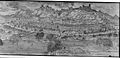 Drawing of Xàtiva by Anton van den Wyngaerde in 1563, commissioned by King Philip II of Spain.
 -
![Portrait of Philip V of Spain purposefully exhibited upside down in the Museum of Almodí [es]](//upload.wikimedia.org/wikipedia/commons/thumb/7/7e/X%C3%A0tiva._Almod%C3%AD._Felip_V_i_cadira-2.jpg/120px-X%C3%A0tiva._Almod%C3%AD._Felip_V_i_cadira-2.jpg) Portrait of Philip V of Spain purposefully exhibited upside down in the Museum of Almodí
Portrait of Philip V of Spain purposefully exhibited upside down in the Museum of Almodí -
 Collegiate church
 -
 Hospital
 -
 Town hall

See also
[edit]Notes
[edit]- ^ Often pronounced [ajˈʃativa].
References
[edit]- ^ National Statistics Institute (13 December 2024). "Municipal Register of Spain of 2024".
- ^ "Valencian demonyms" [Els gentilicis valencians] (PDF). Orthographic and Pronunciation Dictionary of Valencian (DOPV) (in Valencian). Archived from the original (PDF) on January 29, 2012. Retrieved September 26, 2025.
- ^ "Xàtiva cierra su Fira con unos 25.000 visitantes más y menos incidencias" [Xàtiva closes its Fair with about 25,000 more visitors and fewer incidents]. Las Provincias (in Spanish). August 22, 2017. Retrieved September 29, 2025.
- ^ "La Fira de Xàtiva" [The Xàtiva Fair]. www.xativaturismo.com (in European Spanish). Retrieved September 29, 2025.
- ^ a b c One or more of the preceding sentences incorporates text from a publication now in the public domain: Chisholm, Hugh, ed. (1911). "Játiva". Encyclopædia Britannica. Vol. 15 (11th ed.). Cambridge University Press. p. 280.
- ^ "Las Fallas de Xàtiva - Xàtiva Turismo" [The Fallas of Xàtiva - Xàtiva Tourism]. www.xativaturismo.com (in European Spanish). Retrieved September 29, 2025.
- ^ "Semana Santa - Xàtiva Turismo" [Holy Week - Xàtiva Tourism]. www.xativaturismo.com (in European Spanish). Retrieved September 29, 2025.
- ^ "INE - List of population units" [INE - Relación de unidades poblacionales]. Retrieved September 26, 2025.
- ^ "Arròs blanquet (arroz al horno hecho con el caldo del "bullit")" [White rice (baked rice made with the broth of the "bullit")]. La Comida de la Familia. Archived from the original on February 22, 2018. Retrieved September 29, 2025.
- ^ a b "Xàtiva". Great Thematic Encyclopedia of the Valencian Community [Gran Enciclopedia Temática de la Comunidad Valenciana]. Vol. Geography. Editorial Prensa Valenciana. 2009.
- ^ Ramírez Aledón, Germán (1987). "The deputy Villanueva and the restoration of the name of the city of Xàtiva" [El diputado Villanueva y la restitución del nombre del a ciudad de Xàtiva]. August Fair of Xàtiva. Municipality of Xàtiva: 66.
- ^ Hernando Serra, Mª Pilar; Aznar i García, Ramon (2002). Xàtiva during the French War, 1808-1814 [Játiva durante la guerra del francés, 1808-1814]. Xàtiva: Matéu Editors. pp. 25, 65, 103. ISBN 84-923759-8-1.
- ^ "Xàtiva in the register of Local Entities of the Generalitat Valenciana" [Játiva en el registro de Entidades Locales de la Generalidad Valenciana]. Archived from the original on 21 December 2019. Retrieved September 26, 2025.
- ^ a b "Definition - Numen - The Latin Lexicon - An Online Latin Dictionary - A Dictionary of the Latin Language". latinlexicon.org.
- ^ a b "Objectivas" (in Spanish). Archived from the original on May 27, 2007.
- ^ a b (in Spanish) División provisional del territorio español de 27 de Enero de 1822 Archived December 14, 2009, at the Wayback Machine, the text of the proposed 1822 territorial division of Spain, Instituto de Historia, Consejo Superior de Investigaciones Cientificas (CSIC, Spanish National Research Council). Accessed online 2010-01-03.
- ^ a b c d e f g h i j k l m n o p q "Xàtiva". Great Thematic Encyclopedia of the Valencian Community [Gran Enciclopedia Temática de la Comunidad Valenciana]. Vol. Geography. Editorial Prensa Valenciana. 2009.
- ^ "Information about Xàtiva on the Camino del Cid" [Información sobre Játiva en el Camino del Cid]. Camino del Cid Consortium. Retrieved September 26, 2025.
- ^ "Governació de Xàtiva". Great Thematic Encyclopedia of the Valencian Community [Gran Enciclopedia Temática de la Comunidad Valenciana]. Vol. History. Editorial Prensa Valenciana. 2009.
- ^ "History of Xàtiva" [Historia de Xàtiva]. Municipality of Xàtiva. Archived from the original on February 7, 2012. Retrieved September 26, 2025.
- ^ Ramírez Aledón, Germán (1987). "The deputy Villanueva and the restoration of the name of the city of Xàtiva" [El diputado Villanueva y la restitución del nombre del a ciudad de Xàtiva]. August Fair of Xàtiva. Municipality of Xàtiva: 66.
- ^ Hernando Serra, Mª Pilar; Aznar i García, Ramon (2002). Xàtiva during the French War, 1808-1814 [Játiva durante la guerra del francés, 1808-1814]. Xàtiva: Matéu Editors. pp. 25, 65, 103. ISBN 84-923759-8-1.
- ^ Cortes of Cádiz (1813). Collection of decrees and orders issued by the General and Extraordinary Cortes from their installation: From September 24, 1810 to September 24, 1811 [Colección de los decretos y órdenes que han expedido las Cortes generales y extraordinarias desde su instalación: De 24 de setiembre de 1810 hasta igual fecha de 1811]. Vol. 1. National Press.
The General and Extraordinary Cortes, considering the merits and services of the city of Xàtiva in the Kingdom of Valencia, which was stripped of this name by King Philip V, and considered a colony and new settlement as a result of the War of Succession; and wishing to give a testimony of benevolence to its loyal inhabitants, decree: That the ancient name of Xàtiva be restored to the said city, and it shall no longer be considered a colony or new settlement. [...] Given in Cádiz on September 28, 1811.
- ^ Ramírez Aledón, Germán (1987). "The deputy Villanueva and the restoration of the name of the city of Xàtiva" [El diputado Villanueva y la restitución del nombre del a ciudad de Xàtiva]. August Fair of Xàtiva. Municipality of Xàtiva: 66.
The first news we have on this matter is found in the Municipal Chapter Acts of the City, from the year 1811. In the Council of May 11, "The secretary reported a letter sent from Cádiz by Joaquín Villanueva, member of the Cortes, dated April 12, stating among other things: That it is an occasion for the City Council to request the restoration of the ancient name of Xàtiva or Zetabis (sic), to our homeland..."
- ^ "Provincia de Xàtiva". Great Thematic Encyclopedia of the Valencian Community [Gran Enciclopedia Temática de la Comunidad Valenciana]. Vol. History. Editorial Prensa Valenciana. 2009.
- ^ "Almansa to Valencia and Tarragona (AVT) Almansa to Valencia and Tarragona Railway Company" [Almansa a Valencia y Tarragona (AVT) Compañía del Ferrocarril de Almansa a Valencia y Tarragona]. Archived from the original on 7 February 2012. Retrieved September 26, 2025.
- ^ a b "The tragic bombing of Xàtiva" [El trágico bombardeo de Xàtiva]. Levante-EMV. 12 February 2011. Retrieved September 26, 2025.
- ^ a b c "Xàtiva". Great Thematic Encyclopedia of the Valencian Community [Gran Enciclopedia Temática de la Comunidad Valenciana]. Vol. Geography. Editorial Prensa Valenciana. 2009.
- ^ "Evolution of Köppen climates in Spain 1951-2020" [Evolucion de los climas de Koppen en España 1951-2020] (PDF). p. 18. Retrieved September 26, 2025.
- ^ "What is a cold drop?" (in Spanish). infobae.es. 30 October 2024. Retrieved 16 December 2024.
- ^ "La Aldea records the highest March temperature in the entire historical series in Spain" (in Spanish). eldiario.es. April 2023. Retrieved 16 December 2024.
- ^ "AEMET OpenData". Aemet.es. Retrieved 4 December 2024.
- ^ "Changes in municipalities in population censuses since 1842" [Alteraciones de los municipios en los Censos de Población desde 1842]. INE. Retrieved September 26, 2025.
- ^ a b Secretaría General Técnica (2008). Variations of Spanish Municipalities since 1842 [Variaciones de los Municipios de España desde 1842] (PDF) (1st ed.). Madrid: Government of Spain. Retrieved September 26, 2025.
- ^ "Population by sex, municipalities, and nationality (main nationalities)" [Población por sexo, municipios y nacionalidad (principales nacionalidades)]. INE. Archived from the original on 12 January 2008. Retrieved September 26, 2025.
- ^ a b c d e f "Xàtiva". Great Thematic Encyclopedia of the Valencian Community [Gran Enciclopedia Temática de la Comunidad Valenciana]. Vol. Geography. Editorial Prensa Valenciana. 2009.
- ^ Piqueras Haba, Juan (July 7, 2017). "Xàtiva: The imprint of two thousand years of history" [Xàtiva: la impronta de dos mil años de historia]. Levante-EMV (in Spanish). Retrieved September 26, 2025.
- ^ "Xàtiva Functional Area" [Àrea Funcional de Xàtiva]. Territorial Strategy of the Valencian Community 2010-30. Archived from the original on 21 December 2019. Retrieved September 26, 2025.
- ^ Official Road Map [Mapa Oficial de Carreteras] (46th ed.). Madrid: Ministry of Development. 2006. ISBN 84-498-0751-4.
- ^ "Schedules" [Horarios]. Autocares CHAMBITOS (in Spanish). Archived from the original on 2016-03-28. Retrieved September 26, 2025.
- ^ "La Concepción Buses" [Autobuses La Concepción]. Autobuses La Concepción (in Spanish). Retrieved September 26, 2025.
- ^ kike. "Travicoi Buses" [Autobuses Travicoi]. Autobuses Travicoi (in Spanish). Archived from the original on March 26, 2025. Retrieved September 26, 2025.
- ^ "Results of the municipal elections in Xàtiva" [Resultados de las elecciones municipales en Játiva]. Eldiario.es. Retrieved September 26, 2025.
- ^ "INE - List of population units" [INE - Relación de unidades poblacionales]. Retrieved September 26, 2025.
- ^ "The municipality in figures: Municipality of Xàtiva: Merchant Portal" [El municipio en cifras: Ayuntamiento de Xàtiva: Portal del comerciante]. xativa.portaldelcomerciante.com. Retrieved September 26, 2025.
- ^ "History of Xàtiva" [Historia de Xàtiva]. Municipality of Xàtiva. Archived from the original on February 7, 2012. Retrieved September 26, 2025.
- ^ a b c d e f g "Xàtiva". Great Thematic Encyclopedia of the Valencian Community [Gran Enciclopedia Temática de la Comunidad Valenciana]. Vol. Geography. Editorial Prensa Valenciana. 2009.
- ^ a b c "Xàtiva, castillo de". Great Thematic Encyclopedia of the Valencian Community [Gran Enciclopedia Temática de la Comunidad Valenciana]. Vol. History. Editorial Prensa Valenciana. 2009.
- ^ "Castle" [Castillo]. Municipality of Xàtiva. Archived from the original on January 25, 2009. Retrieved September 26, 2025.
- ^ "Urban wall of Xàtiva" [Muralla urbana de Xàtiva]. www.caminodelcid.org (in Spanish). Retrieved September 26, 2025.
- ^ "Collegiate Basilica or Seo" [Colegiata Basílica o Seu]. Municipality of Xàtiva. Archived from the original on January 10, 2010. Retrieved September 26, 2025.
- ^ "Parish Church of San Pedro" [Iglesia Parroquial de Sant Pere]. Municipality of Xàtiva. Archived from the original on January 8, 2010. Retrieved September 26, 2025.
- ^ "Church of San Félix" [Iglesia de Sant Feliu]. Municipality of Xàtiva. Archived from the original on January 8, 2010. Retrieved September 26, 2025.
- ^ Press, Europa (June 2, 2006). "The Provincial Council invests €90,000 in restoring the Santos Juanes Parish in Xàtiva" [La Diputación invierte 90,000 euros en rehabilitar la Parroquia de los Santos Juanes de Xàtiva]. europapress.es (in European Spanish). Retrieved September 26, 2025.
- ^ May Castillo, Manuel. "CONVENTO DE NUESTRA SEÑORA DE LA ASUNCIÓN O DE SANTA CLARA DE XÁTIVA. ESTUDIOS PREVIOS". Instituto Universitario de Restauración del Patrimonio de la UPV.
- ^ "Church of San Francisco" [Iglesia de Sant Francesc]. Municipality of Xàtiva. Archived from the original on October 9, 2009. Retrieved September 26, 2025.
- ^ "Royal Fountain of San Francisco" [Fuente Real de Sant Francesc]. Municipality of Xàtiva. Archived from the original on October 9, 2009. Retrieved September 26, 2025.
- ^ "Former Convent of Santo Domingo" [Ex-Convento de Sant Domènec]. Municipality of Xàtiva. Archived from the original on October 9, 2009. Retrieved September 26, 2025.
- ^ "Former Convent of San Onofre el Nou" [Ex-Convento de Sant Onofre el Nou]. Municipality of Xàtiva. Archived from the original on January 10, 2010. Retrieved September 26, 2025.
- ^ "Trinitat, iglesia del antiguo convento de la". Great Thematic Encyclopedia of the Valencian Community [Gran Enciclopedia Temática de la Comunidad Valenciana]. Vol. History. Editorial Prensa Valenciana. 2009.
- ^ "Royal Fountain of La Trinidad" [Fuente Real de la Trinidad]. Municipality of Xàtiva. Archived from the original on January 8, 2010. Retrieved September 26, 2025.
- ^ Garma, David de la. "Guide. Xàtiva" [Guía. Xátiva]. www.arteguias.com. Retrieved September 26, 2025.
- ^ "Santa Anna, ermita de (Xàtiva)". Great Thematic Encyclopedia of the Valencian Community [Gran Enciclopedia Temática de la Comunidad Valenciana]. Vol. Society. Editorial Prensa Valenciana. 2009.
- ^ "Hermitage of San José" [Ermita de Sant Josep]. Municipality of Xàtiva. Archived from the original on January 8, 2010. Retrieved September 26, 2025.
- ^ "Almodí Museum" [Museo de l'Almodí]. Municipality of Xàtiva. Archived from the original on January 10, 2010. Retrieved September 26, 2025.
- ^ a b "Hospital Reial de Xàtiva". Great Thematic Encyclopedia of the Valencian Community [Gran Enciclopedia Temática de la Comunidad Valenciana]. Vol. Society. Editorial Prensa Valenciana. 2009.
- ^ "Birthplace of Alexander VI" [Casa Natalicia de Alejandro VI]. Municipality of Xàtiva. Archived from the original on October 9, 2009. Retrieved September 26, 2025.
- ^ "Palace of Alarcón" [Palacio d'Alarcó]. Municipality of Xàtiva. Archived from the original on October 9, 2009. Retrieved September 26, 2025.
- ^ "Palace of Mahíques Sanz" [Palacio de los Mahíques Sanç]. Municipality of Xàtiva. Archived from the original on October 9, 2009. Retrieved September 26, 2025.
- ^ Garcilanga. "Palace of the Marquis of Montortal" [Palacio del Marqués de Montortal]. www.monumentalnet.org (in Spanish). Archived from the original on 19 February 2018. Retrieved September 26, 2025.
- ^ "The Borgia Route - Xàtiva Tourism" [La Ruta dels Borja - Xàtiva Turisme]. www.xativaturismo.com (in Catalan). Retrieved September 26, 2025.
- ^ "El Museu de l'Almodí | Ajuntament de Xàtiva" [The Almodí Museum | Xàtiva Town Hall]. www.xativa.es (in Catalan). June 13, 2016. Retrieved September 29, 2025.
- ^ "Museo del Almodí" [Almodí Museum]. www.xativaturismo.com (in European Spanish). Retrieved September 29, 2025.
- ^ "El museo de bellas artes de Xàtiva ya es una realidad" [Xàtiva's Fine Arts Museum is now a reality]. Las Provincias (in European Spanish). February 20, 2015. Retrieved September 29, 2025.
- ^ "Museo de bellas artes - Xàtiva Turismo" [Fine Arts Museum - Xàtiva Tourism]. www.xativaturismo.com (in European Spanish). Retrieved September 29, 2025.
- ^ Administrator. "El Museu - Page 2" [The Museum - Page 2]. seudexativa.org. Archived from the original on February 21, 2018. Retrieved September 29, 2025.
- ^ "La Colegiata - Xàtiva Turismo" [The Collegiate Basilica - Xàtiva Tourism]. www.xativaturismo.com (in European Spanish). Retrieved September 29, 2025.
- ^ Redacció (June 10, 2019). "Xàtiva inaugura el Museu del Corpus" [Xàtiva inaugurates the Corpus Museum]. infoniu (in Spanish). Retrieved September 29, 2025.
- ^ "El Museu del Corpus de Xàtiva estará listo en marzo" [Corpus Museum in Xàtiva will be ready]. www.levante-emv.com. 23 January 2019. Retrieved September 29, 2025.
- ^ País, Ediciones El (October 11, 2001). "El Gran Teatre de Xàtiva abre sus puertas" [Xàtiva's Gran Teatro opens its doors]. El País (in Spanish). ISSN 1134-6582. Retrieved September 29, 2025.
- ^ "Xàtiva". Gran Enciclopedia Temática de la Comunidad Valenciana [Great Thematic Encyclopedia of the Valencian Community]. Vol. Geography. Editorial Prensa Valenciana. 2009.
- ^ a b c d "Fiestas en Xàtiva" [Festivals in Xàtiva]. Ayuntamiento de Játiva. Archived from the original on April 14, 2010. Retrieved May 11, 2010.
- ^ "Xàtiva cierra su Fira con unos 25.000 visitantes más y menos incidencias" [Xàtiva closes its Fair with about 25,000 more visitors and fewer incidents]. Las Provincias (in Spanish). August 22, 2017. Retrieved September 29, 2025.
- ^ "La Fira de Xàtiva" [The Xàtiva Fair]. www.xativaturismo.com (in European Spanish). Retrieved September 29, 2025.
- ^ "Corpus Christi de Xàtiva" [Corpus Christi in Xàtiva]. www.xativaturismo.com (in European Spanish). Retrieved September 29, 2025.
- ^ "Las Fallas de Xàtiva - Xàtiva Turismo" [The Fallas of Xàtiva - Xàtiva Tourism]. www.xativaturismo.com (in European Spanish). Retrieved September 29, 2025.
- ^ "Semana Santa - Xàtiva Turismo" [Holy Week - Xàtiva Tourism]. www.xativaturismo.com (in European Spanish). Retrieved September 29, 2025.
- ^ "Gastronomia de Xàtiva - Xàtiva turisme" [Cuisine of Xàtiva - Xàtiva Tourism]. www.xativaturismo.com (in Catalan). Retrieved September 29, 2025.
- ^ "Arròs blanquet (arroz al horno hecho con el caldo del "bullit")" [White rice (baked rice made with the broth of the "bullit")]. La Comida de la Familia. Archived from the original on February 22, 2018. Retrieved September 29, 2025.
- ^ Jaume Fábregas, ed. (2007). "Lugares de interés: Játiva / Xàtiva". Comunidad Valenciana. Vol. IV (2007-2008 ed.). Guías Metrópoli. ISBN 978-84-96878-06-8.

External links
[edit]
- Xàtiva Town Hall. Official website

- Valencian Federation of Municipalities and Provinces - Tourist Guide Information extracted with their permission.
- Xàtiva Tourism Website by the Valencian Tourism Agency Archived 2008-05-20 at the Wayback Machine
- Xàtiva in the Register of Local Entities of the Generalitat Valenciana
 Xàtiva travel guide from Wikivoyage


Municipalities of Costera | ||
|---|---|---|
.svg) | ||
|  | |
| International | |
|---|---|
| National | |
| Geographic | |
| Other | |
Xàtiva
View on GrokipediaGeography
Location and topography
Xàtiva is situated in the La Costera comarca of the province of Valencia, within the Valencian Community in eastern Spain, at geographic coordinates 38°59′25″N 0°31′16″W.[6] The city lies approximately 62 kilometers southwest of the city of Valencia, in the strategic Montesa corridor separating the basins of the Albaida River to the north and its tributary, the Cànyoles River, to the south.[7] This positioning places Xàtiva amid the transitional terrain between the coastal plains of the Mediterranean and the interior highlands of the Iberian Peninsula.[8] The municipality spans 76.6 square kilometers, with the urban center at an elevation of 115 meters above sea level.[9] Topographically, Xàtiva occupies a valley setting framed by rolling hills and steeper rises, including smaller elevations to the east and west, while higher mountains rise prominently to the south.[10] Within a 3-kilometer radius, the terrain exhibits significant variation, with elevation changes reaching up to 359 meters from lowlands to hilltops, contributing to a diverse micro-relief that includes slopes suitable for agriculture and historical fortifications.[11] The surrounding landscape features the Albaida River valley, which supports irrigated plains historically used for crops like oranges, alongside drier upland areas.[12]Climate
Xàtiva features a hot-summer Mediterranean climate (Köppen Csa), marked by extended hot and arid summers, mild winters, and precipitation concentrated in the cooler months.[13] The annual average temperature is approximately 17 °C (63 °F), with significant seasonal variation: summer highs often exceed 32 °C (90 °F) in August, while winter lows dip to around 5 °C (41 °F) in January.[13][11] Precipitation averages 541 mm annually, predominantly falling between September and May, with the wet season defined by a greater than 10% daily chance of rain. October is the wettest month, recording about 38 mm (1.5 inches) over an average of 5.2 days with at least 1 mm of rain.[11] In contrast, the dry season spans from late May to early September, with July the driest at roughly 5 mm (0.2 inches) and only 0.9 wet days.[11] Summers exhibit high humidity, peaking in August with about 13 muggy days, while cloud cover is minimal (around 11% overcast in July), fostering clear skies and intense sunshine.[11] Winters remain relatively mild, with occasional frost but rare snowfall due to the coastal influence of the nearby Mediterranean Sea.[11]History
Pre-Roman and Roman eras
The territory of present-day Xàtiva was inhabited during the Bronze Age, with evidence of early settlements in nearby caves such as Cova Negra, though organized urban development emerged later among Iberian tribes. The site featured a pre-Roman Iberian oppidum on the prominent hill overlooking the Albaida valley, serving as a fortified settlement for local groups akin to the Contestani, who controlled much of the eastern Iberian Peninsula. This stronghold predated Roman influence and capitalized on the area's strategic position along natural trade routes.[14][15] In the early 3rd century BC, during the Second Punic War, Carthaginian forces under Hannibal seized the Iberian fortress, utilizing it as a logistical base for operations in Hispania Tarraconensis, including preparations for the assault on nearby Saguntum in 219 BC. Roman legions subsequently captured the site after Hannibal's defeat at the Battle of Zama in 202 BC, integrating it into the expanding Republic's provincial system.[16][17] Under Roman rule, the settlement was redesignated Saetabis and flourished as a municipium with a documented economy centered on linen textile production, earning mentions in classical literature for its high-quality fabrics. Positioned along the Via Augusta, it benefited from imperial infrastructure, including roads and aqueducts that supported agricultural and commercial growth; archaeological layers beneath the later castle reveal foundations of Roman-era buildings, walls, and artifacts confirming its role as a regional hub until the 4th century AD.[18][10]Islamic period and medieval prosperity
Xàtiva fell to Muslim forces under Abd al-Aziz in 714, shortly after the initial conquest of the Iberian Peninsula, marking the beginning of its integration into al-Andalus as Medina Xátiba.[19] The city initially served as the head of a kora (district), later falling under the Umayyad emirate and caliphate of Córdoba, which centralized administration and expanded its fortifications, including the castles that became key defensive structures.[19][20] During the caliphal period and subsequent taifa fragmentation after 1031, Xàtiva experienced economic and cultural growth, driven by advanced irrigation systems that boosted agriculture in the surrounding fertile valleys, producing crops like rice, fruits, and almonds for local and regional markets.[21] The city's strategic location facilitated trade routes connecting inland areas to Mediterranean ports, enhancing commerce in textiles, ceramics, and agricultural goods.[21] A hallmark of this prosperity was the establishment of Europe's first paper mill in Xàtiva during the 11th or early 12th century, adapting hydraulic technology from earlier olive presses to produce paper from rags and plant fibers, which supported administrative records, scholarship, and export to other Islamic territories and eventually Europe.[22][23] Geographer Muhammad al-Idrisi noted the mill's operation around 1154, highlighting Xàtiva's role in disseminating papermaking techniques acquired via Muslim North Africa from China.[24] This industrial innovation, alongside silk production and artisan crafts, contributed to urban expansion and wealth accumulation, as evidenced by architectural remnants like the finely carved "Pila de Xátiva" basin from a possible palace or aljama structure.[25] The Almoravid occupation in 1092 briefly disrupted but did not halt this trajectory, as Xàtiva remained a vital center until temporary Christian incursions, such as El Cid's capture in 1094, which were reversed soon after.[26] Overall, the Islamic era transformed Xàtiva from a Roman provincial town into a prosperous hub of technical and economic advancement, underpinned by hydraulic engineering and inter-regional exchange.[21][20]Christian reconquest and integration
King James I of Aragon initiated military operations against Xàtiva (then Játiva) in the summer of 1239 as part of his campaign to conquer the Kingdom of Valencia, following the fall of Valencia city in 1238.[27] After initial unsuccessful sieges, he resumed the effort in January 1244 amid pressures from Castile's advances, culminating in the city's capitulation on May 22, 1244, after a five-month siege.[28] The conquest was formalized through the Treaty of Xàtiva, a bilingual surrender agreement negotiated between James I and the Muslim ruling Banū ʿĪsā family, led by figures including Abu Bakr, which allowed the Muslim population to submit without total expulsion.[28] [29] The treaty granted the Mudéjar (Muslim residents under Christian rule) community specific protections, including rights to maintain their religious practices, property, and communal organization via an aljama (self-governing body), in exchange for tribute payments and loyalty oaths to the crown.[30] This arrangement reflected pragmatic diplomacy, as detailed in James I's Llibre dels fets, prioritizing economic continuity from the city's agricultural and textile productivity over immediate displacement.[28] However, the Mudéjars faced immediate restrictions, such as bans on bearing arms and requirements to vacate the upper castle, with the Banū ʿĪsā family retaining a lower fortress under supervision.[31] Christian integration proceeded through repopulation (repoblación), with James I issuing a charter (carta puebla) to attract Catalan, Aragonese, and Navarrese settlers, who received land grants, tax exemptions for several years, and municipal privileges to foster loyalty and economic revival.[31] By the late 1240s, these settlers formed the basis of the Christian elite, intermarrying sparingly with locals while dominating governance; the Mudéjar population, initially comprising a majority, gradually declined due to emigration, revolts (notably in 1276), and conversion pressures amid rising Christian demographic dominance.[30] [32] Xàtiva emerged as the second-largest city in the Kingdom of Valencia post-conquest, benefiting from its strategic location and the influx of Christian institutions like churches and markets, which supplanted Islamic structures while preserving some Mudéjar labor in crafts.[30] Tensions persisted, with the 1276 Mudéjar revolt prompting harsher oversight, yet the community's aljama endured until the early 14th century, adapting to fiscal impositions and legal subordinations that underscored unequal integration.[30] Over decades, many Mudéjars migrated to Granada or North Africa, accelerating Christian hegemony by the 1320s.[32]Absolutist era and the War of the Spanish Succession
During the late Habsburg monarchy under Charles II, Xàtiva experienced efforts toward centralized absolutist rule, though the kingdom's traditional fueros preserved significant local autonomy and prosperity derived from textile production and agriculture. The city's strategic castle and position made it a focal point of resistance when the War of the Spanish Succession erupted in 1701, with Xàtiva aligning with the Habsburg pretender Archduke Charles against the Bourbon claimant Philip V, reflecting broader Valencian opposition to perceived threats to regional privileges.[33][34] Following the decisive Bourbon victory at the Battle of Almansa on April 25, 1707, General Claude d'Asfeld led 3,500 troops to besiege Xàtiva on May 8, reinforced by larger Castilian and French forces totaling 9,000 to 11,000 men under overall Bourbon command. Local leaders, including Miquel Purroi and Josep Blanch, organized defenses from the castle, but after weeks of bombardment that breached the walls, the city surrendered on June 6, 1707. In direct response to this prolonged defiance, Philip V issued orders on June 19, 1707, to raze the city, deport approximately 14,000 inhabitants to La Mancha as punitive relocation, execute several ringleaders by garrote, and sow salt on surrounding fields to symbolize desolation.[33][35][36] The destruction exemplified Bourbon absolutist policy, enabling the swift enactment of the Nueva Planta decree for the Kingdom of Valencia on June 29, 1707, which dismantled its Cortes, laws, and institutions, subordinating them to Castilian models and central royal authority. Xàtiva was renamed San Felipe in homage to the king, and its repopulation proceeded slowly under military oversight, with reconstruction limited to basic structures by the mid-18th century; the castle suffered irreparable damage, reducing the city's former economic and administrative prominence. This episode underscored the causal link between military suppression and the consolidation of absolutism, as local resistance directly precipitated the forfeiture of autonomies across eastern Spain.[33][34]Industrialization and modern developments
Following the punitive measures imposed after the War of the Spanish Succession, including the 1707 sacking of the city and its administrative demotion, Xàtiva experienced prolonged economic stagnation through the 18th and much of the 19th centuries. The city's exclusion from the rerouted Camino Real connecting Madrid to Valencia marginalized it from major trade routes, exacerbating decline in what had been a prosperous textile and paper-producing center.[37] Agrarian activities dominated, with land ownership concentrated among small and medium proprietors focused on crops like olives, grapes, and cereals; by mid-century, properties averaged under 5 hectares, supporting subsistence farming rather than export-oriented growth.[38] Industrial development remained nascent, building modestly on medieval paper-making traditions but hampered by limited capital and infrastructure. Small-scale mills persisted into the 19th century, producing rag-based paper for regional markets, though output dwindled amid competition from larger Valencian operations. Ancillary sectors like tile manufacturing (azulejos) saw localized innovation, with Xàtiva-born artisan Marcos Honorato contributing to Valencian ceramic techniques from the late 18th century onward, but these did not scale to factory levels until the 20th.[39] The introduction of rail links in the 1860s, connecting Xàtiva to Valencia and Alicante, enabled modest export of agricultural goods and facilitated raw material inflows, marking an initial step toward integration into broader Iberian networks.[40] Early 20th-century modernization reflected cautious industrial emergence, evidenced by the proliferation of modernist architecture signaling rising merchant wealth from trade and nascent manufacturing.[41] Small enterprises in textiles and food processing took root, leveraging the region's agricultural base; by the interwar period, firms producing woven goods and preserves contributed to local employment, though overshadowed by Valencia's larger mechanized sector.[42] Urban expansion filled gaps between the historic core and rail lines, incorporating industrial zones that supported vehicle components and cooperatives by mid-century, transitioning Xàtiva from agrarian isolation toward diversified, service-augmented production.Contemporary era and infrastructure
Following Spain's transition to democracy after Francisco Franco's death in 1975, Xàtiva underwent modernization efforts aligned with national integration into the European Union in 1986, shifting economically toward services and tourism while preserving its historical core. The city's population grew steadily, reaching 30,378 inhabitants as of January 1, 2024, surpassing 30,000 for the first time and reflecting urban expansion in the surrounding functional area.[43][44] Key infrastructure developments include the Hospital Lluís Alcanyís, opened in 1984 as a university hospital with 240 beds and 30 specialties, serving approximately 210,000 residents in the Xàtiva-Ontinyent health department and marking advancements in regional medical care.[45][46] Transportation infrastructure features the Xàtiva railway station, operational since the 19th century but modernized for regional Cercanías C2 services connecting to Valencia and Moixent, alongside long-distance routes to Madrid, Barcelona, and southern cities.[47][48] In September 2025, the Xàtiva city council and ADIF advanced plans to reorganize the station and adjacent plaza in preparation for high-speed AVE integration, enhancing accessibility, intermodality with bus services, and urban connectivity.[49] Road networks link Xàtiva to the A7 motorway, facilitating access to Valencia (about 60 km north) and Alicante, supporting commuter and tourist traffic. Recent urban initiatives include a July 2025 pedestrian itinerary connecting the city center to commercial areas and a skatepark, alongside an October 2025 phase of public lighting renewal under the urban safety plan, aimed at improving safety and sustainability in key accesses and western zones.[50][51] These efforts underscore ongoing commitments to livable urban development amid population pressures and heritage preservation.Demographics
Population dynamics
The population of Xàtiva has exhibited steady long-term growth, increasing from 12,600 inhabitants in 1900 to 30,378 as of January 1, 2024, according to official Spanish National Institute of Statistics (INE) figures aggregated in demographic records.[44] This represents an overall doubling over more than a century, with notable acceleration in the post-World War II era and the early 21st century, interspersed by periods of stagnation or minor decline linked to economic cycles. Key milestones in population evolution include:| Year | Population |
|---|---|
| 1900 | 12,600 |
| 1950 | 18,092 |
| 1981 | 23,755 |
| 1996 | 24,758 |
| 2008 | 29,363 |
| 2011 | 29,469 |
| 2020 | 29,623 |
| 2024 | 30,378 |