Hubbry Logo
AM broadcastingAM broadcastingMain
Open search
AM broadcasting
Community hub
AM broadcasting
logo
8 pages, 0 posts
0 subscribers
Be the first to start a discussion here.
AM broadcasting
AM broadcasting
from Wikipedia
AM broadcasting
Amplitude modulation
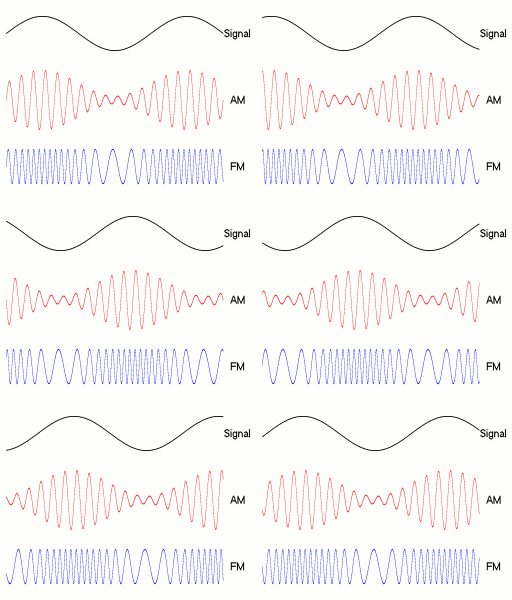
AM and FM modulated signals for radio. amplitude modulation (AM) and frequency modulation (FM) are types of modulation (coding). The electrical signal from program material, usually coming from a studio, is mixed with a carrier wave of a specific frequency, then broadcast. In the case of AM, this mixing (modulation) is done by altering the amplitude (strength) of the carrier wave, proportional to the original signal. In contrast, in the case of FM, it is the carrier wave's frequency that is varied. A radio receiver contains a demodulator that extracts the original program material from the broadcast wave.
AbbreviationAM
StatusActive
Year started1901; 124 years ago (1901)
AuthorsReginald Fessenden
LicensePublic
Websitewww.fcc.gov/general/am-radio

AM broadcasting is radio broadcasting using amplitude modulation (AM) transmissions. It was the first method developed for making audio radio transmissions, and is still used worldwide, primarily for medium wave (also known as "AM band") transmissions, but also on the longwave and shortwave radio bands.

The earliest experimental AM transmissions began in the early 1900s. However, widespread AM broadcasting was not established until the 1920s, following the development of vacuum tube receivers and transmitters. AM radio remained the dominant method of broadcasting for the next 30 years, a period called the "Golden Age of Radio", until television broadcasting became widespread in the 1950s and received much of the programming previously carried by radio. Later, AM radio's audiences declined greatly due to competition from FM (frequency modulation) radio, Digital Audio Broadcasting (DAB), satellite radio, HD (digital) radio, Internet radio, music streaming services, and podcasting.

Compared to FM or digital transmissions, AM transmissions are more expensive to transmit due to the necessity of having to transmit a high power carrier wave to overcome ground losses, and the large antenna radiators required at the low broadcast frequencies, but can be sent over long distances via the ionosphere at night; however, they are much more susceptible to interference, and often have lower audio fidelity.[1][2] Thus, AM broadcasters tend to specialize in spoken-word formats, such as talk radio, all-news radio and sports radio, with music formats primarily for FM and digital stations.

Main radio bands

History

[edit]

People who weren't around in the Twenties when radio exploded can't know what it meant, this milestone for mankind. Suddenly, with radio, there was instant human communication. No longer were our homes isolated and lonely and silent. The world came into our homes for the first time. Music came pouring in. Laughter came in. News came in. The world shrank, with radio.

— Red Barber, sportscaster, [3]

Early broadcasting development

[edit]
One of the earliest radio broadcasts, French soprano Mariette Mazarin singing into Lee de Forest's arc transmitter in New York City on February 24, 1910.[4]
Lee de Forest used an early vacuum-tube transmitter to broadcast returns for the Hughes-Wilson presidential election returns on November 7, 1916, over 2XG in New York City. Pictured is engineer Charles Logwood.[5]

The idea of broadcasting — the unrestricted transmission of signals to a widespread audience — dates back to the founding period of radio development, even though the earliest radio transmissions, originally known as "Hertzian radiation" and "wireless telegraphy", used spark-gap transmitters that could only transmit the dots-and-dashes of Morse code. In October 1898, a London publication, The Electrician, noted that "there are rare cases where, as Dr. [Oliver] Lodge once expressed it, it might be advantageous to 'shout' the message, spreading it broadcast to receivers in all directions".[6] However, it was recognized that this would involve significant financial issues, as that same year The Electrician also commented "did not Prof. Lodge forget that no one wants to pay for shouting to the world on a system by which it would be impossible to prevent non-subscribers from benefiting gratuitously?"[7]

On January 1, 1902, Nathan Stubblefield gave a short-range "wireless telephone" demonstration, that included simultaneously broadcasting speech and music to seven locations throughout Murray, Kentucky. However, this was transmitted using induction rather than radio signals, and although Stubblefield predicted that his system would be perfected so that "it will be possible to communicate with hundreds of homes at the same time", and "a single message can be sent from a central station to all parts of the United States", he was unable to overcome the inherent distance limitations of this technology.[8]

The earliest public radiotelegraph broadcasts were provided as government services, beginning with daily time signals inaugurated on January 1, 1905, by a number of U.S. Navy stations.[9] In Europe, signals transmitted from a station located on the Eiffel Tower were received throughout much of Europe. In both the United States and France this led to a small market of receiver lines geared for jewelers who needed accurate time to set their clocks, including the Ondophone in France,[10] and the De Forest RS-100 Jewelers Time Receiver in the United States[11] The ability to pick up time signal broadcasts, in addition to Morse code weather reports and news summaries, also attracted the interest of amateur radio enthusiasts.

Early amplitude modulation (AM) transmitter technologies

[edit]

It was immediately recognized that, much like the telegraph had preceded the invention of the telephone, the ability to make audio radio transmissions would be a significant technical advance. Despite this knowledge, it still took two decades to perfect the technology needed to make quality audio transmissions. In addition, the telephone had rarely been used for distributing entertainment, outside of a few "telephone newspaper" systems, most of which were established in Europe, beginning with the Paris Théâtrophone. With this in mind, most early radiotelephone development envisioned that the device would be more profitably developed as a "wireless telephone" for personal communication, or for providing links where regular telephone lines could not be run, rather than for the uncertain finances of broadcasting.

Nellie Melba making a broadcast over the Marconi Chelmsford Works radio station in England on June 15, 1920.[12]
Farmer listening to U.S. government weather and crop reports using a crystal radio in 1923. Public service government time, weather, and farm broadcasts were the first radio "broadcasts".
A family listening to an early broadcast using a crystal radio receiver in 1922. Crystal sets, used before the advent of vacuum tube radios in the 1920s, could not drive loudspeakers, so the family had to listen on earphones.

The person generally credited as the primary early developer of AM technology is Canadian-born inventor Reginald Fessenden. The original spark-gap radio transmitters were impractical for transmitting audio, since they produced discontinuous pulses known as "damped waves". Fessenden realized that what was needed was a new type of radio transmitter that produced steady "undamped" (better known as "continuous wave") signals, which could then be "modulated" to reflect the sounds being transmitted.

Fessenden's basic approach was disclosed in U.S. Patent 706,737, which he applied for on May 29, 1901, and was issued the next year. It called for the use of a high-speed alternator (referred to as "an alternating-current dynamo") that generated "pure sine waves" and produced "a continuous train of radiant waves of substantially uniform strength", or, in modern terminology, a continuous-wave (CW) transmitter.[13] Fessenden began his research on audio transmissions while doing developmental work for the United States Weather Service on Cobb Island, Maryland. Because he did not yet have a continuous-wave transmitter, initially he worked with an experimental "high-frequency spark" transmitter, taking advantage of the fact that the higher the spark rate, the closer a spark-gap transmission comes to producing continuous waves. He later reported that, in the fall of 1900, he successfully transmitted speech over a distance of about 1.6 kilometers (one mile),[14] which appears to have been the first successful audio transmission using radio signals. However, at this time the sound was far too distorted to be commercially practical.[15] For a time he continued working with more sophisticated high-frequency spark transmitters, including versions that used compressed air, which began to take on some of the characteristics of arc-transmitters.[16] Fessenden attempted to sell this form of radiotelephone for point-to-point communication, but was unsuccessful.[17]

Alternator transmitter

[edit]

Fessenden's work with high-frequency spark transmissions was only a temporary measure. His ultimate plan for creating an audio-capable transmitter was to redesign an electrical alternator, which normally produced alternating current of at most a few hundred (Hz), to increase its rotational speed and so generate currents of tens-of-thousands Hz, thus producing a steady continuous-wave transmission when connected to an aerial. The next step, adopted from standard wire-telephone practice, was to insert a simple carbon microphone into the transmission line, to modulate the carrier wave signal to produce AM audio transmissions. However, it would take many years of expensive development before even a prototype alternator-transmitter would be ready, and a few years beyond that for high-power versions to become available.[18]

Fessenden worked with General Electric's (GE) Ernst F. W. Alexanderson, who in August 1906, delivered an improved model which operated at a transmitting frequency of approximately 50 kHz, although at low power. The alternator-transmitter achieved the goal of transmitting quality audio signals, but the lack of any way to amplify the signals meant they were somewhat weak. On December 21, 1906, Fessenden made an extensive demonstration of the new alternator-transmitter at Brant Rock, Massachusetts, showing its utility for point-to-point wireless telephony, including interconnecting his stations to the wire telephone network. As part of the demonstration, speech was transmitted 18 kilometers (11 miles) to a listening site at Plymouth, Massachusetts.[19]

An American Telephone Journal account of the December 21 alternator-transmitter demonstration included the statement that "It is admirably adapted to the transmission of news, music, etc. as, owing to the fact that no wires are needed, simultaneous transmission to many subscribers can be effected as easily as to a few",[19] echoing the words of a handout distributed to the demonstration witnesses, which stated "[Radio] Telephony is admirably adapted for transmitting news, stock quotations, music, race reports, etc. simultaneously over a city, on account of the fact that no wires are needed and a single apparatus can distribute to 10,000 subscribers as easily as to a few. It is proposed to erect stations for this purpose in the large cities here and abroad."[20] However, other than two holiday transmissions reportedly made shortly after these demonstrations, Fessenden does not appear to have conducted any radio broadcasts for the general public, or to have even given additional thought about the potential of a regular broadcast service, and in a 1908 article providing a comprehensive review of the potential uses for his radiotelephone invention, he made no references to broadcasting.[21]

Because there was no way to amplify electrical currents at this time, modulation was usually accomplished by a carbon microphone inserted directly in the antenna wire. This meant that the full transmitter power flowed through the microphone, and even using water cooling, the power handling ability of the microphones severely limited the power of the transmissions. Ultimately only a small number of large and powerful Alexanderson alternators would be developed. However, they would be almost exclusively used for long-range radiotelegraph communication, and occasionally for radiotelephone experimentation, but were never used for general broadcasting.

Arc transmitters

[edit]

Almost all of the continuous wave AM transmissions made prior to 1915 were made by versions of the arc converter transmitter, which had been initially developed by Valdemar Poulsen in 1903.[22] Arc transmitters worked by producing a pulsating electrical arc in an enclosed hydrogen atmosphere. They were much more compact than alternator transmitters, and could operate on somewhat higher transmitting frequencies. However, they suffered from some of the same deficiencies. The lack of any means to amplify electrical currents meant that, like the alternator transmitters, modulation was usually accomplished by a microphone inserted directly in the antenna wire, which again resulted in overheating issues, even with the use of water-cooled microphones. Thus, transmitter powers tended to be limited. The arc was also somewhat unstable, which reduced audio quality. Experimenters who used arc transmitters for their radiotelephone research included Ernst Ruhmer, Quirino Majorana, Charles "Doc" Herrold, and Lee de Forest.

Vacuum tube transmitters

[edit]

Advances in vacuum tube technology (called "valves" in British usage), especially after around 1915, revolutionized radio technology. Vacuum tube devices could be used to amplify electrical currents, which overcame the overheating issues of needing to insert microphones directly in the transmission antenna circuit. Vacuum tube transmitters also provided high-quality AM signals, and could operate on higher transmitting frequencies than alternator and arc transmitters.[23] Non-governmental radio transmissions were prohibited in many countries during World War I, but AM radiotelephony technology advanced greatly due to wartime research, and after the war the availability of tubes sparked a great increase in the number of amateur radio stations experimenting with AM transmission of news or music. Vacuum tubes remained the central technology of radio for 40 years, until transistors began to dominate in the late 1950s, and are still used in the highest power broadcast transmitters.

Receivers

[edit]
1938 Zenith Model 12-S vacuum-tube console radio, capable of picking up mediumwave and shortwave AM transmissions. "All Wave" receivers could also pick up the third AM band: longwave (LW).

Unlike telegraph and telephone systems, which used completely different types of equipment, most radio receivers were equally suitable for both radiotelegraph and radiotelephone reception. In 1903 and 1904, the electrolytic detector and thermionic diode (Fleming valve) were invented by Reginald Fessenden and John Ambrose Fleming, respectively. Most important, in 1904–1906, the crystal detector, the simplest and cheapest AM detector, was developed by G. W. Pickard. Homemade crystal radios spread rapidly during the next 15 years, providing ready audiences for the first radio broadcasts. One limitation of crystals sets was the lack of amplifying the signals, so listeners had to use earphones, and it required the development of vacuum-tube receivers before loudspeakers could be used. The dynamic cone loudspeaker, invented in 1924, greatly improved audio frequency response over the previous horn speakers, allowing music to be reproduced with good fidelity.[24] AM radio offered the highest sound quality available in a home audio device prior to the introduction of the high-fidelity, long-playing record in the late 1940s.

Listening habits changed in the 1960s due to the introduction of the revolutionary transistor radio (Regency TR-1, the first transistor radio released December 1954), which was made possible by the invention of the transistor in 1948. (The transistor was invented at Bell labs and released in June 1948.) Their compact size — small enough to fit in a shirt pocket — and lower power requirements, compared to vacuum tubes, meant that for the first time radio receivers were readily portable. The transistor radio became the most widely used communication device in history, with billions manufactured by the 1970s. Radio became a ubiquitous "companion medium" which people could take with them anywhere they went.

Early experimental broadcasts

[edit]

The demarcation between what is considered "experimental" and "organized" broadcasting is largely arbitrary. Listed below are some of the early AM radio broadcasts, which, due to their irregular schedules and limited purposes, can be classified as "experimental":

  • Christmas Eve 1906. Until the early 1930s, it was generally accepted that Lee de Forest's series of demonstration broadcasts begun in 1907 were the first transmissions of music and entertainment by radio. However, in 1932, an article prepared by Samuel M. Kintner, a former associate of Reginald Fessenden, asserted that Fessenden had actually conducted two earlier broadcasts.[25] This claim was based solely on information included in a January 29, 1932, letter that Fessenden had sent to Kintner. (Fessenden subsequently died 5 months before Kintner's article appeared.) In his letter, Fessenden reported that, on the evening of December 24, 1906 (Christmas Eve), he had made the first of two broadcasts of music and entertainment to a general audience, using the alternator-transmitter at Brant Rock, Massachusetts. Fessenden remembered producing a short program that included playing a phonograph record, followed by his playing the violin and singing, and closing with a Bible reading. He also stated that a second short program was broadcast on December 31 (New Year's Eve). The intended audience for both transmissions was primarily shipboard radio operators along the Atlantic seaboard. Fessenden claimed these two programs had been widely publicized in advance, with the Christmas Eve broadcast heard "as far down" as Norfolk, Virginia, while the New Year's Eve broadcast had been received in the West Indies.[26] However, extensive efforts to verify Fessenden's claim during both the 50th[27] and 100th[28] anniversaries of the claimed broadcasts, which included reviewing ships' radio log accounts and other contemporary sources, have so far failed to confirm that these reported holiday broadcasts actually took place.
  • 1907-1912. Lee de Forest conducted multiple test broadcasts beginning in 1907, and was widely quoted promoting the potential of organized radio broadcasting. Using a series of arc transmitters, he made his first entertainment broadcast in February 1907, transmitting electronic telharmonium music from his Parker Building laboratory station in New York City.[29] This was followed by tests that included, in the fall, Eugenia Farrar singing "I Love You Truly" and "Just Awearyin' for You".[30] Additional promotional events in New York included live performances by famous Metropolitan Opera stars such as Mariette Mazarin and Enrico Caruso. He also broadcast phonograph music from the Eiffel Tower in Paris. His company equipped the U.S. Navy's Great White Fleet with experimental arc radiotelephones for their 1908 around-the-world cruise, and the operators broadcast phonograph music as the ships entered ports like San Francisco and Honolulu.[31]
  • June 1910. In a June 23, 1910, notarized letter that was published in a catalog produced by the Electro Importing Company of New York, Charles "Doc" Herrold reported that, using one of that company's spark coils to create a "high frequency spark" transmitter, he had successfully broadcast "wireless phone concerts to local amateur wireless men". Herrold lived in San Jose, California.[32]
  • 1913. Robert Goldschmidt began experimental radiotelephone transmissions from the Laeken station, near Brussels, Belgium, and by March 13, 1914, the tests had been heard as far away as the Eiffel Tower in Paris.[33]
  • 1914–1919. "University of Wisconsin electrical engineering Professor Edward Bennett sets up a personal radio transmitter on campus and in June 1915 is issued an Experimental radio station license with the call sign 9XM.[34] Activities included regular Morse Code broadcasts of weather forecasts and sending game reports for a Wisconsin-Ohio State basketball game on February 17, 1917.
  • January 15, 1920. Broadcasting in the United Kingdom began with impromptu news and phonograph music over 2MT, the 15 kW experimental tube transmitter at Marconi's factory in Chelmsford, Essex, at a frequency of 120 kHz. On June 15, 1920, the Daily Mail newspaper sponsored the first scheduled British radio concert, by the famed Australian opera diva Nellie Melba.[35] This transmission was heard throughout much of Europe, including in Berlin, Paris, The Hague, Madrid, Spain, and Sweden. Chelmsford continued broadcasting concerts with noted performers. A few months later, in spite of burgeoning popularity, the government ended the broadcasts, due to complaints that the station's longwave signal was interfering with more important communication, in particular military aircraft radio.[36]
  • August 27, 1920. Argentina made the first mass radio transmission as a communication medium. Medicine students of the UBA made the first radio program by transmitting Wagner's Parsifal on radio and picked up by about 100 amateurs in the city, emitting from the roof of the Teatro Colón. They kept transmitting over the nights different operas being the first in offering a radio program. There were known as the "Locos de la azotea" (the crazies of the roof).[37]

Organized broadcasting

[edit]

People who weren't around in the 20s when radio exploded can't know what it meant, this milestone for mankind. Suddenly, with radio, there was instant human communication. No longer were our homes isolated and lonely and silent. The world came into our homes for the first time. Music came pouring in. Laughter came in. News came in. The world shrank, with radio.

— Red Barber, sportscaster, [38]

In July 1912, Charles "Doc" Herrold began weekly broadcasts in San Jose, California, using an arc transmitter.
Broadcasting in Germany began 1922 as a Post Office monopoly on a subscription basis, using sealed receivers which could only receive one station.

Following World War I, the number of stations providing a regular broadcasting service greatly increased, primarily due to advances in vacuum-tube technology. In response to ongoing activities, government regulators eventually codified standards for which stations could make broadcasts intended for the general public, for example, in the United States formal recognition of a "broadcasting service" came with the establishment of regulations effective December 1, 1921,[39] and Canadian authorities created a separate category of "radio-telephone broadcasting stations" in April 1922.[40] However, there were numerous cases of entertainment broadcasts being presented on a regular schedule before their formal recognition by government regulators. Some early examples include:

  • July 21, 1912. The first person to transmit entertainment broadcasts on a regular schedule appears to have been Charles "Doc" Herrold, who inaugurated weekly programs, using an arc transmitter, from his Wireless School station in San Jose, California.[41] The broadcasts continued until the station was shut down due to the entrance of the United States into World War I in April 1917.
  • March 28, 1914. The Laeken station in Belgium, under the oversight of Robert Goldschmidt, inaugurated a weekly series of concerts,[42] transmitted at 5:00 p.m. on Saturdays. These continued for about 4 months until July, and were ended by the start of World War I.[43] In August 1914 the Laeken facilities were destroyed, to keep them from falling into the hands of invading German troops.
  • November 1916. De Forest perfected "Oscillion" power vacuum tubes, capable of use in radio transmitters, and inaugurated daily broadcasts of entertainment and news from his New York "Highbridge" station, 2XG. This station also suspended operations in April 1917 due to the prohibition of civilian radio transmissions following the United States' entry into World War I.[44] Its most publicized program was the broadcasting of election results for the Hughes-Wilson presidential election on November 7, 1916, with updates provided by wire from the New York American offices. An estimated 7,000 radio listeners as far as 200 miles (320 kilometers) from New York heard election returns interspersed with patriotic music.[45]
  • April 17, 1919. Shortly after the end of World War I, F. S. McCullough at the Glenn L. Martin aviation plant in Cleveland, Ohio, began a weekly series of phonograph concerts.[46] However, the broadcasts were soon suspended, due to interference complaints by the U.S. Navy.[47]
  • November 6, 1919. The first scheduled (pre-announced in the press) Dutch radio broadcast was made by Nederlandsche Radio Industrie station PCGG at The Hague, which began regular concerts broadcasts. It found it had a large audience outside the Netherlands, mostly in the UK. (Rather than true AM signals, at least initially this station used a form of narrowband FM, which required receivers to be slightly detuned to receive the signals using slope detection.)[48]
  • Late 1919. De Forest's New York station, 2XG, returned to the airwaves in late 1919 after having to suspend operations during World War I.[49] The station continued to operate until early 1920, when it was shut down because the transmitter had been moved to a new location without permission.
  • May 20, 1920. Experimental Canadian Marconi station XWA (later CFCF, deleted in 2010 as CINW) in Montreal began regular broadcasts,[50] and claims status as the first commercial broadcaster in the world.
  • June 1920. De Forest transferred 2XG's former transmitter to San Francisco, California, where it was relicensed as 6XC, the "California Theater station".[51] By June 1920 the station began transmitting daily concerts.[52] De Forest later stated that this was the "first radio-telephone station devoted solely" to broadcasting to the public.[53]
  • August 20, 1920. On this date the Detroit News began daily transmissions over station 8MK (later WWJ), located in the newspaper's headquarters building. The newspaper began extensively publicizing station operations beginning on August 31, 1920, with a special program featuring primary election returns.[54] Station management later claimed the title of being where "commercial radio broadcasting began".[55]
  • November 2, 1920. Beginning on October 17, 1919,[56] Westinghouse engineer Frank Conrad began broadcasting recorded and live music on a semi-regular schedule from his home station, 8XK in Wilkinsburg, Pennsylvania. This inspired his employer to begin its own ambitious service at the company's headquarters in East Pittsburgh, Pennsylvania. Operations began, initially with the call sign 8ZZ, with an election night program featuring election returns on November 2, 1920.[57] As KDKA, the station adopted a daily schedule beginning on December 21, 1920.[58] This station is another contender for the title of "first commercial station".
  • January 3, 1921. University of Wisconsin - Regular schedule of voice broadcasts begin; 9XM is the first radio station in the United States to provide the weather forecast by voice (January 3). In September, farm market broadcasts are added. On November 1, 9XM carries the first live broadcast of a symphony orchestra—the Cincinnati Symphony Orchestra from the UW Armory using a single microphone.[34]

Radio networks

[edit]
A live radio play being broadcast at NBC studios in New York. Most 1920s through 1940s network programs were broadcast live.

Because most longwave radio frequencies were used for international radiotelegraph communication, a majority of early broadcasting stations operated on mediumwave frequencies, whose limited range generally restricted them to local audiences. One method for overcoming this limitation, as well as a method for sharing program costs, was to create radio networks, linking stations together with telephone lines to provide a nationwide audience.

United States

[edit]

In the U.S., the American Telephone and Telegraph Company (AT&T) was the first organization to create a radio network, and also to promote commercial advertising, which it called "toll" broadcasting. Its flagship station, WEAF (now WFAN) in New York City, sold blocks of airtime to commercial sponsors that developed entertainment shows containing commercial messages. AT&T held a monopoly on quality telephone lines, and by 1924 had linked 12 stations in Eastern cities into a "chain". The Radio Corporation of America (RCA), General Electric, and Westinghouse organized a competing network around its own flagship station, RCA's WJZ (now WABC) in New York City, but were hampered by AT&T's refusal to lease connecting lines or allow them to sell airtime. In 1926, AT&T sold its radio operations to RCA, which used them to form the nucleus of the new NBC network.[59] By the 1930s, most of the major radio stations in the country were affiliated with networks owned by two companies, NBC and CBS. In 1934, a third national network, the Mutual Radio Network, was formed as a cooperative owned by its stations.

United Kingdom

[edit]
A BBC receiver licence from 1922. The British government required listeners to purchase yearly licences, which financed the stations.

A second country which quickly adopted network programming was the United Kingdom, and its national network quickly became a prototype for a state-managed monopoly of broadcasting.[60] A rising interest in radio broadcasting by the British public pressured the government to reintroduce the service, following its suspension in 1920. However, the government also wanted to avoid what it termed the "chaotic" U.S. experience of allowing large numbers of stations to operate with few restrictions. There were also concerns about broadcasting becoming dominated by the Marconi company.[61] Arrangements were made for six large radio manufacturers to form a consortium, the British Broadcasting Company (BBC), established on October 18, 1922, which was given a monopoly on broadcasting. This enterprise was supported by a tax on radio sets sales, plus an annual license fee on receivers, collected by the Post Office.[62] Initially the eight stations were allowed regional autonomy. In 1927, the original broadcasting organization was replaced by a government chartered British Broadcasting Corporation.[63] an independent nonprofit supported solely by a 10 shilling receiver license fee.[63] Both highbrow and mass-appeal programmes were carried by the National and Regional networks.

"Golden Age of Radio"

[edit]
When broadcasting began in 1920, music was played on air without regard to its copyright status. Music publishers challenged this practice as being copyright infringement, which for a time kept many popular tunes off the air, and this 1925 U.S. editorial cartoon shows a rich publisher muzzling two radio performers. The radio industry eventually agreed to make royalty payments.

The period from the early 1920s through the 1940s is often called the "Golden Age of Radio". During this period AM radio was the main source of home entertainment, until it was replaced by television. For the first time entertainment was provided from outside the home, replacing traditional forms of entertainment such as oral storytelling and music from family members. New forms were created, including radio plays, mystery serials, soap operas, quiz shows, variety hours, situation comedies and children's shows. Radio news, including remote reporting, allowed listeners to be vicariously present at notable events.

Radio greatly eased the isolation of rural life. Political officials could now speak directly to millions of citizens. One of the first to take advantage of this was American president Franklin Roosevelt, who became famous for his fireside chats during the Great Depression. However, broadcasting also provided the means to use propaganda as a powerful government tool, and contributed to the rise of fascist and communist ideologies.

Decline in popularity

[edit]

In the 1940s, two new broadcast media, FM radio and television, began to provide extensive competition with the established broadcasting services. The AM radio industry suffered a serious loss of audience and advertising revenue, and coped by developing new strategies. Network broadcasting gave way to format broadcasting: instead of broadcasting the same programs all over the country, stations individually adopted specialized formats which appealed to different audiences, such as regional and local news, sports, "talk" programs, and programs targeted at minorities. Instead of live music, most stations began playing less expensive recorded music.

In the late 1960s and 1970s, top 40 rock and roll stations in the U.S. and Canada such as WABC and CHUM transmitted highly processed and extended audio to 11 kHz, successfully attracting huge audiences. For young people, listening to AM broadcasts and participating in their music surveys and contests was the social media of the time.

In the late 1970s, spurred by the exodus of musical programming to FM stations, the AM radio industry in the United States developed technology for broadcasting in stereo. Other nations adopted AM stereo, most commonly choosing Motorola's C-QUAM, and in 1993, the United States also made the C-QUAM system its standard, after a period allowing four different standards to compete. The selection of a single standard improved acceptance of AM stereo,[64] however overall there was limited adoption of AM stereo worldwide, and interest declined after 1990. With the continued migration of AM stations away from music to news, sports, and talk formats, receiver manufacturers saw little reason to adopt the more expensive stereo tuners, and thus radio stations have little incentive to upgrade to stereo transmission.

In countries where the use of directional antennas is common, such as the United States, transmitter sites consisting of multiple towers often occupy large tracts of land that have significantly increased in value over the decades, to the point that the value of land exceeds that of the station itself. This sometimes results in the sale of the transmitter site, with the station relocating to a more distant shared site using significantly less power,[65] or completely shutting down operations.[66]

The ongoing development of alternative transmission systems, including Digital Audio Broadcasting (DAB), satellite radio, and HD (digital) radio, continued the decline of the popularity of the traditional broadcast technologies. These new options, including the introduction of Internet streaming, particularly resulted in the reduction of shortwave transmissions, as international broadcasters found ways to reach their audiences more easily.[67]

In 2022, it was reported that AM radio was being removed from a number of electric vehicle (EV) models, including from cars manufactured by Tesla, Audi, Porsche, BMW and Volvo, reportedly due to automakers concerns that an EV's higher electromagnetic interference can disrupt the reception of AM transmissions and hurt the listening experience, among other reasons.[68][69] However the United States Congress has introduced a bill to require all vehicles sold in the US to have an AM receiver to receive emergency broadcasts.[70]

AM band revitalization efforts in the United States

[edit]

The FM broadcast band was established in 1941 in the United States, and at the time some suggested that the AM band would soon be eliminated. In 1948, wide-band FM's inventor, Edwin H. Armstrong, predicted that "The broadcasters will set up FM stations which will parallel, carry the same program, as over their AM stations... eventually the day will come, of course, when we will no longer have to build receivers capable of receiving both types of transmission, and then the AM transmitters will disappear."[71] However, FM stations actually struggled for many decades, and it was not until 1978 that FM listenership surpassed that of AM stations. Since then the AM band's share of the audience has continued to decline.

Fairness Doctrine repeal

[edit]

In 1987, the elimination of the Fairness Doctrine requirement meant that talk shows, which were commonly carried by AM stations, could adopt a more focused presentation on controversial topics, without the distraction of having to provide airtime for any contrasting opinions. In addition, satellite distribution made it possible for programs to be economically carried on a national scale. The introduction of nationwide talk shows, most prominently Rush Limbaugh's beginning in 1988, was sometimes credited with "saving" AM radio.[72] However, these stations tended to attract older listeners who were of lesser interest to advertisers, and AM radio's audience share continued to erode.

AM stereo and AMAX standards

[edit]
Radios meeting the AMAX standards could display a certification logo, with the "stereo" notation reserved for those capable of AM stereo reception

In 1961, the FCC adopted a single standard for FM stereo transmissions, which was widely credited with enhancing FM's popularity. Developing the technology for AM broadcasting in stereo was challenging due to the need to limit the transmissions to a 20 kHz bandwidth, while also making the transmissions backward compatible with existing non-stereo receivers.

In 1990, the FCC authorized an AM stereo standard developed by Magnavox, but two years later revised its decision to instead approve four competing implementations, saying it would "let the marketplace decide" which was best.[64] The lack of a common standard resulted in consumer confusion and increased the complexity and cost of producing AM stereo receivers.

In 1993, the FCC again revised its policy, by selecting C-QUAM as the sole AM stereo implementation. In 1993, the FCC also endorsed, although it did not make mandatory, AMAX broadcasting standards that were developed by the Electronic Industries Association (EIA) and the National Association of Broadcasters (NAB) with the intention of helping AM stations, especially ones with musical formats, become more competitive with FM broadcasters by promoting better quality receivers. However, the stereo AM and AMAX initiatives had little impact, and a 2015 review of these events concluded that

Initially the consumer manufacturers made a concerted attempt to specify performance of AM receivers through the 1993 AMAX standard, a joint effort of the EIA and the NAB, with FCC backing... The FCC rapidly followed up on this with codification of the CQUAM AM stereo standard, also in 1993. At this point, the stage appeared to be set for rejuvenation of the AM band. Nevertheless, with the legacy of confusion and disappointment in the rollout of the multiple incompatible AM stereo systems, and failure of the manufacturers (including the auto makers) to effectively promote AMAX radios, coupled with the ever-increasing background of noise in the band, the general public soon lost interest and moved on to other media.[73]

Expanded band

[edit]

On June 8, 1988, an International Telecommunication Union (ITU)-sponsored conference held at Rio de Janeiro, Brazil adopted provisions, effective July 1, 1990, to extend the upper end of the Region 2 AM broadcast band, by adding ten frequencies which spanned from 1610 kHz to 1700 kHz.[74] At this time it was suggested that as many as 500 U.S. stations could be assigned to the new frequencies.[75]

On April 12, 1990, the FCC voted to begin the process of populating the expanded band, with the main priority being the reduction of interference on the existing AM band, by transferring selected stations to the new frequencies. It was now estimated that the expanded band could accommodate around 300 U.S. stations.[76] However, it turned out that the number of possible station reassignments was much lower, with a 2006 accounting reporting that, out of 4,758 licensed U.S. AM stations, only 56 were now operating on the expanded band.[77] Moreover, despite an initial requirement that by the end of 5 years, either the original station or its expanded band counterpart had to cease broadcasting,[78] as of 2015, there were 25 cases where the original standard band station was still on the air, despite also operating as an expanded band station.

HD radio

[edit]

HD Radio is a digital audio broadcasting method developed by iBiquity. In 2002 its "hybrid mode", which simultaneously transmits a standard analog signal as well as a digital one, was approved by the FCC for use by AM stations, initially only during daytime hours, due to concerns that during the night its wider bandwidth would cause unacceptable interference to stations on adjacent frequencies.[79] In 2007 nighttime operation was also authorized.[80]

The number of hybrid mode AM stations is not exactly known, because the FCC does not keep track of the stations employing the system, and some authorized stations have later turned it off. But as of 2020 the commission estimated that fewer than 250 AM stations were transmitting hybrid mode signals.[81] On October 27, 2020, the FCC voted to allow AM stations to eliminate their analog transmissions and convert to all-digital operation, with the requirement that stations making the change had to continue to make programming available over "at least one free over-the-air digital programming stream that is comparable to or better in audio quality than a standard analog broadcast".[82]

FM translator stations

[edit]
right
Many U.S. AM stations no longer publicize their AM signals, instead promoting simulcasts by FM band translators and Internet streams.[83]

Despite the various actions, AM band audiences continued to contract, and the number of stations began to slowly decline. A 2009 FCC review reported that "The story of AM radio over the last 50 years has been a transition from being the dominant form of audio entertainment for all age groups to being almost non-existent to the youngest demographic groups. Among persons aged 12–24, AM accounts for only 4% of listening, while FM accounts for 96%. Among persons aged 25–34, AM accounts for only 9% of listening, while FM accounts for 91%. The median age of listeners to the AM band is 57 years old, a full generation older than the median age of FM listeners."[84]

In 2009, the FCC made a major regulatory change, when it adopted a policy allowing AM stations to simulcast over FM translator stations. Translators had previously been available only to FM broadcasters, in order to increase coverage in fringe areas. Their assignment for use by AM stations was intended to approximate the station's daytime coverage, which in cases where the stations reduced power at night, often resulted in expanded nighttime coverage. Although the translator stations are not permitted to originate programming when the "primary" AM station is broadcasting, they are permitted to do so during nighttime hours for AM stations licensed for daytime-only operation.[85]

Prior to the adoption of the new policy, as of March 18, 2009, the FCC had issued 215 Special Temporary Authority grants for FM translators relaying AM stations.[85] After creation of the new policy, by 2011 there were approximately 500 in operation,[86] and as of 2020 approximately 2,800 of the 4,570 licensed AM stations were rebroadcasting on one or more FM translators.[87] In 2009 the FCC stated that "We do not intend to allow these cross-service translators to be used as surrogates for FM stations".[84] However, based on station slogans, especially in the case of recently adopted musical formats, in most cases the expectation is that listeners will primarily be tuning into the FM signal rather than the nominally "primary" AM station. A 2020 review noted that "for many owners, keeping their AM stations on the air now is pretty much just about retaining their FM translator footprint rather than keeping the AM on the air on its own merits".[87]

Additional activities

[edit]

In 2018 the FCC, led by then-Commission Chairman Ajit Pai, proposed greatly reducing signal protection for 50 kW Class A "clear channel" stations. This would allow co-channel secondary stations to operate with higher powers, especially at night. However, the Federal Emergency Management Agency (FEMA) expressed concerns that this would reduce the effectiveness of emergency communications.[88]

Electric vehicles

[edit]

In May 2023, a bipartisan group of lawmakers in the United States introduced legislation making it illegal for automakers to eliminate AM radio from their cars. The lawmakers argue that AM radio is an important tool for public safety due to being a component of the Emergency Alert System (EAS). Some automakers have been eliminating AM radio from their electric vehicles (EVs) due to interference from the electric motors, but the lawmakers argue that this is a safety risk and that car owners should have access to AM radio regardless of the type of vehicle they drive. The proposed legislation would require all new vehicles to include AM radio at no additional charge, and it would also require automakers that have already eliminated AM radio to inform customers of alternatives.[89]

Other digital standards

[edit]

DRM30 is another standard to broadcast on the AM bands,[90] with implementation in India[91][92][93] and China,[94] among other countries.[95]

Technical information

[edit]

AM radio technology is simpler than later transmission systems. An AM receiver detects amplitude variations in the radio waves at a particular frequency, then amplifies changes in the signal voltage to operate a loudspeaker or earphone. However, the simplicity of AM transmission also makes it vulnerable to "static" (radio noise, radio frequency interference) created by both natural atmospheric electrical activity such as lightning, and electrical and electronic equipment, including fluorescent lights, motors and vehicle ignition systems. In large urban centers, AM radio signals can be severely disrupted by metal structures and tall buildings. As a result, AM radio tends to do best in areas where FM frequencies are in short supply, or in thinly populated or mountainous areas where FM coverage is poor. Great care must be taken to avoid mutual interference between stations operating on the same frequency. In general, an AM transmission needs to be about 20 times stronger than an interfering signal to avoid a reduction in quality, in contrast to FM signals, where the "capture effect" means that the dominant signal needs to only be about twice as strong as the interfering one.

To allow room for more stations on the mediumwave broadcast band in the United States, in June 1989 the FCC adopted a National Radio Systems Committee (NRSC) standard that limited maximum transmitted audio bandwidth to 10.2 kHz, limiting occupied bandwidth to 20.4 kHz. The former audio limitation was 15 kHz resulting in bandwidth of 30 kHz. Another common limitation on AM fidelity is the result of receiver design, although some efforts have been made to improve this, notably through the AMAX standards adopted in the United States.

Broadcast band frequencies

[edit]

AM broadcasts are used on several frequency bands. The allocation of these bands is governed by the ITU's Radio Regulations and, on the national level, by each country's telecommunications administration (the FCC in the U.S., for example) subject to international agreements.

The frequency ranges given here are those that are allocated to stations. Because of the bandwidth taken up by the sidebands, the range allocated for the band as a whole is usually about 5 kHz wider on either side.

Longwave broadcasting

[edit]

Longwave (also known as Low frequency (LF)) (148.5 kHz – 283.5 kHz) Broadcasting stations in this band are assigned transmitting frequencies in the range 153 kHz – 279 kHz, and generally maintain 9 kHz spacing. Longwave assignments for broadcasting only exist in ITU Region 1 (Europe, Africa, and northern and central Asia) and are not allocated elsewhere. Individual stations have coverage measured in the hundreds of kilometers; however, there is only a very limited number of available broadcasting slots.

Most of the earliest broadcasting experiments took place on longwave frequencies; however, complaints about interference from existing services, particularly the military, led to most broadcasting moving to higher frequencies.

Medium-wave broadcasting

[edit]

Medium wave (also known as Medium frequency (MF)), is by far the most commonly used AM broadcasting band. In ITU Regions 1 and 3, transmitting frequencies run from 531 kHz – 1602 kHz, with 9 kHz spacing (526.5 kHz – 1606.5 kHz), and in ITU Region 2 (the Americas), transmitting frequencies are 530 kHz – 1700 kHz, using 10 kHz spacing (525 kHz – 1705 kHz), including the ITU Extended AM broadcast band, authorized in Region 2, between 1605 kHz and 1705 kHz, previously used for police radio.[96]

Shortwave broadcasting

[edit]

Shortwave (also known as High frequency (HF)) transmissions range from approximately 2.3 to 26.1 MHz, divided into 14 broadcast bands. Shortwave broadcasts generally use a narrow 5 kHz channel spacing. Shortwave is used by audio services intended to be heard at great distances from the transmitting station. The long range of shortwave broadcasts comes at the expense of lower audio fidelity.

Most broadcast services use AM transmissions, although some use a modified version of AM such as Single-sideband modulation (SSB) or an AM-compatible version of SSB such as "SSB with carrier reinserted".

VHF AM broadcasting

[edit]

Beginning in the mid-1930s, the United States evaluated options for the establishment of broadcasting stations using much higher transmitting frequencies. In October 1937, the FCC announced a second band of AM stations, consisting of 75 channels spanning from 41.02 to 43.98 MHz, which were informally called Apex.

The 40 kHz spacing between adjacent frequencies was four times that of the 10 kHz spacing used on the standard AM broadcast band, which reduced adjacent-frequency interference, and provided more bandwidth for high-fidelity programming. However, this band was eliminated effective 1 January 1941, after the FCC determined that establishing a band of FM stations was preferable.[97]

Other distribution methods

[edit]

Beginning in the mid-1930s, starting with "The Brown Network" at Brown University in Providence, Rhode Island, a very low power broadcasting method known as carrier current was developed, and mostly adopted on U.S. college campuses. In this approach AM broadcast signals are distributed over electric power lines, which radiate a signal receivable at a short distance from the lines.[98] In Switzerland a system known as "wire broadcasting" (Telefonrundspruch in German) transmitted AM signals over telephone lines in the longwave band until 1998, when it was shut down.[99] In the UK, Rediffusion was an early pioneer of AM radio cable distribution.

Hybrid digital broadcast systems, which combine (mono analog) AM transmission with digital sidebands, have started to be used around the world. In the United States, iBiquity's proprietary HD Radio has been adopted and approved by the FCC for medium wave transmissions,[100] while Digital Radio Mondiale is a more open effort often used on the shortwave bands, and can be used alongside many AM broadcasts. Both of these standards are capable of broadcasting audio of significantly greater fidelity than that of standard AM with current bandwidth limitations, and a theoretical frequency response of 0–16 kHz, in addition to stereo sound and text data.

Microbroadcasting

[edit]

Some microbroadcasters, especially those in the United States operating under the FCC's Part 15 rules,[101] and pirate radio operators on mediumwave and shortwave, achieve greater range than possible on the FM band. On mediumwave these stations often transmit on 1610 kHz to 1710 kHz. Hobbyists also use low-power AM (LPAM) transmitters to provide programming for vintage radio equipment in areas where AM programming is not widely available or does not carry programming the listener desires; in such cases the transmitter, which is designed to cover only the immediate property and perhaps nearby areas, is connected to a computer, an FM radio or an MP3 player. Microbroadcasting and pirate radio have generally been supplanted by streaming audio on the Internet, but some schools and hobbyists still use LPAM transmissions.

See also

[edit]

References

[edit]
Revisions and contributorsEdit on WikipediaRead on Wikipedia
from Grokipedia

AM broadcasting is a radio transmission method that encodes audio signals by varying the of a in the band, typically 535 to 1705 kHz , enabling public reception of news, talk, and music programs. Developed from early 20th-century experiments, such as Reginald Fessenden's voice and music transmission, it formed the basis of commercial radio starting in , revolutionizing information dissemination through groundwave propagation for daytime coverage and reflection for extended nighttime reach.
Key advantages include superior long-distance propagation compared to (FM), which supports regional and international listening, particularly valuable for emergency communications and rural areas where FM signals attenuate rapidly over . However, AM signals are prone to interference from , electrical devices, and ionospheric variations, resulting in poorer audio fidelity limited to about 5 kHz bandwidth versus FM's 15 kHz, making it less suitable for high-quality music reproduction. As of 2025, approximately 4,367 AM stations operate in the United States, predominantly carrying talk and formats, though the medium faces challenges from digital streaming and FM's dominance in . Efforts to modernize include all-digital AM modes approved by the FCC for improved quality within existing channels, yet legislative debates persist over mandating AM receivers in vehicles to preserve access for safety alerts amid automaker preferences for removing them to cut costs. Despite predictions of decline, AM's resilience stems from its low-cost infrastructure and role in non- broadcasting, underscoring its enduring utility in an era of multimedia fragmentation.

Historical Development

Early Experiments and Technologies

Guglielmo Marconi initiated practical radio experiments in 1894–1895 at his family's estate near Bologna, Italy, successfully transmitting Morse code signals via spark-gap apparatus over distances up to 1.5 miles by modulating electromagnetic waves generated by high-voltage discharges across a spark gap. These early demonstrations relied on damped, discontinuous waves, which inherently limited applications to telegraphy rather than continuous audio modulation due to the absence of a stable carrier frequency. Marconi's foundational work established long-distance propagation principles, culminating in transatlantic signaling by 1901, though voice transmission required subsequent innovations in continuous-wave generation. The first amplitude-modulated audio broadcast occurred on December 24, 1906, when transmitted voice, violin music, and a reading from a 60 kW transmitter at Brant Rock, Massachusetts, receivable by ships up to 13 miles away. Fessenden's , an electromechanical device spinning at 10,000 rpm to produce a high-frequency , provided the stable continuous carrier essential for intelligible , overcoming the intermittency of spark systems. Alternative continuous-wave methods, such as the Poulsen arc transmitter introduced in 1904, used a sustained in a to generate waves suitable for modulation but suffered from harmonic distortion and required large power inputs. Lee de Forest's invention of the in 1906 marked a pivotal shift, as its grid electrode enabled electronic amplification and , facilitating precise control of carrier amplitude for voice signals in subsequent transmitters during the 1910s. s supplanted mechanical alternators and arcs by 1920, allowing smaller, more efficient modulation where audio varied the tube's plate current directly on the radiofrequency carrier. Early receivers employed crystal detectors, such as () with a cat's-whisker contact, which rectified the modulated carrier through nonlinearity to recover audio without external power, as demonstrated in sets from the early 1900s. Edwin Armstrong's , patented in 1914 following 1912 experiments, introduced in Audion-based s to boost weak signals by recirculating output to the input, achieving gains orders of magnitude higher while nearing for threshold detection. This feedback mechanism causally enhanced selectivity and sensitivity, enabling reliable of faint AM broadcasts through iterative signal reinforcement grounded in instability principles.

Commercialization and Expansion

The commercialization of AM broadcasting in the United States began with the launch of regular scheduled programs by station KDKA in on November 2, 1920, when it aired the results of the Harding-Cox presidential election, marking the first instance of a commercial broadcast intended for public reception. This event, operated by Westinghouse Electric, transitioned radio from sporadic experiments to a viable medium for , with KDKA obtaining the first U.S. commercial broadcasting license shortly thereafter. The appeal of reaching audiences without physical distribution spurred rapid infrastructure development, as manufacturers like Westinghouse promoted radio sets to consumers, leading to an explosion in station numbers from fewer than 30 licensed broadcasters in early 1922 to approximately 570 by the end of that year. This growth was fueled by the adoption of an advertising revenue model, known as toll broadcasting, where sponsors purchased blocks of airtime to promote products directly to listeners, enabling stations to fund operations and expand programming without relying solely on receiver sales. The formation of national networks amplified this commercialization: the was established on November 15, 1926, by the Radio Corporation of America (RCA), linking stations via telephone lines to distribute simultaneous content nationwide and maximize advertiser reach. The , originally the Columbia Phonographic Broadcasting System, followed in September 1927, further intensifying competition and content syndication driven by sponsorship deals. Amid this expansion, increasing interference from overlapping transmissions prompted regulatory intervention; the Radio Act of 1927, signed into law on February 23, created the (FRC) as a precursor to the FCC, empowering it to allocate frequencies, issue licenses, and enforce technical standards to mitigate spectrum chaos and sustain commercial viability. Internationally, parallel developments occurred, such as the founding of the on October 18, 1922, which initiated daily AM transmissions from on November 14, initially funded by receiver license fees but laying groundwork for organized broadcasting across . These efforts marked the shift to market-oriented infrastructure, with stations investing in higher-power transmitters and studios to capture growing audiences and advertising dollars.

Peak Era and Networks

The peak era of AM broadcasting, commonly referred to as the , extended from the late 1920s to the 1940s, when it dominated American entertainment and information dissemination. This period saw AM radio's unique long-distance propagation characteristics—particularly nighttime signals traveling hundreds or thousands of miles—enable nationwide syndication without infrastructure repeaters, fostering a unified cultural experience. Major networks like the National Broadcasting Company (NBC), formed in 1926, and the Columbia Broadcasting System (CBS), launched in 1927, centralized production of drama, comedy, and news programs distributed to hundreds of affiliates. Iconic broadcasts, such as ' 1938 CBS adaptation of , underscored radio's persuasive power, reportedly causing widespread panic among listeners who mistook the fictional Martian invasion for reality. Economic drivers, including mass-produced affordable receivers amid the , propelled adoption; radio sets cost as little as $5 by the mid-1930s, making it accessible escapism during hardship. By 1940, 83% of U.S. households possessed radios, with average daily listening exceeding four hours, reflecting AM's centrality in daily life. During , AM stations supported government efforts by relaying propaganda, war news from correspondents like , and morale-boosting entertainment, often integrating subtle patriotic messaging into shows. Post-war deregulation and economic expansion spurred a boom, with AM stations growing from around 900 in 1945 to approximately 2,600 by 1950, decentralizing content while networks retained influence. Regulatory pressures emerged, including the Federal Communications Commission's 1941 chain broadcasting investigation, which curtailed network monopolies through divestiture orders, yet AM's fragmented station landscape resisted comprehensive , preserving diverse voices despite isolated cases like the 1930s deplatforming of controversial figures such as Father .

Post-War Shifts and Relative Decline

The advent of in the 1950s drew significant audiences from AM radio's entertainment formats, as households increasingly adopted TV sets for visual programming, leading to a contraction in radio's overall share of leisure time. By the early , with TV penetration rising rapidly post-World War II, AM stations faced revenue pressures that compelled a reevaluation of content strategies, reducing reliance on scripted dramas and music shows previously dominant in the medium. The Federal Communications Commission's approval of FM stereo multiplexing on April 19, 1961, effective June 1, exacerbated AM's challenges in retaining music listeners, as FM's wider bandwidth enabled higher-fidelity audio reproduction unsuitable for AM's narrower modulation limits. This technological shift prompted many AM broadcasters to abandon competitive music programming, redirecting toward spoken-word genres like news, talk, and sports, which prioritized content over sonic quality and aligned with AM's propagation strengths for regional reach. FM listenership overtook AM in the United States by the late , reflecting a relative decline in AM's dominance for mass , though absolute AM audiences persisted for non-music formats amid overall radio growth. AM's operational economics, including lower transmitter power requirements for daytime coverage and inherent long-distance signal via groundwave, sustained its presence in underserved rural markets where costs deterred FM expansion. Claims of AM's outright overlook its proven reliability in crises, where simple battery-operated receivers deliver alerts during blackouts, contrasting with digital alternatives dependent on powered prone to from grid disruptions or cyberattacks. This causal advantage—rooted in AM's minimal dependency on or networks—has maintained its niche viability, as evidenced by its mandated role in national alert systems.

Technical Fundamentals

Amplitude Modulation Principles

(AM) involves varying the of a high-frequency sinusoidal in proportion to the instantaneous of a lower-frequency modulating signal, such as an audio , while keeping the carrier frequency constant. The resulting modulated signal can be expressed mathematically as s(t)=[Ac+Amcos(ωmt)]cos(ωct)s(t) = [A_c + A_m \cos(\omega_m t)] \cos(\omega_c t), where AcA_c is the carrier , AmA_m is the modulating signal , ωc\omega_c is the carrier angular , and ωm\omega_m is the modulating angular . This process superimposes the information from the modulating signal onto the carrier for transmission. In the frequency domain, the AM signal comprises the original carrier frequency plus two sidebands: an upper sideband at fc+fmf_c + f_m and a lower sideband at fcfmf_c - f_m, where fcf_c and fmf_m are the carrier and modulating frequencies, respectively. These sidebands carry the modulating information symmetrically around the carrier, requiring a total bandwidth of approximately twice the highest modulating frequency; for AM broadcasting with audio up to 5 kHz, this equates to about 10 kHz per channel. The carrier itself conveys no information but consumes significant transmitted power, typically around two-thirds of the total, rendering conventional AM less spectrally efficient than techniques like single-sideband modulation that suppress the carrier and one sideband. The degree of modulation is quantified by the modulation index m=Am/Acm = A_m / A_c, which should remain between 0 and 1 to avoid ; values exceeding 1 result in , where the of the modulated signal dips below zero, causing nonlinear and potential upon . introduces harmonics and spurious emissions because the negative peaks of the modulating signal reverse the carrier phase, violating the assumption of a positive in standard envelope detection receivers. AM's simplicity enables detection via straightforward envelope detectors, such as diode-based circuits, without requiring precise carrier synchronization, unlike more complex schemes. However, since both signal and affect the , AM is prone to interference from and man-made sources, which additively degrade the received signal quality. This susceptibility stems from the physics of electromagnetic , where variations from mimic those of the desired modulation.

Frequency Allocations and Bands

The primary frequency allocations for (AM) broadcasting, as defined by the () Radio Regulations, encompass the (LF), (MF), and (HF) bands to support local, regional, national, and international services. These bands prioritize groundwave propagation for reliable daytime coverage in MF while accommodating for extended range in LF and HF, with allocations structured to minimize co-channel and through defined channel spacings and regional boundaries. Longwave broadcasting operates exclusively in ITU Region 1 (, , and parts of and the ) within the LF band of 148.5–283.5 kHz, where channels are spaced 9 kHz apart to facilitate long-distance groundwave signals, particularly suited for national coverage in areas with low . This allocation is absent in Regions 2 () and 3 ( excluding parts of Region 1), reflecting geographic and differences that render it less practical elsewhere due to higher interference potential from non-broadcast services. Medium wave, the core band for most domestic AM services, spans approximately 526.5–1606.5 kHz across ITU Regions 1 and 3, with 9 kHz channel spacing (e.g., 531, 540, 549 kHz), enabling hundreds of channels for local and national stations while limiting overlap through power regulations. In Region 2, the band runs from 535–1605 kHz with 10 kHz spacing (e.g., 540, 550, 560 kHz), providing similar capacity but aligned with North American receiver standards. The , within Region 2, extended this to 1700 kHz via the expanded band of 1610–1700 kHz, authorized by the following the 1988 Regional Administrative Radio Conference for MF Broadcasting in Region 2, which added 10 channels (spaced 10 kHz) to mitigate overcrowding in the primary band by relocating select clear-channel and directional stations. European allocations cap at 1602 kHz in practice, adhering strictly to the 1606.5 kHz limit without expansion, to preserve compatibility with 9 kHz grids and reduce cross-border interference. Shortwave allocations for international AM broadcasting utilize discrete HF bands within 3–30 MHz, such as 5900–6200 kHz, 7200–7300 kHz (Regions 1 and 3), and 11600–12100 kHz across all regions, with additional tropical-zone bands like 2300–2495 kHz for equatorial . These are scheduled seasonally via ITU coordination to optimize ionospheric reflection for transcontinental reach, contrasting with MF's fixed domestic focus. VHF AM broadcasting remains rare and non-standardized globally, confined to experimental or specialized uses outside primary ITU allocations. Overall, these bands embody engineering trade-offs: narrower MF/LF channels maximize utilization but demand precise site planning to curb mutual interference, while HF's broader spans exploit variable for efficiency in sparse-spectrum international service.

Propagation and Coverage Advantages

AM broadcasting relies on groundwave propagation during daytime hours, where signals follow the Earth's curvature along the surface, providing reliable coverage typically limited to a radius of about 100 miles (160 km) from the transmitter, even for high-power facilities. This mode depends on the band (540–1700 kHz), which allows longer wavelengths that diffract effectively over terrain and penetrate vegetation or buildings better than higher frequencies. At night, the D-layer of the dissipates, enabling through reflection off higher ionospheric layers, which extends AM signal reach to hundreds or even thousands of miles via single or multiple hops between the and ground. This mechanism supports transcontinental and occasionally international reception, as demonstrated by historical clear-channel stations operating at 50 kW that routinely cover vast areas without . Relative to , AM offers superior coverage due to its non-line-of-sight characteristics; FM signals, operating at VHF (88–108 MHz), are confined to roughly 30–50 miles under typical conditions, adhering closely to visual horizons and suffering greater attenuation from obstacles. AM's vertical polarization and omnidirectional antennas further promote uniform over irregular landscapes, making it preferable for rural regions and alerts where sparsity demands robust, long-range dissemination. Skywave advantages come with challenges like signal fading from ionospheric variability and interference from remote stations, but these are addressed via regulatory measures such as directional arrays to protect primary service contours and nighttime power reductions for non-clear-channel outlets.

Transmission and Reception Systems

AM transmission systems rely on high-power transmitters, with U.S. regulations permitting operational powers up to 50 kW for Class A clear channel stations to support extensive groundwave coverage. These transmitters, often solid-state designs for efficiency and reliability, connect to antenna arrays comprising multiple vertical monopoles driven by phasing networks that control relative phase and amplitude to form directional patterns. Such arrays enable nulling in directions of co-channel interferers via destructive interference, trading increased installation complexity and tuning precision—requiring field strength monitoring at multiple points—for reduced spectrum congestion and compliance with international agreements like those from the 1988 Regional Administrative Conference. Non-directional setups, simpler and cheaper, limit applicability in congested areas due to higher interference risks. Proximity to high-power AM towers induces blanketing interference, where overwhelming field strengths (often exceeding 100 mV/m) desensitize nearby receivers across , bypassing selectivity. FCC rules mandate stations to resolve complaints within a blanketing contour—typically 1 V/m for non-directional, adjusted for directional arrays—via measures like installing RF chokes, notch filters, or temporary power reductions, balancing coverage mandates against local reception viability. Reception evolved from early tuned radio frequency (TRF) circuits to superheterodyne architectures, patented by Edwin Armstrong in 1918, which heterodyne the incoming signal with a local oscillator to a fixed intermediate frequency (commonly 455 kHz for AM), enhancing selectivity and sensitivity through staged amplification. Integral automatic gain control (AGC) circuits sample demodulated audio to derive a DC voltage that biases RF/IF amplifiers, compressing dynamic range from microvolts to volts while minimizing distortion from strong signals. This trades minor latency and potential overload recovery delays for stable output, essential given AM's variable propagation. Contemporary AM receivers incorporate (DSP) post-demodulation for adaptive , using algorithms like spectral subtraction to suppress impulse noise or atmospheric static without shifting to full digital modulation, preserving analog compatibility. DSP enables narrower effective bandwidths and interference blanking, but introduces trade-offs in processing latency, power consumption, and artifact introduction (e.g., "mushy" audio from over-aggressive filtering), versus purely analog designs' simplicity and lower cost.

Operational and Regulatory Aspects

Licensing and Spectrum Management

In the United States, the Federal Communications Commission (FCC) classifies AM broadcast stations into categories—A, B, C, and D—primarily based on maximum authorized power output, directional antenna patterns, and operational hours to mitigate interference, particularly from nighttime skywave propagation. Class A stations, typically on clear channels, operate with up to 50 kW daytime power (non-directional or with directional arrays) and maintain primary status for long-distance coverage. Class B stations, often secondary on clear or regional channels, use a minimum of 0.25 kW (or equivalent field strength) up to 50 kW, with directional antennas to protect Class A signals. Class C stations on local channels are limited to 1 kW or less, serving smaller areas, while Class D stations operate at low power (often under 250 W) as secondary facilities, frequently daytime-only to avoid interfering with higher classes. These classifications stem from empirical allocations dating to the 1930s, refined through FCC proceedings to balance coverage with interference control, as higher powers enable groundwave propagation over hundreds of miles but exacerbate co-channel issues after sunset. A significant regulatory adjustment occurred in 2015 when the FCC eliminated the "ratchet rule" as part of AM revitalization efforts, removing requirements for stations to reduce nighttime power or when modifying facilities if such changes would increase interference to dominant Class A stations. Previously codified in 47 CFR § 73.24, the rule had constrained upgrades by mandating compensatory reductions elsewhere in the band, based on the rationale of preserving historical protections for clear-channel operators; its repeal recognized that technological advancements in directional arrays could achieve equivalent interference mitigation without power sacrifices, thereby facilitating efficiency improvements for over 4,600 AM stations. Internationally, the (ITU) oversees for medium-wave (MW, 526.5–1606.5 kHz) and short-wave (SW, 3–30 MHz) through its Radio Regulations, which allocate bands and coordinate frequencies via periodic World Radiocommunication Conferences (WRCs) to minimize cross-border interference. For MW, agreements like the Regional MF Broadcasting Agreement (Region 2) establish ratios and power limits, while SW scheduling—handled by bodies like the High Frequency Coordination Conference (HFCC)—assigns seasonal frequency plans to broadcasters, accounting for ionospheric variability that causes long-distance signals to overlap and degrade reception. These mechanisms prioritize empirical data over revenue-driven reallocations, as uncontrolled interference has historically reduced service reliability, with ITU models quantifying criteria like 40 dB for co-channel MW signals. Debates over reallocating AM spectrum for non-broadcast uses, such as cellular or , highlight tensions between and , though underscores AM's preservation for emergency communications despite lower commercial value. Proponents of auctions argue for repurposing underutilized low-band spectrum to fund expansion, citing FCC auction successes in higher bands generating billions; however, AM's wide-area groundwave coverage—unaffected by terrain or foliage—proves causally superior for nationwide alerts during disasters, as demonstrated in events like where cellular networks failed but AM persisted. FCC rules explicitly allow AM stations to operate at full daytime power during verified emergencies without prior approval, reinforcing its role in the (EAS) over revenue-maximizing alternatives. Regulations thus maintain the band intact, prioritizing verifiable resilience over speculative reallocation gains, as no major AM auction proposals have advanced due to these causal incentives.
Station ClassTypical Power RangePrimary RoleInterference Protections
AUp to 50 kWClear channel, long-distancePrimary; minimal from others
B0.25–50 kWRegional coverageSecondary; directional to protect A
CUp to 1 kWLocal serviceLimited; avoids primary channels
DUnder 250 WSecondary/low-powerDaytime priority; ceases at night

Programming Formats and Content Evolution

In the 1920s through the 1950s, AM radio programming centered on performances, variety shows featuring comedians and orchestras, dramatic serials, and live entertainment broadcasts, often syndicated through national networks like and to reach widespread audiences via clear-channel stations. These formats capitalized on AM's long-distance propagation, enabling evening entertainment for rural and urban listeners alike, with popular examples including live broadcasts and sketches that drew millions weekly by the 1930s. The shift accelerated in the 1970s as FM stereo captured music audiences with superior , prompting many AM stations to pivot toward , sports, and talk formats better suited to spoken-word content where audio quality was less critical. This transition was market-driven, with AM's established infrastructure supporting opinionated discourse that resonated amid growing listener demand for unscripted commentary outside network control. By the late 1980s, syndicated conservative talk shows exemplified this evolution; Rush Limbaugh's program, launching nationally in 1988 following the FCC's 1987 repeal of the , attracted 20 million weekly listeners at its peak, revitalizing AM by filling airtime with host-driven analysis that contrasted with perceived uniformity in other media. Limbaugh's success demonstrated causal demand for such formats, as stations adopting talk saw ratings surges, establishing AM as a primary outlet for conservative perspectives often marginalized in academia and mainstream outlets. Into the 2020s, AM remains dominant in talk and news, comprising a significant share of U.S. audio consumption; in Q1 2025, radio accounted for 66% of ad-supported audio listening time, with 69% of all news audio occurring via AM/FM or its streams. During the 2024 election, 76% of news consumers relied on AM/FM for updates, underscoring its role in real-time political engagement where digital alternatives fragmented. This niche in uncensored discourse persists due to commercial incentives, as talk formats generate revenue through loyal audiences seeking direct, unfiltered opinions, though critics attribute resulting polarization to host influence rather than listener preferences shaping content. AM's programming also integrates with the (EAS), serving as a resilient backbone for ; stations operate on backup power during outages, delivering alerts when cellular and fail, as evidenced in hurricanes where AM provided continuous updates over wide areas. In events like (2005) and more recent storms, AM's propagation ensured coverage beyond local FM, proving empirically superior for emergencies compared to power-dependent . This reliability stems from AM's design for broad, interference-tolerant transmission, prioritizing informational continuity over entertainment in crises.

International Variations and Standards

The (ITU) divides the world into three regions for purposes, leading to variations in AM broadcasting bands and channel spacing. Region 1 (, , and parts of ) employs 9 kHz spacing for medium wave (MW) channels from 526.5 kHz to 1606.5 kHz, while Region 2 (the Americas) uses 10 kHz spacing from 530 kHz to 1700 kHz; Region 3 (, including ) aligns with Region 1's 9 kHz spacing but extends MW allocations similarly with national adaptations. (LW) bands below 300 kHz are primarily allocated in Region 1 for broadcasting, facilitating groundwave propagation over large areas. In , LW and MW remain allocated for national public service broadcasting, often carrying speech-based programming such as news and talk rather than , due to superior for wide-area coverage amid sparse populations in rural zones. Power levels lack the 50 kW cap common in some regions, enabling transmitters up to 1 MW for transcontinental reach, though many MW sites have closed since as FM and digital platforms dominate domestic listening. For instance, the terminated several MW outlets for Radio 4 in April 2024, reflecting a broader "sunset" of analog AM infrastructure. Shortwave (SW) bands in the 3–30 MHz range dominate international and regional broadcasting in and , where they deliver development information, emergency alerts, and cross-border content to remote areas with limited infrastructure. In these regions, SW's skywave propagation enables low-power transmitters to cover continents, sustaining usage for entities like the , which maintains select SW transmissions despite internet growth, as seen in targeted Ukrainian services launched in March 2022 amid blackouts. This persistence stems from SW's resilience in conflict zones and low penetration of alternatives. Australia, in ITU Region 3, emphasizes MW for domestic AM with 9 kHz spacing and higher power allowances than U.S. limits, supporting national networks like ABC across vast distances via groundwave. In developing regions globally, AM's viability arises from inexpensive receivers costing under $10, operable without electricity grids or data plans, thus preserving access where SW signals bridge informational gaps.

Challenges and Controversies

Signal Interference and Quality Limitations

AM broadcasting is highly susceptible to , primarily generated by discharges that produce broadband electromagnetic impulses peaking in the (MF) band (0.3–3 MHz) allocated for AM signals. A single lightning stroke emits hundreds of megawatts of RF energy, manifesting as static bursts during envelope detection in AM receivers, where amplitude variations directly corrupt the demodulated audio. Man-made interference from appliances, electric motors, and power lines introduces similar impulsive noise via sparking contacts, further elevating the in residential and urban areas, with median noise levels in business districts reaching 40–50 dB above thermal noise in the AM band. This susceptibility arises from AM's core physics: the modulating signal rides on carrier amplitude, so any external amplitude perturbation—unlike frequency shifts in FM—passes through the detector as audible . Multipath propagation exacerbates quality limitations through fading, where signals arrive via direct groundwave and reflected paths (e.g., from buildings or terrain), causing destructive interference that nulls the and induces selective . In AM, the simple detector fails to compensate for phase differences between paths, resulting in rapid signal fluctuations up to 20–40 dB and audio nulling at specific frequencies within the 5–10 kHz channel bandwidth. Empirical roadway tests reveal that such , combined with noise, reduces usable AM coverage, with signal-to-noise ratios (SNRs) often dropping below 20 dB in suburban environments, though groundwave paths mitigate some deep fades compared to higher-frequency bands. Relative to FM, AM lacks a capture effect, permitting weaker noise or co-channel signals to add linearly to the desired signal rather than being suppressed by a dominant carrier, which demands higher SNRs (typically dB or more for clear speech) to achieve comparable clarity. This inefficiency drives higher bit error rates in noisy settings, limiting AM's audio fidelity—confined to ~5 kHz for voice—to speech intelligibility, where human tolerates better than for music's content. Despite criticisms of , these issues stem from physics rather than irremediable flaws; mitigations like directional antennas and ionospheric monitoring reduce interference by 10–20 dB on clear-channel frequencies, preserving AM's utility for long-distance talk formats.

Competition from FM and Digital Media

The introduction of FM stereo broadcasting in 1961 enabled superior audio fidelity and multichannel sound reproduction, attracting music listeners away from AM's monaural format and fostering the rise of and high-fidelity programming on FM stations. This shift was driven by FM's reduced noise and richer bass response, which better suited the evolving preferences for immersive music experiences in the post-1960s era. Despite the ascent of digital streaming services, AM/FM radio has demonstrated resilience, with total U.S. listening among adults 25-54 projected to grow by an estimated 10% in 2025 due to methodological enhancements in , outpacing television in that demographic. Spring 2025 data confirmed a 6% increase in average quarter-hour listening for this group, particularly on weekends and in markets. AM broadcasting maintains strong penetration in vehicular contexts, where it and FM together account for 56% of all in-car audio time and 85% of ad-supported listening among U.S. drivers, reflecting the reliability of terrestrial signals over digital alternatives prone to connectivity interruptions. This dominance persists even as smartphones enable streaming, as AM/FM requires no data subscription and delivers consistent coverage during travel. Proposals to reallocate portions of the AM spectrum for cellular technologies like have sparked debate, with critics arguing that such moves overlook AM's established utility in long-distance emergency communications, where its ensures wide-area reach independent of infrastructure vulnerabilities. AM's format, which attracts an audience skewing conservative and reaches millions weekly, offers a broadcast medium resistant to the algorithmic and moderation common on platforms, thereby sustaining unfiltered on political topics. This resilience counters narratives of inevitable decline, as empirical listening metrics indicate terrestrial radio's enduring role amid fragmented digital options.

Automotive Reception Issues in Modern Vehicles

Electric vehicle propulsion systems, particularly inverters and high-power electric motors, generate significant electromagnetic interference (EMI) that blankets the AM band with broadband noise, severely degrading reception inside the vehicle. This conducted and radiated EMI stems from rapid switching in power electronics, affecting frequencies from approximately 530 kHz to 1.7 MHz used for AM broadcasting. The issue has intensified since around 2014, coinciding with the rise of mass-market EVs, prompting several manufacturers including Tesla, BMW, and initially Ford to omit AM tuners from certain models starting in 2023. In response, U.S. lawmakers introduced the AM Radio for Every Vehicle Act in 2024, reintroduced in the 119th Congress in 2025, directing the to mandate AM reception capability in all new passenger vehicles to preserve access. Proponents emphasize AM's empirical reliability for public safety, as it functions during power blackouts and cellular outages via backup generators, unlike internet-dependent alternatives, serving as a core component of the (EAS) for delivering national, state, and local warnings. Automakers have countered with estimates of $3.8 billion in retrofit costs over seven years for shielding and filtering, arguing prioritization of EV efficiency over legacy analog features. Mitigation technologies are emerging, such as Ford's 2025 for a hybrid system that filters EV-generated noise while preserving AM functionality, potentially enabling retention without full hardware overhauls. This approach underscores causal trade-offs: interference mitigation adds complexity and cost to inverters, yet AM's proven role in events like hurricanes—where it provided uninterrupted EAS alerts amid widespread digital failures—supports mandates favoring safety over marginal expenses. Despite lobbying by automakers and alliances like Autos Innovate, congressional momentum reflects evidence that AM's ground-wave propagation ensures wide-area coverage resilient to grid failures, contrasting with vulnerabilities in cell-based during overloads.

Debates Over Spectrum Preservation

In the United States, debates over preserving the (MW) spectrum for AM broadcasting center on its unique propagation characteristics, which enable groundwave signals to travel hundreds of miles over varied terrain without relying on infrastructure vulnerable to outages. Proponents, including the (NAB), emphasize that reallocating portions of the 535–1705 kHz band could exacerbate coverage gaps in rural areas, where AM stations serve approximately 244 million adults annually for news, weather, and agricultural updates, often as the sole reliable source due to FM's line-of-sight limitations. Class A stations, operating at up to 50 kW on clear channels like 540 kHz and 990 kHz, provide primary service over extended regions and are designated by the (FCC) as critical for national reach, functioning as de facto assets for broadcasting presidential addresses and emergency alerts without digital intermediaries. Diminishing this allocation risks leaving 20–30% of the population in underserved regions without equivalent long-distance coverage, as no commercial digital system has demonstrated comparable no-infrastructure resilience during widespread power failures. These arguments gained prominence in the 2020s amid broader spectrum policy discussions, where efficiency advocates—often aligned with technology sector interests—propose repurposing underutilized bands for wireless applications like IoT or augmentation, citing AM's declining listenership (down to 15% of audio time for adults 12+ as of 2023) as justification for reallocation to higher-value uses. However, empirical evidence from events like (2005) and recent wildfires underscores AM's causal role in : stations equipped with generators continued operations when cellular and failed, delivering real-time evacuations and alerts via the (EAS), which designates certain AM facilities as Primary Entry Points for national warnings. Critics of preservation, drawing from progressive policy circles, argue that spectrum scarcity demands prioritization for data-intensive services, potentially overlooking biases in urban-centric analyses that undervalue AM's decentralization benefits in grid-down scenarios. Conservative stakeholders counter with first-principles emphasis on resilience, noting that AM's simplicity enables reception on low-power devices during blackouts, a feature unmatchable by power-dependent alternatives like or apps, which require subscriptions and fail in 40–50% of rural tests. Congressional hearings in highlighted this divide, with testimony affirming AM's non-redundant value for decentralized , resistant to centralized failures, against claims of technological . No peer-reviewed study has validated a digital substitute achieving AM's groundwave over 100+ miles without transmitter networks, reinforcing preservation as a hedge against over-dependence on fragile high-frequency systems.

Revitalization Efforts and Innovations

Analog Enhancements and Stereo Attempts


Efforts to enhance AM broadcasting through analog stereo transmission began in the 1970s with multiple competing systems, including Motorola's , Harris BC-10, Kahn-Hazeltine, and . The FCC's 1982 decision to forgo a single standard in favor of market-driven selection led to fragmented adoption, as broadcasters and receiver manufacturers hesitated due to incompatibility risks. By the mid-1980s, gained traction with some stations and receivers, but overall implementation remained sparse. In 1993, the FCC formalized as the U.S. standard, emphasizing its compatibility with monaural receivers via quadrature modulation that preserves mono signal integrity.
Limited adoption of AM stereo stemmed from the absence of an early unified standard, which deterred investment amid FM's rising dominance and superior stereo capabilities established since the . Receiver availability was constrained, with most AM radios remaining mono-only, reducing broadcaster incentives to transmit stereo content. Peak installations occurred in the late 1980s, but by the , fewer than 100 U.S. stations actively broadcast in stereo, as the technology failed to reverse AM's audience erosion caused by inherent bandwidth limitations and nighttime interference issues. C-QUAM's design mitigated some compatibility problems by embedding stereo information without disrupting mono decoding, yet causal factors like delayed and minimal consumer demand precluded widespread revival. Parallel analog improvements included the AMAX certification program, initiated in 1991 by the and Electronic Industries Association to establish minimum performance standards for AM transmitters and receivers. AMAX aimed to reduce , extend high-frequency response up to 10 kHz, and improve signal coverage through better equipment design, addressing analog AM's narrow 5-10 kHz audio bandwidth that limited . Certification required transmitters to minimize and receivers to handle signals more robustly, potentially expanding effective range by 20-30% in tests. However, uptake was modest, as it necessitated equipment upgrades in a contracting AM market, yielding partial successes in urban areas but no systemic transformation. In the , FCC rules permitted AM stations to use FM translators for signal fill-in, with a order allowing relocation of up to 250-watt translators within a 25-mile radius of the primary AM signal contour to rebroadcast analog content. This enhancement boosted urban reception where AM signals degrade due to multipath interference, enabling over 1,000 AM-FM translator pairings by 2023. While effective for local coverage extension without digital conversion, critics note inefficiencies, such as spectrum allocation conflicts and reliance on FM infrastructure for inherently inferior AM audio quality. These methods preserved AM's analog universality and low-cost universality across receivers worldwide but underscored causal limitations: enhancements could not fully compensate for challenges or compete with digital alternatives' robustness.

Digital Transition Options

Hybrid digital broadcasting for AM stations primarily utilizes HD Radio technology, developed by iBiquity Digital Corporation (now under ), which overlays digital sidebands on the existing analog carrier to enable simultaneous transmission without requiring additional spectrum. This (IBOC) approach was authorized by the FCC in the early 2000s, allowing AM stations to transmit enhanced audio, such as near-CD quality on digital channels, while preserving analog compatibility. Empirical field tests conducted in the 2010s demonstrated that hybrid on AM reduced multipath distortion and improved signal robustness in urban environments compared to pure analog, with digital sidebands providing up to 20 dB better signal-to-noise ratios in lab simulations, though real-world interference from adjacent channels occasionally degraded analog reception by 3-6 dB. In October 2020, the FCC approved a voluntary all-digital mode for AM using HD Radio's MA3 waveform, which eliminates the analog carrier entirely to allocate full power to digital signals, potentially extending coverage by 20-30% and delivering consistent high-fidelity audio free of fading-induced noise. Trials on stations like WWFD (AM 820, Washington, D.C.) in 2021 and WIOE (AM 1010, Fort Wayne, Indiana) in 2020 confirmed MA3's efficacy, showing listenable digital coverage comparable to or exceeding analog in mobile scenarios, with bit error rates below 1% within primary contours despite electrical noise. However, this mode sacrifices backward compatibility, rendering signals inaudible on legacy analog receivers, which comprise over 90% of the U.S. installed base as of 2025. Digital Radio Mondiale (DRM), an open international standard ratified by ETSI and ITU, serves as an alternative for medium-wave (MW) and shortwave (SW) AM bands, transmitting compressed digital audio and data within the same 9-10 kHz channels as analog. Empirical tests by broadcasters like the and in the 2010s on SW demonstrated DRM's superior noise immunity, achieving signal-to-noise improvements of 10-15 dB over analog in tropical propagation conditions, enabling reliable reception up to 5,000 km with lower transmitter power. Recent advancements, including China's August 2025 announcement to adopt DRM for domestic AM modernization with guidelines, highlight its potential for international and rural coverage, where analog SW remains vital. Yet, DRM receiver costs, though reduced to under $50 for modules by 2024 via integrated chips, still limit consumer adoption, with global deployments confined to trials rather than widespread networks. Both and DRM offer tangible benefits in audio fidelity and (e.g., station logos, traffic alerts), but deployment faces structural barriers: hybrid modes risk analog interference from digital artifacts, while all-digital variants demand receiver s, stifling —only a handful of U.S. AM stations operate MA3 as of 2025, versus thousands in hybrid FM. Efficacy data underscores that digital transitions enhance quality in controlled tests but falter without universal fallback to analog, preserving for legacy devices and ensuring broad utility amid slow shifts. Low adoption reflects not technical flaws but economic realities, including high exciter costs ($10,000+) and negligible listener demand, positioning digital AM as a niche rather than a wholesale replacement.

Policy and Regulatory Interventions

In 2015, the (FCC) initiated efforts to revitalize AM broadcasting through the AM Revitalization proceeding (Docket No. 13-249), permitting AM stations to acquire and relocate FM translators—low-power —to rebroadcast their signals on FM frequencies within the station's service contour, thereby improving reception quality amid urban noise and interference challenges. This included filing windows in 2016 for eligible AM licensees to apply for such translators, with over 200 AM stations ultimately securing them by 2017 auctions, enabling market-driven enhancements without direct subsidies. These measures addressed AM's declining listenership by leveraging FM's superior propagation in certain environments, while preserving the core AM spectrum allocation. The FCC's 1987 repeal of the , which had required broadcasters to present contrasting viewpoints on controversial issues, facilitated the rise of opinion-driven formats on AM stations, particularly conservative programming that proliferated post-repeal due to reduced regulatory burdens on content balance. This spurred a commercial boom in syndicated talk shows, sustaining AM's viability through audience niches uninterested in music-heavy FM alternatives, though recent dockets like ongoing reviews of obsolete rules signal limits to further interventions amid spectrum efficiency pressures. In 2025, broadcaster groups petitioned the FCC to grant permanent status to the expanded AM band (1610–1700 kHz), originally a temporary allocation from hosting 53 U.S. stations, arguing for regulatory certainty to prevent operational disruptions and encourage investment without reallocating spectrum to other services. Complementing these market-oriented steps, FCC mandates under the (EAS, 47 CFR Part 11) require AM stations to transmit national and local alerts, allowing full daytime power usage at night for emergencies, thus embedding AM in public safety independent of commercial viability. Internationally, the (ITU) coordinates shortwave (HF) AM broadcasting—encompassing bands from 3–30 MHz—through Radio Regulations that allocate frequencies and establish protection ratios to minimize interference, such as 10 kHz channel spacing and scheduling agreements for global transmissions. These provisions sustain long-distance AM propagation for international services, prioritizing empirical interference mitigation over reallocations, without subsidies but via treaty-enforced realism on signal physics. In the fourth quarter of 2024, AM/FM radio accounted for 67% of total daily time spent with ad-supported audio among U.S. persons aged 18 and older, equating to approximately 3 hours and 54 minutes of daily overall. This dominance persists in automotive contexts, where 58% of in-car audio time among aged 13 and older is spent on traditional AM/FM receivers. Projections for 2025 indicate AM/FM radio will overtake television in average audience share among adults aged 25-54 by 13%, driven by enhanced measurement crediting and steady listening habits. The AM Radio for Every Vehicle Act of 2025, reintroduced in January 2025, seeks to mandate AM reception capability in all new passenger vehicles sold or imported into the U.S., including electric vehicles (EVs), citing public safety needs amid manufacturer trends to omit it since 2014. EV-specific from motors and electronics has prompted solutions like Ford's April 2025 for hybrid AM tuning technology to mitigate signal disruption without significant added costs or range penalties. These efforts counter claims of infeasibility, with industry analyses estimating $3.8 billion in aggregate fixes over seven years but emphasizing AM's role in emergencies where cellular networks fail. AM broadcasting maintains resilience in crises, as demonstrated during 2024 hurricanes like Helene, where its long-range propagation and low infrastructure demands provided uninterrupted emergency alerts when power grids and digital services collapsed. Usage trends favor news/talk formats on AM, capturing 57% of its monthly audience of over 82 million Americans and ranking as the top format with 11.3% share in Q4 2024 listenership. While digital audio grows, AM's approximately one-third contribution to overall radio's two-thirds daily U.S. reach underscores its persistence against streaming hype, particularly for real-time information in vehicles and rural areas.

References

Add your contribution
Related Hubs
User Avatar
No comments yet.