Respect all members: no insults, harassment, or hate speech.
Be tolerant of different viewpoints, cultures, and beliefs. If you do not agree with others, just create separate note, article or collection.
Clearly distinguish between personal opinion and fact.
Verify facts before posting, especially when writing about history, science, or statistics.
Promotional content must be published on the “Related Services and Products” page—no more than one paragraph per service. You can also create subpages under the “Related Services and Products” page and publish longer promotional text there.
Do not post materials that infringe on copyright without permission.
Always credit sources when sharing information, quotes, or media.
Be respectful of the work of others when making changes.
Discuss major edits instead of removing others' contributions without reason.
If you notice rule-breaking, notify community about it in talks.
Do not share personal data of others without their consent.
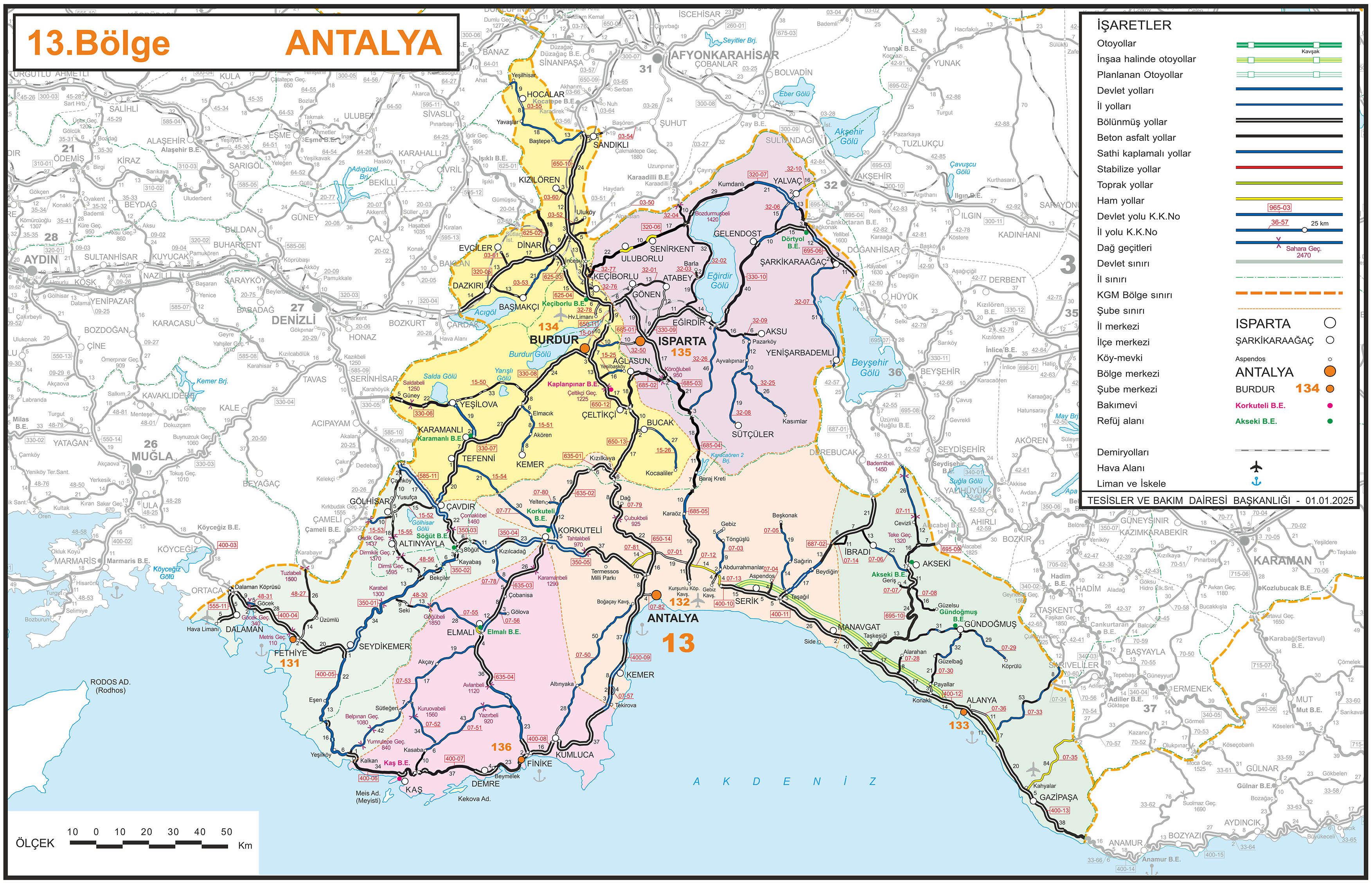
The city was formerly known as Attalia and was founded in around 200 BC by King Attalus II of Pergamon. Attalia was soon conquered by the Romans. Roman rule saw the city thrive, including the construction of several new monuments, such as Hadrian's Gate, and the flourishing of nearby ancient cities such as Patara, Xanthos and Myra in the Lycia region; Perga, Aspendos and Side in Pamphylia; and Sagalassos, Antioch and Termessos in Pisidia. These cities were already significant centers before Roman influence. Antalya has changed hands several times, including to the Seljuk Empire in 1207 and an expanding Ottoman Empire in 1391.[6] Ottoman rule brought relative peace and stability for the next five hundred years. The city was occupied by Italy for three years in the aftermath of World War I, but was returned to Turkey during the Turkish War of Independence.
While the city itself only has modest elevation changes, Antalya has high mountains in all directions to its interior. With moisture being trapped, the local climate thus has high winter rainfall, while the interior bay setting results in very hot summers for a coastal city.
The city is Turkey's biggest international sea resort on the Turkish Riviera. Large-scale development and governmental funding has made it a prime destination for tourists. Antalya is currently the fourth-most visited city in the world, trailing behind only Istanbul, London, and Dubai, attracting more than 16.5 million foreign visitors in 2023.[7][8]
The city was founded as "Attaleia" (Ancient Greek: Ἀττάλεια), named after its founder Attalos II, king of Pergamon.[9] This name, still in use in Greek, was later evolved in Turkish as Adalia and then Antalya.[10] Attaleia was also the name of a festival at Delphi and Attalis (Greek: Ἀτταλίς) was the name of an old Greek tribe at Athens.[11][12] Despite the close similarity, there is no connection with the name Anatolia.
King Attalus II of Pergamon is looked on as founder of the city in about 150 BC, during the Hellenistic period. It was named Attaleia or Attalia (Ancient Greek: Ἀττάλεια)[13] in his honour. The city served as a naval base for Attalus's powerful fleet. Excavations in 2008, in the Doğu Garajı plot, uncovered remains dating to the 3rd century BC, suggesting that Attaleia was a rebuilding and expansion of an earlier town.[citation needed]
The 13th-century Seljuk mosque at Attaleia, now in ruins, had been a Christian Byzantine basilica from the 7th century.[citation needed] The Great Mosque had also been a Christian basilica and the Kesik Minare Mosque had been the 5th-century Christian Church of the Panaghia or Virgin and was decorated with finely carved marble.[citation needed] The archaeological museum at Attaleia houses some sarcophagi and mosaics from nearby Perga and a casket of bones reputed to be those of St. Nicholas, the bishop of Myra, further down the Turquoise coast. The area of Antalya was subject to naval attacks by the Arabs of the Abbasid Caliphate.[citation needed]
Attaleia was a major city in the Byzantine Empire. It was the capital of the Byzantine Theme of the Cibyrrhaeots, which occupied the southern coasts of Anatolia. According to the research of Speros Vryonis, it was the major naval station on the southern Anatolian coast, a major commercial center, and the most convenient harbor between the Aegean Sea and Cyprus and points further east. Besides the local merchants, "one could expect to see Armenians, Saracens, Jews, and Italians."[18]
At the time of the accession of John II Komnenos in 1118, Attaleia was an isolated outpost surrounded by Turkish beyliks, accessible only by sea,[19] but his capture of Sozopolis in 1120 re-opened land-communication with the city once more. Following the Sack of Constantinople by the Crusaders in 1204, Niketas Choniates records that Attaleia was the personal fiefdom of a certain Aldebrandus, "an Italian by birth who was strictly raised according to Roman tradition". When Kaykhusraw, sultan of the Seljuk Turks attempted to capture the city in 1206, Aldebrandus called Cyprus for help and received 200 infantry from the Latins. The attackers were defeated after a siege of less than 16 days.[20] Kaykhusraw would take Attaleia the following year and build its first mosque.[21][22] Local Christians rebelled and captured Attaleia with aid of Walter of Montbéliard in 1212. Briefly restored Byzantine rule in Attaleia was ended by Kaykaus I in 1216.[23]
The city and the surrounding region were conquered by the Seljuk Turks in the early 13th century. Attaleia was the capital of the Turkish beylik of Teke (1321–1423) until its conquest by the Ottoman Turks, except for a period of Cypriot rule between 1361 and 1373. The Arab traveller Ibn Battuta, who visited the city in 1335–1340, noted:[24]
From Alanya I went to Antaliya [Adalia], a most beautiful city. It covers an immense area, and though of vast bulk is one of the most attractive towns to be seen anywhere, besides being exceedingly populous and well laid out. Each section of the inhabitants lives in a separate quarter. The Christian merchants live in a quarter of the town known as the Mina [the Port], and are surrounded by a wall, the gates of which are shut upon them from without at night and during the Friday service. The Greeks, who were its former inhabitants, live by themselves in another quarter, the Jews in another, and the king and his court and Mamluks in another, each of these quarters being walled off likewise. The rest of the Muslims live in the main city. Round the whole town and all the quarters mentioned there is another great wall. The town contains orchards and produces fine fruits, including an admirable kind of apricot, called by them Qamar ad-Din, which has a sweet almond in its kernel. This fruit is dried and exported to Egypt, where it is regarded as a great luxury.
In the second half of the 17th century, Ottoman explorer Evliya Çelebi wrote of a city of narrow streets containing 3,000 houses in 20 Turkish and four Greek neighborhoods.[citation needed] The town had grown beyond the city walls and the port was reported to hold up to 200 boats.[citation needed]
In the 19th century, in common with most of Anatolia, its sovereign was a "dere bey" (landlord or landowner). The family of Tekke Oğlu, domiciled near Perge had been reduced to submission in 1812 by Mahmut II, but continued to be a rival power to the Ottoman governor until the early 20th century, surviving by many years the fall of the other great beys of Anatolia. The records of the Levent (Turkey) Company, which maintained an agency in Antalya until 1825, documented the local dere beys.[25]
In the early 20th century, Antalya had two factories spinning and weaving cotton. As of 1920, the factories had 15,000 spindles and over 200 looms. A German-owned mill baled cotton. There were gin mills.[26]
In the 20th century, the population of Antalya increased as Muslim refugees from the Caucasus and the Balkans moved into Anatolia. The economy was centered on its port that served the inland areas, particularly Konya. Antalya (then Adalia) was picturesque rather than modern. The chief attraction for visitors was the city wall, and outside a promenade, a portion of which survives. The government offices and the houses of the higher classes were outside the walls.[25]
The Ottoman houses in Kaleiçi
As of 1920, Antalya was reported as having a population of approximately 30,000. The harbor was described as small, and unsafe for vessels to visit in the winter. Antalya was exporting wheat, flour, sesame seeds, livestock, timber and charcoal. The latter two were often exported to Egypt and other goods to Italy or other Greek islands, who received mainly flour. In 1920, the city had seven flour mills. Wheat was imported, and then processed in town before exportation. Antalya imported manufactured items, mainly from the United Kingdom.[27] The city had a Greek minority that made up 1/3 of the population until the population exchange. Antalya also had a tiny Armenian population which had a church on the street of "Hamam çikmazi" named Hovhannes Surp Garabed, which was later on demolished. Antalya also had a Jewish community which had a tiny Synagogue in the neighborhood of Balbey and a Talmud Torah. The Synagogue was closed in 1948 and its exact location is not known, and the Synagogue might not exist anymore. The Jewish community had 2 graveyards and one was located across "Donerciler carsisi"and was demolished when the area was opened to construction, but one marble tombstone belonging to a Jew named Raphael Moshe was transferred to the Antalya Museum where it can be seen in the museum garden.
The city was occupied by Italy for three years (1919-22) in the aftermath of World War I, but was recaptured by a newly independent Turkey in the Turkish War of Independence.[citation needed] Large-scale development beginning in the 1970s transformed Antalya from a pastoral town into one of Turkey's largest metropolitan areas.[citation needed] Much of this has been due to tourism, which expanded in the 21st century. In the 1987 singing diva Dalida held her last concert in Antalya.
Antalya was the host city for the 2015 G-20 summit and the Expo 2016. Five countries have their consular missions in Antalya including Belgium, Germany, Russia, Serbia and the United Kingdom.[28]
Antalya has a hot-summer Mediterranean climate (Köppen: Csa) or a dry-summer humid subtropical climate (Trewartha: Cf or 'wet Cs'). It experiences hot, dry summers and mild, rainy winters. While rainy spells are common and often heavy in winter, Antalya is very sunny, with nearly 3,000 hours of sunlight per year. Frost does occasionally occur at night almost every winter, but snow is a very rare phenomenon. The highest recorded air temperature was 45.4 °C (113.7 °F) on 1 July 2017 but later this record was removed and turned back to 45°C (113°F) in 6 July 2000. Record low is -4.6°C (23.7°F) in 5 February 1950. Record snow depth is 5 cm (1.97 inches) in January 1993. The mean sea temperature ranges between 16 °C (61 °F) in winter and 27 °C (81 °F) in summer.[30]
Climate data for Antalya (1991–2020, extremes 1930–present)
In 2010, the Address-Based Birth Recording System showed a metropolitan population of 1,001,318 (502,491 male; 498,827 female).[36] Source for 1530–1889.[37] According to the TÜİK Institute of Statistics, as of October 2022, 120,000 foreigners live in the city.[38]
Despite being a coastal trade hub, Antalya wasn't a cosmopolitan town until contemporary times. During the late Ottoman rule, the Turks made up the vast majority of the city, followed by a Greek minority. Armenian and Jewish populations were almost non-existent.[39] In the 1920s, as part of the population exchange, Greeks left the city and they were replaced by the Turks from Western Thrace.[40]
Agricultural production includes citrus fruits, cotton, cut flowers, olives, olive oil and bananas. Antalya Metropolitan Municipality's covered wholesale food market complex meets 65% of the fresh fruit and vegetable demand of the province.[41]
Since 2000, shipyards have been opened in Antalya Free Zone,[42] specialized in building pleasure yachts. Some of these yards have advanced in composites boat building technology.
Antalya is one of the Mediterranean's leading tourism destinations, the city being home to an array of famous attractions.[45] In 2012, it was reported it attracted 30% of foreign tourists visiting Turkey.[46]
In 2022, Antalya received 13.4 million foreign tourists by air.[47]
Despite having architectural heritage dating back up to Hellenistic times, most historical architecture in Antalya date to the medieval Seljuk period, with a number of mosques, madrasahs, masjids, caravanserais, Turkish baths and tombs giving the city a Turkish-Islamic character.[48][49] Historical architecture is concentrated in the walled city, Kaleiçi; ancient structures are not well-preserved in the rest of the city of Antalya as the modern city was built on the ancient city.[50]Kaleiçi, with its narrow cobbled streets of historic Ottoman era houses, is the old center of Antalya. With its hotels, bars, clubs, restaurants, and shopping, it has been restored to retain much of its historical character.[50][51] It is surrounded by two walls in the shape of a horsenail, one of which is along the seafront, built in a continuous process from Hellenistic to Ottoman times. The historical harbour is located in this part of the city; narrow streets extend from the harbour and branch off into the old city, surrounded by wooden historical houses.[49] Cumhuriyet Square, the main square of the city and a spot very popular for tourists and locals, is surrounded by shopping and business centres and public buildings.[52] There are sites with traces of Hellenistic, Roman, Byzantine, and Seljuk architecture and cultures.[50] There are also examples of the local Greek architecture in the city, with five Greek Orthodox churches in the old city.[53]
The walled city is surrounded by a large metropolitan area. With high rates of immigration since the 1970s, this area contains large gecekondu neighborhoods that are not well-integrated into the fabric of the city and suffer from poor economic conditions and insufficient education. Gecekondu areas are concentrated in the Kepez district, where an estimated 70% of the houses were gecekondus in 2008.[54] In 2011, it was estimated that there were 50–60,000 gecekondus in Antalya, housing around 250,000 people.[55]
Antalya has beaches including Konyaaltı, Lara and Karpuzkaldıran. Beydağları and Saklikent are used for winter sports.
The city is popular for its waterfalls.Ancient monuments include the City Walls, Hıdırlık Tower, Hadrian's Gate (also known as Triple Gate), and the Clock Tower.
İskele Mosque: A 19th-century Mosque near the marina.
Karatay Medrese: A Medrese (Islamic theological seminary) built in 1250 by Emir Celaleddin Karatay.
Kesik Minare (Broken Minaret) Mosque: Once a Roman temple then converted to a Byzantine Panayia church and finally into a mosque.
Tekeli Mehmet Paşa Mosque: An 18th-century Mosque built in honor of Tekeli Mehmet Paşa.
Yat Limanı: the harbour dating to Roman era.
Yivli Minare (Fluted Minaret) Mosque: Built by the Seljuks and decorated with dark blue and turquoise tiles. This minaret eventually became the symbol of the city.
Murat Pasha Mosque: A historic Ottoman mosque located in the city center.
Aya Yorgi Church (Saint George Church): A historic church built by the Greeks of Antalya which is currently used as a museum housing exhibitions of historical artifacts.
Saint Alypius Church: A tiny historic Greek Orthodox church which is still currently a functioning Orthodox Church.
Sultan Aladdin Mosque: A historic building built as a Greek Orthodox church in 1834 and converted into a mosque in the 1950s and currently used as a Mosque.
Ahi Yusuf Mosque: A historic mosque built in the year of 1249 and is possibly one of the oldest mosques in Antalya or even the oldest.
Ahi Kizi Masjid: Historic masjid located in the old town.
Kara Molla Masjid: Tiny historic masjid built in the 14th century.
Balibey Mosque: A historic mosque built by the vizier Bali Pasha.
Müsellim Mosque: A small historic mosque built by Hacı Osmanoğlu Mehmed Ağa in 1796.
Antalya Synagogue: A historic Synagogue used as house currently in the Balbey neighborhood between Kavakli Masjid and the Balbey Kesik Minaret Mosque.
Mevlevihane (Dervish lodge museum): A former Dervish lodge housing a museum about Dervishes and Sufism.
Antalya is the most popular summer tourism destination in Turkey.Antalya beach
There are urban parks and protected natural areas located outside the cities, allowing the people to have fun, rest and get closer to nature. Some of them are green areas around lake, pond and dam lakes, and some are highland and forest areas.
The prime urban green areas include Antalya City Forest, Atatürk Park, Kepez City Forest.
The largest amusement park in Antalya is the Aktur Park. Other modern recreational areas include 3 aquaparks in the city, Konyaaltı, Lara beaches, Beachpark especially for summer holidays, while Saklıkent also has facilities for skiing in the winter months.
The preserved nature areas include Güllük Mountain National Park in Antalya-Korkuteli highway, Mount Olympus National Park in Kemer and Düden and Kurşunlu Waterfalls. Other protected areas include the Damlataş and the Karain Cave and the Guver Cliff.
It offers picnic and recreation facilities in various parts of the city. Picnic areas, rafting facilities in Köprülü Kanyon in Manavgat. The part of Korkuteli-Antalya border in western part of Antalya is covered with forests. In these areas, picnic areas, playground, restaurant and similar facilities are provided. There are lake and forest views on the promenade at Feslikan Plateau to the west of the city center where visitors can also enjoy nature sports and nature walks. The oil wrestling competition festival organized in summer, what accompanied with concerts. The pond in Doyran town, located to the west of city is very suitable for picnic and fishing.
In addition to the open air recreation areas, the number of shopping centers, which have increased rapidly in recent years, can also be classified as a rest area with the facilities they offer. The shopping centers in the city are gathered in the center. Among the leading shopping centers in the city are Antalya 5M Migros, Antalya Kipa, Terra City, Deepo, Agora, and Mall of Antalya.
The mayor of the Antalya Metropolitan Municipality is Muhittin Böcek of the CHP, in office since 2019. For general elections, Antalya elects 18 Members of Parliament to the Turkish Grand National Assembly.
Antalya has traditionally been seen as a stronghold for the Kemalist centre-left party Republican People's Party (CHP). Being the capital of the fifth most populous province in Turkey, Antalya is politically strategic and has been a target for the governing right-wing Justice and Development Party (AKP). The AKP unexpectedly won control of the Antalya Metropolitan Municipality in the 2004 local election. The AKP won a plurality in Antalya in the 2007 general election, symbolising the city's political transformation from a CHP stronghold to a CHP-AKP marginal battleground in the 21st century. The loss of Antalya was a major political setback for the CHP not only because of its significance as a centre for tourism, but also because the CHP's former leader Deniz Baykal is a Member of Parliament for the province. The province is divided into 19 districts.
The CHP regained control of the Metropolitan Municipality in the 2009 local elections, though the AKP won a plurality in the 2011 general election. The Nationalist Movement Party (MHP) also have a strong political base in Antalya, winning approximately between 15 and 25% of the vote in elections since 2007. The city voted in favour of the AKP government's proposed constitutional reforms in the 2007 referendum, but voted against the reforms proposed in 2010.
The city hosts a number of international sports competitions due to its longer lasting warm weather condition. Since 2006, one of the four stages of Archery World Cup events are held at the Antalya Centennial Archery Field. It also hosted European Weightlifting Championship in 2012, European Beach Volleyball Championship in 2003, European Triathlon Championship in 2013 and World Kickboxing Championships in 2013.
Scene around Kaleiçi, the old city centerA view of Antalya's coastlineThe Roman Theatre of Aspendos is one of the best preserved Roman theatres in the world.
Antalya's signature cuisine includes piyaz (made with tahini, garlic, walnuts, and boiled beans), şiş köfte (spicy meatball which is cooked around a stick) spicy hibeş with mixed cumin and tahini, tandır kebap, domates civesi, şakşuka, and various cold Mediterranean dishes with olive oil. One local speciality is tirmis, boiled seeds of the lupin, eaten as a snack. "Grida" (also known as Lagos or Mediterranean white grouper) is a fish common in local dishes.[citation needed]
Bir Zamanlar Antalya Müzesi: Located in Dokumapark, Kepez. Serving artifacts and documents about contemporary urban history of Antalya.
Kaleiçi Museum:[72] Opened in 2007 by the Mediterranean Civilizations Research Center (Akdeniz Medeniyetleri Araştırma Merkezi)[73]
Kepez Araba Müzesi: Located in Dokumapark, serving historical vehicles in contemporary history.
Kepez Open Air Museum: Serving scale models of various structures of Turkey. The models were located in Minicity park in Konyaaltı before the demolition of park in late 2010's and moving to current location in Dokumapark.
Mevlevihane Museum: Former dervish lodge with Sufi and Islamic cultural artifacts.
Suna & İnan Kıraç Kaleiçi Museum : An ethnographic museum run by the Suna and İnan Kıraç Foundation.
The main transportation to the city is by air and land. Sea routes are still under development. In 2007, the airport added a new terminal. The city has a main port at the south of the Konyaaltı.
Road transport in the city is estimated by Climate Trace to have emitted over a million tonnes of carbon dioxide in 2023.[74]
There is a network of look-alike Dolmuşes that are privately owned and operated minibuses, under municipal government control.
Antalya Ulaşım, a municipally owned corporation, runs the public bus system. The corporation owns Antobus and Antray. Antobus was started in September 2010. In 2010, the city planned to increase from 40 to 140 more buses.[75]
Payment for public transportation was made in cash until the launch of a public transportation card, Antkart, in late 2007. The card system met with criticism and was subsequently canceled in June 2009, returning to a cash system. Halkkart has been used for the transportation system since the summer of 2010. Halkkart is managed by A-Kent Smart City Technologies under the control of Antalya Metropolitan Municipal government. Passengers can use identified cards to take buses or trams.[76]
The Antray Light RailTransportation lines of tram system
A tram system, opened in 1999, runs from Antalya Museum, and the Sheraton Voyager and Falez hotels, along the main boulevard through the city center at Kalekapisi, Hadrian's Gate, Karaalioglu Park, and ending at Talya Oteli. Trams depart on the hour and half-hour from the terminal (east and west), and reach Kalekapisi between 10 and 15 minutes later.
In December 2009, an 11.1-kilometre (6.9 mi) light rail line Antray was opened from one of the main city public bus hubs northwest to beyond suburban areas and the zoo. An extension to Airport, Aksu and Expo 2016 site was completed in 2016.
D400 connects with D650 in Antalya, while D650 alternative D685 connects to Isparta and provincial road 07-50 connects to Kumluca by Altınyaka, an alternative to D400.[77]
Antalya Airport has two international terminals and one domestic terminal. In 2020, its number of passengers on international flights surpassed the total number at Istanbul Airport and Sabiha Gökçen International Airport for the first time, officially earning the title of "the capital of Turkish tourism".[78][79]
^Annuario Pontificio 2013 (Libreria Editrice Vaticana 2013 ISBN978-88-209-9070-1), p. 841
^Vryonis, The decline of medieval Hellenism in Asia Minor: and the process of Islamization from the eleventh through the fifteenth century, (Berkeley: University of California, 1971), pp. 13f
^Norwich, John Julius. Byzantium: The Decline and Fall. (New York: Alfred A. Knopf, 1996) p. 68.
^O City of Byzantium: Annals of Niketas Choniates, translated by Harry J. Magoulias (Detroit: Wayne State University Press, 1984), p. 351
^Islam and Christianity in Medieval Anatolia, ed. Bruno De Nicola, Sara Nur Yıldız, and A.C.S. Peacock, (Ashgate Publishing Company,2015), 121
^Notes on Saldjūq Architectural Patronage in Thirteenth Century Anatolia, H. Crane, Journal of the Economic and Social History of the Orient, Vol. 36, No. 1 (1993), 6.
^"ContactArchived 29 October 2013 at the Wayback Machine." Corendon Airlines. Retrieved on 17 February 2012. "CORENDON Airlines Head Office Address: Gzeloluk Mahallesi 1879 Sokak No :148 Antalya-Turkey"
^"ImprintArchived 30 March 2023 at the Wayback Machine." SunExpress. Retrieved on 23 December 2011. "TR-07300 Antalya, Türkiye P.O. Box 28 Mehmetçik Mah. Aspendos Bulv. Aspendos Iş Merkezi No. 63/1-2"
^"Antalya Büyükşehir Belediyesi". Antalya Metropolitan Municipality Official Web Site (in Turkish). 2010. Archived from the original on 27 November 2010. Retrieved 30 November 2010.
^Galen, De Element. ex Hippocr., i. 6. vol. i; Defin. Med., prooem. vol. xix; De Trem. Palpit., etc. c. 6. vol. vii.; De Differ. Puls., iv. 10. vol. viii.
^Gautier, «La Diataxis de Michel Attaliate», 12 argues convincingly for birth in Attaleia; Tsolakis, “Aus dem Leben des Michael Attaleiates,” 5–7; Kazhdan, “The Social Views of Michael Attaleiates,” 58 both argued for Constantinopolitan origins.
Antalya is a major port city and the administrative center of Antalya Province in southwestern Turkey, situated on the eastern shore of the Gulf of Antalya along the Mediterranean Sea.[1] Founded around 150 BCE as Attalia by Attalus II Philadelphus, king of Pergamum, to serve as a naval base, the city was later incorporated into the Roman Empire and has retained significant historical landmarks such as Hadrian's Gate and the ancient theater at Aspendos.[1][2] As of 2024, Antalya Province has a population of 2,722,103, making it one of Turkey's most populous regions, with the urban core supporting a dense metropolitan area driven by migration and economic opportunities.[3] Renowned for its turquoise beaches, karst waterfalls like the Düden, and lush Taurus Mountain backdrop, Antalya functions as the gateway to the Turkish Riviera, hosting a booming tourism industry that attracted over 7.5 million visitors in the first half of 2025 alone and aims for 17 million annually, contributing substantially to Turkey's GDP through hospitality, agriculture, and trade.[4][5]
Etymology
Name origins and historical nomenclature
The name of the city originates from the ancient Greek Attaleia (Ἀττάλεια), bestowed upon it by its founder, Attalus II Philadelphus, king of Pergamum, who established the settlement as a Hellenistic port around 150 BC to secure his realm's Mediterranean interests.[6] The geographer Strabo, writing in the early 1st century AD, explicitly attributes the nomenclature to the king in his Geography (Book 14.4.1), describing Attaleia as a colony founded by Attalus, who also dispatched settlers to nearby Corycus, underscoring the deliberate toponymic link to the Attalid dynasty rather than indigenous Pamphylian linguistic roots. Archaeological evidence, including coins and inscriptions from the period, corroborates this Hellenistic foundation without indicating pre-existing settlements of comparable scale bearing the name.[7]Under Roman administration from the 1st century BC onward, the name persisted as Attalia in Latin sources, reflecting administrative continuity in the province of Pamphylia.[8] By the Byzantine era, phonetic adaptations in Greek and local usage rendered it Adalia, as noted in historical records of the city's role as a key naval base in the Theme of the Cibyrrhaeots.[9] Following the Seljuk Turkish conquest in the late 11th century, the form Adalia endured in early Islamic texts, gradually evolving into Antalya through Turkic phonetic shifts and orthographic standardization by the Ottoman period, where it appears consistently in administrative documents by the 16th century; this progression aligns with broader patterns of Anatolian toponymic Turkification without evidence of fabricated folk etymologies.[9] The modern Turkish name retains the core phonetic structure, diverging minimally from its Pergamene antecedent while supplanting earlier variants in vernacular use.[8]
History
Ancient foundations and classical era
The region encompassing modern Antalya, part of ancient Pamphylia, exhibits evidence of early human settlement dating to the Early Bronze Age, with permanent occupation documented at nearby Perge through pottery and architectural remains indicative of continuous habitation.[10] Archaeological surveys in the Pamphylian countryside further reveal rural sites and patterns supporting Bronze Age activity, though urban centers like Attaleia emerged later.[11]Attaleia, the Hellenistic precursor to Antalya, was founded in the 2nd century BC by King Attalus II of Pergamum as a fortified port to secure control over the Pamphylian coast amid conflicts with local tribes and rival powers.[12] The city's strategic location facilitated maritime trade and military operations, integrating it into the Pergamene kingdom's expansionist policies before the kingdom's bequest to Rome.[13]Following the death of Attalus III in 133 BC, Attaleia passed to the Roman Republic through the testamentary inclusion of the Pergamene realm, marking its incorporation into Roman Asia Minor despite initial resistance from Cilician pirates and local dynasts.[12] Under Roman administration, the city flourished as a vital harbor in Pamphylia, supporting commerce in grain, timber, and luxury goods while serving as a naval base, notably during Pompey's campaigns against piracy in 67 BC.[13] Infrastructure developments, including aqueducts and theaters, underscored its economic role, with nearby Perge and Aspendos benefiting from imperial patronage that enhanced regional connectivity.[14]Roman imperial investment peaked during Hadrian's visit in 130 CE, prompting the construction of Hadrian's Gate—a triumphal arch honoring the emperor and symbolizing Attaleia's alignment with Rome's provincial urbanism.[15] The gate's three-arched design integrated into defensive walls, reflecting adaptations for trade security amid periodic threats from Isaurian highlanders and eastern invaders. By the late 3rd century CE, such pressures contributed to fortifications and a gradual shift toward Byzantine defensive priorities, though Attaleia's port functions persisted.[16]
Byzantine and early Islamic periods
During the Byzantine era, from the 7th to 11th centuries, Attaleia functioned as a fortified frontier city on the empire's southern maritime boundary, serving as a key naval base to counter Arab raids launched from bases in Syria and Egypt.[17] Reinforced walls and a strategic harbor enabled the city to repel multiple naval assaults, particularly in the 8th and 9th centuries, preserving Byzantine control amid broader territorial losses in Anatolia due to sustained Muslim incursions that prioritized coastal vulnerabilities for supply and reinforcement.[18] This defensive posture, driven by the empire's need to secure trade routes and prevent encirclement, underscored Attaleia's role in maintaining a tenuous eastern frontier, though chronic underpopulation strained garrison effectiveness as resources were diverted to inland threats.[19]The city's strategic value intensified after the Fourth Crusade's sack of Constantinople in 1204, which fragmented Byzantine authority and elevated the Empire of Nicaea as a rival power holding Attaleia briefly. In March 1207, Sultan Kaykhusraw I of the Seljuk Sultanate of Rum besieged and captured the port from its Nicaean garrison, a conquest motivated by the need for a Mediterranean outlet to bolster Seljuk naval capabilities, facilitate commerce with Levantine ports, and counter Christian maritime threats.[20][21] This victory provided the landlocked Seljuks with direct access to international trade networks, shifting economic dynamics from Byzantine tolls to Turkic-controlled exchanges and enabling population influxes of Turkmen settlers, though exact demographic shifts remain undocumented beyond qualitative accounts of gradual Islamization.Under early Seljuk rule, Attaleia transitioned to an Islamic administrative center, exemplified by the construction of the Yivli Minaret Mosque complex around 1230 under Sultan Alaeddin Keykubad I, which replaced or repurposed Byzantine ecclesiastical sites and symbolized the sultans' patronage of Anatolian architectural synthesis blending Central Asian and local Persianate styles.[22] The Crusades, particularly the earlier passages of Latin forces through nearby regions, had sporadically disrupted Byzantine supply lines but indirectly aided Seljuk consolidation by weakening imperial cohesion; subsequent Mongol incursions from the 1240s onward threatened trade stability, compelling fortifications against steppe nomad raids while preserving the port's role in silk and spice routes until internal Seljuk fragmentation.[23]
Ottoman administration and decline
Antalya came under Ottoman control following its occupation by Sultan Bayezid I in 1391, though resistance from the local Teke beylik delayed full incorporation until Sultan Murad II subdued the region in 1423.[24] As part of the Ottoman Empire, the city was integrated into the provincial administrative structure, initially retaining elements of semi-autonomous beylik governance before centralization efforts.[25]Under Ottoman rule, Antalya served as a vital Mediterranean port, facilitating trade in commodities and slaves that linked Anatolian hinterlands to international routes, contributing to regional economic activity despite not achieving major cosmopolitan status.[26] The administration emphasized stability through tax collection, military provisioning, and harbor maintenance, fostering relative peace that endured for centuries amid broader imperial expansions. Archival records indicate efficient local oversight via appointed kadis and timar holders, supporting the city's role in naval logistics and overland commerce.By the 19th century, stagnation set in parallel to empire-wide decline, marked by the Tekelioğlu family revolt from 1814 to 1840, which disrupted local order and caused economic regression in Antalya.[27] Spillover effects from the Greek War of Independence (1821–1830) compounded challenges through trade disruptions and tensions among the Greek Orthodox population, though direct conflict remained limited. The Tanzimat reforms (1839–1876) sought to impose centralized bureaucracy, legal equality, and urban modernization in port cities like Antalya, introducing rudimentary infrastructure improvements, yet implementation faltered due to resistance from entrenched elites and insufficient resources, yielding minimal reversal of decay.[28]Ottoman population registers from the mid- to late 19th century reveal Antalya's multi-ethnic composition, with Muslims forming the majority alongside significant Greek and Armenian minorities, totaling around 20,000–30,000 residents by the 1880s per salname yearbooks, underscoring the diverse social fabric before 20th-century upheavals.[29] This demographic mix supported artisanal guilds and maritime activities but also sowed seeds for later ethnic frictions amid imperial contraction.
Modern Republican development and post-WWII growth
Following the establishment of the Turkish Republic in 1923, Antalya underwent initial transformations aligned with national secular reforms initiated by Mustafa Kemal Atatürk, including the abolition of the caliphate in 1924, adoption of a secular civil code in 1926, and promotion of Western-style education and attire, which extended to local governance and public institutions in the province.[30] The 1923 Treaty of Lausanne-mandated population exchange between Greece and Turkey resulted in the departure of remaining Greek Orthodox residents from Antalya—estimated at a minority of the pre-war population of around 30,000—and influx of Muslim refugees from Greece, contributing to a more ethnically homogeneous Turkish-majority demographic that facilitated centralized Republican administration. These shifts supported modest urban planning efforts, such as improved road connections and basic public services, though population growth remained slow, rising from approximately 33,000 in 1920 to 39,762 by 1930 amid national economic constraints.[31]Post-World War II, Antalya's development accelerated with Turkey's shift toward import-substitution industrialization in the 1950s, but the province's growth was primarily driven by emerging tourism potential rather than heavy industry, as state plans identified its Mediterranean coastline for priority investment in hospitality infrastructure starting in the 1960s.[32] Hotel construction and beachfront enhancements, supported by government incentives, marked the inception of mass tourism, with visitor numbers rising alongside population from 26,956 in 1950 to over 100,000 by the late 1970s, fueled by improved air and sea access.[33]Economic liberalization under the 1980 January 24 Decisions dismantled protectionist barriers, spurring export-oriented coastal development and foreign investment in Antalya's tourism sector, which expanded hotel capacity from a few thousand beds in 1980 to over 100,000 by 1990, correlating with provincial population growth averaging 4.17% annually from 1990 to 2000—far exceeding the national rate of 1.83%.[34]From the early 2000s, infrastructure investments, including airport expansions and highway networks, further propelled urbanization, with the metro area population surging from 1.05 million in 2000 to 1.37 million by 2024, driven by internal migration and tourism-related employment that absorbed rural inflows into service industries.[35] These projects, such as the Antalya-Alanya motorway initiated in the 2010s, enhanced connectivity and real estate development without reliance on ideological framing, yielding sustained GDP contributions from tourism exceeding 10 million annual visitors by the mid-2010s.[36] This trajectory reflects causal policy linkages: state-directed tourism prioritization post-1950s, amplified by 1980s market openings, and infrastructural scaling in subsequent decades, transforming Antalya from a peripheral outpost to a high-density urban hub.[37]
Geography
Topography and natural features
Antalya lies along the Mediterranean coast of southwestern Turkey, with its urban core at near sea level, transitioning abruptly inland to the rugged Taurus Mountains. The Beydağları range, constituting the western extension of the Taurus system within Antalya Province, parallels the coastline in a north-south orientation, featuring steep escarpments and peaks exceeding 3,000 meters, such as Akdağ at 3,025 meters. This topographic contrast—from coastal lowlands to high-altitude plateaus—shapes local drainage patterns and limits interior accessibility.[38][39]Coastal features include limestone cliffs like the Falezler, dropping sharply to alluvial plains and beaches. Konyaaltı Beach extends 13 kilometers westward with pebbly substrates formed by sediment deposition, while eastern Lara Beach comprises finer sands from riverine inputs, including the Boğa River's alluvial contributions and the Aksu Delta. These low-lying coastal strips, backed by mountain foothills, host hydrological outlets such as the Düden River, which forms multiple waterfalls; the Lower Düden plunges 40 meters directly into the sea, exemplifying karstic drainage from limestone aquifers.[40][41][42][43]Further southeast, the Manavgat Waterfall arises from broad river flow over rocky terrain, approximately 80 kilometers from central Antalya. Inland, the Güllük Dağı-Termessos National Park spans elevations from 250 meters to over 1,200 meters across 6,702 hectares of steep, forested slopes, preserving geological formations conducive to endemic species habitats amid the Beydağları's diverse lithology.[44][45][46]
Climate patterns and environmental conditions
Antalya exhibits a hot-summer Mediterranean climate (Köppen Csa), defined by prolonged dry summers and wetter winters, with the Taurus Mountains and Mediterranean Sea shaping local patterns through orographic lift and maritime moderation.[47][48] Annual mean temperatures average 18.6°C based on 1981-2010 data from the Turkish State Meteorological Service, with summer highs in July and August reaching 29°C on average and occasional peaks exceeding 40°C, while January lows dip to around 5°C but rarely below freezing due to coastal influences.[49][50]Precipitation totals approximately 1,081 mm yearly, with over 70% falling between November and March, fostering seasonal vegetation growth and aquifer replenishment, whereas summers receive less than 10 mm monthly, promoting water conservation adaptations in native flora.[47] The region records over 3,000 sunshine hours annually, equating to roughly 300 days with significant solar exposure, which supports high evapotranspiration rates and arid soil conditions inland during peak heat.[51]
Note: Temperature from MGM 1981-2010 normals; precipitation estimates derived from annual totals and seasonal distribution patterns.[49][47]The mountainous terrain enhances winter rainfall by forcing moist southerly air to ascend, while shielding the coast from northerly cold fronts, resulting in relatively stable mild winters and reduced frost incidence compared to elevated interiors. Environmentally, this fosters resilient ecosystems like coastal maquis shrublands and montane forests, where natural vegetation buffers against erosion, though intensified development along low-lying shores has accelerated localized sediment loss without fundamentally altering long-term climatic baselines.[48][52]
Natural hazards and ecological challenges
Antalya lies within a seismically active region influenced by the convergence of the African, Arabian, and Eurasian tectonic plates, including proximity to the Hellenic-Cyprus Arc and Burdur Fault Zone, resulting in moderate earthquake risk. Probabilistic assessments indicate a 15% chance of a magnitude 6.5 or greater event in the metropolitan area over the next 50 years.[53] The February 6, 2023, magnitude 7.8 Kahramanmaraş earthquake, centered approximately 795 km northeast, generated perceptible shaking in Antalya but caused no reported structural damage or casualties there, underscoring the region's relative distance from high-slip fault segments.[54]Wildfires pose a recurrent hazard in Antalya's Mediterranean maquis and pine-dominated forests, exacerbated by hot, dry summers and seasonal winds. In July 2021, over 200 fires erupted simultaneously in Antalya Province, including a major blaze in Manavgat district that consumed tens of thousands of hectares, contributing to Turkey's record 206,013 hectares of forest burned nationwide that year.[55] These events led to evacuations and eight fatalities across affected southwestern areas, with post-fire analysis revealing significant biodiversity loss and habitat fragmentation in burned zones. Recent data show Antalya lost 1.52 kha of natural forest in 2024 alone, equivalent to 346 kt CO₂ emissions, highlighting ongoing degradation pressures. [56]Drought patterns, characterized by prolonged low precipitation and elevated evapotranspiration, challenge Antalya's water-dependent ecosystems and agriculture. The province experienced acute drying in lakes like Avlan in 2025, linked to seasonal rainfall deficits amid Turkey's broadest drought in over 50 years, with national precipitation 27% below long-term averages.[57][58] Standard Precipitation Index mapping has identified district-level vulnerabilities, correlating dry spells with reduced reservoir levels and heightened fire ignition risks, though variability aligns with historical Mediterranean cycles rather than unprecedented anomalies. Mitigation includes afforestation and EU-supported monitoring, yet forest cover remains strained by fire recurrence and land-use intensification.[59]
Demographics
Population dynamics and urban growth
The provincial population of Antalya reached 2,722,103 as of December 2024, according to official address-based registration data from the Turkish Statistical Institute (TÜİK), marking a substantial increase from 416,130 recorded in the 1960 census.[3] This expansion, averaging over 2.5% annually in recent decades, stems primarily from net positive internal migration, with rural-to-urban inflows from central and eastern Anatolia outpacing natural increase; migrants are drawn by seasonal and permanent job opportunities in construction, hospitality, and ancillary services tied to the region's tourism boom, rather than agricultural persistence in peripheral districts.[60][61]Urbanization within Antalya exceeds the national rate of 77.5%, with estimates placing over 85-90% of the provincial population in metropolitan and district centers by 2023, fueled by coastal sprawl and infrastructure development that consolidates settlement patterns along the Mediterranean littoral.[62] TÜİK projections and demographic models anticipate the provincial total surpassing 3 million by 2030, assuming sustained migration inflows of 20,000-30,000 annually amid decelerating national growth rates.[63]Fertility dynamics contribute to moderated organic growth, with Antalya's total fertility rate aligning closely with the national figure of 1.51 children per woman in 2023—well below the replacement level of 2.1—reflecting urban socioeconomic pressures, higher female workforce participation, and delayed childbearing patterns observed in secularizing coastal provinces.[64] This sub-replacement fertility, coupled with longer life expectancies around 79.7 years, signals an emerging aging demographic profile, where migration sustains workforce vitality but strains urban housing and service capacities without offsetting low birth cohorts.[65]
Ethnic composition and migration patterns
Antalya's resident population is predominantly ethnic Turkish, forming an estimated 80-85% based on regional demographic patterns and internal migration trends favoring Turkish-majority inflows from central and western Anatolia.[66] Kurds represent a significant minority, approximately 10-15%, primarily through rural-to-urban migration from southeastern provinces seeking jobs in tourism, agriculture, and construction; national estimates place Kurds at 18-19% of Turkey's overall population, but their share diminishes westward outside major metropolises.[67] Smaller groups include Arabs—largely Syrian refugees under temporary protection—and Romani communities, with the latter historically marginalized and comprising less than 1% province-wide.[66]Migration patterns in Antalya reflect both domestic economic pull factors and international pressures. Internal inter-provincial migration accounted for Antalya receiving 8.5% of Turkey's 2.68 million such moves in 2024, driven by seasonal tourism demands and urban expansion, with inflows from Mediterranean regions like the Tekke area bolstering the Turkish ethnic core.[68] Irregular external migration positions the province as a Mediterranean transit hub, with Turkish Coast Guard operations intercepting 50 irregular migrants and 9 smugglers in Demre district alone in May 2025, amid broader efforts to curb sea routes to Greece; nationwide, 225,831 irregular migrants were apprehended in 2024, many routed through southern coasts like Antalya's.[69][70] Syrian refugees, numbering over 2.9 million nationally as of 2024, maintain a presence exceeding 100,000 in Antalya province, concentrating in urban peripheries and exacerbating demands on housing, education, and welfare systems.[71]These dynamics have fueled integration challenges and local tensions. Empirical studies link higher refugee concentrations to elevated crime rates, including property and interpersonal offenses, with a 2024 analysis of Syrian inflows across Turkish provinces establishing a causal correlation proportional to migrant density—effects observable in Antalya's outer districts where irregular arrivals cluster.[72] Surveys reveal pervasive anti-refugee attitudes, with direct exposure in host communities like Antalya correlating to preferences for repatriation policies and reduced inflows, amplified by perceptions of resource competition and cultural friction; Turkey's anti-migrant sentiment exceeds global averages, with over 60% of respondents in urban polls favoring stricter controls.[73][74] Such patterns underscore causal strains from rapid demographic shifts, prioritizing empirical enforcement over expansive integration without corresponding assimilation metrics.
Religious demographics and secular influences
Antalya's religious landscape reflects Turkey's national profile, with official government data reporting approximately 99% of the population as Muslim, the vast majority adhering to the Hanafi school of Sunni Islam.[75] This dominance stems from historical Ottoman Sunni establishment and the 1923 Greco-Turkish population exchange, which removed most Christian communities, leaving negligible Orthodox, Armenian, or other Christian remnants—estimated at under 0.1% today.[75] Jewish presence, once modest with a synagogue in Balbey, has similarly dwindled to insignificant numbers post-20th century migrations. Alevi communities, a heterodox Shia-influenced group comprising 10-15% nationally, maintain only minor pockets in Antalya Province, far below concentrations in central Anatolia.[76]Despite nominal Sunni preponderance, actual religiosity in Antalya exhibits coastal secular gradients, with lower mosque attendance than inland or urban centers like Istanbul. A 2025 Diyanet survey nationwide found 64.8% regular Friday prayer participation and 29.8% daily prayers, but Antalya's tourism-driven economy correlates with reduced observance, as evidenced by provincial mosque density rankings placing it below highly religious areas like Kastamonu.[77][78] Pew Research indicates 95% national self-identification as Muslim in 2025, yet with substantial non-observance, a pattern amplified in Antalya where 75% report religion as personally important but daily practice lags due to lifestyle factors.[79]Secular influences trace to Mustafa Kemal Atatürk's 1920s-1930s reforms, which enshrined laicism (laiklik) in the 1924 Constitution, separating state from religion and promoting Western-oriented modernization—effects enduring in Antalya's permissive tourism sector.[75] The city's beaches, resorts, and nightlife accommodate alcohol service and attire norms incompatible with strict Islamic observance, fostering a tolerant ethos without formal irreligiosity claims. This contrasts with national trends of rising conservative sentiment under recent governments, yet Antalya's economy, reliant on 15+ million annual visitors, sustains Atatürk-era secular legacies amid nominal faith adherence.[80]
Economy
Sectoral overview and GDP contributions
The economy of Antalya province exhibits a structure dominated by services, particularly commerce and trade-related activities, which account for approximately 39.4% of provincial GDP. Agriculture contributes 12.3%, construction 9.2%, and industry a modest 5.6%, underscoring the limited role of manufacturing and primary production in driving output.[81] This composition aligns with the province's integration into Turkey's broader service-oriented growth model, where provincial GDP expanded at rates exceeding the national average, including a 21.8% year-over-year increase in 2022 amid liberalization-driven private sector expansion.[82]Economic liberalization policies initiated in the 1980s, emphasizing export promotion and reduced state controls, have causally bolstered Antalya's service-heavy economy by attracting foreign investment and facilitating market-oriented development over subsidized dependency.[83] Unemployment rates in the province range from 8% to 10%, reflecting seasonal service sector dynamics and resilience compared to more industrialized regions, though national inflation peaking above 60% in late 2023 eroded real wage gains and heightened cost pressures on local businesses.[84]Provincial GDP estimates place Antalya's output at roughly $20 billion in nominal terms for 2023, representing a significant share of regional economic activity within Turkey's Mediterranean corridor, with services amplifying productivity through capital inflows and human capital utilization rather than resource extraction.[65] This sectoral imbalance, while fueling rapid expansion, exposes the economy to external demand shocks, mitigated partially by policy reforms prioritizing trade openness since the Özal era.[85]
Tourism dominance and visitor statistics
Antalya's tourism sector dominates the local economy, attracting millions of international visitors annually through its beaches, historical sites, and resorts. In the first nine months of 2025, the city recorded over 14 million tourist arrivals, positioning it to reach an estimated 17 million for the full year despite some softening in European demand.[86][87] This performance sustains projections of approximately $17 billion in tourism revenue for 2025, underscoring the sector's outsized contribution amid dependencies on seasonal peaks and foreign exchange inflows.[86]Russia has consistently led as the primary source market, supplying the largest share of visitors through August 2025, followed by Germany, the United Kingdom, and Poland.[88][86] These markets drive volume, with Russian arrivals providing stability even as Western European bookings declined by around 15% in some reports, highlighting vulnerabilities to geopolitical tensions and competing destinations.[89] Antalya Airport, the primary gateway, facilitated record daily passenger highs exceeding 270,000 in July 2025, reflecting infrastructure strain and capacity expansions to handle surging traffic.[90]Niche segments like health and medical tourism have shown robust expansion, with Antalya emerging as a hub due to integrated resort-medical facilities and rising global searches up 400% over five years.[91] This growth persists amid broader global tourism slowdowns, buoyed by Turkey's overall medical tourism market valued at $4 billion in 2025 and targeting further increases through specialized treatments.[92] The 2025 influx marks a continuation of records set in prior years, though operators note risks from overreliance on a few nationalities and potential stalls projected for 2026 if diversification lags.[86]
Agriculture, industry, and emerging sectors
Antalya's agriculture sector is dominated by greenhouse cultivation and citrus production, leveraging the region's Mediterranean climate and irrigation infrastructure. The province accounts for approximately 46% of Turkey's total greenhouse areas, enabling year-round production of vegetables and tropical fruits. In particular, Antalya produces over 10.7% of the nation's fresh vegetables, with districts such as Kumluca, Serik, and Demre leading in output under protected cultivation.[93][94][95]Key crops include bananas, for which Antalya contributes about 40.7% of national production, primarily through greenhouse methods in areas like Manavgat, where cultivation has expanded rapidly to over 2,000 hectares. Citrus fruits, especially oranges, are concentrated here, with the province hosting the majority of Turkey's orange output; however, production faced challenges in 2024/25, declining nationally by 36% due to heat and drought, impacting local yields. Irrigation relies on reservoirs and canal systems, supporting nearly 31% of the province's economic agricultural activity, though water scarcity has prompted calls for efficient storage solutions like lined reservoirs to sustain output.[96][97][98]Industrial activities center on food processing, tied to agricultural abundance, and textiles, with around 1,351 manufacturing firms recorded as of 2011 employing nearly 30,000 workers, though updated provincial data remains limited. Food processing handles local produce for export and domestic markets, while textiles benefit from regional supply chains. Emerging sectors include technology development in parks like Antalya Technopark, which as of mid-2025 hosts 222 firms focused on software (48%), informatics (16%), and electronics (9%), fostering R&D in agri-tech and innovation.[99]Real estate has gained traction as an emerging pillar, with 2025 market offerings ranging from €45,000 apartments to €750,000 villas, driven by diversification from tourism dependencies. Exports, facilitated by Antalya's port and free zone, support trade balances in agricultural goods, though provincial specifics show variability; sustainability efforts emphasize green zones and efficient resource use in greenhouses to mitigate environmental pressures.[100][101]
Government and Politics
Local administration structure
Antalya functions as a metropolitan municipality under Turkish Law No. 5216, which defines its jurisdiction over the entire province, encompassing 19 districts such as the central Muratpaşa, Kepez, and Konyaaltı, as well as peripheral ones like Alanya and Manavgat.[102][103]The administrative framework centers on an elected mayor who directs executive operations, including departmental management for services, while the metropolitan municipal council—comprising councilors from the districts plus additional appointees—deliberates and approves zoning plans, budgets, and major policies.[102][104] District municipalities handle localized functions like neighborhood maintenance, but the metropolitan level coordinates broader infrastructure and utilities.[105]Core powers include regulating land use and urban development, managing water distribution, sewage systems, waste disposal, and intra-provincial transport, serving a population exceeding 2.7 million residents as of recent estimates.[106][107] These responsibilities are financed largely through central government allocations from national tax revenues, which can account for up to 80% of metropolitan budgets, alongside property taxes and service fees, reflecting a high degree of fiscal reliance on Ankara for operational stability.[105]
Electoral history and political alignments
In local elections, Antalya's metropolitan mayoral contests have alternated between the Justice and Development Party (AKP) and the Republican People's Party (CHP), underscoring a polarized electorate influenced by urban secular voters and conservative rural bases. The province's political landscape shifted toward conservative parties in the 2000s, with AKP gaining ground amid national economic liberalization and infrastructure expansions that boosted tourism-dependent growth. Voter preferences have historically favored parties demonstrating tangible service delivery, such as airport expansions and urban development, over ideological rhetoric, contributing to turnout rates averaging 78-85% in recent cycles.[108][109]
Election Year
Winner (Party)
Vote Share (%)
Runner-up (Party)
Vote Share (%)
Turnout (%)
2009
Mustafa Akaydın (CHP)
46.4
Menderes Türel (AKP)
44.1
~82
2014
Menderes Türel (AKP)
46.9
Mustafa Akaydın (CHP)
46.1
~83
2019
Muhittin Böcek (CHP)
49.7
Menderes Türel (AKP)
46.3
85.2
2024
Muhittin Böcek (CHP)
48.1
Hakan Katırcı (AKP)
27.5
78.5
Data from official tallies indicate AKP's enduring appeal in eastern and inland districts like Alanya and Manavgat, where conservative alignments persist due to agricultural economies and traditional values, securing 2 of 19 district mayorships in 2024. Conversely, CHP swept 16 districts, including urban cores like Konyaaltı and Muratpaşa, reflecting secular, tourism-oriented voters prioritizing local governance efficacy amid inflation exceeding 60% in 2023-2024. This right-leaning stability in parliamentary voting—where AKP typically captures 30-40% province-wide—contrasts with local swings tied to economic performance, as evidenced by CHP's 2024 gains mirroring national discontent with currency devaluation despite prior AKP-led growth averaging 5% annually pre-2018.[110][111][112][109]
Governance challenges including corruption cases
In 2025, Antalya Metropolitan Municipality faced a major bribery and corruption investigation led by the Antalya Chief Public Prosecutor's Office, resulting in the detention of over 20 suspects, including municipal officials and contractors, for alleged graft in excavation works, tenders, and progress payments.[113][114] The probe, which expanded through multiple operations from July to October, uncovered claims of cash bribes exchanged in bags and rigged contracts for county infrastructure projects, leading to asset seizures from implicated currency exchange offices.[115][116] Antalya Mayor Muhittin Böcek, a member of the opposition Republican People's Party (CHP), was arrested on July 8, 2025, and subsequently suspended from office by the Interior Ministry amid these charges, marking a significant escalation in scrutiny of local administration.[117][118]These events form part of a series of anti-corruption operations targeting CHP-led municipalities following the 2024 local elections, with authorities citing informant tips and evidence of systemic irregularities in public procurement.[119] Earlier phases of the Antalya probe in August 2025 detained 17 individuals on bribery allegations tied to municipal contracts, highlighting patterns of extortion, fraud, and tender manipulation that predated the intensified scrutiny but were exposed through judicial reforms emphasizing accountability.[120][121] Pro-government outlets frame these as necessary exposures of entrenched graft, contrasting with pre-2000s municipal inefficiencies where oversight was weaker and prosecutions rarer, while opposition sources, including rights groups, allege political motivation without disproven evidence of fabrication in the Antalya filings.[122][123]The scandals have contributed to declining public confidence in local governance, with ongoing detentions of figures like the provincial police chief and business associates underscoring interconnected networks of influence peddling.[124] Judicial proceedings remain pending as of October 2025, with at least eight arrests formalized from initial detentions and further waves yielding additional suspects, potentially affecting service delivery in tenders and excavations amid trustee appointments for seized assets.[125][126] This case exemplifies challenges in balancing anti-corruption enforcement with perceptions of selective prosecution in Turkey's polarized political environment, where verifiable detentions outnumber resolved convictions to date.[127]
Infrastructure and Transportation
Airport and maritime facilities
Antalya Airport, located approximately 13 kilometers northeast of the city center, serves as the principal gateway for international and domestic flights, with a capacity expanded to 82 million passengers annually following major infrastructure upgrades completed in 2025.[128] The airport handled 38 million passengers in 2024, operating near its pre-expansion limit of 35 million, which necessitated the addition of a new international terminal doubling the previous area and incorporating 176 aircraft parking spots and 38 airbridges.[129] Post-2020 developments included phased expansions, with the first phase achieving 65 million passenger capacity by early 2025 through Terminal 2 enlargement from 93,000 to 233,000 square meters.[130] In 2025, the facility recorded peak daily traffic exceeding 223,000 passengers in July, surpassing prior records and reflecting heightened seasonal demand.[131]Maritime facilities in Antalya center on the Port of Antalya, managed by QTerminals, which features three cruise piers totaling 310 meters in length, an 1,830-square-meter passenger terminal, and a 990-square-meter luggage handling area designed for large cruise vessels.[132] Adjacent yacht marinas, such as Setur Antalya Marina, provide berthing for up to 250 yachts with depths of 2.5 to 5 meters, supporting electricity, water, and maintenance services for recreational and charter vessels.[133] Port Akdeniz complements these with two dedicated cruise berths and dry-dock capacity for 150 yachts, facilitating Mediterranean itineraries.[134] Turkish coast guard operations in the region have intercepted migrant smuggling attempts, including 50 irregular migrants and nine smugglers off Demre in May 2025, underscoring maritime security measures alongside commercial activities.[69]
Road, rail, and public transit systems
Antalya's primary road artery is the D400 state highway, a coastal route facilitating east-west travel along the Mediterranean but plagued by chronic congestion due to high volumes of local, commercial, and tourist traffic through urbanized stretches.[135][136] This issue intensifies during summer peaks, with average travel times extended amid population growth and seasonal influxes exceeding Antalya's infrastructure capacity.[137][138]The ongoing Antalya-Alanya Motorway project addresses these bottlenecks, constructing a 122 km toll road parallel to the D400, comprising 84 km of new highway designed to divert through-traffic and slash journey times from 2.5 hours to 36 minutes.[139][140] Financed with over €1.7 billion secured in 2025 from international lenders including the Asian Infrastructure Investment Bank, the initiative includes a 3-year construction phase within a 15-year concession, aiming to enhance regional connectivity and economic flows while reducing urban road strain.[136][141]Rail connectivity remains limited, with no operational high-speed service to Ankara or other hubs as of 2025; conventional trains cover the 387 km to the capital in several hours via indirect routes.[142] Integration into Turkey's high-speed network is planned through a line linking Antalya to Konya and Kayseri, promising faster intercity links and first-time rail access to the city, though timelines extend into the late 2020s.[143]Intra-city public transit relies on the Antray light rail system, spanning over 30 km across lines from Fatih to Expo since extensions in 2016, complemented by bus services under Antalya Ulaşım A.Ş. These modes handle daily commuter and visitor demands but face overload from rapid urbanization, contributing to broader traffic pressures where private vehicles dominate amid incomplete network expansions.[144][145]
Urban planning and development projects
Antalya's urban planning emphasizes a dual approach of preserving its historic core while accommodating rapid population and tourism-driven growth, with zoning regulations distinguishing the low-density Kaleiçi district from peripheral high-rise zones. The Kaleiçi Preservation and Development Zoning Plan, approved in 1982, mandates restoration of Ottoman-era structures and limits building heights to maintain the walled town's architectural integrity, countering pressures from adjacent modern developments. This has preserved over 3,000 registered historic buildings, though enforcement challenges persist amid proposals for facade-compatible infill to avoid visual discord with encroaching high-rises.[146]High-rise constructions dominate outer districts like Lara and Konyaaltı, where zoning permits towers up to 40 stories to house tourism-related residential and commercial needs, contributing to a skyline transformation since the 2000s. Urban transformation initiatives under national policy have issued thousands of building permits annually, focusing on seismic retrofitting and density increases, with Antalya's metropolitan area expanding by approximately 15% in built-up land between 2010 and 2020.[147] These developments, while economically vital, have drawn causal critiques for exacerbating infrastructure strain and aesthetic homogenization, as unchecked vertical growth—fueled by foreign investment and short-term rentals—outpaces utility expansions, leading to localized overloads in water and power systems.[148]Key projects include the Land of Legends theme park in Belek, a 280,000 m² complex opened in 2016 with 2025 expansions adding a Nickelodeon-themed land and hotel, integrating entertainment with 639,000 m² of commercial zoning to diversify beyond beach tourism.[149] Infrastructure efforts feature the 122 km Antalya-Alanya motorway, launched in July 2025 under a build-operate-transfer model, featuring 84 km of 2x3 lanes, five tunnels, and seven junctions to cut travel times to 36 minutes and alleviate coastal congestion.[150] Mixed-use ventures like the Luviya project in Muratpaşa, encompassing 730 units, a mall, and hotel on Aspendos Boulevard, exemplify zoning for integrated urban nodes.[151]Sustainability metrics guide recent planning, with Antalya designated the Environmental Capital of 2025 for advances in green zones and renewable integration, per the Sustainable Energy Action Plan targeting 20% emissions reduction by enhancing building efficiency and adopting LEED standards in new permits.[152][101] The Antalya Green Hub master plan proposes integrated urban typology with parks and creek revitalization, though implementation lags behind permit volumes, highlighting tensions between growth imperatives and long-term ecological carrying capacity.[153] Overdevelopment risks, evident in Santral district transformations scoring low on holistic sustainability indicators like green space per capita, underscore the need for stricter causal assessments linking density to resource depletion.[154]
Culture and Heritage
Historical sites and architectural legacy
Antalya's historical sites reflect layers of Roman, Byzantine, and Seljuk architectural influence, with Roman engineering exemplifying durable construction techniques that have enabled structures to withstand millennia. Hadrian's Gate, erected in 130 CE to honor Emperor Hadrian's visit to the ancient city of Attaleia, stands as the primary surviving entrance to the old walled city, featuring three arched portals with coffered ceilings and marble inscriptions.[15] The Hıdırlık Tower, dating to the 2nd century CE, likely served as a mausoleum or watchtower integrated into the Roman defensive walls, its square base and upper cylindrical additions demonstrating adaptive reuse over time.[155]Beyond the city core, Aspendos Theatre, constructed in the 2nd century CE during Marcus Aurelius's reign, remains one of the best-preserved Roman theaters globally, accommodating up to 12,000 spectators with intact stage buildings, acoustics, and vaulted substructures that underscore superior engineering for seismic resilience and sound projection.[156] Perge, an ancient Pamphylian city founded around 1200 BCE but flourishing under Hellenistic and Roman rule, features a grand agora, colonnaded streets, and a nymphaeum, highlighting urban planning with aqueducts and theaters that supported a population exceeding 100,000 at its peak.[157]Seljuk contributions include the Yivli Minare Mosque complex, initiated after the 1226 conquest of Antalya, with the fluted minaret built circa 1230 using brick and turquoise tiles in a style marking early Anatolian Islamic architecture's fusion of Persian and local elements.[158] The Kaleiçi district, encompassing these Ottoman-era Ottoman houses and Roman remnants, underwent rehabilitation in the late 20th century to counter tourism-driven overdevelopment, though rapid visitor influx—exceeding 10 million annually in peak seasons—strains preservation by accelerating wear on facades and infrastructure.[159]Efforts to safeguard these monuments involve ongoing restorations, such as excavations revealing 800-meter colonnaded Roman roads near Hıdırlık Tower in 2024, and nominations like Perge's inclusion on UNESCO's tentative World Heritage list in recognition of its continuous occupation from Bronze Age to Ottoman periods.[10] These initiatives balance causal factors like material durability against modern pressures from mass tourism, prioritizing structural reinforcements to mitigate erosion and seismic risks inherent to the region's geology.[32]
Culinary traditions and local customs
Antalya's culinary traditions blend Mediterranean freshness with Ottoman influences, emphasizing grilled meats, seafood, and vegetable-based meze due to the region's coastal access and fertile orchards. Local staples include piyaz, a tahini-laced white bean salad originating from the area, often served as a starter alongside grilled fish or kebabs sourced from nearby Adana-style preparations.[160] Seafood features prominently in beachside eateries along Konyaaltı and Lara beaches, where establishments offer simply prepared grilled levrek (sea bass) or çipura (gilt-head bream) caught from the Mediterranean, reflecting the province's reliance on daily hauls from local ports.[161]Meze platters, comprising small dishes like hummus, stuffed grape leaves (sarma), and eggplant preparations, embody communal dining customs, where hosts extend hospitality by sharing multiple courses to prolong meals and foster social bonds, a practice rooted in Turkish Anatolian etiquette adapted to Antalya's tourist-friendly venues.[162] Desserts leverage the region's citrus abundance; Antalya produces over 30% of Turkey's oranges, enabling sweets such as syrup-soaked pastries infused with fresh lemon or orange zest, alongside staples like kunefe—a shredded pastry with cheese—or baklava layered with local nuts.[163][164]Customs around alcohol consumption highlight Antalya's secular coastal character, with raki (anise-flavored spirit) and beer widely available in restaurants and bars, unlike stricter inland norms; this availability supports extended seaside dinners, where patrons pair drinks with meze in line with Turkey's post-Atatürk liberalization of urban and tourist zones.[165] Market data underscores citrus's economic role, with Antalya's orange output exceeding 1 million tons annually in peak years, directly supplying local processors for juices and confections that define regional sweets.[163]
Festivals, museums, and cultural events
The Antalya Archaeology Museum maintains one of Turkey's richest collections of regional antiquities, encompassing artifacts from Lycian, Pamphylian, and Pisidian civilizations, including statues, sarcophagi, coins, mosaics, and bronze items displayed across halls dedicated to gods, emperors, and natural history.[166] Over 5,000 works are exhibited from a total holdings exceeding 30,000 pieces, with recent excavations adding 886 artifacts in 2024 alone, such as those from Side transferred for display.[167] In September 2025, nearly 100,000 artifacts, including the Sarcophagus of Heracles and the Weary Heracles statue, were relocated to secure storage facilities amid plans to demolish the aging museum building, ensuring preservation while a new venue is prepared.[168][169]The Aspendos International Opera and Ballet Festival, held in the ancient Aspendos Theatre, features world-class performances leveraging the venue's superior acoustics and capacity for 4,000 to 6,000 attendees per show.[170] The 32nd edition in 2025 ran from September 14 to October 1, opening with Puccini's Turandot and including Tosca, drawing international artists to the 2,000-year-old Roman site near Antalya.[171][172]Antalya hosts diverse annual cultural events tied to tourism, such as the International Antalya Piano Festival in December, featuring artists like Karsu and orchestral ensembles, and the Golden Orange Film Festival in early October, showcasing national cinema.[173][174] The Yacht Life Boat Show in April attracts maritime enthusiasts with displays of yachts and watercraft, contributing to the region's event-driven economy.[175] Additional gatherings include folk dance and music competitions in summer and October, alongside electronic music events like SOLLUNA in late 2025.[176][177]These institutions and events bolster cultural tourism, with Antalya's museums and sites generating 274.7 million Turkish lira in revenue in 2024 and attracting 2.3 million visitors to historical venues, a figure enhanced by initiatives like extended night openings that increased attendance by 17% in 2025.[178][179]
Society and Social Issues
Education and sports institutions
Akdeniz University serves as the principal higher education institution in Antalya, established in 1982 with faculties spanning medicine, engineering, agriculture, and tourism-related vocational programs tailored to the region's economy.[180] Antalya Bilim University, a private institution, enrolls approximately 8,408 students across engineering, dentistry, and health sciences, emphasizing research and international exchanges.[181] These universities contribute to Antalya's skilled workforce, particularly in hospitality and tourism sectors, though specific graduation outcomes like employment rates in vocational fields remain tied to national averages around 70-80% for similar programs.[182]The province exhibits Turkey's highest literacy rate at 99.0% for individuals aged six and over in 2022, surpassing national figures and reflecting robust primary and secondary enrollment, with near-universal attendance in urban Antalya.[183]Antalyaspor, a professional football club in the Süper Lig, operates from Corendon Airlines Park stadium, which has a capacity of 29,307 and features sustainable elements like rooftop solar panels generating 7,200 kWh daily on average.[184] The club has historical ties to Fenerbahçe through figures like former captain Alex de Souza, appointed as Antalyaspor manager in 2024.[185] Antalya also supports beach volleyball through facilities such as Gloria Sports Arena's FIVB-standard courts, hosting international camps and tournaments that leverage the coastal environment for training.[186]
Social cohesion and community life
Antalya's community life reflects a blend of enduring traditional family bonds and adaptations driven by its status as a major tourism hub. In the Mediterranean region encompassing Antalya, nuclear families constitute approximately 73% of households, with extended family arrangements at 9%, according to 2011 national family structure research; intergenerational support remains robust, as 80% of respondents affirmed that children bear responsibility for parental care in old age.[187] Daily routines emphasize familial solidarity, with women typically managing childcare (88-92%) and household tasks like cooking (95%), while men handle financial and maintenance duties; leisure often involves family units, with 57% of married individuals prioritizing time with spouses and children.[187] These patterns sustain cohesion, particularly in family decision-making, where 54% involve collective input on major choices like housing.[187]Neighborhood dynamics vary spatially, with coastal zones like Konyaaltı and Lara displaying more liberal, cosmopolitan interactions influenced by seasonal tourist influxes and expatriate communities, fostering diverse social exchanges in markets and promenades.[188] Inland areas, such as those toward the Taurus Mountains, retain conservative traits, including higher rates of consanguineous marriages (23.1% regionally) and traditional gender roles, where family networks via relatives or neighbors facilitate 74.3% of spousal introductions.[187] This coastal-inland gradient arises from tourism's concentration along the shore, promoting openness without eroding core familial ties; urban preferences for nuclear setups (71.2%) align with modernization, yet neighbor relations mimic kinship strength through frequent visits.[187]Community engagement manifests in volunteer-driven initiatives, with the Antalya Metropolitan Municipality coordinating projects in local, national, and EU programs that mobilize residents for social services and youth empowerment.[189] Regional solidarity indicators, such as stable negative group identifications and declining political tensions from 2018 to 2020, underscore resilience in interpersonal bonds.[190] Economic prosperity from tourism, which generated jobs and infrastructure gains contributing 3% to national GDP via high per-capita output, bolsters this stability by enabling financial security and reducing reliance on state aid, thereby reinforcing family and neighborhood self-sufficiency.[191][192]
Controversies in migration, integration, and public safety
Antalya has experienced strains from the broader influx of Syrian refugees into Turkey, where approximately 2.74 million remain under temporary protection as of May 2025, despite initial expectations of short-term stays leading to integration challenges such as limited work permits, language barriers, and segregated communities. Local policies in Antalya, aimed at preserving its tourism economy, impose restrictions on Syrian residence and employment, yet informal presence persists, exacerbating perceptions of failed assimilation and resource competition.[193]Public sentiment reflects these integration shortcomings, with Turkish polls showing 82 percent favoring Syrian repatriation in 2021, a figure rising from 49 percent in 2017 amid economic pressures and cultural frictions.[194] In Antalya, this manifests in demands for stricter enforcement, contrasting humanitarian arguments for continued hosting with evidence-based critiques of long-term social cohesion erosion, as refugees form parallel networks with low intermarriage and employment formality rates.[195]Public safety controversies intensified in July 2024, when nationwide anti-Syrian riots—triggered by an alleged molestation by a Syrian national in Kayseri—reached Antalya, culminating in the fatal stabbing of 17-year-old refugee Ahmet Handan El Naif in the Serik district on July 3.[196][197] The unrest involved property attacks on Syrian homes and businesses, prompting over 1,000 detentions and 28 arrests, highlighting causal links between unchecked migration and retaliatory violence rooted in unaddressed grievances.[198][199]Debates over migrant-linked crime underscore targeted risks, with empirical studies attributing elevated offense rates among refugees to demographic factors like youth and low education, rather than inherent traits, though data indicate a net increase in Turkish localities post-influx.[72] Right-leaning advocates, citing these patterns and smuggling transit pressures along Mediterranean routes, push for deportations to restore order, while authorities have escalated removals to over 140,000 in 2024, prioritizing voluntary returns amid safety probes.[200][201] This approach balances causal realism on integration costs against international obligations, with Antalya's incidents exemplifying broader policy tensions.[202]
Notable Figures
Historical influencers
Attalus II Philadelphus, king of Pergamum from 159 to 138 BC, established the city of Attalia circa 150 BC as a Hellenistic port to secure maritime access for his kingdom's eastern territories, naming it after himself and positioning it strategically along the Pamphylian coast.[6] This founding initiative addressed the logistical limitations of the more distant port at Side, fostering trade and military projection in the region.[203] Under his patronage, which emphasized cultural and scientific advancements, Attalia emerged as a key Hellenistic outpost before its integration into the Roman sphere following the bequest of Pergamum in 133 BC.[8]In the early 13th century, Seljuk Sultan Kaykhusraw I decisively influenced Attalia's trajectory by besieging and capturing the city from Byzantine control in March 1207, transitioning it from a Christian stronghold to a Muslim-ruled center within the Sultanate of Rum.[1] This military conquest, involving a large Seljuk force overcoming Byzantine defenses, elevated Attalia's status as a pivotal port and trade nexus in Anatolia, with the sultan appointing Mubariz al-Din Ertokush as its inaugural governor to consolidate authority. The event marked a shift toward Islamic architectural and administrative developments, including early fortifications and mosques that shaped the city's medieval landscape.Ottoman Sultan Murad II extended imperial oversight to Attalia in 1423 through diplomatic and military means, formally annexing it after negotiations with local Teke Turkmen beylik rulers, thereby embedding the city within the Ottoman provincial structure for centuries.[24] This incorporation stabilized governance, promoted economic revival via enhanced trade routes, and facilitated architectural projects under pasha administrations, such as the reinforcement of harbors and the construction of Ottoman-style edifices that preserved and adapted prior Hellenistic-Roman-Byzantine-Seljuk layers. Murad's broader campaigns in western Anatolia underscored Attalia's role in securing Ottoman Mediterranean dominance pre-dating the Tanzimat reforms.
Contemporary personalities
Burak Yılmaz, born on July 15, 1985, in Antalya, emerged as one of Turkey's most prolific football strikers, scoring over 300 goals in domestic and international competitions.[204] He began his career at local club Antalyaspor before transferring to Beşiktaş in 2006, where he won multiple Süper Lig titles and topped the league scoring charts in 2011–12 and 2012–13 with Galatasaray.[204] Yılmaz represented the Turkish national team at UEFA Euro 2016, contributing to its quarter-final run, and later played abroad for Lille in Ligue 1, scoring 32 goals in 61 matches during the 2017–18 and 2018–19 seasons.[204]Rüştü Reçber, born on May 10, 1973, in Korkuteli district of Antalya Province, holds the record for most appearances (120) for the Turkish national football team as its former captain.[205] Starting at Antalyaspor, he transferred to Fenerbahçe in 1994, winning six Süper Lig titles and the 2007–08 UEFA Champions League group stage progression; he also had a brief stint at Barcelona in 2003.[205] Reçber's performances, including penalty saves at Euro 2008, solidified his status as a national icon in goalkeeping.[205]In politics, Muhittin Böcek, born in 1962 in Antalya's Konyaaltı district, has served as mayor of Antalya Metropolitan Municipality since 2019, representing the Republican People's Party.[206] Prior to this, he was a member of the Grand National Assembly from 2011 to 2019, focusing on local infrastructure and tourism development amid Antalya's role as Turkey's primary tourist hub.[207] Böcek's administration has emphasized sustainable urban planning, including expansions in public transport and coastal preservation.[206]Mevlüt Çavuşoğlu, born in Alanya district of Antalya Province, held the position of Turkey's Minister of Foreign Affairs from 2015 to 2023, advancing diplomatic ties in the Mediterranean region.[208] Earlier, as Minister of European Union Affairs, he negotiated Turkey-EU migration accords in 2016, which reduced irregular crossings by over 90% initially.[208] His tenure emphasized economic diplomacy, including tourism promotion for Antalya's 17 million annual visitors as of 2024.[208]


.JPG)


.jpg)


.JPG)


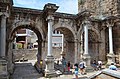
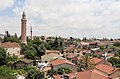

 Antalya Karatay Medrese
 Kesik Minare


.jpg)

.jpg)

.jpg)


.jpg)


 Austin, United States
 Famagusta, Northern Cyprus
 Haikou, China
 Jeonju, South Korea
 Kazan, Russia
 Mostar, Bosnia and Herzegovina
 Nuremberg, Germany
 Seville, Spain
 Taldykorgan, Kazakhstan
 Yalta, Ukraine