Hubbry Logo
logo
Batanes
Community hub

Batanes

logo
0 subscribers
Read side by side
from Wikipedia

Batanes, officially the Province of Batanes,[a] is an archipelagic province in the Philippines, administratively part of the Cagayan Valley region. It is the northernmost province in the Philippines, and the smallest, both in population and land area. The capital is Basco, located on the island of Batan, and is also the most populous municipality in the province.

Key Information

The island group is located approximately 162 kilometers (101 mi) north of the Luzon mainland and about 190 kilometers (120 mi) south of Taiwan (Pingtung County). Batanes is separated from the Babuyan Islands of Cagayan Province by the Balintang Channel, and from Taiwan by the Bashi Channel.

Etymology and nomenclature

[edit]

The name Batanes is a Hispanicized plural form derived from the Ivatan endonym Batan.[citation needed]

Older European sources may refer to the "Bashi" or "Bashee" Islands.[4]

History

[edit]

Early history

[edit]

The ancestors of today's Ivatans descended from Austronesians who migrated to the islands 4,000 years ago during the Neolithic period. They lived in fortified mountain areas called idjangs and drank sugar-cane wine, or palek. They used gold as currency and were farmers, seafarers and boatbuilders. Batanes was a major site for the Maritime Jade Road, one of the most extensive sea-based trade networks of a single geological material in the prehistoric world, operating for 3,000 years from 2000 BCE to 1000 CE.[5][6][7][8]

Spanish colonial era

[edit]

In 1687, the British explorer, privateer, and naturalist William Dampier visited the islands and named them in honour of prominent Dutch and British figures. Itbayat was named "Orange Isle" after William of Orange. Batan was named "Grafton Isle" after Henry FitzRoy, 1st Duke of Grafton. Sabtang Isle was named "Monmouth Isle" after James Scott, 1st Duke of Monmouth. During his stay in August and September 1687, Dampier made valuable observations about settlement types and subsistence of the inhabitants of the Batanes. He mentioned the existence of terraced and defended settlements on elevated terrain (now known as ijang) and listed various types of types of tubers and vegetables, and pigs and goats as common food sources, but notably no wet rice or cattle.[9]

In 1783, the Spanish claimed Batanes as part of the Philippines under the rule of Governor-General José Basco y Vargas. Batanes was ruled as part of the Provincia de Cagayan. The Bashi Channel was increasingly used by English East India Company ships and the Spanish authorities brought the islands under their direct administration to keep them from falling under British control.[10] The Ivatan remained on their idjang castle-fortresses for some time. In 1790, Governor Guerrero[clarification needed] decreed that Ivatans were to live in the lowlands and leave their remote idjang. In response, the mangpus, or indigenous Ivatan leaders, headed by the Ivatan hero Aman Dangat, revolted against the Spanish invaders.[11][verification needed]

Using guns, the Spanish ended the revolution, killing Aman Dangat and several other Ivatan leaders.[11] Basco and Ivana were the first towns established under full Spanish control. Mahatao was then administered by Basco, while Uyugan and Sabtang, by Ivana. Itbayat was not organized until the 1850s, its coast being a ridge. Soon, Ilocanos came to the islands and integrated with the local population.

Roads, ports, bridges, churches and government buildings were built in this time. Limestone technology used by the Spanish spread to the islands, making bridges strong and fortified. Some of these bridges still remain at Ivana and Mahatao. By 1890, many Ivatans were in Manila, and became ilustrados, who then brought home with them the revolutionary ideas of the Katipunan. These Ivatans, who were then discontented with Spanish rule, killed the ruling General Fortea and declared the end of Spanish rule.[citation needed]

American colonial era

[edit]

Toward the end of the Spanish administration, Batanes was made a part of Cagayan. Due to historical reasons from that time, some segments of Taiwan society argue that the islands should not belong to the Philippines.[12][13][14] Batanes was created as a sub-province of Cagayan on August 20, 1907, with the approval of Act No. 1693. In 1909, the new American authorities organized it into an independent province, with the approval of Act No. 1952.[15] During this time, additional public schools were constructed and more Ivatan became aware of their place in the Philippines.

In 1920, the first wireless telegraph was installed, followed by an airfield in 1930. New roads were constructed and the Batanes High School was instituted around this time as well.[citation needed]

Japanese occupation

[edit]

Because of their strategic location, the islands were one of the first points occupied by the invading Japanese imperial forces at the outbreak of the Pacific War. On the morning of December 8, 1941, the Batan Task Force from Taiwan landed on the Batan Islands, which became the first American territory occupied by the Japanese. The objective of the invasion - to secure the small airfield outside Basco - was accomplished without resistance. Japanese fighters from Basco took part in the raid on Clark Air Base the following day. Over the next several days, the success of the Japanese bombing of Clark Field rendered a base at Basco unnecessary, and on December 10, 1941, the naval combat force was withdrawn to participate in the invasion of Camiguin.[16]

As part of an administrative reorganization, the province of Batanes was downgraded to a municipality of Cagayan from 1942 to 1944.[17][18] Upon its restoration, Victor de Padua, an Ilocano who was one of the first School Superintendents on Batan, was made Provincial Governor. Early in 1945, the island was liberated by the Philippine Commonwealth forces of the 1st and 12th Infantry Divisions of the Philippine Commonwealth Army.

Philippine independence

[edit]

Batanes was briefly marred by political violence during the 1969 presidential elections, when the Philippine Constabulary's Special Forces allowed motorcycle-riding goons dubbed the "Suzuki boys" to secure the victory of Rufino Antonio Jr., an ally of President Ferdinand Marcos, as representative of the Lone District of Batanes in the House of Representatives of the Philippines through a campaign of terror and intimidation. The resulting outcry led to the Supreme Court decrying the "rape of democracy" in the province, and annulled Antonio's victory in 1970 in favor of his rival, Jorge Abad.[19]

In 1984, Pacita Abad, the foremost Ivatan visual artist, became the first woman to be awarded the Ten Outstanding Young Men (TOYM) award, breaking 25 years of male dominance. In her acceptance speech, she said, "it was long overdue that Filipina women were recognized, as the Philippines was full of outstanding women" and referred proudly to her mother.[20]

Vahay ni Dakay Ivatan house, one of the oldest structures in the Batanes islands. The house is made of limestone and coral and its roofing of cogon grass.

In 1993, the Batanes Protected Landscape and Seascape, which encompassed the entire province, was listed in the Tentative List of the Philippines for UNESCO World Heritage Site inscription in the future.[21]

In 1997, the Indigenous Peoples Rights Act (IPRA) was passed in Philippine Congress. The law paved the way for the indigenous territorial rights of the Ivatans. The province has since promoted its Ivatan roots. Part of the Ilocano population has returned to mainland Luzon. On December 7, 2004, Pacita Abad died after finishing her last international artwork while suffering from cancer.[22]

A minor dispute between the Philippines and Taiwan erupted in 2007, after Taiwan Times published an editorial written by Tamkang University professor Chen Hurng-yu, claiming that Taiwan has territorial claims over Batanes and encouraging the Taiwanese government to take over the province.[23] This, despite the islands being first claimed by Spanish Philippines in 1783 and later incorporated and administered by the Philippines without any contesting nation since the 18th century.[24]

In 2025, the Mahatao Forward Operating Base, a military facility operated by the Armed Forces of the Philippines, was established in Mahatao.[25]

Geography

[edit]

The province has a total area of 219.01 square kilometers (84.56 sq mi)[26] comprising ten islands situated within the Luzon Strait between the Balintang Channel and Taiwan. The islands are sparsely populated and subject to frequent typhoons. The three largest islands, Batan, Itbayat, and Sabtang, are the only inhabited islands.

The northernmost island in the province, also the northernmost land in the entire Philippines, is Mavulis (or Y'ami) Island. Other islands in the chain are Misanga (or North), Ditarem, Siayan, Diogo (or Dinem), Ivuhos, and Dequey. The islands are part of the Luzon Volcanic Arc.

Topography

[edit]
Batanes Hills

Almost one-half of Batanes is hills and mountains. Batan Island is generally mountainous on the north and southeast. It has a basin in the interior. Itbayat Island slopes gradually to the west, being mountainous and hilly along its northern, eastern coast. On Sabtang, mountains cover the central part, making the island slope outward to the coast.

The islands are situated between the vast expanse of the waters of Bashi Channel and Balintang Channel, where the Pacific Ocean merges with the South China Sea. The area is a sea lane between the Philippines and Japan, China, Hong Kong and Taiwan. It is rich with marine resources, including the rarest sea corals in the world.[which?]

The province is hilly and mountainous, with only 1,631.5 hectares (4,032 acres) or 7.1% of its area level to undulating terrain. 78.2% or 17,994.4 hectares vary from rolling hills to steep and very steep. Forty-two percent (42%) or 9,734.40 hectares (24,054.2 acres) are steep to very steep land. Because of the terrain of the province, drainage is good and prolonged flooding is non-existent.

The main island of Batan has the largest share of level and nearly level lands, followed by Itbayat and Sabtang, respectively. Itbayat has gently rolling hills and nearly level areas on semi-plateaus surrounded by continuous massive cliffs rising from 20 to 70 meters (66 to 230 feet) above sea level, with no shorelines. Sabtang has its small flat areas spread sporadically on its coasts, while its interior is dominated by steep mountains and deep canyons. Batan Island and Sabtang have intermittent stretches of sandy beaches and rocky shorelines.[citation needed]

The terrain of the province, while picturesque at almost every turn, has limited the potential for expansion of agriculture in an already very small province.

A Batanes stone house

Climate

[edit]

Batanes has a tropical climate (Köppen climate classification Am). The average yearly temperature is 26.0 °C (78.8 °F). The average monthly temperature ranges from 22.0 °C (71.6 °F) in January to 28.5 °C (83.3 °F) in July, similar to that of Southern Taiwan. Precipitation is abundant throughout the year. The rainiest month is August. The driest month is April. November to February are the coldest months.

There is a misconception that Batanes is constantly battered by typhoons.[citation needed] Batanes is mentioned frequently in connection with typhoons, because it holds the northernmost weather station in the Philippines, thus, it is a reference point for all typhoons that enter the Philippine area. In September 2016, Typhoon Meranti impacted the entire province, including a landfall on Itbayat.[27]

Administrative divisions

[edit]

Batanes is subdivided into 6 municipalities, all encompassed by a lone congressional district.

Political divisions

Barangays

[edit]

The 6 municipalities of the province comprise a total of 29 barangays. Ihuvok II in Basco was the most populous in 2024, and Nakanmuan in Sabtang was the least.[29]

Demographics

[edit]
Population census of Batanes
YearPop.±% p.a.
1903 8,293—    
1918 8,214−0.06%
1939 9,512+0.70%
1948 10,705+1.32%
1960 10,309−0.31%
1970 11,398+1.01%
YearPop.±% p.a.
1975 11,870+0.82%
1980 12,091+0.37%
1990 15,026+2.20%
1995 14,180−1.08%
2000 16,467+3.26%
2007 15,974−0.42%
YearPop.±% p.a.
2010 16,604+1.42%
2015 17,246+0.73%
2020 18,831+1.87%
2024 18,937+0.13%
Source: Philippine Statistics Authority[30][31][31][28][3]

The population of Batanes in the 2024 census was 18,937 people.[3] The population density was 86 inhabitants per square kilometer or 220 inhabitants per square mile.

An elderly Ivatan woman inside her house.

The natives are called Ivatans. They share prehistoric cultural and linguistic commonalities with the Babuyan on Babuyan Island and the Tao people of Orchid Island.

This divided homeland is a result of the Dutch invasion of Taiwan in 1624 (Dutch Formosa) and Spanish invasion in 1626 (Spanish Formosa). The northern half of the Ivatan homeland, Formosa and Orchid Island were part of the Viceroyalty of New Spain. This area came under Dutch governance. The Dutch were expelled in 1662 by forces of the Chinese Southern Ming dynasty, led by the Chinese pirate Koxinga who then set himself up as the King of Taiwan.

The southern half of the Ivatan homeland, the islands of Batanes, was reinforced and fortified by Spanish refugees from Formosa, before being formally joined in the 18th century with the Spanish government in Manila.

An Ilocano minority population lives in Batanes. Some have left and returned to mainland Luzon.

Languages

[edit]

The main languages spoken in Batanes are Ivatan, which is spoken on the islands of Batan and Sabtang. Itbayaten is spoken primarily on the island of Itbayat. The Ivatan which is dominant in the province is considered to be one of the Austronesian languages. From college level down to elementary level, the language is widely spoken.[32] Ilocano, the lingua franca of northern Luzon, is also widely spoken and understood by the Ivatans. The Ivatans also speak and understand Tagalog and English.

Ivatan-speaking communities can be found in other parts of the country, mainly in mainland Luzon, as well as overseas.

Ecology

[edit]
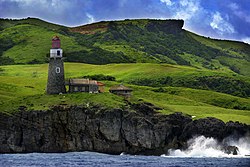
Livestock freely roaming in the green hills in Batanes

An extensive survey of the ecology of Batanes[33] provided the scientific basis for confirming the need for a national park in Batanes protecting the Batanes protected landscapes and seascapes, proposed as a UNESCO World Heritage Site, submitted in August 1993. An effort is underway to declare the whole province, along with the sugar central sites in Negros, as a UNESCO World Heritage Site.[34]

Flora and fauna

[edit]

The province is the home of the unique conifer species Podocarpus costalis. Although it is reportedly growing in some other places such as coasts of Luzon, Catanduanes and even Taiwan, full blossoming and fruiting are observed only in Batanes. Its fruiting capacity on the island remains a mystery but is likely due to several factors such as climate, soil and type of substratum of the island.

Several species of birds, bats, reptiles and amphibians inhabit the island. Many of those are endemic to the Philippines. The island is a sanctuary for different migratory birds during winter in the Northern Hemisphere. The Batanes archipelago, along with the nearby Babuyan Islands, have been designated an Important Bird Area (IBA) by BirdLife International because they support significant populations of resident Taiwan green pigeons, Ryukyu scops-owls and short-crested monarchs, Chinese egrets on passage, and wintering yellow buntings.[35]

Economy

[edit]

Poverty incidence of Batanes

10
20
30
40
2000
6.94
2003
9.00
2006
16.56
2009
14.40
2012
33.33
2015
13.68
2018
9.56
2021
2.60

Source: Philippine Statistics Authority[36][37][38][39][40][41][42][43]

About 75% of the Ivatans are farmers and fishermen. The rest are employed in the government and services sector. Garlic and cattle are major cash crops. Ivatans plant camote (sweet potato), cassava, gabi or tuber and a unique variety of white uvi. Sugarcane is raised to produce palek, a kind of native wine, and vinegar.[44]

In recent years, fish catch has declined due to the absence of technical know-how. Employment opportunities are scarce. Most of the educated Ivatans have migrated to urban centers or have gone abroad.[citation needed]

A wind diesel generating plant was commissioned in 2004.[citation needed]

Distance and bad weather work against its economic growth. Certain commodities like rice, soft drinks, and gasoline carry a 75% to 100% mark-up over Manila retail prices.[citation needed]

Transportation

[edit]

The island province of Batanes is accessible by air, via Basco Airport and Itbayat Airport. There are daily flights from Manila by Philippine Airlines bound to Basco Airport at Batan Island. There are also flights from Tuguegarao City (Cagayan) by Sky Pasada as of 2024. These two airlines make Batan Island accessible from the mainland via air travel. The other local airlines previously serving Basco Airport have stopped their transport services after the COVID-19 Pandemic. As of 2024, PAL Express has flown to Batanes since May 2013. Meanwhile, Itbayat, an island Municipality of the province of Batanes, is accessible via Basco Airport. There are no direct flights from the mainland to Itbayat. Itbayat may also be accessed via ferry boats from Basco. Meanwhile, Sabtang, also an island municipality like Itbayat, is accessible via ferry boats from Batan Island, particularly from Ivana Port, a Municipality in the main Island of Batan.

Values

[edit]

The Ivatan people of Batanes are one of the most egalitarian societies in the Philippines. The prime motivator of the cultural values of the Ivatans are imbibed in their pre-colonial belief systems of respecting nature and all people. The Ivatans, both the older and younger generations, have one of the highest incidences of social acceptance to minority groups in the country.

The Ivatans have a high respect for the elderly and the prowess of natural phenomena such as waves, sea breeze, lightning, thunders, earthquakes, and wildlife congregations. Discriminating someone based on skin color, ethnic origin, sexual orientation, gender identity, age, and traditions on nature is unacceptable in Ivatan values. Land grabbing is a grave crime in Ivatan societies, making ancestral domain certification an important part of Ivatan jurisprudence since the enactment of the IPRA Law.[citation needed]

Culture

[edit]

The entire province is listed in the UNESCO tentative list for inscription in the World Heritage List. The government has been finalizing the site's inscription, establishing museums and conservation programs since 2001. Seven intangible heritage elements of the Ivatan have been set by the Philippine government in its initial inventory in 2012. The elements are undergoing a process to be included in the UNESCO Intangible Cultural Heritage Lists.

A branch of the National Museum of the Philippines is located in Uyugan.[45]

Natural

[edit]
White sand beach at Sabtang island
  • Sabtang Island is undisturbed and unspoiled. It has intermittent white sand beaches with steep mountains and deep canyons with small level areas sporadically found along the coastline. Southwest of Batan Island, Sabtang is accessible by 30-minute falowa ride from Radiwan Port in Ivana. Sabtang Island is also the take-off point for Ivuhos Island from Barangay Nakanmuan.
  • Itbayat Island is located north of Batan Island. Itbayat is shaped like a giant bowl. The island is surrounded by massive boulders and cliffs rising from 20 to 70 feet (6.1–21.3 metres) above sea level and has no shoreline. It has a dirt airstrip for light aircraft. A regular ferry runs the Batan-Itbayat route. Travel time is about four hours by falowa from Basco Seaport. A light plane flies from Basco Airport to Itbayat at around P1,875 per person and leaves only when the plane is full.
  • Batan Island is the most populated island of the province. It is composed of four municipalities: Basco, Ivana, Uyugan, and Mahatao. Basco is the center of commerce and the seat of the provincial government.
  • Mount Iraya is a dormant volcano standing at 1,517 meters (4,977 feet) whose last eruption was recorded in 505 AD. Mountaineering, trekking, and trailblazing are recommended sports activities on the mountain. Walking distance from Basco, the top of Mt. Iraya can be reached in about three hours.
  • Mavulis Island is the northernmost island of Batanes. From this location, one can see Formosa (Taiwan) on a clear day. Tatus or coconut crabs abound on the island surrounded by rich marine life.
  • Di-atay Beach is a cove with multi-colored rocks and white sand ideal for picnics and beachcombing. Located along the highway of Mahatao, it is 9.85 kilometers (6.12 miles) from Basco.
  • Songsong in Chadpidan Bay is an hour of exhilarating trek from Basco proper (3 kilometers (1.9 miles)). It is famous for its beautiful sunset view.
  • Naidi Hills is walking distance from Basco.
  • Chawa Cave is for the more adventurous. An enchanted cave with a natural salt bed whose mouth opens to the south China Sea and is accessible through the boulders of Chawa Point in Mahatao. It is 4 kilometers (2.5 miles) from Basco.
  • Sitio Diura at Racuj-a-Ide is the fishermen's village at Mananoy Bay. Fishing season is marked by a festival in mid-March called Kapayvanuvanua. Visitors are treated with fresh fish delicacies from the Pacific Ocean. Within the area is the legendary Spring of Youth and living cave with crystal limestone formations. The bay is nine kilometres (5.6 miles) from Basco.
  • Nakabuang Cave is 5.5 kilometers (3.4 miles) from San Vicente Centro in Sabtang.
  • Mt. Matarem is an extinct volcano 495 meters (1,624 feet) at its summit. It is eight kilometers (5.0 miles) from Basco.
  • White Beach at Vatang, Hapnit, and Mavatuy Point, all in Mahatao.
  • Storm-proof Stone houses in Batanes many residents during typhoon made up their already-fortified houses with wood and secured the roofs with nets and ropes. This was done to ensure that the structures—which symbolize the Ivatan's strength and resilience against disasters—outlast the high-pressure winds of a typhoon that is expected to unleash. Tapangkos or covering were also installed on the doors and windows of several buildings in Batanes, including the capitol building. During heavy storms, it was also a time for Bayanihan of the residents as they helped each other tie-down roofs.

Man-made

[edit]
  • Radar Tukon was a United States weather station on a hilltop. It offers a magnificent 360-degree view of Batan Island, the South China Sea, Mt. Iraya, Basco proper, boulder lined cliffs and the Pacific Ocean. At present, it houses the northernmost weather station in the Philippines, the Basco Radar Station, and is only 2.75 kilometers (1.71 miles) from Basco.
  • Old Loran Station housed a US Coast Guard detachment for almost two decades and is about 25 kilometers (16 miles) from Basco.
  • Ruins Of Songsong is a ghost barangay which is a cluster of roofless shells of old stone houses abandoned after a tidal wave that hit the island of Batan in the 1950s. It has a long stretch of beach. The ruins are 23 kilometers (14 miles) from Basco.
  • San Jose Church in Ivana was built in 1814. It has a crenelated fortress-like campanile. The church fronts the Ivana Seaport and is 14 kilometers (8.7 miles) from Basco.
  • Kanyuyan Beach & Port at Baluarte Bay in Basco is the port of call of the cargo ships bringing goods from Manila.
  • San Carlos Borromeo Church and a convent at Mahatao are six kilometers (3.7 miles) from Basco. It was completed in 1789 and still retains its centuries-old features.
  • Idjangs or fortified stone fortresses where the native Ivatans' ancestors migrated to Batanes as early as 4,000 BC lived in them for defensive cover.
  • Fundacion Pacita is a lodging house and restaurant, which was formerly owned by Pacita Abad, the most iconic Ivatan visual artist. The house has been redecorated and filled with numerous art works of Pacita Abad after she died in 2004.

Historical

[edit]
  • Radiwan Point at Ivana Seaport is where the Katipuneros landed on September 18, 1898. It is also the ferry station of the falowas plying the islands of Sabtang and Itbayat.
  • Boat-shaped Stone Grave Markers, Chuhangin Burial Site, Ivuhos Island, Sabtang, Batanes
  • Chavulan Burial Jar Site, Ivuhos Island, Sabtang Island
  • Arrangement of Stone with Holes, Sumnanga, Sabtang
  • Columnar Stones, Post Holes, Stone Anchors, Itbud Idyang, Uyugan, Batanes
  • Arrangement of Stone Walls, Idyang Site, Basco, Batanes
  • Paso Stone Formation, Ivuhos Island, Sabtang, Batanes
  • Columnar Stone with Holes, Mahatao, Batanes

Intangible heritage

[edit]

In 2012, the National Commission for Culture and the Arts (NCCA) and the ICHCAP of UNESCO published Pinagmulan: Enumeration from the Philippine Inventory of Intangible Cultural Heritage. The first edition of the UNESCO-backed book included (1) Laji, (2) Kapayvanuvanuwa Fishing Ritual, (3) Kapangdeng Ritual, (4) Traditional Boats in Batanes, (5) Sinadumparan Ivatan House Types, (6) Ivatan Basketry, and (7) Ivatan (Salakot) Hat Weaving, signifying their great importance to Philippine intangible cultural heritage. The local government of Batanes, in cooperation with the NCCA, is given the right to nominate the 7 distinct elements into the UNESCO Intangible Cultural Heritage Lists.[46]

[edit]

Notes

[edit]

References

[edit]
[edit]
Revisions and contributorsEdit on WikipediaRead on Wikipedia
from Grokipedia
Batanes, officially the Province of Batanes, is the northernmost and smallest province of the Philippines, encompassing an archipelago of ten islands in the Luzon Strait, approximately 190 kilometers north of mainland Luzon.[1] With a total land area of about 230 square kilometers and a population of 18,831 according to the 2020 Census of Population and Housing, it ranks as the least populous and smallest by area among Philippine provinces.[2][3] Only three islands—Batan (home to the capital Basco), Sabtang, and Itbayat—are inhabited, primarily by the indigenous Ivatan ethnic group, who maintain a distinct Austronesian culture shaped by the islands' isolation and harsh environment.[3][4] The province's geography features volcanic origins, rugged cliffs, rolling pastures, and frequent exposure to typhoons, making it the most storm-prone region in the Philippines, with adaptations evident in the Ivatan's traditional sinadumparan stone houses—built with thick limestone walls and cogon grass roofs to endure high winds and seismic activity introduced during Spanish colonial lime production.[5][6] Economically, Batanes depends on subsistence agriculture (including root crops like taro and cassava), marine fishing, and livestock such as cattle and goats, with sustainable indigenous practices fostering resilience amid climate variability and limited arable land.[3][7] Its pristine landscapes, including protected seascapes and cultural heritage sites, underscore the Ivatans' long-standing communal self-reliance, though the province faces challenges from emigration and vulnerability to extreme weather.[8][9]

Etymology

Name origins and linguistic roots

The name Batanes derives from the Ivatan endonym Batan, referring to Batan Island, the largest and most central landmass in the archipelago.[10] In the Ivatan language, an Austronesian tongue spoken by the indigenous inhabitants, the ethnonym Ivatan stems from the prefix i- combined with Batan, literally meaning "from Batan" or "of Batan," denoting origin or affiliation with the island. Spanish colonizers adapted this into Batanes as a plural form to encompass the entire island group, a convention reflected in 18th-century European maps and records that retained the root while applying Hispanic grammatical plurality.[10] The underlying meaning of Batan itself lacks a definitively reconstructed Proto-Austronesian cognate in available linguistic corpora, though some local interpretations link it to concepts of open or level terrain, consistent with the island's topography of rolling plateaus amid rugged coasts.[11] This nomenclature underscores the Ivatan people's longstanding insular identity, with no evidence of pre-contact external impositions altering the core term.

History

Pre-colonial era

Archaeological evidence indicates that the Batanes Islands were settled by Austronesian migrants from Taiwan during the Neolithic period, with the earliest dated sites showing human activity by approximately 3000–2000 BCE, marked by red-slipped pottery, polished stone adzes, and nephrite artifacts consistent with maritime dispersal patterns.[12] These settlers adapted to the islands' isolation through sophisticated stone constructions, including boat-shaped burial markers and terraced hilltop fortifications known as ijangs, which served as defensive refuges against inter-clan raids and typhoons, reflecting advanced engineering for environmental resilience without evidence of preceramic or Paleolithic occupation.[13] Agriculture focused on root crops like taro alongside fishing and gathering, enabling self-sufficiency in the typhoon-prone archipelago.[14] Pre-colonial Ivatan society lacked centralized political hierarchies, organizing instead around kinship-based clans that managed resources collectively and resolved disputes through customary laws and retaliatory defenses via ijangs.[15] This decentralized structure fostered communal resilience, as clans maintained small, water-proximate settlements emphasizing mutual aid in agriculture and boat-building for seasonal mobility. Oral traditions and archaeological patterns of repeated site reuse underscore clan autonomy, with no indications of paramount chiefs or state-level institutions prior to external contacts.[16] Economic networks linked Batanes to Taiwan via the Bashi Channel and to northern Luzon, evidenced by imported nephrite jade (used for earrings and tools) and slate tools circulating in a broader Maritime Jade Road exchange system from around 2000 BCE onward.[17] These interactions involved barter of local shell and stone goods for Taiwanese prestige items, sustaining cultural ties without altering the islands' insular self-reliance.[12]

Spanish colonial period

The first recorded Spanish contact with Batanes occurred in 1686, when Dominican missionaries Mateo Gonzalez and Diego Piñero arrived to initiate evangelization efforts.[18] Subsequent attempts in 1720 by friars Juan Bel and Alonso Amado to establish missions and resettle Ivatans to Calayan failed due to famine and disease.[18] Formal annexation followed on June 26, 1783, under Governor-General José Basco y Vargas, who dispatched officials and Dominican friars to Basco to secure Ivatan consent for Spanish sovereignty and establish mission stations.[18][19] Military garrisons accompanied the missionaries to safeguard trade routes and support conversion, but persistent typhoons destroyed thatched-roof mission buildings and hindered sustained presence.[20][18] Catholicism was imposed through Dominican-led missions, yet Ivatan resistance preserved animist practices amid incomplete cultural assimilation.[18] In the 1790s, Governor Joaquin del Castillo mandated lowland resettlement, abandonment of traditional attire and leadership structures, and labor contributions, provoking uprisings such as that led by Sabtang chieftain Aman Dangat from 1785 to 1791, who targeted Spanish agents before severe reprisals.[18][21] Forced labor under systems like polo y servicio compelled Ivatans aged 16 to 60 to provide up to 40 days of service annually for public works, including log shipments from Sabtang in 1791, exacerbating resentment.[22][18] The archipelago's remoteness across the Bashi Channel, combined with frequent typhoons and pestilences, restricted resource extraction and settlement, rendering Batanes an economic liability by 1799 and limiting colonization to administrative outposts rather than dense integration.[18] Population remained sparse, with only 8,293 recorded in the 1903 census, reflecting the interplay of environmental barriers and local defiance.[18]

American colonial period

Following the Treaty of Paris in December 1898, which concluded the Spanish-American War, the United States acquired the Philippines from Spain, incorporating Batanes into its colonial territory. American naval forces, aboard the USS Princeton, arrived in February 1900 to initiate formal administration, initially organizing the islands as a subprovince under the oversight of Cagayan province. This transitional status persisted until May 20, 1909, when Philippine Commission Act No. 1952 established Batanes as an independent province, appointing Otto Scheerer as its first civilian governor and delineating its administrative boundaries to encompass the Ivatan-inhabited islands of Batan, Itbayat, and Sabtang.[20][23] The U.S. administration emphasized infrastructural development and public education, constructing improved roads engineered for vehicular use—replacing inadequate Spanish-era paths—and establishing primary schools that mandated English as the medium of instruction, aligning with broader colonial policies to foster assimilation. By the 1920s, a wireless telegraph station had been installed, followed by Basco's airfield in 1930, enhancing connectivity despite the archipelago's isolation. The Batanes High School was founded to extend secondary education, contributing to a surge in literacy among Ivatans, though enrollment remained modest due to geographic constraints. Economic activity saw little diversification, persisting in subsistence agriculture, livestock rearing (notably cattle and goats), and fishing, with no significant industrial or export-oriented shifts.[20][24][25] Unlike more contested regions, Batanes experienced no major indigenous revolts against U.S. rule, reflecting its peripheral status and prior Spanish pacification efforts; integration proceeded relatively peacefully, with local chieftains cooperating under the new civil government. The provincial reorganization implicitly acknowledged Ivatan distinctiveness by carving out an entity tailored to their insular communities, marking an early formal delineation of ethnic boundaries in Philippine administration. Traditional adaptations endured, including the retention of thick-walled stone houses (sinadumparan), whose cobblestone and lime construction—honed against frequent typhoons—proved more resilient than imported alternatives, underscoring pragmatic local engineering over imposed architectural changes. Population levels stabilized at approximately 12,000–15,000 residents through the period, buoyed by high birth rates offsetting emigration and environmental hardships.[25][26]

Japanese occupation during World War II

The Imperial Japanese Army invaded the Batanes Islands on December 8, 1941, landing forces on Batan Island and rapidly securing the airfield near Basco without opposition from local defenses, which had been isolated by prior bombing of the telegraph tower. This early occupation, occurring hours after the attack on Pearl Harbor, aimed to establish forward air bases for subsequent assaults on the Philippines mainland. Japanese troops then occupied towns across the islands, including Sabtang and Itbayat, imposing control over the sparse Ivatan population.[20] Throughout the occupation, which extended until mid-1945, Japanese forces compelled local Ivatans to provide forced labor for military infrastructure, including the excavation of extensive tunnel networks such as the 250-meter Dipnaysupuan tunnel near Basco, constructed from volcanic rock and cement with multiple chambers, exits, and a water reservoir for use as shelters and storage depots. Labor demands involved civilians of all ages, including children, reflecting the regime's exploitation of the islands' strategic position for defense against anticipated Allied advances. Requisitions of food and livestock further strained resources, contributing to shortages that forced reliance on traditional staples amid limited arable land.[27][28] Growing Ivatan resentment manifested in organized guerrilla resistance by the BISUMI (Basco, Ivana, Sabtang, Uyugan, Mahatao, Itbayat) Fighters, affiliated with Hunters ROTC units, who conducted raids against Japanese garrisons. A notable action occurred on April 25, 1945, when BISUMI forces assaulted the garrison on Sabtang Island, killing several occupiers and aiding the islands' liberation ahead of broader U.S. operations. Japanese retaliation included arrests, trials, and executions of captured guerrillas in Basco, as ordered by local commanders, underscoring the brutal suppression of dissent. These clashes, combined with labor hardships, inflicted demographic tolls on the small Ivatan communities, though precise civilian casualty figures remain undocumented in available records; survivor accounts highlight executions and privations as key factors in local losses.[29][30]

Post-independence developments

Following the Philippines' declaration of independence on July 4, 1946, Batanes integrated into the new republic as its northernmost province, retaining its pre-existing administrative structure with a governor and municipal governments exercising substantial local autonomy due to geographic isolation from Manila.[31] The provincial leadership prioritized self-reliant governance, managing limited resources for infrastructure maintenance and public services amid logistical challenges posed by the Luzon Strait.[32] Frequent typhoons necessitated enhanced disaster preparedness, building on Ivatan indigenous practices refined post-war. Typhoon Betty in May 1961 approached Batanes as a Category 4 storm, prompting reinforcements to traditional sinuwali-patterned stone houses designed to endure winds exceeding 200 km/h and community protocols for evacuation and resource sharing. These measures, formalized in local governance frameworks by the 1970s, emphasized collective stockpiling of food and livestock herding into wind-resistant corrals, reducing casualties without heavy reliance on central government intervention.[33] [6] Recovery from such events relied on community-driven efforts, including cooperative farming groups that redistributed labor and seeds to restore agricultural yields, contributing to sustained low poverty rates through diversified subsistence crops like taro and gabi resilient to erosion. This approach avoided external industrialization pushes, preserving the agrarian base with small-scale livestock and fishing operations integrated into municipal oversight.[3] By the late 20th century, these strategies had empirically lowered vulnerability, as evidenced by zero recorded storm-related deaths in subsequent decades despite annual passages.[34]

Contemporary geopolitical shifts

Batanes' strategic location, approximately 190 kilometers south of Taiwan across the Luzon Strait, has amplified its geopolitical significance amid escalating tensions in the Taiwan Strait and spillover effects from South China Sea disputes since the early 2010s.[35] The archipelago's proximity positions it as a potential forward operating area in any cross-strait conflict, with analysts noting that Chinese military operations targeting Taiwan could inadvertently or deliberately extend to Batanes due to its role in monitoring sea lanes and air routes.[36] Philippine sovereignty over Batanes traces to the 1898 Treaty of Paris, under which Spain ceded the Philippine archipelago—including the northern islands—to the United States, establishing Manila's legal basis for control post-independence.[37] However, some historical analyses contest the treaty's clarity on Batanes, arguing that its remote position and lack of explicit pre-colonial Manila authority—coupled with the islands' distinct Ivatan ethnolinguistic ties potentially linking to Taiwanese indigenous groups—created ambiguities unresolved by subsequent Japanese or Qing influences during the treaty era.[37] Local residents and officials in Batanes have expressed mounting concerns over the islands' vulnerability to conflict fallout, viewing them as a "potential target" in a Taiwan invasion scenario that could disrupt fishing, tourism, and evacuation routes for over 150,000 Filipino workers in Taiwan.[38][39] These fears intensified following China's 2022 military drills around Taiwan, which simulated blockades extending toward Philippine waters, prompting Manila to lodge diplomatic protests while reinforcing northern defenses without formal EDCA sites in Batanes to avoid direct provocation.[40] In response, the Philippines opened a new forward military base in Batanes in August 2025, emphasizing its role as the northernmost frontier for surveillance and rapid response, amid assessments that neutrality would still draw the archipelago into hostilities due to geographic inevitability.[41] U.S.-Philippine military cooperation has underscored these shifts through annual Balikatan exercises, with the 2024 iteration incorporating Batanes for integrated air and missile defense training alongside Palawan, simulating island chain defense against maritime threats.[42] Balikatan 2025 escalated involvement by deploying U.S. Navy Marine Expeditionary Ship Interdiction System (NMESIS) prototypes to Batanes for sea denial operations, marking the first such littoral regiment rotation in the region and enhancing interoperability for countering amphibious incursions near the Luzon Strait.[43] These activities, involving over 16,000 troops, reflect Manila's alignment with Washington under the 1951 Mutual Defense Treaty, though local voices caution that heightened militarization risks transforming Batanes from a peaceful outpost into a flashpoint without commensurate deterrence against Beijing's gray-zone tactics elsewhere in Philippine waters.[44][45]

Geography

Topography and landforms

The Batanes archipelago consists of ten islands totaling approximately 219 square kilometers, with Batan, Itbayat, and Sabtang as the principal inhabited landmasses. Batan Island, spanning about 95 square kilometers, exhibits volcanic topography shaped by tectonic activity within the Philippine Mobile Belt, featuring Mount Iraya, an active stratovolcano with its last eruption in 1454, and Pliocene-age Mount Matarem. These structures contribute to rolling hills capped by limestone and steep coastal cliffs formed through uplift along subduction zones near the Philippine Trench.[46][47] Approximately 78 percent of the province's terrain comprises rolling to very steep hills, with only 7 percent classified as level to undulating, severely restricting flat arable expanses suitable for large-scale cultivation without terracing. Itbayat, the largest island at around 95 square kilometers, contrasts with predominantly sedimentary origins, displaying raised reef limestone terraces and karst landforms indicative of coral uplift rather than active volcanism. The rugged cliffs and limited indentations along shorelines, sculpted by persistent Pacific wave action, causally underpin the islands' geographic isolation by offering scant natural anchorages, historically impeding maritime access and fostering unique ecological and cultural adaptations.[48][47] Seismic events, driven by the archipelago's proximity to convergent plate boundaries, recurrently alter landforms; for instance, a series of earthquakes in July 2019, reaching magnitudes up to 5.4, highlighted vulnerability to fault-related ground shaking in this tectonically active zone. Erosion is exacerbated by unrelenting Pacific winds and typhoon surges, which erode coastal basalt and limestone exposures, promoting cliff retreat and slope instability that further constrain habitable and cultivable zones to wind-sheltered valleys and gentler hill gradients.[49][50]

Climate patterns and environmental risks

Batanes exhibits a tropical maritime climate with average annual temperatures around 26°C, ranging from 22°C in the coolest months of January and February to 29°C in June.[51] Annual rainfall totals approximately 2,050 mm, with the wettest periods occurring from June to October due to the southwest monsoon and frequent tropical cyclones.[51] The region experiences consistent northeast trade winds, contributing to cooler conditions compared to southern Philippine areas, though humidity remains high year-round.[52] The province's northern position exposes it to nearly all tropical cyclones entering the Philippine Area of Responsibility, with the Philippines averaging 20 such systems annually and 8-9 making landfall nationwide.[53] Batanes often receives gale-force winds and heavy rains from 10 or more cyclones per year, as many track northward through or near the islands during the peak season from July to September.[54] These events deliver intense but short-duration precipitation, supporting monsoon-driven recharge of water sources while posing risks of localized flooding and landslides on steep terrains.[55] PAGASA data reveal episodic increases in cyclone intensity, as seen in 2023 when tropical cyclone activity exceeded norms amid elevated Pacific sea surface temperatures influenced by natural oscillations like the El Niño-Southern Oscillation.[56] Such patterns align with historical variability in the western North Pacific basin, where warmer ocean phases correlate with stronger storms independent of long-term anthropogenic trends.[56] Environmental risks stem primarily from typhoon-induced winds exceeding 100 km/h, which erode coastal soils and damage unanchored structures, alongside storm surges up to 2 meters in low-lying areas.[57] Agricultural cycles adapt to these patterns through reliance on monsoon reliability for planting resilient root crops like taro and sweet potatoes, which mature underground and endure high winds better than surface grains.[7] This empirical adaptation minimizes yield losses, with Ivatan farmers timing harvests ahead of predictable seasonal peaks in cyclone activity.[58]

Administrative structure and settlements

Batanes is subdivided into six municipalities: Basco, the provincial capital; Ivana; Mahatao; Sabtang; Uyugan; and Itbayat.[46] These municipalities span the province's three principal islands, with Basco, Ivana, Mahatao, and Uyugan situated on Batan Island, Sabtang on Sabtang Island, and Itbayat on Itbayat Island.[59] The municipalities collectively encompass 29 barangays, which function as the fundamental local governance units responsible for community-level administration.[46] Governance at these levels operates under Republic Act No. 7160, the Local Government Code of 1991, which establishes decentralized authority for provinces, municipalities, and barangays, enabling them to exercise powers over local matters subject to national oversight.[60] Settlements within these barangays are primarily coastal, positioned along shorelines to support maritime access, as evidenced by the coastal locations of key towns on Batan Island.[61]

Demographics

The population of Batanes stood at 18,831 according to the 2020 Census of Population and Housing conducted by the Philippine Statistics Authority, marking a modest increase from 17,246 in 2015 and representing the smallest provincial population in the Philippines. This equates to a population density of approximately 93.5 inhabitants per square kilometer across the province's land area of 201.4 square kilometers, underscoring its sparse settlement patterns amid rugged terrain and limited arable land. Growth has been sluggish, with an annual rate of 1.9% between 2015 and 2020, but recent indicators point to even slower expansion at 0.13%, attributable to both sub-replacement fertility levels—aligned with national trends below 2.1 children per woman—and net out-migration, particularly of younger residents seeking employment on the mainland due to constrained local economic opportunities.[2][62][2] Basic literacy rates remain high at 90.8%, the second-highest in Cagayan Valley Region, reflecting sustained investment in education stemming from early missionary influences and public schooling systems that have prioritized universal access despite geographic isolation. Functional literacy, which includes comprehension skills for practical application, stands at 73.7%, leading the region and indicating robust foundational education outcomes relative to more urbanized areas. The median age of 28 years suggests a relatively mature demographic profile compared to the national average, with aging exacerbated by youth emigration for higher education and jobs, leading to a dependency ratio strained by fewer working-age individuals remaining in the province.[63][64][46]

Ethnic groups and languages

The population of Batanes consists predominantly of the Ivatan ethnic group, which forms over 90% of residents in this isolated northern Philippine province, with minimal demographic influence from lowland groups such as Tagalogs or Ilocanos due to geographic remoteness and limited migration.[65] The 2020 Census of Population and Housing recorded a total provincial population of 18,831, underscoring the small scale and homogeneity of the community.[66] The Ivatan language, an Austronesian tongue from the Batanic subgroup, serves as the vernacular, featuring mutually intelligible dialects including Ivatan proper on Batan and Sabtang islands and Itbayaten on Itbayat.[5] Spoken by approximately 15,000-33,000 individuals primarily in Batanes, it faces potential decline amid broader linguistic shifts, though Ethnologue classifies related Ibatan as endangered while Ivatan maintains institutional support.[67] English and Tagalog predominate in administrative, educational, and official contexts, reflecting national policy.[5] Genetic studies of mitochondrial DNA (mtDNA) in Ivatan populations reveal shared haplogroups with Taiwanese indigenous groups, such as Formosans, indicating ancient Austronesian linkages across the Luzon Strait without implying direct, recent admixture.[68][69] These findings align with broader Austronesian dispersal patterns originating from Taiwan, as corroborated by haplogroup distributions in regional samples.[70]

Economy

Sectoral breakdown and growth metrics

The economy of Batanes expanded by 9.6 percent in gross domestic product terms in 2024, a slowdown from the 14.4 percent growth achieved in 2023, according to data from the Philippine Statistics Authority (PSA).[71] This performance positioned Batanes as the fastest-growing province in the Cagayan Valley region, driven primarily by expansions in services and agriculture amid stable but limited industrial activity.[72] The provincial GDP reached approximately PHP 302.7 million in 2024, reflecting resilience in a remote, island-based economy with minimal external manufacturing inputs.[73] Sectoral contributions underscore a structure oriented toward services, which account for the majority of output at around 60 percent, followed by agriculture at approximately 30 percent, with industry forming a negligible share due to the absence of large-scale processing or export-oriented factories.[71] This composition highlights low industrialization, where economic activity emphasizes subsistence-oriented production over capital-intensive development, fostering relative self-sufficiency in food and basic needs through local farming and fishing rather than import dependency. Poverty incidence remains among the lowest in the Philippines, recorded at 2.6 percent for families in recent PSA assessments, indicative of effective local resource utilization despite seasonal vulnerabilities.[74] Overall, Batanes exhibits greater economic self-sufficiency compared to more urbanized provinces, with remittances playing a supplementary rather than dominant role in household incomes, as cultural practices prioritize communal and agrarian resilience over outward migration dependency.[48] Growth metrics suggest sustainability through diversified primary sectors, though scalability is constrained by geographic isolation and small population base of under 20,000.[71]

Agriculture, fishing, and local industries

Agriculture in Batanes centers on subsistence root crop cultivation, including taro (Colocasia esculenta, locally uvi), yam (Dioscorea spp., wakay), and sweet potatoes (Ipomoea batatas, camote), which are rotated seasonally to maintain soil fertility and food security amid frequent typhoons.[7][75] These crops form the dietary staple for the Ivatan people, with planting cycles staggered to provide year-round yields despite the archipelago's isolation and limited arable land of approximately 6,000 hectares.[58] Indigenous practices, such as stone-walled fields (sinubong) and crop diversification, enhance resilience, enabling self-sufficiency even as typhoons erode topsoil and destroy up to 70% of annual rice and vegetable outputs in severe events like Typhoon Julian in October 2024, which inflicted P36.34 million in damages province-wide.[7][76] Livestock rearing, primarily cattle (Bos indicus crosses) and goats (Capra hircus), supports meat and draft needs on communal grazing lands, with 2016 Philippine Statistics Authority data recording 6,766 cattle heads, 3,870 goats, and 3,008 carabaos across the islands.[77] Free-range systems predominate due to rugged terrain, yielding beef and goat meat for local consumption, though fodder scarcity during typhoon seasons limits herd expansion.[3] Fishing employs traditional Ivatan vessels like the tataya (round-hulled outrigger boats, 4-6 meters long, rowed or sailed) for nearshore operations targeting dorado (Coryphaena hippurus) via mataw hook-and-line methods, which avoid overexploitation through seasonal rituals regulating access.[78] However, gear conflicts persist in Batan Island waters, as documented in 1989 and 1993 resolutions addressing tensions between passive nets (pammayinaw) and active hooks over overlapping fishing grounds, reflecting competition in a resource-scarce seascape.[79] Recent interventions by the Department of Agriculture include organic certification for Batanes in 2025, promoting high-value crops like garlic, onions, and sweet potatoes alongside beef production to boost yields and market access, with High Value Crops Development Program support for garlic enhancement initiated in May 2025.[80] These efforts counter empirical constraints like typhoon-induced losses, which averaged significant disruptions in high-value sectors during 2024 events, yet indigenous adaptations sustain primary sector contributions to local GDP amid geographic isolation.[81][3]

Tourism development and constraints

Batanes maintains a low-volume, high-value tourism model, attracting approximately 13,000 visitors in 2024, a significant decline from the peak of over 50,000 in 2018.[82][83] This approach prioritizes sustainability over mass development, with stakeholders advocating for a Bhutan-inspired strategy emphasizing low-impact, high-value experiences to preserve the islands' fragile environment and cultural integrity.[84][82] Local policies discourage do-it-yourself (DIY) travel, requiring coordination with licensed tour operators and guides to mitigate safety risks from rugged terrain and unpredictable weather.[83] Tourism contributes to economic diversification by providing alternative livelihoods beyond agriculture and fishing, generating income through guided tours to natural attractions such as rolling hills and coastal cliffs. However, residents express concerns over potential over-dependency, noting that while it supports employment and poverty reduction, unchecked growth could strain limited resources and erode traditional practices.[85][86] The province's integration into the UNWTO International Network of Sustainable Tourism Observatories facilitates monitoring of economic, social, and environmental impacts to inform balanced development.[87] Key constraints include high travel costs, which deter mass influx but limit accessibility, and frequent flight cancellations due to typhoons and rough seas during irregular seasonal patterns.[82] Infrastructure limitations, such as labor shortages and biophysical vulnerabilities, further challenge scalability, reinforcing the preference for controlled, quality-focused visitation over volume-driven expansion.[88][89] Despite these hurdles, the model has proven effective in maintaining profitability for local operators while minimizing ecological degradation.[82]

Ecology

Biodiversity and endemic species

The Batanes archipelago, isolated in the Luzon Strait, supports a distinctive biota shaped by its volcanic geology, strong winds, and proximity to Taiwan, as revealed through field surveys conducted between 2006 and 2007 by researchers from the University of the Philippines Los Baños, which identified potential new taxa among reptiles and birds.[90] Vascular plant diversity exceeds 700 species, with 16 vascular plants endemic strictly to the Batanes Islands and at least 47 shared endemics with the nearby Babuyan Islands, many adapted to typhoon-prone, wind-swept conditions through low stature and dense foliage.[91][92] Avifauna includes no species fully endemic to Batanes alone, but restricted-range taxa such as the Black-chinned fruit-dove (Ptilinopus longiceps, formerly classified under variant nomenclature as longialis), which is confined to Batanes and Babuyan Islands, and the darker Batanes subspecies of the slaty-legged crake (Zapornia palustris alvarezi), documented in local surveys emphasizing its rarity in grassy habitats.[93] Subspecies like the Batanes lowland white-eye (Zosterops meyeni batanensis) are also endemic, observed commonly in coastal vegetation during ethno-ornithological studies.[94] Migratory species dominate checklists, with over 100 native and naturalized birds recorded via eBird surveys, including buntings and pipits wintering on Batan and Itbayat.[95] Herpetofauna features endemics like the Batanes pit viper (Trimeresurus mcgregori), a venomous snake restricted to the islands' forests and cliffs, with baseline ecological data from 2021 field trips confirming its arboreal habits and low population densities.[96] Surveys across Batan and Sabtang islands report five endemic reptile species, including geckos and skinks, thriving in karst outcrops and limestone habitats. Non-marine mollusks, assessed in 2023-2024 expeditions, show high diversity in cliff and forest sites, with undescribed taxa highlighting the archipelago's role as a northern Philippine hotspot.[97] Marine biodiversity centers on fringing coral reefs surrounding the islands, supporting diverse reef fish assemblages and invertebrates, though endemism is lower than terrestrial due to connectivity via currents; surveys note typhoon-resilient corals and associated species like damselfish and anemones adapted to high-wave exposure.[92] Invasive species, including rats and plants introduced via inter-island shipping, pose documented risks to endemics, as observed in habitat assessments linking vessel traffic to colonization events.[90]

Conservation efforts and threats

The Batanes Protected Area and Seascape, established under Republic Act No. 8991 in 2000, encompasses the entire province to safeguard its unique volcanic landscapes, coastal ecosystems, and cultural heritage, with management emphasizing community involvement in patrolling and monitoring to curb illegal activities such as poaching.[8][98] Enforcement of Republic Act No. 9147, the national Wildlife Resources Conservation and Protection Act, supports these patrols through wildlife officers' authority to seize specimens and apprehend violators, though localized implementation in Batanes relies heavily on resident-led initiatives due to the archipelago's remoteness.[99] Traditional Ivatan stone houses (sinadumparan), constructed from limestone, coral, and cogon grass, serve as a model for typhoon-resistant architecture, reducing habitat disruption from frequent rebuilding after storms that average 20 per year, thereby indirectly bolstering ecological conservation by minimizing resource extraction for repairs.[100][6] Despite these measures, overfishing persists as a primary threat, with handline fisheries in municipal waters showing signs of depletion from excess capacity and unsustainable practices, exacerbating pressure on reef-associated species in an area where coral cover is already low and dominated by algal assemblages.[101][102] Coastal erosion, driven by typhoon-induced wave action and landslides, further degrades habitats, ranking Batanes sixth nationally for environmental stresses including barren land expansion.[9] Water scarcity compounds these issues in small island settings like Basco, where competing demands from population growth, tourism, and agriculture strain finite groundwater and surface sources, leading to shortages that indirectly heighten extraction pressures on ecosystems.[89] Recent surveys indicate mixed efficacy of conservation efforts, with non-marine mollusk assessments in the 2020s documenting 41 species, including endemics, but highlighting vulnerability to habitat loss without stricter controls, suggesting stability in some taxa yet ongoing risks from invasives like the common myna.[97] Amphibian and reptile inventories from 2021 recorded diverse distributions but noted threats from collection, while reef monitoring revealed abiotic dominance, questioning whether patrols alone suffice against cumulative anthropogenic pressures without enhanced data-driven interventions.[103][104]

Transportation

Access routes and connectivity

Access to Batanes is primarily via air or sea, with both routes highly susceptible to the region's frequent typhoons, strong winds, and rough waters, often resulting in cancellations or delays that can strand travelers for days.[105] [106] The Basco Airport on Batan Island serves as the main entry point, accommodating daily commercial flights from Manila's Ninoy Aquino International Airport operated by Philippine Airlines, with flight durations ranging from 70 to 110 minutes.[106] [107] These services, however, operate on a weather-dependent basis, as the airport's coastal location and short 1.75 km runway limit operations during adverse conditions like high winds exceeding safe thresholds.[105] [108] Sea travel provides an alternative but less reliable option, with no direct passenger ferries from Manila; instead, vessels depart from ports in Cagayan Province, such as Aparri, crossing the Balintang Channel, which separates Batanes from the Babuyan Islands and is notorious for treacherous currents and swells.[109] Cargo ships and smaller boats from Manila or Ilocos Norte occasionally carry passengers, with journeys lasting 12-18 hours or more, but schedules are irregular and heavily disrupted by seasonal monsoons.[110] [111] In response to these vulnerabilities, port infrastructure upgrades commenced in 2024, including harbor deepening on Batan and Itbayat islands to accommodate larger vessels and enhance resilience against storms, with Philippine military-led projects supplemented by initial U.S. planning support.[36] [112] [113] Within the province, paved and gravel roads connect the six municipalities on Batan and Itbayat islands, facilitating vehicle travel between key sites, while inter-island hops to Sabtang and smaller islets rely on outrigger boats; no rail system exists due to the archipelago's rugged terrain and sparse population.[114]

Infrastructure limitations and improvements

Batanes' air transportation infrastructure faces significant limitations due to its exposure to frequent typhoons, resulting in regular flight cancellations and delays at Basco Airport. For instance, in October 2025, Philippine Airlines canceled multiple flights, stranding 193 passengers amid Typhoon Salome, while September 2025 saw 14 domestic flights halted due to Super Typhoon Nando's approach.[115][116] Cebu Pacific discontinued operations to the province citing unpredictable weather patterns that exacerbate operational risks.[117] The province's electricity supply remains constrained, primarily reliant on diesel-powered plants managed by the Batanes Electric Cooperative and the National Power Corporation. These facilities, including the Basco and Itbayat Diesel Power Plants, are prone to shutdowns during typhoon threats, as occurred ahead of Super Typhoon Leon in October 2024, leading to intermittent outages.[118] Despite early hybrid wind-diesel initiatives on Batan Island since 2005 and ongoing hybridization efforts under NPC schedules in 2024, diesel dependency persists, amplifying vulnerability to fuel supply disruptions in this remote setting.[119] Batanes' archipelagic geography, characterized by strong winds, rugged terrain, and isolation in the northern Philippine Sea, inherently drives elevated infrastructure maintenance costs. Remote logistics inflate material and labor expenses, compounded by typhoon-induced wear that necessitates frequent repairs, as evidenced by broader transport cost premiums for goods reaching the islands.[120] Recent improvements include farm-to-market road developments endorsed by the Regional Development Council Region II (RDC2), such as a 2026 allocation of PHP 10 million by the Department of Public Works and Highways for a 6.1-meter-wide road with drainage in Batanes.[121][122] Seawall projects, also prioritized via RDC2 recommendations alongside breakwaters and fish ports, aim to bolster coastal resilience against erosion and storm surges, reflecting adaptive measures tailored to local environmental pressures.[122] These initiatives leverage regional oversight to address connectivity gaps, though their long-term efficacy hinges on sustained funding amid geographic constraints.

Culture

Architectural heritage

Traditional Ivatan houses in Batanes feature thick walls constructed from locally quarried limestone, coral stones, and lime mortar, typically measuring up to 1 meter in thickness to withstand typhoon-force winds exceeding 200 km/h that frequently impact the region.[123] These walls provide structural integrity by distributing wind loads across a broad base, reducing shear stress, while the use of interlocking stones without modern reinforcement demonstrates empirical adaptation to seismic and aerodynamic forces inherent to the islands' volcanic terrain and exposure to the Pacific typhoon belt.[124] Slanted roofs covered in cogon grass thatch, often elevated on wooden frames, facilitate rapid water runoff during heavy rainfall and minimize wind uplift through their lightweight yet flexible composition.[125] Pre-colonial Ivatan architecture originated with communal stone fortresses known as idjang, elevated on cliffs for defense and wind deflection, evolving from earlier wood-and-thatch shelters into more permanent stone-lime hybrids by the time of Spanish contact in the 16th century.[15] These structures incorporated indigenous techniques for mortar production from burned coral and lime, predating colonial influences, though later iterations blended European-inspired rectangular forms with local materials for enhanced durability against environmental hazards rather than aesthetic imitation.[124] The persistence of these designs reflects causal engineering priorities—material availability, climatic resilience—over stylistic evolution, with minimal reliance on imported elements until post-colonial modernization.[126] The architectural ensemble of Batanes, encompassing these houses within broader protected landscapes, was inscribed on UNESCO's World Heritage Tentative List in 2003 as "Batanes Protected Landscapes and Seascapes," recognizing their role in demonstrating sustainable human adaptation to extreme conditions.[98] Empirical assessments indicate that replicating core features—such as thick masonry walls and natural ventilation via small apertures—could inform low-cost, typhoon-resistant housing in other vulnerable tropical regions, leveraging local aggregates to achieve thermal mass for passive cooling without energy-intensive systems.[100] However, modern simulations reveal limitations against intensified storms driven by climate variability, suggesting hybrid reinforcements for future applications while preserving the original designs' proven efficacy in historical survival rates.[127]

Traditional practices and festivals

The Ivatan people of Batanes engage in communal labor practices such as payohoan, where groups of 10 to 15 individuals, often adolescents, collaborate on agricultural tasks including harvesting root crops like ubi (yam) and camote (sweet potato), followed by shared feasts that emphasize reciprocity and community bonding without monetary exchange.[30] These harvest cycles incorporate rituals like kapamivyay, an annual offering of food and palek (local liquor) to anitu (ancestral spirits) at farm sites to ensure bountiful yields.[30] Larger work groups known as kayvayvanan, comprising over 20 adults summoned by shell horns, extend this cooperation to livestock management and seasonal drives, reinforcing social ties through evening gatherings with storytelling and fines in palek for absentees.[30][5] Festivals blend these practices with performative elements, such as the Payuhuan Festival in June, a five-day event commemorating provincial foundation through province-wide processions and demonstrations of cooperative labor akin to payuhan (mutual aid), highlighting Ivatan resilience via traditional dances and rituals. The palu-palo dance, an all-male mock battle with rhythmic stick-clashing enacted during the San Jose feast, simulates historical conflicts like Christian-Moor encounters, serving both entertainment and cultural preservation roles.[30][5] Similarly, harvest-related dances like beselang gedang accompany rice or root crop gatherings under kapayvunung (collective harvesting), fostering unity amid the islands' typhoon-prone environment.[128] Funeral rites exhibit animist-Christian syncretism, with precolonial practices of jar burials (padapaday)—entombing the deceased with tools, food, and ornaments, later retrieved by kin—integrated into modern Catholic services, where beliefs in elite souls ascending as stars or impoverished ones wandering as anitu coexist with purgatory doctrines and offerings to appease ancestral ghosts.[30][5] Church wakes and burials occur the day after death, but indigenous cosmology persists, viewing death as a transition influenced by folk Catholicism since Spanish Christianization in 1783.[129] Participation in these traditions has declined amid modernization, with work songs like kalusan nearly vanishing and overall customs eroding due to rice importation, youth migration, and adoption of contemporary materials and lifestyles, though festivals like Payuhuan sustain some communal engagement.[30][130] Ethnographic surveys indicate intergenerational transmission weakening, particularly among women as cultural custodians, as external influences prioritize economic shifts over ritual observance.[130]

Intangible cultural elements

The Ivatan people of Batanes maintain intangible cultural elements through oral traditions, skilled crafts, and linguistic practices that reflect adaptation to the islands' rugged ecology and frequent typhoons. Proverbs and sayings transmitted verbally underscore themes of endurance and communal support, essential for survival in a wind-swept environment prone to isolation. These oral expressions, passed down across generations, embody resilience without reliance on written records, fostering a collective mindset geared toward weathering natural adversities.[5] Basket-weaving represents a core intangible heritage, employing techniques like knotting and coiling with local plant fibers such as Lygodium fern species and pandan leaves to create functional items including pasikin storage baskets, vakul headgear for weather protection, and utility carriers. These skills, honed for practicality in agriculture, fishing, and inter-island barter, persist through apprenticeship among women and elders, serving both daily needs and limited trade networks historically linking Batanes to Taiwan and Luzon. The pandil weaving variant, using pandan, exemplifies resourcefulness in utilizing typhoon-resistant flora for durable goods that aid in food transport and storage amid scarce arable land.[131][132] The Ivatan language, an Austronesian isolate distinct from other Philippine tongues with two main dialects (northern and southern), functions as a vessel for cultural transmission, embedding ecological knowledge in vocabulary for winds, crops, and seafaring. Despite pressures from Tagalog-dominated media and migration to mainland Philippines, it remains stable as the primary home language for approximately 15,000 speakers, bolstered by community use and limited formal education integration to counteract assimilation. Preservation hinges on intergenerational speaking within families, preserving nuanced terms for local phenomena absent in dominant languages.[5][133] Cultural norms dictate a flexible division of labor influenced by ecological demands, where gender roles prioritize utility over rigidity: men traditionally handle heavy fishing and boat-building, while women manage weaving, farming, and livestock amid male absences due to seasonal labor or hazards. This equitable sharing, with women assuming full farm responsibilities when necessary, stems from the necessity of all able hands in a typhoon-vulnerable, resource-poor setting, embedding mutual reliance in social fabric without formalized hierarchies. Such practices, orally reinforced, ensure household viability and cultural continuity.[130][134]

Society and Governance

Social values and community resilience

The Ivatan people of Batanes emphasize self-reliance and hard work as core social values, with individuals trained from a young age to sustain themselves without depending on others, evidenced by the absence of beggars across the islands.[26] This ethos extends to strong family ties, where traditional values are preserved through close-knit extended families that prioritize loyalty and mutual support.[135] The society is notably egalitarian, rooted in pre-colonial beliefs that promote respect for nature and equality among people, fostering a culture that discourages hierarchical exploitation.[136] Batanes maintains one of the lowest crime rates in the Philippines, often reported as nearly zero, with violent crimes unheard of and petty theft rare, attributable to the honesty ingrained in the tight-knit community structure where social bonds deter deviance.[137][138] This low incidence of crime reflects causal links between communal oversight in small, interconnected clans and a cultural aversion to actions that disrupt social harmony, rather than reliance on formal enforcement alone. Community resilience is exemplified in the Ivatans' response to frequent typhoons, averaging over 20 per year, where traditions of autonomy and immediate recovery through mutual cooperation enable rapid rebuilding without prolonged disruption.[139] Residents prepare by reinforcing stone houses with ropes and boarding windows, drawing on indigenous knowledge of local hazards to minimize damage.[140][6] Post-storm efforts involve collective labor for reconstruction, underscoring a system of reciprocal aid that prioritizes internal capacities over external dependencies, which in analogous contexts have been observed to erode self-sufficiency.[141] This approach has positioned Batanes as a model for disaster resilience, where cultural practices sustain recovery independently of government or foreign aid.[139]

Government administration and policies

The provincial government of Batanes operates under the standard structure for Philippine provinces, headed by an elected governor who serves as the chief executive, supported by the Sangguniang Panlalawigan, a legislative body comprising eight elected board members plus two ex-officio members (the provincial vice-governor and the president of the provincial federation of sangguniang bayan presidents). The current governor, Ronald "Jun" P. Aguto, Jr., assumed office in 2025 and has emphasized governance transition and reporting on administrative priorities such as service delivery. Local policies prioritize environmental conservation and controlled tourism to mitigate the risks posed by the province's vulnerability to typhoons and erosion, with the provincial board enacting ordinances that enforce national laws such as Republic Act No. 8991 (2000), which designates the Batanes Group of Islands—spanning 213,578 hectares—as a protected area, restricting logging, mining, and large-scale commercial activities to preserve biodiversity and geological features.[142][143] Complementing this, Republic Act No. 10866 (2015), the Batanes Responsible Tourism Act, classifies the province as a cultural heritage and ecotourism zone, mandating community-based tourism models that limit visitor numbers, require local guides, and prohibit developments like high-rise structures or motorized vehicles in sensitive areas to sustain ecological integrity and Ivatan cultural practices.[144] Provincial ordinances, such as No. 398 (Series of 2023) on Tourism Enterprise Protocols and No. 363 (Series of 2022) for post-pandemic recovery, operationalize these by setting standards for homestays, waste management, and seasonal access restrictions, effectively capping annual tourists at around 13,000 as of 2024 to prevent overcrowding.[145][146] These measures have demonstrably preserved Batanes' landscapes, with resident surveys indicating strong local support for tourism aligned with protected-area status, contributing to biodiversity retention and reduced environmental degradation compared to unregulated sites elsewhere in the Philippines.[86] Poverty incidence declined from 33.3% in 2012 to lower levels by 2015, partly attributed to tourism-generated employment in guiding and homestays, though exact post-2015 figures remain cautiously interpreted due to small sample sizes in surveys.[147][85] Fiscal autonomy remains constrained by Batanes' low tax base, stemming from a population of approximately 18,000, limited arable land, and absence of heavy industry or extractive resources, resulting in heavy reliance on the national government's Internal Revenue Allotment (IRA), which constitutes the bulk of provincial revenues as in many remote Philippine local government units (LGUs).[148] Local taxes from real property and business permits yield minimal collections, hampering independent funding for infrastructure like typhoon-resilient roads, and policies restricting development further limit revenue diversification, underscoring the trade-off between conservation successes and economic self-sufficiency.[149] Despite this, national support has enabled policy implementation, with Batanes joining the UNWTO International Network of Sustainable Tourism Observatories in 2023 to enhance monitoring and resilience.[150]

Education, health, and welfare

Batanes maintains high school attendance rates, with provincial data indicating it leads the nation in this metric according to older National Statistics Office surveys, reflecting strong community emphasis on education amid geographic isolation.[151] Functional literacy stands at 73.7 percent, the highest in the Cagayan Valley region, supported by 19 elementary schools across the islands and secondary education available in all six municipalities.[64][5] Remote areas like Itbayat and Sabtang face logistical challenges, including dependence on boat travel for higher education access, yet enrollment remains robust due to local self-reliance and limited alternatives.[152] The Batanes General Hospital in Basco serves as the primary healthcare facility, handling cases across the archipelago with referrals or boat transport required for patients from outer islands like Sabtang and Itbayat.[153] Despite resource constraints, the province demonstrates effective primary healthcare outcomes, with average life expectancy at 68.6 years, underscoring resilience in a typhoon-prone environment.[9][154] The traditional Ivatan diet, centered on fish, root crops, garlic, onions, and preserved foods with minimal processed imports, contributes to low obesity prevalence by promoting nutrient-dense, low-calorie intake adapted to local agriculture.[155] However, frequent strong winds and typhoon exposure elevate risks for respiratory conditions, as particulate matter and gusts exacerbate lung vulnerabilities in this exposed northern setting.[156] Welfare support in Batanes includes the Pantawid Pamilyang Pilipino Program (4Ps), launched in 2024 to cover 297 extremely poor households with conditional cash grants tied to health checkups, nutrition, and school attendance for children aged 0-18.[157] The program aims to foster human capital development through investments in education and preventive care, aligning with the province's emphasis on family self-sufficiency.[158] Critics, however, contend that such transfers risk disincentivizing labor participation if compliance monitoring lapses, potentially undermining the Ivatan cultural norm of hard work over dependency, as evidenced by broader Philippine debates on cash aid's long-term effects.[159][160]

Strategic Significance

Geopolitical location and vulnerabilities

![Location in the Philippines](./assets/Batanes_in_Philippines_specialmarkerspecial_marker The Batanes archipelago occupies a strategic position in the Luzon Strait, approximately 310 kilometers north of Luzon and roughly 190 kilometers south of Taiwan's southern tip, rendering it proximate to the dynamic maritime boundary between the Philippine Sea and the South China Sea.[41][161] This positioning places Batanes astride international shipping passages and within reach of potential spillover from tensions across the Taiwan Strait, historically asserted by Manila through geographic adjacency rather than sustained administrative oversight.[162] Residents express heightened apprehension regarding entanglement in cross-strait contingencies, with local officials in 2024 articulating fears of conflict escalation drawing Batanes into regional instability, including risks of refugee inflows from Taiwan amid Chinese military maneuvers.[38][162] The islands' isolation amplifies these geopolitical exposures, as intensified naval transits—such as irregular Chinese flotillas traversing nearby waters—elevate empirical hazards like maritime collisions and inadvertent escalations in an area lacking robust deconfliction protocols.[163] Analysts note that Batanes' vulnerability stems from its role as a potential forward node in broader Indo-Pacific rivalries, where disruptions in adjacent straits could cascade into local disruptions without direct territorial contestation.[35][164]

Military presence and alliances

The Armed Forces of the Philippines established the Mahatao Forward Operating Base in Batan Island's Mahatao municipality on August 28, 2025, to strengthen surveillance and rapid response in the Luzon Strait.[41] This facility, operated primarily by naval and air units, supports maritime patrols aimed at deterring gray-zone incursions by Chinese vessels into Philippine waters adjacent to Batanes, enhancing territorial monitoring without permanent large-scale troop deployments.[165][166] Integration with U.S. forces under the 1951 Mutual Defense Treaty has emphasized deterrence through joint exercises, notably Balikatan 2025, where over 200 personnel from both nations conducted maritime key terrain security operations across Batanes islands using C-130 and UH-60 aircraft.[167] In April 2025, U.S. Marines deployed the NMESIS anti-ship missile system to Batanes for the first time during these drills, simulating strikes in the Luzon Strait to bolster anti-access/area-denial capabilities against potential naval threats.[161][168] Local military enlistment in Batanes has been modest despite heightened strategic focus, prompting Philippine Army and Navy recruitment drives since 2024 to expand reservist ranks among residents for base support and territorial defense.[169] These efforts underscore the province's limited active-duty contributions, prioritizing deterrence through forward basing and allied interoperability over indigenous force expansion.[170]

Sovereignty disputes and external pressures

Batanes, as undisputed Philippine territory under the 1898 Treaty of Paris and subsequent independence recognitions, faces no formal sovereignty challenges but experiences external pressures from China's maritime assertiveness in the Luzon Strait. In August 2025, three Chinese Coast Guard vessels conducted an "irregular" patrol bracketing the islands from east and west, prompting Philippine monitoring without response to challenges, signaling provocative intent amid broader South China Sea tensions.[163] [171] Concurrently, Chinese social media platforms like Douyin amplified unsubstantiated claims of historical Chinese ownership based on vague ancient records, which lack treaty backing and contrast with Batanes' documented incorporation into Spanish, then American, and Philippine control; such narratives risk escalating rhetoric without legal precedent under international law.[172] A Chinese research vessel was also detected in Batanes' exclusive economic zone in early August 2025, underscoring resource and strategic probing rather than territorial assertion, as Beijing's nine-dash line does not explicitly encompass the islands.[173] The Philippines reaffirms sovereignty through the United Nations Convention on Law of the Sea (UNCLOS) for maritime entitlements and historical treaties for land title, rejecting Chinese historical arguments as post-hoc and inconsistent with effective control since 1898. In response, Manila inaugurated a forward-operating military base on Batanes in September 2025, enhancing surveillance in the strait separating it from Taiwan by 200 miles, while deepening unofficial defense ties with Taipei despite the "One China" policy, including joint maritime training informed by shared Austronesian migration histories between Ivatans and Taiwanese indigenous groups.[166] [174] The 1951 U.S.-Philippines Mutual Defense Treaty bolsters this posture, obligating mutual aid against armed attacks on metropolitan territory like Batanes, with recent joint exercises and base access under the Enhanced Defense Cooperation Agreement reinforcing deterrence without altering sovereignty. [161] Local residents express apprehension over entrapment in a potential China-Taiwan conflict, citing Batanes' proximity—closer to Taiwan than Manila—and favoring allied defenses like U.S. partnerships to mitigate isolation, though wary of militarization provoking Beijing; former officials note community resilience but highlight economic vulnerabilities to escalation.[38] [36] These pressures underscore Batanes' geopolitical chokepoint status, where Philippine treaty-based claims prevail over revisionist narratives, prioritizing empirical control and alliances for stability.[40]

References

User Avatar
No comments yet.