Hubbry Logo
Bus laneBus laneMain
Open search
Bus lane
Community hub
Bus lane
logo
8 pages, 0 posts
0 subscribers
Be the first to start a discussion here.
Bus lane
Bus lane
from Wikipedia

Van Ness Bus Rapid Transit bus lane in San Francisco, California
Select Bus Service bus lane on Nostrand Avenue in Brooklyn, New York

A bus lane or bus-only lane is a lane restricted to buses, generally to speed up public transport that would be otherwise held up by traffic congestion. The related term busway describes a roadway completely dedicated for use by buses, whilst bus gate describes a short bus lane often used as a short cut for public transport. Bus lanes are a key component of a high-quality bus corridor (QBC) and bus rapid transit (BRT) network, improving bus travel speeds and reliability by reducing delay caused by other traffic.

A dedicated bus lane may occupy only part of a roadway which also has lanes serving general automotive traffic; in contrast to a transit mall which is a pedestrianized roadway also served by transit.

History

[edit]
Dedicated bus lanes in Herzliya, Israel. The bus lanes allow the buses to skip traffic (as seen in the image) thus increasing the speed of buses and its attraction to people.

The first bus lane is often erroneously attributed to Chicago, where in 1939 Sheridan Road was installed with reversible lanes north of Foster Avenue.[1][2] The setup consisted of three-lanes towards the peak direction (south in the morning; north in the evening), and one contraflow lane. None of the lanes exclusively carried buses, but were designed to facilitate bus operations. In 1948, the East Side Trolley Tunnel in Providence, Rhode Island was converted to bus-only use and became the first dedicated busway in the United States, continuing to operate to this day. In 1956 Nashville became the first city to implement on-street bus lanes. Later that year, Chicago implemented a bus lane in the center of Washington Street, a five lane one-way street downtown.[3][4]

The first bus lanes in Europe were established in 1963 in the German city of Hamburg, when the tram system was closed and the former dedicated tram tracks were converted for bus travel. Other large German cities soon followed, and the implementation of bus lanes was officially sanctioned in the German highway code in 1970. Many experts from other countries (Japan among the first) studied the German example and implemented similar solutions. On 15 January 1964 the first bus lane in France was designated along the quai du Louvre in Paris and the first contraflow lane was established on the old pont de l’Alma on 15 June 1966.[5]

On 26 February 1968 the first bus lane in London was put into service on Vauxhall Bridge.[6] The first contraflow bus lane in the UK was introduced in King's Road, Reading as a temporary measure when the road was made one-way (eastwards to Cemetery Junction) on 16 June 1968. The initial reason was to save the expense of rerouting the trolleybus, which was due to be scrapped on 3 November of that year. However the experiment proved so successful that it was made permanent for use by motor buses.[7] In October 1971 Runcorn opened the world's first bus rapid transitway. Upon opening, the 7-mile (11 km) busway featured specialized stations, signal priority, grade separation, and was expanded to 14 miles (23 km) by 1980.[4][8][9]

By 1972 there were over 140 kilometres (87 mi) of with-flow bus lanes in 100 cities within OECD member countries, and the network grew substantially in the following decades.[10]

The El Monte Busway between El Monte and Downtown Los Angeles was the first dedicated busway in the US, constructed in 1974.[11]

Design

[edit]
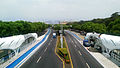
A bus lane in Tallinn separated from general road traffic to avoid congestion

Bus lanes may be located in different locations on a street, such as on the sides of a street near the curb, or down the center. They may be long, continuous networks, or short segments used to allow buses to bypass bottlenecks or reduce route complexity, such as in a contraflow bus lane.[12]

Bus lanes may be demarcated in several ways. Descriptive text such as "BUS LANE" may be marked prominently on the road surface, particularly at the beginning and end. Some cities use a diamond-shaped pavement marking to indicate an exclusive bus lane. The road surface may have a distinctive color, usually red, which has been shown to reduce prohibited vehicles from entering bus lanes.[13] Road signs may communicate when a bus lane is in effect.[14]

Bus lanes may also be physically separated from other traffic using bollards, curbs, or other raised elements.[15]

In some cities, such as The Hague in the Netherlands, buses are allowed to use reserved tram tracks, usually laid in the middle of the road and marked with the text "Lijnbus".

Bus gates

[edit]
A bus gate in the centre of Coventry, England

In the United Kingdom bus gates are common in towns and cities. A bus gate consists of a short section of road that only buses, cycles and sometimes other vehicles (typically taxis) can pass through. They lack most of the signage of bus lanes and have the words "BUS GATE" on the carriageway instead of "BUS LANE".[16]

Some highway authorities wanted to create short sections of bus-only route but couldn't meet the requirements for a bus lane, in particular the lead-in signage. Instead they used a "No Entry" sign with the plate "Except buses".[17] As they weren't allowed to use the thick white line which separates a bus lane from other traffic, they had to separate the entire section of bus-only road from the rest of the carriageway by traffic islands. Bus gates could also be used as "short cuts" at junctions, roundabouts or through one-way systems.[18]

To ensure that only buses could use the bus-only route, some authorities put a gate or a rising barrier across it,[19] similar to those used at toll plazas[20] and car parks. Until 2015 there was a rising barrier at the bus gate from Byward Street to Great Tower Street in the City of London.[21] Where a bus-only route was the full width of the road, physical cues would be used such as narrowing at the entry point, along with psychological ones such as coloured road surface.[22]

Rising barriers were superseded by rising bollards from 1995.[23][24] Now all physical barriers have been removed, to be replaced by CCTV enforcement.[25] Many motorists are fined for going through bus gates.[26] The Highway Code (2025 edition) does not show the "BUS GATE" road marking or explain what a bus gate is. The regulations only require traffic signs at the bus gates; highway authorities (which receive the income from fines) choose how much advance signage to install.[27]

Between 2005 and 2022, local authorities outside London could issue fines for contravening bus lanes but not for other moving traffic offences, such as contravening the signage for bus gates.[28] Some local authorities issued fines at bus gates alleging contravention of a bus lane. The status of bus gates was settled by two cases: the Oxford bus gate case R (Oxfordshire County Council) v The Bus Lane Adjudicator [2010] EWHC 954 (Admin) and the Nottingham bus gate case R (Nottingham City Council) v Bus Lane Adjudicator [2017] EWHC 430 (Admin). In the course of the Oxford case, the Department for Transport sent a letter to the court setting out its views about what bus gates are and the law relating to them; the judgment largely followed this.

Operation

[edit]

Bus lanes may have separate sets of dedicated traffic signals, to allow transit signal priority at intersections.[29]

Peak-only bus lanes are enforced only at certain times of the day, usually during rush hour, reverting to a general purpose or parking lane at other times. Peak-only bus lanes may be in effect only in the main direction of travel, such as towards a downtown during morning rush hour traffic, with the buses using general purpose lanes in the other direction.[30]

Entire streets can be designated as bus lanes (such as Oxford Street in London, Princes Street in Edinburgh, or Fulton Street in Downtown Brooklyn), allowing buses, taxis and delivery vehicles only, or a contra-flow bus lane can allow buses to travel in the opposite direction to other vehicles.[31]

Some locations allow bicyclists or taxis to use bus lanes, however where bus or bicycle volumes are high, mixed traffic operations may result in uncomfortable conditions or delays.[32] Certain other vehicles may also be permitted in bus lanes, such as taxis, high occupancy vehicles, motorcycles, or bicycles. Police, ambulance services and fire brigades can also use these lanes.[33]

In the Netherlands mixed bus/cycle lanes are uncommon. According to the Sustainable Safety guidelines they would violate the principle of homogeneity and put road users of very different masses and speed behaviour into the same lane, which is generally discouraged.[34]

Some locations have allowed access to bus lanes to electric cars and/or hybrid cars. Oslo removed one such exception in 2017 following protests due to congestion in bus lanes. The large number of electric vehicles on Norwegian roads slowed buses, defeating the purpose of bus lanes.[35]

Enforcement

[edit]
Traffic enforcers in Manila, Philippines, ticketing unauthorized vehicles using the EDSA Busway.

Bus lanes can become ineffective if weak enforcement allows use by unauthorized vehicles[36] or illegal parking. Center-running bus lanes avoid the problem of private vehicles blocking the lane by double parking for loading of passengers or cargo.

Evidence from the operation of urban arterials in Brisbane shows that a properly enforced bus lane, operating as designed without interference, can increase passenger throughput. In 2009 and 2010 traffic surveys showed that in Brisbane on a number of urban arterials with bus and transit lanes, noncompliance rates were approaching 90%. Following enhanced enforcement of the lanes, noncompliance rates dropped and overall efficiency of the bus and transit lanes improved with an up to 12% increase in total passenger throughput in the lane. Average bus journey times dropped, in some cases, by up to 19%.[37]

Some cities, including San Francisco and New York, employ automated camera enforcement, using either stationary cameras adjacent to the bus lane, or cameras on the front of buses to automatically issue citations to vehicles obstructing the bus lane.[38][39]

Effectiveness

[edit]

Bus lanes give priority to buses, cutting down on journey times where roads are congested with other traffic and increasing the reliability of buses. The introduction of bus lanes can significantly assist in the reduction of air pollution.[40]

Bus lanes marked with colored pavement have been shown to reduce intrusions into bus lanes, speeding travel time and increasing bus reliability.[41]

Major networks

[edit]

Some network lengths of bus lanes in major cities, listed by buses per km of bus lane):

City Country Population (million) Buses (#s) Population per bus Bus lanes (km) Buses per 1 km of bus lane
Helsinki Finland 0.6 470[42] 1,238 44[43] 11
Sydney Australia 4.3 1,900 2,260 90+[44] 21
Santiago Chile 6.5 4,600 1,400 200[45] 23
London England 8.7 8,600 1,010 304[46] 28
Singapore Singapore 5.5 3,775 1,200 200 (23 km are 24-hour restricted bus lane)[47] 29
Seoul South Korea 10.4 8,910 1,167 282[48] 32
Madrid Spain 7 2,022[49] 2,720 50[50] 40
Jakarta Indonesia 10.1 524 5,000 184.31[51] 30
Bogotá Colombia 6.7 1,080[52] 6,200 84[52] 13
São Paulo Brazil 10.9 14,900[53] 730 155[54] 96
Kunming People's Republic of China 5.7 ~ ~ 42[55]
Beijing People's Republic of China 19.6 26,000 754 294 88
Hong Kong Hong Kong 6.8 19,768[56] 666 22[57] 899
Vienna Austria 1.8 56[58]
New York United States 8.5 5,777 1,480 222.7[59] 26
Auckland New Zealand 1.6 1,360[60] 1,176 128 (by the end of 2017)[61] 11
Country Highway Bus lanes (km) Section
South Korea Gyeongbu Expressway 137.4 Hannam IC (Seoul) ~ Sintanjin IC (Daejeon)
Hong Kong Tuen Mun Road 8.5[62] So Kwun Wat ~ Sham Tseng

The busiest bus lane in the United States is the Lincoln Tunnel XBL (exclusive bus lane) along the Lincoln Tunnel Approach and Helix in Hudson County, New Jersey, which carries approximately 700 buses per hour during morning peak times an average of one bus every 5.1 seconds.[63] In contrast, the Cross-Harbour Tunnel in Hong Kong carries 14,500 buses per day,[64] or an average of about 605 an hour all day (not just peak times), but the bus lane must give way to all the other road users resulting in long queues of buses.[further explanation needed]

Criticism

[edit]

Some residents and observers criticize bus lane plans and implementations because they take space from other vehicles or require road widening,[65] which can require the use of eminent domain.[66]

[edit]

See also

[edit]

References

[edit]
[edit]
Revisions and contributorsEdit on WikipediaRead on Wikipedia
from Grokipedia
A bus lane is a traffic lane on a surface street reserved for the exclusive or preferential use of buses, typically positioned at the curb or in the median to minimize delays from mixed traffic flows. These lanes are marked with pavement striping, signage, and often colored surfacing to denote priority for public transit vehicles, allowing buses to bypass congestion and maintain schedules more reliably. Bus lanes emerged in the mid-20th century as urban areas grappled with rising automobile dependency and the need to prioritize higher-capacity transit modes for efficient road space utilization. Empirical analyses indicate that dedicated bus lanes enhance transit speeds and operational reliability by reducing interactions with private vehicles, thereby improving overall system efficiency and incentivizing shifts from single-occupancy cars to buses that transport more passengers per lane-mile. Configurations vary, including full-time exclusive lanes, time-limited shared access, or offset median designs that avoid parking conflicts, with studies showing benefits in travel time savings when implemented with adequate enforcement. Despite these advantages, bus lanes face challenges, as private vehicles frequently encroach, undermining benefits unless supported by consistent monitoring via cameras or patrols, which has proven effective in jurisdictions applying fines for violations. Poor compliance can lead to negligible net gains in bus performance or even localized congestion increases for non-transit users, highlighting the causal importance of strict adherence to realize capacity optimization over reallocating space without behavioral .

Definition and Purpose

Core Definition

A bus lane is a designated lane on a surface street or roadway reserved exclusively or primarily for the use of buses, typically positioned at the or in the to enable transit vehicles to bypass general . These lanes are enforced through , pavement markings, and sometimes physical barriers, with restrictions varying by —such as full-time exclusivity for buses only or time-limited access during peak hours to accommodate other vehicles like cyclists or services. Core characteristics include separation from mixed-traffic lanes to prioritize bus movement, often integrating with bus stops for efficient boarding and alighting, though access for right-turning vehicles or loading may be permitted under specific conditions to balance operational needs. In engineering terms, bus lanes function as a form of reserved within transportation networks, distinct from general-purpose lanes by their dedication to high-capacity public transit to enhance route reliability.

Stated Objectives and Rationales

Proponents of bus lanes, including transportation authorities, state that the primary objective is to enhance the speed and reliability of bus services by minimizing delays from general . This is achieved by reserving dedicated lane space for buses, allowing them to bypass bottlenecks that slow mixed-traffic flow, particularly during peak hours. For instance, agencies like the emphasize that properly designed bus lanes can reduce bus travel times, provided enforcement and infrastructure support integration with surrounding traffic signals. Local implementations, such as in , aim to maintain efficient schedules in high-traffic corridors by prioritizing buses over private vehicles. A secondary rationale involves promoting public transit usage to achieve broader transport system efficiency and equity. Bus lanes are intended to make bus travel more competitive with private automobiles, potentially shifting commuters from cars to higher-capacity buses and thereby reducing overall vehicle miles traveled per passenger. The Victoria Transport Policy Institute's framework evaluates bus lanes as warranted when they improve economic efficiency—through time savings for high-occupancy vehicles—and social equity by serving low-income and transit-dependent populations who rely on buses more than car owners. In Minneapolis, for example, dedicated lanes are justified to boost transit frequency and reliability on congested routes, encouraging modal shifts that alleviate pressure on general lanes. Safety improvements are also frequently cited as a goal, with bus lanes designed to lower collision risks by segregating high-speed buses from weaving private vehicles and reducing overall street speeds. Boston's transportation department states that such lanes curb speeding and crashes while enabling safer boarding configurations like in-lane stops, contributing to more livable urban environments. Similarly, reports claim bus priority lanes can increase speeds by at least 15% alongside safety gains, based on pre-implementation surveys and operational data. In , enforcement of bus lanes is rationalized as essential for sustaining these speed and mobility benefits, ensuring equitable access to opportunities for residents without private vehicles.

Historical Development

Origins and Early Experiments

The earliest known designation of a bus lane occurred in , , in 1939, marking the first street reserved for bus priority amid rising automobile use that impeded public transit efficiency. This initial measure reflected practical responses to urban congestion, where empirical observations showed buses losing time to slower private vehicles merging or stopping, prompting local authorities to allocate curb space exclusively for transit to maintain schedules and speeds. By 1956, Nashville, Tennessee, advanced bus priority with the first concurrent-flow lanes, installing them along a congested corridor to allow buses to bypass general traffic without full segregation, thereby testing the causal link between lane reservation and reduced delay times. Later that year, Chicago implemented a central bus lane on Washington Street, extending the experimental approach to downtown arterials and quantifying benefits such as shorter dwell times at stops and higher average speeds for transit vehicles compared to mixed-flow conditions. These U.S. pilots prioritized verifiable metrics like headway adherence and passenger throughput, driven by post-World War II ridership pressures rather than ideological mandates. Early European experiments followed in the early , with Germany's initial bus lanes established to address similar bottlenecks in cities where rail alternatives were limited, focusing on with-flow reservations to minimize disruption to existing patterns while isolating buses from interference. Outcomes from these trials, including New York City's 1963 curbside implementations, demonstrated modest reliability gains but highlighted enforcement challenges, as non-compliance by private vehicles often eroded priority effects without dedicated policing. Overall, pre-1970 efforts emphasized incremental testing over widespread adoption, grounded in data showing buses' higher occupancy justified spatial allocation for societal throughput, though scalability depended on local volumes and political will.

Mid-20th Century Expansion

In the United States, bus lane expansion during the 1950s and 1960s proceeded modestly amid a national emphasis on automobile infrastructure, including the established in 1956, which prioritized highway construction over urban transit enhancements. Following the inaugural designated bus lane on Chicago's Ashland Avenue in 1939, discussions for similar measures surfaced in by the mid-1950s, yet implementation lagged due to competing investments in roadways and the shift away from streetcars toward buses without dedicated priority. By the late 1960s, pioneering projects emerged, such as the 1968 in , the nation's first downtown transit mall incorporating bus priority elements, and the 1969 Shirley Highway transitway in Washington, D.C., which provided reversible exclusive bus lanes during peak hours, carrying up to 37,000 passengers daily and demonstrating potential speed gains of 20-30% over mixed traffic. In , the post-World War II surge in private vehicle ownership prompted earlier and more systematic bus lane adoption starting in the early , aimed at preserving bus reliability in densifying cities. initiated curbside bus lanes in the , with the first documented on to bypass congestion, reflecting a policy to integrate bus priority into arterial streets without full segregation. The experimented with bus lanes from the early , including a trial on Berkeley Street in 1962, evolving into permanent installations like London's lane in 1968, which improved bus journey times by an estimated 10-15% despite initial enforcement challenges. Germany marked a key milestone in 1963 with the introduction of Europe's first formal bus lanes in cities like Rüsselsheim, followed by innovations such as dedicated lanes in by the late , which were credited with enhancing bus speeds in mixed-traffic environments. These European efforts, often curbside or contraflow designs, contrasted with U.S. approaches by focusing on incremental urban retrofits rather than new-build expressways, yielding empirical benefits like reduced bus but facing resistance from motorists over lost capacity. Overall, mid-century expansion laid groundwork for later networks, though and compliance issues persisted, with studies noting variable adherence rates of 60-80% without dedicated policing.

Late 20th and Early 21st Century Adoption

The late 20th century marked a pivotal shift in bus lane adoption through the pioneering (RIT) in , , launched in 1974 as the world's first (BRT) system. This network utilized exclusive central bus lanes on a trinary configuration, accommodating bi-articulated buses that carried up to 270 passengers each, achieving capacities rivaling metro systems at a fraction of the cost. By integrating feeder routes with high-capacity trunk lines, the system transported over 2 million passengers daily by the 1990s, demonstrating scalable urban mobility in a rapidly growing city of 1.3 million. Curitiba's model spurred adoption across Latin America, where dedicated bus lanes addressed congestion in motorizing cities without the fiscal burden of rail infrastructure. In the 1980s and 1990s, similar systems emerged in São Paulo and Porto Alegre, Brazil, emphasizing segregated lanes, off-board fare collection, and priority signaling to minimize delays. Globally, European cities like Bologna implemented bus priority measures during this period as part of "traffic revolutions," converting arterial streets to bus-only lanes amid oil crises and environmental pressures, though networks remained fragmented compared to Latin American counterparts. In the United States, adoption was sporadic; the Shirley Highway experiment near Washington, D.C., introduced reversible bus lanes in 1970, expanding to multi-lane facilities by the mid-1970s, but enthusiasm waned as focus shifted to high-occupancy vehicle (HOV) lanes amid highway expansions. Early 21st-century adoption accelerated worldwide, with in , , operational from December 2000, replicating Curitiba's design across 84 km of exclusive corridors and serving 2.4 million daily passengers by 2010 through articulated buses and elevated stations. This era saw BRT systems proliferate from 25 cities in 2000 to nearly 200 by the 2010s, particularly in and , adding over 1,800 km of dedicated lanes between 2004 and 2014 due to their —often under $10 million per km—versus rail's $50-200 million. In developed regions, incremental expansions occurred, such as New York City's Select Bus Service launching in 2008 with curb bus lanes, but comprehensive networks lagged behind emerging markets where bus lanes filled gaps left by insufficient rail investment.

Design and Variants

Physical Configurations

Curbside bus lanes are positioned directly adjacent to the , providing straightforward boarding and alighting from the street edge. They are typically 10 to 11 feet wide and delineated by pavement markings, such as solid white lines, to reserve space exclusively for buses during designated hours or continuously. This configuration minimizes infrastructure costs but exposes buses to conflicts with , loading/unloading, and right-turning vehicles. Offset bus lanes sit one general lane inward from the , often with or bike facilities in the outermost space, reducing interference from curb activities. These lanes, commonly 10 feet wide, use similar markings for demarcation and are suited to streets where eliminating curbside would otherwise disrupt adjacent uses. The offset design improves bus flow by avoiding stops for turning but requires wider roadways to accommodate the extra lane without narrowing others. Median bus lanes occupy the roadway centerline, separated from flanking general traffic by physical barriers like raised curbs or flexible posts to prevent encroachment and enable higher operating speeds. Platforms are often placed adjacent to the lane with doors on the bus's left side for boarding, necessitating median openings or signalized crossings for access. This setup, common in systems, supports two-way operation in a single pair of lanes but demands broader streets and can complicate left turns for other vehicles. Contraflow bus lanes run counter to adjacent traffic direction, typically on one-way streets or multi-lane arterials, allowing bidirectional bus service without doubling . They are physically isolated via barriers or bold markings and rely on to direct buses into the opposing flow while prohibiting general vehicles. This configuration maximizes capacity on constrained alignments but heightens collision risks, mitigated by offset positioning or dedicated signals at intersections. Across configurations, separation methods range from painted lines for low-cost interim setups to permanent barriers—such as curbs, bollards, or guide rails—for exclusive rights-of-way in high-demand corridors, enhancing reliability by deterring violations. Lane widths generally adhere to 10-12 feet for maneuverability, with adjustments for urban density or bus sizes.

Operational Variants Including Bus Gates

Operational variants of bus lanes encompass configurations defined by directional flow relative to general traffic and temporal restrictions on usage. With-flow bus lanes operate parallel to adjacent general traffic lanes, enabling buses to maintain speed without overtaking conflicts while benefiting from priority measures such as signage and pavement markings. These lanes are prevalent in urban settings to minimize disruption to overall traffic patterns. Contraflow bus lanes, conversely, permit buses to travel in the opposite direction of general traffic, typically on one-way streets to provide direct routing and avoid circuitous detours. This variant is applied strategically for efficient connections rather than continuous corridors, with physical separation like barriers or bollards to prevent incursions by non-eligible vehicles. An example includes the implementation in London, Ontario, where contraflow lanes for bus rapid transit were introduced in April 2025 to facilitate bidirectional bus movement amid one-way traffic. Many bus lanes incorporate time-based operations, restricting access to buses during peak hours—such as 7-10 a.m. and 4-7 p.m.—while permitting general or off-peak to balance transit priority with overall capacity. Full-time bus lanes, enforced 24 hours daily, are deployed on high-frequency routes where consistent priority is essential, often marked with red paint and "Bus Only" for visibility. Enforcement relies on cameras, , and occasional physical barriers, with allowances for cycles, , or vehicles varying by . Bus gates represent a discrete operational variant, consisting of short road segments—often at junctions or bottlenecks—closed to general through traffic but accessible to buses and select authorized vehicles. These gates function as shortcuts for buses, bypassing congested areas inaccessible to private vehicles, and are typically enforced continuously without time limits in implementations like , . Signage and (ANPR) cameras ensure compliance, with buses proceeding unimpeded while non-compliant vehicles face fines. In the , bus gates are integral to bus priority schemes, promoting direct transit paths; for instance, they are defined as brief bus-only streets under traffic regulations. This variant enhances bus reliability by eliminating intersection delays for transit, though it requires precise vehicle detection to avoid erroneous penalties for permitted users like cycles or service vehicles.

Implementation and Operation

Planning and Infrastructure Requirements

Planning bus lanes requires assessing corridors with sufficient bus service frequency—typically at least 10-20 buses per hour per direction—and high ridership potential to offset reduced general capacity, as converting a lane can decrease overall roadway throughput by 20-30% without corresponding transit gains. Feasibility studies, such as those evaluating existing bus volumes against peak-hour , inform to prioritize routes where buses are delayed by mixed , ensuring net benefits like faster transit times justify infrastructure costs estimated at 50,00050,000-200,000 per mile for basic markings and signs versus millions for physically separated lanes. Local approvals and coordination with utilities precede implementation, with analyses confirming geometric feasibility, including minimum radii of 15-20 meters to accommodate bus turning dynamics without encroachment. Core infrastructure for bus lanes centers on delineation via pavement markings and signage compliant with standards like the U.S. Manual on Uniform Traffic Control Devices (MUTCD), where solid white or yellow lines, at least 6 inches (150 mm) wide, separate the lane, supplemented by legends such as "BUS LANE" repeated every 100-200 meters. Regulatory signs, including the R3-10 "Bus Only" plaque, must be posted at lane entry points and spaced 800-1,000 feet (244-305 meters) apart, with advance 500 feet upstream to alert drivers. Lane widths standardly range from 10-12 feet (3.0-3.7 meters) to enable safe bus maneuvering, narrower at 9.8 feet (3 meters) on curves to maintain stability, while overhead clearance of 13.5-14.5 feet (4.1-4.4 meters) accommodates double-deck or articulated vehicles. Physical separation enhances exclusivity but escalates requirements; curb extensions or flexible posts provide low-cost barriers, whereas raised medians or bollards—spaced 1-2 meters apart—prevent illegal access, demanding subsurface drainage adjustments to avoid pooling under bus tires. Bus stops integrate via in-lane pullouts or far-side bulbs extending 40-60 feet (12-18 meters) to minimize dwell conflicts, with and shelters where volumes exceed 50 boardings per hour. Signal prioritization infrastructure, like detector loops or transponders, may be added for high-frequency routes, activating green extensions of 4-10 seconds per bus to reduce stops by up to 20%. Maintenance provisions, including durable markings lasting 5-7 years under traffic, ensure longevity, with periodic resurfacing to counteract wear from enforcement vehicles.

Daily Operations and Integration with Traffic

Bus lanes typically function during designated hours, often peak periods such as 6-10 a.m. and 3-7 p.m. on weekdays, though some operate continuously 24 hours a day to accommodate all-day or late-night bus services. and pavement markings, such as "Bus Only" text or , delineate these lanes and specify restrictions, ensuring buses can maintain speed and reliability by avoiding merging with general traffic flows. Buses enter and exit dedicated lanes at merge points designed with acceleration/deceleration zones to minimize disruption, often supported by transit signal priority systems that extend green phases for approaching buses by 4-10 seconds. Integration with general traffic involves selective permissions for non-bus users to prevent total isolation of the lane while preserving priority. Curbside bus lanes commonly allow right-turning vehicles, cyclists, and emergency access, with general traffic permitted brief incursions for loading zones or U-turns under strict time limits (e.g., under 3 minutes in some jurisdictions). In offset or configurations, buses may weave across lanes at intersections via dedicated phases, enabling them to bypass queues while general vehicles proceed on adjacent lanes. Operational variants like intermittent priority lanes use dynamic and sensors to temporarily open lanes to general traffic during low bus demand, balancing transit benefits against overall flow. Daily monitoring ensures compliance through a combination of physical barriers, where feasible, and active oversight. Police patrols and automated cameras detect violations such as or driving in the lane, issuing fines ranging from $50 to $293 depending on the locale, with systems like New York City's bus lane photo enforcement capturing over 100,000 violations annually to deter encroachment. This enforcement maintains lane integrity, as unauthorized use can reduce bus speeds by 20-30% in mixed-flow scenarios, though it requires from bus location trackers to adjust for variable traffic conditions. In contraflow setups, buses operate against general traffic direction on one-way lanes, integrating via signal overrides at crossings to avoid head-on conflicts.

Enforcement Mechanisms

Traditional and Technological Methods

Traditional enforcement of bus lanes relies on physical , pavement markings, and manual intervention enforcement officers. Road markings, such as solid white or yellow lines often accompanied by the word "BUS" painted on the pavement, delineate the lane and prohibit unauthorized use, while overhead or roadside signs specify operational hours and eligible vehicles like buses, , or cycles. Police officers patrol these areas, observing violations such as private vehicles entering or parking in the lane, and issue on-site citations with fines typically ranging from $100 to $300 depending on the . This approach, common since the mid-20th century introduction of bus lanes, demands dedicated personnel and is limited by availability, often resulting in sporadic coverage and lower deterrence during off-peak or unmanned hours. Technological methods employ automated systems, primarily fixed or mobile cameras integrated with (ANPR) technology, to monitor compliance continuously. These systems capture license plates of offending vehicles, cross-reference them against databases, and generate mailed citations without officer presence, enabling 24/7 enforcement. In , bus lane camera enforcement expanded in August 2020 across multiple routes, issuing over 100,000 violations in the first year and reducing blocking incidents by up to 50% on equipped corridors. Similarly, a 2018 trial in Hull, , using ANPR cameras detected more than 10,000 illegal uses in two weeks on two major roads, demonstrating the method's efficiency in high-volume detection. Recent advancements incorporate AI-enhanced software for real-time violation analysis, often mounted on buses or poles, distinguishing authorized from unauthorized vehicles via and . In , a 2025 pilot expanded automated bus lane on CTA routes, issuing warnings and fines to parked violators, which improved bus speeds by 10-15% in tested areas. Metro's 2025 ticketing expansion on routes like 910 and 950 uses similar camera systems, with initial fines at $293 per violation, prioritizing detection of parking rather than fleeting encroachments to minimize false positives. These technologies reduce costs compared to traditional policing—estimated at 70-80% lower per citation in peer-reviewed assessments—while increasing compliance rates through consistent application, though they require upfront investment and periodic calibration to avoid errors from weather or signage occlusion.

Compliance Challenges and Costs

Compliance with bus lane restrictions remains a significant challenge, as unauthorized vehicles frequently encroach on dedicated lanes, undermining their operational benefits. Empirical studies indicate that violation rates can be high without consistent ; for instance, field observations in , , revealed substantial illegal usage that increased bus travel times and reduced reliability. Perceptions of lax further exacerbate this issue, as drivers exploit perceived low risk of penalties, leading to diminished lane effectiveness. Enforcement mechanisms, such as police patrols, prove resource-intensive and inconsistent, prompting reliance on automated camera systems. However, these technologies introduce their own hurdles, including false positives that result in erroneous tickets and subsequent appeals, as observed in New York City's MTA program where thousands of mistaken parking violations were issued. Implementation challenges also arise from inadequate signage, temporary lane markings, and signal timing issues, which contributed to non-compliance in Boston's Summer Street pilot, yielding no measurable benefits for bus speeds. The costs of achieving compliance are multifaceted, encompassing capital investments in surveillance infrastructure and ongoing operational expenses. Automated bus-mounted camera systems, for example, require initial outlays such as the $6.2 million expended by New York City's MTA for a pilot program. While fines—ranging from $25 to $125 in and $50 to $250 in New York—generate revenue, they often escalate for repeat offenders and may not fully offset administrative burdens like ticket adjudication and public backlash. Automated enforcement has been found more cost-effective than traditional policing, yet sustained compliance demands continuous investment in upgrades and legal frameworks to address violations effectively.

Empirical Assessment of Effectiveness

Impacts on Bus Performance

Dedicated bus lanes enable transit vehicles to bypass general traffic congestion, thereby improving operational speeds and reducing travel times compared to mixed-flow conditions. Empirical analyses indicate that such lanes can achieve average travel time savings of 9.3% across corridors, with some segments experiencing up to 31.7% reductions during peak periods. In a 2023 pilot evaluation in Philadelphia, buses on JFK Boulevard operated 15% faster than baseline conditions from August 2021, while those on Market Street saw a 7% speed increase, equivalent to approximately 0.5 mph during peak hours. Reliability metrics, including on-time performance and delay variability, also benefit from bus lane implementation. Bus-on-shoulder operations in the Minneapolis-St. Paul region, introduced since 1991, elevated on-time performance from 68% to 95% by mid-2013, facilitating doubled ridership. High-resolution evaluations using confirm that bus lanes reduce both average delays and their variability, though cross-traffic interactions at intersections can partially offset gains if not mitigated. In , , causal effect studies post-implementation demonstrated significant enhancements in bus operational speed and schedule adherence along transit corridors. These improvements stem from minimized interactions with private vehicles, allowing buses to maintain consistent headways and avoid stop-and-go patterns inherent in shared lanes. However, realized benefits depend on factors such as compliance—ranging from 81% to 92% in monitored urban pilots—and continuity, with fragmented or peak-only lanes yielding lesser gains, as observed in cases where operator-reported impediments like illegal persisted. In congested settings like , , bus lanes have doubled or tripled speeds relative to general flows, underscoring potential for substantial where demand justifies dedication.

Effects on General Traffic Flow and Congestion

Dedicated bus lanes reduce the available roadway capacity for general-purpose by converting mixed-traffic into exclusive bus space, which can increase delays and congestion for automobiles in the remaining , particularly when bus volumes are low or rates do not sufficiently offset the lost capacity. A typical arterial accommodates up to 800 per hour; reallocating it to buses, which may serve fewer equivalent vehicle equivalents if underutilized, elevates queue lengths and travel times for non-bus during peak periods. Empirical analyses, such as those from arterial operations, indicate that static bus often exacerbate general interruptions at intersections due to lane merging and reduced throughput, with delay increases ranging from 10-20% in low-bus-frequency scenarios. Studies in urban settings reveal mixed outcomes depending on implementation details. In , post-installation evaluations of dedicated bus lanes at signalized intersections showed overall delay reductions for both buses and private vehicles in select corridors, attributed to improved bus progression and spillover signal timing adjustments that alleviated queuing for general traffic. Conversely, agent-based modeling of Sioux Falls' network found that dedicated bus lanes initially heightened congestion for car users by constraining lane availability, though modal shifts toward buses mitigated some effects over time in high-density simulations. A comprehensive review of transit investments concluded that bus priority measures like dedicated lanes do not produce substantial aggregate congestion relief, as and limited mode substitution often offset capacity reallocations. Dynamic or intermittent bus lanes, which revert to general use during off-peak hours, demonstrate potential to minimize adverse impacts on car flow compared to permanent reservations. Simulations of real-world corridors indicate that such adaptive schemes maintain bus reliability without proportionally increasing overall delays, as they preserve flexibility for fluctuating demands. In , a dedicated bus lane reduced bus travel times by approximately 18%, but general rose in adjacent lanes unless accompanied by complementary to prevent spillover violations. Factors influencing net effects include bus frequency (optimal at 5-10 minutes for capacity equivalence), to facilitate safe merges, and rigor; poor compliance can amplify general disruptions through illegal encroachments. Overall, while bus lanes prioritize high-occupancy transit to enhance person-moving efficiency, their congestion impacts on general hinge on achieving sufficient ridership volumes exceeding 50-60 passengers per bus to justify the space .

Safety, Environmental, and Economic Outcomes

Empirical evaluations of bus lane implementations have generally shown improvements in road safety, particularly for severe incidents, though results vary by design and location. In Bogotá's BRT system, serious crashes declined by 48-60% on key corridors compared to the city average, attributed to segregated lanes reducing bus-general interactions. Similarly, Guadalajara's Macrobús achieved a 50% reduction in monthly crashes and 69% in severe crashes post-implementation. Melbourne's bus priority measures yielded a 14% overall crash reduction. Bus travel itself appears safer than car travel on urban arterials, with injury risk ratios of 3.7 for occupants and up to 5.3 for cyclists interacting with buses versus cars, based on route data spanning over 10 years. However, increases in crashes have been observed near stations, in mixed- segments, or with counterflow designs, and Delhi's BRT saw traffic deaths double, highlighting risks from poor pedestrian management or inadequate enforcement. Bus lanes contribute to environmental benefits primarily through accelerated bus operations, reduced idling, and mode shifts from private vehicles, leading to lower emissions. Upgrading BRT routes to exclusive lanes can reduce annual CO₂-equivalent emissions by 1.3-1.7 million pounds per route in U.S. contexts, driven largely by displaced car trips. Evaluations in urban settings report average CO emissions cuts equivalent to 21% of projected total reductions post-implementation, with and particulate matter from buses decreasing 5-12%. These gains assume effective enforcement and sufficient ridership; intermittent or poorly utilized lanes may yield negligible air quality improvements due to persistent violations. integration amplifies reductions, potentially doubling benefits in electrified fleets. Economic outcomes hinge on ridership levels, costs, and induced development, with cost-benefit ratios often positive in high-demand corridors but marginal or negative elsewhere. U.S. BRT systems with dedicated lanes have spurred , including higher property values and commercial activity along routes, as peer-reviewed analyses of existing lines confirm land-use intensification benefits. Converting a mixed-traffic lane to bus use entails costs (e.g., , barriers) and expenses, potentially offset by time savings for transit users but increasing congestion delays for automobiles, which public transit expansions rarely mitigate substantially. Frameworks for warranting bus lanes emphasize thresholds, such as bus volumes exceeding 10-15 per hour, below which capacity reductions harm overall throughput without proportional benefits. Subsidies and complementary enhance viability, but standalone lanes in low-utilization areas may impose net societal costs via displaced private vehicle productivity.

Criticisms and Unintended Consequences

Economic Burdens on Non-Transit Users

Dedicated bus lanes allocate roadway space exclusively for transit vehicles, reducing the capacity available for private automobiles and other non-transit modes, which can impose direct economic costs through prolonged times and associated opportunity costs. A standard arterial accommodates up to 800 vehicles per hour; if fewer than this number of drivers shift to buses, the remaining general lanes experience heightened congestion, leading to delays that persist until sufficient mode shifts occur, a process that may take years or fail to materialize adequately. These delays translate into quantifiable burdens, such as incremental time losses valued at standard rates for the (VTT), often estimated at $15–25 per passenger-hour in urban settings, compounded by increased consumption and reduced for commuters reliant on personal vehicles. Empirical simulations in heterogeneous environments, such as those prevalent in developing urban areas, demonstrate that while bus times decrease by approximately 37.6%, non-public vehicles face elevated delays due to compressed flow in residual lanes, exacerbating bottlenecks at intersections and merges. For instance, the removal of a lane for bus priority can result in significant congestion spikes for general , with studies indicating potential time increases of 20–50% under peak loads without compensatory , directly raising operational costs for freight and personal . Such capacity reductions also elevate expenses, as non-compliance by general attempting to access underutilized bus lanes incurs fines and administrative overhead, indirectly burdening taxpayers and drivers through higher public expenditures without proportional benefits to road users. In cases where bus occupancy remains low—often below 30 passengers per vehicle during peaks—the net economic transfer from non-transit users to a minority of riders becomes inefficient, as the time penalties imposed on thousands of car occupants (e.g., 2 minutes of delay affecting 2,000 passengers) outweigh modest bus speed gains unless ridership surges substantially. This dynamic underscores a causal tradeoff: prioritizing low-volume transit lanes diminishes throughput for higher-volume general traffic, yielding regressive costs that disproportionately affect suburban commuters, delivery services, and emergency responders dependent on reliable auto access, with limited empirical evidence of long-term equilibrium restoring pre-implementation efficiency.

Congestion Displacement and Capacity Reduction

Dedicated bus lanes reduce the overall vehicular capacity of a roadway by reserving space exclusively for buses, leaving fewer for general and potentially intensifying congestion in the remaining general-purpose lanes or diverting vehicles to parallel routes. This displacement occurs because drivers seek alternative paths to avoid bottlenecks created by the lane conversion, spreading delays across the network without reducing total vehicle miles traveled. Empirical simulations of urban arterials indicate that fixed dedicated lanes lower total throughput for non-bus , exacerbating queues at intersections and upstream segments unless offset by high bus frequencies and . In , analysis of dedicated bus lane implementations from 2015 to 2019 showed an 18% reduction in bus travel times but corresponding increases in car delays due to the 10-20% drop in general capacity on treated corridors, with spillover effects elevating congestion on adjacent streets by up to 15% as volumes shifted. Similar patterns emerged in agent-based models of Sioux Falls, where converting a to bus-only use improved modal split toward transit but raised average vehicle delays by 12-25% network-wide, as displaced car trips overloaded parallel arterials without proportional ridership gains. These outcomes highlight that capacity reductions are most pronounced in corridors with moderate , where bus person throughput—often averaging 20-40 passengers per vehicle—fails to exceed the pre-conversion mixed-traffic equivalent of 1,200-1,800 persons per hour per from cars at 1.2-1.5 occupants each. Critics, including transportation economists, argue that such reallocation induces network-wide inefficiency unless bus utilization consistently surpasses 50-60 passengers per trip, a threshold rarely met outside peak hours or high-density routes; otherwise, the net effect is diminished total mobility and higher emissions from idling on diverted paths. For instance, post-implementation evaluations in lower-ridership urban settings have documented 10-30% rises in parallel road volumes following bus lane introductions, underscoring the causal link between localized capacity cuts and broader congestion migration. Dynamic or intermittent bus lane variants, which revert to general use during off-peak periods, have been proposed to mitigate these losses, though adoption remains limited by enforcement complexities.

Equity Concerns and Low Utilization Rates

Bus lanes have faced criticism for low utilization rates, particularly in corridors with infrequent bus service, where the dedicated space remains underused for significant periods, contributing to perceptions of inefficiency in road space allocation. For instance, exclusive bus lanes (EBLs) are often justified only when carrying over 800 peak-hour passengers—equivalent to about 20 buses—to exceed the capacity of a general lane handling up to 800 vehicles per hour; below this threshold, the lanes fail to provide net capacity gains and appear predominantly empty, exacerbating congestion in adjacent lanes. Empirical analyses, such as those examining dynamic bus lane alternatives, highlight that static dedicated lanes can underperform when bus headways exceed 10-15 minutes, as seen in various urban arterials where the lane's temporal occupancy drops below 10%, while general experiences spillover delays. This underutilization stems from causal factors like suboptimal bus scheduling and low ridership, leading to opportunity costs in foregone general throughput without commensurate transit benefits. Equity concerns arise because bus lanes prioritize space for transit users—disproportionately low-income and non-car owners—but impose on the broader population, including low-income households reliant on automobiles for essential travel such as to jobs without nearby transit or transporting families. While proponents argue for vertical equity by aiding disadvantaged transit riders, evidence indicates that in low-demand corridors, the capacity reduction (typically 20-25% of roadway width) displaces general traffic volumes exceeding bus passenger loads, resulting in net welfare losses for car-dependent users who fund via taxes and fees at rates comparable to transit subsidies. Studies on transportation equity note that 20-40% of low-income U.S. households face affordability burdens or lack alternatives, amplifying the regressive impact when bus lanes induce 10-15% speed reductions in mixed traffic without inducing mode shifts. Furthermore, in regions with transit mode shares below 5%, such as many suburban arterials, the benefits accrue to a minority while costs—longer travel times and induced emissions from idling—are borne diffusely, raising questions about horizontal equity in absent high bus volumes. These dynamics underscore the need for demand thresholds, as bus lanes unwarranted below critical ridership levels (e.g., 1,800 passengers per hour on highways) can inadvertently exacerbate access disparities for non-transit users.

Alternatives and Complementary Strategies

Dynamic and Adaptive Lane Management

Dynamic and adaptive lane management refers to systems that temporarily allocate or prioritize road lanes for buses based on real-time traffic conditions, bus locations, and demand, rather than permanent exclusivity. These approaches, such as dynamic bus lanes (DBL), activate bus priority intermittently—often using vehicle-to-infrastructure (V2I) communication, sensors, or AI algorithms—allowing general traffic to use the lane when buses are absent, thereby preserving overall roadway capacity. Simulations of DBL implementations demonstrate improved bus performance without the capacity reductions associated with fixed exclusive bus lanes. In a 2025 study modeling a real-world corridor, DBL maintained high bus (over 90% on-time arrivals) even under elevated volumes, reducing bus travel time variability by up to 25% compared to baseline scenarios, as buses gained priority only in upstream segments approaching stops or intersections. This contrasts with static lanes, where general loses access continuously; DBL activation, triggered by bus detection within 500-1000 meters, minimizes disruption, though total system-wide travel time increased by 2-5% due to brief clearances. Adaptive variants, including intermittent dynamic bus lanes (IDBL) and multi-function lanes, leverage connected vehicle data for finer control. IDBL employs AI to predict bus needs and enforce short-term exclusivity (e.g., 20-60 seconds per bus), enhancing reliability in mixed ; one IEEE showed 15-20% reductions in bus delays during peak hours in urban simulations. Dynamic priority strategies, tested in heterogeneous environments with connected autonomous vehicles (CAVs), outperform exclusive lanes by dynamically shifting access, yielding 10-15% better overall corridor throughput in physics-based models. Presignal systems for dynamic sharing before intersections further optimize this by holding general vehicles to clear space for approaching buses, as proposed in control models reducing intersection delays by 12-18%. Real-world applications remain limited, primarily in pilot or pre-implementation stages, due to needs for upgrades like roadside units and enforcement cameras. A 2014 Swedish feasibility study outlined technical viability for DBL via system control units integrated with signals, estimating 10-20% bus speed gains without net capacity loss. Comparative analyses indicate these methods address fixed lane criticisms by adapting to low bus utilization rates (often below 20% in off-peak), potentially increasing effective to 40-60% through . However, effectiveness hinges on accurate detection and compliance; simulations note that without 90%+ , benefits erode due to incursions.

Non-Lane-Based Transit Improvements

Transit signal priority (TSP) systems adjust traffic signals in real-time to favor approaching buses, extending green phases or shortening opposing ones without dedicated lanes. Empirical studies demonstrate TSP reduces bus travel times by up to 8% and vehicle delays by up to 13.3% in corridors with moderate traffic volumes. In , TSP implementation on routes yielded measurable improvements in on-time performance and passenger throughput, though benefits diminish in high-congestion scenarios where signal overrides cannot fully compensate for upstream delays. Safety analyses indicate TSP correlates with reduced bus-related crashes by minimizing stops and mid-block maneuvers, with one before-after study showing incident reductions across multiple crash types. Off-board fare collection, where passengers pay before boarding via validators or apps, significantly cuts dwell times at stops by eliminating onboard transactions. This approach halves per-passenger boarding time compared to front-door systems, enabling faster door operations and higher throughput on high-demand routes. In systems like those evaluated by the , upgrading to off-board methods reduced total travel times by 10-20% on select lines, primarily through dwell savings of 5-10 seconds per stop. However, effectiveness depends on enforcement to curb evasion, as unchecked non-payment can erode revenue without proportional speed gains. Operational tactics, such as headway-based holding and real-time speed advisory algorithms, address —where delayed buses catch up to predecessors, causing irregular service—without changes. Holding the lead bus briefly at key points maintains even spacing, reducing average passenger waiting times by 15-25% in models calibrated to urban routes. frameworks applied to bus fleets have shown potential to mitigate bunching by dynamically adjusting speeds, improving adherence to schedules by up to 30% under variable demand. These methods prioritize supply-side reliability over demand inducement, though they require advanced vehicle-to- communication for optimal results. Increasing service independent of lanes enhances perceived reliability and ridership by shortening wait times, often outperforming coverage expansions in attracting discretionary users. Routes with headways under 10 minutes during peaks see 20-50% higher than infrequent services, as passengers value predictability over extensive geographic spread. In analyses, frequency investments yield greater mode-shift benefits than equivalent spending on partial lane dedications, particularly in dense networks where bunching is controlled via dispatch adjustments. Empirical data from U.S. cities indicate that combining high with TSP and off-board payments achieves 15-30% speed-ups without capacity for general . These strategies complement bus lanes in hybrid systems but stand alone in space-constrained environments, emphasizing scheduling discipline over physical segregation.

Notable Implementations and Case Studies

Pioneering and Major Urban Networks

The earliest documented bus lane appeared in in 1940, marking the initial effort to prioritize buses over general traffic in urban settings. In 1956, Nashville implemented the first concurrent-flow bus priority lanes during peak hours to address congestion in downtown areas, converting right-hand lanes exclusively for buses. These early U.S. initiatives laid groundwork for dedicated , though adoption remained limited until later decades. Europe saw its first bus lanes in the early 1960s, with establishing one on to expedite bus movement amid growing automobile use. By 1963, introduced bus priority measures, influencing subsequent German cities. , , pioneered modern (BRT) with dedicated lanes in 1974 through the (RIT), featuring exclusive corridors, tube-shaped stations, and high-capacity bi-articulated buses that carried up to 2.3 million passengers daily at peak by the 1980s. Among major urban networks, London's system spans approximately 285 kilometers (177 miles) of bus priority infrastructure as of the late , integrated with congestion charging to enhance bus speeds averaging 10-15 km/h in central areas. operates 262 kilometers (163 miles) of bus lanes, primarily curbside, supporting over 800,000 daily riders but facing challenges from vehicle encroachment that reduces effective speeds to 8-9 mph on key routes. Bogotá's , launched in 2000, utilizes 84 kilometers of segregated , transporting 2.4 million passengers daily and serving as a model for Latin American cities despite overcrowding issues exceeding design capacity by 20-30%. Other significant implementations include Jakarta's TransJakarta, the world's largest BRT network with 251 kilometers of corridors operational by 2023, handling 1 million daily trips via median lanes separated from mixed traffic. maintains over 150 kilometers of bus lanes within its denser urban grid, contributing to a modal shift where buses account for 10% of public transit trips. These networks demonstrate varied designs—curbside versus median, peak-hour versus 24/7—but consistently prioritize bus flow through physical separation and enforcement, yielding travel time savings of 20-40% where effectively maintained.

Recent Developments and Evaluations (2020s)

In , , the Pie-IX Bus Rapid Transit corridor, featuring dedicated bus lanes, was implemented between 2022 and 2023, resulting in an average reduction of approximately 4 minutes in bus running times due to exclusive lane access and all-door boarding, based on automatic vehicle location data from 2022 to 2023. However, the same evaluation found increased running time variability, particularly during peak hours, and higher deviations indicative of , suggesting that dedicated lanes alone do not fully resolve scheduling instabilities without complementary operational adjustments like real-time dispatching. An operational assessment of Dar es Salaam's Bus Rapid Transit system along the 10.2 km Morogoro Road corridor, using on travel time data, demonstrated that BRT buses achieved a mean travel time of 16 minutes, outperforming non-BRT buses (28 minutes) and private automobiles (18 minutes) in speed and reliability. Variability in BRT performance was attributed to factors including , dwelling times at stops, number of stops, time of day, and trip direction, highlighting persistent challenges in enforcement and integration despite lane dedication. Post-pandemic evaluations have underscored uneven ridership recovery and utilization issues for bus lanes; by the second quarter of 2022, U.S. bus ridership had rebounded to 66% of pre-2020 levels, faster than (52%) but still indicating underutilization of dedicated infrastructure amid reduced overall transit demand. Independent analyses have questioned agency-reported benefits, noting that causal effects of exclusive bus lanes on performance indicators are often modest or negligible when accounting for factors like volume and enforcement, potentially displacing congestion to parallel routes without net system-wide gains. In response to observed inefficacy, some implementations have been reversed; for instance, a temporary bus lane on North Washington Street in was removed in July 2025 due to lack of replacement funding, interference from adjacent bridge construction, and absence of supporting performance data justifying continuation. Meanwhile, dynamic bus lane strategies, tested via simulations of real-world networks in 2025, showed improved bus under high demand by conditionally allocating lanes to general , mitigating fixed-lane drawbacks like persistent low during off-peak periods. These findings align with broader trends emphasizing over static dedications to balance transit prioritization with overall road capacity.

References

Add your contribution
Related Hubs
User Avatar
No comments yet.