Hubbry Logo
Project HulaProject HulaMain
Open search
Project Hula
Community hub
Project Hula
logo
8 pages, 0 posts
0 subscribers
Be the first to start a discussion here.
Contribute something
Project Hula
Project Hula
from Wikipedia

Project Hula
Part of the Pacific War of World War II
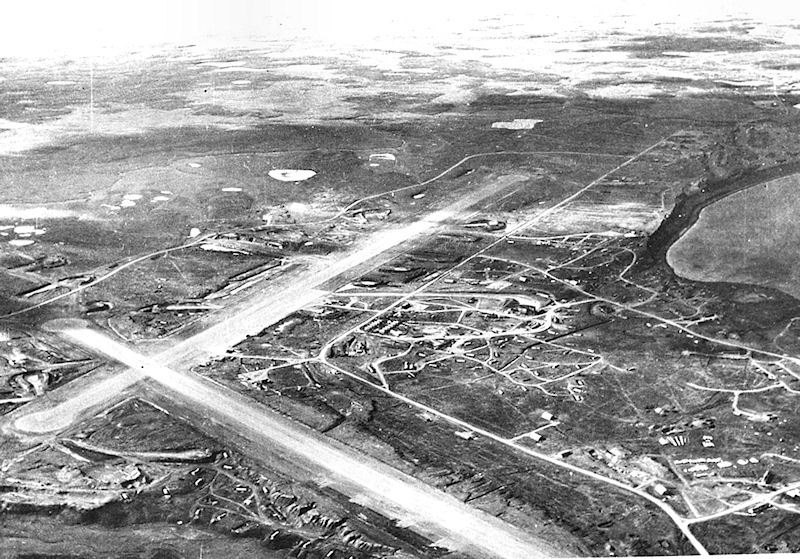
Fort Randall at Cold Bay, Territory of Alaska, in 1942. Project Hula took place here in 1945. The head of the bay itself is at center right.
Operational scopeTransfer of US Navy vessels to the Soviet Union in anticipation of the Invasion of Japan
Location
Date20 March 1945 (1945-03-20)
30 September 1945 (1945-09-30)
OutcomeJapan surrendered before completion of the operation

Project Hula was a secret program during World War II in which the United States transferred naval vessels to the Soviet Union in anticipation of the Soviets eventually joining the war against Japan, specifically in preparation for planned Soviet invasions of southern Sakhalin and the Kuril Islands. Based at Cold Bay in the Territory of Alaska, the project was active during the spring and summer of 1945. It was the largest and most ambitious transfer program of World War II, it included 149 ships delivered (of 180 expected, returned until 1955) and 12,000 personnel trained between 16 April and 4 September 1945 (well after the armistice of 15 August and the surrender of Japan on 2 September) and the US-handed then-Soviet ships took part in the last war operations of 5 September in Manchukuo, northern Korea, the Japanese south of Sakhalin Island, and the Kuril Islands.

Origins of Project Hula

[edit]

The Russian Empire and Japan had previously fought the Russo-Japanese War in 1904–1905, followed by Japan sending troops into Siberia during the Russian Civil War in the Siberian Intervention of 1918–1920. Animosities continued as the two countries remained rivals in Northeast Asia after the establishment of the Soviet Union. Japan's increasingly aggressive political and military behavior in East Asia during the 1930s led to border clashes between Soviet forces and Japanese forces in the Japanese puppet state of Manchukuo in Manchuria in 1937, at Kanchatzu Island in the Amur River, and in 1939 in the Khalkhin Gol/Nomonhan Incident. But after 1939, the two countries turned their attention elsewhere – Japan to focus on the Second Sino-Japanese War in China and the Soviet Union to the signing of the Molotov–Ribbentrop Pact. Eventually, the Soviet–Japanese Neutrality Pact was signed on 13 April 1941.[1]

The Soviet Union entered World War II when Germany invaded in June 1941, and in December 1941 Japan entered the war by attacking Allied forces and territories in the Western Pacific and Southeast Asia. Although these events placed the countries on opposite sides in the war, neither had an interest in engaging in military operations against the other, both being fully occupied with the wars in which they already were involved. Thus, the countries maintained a scrupulous neutrality toward one another until almost the very end of World War II; other than inspecting cargos to ensure they did not include war materials and protesting the reflagging of American ships as Soviet ones,[2] Japan did not deliberately interfere militarily with Lend-Lease convoys carrying war materiel from the United States to the Soviet Union in the North Pacific, and the Soviet Union turned down American requests to base American aircraft on Soviet territory for operations against Japan and ignored Allied requests for any other actions which might provoke Japan. The Soviet Union's leader, Josef Stalin, took the position that Soviet entry into the war against Japan would not be possible until after the defeat of Germany.[3]

During a meeting with United States Ambassador to the Soviet Union Averell Harriman in October 1944, Stalin finally offered to enter the war against Japan, but not until three months after the surrender of Germany, whenever that might be. The Soviet Union had suffered massive military, civilian, and economic losses during the war, so he also made such an entry contingent upon the Allies providing substantial assistance to the Soviet Union in building up its armed forces and military supplies in East Asia and the Pacific in advance of any Soviet operations against Japan. After the Soviet Union provided a list of equipment it required, which the Americans codenamed MILEPOST, the United States began the work of meeting the Soviet requirements outside of and in addition to annual Lend-Lease allotments of aid to the Soviets.[4]

As part of MILEPOST, the Chief of the Soviet Main Naval Staff, Admiral Vladimir Alafuzov, and the deputy commander of the U.S. Military Mission in Moscow, Rear Admiral Clarence E. Olsen, agreed on 20 December 1944 to a list of a dozen types of ships and aircraft the United States would transfer to the Soviets. Among the ships were various types of escort vessels, landing craft, and minesweepers. Olsen also recommended that a "program for training of personnel and for delivery of some of each type of ship should be set up at once" so that Soviet crews could receive instruction from American personnel in the operation of the ships and craft transferred to them.[4]

Choosing a location

[edit]

In early January 1945, the commander-in-chief of the Soviet Navy, Admiral Nikolai Gerasimovich Kuznetsov, suggested that the United States establish the location for the transfer of ships and training of crews in the Territory of Alaska's Aleutian Islands, where the presence of only a very small civilian population would help to assure the security of the program, which was to be conducted in strict secrecy to avoid alerting the Japanese and perhaps provoking Japan into launching an attack against the Soviet Union. He suggested Dutch Harbor, on Unalaska Island, as a good choice; both the Soviet Navy and merchant marine frequently called there and at nearby Akutan, so Soviet personnel were most familiar with those waters.[5]

Key Information

On 18 January 1945, the U.S. Chief of Naval Operations and Commander-in-Chief of the U.S. Navy, Fleet Admiral Ernest J. King, contacted the Commander of the North Pacific Force, Admiral Frank Jack Fletcher, to alert him that the United States planned to transfer approximately 250 ships and craft to the Soviet Union between April and December 1945, and that about 2,500 personnel would be present at any given time at the transfer site with a two-week cycle of personnel turnover; he also inquired as to whether Dutch Harbor could accommodate such a program. Fletcher responded on 29 January 1945, rejecting Dutch Harbor because of the lack of housing and training space there and because its harbor was too small to accommodate the expected numbers of ships and too exposed to heavy seas for safe training. He recommended Cold Bay, on the Alaska Peninsula, as a much better choice because of its protected harbor, shore facilities, and the complete absence of a civilian population, making security of the program much easier than at Dutch Harbor. Kodiak, on Kodiak Island, which had adequate shore facilities but a harbor inadequately protected from rough seas, was Fletcher's second choice, and Dutch Harbor only his third. King duly informed the U.S. Military Mission in Moscow of the choice of Cold Bay.[6]

During a meeting with King at the Yalta Conference on 8 February 1945, Kuznetsov stated that Dutch Harbor was the Soviet Union's first choice, and Kodiak its second. King informed him that the United States had chosen Cold Bay. Kuznetsov was not familiar with Cold Bay, but upon finding it on a map immediately agreed to it as the training site.[7]

Planning

[edit]
The Tacoma-class patrol frigate USS Hoquiam (PF-5) at Mare Island Navy Yard, Vallejo, California, on 14 June 1944. Transferred at Cold Bay, on 16 August 1945, she became EK-13 in the Soviet Navy, and was returned to the United States in 1949. The patrol frigates were the largest, most heavily armed, and most expensive ships transferred in Project Hula.[8]
The minesweeper USS Admirable (AM-136) was transferred at Cold Bay, on 19 July 1945, becoming T-331 in the Soviet Navy.[9]
Rear Admiral Boris Dmitrievich Popov, commander of the 5th Independent Brigade of Soviet Navy Ships at Cold Bay, cuts a cake while his counterpart, Captain William S. Maxwell (right), commanding officer of U.S. Navy Detachment 3294, at Cold Bay, and overall commander of Project Hula, and members of their staffs look on during a party in Popov's honor on Memorial Day, 30 May 1945, probably at Dutch Harbor.[10]
Rear Admiral Popov speaks aboard an Admirable-class minesweeper during the ship's transfer ceremony, probably on 21 or 22 May 1945.[11]
A Soviet Navy signalman (left) receives training from a U.S. Navy signalman at Cold Bay in 1945.[12]
The U.S. Navy auxiliary motor minesweeper USS YMS-143 when new in February 1943. Transferred at Cold Bay, on 17 May 1945, she became T-522 and took part in the Soviet conquest of the Japanese province of Karafuto on southern Sakhalin Island between 11 and 25 August 1945. T-522 served in the Soviet Navy until stricken in July 1956, and dismantled for spare parts.[13]
The large infantry landing craft USS LCI(L)-551 in May 1945, flying her colors at half-mast in honor of the recently deceased President Franklin D. Roosevelt. Transferred to the Soviet Navy at Cold Bay, on 29 July 1945, she became DS-48 and took part in the Soviet invasion of the Kuril Islands. The Soviet Union returned her to the United States in 1955.[14]
The large infantry landing craft USS LCI(L)-585 and USS LCI(L)-591 at Cold Bay, in the spring of 1945, awaiting transfer to the Soviet Navy, in which they became DS-45 and DS-35, respectively. The Soviets returned LCI(L)-585 to the United States, in 1955; DS-35 was sold for scrap in the Soviet Union.[10]
The submarine chaser USS SC-1011 off Terminal Island, California, in July 1943. Transferred at Cold Bay, on 17 August 1945, she served as BO-327 in the Soviet Navy until stricken in 1955.[15]
The floating workshop USS YR-74 was not among the Project Hula ships, but the United States transferred four YRs identical to her at Cold Bay in the summer of 1945.[16]
The U.S. flag is lowered aboard LCI(L)s as the U.S. Navy decommissions them for immediate transfer to the Soviet Union, at Cold Bay,on 9 June 1945.[17]
The Soviet naval ensign is raised aboard the LCI(L)s at Cold Bay, as they are commissioned into the Soviet Navy, immediately after their transfer on 9 June 1945. Redesignated desantiye suda (DS) or "landing ship," these craft saw action against Japanese forces during the Soviet campaign in northern Korea in August–September 1945.[17]

King officially established the transfer-and-training program as Project Hula in mid-February 1945 and ordered Fletcher to commence the rehabilitation of the United States Army facilities at Cold Bay's Fort Randall, which had been closed in November 1944. He advised Fletcher that an officer appointed to take charge of the training and his staff would arrive at Cold Bay by 24 March 1945, and that the first 2,500 Soviet trainees would arrive by 1 April 1945, with 550 more to follow by 1 May and another 2,000 by 1 June.[7]

An early issue to resolve was the matter of how to transport the Soviet Navy personnel to Cold Bay. At the Yalta Conference in February 1945, Kuznetsov initially proposed that Allied merchant ships returning to North America after delivering cargoes in Europe transport Soviet personnel to the United States East Coast, from which the Soviets could travel across the continental United States to the United States West Coast and then by ship to Cold Bay; however, a shortage of Allied shipping in the Pacific made this plan highly problematic. The day after the conference, the Deputy Chairman of the Soviet Government Purchasing Commission, Admiral A. A. Yakimov, proposed that the United States transfer three Liberty ships or similar vessels to Soviet registry, and that these ships carry Soviet personnel to Cold Bay, presumably from ports in the Soviet Far East, but the Allied shipping shortage blocked this idea as well. On 24 February 1945, the Deputy Commander-in-Chief of the U.S. Navy, Vice Admiral Richard S. Edwards, informed Yakimov that transferred motor torpedo boats and two disassembled self-propelled pontoon barges would be shipped aboard Soviet merchant ships from the U.S. West Coast directly to the Soviet Far East without calling at Cold Bay, reducing the demand on shipping by Soviet personnel requiring transportation to Cold Bay. The Soviets finally decided to transport their personnel to Cold Bay in their own merchant ships while the ships were making their regular voyages to carry Lend-Lease materials from the U.S. West Coast to the Soviet Far East, with each ship carrying about 600 men at a time.[18]

As the plan was finalized, the United States was to transfer 180 ships – 30 Tacoma-class patrol frigates (U.S. Navy hull classification symbol PF), 24 Admirable-class minesweepers (AM), 36 auxiliary motor minesweepers (YMS), 30 large infantry landing craft (LCI(L)), 56 submarine chasers (SC), and four floating workshops (YR) – to the Soviet Union, by 1 November 1945, training about 15,000 Soviet Navy personnel to operate them. After their commissioning into the Soviet Navy, which would take place at Cold Bay simultaneously with their transfer, the ships would steam in a series of convoys from Cold Bay with a U.S. Navy escort, passing through Unimak Pass, regarded as the safest pass in the Aleutian Islands, and then moving westward along the northern side of the Aleutian Islands, with smaller vessels which could not make the voyage nonstop – the auxiliary motor minesweepers and submarine chasers – pausing at Adak, to refuel and reprovision. Northwest of Attu, the U.S. Navy escort would turn the convoy over to a Soviet Navy escort, and each convoy would then steam north of the Commander Islands to Petropavlovsk-Kamchatsky, from which the transferred ships would disperse to their designated home ports.[19]

The Soviets planned for the first Soviet personnel to arrive at Cold Bay, aboard five merchant ships in late March or early April 1945, depending on ice conditions in the Soviet Far East. The first ship would carry a staff of 23 headed by a rear admiral, three substaffs (out of a planned five) of 11 to 17 personnel each, and 45 to 50 interpreters. Upon disembarking at Cold Bay, Soviet personnel were to come under the overall command of the American officer commanding the training-and-transfer program and were under orders to accede to American orders without question while at Cold Bay.[20]

Project Hula begins

[edit]

The U.S. Navy created Naval Detachment No. 3294 specifically for Project Hula; it was to be responsible for all training and transfer activities at Cold Bay. On 7 March 1945, it assigned Commander William S. Maxwell, then in Washington, D.C., to command the detachment. Before leaving Washington, Maxwell recommended an increase in the number of Russian-language translators to be assigned to Cold Bay and urged that the U.S. Navy Bureau of Ships ensure that each ship to be transferred had all of its authorized equipment loaded and installed and no equipment not authorized for transfer aboard before arriving at Cold Bay. He then left for Cold Bay.[21]

Arriving at Cold Bay on 19 March 1945, and newly promoted to captain, Maxwell took command of the naval base there the following day. Under his command were 694 U.S. Navy and United States Coast Guard personnel, 47 United States Marines, and a U.S. Army contingent of 605; his personnel strength soon stabilized at around 1,500 as Army personnel transferred out and naval personnel replaced them. He found that an advance party under his second-in-command, U.S. Coast Guard Lieutenant Commander John J. Hutson, had already established Detachment 3294's Antisubmarine Warfare Department. He also discovered that the naval facilities required more rehabilitation than he had been led to believe, so he moved his command into Fort Randall, which had been closed since November 1944, and set about readying its facilities to support Project Hula, including the establishment of housing, classrooms, movie theaters, a radio station, and a softball field; the selection of instructors for courses in radio and radar operation, engineering, gunnery, minesweeping, damage control, and landing craft operation; and the procurement of radios, radars, minesweeping gear, gyrocompasses, engines, movie projectors, and training films and other educational tools.[22]

The first Soviets to arrive at Cold Bay were members of the Soviet Purchasing Commission, who disembarked at the base on 23 March 1945. Maxwell believed that a great deal of classroom training would be necessary before the Soviet personnel began to train at sea, but the Soviet officers disagreed, preferring a greater emphasis on training at sea. They worked for a week on a training program that both sides could agree on, and achieved a successful compromise before the first trainees arrived.[23]

The first Soviet trainees reached Cold Bay aboard five Soviet merchant ships, each carrying nearly 500 Soviet trainees, that arrived one per day each day from 10 to 14 April 1945, by which time 2,358 Soviet personnel of what were to become the Soviet Navy's 16th Minesweeper Division and 2nd Submarine Chaser Division had disembarked, joining 1,350 American personnel. Rear Admiral Boris Dimitrievich Popov arrived on 11 April aboard the steamer Sevastopol and took command of Soviet personnel at Cold Bay, who the Soviet Navy designated the 5th Independent Detachment of Soviet Navy Ships.[23]

Training and transfers

[edit]

The first 220 Soviet officers and 1,895 enlisted men began training at Cold Bay on 16 April 1945, divided by ship type and then further divided by individual ship assignment. Although the Soviet personnel took their training very seriously, an immediate challenge for the American instructors was the Soviets' complete lack of familiarity with radar, sonar, and the ships' propulsion plants, in addition to a lack of Russian-language training manuals. Personnel of the Soviet Purchasing Commission and 5th Independent Detachment remedied this by producing Russian-language manuals for use in Project Hula.[24]

Material issues also arose in relation to the ships themselves. The Bureau of Ships had not heeded Maxwell's request to ensure that all ships to be transferred arrived properly equipped, and early in the program every ship arrived at Cold Bay without all authorized equipment or with unauthorized equipment still installed. A great deal of required equipment had to be flown into Fort Randall Army Airfield daily, and some ships had to undergo on-the-spot revisions to their authorized equipment lists. A further difficulty was damage to the wooden-hulled ships – the auxiliary motor minesweepers (YMS) and submarine chasers – in the rough seas in the training area. The closest repair facilities for these ships was nearly 200 nautical miles (370 km; 230 mi) away at Dutch Harbor, and an auxiliary motor minesweeper and nine submarine chasers had to visit Dutch Harbor for major repairs, delaying the submarine chaser program by eight days.[25]

Despite these difficulties, the first convoy of transferred ships – three minesweepers and five auxiliary motor minesweepers – departed Cold Bay for the Soviet Union on 28 May 1945; the second – of three minesweepers and six submarine chasers – departed on 30 May, with one of its submarine chasers dropping out at Adak, for repairs, and the third, made up of three minesweepers and seven submarine chasers, left on 7 June 1945.[10] However, poor repair work and supply problems in Seattle plagued the submarine chaser program, and Maxwell was forced to arrange for submarine chasers assigned to duty in the U.S. Navy's 13th Naval District to substitute for some of those originally scheduled for transfer in order to meet a deadline of having all ships transferred by 1 October 1945.[16]

Training 100 Soviet officers and 800 enlisted men for the transfer of 30 large infantry landing craft (LCI(L)) in two training cycles began on 7 May 1945 and proved to be the most successful of the Project Hula training programs. The first cycle lasted 15 days, and experience gained in it allowed the second cycle to be cut to nine days. The fourth convoy to depart Cold Bay, consisting of four LCI(L)s, two minesweepers, and six submarine chasers, which left on 11 June 1945, was the first to include LCI(L)s, and all Soviet LCI(L) crews departed for the Soviet Union aboard their ships before the end of July 1945.[26]

The 30 Tacoma-class patrol frigates were the largest, most heavily armed, and most expensive ships scheduled for transfer in Project Hula. The first 572 officers and men of the Soviet Navy's 10th Frigate Division arrived at Cold Bay on 12 June 1945 aboard the Soviet steamer Felix Dzerzhinski and began training to take over the patrol frigates on 14 June, the same day that the first nine patrol frigates – USS Charlottesville (PF-25), USS Long Beach (PF-34), USS Belfast (PF-35), USS Glendale (PF-36), USS San Pedro (PF-37), USS Coronado (PF-38), USS Allentown (PF-52), USS Machias (PF-53), and USS Sandusky (PF-54) – arrived at Cold Bay. Another 570 personnel of the 10th Frigate Division arrived on 15 June 1945 aboard the Soviet steamer Chaikovskii. The first nine patrol frigates to arrive, plus USS Ogden (PF-39), which arrived at Cold Bay on 27 June 1945,[27] made up the first group of 10 frigates transferred to the Soviets on 12 July 1945; they departed Cold Bay in convoy on 15 July 1945.[28]

The four floating workshops (YR) slated for transfer were all taken under tow by Soviet merchant ships calling at Cold Bay on their way from the U.S. West Coast to the Soviet Far East during the summer of 1945.[16]

Relations between Soviet and American personnel at Cold Bay remained amicable and cooperative throughout the life of the project. The best-performing Soviet trainees were retained at Cold Bay to serve alongside the American instructors in training other Soviet personnel who arrived later. By 31 July 1945, Project Hula had transferred 100 of the planned 180 vessels to the Soviet Union.[29]

Soviet Union declares war

[edit]

As Stalin had promised, the Soviet Union declared war against Japan on 8 August 1945, exactly three months after the capitulation of Germany, and began an offensive against Japanese forces in Northeast Asia the next day. Although an armistice halted combat between the other Allies and Japan on 15 August 1945 (14 August on the other side of the International Date Line in Cold Bay) and Japan formally surrendered to the Allies aboard the battleship USS Missouri (BB-63) in Tokyo Bay on 2 September 1945, Soviet offensive operations continued until 5 September 1945, by which time Soviet forces had overrun the Japanese puppet state of Manchukuo in Manchuria, the northern half of Korea, the Japanese province of Karafuto on the southern half of Sakhalin Island, and the Kuril Islands. Despite the Soviet Union's now-overt participation in the war, Project Hula remained secret and subject to strict censorship.[30]

The Soviet entry into the war seemed if anything to make Soviet-American cooperation at Cold Bay even better than before, and Maxwell and Popov, worked to accelerate training and transfers to get ships into Soviet hands as quickly as possible in support of the Soviet offensive. Previously trained Soviet personnel returned to Cold Bay to serve as nucleus crews for newly transferred ships, and the training of their fellow crewmen was cut to the minimum necessary for the Soviet crews to take their vessels home. On 25 August 1945, Navy Detachment 3294 completed the final cycle of classroom training for Soviet personnel.[29]

At Cold Bay on the day of Japan's surrender, 2 September 1945, the Soviet Navy took control of the patrol frigates USS Bayonne (PF-21) and USS Poughkeepsie (PF-26). On 4 September 1945, the last four ships to be transferred in Project Hula – the patrol frigates USS Gloucester (PF-22), USS Newport (PF-27), USS Bath (PF-55), and USS Evansville (PF-70) – were commissioned into the Soviet Navy at Cold Bay.[31]

Project Hula concludes

[edit]

On 5 September 1945, a few hours after Soviet forces completed their occupation of the Kuril Islands, Maxwell received orders to cease transfers of ships other than those for which Soviet crews already were in training; this cancelled the transfer of two patrol frigates, five auxiliary motor minesweepers, and 24 submarine chasers. The stop-transfer order caught some of the ships scheduled for transfer, including the patrol frigates USS Annapolis (PF-15) and USS Bangor (PF-16), while they were at sea bound from the U.S. West Coast to Cold Bay. The other ships turned back, but Annapolis and Bangor pressed on to Cold Bay, took aboard American personnel requiring transportation to the continental United States, and steamed back to Seattle.[32]

At Cold Bay, Soviet and American personnel set about the business of shutting down Project Hula. The last four patrol frigates transferred remained at Cold Bay for additional training and shakedown before departing for the Soviet Union in the final Project Hula convoy on 17 September 1945. The remaining personnel of the Soviet Navy's 5th Independent Detachment – Popov, his staff, and the partially trained crews of the 31 ships no longer scheduled for transfer – departed Cold Bay for the Soviet Union aboard the Soviet steamer Carl Schurz on 27 September 1945. Maxwell decommissioned the base at Cold Bay on 30 September 1945.[33]

Training and transfer results

[edit]

Project Hula was "the largest and most ambitious transfer program of World War II."[34] During the 142 days between the commencement of training activities at Cold Bay on 16 April 1945 and the transfer of the last four ships there on 4 September 1945, U.S. Navy Detachment 3294 trained some 12,000 Soviet Navy personnel – about 750 officers and 11,250 enlisted men – and transferred 149 ships and craft – 28 patrol frigates (PF), 24 minesweepers (AM), 30 large infantry landing craft (LCI(L)), 31 auxiliary motor minesweepers (YMS), 32 submarine chasers (SC), and four floating workshops (YR) – at Cold Bay.[35]

In Soviet service, the patrol frigates were redesignated storozhevoi korabl ("escort vessel") and received the designation "EK"; minesweepers and auxiliary motor minesweepers were redesignated tralshik ("minesweeper") and received the designation "T"; large infantry landing craft were redesignated desantiye suda ("landing ship") and received the designation "DS"; and submarine chasers were redesignated bolshiye okhotniki za podvodnimi lodkami ("large submarine hunter"), and received the designation "BO". None of the ships received names in Soviet service.[16]

Popov, reported to Maxwell at Cold Bay in late August 1945 that LCI(L)s transferred under Project Hula played an important role in the Soviet assault on the Kuril Islands just ten days after arriving at Petropavlovsk-Kamchatsky, and that other Project Hula ships had taken part in Soviet operations against the Japanese in northern Korea and on southern Sakhalin Island. He did not mention losses.[31] Five ships transferred in Project Hula, all former LCI(L)s – DS-1 (ex-USS LCI(L)-672), DS-5 (ex-USS LCI(L)-525), DS-9 (ex-USS LCI(L)-554), DS-43 (ex-USS LCI(L)-943), and DS-47 (ex-USS LCI(L)-671) – were lost in combat during the operations,[36] all of them sunk by Japanese coastal artillery on 18 August 1945 during the Soviet landings on Shumshu.[37]

The transfer dates for ships under Project Hula follow. The U.S. Navy decommissioned each ship on the day of transfer and the Soviet Navy simultaneously commissioned it. Each ship is identified by its U.S. Navy name and designation, followed by its Soviet Navy designation.[note 1] Not included are the four floating workshops (YRs), which were transferred to the Soviet Union in the summer of 1945.[16]

17 May 1945
21 May 1945
22 May 1945
26 May 1945
5 June 1945
6 June 1945
10 June 1945
14 June 1945
12 July 1945
19 July 1945
29 July 1945
2 August
16 August 1945
17 August 1945
26 August 1945
27 August 1945
2 September 1945
3 September 1945
4 September 1945

Aftermath

[edit]

Under U.S. law, all ships transferred to foreign countries under Lend-Lease had to be returned to U.S. custody after the conclusion of World War II, and in February 1946 the United States began negotiations with the Soviet Union for the return of transferred ships. However, relations between the Soviet Union and the Western Allies deteriorated rapidly after the end of World War II as the Cold War began, hindering the return of ships.[38]

Subtracting the five former LCI(L)s lost in combat and an auxiliary motor minesweeper that sank in 1945, 143 Project Hula ships were subject to return to the United States. On 7 March 1947, United States Secretary of the Navy James V. Forrestal, presented the United States Department of State with a list of 480 warships that the United States Department of the Navy wanted the Soviet Union to return, including all 28 patrol frigates transferred under Project Hula. In 1948, the Soviet Union finally agreed to return the patrol frigates, and it handed over 27 of them in October and November 1949; the 28th, EK-3, ex-USS Belfast (PF-35), had been driven aground and nearly sunk in a storm off Petropavlovsk-Kamchatsky, on 17 November 1948, was beyond economical repair, and was never returned, instead being scrapped in the Soviet Union, in 1960. Negotiations over the Department of the Navy's other major focus, the 25 surviving former LCI(L)s, dragged on longer, but in the end the Soviets returned 15 of them to the United States in 1955.[39] By 1957, the U.S. Office of Naval Intelligence reported that of the 149 Project Hula ships, only 18 of those still in Soviet custody – nine minesweepers (AM), five submarine chasers (SC), and the four floating workshops (YR) – remained serviceable.[40]

Ironically, the U.S. Navy actually did not want to take delivery of many of the Lend-Lease ships because they were no longer useful and would be expensive to take custody of and dispose of. As a result some ships underwent a merely administrative transfer to U.S. custody to meet the letter of the law and then were sold for scrap in the Soviet Union or destroyed in Soviet waters under the direct observation of American naval authorities. The Soviet Union transferred two auxiliary motor minesweepers to the People's Republic of China, but all of the other 97 Project Hula ships remaining in Soviet hands after the return of the 15 LCI(L)s in 1955 either were sold for scrap in the Soviet Union (81 ships) or destroyed off its coast (16 ships), presumably off Nakhodka.[41]

References

[edit]
Revisions and contributorsEdit on WikipediaRead on Wikipedia
from Grokipedia

Project Hula was a top-secret program conducted by the during , in which 149 naval vessels were transferred to the under arrangements, while approximately 12,000 Soviet naval personnel received training to operate them for amphibious assaults against Japanese-held territories. The operation, centered at , ran from April to September 1945 and represented an unprecedented level of direct U.S.-Soviet naval cooperation, enabling the Red Army's rapid seizure of southern , the , and parts of northern Korea following the Soviet on on August 9, 1945.
Initiated in response to Soviet commitments at the to enter the within three months of Germany's defeat, Project Hula addressed the Soviet Navy's deficiencies in amphibious capabilities and modern escort vessels needed for operations in the North Pacific. Under the command of U.S. William S. Maxwell and Soviet Rear Admiral Boris D. Popov, the program involved shore-based instruction, shipboard drills in navigation, gunnery, and minesweeping, supplemented by Russian-language manuals to overcome linguistic barriers. Vessels transferred included 28 Tacoma-class frigates for , numerous minesweepers and subchasers, 30 (LCI(L)), and auxiliary repair ships, all critical for clearing Japanese defenses and supporting troop landings despite harsh Aleutian weather and logistical strains. The project's secrecy exceeded even that of the , with strict censorship and compartmentalization to prevent Japanese awareness or domestic U.S. political backlash, reflecting pragmatic wartime priorities over long-term geopolitical concerns. Although Japan's surrender on September 2, 1945, curtailed full-scale invasions of , the transferred fleet facilitated Soviet territorial gains that persist as points of contention, such as the unresolved , underscoring the operation's role in shaping post-war Asia while hastening the conflict's end through Allied pressure on .

Historical Context

Wartime Alliances and Lend-Lease Origins

The entered following the Japanese attack on on December 7, 1941, which prompted declarations of war against and, subsequently, and . American military strategy emphasized a "Germany first" approach, coordinated with Britain to prioritize the European theater against while maintaining defensive and offensive operations in the Pacific to counter Japanese aggression. This division imposed substantial burdens on U.S. forces in the Pacific, including resource-intensive island-hopping campaigns from in 1942 onward, aimed at securing bases for eventual strikes on proper. The Lend-Lease Act, enacted on March 11, 1941, provided a mechanism for supplying war materiel to allies without direct payment, initially targeting Britain and later extended to the after the German invasion on June 22, 1941. Despite deep ideological divides—capitalist versus Soviet communism—mutual interest in defeating the drove temporary cooperation, overriding mutual suspicions rooted in events like the 1939 Molotov-Ribbentrop Pact. By war's end, U.S. Lend-Lease deliveries to the USSR totaled $11.3 billion (equivalent to about $180 billion in 2016 dollars), encompassing over 14,000 aircraft, 7,000 tanks, and 375,000 trucks that enhanced Soviet logistical capabilities and battlefield mobility. At the , held from February 4 to 11, 1945, President negotiated Soviet entry into the within three months of Germany's defeat, offering concessions such as the return of southern Island, the , and privileges in to incentivize Joseph Stalin's participation. This pledge reflected U.S. calculations that Soviet forces could divert Japanese troops from Pacific defenses, particularly the in , thereby reducing American casualties and expediting Japan's surrender without reliance solely on prolonged naval and amphibious assaults.

Soviet Neutrality and Strategic Pressures on Japan

The Soviet-Japanese Neutrality Pact, signed on April 13, 1941, established a five-year commitment to mutual non-aggression, permitting the to redirect its eastern forces westward against following the German invasion in June 1941, while enabling Imperial to advance southward into without confronting Soviet opposition after its December 1941 . This arrangement isolated Japan strategically in the Pacific, as the pact precluded a for and allowed to maintain nominal neutrality despite its alliance with the Western powers via aid. By early 1945, the U.S. island-hopping campaign had secured key positions but at escalating costs, with the from February 19 to March 26 resulting in 6,821 American deaths amid fierce Japanese resistance on volcanic terrain, and the from April 1 to June 22 claiming over 12,500 U.S. lives in an 82-day campaign marked by kamikaze attacks and entrenched defenses. These operations strained U.S. resources and underscored the risks of , the planned invasion of Japan's home islands, which military estimates projected could exceed 1 million casualties due to anticipated fanatical defense. U.S. leaders, informed by the agreement of February 1945 where pledged Soviet entry into the within three months of Germany's defeat, viewed Soviet intervention as essential to pin down Japanese divisions in and support amphibious assaults on the —and potentially —to accelerate Japan's collapse without sole reliance on atomic bombs or homeland invasion. American intelligence evaluations highlighted Soviet deficiencies in , including inadequate and trained personnel for large-scale operations across the , creating incentives for covert naval transfers to bolster capabilities against Japanese outposts. The pact's Soviet denunciation on April 5, 1945—nine months before its April 1946 expiration—signaled impending abrogation, aligning with U.S. strategic pressures to expedite Moscow's role in relieving Pacific burdens.

Initiation and Secrecy

High-Level Approvals and Rationales

Following the in February 1945, where the secured Soviet commitments to enter the war against in exchange for territorial concessions and military support, Project Hula's specific approvals advanced rapidly in the Truman administration after President Franklin D. Roosevelt's death on April 12, 1945. The finalized authorizations in early April, building on prior negotiations from December 1944, enabling the program's initiation just days later on April 16. Truman, inheriting the initiative, endorsed its execution to align with broader Allied imperatives for Soviet Pacific involvement, despite emerging strains in U.S.-Soviet relations. The primary rationales centered on accelerating Japan's defeat by augmenting Soviet amphibious capabilities, as the USSR lacked sufficient for operations against Japanese-held , the , and potentially northern . This support aimed to divert Japanese forces from anticipated U.S. invasions under , thereby mitigating projected U.S. casualties estimated in the hundreds of thousands to over one million across Olympic and Coronet phases. By transferring vessels and providing training, the U.S. sought to share the burden of amphibious assaults, leveraging Soviet ground troop strengths to pressure from multiple fronts without additional American commitments. Secrecy was mandated at the highest levels to preclude Japanese preemptive strikes on Soviet Far Eastern assets, which could disrupt Moscow's mobilization, and to safeguard ongoing protocols from compromise. Domestically, the operation risked isolationist criticism and congressional scrutiny over arming a wartime ally increasingly viewed with suspicion, prompting code names like "" and strict compartmentalization within the Navy and State Department. These measures ensured operational surprise while fulfilling Yalta-linked obligations without public disclosure until after Japan's surrender.

Site Selection in Alaska

![Fort Randall Army Airfield at Cold Bay, Alaska, 1942][float-right]
Cold Bay, Alaska, was selected as the primary site for Project Hula in February 1945, following a recommendation by Vice Admiral Frank Jack Fletcher on 29 January 1945 and approval by Fleet Admiral Ernest J. King. The location at the southwest tip of the Alaskan Peninsula offered remoteness that enhanced operational secrecy, with minimal risk of detection by Japanese reconnaissance due to its isolation and absence of civilian population. Existing U.S. military infrastructure, including housing and messing facilities at the nearby Fort Randall Army base, provided a practical foundation for vessel transfers and training, while the protected waters of the bay supported safe naval operations.
Alternative sites, such as in the Aleutians, were rejected due to overcrowded facilities and insufficient protected training waters, which would complicate and vessel handling. was considered a secondary option but dismissed for its exposure to heavy seas, lacking the sheltered conditions necessary for reliable operations. These evaluations prioritized empirical factors like weather protection and logistical feasibility over proximity to other theaters, ensuring the site's capacity to handle large-scale, covert activities without compromising secrecy. To accommodate Project Hula, infrastructure at Cold Bay was rapidly expanded starting in , including rehabilitation of Fort Randall and erection of Quonset huts for additional and classrooms. This buildup enabled the site to support up to 12,000 Soviet personnel by August 1945, with temporary bases and fuel depots established discreetly to avoid public awareness or enemy intelligence. The remote setting further minimized external observation, aligning with the program's emphasis on covert execution.

Operational Planning

Logistical Preparations

The United States assembled a fleet of 149 naval vessels for transfer to the Soviet Union under Project Hula, sourcing them from U.S. Navy stocks that included patrol frigates (PF-class), auxiliary motor minesweepers (YMS), landing craft infantry (LCI(L)), submarine chasers (SC), and repair ships, among two dozen types deemed available after prioritization for other Pacific operations. These vessels were prepared at bases supporting the program, with logistical emphasis on rapid assembly without drawing from frontline combat assets. Coordination for procurement and distribution fell under strict secrecy protocols, designated by the code name "Hula" to conceal the transfers from broader Allied awareness and potential leaks. U.S. naval authorities managed the allocation to ensure compatibility with Soviet operational needs, including fuel, ammunition, and spare parts stockpiling at the Alaskan transfer site. Soviet logistical arrivals involved transporting over 12,000 naval personnel to , primarily via secure maritime and air routes from the continental or Siberian staging points, timed to coincide with vessel readiness. To address communication challenges, a dedicated Soviet cadre of 45 to 50 interpreters embedded with initial staff groups facilitated technical briefings and coordination prior to hands-on activities.

Training and Transfer Protocols

The U.S. implemented standardized protocols under Project Hula, adapting its established curricula in amphibious operations, gunnery, and / systems to Soviet naval personnel's needs, with doctrinal emphases on rapid proficiency for Pacific theater requirements. Instruction covered attack formations and beaching techniques for (LCI(L)), 3-inch and 40 mm gunnery for frigates and auxiliary vessels, and operation of and equipment, areas where Soviet crews showed prior strengths in gunnery and but required to American technologies lacking initial Russian-language manuals, which Soviet staff subsequently developed. was structured by vessel type—minesweepers, subchasers, frigates, and LCI(L)s—with American instructors first training nucleus Soviet crews who then instructed additional personnel, combining shore-based classroom sessions with shipboard shakedowns to simulate operational conditions. Compressed timelines distinguished these protocols from standard U.S. Navy programs, which typically spanned months; Project Hula cycles lasted weeks, such as 15 days for the first LCI(L) group in May 1945 and 9 days for the second in June–July, with overall training commencing on April 16, 1945, for initial minesweeper and subchaser groups and mid-June for frigates. Approximately 12,000 Soviet personnel, including 750 officers, underwent this regimen at Cold Bay, Alaska, from April to September 1945, prioritizing doctrinal alignment for amphibious assaults against Japanese-held islands without full immersion in broader U.S. fleet tactics. Vessel transfers followed lend-lease protocols under Article V of the Master Agreement signed June 11, 1942, stipulating no repayment obligations while restricting use exclusively against Japanese forces, with 149 ships handed over by , 1945, after training completion. Handover procedures mandated formal decommissioning by U.S. crews, documentation of equipment status, and immediate Soviet assumption of command, ensuring seamless transition without dual crewing post-transfer. Quality controls enforced minimum proficiency thresholds prior to , including demonstrated competence in ship handling, operation, and shakedown cruises—typically two weeks for early transfers—to verify operational readiness amid challenges like shortages or weather delays. Soviet crews underwent evaluations by U.S. observers, with substitutions or repairs implemented for substandard vessels, adapting protocols to maintain doctrinal efficacy despite language barriers and compressed schedules.

Execution Phase

Onset of Training Operations

Soviet merchant ships began arriving at , on 10, 1945, disembarking approximately 500 personnel daily for five days, culminating in 2,358 Soviet sailors, including Boris D. Popov as overall , by April 14. operations under Project Hula officially commenced on April 16, 1945, marking the start of intensive instruction on vessel handling and amphibious operations. The initial phase faced harsh environmental conditions at the remote Alaskan site, including over 40 inches of annual rainfall, heavy fog, and an average of 16 cloudy days per month, which impeded vessel rehabilitation and early training exercises. Integration efforts involved 1,350 U.S. Navy and instructors collaborating with the first contingent of 220 Soviet officers and 1,895 enlisted men, many of whom possessed minimal prior experience with , , or complex systems, though some had basic ship-handling knowledge from or vessels. Language barriers complicated instruction, addressed partly through Soviet-produced manuals in Russian, while early operational disagreements—particularly on balancing shore-based technical training against at-sea shipboard drills—were resolved via joint U.S.-Soviet conferences. Secrecy protocols strictly limited interactions, barred press access, and confined Soviet personnel to the isolated base to avoid alerting to the program's existence and potentially violating Soviet neutrality.

Vessel Handovers and Soviet Proficiency

Handovers commenced with smaller wooden-hulled vessels, including auxiliary motor minesweepers (YMS) and subchasers (SC), whose training began on 16 April 1945, with initial transfers such as YMS-143 (renamed T-522) occurring on 17 May 1945. These craft, part of the 16th Minesweeper Division (18 ships) and 2nd Subchaser Division (20 ships), were followed by transfers of 30 landing craft infantry (LCI(L)), with the first group entering training on 7 May 1945 and handovers like LCI(L)-584 (DS-38) on 10 June 1945. Convoys of these smaller vessels departed Cold Bay between 28 May and 11 June 1945, reflecting a deliberate progression to build Soviet familiarity before escalating to more complex types. Larger vessels, particularly the 10 Tacoma-class frigates of the 10th Frigate Division, entered training on 14 June 1945, with the first handover—the USS Charlottesville (PF-60, renamed EK-1)—on 12 July 1945, culminating in transfers like the USS Bayonne (PF-52, EK-25) on 2 September 1945. This sequence prioritized vessels requiring less advanced coordination initially, allowing Soviet crews to acclimate to U.S. propulsion, gunnery, and auxiliary systems before tackling the frigates' integrated and suites. Additional support craft, such as floating workshops (YR), supplemented these handovers to enhance Soviet maintenance capacity. Soviet crews exhibited a steep , overcoming initial deficiencies in operating U.S. , , and engineering equipment through intensive, side-by-side instruction with American personnel; by mid-training, exceptional Soviet sailors were detailed as instructors for their peers. To facilitate adaptation, U.S. and Soviet staff collaborated on Russian-language technical manuals, addressing the crews' unfamiliarity with American designs. However, proficiency remained uneven in tactics, such as coordinated with escort protection, due to the compressed timeline and Soviet naval doctrine's emphasis on independent operations over U.S.-style integration. Minor incidents arose from operational haste and environmental factors, including hull damage to nine subchasers and one from rough Bering Sea conditions en route to Cold Bay, necessitating repairs at and delaying the subchaser program by eight days. Pre-transfer issues, such as shoddy repairs and equipment shortages on subchasers from yards, further complicated proceedings. U.S. oversight mitigated these through rapid interventions, including sourcing substitute vessels from the 13th Naval District, daily airlifts of parts by the , and revised supply lists to meet the 1 October 1945 deadline. These measures ensured continued momentum without major disruptions to the handover schedule.

Soviet War Declaration and Deployment

Timing with Atomic Bombings

The Soviet Union declared war on Japan on August 8, 1945, effective the following day, in fulfillment of commitments made at the in , where pledged Soviet entry into the two to three months after Germany's defeat. This declaration followed the U.S. atomic bombing of on August 6 by two days and preceded the Nagasaki bombing on August 9, positioning the Soviet action as part of a coordinated Allied pressure strategy against Japan, with the bombings serving as a complementary shock to hasten capitulation and thereby diminish the anticipated scope of Soviet amphibious operations supported by Project Hula. In response to the Soviet entry, Project Hula accelerated its final vessel transfers and training completions in late August, with Soviet personnel reaching full proficiency for approximately 12,000 trained by August 25, enabling rapid deployment of transferred assets. By this point, over 100 vessels had already been handed over by late July, but the wartime urgency prompted completion of the remaining transfers, including two frigates on September 2 and four more on September 4, totaling 149 ships despite Japan's acceptance of the Declaration's terms on August 14. U.S. demobilization directives in August halted additional lend-lease shipments beyond these essentials, leading to the decommissioning of the Cold Bay base by late September, as the atomic strikes and swift Soviet belligerence curtailed Hula's originally projected role in extensive northern Pacific invasions.

Initial Soviet Amphibious Actions

![LCI(L)-class landing craft transferred to Soviets under Project Hula][float-right] Following the completion of vessel handovers and under Project Hula, Soviet forces deployed the transferred amphibious craft in immediate offensive operations against Japanese-held territories in the northern Pacific. On August 18, 1945, the Soviet 101st Rifle Division, supported by elements of the Pacific Fleet, launched an amphibious assault on Shumshu Island in the Kuril chain, utilizing at least 16 (Large) (LCI(L)) among the 30 such vessels received prior to the Soviet on . These craft facilitated the initial waves of troop landings amid contested beaches fortified by Japanese defenses, marking the first major use of Project Hula assets in . Subsequent operations extended to Paramushir Island, where Soviet amphibious units, again employing LCI(L) and auxiliary vessels from the Hula transfers, conducted landings starting around August 28, 1945. Japanese resistance here was negligible, as imperial forces on the island capitulated shortly after the initial assault, allowing rapid Soviet consolidation without prolonged engagements. The operations relied on the Soviets' newly acquired proficiency in handling the American-designed craft for troop transport and shore bombardment support. Soviet naval elements also probed areas near using equipped patrol and landing vessels, though these actions involved limited landings and reconnaissance rather than full-scale invasions, encountering virtually no opposition following Japan's surrender announcement on August 15, 1945. Throughout these initial actions, Soviet commanders operated independently, without ongoing U.S. coordination or oversight post-transfer, leveraging the training received to execute maneuvers tailored to their strategic objectives in the region.

Results and Immediate Outcomes

Scale of Transfers and Training Efficacy

Under Project Hula, the United States transferred a total of 149 naval vessels to the Soviet Union between May and September 1945, comprising 30 Tacoma-class frigates, 24 fleet minesweepers, 36 wooden-hulled motor minesweepers, 56 submarine chasers, and additional landing craft and support ships such as 28 landing craft infantry (large). These transfers fell short of the initial approval for up to 180 vessels due to operational constraints and the war's conclusion, but represented the largest single naval lend-lease handover of the conflict. U.S. Navy Detachment 3294, stationed at , trained approximately 12,000 Soviet naval personnel in vessel operation, maintenance, and basic tactics from through early September 1945, enabling rapid integration into Soviet Pacific Fleet operations. Training emphasized hands-on proficiency with transferred equipment, including simulated convoy escorts and drills, which U.S. instructors documented as achieving handover readiness for the majority of crews within weeks rather than months. Declassified U.S. records confirm that all transfers and associated training were completed by September 5, 1945, with final patrol frigate handovers occurring around September 9, allowing Soviet forces to deploy assets immediately upon their entry into the . This timeline reflected efficient logistical execution, as evidenced by logs tracking vessel arrivals, crew certifications, and departure sailings from Alaskan bases.

Contributions to Soviet Campaigns

Project Hula's transfer of 16 Landing Craft Infantry (LCI(L)) enabled the Soviet Northern Pacific Flotilla to launch amphibious assaults on Shumshu Island in the Kuril chain beginning August 18, 1945, securing the position by August 23 despite the destruction of five LCI(L)s by Japanese coastal batteries. Soviet forces, numbering approximately 8,800 troops including naval infantry, inflicted heavy casualties on the 8,500 Japanese defenders, leading to the capture of Shumshu and Paramushir with 1,567 Soviet casualties (516 killed). This operation, reliant on Hula-provided vessels for troop transport and fire support, demonstrated the direct utility of transferred amphibious assets in overcoming fortified island defenses, allowing rapid Soviet consolidation of the northern Kurils without requiring additional Allied naval intervention. In South Sakhalin, Hula-transferred minesweepers such as the former USS YMS-143 (Soviet T-522) cleared approaches for landings starting August 11, 1945, supporting ground advances against 30,000 Japanese troops and prompting 3,300 surrenders by August 18. Similarly, in northern Korea, LCI(L)s including DS-45 and DS-35 facilitated the operation from August 13 to 17, where 3,000 marines landed to seize the port, resulting in 352 Soviet fatalities against over 3,000 Japanese losses and disrupting enemy withdrawal routes from . These actions, though supplementary to the Red Army's primary land offensive in launched August 9, provided critical interdiction of Japanese sea evacuations and logistics, leveraging Hula-trained crews to execute coordinated assaults with efficiency. The empirical record shows Hula's contributions yielded low proportional Soviet losses—averaging under 10% of engaged forces in key landings—while neutralizing superior Japanese numbers through surprise and specialized lift capacity absent in Soviet pre-war inventories. By enabling these peripheral seizures, the program accelerated the erosion of Japanese peripheral holdings, compounding the strategic pressure from Soviet mainland advances and contributing to the regime's capitulation on August 15 by foreclosing organized resistance or reinforcement in the .

Strategic Evaluation

Wartime Military Advantages

Project Hula equipped the Soviet Union with essential amphibious and auxiliary naval vessels, enabling rapid assaults on Japanese-held territories in the Kuril Islands and southern Sakhalin without requiring direct U.S. naval commitments in the northern Pacific theater. Between May and August 1945, the program transferred 149 U.S. ships, including 30 Landing Craft Infantry (LCI) vessels, 12 submarine chasers, and numerous minesweepers and repair ships, which the Soviets lacked in sufficient numbers for large-scale amphibious operations. This transfer, conducted at Cold Bay, Alaska, allowed Soviet forces to launch invasions starting August 18, 1945, capturing key islands like Shumshu and Paramushir by August 23, thereby engaging approximately 20,000 Japanese defenders and preventing their redeployment to reinforce Japan's home islands against anticipated U.S. invasions. By facilitating Soviet amphibious proficiency through hands-on training of over 12,000 personnel, Project Hula enhanced overall Allied pressure on Japan from multiple fronts, potentially averting higher U.S. casualties in —the planned invasion of scheduled for November 1, 1945. U.S. planners estimated Downfall could incur up to 500,000 American casualties due to fanatical Japanese resistance observed in Okinawa, where over 100,000 U.S. troops were wounded or killed from April to June 1945; Soviet northern operations diverted Japanese air and ground assets northward, easing potential threats to U.S. southern approaches. The program's and tactical transfers, such as LCI beaching techniques and protocols, accelerated Soviet advances against a common adversary, aligning with U.S. strategic goals to shorten the war without expending additional American resources. In realpolitik terms, Project Hula reinforced U.S. leverage to secure Soviet entry into the Pacific War on schedule, as pledged at Yalta in February 1945 for three months after Germany's defeat on May 8. Despite Soviet neutrality yielding economic gains through trade with Japan until August 1945, Joseph Stalin adhered to the timeline, declaring war on August 8 and launching offensives that complemented U.S. atomic bombings on August 6 and 9, collectively hastening Japan's capitulation on August 15. This cooperation minimized U.S. exposure to prolonged combat by distributing operational burdens, validating the program's role in linking Soviet military capabilities to the defeat of Japan.

Operational Challenges and Shortcomings

The compressed timeline of Project Hula, initiated in May 1945 following agreements reached at the in February, imposed significant constraints on training efficacy, with operations compressed into approximately four months before the Soviet declaration of war on on 9. This haste resulted in abbreviated instruction periods for Soviet personnel, who arrived in cohorts at , starting in late April, often receiving only weeks of hands-on familiarization rather than comprehensive doctrinal integration. American instructors from Navy Detachment 3294 faced delays exacerbated by insufficient Russian-language training materials and a scarcity of qualified linguists, hindering effective communication and technical transfer. Soviet naval personnel, primarily experienced in submarine and coastal defense operations rather than advanced or amphibious tactics, exhibited gaps in proficiency with U.S.-specific technologies such as and , despite their aptitude in and gunnery fundamentals. These doctrinal mismatches—stemming from the Red Navy's emphasis on defensive postures against potential German threats—limited the depth of tactical assimilation, with focused narrowly on vessel operation and basic maneuvers rather than integrated fleet maneuvers. By the program's termination on , 1945, not all transferred vessels had achieved full operational readiness, as evidenced by ongoing handovers post-surrender and reports of incomplete shakedowns. Logistical strains in the remote, fog-shrouded environs of Cold Bay compounded these issues, where persistent adverse weather—frequent gales, low visibility, and subzero temperatures—disrupted at-sea drills and maintenance schedules throughout the summer. Supply chains to this isolated Aleutian outpost were overburdened, leading to intermittent shortages and minor delays from damage to lightly built subchasers during transit or handling. Despite these impediments, the program proceeded, though the environmental and infrastructural limitations of the site precluded optimal preparation, contributing to variances in crew preparedness across the 149 vessels ultimately handed over.

Criticisms and Controversies

Domestic and Allied Opposition

Project Hula was conducted under strict secrecy to evade potential congressional opposition, as the transfer of naval vessels to the Soviet Union risked scrutiny from isolationist lawmakers skeptical of further arming a wartime ally amid emerging postwar tensions. The program's classification as top secret, enacted from its initiation on April 10, 1945, at Cold Bay, Alaska, under the code name Hula-2, prevented public or legislative debate that could have highlighted concerns over diverting U.S. resources from ongoing Pacific operations. Army Chief of Staff General George C. Marshall indicated readiness to assume personal responsibility before Congress for any transfers, underscoring anticipation of domestic backlash. Within the U.S. military, the exhibited significant reluctance due to vessel shortages and operational demands. Secretary of the James articulated opposition, stating, "I have felt that the should not be a contributor to the maintenance of the U.S.S.R. war potential," reflecting broader institutional wariness about bolstering Soviet capabilities at the expense of American forces. Earlier in 1944, Rear Admiral Clarence E. Olsen and Major General John R. Deane had voiced concerns about withdrawing ships from combat zones for transfer purposes, citing direct impacts on U.S. readiness. This resistance stemmed from empirical assessments of limited naval assets, as the program ultimately involved training 15,000 Soviet personnel and handing over 149 vessels by August 9, 1945, straining logistics without guaranteed reciprocity. Allied partners, particularly the British, harbored unease over the initiative's alignment with Soviet territorial ambitions outlined at the in February 1945, including claims on the and northern China. U.S. intelligence and military leaders shared fears of technology proliferation, building on prewar apprehensions that had made even routine Soviet naval interactions suspect since the 1930s. These concerns amplified after President Roosevelt's death on April 12, 1945, as President Truman reassessed Soviet involvement, though the program's momentum from Yalta commitments persisted amid declining U.S.-Soviet political relations.

Long-Term Risks of Arming the Soviets

The transfer of 149 vessels under Project Hula, including frigates, , and minesweepers, raised immediate concerns among U.S. officials about bolstering Soviet naval capabilities at a time of deteriorating relations. Secretary expressed apprehension that such aid contributed to Soviet war potential, advocating for the recovery of ships to mitigate future threats. In May 1947, the Department pushed for the return of 480 out of 585 transferred combatants, reflecting fears that retained assets could enhance Soviet amphibious and coastal operations amid emerging tensions. These worries stemmed from Stalin's demonstrated opportunism following the in February 1945, where Soviet entry into the was secured in exchange for territorial concessions, yet quickly pivoted to expansionist gains that strained Allied trust. Soviet retention of many vessels post-1945 allowed for their integration into the Red Navy, providing practical experience in and logistics that informed early doctrines, even as the fleet shifted toward indigenous construction of submarines and surface combatants. While 27 Tacoma-class frigates were returned by and additional icebreakers in 1950–1951, dozens remained in service until obsolescence; for instance, 59 were scuttled in the in 1956 and 20 at , with final U.S.-Soviet settlements on 343 vessels not resolved until October 1972. Critics argued this aid naively overlooked the ideological incompatibility of arming a regime intent on global communist expansion, potentially tipping regional balances in areas like the where Soviet forces leveraged transferred expertise for consolidations. Such transfers exemplified a wartime that prioritized short-term defeat of over long-term geopolitical realism, enabling Soviet naval buildup despite U.S. awareness of Stalin's duplicitous maneuvers. Proponents countered that the risks were overstated, as the transferred ships—primarily WWII-era —offered limited blue-water utility against Western navies and were rapidly eclipsed by Soviet technological advancements and domestic production. George Marshall resisted aggressive recovery demands in 1947, citing diplomatic fallout risks that could exacerbate tensions without recouping obsolete assets. supports this view: by the , Soviet emphasized over amphibious relics from , minimizing direct contributions to confrontations like the Berlin Crisis or naval engagements. Nonetheless, the program's secrecy and one-way transfers underscored a causal oversight in U.S. policy, where empirical wartime gains inadvertently seeded adversarial capabilities in an ideologically driven rival.

Aftermath and Legacy

Fate of Transferred Assets

Of the 149 vessels transferred to the under Project Hula by 30 September 1945, disposition varied by class, with partial returns to the occurring between 1949 and 1955, while others were retained, scrapped, or converted for Soviet use. Under the terms of the 11 April 1942 Agreement (Article V), the Soviets were required to return undamaged vessels upon U.S. presidential determination that the emergency had ended, but in practice, returns were incomplete, with many ships suffering from neglect and decay due to inadequate maintenance. The 28 Tacoma-class frigates (Soviet designation T- or EK-class) saw the most structured postwar handling: 27 were returned to U.S. custody in October-November 1949, with one (ex-USS Belfast, EK-3) reported as a total loss from storm damage; these returns fulfilled a 1948 Soviet commitment but yielded vessels in poor condition, leading to their placement in the U.S. Pacific . Admirable-class minesweepers (Soviet T- class), numbering around 30 transferred, remained in Soviet service longer, with some decommissioned by the mid-1950s and others converted into whaling or fishing vessels, reflecting integration into civilian roles amid fleet modernization; for instance, T-111 (ex-USS Advocate) served until stricken in the late 1950s. Landing Craft Infantry (Large), or LCI(L)s (Soviet DS-class), totaled 30 transferred, with several returned in 1955 (e.g., DS-45, ex-LCI(L)-1095; DS-48, ex-LCI(L)-1098), but others like DS-35 (ex-LCI(L)-591) were scrapped postwar; overall, 89 such smaller vessels were recovered by the U.S. in summer 1955 for a nominal $250,000, then sold for scrap at $6,537 total. Submarine chasers (SC-class) and auxiliary craft followed similar patterns, with 59 destroyed in the Barents Sea and 20 at Nakhodka in 1956 under witnessed U.S.-Soviet protocols to avoid return obligations, while a few serviceable units (e.g., 9 minesweepers, 5 subchasers) persisted into the late 1950s before scrapping. Losses during the 1945 transfers were minimal, but postwar inventories revealed widespread deterioration from corrosion and deferred upkeep, underscoring the one-way nature of the aid despite formal return stipulations—no monetary repayments were exacted for non-returned or damaged assets.

Impact on Postwar Geopolitics and Territorial Claims

Project Hula facilitated the Soviet Union's rapid amphibious assault on the in August 1945, enabling the occupation of territories including the Northern Territories (Etorofu, Kunashiri, , and the Habomai group), which has claimed since the post-World War II era. The transfers of 149 U.S. naval vessels, including landing craft and minesweepers, directly supported Soviet operations against Japanese-held positions in the Kurils and southern , allowing over 12,000 Soviet personnel to be trained and deployed for these invasions between May and September 1945. This U.S. assistance, conducted under secrecy in Alaskan waters, ensured Soviet forces could bypass their own logistical limitations in the Pacific theater, securing control over the archipelago by September 5, 1945. The resulting Soviet retention of the Kurils has perpetuated a with , unresolved as of 2025 despite multiple diplomatic efforts, including the 1956 Japan-Soviet Joint Declaration and subsequent negotiations. maintains that the Northern Territories, historically administered as part of , were not legitimately transferred under the 1945 Yalta Agreement or , which addressed broader Soviet gains but excluded these southern islands from explicit cessions. Russia's administration of the islands, bolstered by the wartime occupations enabled by Project Hula, has included military fortifications and resource development, complicating bilateral relations and 's alignment with U.S. security interests in the region. In broader postwar geopolitics, the program's outright transfers strengthened the Soviet Pacific Fleet's capabilities, providing vessels that remained in service into the early and contributing to Moscow's forward naval posture in the . Historians have critiqued the initiative as shortsighted, arguing it armed a wartime ally that quickly emerged as an adversary, seeding mistrust and enabling Soviet that strained U.S.-Japanese relations amid emerging bipolar tensions. While proponents note it accelerated Japan's surrender by facilitating Soviet entry into the on August 8, 1945, potentially averting prolonged U.S. casualties in planned invasions, the enduring territorial frictions underscore long-term risks of such material aid without postwar safeguards.

References

Add your contribution
Related Hubs
Contribute something
User Avatar
No comments yet.