Hubbry Logo
Economic geologyEconomic geologyMain
Open search
Economic geology
Community hub
Economic geology
logo
8 pages, 0 posts
0 subscribers
Be the first to start a discussion here.
Economic geology
Economic geology
from Wikipedia
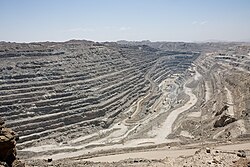
An open pit uranium mine in Namibia

Economic geology is concerned with earth materials that can be used for economic and industrial purposes. These materials include precious and base metals, nonmetallic minerals and construction-grade stone. Economic geology is a subdiscipline of the geosciences; according to Lindgren (1933) it is “the application of geology”. It may be called the scientific study of the Earth's sources of mineral raw materials and the practical application of the acquired knowledge.[1]

The study is primarily focused on metallic mineral deposits and mineral resources. The techniques employed by other Earth science disciplines (such as geochemistry, mineralogy, geophysics, petrology, paleontology and structural geology) might all be used to understand, describe and exploit an ore deposit.[citation needed]

Economic geology is studied and practiced by geologists. Economic geology may be of interest to other professions such as engineers, environmental scientists and conservationists because of the far-reaching impact that extractive industries have on society, the economy and the environment.

Purpose of study

[edit]

The purpose of the study of economic geology is to gain understanding of the genesis and localization of ore deposits plus the minerals associated with ore deposits.[2] Though metals, minerals and other geologic commodities are non-renewable in human time frames, the impression of a fixed or limited stock paradigm of scarcity has always led to human innovation resulting in a replacement commodity substituted for those commodities which become too expensive. Additionally the fixed stock of most mineral commodities is huge (e.g., copper within the Earth's crust given current rates of consumption would last for more than 100 million years.)[3] Nonetheless, economic geologists continue to successfully expand and define known mineral resources.[citation needed]

Mineral resources

[edit]

Mineral resources are concentrations of minerals significant for current and future societal needs. Ore is classified as mineralization economically and technically feasible for extraction. Not all mineralization meets these criteria for various reasons. The specific categories of mineralization in an economic sense are:

  • Mineral occurrences or prospects of geological interest but not necessarily economic interest[citation needed]
  • Mineral resources include those potentially economically and technically feasible and those that are not[citation needed]
  • Ore reserves, which must be economically and technically feasible to extract[citation needed]

Ore

[edit]
Citrobacter species can have concentrations of uranium in their bodies 300 times higher than in the surrounding environment.

Geologists are involved in the study of ore deposits, which includes the study of ore genesis and the processes within the Earth's crust that form and concentrate ore minerals into economically viable quantities.[citation needed]

Study of metallic ore deposits involves the use of structural geology, geochemistry, the study of metamorphism and its processes, as well as understanding metasomatism and other processes related to ore genesis.[citation needed]

Ore deposits are delineated by mineral exploration, which uses geochemical prospecting, drilling and resource estimation via geostatistics to quantify economic ore bodies. The ultimate aim of this process is mining.[citation needed]

Coal and petroleum

[edit]
Mud log in process, a common way to study the lithology when drilling oil wells.
See main articles Coal and Petroleum geology

The study of sedimentology is of prime importance to the delineation of economic reserves of petroleum and coal energy resources.[citation needed]

See also

[edit]

References

[edit]
Revisions and contributorsEdit on WikipediaRead on Wikipedia
from Grokipedia
Economic geology is a subdiscipline of the geosciences that focuses on the scientific study of Earth's and resources, including their origin, distribution, , evaluation, and extraction for practical economic use. This field examines materials such as metallic s, industrial s, fossil fuels, and gemstones, assessing their processes and commercial potential while considering factors like grade, , , and market . An deposit, central to economic geology, is defined as a concentration that can be mined profitably under prevailing geological and economic conditions. The study of economic geology integrates principles from , , , and resource to understand how deposits form through diverse mechanisms, such as magmatic segregation, hydrothermal fluids, sedimentary accumulation, and enrichment. Key topics include the genesis of metallic resources like , , and iron; non-metallic minerals such as phosphates and aggregates; and energy resources including , , and . Exploration techniques, including geophysical surveys (e.g., seismic and magnetic methods) and geochemical sampling, are employed to identify and delineate viable deposits, often in challenging terrains or at depth. As one of the oldest branches of geology, economic geology has driven national development since the Industrial Revolution by supplying raw materials essential for manufacturing, infrastructure, and energy production. In the modern context, it addresses critical challenges like supply chain vulnerabilities for strategic minerals (e.g., rare earth elements and ) vital for clean energy technologies and electronics, amid rising global demand from and industrialization. Economic geologists also evaluate environmental impacts, such as habitat disruption and from , promoting sustainable practices to balance resource needs with ecological preservation.

Definition and Scope

Definition

Economic geology is a subdiscipline of the geosciences that concentrates on the scientific study of Earth's raw materials, including metals, nonmetallic s, and fuels, which hold economic value for industrial and commercial applications. These resources encompass a wide range of materials essential for societal needs, from precious metals like and base metals like to industrial nonmetallics such as phosphates and energy sources including and . The core objectives of economic geology involve elucidating the genesis, localization, and distribution of deposits to support their discovery, assessment, and extraction. By applying geological principles to these aspects, the field enables the identification of viable deposits—concentrations of minerals that can be economically mined—while considering geological processes that form and concentrate such resources. This knowledge facilitates targeted exploration and sustainable resource development. In distinction from pure , which prioritizes theoretical and descriptive scientific inquiry, economic geology emphasizes the practical evaluation of economic feasibility in resource exploitation, integrating geological data with considerations of profitability and market viability. A seminal contribution to the discipline is Lindgren's 1933 textbook Deposits, widely regarded as a foundational work that systematized the study of ore formation and economic potential.

Societal Importance

Economic geology plays a pivotal role in sustaining modern societies by identifying and facilitating the extraction of resources essential for , production, and industries worldwide. These resources, including metals like iron, aluminum, and , form the backbone of global supply chains, contributing trillions of dollars annually to economic output through and related sectors. For instance, is indispensable for and , supporting efforts that underpin technological progress and urban development. According to U.S. Geological Survey (USGS) estimates, global resources exceed 1.5 billion metric tons, ensuring long-term availability when combined with and advancements, despite reserves typically equating to about 40 years at current consumption rates. In November 2025, the USGS added to its List of Critical Minerals, recognizing its essential role in technologies. The discipline intersects closely with , , and to optimize and mitigate supply chain vulnerabilities. Economic geologists collaborate with engineers to design efficient extraction methods and with policymakers to inform regulations that balance economic needs with strategic reserves. This interdependence is evident in international frameworks like the International Council on Mining and Metals' Mining Contribution Index, which quantifies how production drives GDP growth, , and in resource-rich nations. Given the non-renewable nature of mineral deposits, economic geology emphasizes efficient exploitation to prevent shortages and promote . Unlike renewable resources, minerals such as rare earth elements are finite and formed over geological timescales, necessitating careful and to extend usable supplies. The USGS highlights that a global strategy for mineral resource use is crucial for , urging reduced waste and enhanced recovery rates to meet escalating demands from and industrialization. Through these efforts, economic geology enables transformative societal advancements, particularly in the transition to . Critical minerals like , vital for batteries in electric vehicles and solar storage, are sourced via geological exploration that supports decarbonization goals; the projects lithium demand to surge over 40-fold by 2040 under net-zero scenarios, underscoring the field's role in fostering a .

History

Early Foundations

The practice of economic geology traces its roots to ancient civilizations, where for valuable metals supported economic and cultural development. In , began in the fourth millennium B.C., with pharaohs sourcing the metal from the Upper region near the and the to create bars used as a and for ornamental purposes. , initiated around the same period in the , provided essential materials for tools, weapons, and utensils, marking one of the earliest organized efforts to exploit mineral resources systematically. These activities relied on and rudimentary techniques, driven by the metals' utility in and craftsmanship. The Roman Empire advanced mining on a larger scale, integrating it into the empire's economy through state-controlled operations. Romans employed hydraulic techniques, such as hushing—diverting water to erode overburden—and underground galleries to extract gold and silver. They produced up to several tonnes of gold annually from sites in Iberia and Dacia. Silver mining in regions like Laurion in Greece and Rio Tinto in Spain fueled coinage and trade, with lead-silver ores processed via cupellation to isolate the precious metal. In the Americas, the Inca civilization developed sophisticated mining for gold, silver, and copper, utilizing underground shafts and smelting furnaces as early as the 15th century A.D., often in high-altitude Andean sites to supply imperial tribute and artifacts. These pre-modern efforts reflected intuitive understandings of ore genesis, associating deposits with visible outcrops and surface features rather than deep geological processes. In the , the marked a significant advancement with the publication of Georgius Agricola's in 1556, the first systematic treatise on , , and ore processing. This work documented practical techniques, environmental considerations, and early theories of formation, drawing on classical knowledge and contemporary practices in , laying the groundwork for a more scientific approach to resource extraction. By the 18th century, economic geology began transitioning toward scientific inquiry, influenced by theoretical frameworks and institutional efforts. Abraham Gottlob Werner's theory, proposed in the 1780s, posited that most rocks, including ore deposits, formed through precipitation from a universal ocean, providing an early systematic classification that emphasized sedimentary origins for many and guided prospecting strategies. This approach shaped the understanding of deposit formation until challenged by plutonist ideas, laying groundwork for resource evaluation. In 1879, the establishment of the U.S. Geological Survey formalized economic geology in the United States, tasked with classifying public lands and examining geological structures for potential to support national development. Key figures like William Smith advanced practical applications during this era. Smith's work in the late 18th and early 19th centuries on , developed through canal and mine surveys in , demonstrated that rock layers occurred in predictable sequences with associated fossils, enabling accurate prediction of locations and reducing exploration risks. Colonial resource extraction further emphasized economic priorities, as European powers commissioned geological surveys in territories like and the to identify profitable minerals, integrating with imperial expansion and trade. These efforts highlighted geology's role in locating exploitable deposits for colonial economies. The accelerated the shift from artisanal to scientific mining, transforming economic geology into a focused on and scale. Beginning in the mid-18th century in Britain, increased demand for , iron, and other ores prompted the adoption of systematic surveying, steam-powered drainage, and geological mapping to access deeper deposits, moving beyond trial-and-error methods toward evidence-based extraction. This transition integrated geological knowledge with , enabling large-scale operations that supported industrialization while fostering the of resource assessment.

Modern Developments

The 20th century marked a transformative period in economic geology, driven by scientific revolutions and geopolitical imperatives. The theory, established in the , fundamentally reshaped understandings of global ore deposit patterns by linking mineralization processes to tectonic settings such as subduction zones, rifts, and continental collisions. This enabled geologists to predict and map metallogenic provinces on a worldwide scale, moving beyond localized empirical observations to integrated models of Earth's dynamic crust. Complementing this, the development of by Georges Matheron in 1971 introduced rigorous mathematical frameworks for ore reserve estimation, using concepts like to account for spatial variability in mineral grades and reduce uncertainties in resource assessments. These advancements were pivotal during the post-World War II economic boom, when heightened geopolitical tensions spurred intensive for , , and strategic minerals essential for nuclear programs, , and military applications. For instance, the demand for uranium escalated with the onset of the , while oil's role as a strategic commodity intensified global prospecting efforts in regions like the and . Institutional growth paralleled these scientific strides, fostering collaboration and knowledge dissemination. The Society of Economic Geologists (SEG), founded in 1920, emerged as a cornerstone organization dedicated to advancing the science and application of through publications, education, and professional networking. SEG's influence expanded in the mid-20th century, supporting research on deposit formation and exploration amid postwar resource demands. International conferences further solidified this institutional framework; events like the quadrennial International Association on the Genesis of Deposits (IAGOD) symposia, initiated in the 1960s, and the biennial meetings of the Society for Applied to Mineral Deposits (SGA), have convened experts to address evolving challenges in mineral resource evaluation and tectonic controls on deposits. In the , economic geology has increasingly integrated geospatial technologies, with geographic information systems (GIS) and revolutionizing exploration and . These tools enable large-scale mineral mapping through and data layering, enhancing the detection of subtle alteration zones associated with ore bodies and improving efficiency in vast, inaccessible terrains. This technological evolution has been particularly responsive to geopolitical disruptions, such as the 2010 rare earth elements crisis, when China's export quotas triggered global vulnerabilities and exemplified . The crisis prompted diversified sourcing strategies and investments in alternative deposits, underscoring the field's adaptation to supply risks for critical minerals used in , renewables, and defense technologies.

Fundamental Concepts

Mineral Resources and Reserves

In economic geology, a mineral occurrence denotes a natural concentration of solid, liquid, or gaseous material in or on the that fails to meet criteria for potential economic extraction due to factors such as low grade or impractical . This distinguishes it from more viable categories, as occurrences are documented but not pursued for commercial development without significant advancements in or . A mineral resource represents a concentration of naturally occurring material in the in such form, amount, and location that economic extraction is currently or potentially feasible, based on geological knowledge and preliminary assessments. Resources encompass both identified deposits with reasonable prospects for eventual economic extraction and undiscovered potential, emphasizing future value under evolving market conditions. In contrast, a mineral reserve is the economically mineable portion of a measured or indicated resource, incorporating allowances for dilution, losses, and modifying factors like methods and recovery rates, confirmed as viable for production at the time of determination. The Framework Classification for Fossil Energy and Mineral Reserves and Resources (UNFC), adopted in 2009, establishes a global standard for categorizing these entities using a three-dimensional system: geological knowledge and assessment (G axis), project feasibility and field development plans (F axis), and economic and social viability (E axis). On the G axis, categories include G1 for proven quantities with high from detailed (equivalent to measured resources), G2 for indicated quantities with moderate implying but not verifying continuity, and G3 for inferred quantities based on limited evidence with low . The F axis distinguishes F1 (feasibility demonstrated through studies supporting development) from F2 (feasibility not yet demonstrated), while the E axis separates E1 (economically viable with confirmed extraction and sale) from E2 (potentially economic but requiring further evaluation). Reserves typically fall into high- classes like 111 (E1, F1, G1: ) or 121 (E1, F2, G1: probable reserves with demonstrated economics but pending full feasibility). These align with international reporting standards from the Committee for Mineral Reserves International Reporting Standards (CRIRSCO), which define measured resources as having sufficient for detailed mine planning, indicated resources for preliminary economic evaluation, and inferred resources for conceptual assessment only, with reserves derived solely from measured and indicated categories after applying modifying factors. Classification into resources or reserves depends on multiple interdependent factors, including geological confidence derived from sampling density, , and continuity verification; economic factors such as commodity prices, operating costs, and technological feasibility; and legal tenure encompassing property rights, permitting, environmental regulations, and governmental approvals. grade serves as a critical factor in reserve classification, as higher grades enhance economic extractability while low grades may relegate material to resource status. For example, in a hypothetical deposit, an inferred resource might estimate 2 million ounces at 1 gram per based on widely spaced drill holes providing limited geological evidence, indicating potential but uncertain economic viability, whereas a proven reserve could delineate 500,000 ounces at 5 grams per from dense sampling and feasibility studies confirming profitable under current prices and legal access rights. This progression from to reserve underscores the iterative nature of economic geology, where advancing confidence and viability transforms potential into extractable value.

Ore Deposits and Formation

Ore deposits form through a variety of geological processes that concentrate economically viable minerals from the , primarily via magmatic, hydrothermal, sedimentary, and metamorphic mechanisms. These processes involve the mobilization, transport, and precipitation of metals and minerals under specific , , and chemical conditions. Understanding ore genesis is crucial for recognizing how deposits are localized and why certain mineral assemblages occur together. Magmatic ore genesis occurs when metals segregate during the and differentiation of igneous magmas, leading to deposits rich in elements like , , and platinum-group elements. For instance, deposits form through the early of dense layers in mafic-ultramafic intrusions, such as those in layered complexes like the Bushveld in . , a key process here, involves fractional where denser minerals settle, enriching residual melts in incompatible elements and forming segregated ore bodies. Hydrothermal ore deposits result from the circulation of hot, metal-bearing fluids through fractures and porous rocks, precipitating minerals as fluids cool or react with host rocks. deposits, a common hydrothermal type, form when fluids fill fractures, depositing sulfides like and silver; these fluids often originate from magmatic sources or metamorphic devolatilization. Fluid migration is driven by pressure gradients, , or seismic pumping, transporting metals as or complexes over distances of kilometers. Sedimentary ore genesis involves surface or near-surface processes where minerals precipitate from aqueous solutions in basins, often linked to , , or . Evaporite deposits, such as those containing or , form in restricted marine or lacustrine environments where repeated cycles of concentrate soluble salts. Banded iron formations, another sedimentary example, accumulate through chemical of iron oxides in oxygenated ancient oceans. Metamorphic ore genesis arises during regional or contact , where heat and fluids remobilize and reconcentrate metals from pre-existing rocks. Skarn deposits, typically formed at the contacts between intrusions and rocks, result from metasomatic replacement by reactive fluids, producing calc-silicate minerals hosting , , or . These processes often overlap with hydrothermal activity, enhancing metal enrichment through fluid-rock interactions. Specific deposit types illustrate these models in action. Porphyry copper deposits, a major source of global , form in subduction-related magmatic arcs where oxidized s release sulfur-rich fluids that precipitate copper sulfides in stockwork veins around porphyritic intrusions. These deposits are localized by volatile exsolution during magma ascent, creating a magmatic-hydrothermal system. In contrast, form in carbonate platforms through the migration of warm, basin-derived brines that precipitate and in karstic or fracture systems, often during tectonic compression. Supergene enrichment modifies primary hypogene deposits near the surface, where oxidation of sulfides by meteoric waters dissolves metals, which then redeposit lower down as enriched secondary ores. This process is prominent in deposits, increasing grades by factors of 2-10 in the oxidized zone, but requires arid climates and tectonic stability to develop thick leached caps. The distribution of ore deposits is strongly controlled by tectonic settings, with subduction zones playing a pivotal role in forming arc-related magmatic and hydrothermal systems. In convergent margins, the subducting slab dehydrates, releasing fluids that flux the mantle wedge, promoting partial melting and the generation of metal-fertilized magmas. This explains the clustering of porphyry copper and epithermal gold deposits along the Pacific Ring of Fire.

Exploration Methods

Geological and Geochemical Prospecting

Geological and geochemical encompasses surface-based techniques that leverage direct observations of rock formations and chemical signatures to identify potential deposits in economic geology. These methods rely on field surveys to geological features and sample materials for , providing initial evidence of mineralization before more invasive exploration. By focusing on surface expressions of subsurface processes, they enable cost-effective over large areas, guiding targeted or geophysical follow-up. Geological mapping forms the foundational step in prospecting, involving systematic field surveys to delineate rock types, structures, and anomalies indicative of ore bodies. Modern approaches integrate remote sensing data from satellites like Landsat or hyperspectral sensors such as ASTER to enhance mapping over inaccessible areas, identifying lithologic units, alteration zones, and lineaments associated with mineralization—e.g., iron oxide signatures for porphyry deposits. Structural analysis identifies faults, folds, and shear zones that often control fluid pathways for mineral deposition, such as vein systems in hydrothermal ores. For instance, mapping thrust faults in sedimentary terrains can reveal traps for stratabound deposits like Mississippi Valley-type lead-zinc. Lithology identification categorizes rock units based on composition, texture, and age, highlighting favorable host rocks—e.g., carbonates for skarn deposits or volcanics for porphyry copper—through outcrop description and stratigraphic correlation. Anomaly detection targets deviations like gossans (oxidized iron caps over sulfides) or altered zones with bleached or silicified rocks, which signal underlying mineralization via visual and hammer sampling during traverses. These elements collectively build a spatial model of deposit potential, as demonstrated in Nevada where mapping Ordovician siliceous rocks aided gold exploration. Geochemical prospecting complements mapping by quantifying trace elements dispersed from bodies into surficial materials, exploiting secondary dispersion halos formed by and . Soil sampling targets the B horizon (typically 1-2 meters depth) to capture residual anomalies, using grid or contour patterns to delineate enrichment patterns; for example, elevated in soils over porphyry systems. Stream sediment sampling analyzes fine fractions (<80 mesh) from drainage basins, reflecting upstream lithology and mineralization via transported pathfinders, with surveys spacing 1 sample per 10-100 km² for regional coverage. Rock sampling involves chip or grab methods on outcrops to assess primary halos, such as limonite-rich gossans showing lead-zinc leakage. Advanced techniques like soil-gas surveys measure volatile compounds and gases emanating from depth, effective for detecting concealed orogenic gold deposits under regolith cover, as shown in recent Australian applications. Pathfinder elements, like arsenic (As) for gold or antimony (Sb) for tungsten, serve as indicators due to their mobility and association with s—e.g., As enrichment up to 1000 ppm signaling cobaltite deposits. These techniques detect concealed s through multi-element analysis, prioritizing mobile elements (Zn, ) in acidic environments or immobile ones (Pb, Sn) in stable settings. Historical methods laid the groundwork for these approaches, emphasizing manual surface investigation. Panning emerged in ancient times, as in Roman placer mining, and peaked during 19th-century gold rushes—e.g., over 300,000 prospectors in California's 1849 rush used pans to separate heavy gold particles from stream gravels by swirling water and sediment. Trenching involved excavating shallow ditches (often by hand or basic machinery) to expose bedrock profiles and collect bulk samples, proving effective for near-surface validation in unconsolidated cover, as in early lead prospecting. These low-tech techniques provided direct visual and physical evidence of mineralization, influencing modern protocols. Contemporary enhancements integrate portable technologies for rapid, on-site analysis, boosting efficiency in geochemical workflows. Portable X-ray fluorescence (XRF) analyzers enable real-time elemental detection in soils, sediments, or rocks, measuring pathfinders like As or Cu within minutes without lab delays; they support denser sampling grids and quality control, yielding data comparable to laboratory ICP-MS for elements above 10-100 ppm. Used since the early 2000s, pXRF has transformed prospecting by allowing dynamic field decisions, such as prioritizing drill targets based on anomaly contrast, while reducing costs in remote areas. Since the 2010s, artificial intelligence (AI) and machine learning have been increasingly applied to process large datasets from geochemical, geophysical, and remote sensing surveys, automating anomaly detection, predictive modeling of deposit locations, and integration of multi-source data to improve exploration success rates—as of 2025, mining AI investments are projected to reach $13.1 billion by 2029. These tools extend traditional sampling by providing immediate multi-element profiles, often combined with GIS for anomaly mapping. A notable case study illustrates the synergy of these methods in discovering Carlin-type gold deposits in Nevada, which account for significant U.S. production since the 1960s. In north-central Nevada's basin-and-range terrain, initial geological mapping identified favorable Ordovician carbonate hosts and structural controls like faults. Geochemical surveys then employed stream sediment sampling of -80 mesh fines, revealing a "volatile suite" anomaly of As, Hg, Sb, and W—e.g., As as a peripheral pathfinder with enrichments 3.5-13 times background. This led to the 1961 Carlin deposit discovery, where rock sampling confirmed disseminated gold in jasperoids; subsequent panning and trenching validated near-surface expressions. Pathfinder-guided prospecting has since delineated over 135 metric tons annual output, revolutionizing exploration for sediment-hosted gold.

Geophysical Techniques

Geophysical techniques in economic geology employ measurements of physical properties such as magnetic susceptibility, density, electrical conductivity, and seismic velocity to detect subsurface ore bodies indirectly, without direct sampling. These methods exploit contrasts between mineralized zones and surrounding host rocks, enabling the identification of hidden deposits at depths ranging from tens to thousands of meters. Widely used in mineral exploration, they provide cost-effective reconnaissance over large areas and precise targeting for follow-up investigations. Magnetometry measures variations in the Earth's magnetic field to detect magnetic anomalies caused by ferromagnetic minerals like magnetite in iron ores. These surveys identify iron oxide-rich deposits, such as banded iron formations, where magnetic susceptibility contrasts can exceed 0.1 SI units compared to non-magnetic host rocks. Ground-based magnetometers, like proton precession types, achieve resolutions of 1-10 nT, while airborne systems cover broader regions efficiently. Gravity surveys detect density contrasts between ore bodies and enclosing rocks, producing positive anomalies over dense metallic deposits like iron or lead-zinc ores, where contrasts can reach 0.5-1.0 g/cm³. Portable gravimeters measure microgal variations (1 mGal = 10^{-5} m/s²), delineating structures such as kimberlite pipes or massive sulfide lenses. Since the 1950s, advancements in instrumentation have improved accuracy to 0.05 mGal, enhancing detection of subtle features. Electrical resistivity methods map subsurface conductivity differences, particularly effective for locating disseminated or massive sulfide ores that exhibit low resistivity (10-100 Ω·m) due to metallic conduction. Techniques like direct-current resistivity and induced polarization (IP) distinguish chargeable sulfides, such as pyrite or chalcopyrite, from resistive host rocks (>1000 Ω·m). IP surveys measure chargeability in milliseconds, identifying alteration zones associated with volcanogenic massive sulfide deposits. Seismic reflection profiling images deep crustal structures by analyzing reflected from or interfaces, useful for mapping fault systems or intrusions hosting at depths beyond 1 km. High-resolution surveys use vibroseis sources to generate P-wave velocities contrasting by 0.2-0.5 km/s across lithologic boundaries. This method has revealed ore-controlling faults in porphyry systems, aiding exploration in complex terranes. Airborne geophysical surveys, including helicopter-borne magnetometry and electromagnetics, facilitate regional over hundreds of square kilometers, identifying broad anomaly patterns for initial targeting in greenfield exploration. Line spacings of 100-500 m allow detection of anomalies >1 km in extent, as demonstrated in surveys over greenstone belts. Ground-based surveys, conversely, provide higher resolution (1-10 m spacing) for detailed follow-up, guiding targeted by refining anomaly boundaries to within 50 m. Since the 1990s, integration of geophysical data with software has advanced interpretation, allowing joint inversion of magnetic, , and seismic datasets to construct subsurface models with resolutions improved by factors of 2-5 over 2D methods. Tools like those developed in cooperative inversion frameworks incorporate geological constraints, reducing ambiguity in body delineation. A notable application is the use of in porphyry exploration, where chargeability highs (>10 mV/V) delineate disseminated halos around quartz-magnetite stockworks, as seen in surveys over deposits in the that led to discoveries in the 1970s. These targets often require geochemical confirmation to validate content.

Resource Types

Metallic Ores

Metallic ores encompass a diverse array of mineral deposits that serve as primary sources for metals essential to industrial applications, including , , and transportation. These deposits form through various geological processes, often involving hydrothermal activity that concentrates metals in economically viable quantities. Key examples include iron from hematite-rich sedimentary layers, in porphyry systems, in epithermal veins, and aluminum from laterites. Globally, metallic ore production supports a multi-trillion-dollar industry, with alone accounting for the largest volume due to its role in . Iron ore, predominantly (Fe₂O₃), occurs in massive sedimentary deposits known as banded iron formations, which are ancient chemical precipitates from oxygenated . These deposits are characterized by alternating layers of iron oxides and silica, with providing high-grade ore averaging 60-70% iron content, making it ideal for efficient beneficiation. The Carajás Mineral Province in hosts one of the world's largest such deposits, with reserves exceeding 18 billion metric tons at over 65% iron, contributing significantly to global supply from high-quality, low-impurity sources. In 2023, worldwide mine production reached approximately 2.5 billion metric tons, led by and , underscoring iron's status as a bulk commodity with low unit value but massive scale, essential for and . Copper ores are primarily hosted in porphyry deposits, large, low-grade systems formed by magmatic-hydrothermal fluids associated with subduction zones, featuring disseminated sulfides like chalcopyrite within altered intrusive rocks. These deposits, often spanning kilometers, yield copper grades of 0.4-1.0% and are the dominant source of the metal, supplying over 60% of global copper. Major provinces align with the Pacific Ring of Fire, including the Andes in Chile and Peru, which together produced over 7.6 million metric tons in 2023 from such systems. Copper exemplifies a high-value commodity relative to bulk ores, with global mine production at 22 million metric tons in 2023; notably, recycling contributes about one-third of supply, enhancing sustainability as scrap recovery reduces energy needs by up to 85%. Gold occurs in epithermal vein deposits, shallow hydrothermal systems (typically <1 km depth) where hot, low-salinity fluids precipitate native and in quartz-adularia veins or breccias, often with silver and base metals. These deposits feature grades up to 100 g/t , forming in volcanic arcs via boiling and fluid mixing, and represent a high-value target due to 's role in jewelry, , and electronics. The Basin in stands as the premier province, a paleoplacer deposit with over 50,000 metric tons historically extracted, though current output is lower; global mine production was 3,000 metric tons in 2023, with epithermal systems contributing significantly to new discoveries. Bauxite, the principal for aluminum, consists of aluminum hydroxides like in lateritic soils developed on aluminosilicate rocks in tropical climates, with deposits characterized by low silica and high alumina content (40-60%). These surficial, tabular bodies form through intense chemical , yielding economic concentrations up to 100 meters thick. Global distribution favors humid equatorial regions, with reserves concentrated in (32%), (23%), and (21%), led by Guinea's vast, high-grade resources. World bauxite production hit 400 million metric tons in 2023, positioning aluminum as a bulk commodity vital for alloys in and automotive sectors, though its processing is energy-intensive. Economically, metallic ores divide into bulk types like iron and aluminum, which dominate by volume (billions of tons annually) but trade at low prices per ton ($50-150), necessitating proximity to markets and large-scale operations to offset transport costs. In contrast, high-value ores such as and command premiums ($8,000-10,000 per ton for copper, $60 million per ton for gold), enabling long-distance and smaller-scale , with gold's driving . This influences global patterns, where bulk ores fuel industrial growth in , while high-value metals support transitions, including . further bolsters economics, particularly for , mitigating supply risks amid rising for green technologies.

Non-Metallic Minerals and Industrial Materials

Non-metallic minerals and industrial materials encompass a diverse group of resources essential for , chemical production, , and , characterized by their non-conductive and non-malleable properties. These materials, including carbonates, phosphates, silicates, and evaporites, are typically extracted from sedimentary environments and valued for bulk applications rather than high-value metallurgical uses. Unlike metallic ores, their economic extraction relies on proximity to markets due to high transportation costs relative to low per-unit prices. Key types include , primarily composed of (CaCO₃), which serves as the main raw material for production through and clinkering processes. Limestone deposits form in marine sedimentary settings, such as shallow platforms where occurs, and are quarried globally for construction aggregates and lime. Phosphates, rich in minerals like , are critical for fertilizers, providing essential for plant growth; major deposits occur in sedimentary beds formed in ocean zones, with significant reserves in the Western Phosphate Field of the . Gemstones, such as diamonds, represent high-value non-metallic minerals used in jewelry and industrial abrasives for their hardness ( 10). Diamonds are primarily sourced from kimberlite pipes but economically extracted from placer deposits where concentrates them in alluvial gravels and riverbeds, as seen in deposits in and . Industrial sands, particularly silica sands with over 95% SiO₂ content, are vital for glassmaking, foundry molds, and hydraulic fracturing proppants; these form from weathered quartz-rich rocks in coastal dunes, river terraces, or ancient sedimentary basins. Evaporites, such as (rock salt) and , deposit in restricted sedimentary basins where exceeds water inflow, leading to sequential precipitation of minerals like carbonates, sulfates, and chlorides. These are mined for chemicals, , and de-icing, with salt domes—upward-piercing evaporite structures—acting as impermeable traps that facilitate accumulation in overlying strata. Economically, non-metallic minerals often feature low unit values but high production volumes, supporting large-scale industries; for instance, global silica sand output exceeds hundreds of millions of tons annually to meet demand in . Rare earth elements (REEs), extracted from non-metallic minerals like and , exemplify concentrated processing dominance, with controlling approximately 95% of global refining capacity in the 2010s. As of 2023, still accounts for approximately 90% of global rare earth refining capacity, though international efforts to diversify production continue, influencing supply chains for and technologies.

Fossil Fuels

Fossil fuels, comprising , , and , represent critical organic resources in economic geology, formed through geological processes over millions of years and extracted for production. These resources originate from ancient accumulated in sedimentary environments, undergoing transformation under heat and pressure to yield energy-dense materials. In economic terms, their deposits are evaluated based on , , and market viability, influencing global markets and development. Exploration and extraction rely on understanding dynamics, where source materials are preserved and matured. Coal forms primarily from the accumulation and burial of in ancient swamps within sedimentary basins, a process spanning the period and continuing into the Tertiary. Over time, increasing depth and temperature drive coalification, progressing through ranks from —the lowest rank, with high moisture and low heat value—to subbituminous, bituminous, and finally , the highest rank characterized by high carbon content and low volatiles, often resulting from metamorphic alteration. Major coal fields, such as the Appalachian Basin in the , host significant bituminous and reserves, formed during Pennsylvanian and Permian times, and have historically supplied much of the nation's energy needs. Petroleum originates in organic-rich source rocks, typically fine-grained shales or mudstones, where kerogen—a waxy organic precursor—matures into liquid hydrocarbons under burial and geothermal heat, a process known as catagenesis. Once generated, oil migrates upward through porous carrier rocks until impeded by traps, such as structural anticlines—upward-folded rock layers forming domes—or stratigraphic traps, where impermeable layers like shale seal permeable reservoirs such as sandstones. Unconventional petroleum resources, including shale oil and tight gas, have gained prominence since the 2000s through hydraulic fracturing (fracking), which injects high-pressure fluids to create fractures in low-permeability source rocks, enabling extraction from formations like the Bakken Shale; this technique has dramatically increased U.S. production and altered global supply dynamics. Natural gas, primarily , occurs as associated gas—produced alongside crude in petroleum reservoirs—or non-associated gas, extracted from independent gas fields without significant . Non-associated reserves dominate in large stratigraphic traps, such as the Qatar North Field, the world's largest, shared with as the South Pars field, holding approximately 900 trillion cubic feet of recoverable gas and accounting for about 13% of global totals. Global reserves exceed 6,600 trillion cubic feet, with major concentrations in the , , and , supporting its role as a bridge fuel in energy transitions due to lower emissions compared to or . The economic landscape of fossil fuels faces ongoing debates around peak oil, the theoretical point of maximum global production first modeled by M. King Hubbert in the 1950s, with projections varying from imminent declines to peaks delayed by unconventional sources; recent IEA forecasts under current policies suggest that oil demand may continue to grow until at least 2050, amid ongoing debates on the timing of any peak influenced by efficiency gains, electrification, and policy changes. This shift is accelerating a transition to renewables, driven by policy, climate imperatives, and technological advances in solar and wind, potentially stranding assets in fossil fuel-dependent regions and reshaping investment priorities toward sustainable alternatives.

Evaluation and Economics

Reserve Estimation

Reserve estimation in economic geology involves quantifying the economically extractable portion of a mineral deposit following , using geological data to assess , grade, and continuity. This process transitions mineral resources into reserves by applying confidence levels based on data density and quality, ensuring reliable public reporting for and . Key methods integrate spatial and geological modeling to minimize , with classifications evolving from preliminary inferences to confirmed economic viability. One fundamental technique is volumetric estimation, which calculates ore tonnage as the product of the deposit's and average : ore tonnage=[volume](/page/Volume)×[density](/page/Density)\text{ore tonnage} = \text{[volume](/page/Volume)} \times \text{[density](/page/Density)}. The contained metal tonnage is then determined by multiplying the ore tonnage by the metal grade: metal tonnage=ore tonnage×grade\text{metal tonnage} = \text{ore tonnage} \times \text{grade}. This approach relies on delineating the ore body's from hole and cross-sections, assigning uniform grades within defined volumes for initial assessments. It is particularly useful for simple, tabular deposits where geological continuity is evident, though it assumes homogeneity and can overestimate or underestimate in heterogeneous settings. More advanced geostatistical methods, such as , enhance accuracy by accounting for spatial variability through variograms that model grade correlations between sample points. Developed from D.G. Krige's early work in and formalized by Georges Matheron in the , provides unbiased, minimum-variance estimates by weighting nearby samples based on distance and geological structure. Ordinary , for instance, interpolates block grades in three-dimensional models, reducing smoothing errors compared to traditional methods and supporting probabilistic . These techniques are widely adopted in modern for their ability to integrate multivariate data, as demonstrated in reserve evaluations. Reserve classification progresses through stages of increasing confidence, typically from inferred mineral resources—based on limited sampling and geological inference—to indicated and measured resources via denser grids that confirm continuity and grade. Inferred resources rely on sparse (e.g., widely spaced holes), while measured resources require close-spaced sufficient for high reliability in geological and grade continuity. Conversion to reserves occurs when economic modifying factors are applied: indicated resources become probable reserves, and measured resources become , supported by feasibility studies. Drilling grid refinement, such as reducing spacing from 200 m to 50 m, directly elevates category confidence by improving . Standardized reporting frameworks like the , first published in and updated in by the Australasian Institute of Mining and Metallurgy, mandate transparent disclosure of these classifications. As of November 2025, a draft update to the is under review, incorporating enhancements such as improved ESG considerations and closure planning requirements. The code requires competent persons to report reserves with specified tonnages, grades, and confidence levels, separating proven and probable categories and incorporating recovery factors. It emphasizes materiality in and modifying factors, influencing global practices through alignment with CRIRSCO templates. A critical aspect of reserve delineation is grade determination, which sets the minimum grade threshold for economic extraction by balancing processing costs against metal recovery and market prices. For example, in a deposit, a might be calculated considering milling costs of $10 per and 90% recovery, excluding lower-grade material to define viable boundaries. This ensures reserves reflect only profitable portions, adjusting dynamically with prices to optimize mine life.

Economic Assessment Models

Economic assessment models in economic geology evaluate the financial viability of mineral and energy resource projects by integrating geological with economic parameters to forecast profitability and guide investment decisions. These models primarily rely on (DCF) techniques, which account for the by discounting future cash flows to their . Key among them is the (NPV), calculated as the sum of discounted net cash flows minus the initial investment, using the formula: NPV=t=1nCFt(1+r)tI0\text{NPV} = \sum_{t=1}^{n} \frac{\text{CF}_t}{(1 + r)^t} - I_0 where CFt\text{CF}_t represents the net cash flow in period tt, rr is the discount rate, nn is the project lifespan, and I0I_0 is the initial capital expenditure. A positive NPV indicates a potentially profitable project, while NPV is widely used in feasibility studies for mining ventures to assess long-term economic returns. Complementing NPV is the Internal Rate of Return (IRR), defined as the discount rate that sets NPV to zero, solved iteratively from the equation: 0=t=1nCFt(1+IRR)tI00 = \sum_{t=1}^{n} \frac{\text{CF}_t}{(1 + \text{IRR})^t} - I_0 IRR provides a percentage return metric, allowing comparison with alternative investments or cost of capital; projects typically proceed if IRR exceeds a hurdle rate, often around 15-20% for high-risk mining operations. These models incorporate essential factors such as capital costs (e.g., exploration, development, and infrastructure), operating expenses (including labor, maintenance, and processing), fluctuating commodity prices, and discount rates that reflect project risk and opportunity costs—commonly ranging from 5% to 10% in the mining industry to adjust for inflation and financing. Reserve volumes from geological estimates serve as inputs to project expected production and revenue streams in these calculations. Risk assessment enhances these models by quantifying uncertainties inherent in geological and market variables. examines how changes in key inputs, such as a 20% drop in prices, impact NPV or IRR, revealing project robustness to volatility. For more comprehensive uncertainty modeling, simulations generate probability distributions of outcomes by randomly sampling input variables (e.g., grades, recovery rates, and costs) thousands of times, producing profiles like the probability of NPV exceeding zero. In a practical case, models applied to oil field appraisal integrate production forecasts with scenarios; for instance, a project evaluation using DCF demonstrated that varying prices from $50 to $80 per barrel shifted NPV from negative to positive, underscoring the model's utility in under market uncertainty.

Extraction and Processing

Mining Techniques

Mining techniques in economic geology encompass a range of methods designed to extract valuable mineral deposits from the , tailored to the depth, , and type of resource. These techniques are selected based on factors such as ore accessibility, deposit , and economic viability, with surface methods generally preferred for shallower deposits to maximize recovery and minimize costs. Surface mining dominates extraction for deposits near the surface, offering higher productivity and safety compared to underground approaches. involves excavating large, cone-shaped pits to access ore bodies, commonly used for and other metallic ores where the deposit extends to moderate depths; benches are cut into the pit walls to stabilize slopes and facilitate equipment access. Quarrying, a variant of , targets non-metallic resources like stone and aggregates through systematic removal of and blasting of rock faces, providing efficient recovery for construction materials. Strip mining, particularly for seams close to the surface, removes in sequential strips to expose and extract the resource, leveraging economic advantages like lower operational costs and higher production rates over time. Solution mining, applied to soluble minerals such as salts and , injects water into underground deposits to dissolve the material, forming that is pumped to the surface for ; this method suits deep, bedded evaporites and avoids mechanical excavation. Underground mining is employed for deeper deposits where surface methods become uneconomical, involving the development of shafts, tunnels, and stopes to reach and remove while maintaining structural integrity. The room-and-pillar method creates a grid of rooms by extracting , leaving unmined pillars to support the and prevent , ideal for flat-lying deposits like or . Block caving induces controlled of the body from below, allowing gravity to fragment and flow the material to collection points; this low-cost approach is effective for massive, low-grade ores such as porphyries but requires careful geotechnical assessment. Safety in underground operations hinges on support systems, including rock bolts, , and hydraulic props, to mitigate risks from falling ground and ensure worker protection as mandated by regulatory standards. Innovations such as autonomous haul trucks, first adopted in the , continue to evolve, with major operators like Rio Tinto running large fleets as of 2024. For instance, as of 2024, Rio Tinto operates over 220 autonomous haul trucks across its operations, enabling continuous 24/7 operation and productivity improvements, with company statements indicating no job losses due to . These advancements underscore the shift toward in economic geology to optimize extraction for metallic and non-metallic ores alike.

Ore Beneficiation and Refining

Ore beneficiation involves the physical and chemical processing of raw extracted from mining operations to concentrate valuable minerals and remove waste materials, known as . This initial stage typically begins with crushing and grinding to reduce the ore to finer particles, increasing the surface area for subsequent separation processes. Crushing uses mechanical devices like jaw crushers to break large ore fragments into smaller sizes, while grinding employs ball mills or rod mills to achieve particle sizes often below 100 microns, facilitating liberation of mineral particles from the host rock. These steps are essential for economic viability, as they prepare the ore for efficient separation without altering the . Separation techniques in beneficiation exploit differences in physical properties such as density, surface wettability, and magnetic susceptibility. Froth flotation, particularly effective for sulfide ores like those of copper and lead, involves adding reagents to create a hydrophobic surface on valuable minerals, allowing them to attach to air bubbles and form a froth concentrate that is skimmed off. This method can achieve recovery rates exceeding 90% for copper sulfides in porphyry ores. Gravity separation, on the other hand, utilizes differences in specific gravity and is commonly applied to heavy mineral ores such as cassiterite or alluvial gold; devices like jigs and shaking tables separate denser minerals from lighter gangue through pulsation of water or mechanical vibration. For barite, gravity methods including jigging and heavy-media separation are standard to produce high-purity concentrates. Refining follows beneficiation to purify the into marketable metals or compounds through thermal, chemical, or electrochemical means. , a pyrometallurgical , melts the in furnaces to separate metal from impurities; for iron ores, blast furnaces charged with , coke, and produce by reducing iron oxides at temperatures around 1,500°C. Hydrometallurgical , such as , is used for low-grade ores like , where crushed is piled and irrigated with cyanide solution to dissolve the metal, followed by ; this method recovers 60-70% of from oxide ores. provides high-purity output for metals like aluminum, where the Hall-Héroult electrolyzes alumina dissolved in molten to produce molten aluminum at the . Efficiency in these processes is measured by recovery rates and energy use, with modern techniques optimizing yields to minimize waste. For instance, copper flotation circuits often achieve over 90% recovery, while efficiencies have improved through better furnace designs. recovery enhances overall economics; in copper smelting, gases from and converting are captured to produce , accounting for a significant portion of U.S. byproduct acid supply. These integrated approaches ensure that beneficiation and refining not only extract value from ores but also mitigate environmental impacts by valorizing waste streams.

Environmental and Sustainability Issues

Ecological Impacts

Economic geology activities, encompassing the extraction and of metallic s, non-metallic minerals, and fuels, exert profound ecological pressures on ecosystems worldwide. These operations disrupt natural habitats, contaminate and soil with toxic substances, and release into the atmosphere, often leading to and long-term degradation of . The severity of impacts varies by resource type, with metallic mining typically causing more localized heavy metal compared to extraction's broader contribution to climate-altering emissions. Acid mine drainage (AMD) arises from the oxidation of sulfide minerals, such as , exposed during mining, which generates and lowers water to as low as 2.3–2.7, rendering streams uninhabitable for most aquatic life. This process mobilizes like iron, aluminum, and into surrounding waters, soils, and sediments, inhibiting growth, disrupting microbial communities, and causing direct to and through damage and reproductive failure. In affected watersheds, AMD can persist for decades, transforming once-vibrant ecosystems into barren, orange-hued wastelands devoid of . Open-pit mining exacerbates habitat destruction by stripping vast areas of topsoil and vegetation to access underlying deposits, resulting in the permanent loss of forests, wetlands, and wildlife corridors. This clearance not only displaces but also accelerates and sedimentation in nearby rivers, smothering aquatic habitats and altering hydrological patterns essential for stability. For instance, large-scale operations can deforest thousands of hectares, reducing regional by up to 50% in sensitive areas like tropical rainforests. Water contamination from economic geology is particularly acute in metal mining, where processing releases into aquifers and surface waters; in , mercury amalgamation leaches approximately 838 tonnes annually into global waterways, bioaccumulating in and posing risks to aquatic food webs and human consumers via formation. These pollutants exceed safe thresholds in downstream ecosystems, leading to algal blooms, oxygen depletion, and mass die-offs of sensitive like amphibians and macroinvertebrates. Air pollution from mining includes respirable dust particles that settle on vegetation and water bodies, impairing and contaminating food chains, while processes in emit (SO2) at concentrations that acidify rainfall and damage forests over hundreds of square kilometers. SO2 emissions from smelters can reach thousands of tonnes per facility annually, contributing to regional and respiratory stress in . A stark example of these risks materialized in the 2014 Mount Polley tailings dam failure in , , where approximately 25 million cubic meters of —containing , , and other metals—breached into Hazeltine Creek, Polley Lake, and Quesnel Lake, elevating metal concentrations in sediments by factors of 10–100 and persisting in biota like mayflies a decade later. This event smothered benthic habitats, reduced fish populations, and disrupted the salmon-bearing watershed, illustrating the cascading ecological fallout from infrastructure failures. On a global scale, activities accounted for about 7% of anthropogenic in 2020, primarily through energy-intensive extraction and , amplifying climate-driven stressors like shifts and extinctions in vulnerable regions.

Sustainable Practices

Sustainable practices in economic geology emphasize strategies to minimize while ensuring the long-term viability of mineral resource extraction. These approaches integrate proactive measures during operations and post-closure activities to promote resource stewardship and ecosystem restoration. By addressing challenges like land disturbance and waste generation, such practices aim to balance economic needs with . Reclamation involves restoring mined lands to productive uses, such as reforesting disturbed areas to rehabilitate soil and . In the United States, for instance, the Surface Mining Control and Reclamation Act mandates operators to return lands to approximate original contours, with success measured by vegetation cover and . Tailings management employs techniques like dry stacking, where dewatered are stacked to reduce water usage and enhance stability, minimizing risks of dam failures and seepage. Water recycling in operations captures and reuses process , reducing freshwater consumption by up to 90% in some facilities and preventing contamination of local bodies. These methods collectively mitigate ecological impacts, such as disruption, by facilitating progressive site rehabilitation throughout the mine lifecycle. Certifications provide frameworks for implementing these practices systematically. The ISO 14001 standard outlines requirements for an (EMS), enabling mining companies to identify, monitor, and improve their environmental performance through continuous audits and stakeholder engagement. Similarly, the Towards Sustainable Mining (TSM) protocol, developed by the Mining Association of Canada, assesses performance across indicators like tailings management and biodiversity conservation, with mandatory reporting and external verification for member companies. Adoption of these certifications has grown, with over 500,000 ISO 14001 certifications worldwide, including in the mining sector to ensure compliance and risk reduction. The model extends by prioritizing and recovery of s from waste streams, reducing reliance on virgin extraction. targets e-waste as a key source, where metals like , , and rare earths are recovered; global efforts aim to boost formal rates from the current under 20% to higher levels, with projections for secondary raw materials to supply up to 20% of critical demand by 2030. instruments support these initiatives, including rehabilitation bonds that require operators to post financial assurances—such as bank guarantees or bonds—to fund closure and restoration if companies default. As of 2021, about 86% of global jurisdictions require some level of such financial assurances, highlighting the need for broader adoption to secure long-term . Recent policies, such as the European Union's (effective 2024), further promote sustainable practices by enhancing and strategic sourcing of critical minerals to support clean energy transitions. Environmental, Social, and Governance (ESG) investing further incentivizes adherence, with investors prioritizing mines that demonstrate strong metrics to access capital markets.

Future Directions

Critical Minerals

Critical minerals are non-fuel minerals or mineral materials essential to economic and national security, with supply chains vulnerable to disruption, as defined by the Energy Act of 2020 and designated by the U.S. Geological Survey (USGS). The final 2025 USGS list, released on November 14, 2025, includes 60 such minerals, adding 10 new entries—boron, , lead, , , , , , silver, and —to the previous roster. These include , , and rare earth elements (REE), comprising the 17 lanthanides plus , which are vital for batteries in electric vehicles (EVs), technologies, and . For instance, powers lithium-ion batteries, enhances battery stability and is used in superalloys, while REE enable magnets in wind turbines and electric motors. Geological sources of these minerals vary by type and location, influencing extraction economics. Lithium primarily occurs in spodumene-bearing pegmatites, such as those in Australia's Greenbushes deposit, and in continental brines like the in , where evaporation concentrates the element. Cobalt is mainly sourced from sedimentary copper-cobalt deposits in the Democratic Republic of Congo (DRC), which account for over 70% of global production, though lateritic nickel-cobalt ores in and the provide additional supplies through weathering of ultramafic rocks. Rare earth elements are found in carbonatite complexes like in , alkaline igneous systems, and ion-adsorption clay deposits in southern , where REE are loosely bound to clays formed by intense weathering. Demand for critical minerals is surging due to the global , with the (IEA) projecting in its 2025 Global Critical Minerals Outlook that demand could rise more than 40-fold by 2040 in net-zero emissions (NZE) scenarios to support EV adoption and battery storage. Overall demand for minerals in clean energy technologies is expected to increase substantially by 2040 in NZE scenarios, with EVs potentially consuming a major share of and supplies. REE demand is forecasted to grow significantly, up to eightfold or more by 2040 in NZE scenarios, fueled by offshore wind and EV motors. Supply challenges stem from concentrated production and geopolitical risks, exacerbating vulnerabilities in global chains. dominates processing, refining about 80% of the world's and nearly 90% of rare earth elements as of 2025, creating dependencies that heighten risks from trade tensions or export restrictions. In October 2025, imposed new export controls on rare earths and magnets, further straining supply chains for defense and sectors. The DRC supplies over 70% of mine output, exposing chains to political instability and issues; in 2025, the DRC introduced export quotas capping shipments at 96,600 tonnes annually to manage production. Emerging deep-sea polymetallic nodules in the Clarion-Clipperton Zone offer potential but face environmental and regulatory hurdles. These factors underscore the need for diversified sourcing to mitigate disruptions.

Emerging Technologies

Artificial intelligence (AI) and (ML) are transforming mineral deposit prediction by analyzing vast datasets to identify potential sites with greater accuracy and speed. These technologies integrate geophysical, geochemical, and data to create predictive models, significantly reducing the time and resources needed for . For instance, AI-driven prospectivity mapping has been shown to decrease exploration costs by up to 30% through optimized targeting and . In applications targeting critical minerals, ML algorithms enhance discovery rates by fusing multi-source data, as demonstrated in reviews of AI for mineral tasks like grade estimation. Drone-based hyperspectral imaging enables high-resolution mapping of mineral compositions over inaccessible terrains, improving the detection of alteration zones associated with ore deposits. Equipped with visible-near (VNIR) and short-wave (SWIR) sensors, these systems capture spectral signatures to identify minerals like -bearing pegmatites remotely, as shown in case studies from lithium exploration sites. This complements traditional ground surveys by providing rapid, cost-effective data collection, with resolutions down to centimeters for detailed analysis. Satellite remote sensing, particularly using Landsat imagery, facilitates large-scale alteration mapping by detecting hydrothermal signatures indicative of mineral deposits. Band ratio techniques on data highlight iron oxides, clays, and silicas linked to epithermal systems, enabling efficient regional prospectivity assessments. For example, of Landsat scenes has mapped alteration zones in copper-gold districts with over 80% accuracy when validated against field data. This approach supports early-stage exploration by covering vast areas without on-site disruption. Blockchain technology enhances supply chain traceability in mineral commodities by creating immutable records of provenance from mine to market. Distributed ledger systems track attributes like origin and ethical compliance, reducing fraud in high-value chains such as diamonds and cobalt. Initiatives like the Responsible Sourcing Blockchain Network, involving major miners, demonstrate its application in verifying conflict-free sourcing for cobalt from artisanal operations in the Democratic Republic of Congo. Nanotechnology advances ore beneficiation by improving separation efficiency through like nanoparticles for flotation enhancers. These agents increase selectivity for fine particles in low-grade , boosting recovery rates in processes such as for sulfides. , utilizing acidophilic microbes like Acidithiobacillus ferrooxidans, offers a sustainable method for extracting metals from low-grade uneconomical for conventional . This biological process achieves recovery rates up to 97% for and from at ambient temperatures, with lower energy demands than . Post-2020, the integration of analytics enables real-time updates to reserve estimates by processing streams from and production. models applied to geospatial and production data allow dynamic grade estimation, optimizing extraction in open-pit operations. This closed-loop approach, combining IoT sensors with predictive algorithms, supports adaptive strategies and reduces uncertainties in resource modeling.

References

Add your contribution
Related Hubs
User Avatar
No comments yet.