
.jpg/250px-Boy_drinks_from_a_tap_at_a_NEWAH_WASH_water_project_in_Puware_Shikhar,_Udayapur_District,_Nepal._(10677903803).jpg)


.jpg/2000px-Boy_drinks_from_a_tap_at_a_NEWAH_WASH_water_project_in_Puware_Shikhar,_Udayapur_District,_Nepal._(10677903803).jpg)
Community hub
Recent from talks
Contribute something
Nothing was collected or created yet.
Hydrogeology
View on Wikipedia | This article needs additional citations for verification. (April 2016) |
.jpg)


Hydrogeology (hydro- meaning water, and -geology meaning the study of the Earth) is the area of geology that deals with the distribution and movement of groundwater in the soil and rocks of the Earth's crust (commonly in aquifers). The terms groundwater hydrology, geohydrology, and hydrogeology are often used interchangeably, though hydrogeology is the most commonly used.
Hydrogeology is the study of the laws governing the movement of subterranean water, the mechanical, chemical, and thermal interaction of this water with the porous solid, and the transport of energy, chemical constituents, and particulate matter by flow (Domenico and Schwartz, 1998).
Groundwater engineering, another name for hydrogeology, is a branch of engineering which is concerned with groundwater movement and the design of wells, pumps, and drains.[1] The main concerns in groundwater engineering include groundwater contamination, conservation of supplies, and water quality.[2]
Wells are constructed for use in developing nations, as well as for use in developed nations in places which are not connected to a city water system. Wells are designed and maintained to uphold the integrity of the aquifer, and to prevent contaminants from reaching the groundwater. Controversy arises in the use of groundwater when its usage impacts surface water systems, or when human activity threatens the integrity of the local aquifer system.
Introduction
[edit]Hydrogeology is an interdisciplinary subject; it can be difficult to account fully for the chemical, physical, biological, and even legal interactions between soil, water, nature, and society. The study of the interaction between groundwater movement and geology can be quite complex. Groundwater does not always follow the surface topography; groundwater follows pressure gradients (flow from high pressure to low), often through fractures and conduits in circuitous paths. Taking into account the interplay of the different facets of a multi-component system often requires knowledge in several diverse fields at both the experimental and theoretical levels. The following is a more traditional introduction to the methods and nomenclature of saturated subsurface hydrology.
Hydrogeology in relation to other fields
[edit]
Hydrogeology, as stated above, is a branch of the earth sciences dealing with the flow of water through the subsurface, typically porous or fractured geological material. The very shallow flow of water in the subsurface (the upper 3 m) is pertinent to the fields of soil science, agriculture, and civil engineering, as well as to hydrogeology. The general flow of fluids (water, hydrocarbons, geothermal fluids, etc.) in deeper formations is also a concern of geologists, geophysicists, and petroleum geologists. Groundwater is generally slow-moving; many of the empirically derived laws of groundwater flow can be alternately derived in fluid mechanics from the special case of Stokes flow (viscosity and pressure terms, but no inertial term).

The mathematical relationships used to describe the flow of water through porous media are Darcy's law, the diffusion, and Laplace equations, which have applications in many diverse fields. Steady groundwater flow (Laplace equation) has been simulated using electrical, elastic, and heat conduction analogies. Transient groundwater flow is analogous to the diffusion of heat in a solid, therefore some solutions to hydrological problems have been adapted from heat transfer literature.
Traditionally, the movement of groundwater has been studied separately from surface water, climatology, and even the chemical and microbiological aspects of hydrogeology. As the field of hydrogeology has matured, the interactions between groundwater, surface water, water chemistry, soil moisture, and even climate have become clearer.
California and Washington both require special certification of hydrogeologists to offer professional services to the public. Twenty-nine states require professional licensing for geologists to offer their services to the public, which often includes work within the domains of developing, managing, and/or remediating groundwater resources.[3]
For example: aquifer drawdown or overdrafting and the pumping of fossil water may be a contributing factor to sea-level rise.[4]
Subjects
[edit]
One of the main tasks a hydrogeologist typically performs is the prediction of future behavior of an aquifer system, based on analysis of past and present observations. Some hypothetical, but characteristic questions asked would be:
- Can the aquifer support another subdivision?
- Will the river dry up if the farmer doubles his irrigation?
- Did the chemicals from the dry cleaning facility travel through the aquifer to my well and make me sick?
- Will the plume of effluent leaving my neighbor's septic system flow to my drinking water well?
Most of these questions can be addressed through simulation of the hydrologic system (using numerical models or analytic equations). Accurate simulation of the aquifer system requires knowledge of the aquifer properties and boundary conditions. Therefore, a common task of the hydrogeologist is determining aquifer properties using aquifer tests.
In order to further characterize aquifers and aquitards some primary and derived physical properties are introduced below. Aquifers are broadly classified as being either confined or unconfined (water table aquifers); the type of aquifer affects what properties control the flow of water in that medium (e.g., the release of water from storage for confined aquifers is related to the storativity, while it is related to the specific yield for unconfined aquifers).
Aquifers
[edit]
An aquifer A water-bearing layer of rock, or of unconsolidated sediments, that will yield water in a usable quantity to a well or spring. Aquifers can be unconfined, where the top of the aquifer is defined by the water table, or confined, where the aquifer exists underneath a confining bed.[5]
There are three aspects that control the nature of aquifers: stratigraphy, lithology, and geological formations and deposits. The stratigraphy relates the age and geometry of the many formations that compose the aquifer. The lithology refers to the physical components of an aquifer, such as the mineral composition and grain size. The structural features are the elements that arise due to deformations after deposition, such as fractures and folds. Understanding these aspects is paramount to understanding of how an aquifer is formed and how professionals can utilize it for groundwater engineering.[6]
Hydraulic head
[edit]Differences in hydraulic head (h) cause water to move from one place to another; water flows from locations of high h to locations of low h. Hydraulic head is composed of pressure head (ψ) and elevation head (z). The head gradient is the change in hydraulic head per length of flowpath, and appears in Darcy's law as being proportional to the discharge.
Hydraulic head is a directly measurable property that can take on any value (because of the arbitrary datum involved in the z term); ψ can be measured with a pressure transducer (this value can be negative, e.g., suction, but is positive in saturated aquifers), and z can be measured relative to a surveyed datum (typically the top of the well casing). Commonly, in wells tapping unconfined aquifers the water level in a well is used as a proxy for hydraulic head, assuming there is no vertical gradient of pressure. Often only changes in hydraulic head through time are needed, so the constant elevation head term can be left out (Δh = Δψ).
A record of hydraulic head through time at a well is a hydrograph or, the changes in hydraulic head recorded during the pumping of a well in a test are called drawdown.
Porosity
[edit]
Porosity (n) is a directly measurable aquifer property; it is a fraction between 0 and 1 indicating the amount of pore space between unconsolidated soil particles or within a fractured rock. Typically, the majority of groundwater (and anything dissolved in it) moves through the porosity available to flow (sometimes called effective porosity). Permeability is an expression of the connectedness of the pores. For instance, an unfractured rock unit may have a high porosity (it has many holes between its constituent grains), but a low permeability (none of the pores are connected). An example of this phenomenon is pumice, which, when in its unfractured state, can make a poor aquifer.
Porosity does not directly affect the distribution of hydraulic head in an aquifer, but it has a very strong effect on the migration of dissolved contaminants, since it affects groundwater flow velocities through an inversely proportional relationship.
Darcy's law is commonly applied to study the movement of water, or other fluids through porous media, and constitutes the basis for many hydrogeological analyses.
Water content
[edit]Water content (θ) is also a directly measurable property; it is the fraction of the total rock which is filled with liquid water. This is also a fraction between 0 and 1, but it must also be less than or equal to the total porosity.
The water content is very important in vadose zone hydrology, where the hydraulic conductivity is a strongly nonlinear function of water content; this complicates the solution of the unsaturated groundwater flow equation.
Hydraulic conductivity
[edit]Hydraulic conductivity (K) is the ease with which a fluid (usually water) can move through the pore space, or fracture network. Transmissivity is the product of hydraulic conductivity and the aquifer thickness (typically used as an indication of the ability of an aquifer to deliver water to a well).
Specific storage and specific yield
[edit]
Specific storage (Ss) and its depth-integrated equivalent, storativity (S=Ssb), are indirect aquifer properties (they cannot be measured directly); they indicate the amount of groundwater released from storage due to a unit depressurization of a confined aquifer. They are fractions between 0 and 1.
Specific yield (Sy) is also a ratio between 0 and 1 (Sy ≤ porosity) and indicates the amount of water released due to drainage from lowering the water table in an unconfined aquifer. The value for specific yield is less than the value for porosity because some water will remain in the medium even after drainage due to intermolecular forces. Often the porosity or effective porosity is used as an upper bound to the specific yield. Typically Sy is orders of magnitude larger than Ss.
Fault zone hydrogeology
[edit]Fault zone hydrogeology is the study of how brittlely deformed rocks alter fluid flows in different lithological settings, such as clastic, igneous and carbonate rocks. Fluid movements, that can be quantified as permeability, can be facilitated or impeded due to the existence of a fault zone.[7] This is because different mechanism and deformed rocks can alter the porosity and hence the permeability within fault zone. Fluids involved generally are groundwater (fresh and marine waters) and hydrocarbons (Oil and Gas).[8] As fault zone is a zone of weakness that helps to increase the weathered zone thickness and hence the help in ground water recharge.[9] Along with faults, fractures and foliations also facilitate the groundwater mainly in hard rock terrains.[9]
Contaminant transport properties
[edit]
Often we are interested in how the moving groundwater will transport dissolved contaminants around (the sub-field of contaminant hydrogeology). The contaminants which are man-made (e.g., petroleum products, nitrate, chromium or radionuclides) or naturally occurring (e.g., arsenic, salinity), can be transported through three main mechanisms, advection (transport along the main direction of flow at seepage velocity), diffusion (migration of the contaminant from high to low concentration areas), and hydrodynamic dispersion (due to microscale heterogeneities present in the porous medium and non-uniform velocity distribution relative to seepage velocity).[10] Besides needing to understand where the groundwater is flowing, based on the other hydrologic properties discussed above, there are additional aquifer properties which affect how dissolved contaminants move with groundwater.
Hydrodynamic dispersion
[edit]Hydrodynamic dispersivity (αL, αT) is an empirical factor which quantifies how much contaminants stray away from the path of the groundwater which is carrying it. Some of the contaminants will be "behind" or "ahead" the mean groundwater, giving rise to a longitudinal dispersivity (αL), and some will be "to the sides of" the pure advective groundwater flow, leading to a transverse dispersivity (αT). Dispersion in groundwater arises because each water "particle", passing beyond a soil particle, must choose where to go, whether left or right or up or down, so that the water "particles" (and their solute) are gradually spread in all directions around the mean path. This is the "microscopic" mechanism, on the scale of soil particles. More important, over long distances, can be the macroscopic inhomogeneities of the aquifer, which can have regions of larger or smaller permeability, so that some water can find a preferential path in one direction, some other in a different direction, so that the contaminant can be spread in a completely irregular way, like in a (three-dimensional) delta of a river.
Dispersivity is actually a factor which represents our lack of information about the system we are simulating. There are many small details about the aquifer which are effectively averaged when using a macroscopic approach (e.g., tiny beds of gravel and clay in sand aquifers); these manifest themselves as an apparent dispersivity. Because of this, α is often claimed to be dependent on the length scale of the problem — the dispersivity found for transport through 1 m3 of aquifer is different from that for transport through 1 cm3 of the same aquifer material.[11]
Molecular diffusion
[edit]Diffusion is a fundamental physical phenomenon, which Albert Einstein characterized as Brownian motion, that describes the random thermal movement of molecules and small particles in gases and liquids. It is an important phenomenon for small distances (it is essential for the achievement of thermodynamic equilibria), but, as the time necessary to cover a distance by diffusion is proportional to the square of the distance itself, it is less effective for spreading a solute over macroscopic distances on a short time scale. The diffusion coefficient, D[clarification needed], is typically quite small, and its effect can often be neglected (unless groundwater flow velocities are extremely low, as they are in clay aquitards).
It is important not to confuse diffusion with dispersion, as the former is a physical phenomenon and the latter is an empirical hydrodynamic factor which is cast into a similar form as diffusion, because its a convenient way to mathematically describe and solve the question.
Retardation by adsorption
[edit]The retardation factor is another very important feature that make the motion of the contaminant to deviate from the average groundwater motion. It is analogous to the retardation factor of chromatography. Unlike diffusion and dispersion, which simply spread the contaminant, the retardation factor changes its global average velocity, so that it can be much slower than that of water. This is due to a chemico-physical effect: the adsorption to the soil, which holds the contaminant back and does not allow it to progress until the quantity corresponding to the chemical adsorption equilibrium has been adsorbed. This effect is particularly important for less soluble contaminants, which thus can move even hundreds or thousands times slower than water. The effect of this phenomenon is that only more soluble species can cover long distances. The retardation factor depends on the chemical nature of both the contaminant and the aquifer.
History and development
[edit]
Henry Darcy: 19th century
[edit]Henry Darcy was a French scientist who made advances in flow of fluids through porous materials. He conducted experiments which studied the movement of fluids through sand columns. These experiments led to the determination of Darcy's law, which describes fluid flow through a medium with high levels of porosity. Darcy's work is considered to be the beginning of quantitative hydrogeology.[12]
Oscar Edward Meinzer: 20th century
[edit]Oscar Edward Meinzer was an American scientist who is often called the "father of modern groundwater hydrology". He standardized key terms in the field as well as determined principles regarding occurrence, movement, and discharge. He proved that the flow of water obeys Darcy's law. He also proposed the use of geophysical methods and recorders on wells, as well as suggested pumping tests to gather quantitative information on the properties of aquifers. Meinzer also highlighted the importance of studying the geochemistry of water, as well as the impact of high salinity levels in aquifers.[13]
Governing equations
[edit]Darcy's law
[edit]Darcy's law is a constitutive equation, empirically derived by Henry Darcy in 1856, which states that the amount of groundwater discharging through a given portion of aquifer is proportional to the cross-sectional area of flow, the hydraulic gradient, and the hydraulic conductivity.
Groundwater flow equation
[edit]
The groundwater flow equation, in its most general form, describes the movement of groundwater in a porous medium (aquifers and aquitards). It is known in mathematics as the diffusion equation, and has many analogs in other fields. Many solutions for groundwater flow problems were borrowed or adapted from existing heat transfer solutions.
It is often derived from a physical basis using Darcy's law and a conservation of mass for a small control volume. The equation is often used to predict flow to wells, which have radial symmetry, so the flow equation is commonly solved in polar or cylindrical coordinates.
The Theis equation is one of the most commonly used and fundamental solutions to the groundwater flow equation; it can be used to predict the transient evolution of head due to the effects of pumping one or a number of pumping wells.
The Thiem equation is a solution to the steady state groundwater flow equation (Laplace's Equation) for flow to a well. Unless there are large sources of water nearby (a river or lake), true steady-state is rarely achieved in reality.
Both above equations are used in aquifer tests (pump tests).
The Hooghoudt equation is a groundwater flow equation applied to subsurface drainage by pipes, tile drains or ditches.[14] An alternative subsurface drainage method is drainage by wells for which groundwater flow equations are also available.[15]
Calculation of groundwater flow
[edit]
To use the groundwater flow equation to estimate the distribution of hydraulic heads, or the direction and rate of groundwater flow, this partial differential equation (PDE) must be solved. The most common means of analytically solving the diffusion equation in the hydrogeology literature are:
- Laplace, Hankel and Fourier transforms (to reduce the number of dimensions of the PDE),
- similarity transform (also called the Boltzmann transform) is commonly how the Theis solution is derived,
- separation of variables, which is more useful for non-Cartesian coordinates, and
- Green's functions, which is another common method for deriving the Theis solution — from the fundamental solution to the diffusion equation in free space.
No matter which method we use to solve the groundwater flow equation, we need both initial conditions (heads at time (t) = 0) and boundary conditions (representing either the physical boundaries of the domain, or an approximation of the domain beyond that point). Often the initial conditions are supplied to a transient simulation, by a corresponding steady-state simulation (where the time derivative in the groundwater flow equation is set equal to 0).
There are two broad categories of how the (PDE) would be solved; either analytical methods, numerical methods, or something possibly in between. Typically, analytic methods solve the groundwater flow equation under a simplified set of conditions exactly, while numerical methods solve it under more general conditions to an approximation.
Analytic methods
[edit]Analytic methods typically use the structure of mathematics to arrive at a simple, elegant solution, but the required derivation for all but the simplest domain geometries can be quite complex (involving non-standard coordinates, conformal mapping, etc.). Analytic solutions typically are also simply an equation that can give a quick answer based on a few basic parameters. The Theis equation is a simple (yet still very useful) analytic solution to groundwater flow and level around pumping or injecting wells, typically used to analyze the results of an aquifer test or slug test.
Numerical methods
[edit]The topic of numerical methods is quite large, obviously being of use to most fields of engineering and science in general. Numerical methods have been around much longer than computers have (In the 1920s Richardson developed some of the finite difference schemes still in use today,[when?] but they were calculated by hand, using paper and pencil, by human "calculators"), but they have become very important through the availability of fast and cheap personal computers. A quick survey of the main numerical methods used in hydrogeology, and some of the most basic principles are shown below and further discussed in the Groundwater model article.
There are two broad categories of numerical methods: gridded or discretized methods and non-gridded or mesh-free methods. In the common finite difference method and finite element method (FEM) the domain is completely gridded ("cut" into a grid or mesh of small elements). The analytic element method (AEM) and the boundary integral equation method (BIEM — sometimes also called BEM, or Boundary Element Method) are only discretized at boundaries or along flow elements (line sinks, area sources, etc.), the majority of the domain is mesh-free.
General properties of gridded methods
[edit]Gridded Methods like finite difference and finite element methods solve the groundwater flow equation by breaking the problem area (domain) into many small elements (squares, rectangles, triangles, blocks, tetrahedra, etc.) and solving the flow equation for each element (all material properties are assumed constant or possibly linearly variable within an element), then linking together all the elements using conservation of mass across the boundaries between the elements (similar to the divergence theorem). This results in a system which overall approximates the groundwater flow equation, but exactly matches the boundary conditions (the head or flux is specified in the elements which intersect the boundaries).
Finite differences are a way of representing continuous differential operators using discrete intervals (Δx and Δt), and the finite difference methods are based on these (they are derived from a Taylor series). For example, the first-order time derivative is often approximated using the following forward finite difference, where the subscripts indicate a discrete time location,
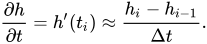
The forward finite difference approximation is unconditionally stable, but leads to an implicit set of equations (that must be solved using matrix methods, e.g. LU or Cholesky decomposition). The similar backwards difference is only conditionally stable, but it is explicit and can be used to "march" forward in the time direction, solving one grid node at a time (or possibly in parallel, since one node depends only on its immediate neighbors). Rather than the finite difference method, sometimes the Galerkin FEM approximation is used in space (this is different from the type of FEM often used in structural engineering) with finite differences still used in time.
Application of finite difference models
[edit]MODFLOW is a well-known example of a general finite difference groundwater flow model. It is developed by the US Geological Survey as a modular and extensible simulation tool for modeling groundwater flow. It is free software developed, documented and distributed by the USGS. Many commercial products have grown up around it, providing graphical user interfaces to its input file based interface, and typically incorporating pre- and post-processing of user data. Many other models have been developed to work with MODFLOW input and output, making linked models which simulate several hydrologic processes possible (flow and transport models, surface water and groundwater models and chemical reaction models), because of the simple, well documented nature of MODFLOW.
Application of finite element models
[edit]Finite Element programs are more flexible in design (triangular elements vs. the block elements most finite difference models use) and there are some programs available (SUTRA, a 2D or 3D density-dependent flow model by the USGS; Hydrus, a commercial unsaturated flow model; FEFLOW, a commercial modelling environment for subsurface flow, solute and heat transport processes; OpenGeoSys, a scientific open-source project for thermo-hydro-mechanical-chemical (THMC) processes in porous and fractured media;[16][17] COMSOL Multiphysics (a commercial general modelling environment), FEATool Multiphysics an easy to use MATLAB simulation toolbox, and Integrated Water Flow Model (IWFM), but they are still not as popular in with practicing hydrogeologists as MODFLOW is. Finite element models are more popular in university and laboratory environments, where specialized models solve non-standard forms of the flow equation (unsaturated flow, density dependent flow, coupled heat and groundwater flow, etc.).
Application of finite volume models
[edit]The finite volume method is a method for representing and evaluating partial differential equations as algebraic equations.[18][19][full citation needed] Similar to the finite difference method, values are calculated at discrete places on a meshed geometry. "Finite volume" refers to the small volume surrounding each node point on a mesh. In the finite volume method, volume integrals in a partial differential equation that contain a divergence term are converted to surface integrals, using the divergence theorem. These terms are then evaluated as fluxes at the surfaces of each finite volume. Because the flux entering a given volume is identical to that leaving the adjacent volume, these methods are conservative. Another advantage of the finite volume method is that it is easily formulated to allow for unstructured meshes. The method is used in many computational fluid dynamics packages.
PORFLOW software package is a comprehensive mathematical model for simulation of Ground Water Flow and Nuclear Waste Management developed by Analytic & Computational Research, Inc., ACRi.
The FEHM software package is available free from Los Alamos National Laboratory. This versatile porous flow simulator includes capabilities to model multiphase, thermal, stress, and multicomponent reactive chemistry. Current work using this code includes simulation of methane hydrate formation, CO2 sequestration, oil shale extraction, migration of both nuclear and chemical contaminants, environmental isotope migration in the unsaturated zone, and karst formation.
Other methods
[edit]These include mesh-free methods like the Analytic Element Method (AEM) and the Boundary Element Method (BEM), which are closer to analytic solutions, but they do approximate the groundwater flow equation in some way. The BEM and AEM exactly solve the groundwater flow equation (perfect mass balance), while approximating the boundary conditions. These methods are more exact and can be much more elegant solutions (like analytic methods are), but have not seen as widespread use outside academic and research groups yet.
Water wells
[edit]A water well is a mechanism for bringing groundwater to the surface by drilling or digging and bringing it up to the surface with a pump or by hand using buckets or similar devices. The first historical instance of water wells was in the 52nd century BC in modern-day Austria.[20] Today,[when?] wells are used all over the world, from developing nations to suburbs in the United States.
There are three main types of wells, shallow, deep, and artesian. Shallow wells tap into unconfined aquifers, and are, generally, shallow, less than 15 meters deep. Shallow wells have a small diameter, usually less than 15 centimeters.[21] Deep wells access confined aquifers, and are always drilled by machine. All deep wells bring water to the surface using mechanical pumps. In artesian wells, water flows naturally without the use of a pump or some other mechanical device. This is due to the top of the well being located below the water table.[22]
Water well design and construction
[edit]
One of the most important aspects of groundwater engineering and hydrogeology is water well design and construction. Proper well design and construction are important to maintain the health of the groundwater and the people which will use the well. Factors which must be considered in well design are:
- A reliable aquifer, providing a continuous water supply
- The quality of the accessible groundwater
- How to monitor the well
- Operating costs of the well
- Expected yield of the well
- Any prior drilling into the aquifer[23]
There are five main areas to be considered when planning and constructing a new water well, along with the factors above. They are:
- Aquifer Suitability
- "Well Design Considerations
- Well Drilling Methods
- Well Screen Design and Development
- Well Testing"[24]
Aquifer suitability starts with determining possible locations for the well using "USGS reports, well logs, and cross sections" of the aquifer. This information should be used to determine aquifer properties such as depth, thickness, transmissivity, and well yield. In this stage, the quality of the water in the aquifer should also be determined, and screening should occur to check for contaminants.[24]
After factors such as depth and well yield are determined, the well design and drilling approach must be established. Drilling method is selected based on "soil conditions, well depth, design, and costs."[24] At this stage, cost estimates are prepared, and plans are adjusted to meet budgetary needs.
Important parts of a well include the well seals, casings or liners, drive shoes, well screen assemblies, and a sand or gravel pack (optional). Each of these components ensures that the well only draws from one aquifer, and no leakage occurs at any stage of the process.[24]
There are several methods of drilling which can be used when constructing a water well. They include: "Cable tool, Air rotary, Mud rotary, and Flooded reverse circulation dual rotary" drilling techniques.[24] Cable tool drilling is inexpensive and can be used for all types of wells, but the alignment must be constantly checked and it has a slow advance rate. It is not an effective drilling technique for consolidated formations, but does provide a small drilling footprint. Air rotary drilling is cost effective and works well for consolidated formations. It has a fast advance rate, but is not adequate for large diameter wells. Mud rotary drilling is especially cost effective for deep wells. It maintains good alignment, but requires a larger footprint. It has a very fast advance rate. Flooded reverse circulation dual rotary drilling is more expensive, but good for large well designs. It is versatile and maintains alignment. It has a fast advance rate.[24]
Well screens ensure that only water makes it to the surface, and sediments remain beneath the Earth's surface. Screens are placed along the shaft of the well to filter out sediment as water is pumped towards the surface. Screen design can be impacted by the nature of the soil, and natural pack designs can be used to maximize efficiency.[24]
After construction of the well, testing must be done to assess productivity, efficiency and yield of the well, as well as determine the impacts of the well on the aquifer. Several different tests should be completed on the well in order to test all relevant qualities of the well.[24]
Issues in groundwater engineering and hydrogeology
[edit]Contamination
[edit]Groundwater contamination happens when other fluids seep into the aquifer and mix with existing groundwater. Pesticides, fertilizers, and gasoline are common contaminants of aquifers. Underground storage tanks for chemicals such as gasoline are especially concerning sources of groundwater contamination. As these tanks corrode, they can leak, and their contents can contaminate nearby groundwater. For buildings which are not connected to a wastewater treatment system, septic tanks can be used to dispose of waste at a safe rate. If septic tanks are not built or maintained properly, they can leak bacteria, viruses and other chemicals into the surrounding groundwater. Landfills are another potential source of groundwater contamination. As trash is buried, harmful chemicals can migrate from the garbage and into the surrounding groundwater if the protective base layer is cracked or otherwise damaged. Other chemicals, such as road salts and chemicals used on lawns and farms, can runoff into local reservoirs, and eventually into aquifers. As water goes through the water cycle, contaminants in the atmosphere can contaminate the water. This water can also make its way into groundwater.[25]
Controversy
[edit]Fracking
[edit]Contamination of groundwater due to fracking has long been debated. Since chemicals commonly used in hydraulic fracturing are not tested by government agencies responsible for determining the effects of fracking on groundwater, laboratories at the United States Environmental Protection Agency, or EPA, have a hard time determining if chemicals used in fracking are present in nearby aquifers.[26] In 2016, the EPA released a report which states that drinking water can be contaminated by fracking. This was a reversal of their previous policies after a $29 million study into the effects of fracking on local drinking water.[27]
California
[edit]California sees some of the largest controversies in groundwater usage due to the dry conditions California faces, high population, and intensive agriculture. Conflicts generally occur over pumping groundwater and shipping it out of the area, unfair use of water by a commercial company, and contamination of groundwater by development projects. In Siskiyou County in northern California, the California Superior Court ruled poor groundwater regulations have allowed pumping to diminish the flows in the Scott River and disturbed the natural habitat of salmon. In Owens Valley in central California, groundwater was pumped for use in fish farms, which resulted in the death of local meadows and other ecosystems. This resulted in a lawsuit and settlement against the fish companies. Development in southern California is threatening local aquifers, contaminating groundwater through construction and normal human activity. For example, a solar project in San Bernardino County would allegedly threaten the ecosystem of bird and wildlife species because of its use of up to 1.3 million cubic meters of groundwater, which could impact Harper Lake.[28] In September 2014, California passed the Sustainable Groundwater Management Act, which requires users to manage groundwater appropriately, as it is connected to surface water systems.[28]
Colorado
[edit]Due to its arid climate, the state of Colorado gets most of its water from underground. Because of this, there have been issues regarding groundwater engineering practices. As many as 65,000 people were affected when high levels of PFCs were found in the Widefield Aquifer. Groundwater use in Colorado dates back to before the 20th century. Nineteen of Colorado's 63 counties depend mostly on groundwater for supplies and domestic uses. The Colorado Geological Survey has three significant reports on groundwater in the Denver Basin. The first report Geology of Upper Cretaceous, Paleocene and Eocene Strata in the Southwestern Denver Basin, The second report Bedrock Geology, Structure, and Isopach Maps of the Upper Cretaceous to Paleogene Strata between Greeley and Colorado Springs, The third publication Cross Sections of the Freshwater Bearing Strata of the Denver Basin between Greeley and Colorado Springs.[29][30]
New trends in groundwater engineering/hydrogeology
[edit]Since the first wells were made thousands of years ago,[when?] groundwater systems have been changed by human activity. 50 years ago, the sustainability of these systems on a larger scale began to come into consideration, becoming one of the main focuses of groundwater engineering. New ideas and research are advancing groundwater engineering into the 21st century, while still considering groundwater conservation.[31]
Topographical mapping
[edit]New advancements have arisen in topographical mapping to improve sustainability. Topographic mapping has been updated to include radar, which can penetrate the ground to help pinpoint areas of concern. In addition, large computations can use gathered data from maps to further the knowledge of groundwater aquifers in recent years.[when?] This has made highly complex and individualized water cycle models possible, which has helped to make groundwater sustainability more applicable to specific situations.[31]
The role of technology
[edit]Technological improvements have advanced topographical mapping, and have also improved the quality of lithosphere, hydrosphere, biosphere, and atmosphere simulations. These simulations are useful on their own; however, when used together, they help to give an even more accurate prediction of the future sustainability of an area, and what changes can be made to ensure stability in the area. This would not be possible without the advancement of technology. As technology continues to progress, the simulations will increase in accuracy and allow for more complex studies and projects in groundwater engineering.[31]
Growing populations
[edit]As populations continue to grow, areas which were using groundwater at a sustainable rate are now beginning to face sustainability issues for the future. Populations of the size currently seen in large cities were not taken into consideration when the long term sustainability of aquifers. These large population sizes are beginning to stress groundwater supply. This has led to the need for new policies in some urban areas. These are known as proactive land-use management, where cities can move proactively to conserve groundwater.
In Brazil, overpopulation caused municipally provided water to run low. Due to the shortage of water, people began to drill wells within the range normally served by the municipal water system. This was a solution for people in high socioeconomic standing, but left much of the underprivileged population without access to water. Because of this, a new municipal policy was created which drilled wells to assist those who could not afford to drill wells of their own. Because the city is in charge of drilling the new wells, they can better plan for the future sustainability of the groundwater in the region, by carefully placing the wells and taking growing populations into consideration.[32]
Dependency on groundwater in the United States
[edit]In the United States, 51% of the drinking water comes from groundwater supplies. Around 99% of the rural population depends on groundwater. In addition, 64% of the total groundwater of the country is used for irrigation, and some of it is used for industrial processes and recharge for lakes and rivers. In 2010, 22 percent of freshwater used in US came from groundwater and the other 78 percent came from surface water. Groundwater is important for some states that don't have access to fresh water. most of the fresh groundwater 65 percent is used for irrigation and the 21 percent is used for public purposes drinking mostly.[33] [34]
See also
[edit]- Environmental engineering is a broad category hydrogeology fits into;
- Flownet is an analysis tool for steady-state flow;
- Groundwater energy balance: groundwater flow equations based on the energy balance;
- Fault zone hydrogeology: field specifically analyzing hydrogeology in fault zones
- Hydrogeophysics: field integrating hydrogeology with geophysics
- Hydrology (agriculture)
- Isotope hydrology is often used to understand sources and travel times in groundwater systems;
- Oscar Edward Meinzer is considered the "father of modern groundwater hydrology";
- SahysMod is a spatial agro-hydro-salinity model with groundwater flow in a polygonal network;
- Spring (hydrology) and water supply network are subjects the hydrogeologist is concerned about;
- Water cycle, hydrosphere and water resources are larger concepts which hydrogeology is a part of
- Coastal hydrogeology
References
[edit]- ^ The Ohio State University, College of Engineering (2018). Groundwater Engineering (5240). https://ceg.osu.edu/courses/groundwater-engineering-5240-0 Archived 2019-01-29 at the Wayback Machine
- ^ Walton, William C. (November 1990). Principles of Groundwater Engineering, p. 1. CRC Press. ISBN 978-0-873-71283-5.
- ^ "10 TPG • JAN/FEB 2012 www.aipg.org What Geology Students Need To Know About Professional Licensure" (PDF). American Institute of Professional Geologists. AIPG. Retrieved 2017-04-24.
- ^ "Rising sea levels attributed to global groundwater extraction". University of Utrecht. Retrieved February 8, 2011.
- ^ "NCDEQ-DWR :: Basic Hydrogeology". www.ncwater.org. Retrieved 2023-08-16.
- ^ Birzeit University, Groundwater Engineering. Groundwater potential and Discharge Areas http://www.hwe.org.ps/Education/Birzeit/GroundwaterEngineering/Chapter%204%20-%20Groundwater%20Potential%20and%20Discharge%20Areas.pdf Archived 2018-12-22 at the Wayback Machine
- ^ Bense, V.F.; Gleeson, T.; Loveless, S.E.; Bour, O.; Scibek, J. (2013). "Fault zone hydrogeology". Earth-Science Reviews. 127: 171–192. Bibcode:2013ESRv..127..171B. doi:10.1016/j.earscirev.2013.09.008.
- ^ Hadley, Daniel R.; Abrams, Daniel B.; Roadcap, George S. (2020). "Modeling a Large-Scale Historic Aquifer Test: Insight into the Hydrogeology of a Regional Fault Zone". Groundwater. 58 (3): 453–463. Bibcode:2020GrWat..58..453H. doi:10.1111/gwat.12922. ISSN 0017-467X. PMID 31290141. S2CID 195871567.
- ^ a b Pradhan, Rudra Mohan; Singh, Anand; Ojha, Arun Kumar; Biswal, Tapas Kumar (December 2022). "Structural controls on bedrock weathering in crystalline basement terranes and its implications on groundwater resources". Scientific Reports. 12 (1): 11815. Bibcode:2022NatSR..1211815P. doi:10.1038/s41598-022-15889-x. ISSN 2045-2322. PMC 9276672. PMID 35821387.
- ^ Sethi, Rajandrea; Di Molfetta, Antonio (2019), "Mechanisms of Contaminant Transport in Aquifers", Groundwater Engineering, Springer Tracts in Civil Engineering, Cham: Springer International Publishing, pp. 193–217, doi:10.1007/978-3-030-20516-4_10, ISBN 978-3-030-20514-0, S2CID 198426373, retrieved 2022-04-07
- ^ Gelhar, Lynn W.; Welty, Claire; Rehfeldt, R. Kenneth (1992). "A critical review of data on field-scale dispersion in aquifers". Water Resources Research. 28 (7): 1955–1974. Bibcode:1992WRR....28.1955G. doi:10.1029/92WR00607.
- ^ Oklahoma State. Henry Darcy and His Law September 3, 2003. https://bae.okstate.edu/faculty-sites/Darcy/1pagebio.htm Archived 2018-04-16 at the Wayback Machine
- ^ "Meinzer, Oscar Edward" http://go.galegroup.com/ps/i.do?id=GALE%7CCX2830902895&v=2.1&u=nclivensu&it=r&p=GVRL&sw=w&asid=88753af7557df17de94c1979354d8c74
- ^ The energy balance of groundwater flow applied to subsurface drainage in anisotropic soils by pipes or ditches with entrance resistance. International Institute for Land Reclamation and Improvement (ILRI), Wageningen, The Netherlands. On line : [1] Archived 2009-02-19 at the Wayback Machine . Paper based on: R.J. Oosterbaan, J. Boonstra and K.V.G.K. Rao, 1996, "The energy balance of groundwater flow". Published in V.P.Singh and B.Kumar (eds.), Subsurface-Water Hydrology, p. 153-160, Vol.2 of Proceedings of the International Conference on Hydrology and Water Resources, New Delhi, India, 1993. Kluwer Academic Publishers, Dordrecht, The Netherlands. ISBN 978-0-7923-3651-8 . On line : [2] . The corresponding free computer program EnDrain can be downloaded from web page : [3], or from : [4]
- ^ ILRI, 2000, Subsurface drainage by (tube)wells: Well spacing equations for fully and partially penetrating wells in uniform or layered aquifers with or without anisotropy and entrance resistance, 9 pp. Principles used in the "WellDrain" model. International Institute for Land Reclamation and Improvement (ILRI), Wageningen, The Netherlands. On line: [5] . Free download "WellDrain" software from web page : [6], or from : [7]
- ^ "OpenGeoSys". Helmholtz centre for environmental research. Retrieved 18 May 2012.
- ^ "OpenGeoSys Website". Helmholtz centre for environmental research. Retrieved 28 April 2014.
- ^ LeVeque, Randall J., 2002, Finite Volume Methods for Hyperbolic Problems, Cambridge University Press, Aug 26, 2002 ISBN 0521009243
- ^ Toro, 1999
- ^ Tegel, Willy; Elburg, Rengert; Hakelberg, Dietrich; Stäuble, Harald; Büntgen, Ulf (2012). "Early Neolithic Water Wells Reveal the World's Oldest Wood Architecture". PLOS ONE. 7 (12) e51374. Bibcode:2012PLoSO...751374T. doi:10.1371/journal.pone.0051374. PMC 3526582. PMID 23284685.
- ^ "Introduction to Ground Water Extraction Technologies: Borehole, Shallow Well, and Tube Well" http://www.wateringmalawi.org/Watering_Malawi/Resources_files/Boreholewells.pdf
- ^ Harter, Thomas. ANR Publication 8086. Water Well Design and Construction http://groundwater.ucdavis.edu/files/156563.pdf
- ^ Sutton, Deb. Alberta Agriculture and Forestry (May 2017). Design and Construction of Water Wells https://www1.agric.gov.ab.ca/$department/deptdocs.nsf/all/wwg408
- ^ a b c d e f g h Matlock, Dan. 'Fundamentals of Water Well Design, Construction and Testing.' Pacific Groundwater Group.
- ^ Groundwater Foundation (2018). Groundwater Contamination http://www.groundwater.org/get-informed/groundwater/contamination.html
- ^ Vaidyanathan, Gayathri. Scientific American (April 2016). Fracking can contaminate groundwater https://www.scientificamerican.com/article/fracking-can-contaminate-drinking-water/
- ^ Scheck, Tom and Tong, Scott. APM Reports (December 2016). EPA reverses course, highlights fracking contamination of drinking water https://www.apmreports.org/story/2016/12/13/epa-fracking-contamination-drinking-water
- ^ a b "Groundwater, Rivers, Ecosystems, and Conflicts" http://waterinthewest.stanford.edu/groundwater/conflicts/index.html
- ^ "Colorado mulls state limit for groundwater contamination from PFCs" https://www.denverpost.com/2017/09/17/colorado-state-limit-pfcs-contamination-groundwater/
- ^ "Groundwater." Colorado Geological Survey, 5 March 2018, https://coloradogeologicalsurvey.org/water/groundwater/
- ^ a b c Chaminé, Helder I (2015). "Water resources meet sustainability: New trends in environmental hydrogeology and groundwater engineering". Environmental Earth Sciences. 73 (6): 2513–20. Bibcode:2015EES....73.2513C. doi:10.1007/s12665-014-3986-y. S2CID 129863676.
- ^ Foster, Stephen D; Hirata, Ricardo; Howard, Ken W. F (2010). "Groundwater use in developing cities: Policy issues arising from current trends". Hydrogeology Journal. 19 (2): 271–4. doi:10.1007/s10040-010-0681-2. S2CID 129524916.
- ^ Groundwater Foundation (2018). What is groundwater? http://www.groundwater.org/get-informed/basics/groundwater.html
- ^ Perlman, Howard, and USGS. "Groundwater Use in the United States." Groundwater Use, the USGS Water Science School, water.usgs.gov/edu/wugw.html.
Further reading
[edit]General hydrogeology
[edit]- Domenico, P.A. & Schwartz, W., 1998. Physical and Chemical Hydrogeology Second Edition, Wiley. — Good book for consultants, it has many real-world examples and covers additional topics (e.g. heat flow, multi-phase and unsaturated flow). ISBN 0-471-59762-7
- Driscoll, Fletcher, 1986. Groundwater and Wells, US Filter / Johnson Screens. — Practical book illustrating the actual process of drilling, developing and utilizing water wells, but it is a trade book, so some of the material is slanted towards the products made by Johnson Well Screens. ISBN 0-9616456-0-1
- Freeze, R.A. & Cherry, J.A., 1979. Groundwater, Prentice-Hall. — A classic text; like an older version of Domenico and Schwartz. ISBN 0-13-365312-9
- de Marsily, G., 1986. Quantitative Hydrogeology: Groundwater Hydrology for Engineers, Academic Press, Inc., Orlando Florida. — Classic book intended for engineers with mathematical background but it can be read by hydrologists and geologists as well. ISBN 0-12-208916-2
- LaMoreaux, Philip E.; Tanner, Judy T, eds. (2001), Springs and bottled water of the world: Ancient history, source, occurrence, quality and use, Berlin, Heidelberg, New York: Springer-Verlag, ISBN 3-540-61841-4 Good, accessible overview of hydrogeological processes.
- Porges, Robert E. & Hammer, Matthew J., 2001. The Compendium of Hydrogeology, National Ground Water Association, ISBN 1-56034-100-9. Written by practicing hydrogeologists, this inclusive handbook provides a concise, easy-to-use reference for hydrologic terms, equations, pertinent physical parameters, and acronyms
- Todd, David Keith, 1980. Groundwater Hydrology Second Edition, John Wiley & Sons. — Case studies and real-world problems with examples. ISBN 0-471-87616-X
- Fetter, C.W. Contaminant Hydrogeology Second Edition, Prentice Hall. ISBN 0-13-751215-5
- Fetter, C.W. Applied Hydrogeology Fourth Edition, Prentice Hall. ISBN 0-13-088239-9
Numerical groundwater modeling
[edit]- Anderson, Mary P. & Woessner, William W., 1992 Applied Groundwater Modeling, Academic Press. — An introduction to groundwater modeling, a little bit old, but the methods are still very applicable. ISBN 0-12-059485-4
- Anderson, Mary P., Woessner, William W., & Hunt, Randall J., 2015, Applied Groundwater Modeling, 2nd Edition, Academic Press. — Updates the 1st edition with new examples, new material with respect to model calibration and uncertainty, and online Python scripts (https://github.com/Applied-Groundwater-Modeling-2nd-Ed). ISBN 978-0-12-058103-0
- Chiang, W.-H., Kinzelbach, W., Rausch, R. (1998): Aquifer Simulation Model for WINdows – Groundwater flow and transport modeling, an integrated program. - 137 p., 115 fig., 2 tab., 1 CD-ROM; Berlin, Stuttgart (Borntraeger). ISBN 3-443-01039-3
- Elango, L and Jayakumar, R (Eds.)(2001) Modelling in Hydrogeology, UNESCO-IHP Publication, Allied Publ., Chennai, ISBN 81-7764-218-9
- Rausch, R., Schäfer W., Therrien, R., Wagner, C., 2005 Solute Transport Modelling – An Introduction to Models and Solution Strategies. - 205 p., 66 fig., 11 tab.; Berlin, Stuttgart (Borntraeger). ISBN 3-443-01055-5
- Rushton, K.R., 2003, Groundwater Hydrology: Conceptual and Computational Models. John Wiley and Sons Ltd. ISBN 0-470-85004-3
- Wang H. F., Theory of Linear Poroelasticity with Applications to Geomechanics and Hydrogeology, Princeton Press, (2000).
- Waltham T., Foundations of Engineering Geology, 2nd Edition, Taylor & Francis, (2001).
- Zheng, C., and Bennett, G.D., 2002, Applied Contaminant Transport Modeling Second Edition, John Wiley & Sons. ISBN 0-471-38477-1
Analytic groundwater modeling
[edit]- Haitjema, Henk M., 1995. Analytic Element Modeling of Groundwater Flow, Academic Press. — An introduction to analytic solution methods, especially the Analytic element method (AEM). ISBN 0-12-316550-4
- Harr, Milton E., 1962. Groundwater and seepage, Dover. — a more civil engineering view on groundwater; includes a great deal on flownets. ISBN 0-486-66881-9
- Kovacs, Gyorgy, 1981. Seepage Hydaulics, Developments in Water Science; 10. Elsevier. - Conformal mapping well explained. ISBN 0-444-99755-5, ISBN 0-444-99755-5 (series)
- Lee, Tien-Chang, 1999. Applied Mathematics in Hydrogeology, CRC Press. — Great explanation of mathematical methods used in deriving solutions to hydrogeology problems (solute transport, finite element and inverse problems too). ISBN 1-56670-375-1
- Liggett, James A. & Liu, Phillip .L-F., 1983. The Boundary Integral Equation Method for Porous Media Flow, George Allen and Unwin, London. — Book on BIEM (sometimes called BEM) with examples, it makes a good introduction to the method. ISBN 0-04-620011-8
- Fitts, C. R (2010). "Modeling aquifer systems with analytic elements and subdomains". Water Resources Research. 46 (7). Bibcode:2010WRR....46.7521F. doi:10.1029/2009WR008331. S2CID 130977774.
External links
[edit]- International Association of Hydrogeologists — worldwide association for groundwater specialists.
- UK Groundwater Forum — Groundwater in the UK
- Centre for Groundwater Studies — Groundwater Education and Research.
- EPA drinking water standards — the maximum contaminant levels (mcl) for dissolved species in US drinking water.
- US Geological Survey water resources homepage — a good place to find free data (for both US surface water and groundwater) and free groundwater modeling software like MODFLOW.
- US Geological Survey TWRI index — a series of instructional manuals covering common procedures in hydrogeology. They are freely available online as PDF files.
- International Ground Water Modeling Center (IGWMC) Archived 2008-12-09 at the Wayback Machine — an educational repository of groundwater modeling software which offers support for most software, some of which is free.
- The Hydrogeologist Time Capsule — a video collection of interviews of eminent hydrogeologists who have made a material difference to the profession.
- IGRAC International Groundwater Resources Assessment Centre
- US Army Geospatial Center — For information on OCONUS surface water and groundwater.
| Overviews | |
|---|---|
| History of geology | |
| Composition and structure | |
| Historical geology | |
| Dynamic Earth | |
| Water | |
| Geodesy | |
| Geophysics | |
| Applications | |
| Occupations | |


| Physical aquifer properties | |
|---|---|
| Governing equations | |

Hydrogeology
View on GrokipediaFundamentals
Definition and Scope
Hydrogeology is the study of groundwater—its occurrence, distribution, movement, and chemical interactions within subsurface geological formations.[7] The term was first introduced by French naturalist Jean-Baptiste Lamarck in his 1802 publication Hydrogéologie, marking the formal recognition of the discipline as distinct from broader hydrology.[4] This field applies principles from geology, physics, and chemistry to analyze how water infiltrates, stores, and flows through porous media such as soils, sediments, and fractured rocks, influencing processes like aquifer recharge and discharge.[1] The scope of hydrogeology extends to evaluating groundwater quality, including natural geochemical evolution and anthropogenic contamination, as well as predicting flow dynamics under varying hydraulic gradients.[8] It encompasses quantitative assessments using tools like hydraulic conductivity measurements and modeling of subsurface heterogeneity, essential for understanding water table fluctuations and inter-aquifer exchanges.[9] Unlike surface hydrology, which focuses on visible water bodies, hydrogeology emphasizes subsurface invisibility, requiring indirect methods such as pumping tests and geophysical surveys to delineate aquifer boundaries and properties.[10] Hydrogeology integrates interdisciplinary approaches, drawing on mathematics for flow equations and biology for microbial influences on water chemistry, to address practical challenges like sustainable extraction rates—estimated globally at over 1 trillion cubic meters annually—and remediation of pollutants in karst or alluvial systems.[11] This scope underscores its role in resource management, where empirical data from boreholes and tracer tests validate models against real-world variabilities, such as seasonal recharge variations exceeding 20% in temperate regions.[1]Interdisciplinary Connections
Hydrogeology integrates with environmental engineering primarily through applications in groundwater resource management and remediation, where principles of subsurface flow inform the design of extraction wells, contaminant plume delineation, and pump-and-treat systems for polluted aquifers. For instance, Darcy's law extensions are applied to model solute transport in heterogeneous media, enabling engineers to predict and mitigate risks from industrial spills or agricultural runoff, as demonstrated in case studies of uranium contamination cleanup at former mining sites.[12] These engineering practices rely on hydrogeologic data to balance extraction rates against sustainable yields, preventing subsidence or saltwater intrusion in coastal regions.[13] In ecology, hydrogeology contributes to ecohydrogeology, an emerging field examining groundwater's role in supporting phreatic ecosystems such as wetlands and riparian zones, where baseflow from aquifers sustains biodiversity during dry periods. Research highlights causal links between declining groundwater levels—often from overpumping—and ecosystem degradation, with empirical data from arid regions showing reduced vegetation cover and species loss when drawdown exceeds 5-10 meters.[14] This intersection underscores groundwater's influence on ecological connectivity, informing restoration efforts that prioritize recharge zones to maintain habitat integrity.[15] Hydrogeology also connects to climate science via analyses of recharge variability under altered precipitation patterns, with models integrating paleoclimate proxies and isotopic tracers to forecast aquifer responses to drought or sea-level rise. Studies from the U.S. Geological Survey indicate that in karst systems, intensified recharge events can elevate vulnerability to flooding, while prolonged deficits diminish storage by up to 20% in unconfined aquifers over decadal scales. These linkages extend to agricultural sustainability, where hydrogeologic assessments guide irrigation practices to avoid salinization, as seen in California's Central Valley where overexploitation has led to land subsidence exceeding 10 meters in some areas since the 1920s.[16]Subsurface Characteristics
Aquifer Types and Properties
Aquifers are geological formations capable of yielding significant quantities of water to wells or springs, classified primarily by their hydraulic boundaries and lithology.[17] The two fundamental types are unconfined and confined aquifers, distinguished by the presence or absence of overlying impermeable layers.[18] Unconfined aquifers, also known as water-table aquifers, have their upper surface defined by the free water table, which fluctuates in response to recharge and discharge, allowing direct atmospheric interaction and gravity drainage of pore water.[19] In contrast, confined aquifers are bounded above and below by low-permeability aquitards, maintaining saturation under hydrostatic pressure, where water levels in wells may rise above the aquifer top due to artesian conditions.[17] Properties of unconfined aquifers include higher vulnerability to surface contamination due to the exposed water table, with storage primarily governed by specific yield, typically ranging from 0.1 to 0.3 for sands and gravels, reflecting the volume of water drained by gravity per unit decline in head.[18] [20] Confined aquifers exhibit lower storativity, on the order of 10^{-5} to 10^{-3} (specific storage in m^{-1}), arising from elastic deformation of the aquifer matrix and water under pressure, making them less responsive to short-term fluctuations but capable of sustained yields if recharge sustains pressure.[19] Hydraulic conductivity in both types varies widely by material; for example, unconsolidated sand and gravel aquifers often exceed 10^{-3} m/s, while confined sandstone aquifers range from 10^{-6} to 10^{-4} m/s along bedding planes.[21] [22]| Aquifer Type | Boundary Conditions | Storage Mechanism | Typical Hydraulic Conductivity (m/s) | Contamination Risk |
|---|---|---|---|---|
| Unconfined | Upper: water table; Lower: impermeable base | Gravity drainage (specific yield: 0.01–0.30) | 10^{-5}–10^{-2} (sands/gravels) | High (direct recharge)[18][20][21] |
| Confined | Upper/Lower: aquitards | Elastic compression (specific storage: 10^{-6}–10^{-3} m^{-1}) | 10^{-7}–10^{-3} (sandstones/fractured) | Low (protected by confining layers)[19][22][17] |
Porosity, Permeability, and Storage
Porosity refers to the fraction of void space in the total volume of a rock or soil sample, expressed as a percentage or decimal, and represents the potential storage capacity for groundwater.[26] It arises from primary processes during sediment deposition, such as intergranular spaces in sands, or secondary processes like fracturing, dissolution, or dolomitization that enhance void volume post-formation.[27] Effective porosity, the subset of interconnected voids available for fluid transmission, is typically lower than total porosity due to isolated pores or dead-end spaces, directly influencing groundwater flow and contaminant transport.[28] Porosity values vary widely; unconsolidated sands may exhibit 20-40% porosity, while dense igneous rocks often show less than 5%.[29] Permeability quantifies a porous medium's capacity to transmit fluids, distinct from porosity as it depends on pore size distribution, connectivity, and tortuosity rather than void volume alone.[30] Intrinsic permeability (k), measured in darcys or m², characterizes the medium independently of fluid properties, while hydraulic conductivity (K), in m/s, incorporates fluid density, viscosity, and gravity, as in Darcy's law: specific discharge q = -K ∇h, where ∇h is the hydraulic gradient.[31] Well-sorted, coarse-grained materials like gravels achieve high permeability (K up to 10^{-2} m/s) due to larger, connected pores, whereas poorly sorted or fine-grained sediments like clays exhibit low values (K < 10^{-9} m/s), limiting flow despite comparable porosity.[32] Empirical relations, such as the Kozeny-Carman equation, approximate k as proportional to n³/(1-n)² times a shape factor, but field measurements via pump tests or permeameters are essential for accuracy.[33] Aquifer storage capacity is governed by specific yield (S_y) in unconfined settings and specific storage (S_s) in confined ones, determining releasable water volume per unit head change. Specific yield, the ratio of gravity-drainable water volume to total aquifer volume per unit surface area decline, typically ranges 0.1-0.3 for sands but approaches zero in clays due to retention by surface tension.[34] Specific storage, applicable to both aquifer skeleton compression and water expansion, is calculated as S_s = ρ g (α + n β), where ρ is fluid density, g gravity, α aquifer compressibility (≈10^{-8} to 10^{-6} m²/N), β water compressibility (4.4×10^{-10} m²/N), and n porosity; values often fall 10^{-6} to 10^{-4} m^{-1} for confined aquifers.[35] These parameters, estimated from grain-size analysis, pumping tests, or geophysical logs, critically inform groundwater budgeting and model predictions of drawdown.[36]Faults and Heterogeneities
In hydrogeology, geological faults represent discrete structural discontinuities that significantly influence groundwater flow patterns by altering hydraulic conductivity across aquifer systems. Fault zones typically comprise a low-permeability core—often formed by cataclastic gouge, clay smearing, or cementation—that impedes lateral flow, acting as a barrier to hydraulic head propagation.[37] [38] Conversely, the surrounding damage zones, characterized by interconnected fractures and secondary porosity, can enhance vertical or preferential flow, functioning as conduits for rapid groundwater migration.[39] [40] This dual conduit-barrier behavior depends on factors such as fault displacement magnitude, host rock lithology, and tectonic activity; for instance, in siliciclastic sedimentary aquifers, clay-rich fault cores reduce horizontal permeability by orders of magnitude, while fractured damage zones may increase it locally.[37] [41] The hydraulic role of faults introduces substantial uncertainty in groundwater modeling, as their timing and architecture can compartmentalize aquifers, leading to isolated flow regimes with distinct potentiometric surfaces and chemistry.[42] [43] Empirical studies, such as those in faulted carbonate systems, demonstrate that multiple fault strands control regional pathways, with sealing faults promoting upwelling springs and permeable ones facilitating recharge.[44] In fractured bedrock aquifers, fault-related fractures dominate flow, contributing up to 80-90% of transmissivity in some cases, as observed in USGS assessments of faulted terrains.[45] Cementation within fault zones, driven by mineral precipitation from circulating fluids, further reinforces barrier effects, reducing fault-zone permeability below 10^{-18} m² in documented examples.[38] Subsurface heterogeneities encompass spatial variations in aquifer properties, including lithologic layering, facies changes, and diagenetic alterations, which induce anisotropic permeability and non-uniform storage.[46] High-permeability lenses or channels within heterogeneous media accelerate groundwater velocities, shortening residence times and enhancing contaminant plume dispersion, as quantified in managed aquifer recharge experiments where such features reduced mixing zone thickness by 20-50% compared to homogeneous analogs.[47] In carbonate aquifers like the Floridan system, subtle porosity contrasts—arising from karst dissolution or dolomitization—yield permeability variations spanning four orders of magnitude, dictating flow dominance by conduits over matrix.[48] Depth-dependent heterogeneities, such as increasing compaction with burial, amplify tidal responses in unconfined zones and alter effective stress transmission, with models showing up to 30% variance in drawdown predictions.[49] Faults and heterogeneities interact synergistically to control transport dynamics; fault damage zones often amplify local heterogeneity by fracturing heterogeneous layers, creating preferential pathways that bypass low-permeability barriers.[50] In alluvial or coastal settings, undetected faults within heterogeneous sediments can reduce drawdown propagation by factors of 2-5 during pumping, as inferred from geostatistical inversions integrating geophysical data.[51] Quantifying these effects requires site-specific characterization via borehole logging, tracer tests, and stochastic modeling, revealing that permeability heterogeneity indices (e.g., variance >1) correlate with 10-100 fold increases in flow path tortuosity.[52] Such features underscore the limitations of homogeneous assumptions in Darcy's law applications, necessitating upscaled effective parameters for predictive accuracy.[53]Flow and Transport Fundamentals
Hydraulic Head and Gradients
Hydraulic head, denoted as , represents the total mechanical energy per unit weight of water at a given point in a groundwater system, serving as the potential driving groundwater flow.[54] It is mathematically expressed as the sum of elevation head , which is the height above a reference datum, and pressure head , where is fluid pressure, is water density, and is gravitational acceleration; velocity head is typically negligible in groundwater contexts due to low flow velocities.[55][56] This formulation derives from Bernoulli's principle adapted for porous media, emphasizing that head quantifies the energy available for water to rise in a piezometer tube to a height equal to above the datum.[57] Hydraulic head is measured in the field using piezometers or observation wells, where the water level relative to a standardized datum, such as mean sea level, directly indicates ; in unconfined aquifers, this approximates the water table elevation, while in confined aquifers, it reflects potentiometric surface levels that may exceed topographic elevations.[58] Spatial variations in hydraulic head across an aquifer reveal the flow regime, with groundwater moving from regions of higher head to lower head along paths of steepest descent.[59] The hydraulic gradient, , quantifies the rate of change of hydraulic head with distance and is calculated as , where is the head difference between two points separated by distance in the flow direction; it is dimensionless and typically expressed as a fraction.[60] The gradient's direction aligns with maximum head decrease, perpendicular to equipotential surfaces (lines of constant head), dictating the orthogonal flow paths observed in groundwater systems.[61][59] Steeper gradients indicate stronger driving forces for flow, influencing both velocity and contaminant transport rates, though actual flow depends on medium permeability as per Darcy's law.[62] In practice, hydraulic gradients are mapped using head data from well networks, enabling prediction of flow directions; for instance, regional gradients often follow topographic slopes but can be modified by recharge, discharge, or geologic structures.[63] Temporal fluctuations in head and thus gradients arise from seasonal recharge variations, pumping, or climatic changes, underscoring the need for long-term monitoring to characterize dynamic systems accurately.[54]Darcy's Law and Extensions
Darcy's Law quantifies laminar groundwater flow through saturated porous media under steady-state conditions, stating that the volumetric discharge equals the product of hydraulic conductivity , cross-sectional area , and hydraulic gradient , or , where and is hydraulic head.[64] This empirical relation derives from force balance, where gravitational driving forces overcome viscous resistance proportional to velocity, valid for Reynolds numbers below approximately 1 to 10, ensuring negligible inertial effects.[64] Henry Darcy's 1856 column experiments with uniform sand, measuring flow rates under controlled head differences, confirmed the linear proportionality between flow and gradient, with incorporating medium-specific permeability and fluid viscosity via , where is intrinsic permeability, density, gravity, and dynamic viscosity.[65] The law assumes isotropic, homogeneous media, constant fluid properties, and no chemical reactions or air entrapment, limitations evident in field scales where heterogeneity induces non-Darcian behavior. Specific discharge extends the one-dimensional form to three dimensions as a vector equation, enabling analysis of complex flow fields in aquifers.[31] For anisotropic conditions, becomes a second-order tensor, aligning principal conductivities with geological layering, as , derived from empirical tensor measurements.[66] Extensions address violations of linearity: the Forchheimer equation incorporates inertial losses at higher velocities, , where and is a non-Darcy coefficient, validated in laboratory flows exceeding Darcy's regime.[67] Transient adaptations couple Darcy's Law with the continuity equation, yielding the groundwater flow equation , where is specific storage, applicable to pumping tests since the 1930s Theis solution. In unconfined aquifers, the Dupuit-Forchheimer approximation simplifies vertical integration, assuming horizontal flow dominance, , though it overestimates gradients near wells due to neglected vertical components.[68] Variable-density flows, as in seawater intrusion, modify the law to , accounting for pressure and buoyancy gradients.[69] Non-Darcian deviations occur under low gradients from osmotic effects or threshold gradients in fine-grained media, where flow initiates only above a minimum head loss, as observed in clays with exchangeable ions inducing membrane potentials.[70] These extensions enhance predictive accuracy in heterogeneous aquifers, though effective parameters require site-specific calibration against pumping or tracer data to reconcile lab-scale validity with field-scale complexities.[71]Groundwater Flow Equations
The groundwater flow equations mathematically describe the movement of water through saturated porous media, derived by combining Darcy's law with the continuity equation expressing conservation of mass.[72] Darcy's law posits that the specific discharge vector q equals -K ∇h, where K is the hydraulic conductivity tensor and h is hydraulic head; this relates flow rate to the head gradient under laminar conditions valid for typical aquifer Reynolds numbers below 1 to 10.[31] Applying mass balance to a representative elementary volume yields the general three-dimensional transient form: Ss ∂h/∂t = ∂/∂x (Kx ∂h/∂x) + ∂/∂y (Ky ∂h/∂y) + ∂/∂z (Kz ∂h/∂z) + W, where Ss is specific storage and W represents sources or sinks per unit volume; for no sources/sinks and isotropic homogeneous media (Kx = Ky = Kz = K), this simplifies to Ss ∂h/∂t = K ∇²h.[72] In confined aquifers, where saturated thickness b remains constant, the equation integrates vertically to a two-dimensional form: S ∂h/∂t = T (∂²h/∂x² + ∂²h/∂y²), with transmissivity T = K b and storativity S = Ss b; this assumes Dupuit-Forchheimer conditions of horizontal flow dominance.[72] For steady-state conditions in confined or unconfined settings without time dependence or sources, the equation reduces to Laplace's equation ∇²h = 0, implying harmonic head distribution solutions.[1] Unconfined aquifers introduce nonlinearity because transmissivity varies with saturated thickness h, leading to the Boussinesq equation under Dupuit assumptions (neglecting vertical flow components): Sy ∂h/∂t = ∇ · (K h ∇h), where Sy is specific yield approximating drainable porosity; this form accounts for free-surface dynamics but requires approximations or numerical solutions due to its nonlinearity.[73] These equations underpin analytical solutions like Theis for transient pumping in confined aquifers and numerical models such as MODFLOW, which discretize the general form for heterogeneous, anisotropic conditions including density effects or variable saturation.[74]Historical Foundations
Pre-19th Century Observations
Ancient civilizations demonstrated practical knowledge of groundwater through the construction of wells and tunnels, with archaeological evidence indicating dug wells in the Levant dating to approximately 6500 BC and artesian wells in Egyptian oases by 2000 BC, where natural pressure forced water to the surface without pumping.[75] In arid Persia, qanats—horizontal adits extending from aquifers to the surface for gravity-fed conveyance—emerged by the 8th century BC, enabling sustainable extraction in regions with limited surface water and reflecting empirical awareness of subsurface gradients and recharge from mountain fronts.[76] Similarly, ancient Indian texts from the Vedic period (c. 1500–500 BC) described wells, stepwells, and tanks that harnessed groundwater, attributing its origin to rainfall infiltration into porous earth layers rather than mythical sources.[77] Greek philosophers contributed speculative yet observation-based ideas on water cycles; Thales of Miletus (c. 624–546 BC) emphasized water's primacy in nature, observing Nile flood predictability from Ethiopian rains, while Anaximander (c. 610–546 BC) linked evaporation, condensation, and precipitation in a proto-hydrologic cycle, countering notions of eternal subterranean seas.[78] Aristotle (384–322 BC), however, reverted to oceanic infiltration via invisible channels to explain inland springs, influenced by limited empirical data on permeability.[75] Roman engineer Vitruvius, writing in the late 1st century BC, advanced causal reasoning by positing that rainwater percolates through mountain fissures to form springs and streams, rejecting sea-origin theories and stressing site-specific geology like gravelly soils for better yields.[75] By the Islamic Golden Age, al-Karaji's 11th-century treatise The Extraction of Hidden Waters synthesized prior observations into systematic guidance, advocating geophysical prospecting (e.g., via plant indicators and seismic tests) to locate aquifers, detailing qanat and well construction to minimize evaporation, and affirming groundwater as infiltrated precipitation stored in porous strata, thus establishing early principles of recharge and sustainable yield absent in earlier mythological frameworks.[79] These pre-19th-century efforts prioritized utility over quantification, yielding durable technologies but hampered by incomplete understanding of flow dynamics until experimental validation.[75]19th Century: Darcy's Experiments (1856)
In 1856, French civil engineer Henry Philibert Gaspard Darcy published Les Fontaines Publiques de la Ville de Dijon, a report detailing the design and construction of Dijon's municipal water supply system, which included aqueducts, reservoirs, and public fountains drawing from regional springs.[80] As part of this engineering effort to improve filtration and distribution, Darcy conducted systematic experiments on laminar fluid flow through unconsolidated porous media, specifically sand-packed columns, to quantify filtration efficiency and predict flow rates.[81] These investigations, performed between 1854 and 1855 in the courtyard of the Hôtel-Dieu hospital in Dijon, marked the empirical foundation of modern hydrogeology by establishing a proportional relationship between flow velocity and hydraulic gradient in saturated porous materials.[80] Darcy's apparatus consisted of vertical permeameters—typically brass or glass tubes ranging from 10 to 20 cm in diameter and up to several meters in length—packed uniformly with sieved sands of varying grain sizes (e.g., 0.2 to 2 mm).[82] Water was supplied from an elevated reservoir to the top of the column, creating a measurable hydraulic head difference (h) across the length (L) of the medium, while discharge (Q) was collected and timed at the outlet under steady-state conditions.[83] He varied parameters such as head, column length, cross-sectional area (A), and medium permeability, observing that flow remained laminar below critical velocities and that discharge was directly proportional to the applied gradient (i = h/L) but independent of head magnitude alone.[84] Raw data from these tests, plotted as velocity versus gradient, yielded straight lines through the origin, confirming linearity without threshold effects at low Reynolds numbers typical of groundwater regimes.[83] From these results, Darcy formulated his eponymous law in the appendix of his 1856 publication: the volumetric flow rate Q equals the product of a medium-specific coefficient K (now termed hydraulic conductivity, in units of velocity, m/s), the cross-sectional area A, and the hydraulic gradient i, expressed as Q = K A (Δh / L).[80] This empirical relation, derived solely from dimensional analysis of experimental measurements rather than theoretical fluid dynamics, highlighted K's dependence on medium properties like grain size and porosity, while assuming incompressible fluid and saturated conditions.[84] Darcy's work extended prior hydraulic observations (e.g., pipe flow losses) to porous media, providing the first quantitative tool for predicting groundwater movement and filtration, though he did not explicitly apply it to aquifers in the publication.[81] These experiments laid the groundwork for subsequent hydrogeological advancements, enabling the modeling of subsurface flow as analogous to surface hydraulics but governed by porous resistance rather than open-channel friction.[80] By privileging direct measurement over unverified assumptions, Darcy's approach demonstrated causal links between pressure gradients and Darcy velocity (specific discharge q = Q/A = K i), influencing well hydraulics and contaminant transport analyses for over a century.[84] Limitations noted in his data, such as slight nonlinearities at higher flows due to turbulence onset, underscored the law's validity domain (Re < 1-10), later refined through microscopic derivations but never superseded in laminar subsurface applications.[83]20th Century: Meinzer and Quantitative Advances
Oscar Edward Meinzer (1876–1948), chief of the U.S. Geological Survey's Ground Water Branch from 1912 to 1944, systematized groundwater studies through empirical observations and quantitative frameworks, earning recognition as the father of modern groundwater hydrology.[85] Under his leadership, the USGS shifted from descriptive inventories to measurable parameters, emphasizing field data on aquifer yields, storage, and flow dynamics.[10] Meinzer's 1923 publications, including Outline of Ground-Water Hydrology with Definitions (USGS Water-Supply Paper 494) and The Occurrence of Ground Water in the United States (USGS Water-Supply Paper 489), provided foundational terminology and reviews, defining key concepts such as specific yield—the volume of water released per unit volume of aquifer under gravity drainage—and transmissivity, the product of hydraulic conductivity and aquifer thickness, enabling predictive assessments of groundwater resources.[86][87] Meinzer's quantitative emphasis extended to artesian systems, where his 1928 analysis in Compressibility and Elasticity of Artesian Aquifers (Economic Geology, vol. 23) quantified storage coefficients for confined aquifers, distinguishing elastic release from gravity drainage and deriving formulas for drawdown under pumping based on observed pressure changes.[86] These works integrated Darcy's law with field measurements, promoting pumping tests to estimate hydraulic properties rather than relying solely on qualitative geology.[10] By 1934, in his address to the Washington Academy of Sciences, Meinzer highlighted the progression toward quantitative hydrology, noting that twentieth-century U.S. efforts had amassed data on over 100,000 wells, facilitating regional balance-of-supply studies and early modeling of recharge-discharge equilibria.[75] The Meinzer era catalyzed broader quantitative advances, exemplified by C.V. Theis's 1935 derivation of the nonequilibrium groundwater flow equation, which extended Darcy's steady-state law to transient conditions using an analogy to heat conduction, allowing time-dependent analysis of pumping-induced drawdown via the formula , where is drawdown, is pumping rate, is transmissivity, and is the well function with (S as storativity, r as radial distance, t as time).[10] This innovation, published under USGS auspices during Meinzer's tenure, enabled inversion of field data to compute aquifer parameters, revolutionizing well-yield predictions and resource management. Subsequent refinements, such as C.E. Jacob's 1940 methods for leaky aquifers, built on these foundations, incorporating vertical leakage from confining layers into quantitative models.[10] By mid-century, these tools supported empirical validation against nationwide USGS datasets, underscoring causal links between pumping volumes, hydraulic gradients, and sustainable yields without overreliance on unverified assumptions.[4]Modeling and Analysis Methods
Analytical Approaches
Analytical approaches in hydrogeology derive closed-form mathematical solutions to the partial differential equations governing groundwater flow and solute transport, typically under assumptions of aquifer homogeneity, isotropy, infinite extent, and uniform thickness. These methods yield exact expressions for hydraulic head or concentration as functions of space and time, facilitating parameter estimation from field data like pumping tests and serving as benchmarks for numerical models.[88][89] Steady-state solutions predominate for long-term equilibrium conditions without temporal changes in storage. For confined aquifers, the Thiem equation (1906) describes radial flow to a pumping well, expressing drawdown at distance from the well as , where is the constant pumping rate, is transmissivity, and is the radius of influence.[90] This equation assumes horizontal flow and neglects well storage, enabling estimation of from drawdown differences between observation wells. In unconfined aquifers, the Dupuit-Forchheimer approximation simplifies vertical flow gradients by assuming horizontal flow and parabolic head distribution with depth, leading to the Dupuit-Thiem equation for steady radial flow: , where is the saturated thickness, is hydraulic conductivity, and subscripts denote locations. This approach, valid for gentle slopes and shallow drawdowns, underestimates flow near wells where vertical components become significant.[91] Transient analytical solutions address time-dependent drawdown during pumping or recharge. The Theis equation (1935) models non-equilibrium flow in a confined aquifer of infinite extent, with drawdown , where , is storativity, is time since pumping began, and is the exponential integral well function approximated as for small (with Euler's constant ).[89] This solution assumes instantaneous release of water from storage via compression and expansion, matching type-curve or straight-line methods to observed drawdowns for and estimation. Extensions include the Hantush (1964) solution for leaky confined aquifers, incorporating vertical leakage from adjacent aquitards via a term modifying with leakance, and corrections for unconfined conditions that account for delayed drainage.[92] Advanced analytical frameworks, such as analytic element modeling (AEM), superimpose fundamental solutions (e.g., point sinks/sources, line elements) to represent complex steady-state flows in heterogeneous domains without meshing. Implemented in tools like GFLOW, AEM handles multi-aquifer systems and irregular boundaries by solving Laplace's equation analytically, supporting particle tracking for pathlines and travel times.[93] For solute transport, analytical solutions to the advection-dispersion equation, like the Ogata-Banks for one-dimensional leaching, predict plume evolution under uniform flow: , where is velocity, is dispersivity, and is source concentration.[88] These methods excel in parameter identification from aquifer tests but falter in real aquifers with heterogeneity, transient boundaries, or nonlinearities, necessitating numerical alternatives for validation or complex scenarios. Empirical verification, such as matching Theis predictions to drawdown data from observation wells, underscores their utility despite idealizations.Numerical Simulation Techniques
Numerical simulation techniques approximate solutions to the partial differential equations (PDEs) describing groundwater flow and solute transport in aquifers, enabling analysis of complex, heterogeneous systems where analytical solutions are infeasible.[94] These methods discretize the spatial domain and time into grids or meshes, replacing continuous derivatives with finite approximations to solve equations like the groundwater flow equation, , where is hydraulic conductivity, is hydraulic head, is specific storage, and represents sources or sinks.[95] Developed primarily in the late 20th century, such techniques gained prominence with computational advances, allowing simulation of transient flow, pumping effects, and contaminant plumes over scales from local wells to regional basins.[96] The finite difference method (FDM) approximates derivatives using Taylor series expansions on a structured rectangular grid, dividing the aquifer into blocks where head values are computed at nodes.[97] For steady-state flow, central differences yield algebraic equations solved iteratively via methods like Gauss-Seidel or preconditioned conjugate gradient; time-dependent problems employ implicit schemes, such as the backward Euler method, for unconditional stability.[94] The U.S. Geological Survey's MODFLOW, first released in 1984, exemplifies FDM application, modularly simulating three-dimensional flow with packages for rivers, wells, and recharge, and has become the de facto standard due to its public domain status and validation against field data.[98] By 2005, MODFLOW-2005 incorporated advanced solvers for millions of cells, handling anisotropic and layered aquifers with errors typically below 1% for benchmark problems when calibrated.[94] Limitations include stair-step approximations of irregular boundaries, potentially introducing errors up to 5-10% in flux near complex geometries without refinement.[99] The finite element method (FEM) offers greater flexibility for unstructured meshes conforming to heterogeneous stratigraphy or irregular boundaries, using variational principles to minimize residuals over elements like triangles or quadrilaterals.[100] Spatial discretization employs basis functions (e.g., linear or quadratic) to interpolate head, yielding stiffness matrices solved via direct (e.g., Cholesky) or iterative solvers; for unsaturated flow under Richards' equation, mixed formulations handle nonlinearity from capillary pressure-head relations.[101] FEM excels in problems with variable saturation or density-driven flow, as in coastal aquifers, where simulations match observed salinities within 2-5% after calibration, outperforming FDM in adaptive refinement to capture sharp gradients.[102] However, computational demands are higher—up to 2-5 times those of FDM for equivalent accuracy—due to matrix assembly and ill-conditioning in highly anisotropic media (aspect ratios >1000:1).[103] Finite volume methods (FVM), akin to FDM but conserving mass locally by integrating fluxes over control volumes, bridge the two approaches and suit multiphase or transport simulations where advection dominates.[104] For solute transport, the advection-dispersion equation is discretized similarly, often with upstream weighting to prevent oscillations (e.g., Courant number <1 for explicit schemes), and coupled to flow via operator splitting.[105] Hybrid models, like those combining FEM for flow and FDM for transport, reduce errors in variably saturated domains to under 3% for infiltration tests.[106] Calibration against pumping tests or tracer data is essential, using metrics like root-mean-square error (<0.5 m for head) and sensitivity analysis for parameters like , which can vary 2-3 orders of magnitude in fractured media.[107] Recent advances, including unstructured grids in MODFLOW-USG (2011), mitigate FDM rigidity, enabling simulations of karst or faulted systems with convergence rates improved by 20-50% over uniform grids.[108]Field Investigation and Data Acquisition
Field investigations in hydrogeology encompass direct and indirect techniques to characterize aquifer properties, groundwater flow, and storage. Direct methods include drilling boreholes and installing observation wells or piezometers to measure hydraulic head, which represents the potential energy of groundwater. These installations allow for manual or automated recording of water levels using pressure transducers and data loggers, providing time-series data essential for understanding seasonal fluctuations and recharge-discharge dynamics.[109] Piezometers, typically short-screened, isolate specific aquifer zones to capture localized heads, while multi-level wells enable vertical profiling of flow gradients.[110] Aquifer testing via pumping or injection constitutes a core data acquisition approach to quantify hydraulic parameters like transmissivity and storativity. In a standard pumping test, a well is pumped at a constant rate while drawdown is monitored in the pumped well and nearby observation wells; Theis or Cooper-Jacob methods analyze the recovery data to derive aquifer diffusivity. Slug tests, involving rapid addition or removal of water (slugs), offer quicker estimates of local hydraulic conductivity in low-permeability settings, with Hvorslev or Bouwer-Rice analyses applied based on well geometry. These tests must account for well skin effects and partial penetration to avoid biased estimates.[111] Field protocols emphasize pre-test aquifer confinement verification through step-drawdown tests.[109] Geophysical methods supplement direct sampling by delineating subsurface heterogeneity without extensive drilling. Electrical resistivity surveys, including vertical electrical sounding (VES) and resistivity tomography, map variations in aquifer resistivity influenced by porosity, clay content, and saturation; freshwater aquifers typically exhibit resistivities above 100 ohm-m, contrasting saline intrusions below 10 ohm-m. Seismic refraction identifies velocity contrasts at lithologic boundaries, aiding depth-to-bedrock estimates, while ground-penetrating radar (GPR) resolves shallow unconsolidated deposits with resolutions up to centimeters. Borehole geophysics, post-drilling, employs gamma-ray logs for lithology, neutron logs for porosity, and fluid resistivity tools for salinity.[112] Integration of these with direct data via joint inversion enhances model reliability.[113] Groundwater sampling for geochemical analysis requires purging wells to obtain formation water, followed by filtration and preservation per standardized protocols to prevent artifacts from stagnation or atmospheric contamination. Parameters like pH, conductivity, major ions, and isotopes (e.g., δ¹⁸O, tritium) trace recharge sources, flow paths, and residence times; tritium levels above 1 TU indicate modern recharge post-1950s atmospheric testing. Tracer tests using dyes or salts quantify flow velocities and dispersivity, with breakthrough curves analyzed via advection-dispersion models. Remote sensing via satellite-derived precipitation and evapotranspiration supports recharge estimation when calibrated against field lysimeters.[114] All methods prioritize spatial density and temporal frequency to capture heterogeneity, with quality assurance via duplicates and blanks ensuring data integrity.[109]Engineering and Resource Applications
Well Design and Pumping
Well design in hydrogeology prioritizes structural integrity, hydraulic efficiency, and protection against contamination by incorporating casing, screens, and seals tailored to aquifer characteristics. Casing, typically steel or PVC, maintains borehole stability and isolates aquifers, with grout sealing annuli to prevent vertical migration of surface water or poor-quality groundwater.[115] In unconsolidated formations like sands and gravels, well screens with precisely slotted openings allow water entry while retaining formation fines, often paired with gravel packs of graded material sized 4-6 times the aquifer's D10 particle diameter to minimize head losses and sand pumping.[116] Screen design optimizes entrance velocity below 0.1 ft/s and maximizes open area to reduce drawdown and energy use, with slot widths 1-2 times the gravel pack's D50 for effective filtration.[117] Gravel packs enhance well efficiency by bridging finer aquifer particles and stabilizing the screened interval, typically installed via tremie methods to ensure uniform placement without segregation.[118] Construction standards mandate sealing off distinct aquifers to avoid cross-contamination, with conductor casings at least 1/4-inch thick for community wells and minimum depths extending 20 feet below anticipated water levels in monitoring contexts.[119] [120] Development techniques, such as surging or chemical treatments post-construction, remove drilling mud and fines to achieve specific capacity exceeding 5 gallons per minute per foot of drawdown in productive aquifers.[121] Pumping systems extract groundwater using submersible or centrifugal pumps selected for depth, yield, and total dynamic head, with submersibles preferred for wells deeper than 25 feet due to efficiency in lifting water against gravity.[121] Constant-rate pumping tests, lasting 24-72 hours, measure drawdown in the pumped well and observation points to estimate aquifer transmissivity and storativity via methods like Theis or Cooper-Jacob analysis, ensuring sustainable yields below 50-70% of long-term aquifer recharge to avert depletion.[122] Overpumping risks cone of depression expansion, inducing subsidence or intrusion of saline water, as evidenced in California's Central Valley where excessive extraction since the 1960s lowered groundwater levels by over 100 feet in some basins.[1] Proper pump sizing, incorporating efficiency curves and variable frequency drives, minimizes energy costs, which can constitute 15-30% of operational expenses in high-volume irrigation wells.[121]Aquifer Testing and Yield Assessment
Aquifer testing evaluates hydraulic properties such as transmissivity, storativity, and hydraulic conductivity through controlled hydraulic stress applied via pumping or injection. These tests quantify the aquifer's response to extraction, enabling predictions of drawdown and flow rates essential for well design and resource management. Constant-rate pumping tests, the most common approach, involve extracting water at a steady rate from a test well while measuring drawdown over time in the pumped well and observation wells screened at similar depths.[123] Data collection typically spans hours to days, with observation wells placed at distances of 10 to 100 meters to capture radial flow effects.[124] Analysis of pumping test data employs analytical solutions to the groundwater flow equation under simplifying assumptions of homogeneity, isotropy, and infinite extent. For confined aquifers, the Theis (1935) solution models transient drawdown as , where is transmissivity, is the well function, and with radial distance , storativity , and time .[123] The Cooper-Jacob (1946) straight-line method approximates this for late-time data, plotting versus to derive per log cycle of time and from the intercept.[125] Unconfined aquifers require adjustments for vertical flow and delayed drainage, using methods like Neuman (1975) that incorporate specific yield . Slug tests, involving instantaneous water level changes, provide rapid estimates of hydraulic conductivity via solutions like Bouwer-Rice (1976), suitable for low-permeability settings but limited by skin effects and partial penetration.[126] Yield assessment determines the maximum extraction rate without unacceptable drawdown or depletion. Well-specific yield emerges from step-drawdown tests, incrementally increasing to plot versus , revealing linear flow losses and nonlinear well losses from turbulence, with Jacob's (1947) method estimating the constant for sustainable rates below excessive drawdown limits, often 50-70% of initial static level.[122] Aquifer-wide sustainable yield integrates test-derived parameters with recharge estimates from water budgets or chloride mass balance, typically capped at 10-50% of annual recharge to preserve storage and baseflow, though empirical evidence shows overestimation risks capture from streams and wetlands.[127] The "safe yield" concept, equating extraction to recharge, ignores dynamic capture and ecological thresholds, leading to depletion in stressed basins like the High Plains Aquifer, where post-1950 pumping exceeded recharge by factors of 2-5.[128] Numerical models, calibrated with test data, refine long-term yields by simulating boundaries and heterogeneity, as in finite-difference approaches solving Darcy's law for projected drawdown cones.[129] Field protocols emphasize pre-test aquifer recovery, precise rate control within ±5%, and continuous level logging to minimize errors from leakage or partial penetration.[124] Multiple observation wells enhance reliability, with least-squares fitting to type curves yielding parameter uncertainties; for instance, USGS analyses in Nevada aquifers report T values from 10^{-4} to 10^3 m²/day.[130] Yield sustainability demands integration with monitoring networks tracking long-term trends, as short-term tests overestimate capacity in leaky or anisotropic systems without boundary corrections.[128]Groundwater in Civil Engineering
Groundwater poses significant challenges in civil engineering projects, particularly in excavations, foundations, and hydraulic structures, where it can cause soil instability, seepage, and structural settlement. High groundwater levels reduce soil shear strength, leading to potential slope failures in excavations and increased pore water pressures that exacerbate settlement under foundations.[131][132] In excavations, uncontrolled inflow can destabilize subgrades, delay construction, and inflate costs through unforeseen dewatering needs.[133] Effective management requires site-specific hydrogeological assessments to predict inflows and design mitigation measures, ensuring project stability and compliance with safety standards.[134] Dewatering techniques are essential for controlling groundwater during construction, with methods selected based on aquifer permeability, depth to water table, and excavation scale. Sump pumping, the most economical approach, relies on gravity to collect seepage in pits for removal, suitable for shallow, low-permeability sites.[135] Wellpoint systems use shallow vacuum-assisted wells spaced along excavation perimeters for finer-grained soils, while deep well dewatering employs submersible pumps in boreholes for larger volumes in permeable aquifers, capable of lowering water tables by tens of meters.[136] Ejector wells, using high-velocity jets to create vacuum, handle silty conditions where traditional pumping fails.[137] These methods must incorporate recharge or treatment to minimize environmental impacts, such as drawdown-induced subsidence affecting adjacent structures.[138] In foundation engineering, groundwater influences design by necessitating measures like cutoff walls or grouting to limit seepage and uplift pressures, preventing piping erosion where hydraulic gradients exceed soil critical values.[139] For dams and embankments, seepage control relies on internal drains, filters, and impervious cores to dissipate pressures and direct flow safely, avoiding downstream sloughing or boil formation.[140] Upstream blankets or cutoff diaphragms reduce underseepage quantities, with monitoring via piezometers essential to detect anomalies like increased gradients signaling potential failure.[141] Case studies, such as embankment rehabilitations, demonstrate that timely filter installations can mitigate piping risks, underscoring the causal link between unaddressed seepage and structural distress.[142]Contamination and Environmental Dynamics
Contaminant Migration Mechanisms
Contaminant migration in aquifers is dominated by advection, the transport of solutes at the average linear velocity of groundwater flow, determined by Darcy's law where velocity equals specific discharge divided by effective porosity. This mechanism causes contaminants to move in the direction of the hydraulic gradient, with migration rates typically ranging from millimeters to meters per day depending on aquifer transmissivity and recharge rates.[143] Hydrodynamic dispersion superimposes on advection, spreading contaminants longitudinally, transversely, and vertically relative to flow paths, resulting from mechanical mixing due to variable pore velocities and molecular diffusion across concentration gradients. Mechanical dispersion coefficient is proportional to Darcy velocity and dispersivity, an empirical parameter that increases with scale from laboratory (centimeters) to field (kilometers) observations, often by orders of magnitude due to aquifer heterogeneity.[143] Molecular diffusion, governed by Fick's law, contributes minimally in high-velocity flows but becomes significant in low-permeability zones or stagnant conditions, with diffusion coefficients on the order of 10^{-9} to 10^{-10} m²/s for solutes in water.[143] Sorption retards contaminant migration by partitioning between aqueous and solid phases, quantified by the retardation factor R = 1 + (ρ_b K_d)/θ, where ρ_b is bulk density, K_d is the distribution coefficient (typically 0.1-100 L/kg for organic contaminants on sediments), and θ is porosity.[144] This process slows effective velocity to v/R, with hydrophobic organics like benzene exhibiting higher retardation in organic-rich soils (K_d up to 10 L/kg) compared to ionic species like chloride (K_d ≈ 0).[144] Desorption hysteresis can lead to tailing plumes, where contaminants release slowly over decades, as observed in field studies of TCE plumes persisting beyond advection predictions.[143] In fractured or karst aquifers, dual-porosity effects enhance migration via preferential flow paths, bypassing matrix sorption and reducing effective dispersion, with tracer tests showing breakthrough times 10-100 times faster than porous media equivalents. These mechanisms collectively govern plume geometry, with advection setting the centerline, dispersion diluting concentrations (e.g., peak reduced by factor of 1/√(4πD t / x²) in 1D), and sorption attenuating mass flux.[143]Natural Attenuation and Biodegradation
Natural attenuation refers to the reduction in contaminant mass, concentration, or toxicity in groundwater through a combination of physical, chemical, and biological processes occurring without human intervention, provided these processes are monitored to verify effectiveness and protect receptors. Monitored natural attenuation (MNA) specifically entails systematic observation via groundwater sampling, geochemical analysis, and plume mapping to demonstrate that attenuation meets remedial objectives within an acceptable timeframe, as outlined in the U.S. Environmental Protection Agency's (EPA) 1999 directive for Superfund, RCRA corrective action, and underground storage tank sites.[145] This approach gained prominence in the early 1990s as an alternative to active remediation for sites with low-to-moderate contamination levels, particularly where intrinsic subsurface conditions favor contaminant diminishment.[146] Biodegradation constitutes a primary biological mechanism within natural attenuation, wherein indigenous microorganisms metabolize organic contaminants as carbon and energy sources, yielding innocuous end products such as carbon dioxide, water, chloride ions, and biomass. Aerobic biodegradation predominates near recharge zones or oxic aquifers, where oxygen serves as the electron acceptor; for instance, petroleum-derived benzene, toluene, ethylbenzene, and xylenes (BTEX) exhibit half-lives of weeks to months under these conditions, with degradation rates often exceeding 0.1 per day based on field studies.[147] In deeper, anoxic aquifers, sequential anaerobic processes utilize alternative acceptors—nitrate, oxidized manganese or iron, sulfate, and methanogenesis—sustaining BTEX breakdown, though rates slow to months or years depending on microbial adaptation and substrate availability. Chlorinated solvents like trichloroethene (TCE) and perchloroethene (PCE) undergo reductive dechlorination by dehalogenating bacteria (e.g., Dehalococcoides spp.), sequentially removing chlorines to form cis-1,2-dichloroethene (DCE), vinyl chloride (VC), and ultimately ethene or ethane; complete dechlorination requires specific consortia and hydrogen as an electron donor, with documented field rates ranging from 0.01 to 0.5 per year.[148][149] Redox gradients within contaminant plumes provide diagnostic evidence of biodegradation, manifesting as zones of depleted electron acceptors and enriched reduced species—for example, elevated dissolved iron (Fe²⁺ > 1 mg/L) or methane (>1 mg/L) indicates iron or sulfate reduction coupled to organic matter oxidation. Site-specific factors critically govern efficacy, including aquifer permeability (favoring advective mixing of substrates), pH (optimal 6-8 for most degrader activity), temperature (rates halve per 10°C drop below 20°C), and nutrient balance; nutrient limitation, such as low phosphorus, can stall processes despite ample microbes. Verification relies on multiple lines of evidence: declining parent contaminant trends uncorrelated with dilution (assessed via conservative tracers like chloride), accumulation of daughter products or metabolic byproducts, and molecular biomarkers such as 16S rRNA genes for degraders or quantitative polymerase chain reaction (qPCR) for functional genes like vcrA in VC reductases. Stable isotope fractionation (e.g., carbon-13 enrichment in residual contaminants) further distinguishes biodegradation from abiotic dispersion.[150][151] While cost-effective—often 50-80% less than pump-and-treat systems—MNA via biodegradation faces inherent constraints that necessitate cautious application. Processes operate slowly in low-permeability media, potentially extending cleanup to decades, allowing interim plume expansion toward downgradient wells or surface waters; for example, VC persistence in incomplete dechlorination zones has stalled remediation at numerous sites. Inorganic contaminants like heavy metals do not biodegrade and may mobilize under reducing conditions, exacerbating risks, while recalcitrant organics (e.g., certain PCBs) resist microbial attack absent augmentation. Hydrologic variability, such as drought-induced drawdown or flood recharge, can disrupt redox stability or introduce competing substrates, undermining attenuation; empirical reviews document MNA underperformance in 30-50% of monitored cases due to these factors or insufficient source control. Long-term efficacy demands perpetual monitoring, with rebound risks post-closure if residual mass persists, underscoring that MNA supplements rather than replaces source removal in high-risk scenarios.[152][153][149]Human-Induced Risks and Case Studies
Excessive groundwater extraction, primarily for irrigation and urban supply, induces risks such as aquifer depletion, land subsidence, and saltwater intrusion. In many regions, pumping rates exceed natural recharge, leading to declining water tables and reduced storage capacity. For instance, the U.S. Geological Survey reports that groundwater depletion nationwide has removed approximately 450 cubic kilometers of water since the 1930s, with agriculture accounting for over 80% of usage in affected areas.[154] This overexploitation compacts fine-grained sediments in aquifers, causing irreversible loss of porosity and increased pumping costs.[155] Land subsidence exemplifies a direct consequence, where aquifer compaction elevates infrastructure damage risks. In California's Central Valley, intensive pumping for agriculture since the mid-20th century has resulted in subsidence exceeding 9 meters (30 feet) in some locales, damaging canals, roads, and reducing aquifer capacity by up to 20%.[156] Similarly, in the High Plains aquifer (Ogallala), overpumping has depleted water levels by 30-50 meters in parts of Kansas and Texas over decades, threatening agricultural sustainability and increasing energy demands for deeper wells.[154] These cases demonstrate causal links between extraction volumes and hydrological impacts, with empirical data from well logs and satellite measurements confirming rates of decline up to 0.5 meters per year in dry cropland regions globally.[157] Contamination from agricultural and industrial activities introduces pollutants like nitrates and pesticides into aquifers, impairing water quality. Non-point source runoff carrying fertilizers has elevated nitrate levels above safe drinking limits in the U.S. Corn Belt, where over 400 million bushels of corn annually correlate with aquifer vulnerability, necessitating treatment for millions.[158] In Texas aquifers, industrial leaks and agricultural applications have contaminated groundwater with hydrocarbons and salts, with unconfined systems showing higher vulnerability due to direct recharge pathways.[159] Coastal overpumping exacerbates saltwater intrusion, as reduced freshwater heads allow saline water to encroach; for example, excessive withdrawals in Florida's aquifers have advanced the saltwater front inland by kilometers since the 1950s.[160] Case studies highlight mitigation challenges and empirical outcomes. In India's Rajasthan, supply-side interventions like watershed management have slowed depletion in overexploited basins, though demand management via pricing remains critical for long-term balance.[161] Conversely, unchecked extraction in Mexico's Aguascalientes Valley has triggered subsidence-induced ground failures, with rates up to several centimeters annually damaging urban infrastructure.[162] These instances underscore that human extraction patterns, rather than climatic variability alone, drive primary risks, as evidenced by pre- and post-pumping hydrological records.[157]Controversies and Scientific Debates
Fracking and Induced Seismicity Claims
Hydraulic fracturing, or fracking, has been associated with induced seismicity primarily through public claims linking it to increased earthquake activity in regions like the central United States and western Canada. However, empirical analyses distinguish between seismicity triggered by the fracking process itself—typically involving short-duration, high-pressure fluid injections to stimulate wells—and that from subsequent wastewater disposal, which involves larger volumes injected over extended periods into deeper formations. The U.S. Geological Survey (USGS) reports that fracking rarely induces felt earthquakes, with most events being microseismic (magnitudes below 2.0) confined to the immediate vicinity of the wellbore, whereas wastewater injection accounts for the majority of moderate to large induced events (magnitudes 4.0 or greater).[163][164] In the Permian Basin and Oklahoma, where seismicity rates peaked around 2014–2016, peer-reviewed studies attribute over 90% of earthquakes exceeding magnitude 3.0 to wastewater disposal wells rather than fracking operations, as disposal volumes exceed fracking injections by factors of 10–100 and diffuse pressure over broader fault networks. For instance, a 2018 study in Science analyzed Alberta's Duvernay Formation, finding that cumulative fracking fluid volumes correlated with event rates up to magnitude 4.0, but these were mitigated by reducing injection volumes, demonstrating causal predictability rather than inevitability. Claims equating fracking directly to damaging quakes often overlook this distinction, as evidenced by USGS data showing fracking-induced events averaging magnitudes under 2.5 with frequencies below one per 1,000 stages globally pre-2020.[165][166] Scientific consensus post-2020 emphasizes that while fracking can nucleate small faults via pore pressure changes, significant seismicity requires pre-existing critically stressed faults and prolonged pressure diffusion, conditions more prevalent in disposal than stimulation. A 2021 review in Geoscientific Model Development assessed expert reports, concluding the risk of "significant" (magnitude >2.5) fracking-induced events as low, with rare frequency (less than 0.1% of operations), countering amplified narratives in non-peer-reviewed sources. In hydrogeological contexts, such seismicity poses minimal direct threat to aquifers, as events rarely propagate to shallow groundwater depths (typically >1 km separation), though monitoring integrates seismic data with hydrogeologic models to assess permeability alterations. Regulatory "traffic light" protocols, implemented since 2015 in regions like Oklahoma and British Columbia, have reduced event magnitudes by 50–70% through real-time injection adjustments, underscoring empirical manageability over inherent danger.[167][168][169]Overregulation vs. Empirical Depletion Evidence
Empirical measurements from monitoring networks and satellite gravimetry, such as NASA's GRACE mission, indicate widespread groundwater depletion globally, with non-renewable extraction exceeding recharge in arid and semi-arid regions reliant on agriculture. In the High Plains (Ogallala) Aquifer, area-weighted average water levels declined by 16.5 feet from predevelopment (pre-1950s) to 2019, with recent annual drops exceeding 1 foot in northwest Kansas during 2024 amid drought conditions. Similarly, California's Central Valley experienced accelerated depletion, with groundwater storage losses of approximately 28 cubic kilometers per year from 2011–2015, driven primarily by irrigation pumping that outpaces natural recharge rates of less than 1% annually in overexploited basins. These declines manifest in measurable outcomes like increased pumping costs (up to 30% higher due to deeper wells), land subsidence exceeding 1 meter in parts of the San Joaquin Valley, and dry wells affecting over 2,000 communities by 2020.[170][171][172] Regulatory frameworks, such as California's 2014 Sustainable Groundwater Management Act (SGMA), mandate local agencies to develop plans achieving basin sustainability by 2040, including pumping limits and recharge projects, in response to documented overdraft exceeding 2 million acre-feet annually in priority basins. Proponents of these measures cite causal links between unchecked extraction—94% for irrigation in the Ogallala—and irreversible storage losses, arguing that without enforcement, depletion will render 30–50% of the aquifer uneconomic for farming within decades based on hydrological models calibrated to well data. However, agricultural stakeholders in states like Texas and Kansas have contested such interventions as overregulation, claiming they impose undue economic burdens (e.g., reduced yields and compliance costs estimated at $100–500 per acre) without sufficient evidence of imminent crisis, often prioritizing property rights under prior appropriation doctrines over centralized state oversight.[173][174][175] Critiques of overregulation frequently overlook empirical trends: for instance, despite voluntary conservation in the Ogallala since the 1970s peak extraction, water levels continued falling at 0.5–1.5 feet per year in high-use areas through 2022, per USGS monitoring, underscoring that market-driven efficiencies like drip irrigation (adopted on 20–30% of acres) mitigate but do not reverse systemic overdraft where annual withdrawals (30–40 billion cubic meters) surpass recharge (5–10 billion cubic meters). In California, SGMA's rejection of inadequate plans in six San Joaquin Valley basins in 2023 triggered state intervention, yet data from 2020–2024 show partial recovery in some areas post-drought via enforced cutbacks, with storage gains of 4 meters in confined aquifers following reduced pumping. This suggests regulations align with causal realities of depletion rather than precautionary excess, though implementation delays—due to local resistance and data gaps—have allowed continued declines in unregulated zones. Peer-reviewed assessments emphasize that while institutional biases in academia may favor restrictive policies, depletion metrics from independent sources like USGS and GRACE provide robust, falsifiable evidence prioritizing empirical limits over ideological deregulation.[176][177]Attribution of Depletion to Climate vs. Usage
Empirical analyses of groundwater depletion frequently distinguish between anthropogenic pumping, which directly removes water from storage, and climate-driven factors such as reduced recharge from lower precipitation or higher evapotranspiration. Satellite observations from the Gravity Recovery and Climate Experiment (GRACE) indicate that global depletion hotspots, totaling an estimated 145 km³ annually across major aquifers from 2002 to 2016, correlate strongly with regions of intensive irrigation and urban extraction rather than uniform climate signals.[178] In such areas, pumping rates often exceed natural recharge by factors of 2 to 5, establishing unsustainable baselines that droughts amplify but do not originate.[179] In the U.S. High Plains Aquifer, GRACE data recorded storage losses of approximately 30 km³ from 2006 to 2011, predominantly attributed to irrigation withdrawals for crops like corn, which consumed 60% of regional groundwater use and outstripped recharge rates of 10-25 mm/year.[180] Reconciliation of GRACE trends with in-situ well measurements during the 2011-2013 drought confirmed that increased pumping volumes, rather than recharge deficits alone, drove accelerated declines, as human extraction intensified to maintain agricultural output amid surface water shortages.[181] Studies employing statistical decomposition of GRACE signals further isolate anthropogenic signals in southern portions, linking them to consumptive crop use exceeding sustainable yields by 5-10 km³/year.[182] Regional case studies reinforce usage as the primary driver. A 2025 analysis of Tucson Basin aquifers using integrated hydrologic modeling found human pumping responsible for 80-90% of cumulative depletion since the 1940s, with climate variability (e.g., multi-year droughts) contributing less than 20% via transient recharge reductions, as evidenced by piezometric data uncorrelated with precipitation alone.[183] In California's Central Valley, GRACE-derived losses of 28 km³ from 2003 to 2009 aligned with agricultural pumping peaks, where overexploitation induced land subsidence up to 30 cm/year, independent of concurrent drought severity.[184] Globally, northwest India's Indo-Gangetic plain exhibits GRACE anomalies of -17.7 km³/year, tied to unmanaged well proliferation for rice and wheat irrigation, where recharge from monsoons remains insufficient to offset extractions exceeding 100 km³ annually.[182] Attribution challenges arise from models that amplify climate projections, often overlooking pumping data due to institutional emphases on variability over extraction rates; however, water balance equations—storage change = recharge - natural discharge - pumping—consistently prioritize verifiable withdrawal metrics from USGS and state registries as causal dominants.[185] Peer-reviewed deconstructions using regression on GRACE time series versus pumping logs demonstrate that human activity explains 70-95% of variance in depleted basins, with climate effects manifesting as shorter-term fluctuations rather than secular trends.[186] This empirical weighting underscores the need for usage-focused management, as climate adaptations like recharge enhancement cannot compensate for deficits rooted in over-allocation.[187]| Aquifer Region | Estimated Annual Depletion (km³) | Primary Attribution | Key Evidence |
|---|---|---|---|
| U.S. High Plains | 4-6 | Irrigation pumping | GRACE vs. well data correlation during droughts[181] |
| Tucson Basin, Arizona | 0.1-0.2 | Urban/agricultural extraction | Hydrologic modeling isolating 80%+ human share[183] |
| Northwest India | 17-20 | Well irrigation for crops | Monsoon recharge insufficient vs. extraction volumes[182] |