


Community hub
Recent from talks
Contribute something
Nothing was collected or created yet.
JPMorgan Chase
View on Wikipedia
JPMorgan Chase & Co. (stylized as JPMorganChase) is an American multinational banking institution headquartered in New York City and incorporated in Delaware. It is the largest bank in the United States, and the world's largest bank by market capitalization as of 2025.[3][4] As the largest of the Big Four banks in America, the firm is considered systemically important by the Financial Stability Board. Its size and scale have often led to enhanced regulatory oversight as well as the development of an internal "Fortress Balance Sheet".[5][6] The firm has had its global headquarters on 270 Park Avenue in Midtown Manhattan since 2025.[7]
Key Information


JPMorgan Chase was created in 2000 by the merger of New York City banks J.P. Morgan & Co. and Chase Manhattan Company. Through its predecessors, the firm's early history can be traced to 1799, with the founding of what became the Bank of the Manhattan Company. J.P. Morgan & Co. was founded in 1871 by the American financier J. P. Morgan, who launched the House of Morgan on 23 Wall Street as a national purveyor of commercial, investment, and private banking services. Today, the firm is a major provider of investment banking services, through corporate advisory, mergers and acquisitions, sales and trading, and public offerings. Their private banking franchise and asset management division are among the world's largest in terms of total assets. Its retail banking and credit card offerings are provided via the Chase brand in the United States and United Kingdom.
JPMorgan Chase is the world's fifth largest bank by total assets, with $4 trillion in total assets as of 2025.[8] The firm operates the largest investment bank in the world by revenue.[9][10] It occupies the 11th spot on the Fortune 500 list of the largest U.S. corporations by revenue. In 2025, JPMorgan Chase was ranked #1 in the Forbes Global 2000 ranking for the third consecutive year.[11] The company's balance sheet, geographic footprint, and thought leadership have yielded a substantial market share in banking and a high level of brand loyalty. It receives routine criticism for its risk management, broad financing activities, and large-scale legal settlements.
History
[edit]

JPMorgan Chase is the result of the combination of several large U.S. banking companies that merged since 1996, combining Chase Manhattan Bank, J.P. Morgan & Co., and Bank One, as well as asset assumptions of Bear Stearns, Washington Mutual, and First Republic. Predecessors included additional historic, major banking firms, among which are Chemical Bank, Manufacturers Hanover, First Chicago Bank, National Bank of Detroit, Texas Commerce Bank, Providian Financial and Great Western Bank. The company's oldest predecessor institution, The Bank of the Manhattan Company, was the third-oldest banking corporation in the United States, and the 31st-oldest bank in the world, having been established on September 1, 1799, by Aaron Burr.[13]
Chase Manhattan Bank
[edit]
The Chase Manhattan Bank was formed upon the 1955 purchase of Chase National Bank (established in 1877) by The Bank of the Manhattan Company (established in 1799),[14] the company's oldest predecessor institution. The Bank of the Manhattan Company was the creation of Aaron Burr, who transformed the company from a water carrier into a bank.[15]
According to page 115 of An Empire of Wealth by John Steele Gordon, the origin of this strand of JPMorgan Chase's history runs as follows:
At the turn of the nineteenth century, obtaining a bank charter required an act of the state legislature. This, of course, injected a powerful element of politics into the process and invited what today would be called corruption but then was regarded as business as usual. Hamilton's political enemy—and eventual murderer—Aaron Burr was able to create a bank by sneaking a clause into a charter for a company called The Manhattan Company to provide clean water to New York City. The innocuous-looking clause allowed the company to invest surplus capital in any lawful enterprise. Within six months of the company's creation, and long before it had laid a single section of water pipe, the company opened a bank, the Bank of the Manhattan Company. Still in existence, it is today JPMorgan Chase, the largest bank in the United States.[16]
Led by David Rockefeller during the 1970s and 1980s, Chase Manhattan emerged as one of the largest and most prestigious banks, with leadership positions in syndicated lending, treasury and securities services, credit cards, mortgages, and retail financial services. Weakened by the real estate collapse in the early 1990s, it was acquired by Chemical Bank in 1996, retaining the Chase name.[17][18] Before its merger with J.P. Morgan & Co., the new Chase expanded the investment and asset management groups through two acquisitions. In 1999, it acquired San Francisco–based Hambrecht & Quist for $1.35 billion.[19] In April 2000, UK-based Robert Fleming & Co. was purchased by the new Chase Manhattan Bank for $7.7 billion.[20]
Chemical Banking Corporation
[edit]The New York Chemical Manufacturing Company was founded in 1823 as a maker of various chemicals. In 1824, the company amended its charter to perform banking activities and created the Chemical Bank of New York. After 1851, the bank was separated from its parent and grew organically and through a series of mergers, most notably with Corn Exchange Bank in 1954, Texas Commerce Bank (a large bank in Texas) in 1986, and Manufacturer's Hanover Trust Company in 1991 (the first major bank merger "among equals"). In the 1980s and early 1990s, Chemical emerged as one of the leaders in the financing of leveraged buyout transactions. In 1984, Chemical launched Chemical Venture Partners to invest in private equity transactions alongside various financial sponsors. By the late 1980s, Chemical developed its reputation for financing buyouts, building a syndicated leveraged finance business and related advisory businesses under the auspices of the pioneering investment banker, Jimmy Lee.[21][22] At many points throughout this history, Chemical Bank was the largest bank, either in terms of assets or deposit market share, in the United States.[citation needed]
In 1996, Chemical Bank acquired Chase Manhattan. Although Chemical was the nominal survivor, it took the better-known Chase name.[17][18] To this day, JPMorgan Chase retains Chemical's pre-1996 stock price history, as well as Chemical's former headquarters site at 270 Park Avenue; the current building was demolished and a larger replacement headquarters is being built on the same site.
J.P. Morgan and Company
[edit]


The House of Morgan was born out of the partnership of Drexel, Morgan & Co., which in 1895 was renamed J.P. Morgan & Co. (see also: J. Pierpont Morgan).[23] J.P. Morgan & Co. financed the formation of the United States Steel Corporation, which took over the business of Andrew Carnegie and others and was the world's first billion dollar corporation.[24] In 1895, J.P. Morgan & Co. supplied the United States government with $62 million in gold to float a bond issue and restore the treasury surplus of $100 million.[25] In 1892, the company began to finance the New York, New Haven and Hartford Railroad and led it through a series of acquisitions that made it the dominant railroad transporter in New England.[26]
Built in 1914, 23 Wall Street was the bank's headquarters for decades.[27] On September 16, 1920, a terrorist bomb exploded in front of the bank, injuring 400 and killing 38.[28] Shortly before the bomb went off, a warning note was placed in a mailbox at the corner of Cedar Street and Broadway. The case has never been solved, and was rendered inactive by the FBI in 1940.[29]
In August 1914, Henry P. Davison, a Morgan partner, made a deal with the Bank of England to make J.P. Morgan & Co. the monopoly underwriter of war bonds for the UK and France. The Bank of England became a "fiscal agent" of J.P. Morgan & Co., and vice versa.[30] The company also invested in the suppliers of war equipment to Britain and France. The company profited from the financing and purchasing activities of the two European governments.[30] Since the U.S. federal government withdrew from world affairs under successive isolationist Republican administrations in the 1920s, J.P. Morgan & Co. continued playing a major role in global affairs since most European countries still owed war debts.[31]
In the 1930s, J.P. Morgan & Co. and all integrated banking businesses in the United States were required by the provisions of the Glass–Steagall Act to separate their investment banking from their commercial banking operations. J.P. Morgan & Co. chose to operate as a commercial bank.[32]
In 1935, after being barred from the securities business for over a year, the heads of J.P. Morgan spun off its investment-banking operations. Led by J.P. Morgan partners, Henry S. Morgan (son of Jack Morgan and grandson of J. Pierpont Morgan) and Harold Stanley, Morgan Stanley was founded on September 16, 1935, with $6.6 million of nonvoting preferred stock from J.P. Morgan partners.[better source needed] To bolster its position, in 1959, J.P. Morgan merged with the Guaranty Trust Company of New York to form the Morgan Guaranty Trust Company.[23] The bank would continue to operate as Morgan Guaranty Trust until the 1980s, before migrating back to the use of the J.P. Morgan brand. In 1984, the group purchased the Purdue National Corporation of Lafayette, Indiana. In 1988, the company once again began operating exclusively as J.P. Morgan & Co.[33]
The Bank began operations in Japan in 1924,[34] in Australia during the later part of the nineteenth century,[35] and in Indonesia during the early 1920s.[36] An office of the Equitable Eastern Banking Corporation (one of J.P. Morgan's predecessors) opened a branch in China in 1921 and Chase National Bank was established there in 1923.[37] The bank has operated in Saudi Arabia[38] and India[39] since the 1930s. Chase Manhattan Bank opened an office in South Korea in 1967.[40] The firm's presence in Greece dates to 1968.[41] An office of JPMorgan was opened in Taiwan in 1970,[42] in Russia (Soviet Union) in 1973,[43] and Nordic operations began during the same year.[44] Operations in Poland began in 1995.[41]
Bank One Corporation
[edit]
In 2004, JPMorgan Chase merged with Chicago-based Bank One Corp., bringing on board current chairman and CEO Jamie Dimon as president and COO.[45] He succeeded former CEO William B. Harrison Jr.[46] Dimon introduced new cost-cutting strategies, and replaced former JPMorgan Chase executives in key positions with Bank One executives—many of whom were with Dimon at Citigroup. Dimon became CEO in December 2005 and chairman in December 2006.[47] Bank One Corporation was formed with the 1998 merger of Banc One of Columbus, Ohio and First Chicago NBD.[48] This merger was considered a failure until Dimon took over and reformed the new firm's practices. Dimon effected changes to make Bank One Corporation a viable merger partner for JPMorgan Chase.[49]
Bank One Corporation, formerly First Bancgroup of Ohio, was founded as a holding company for City National Bank of Columbus, Ohio, and several other banks in that state, all of which were renamed "Bank One" when the holding company was renamed Banc One Corporation.[50] With the beginning of interstate banking they spread into other states, always renaming acquired banks "Bank One." After the First Chicago NBD merger, adverse financial results led to the departure of CEO John B. McCoy, whose father and grandfather had headed Banc One and predecessors. JPMorgan Chase completed the merger with Bank One in the third quarter of 2004.[50]
Bear Stearns
[edit]
At the end of 2007, Bear Stearns was the fifth largest investment bank in the United States but its market capitalization had deteriorated through the second half of the year.[51] On Friday, March 14, 2008, Bear Stearns lost 47% of its equity market value as rumors emerged that clients were withdrawing capital from the bank. Over the following weekend, it emerged that Bear Stearns might prove insolvent, and on March 15, 2008, the Federal Reserve engineered a deal to prevent a wider systemic crisis from the collapse of Bear Stearns.[52]
On March 16, 2008, after a weekend of intense negotiations between JPMorgan, Bear, and the federal government, JPMorgan Chase announced its plans to acquire Bear Stearns in a stock swap worth $2.00 per share or $240 million pending shareholder approval scheduled within 90 days.[52] In the interim, JPMorgan Chase agreed to guarantee all Bear Stearns trades and business process flows.[53] On March 18, 2008, JPMorgan Chase formally announced the acquisition of Bear Stearns for $236 million.[51] The stock swap agreement was signed that night.[54]
On March 24, 2008, after public discontent over the low acquisition price threatened the deal's closure, a revised offer was announced at approximately $10 per share.[51] Under the revised terms, JPMorgan also immediately acquired a 39.5% stake in Bear Stearns using newly issued shares at the new offer price and gained a commitment from the board, representing another 10% of the share capital, that its members would vote in favor of the new deal. With sufficient commitments to ensure a successful shareholder vote, the merger was completed on May 30, 2008.[55]
Washington Mutual
[edit]
On September 25, 2008, JPMorgan Chase bought most of the banking operations of Washington Mutual from the receivership of the Federal Deposit Insurance Corporation. That night, the Office of Thrift Supervision, in what was by far the largest bank failure in American history, had seized Washington Mutual Bank and placed it into receivership. The FDIC sold the bank's assets, secured debt obligations, and deposits to JPMorgan Chase & Co for $1.836 billion, which re-opened the bank the following day.
However, Chase did not purchase any mortgages in the FDIC receivership as the loans had already been sold off into Washington Mutual-branded mortgage-backed securities long before the receivership happened on September 25, 2008. If Chase wanted ownership of any Washington Mutual mortgages, they had to purchase them from the FDIC by way of a Receiver's Deed or Bill of Sale. This could not occur, as there were no mortgages on Washington Mutual Bank's books at time of receivership. Any recorded Assignments of Mortgage claiming that Chase was "successor in interest" and that the transfer occurred "by operation of law," would be incorrect. The FDIC was "successor in interest" to Washington Mutual Bank. Chase's purchase of the bank from the FDIC was for Washington Mutual Bank only and it occurred by a Purchase & Assumption Agreement[56] and not "by operation of law" from the receivership.
As a result of the takeover, Washington Mutual shareholders lost all their equity.[57]
JPMorgan Chase raised $10 billion in a stock sale to cover writedowns and losses after taking on deposits and branches of Washington Mutual.[58] Through the acquisition, JPMorgan now owns the former accounts of Providian Financial, a credit card issuer WaMu acquired in 2005. The company announced plans to complete the rebranding of Washington Mutual branches to Chase by late 2009.[citation needed] Chief executive Alan H. Fishman received a $7.5 million sign-on bonus and cash severance of $11.6 million after being CEO for 17 days.[59][importance?]
First Republic Bank
[edit]On May 1, 2023, in what was now the second largest bank failure behind JPMorgan's acquisition of Washington Mutual fifteen years earlier, the company acquired "the substantial majority of assets" and inherited the deposits of First Republic Bank. Under terms disclosed by JPMorgan Chase, it will make a $10.6 billion payment to the Federal Deposit Insurance Corporation, return $25 billion in funds that other banks deposited with First Republic in March in a lifeline negotiated with the US Department of Treasury at that time, and will eliminate a $5 billion deposit it had made with First Republic.[60] As a result of the takeover, First Republic Bank shareholders lost all their equity.[61] The FDIC estimates that the cost to the Deposit Insurance Fund will be about $13 billion.[62]
Recent history
[edit] | This section may lend undue weight to certain ideas, incidents, or controversies. (January 2023) |
2006
[edit]In 2006, JPMorgan Chase purchased Collegiate Funding Services, a portfolio company of private equity firm Lightyear Capital, for $663 million. CFS was used as the foundation for the Chase Student Loans, previously known as Chase Education Finance.[63]
In April 2006, JPMorgan Chase acquired Bank of New York Mellon's retail and small business banking network. The acquisition gave Chase access to 339 additional branches in New York, New Jersey, and Connecticut.[64] In 2008, J.P. Morgan acquired the UK-based carbon offsetting company ClimateCare.[65] JPMorgan Chase was the biggest bank at the end of 2008 as an individual bank (exclusive of its subsidiaries) during the 2008 financial crisis.[66]
2008–2009
[edit]On October 28, 2008, $25 billion in funds were transferred from the U.S. Treasury Department to JPMorgan Chase, under the Troubled Asset Relief Program (TARP).[67] This was the fifth largest amount transferred under Section A of TARP[68] to help troubled assets related to residential mortgages. It has been widely reported[69] that JPMorgan Chase was in much better financial shape than other banks and did not need TARP funds but accepted the funds because the government did not want to single out only the banks with capital issues. JPMorgan Chase stated in February 2009 that it would be using its capital-base monetary strength to acquire new businesses.[70]
By February 2009, the U.S. government had not moved forward in enforcing TARP's intent of funding JPMorgan Chase with $25 billion.[67] In the face of the government's lack of action, Jamie Dimon was quoted during the week of February 1, 2009, as saying:
JPMorgan would be fine if we stopped talking about the damn nationalization of banks. We've got plenty of capital. To policymakers, I say where were they? ... They approved all these banks. Now they're beating up on everyone, saying look at all these mistakes, and we're going to come and fix it.[71][72]
JPMorgan Chase was arguably the healthiest of the nine largest U.S. banks and did not need to take TARP funds. To encourage smaller banks with troubled assets to accept this money, Treasury Secretary Henry Paulson allegedly coerced the CEOs of the nine largest banks to accept TARP money under short notice.[73]
In November 2009, J.P. Morgan announced it would acquire the balance of J.P. Morgan Cazenove, an advisory and underwriting joint venture established in 2004 with the Cazenove Group.[74] Earlier in 2011, the company announced that by the use of field-programmable gate array-based supercomputers, the time taken to assess risk had been greatly reduced, from arriving at a conclusion within hours to what is now minutes.[75] In 2013, J.P. Morgan acquired Bloomspot, a San Francisco-based startup. Shortly after the acquisition, the service was shut down and Bloomspot's talent was left unused.[76][77]
2013
[edit]In 2013, after teaming up with the Bill and Melinda Gates Foundation, GlaxoSmithKline and Children's Investment Fund, JPMorgan Chase, under Dimon launched a $94 million fund with a focus on "late-stage healthcare technology trials". The fund will "give money to final-stage drug, vaccine, and medical device studies that are otherwise stalled at companies because of their relatively high failure risk and low consumer demand. Examples of problems that could be addressed by the fund include malaria, tuberculosis, HIV/AIDS, and maternal and infant mortality", according to the Gates and JPMorgan Chase led-group.[78]
2014
[edit]The 2014 JPMorgan Chase data breach, disclosed in September 2014, compromised the JPMorgan Chase accounts of over 83 million customers. The attack was discovered by the bank's security team in late July 2014, but not completely halted until the middle of August.[79][80]
In October 2014, J.P. Morgan sold its commodities trader unit to Mercuria for $800 million, a quarter of the initial valuation of $3.5 billion, as the transaction excluded some oil and metal stockpiles and other assets.[81]
2016
[edit]In March 2016, J.P. Morgan decided not to finance coal mines and coal power plants in wealthy countries.[82] In October 2016, J.P.Morgan unveiled its permissioned blockchain called Quorum,[83] based on Ethereum's GO programming language.[84] In December 2016, 14 former executives of the Wendel investment company faced trial for tax fraud while JPMorgan Chase was to be pursued for complicity. Jean-Bernard Lafonta was convicted December 2015 for spreading false information and insider trading, and fined 1.5 million euros.[85]
2017
[edit]In March 2017, Lawrence Obracanik, a former JPMorgan Chase & Co. employee, pleaded guilty to criminal charges that he stole more than $5 million from his employer to pay personal debts.[86] In June 2017, Matt Zames, then-COO of the bank, decided to leave the firm.[87] In December 2017, J.P. Morgan was sued by the Nigerian government for $875 million, which Nigeria alleges was transferred by J.P. Morgan to a corrupt former minister.[88] Nigeria accused J.P. Morgan of being "grossly negligent".[89]
2019
[edit]In February 2019, J.P. Morgan announced the launch of JPM Coin, a digital token that will be used to settle transactions between clients of its wholesale payments business.[90] It would be the first cryptocurrency issued by a United States bank.[91]
2021
[edit]On April 19, 2021, JP Morgan pledged $5 billion towards the European Super League.[92][93] a controversial breakaway group of football clubs seeking to create a monopolistic structure where the founding members would be guaranteed entry to the competition in perpetuity. They funded the failed attempt to create the league, which, if successful, would have ended the meritocratic European pyramid soccer system. J.P. Morgan's role in the creation of the Super League was instrumental; the investment bank was reported to have worked on it for several years.[94] After a strong backlash, the owners/management of the teams that proposed creating the league pulled out of it.[95] After the attempt to end the European football hierarchy failed, J.P. Morgan apologized for its role in the scheme.[94] JPMorgan Chase CEO Jamie Dimon said the company "kind of missed" that football supporters would respond negatively to the Super League.[96] While the absence of promotion and relegation is a common sports model in the US, this is an antithesis to the European competition-based pyramid model and has led to widespread condemnation from Football federations internationally as well as at government level.[97] However, even at the time, JPMorgan had been involved in European football for almost 20 years. In 2003, they advised the Glazer ownership of Manchester United. It also advised Rocco Commisso, the owner of Mediacom, to purchase ACF Fiorentina, and Dan Friedkin on his takeover of A.S. Roma. Moreover, It aided Inter Milan and A.S. Roma to sell bonds backed by future media revenue, and Spain's Real Madrid CF to raise funds to refurbish their Santiago Bernabeu Stadium.[98]
In September 2021, JPMorgan Chase entered the UK retail banking market by launching an app-based current account under the Chase brand Chase UK. This is the company's first retail banking operation outside of the United States.[99][100][101] In 2021, the company made more than over 30 acquisitions including OpenInvest and Nutmeg.[102][103] In March 2022, JPMorgan Chase announced that would acquire Global Shares (now is J.P. Morgan Workplace solutions), a cloud-based provider of equity management software.[104][105] In November 2021, JPMorgan Chase acquired restaurant recommendation website and owner of Zagat, The Infatuation.[106][107]
In June 2021, JPMorgan Chase invested in Brazilian digital bank C6, acquiring 40% of the company. The amount of investment was not disclosed, but 6 months before the deal C6 was valued at 2.28 billion dollars.[108]
2022
[edit]In 2022, JPMorgan Chase was ranked 24 on the Fortune 500 rankings of the largest U.S. corporations by total revenue.[109] In March 2022, JPMorgan Chase announced to wind down its business in Russia in compliance with regulatory and licensing requirements.[110]
On May 20, 2022, JPMorgan Chase used blockchain for collateral settlements, the latest Wall Street experimentation with the technology in the trading of traditional financial assets.[111]
In September 2022, the company announced it was acquiring California-based Renovite Technologies to expand its payments processing business amid heavy competition from fintech firms like Stripe and Adyen. This comes on top of previous, similar moves of buying a 49% stake in fintech Viva Wallet and a majority sake in Volkswagen's payments business, among many other acquisitions in other areas of finance.[112][113][114]
In November 2022, JPMorgan Chase sent COO Daniel Pinto to the Global Financial Leaders' Investment Summit in Hong Kong.[115] The attendance of US financial executives drew heavy criticism from some US lawmakers, who had previously urged the US financial executives to cancel their attendance to the summit.[116][117]
2023
[edit]In May 2023, CNBC reported JPMorgan Chase was developing a new tool for investment advisers using artificial intelligence called IndexGPT. Via trademark filing, this would rely on a "disruptive form of artificial intelligence" and cloud computing software to select investments for customers. This move was a sign the bank intended to launch a product in the near term, given the requirements around filing, and it came amid a flurry of development around ChatGPT and this technology from financial institutions. This came amid a period of job cuts, including for technology roles, even as the company emphasize its commitment to AI and created a model to detect potential changes in Federal Reserve policy.[118][119][120][121]
JP increased its stake in Brazilian digital bank C6 to 46% in 2023: the bank has increased the number of customers from 8 million to 25 million since 2021 and its loan portfolio from R$9.5 billion (about $2 billion) to R$40 billion ($8.2 billion).[108]
2025
[edit]In February 2025, Matt Sable and Melissa Smith were appointed as co-heads of commercial banking by JPMorgan Chase.[122]
In February 2025, JPMorgan Chase hired Jonathan Slaughter from Goldman Sachs to join its business services unit within the investment bank. Slaughter was hired to focus on bolstering the expansion of JPMorgan's business services in Europe, the Middle East, and Africa.[123]
In March 2025, Charlie Javice, founder of the college financial aid startup Frank, was convicted on all counts of fraud related to JPMorgan Chase's $175 million acquisition of her company. Alongside Frank's chief growth officer, Olivier Amar, Javice was found guilty of securities fraud, wire fraud, bank fraud, and conspiracy. The fraud centered on Javice and Amar falsely representing Frank's user base to JPMorgan. Prosecutors revealed that the company claimed to have 4.25 million users, when in reality, it had only about 300,000. Amar had purchased fake customer lists from third parties to create the illusion of a much larger client base. JPMorgan only realized the fraud when it attempted to contact Frank's customers and received fewer responses than expected. Jamie Dimon, JPMorgan's CEO, has since called the Frank acquisition a “huge mistake."[124]
Lawsuits and legal settlements by years
[edit] | This section may lend undue weight to certain ideas, incidents, or controversies. (January 2023) |
2001
[edit]Chase paid out over $2 billion in fines and legal settlements for their role in financing Enron Corporation with aiding and abetting Enron Corp.'s securities fraud, which collapsed amid a financial scandal in 2001.[125] In 2003, Chase paid $160 million in fines and penalties to settle claims by the Securities and Exchange Commission and the Manhattan district attorney's office. In 2005, Chase paid $2.2 billion to settle a lawsuit filed by investors in Enron.[126]
2002
[edit]In December 2002, Chase paid fines totaling $80 million, with the amount split between the states and the federal government. The fines were part of a settlement involving charges that ten banks, including Chase, deceived investors with biased research. The total settlement with the ten banks was $1.4 billion. The settlement required that the banks separate investment banking from research, and ban any allocation of IPO shares.[127]
2005
[edit]JPMorgan Chase, which helped underwrite $15.4 billion of WorldCom's bonds, agreed in March 2005 to pay $2 billion; that was 46 percent, or $630 million, more than it would have paid had it accepted an investor offer in May 2004 of $1.37 billion. J.P. Morgan was the last big lender to settle. Its payment is the second largest in the case, exceeded only by the $2.6 billion accord reached in 2004 by Citigroup.[128] In March 2005, 16 of WorldCom's 17 former underwriters reached settlements with the investors.[129][130] In 2005, JPMorgan Chase acknowledged that its two predecessor banks had received ownership of thousands of slaves as collateral prior to the Civil War. The company apologized for contributing to the "brutal and unjust institution" of slavery.[131][132] The bank paid $5 million in reparations in the form of a scholarship program for Black students.[133][134][135]
2009
[edit]In 2008 and 2009, 14 lawsuits were filed against JPMorgan Chase in various district courts on behalf of Chase credit card holders claiming the bank violated the Truth in Lending Act, breached its contract with the consumers, and committed a breach of the implied covenant of good faith and fair dealing. The consumers contended that Chase, with little or no notice, increased minimum monthly payments from 2% to 5% on loan balances that were transferred to consumers' credit cards based on the promise of a fixed interest rate. In May 2011, the United States District Court for the Northern District of California certified the class action lawsuit. On July 23, 2012, Chase agreed to pay $100 million to settle the claim.[136]
In November 2009, a week after Birmingham, Alabama Mayor Larry Langford was convicted for financial crimes related to bond swaps for Jefferson County, Alabama,[importance?] JPMorgan Chase & Co. agreed to a $722 million settlement with the U.S. Securities and Exchange Commission to end a probe into the sales of derivatives that allegedly contributed to the near-bankruptcy of the county. JPMorgan had been chosen by the county commissioners to refinance the county's sewer debt, and the SEC had alleged that JPMorgan made undisclosed payments to close friends of the commissioners in exchange for the deal and made up for the costs by charging higher interest rates on the swaps.[137]
2010
[edit]In June 2010, J.P. Morgan Securities was fined a record £33.32 million ($49.12 million) by the UK Financial Services Authority (FSA) for failing to protect an average of £5.5 billion of clients' money from 2002 to 2009.[138][139] FSA requires financial firms to keep clients' funds in separate accounts to protect the clients in case such a firm becomes insolvent. The firm had failed to properly segregate client funds from corporate funds following the merger of Chase and J.P. Morgan, resulting in a violation of FSA regulations but no losses to clients. The clients' funds would have been at risk had the firm become insolvent during this period.[140] J.P. Morgan Securities reported the incident to the FSA, corrected the errors, and cooperated in the ensuing investigation, resulting in the fine being reduced 30% from an original amount of £47.6 million.[139]
2011
[edit]In January 2011, JPMorgan Chase admitted that it wrongly overcharged several thousand military families for their mortgages. The bank also admitted it improperly foreclosed on more than a dozen military families; both actions were in clear violation of the Servicemembers Civil Relief Act which automatically lowers mortgage rates to 6 percent, and bars foreclosure proceedings of active-duty personnel. The overcharges may have never come to light were it not for legal action taken by Captain Jonathan Rowles. Both Captain Rowles and his spouse Julia accused Chase of violating the law and harassing the couple for nonpayment. An official stated that the situation was "grim" and Chase initially stated it would be refunding up to $2,000,000 to those who were overcharged, and that families improperly foreclosed on have gotten or will get their homes back.[141] Chase has acknowledged that as many as 6,000 active duty military personnel were illegally overcharged, and more than 18 military families homes were wrongly foreclosed. In April, Chase agreed to pay a total of $27 million in compensation to settle the class-action suit.[142] At the company's 2011 shareholders' meeting, Dimon apologized for the error and said the bank would forgive the loans of any active-duty personnel whose property had been foreclosed. In June 2011, lending chief Dave Lowman was forced out over the scandal.[143][144]
On August 25, 2011, JPMorgan Chase agreed to settle fines with regard to violations of the sanctions under the Office of Foreign Assets Control (OFAC) regime.[undue weight? – discuss] The U.S. Department of Treasury released the following civil penalties information under the heading: "JPMorgan Chase Bank N.A. Settles Apparent Violations of Multiple Sanctions Programs":[importance?]
JPMorgan Chase Bank, N.A, New York, NY ("JPMC") has agreed to remit $88,300,000 to settle a potential civil liability for apparent violations of the Cuban Assets Control Regulations ("CACR"), 31 C.F.R. part 515; the Weapons of Mass Destruction Proliferators Sanctions Regulations ("WMDPSR"), 31 C.F.R. part 544; Executive Order 13382, "Blocking Property of Weapons of Mass Destruction Proliferators and Their Supporters;" the Global Terrorism Sanctions Regulations ("GTSR"), 31 C.F.R. part 594; the Iranian Transactions Regulations ("ITR"), 31 C.F.R. part 560; the Sudanese Sanctions Regulations ("SSR"), 31 C.F.R. part 538; the Former Liberian Regime of Charles Taylor Sanctions Regulations ("FLRCTSR"), 31 C.F.R. part 593; and the Reporting, Procedures, and Penalties Regulations ("RPPR"), 31 C.F.R. part 501, that occurred between December 15, 2005, and March 1, 2011.
— U.S. Department of the Treasury Resource Center, OFAC Recent Actions. Retrieved June 18, 2013.[145]
2012
[edit]On February 9, 2012, it was announced that the five largest mortgage servicers (Ally/GMAC, Bank of America, Citi, JPMorgan Chase, and Wells Fargo) agreed to a historic settlement with the federal government and 49 states.[146] The settlement, known as the National Mortgage Settlement (NMS), required the servicers to provide about $26 billion in relief to distressed homeowners and in direct payments to the states and federal government. This settlement amount makes the NMS the second largest civil settlement in U.S. history, only trailing the Tobacco Master Settlement Agreement.[147] The five banks were also required to comply with 305 new mortgage servicing standards. Oklahoma held out and agreed to settle with the banks separately.
In 2012, JPMorgan Chase & Co was charged for misrepresenting and failing to disclose that the Chief Investment Office (CIO) had engaged in speculative trades that exposed JPMorgan to significant losses.[148]
2013
[edit]In July 2013, The Federal Energy Regulatory Commission (FERC) approved a stipulation and consent agreement under which JPMorgan Ventures Energy Corporation (JPMVEC), a subsidiary of JPMorgan Chase & Co., agreed to pay $410 million in penalties and disgorgement to ratepayers for allegations of market manipulation stemming from the company's bidding activities in electricity markets in California and the Midwest from September 2010 through November 2012.[undue weight? – discuss] JPMVEC agreed to pay a civil penalty of $285 million to the U.S. Treasury and to disgorge $125 million in unjust profits. JPMVEC admitted the facts set forth in the agreement, but neither admitted nor denied the violations.[149] The case stemmed from multiple referrals to FERC from market monitors in 2011 and 2012 regarding JPMVEC's bidding practices. FERC investigators determined that JPMVEC engaged in 12 manipulative bidding strategies designed to make profits from power plants that were usually out of the money in the marketplace. In each of them, the company made bids designed to create artificial conditions that forced California and Midcontinent Independent System Operators (ISOs) to pay JPMVEC outside the market at premium rates.[149] FERC investigators further determined that JPMVEC knew that the California ISO and Midcontinent ISO received no benefit from making inflated payments to the company, thereby defrauding the ISOs by obtaining payments for benefits that the company did not deliver beyond the routine provision of energy. FERC investigators also determined that JPMVEC's bids displaced other generation and altered day ahead and real-time prices from the prices that would have resulted had the company not submitted the bids.[149] Under the Energy Policy Act of 2005, Congress directed FERC to detect, prevent, and appropriately sanction the gaming of energy markets. According to FERC, the Commission approved the settlement as in the public interest.[149]
FERC's investigation of energy market manipulations led to a subsequent investigation into possible obstruction of justice by employees of JPMorgan Chase.[150] Various newspapers reported in September 2013 that the Federal Bureau of Investigation (FBI) and US Attorney's Office in Manhattan were investigating whether employees withheld information or made false statements during the FERC investigation.[150] The reported impetus for the investigation was a letter from Massachusetts Senators Elizabeth Warren and Edward Markey, in which they asked FERC why no action was taken against people who impeded the FERC investigation.[150] At the time of the FBI investigation, the Senate Permanent Subcommittee on Investigations was also looking into whether JPMorgan Chase employees impeded the FERC investigation.[150] Reuters reported that JPMorgan Chase was facing over a dozen investigations at the time.[150]
Bernie Madoff opened a business account at Chemical Bank in 1986 and maintained it until 2008, long after Chemical acquired Chase.[undue weight? – discuss] In 2010, Irving Picard, the SIPC receiver appointed to liquidate Madoff's company, alleged that JPMorgan Chase failed to prevent Madoff from defrauding his customers. According to the suit, Chase "knew or should have known" that Madoff's wealth management business was a fraud. However, Chase did not report its concerns to regulators or law enforcement until October 2008, when it notified the UK Serious Organised Crime Agency. Picard argued that even after Morgan's investment bankers reported its concerns about Madoff's performance to UK officials, Chase's retail banking division did not put any restrictions on Madoff's banking activities until his arrest two months later.[151] The receiver's suit against JPMorgan Chase was dismissed by the Court for failing to set forth any legally cognizable claim for damages.[152] In the fall of 2013, JPMorgan Chase began talks with prosecutors and regulators regarding compliance with anti-money-laundering and know-your-customer banking regulations in connection with Madoff.[citation needed]
In August 2013, JPMorgan Chase announced that it was being investigated by the United States Department of Justice over its offerings of mortgage-backed securities leading up to the 2008 financial crisis. The company said that the Department of Justice had preliminarily concluded that the firm violated federal securities laws in offerings of subprime and Alt-A residential mortgage securities during the period 2005 to 2007.[153] On November 19, 2013, the Justice Department announced that JPMorgan Chase agreed to pay $13 billion to settle investigations into its business practices pertaining to mortgage-backed securities.[154] Of that amount, $9 billion was penalties and fines, and the remaining $4 billion was consumer relief. This was the largest corporate settlement to date. Conduct at Bear Stearns and Washington Mutual prior to their 2008 acquisitions accounted for much of the alleged wrongdoing. The agreement did not settle criminal charges.[155]
2014
[edit]On January 7, 2014, JPMorgan Chase agreed to pay a total of $2.05 billion in fines and penalties to settle civil and criminal charges related to its role in the Madoff scandal.[undue weight? – discuss] The government filed a two-count criminal information charging JPMorgan Chase with Bank Secrecy Act violations, but the charges would be dismissed within two years provided that JPMorgan Chase reforms its anti-money laundering procedures and cooperates with the government in its investigation. The bank agreed to forfeit $1.7 billion. The lawsuit, which was filed on behalf of shareholders against chief executive Jamie Dimon and other high-ranking JPMorgan Chase employees, used statements made by Bernie Madoff during interviews conducted while in prison in Butner, North Carolina claiming that JPMorgan Chase officials knew of the fraud. The lawsuit stated that "JPMorgan was uniquely positioned for 20 years to see Madoff's crimes and put a stop to them ... But faced with the prospect of shutting down Madoff's account and losing lucrative profits, JPMorgan – at its highest level – chose to turn a blind eye."[156][neutrality is disputed] JPMorgan Chase also agreed to pay a $350 million fine to the Office of the Comptroller of the Currency and settle the suit filed against it by Picard for $543 million.[157][158][159][160]
2016
[edit]In November 2016, JPMorgan Chase agreed to pay $264 million in fines to settle civil and criminal charges involving a systematic bribery scheme spanning 2006 to 2013 in which the bank secured business deals in Hong Kong by agreeing to hire hundreds of friends and relatives of Chinese government officials, resulting in more than $100 million in revenue for the bank.[161]
2017
[edit]In January 2017, the United States sued the company, accusing it of discriminating against "thousands" of black and Hispanic mortgage borrowers between 2006 and at least 2009.[162][163]
2018
[edit]On December 26, 2018, as part of an investigation by the U.S. Securities and Exchange Commission (SEC) into abusive practices related to American depositary receipts (ADRs), JPMorgan agreed to pay more than $135 million to settle charges of improper handling of "pre-released" ADRs without admitting or denying the SEC's findings. The sum consisted of $71 million in ill-gotten gains plus $14.4 million in prejudgment interest and an additional penalty of $49.7 million.[164]
2020
[edit]On May 14, 2020, Financial Times, citing a report which revealed how companies are treating employees, their supply chains and other stakeholders, during the COVID-19 pandemic, documented that J.P. Morgan Asset Management alongside Fidelity Investments and Vanguard have been accused of paying lip services to cover human rights violations. The UK based media also referenced that a few of the world's biggest fund houses took the action to lessen the impact of abuses, such as modern slavery, at the companies they invest in. J.P. Morgan, in responding to the report, said that it took "human rights violations very seriously" and "any company with alleged or proven violations of principles, including human rights abuses, is scrutinized and may result in either enhanced engagement or removal from a portfolio."[165]
In September 2020, the company admitted that it manipulated precious metals futures and government bond markets in a span period of eight years. It settled with the United States Department of Justice, U.S. Securities and Exchange Commission, and the Commodity Futures Trading Commission for $920 million. J.P. Morgan will not face criminal charges, however, it will launch into a deferred prosecution agreement for three years.[166]
2022–2023
[edit]On November 24, 2022, two women who accused Jeffrey Epstein of sex trafficking and sexual abuse also sued JPMorgan and Deutsche Bank, accusing them of benefiting and closing their eyes to Epstein's sex trafficking operations. According to the lawsuits, banks knew that Epstein's accounts were used to finance sex trafficking crimes.[167][168] In June 2023, after the allegations reached class-action status, the parties reached a settlement, with JPMorgan agreeing to pay $290 million.[169]
In September 2023, JPMorgan agreed to a $75 million settlement with the United States Virgin Islands Department of Justice for its alleged facilitation and failure to notify law enforcement of Epstein's illegal activities.[170]
Epstein's relationship with J.P. Morgan went back a long time. In 2003, J.P. Morgan earned $8 million in fees from Epstein. J.P. Morgan allowed Epstein to keep accounts at the bank, even amid internal concerns that Epstein was using the accounts for illicit activities. The bank maintained its relationship with Epstein even after his 2011 conviction and incarceration.[171]
2024
[edit]On April 24, after Russian state-owned VTB Bank filed suit against JPMorgan to recoup assets frozen under international sanctions during the Russian invasion of Ukraine, a Russian court ordered the seizure of JPMorgan funds totalling $439.5 million.[172] JPMorgan launched a countersuit the following day, citing its inability to reclaim VTB's stranded US funds. On April 26, a Russian court authorized the seizure of $13.34 million of assets held in Russia by a European subsidiary of JPMorgan and Commerzbank.[173]
In July, JPMorgan Chase & Co. and its affiliates became substantial holders in Telix Pharmaceuticals Ltd., acquiring a 5.04% voting power with 16,881,167 ordinary shares.[174]
On October 31, JPMorgan Chase agreed to pay $151 million to resolve five U.S. SEC enforcement cases, including allegations of misleading brokerage disclosures[175]
On December 2, JPMorgan Chase was fined S$2.4 million by the Monetary Authority of Singapore after providing inaccurate and incomplete information to clients in 24 over-the-counter bond transactions by relationship managers, overcharging the clients and refusing to pay back the money difference from the pre-agreed spreads to the spreads given to clients.[176]
Financial data
[edit]| Year | 1998 | 1999 | 2000 | 2001 | 2002 | 2003 | 2004 | 2005 | 2006 | 2007 | 2008 | 2009 | 2010 | 2011 | 2012 | 2013 | 2014 | 2015 | 2016 | 2017 | 2018 | 2019 | 2020 | 2021 | 2022 | 2023 |
|---|---|---|---|---|---|---|---|---|---|---|---|---|---|---|---|---|---|---|---|---|---|---|---|---|---|---|
| Revenue | 25.87 | 31.15 | 33.19 | 29.34 | 29.61 | 33.19 | 42.74 | 54.25 | 62.00 | 71.37 | 67.25 | 100.4 | 102.7 | 97.23 | 97.03 | 96.61 | 94.21 | 93.54 | 95.67 | 99.62 | 109.03 | 115.40 | 119.54 | 121.65 | 128.69 | 158.10 |
| Net income | 4.745 | 7.501 | 5.727 | 1.694 | 1.663 | 6.719 | 4.466 | 8.483 | 14.44 | 15.37 | 5.605 | 11.73 | 17.37 | 18.98 | 21.28 | 17.92 | 21.76 | 24.44 | 24.73 | 24.44 | 32.47 | 36.43 | 29.13 | 48.33 | 37.68 | 49.55 |
| Assets | 626.9 | 667.0 | 715.3 | 693.6 | 758.8 | 770.9 | 1,157 | 1,199 | 1,352 | 1,562 | 2,175 | 2,032 | 2,118 | 2,266 | 2,359 | 2,416 | 2,573 | 2,352 | 2,491 | 2,534 | 2,623 | 2,687 | 3,386 | 3,743 | 3,666 | 3,875 |
| Equity | 35.10 | 35.06 | 42.34 | 41.10 | 42.31 | 46.15 | 105.7 | 107.2 | 115.8 | 123.2 | 166.9 | 165.4 | 176.1 | 183.6 | 204.1 | 210.9 | 231.7 | 247.6 | 254.2 | 255.7 | 256.5 | 261.3 | 279.4 | 294.1 | 292.3 | 327.9 |
| Capitalization | 75.03 | 138.7 | 138.4 | 167.2 | 147.0 | 117.7 | 164.3 | 165.9 | 125.4 | 167.3 | 219.7 | 232.5 | 241.9 | 307.3 | 366.3 | 319.8 | 429.9 | 387.5 | ||||||||
| Headcount | 96.37 | 161.0 | 168.8 | 174.4 | 180.7 | 225.0 | 222.3 | 239.8 | 260.2 | 259.0 | 251.2 | 241.4 | 234.6 | 243.4 | 252.5 | 256.1 | 257.0 | 255.4 | 271.0 | 293.7 | 309.9 |
Note: Financial data in billions of US dollars and employee data in thousands. For years 1998, 1999, and 2000 figures are combined for Chase Manhattan and J.P. Morgan & Co., for consistency, pre-dating their official merger in 2000. The data is sourced from the company's SEC Form 10-K from 1998 to 2020.[177][178][179][180][181][182][183][184][185]
Structure
[edit]The corporate structure of JPMorgan Chase & Co. has changed throughout its history through various mergers and acquisitions as well as geographic expansion. In the United States, it owns and operates two key legal subsidiaries:[186]
The modern JPMorgan Chase is broken up into the following three business segments:[187]
- Asset and Wealth Management (J.P. Morgan)
- Consumer and Community Banking (Chase)
- Commercial and Investment banking (J.P. Morgan & Chase)
JPMorgan Europe, Ltd.
[edit]The company, known previously as Chase Manhattan International Limited, was founded on September 18, 1968.[188][189] In August 2008, the bank announced plans to construct a new European headquarters at Canary Wharf, London.[190] These plans were subsequently suspended in December 2010, when the bank announced the purchase of a nearby existing office tower at 25 Bank Street for use as the European headquarters of its investment bank.[191] 25 Bank Street had originally been designated as the European headquarters of Enron and was subsequently used as the headquarters of Lehman Brothers International.[importance?] The regional office is in London with offices in Bournemouth, Glasgow, and Edinburgh for asset management, private banking, and investment banking.[192] In September 2021, JPMorgan Chase entered the UK retail banking market by launching an app-based current account and savings account under the Chase UK brand.[193][194][195]
Acquisition history
[edit]The following is an illustration of the company's major mergers and acquisitions and historical predecessors, although this is not a comprehensive list:
- JPMorgan Chase & Co.
- JPMorgan Chase (merged 2000)
- Chase Manhattan Bank (merged 1996)[196]
- Chemical Bank (merged 1996)
- Chemical Bank (reorganized 1988)
- The Chemical Bank of New York (est. 1823)
- Citizens National Bank (est. 1851, acq. 1920)
- Corn Exchange Bank (est. 1852, acq. 1954)
- New York Trust Company (acq. 1959)
- Texas Commerce Bank (est. 1866, acq. 1986)[197]
- Manufacturers Hanover (merged 1961)
- Manufacturers Trust Company (est. 1905)[198]
- Hanover Bank (est. 1873)
- Chemical Bank (reorganized 1988)
- Chase Manhattan Bank (merged 1955)
- The Bank of the Manhattan Company (est. 1799)
- Chase National Bank of the City of New York (est. 1877)[199]
- Chemical Bank (merged 1996)
- J.P. Morgan & Co. (formerly Morgan Guaranty Trust) (merged 1959)
- Guaranty Trust Company of New York (est. 1866)
- J.P. Morgan & Co.[200] (est. 1895)[201]
- Chase Manhattan Bank (merged 1996)[196]
- Bank One (merged 2004)
- Banc One Corp.[202] (merged 1968)
- City National Bank & Trust Company
- Farmers Saving & Trust Company
- First Chicago NBD (merged 1995)
- First Chicago Corp. (est. 1863)
- NBD Bancorp. (formerly National Bank of Detroit) (est. 1933)
- Louisiana's First Commerce Corp.
- Banc One Corp.[202] (merged 1968)
- Bear Stearns (est. 1923; acq. 2008)[203]
- Washington Mutual (acq. 2008)[204]
- Washington Mutual (founded 1889)
- Great Western Bank (acq. 1997)
- H. F. Ahmanson & Co. (acq. 1998)
- Bank United of Texas (acq. 2001)
- Dime Bancorp, Inc. (acq. 2002)
- Providian Financial (acq. 2005)
- JPMorgan Chase (merged 2000)
Political contributions
[edit]JPMorgan Chase's PAC and its employees contributed $2.6 million to federal campaigns in 2014 and financed its lobbying team with $4.7 million in the first three-quarters of 2014. JPMorgan's giving has been focused on Republicans, with 62 percent of its donations going to GOP recipients in 2014. 78 House Democrats received campaign cash from JPMorgan's PAC in the 2014 cycle at an average of $5,200 and a total of 38 of the Democrats who voted for the 2015 spending bill took money from JPMorgan's PAC in 2014. JPMorgan Chase's PAC made maximum donations to the Democratic Congressional Campaign Committee and the leadership PACs of Steny Hoyer and Jim Himes in 2014.[205]
Climate change
[edit]JPMorgan has come under criticism for investing in new fossil fuels projects since the Paris climate change agreement. From 2016 to the first half of 2019 it provided $75 billion (£61 billion) to companies expanding in sectors such as fracking and Arctic oil and gas exploration.[206] According to Rainforest Action Network its total fossil fuel financing was $64 billion in 2018, $69 billion in 2017 and $62 billion in 2016.[207] From 2015, which is when the Paris Agreement was adopted, until 2021, JP Morgan Chase provided $317 billion in fossil fuel financing; 33% more than any other bank.[208] On October 21, 2021, JP Morgan Chase joined the Net-Zero Banking Alliance,[209] which supports "the global transition of the real economy to net-zero emissions."[210]
An internal study, 'Risky business: the climate and macroeconomy', by bank economists David Mackie and Jessica Murray was leaked in early‑2020.[importance?] The report, dated 14 January 2020, states that under our current unsustainable trajectory of climate change "we cannot rule out catastrophic outcomes where human life as we know it is threatened". JPMorgan subsequently distanced itself from the content of the study.[211]
In May 2023, JPMorgan Chase announced that it would purchase $200 million in carbon credits representing 800,000 metric tons of carbon dioxide removal (CDR) from multiple companies (including Climeworks and Charm Industrial) after announcing the previous month that it would join the Frontier CDR initiative formed by Alphabet Inc., McKinsey & Company, Meta Platforms, Shopify, and Stripe, Inc. under a $925 million advance market commitment to the CDR industry the previous year.[list 1]
In November 2024, JPMorgan Chase said it was seeking opportunities to finance the early shutdown of coal-fired power plants. According to Bloomberg, "there's a growing effort to provide the funding needed to help wean energy systems off the fossil fuel. Closing coal plants early, however, is both complex and costly, particularly in emerging economies."[218]
Offices
[edit]The old Chase Manhattan Bank's headquarters were at One Chase Manhattan Plaza (now 28 Liberty Street) in Lower Manhattan, the current temporary world headquarters for JPMorgan Chase & Co. are located at 383 Madison Avenue. In 2018, JPMorgan announced they would demolish the current headquarters building at 270 Park Avenue, which was also Union Carbide's former headquarters, to make way for a newer building at 270 Park Avenue that will be 681 feet (208 m) taller than the previous building. Demolition was completed in the spring of 2021, and the new building will be completed in 2025. The replacement 1,388 feet (423 m) and 70-story headquarters will contain 2,500,000 square feet (230,000 m2), and will be able to fit 15,000 employees, whereas the current headquarters fits 6,000 employees in a space that has a capacity of 3,500. The new headquarters is part of the East Midtown rezoning plan.[7] When construction is completed in 2025, the headquarters will then move back into the new building at 270 Park Avenue. As the new headquarters is replaced, the bulk of North American operations take place in five nearby buildings on or near Park Avenue in New York City: the former Bear Stearns Building at 383 Madison Avenue (just south of 270 Park Avenue), the former Chemical Bank Building at 277 Park Avenue just to the east, 237 Park Avenue, and 390 Madison Avenue. The bank entered into an agreement to purchase 250 Park Avenue in July 2024.[219] In October 2025, the company opened its new headquarters in New York, after six years of redevelopment.[220] The new development has 2.5 million square feet of office space and reportedly cost $3 billion.[220]
Approximately 11,050 employees are located in Columbus, Ohio, at the McCoy Center, the former Bank One Corporation offices. The building is the largest JPMorgan Chase & Co. facility in the world and the second-largest single-tenant office building in the United States behind The Pentagon.[221] The bank moved some of its operations to the JPMorgan Chase Tower in Houston, when it purchased Texas Commerce Bank.[citation needed] The Global Corporate Bank's main headquarters are in London, with regional headquarters in Hong Kong, New York and São Paulo.[222]
The Card Services division has its headquarters in Wilmington, Delaware, with Card Services offices in Elgin, Illinois; Springfield, Missouri; San Antonio, Texas; Mumbai, India; and Cebu, Philippines. Additional large operation centers are located in Phoenix, Arizona; Los Angeles, California, Newark, Delaware; Orlando, Florida; Tampa, Florida; Jacksonville, Florida; Brandon, Florida; Indianapolis, Indiana; Louisville, Kentucky; Brooklyn, New York; Rochester, New York; Columbus, Ohio; Dallas, Texas; Fort Worth, Texas; Plano, Texas; and Milwaukee, Wisconsin. Operation centers in Canada are located in Burlington, Ontario; and Toronto, Ontario.
Additional offices and technology operations are located in Manila, Philippines; Cebu, Philippines; Mumbai, India; Bangalore, India; Hyderabad, India; New Delhi, India; Buenos Aires, Argentina; São Paulo; Mexico City, Mexico, and Jerusalem, Israel. In late 2017, JPMorgan Chase opened a new global operations center in Warsaw, Poland.[223] The Asia Pacific headquarters for JPMorgan is located in Hong Kong at Chater House.[citation needed]
Operations centers in the United Kingdom are located in Bournemouth, Edinburgh, Glasgow, London, Liverpool, and Swindon. The London location also serves as the European headquarters.
Gallery
[edit]-

-
-
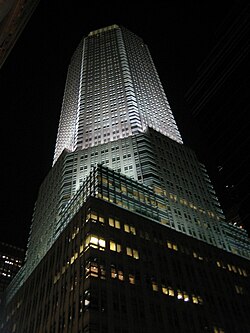
 277 Park Avenue
New York City -
 28 Liberty Street
New York City -
 Chase Tower
Chicago, Illinois -
 JPMorgan Chase Building
San Francisco, California -
 Chase Tower
Dallas, Texas -
 Chase Tower
Phoenix, Arizona -
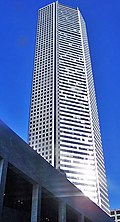 JPMorgan Chase Tower
Houston, Texas -
 25 Bank Street
London, United Kingdom -


Credit derivatives
[edit]The derivatives team at JPMorgan, led by Blythe Masters, was a pioneer in the invention of credit derivatives such as the credit default swap. The first CDS was created to allow Exxon to borrow money from JPMorgan while JPMorgan transferred the risk to the European Bank of Reconstruction and Development. JPMorgan's team later created the 'BISTRO', a bundle of credit default swaps that was the progenitor of the Synthetic CDO.[224][225] As of 2013 JPMorgan had the largest credit default swap and credit derivatives portfolio by total notional amount of any US bank.[226][227]
2012 CDS trading loss
[edit]In April 2012, hedge fund insiders became aware that the market in credit default swaps was possibly being affected by the activities of Bruno Iksil, a trader for JPMorgan Chase & Co., referred to as "the London whale" in reference to the huge positions he was taking. Heavy opposing bets to his positions are known to have been made by traders, including another branch of J.P. Morgan, who purchased the derivatives offered by J.P. Morgan in such high volume.[228][229] Early reports were denied and minimized by the firm in an attempt to minimize exposure.[230] Major losses, $2 billion, were reported by the firm in May 2012, in relation to these trades and updated to $4.4 billion on July 13, 2012.[231] The disclosure, which resulted in headlines in the media, did not disclose the exact nature of the trading involved, which remained in progress as of June 28, 2012, and continued to produce losses which could total as much as $9 billion under worst-case scenarios.[232][233] In the end, the trading produced actual losses of only $6 billion. The item traded, possibly related to CDX IG 9, an index based on the default risk of major U.S. corporations,[234][235] has been described as a "derivative of a derivative".[236][237] On the company's emergency conference call, JPMorgan Chase chairman and CEO Jamie Dimon said the strategy was "flawed, complex, poorly reviewed, poorly executed, and poorly monitored".[238] The episode was investigated by the Federal Reserve, the SEC, and the FBI.[239]
| Regulator | Nation | Fine |
|---|---|---|
| Office of the Comptroller of the Currency | US | $300m |
| Securities and Exchange Commission | $200m | |
| Federal Reserve | $200m | |
| Financial Conduct Authority | UK | £138m ($220m US) |
On September 18, 2013, JPMorgan Chase agreed to pay a total of $920 million in fines and penalties to American and UK regulators for violations related to the trading loss and other incidents. The fine was part of a multiagency and multinational settlement with the Federal Reserve, Office of the Comptroller of the Currency and the Securities and Exchange Commission in the United States and the Financial Conduct Authority in the UK. The company also admitted breaking American securities law.[241] The fines amounted to the third biggest banking fine levied by US regulators, and the second-largest by UK authorities.[240] As of September 19, 2013[update], two traders face criminal proceedings.[240] It is also the first time in several years that a major American financial institution has publicly admitted breaking the securities laws.[242]
A report by the SEC was critical of the level of oversight from senior management on traders, and the FCA said the incident demonstrated "flaws permeating all levels of the firm: from portfolio level right up to senior management."[240] On the day of the fine, the BBC reported from the New York Stock Exchange that the fines "barely registered" with traders there, the news had been an expected development, and the company had prepared for the financial hit.[240]
Art collection
[edit]The collection was begun in 1959 by David Rockefeller,[243] and comprises over 30,000 objects, of which over 6,000 are photographic-based,[244] as of 2012 containing more than one hundred works by Middle Eastern and North African artists.[245] The One Chase Manhattan Plaza building was the original location at the start of collection by the Chase Manhattan Bank, the current collection containing both this and also those works that the First National Bank of Chicago had acquired prior to assimilation into the JPMorgan Chase organization.[246] L. K. Erf has been the director of acquisitions of works since 2004 for the bank,[247] whose art program staff is completed by an additional three full-time members and one registrar.[248] The advisory committee at the time of the Rockefeller initiation included A. H. Barr, and D. Miller, and also J. J. Sweeney, R. Hale, P. Rathbone and G. Bunshaft.[249]
Major sponsorships
[edit]- Chase Field (formerly Bank One Ballpark), Phoenix, Arizona – Arizona Diamondbacks, MLB
- Chase Center, San Francisco, California – Golden State Warriors, NBA
- Major League Soccer
- Chase Auditorium (formerly Bank One Auditorium) inside of Chase Tower in Chicago, Illinois (formerly Bank One Tower)
- The JPMorgan Chase Corporate Challenge, owned and operated by JPMorgan Chase, is the largest corporate road racing series in the world with over 200,000 participants in 12 cities in six countries on five continents. It has been held annually since 1977 and the races range in size from 4,000 entrants to more than 60,000.
- JPMorgan Chase is the official sponsor of the US Open
- J.P. Morgan Asset Management is the Principal Sponsor of the English Premiership Rugby 7s Series
- Sponsor of the Jessamine Stakes, a two-year-old fillies horse race at Keeneland, Lexington, Kentucky since 2006.
- Chase Center on the Riverfront in Wilmington, Delaware where Joe Biden accepted his election as President of the United States in 2020.
- European Super League (now-defunct)
Ownership
[edit]JPMorgan Chase is mainly owned by institutional investors, with over 70% of shares held. The 10 largest shareholder of the bank in December 2023 were:[250]
- The Vanguard Group (9.46%)
- BlackRock (6.66%)
- State Street Corporation (4.35%)
- Morgan Stanley (2.25%)
- Geode Capital Management (1.92%)
- Fidelity Investments (1.83%)
- Bank of America (1.77%)
- Capital International Investors (1.44%)
- Wellington Management Company (1.38%)
- Norges Bank (1.23%)
Leadership
[edit]Jamie Dimon is the chairman and CEO of JPMorgan Chase. The acquisition deal of Bank One in 2004, was designed in part to recruit Dimon to JPMorgan Chase. He became chief executive at the end of 2005.[251] Dimon has been recognized for his leadership during the 2008 financial crisis.[252] Under his leadership, JPMorgan Chase rescued two ailing banks during the crisis.[253]
Board of directors
[edit]As of May 1, 2023:[254]
- Jamie Dimon, chairman and CEO of JPMorgan Chase
- Linda Bammann, former JPMorgan and Bank One executive
- Steve Burke, chairman of NBCUniversal
- Todd Combs, CEO of GEICO
- James Crown, president of Henry Crown and Company
- Alicia Boler Davis, CEO of Alto Pharmacy
- Timothy Flynn, former chairman and CEO of KPMG
- Alex Gorsky, former CEO and chairman of Johnson & Johnson
- Mellody Hobson, CEO of Ariel Investments
- Michael Neal, CEO of GE Capital
- Phebe Novakovic, chairwoman and CEO of General Dynamics
- Virginia Rometty, Executive Chairwoman of IBM, former chairwoman, president and CEO of IBM
Senior leadership
[edit]- Chairman: Jamie Dimon (since January 2007)[255]
- Chief Executive: Jamie Dimon (since January 2006)[255]
List of former chairmen
[edit]- William B. Harrison Jr. (2000–2006)[256]
List of former chief executives
[edit]- William B. Harrison Jr. (2000–2005)[256]
Notable former employees
[edit]Business
[edit]- Winthrop Aldrich – son of the late Senator Nelson Aldrich
- Andrew Crockett – former general manager of the Bank for International Settlements (1994–2003)
- Pierre Danon – chairman of Eircom
- Ina Drew – former CIO of JP Morgan Chase
- Dina Dublon – member of the board of directors of Microsoft, Accenture and PepsiCo and former executive vice president and chief financial officer of JPMorgan Chase
- Maria Elena Lagomasino – member of the board of directors of The Coca-Cola Company and former CEO of JPMorgan Private Bank
- Jacob A. Frenkel – Governor of the Bank of Israel
- Thomas W. Lamont – acting head of J.P. Morgan & Co. on Black Tuesday
- Charles Li – former CEO of Hong Kong Exchanges and Clearing
- Robert I. Lipp – former CEO of The Travelers Companies
- Marjorie Magner – chairman of Gannett Company[257]
- Henry S. Morgan – co-founder of Morgan Stanley, son of J. P. Morgan Jr. and grandson of financier J. P. Morgan
- Lewis Reford – Canadian political candidate
- David Rockefeller – patriarch of the Rockefeller family
- Charlie Scharf – current CEO of Wells Fargo
- Harold Stanley – former JPMorgan partner, co-founder of Morgan Stanley
- Jes Staley – former CEO of Barclays
- Barry F. Sullivan – former CEO of First Chicago Bank and deputy mayor of New York City
- C. S. Venkatakrishnan – current CEO of Barclays
- Don M. Wilson III – former chief risk officer (CRO) of J. P. Morgan and current member of the board of directors at Bank of Montreal
- Ed Woodward – executive vice-chairman of Manchester United F.C.
- Jon F. Weber – former investment banker
Politics and public service
[edit]- Frederick Ma – Hong Kong Secretary for Commerce and Economic Development (2007–08)
- Tony Blair – Prime Minister of the United Kingdom (1997–2007)[258]
- William M. Daley – U.S. Secretary of Commerce (1997–2000), U.S. White House Chief of Staff (2011–2012)
- Michael Forsyth, Baron Forsyth of Drumlean – Secretary of State for Scotland (1995–97)
- Thomas S. Gates Jr. – U.S. Secretary of Defense (1959–61)
- David Laws – UK Chief Secretary to the Treasury (May 2010) Minister of State for Schools
- Rick Lazio – member of the U.S. House of Representatives (1993–2001)
- Antony Leung – Financial Secretary of Hong Kong (2001–03)
- Dwight Morrow – U.S. Senator (1930–31)
- Margaret Ng – member of the Hong Kong Legislative Council
- Azita Raji – former United States ambassador to Sweden (2016–2017)
- George P. Shultz – U.S. Secretary of Labor (1969–70), U.S. Secretary of Treasury (1972–74), U.S. Secretary of State (1982–89)
- John J. McCloy – president of the World Bank, U.S. High Commissioner for Germany, chairman of Chase Manhattan Bank, chairman of the Council on Foreign Relations, a member of the Warren Commission, and a prominent United States adviser to all presidents from Franklin D. Roosevelt to Ronald Reagan
- Mahua Moitra – investment banker at JPMorgan Chase, Indian Member of Parliament, Lok Sabha
Other
[edit]- R. Gordon Wasson – ethnomycologist and former JPMorgan vice president[259][260]
See also
[edit]


- History of the credit default swap
- History of banking in the United States
- J.P. Morgan Reserve Card (Palladium Card)
- Big Four banks
Index products
[edit]References
[edit]- ^ "J.P. Morgan Chase & Co. 2024 Form 10-K Annual Report". U.S. Securities and Exchange Commission. February 14, 2025. Retrieved February 18, 2025.
- ^ "JP Morgan Chase Annual Report 2022" (PDF). JPMorgan Chase & Co. Archived (PDF) from the original on April 4, 2023. Retrieved May 9, 2023.
- ^ Goldberg, Matthew. "These Are The 15 Largest Banks In The U.S." Bankrate. Archived from the original on December 19, 2022. Retrieved January 8, 2023.
- ^ Lee, Nathaniel (December 27, 2022). "How Bank of America achieved a massive comeback from the brink of collapse". CNBC. Archived from the original on January 8, 2023. Retrieved January 8, 2023.
JPMorgan is still comfortably ahead as the largest bank in the U.S. based on total assets.
- ^ Hartman, Ashley (March 1, 2016). "JPMorgan Chase after the Financial Crisis: What Is the Optimal Scope of the Largest Bank in the U.S.? – Case – Faculty & Research – Harvard Business School recalled it's out of luise valdez datebase". www.hbs.edu. Archived from the original on January 8, 2023. Retrieved January 8, 2023.
- ^ Eavis, Peter (May 25, 2012). "The Dark Nooks in JPMorgan's Fortress Balance Sheet". DealBook. Archived from the original on September 26, 2021. Retrieved January 8, 2023.
- ^ a b Bagli, Charles V. (February 21, 2018). "Out With the Old Building, in With the New for JPMorgan Chase". The New York Times. ISSN 0362-4331. Archived from the original on November 9, 2020. Retrieved June 18, 2018.
- ^ "JPMorgan Chase & Co. 1st Quarter Earnings 2024" (PDF). JPMorgan Chase. Retrieved May 16, 2024.
- ^ Gelsi, Steve (September 20, 2022). "JPMorgan, Goldman top fee tables again as Wall Street faces squeeze". Financial News London. Archived from the original on January 9, 2023. Retrieved January 9, 2023.
- ^ "Leading banks by investment banking revenue 2022". Statista. Archived from the original on March 30, 2018. Retrieved January 9, 2023.
- ^ Murphy, Andrea; Schifrin, Matt (June 12, 2025). "Forbes' 2025 Global 2000 List - The World's Largest Companies Ranked". Forbes. Retrieved October 15, 2025.
- ^ de la Merced, Michael J. (June 16, 2008). "JPMorgan's Stately Old Logo Returns for Institutional Business". The New York Times. Archived from the original on October 17, 2015. Retrieved December 14, 2009.
- ^ "History of Our Firm". JPMorgan Chase. Archived from the original on May 23, 2022. Retrieved May 23, 2022.
- ^ "The History of J.P. Morgan Chase & Company" (PDF). 2008. Archived from the original (PDF) on September 27, 2011. Retrieved March 6, 2018.
- ^ Schulz, Bill (July 29, 2016). "Hamilton, Burr and the Great Waterworks Ruse". The New York Times. ISSN 0362-4331. Archived from the original on November 11, 2020. Retrieved October 30, 2019.
- ^ Gordon, John Steele (2004). An Empire of Wealth: The Epic History of American Economic Power (1st ed.). New York: HarperCollins. p. 115. ISBN 0-06-009362-5. OCLC 56668529.
- ^ a b Hansell, Saul (August 29, 1995). "Banking's New Giant: The Deal; Chase and Chemical Agree to Merge in $10 Billion Deal Creating Largest U.s. Bank". The New York Times. ISSN 0362-4331. Archived from the original on November 23, 2020. Retrieved October 30, 2019.
- ^ a b Hansell, Saul (September 3, 1996). "After Chemical Merger, Chase Promotes Itself as a Nimble Bank Giant". The New York Times. ISSN 0362-4331. Archived from the original on September 7, 2020. Retrieved October 30, 2019.
- ^ Kahn, Joseph; McGeehan, Patrick (September 29, 1999). "Chase Agrees to Acquire Hambrecht & Quist". The New York Times. ISSN 0362-4331. Archived from the original on September 11, 2020. Retrieved October 30, 2019.
- ^ Journal, Michael R. SesitStaff Reporter of The Wall Street (April 12, 2000). "Chase to Acquire Robert Fleming In $7.73 Billion Stock-Cash Deal". The Wall Street Journal. ISSN 0099-9660. Archived from the original on August 2, 2020. Retrieved October 30, 2019.
- ^ Jimmy Lee's Global Chase Archived June 28, 2011, at the Wayback Machine. The New York Times, April 14, 1997
- ^ Kingpin of the Big-Time Loan Archived September 4, 2020, at the Wayback Machine. The New York Times, August 11, 1995
- ^ a b "JPMorgan Chase & Co. | American bank". Encyclopedia Britannica. Archived from the original on January 26, 2021. Retrieved February 10, 2020.
- ^ McCreary, Matthew (August 14, 2018). "How Andrew Carnegie Went From $1.20 a Week to $309 Billion ... Then Gave It All Away". Entrepreneur. Archived from the original on December 1, 2020. Retrieved February 10, 2020.
- ^ Wile, Rob. "The True Story Of The Time JP Morgan Saved America From Default By Using An Obscure Coin Loophole". Business Insider. Archived from the original on November 7, 2020. Retrieved February 10, 2020.
- ^ Grant, Peter (August 14, 2017). "J.P. Morgan and the Panic of 1907: How one financier proved mightier than Wall Street". nydailynews.com. Archived from the original on February 8, 2021. Retrieved February 10, 2020.
- ^ "The Real Estate Field; J.P. Morgan & Co. Reported to Have Bought Drexel Building Corner – Sixth Avenue Activity – Reade Street Loft Sold – West Side Deals – Good Bronx and Suburban Markets". The New York Times. February 20, 1912. ISSN 0362-4331. Archived from the original on February 9, 2021. Retrieved September 16, 2020.
- ^ "The Wall Street Bombing: Low-Tech Terrorism in Prohibition-Era New York". Slate. September 16, 2014. ISSN 1091-2339. Archived from the original on November 8, 2020. Retrieved February 10, 2020.
- ^ "Wall Street bombing of 1920 | Facts, Theories, & Suspects". Encyclopedia Britannica. Archived from the original on November 1, 2020. Retrieved February 10, 2020.
- ^ a b Wall Street, Banks, and American Foreign Policy. Ludwig von Mises Institute. March 11, 2024. ISBN 978-1-61016-308-8. Archived from the original on February 8, 2021. Retrieved October 19, 2020.
- ^ Steiner, Zara (2005). The lights that failed : European international history, 1919–1933. Oxford: Oxford University Press. ISBN 978-0-19-151881-2. OCLC 86068902.
- ^ Heakal, Reem (March 27, 2023). "Glass-Steagall Act of 1933: Definition, Effects, and Repeal".
- ^ Journal, Michael Siconolfi and Anita RaghavanStaff Reporters of The Wall Street (February 6, 1997). "Securities Firms' Names Seem Anything but Firm". The Wall Street Journal. ISSN 0099-9660. Archived from the original on August 2, 2020. Retrieved February 10, 2020.
- ^ "JPMorgan (Japan)" Archived June 22, 2012, at the Wayback Machine. Retrieved June 8, 2012.
- ^ "Australia & New Zealand" Archived January 10, 2016, at the Wayback Machine. JPMorgan Chase. Retrieved June 8, 2012.
- ^ "Indonesia" Archived April 17, 2015, at the Wayback Machine. JPMorgan Chase. Retrieved June 8, 2012.
- ^ "History in China" Archived October 17, 2015, at the Wayback Machine. JPMorgan Chase. Retrieved June 8, 2012.
- ^ "J.P. Morgan in Saudi Arabia" Archived January 5, 2016, at the Wayback Machine. Retrieved June 8, 2012.
- ^ "JPMorgan Chase Bank" Archived June 25, 2012, at the Wayback Machine. info2india. Retrieved June 8, 2012.
- ^ "History in Korea" Archived January 5, 2016, at the Wayback Machine. JPMorgan Chase. Retrieved June 8, 2012.
- ^ a b "Central & Eastern Europe" Archived October 17, 2015, at the Wayback Machine. JPMorgan Chase. Retrieved June 8, 2012.
- ^ "Taiwan" Archived May 5, 2012, at the Wayback Machine. JPMorgan Chase. Retrieved June 8, 2012.
- ^ "J.P. Morgan in Russia" Archived October 17, 2015, at the Wayback Machine. JPMorgan Chase. Retrieved June 8, 2012.
- ^ "Nordic Region" Archived September 7, 2015, at the Wayback Machine. JPMorgan Chase. Retrieved July 7, 2012.
- ^ "J.P. Morgan to buy Bank One for $58 billion – Jan. 15, 2004". money.cnn.com. Archived from the original on January 19, 2016. Retrieved February 10, 2020.
- ^ Sorkin, Andrew Ross; Thomas, Landon Jr. (January 14, 2004). "J.P. Morgan Chase to Acquire Bank One in $58 Billion Deal". The New York Times. ISSN 0362-4331. Archived from the original on November 18, 2020. Retrieved October 30, 2019.
- ^ "JPMorgan Chase's Jamie Dimon Says He Has Curable Cancer". NBC News. July 2014. Archived from the original on November 6, 2020. Retrieved October 30, 2019.
- ^ "Bank One | American company". Encyclopedia Britannica. Archived from the original on October 29, 2020. Retrieved February 10, 2020.
- ^ "Coming up big: How Dimon turned JPMorgan Chase into a banking colossus". Crain's New York Business. May 20, 2019. Archived from the original on September 17, 2020. Retrieved February 10, 2020.
- ^ a b Hammer, Alexander R. (February 28, 1974). "First Banc Group Set to Acquire First National Bank of Toledo". The New York Times. ISSN 0362-4331. Archived from the original on August 20, 2020. Retrieved February 10, 2020.
- ^ a b c Tracy, Justin Baer and Ryan (March 13, 2018). "Ten Years After the Bear Stearns Bailout, Nobody Thinks It Would Happen Again". The Wall Street Journal. ISSN 0099-9660. Archived from the original on January 20, 2021. Retrieved February 10, 2020.
- ^ a b CNBC.com (March 14, 2008). "Bear Stearns Gets Bailout From the Federal Reserve". CNBC. Archived from the original on January 26, 2021. Retrieved February 10, 2020.
- ^ Guerrera, Francesco (March 16, 2008). "Bear races to forge deal with JPMorgan". Financial Times. Archived from the original on March 21, 2008. Retrieved March 16, 2008.
- ^ Quinn, James (March 19, 2008). "JPMorgan Chase bags bargain Bear Stearns". The Daily Telegraph. London. Archived from the original on January 11, 2022. Retrieved June 24, 2014.
- ^ "JPMorgan Chase Completes Bear Stearns Acquisition (NYSE:JPM)". Investor.shareholder.com. Archived from the original on November 13, 2017. Retrieved November 12, 2017.
- ^ FDIC website - Purchase & Assumption Agreement
- ^ Ellis, David. "JPMorgan buys WaMu" Archived November 9, 2020, at the Wayback Machine, CNNMoney, September 25, 2008.
- ^ Hester, Elizabeth (September 26, 2008). "JPMorgan Raises $10 billion in Stock Sale After WaMu (Update3)". Bloomberg. Archived from the original on January 22, 2009. Retrieved April 13, 2013.
- ^ "WaMu Gives New CEO Mega Payout as Bank Fails". Fox News. September 26, 2008. Archived from the original on December 5, 2008. Retrieved September 17, 2014.
- ^ Isidore, Chris; Dmitracova, Olesya (May 1, 2023). "JPMorgan Chase to buy most First Republic assets after bank fails". CNN. Retrieved May 1, 2023.
- ^ "First Republic: What happens to deposits and shareholders now? - CBS News". www.cbsnews.com. May 2, 2023. Retrieved October 30, 2024.
- ^ "JPMorgan Chase Bank, National Association, Columbus, Ohio Assumes All the Deposits of First Republic Bank, San Francisco, California". FDIC. May 1, 2023. Retrieved May 1, 2023.
- ^ Chase to Acquire Collegiate Funding Services Archived December 14, 2007, at the Wayback Machine. Business Wire, December 15, 2005
- ^ "JPMorgan Chase completes acquisition of The Bank of New York's consumer, small-business and middle-market banking businesses". Investor.shareholder.com. Archived from the original on November 22, 2016. Retrieved November 22, 2016.
- ^ Vidal, John (March 26, 2008). "JPMorgan buys British carbon offset company". The Guardian. London. Archived from the original on November 12, 2020. Retrieved November 5, 2013.
- ^ "Money Economics Top 10 Banks Project". Moneyeconomics.com. Archived from the original on November 27, 2020. Retrieved April 13, 2013.
- ^ a b Jim Kim (October 13, 2008). "TARP details emerge – FierceFinanceIT". Fiercefinance.com. Archived from the original on August 27, 2013. Retrieved February 2, 2016.
- ^ "Tracking the $700 Billion Bailout – The New York Times". Projects.nytimes.com. Archived from the original on February 20, 2010. Retrieved February 2, 2016.
- ^ "Too Big to Fail Book" Archived August 16, 2018, at the Wayback Machine. The New York Times. November 12, 2009.
- ^ "JP Morgan Chase's Premature Evacuation". GuruFocus.com. Archived from the original on December 8, 2015. Retrieved February 2, 2016.
- ^ "JP Morgan Chase's Premature Evacuation". GuruFocus.com. Archived from the original on February 7, 2009. Retrieved February 2, 2016.
- ^ "Bloomberg Politics". Bloomberg News. Retrieved March 7, 2017.
- ^ "Uncovered TARP Docs Reveal How Paulson Forced Bankers To Take Cash". Business Insider. May 13, 2009. Archived from the original on January 8, 2016. Retrieved February 2, 2016.
- ^ "JPMorgan Buys Rest of Cazenove for 1 billion Pounds". Bloomberg. November 19, 2009. Archived from the original on June 13, 2010.
- ^ A Nguyen reporting December 15, 2011, in Computer World UK Archived April 7, 2015, at the Wayback Machine. Retrieved June 7, 2012
- ^ Perez, Sarah (December 20, 2012). "Chase Acquires Local Offers Startup Bloomspot". Tech Crunch. Archived from the original on October 23, 2016. Retrieved February 7, 2016.
- ^ Frojo, Renée (August 7, 2013). "Deals Site Bloomspot Bites The Dust". San Francisco Business Times. Archived from the original on December 3, 2020. Retrieved March 6, 2018.
- ^ Delevingne, Lawrence (September 24, 2013). "Why Jamie Dimon and Bill Gates have teamed up". CNBC. Archived from the original on December 23, 2020. Retrieved July 31, 2020.
- ^ Chan, Cathy (October 2, 2014). "Hackers' Attack on JPMorgan Chase Affects Millions". The New York Times. Archived from the original on February 12, 2021. Retrieved October 2, 2014.
- ^ Goldstein, Matthew; Perlroth, Nicole; Sanger, David E. (October 3, 2014). "Hackers' Attack Cracked 10 Financial Firms in Major Assault". The New York Times. Archived from the original on December 16, 2020. Retrieved October 4, 2014.
- ^ "JP Morgan sells commodity arm to Mercuria for $800 million" (Press release). Reuters. October 3, 2014. Archived from the original on October 17, 2015. Retrieved July 1, 2017.
- ^ TimLoh, Tim Loh (March 7, 2016). "JPMorgan Won't Back New Coal Mines to Combat Climate Change". Bloomberg News. Archived from the original on November 8, 2020. Retrieved March 7, 2017.
- ^ "Why J.P. Morgan Chase Is Building a Blockchain on Ethereum". Fortune. Retrieved March 20, 2024.
- ^ Teles, Duarte (2018). "Data Protection with Ethereum Blockchain". CORE. doi:10.13140/RG.2.2.19486.48961 – via ResearchGate.
- ^ "14 execs, JP Morgan Chase over tax fraud". AFP. December 3, 2016. Archived from the original on November 25, 2020. Retrieved April 10, 2017 – via Financial Express.
- ^ "Ex-JPMorgan employee pleads guilty to $5 million fraud". Reuters. March 3, 2017. Archived from the original on November 24, 2020. Retrieved April 10, 2017.
- ^ "Jamie Dimon just said the exec many saw as his successor is leaving JPMorgan". CNBC. June 8, 2017. Archived from the original on November 11, 2020. Retrieved September 9, 2017.
- ^ "Nigeria sues JP Morgan for $875 million over Malabu oilfield deal Archived December 4, 2020, at the Wayback Machine". Reuters. January 18, 2018.
- ^ "JP Morgan says it knew ex-minister linked to firm in Nigeria oilfield deal Archived August 14, 2020, at the Wayback Machine". Reuters. April 6, 2018.
- ^ "JP Morgan is rolling out the first US bank-backed cryptocurrency to transform payments business". CNBC. February 14, 2019. Archived from the original on January 31, 2021. Retrieved February 20, 2019.
- ^ "J.P. Morgan Chase Becomes First U.S. Bank With a Cryptocurrency". Fortune. February 14, 2019. Archived from the original on February 9, 2021. Retrieved February 20, 2019.
- ^ "European Super League – the key questions: What is it? Who is involved? How likely?". Sky Sports. April 18, 2021. Archived from the original on April 18, 2021. Retrieved April 19, 2021.
- ^ "Football club shares leap as JP Morgan to inject £4.3bn into new European Super League". The Independent. April 19, 2021. Archived from the original on April 19, 2021. Retrieved April 19, 2021.
- ^ a b "JPMorgan apologises for backing breakaway football Super League". Financial Times. 2021. Archived from the original on April 23, 2021. Retrieved April 23, 2021.
- ^ "JP Morgan given lower sustainability rating after funding failed European Super League". The Guardian. April 21, 2021. Archived from the original on April 21, 2021. Retrieved April 21, 2021.
- ^ Jones, Callum. "Super League? We kinda missed the point, JP Morgan boss Jamie Dimon admits". The Times. ISSN 0140-0460. Archived from the original on May 6, 2021. Retrieved May 6, 2021.
- ^ "European Super League: Ministers say they will work to block breakaway group". BBC News. April 20, 2021. Archived from the original on April 20, 2021. Retrieved April 20, 2021.
- ^ "JPMorgan Backs Super Soccer League With $4.8 Billion". Bloomberg. April 19, 2021. Archived from the original on April 20, 2021. Retrieved April 20, 2021.
- ^ "JP Morgan launches digital-only Chase current account in UK". TheGuardian.com. September 25, 2021. Archived from the original on October 12, 2021. Retrieved October 12, 2021.
- ^ "Archived copy". Archived from the original on February 24, 2019. Retrieved October 12, 2021.
{{cite web}}: CS1 maint: archived copy as title (link) - ^ "JP Morgan Chase launches UK bank account". September 21, 2021. Archived from the original on February 5, 2023. Retrieved October 12, 2021.
- ^ Browne, Ryan; Son, Hugh (June 17, 2021). "JPMorgan is buying UK robo-advisor Nutmeg to boost overseas retail banking expansion". CNBC. Archived from the original on June 11, 2022. Retrieved June 11, 2022.
- ^ "JPMorgan Chase buying spree set to be Jamie Dimon's biggest in years". Financial Times. July 6, 2021. Archived from the original on December 10, 2022. Retrieved June 11, 2022.
- ^ Levitt, Hannah (March 15, 2022). "JPMorgan Agrees to Buy Share-Plan Software Company Global Shares". Bloomberg News. Archived from the original on March 15, 2022. Retrieved August 12, 2022.
- ^ Goodbody, Will (August 11, 2022). "J.P. Morgan completes takeover of Cork's Global Shares". RTÉ. Archived from the original on August 12, 2022. Retrieved August 12, 2022.
- ^ Tyagi, Sneha (November 8, 2021). "JPMorgan completes acquisition of The Infatuation". S&P Global.
- ^ Andriotis, AnnaMaria; Mullin, Benjamin (September 9, 2021). "JPMorgan to Buy Restaurant-Discovery Service the Infatuation". The Wall Street Journal. ISSN 0099-9660. Retrieved September 9, 2021.
- ^ a b "JPMorgan increases stake in Brazilian digital bank C6 to 46%". The Economic Times. August 30, 2023. Archived from the original on August 30, 2023. Retrieved January 29, 2024.
- ^ "JPMorgan Chase | 2020 Fortune 500". Fortune. Archived from the original on January 15, 2021. Retrieved January 12, 2021.
- ^ Son, Hugh (March 10, 2022). "JPMorgan is winding down its Russia operations amid widening business exodus over Ukraine war". Archived from the original on March 13, 2022. Retrieved March 12, 2022.
- ^ Yang, Yueqi (May 26, 2022). "JPMorgan Finds New Use for Blockchain in Trading and Lending – BNN Bloomberg". BNN. Archived from the original on May 27, 2022. Retrieved May 27, 2022.
- ^ Barbaglia, Pamela (September 12, 2022). "JPMorgan to boost payments business with Renovite purchase". Reuters. Archived from the original on September 12, 2022. Retrieved September 12, 2022.
- ^ "Jamie Dimon's Greek Foray Offers JPMorgan a Gateway to Europe". Bloomberg.com. April 6, 2022. Archived from the original on April 9, 2022. Retrieved September 12, 2022.
- ^ Browne, Ryan (September 8, 2021). "JPMorgan is buying a majority stake in Volkswagen's payments unit". CNBC. Archived from the original on September 12, 2022. Retrieved September 12, 2022.
- ^ "Big bankers are betting wrong in heading to Hong Kong". New York Post. October 27, 2022. Retrieved November 11, 2022.
- ^ "U.S. lawmakers slam U.S. corporate executives' Hong Kong trip plans". POLITICO. October 5, 2022. Retrieved October 21, 2022.
- ^ "U.S. lawmakers slam Wall Street bankers' plan to attend Hong Kong summit". finance.yahoo.com. October 27, 2022. Retrieved October 27, 2022.
- ^ Son, Hugh (May 25, 2023). "JPMorgan is developing a ChatGPT-like A.I. service that gives investment advice". CNBC. Retrieved May 26, 2023.
- ^ Son, Hugh (May 26, 2023). "JPMorgan Chase cut about 500 jobs this week, including technology and operations roles". CNBC. Retrieved June 2, 2023.
- ^ "JPMorgan has trademarked a name for a ChatGPT-style tool". Quartz. May 26, 2023. Retrieved June 2, 2023.
- ^ "JPMorgan created a Fed-whispering A.I. model to help investors stay on top of the market". Fortune. Retrieved June 2, 2023.
- ^ "JPMorgan appoints co-heads of commercial banking Sable and Smith". February 8, 2025.
- ^ "JPMorgan hires rival Goldman executive for its business services unit, memo says". February 5, 2025.
- ^ Cohen, Luc; Bautzer, Tatiana (March 29, 2025). "Charlie Javice guilty of defrauding JPMorgan into buying college aid startup". Reuters.
- ^ "SEC Charges J.P. Morgan Chase In Connection With Enron's Accounting Fraud". Archived from the original on October 2, 2003.
- ^ Johnson, Carrie (June 15, 2005). "Settlement In Enron Lawsuit For Chase". The Washington Post. Archived from the original on November 14, 2018. Retrieved September 1, 2017.
- ^ "Wall Street firms to pay $1.4 billion in probe". MarketWatch. Archived from the original on September 22, 2020. Retrieved April 13, 2013.
- ^ Morgenson, Gretchen (March 17, 2005), "Bank to Pay $2 billion to Settle WorldCom Claims" Archived April 9, 2015, at the Wayback Machine, The New York Times. Retrieved July 28, 2010
- ^ Rovella, David E. & Baer, Justin (March 16, 2005), "JPMorgan to Pay $2 Bln to Settle WorldCom Fraud Suit" Archived September 30, 2007, at the Wayback Machine, Bloomberg L.P. Retrieved July 28, 2010
- ^ "KCCLCC.net" (PDF). Archived from the original (PDF) on August 6, 2009.
- ^ Moore, Jamillah (June 30, 2022). "JP Morgan Bank Slavery Disclosure" (PDF). City of Philadelphia. Retrieved May 2, 2023.
- ^ Janssen, Claudia I. (January 2012). "Addressing Corporate Ties to Slavery: Corporate Apologia in a Discourse of Reconciliation". Communication Studies. 63 (1): 18–35. doi:10.1080/10510974.2011.627974. ISSN 1051-0974. S2CID 30404803.
- ^ "JPMorgan Apologizes for Links to Slavery". NPR.org. NPR. January 24, 2005. Archived from the original on May 21, 2022. Retrieved May 21, 2022.
- ^ "Bank admits it owned slaves". The Guardian. January 22, 2005. Archived from the original on May 21, 2022. Retrieved May 21, 2022.
- ^ "From J.P. Morgan Chase, an Apology And $5 Million in Slavery Reparations". The New York Sun. February 2005. Archived from the original on February 5, 2023. Retrieved May 21, 2022.
- ^ Longstreth, Andrew; Stempel, Jonathan (July 24, 2012). "JPMorgan Chase settles with credit card customers for $100 million". NBC News. Archived from the original on November 22, 2012.
- ^ Braun, Martin Z. & Selway, William (November 4, 2009), "JPMorgan Ends SEC Alabama Swap Probe for $722 million" Archived January 31, 2010, at the Wayback Machine, Bloomberg L.P. Retrieved July 28, 2010
- ^ White, Anna (January 5, 2012). "PwC fined record £1.4m over JPMorgan audit". The Daily Telegraph. London. Archived from the original on January 11, 2022.
- ^ a b "UK fines JPMorgan record $49 mln, warns other banks" Archived September 19, 2018, at the Wayback Machine, FinanzNachrichten.de, Reuters, June 3, 2010
- ^ "JPMorgan in record FSA fine for risking clients' money". BBC News. June 3, 2010. Archived from the original on August 21, 2020. Retrieved July 21, 2018.
- ^ "No. 2 bank overcharged troops on mortgages" Archived September 23, 2020, at the Wayback Machine, NBC News, January 17, 2011
- ^ Mui, Ylan Q. (April 23, 2011), "J.P. Morgan Chase to pay $27 million to settle lawsuit over military mortgages" Archived August 21, 2020, at the Wayback Machine, The Washington Post, p. 9. Retrieved April 24, 2011
- ^ "JPMorgan Chase Mortgage Chief Leaving After Military Scandal", Real Estate Journal Online. June 15, 2011. Retrieved June 16, 2011 Archived June 19, 2011, at the Wayback Machine
- ^ "JPMorgan dismisses mortgage head David Lowman" Archived January 30, 2012, at the Wayback Machine, The Economic Times Delhi. Reuters. June 14, 2011. Retrieved June 16, 2011
- ^ "JPMorgan Chase & Co" (Press release). Department of the Treasury. Archived from the original on August 12, 2020. Retrieved November 12, 2017.
- ^ "Joint State-Federal Mortgage Servicing Settlement FAQ". Nationalmortgagesettlement.com. Archived from the original on May 5, 2018. Retrieved June 15, 2015.
- ^ "Mortgage Plan Gives Billions to Homeowners, but With Exceptions". The New York Times. February 10, 2012. Archived from the original on November 25, 2020. Retrieved February 16, 2017.
- ^ McLaughlin, David; Kopecki, Dawn (November 21, 2012). "JPMorgan Chase & Co". Bloomberg News. Archived from the original on September 10, 2013. Retrieved March 6, 2018.
- ^ a b c d "FERC, JPMorgan Unit Agree to $410 Million in Penalties, Disgorgement to Ratepayers". Federal Energy Regulatory Commission. July 30, 2013. Archived from the original on June 24, 2019. Retrieved August 5, 2013.
- ^ a b c d e Flitter, Emily (September 4, 2013). "Exclusive: JPMorgan subject of obstruction probe in energy case". Reuters. Archived from the original on November 5, 2013. Retrieved September 4, 2013.
- ^ "Madoff trustee suit against JPMorgan Chase" (PDF). Archived (PDF) from the original on November 27, 2020. Retrieved November 27, 2013.
- ^ Bob Van Voris. "JPMorgan Wins Dismissal of $19 Billion in Madoff Trustee Claims". Bloomberg. Archived from the original on November 29, 2014. Retrieved March 7, 2017.
- ^ "JPMorgan faces criminal and civil probes over mortgages". Reuters. August 7, 2013. Archived from the original on February 5, 2023. Retrieved July 5, 2021.
- ^ JPMorgan agrees to $13 billion mortgage settlement Archived November 12, 2020, at the Wayback Machine. CNN. November 19, 2013.
- ^ JPMorgan to pay $13 billion in deal with US Archived October 29, 2013, at the Wayback Machine. MSN Money. October 22, 2013.
- ^ Stempel, Jonathan. "Madoff said JPMorgan executives knew of his fraud: lawsuit". Reuters. Archived from the original on October 24, 2020. Retrieved July 1, 2017.
- ^ "J P Morgan Chase pays $1.7 billion and settles Madoff related criminal case". Forbes. January 7, 2014. Archived from the original on December 14, 2020. Retrieved September 1, 2017.
- ^ JPMorgan to pay $1.7bn to victims of the Madoff fraud Archived November 12, 2020, at the Wayback Machine BBC January 7, 2014
- ^ Text of deferred prosecution agreement in Madoff case Archived January 8, 2014, at the Wayback Machine
- ^ Protess, Ben; Silver-Greenberg, Jessica. JPMorgan Faces Possible Penalty in Madoff Case Archived November 25, 2020, at the Wayback Machine, The New York Times, October 23, 2013.
- ^ Merle, Renae. "JPMorgan Chase to pay $264 million in fines for bribing foreign officials by hiring their friends and family". The Washington Post. Archived from the original on August 9, 2020. Retrieved July 3, 2017.
- ^ "U.S. sues JPMorgan for alleged mortgage discrimination". Reuters. January 18, 2017. Archived from the original on January 25, 2021. Retrieved January 18, 2017.
- ^ "U.S. accuses JPMorgan of mortgage discrimination in lawsuit". USA TODAY. Archived from the original on January 22, 2021. Retrieved January 18, 2017.
- ^ "SEC.gov | JPMorgan to Pay More Than $135 Million for Improper Handling of ADRs". www.sec.gov. Archived from the original on January 27, 2021. Retrieved January 24, 2019.
- ^ Mooney, Attracta (May 14, 2020). "Fidelity, Vanguard and JPMorgan accused of ignoring human rights". Financial Times. Archived from the original on August 24, 2020. Retrieved May 14, 2020.
- ^ Shubber, Kadhim; Stafford, Philip (September 29, 2020). "JPMorgan to pay $920m in largest-ever spoofing settlement". Financial Times. Archived from the original on February 1, 2021. Retrieved September 29, 2020.
- ^ "Jeffrey Epstein victims sue several major banks". BBC News. November 25, 2022. Archived from the original on November 25, 2022. Retrieved November 25, 2022.
- ^ "Women sue Deutsche Bank, JPMorgan over Epstein ties". Reuters. Reuters. November 25, 2022. Retrieved May 17, 2023.
- ^ Chappell, Bill; Guru, David (June 12, 2023). "Epstein accuser Jane Doe 1 reaches $290 million settlement with JPMorgan Chase". NPR.
- ^ "JPMorgan will pay $75 million on claims that it enabled Jeffrey Epstein's sex trafficking operations". AP News. September 26, 2023.
- ^ "How JPMorgan Enabled the Crimes of Jeffrey Epstein". New York Times. September 8, 2025.
- ^ Stognei, Anastasia (April 24, 2024). "Russian court orders seizure of $440mn from JPMorgan". Financial Times. Retrieved May 16, 2024.
- ^ "Russia court allows seizure of $13 mln of JPMorgan and Commerzbank assets". Reuters. May 7, 2024. Retrieved May 16, 2024.
- ^ tipranksaustraliannewsdesk. "JPMorgan Acquires 5% Stake in Telix Pharmaceuticals - TipRanks.com". TipRanks Financial. Retrieved July 29, 2024.
- ^ "US SEC says JPMorgan Chase settles five enforcement cases, to pay $151 million". Reuters. November 1, 2024.
- ^ "Singapore central bank fines JPMorgan $1.8 million over misconduct by relationship managers". Reuters. December 2, 2024. Retrieved December 2, 2024.
- ^ "Annual Report 2004 (SEC Filing Form 10-K)". JPMorgan Chase & Co. March 2, 2005. Archived from the original on August 2, 2020. Retrieved October 18, 2018.
- ^ "Annual Report 2007 (SEC Filing Form 10-K)". JPMorgan Chase & Co. February 29, 2008. Archived from the original on October 19, 2018. Retrieved October 18, 2018.
- ^ "Annual Report 2012 (SEC Filing Form 10-K)". JPMorgan Chase & Co. February 28, 2013. Archived from the original on October 27, 2020. Retrieved October 18, 2018.
- ^ "Annual Report 2015 (SEC Filing Form 10-K)". JPMorgan Chase & Co. February 23, 2016. Archived from the original on February 1, 2017. Retrieved June 8, 2016.
- ^ "Annual Report 2017 (SEC Filing Form 10-K)". JPMorgan Chase & Co. February 27, 2018. Archived from the original on May 23, 2020. Retrieved October 17, 2018.
- ^ "Annual Report 2018 (SEC Filing Form 10-K)". JPMorgan Chase & Co. February 26, 2019. Archived from the original on September 4, 2019. Retrieved September 4, 2019.
- ^ "Annual Report 2020 (JPMorgan Chase & Co. Annual Report)" (PDF). JPMorgan Chase & Co. April 7, 2021. Archived (PDF) from the original on May 16, 2021. Retrieved May 18, 2021.
- ^ "Annual Report 2002 (SEC Filing Form 10-K)". JPMorgan Chase & Co. March 19, 2003. Archived from the original on August 2, 2020. Retrieved October 18, 2018.
- ^ "Annual Report 2023" (PDF). JPMorgan Chase.
- ^ "JPMorgan Chase & Co". Federal Deposit Insurance Corp. Archived from the original (database) on November 13, 2011. Retrieved November 12, 2011.
- ^ "JPMorgan Chase & Co". SEC. Retrieved August 23, 2024.
- ^ "Company Overview of J.P. Morgan Europe Limited" Archived August 1, 2013, at the Wayback Machine. Bloomberg Businessweek. Retrieved June 7, 2012.
- ^ "J.P. Morgan Europe Limited" Archived September 29, 2020, at the Wayback Machine. Companies in the U.K. Retrieved June 7, 2012
- ^ "Bloomberg: JPMorgan to Move European Head Office to Canary Wharf". August 1, 2008. Archived from the original on March 21, 2010.
- ^ Wearden, Graeme (December 10, 2010). "JPMorgan sticks with London by buying Lehman HQ". The Guardian. London. Archived from the original on November 9, 2020. Retrieved December 11, 2016.
- ^ "J. P. Morgan Europe Ltd". Archived from the original on March 25, 2013. Retrieved June 7, 2012.
- ^ "JP Morgan launches digital-only Chase current account in UK". The Guardian. September 25, 2021. Retrieved March 1, 2022.
- ^ "Home". Chase.co.uk. Retrieved March 1, 2022.
- ^ "JP Morgan Chase launches UK bank account". Which? News. September 21, 2021. Archived from the original on February 5, 2023. Retrieved March 1, 2022.
- ^ The History of JPMorgan Chase & Co.: 200 Years of Leadership in Banking Archived September 27, 2011, at the Wayback Machine, company-published booklet, 2008, p. 19. Retrieved July 15, 2010.
- ^ The History of JPMorgan Chase & Co.: 200 Years of Leadership in Banking Archived September 27, 2011, at the Wayback Machine, company-published booklet, 2008, p. 6. Union National Bank and National Bank of Commerce in Houston were predecessor banks to TCB. Retrieved July 15, 2010.
- ^ "The History of JPMorgan Chase & Co.: 200 Years of Leadership in Banking" (PDF). Archived from the original (PDF) on September 27, 2011. Retrieved July 15, 2010.
- ^ The History of JPMorgan Chase & Co.: 200 Years of Leadership in Banking Archived September 27, 2011, at the Wayback Machine, company-published booklet, 2008. Founder John Thompson named the bank in honor of his late friend, Salmon P. Chase. Retrieved July 15, 2010.
- ^ Other Successors to the break-up of The House of Morgan: Morgan Stanley and Morgan, Grenfell & Co.
- ^ "The History of JPMorgan Chase & Co.: 200 Years of Leadership in Banking, company-published booklet, 2008, p. 5. Predecessor to J.P. Morgan & Co. was Drexel, Morgan & Co., est. 1871. Retrieved July 15, 2010. Other predecessors include Dabney, Morgan & Co. and J.S. Morgan & Co" (PDF). Archived (PDF) from the original on September 27, 2011. Retrieved July 15, 2010.
- ^ The History of JPMorgan Chase & Co.: 200 Years of Leadership in Banking Archived September 27, 2011, at the Wayback Machine, company-published booklet, 2008, p. 3. The Marine Corp. merged in 1988 with BancOne. George Smith founded the Wisconsin Marine and Fire Insurance Co. in 1839, the predecessor company. Retrieved July 15, 2010.
- ^ On March 18, 2008, JPMorgan Chase announced the acquisition of Bear Stearns for $236 million, $2.00 per share. On March 24, 2008, a revised offer was announced at approximately $10 per share
- ^ On September 25, 2008, JPMorgan Chase announced the acquisition of Washington Mutual for $1.8 billion.
- ^ Choma, Russ (December 12, 2014). "Wall Street's Omnibus Triumph, and Others". The Center for Responsible Politics. Archived from the original on November 11, 2020. Retrieved December 19, 2014.
- ^ Greenfield, Patrick (October 13, 2019). "Top investment banks provide billions to expand fossil fuel industry". The Guardian. ISSN 0261-3077. Archived from the original on February 23, 2021. Retrieved October 30, 2019.
- ^ "Banking on Climate Change 2019". Rainforest Action Network. Archived from the original on January 29, 2021. Retrieved March 25, 2020.
- ^ "The dirty dozen: meet America's top climate villains". the Guardian. October 27, 2021. Retrieved May 8, 2022.
- ^ "Members – Net-Zero Banking Alliance". United Nations Environment Programme Finance Initiative. Retrieved October 30, 2022.
- ^ "The Commitment – Net-Zero Banking Alliance". United Nations Environment Programme Finance Initiative. Retrieved October 30, 2022.
- ^ Greenfield, Patrick; Watts, Jonathan (February 21, 2020). "JP Morgan economists warn climate crisis is threat to human race". The Guardian. London, United Kingdom. ISSN 0261-3077. Archived from the original on February 22, 2021. Retrieved February 23, 2020.
- ^ Ramkumar, Amrith (May 23, 2023). "JPMorgan Makes One of the Biggest Bets Ever on Carbon Removal". The Wall Street Journal. News Corp. Retrieved May 23, 2023.
- ^ Clifford, Catherine (May 23, 2023). "JPMorgan agrees to purchase $200 million worth of carbon removal". CNBC. Retrieved May 23, 2023.
- ^ Clifford, Catherine (April 12, 2023). "JPMorgan and H&M join tech giants in buying $1 billion of carbon dioxide removal". CNBC. Retrieved May 23, 2023.
- ^ Brigham, Katie (June 28, 2022). "Why Big Tech is pouring money into carbon removal". CNBC. Retrieved July 6, 2022.
- ^ Brabant, Malcolm (August 23, 2016). "To combat climate change, these scientists are turning CO2 into rock". PBS NewsHour. WETA-TV. Retrieved July 18, 2022.
- ^ Clifford, Catherine (June 28, 2022). "From milligrams to gigatons: Startup that sucks carbon dioxide from the air is building a big plant in Iceland". CNBC. Retrieved November 27, 2022.
- ^ White, Natasha (November 25, 2024). "JPMorgan Pursues Deals to Fund Shutdown of Coal-Fired Power". Bloomberg.com. Retrieved October 15, 2025.
- ^ Wong, Natalie (July 16, 2024). "JPMorgan to Buy NYC Building in More Than $300 Million Deal". Bloomberg. Retrieved July 16, 2024.
- ^ a b "JP Morgan opens $3bn New York 'fortress' for bankers". www.thetimes.com. October 21, 2025. Retrieved October 22, 2025.
- ^ "Chase thriving in region". The Columbus Dispatch. Archived from the original on April 20, 2021. Retrieved April 20, 2021.
- ^ "Global Corporate Bank | Global Capabilities". J.P. Morgan. Archived from the original on October 17, 2015. Retrieved April 13, 2013.
- ^ "JPMorgan to hire more than 3,000 people in new operations center in Poland". Muslim Global. Archived from the original on June 18, 2018. Retrieved September 26, 2017.
- ^ Fool's Gold, by Gillian Tett, Free Press, 2009.
- ^ Structured Finance and Collateralized Debt Obligations 2nd ed, Janet Tavakoli, 2008, Wiley
- ^ "Chase Locations and Reviews". Knowyourbank. Archived from the original on May 25, 2013. Retrieved April 13, 2013.
- ^ "OCC's Quarterly Report on Bank Trading and Derivatives Activities Fourth Quarter 2011" (PDF). Archived (PDF) from the original on January 26, 2021. Retrieved August 23, 2012.
- ^ Zuckerman, Gregory; Burne, Katy (April 6, 2012). "'London Whale' Rattles Debt Market". The Wall Street Journal. Archived from the original on November 25, 2020. Retrieved August 12, 2017.
- ^ Ahmed, Azam (May 15, 2012). "As One JPMorgan Trader Sold Risky Contracts, Another One Bought Them". The New York Times. Archived from the original on January 26, 2021. Retrieved May 16, 2012.
- ^ Eisinger, Jesse (May 16, 2012). "In Scrutiny of JPMorgan Loss, Bigger Questions Left Unanswered". The New York Times. ProPublica. Archived from the original on November 3, 2020. Retrieved May 17, 2012.
- ^ Silver-Greenberg, Jessica (July 13, 2012). "JPMorgan Reports Second-Quarter Profit and Will Restate First-Quarter Figures" (Dealbook blog). The New York Times. Archived from the original on February 9, 2021. Retrieved July 13, 2012.
- ^ Silver-Greenberg, Jessica; Craig, Susanne (June 28, 2012). "JPMorgan Trading Loss May Reach $9 Billion". The New York Times. Archived from the original on November 11, 2020. Retrieved June 28, 2012.
- ^ Schwartz, Nelson D.; Silver-Greenberg, Jessica (May 16, 2012). "JPMorgan's Trading Loss Is Said to Rise at Least 50%". The New York Times. Archived from the original on February 21, 2021. Retrieved May 17, 2012.
- ^ Burne, Katy (April 10, 2012). "Making Waves Against 'Whale'". The Wall Street Journal. Archived from the original on August 5, 2020. Retrieved May 16, 2012.
- ^ Khalique, Farah (May 11, 2012). "Chart of the Day: London Whale trading". Financial News. Archived from the original on September 24, 2015. Retrieved May 16, 2012.
- ^ "Crony Capitalism: After Lobbying Against New Financial Regulations, JPMorgan Loses $2B in Risky Bet". Democracy Now!. May 15, 2012. Archived from the original on November 12, 2020. Retrieved May 16, 2012.
- ^ Silver-Greenberg, Jessica; Eavis, Peter (May 10, 2012). "JPMorgan Discloses $2 Billion in Trading Losses". The New York Times. Archived from the original on November 12, 2020. Retrieved May 16, 2012.
- ^ "Two Billion Dollar Hedge"Financial Times. (registration required) Archived September 11, 2012, at the Wayback Machine
- ^ "More Bad News as FBI gets involved" Archived January 16, 2021, at the Wayback Machine Forbes.
- ^ a b c d e "JPMorgan makes $920m London Whale payout to regulators". BBC. September 19, 2013. Archived from the original on November 11, 2020. Retrieved September 20, 2013.
- ^ JPMorgan Pays $920 Million to Settle London Whale Probes Archived January 10, 2015, at the Wayback Machine. Bloomberg. Retrieved December 6, 2013.
- ^ Gandel, Stephen. Did the SEC let JPMorgan off the hook? Archived September 22, 2013, at the Wayback Machine. Fortune, September 20, 2013.
- ^ jpmorganchase – July 31, 2007 release id :257378 Archived May 11, 2012, at the Wayback Machine – about/art Archived March 7, 2012, at the Wayback Machine & About-JPMC Archived January 15, 2012, at the Wayback Machine. Retrieved February 3, 2012
- ^ La Lettre (de la photographie) entries/4727 Archived July 21, 2017, at the Wayback Machine. Retrieved February 4, 2012
- ^ "J.P. Morgan Home – J.P. Morgan". Jpmorgan.com. Archived from the original on September 19, 2015. Retrieved November 12, 2017.
- ^ Bridges, Steven (May 25, 2010). "Spotlight: JPMorgan Chase Art Collection". Chicago Art Magazine. Archived from the original on December 14, 2010. Retrieved February 3, 2012.
- ^ August 15, 2011 christies Archived October 16, 2013, at the Wayback Machine. Retrieved February 3, 2012
- ^ "An art gallery for the office: Lisa d'Erf, director of the JPMorgan Chase Art Collection, talks to Louise Nicholson about the important role that contemporary art plays in the bank's life, currently highlighted by a travelling exhibition of some of its major works.(Collections & Collecting) (Company overview) – Apollo". May 18, 2013. Archived from the original on May 18, 2013.
- ^ "JP Morgan Collected Visions". Pera Museum. Archived from the original on March 4, 2012. Retrieved February 3, 2012.
- ^ "JPMorgan Chase & Co. (JPM) Stock Major Holders - Yahoo Finance". finance.yahoo.com. Retrieved March 8, 2024.
- ^ Flitter, Emily (2018). "Wall Street's Longest-Serving C.E.O. Says He Isn't Going Anywhere". The New York Times. ISSN 0362-4331. Archived from the original on November 9, 2020. Retrieved January 30, 2018.
- ^ "Why J.P. Morgan Chase CEO Jamie Dimon Is Among the World's Greatest Leaders". Fortune. Archived from the original on November 12, 2020. Retrieved January 30, 2018.
- ^ Motley Fool Staff. "The Secret to Jamie Dimon's Success as CEO of JPMorgan Chase". The Motley Fool. Archived from the original on August 2, 2020. Retrieved January 30, 2018.
- ^ "Archived copy" (PDF). Archived (PDF) from the original on May 16, 2021. Retrieved May 18, 2021.
{{cite web}}: CS1 maint: archived copy as title (link) - ^ a b "Jamie Dimon". Business Roundtable. Archived from the original on February 6, 2021. Retrieved December 22, 2020.
- ^ a b "William B. Harrison, Jr. To Retire At Year-End As Chairman Of Jpmorgan Chase; Board Expected To Elect Jamie Dimon To Additional Position Of Chairman". JP Morgan Chase Press Release. October 26, 2006. Archived from the original on February 25, 2021. Retrieved December 22, 2020.
- ^ Dobrzynski, Judith H. (November 24, 2008). "Players: Marjorie Magner". Forbes. Archived from the original on January 18, 2022. Retrieved July 5, 2012.
- ^ "Tony Blair starts $1M bank job" Archived January 11, 2008, at the Wayback Machine. CNN. January 10, 2008.
- ^ Tarinas, Joaquim. "ROBERT GORDON WASSON Seeking the Magic Mushroom". Imaginaria.org. Archived from the original on January 14, 2012. Retrieved April 13, 2013.
- ^ "Medicine: Mushroom Madness". Time. June 16, 1958. Archived from the original on July 15, 2009. Retrieved May 7, 2010.
- Bundled references
Further reading
[edit]- Horn, Martin (2022). J.P. Morgan & Co. and the Crisis of Capitalism: From the Wall Street Crash to World War II. Cambridge University Press.
External links
[edit]
- Official website
- JPMorgan Chase on OpenSecrets, a website that tracks and publishes data on campaign finance and lobbying
- Business data for JPMorgan Chase & Co.:


| Divisions of universal banks |
| ||||||||
|---|---|---|---|---|---|---|---|---|---|
| Independents |
| ||||||||

 Members of the Euro Banking Association Members of the Euro Banking Association | |
|---|---|
| Austria | |
| Belgium | |
| Cyprus | |
| Denmark | |
| Finland | |
| France | |
| Germany | |
| Greece | |
| Hungary | |
| Ireland | |
| Italy | |
| Luxembourg | |
| Netherlands | |
| Portugal | |
| Slovenia | |
| Spain | |
| Sweden | |
| United Kingdom |
|
JPMorgan Chase
View on GrokipediaHistory
Origins and Predecessor Institutions
The Manhattan Company, the earliest predecessor of JPMorgan Chase, was chartered by the New York State legislature on September 1, 1799, ostensibly to supply pure and wholesome drinking water to New York City residents amid concerns over contaminated sources.[3] Its incorporators included Aaron Burr, who sponsored the legislation as a state assemblyman, along with other prominent figures such as Alexander Hamilton, though the charter's banking clause—allowing surplus capital from water operations to be invested in any "monied transactions or concerns"—enabled the firm to pivot rapidly to lending and deposit-taking, rendering water supply a minor activity by 1800.[3] This institution, which operated as a bank under names including the Bank of the Manhattan Company, persisted through the 19th century, providing commercial banking services and surviving early financial panics.[14] In parallel, the Chase National Bank emerged as another key commercial banking ancestor, founded on September 12, 1877, by New York banker John Thompson, who named it in honor of Salmon P. Chase, the late U.S. Treasury Secretary and Chief Justice under whom Thompson had served.[15] Thompson, previously involved in the First National Bank of New York, established Chase National to focus on national banking under the National Bank Act, emphasizing corporate lending and growing it into a major player in Wall Street finance by the early 20th century.[15] The two institutions merged in 1955 to form Chase Manhattan Bank, combining Manhattan's deposit base with Chase's lending expertise.[3] The Morgan investment banking lineage traces to London-based George Peabody & Co., a merchant bank founded in 1838 by American financier George Peabody to finance U.S. trade and government securities in Europe.[16] Peabody partnered with Junius Spencer Morgan in 1854, renaming the firm Peabody, Morgan & Co., which rebranded as J.S. Morgan & Co. after Peabody's 1864 retirement; this entity specialized in underwriting American railroad and industrial bonds for British investors.[17] In the U.S., J. Pierpont Morgan, Junius's son, established Drexel, Morgan & Co. in New York on July 1, 1871, partnering with Philadelphia banker Anthony J. Drexel to bond-issue U.S. securities and advise on corporate reorganizations.[3] Following Drexel's death in 1893, the firm reorganized in 1895 as J.P. Morgan & Co., cementing its role in high-profile financings like the U.S. Treasury's 1895 gold bond sale to avert a currency crisis.[18] This house focused on investment banking, distinct from the commercial orientation of the Chase predecessors, until their eventual convergence in 2000.[3]Major Mergers and Acquisitions
In September 2000, Chase Manhattan Corporation announced its acquisition of J.P. Morgan & Co. in an all-stock transaction valued at approximately $30.9 billion, forming JPMorgan Chase & Co. upon completion later that year.[19][3] This merger combined Chase's retail and commercial banking strengths with J.P. Morgan's investment banking expertise, creating a diversified financial institution with over $700 billion in assets.[20] On January 14, 2004, JPMorgan Chase agreed to acquire Bank One Corporation in a $58 billion stock-for-stock deal, which was completed on July 1, 2004, after shareholder and regulatory approvals.[21][22] The acquisition expanded JPMorgan Chase's consumer and commercial banking footprint, particularly in the Midwest, adding approximately 1,800 branches and integrating Bank One's credit card operations, which bolstered the firm's position as the largest U.S. bank by deposits at the time. During the 2008 financial crisis, JPMorgan Chase acquired The Bear Stearns Companies Inc. on March 16, 2008, in a deal initially valued at $2 per share (about $236 million), later revised to $10 per share (approximately $1.2 billion) with $30 billion in Federal Reserve-backed financing for toxic assets.[23][24] The transaction, completed on May 30, 2008, prevented Bear Stearns' immediate collapse amid liquidity shortages from subprime mortgage exposures, integrating its investment banking and trading operations into JPMorgan's platform.[25] Later that year, on September 25, 2008, JPMorgan Chase purchased the banking operations of Washington Mutual Bank from the FDIC for $1.9 billion following WaMu's seizure due to $16.6 billion in unrealized losses from risky loans.[26][27] This added over 2,200 branches and $188 billion in deposits, significantly enhancing JPMorgan's retail presence on the West Coast despite inheriting some troubled assets covered under FDIC loss-sharing agreements.[28] On May 1, 2023, JPMorgan Chase acquired the substantial majority of First Republic Bank's assets from the FDIC after regulators seized the institution amid a deposit run triggered by rising interest rates and unrealized losses on long-duration loans.[29] The deal included approximately $173 billion in loans, $92 billion in deposits, and 84 branches, with JPMorgan paying a $10.6 billion premium to the FDIC while assuming certain liabilities, marking the second-largest U.S. bank failure resolution.[27][30] This acquisition further consolidated JPMorgan's wealth management and private banking segments, adding high-net-worth clients and aligning with its strategy to capitalize on distressed opportunities during banking sector stress.[31]Role in Financial Crises and Stabilizations
During the Panic of 1907, J. Pierpont Morgan, founder of the predecessor J.P. Morgan & Co., coordinated a consortium of Wall Street bankers to inject liquidity into failing trust companies and the New York Stock Exchange, personally committing over $25 million while locking executives in his library to secure pledges totaling $240 million in loans and deposits, which temporarily stabilized the banking system amid a 50% stock market drop and widespread runs until federal reforms established the Federal Reserve.[32][3][33] In the 1998 Long-Term Capital Management crisis, J.P. Morgan & Co. contributed to a $3.6 billion private bailout organized by the Federal Reserve New York, involving 14 major banks to orderly liquidate the hedge fund's $100 billion in assets and derivatives exposure, averting potential contagion from its 25-to-1 leverage and losses exceeding $4.6 billion that year.[34] JPMorgan Chase played a pivotal role in the 2008 financial crisis by acquiring Bear Stearns on March 16 for an initial $2 per share (about $236 million total, later raised to $10 per share or $1.2 billion), backed by a $30 billion non-recourse Federal Reserve loan through Maiden Lane LLC to absorb toxic mortgage assets, preventing an immediate fire-sale collapse that could have accelerated Lehman Brothers' failure six months later.[23][25][35] Later that year, on September 25, JPMorgan Chase purchased Washington Mutual's banking operations from the FDIC for $1.9 billion following its seizure as the largest U.S. bank failure at $307 billion in assets, assuming deposits and branches while excluding toxic loans, which expanded its retail footprint to over 5,400 branches and contained fallout from subprime exposures.[36][37][28] These government-facilitated deals positioned JPMorgan Chase as a systemically important stabilizer, though they drew scrutiny for taxpayer backstops enabling low-cost acquisitions amid broader bailouts like TARP, from which the bank borrowed $25 billion before repaying with interest by 2009.[38] In the 2023 regional banking turmoil triggered by Silicon Valley Bank's collapse, JPMorgan Chase acquired First Republic Bank on May 1 after its FDIC seizure, purchasing $30 billion in deposits, $173 billion in loans, and branches for a $13 billion premium plus $30 billion in Fed-backed coverage for unrealized losses, marking the second-largest U.S. bank failure and halting deposit runs exceeding 100% at peer institutions.[39][40] This intervention, supported by regulatory auction, absorbed $229 billion in assets and mitigated contagion risks from interest rate mismatches, echoing 2008 patterns where JPMorgan Chase emerged stronger from distressed purchases.[41]Developments from 2010 to 2025
In May 2012, JPMorgan Chase disclosed trading losses stemming from derivatives positions managed by trader Bruno Iksil in its Chief Investment Office, initially estimated at $2 billion but ultimately totaling $6.2 billion after further unwinding.[42] The episode, dubbed the "London Whale" due to the massive scale of the credit default swap hedges intended to mitigate portfolio risk, exposed deficiencies in risk modeling and oversight, prompting congressional scrutiny and internal reforms to synthetic credit portfolio management.[43] No criminal charges resulted against executives, though the incident highlighted ongoing challenges in proprietary trading post-Dodd-Frank Act restrictions. Regulatory penalties mounted through the decade for legacy mortgage practices and compliance lapses. In November 2013, the bank settled civil claims with the U.S. Department of Justice and other agencies for $13 billion over misrepresentations of mortgage-backed securities sold before the 2008 crisis, the largest such resolution at the time, with $4 billion allocated to consumer relief.[44] Additional fines included $920 million in 2015 for foreign exchange manipulation and $2.6 billion in 2014 for failing to report suspicious activities under the Bank Secrecy Act.[44] By 2020, JPMorgan paid $955 million to resolve charges of spoofing in precious metals and Treasury markets, involving thousands of manipulative orders to influence prices.[45] These actions reflected systemic issues in trading surveillance and data handling, culminating in 2024 penalties totaling nearly $350 million from the SEC, CFTC, and OCC for inadequate capture of electronic communications and venue coverage in monitoring programs.[46][47] Despite regulatory headwinds, the bank pursued strategic expansions. In 2019, JPMorgan launched JPM Coin, a blockchain-based digital token for institutional payments, marking an early foray into cryptocurrency infrastructure via its Onyx platform.[48] The COVID-19 pandemic accelerated digital adoption, with consumer banking apps seeing triple-digit transaction growth in 2020. In May 2023, following the FDIC's seizure of First Republic Bank amid deposit runs, JPMorgan acquired substantially all of its assets—including $173 billion in loans and $30 billion in deposits—along with 84 branches, for an effective $10.6 billion after FDIC loss-sharing, solidifying its position as the largest U.S. bank by deposits at over $900 billion.[29] This deal, facilitated by regulatory facilitation, boosted wealth management assets under supervision by integrating First Republic's high-net-worth client base. Technological investments intensified, with annual IT spending exceeding $14 billion by 2025, focusing on AI-driven risk analytics and agentic software for operational efficiency.[49] In October 2025, the firm announced a $1.5 trillion initiative for security and resiliency investments in critical industries, emphasizing direct equity commitments.[50] Concurrently, construction completed on the new global headquarters at 270 Park Avenue in Manhattan, set to open in November 2025, replacing the prior structure and housing 14,000 employees in a 1.4 million square-foot tower designed for advanced trading floors and data centers. Revenue for the trailing twelve months ending September 2025 reached $277.7 billion, reflecting 1.42% year-over-year growth amid diversified segments.[51] In February 2026, JPMorgan Chase hosted a Company Update event on February 23 in New York City at 4:30 p.m. ET, including a firm overview presentation and Q&A with executive management, accessible via live webcast. No major press releases or other significant developments were issued by the company during the month.[52]Business Operations
Core Business Segments
JPMorgan Chase & Co. operates through four primary business segments: Consumer & Community Banking (CCB), Corporate & Investment Bank (CIB), Commercial Banking (CB), and Asset & Wealth Management (AWM). These segments generated aggregate net revenue of $177.6 billion in 2024, reflecting the firm's diversified operations in retail, wholesale, and institutional finance.[53][54] Consumer & Community Banking (CCB), operating under the Chase brand, provides retail banking services to individual consumers and small businesses primarily in the United States, including deposit-taking, issuance of cashier's checks available to account holders for a $10 fee (waived for certain premium accounts such as Chase Sapphire Checking and Chase Private Client Checking) and purchased at branches with availability for non-account holders potentially allowed depending on branch policy which should be confirmed locally as some institutions restrict to account holders while others do not, consumer lending (such as mortgages, auto loans, and credit cards), payment processing, and investment products, with a strong emphasis on digital innovation. As of 2026, money transfer options include Zelle® for instant peer-to-peer transfers to enrolled U.S. users (typically minutes, up to 1-3 business days), with no fees from Chase and dynamic tiered limits often ranging from $500 to $10,000 per transaction; free instant transfers between Chase accounts; free ACH bank-to-bank transfers taking 1-3 business days; wire transfers for domestic, international, or large amounts, with outgoing fees of $25 online for domestic and $40–$50 for international (waived for some premium accounts); and free online bill pay. These integrate with mobile app and online banking features, including encryption security, contact syncing for Zelle, and QR codes. As of December 31, 2024, CCB held $1.1 trillion in deposits, representing the largest share of the firm's total deposits, and managed over 80 million consumer checking accounts. This segment benefits from a nationwide branch network of approximately 4,700 locations and digital platforms serving 66 million active mobile users. Credit cards remain a core strength, featuring popular rewards offerings such as Chase Sapphire Preferred (3X points on dining), Sapphire Reserve (premium travel benefits), and Freedom series (cash back with quarterly 5% categories). In January 2026, Chase announced it will become the new issuer of the Apple Card, with the transition expected around 2028 and acquisition of over $20 billion in balances from Goldman Sachs, expanding its digital credit card portfolio. The firm's $18 billion annual technology investment supports these efforts, including leadership in AI (top-ranked in the 2025 Evident AI Index) and payments innovations like biometric and omnichannel solutions.[2][55][9][11][56][57][58][59] Corporate & Investment Bank (CIB) focuses on institutional clients, offering investment banking advisory services (mergers and acquisitions, capital raising), market-making in fixed income, equities, and commodities, prime brokerage, and treasury services. In 2024, CIB advised on $1.2 trillion in global M&A volume and ranked first in investment banking fees among U.S. peers. In 2025, JPMorgan ranked among the top three investment banks globally in M&A advisory league tables—which encompass strategic advisory services—alongside Goldman Sachs and Morgan Stanley, with each advising on over $1 trillion in deal value; it also topped rankings in North America and ranked highly in sector-specific areas such as retail and technology, media, and telecom (TMT).[60] In 2026, J.P. Morgan earned 32 Best Bank awards from Crisil Coalition Greenwich, recognizing excellence in corporate banking, cash management, and foreign exchange services across global and regional markets. The segment leverages a global footprint with significant trading volumes, including $4.5 trillion in daily derivatives notional cleared.[2][61][62] Commercial Banking (CB) serves mid-sized businesses, real estate investors, municipalities, and nonprofits with annual revenues typically between $20 million and $2 billion, providing customized lending, treasury management, and trade finance solutions. CB managed $250 billion in loans as of year-end 2024 and supports international expansion for clients through cross-border capabilities. This segment emphasizes relationship-based banking, with dedicated teams handling commercial real estate and public sector financing.[63][64] Asset & Wealth Management (AWM) manages $5.0 trillion in client assets as of December 31, 2024, offering investment management, retirement services, and wealth advisory to high-net-worth individuals, institutions, and retail investors. The segment includes active and passive strategies across equities, fixed income, and alternatives, including U.S. Treasury securities such as bills, notes, and bonds offered through J.P. Morgan Wealth Management and Chase Investments via direct purchases or brokerage platforms, mutual funds, ETFs, and money market funds, with management options via self-directed tools or advisor services; a notable product is the JPMorgan 100% U.S. Treasury Securities Money Market ETF (JMMF), launched in December 2025, which invests exclusively in U.S. Treasury obligations for liquidity and low-risk income.[65][66] AWM manages $1.4 trillion in long-term assets under management generating performance fees; for instance, 13F filings indicate holdings in the iShares Silver Trust (SLV) ETF fluctuating significantly from lows of around 40,000 shares (e.g., Q2 2019) to highs exceeding 2 million shares (e.g., Q1 2020), with Q3 2025 holdings at 1,486,767 shares valued at approximately $63 million, reflecting active trading volatility over 2015–2025.[67] AWM's scale derives from acquisitions like First Republic Bank in 2023, enhancing its private banking franchise.[2][55]Global Operations and Structure
JPMorgan Chase employs a divisional organizational structure organized primarily by business lines, with additional considerations for geographic regions. The firm operates through four core segments: Consumer & Community Banking, which focuses on retail banking and payments for individual and small business clients; Corporate & Investment Bank, handling investment banking, market-making, and prime brokerage; Commercial Banking, serving mid-sized businesses and real estate clients; and Asset & Wealth Management, managing investments for institutions and high-net-worth individuals.[68] [69] Each segment is led by co-chief executive officers who report directly to Chairman and CEO Jamie Dimon, enabling specialized management while maintaining centralized oversight.[70] [71] The company's global operations span over 100 countries, supported by more than 300,000 employees as of 2025.[72] This extensive footprint facilitates service to millions of customers, corporations, governments, and communities, with assets totaling approximately $4.4 trillion reported in early 2025.[73] JPMorgan Chase maintains significant presence in key regions including North America (its primary base), Europe, Asia-Pacific (including a bullion vault at Le Freeport in Singapore opened in 2010 for storing precious metals such as gold and silver, and the relocation of its precious metals trading operations there in 2025),[74][75] and Latin America, where it conducts activities ranging from consumer lending to institutional advisory services.[76] Operations are bolstered by trading capabilities in over 140 currencies and localized subsidiaries, such as J.P. Morgan in Australia, New Zealand, and India.[72] [77] Headquartered in New York City, the firm coordinates its international activities from major financial hubs, emphasizing integrated risk management and regulatory compliance across jurisdictions. This structure allows for tailored regional strategies while leveraging global scale for efficiencies in capital allocation and technology deployment.[78]Acquisition and Integration History
JPMorgan Chase & Co. originated from the merger of J.P. Morgan & Co. and The Chase Manhattan Corporation, completed on December 31, 2000, creating a combined entity with approximately $1.1 trillion in assets and emphasizing commercial and investment banking integration.[3] The integration preserved J.P. Morgan's focus on high-end corporate clients while expanding Chase's retail network, though early challenges included overlapping operations and cultural differences between the investment-oriented Morgan and consumer-focused Chase.[20] On January 14, 2004, JPMorgan Chase announced the acquisition of Bank One Corporation in a $58 billion stock transaction, finalized on July 1, 2004, which doubled its consumer banking footprint to over 2,000 branches and added $300 billion in deposits.[79] Integration efforts centered on unifying technology platforms and management styles, with a transition team managing the process; Bank One CEO Jamie Dimon assumed leadership of the combined firm, prioritizing cost synergies estimated at $2.2 billion annually through branch consolidations and system migrations.[80][81] By 2005, the merger yielded operational efficiencies, including the divestiture of non-core assets, though initial technology harmonization delayed full retail integration in some regions until 2006.[82] During the 2008 financial crisis, JPMorgan Chase acquired The Bear Stearns Companies Inc. under a merger agreement announced March 16, 2008, initially valuing Bear at $2 per share ($30 million total) but revised to $10 per share ($1.2 billion) with Federal Reserve backing via Maiden Lane LLC to absorb toxic assets.[83][24] The deal closed on May 30, 2008, integrating Bear's investment banking and trading operations into JPMorgan's platform, which involved retaining key talent amid a fire-sale environment and migrating $400 billion in client assets.[84] Integration progressed through 2008-2009, with quarterly updates highlighting capital preservation and synergies in prime brokerage, though litigation over shareholder suits persisted into the 2010s.[85] Also in 2008, following the FDIC's seizure of Washington Mutual Bank on September 25, JPMorgan Chase purchased its deposits, assets, and secured liabilities for $1.9 billion, gaining 2,239 branches and $188 billion in deposits while assuming $31 billion in expected losses on loans.[86] Integration spanned two years, involving rebranding branches to Chase by late 2009, upgrading systems in phases across states, and $1.5 billion in costs for severance and technology unification, resulting in closure of under 10% of branches and immediate earnings accretion of over $0.50 per share in 2009.[87][88] Post-integration, the acquisition bolstered Chase's retail dominance, adding scale in Western U.S. markets without significant cultural clashes due to WaMu's consumer orientation.[89]Careers
JPMorgan Chase does not impose a universal education requirement for careers, explicitly stating that a degree is not required to build a meaningful career, with emphasis placed on skills and experiences. Requirements vary by role and program, providing opportunities for high school graduates, apprenticeships, and degree apprenticeships that can lead to a Bachelor's degree.[90]Financial Performance
Historical Financial Trends
JPMorgan Chase's total assets have exhibited consistent expansion since the 2000 merger, reflecting organic growth, strategic acquisitions, and market share gains in core banking segments. By the end of 2010, total assets stood at approximately $2.3 trillion, bolstered by government-assisted purchases of Bear Stearns in 2008 and Washington Mutual in 2009 amid the financial crisis.[4] Assets continued to grow, reaching $2.6 trillion in 2015, $3.7 trillion in 2020 despite pandemic disruptions, $3.9 trillion in 2023, and surpassing $4.0 trillion in 2024, driven by increased deposits, lending, and investment banking activities.[78] [4] Net revenue, comprising net interest income and noninterest revenue, has trended upward over the period, with notable accelerations post-crises due to higher interest margins and trading volumes. In 2020, net revenue totaled $119.5 billion amid COVID-19 volatility, rebounding to $121.6 billion in 2021 and $128.7 billion in 2022.[91] By 2023, it reached $158.1 billion, and in 2024, $177.6 billion, partly aided by a $7.9 billion gain from Visa Class C shares.[92] [78] Profitability metrics demonstrate resilience and cyclical sensitivity to economic conditions and regulatory environments. Net income fell to a $0.8 billion loss in 2008 due to credit impairments but recovered to $11.0 billion in 2009 and averaged around $24 billion annually from 2015 to 2019.[93] The 2020 dip to $29.1 billion reflected provisions for loan losses, followed by peaks of $48.3 billion in 2021 and $49.6 billion in 2023, culminating in a record $58.5 billion in 2024, supported by elevated net interest income from rising rates.[92] [78] Return on tangible common equity (ROTCE) has generally exceeded 15% in recent years, indicating efficient capital utilization.[78]| Year | Net Revenue ($B) | Net Income ($B) | Total Assets ($T) |
|---|---|---|---|
| 2010 | 102.0 | 17.4 | 2.3 |
| 2015 | 95.5 | 24.4 | 2.6 |
| 2020 | 119.5 | 29.1 | 3.7 |
| 2023 | 158.1 | 49.6 | 3.9 |
| 2024 | 177.6 | 58.5 | 4.0 |
Recent Earnings and Metrics (2020–2025)
JPMorgan Chase exhibited robust financial recovery and growth from 2020 through 2025, navigating the COVID-19 pandemic's initial disruptions, subsequent interest rate hikes by the Federal Reserve, and volatile market conditions. In 2020, total net revenue stood at $119.77 billion, with net income of approximately $29.1 billion, reflecting provisions for credit losses amid economic uncertainty.[94] By 2021, revenue increased to $121.68 billion and net income rose to around $46.5 billion, driven by improved economic conditions and reduced loan loss provisions.[95] The year 2022 saw net revenue expand to $128.70 billion and net income reach $37.68 billion, though growth moderated due to rising interest rates and market volatility impacting investment banking fees.[91] In 2023, revenue surged to approximately $158 billion, with net income climbing to $47.76 billion, bolstered by higher net interest income from elevated rates and resilient consumer spending.[95] Full-year 2024 results showed total net revenue of $180.6 billion and net income of $58.5 billion, marking record profitability attributed to strong performance across consumer banking, investment banking, and asset management segments amid sustained high interest rates.[78] For 2025, through the first three quarters, the firm reported cumulative net income exceeding $44 billion on revenue of about $140 billion, with quarterly figures including Q1 net income of $14.6 billion on $46.0 billion in revenue, Q2 net income of $15.0 billion, and Q3 net income of $14.4 billion on $47.1 billion in revenue; these gains were supported by robust trading revenues and deposit growth despite moderating net interest margins.[73][96][97][98] In the Q4 2025 earnings call on January 13, 2026, executives described consumers as resilient despite weak sentiment, with debit and credit sales volumes rising 7% year-over-year across income groups and no signs of deterioration in trends.[99] Jamie Dimon noted that consumers have money, jobs remain strong, and stimulus supports spending. CFO Jeremy Barnum highlighted ongoing resilience, expecting 2026 card loan growth of 6-7% and a net charge-off rate of approximately 3.4% due to consumer strength. The firm added 1.7 million net new checking accounts and 10.4 million card accounts in 2025.[99] Key balance sheet metrics demonstrated steady expansion, with total assets growing from approximately $3.7 trillion in 2020 to $4.55 trillion by Q3 2025, reflecting increased lending and investment activities.[4] Average deposits rose from $2.14 trillion in 2020 to $2.41 trillion in 2024, with Q2 2025 averages at $2.5 trillion, up 6% year-over-year due to customer retention and higher yields.[100][101] Return on equity (ROE) averaged 15.7% from 2020 to 2024, with trailing twelve-month ROE at 16.4% as of late 2025, indicating efficient capital utilization amid regulatory capital requirements and share buybacks; Q2 2025 ROE was 15.77%. Over the past 5 years (2021–2025), JPMorgan Chase's historical P/E ratio averaged approximately 10.7, with a range from a low of about 8.1 (in 2022) to a high of about 16.0 (in late 2025).[102][103][104][105] As of February 2026, the long-term issuer credit ratings for JPMorgan Chase & Co. are Moody's A1 (outlook stable), S&P A (outlook stable), and Fitch AA- (outlook stable), with short-term ratings of P-1 (Moody's), A-1 (S&P), and F1+ (Fitch). Ratings for the subsidiary JPMorgan Chase Bank, N.A. are higher (e.g., Aa2/A- (Moody's), AA-/A-1+ (S&P), AA/F1+ (Fitch)).[106] In January 2026, JPMorgan's chief U.S. economist Michael Feroli updated the firm's outlook, forecasting that the Federal Reserve would hold rates steady through 2026 with a potential 25-basis-point hike in the third quarter of 2027, citing labor market resilience and gradual disinflation.[107]| Year | Total Net Revenue ($B) | Net Income ($B) | ROE (%) |
|---|---|---|---|
| 2020 | 119.77 | 29.1 | ~11.0 |
| 2021 | 121.68 | 46.5 | ~17.0 |
| 2022 | 128.70 | 37.68 | ~13.0 |
| 2023 | 158.0 | 47.76 | ~16.0 |
| 2024 | 180.6 | 58.5 | ~18.0 |
Leadership and Governance
Current Executive Leadership
Jamie Dimon serves as Chairman of the Board and Chief Executive Officer of JPMorgan Chase & Co., positions he has held since December 31, 2005, for CEO, and January 1, 2006, for Chairman, guiding the firm's strategy across its consumer banking, investment banking, and asset management operations with $4.0 trillion in assets as of 2025.[108][109] The executive leadership operates through the firm's Operating Committee, which includes senior leaders overseeing risk, finance, technology, and business segments. Key members include:| Executive | Title |
|---|---|
| Jeremy Barnum | Executive Vice President and Chief Financial Officer, responsible for financial planning, reporting, and investor relations[110][111] |
| Ashley Bacon | Chief Risk Officer, managing enterprise-wide risk assessment and compliance[110] |
| Jennifer Piepszak | Chief Operating Officer, handling firm-wide operations and strategic execution since January 2025[112][113] |
| Daniel Pinto | President and Co-Chief Executive Officer of Corporate & Investment Bank, focusing on global banking and markets[110][114] |
| Mary Callahan Erdoes | Chief Executive Officer of Asset & Wealth Management, leading one of the largest such divisions globally with over $5 trillion in client assets[115][116] |
| Lori Beer | Global Head of Technology, directing digital infrastructure and cybersecurity for the firm's operations[110] |
Board of Directors
The Board of Directors of JPMorgan Chase & Co. consists of 12 members as of October 2025, with a majority classified as independent directors possessing expertise in finance, technology, manufacturing, and consumer goods.[122] The board oversees strategic direction, risk management, executive compensation, and compliance, meeting at least eight times annually while delegating responsibilities to standing committees such as audit, risk, and corporate governance.[123] Jamie Dimon has served as Chairman and Chief Executive Officer since December 2005, guiding the firm through expansions and crises including the 2008 financial meltdown and the COVID-19 downturn.[124] Key independent directors include Linda B. Bammann, elected in 2013, who chairs the Risk Committee and previously led risk oversight at Citigroup during the subprime crisis.[110] Stephen B. Burke, a director since 2004, chairs the Corporate Governance and Nominating Committee and serves as CEO of NBCUniversal, contributing media and operations experience from Comcast.[110] Todd A. Combs, appointed in 2016, provides investment insights as a managing director at Berkshire Hathaway, managing a portfolio exceeding $15 billion.[110] Michele G. Buck joined in March 2025, bringing consumer products acumen as former CEO of The Hershey Company from 2017 to 2024, where she oversaw $11 billion in annual revenue and supply chain expansions.[125]| Director Name | Year Elected | Key Background and Role |
|---|---|---|
| Jamie S. Dimon | 2000 (Chairman since 2005) | CEO since 2005; prior roles at Bank One and Citigroup; leads overall strategy.[124] |
| Linda B. Bammann | 2013 | Risk Committee Chair; former Citigroup Chief Risk Officer.[110] |
| Stephen B. Burke | 2004 | Governance Committee Chair; NBCUniversal CEO.[110] |
| Todd A. Combs | 2016 | Investment expertise from Berkshire Hathaway.[110] |
| Michele G. Buck | 2025 | Former Hershey CEO; consumer and operations focus.[125] |
| David M. Cote | 2017 | Former Honeywell CEO; industrial manufacturing experience.[122] |
| Timothy P. Flynn | 2012 | Audit Committee Chair; former KPMG Chairman.[126] |
| Alex Gorsky | 2021 | Former Johnson & Johnson Executive Chairman; healthcare sector.[122] |
| Mellody Hobson | 2005 | Compensation Committee Chair; Ariel Investments President; public company boards.[126] |
| Laban P. Jackson Jr. | 2004 | Clearbridge Investments; former General Motors executive.[122] |
| Virginia M. Rometty | 2020 | Former IBM CEO; technology and cybersecurity.[122] |
| Brad D. Smith | 2020 | Former Intuit CEO; fintech and software innovation.[110] |