


Community hub
Recent from talks
Contribute something
Nothing was collected or created yet.
Sabzi khordan
View on Wikipedia Armenian kanachi with mint, parsley, young leek leaves, and radish | |
| Alternative names | Kanachi, goy, pinjar |
|---|---|
| Type | Side dish |
| Region or state | Iran, Armenia, Kurdistan, Azerbaijan |
| Main ingredients | Fresh herbs and raw vegetables |

Sabzi khordan (Persian: سبزی خوردن), kanachi (Armenian: կանաչի), goy (Azerbaijani: Göy-göyərti), or pinjar (Kurdish: pinçar) is a common side dish in Iranian, Armenian, Azerbaijani and Kurdish cuisines, which may be served with any meal, consisting of any combination of a set of fresh herbs and raw vegetables. Basil or purple basil, mint, parsley, tarragon, coriander, leek and radishes are among the most common ones.
Most commonly it is served alongside the actual meal. It is sometimes served with cheese (chechil, motal, lighvan, paneer) and bread (lavash, sangak, naan, barbari, tonir bread), as well as walnuts and condiments (ajika, lecho, pomegranade molasses, grape syrup), to prepare a loqmeh (Persian: لقمه; meaning "roll up bite"), which is colloquially called Naan panir sabzi (نان پنیر سبزی), or an Armenian brduch (Armenian: բրդուճ) which is a wrap made using lavash and aforementioned ingredients.[1][2]
A list of the vegetables used in sabzi khordan is as follows:[1][3][4][5][6][7]
| English | Armenian | Persian | Azerbaijani | Scientific name |
|---|---|---|---|---|
| Basil | ռեհան rehān | ریحان reyhān | reyhan | Ocimum basilicum |
| Cilantro | համեմ hāmem | گشنیز gishnīz | kişniş | Coriandrum sativum |
| Cress | կոտեմ kotem | شاهی shāhī, ترتیزک tartizak, etc. | vəzəri | Lepidium sativum |
| Dill | սամիթ sāmit | شوید shevīd | şüyüd | Anthemum graveolens |
| Fenugreek | հացհամեմ hātshāmem | شنبلیله shambalīleh | güldəfnə | Trigonella foenum-graecum |
| Leek chives | պրաս prās | تره tareh | pırasa | Allium ampeloprasum var. persicum |
| Mint | նանա nānā | نعناع na'nā' | nanə | Mentha spicata |
| Parsley | մաղադանոս māghādānos | جعفری ja'farī | cəfəri | Petroselinum crispum |
| Persian shallot | շալոտ shālot | موسیر mūsīr | hövsan soğanı | Allium stipitatum (Allium hirtifolium) |
| Radish | բողկ boghk | تربچه torobcheh | turp | Raphanus sativus |
| Savory (summer savory?)[7] | ծիթրոն tsitron | مرزه marzeh | çölnanəsi | Satureja |
| Scallion | կանաչ սոխ kanach sokh | پیازچه piyāzcheh | yaşıl soğan | Allium fistulosum |
| Tarragon | թարխուն tārkhūn | ترخون tarkhūn | tərxun | Artemisia dracunculus |
Gallery
[edit]-
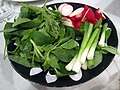 Basil, green onions, and raddish
 -
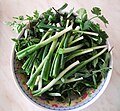 Mint, parsley, and green onions
 -
 Parsley, coriander, green onions, Tarragon and raddish


See also
[edit]References
[edit]- ^ a b "Sabzi Khordan – Persian Fresh Herbs Assorted Platter | All You Ever Wanted to Know! | Fig & Quince". Figandquince.com. Archived from the original on 2019-07-12. Retrieved 2015-09-26.
- ^ Irina Petrosian, David Underwood. (2006). "Wraps". Armenian Food: Fact, Fiction & Folklore. Bloomington, IN: Yerkir Publishing. pp. 30–31. ISBN 978-1-4116-9865-9.
{{cite book}}:|work=ignored (help) - ^ "A Platter Of Fresh Herbs - A Balancing Act - Sabzi Khordan". bottom of the pot. 2013-08-22. Archived from the original on 2017-09-15. Retrieved 2015-09-26.
- ^ "Persian Herbs, Sabzi Khordan". Internationalfooddictionary.com. Retrieved 2015-09-26.
- ^ "Persian Food: Sabzi Khordan". Mymansbelly.com. 2011-04-18. Archived from the original on 2018-09-26. Retrieved 2015-09-26.
- ^ "Sabzi (Persian herbs). Everything you want to know | Javaneh's Kitchen ~ Persian cuisine". Javanehskitchen.com. 2010-02-03. Archived from the original on January 24, 2015. Retrieved 2015-09-26.
- ^ a b Malouf, Greg; Malouf, Lucy (February 27, 2011). "Sabzi khordan". The Independent. Retrieved March 30, 2012.
| Ingredients |
| ||||||||
|---|---|---|---|---|---|---|---|---|---|
| Breads and nans | |||||||||
| Salads |
| ||||||||
| Cheeses | |||||||||
| Soups and āshes |
| ||||||||
| Dishes |
| ||||||||
| Sauces | |||||||||
| Hors d'oeuvre | |||||||||
| Sweets and desserts | |||||||||
| Beverages | |||||||||
| Instruments | |||||||||
| Related cuisines | |||||||||


| Salads |
|
|---|---|
| Bread salads | |
| Dessert salads | |
| Fish salads | |
| Fruit salads | |
| Noodle salads | |
| Related articles | |
Sabzi khordan
View on GrokipediaOverview and etymology
Definition
Sabzi khordan is a traditional side dish featuring a platter of fresh, raw herbs and vegetables, primarily in Iranian cuisine, with similar traditions in Armenian, Azerbaijani, and Kurdish cuisines.[6] It represents a simple yet integral element of daily dining in these cultures, where the vibrant assortment provides a refreshing contrast to heartier main courses.[2] As an everyday accompaniment to meals, sabzi khordan plays a key role in balancing the richness of staples like stews or grilled meats with its crisp, aromatic profile, while also promoting digestion through the natural fibers and enzymes in the greens.[1][2] This practice underscores a cultural emphasis on healthful eating, where the dish enhances overall meal harmony without overpowering other flavors.[7] It is often presented alongside bread and cheese for a light, standalone bite.Name and linguistic origins
Sabzi khordan derives its name from Persian, where sabzi refers to "greens" or "herbs," stemming from the adjective sabz meaning "green," and khordan is the infinitive form of the verb "to eat," yielding the literal translation "eating greens" or "herb eating."[8] This terminology underscores the dish's emphasis on consuming fresh, raw vegetation as a staple accompaniment in meals. The name reflects broader Persianate linguistic influences across the region, where terms for fresh greens and their consumption appear in related languages due to historical cultural exchanges. In Armenian, a similar herb mixture is termed kanachi (կանաչի), literally meaning "greens," highlighting shared traditions of raw herb platters.[9] In Azerbaijani, it is known as goy (or yemək goyu), denoting preparations emphasizing raw greens. In Kurdish, the equivalent is pinjar (or pinçar), linked to platters of fresh vegetables and herbs.[6] These adaptations illustrate how Persian culinary nomenclature has permeated neighboring tongues through centuries of interaction in the Caucasus and Near East. References to greens in classical Persian literature reinforce the enduring significance of fresh herbs in Persianate expressive traditions.Ingredients
Core herbs
The core herbs of sabzi khordan form the essential leafy greens that provide aromatic freshness and balance to Iranian meals. These herbs are selected for their vibrant, pungent qualities that enhance digestion and complement richer dishes, typically comprising a platter of 5 to 8 varieties to offer a spectrum of textures and scents.[7][10] Common choices include basil (reyhan, Ocimum basilicum), often featuring both green sweet basil and purple or cinnamon varieties for their sweet, spicy aroma; mint (na'na, Mentha spicata), prized for its cooling, refreshing effect; parsley (jafari, Petroselinum crispum), valued for its earthy, crisp freshness; tarragon (tarkhun, Artemisia dracunculus), noted for its distinctive anise-like, licorice flavor; coriander (geshniz, Coriandrum sativum), contributing a citrusy, slightly nutty bite; dill (shivid, Anethum graveolens), with its feathery leaves offering a fresh, tangy essence; chives or Persian leek chives (tareh, Allium ampeloprasum var. persicum), adding a mild onion-garlic pungency; and watercress (shahi, Nasturtium officinale), which provides a peppery bite and is frequently included.[8][11][12] Herbs for sabzi khordan are chosen based on their aromatic potency and ability to stimulate the palate, ensuring a mix that provides textural contrast—from tender leaves like mint to sturdier stems like tarragon—while prioritizing freshness to maximize volatile oils that deliver bold scents and tastes. This assortment reflects a cultural emphasis on harmony, where no single herb dominates, but together they create a revitalizing counterpoint to heavier foods. In Iran, these herbs are cultivated in dedicated farms, with selection influenced by their natural vigor and compatibility in raw form.[11][2][1] Flavor profiles vary distinctly: tarragon imparts a peppery, anise-edged warmth that cuts through richness; mint delivers a soothing, menthol coolness ideal for palate cleansing; and parsley brings a green, herbaceous earthiness that grounds the mix. Other herbs like coriander and dill introduce brighter, herbaceous notes with subtle bitterness, enhancing the overall vibrancy. Seasonal availability in Iran plays a key role, as most are harvested from late spring through early fall when they peak in aroma and tenderness, though greenhouses and imports extend access year-round in urban areas.[13][11][12]Vegetables and accompaniments
In Sabzi khordan, the platter features a selection of crisp vegetables that provide textural contrast to the dominant fresh herbs, enhancing the overall freshness and balance of the dish. Common vegetables include radishes, typically in red and white varieties such as common red radishes and watermelon radishes, which are trimmed, halved, or quartered to offer a sharp, juicy crunch.[1] Green onions, known as piazche in Persian, are another staple, cut into manageable lengths to contribute mild pungency and additional bite.[14] These elements, along with occasional additions like Persian cucumbers sliced or served whole, add hydration and subtle sweetness, completing the vegetable component that complements the herb base.[4] Accompaniments play a crucial role in enriching the platter's flavor profile and mouthfeel, turning the simple assembly into a more substantial offering. Feta-like cheeses, such as Bulgarian feta or traditional Persian panir, are cubed and often garnished lightly to provide a creamy, salty counterpoint that binds the ingredients.[14] Walnuts, soaked in salted water for several hours to soften their bitterness and improve digestibility, add nutty depth and a subtle chewiness.[1] Flatbreads like lavash or sangak are essential, torn into pieces to serve as a neutral base for wrapping the vegetables, cheese, and nuts, thereby facilitating easy consumption and adding a warm, chewy texture.[4] Typically, herbs form the majority of the platter, while these vegetables and accompaniments occupy the remaining portion to introduce variety in crunch and richness without overwhelming the aromatic greens.[14] This proportion ensures the vegetables—such as radishes and green onions—deliver bursts of crispness, while the accompaniments like cheese and walnuts provide savoriness and satiety, making the platter a well-rounded starter that aids digestion and stimulates the palate.[1]Preparation and serving
Assembly process
The assembly of sabzi khordan begins with thorough preparation of the fresh ingredients to ensure cleanliness and optimal texture. All herbs, such as tarragon, and vegetables, like radishes, are washed separately under cool running water to remove any dirt or impurities.[1][7] Following washing, the items are dried completely using a salad spinner or by patting with clean kitchen towels, as excess moisture can lead to wilting and diminish crispness.[7][14] Next, trimming refines the components for easy handling and presentation. Thick or woody stems are removed from herbs like mint and tarragon, while tender edible stems may be retained for added flavor and texture. Green onions are cut into manageable lengths, typically 3 inches, by trimming the roots and tough ends, and radishes are halved or quartered after removing their tops and roots to expose their vibrant interiors.[1][6] These steps typically take about 10 to 15 minutes, depending on the quantity.[7][14] The arranged platter is then assembled on a large platter or plate to allow for easy access. Ingredients are placed in distinct bunches or piles—herbs grouped by type to preserve their individual aromas, with radishes and other vegetables interspersed for balance—creating a visually appealing display through color contrasts, such as the deep greens of the herbs against the red hues of radishes.[1][14] This arrangement emphasizes abundance and freshness, often covering the entire surface without overcrowding.[6] Sabzi khordan is ideally prepared fresh just before serving to maintain its crispness and aromatic qualities, though components can be prepped up to 3 hours in advance. For short-term storage, up to one day, the washed and dried herbs should be loosely covered with a slightly damp cloth or paper towel and refrigerated to prevent drying out, then reassembled at mealtime.[1][6][14]Consumption customs
Sabzi khordan is traditionally consumed by wrapping a handful of fresh herbs and vegetables in flatbread, such as lavash or sangak, along with pieces of feta cheese and nuts like walnuts to create small bites known as loghmeh.[15][16] These bites may also incorporate radishes or green onions for added crunch, and the assembly allows diners to customize flavors interactively at the table.[6] Occasionally, the wrapped portions are dipped into additional condiments like yogurt or cheese spreads to enhance taste.[17] In Iranian households, sabzi khordan accompanies nearly every meal, from breakfast through dinner, serving as a constant side that balances richer dishes.[12][18] It holds particular prominence during Nowruz, the Persian New Year, where fresh greens symbolize renewal and vitality, often shared during festive gatherings.[1][19] The platter is typically shared family-style, with the communal dish passed around so each person takes a portion, fostering social interaction and representing abundance in Persian culinary tradition.[12] Individual servings generally consist of a generous handful, ensuring accessibility without overwhelming the meal.[20][21]Cultural and regional aspects
Significance in Iranian cuisine
Sabzi khordan occupies a central place in Iranian cuisine, tracing its origins to ancient Zoroastrian dietary traditions that emphasized the purity of natural, plant-based foods. Historical accounts describe the diet of the Magi, Zoroastrian priests, as consisting of cheese, coarse bread, and raw herbs or vegetables, a simple meal that promoted longevity and harmony with nature as outlined in texts like the Denkard, which admonishes followers to prioritize plant-eating (urwar khwarishn).[22] This practice, documented by the 3rd-century CE Greek biographer Diogenes Laertius, evolved into the modern sabzi khordan platter, reflecting an enduring Zoroastrian reverence for the earth's unadulterated bounty and the avoidance of pollution through fresh, uncooked elements.[22] The dish's ubiquity embodies core cultural values of freshness and seasonal vitality, often presented abundantly to honor visitors and foster a sense of welcome in Iranian homes.[23] As a counterpoint to the richer components of Iranian meals, sabzi khordan provides textural and flavorful balance, particularly when paired with rice-based dishes like chelo kebab, where its crisp herbs and vegetables offset the savory intensity of grilled meats and saffron-infused grains. This integration highlights the philosophy of equilibrium in Persian cooking, ensuring that heavy, spiced elements are tempered by the lightness of raw greens, a practice observed in both formal feasts and routine family dinners.[24]Variations in neighboring cuisines
In Armenian cuisine, the dish known as kanachi represents a close adaptation of sabzi khordan, featuring an assortment of raw fresh herbs such as basil (including purple, green, and lemon varieties), mint, cress, tarragon, green onions, radishes, cilantro, and parsley, arranged on a platter and served as an appetizer or light dinner alongside lavash bread, cheese, and walnuts. This version emphasizes locally abundant greens for freshness and is often consumed at breakfast or casual meals to complement heavier dishes.[25][9] In Azerbaijani cuisine, the equivalent is called goy (or yemək goyü), a simple platter of fresh green herbs like cilantro, dill, mint, spinach, parsley, and green onions, typically enjoyed as a light snack or side in rural settings, including around Baku, where it is paired with white cheese, qatik (sour yogurt), or bread for everyday meals. Wild greens and radishes are commonly incorporated when seasonally available, highlighting the cuisine's reliance on abundant local produce.[26] These adaptations, along with the Kurdish version called pinjar, stem from shared historical influences across the region. In Kurdish contexts, pinjar features an assortment of fresh and foraged wild herbs, tied to herding traditions and the gathering of local greens by pastoral communities.[27]Health and nutritional profile
Nutritional benefits
Sabzi khordan, composed primarily of fresh herbs such as parsley, mint, tarragon, basil, and cilantro, along with radishes and walnuts, offers a low-calorie profile, typically providing 50-100 kcal per serving of approximately 100-150 grams, depending on portion size and inclusions. This modest energy content stems from the water-rich nature of the herbs and vegetables, with parsley contributing about 36 kcal per 100 grams, basil 23 kcal per 100 grams, and radishes 16 kcal per 100 grams, while a small handful of walnuts (around 20 grams) adds roughly 130 kcal but enhances satiety due to healthy fats.[28][28] The dish is notably high in dietary fiber, with herbs and radishes delivering 2-7 grams per 100 grams collectively; for instance, parsley provides 3 grams of fiber per 100 grams, and radishes contribute 1.6 grams, supporting overall digestive health through bulk formation without excessive caloric intake.[28][29] In terms of micronutrients, sabzi khordan is rich in vitamin C, primarily from parsley (133 mg per 100 grams, exceeding 100% of the daily value) and mint (around 31 mg per 100 grams), bolstering immune function and antioxidant defenses. Vitamin K abounds in tarragon and cilantro, with parsley alone offering over 1,640 mcg per 100 grams (more than 1,300% of the daily value), essential for blood clotting and bone health. Antioxidants are prominent in basil, which contains flavonoids like orientin and vicenin, and walnuts, providing polyphenols that combat oxidative stress. A typical serving may supply 20-30% of the daily vitamin A requirement through beta-carotene from these greens, such as parsley's 8,424 IU per 100 grams.[28][30][31][28] The overall nutritional balance includes folate from leafy herbs like cilantro (62 mcg per 100 grams) and iron from tarragon (approximately 2 mg per 100 grams), aiding red blood cell production. Walnuts contribute omega-3 fatty acids, with alpha-linolenic acid at about 9 grams per 100 grams, promoting cardiovascular health in this plant-based assortment.[28][32][33]Digestive and medicinal roles
Sabzi khordan serves as a traditional digestive aid in Iranian cuisine, with its herbs contributing to improved gastrointestinal function. Mint (Mentha spp.), a common component, strengthens the stomach and relieves digestive disorders such as bloating and indigestion through its antispasmodic properties, which relax smooth muscles in the digestive tract and stimulate enzyme secretion.[34] Similarly, tarragon (Artemisia dracunculus) is employed in traditional medicine to treat digestive ailments, including dyspepsia and poor appetite, by promoting gastric secretions and alleviating nausea.[35] Radishes included in the platter promote bile flow, facilitating fat digestion and potentially reducing symptoms of bile-related disorders, though caution is advised for those with gallstones due to the risk of exacerbating blockages.[36] In Iranian traditional medicine, fresh herbs such as those in sabzi khordan are considered to contribute to overall metabolic balance. Tarragon, in particular, supports liver function and antioxidant activity, aiding the body's natural detox processes by mitigating oxidative stress and enhancing metabolic health.[37] Modern scientific studies corroborate these uses, highlighting the anti-inflammatory properties of cilantro (Coriandrum sativum) and parsley (Petroselinum crispum). Cilantro polyphenols inhibit pro-inflammatory cytokines such as TNF-α and IL-6, reducing inflammation associated with metabolic conditions, while parsley's flavonoids like apigenin lower markers of inflammation (e.g., TNF-α, IL-1β) and provide gastroprotective effects by enhancing mucosal integrity.[38][39] Culturally, sabzi khordan is regarded as a palate cleanser consumed alongside or after meals to refresh the mouth and support gut health in Iranian herbalism. This practice aligns with traditional beliefs in its ability to harmonize digestion and prevent post-meal discomfort, reflecting a holistic approach to wellness where fresh herbs are recommended for maintaining intestinal equilibrium.[37]References
- https://en.wikibooks.org/wiki/Cookbook:Kanachi_(Armenian_Herb_Salad)