Hubbry Logo
Non-lethal weaponNon-lethal weaponMain
Open search
Non-lethal weapon
Community hub
Non-lethal weapon
logo
8 pages, 0 posts
0 subscribers
Be the first to start a discussion here.
Contribute something
Non-lethal weapon
Non-lethal weapon
from Wikipedia
An instruction on oleoresin capsicum (pepper spray) at Marine Corps Base Camp Lejeune

Non-lethal weapons, also called nonlethal weapons, less-lethal weapons,[1][2][3][4] less-than-lethal weapons, non-deadly weapons, compliance weapons, or pain-inducing weapons are weapons intended to be less likely to kill a living target than conventional weapons such as knives and firearms with metal-projectile ammunition. It is often understood that unintended or incidental casualties are risked wherever force is applied; however, non-lethal weapons minimise the risk of casualties (e.g. serious/permanent injuries or death) as much as possible. Non-lethal weapons are used in policing and combat situations to limit the escalation of conflict where employment of lethal force is prohibited or undesirable, where rules of engagement require minimum casualties, or where policy restricts the use of conventional force. However, these weapons occasionally cause serious injuries or death due to allergic reactions, improper use and/or other factors; for this reason the term "less-lethal" has been preferred by some organizations as it describes the risks of death more accurately than the term "non-lethal", which some have argued is a misnomer.[2][5][6][7]

Non-lethal weapons may be used by conventional military in a range of missions across the force continuum. They may also be used by military police, by United Nations forces, and by occupation forces for peacekeeping and stability operations. Non-lethal weapons may also be used to channelize a battlefield, control the movement of civilian populations, or to limit civilian access to restricted areas (as they were utilized by the USMC's 1st Marine Expeditionary Force in Somalia in 1995). Similar weapons, tactics, techniques and procedures are employed by police forces domestically in riot control, prisoner control, crowd control, refugee control, and self-defense, where the terminology of "less-than-lethal" is often used.

History

[edit]

Military

[edit]
Demonstration of the use of a Taser gun on US military personnel. The device was originally developed for use by civilian police.

In the past, military and police faced with undesirable escalation of conflict had few acceptable options. Military personnel guarding embassies often found themselves restricted to carrying unloaded weapons. National guards or policing forces charged with quelling riots were able to use only batons or similar club-like weapons, or bayonet or sword charges, or fire live ammunition at crowds. In the late 1980s and early 1990s, the Non-lethality Policy Review Group at U.S. Global Strategy Council[8] in Washington and other independent think tanks around the world called for a concerted effort to develop weapons that were more life-conserving, environmentally friendly, and fiscally responsible than weapons available at that time.[9] The U.S. Congress and other governments agreed and began an organized development of non-lethal weapons to provide a range of options between talking and shooting.

Recognizing the need to limit the escalation of force, research and development of a range of non-lethal weapons has since been undertaken internationally by governments and weapons manufacturers to fill the need for such weapons. Some non-lethal weapons may provide more effective riot control than firearms, truncheons or bayonets with less risk of loss of life or serious injury. Before the general availability of early military non-lethal weapons in the mid 1990s, war-fighters had few or no casualty-limiting options for the employment of scalable force and were continually at risk whenever lethal force was prohibited during sensitive missions.

In 2001, the United States Marine Corps revealed its development of a less-than-lethal energy weapon called the Active Denial System, a focused high frequency microwave device said to be capable of heating all living matter in the target area rapidly and continuously for the duration of the beam, causing transient intolerable pain but no lasting damage. The skin temperature of a person subjected to this weapon can jump to approximately 130 °F (54 °C) in as little as 2 seconds depending on the skin's starting temperature. The system is nonlethal (the penetration of the beam into human skin is only a few millimeters).[10]

In 2004, author Jon Ronson cited an unclassified military report titled "Non-Lethal Weapons: Terms and References"[11][12] 21 acoustic weapons were listed, in various stages of development, including the Infrasound ("Very low-frequency sound which can travel long distances and easily penetrate most buildings and vehicles ... biophysical effects are projected to be: nausea, loss of bowels, disorientation, vomiting, potential internal organ damage or death may occur. Superior to ultrasound...)", however no such effects had been achieved as of 2002.[13]

In 2010, the Joint Non-Lethal Weapons Directorate Non-Lethal Weapons Reference Book was created. The weapons in this book are currently in development.[14]

Police

[edit]

Until the development of non-lethal weapons, police officers around the world had few if any non-lethal options for riot control. Common tactics used by police that were intended to be non-lethal or less lethal included a slowly advancing wall of men with batons, officers on horses trained to deal with policing situations, or a charge into a riot using the flats of sabers. Other reasonably successful approaches included shotguns with lower-powered cartridges, "salt shells", using bean-bag rounds and ricocheting shots off of the ground. In the mid-20th century, with the integration of fire-control systems into major cities, police found that high-pressure fire hoses could be effective in dispersing a crowd (the use of water cannons and fire trucks has remained an effective non-lethal tactic to disperse riots). Trained police dogs were also commonly used to scare and disperse rioters and apprehend individuals. In the 1980s the development of high-tensile plastics like Kevlar and Lexan revolutionized personal armor and shields, and led to new tactics for riot squads and other special-purpose teams. Officers could now stand up against violent rioters throwing dangerous projectiles without having to resort to lethal methods to quickly disperse the danger. Coupled with the introduction of effective non-lethal chemical agents such as tear gas and offensive-odor canisters, and non-lethal impact rounds such as rubber bullets and "bean bag" flexible baton rounds, riot tactics were modified to rely less on violent response to attacking rioters than on a return to the slowly advancing wall, with supporting officers firing non-lethal ordnance into the crowd to discourage advance.[citation needed]

Police officers on patrol were traditionally armed with batons or pistols or both, and non-lethal methods of subduing an attacker centered on hand-fighting techniques such as jujutsu and baton use. In the 1980s and 1990s officers began deploying non-lethal personal sidearms such as pepper sprays, and eventually electroshock weapons such as tasers, which were developed for use by police and also found a market in self-defense by private citizens. However, these weapons were developed for non-lethal resolution of one-on-one conflicts.[citation needed]

During the 1990s and early 2000s (decade), interest in various other forms of less-than-lethal weapons for military and police use rose. Amongst other factors, the use of less-than-lethal weapons may be legal under international law and treaty in situations where weapons such as aerosol sprays or gases defined as chemical are not.[citation needed]

Between the years of 1987–1990, after a three-year field study by the FBI's Firearms Training Unit; In 1990, the use of oleoresin capsicum was approved and used by the FBI, the first official law enforcement agency to do so.[citation needed]

In the late 1990s and early 2000s (decade), police began to adopt a new pepper spray delivery system based on the equipment used in paintball. A specialized paintball, called a "pepperball", is filled with liquid or powdered capsaicin, the active ingredient in pepper spray, and is propelled by compressed gas using a paintball marker similar to those used for the sport but operating at a higher pressure. The impact of the capsule is immediately painful (a pepperball's shell is thicker than a standard paintball and is fired at a higher velocity), and it breaks open on impact, dispersing the capsaicin with similar effect to aerosol-delivered pepper spray. However, to be most effective, pepper spray must contact the eyes, nose, or mouth of the target; pepper spray on clothing or tougher skin has a much reduced effect.[citation needed]

Effects

[edit]

Non-lethal weapons have a design intent to provide an effect to reliably elicit a degree of incapacitation but without the typically lethal or permanent lasting effects of conventional weapons. This design intent has often made them a weapon of choice for use by law enforcement during civil protests, etc. Effect modalities vary by the technology being employed: kinetic projectiles function by blunt impact which actuate pain receptors to elicit a behavioral change, lights affect visual perception, acoustics affect hearing, etc.[citation needed]

Notwithstanding their design intent, non-lethal weapons can still cause harm. This is particularly true with certain technologies that interact with appropriately vulnerable regions; an example is kinetic munitions on the head, neck, eyes, abdominal and urogenital regions of the body.[15] As a result, some analysts describe "non-lethal" as a misnomer and recommend defining them as "less-lethal",[16] whereas other sources identify "non-lethal" as representing a goal of minimization of producing fatalities or permanent injuries[17] while not literally requiring minimization to a zero probability thereof.

Mechanics

[edit]

Non-lethal weapons are intended to minimize injury or death. While people are occasionally seriously injured or killed by these weapons, fatalities are relatively infrequent. Causes of death from non-lethal weapons are varied and occasionally uncertain. Misplaced or ricocheting shots, pre-existing medical conditions, inadequate user training, repetitive applications and intentional misuse have been implicated in different cases where death has occurred.[citation needed]

As different parts of the body differ in vulnerability, and because people vary in weight and fitness, any weapon powerful enough to incapacitate may be capable of killing under certain circumstances. Thus, "non-lethal force" does have some risk of causing death: in this context, "non-lethal" means only "not intended to kill".[citation needed]

Several groups maintain there is great room for improvement in non-lethal weapons and procedures for their use. Claims for the relative safety of such weapons are usually contingent on their being used "properly". For example, the rubber bullets developed during the 1960s were supposed to be fired at the ground and hit the target only after ricochet,[18] and other non-lethal bullets are designed to be fired at the lower body; they can be lethal if fired directly at the head.[citation needed]

Ammunition

[edit]

Non-lethal rounds are firearm rounds which are designed to incapacitate, but not kill, a target. The rounds rely on the transfer of kinetic energy and blunt force trauma to accomplish this incapacitation. Rubber bullets, rubber buckshot, soft polymer rounds, wax bullets, plastic bullets, beanbag rounds, sponge grenades, ring airfoil projectiles (both kinetic and tear gas projectiles) and rubber bullets with electroshock effect (e.g. Taser XREP rounds) are less lethal than conventional metal bullets, and are also propelled at lower speed by using less propellant. "Bean bag" type bullets are sometimes referred to as flexible baton rounds. More recently, high-velocity paintball guns are also used to launch less-lethal rounds, including the FN 303 launcher and PepperBall commercial products.[19] There is also the Variable Velocity Weapon Concept, for which a propulsion energy source may not yet have been clearly established and/or finalized.[20] In any case, all of these technologies apply the same basic mechanism, which is to launch a mass at the target that interacts kinetically.[citation needed]

Explosives

[edit]

Hand grenades come in several less-lethal varieties, such as "flashbang" (stun) grenades, "sting" grenades with rubber shrapnel, and grenades designed to release chemical irritants (described below).[21]

In 1972, stun grenades were used to capture the hijacked Sabena Flight 571, allowing the Israeli forces headed by Ehud Barak and including Benjamin Netanyahu to storm the plane and take it over within 10 minutes. They captured two terrorists and killed Ali Taha, the leader of the terrorist group, and his aide, while rescuing all passengers (three were wounded and one died of her injuries several days later).[22]

A stun grenade was apparently used by members of the IHH against the IDF soldiers during the 2010'Gaza flotilla raid at the beginning of the IDF storming of the Mavi Marmara.[23]

In June 2010, in Kenya, a stun grenade was used to draw attention, and then a real grenade along with an explosive package were used, killing many people. In April, during the 2010 Kyrgyzstani uprising, police attempted to use stun grenades to stop a demonstration but the crowd overwhelmed the police.[citation needed] In March stun grenades were used by Belarusian police in Minsk against demonstrators, and in September they were used by Greek police in Athens.[citation needed] In these latter two cases, the demonstrations were dispersed with no injuries.[citation needed]

In February 2011, stun grenades were seen used by Egyptian police against rioters.[citation needed]

Gases and sprays

[edit]

Water

[edit]
Water cannon during a German demonstration, 2001

Water cannons are commonly used in crowd and riot control, for dispersal or to prevent movement on a particular position. These water cannons are intended to disperse crowds with little risk of harm, but the pressure can still cause eye injuries or even death. Water-filled rounds for small arms are in experimental stages.[24] Electrified water cannons were in development but was abandoned.[citation needed]

Scent-based weapons

[edit]

Malodorants produce strong odours that cause people to leave the affected area. In 2008, the Israeli Defence Forces began using Skunk for crowd control. It is a form of mist sprayed from a water cannon, which leaves a terrible odor of rot or sewage on whatever it touches, and does not wash off easily.[25]

Pepper spray

[edit]

The active ingredient in pepper spray is oleoresin capsicum (OC), an acrid irritant chemical derived from cayenne pepper plants.[26]

A 1998 estimate by the International Association of Chiefs of Police suggested at least 113 pepper spray-related fatalities had occurred in the United States, all with aggravating factors such as intoxication, pre-existing health problems, or from the police use of airway-restrictive immobilizing holds that can cause positional asphyxia.[27] The Southern California chapter of the American Civil Liberties Union recommends against maximal prone restraint techniques following pepper spray application, and they caution that anyone sprayed should be monitored to ensure effective breathing.[28]

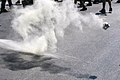
Tear gas

[edit]
Vancouver Police Department officers in anti-riot gear and armed with tear gas grenade launchers confront Stanley Cup rioters.

The use of chemical weapons such as tear gas (CS) and pepper spray (OC) has come under increasing scrutiny and criticism due to studies showing serious long term side effects. Many police forces are no longer exposing their members to the chemicals during training.[citation needed][29]

Journalist Rubén Salazar was killed in Los Angeles in 1970 by an errant CS gas canister during the Chicano riots. Other serious injuries and fatalities have occurred from either tear gas itself or the projectiles it is delivered in, including the critical injury of veteran Scott Olsen from a tear gas canister during the 2011 Occupy Oakland protests.[30] Tear gas canisters can also cause fire, as happened in Paris during the Bloquons tout movement.[31]

Psychochemical

[edit]

Psychochemical weapons are psychoactive drugs, such as BZ, LSD, Kolokol-1, EA-3167, and 3-Methylamphetamine designed to have a disorienting effect when used during combat or interrogation.[32]

Sleep gas

[edit]

During the 2002 Moscow theater hostage crisis, Russian special forces used an unidentified gas (thought to be 3-methylfentanyl or another fentanyl variant dissolved in halothane gas) in an attempt to induce sleep in both hostages and terrorists. Many of the hostages and terrorists (including all of the suicide bombers) were anesthetized, but some terrorists donned gas masks and thus were able to avoid the effects of the gas. Because the agent used was a potent Fentanyl derivative (a synthetic opioid), it causes respiratory depression and ultimately respiratory failure if administered in high enough dosages. The central nervous system effects, such as anesthesia and respiratory depression could have been reversed by an opioid antagonist such as naloxone, which is stocked by hospitals and most ambulances. However, because the Russian authorities did not release any information regarding what type of agent was used, medical professionals were unaware that an opioid had been used during the rescue attempt and thus were unable to administer the antidote which could have saved most hostages. Approximately 700 hostages were rescued, while 130 died from exposure to the gas. All the terrorists were ultimately killed by Russian forces through some combination of gas exposure and gunfire.[citation needed]

Other chemical agents

[edit]

Blister agents, including CR gas, are less often used riot control agents. Other irritants include CS gas and nonivamide (PAVA).[citation needed]

Sticky foam

[edit]

Sticky foam was tried by the U.S. Marine Corps in the peacekeeping Operation United Shield in 1995 with some success, but as a result various complications in its field use were also discovered.[33]

Area denial

[edit]

Area denial weapons work by either incapacitating or deterring the enemy.[citation needed]

Anti-vehicle

[edit]
Iron caltrops

Vehicle stoppers include a wide range of methods and devices meant to disable a vessel or vehicle to prevent attack by an oncoming vessel or vehicle or to stop that vessel or vehicle for evaluation. Vessel and vehicle stoppers may include kinetic, chemical, or electromagnetic means.[34][35][36]

Anti-personnel

[edit]

Caltrops

[edit]

Simple rows or clusters of sharpened sticks (also known as punji sticks), and the use of small caltrops have been a feature of anti-infantry warfare for centuries.[37] They are known to have been in use since Roman times and may have been used earlier: the concept was familiar to the 4th century BC Greeks, who used rocks, brush, nets and trees placed in the path of enemy conveyances on land or ensnarement devices hidden under water to achieve the same result: stop the enemy or suspected hostile in his tracks for examination or to prevent or limit incursions. Contemporary caltrops look something like large jacks from the childhood game. Placed in the path of oncoming wheeled or tracked vehicles, they are meant to foul wheels, destroy tires and tracks, and incapacitate vehicles.[34]

However, due to the difficulty of mass-producing them in the pre-modern age, they were rarely used except in the defense of limited areas or chokepoints, especially during sieges, where they were used to help seal breaches. Increasing ease of production still did not prevent these methods from slowly falling out of favor from the late Middle Ages onward.[37]

Caltrops are still sometimes used in modern conflicts, such as during the Korean War, where Chinese troops, often wearing only light shoes, were particularly vulnerable.[37] In modern times, special caltrops are also sometimes used against wheeled vehicles with pneumatic tires. Some South American urban guerrillas as the Tupamaros and Montoneros called them "miguelitos" and used these as a tactic to avoid pursuit after ambushes.[38]

Riot gun

[edit]
A German policeman with Pepperball gun in Dresden

In current usage a riot gun or less-lethal launcher is a type of firearm that is used to fire "non-lethal" or "less-lethal" ammunition for the purpose of suppressing riots. Less-lethal launchers may be special purpose firearms designed for riot control use, or standard firearms, usually shotguns and grenade launchers, adapted to riot control use with appropriate ammunition. The ammunition is most commonly found in 12 gauge (18.5 mm/.729 inch) shotguns and 37mm (1.46 inch) or 40mm (1.57 inch) grenade launchers.

In the United States, the term "riot gun" more commonly refers to a riot shotgun that shoots baton rounds or bean bag rounds.

In recent years, law enforcement, military and other security organizations sometimes use a type of paintball marker-like weapon that shoot frangible pepper-spray projectiles, which rupture upon impact and release chemical aerosols that irritates the eyes and nose of nearby individuals. Such weapons are used generally in the role of stand-off weapons, where physical proximity to a suspect is deemed dangerous but deadly force is not warranted. The irritant payload may differ from product to product but is usually a capsaicinoid powder called PAVA (capsaicin II), and less frequently a liquid or gas.[39][40][41]

Electroshock weapons

[edit]

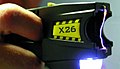
Electroshock weapons are incapacitant weapons used for subduing a person by administering electric shock aimed at disrupting superficial muscle functions. One type is a conductive energy device (CED), an electroshock gun popularly known by the brand name "Taser", which fires projectiles that administer the shock through a thin, flexible wire. Other electroshock weapons such as stun guns, stun batons, and electroshock belts administer an electric shock by direct contact.[citation needed]

Directed energy weapons

[edit]
Police car equipped with an LRAD-500X sonic weapon in Warsaw, Poland in 2011

Directed energy weapons are weapons that emit energy in an aimed direction without the means of a projectile. They are non-lethal and can immobilize people as well as machines (e.g. vehicles).[42] Directed energy weapons include electromagnetic weapons, (including laser weapons) and microwave weapons, particle beam weapons, sonic weapons and plasma weapons.

Ultraviolet laser

[edit]

HSV Technologies, Inc. (named for its founders, Herr, Schlesinger and Vernon; not to be confused with Holden Special Vehicles), formerly of San Diego, California, USA, then Port Orchard, WA, designed a non-lethal device which was profiled in the 2002 TIME magazine article "Beyond the Rubber Bullet". It is an electrolaser using ultraviolet laser beams of 193 nm, and promises to immobilize living targets at a distance without contact. There is a plan for an engine-disabling variation for use against the electronic ignitions of cars using a 248 nm laser. The lead inventor, Eric Herr, died in 2008 and the company appears to have been dissolved, with their website defunct as of September 2017.[43]

Pulsed energy projectile

[edit]

Pulsed energy projectiles or (PEP) is a technology of non-lethal directed energy weaponry currently under development by the US military. It involves the emission of an invisible laser pulse which, upon contact with the target, ablates the surface and creates a small amount of exploding plasma. This produces a pressure wave designed to stun the target and knock them off their feet, and electromagnetic radiation that affects nerve cells causing a painful sensation.[citation needed]

The pulsed energy projectile is intended for riot control and is said to work over distances of up to 2 km. It weighs about 230 kg and will probably be mounted on vehicles. The weight could become lighter as laser production technology improves.[citation needed]

The system was developed by Mission Research Corporation (now owned by Orbital ATK). It uses a chemical deuterium fluoride laser device producing infrared laser pulses. The plasma (produced by the early part of the pulse) explodes because its electrons absorb the energy of the later part of the pulse.[citation needed]

In 2003, a US military review reported[citation needed] that the electromagnetic radiation produced by PEPs had been shown to cause pain and temporary paralysis in animal experiments.[citation needed]

United States Special Operations Command FY 2010 plans included starting developmental work on a counter UAV pulsed energy projectile.[44]

Active denial system

[edit]

An active denial system (ADS) is a dish that projects electromagnetic radiation just powerful enough to penetrate human skin and make the victim feel as though they are on fire, although no physical damage is done.[citation needed]

The ADS is a non-lethal, directed-energy weapon developed by the US military,[45] designed for area denial, perimeter security and crowd control.[46] Informally, the weapon has also been referred to as a "heat ray",[47] since it works by heating the surface of targets, such as the skin of targeted human subjects.[48]

In 2011, the ADS was redesigned to make it smaller, more reliable, and able to be used on the move. The ADS II is being designed to operate from moving aircraft, as well as moving ground vehicles. The redesign does not address problems in different environmental conditions.[49]

Air Force Special Operations Command is experimenting with mounting an ADS on the AC-130J Ghostrider gunship to target threatening crowds or individuals on the ground. This is to give the gunship a non-lethal option so the crew has more engagement options. Due to the increasing number of engagements in populated areas, the Air Force is aiming to field a system within 10 years to have enough aircraft available with non-lethal systems.[50] The aircraft will apparently use the ADS II version.[51]

Dazzler

[edit]

A dazzler is a directed-energy weapon intended to temporarily blind or disorient its target with intense directed radiation. Targets can include sensors or human vision. Dazzlers emit infrared or invisible light against various electronic sensors, and visible light against humans, when they are intended to cause no long-term damage to eyes. The emitters are usually lasers, making what is termed a laser dazzler. Most of the contemporary systems are man-portable, and operate in either the red (a laser diode) or green (a diode-pumped solid-state laser, DPSS) areas of the electromagnetic spectrum.[citation needed]

Initially developed for military use, non-military products are becoming available for use in law enforcement and security.[52][53]

Weapons designed to cause permanent blindness are banned by the 1995 United Nations Protocol on Blinding Laser Weapons. The dazzler is a non-lethal weapon intended to cause temporary blindness or disorientation and therefore falls outside this protocol.[citation needed]

PHASR Rifle

The personnel halting and stimulation response rifle (PHASR) is a prototype non-lethal laser dazzler developed by the Air Force Research Laboratory's Directed Energy Directorate, U.S. Department of Defense.[54] Its purpose is to temporarily disorient and blind a target. Blinding laser weapons have been tested in the past, but were banned under the 1995 UN Protocol on Blinding Laser Weapons, which the United States acceded to on 21 January 2009.[55] The PHASR rifle, a low-intensity laser, is not prohibited under this regulation, as the blinding effect is intended to be temporary. It also uses a two-wavelength laser.[56] The PHASR was tested at Kirtland Air Force Base, part of the Air Force Research Laboratory Directed Energy Directorate in New Mexico.[citation needed]

Blinding laser weapons

[edit]

Several nations developed blinding laser weapons and they were allegedly used during the war in Donbas by Russia.[57]

Long Range Acoustic Device

[edit]

The Long Range Acoustic Device (LRAD) is an acoustic hailing device developed by LRAD Corporation to send messages and warning tones over longer distances or at higher volume than normal loudspeakers. LRAD systems are used for long-range communications in a variety of applications[58] including as a means of non-lethal, non-kinetic crowd control. Though they have been called "sonic weapons",[59] LRADs are not inherently for military use. The round black devices on top of New York City police Hummers are LRADs.[citation needed]

According to the manufacturer's specifications, the systems weigh from 15 to 320 pounds (6.8 to 145.1 kg) and can emit sound in a 30°- 60° beam at 2.5 kHz.[60] The manufacturer also produces systems for public address and mass notification use that broadcast 360°.[61]

[edit]

In the United States, the University of Texas-Austin Institute for Advanced Technology (IAT) conducts basic research to advance electrodynamics and hypervelocity physics related to electromagnetic weapons.[62]

Although generally considered "non-lethal weapons", electromagnetic weapons do pose health threats to humans. In fact, "non-lethal weapons can sometimes be deadly."[63]

United States Department of Defense policy explicitly states that non-lethal weapons "shall not be required to have a zero probability of producing fatalities or permanent injuries."[64] Although a Human Effects Advisory Panel was established in 1998 to provide independent assessment on human effects, data, and models for the use of 'non-lethal weapons' on the general population,[65] the TECOM Technology Symposium in 1997 concluded on non-lethal weapons: "Determining the target effects on personnel is the greatest challenge to the testing community," primarily because "the potential of injury and death severely limits human tests." However, "directed energy weapons that target the central nervous system and cause neurophysiological disorders" may violate the Convention on Certain Conventional Weapons of 1980. And weapons that go beyond non-lethal intentions and cause "superfluous injury or unnecessary suffering" could violate the Protocol I to the Geneva Conventions of 1977."[66] Safety and evaluation of the physical and psychological effects of the long-term or repetitive uses of the pain-inducing non-lethal weapons on humans have not been well understood or studied in any great details. Any such studies require explicit consent of all participants so as not to violate the UN Convention against torture and other cruelties.[citation needed]

Misuse

[edit]

Pepper spray is one non-lethal weapon alleged to have been misused by American police. In two incidents in California in 1997, police swabbed pepper spray directly into the eyes of protesters.[67] Amnesty International condemned these actions, and claimed that they were likely a violation of the 1984 United Nations Convention Against Torture.[67]

Terrorism concerns

[edit]

Loren Thompson, chief operating officer of the Lexington Institute in Virginia states that: "The relevant (electromagnetic weapon) technology is well within the grasp of some countries and transnational terrorist groups", and further states that U.S. hardware is susceptible to microwave and other directed-energy weapons.[68]

Suitable materials and tools to create electromagnetic weapons are commonly available. "The threat of electromagnetic bomb proliferation is very real."[69]

See also

[edit]

Notes

[edit]
[edit]
Revisions and contributorsEdit on WikipediaRead on Wikipedia
from Grokipedia
Non-lethal weapons, more precisely designated less-lethal weapons in and contexts, are munitions, devices, and technologies engineered to incapacitate personnel or disable through reversible effects such as temporary pain, , or physical disruption, with a materially lower probability of causing or permanent than conventional lethal firearms. These tools emerged prominently in the late , driven by operational needs to minimize casualties in , , and scenarios, particularly following recognition of the limitations of lethal force in asymmetric conflicts and civilian policing. Primarily employed by police, military, and security forces, less-lethal weapons facilitate graduated force options that aim to achieve compliance without escalating to deadly outcomes, thereby reducing overall injury rates in use-of-force encounters relative to deployments. Common categories encompass kinetic impact munitions like and beanbag rounds, which deliver ; chemical agents such as oleoresin capsicum () and for irritant effects; electroshock devices including s that disrupt neuromuscular function; and emerging directed-energy systems like acoustic hailing devices or optical distractors. Their deployment has been credited with averting higher civilian and officer casualties in high-risk situations, as empirical analyses of thousands of incidents show decreased severe injuries when less-lethal options supplant lethal ones. Despite design intents for , less-lethal weapons carry inherent risks of or grave harm, particularly from kinetic projectiles causing blunt force trauma to vital areas or when combined with suspect vulnerabilities like drug intoxication, , or cardiac issues, which have contributed to documented fatalities via mechanisms such as or . Peer-reviewed evaluations underscore variable effectiveness, with success rates in achieving incapacitation ranging from 60-90% depending on range, target , and environmental factors, while highlighting needs for rigorous training to mitigate misuse that amplifies injury risks. These realities have sparked debates on —rejecting "non-lethal" for overstating —and reforms emphasizing in and application to align with causal factors of unintended outcomes rather than idealized assumptions.

Definition and Terminology

Core concepts and distinctions

Non-lethal weapons, as defined by the U.S. Department of Defense, consist of weapons, devices, and munitions explicitly designed and primarily employed to incapacitate targeted personnel or while minimizing fatalities, permanent to personnel, and undesired damage to property or the environment. This emphasizes intent and primary effect: reversible incapacitation through mechanisms such as induction, sensory disruption, or temporary physiological impairment, rather than destruction of vital functions. In contrast to lethal weapons, which prioritize termination of life via mechanisms like hemorrhage or organ failure, non-lethal variants derive their distinction empirically from controlled effects testing that verifies transient outcomes under standard deployment conditions. The aligns with this framework by characterizing less-lethal weapons as apprehension or restraint devices that, when deployed as intended and under typical circumstances, present a low probability of causing or serious . Key operational metrics include physiological recovery within minutes to hours for most subjects in validation studies, with lethality risks orders of magnitude below those of firearms—targeted at under 1% in DoD human effects protocols for compliant scenarios. These distinctions hinge on causal realism: lethal arms escalate irreversibly toward mortality via transfer exceeding tissue tolerances, whereas non-lethal designs calibrate energy or stimuli to thresholds that overwhelm sensory or neuromuscular function without breaching those limits in aggregate data from exposure trials. Terminology evolved from "non-lethal" to "less-lethal" in the following of rare but verifiable fatalities, even under purportedly controlled use, underscoring that absolute non-lethality is unattainable due to variables like subject vulnerabilities or deployment errors. For instance, kinetic impact incidents in crowd control during that decade documented deaths from cranial or thoracic trauma, prompting doctrinal shifts to reflect reduced—but not eliminated—mortality probability compared to lethal alternatives. This adjustment prioritizes transparency in , acknowledging that while primary effects remain incapacitative, secondary outcomes can include permanent in outlier cases, as validated by post-incident forensic reviews.

Less-lethal versus non-lethal debate

The terminology "non-lethal weapon" originated in military contexts to describe devices designed and primarily employed to incapacitate individuals or material temporarily without inflicting permanent injury or death, as defined in U.S. Department of Defense Directive 3000.3. However, this label has been critiqued for implying an absolute absence of lethality risk, which no force option achieves due to variables such as user , deployment conditions, and interaction with pre-existing factors like drug intoxication or heart conditions. In response, and some experts favor "less-lethal" to acknowledge the residual potential for severe outcomes, including rare fatalities, thereby setting realistic expectations and promoting judicious application. Empirical evidence underscores this distinction: conducted energy devices (CEDs), such as Tasers, exhibit fatality rates below 0.1% per deployment in large-scale analyses, far lower than the 10-20% lethality associated with discharges in comparable police encounters. For instance, (NIJ) studies of millions of CED uses report injuries in under 1% of cases, with deaths typically linked to multifaceted causes rather than the device alone. In contrast, Amnesty International's 2004 report highlighted over 70 U.S. taser-involved deaths by then, urging suspension pending further safety data due to concerns over cardiac risks, though it acknowledged tasers as alternatives to s in principle. Despite such critiques, less-lethal options demonstrably bridge continuum gap, reducing overall casualties: NIJ and PERF analyses show CED adoption correlates with 30-48% drops in suspect and officer injuries across interventions, averting escalation to lethal means in 50-85% of high-risk scenarios where they prove effective. The DoD's ongoing Non-Lethal Weapons Program in the 2020s reaffirms their operational value for and deterrence, emphasizing training to mitigate risks while preserving net life-saving utility over unmitigated lethal alternatives. This terminological shift thus aligns causal with , countering overconfidence in zero-harm claims without dismissing the tools' role in minimizing harm.

Historical Development

Origins and early innovations

The concept of weapons intended primarily for incapacitation rather than fatality traces back to antiquity, where devices like caltrops—four-spiked iron objects designed to pierce hooves or feet—were deployed to disrupt enemy advances without direct confrontation or high lethality. Originating possibly as early as the BCE in Indian warfare and adopted by ancient Romans, caltrops created area-denial effects by causing painful injuries that slowed or , allowing defenders to evade or reposition while minimizing outright kills. Their use reflected early recognition of tactical value in hindering mobility over annihilation, particularly against mounted forces where lethal alternatives risked mutual escalation. In pre-modern policing and crowd management, blunt melee tools such as wooden clubs and whips served analogous roles, enabling authorities to disperse gatherings or subdue individuals through without routine resort to edged or projectile arms. These implements, employed by Roman and medieval watchmen, evolved into formalized batons by the , as urban in and the prioritized control in dense populations over lethal outcomes. For instance, hardwood nightsticks became standard for American police around the mid-1800s, emphasizing strikes to limbs for temporary disablement amid rising industrial-era riots. The 20th century's initial prototypes emerged from imperatives to calibrate force in colonial and civil disturbances, where indiscriminate lethality invited backlash and operational constraints. British forces, facing escalating unrest in during the late , developed the 1.5-inch rubber as a kinetic alternative to live , with first deployment on August 2, 1970, against rioters in . This innovation stemmed from urban combat dynamics, where minimizing civilian casualties preserved legitimacy and reduced international scrutiny, though early cylindrical designs still caused injuries upon direct impact. Concurrently, U.S. in the , influenced by Vietnam-era experiences with populated battlefields, explored graded-response options like irritant agents to bridge lethal gaps, prioritizing disruption over destruction to limit in asymmetric engagements. These efforts marked a doctrinal shift toward weapons that incapacitated combatants or crowds temporarily, driven by the causal realities of modern warfare's proximity to non-targets.

Military applications and evolution

The U.S. military's pursuit of non-lethal weapons accelerated in the 1990s amid operations in Somalia, where restrictive rules of engagement necessitated alternatives to lethal force to avoid civilian casualties and achieve mission objectives with minimal collateral damage. This operational imperative prompted the establishment of the Department of Defense Non-Lethal Weapons Program in July 1996, aimed at developing technologies to fill the gap between "show of force" and deadly engagement. Early efforts under the program explored materials like , an ultra-adhesive substance propelled to entangle and immobilize targets, tested in the mid-1990s for applications in crowd control, barrier reinforcement, and individual restraint without causing lasting harm. Post-9/11 conflicts in and further drove evolution, with non-lethal capabilities integrated to support tactics, enabling of threats from civilians or non-combatants while adhering to engagement rules that prioritized and legitimacy. assessments highlighted their utility in reducing unnecessary escalations, preserving infrastructure, and mitigating civilian harm in urban environments. Directed-energy prototypes advanced the arsenal; the , employing a 95 GHz millimeter-wave beam to induce intense but transient skin heating, underwent U.S. military efficacy tests in 2007 for area denial and perimeter security. Acoustic systems like the emerged for non-kinetic deterrence, with naval deployments repelling Somali pirate approaches as early as 2005 through directed hailing and disorienting tones, enhancing standoff capabilities in asymmetric maritime threats. Overall, these developments underscored non-lethal weapons' strategic value in enabling precise, reversible incapacitation, empirically linked to lower lethality thresholds in compliance-driven operations.

Adoption in law enforcement

Following widespread civil unrest in the United States during the 1960s, including the Watts riots of 1965 and the Kent State shootings of 1970, law enforcement agencies sought alternatives to lethal force and traditional batons for crowd control and suspect apprehension. The 1970s introduced rubber bullets and bean bag rounds, engineered to inflict blunt trauma without penetration, marking a shift toward standardized less-lethal munitions in response to public scrutiny over deadly outcomes. By the early 1980s, major departments formalized protocols for chemical agents and electrical devices; the adopted conducted energy weapons and irritant sprays in 1981, integrating them into use-of-force continuums to de-escalate high-risk encounters. , already in limited use, became more routinely deployed for riot suppression under structured guidelines post these events. The 1990s and 2000s saw accelerated adoption of advanced conducted energy devices, with supplying thousands of units to U.S. agencies, enabling officers to incapacitate resistant subjects remotely. National Institute of Justice evaluations of deployments demonstrated that these devices reduced injury rates to both officers and civilians by providing an intermediate option short of firearms, with suspect injury probabilities dropping significantly in equipped agencies compared to pre-adoption baselines. Internationally, similar integrations occurred; during the (1987–1993), Israeli security forces employed rubber-coated metal projectiles for dispersing stone-throwing crowds, aiming to minimize live ammunition use in urban policing scenarios. In , water cannons were authorized for protest management, with German police deploying them against demonstrators during the 2017 summit in , building on precedents from earlier events like the 2009 where tactical expansions were debated. Through the and into reforms following high-profile incidents, agencies refined training and policies, emphasizing non-lethal tools to prioritize ; longitudinal data links their availability to lower overall use-of-force severities, including fewer escalations to lethal outcomes, as evidenced by decreased and officer injuries in audited jurisdictions.

Operational Principles

Mechanisms of incapacitation

Non-lethal weapons achieve incapacitation through targeted disruption of physiological functions via kinetic, chemical, or electrical means, each leveraging fundamental physical and biological principles to induce temporary impairment without intent for permanent or . These mechanisms prioritize reversible effects on sensory, motor, or autonomic systems, calibrated to exploit human vulnerabilities while minimizing tissue destruction. Kinetic mechanisms rely on the transfer of and upon impact to produce , where a projectile's linear p=mvp = m v ( times ) imparts force to soft tissues, causing localized deformation and without penetration. Kinetic KE=12mv2KE = \frac{1}{2} m v^2 determines the severity, with exerting a quadratic influence, leading to from rapid pressure waves stimulating nociceptors and involuntary muscle responses. This disrupts voluntary movement by overwhelming sensory feedback loops, though outcomes vary by impact site and individual resilience. Chemical mechanisms, such as those involving capsaicinoids in irritants, activate transient receptor potential vanilloid 1 () ion channels on sensory neurons, triggering calcium influx that depolarizes nociceptors and elicits intense burning sensations. This reflexively causes involuntary (eye closure) and respiratory irritation via stimulation, overriding conscious control through autonomic overload without systemic toxicity at low doses. TRPV1 desensitization follows prolonged exposure, but initial incapacitation stems from unmyelinated C-fiber activation mimicking thermal or inflammatory pain. Electrical mechanisms employ high-voltage, low-current pulses to induce neuromuscular incapacitation by overriding voluntary signals, where delivered charge follows (V=IRV = I R, with high voltage overcoming skin impedance to achieve sufficient current for ). Pulsed waveforms at 10-50 Hz synchronize with alpha firing, forcing sustained muscle tetanus that exhausts ATP reserves and prevents coordinated action, typically without cardiac interference due to current path and duration limits.

Design considerations for human effects

Design considerations for non-lethal weapons prioritize minimizing severe or through biomechanical thresholds derived from surrogate testing, while accounting for physiological variability. Factors such as body mass, impact , and pre-existing conditions influence energy transfer and tissue response; for instance, lighter individuals (e.g., 5th females) exhibit higher risk from the same due to absorption. The Joint Intermediate Force Capabilities Office employs finite element models like the Advanced Total Body Model to simulate effects across 5th to 95th anthropometric profiles, integrating variables like -dependent velocity decay to predict outcomes such as fractures or organ contusions. Safety margins are established via injury criteria, including viscous criterion (VCmax ≤ 0.8 m/s for thoracic ) and energy density thresholds (e.g., <23.99 J/cm² to limit 50% penetration in anterior impacts). Projectile velocities are typically capped below 300-400 fps at muzzle to stay within these limits, as validated by cadaveric, anthropomorphic test device, and limited volunteer trials spanning the to 2020s, which quantify risks like lung contusion from localized impacts. Human Effects Review Boards under the DoD assess these margins pre-deployment, recommending design adjustments to reduce variability-induced risks, such as compliant projectile noses that dissipate over penetration. Iterative refinements address specific vulnerabilities, exemplified by conducted energy device waveform modifications post-2010s; reduced pulse charge and adapted output to lower ventricular fibrillation thresholds, as evidenced by swine model studies showing diminished cardiac capture compared to earlier X26 models. These changes balance incapacitation with safety, informed by integrated human effects protocols that prioritize empirical thresholds over assumptive models.

Kinetic and Projectile-Based Weapons

Blunt impact munitions

Blunt impact munitions deliver kinetic energy through deformable projectiles to achieve temporary incapacitation via pain induction and localized trauma, targeting non-vital areas to minimize lethality risks. Primary compositions include vulcanized rubber for solid or hollow bullets, which deform on impact to spread force, and bean bag rounds comprising textile pouches filled with lead shot or pellets, loaded into fin-stabilized sabots for 12-gauge shotgun propulsion. These materials prioritize viscoelastic properties to limit penetration depth, with bean bags expanding post-launch to increase contact area and reduce pressure concentration compared to rigid alternatives. Deployment velocities typically range from 250 to 300 feet per second for variants, generating 120 foot-pounds of energy sufficient for compliance at close range without routine skeletal fracture in compliant tissue models. Effective ranges extend 5 to 40 meters, where biomechanical thresholds for incapacitation—around 100-150 joules to extremities—are met, though efficacy diminishes beyond 20 meters due to velocity decay and accuracy limits. evaluations from the 2010s document compliance rates of 55% to 80% in operational use-of-force incidents, attributing variability to factors like placement, suspect resistance, and environmental conditions rather than inherent design flaws. Sponge grenade variants, such as 40mm rounds with foam-tipped plastic bodies, adapt blunt impact for by prioritizing disorientation over individual targeting, with nose configurations engineered for controlled deformation and lower fracture risks in thoracic impacts. These munitions, tested for energies yielding without penetration in surrogate studies, achieve 20-50 meter standoffs while exhibiting reduced profiles relative to denser rubber projectiles. Precision enhancements in 2020s models, including finned sabots and optimized , aim to narrow dispersion patterns, though field verification remains limited to manufacturer claims and select military assessments.

Specialized delivery systems

Specialized delivery systems for kinetic non-lethal weapons encompass launchers optimized for deploying blunt impact munitions at controlled ranges, emphasizing platforms that balance incapacitation with risk mitigation. Traditional systems rely on adapted pump-action shotguns, such as the , which agencies have modified for since the 1970s to facilitate less-lethal operations alongside standard ammunition. These adaptations typically involve shorter barrels and breaching chokes to accommodate lower-velocity projectiles, enabling operators to maintain versatility in dynamic environments without requiring separate dedicated weapons. Pneumatic launchers represent a shift toward non-pyrotechnic , utilizing or CO2 to fire impact munitions while circumventing firearm classifications in certain jurisdictions. The launcher, for example, employs an air reservoir to achieve velocities sufficient for 10-40 meter engagements, prioritizing reduced penetration risks over traditional shotgun dynamics. Such systems integrate modular stocks and Picatinny rails for accessory mounting, supporting enhanced accuracy through basic or optional red-dot optics. Recent advancements in the focus on precision enhancements via integration, including rangefinders and reflex sights on shoulder-fired platforms like PepperBall launchers, which allow for targeted delivery beyond 20 meters to minimize collateral exposure. These features address inherent ballistic inconsistencies in less-lethal projectiles, enabling standoff applications that empirically lower close-quarters injury rates for both subjects and operators, as evidenced by operational analyses of intermediate force capabilities. DoD evaluations underscore how such delivery mechanisms extend engagement envelopes, reducing reliance on physical interventions in crowd control scenarios.

Chemical and Incapacitating Agents

Irritant aerosols and sprays

Irritant aerosols and sprays, including (OC) and CS/CN agents, function by inducing rapid in the eyes and through localized , leading to temporary incapacitation without significant systemic absorption or . in OC bind to receptors on sensory neurons, triggering intense burning sensations, involuntary eye closure, and coughing via activation of nociceptive pathways, with effects manifesting almost instantaneously upon exposure. These agents cause ocular and respiratory shutdown by overwhelming irritant receptors, peaking within seconds to minutes, and typically dissipating within 20 to 45 minutes as the compounds degrade or are decontaminated. OC sprays, derived from oleoresins standardized to 5-10% content, deliver a pressurized stream or mist effective at ranges of 3-6 meters from handheld canisters, prioritizing ocular targeting for compliance. Studies indicate OC induces and lacrimation sufficient to halt aggressive behavior in most subjects, though efficacy varies with environmental factors like wind or subject intoxication. Unlike earlier agents, OC avoids dermal blistering, focusing irritation on mucous membranes for reversible effects confirmed in respiratory function assessments showing no lasting pulmonary compromise. CS (2-chlorobenzalmalononitrile) and CN (chloroacetophenone) tear gases, dispersed as fine aerosols, provoke profuse lacrimation and bronchial constriction by irritating chemoreceptors, with CS offering lower toxicity and faster dispersal than CN, which was first deployed in munitions. Refined pyrotechnic canisters from the onward enhance controllability, releasing irritant clouds over 10-20 meters for crowd dispersal, though concentrations above 10 mg/m³ can extend effects beyond 30 minutes in enclosed spaces. Delivery systems range from personal defense sprays to area-denial grenades, with modern variants including drone-mounted dispensers tested in the for remote application in urban scenarios, minimizing operator risk while maintaining aerosolized particle sizes under 10 microns for optimal mucosal penetration. These methods ensure targeted, non-persistent exposure, as agents hydrolyze rapidly in air, reducing environmental residue compared to earlier liquid formulations.

Advanced chemical delivery methods

Advanced chemical delivery methods encompass psychochemical agents and immobilizing foams designed to incapacitate through psychological disruption or physical entanglement rather than direct physiological harm. These approaches prioritize area and behavioral aversion, though their operational use remains constrained by variability in human responses, delivery challenges, and ethical concerns over predictability. Unlike irritant aerosols, which target , these methods aim for subtler incapacitation, such as inducing confusion, repulsion, or immobility, but historical trials have highlighted risks of unintended lethality or inefficacy. Psychochemical agents, including BZ (3-quinuclidinyl benzilate), were researched by the U.S. in the 1950s and 1960s as non-lethal incapacitants causing , hallucinations, and disorientation lasting up to 96 hours, with effects onset in 30 minutes to hours. BZ was standardized in 1961 and stockpiled in munitions by 1966, but its deployment was limited due to inconsistent dosing and environmental factors affecting dissemination; allegations of use persist but were officially denied, leading to a 1969 ban amid ethical and reliability issues. Modern variants focus on malodorants, synthetic compounds mimicking extreme foul odors (e.g., or derivatives) delivered via projectiles like the U.S. XM1063, which trigger amygdala-driven panic and evacuation without physical injury, as tested by the in 2012 for dispersal. These malodorants exploit psychological aversion, rendering areas untenable for hours, though persistence in and variable tolerance limit widespread adoption. Sticky foams, expandable polymers that solidify into adhesive barriers, were developed in the under U.S. initiatives like the National Institute of Justice's projects for entanglement and restraint, expanding 30-50 times to block passages or immobilize individuals without permanent harm. Early prototypes, such as those tested in 1997, faced clogging in delivery systems and removal difficulties, leading to abandonment by equivalents, but renewed interest in the and has explored non-toxic formulations for vehicle denial or , with Navy solicitations in 2023 seeking foams that restrain via adhesion rather than toxicity. These systems offer potential for area denial by creating impassable barriers, yet logistical issues like rapid deployment and neutralization persist. Efforts to develop sedative or "sleep" gases for rapid incapacitation, such as opiate-based aerosols, have been largely rejected due to high lethality risks, as evidenced by the 2002 Moscow theater siege where Russian forces used a derivative aerosol, neutralizing 40 terrorists but causing approximately 130 hostage deaths from and inadequate medical countermeasures. No standardized military sleep-inducing agents exist, as physiological variability (e.g., body mass, health) precludes safe dosing in open or dynamic environments, confining such methods to theoretical area denial roles with stringent protocols.

Electrical and Conducted Energy Devices

Electroshock weapon variants

, also known as conducted energy devices (CEDs), deliver short-duration, high-voltage electrical pulses designed to cause neuromuscular incapacitation (NMI) by overriding voluntary muscle control through stimulation of . These pulses, typically in the range of 1,000 to 50,000 volts but with low amperage (around 2-4 milliamps), propagate via conductive pathways to induce tetanic contractions in skeletal muscles, rendering the target temporarily unable to coordinate movement. Empirical studies indicate that effective NMI requires delivered charge levels of at least 50-100 microcoulombs per pulse to achieve widespread motor neuron activation, with shape influencing propagation efficiency across varying body resistances. Contact-based stun guns represent a basic variant, requiring direct physical application of electrodes to the target's or to deliver localized shocks primarily for rather than full-body incapacitation. These devices operate at shorter ranges—effectively zero distance beyond arm's reach—and avoid wire-related failures but lack the standoff capability of projected systems, limiting their utility against resisting subjects. In contrast, darted variants like models project two barbed electrodes up to 45 feet (13.7 meters) via compressed gas cartridges, connected by thin insulated wires that complete the circuit for remote NMI delivery. TASER evolution includes the X26 model introduced in 2003, which featured a shaped-pulse enhancing NMI effectiveness and reduced the device's weight by 60% compared to prior M26 models for improved officer mobility. Subsequent iterations progressed to the X2 (with dual lasers), 7 (enhanced cartridge compatibility), and 10 (announced January 2023), utilizing lower peak voltages around 1,000 volts with multiple (up to 10) cartridge options to extend engagement duration and range while maintaining compact form factors. Manufacturer testing, corroborated by independent police agency analyses, reports approximately 85% compliance within 5 seconds of probe deployment under optimal conditions, though real-world efficacy varies with factors like probe spread and clothing insulation. Many CEDs, including , incorporate drive-stun mode as a secondary function, where the cartridge is removed or probes retracted to enable direct-contact application akin to traditional stun guns, emphasizing localized for behavioral influence rather than systemic disruption. This mode serves as a for close-quarters scenarios but delivers lower overall charge transfer compared to probed NMI. Post-2023 civilian-market adaptations, such as compact variants optimized for personal protection, have proliferated for , offering darted projection without law enforcement-specific features like data logging, though legal restrictions vary by .

Deployment protocols and limitations

Standard deployment protocols for conducted energy devices (CEDs), such as TASERs, restrict their use to situations involving active resistance by a subject, where verbal commands and lesser force options have proven ineffective, positioning CEDs as an intermediate tool below lethal force. Guidelines from the Police Executive Research Forum (PERF), developed in collaboration with the (NIJ) in 2005 and updated through field research, recommend limiting exposures to one or two 5-second cycles, with additional cycles permitted only if the subject maintains an imminent threat, as evidence from the indicates that multiple or prolonged discharges elevate injury risks without proportional gains in compliance. Officer training mandates certification programs emphasizing techniques, precise probe placement to avoid the chest and upper (per manufacturer updates in informed by NIJ-funded studies), and post-deployment assessment, with agencies required to track deployment data for policy refinement. These protocols incorporate failure modes analysis, such as probe misses due to or , which field reports estimate affect 13-20% of attempted deployments, requiring officers to transition to alternative restraints promptly. Key limitations arise from physiological vulnerabilities, including rare cardiac capture risks, where swine model studies from the early 2010s demonstrated potential for under worst-case conditions like direct heart contact and drug influence, though human epidemiological reviews find no direct causal link to adverse outcomes in standard use, attributing less than 1% of in-custody deaths to CEDs alone, often with factors like stimulants or pre-existing cardiac pathology confirmed via . Drug interactions, particularly with or , amplify susceptibility in susceptible individuals, prompting protocols to contraindicate CED use on known overdose cases when feasible. Adherence to these guidelines mitigates the majority of risks, with NIJ analyses of field data showing CEDs reduce overall use-of-force injuries by approximately 48-65% compared to physical confrontations, facilitating in high-threat encounters that historically escalated to firearms. Deviations, such as unauthorized multiple shots or use on passive resistors, correlate with elevated subject injuries and departmental liability, as documented in post-incident reviews.

Directed Energy and Acoustic Systems

Thermal and millimeter-wave technologies

Thermal and millimeter-wave technologies for non-lethal weapons utilize directed-energy beams to induce superficial heating, eliciting an avoidance response through without penetrating deeply enough to cause burns or tissue damage. These systems operate by emitting high-frequency electromagnetic waves that are absorbed primarily by molecules in the skin's outer layers, rapidly elevating local to activate heat-sensitive nociceptors and trigger a reflexive flight . The primary example is the (ADS), a U.S. Department of Defense-developed counter-personnel device that projects a focused 95 GHz millimeter-wave beam with a of 3.16 mm. This energy penetrates only about 0.4 mm—roughly the thickness of three sheets of paper—confining heating to the and avoiding deeper structures like blood vessels or nerves. At operational power densities, the beam raises skin temperature to approximately 44°C within seconds, producing an intolerable burning sensation that compels subjects to disperse while ceasing instantly upon beam termination or evasion. Safety assessments, including over 15,000 controlled human exposures conducted by the Joint Non-Lethal Weapons Directorate from the mid-2000s onward, have yielded less than a 0.1% incidence of minor injuries, with no evidence of permanent harm or long-term effects; outcomes were independently reviewed by human effects panels and peer-reviewed studies confirming reversible physiological responses. The ADS maintains effective range beyond 500 meters, enabling area denial from standoff distances exceeding typical small-arms engagement. A vehicle-mounted variant, the VMADS, adapts the technology for mobile perimeter security, integrating the emitter onto tactical vehicles to project beams for protection or base defense. Deployed experimentally to in 2010 for operational evaluation, it demonstrated utility in high-threat environments but was repatriated without combat employment due to strategic shifts. Mechanistically, these systems exploit the causal pathway of superficial thermal stimulation to engage C-fiber nociceptors, which mediate the polymodal response driving instinctive withdrawal, thereby achieving behavioral control with negligible risk of structural damage.

Optical and sonic distractors

![PHASR Rifle][float-right] Optical distractors, commonly known as dazzlers, employ visible-spectrum s, often green wavelengths around 532 nm, to induce temporary and visual disorientation in targets without causing permanent retinal damage. These devices overwhelm the eye's photoreceptors, creating afterimages and reducing for seconds to minutes, depending on exposure duration and distance. Handheld models like the PHASR, developed by the U.S. in the early 2000s, were designed for ranges up to 1 km, though effectiveness diminishes with atmospheric conditions and target aversion. Examples include the B.E. Meyers GLARE series, such as the LA-9/P, utilized for long-distance hail and warning in maritime security operations, temporarily disrupting human vision, pilots, or drone cameras at ranges of 1-5 km. Bright searchlights and strobes also serve as optical distractors, projecting intense light to cause night disorientation and provide non-lethal deterrence against intruders, such as in anti-piracy vessel protection. Such weapons comply with the 1995 Protocol IV to the , which prohibits lasers intentionally designed to cause permanent blindness but permits temporary dazzling effects. Deployments have included checkpoints and perimeter , where dazzlers deter unauthorized approaches by disrupting aiming or navigation without physical contact. Recent advancements in the focus on variable power outputs to adapt to environmental factors, ensuring safety margins against inadvertent permanent injury while maintaining efficacy against sensors or human eyes. Sonic distractors, exemplified by Genasys , generate highly directional sound beams using piezoelectric transducers, producing warning tones or voice commands at volumes reaching 162 dB at 1 meter. Genasys models support clear hails and warnings up to 3 km in maritime security, with focused deterrent tones exceeding 150 dB to repel threats. These systems enable communication or deterrence over 1-3 km in open environments, with narrow beams minimizing collateral exposure. Initial military applications emerged in 2005 for , notably repelling Somali pirates from U.S. vessels like the USS Ashland in 2009, and extended to riot control, such as at the . At levels below 140 dB, LRAD primarily causes discomfort, , or disorientation rather than structural damage like eardrum rupture, which requires sustained exposure above 150-160 dB or impulsive peaks exceeding 185 dB. Field studies indicate rare auditory injuries in operational use, attributed to brief exposures and directional focus, though prolonged close-range application risks temporary threshold shifts or . Ongoing evaluations emphasize calibration to balance escalation prevention with physiological limits, avoiding indiscriminate effects in populated areas.

Entanglement and Area Denial Technologies

Adhesive and restraining agents

, a polyurethane-based adhesive material, expands upon deployment to create a tenacious barrier or entanglement for immobilizing individuals or blocking access points. Developed in the 1990s by U.S. researchers, it was field-tested by in , , on February 28, 1995, to seal doorways against armed intruders during the withdrawal of UN peacekeeping forces. The foam's high tackiness and expansion properties aimed to deny mobility without permanent harm, but practical deployment faced challenges including propellant inconsistencies, clogging in delivery systems, and difficulties in safe removal from personnel or surfaces, leading to limited widespread adoption. Contemporary research seeks to address these limitations through non-toxic, high-expansion formulations capable of entangling targets for restraint. U.S. Navy programs in the emphasize foams that adhere strongly to clothing and skin while allowing for chemical neutralization post-use, prioritizing mechanical immobilization over chemical irritation. These agents function by rapid upon exposure to air, forming a rigid yet flexible matrix that restricts limb movement and balance, with causal effectiveness tied to volume coverage and adhesion strength rather than induction. BolaWrap represents a modern restraining tool using non-adhesive mechanical entanglement, deploying a cord with barbed anchors from a handheld launcher to wrap a subject's limbs at distances of 10 to 25 feet. Introduced for in the late , it enables remote application to de-escalate encounters, particularly with individuals in mental crisis, by temporarily restricting movement without requiring direct physical contact or electrical discharge. Field deployments by agencies like the since 2019 demonstrate its utility in reducing officer proximity risks, though efficacy depends on accurate targeting of non-vital areas to avoid from the 300-foot-per-second cord . Overall, such devices lower escalation to hands-on force by providing a compliance window for verbal intervention, with empirical outcomes showing decreased use-of-force incidents in equipped units compared to traditional methods.

Environmental barrier methods

Environmental barrier methods employ passive or semi-passive techniques to deny access or mobility by modifying the immediate surroundings, targeting vehicles or groups indirectly rather than individuals. These approaches leverage terrain alteration to create hazards or impediments, minimizing direct kinetic impact while achieving area denial. Caltrops, tetrahedral devices with sharpened points, have punctured tires and injured feet since antiquity, originating as anti-cavalry defenses in to slow troop advances by impeding horses and chariots. Typically forged from iron with four spikes arranged so one always protrudes upward when scattered, they remain effective for vehicle immobilization in modern contexts, as demonstrated by Ukrainian forces producing them in to counter Russian armored advances. While historically causing lacerations to unshod infantry, such as during the Korean War, their primary non-lethal role in contemporary use focuses on tire deflation to halt mobility without targeting personnel directly. Water cannons deliver high-pressure streams to disperse crowds by knocking individuals off balance or pushing groups backward, with vehicles mounting nozzles capable of projecting water over distances exceeding 50 meters. Deployed in since the mid-20th century, they were notably used during the 2019 protests, where police vehicles fired dyed water to mark and repel demonstrators, though injuries primarily stemmed from falls rather than direct hydraulic force. Organizations like have highlighted risks of serious harm from misuse, including potential for or exacerbation by additives, underscoring the need for calibrated application to avoid lethality. In maritime security, remotely controlled high-pressure water cannons incorporate foam or adhesive additives to foul propellers and decks at ranges exceeding 100 meters, immobilizing approaching vessels by disrupting propulsion and access without lethal force. Entanglement nets and prop foulers provide area denial in maritime contexts by ensnaring boat propellers, rapidly halting small craft through mechanical interference rather than direct impact on occupants. Systems such as Boat Trap deploy ballistic nets from helicopters or vessels to create underwater traps that tangle propulsion systems. These can be mounted on rail systems or in pop-up container modules for remote, concealed operation, enhancing deterrence against piracy or unauthorized approaches. Slippery agents, including viscous gels or lubricant coatings, create low-friction surfaces to deny footing or traction on roads and pavements, rendering areas impassable for both pedestrians and vehicles. Developed under U.S. military programs like the Mobility Denial System in the early 2000s, these non-hazardous substances—such as polymer-based "banana peel" formulations—adhere to concrete or asphalt, reducing friction coefficients dramatically without permanent damage or toxicity. Teflon-like barrier coatings further exemplify this category, applied to form slick zones that compel evasion or slippage, historically conceptualized alongside oil slicks in urban violence control studies.

Physiological and Behavioral Effects

Targeted physiological responses

Non-lethal weapons induce targeted physiological responses by stimulating nociceptive pathways and disrupting neuromuscular signaling to achieve temporary pain and motor inhibition without causing permanent tissue damage. Chemical irritants such as and gases activate polymodal nociceptors in the via TRP channels including and , triggering rapid depolarization of sensory afferents and propagation of pain signals through A-delta and C fibers. This results in acute burning sensations across ocular, nasal, and respiratory mucosa, compelling reflexive behaviors like eye closure and gasping that contribute to behavioral compliance. Conducted energy devices generate pulsed electrical fields that selectively stimulate alpha motor neurons, overriding voluntary descending commands from the and inducing widespread tetanic contractions in skeletal muscles. The waveform's parameters—typically 100 μs pulses at 10-50 Hz—ensure preferential capture of motor axons over cardiac tissue, leading to neuromuscular incapacitation lasting the duration of energy delivery, often 5 seconds per cycle. These mechanisms leverage autonomic integration for enhanced effect; barrage from irritants elicits a sympathetic outflow manifesting as elevated and , amplifying perceived urgency and surrender reflex. exposure trials confirm reversibility, with irritant-induced resolving in 20-60 minutes post-exposure due to agent volatilization and neural desensitization, while electroshock motor deficits recover within seconds to minutes absent ongoing stimulation. Department of Defense characterization studies from the early 2000s validated these timelines in controlled volunteer scenarios, establishing safety margins for operational use.

Psychological and secondary impacts

The deployment of non-lethal weapons often leverages psychological deterrence by altering individuals' cost-benefit assessments of continued , prompting voluntary compliance to avoid anticipated discomfort. Behavioral effects indicates that such weapons influence through anticipated pain or , effectively raising the perceived risks of non-compliance without requiring direct application. Devices like enhance this deterrence via directed warnings, broadcasting commands over distances up to several kilometers at volumes exceeding 150 decibels, which signal authority and reduce unauthorized approaches in crowd scenarios. Field observations during events such as the demonstrate their role in communicating intent and preempting escalation, though empirical quantification of approach rate reductions varies by context. In group dynamics, irritants such as induce secondary effects like collective avoidance behaviors, where exposed individuals exhibit herding instincts that propagate dispersal and fragment crowd cohesion. During the 2020 U.S. protests following George Floyd's death, chemical agent deployments correlated with rapid dispersion, as discomfort prompted mass retreat and diminished coordinated . Post-exposure secondary impacts can include transient anxiety from recalled sensory disruption, potentially heightening future wariness toward authorities, yet strategic analyses frame these as net contributors to by reinforcing boundaries without lethal thresholds. RAND assessments from emphasize that such weapons enable resolve demonstration in ambiguous encounters, managing escalation risks while yielding behavioral compliance gains.

Empirical Evidence of Effectiveness

De-escalation outcomes in field studies

Field studies of conducted energy devices (CEDs), such as , indicate substantial efficacy through rapid suspect incapacitation and compliance. Analysis of 4,303 use-of-force reports from the Orange County Sheriff's Office and (2000-2005) revealed CEDs ended confrontations in 69% of initial deployments, rising to 81.5% by the third iteration, outperforming impact weapons (45% success) and takedowns (41.4%). Drive-stun mode yielded 64.2% immediate compliance in first uses, compared to 59.4% for probe deployment. Quasi-experimental comparisons across 13 agencies over four years post-CED adoption showed officer rates declined from 11.5% to 8.3% (over 70% odds reduction, p<0.0001), while medical attention needs dropped from 54.8% to 39.8% (45-79% odds reduction, p<0.0001) relative to non-CED sites, where rates increased. hospitalization fell 52% in logistic models (p<0.0001), evidencing CEDs' role in curtailing escalation. In field data, TASER display alone secured compliance in 81% of encounters, preventing discharge and further . Kinetic impact projectiles exhibit lower de-escalation consistency, with field effectiveness around 45-65% for initial stops based on weapon continuum analyses, often requiring follow-up tactics and yielding higher resistance continuation than CEDs. These projectiles, including professional less-lethal rounds, do not guarantee pain compliance against determined or highly resistant threats, such as those under drug influence or extreme motivation. Overall, non-lethal weapons (NLWs) correlate with reduced lethal force incidents by furnishing intermediate options; adoption decreased officer assaults and suspect injuries versus physical controls alone in multi-agency evaluations. These outcomes stem from NLWs' capacity to interrupt aggression without defaulting to firearms, though success varies by deployment accuracy and suspect physiology.

Injury reduction compared to lethal alternatives

Non-lethal weapons demonstrate markedly lower mortality risks compared to firearms in applications, with police-involved shootings resulting in fatalities in approximately 31% of incidents across 47 large U.S. jurisdictions from 2010 to 2016. In contrast, deaths directly attributable to non-lethal weapons, such as conducted energy devices or kinetic impact munitions, occur in far fewer than 1% of deployments, as evidenced by systematic reviews of use-of-force data indicating minimal lethal outcomes relative to the volume of applications. This disparity underscores the potential for non-lethal options to mitigate severe injuries, as firearms exhibit case fatality rates exceeding 20-30% per engagement, driven by ballistic trauma. Aggregate data from agencies incorporating non-lethal weapons show substantial reductions in deadly force incidents, with quasi-experimental analyses linking their adoption to decreased officer assaults and overall harm in violent encounters. For instance, systematic evaluations report that less-lethal tools correlate with lower rates of civilian injuries and severity compared to scenarios without such alternatives, effectively shifting interventions away from lethal thresholds in 50% or more of high-risk situations. These outcomes reflect a net benefit in injury profiles, as non-lethal deployments avoid the penetrating wounds and hemorrhagic shock common in firearm use, prioritizing incapacitation over terminal effects. Causal attribution of rare non-lethal weapon-associated deaths often involves toward high-risk subjects, where underlying conditions like or acute drug intoxication precede intervention. Autopsy reviews of in-custody deaths following non-firearm force reveal drugs mentioned in 73.9% of cause-of-death statements and in 16.9%, suggesting many fatalities stem from pre-existing physiological crises rather than the weapons themselves. This confounding factor highlights how non-lethal tools are disproportionately applied to agitated or delirious individuals already at elevated mortality risk, yet the overall yields fewer total injuries than defaulting to firearms, countering narratives overemphasizing isolated non-lethal fatalities without contextual baselines.

International treaties and prohibitions

The primary framework governing non-lethal weapons under is the 1980 United Nations Convention on Prohibitions or Restrictions on the Use of Certain Which May Be Deemed to Be Excessively Injurious or to Have Indiscriminate Effects (CCW), supplemented by the and their Additional Protocols, which require that all weapons avoid causing superfluous injury or unnecessary suffering. Non-lethal weapons are generally permissible provided they comply with these principles and (ROE), as they are designed to incapacitate temporarily without causing death or permanent harm, thereby aligning with the law of armed conflict's emphasis on proportionality and distinction. No comprehensive bans non-lethal weapons outright, reflecting a consensus among states that such tools can reduce casualties compared to lethal alternatives when used appropriately. A notable exception is Protocol IV to the CCW, adopted on 13 October 1995 and entering into force on 30 July 1998, which prohibits the development, production, and use of laser weapons specifically designed to cause permanent blindness as their primary combat function. The protocol permits lasers intended for temporary incapacitation or those causing incidental permanent blindness, allowing for non-lethal applications like dazzling systems that disorient without lasting damage. This distinction arose from negotiations balancing humanitarian concerns—driven by advocacy from organizations like , which highlighted risks of inhumane effects—with military arguments for temporary effects supported by technical assessments showing controllability. Discussions within the CCW framework, including Group of Governmental Experts meetings since 2017, have addressed emerging non-lethal technologies but have not resulted in expanded prohibitions, often stalling amid debates where humanitarian groups push for preemptive restrictions despite evidence from state programs, such as U.S. Department of Defense reviews, indicating safety margins under controlled . Specific bans remain rare internationally; for instance, Protocol III restricts incendiary weapons and toxic chemicals as methods of warfare but exempts agents for or non-combat scenarios. Regionally, some member states impose limits on expanding kinetic munitions like due to injury risks, though these lack uniform enforcement and contrast with broader authorizations elsewhere. Overall, prohibitions prioritize intent and effect over category, enabling non-lethal weapons where they demonstrably mitigate lethality.

National policies and use-of-force standards

In the United States, the Supreme Court's 1989 decision in Graham v. Connor established the constitutional standard for evaluating police use of force as "objective reasonableness," assessed from the perspective of a reasonable officer on the scene, factoring in the severity of the crime at issue, whether the suspect poses an immediate threat to officers or others, and whether the suspect is actively resisting arrest or attempting to evade by flight. This framework positions non-lethal weapons (NLWs) as intermediate options on the use-of-force continuum, deployable when verbal commands prove insufficient but deadly force exceeds the empirical threat level posed by the subject. Departments typically calibrate NLW deployment to match resistance levels, with conducted energy devices like Tasers authorized for active aggression short of lethal risk, and impact munitions reserved for high-threat scenarios below firearm thresholds. Following high-profile incidents in , numerous jurisdictions enacted reforms integrating body-worn cameras into use-of-force protocols, mandating activation during encounters to provide verifiable footage of threat assessments and decision-making, thereby enhancing post-incident reviews under Graham standards. Federal guidance from the Department of Justice echoes this, requiring officers to employ only objectively reasonable force when alternatives are infeasible, with NLWs serving as tools calibrated to real-time empirical indicators like behavior and proximity. Training regimens, often standardized by bodies like the (NIJ), emphasize scenario-based simulations tying NLW use to measurable threat data, with certification requiring 8 to 24 hours depending on the weapon type and agency policy. Empirical studies link enhanced to measurable reductions in errors; for instance, procedural justice-focused programs have decreased overall use-of- incidents by approximately 6.4% and civilian complaints by 10% over multi-year periods, by reinforcing objective evaluations over subjective escalations. Policies commonly incorporate and age-based restrictions, advising against NLW deployment on vulnerable groups such as the elderly, pregnant individuals, or children due to elevated risks from physiological factors, though field demonstrates NLWs' net reduction in severe injuries relative to unarmed physical control or lethal options across broader populations. In the , the guidelines similarly align NLW authorization with a graduated response model, prioritizing empirical assessments of harm likelihood, with batons and irritants restricted to imminent scenarios absent less intrusive means. These standards underscore causal linkages between perceived threat metrics and selection, prioritizing -driven proportionality over categorical prohibitions.

Applications Across Contexts

Military and asymmetric warfare uses

Non-lethal weapons (NLWs) enable military forces to expand (ROE) in and (COIN) operations, particularly in urban settings where distinguishing combatants from civilians is challenging. By providing options between verbal warnings and lethal force, NLWs facilitate responses to ambiguous threats, such as non-compliant vehicles at checkpoints or crowds masking insurgents, thereby minimizing and preserving operational legitimacy. In and post-2001, U.S. forces employed NLWs like , rubber projectiles, and optical distractors to de-escalate situations without escalating to gunfire, addressing the tactical gap in force continua during stability operations. The Joint Intermediate Force Capabilities Office (JIFCO), under the U.S. Department of Defense, has advanced NLW integration for such environments, conducting training and fielding capabilities like the M234 launcher for ring airfoil projectiles in during the 2010s. These tools supported tactics by allowing troops to neutralize threats temporarily, reducing inadvertent civilian casualties at checkpoints where lethal force previously risked high collateral. A RAND analysis highlights how NLW employment in urban expands flexibility, enabling commanders to engage potential threats below lethality thresholds while maintaining . In the 2020s, applications have incorporated unmanned systems for precision NLW delivery, such as drone-mounted dazzlers designed to induce temporary without permanent harm, enhancing standoff capabilities in asymmetric conflicts. This integration supports targeted irritant dispersal in contested urban areas, further limiting exposure to operators and bystanders. Such advantages extend to alliance preservation, as reduced civilian harm bolsters local cooperation and counters insurgent narratives, per a 2024 analysis emphasizing NLWs' role in sub-threshold operations to avoid alienating partners.

Civilian law enforcement and crowd control

Non-lethal weapons play a central role in U.S. civilian law enforcement for managing routine patrol encounters involving resistant individuals, with conducted energy devices (CEDs) and oleoresin capsicum (OC) spray comprising the majority of applications. Police use force, primarily through these non-lethal means, in an estimated 300,000 incidents annually, reflecting the scale of deployments needed to maintain public order amid rising violent crime rates in the 2020s. In such cases, 98% of suspects sustain no or only mild injuries, demonstrating the tools' capacity for resolution without significant harm. CEDs alone account for over 5.6 million field deployments historically, achieving compliance in 85-95% of targeted uses and a 99.75% safety rate absent serious injury or death. In crowd control scenarios, including the widespread unrest from to , non-lethal options such as , pepper balls, and bean bag rounds enable dispersal of unlawful assemblies while averting broader violence, even as media coverage disproportionately highlights outlier injuries over aggregate effectiveness. agents like temporarily disrupt group cohesion by inducing sensory overload, allowing officers to regain control without immediate lethal escalation, as evidenced by their deployment in thousands of events where sustained riots were curtailed. These tools proved essential in contexts where defunding proposals risked depleting capacities for non-violent resolution, with data indicating fewer officer injuries in equipped responses compared to unarmed alternatives. Empirical studies link enhanced training in non-lethal tactics to markedly lower escalation rates, with agencies adopting structured curricula experiencing up to 28% fewer use-of-force incidents and reduced civilian injuries. High-compliance departments, emphasizing scenario-based proficiency with tools like CEDs and impact munitions, report roughly half the escalation frequency of undertrained peers, causal to safer outcomes through proactive compliance induction rather than reactive . This training emphasis counters narratives questioning non-lethal utility by quantifying its role in averting the 15-20% of arrests that otherwise involve higher-risk physical interventions.

Private sector and self-defense roles

In the 2020s, the civilian market for non-lethal weapons has expanded rapidly, driven by demand for alternatives to firearms that enable effective deterrence without lethal risk. Devices marketed as "unguns," such as kinetic launchers from Byrna Technologies, have gained prominence; Byrna reported surpassing 500,000 units sold since launching its first model in June 2019, with fiscal Q1 2025 revenue growing 57% year-over-year to $26.2 million. The broader non-lethal weapons market, including applications, is projected to grow at a (CAGR) of 8.5% from $9.8 billion in 2024 to $22.2 billion by 2034, reflecting increased consumer adoption amid rising personal security concerns. These tools empower private individuals by providing standoff capabilities for threat neutralization. Oleoresin capsicum (OC) spray, a staple in civilian , has demonstrated high field effectiveness, with a 1999 analysis of 690 incidents finding it subdued suspects in 85% of cases without requiring escalation to firearms. Byrna launchers, firing .68-caliber chemical irritant or kinetic rounds, similarly allow users to engage at 5-60 feet, offering comparable to low-velocity impact munitions while minimizing penetration risks. Such devices are accessible without permits or background checks in all 50 U.S. states, broadening their role in personal protection for demographics restricted from lethal weapons, such as certain felons or minors. This proliferation supports non-lethal deterrence in scenarios like home invasions or street assaults, where visual or deployed presence can de-escalate without gunfire. Surveys indicate that 42% of women own as a preferred option, correlating with its utility in creating escape windows during confrontations. Overall, these private-sector innovations shift paradigms toward reversible force, reducing the cognitive and legal burdens of lethal outcomes while addressing gaps in traditional armament.

Controversies, Risks, and Misuse

Documented injuries and fatalities

Kinetic impact projectiles, such as and beanbag rounds, have resulted in documented fatalities primarily due to impacts to the head, , or . A of medical literature from 1990 to 2017 identified 53 deaths among 1,984 affected individuals worldwide, with 49% of fatalities from head/ trauma and 27% from chest or abdominal injuries; , the reviewed studies reported 4 deaths among 217 cases. These outcomes often stem from shots fired at close range or aimed at vulnerable areas, contrary to protocols recommending peripheral targeting. Conducted energy devices like Tasers have been associated with over 1,000 fatalities following their deployment, according to a database compiled from media, , and records. However, peer-reviewed analyses and federal reviews attribute the vast majority to pre-existing conditions, such as , drug intoxication, or cardiac issues, rather than the device itself; one study of deaths post-electromuscular disruption concluded that conducted energy devices do not cause or contribute to in the overwhelming number of cases, with a per-incident mortality below 0.25%. Fatalities from other non-lethal weapons, including chemical agents like or , are exceedingly rare and typically linked to individual vulnerabilities such as severe or asphyxiation in confined spaces, with no large-scale studies documenting systemic . Overall, injury and death rates from non-lethal weapons remain low relative to deployment volumes—estimated in the millions annually for devices like Tasers—and baseline risks in high-threat encounters, where alternatives like firearms yield far higher ; injury severity metrics in use-of-force events show reductions of 25% to 62% following less-lethal adoption.

Debates on escalation of force and moral hazards

Critics of non-lethal weapons argue that their availability lowers the threshold for using force, potentially encouraging law enforcement and military personnel to opt for physical intervention over verbal de-escalation, thereby escalating confrontations that might otherwise resolve peacefully. This perspective posits a moral hazard wherein intermediate options create an "easy button" for force application, desensitizing operators to the gravity of interventions and increasing overall use-of-force incidents. However, empirical analyses from the U.S. Department of Defense indicate that non-lethal weapons enable adherence to rules of engagement by filling gaps between warnings and lethal force, debunking the notion of unchecked escalation through documented restraint in operations such as those in Somalia and Kosovo. Proponents counter that non-lethal weapons demonstrably prevent lethal outcomes by providing calibrated responses, with assessments linking their use to operational successes that minimize civilian casualties and fulfill strategic objectives in complex environments. For instance, Joint Non-Lethal Weapons Directorate evaluations highlight reduced in , where non-lethal options have suppressed threats without fatalities, supporting net lives saved despite isolated risks. In contexts, reviews affirm that less-lethal tools like conducted energy devices correlate with decreased firearm deployments in certain scenarios, enabling force continua that prioritize restraint over immediacy. Moral concerns extend to the potential for non-lethal weapons to normalize coercive control, as raised by organizations like , which document injuries and occasional deaths from devices such as tasers and highlight risks to vulnerable populations. These critiques, however, often emphasize rare adverse events while underrepresenting broader empirical benefits, such as Department of Defense reports of non-lethal applications averting escalations in urban and settings, where lethal alternatives would yield higher mortality. Causal analysis reveals that while no weapon is risk-free, the intermediate force provided by non-lethal options aligns with proportional response doctrines, yielding a net ethical gain by preserving human life amid imperfect operational realities.

Accountability and training deficiencies

Audits of police use-of-force incidents in the have highlighted gaps as a root cause of non-lethal weapon misuse, with improper deployment techniques—such as aiming at vulnerable areas like the head or —contributing to elevated injury risks during and individual encounters. For instance, analyses of kinetic impact munitions and conducted energy devices indicate that operator error in application, often stemming from insufficient scenario-based practice, accounts for disproportionate harm relative to intended pain-compliance effects. Recommendations from federal reviews stress rigorous, recurrent instruction over outright restrictions, noting that enhanced protocols could prevent such errors without curtailing tool availability. Simulation technologies offer a proven remedy, enabling officers to rehearse non-lethal deployments in high-fidelity environments that replicate stress-induced , thereby lowering misuse rates compared to traditional range exercises. Studies demonstrate that immersive simulators improve differentiation between lethal and non-lethal options, with sustained reductions observed over months in live-action follow-ups. Departments allocating resources to these tools report fewer procedural lapses, underscoring the causal link between investment in adaptive and operational precision. Accountability mechanisms have advanced since the 2014 Ferguson incident, where body-worn camera mandates proliferated to document non-lethal engagements, fostering greater scrutiny and self-correction among officers. Empirical reviews post-implementation show these devices correlate with behavioral shifts, including more judicious weapon selection, though effectiveness varies by policy enforcement. Yet, "defund the police" campaigns in the late and early strained departmental budgets, curtailing allocations and exacerbating readiness shortfalls that heighten risks to officers deploying non-lethal options under duress. Such reductions, documented in affected municipalities, undermine force proficiency and officer safety, prioritizing fiscal retrenchment over empirical enhancements to mitigate misuse.

Recent and Future Developments

Technological advancements post-2020

In 2022, released the conducted energy weapon, featuring adaptive cross-connect technology that enables deployment of up to five cartridges for improved probe spread and effectiveness at ranges extending to 45 feet, reducing the risk of incomplete circuits compared to prior models. This innovation builds on post-2020 refinements in energy delivery to enhance reliability in dynamic encounters while minimizing physiological impacts. Concurrently, Defense Technology, a brand, introduced advanced less-lethal munitions at the 2024 , including precision-engineered projectiles designed for greater accuracy and reduced over-penetration in crowd control scenarios. The U.S. Department of Defense's Joint Intermediate Force Capabilities Office (JIFCO) has advanced Active Denial Technology (ADT), a millimeter-wave directed energy system, emphasizing portability enhancements for vehicle-mounted and man-portable variants to support missions like perimeter defense and convoy protection as of 2023-2025 demonstrations. ADT transmits a focused beam inducing a heating sensation on without permanent , with ongoing refinements addressing power efficiency and beam precision for expeditionary use. These developments prioritize scalability across military contexts, though deployment remains limited by logistical constraints. Drone-integrated non-lethal systems emerged as a focus post-2020, with Axon's 2022 proposal for TASER-equipped autonomous drones aimed at rapid response to active threats, sparking ethical debates but highlighting integration potential. By , market analyses noted rising adoption of such hybrid platforms, including acoustic deterrents and smart projectiles deliverable via unmanned aerial vehicles, driven by needs in asymmetric operations. In civilian sectors, compact launchers and personal defense devices saw market expansion, with the global non-lethal weapons sector valued at $1.84 billion in and projected to reach $1.93 billion in 2025 amid innovations in user-portable formats.

Policy and research trajectories

U.S. Congressional reports in 2025 have emphasized the need for expanded development and deployment of non-lethal weapons (NLWs) to enhance capabilities in , particularly in response to urban unrest and asymmetric threats. The Congressional Research Service's January 2025 analysis highlights federal incentives for less-than-lethal alternatives to firearms, recommending policy frameworks that prioritize NLW integration to reduce reliance on while addressing operational gaps in crowd control and individual engagements. Similarly, the Law-Enforcement Innovate to De-Escalate Act of 2025, introduced by Rep. Scott Fitzgerald, seeks to fund innovative NLW technologies for state and local agencies, countering underinvestment driven by post-incident restrictions and promoting evidence-based tools for threat mitigation. The Department of Defense's Joint Non-Lethal Weapons Program (JNLWP) continues to prioritize investments in human effects characterization, with science and technology efforts focusing on physiological and behavioral responses to address persistent data deficiencies in NLW and . Recent Defense Technical Information Center (DTIC) documentation from onward underscores ongoing expansions in human effects laboratories to quantify non-lethal impacts, enabling more precise modeling of operational outcomes amid limited empirical baselines compared to lethal systems. analyses reinforce this trajectory, advocating for methodological advancements in evaluating NLW contributions to strategic objectives, including behavioral disruption in complex environments, to justify sustained research funding. Future policy and research directions point toward integrating NLWs with (AI) and robotic platforms to automate precision delivery and minimize human error, while mandating rigorous pre-deployment testing for ethical alignment and reliability. DoD initiatives, informed by RAND's group-dynamic studies, project NLW enhancements in unmanned systems for urban operations, with safeguards such as oversight and empirical validation to mitigate risks of unintended escalation. These trajectories emphasize causal assessment of NLW-AI synergies, prioritizing verifiable reductions in collateral effects over unproven restrictions.

References

Add your contribution
Related Hubs
Contribute something
User Avatar
No comments yet.