
Hubbry Logo
Ocean stratificationOcean stratificationMain
Open search
Ocean stratification
Community hub
Ocean stratification
logo
7 pages, 0 posts
0 subscribers
Be the first to start a discussion here.
Ocean stratification
from Wikipedia

Ocean stratification is the natural separation of an ocean's water into horizontal layers by density. This is generally stable stratification, because warm water floats on top of cold water, and heating is mostly from the sun, which reinforces that arrangement. Stratification is reduced by wind-forced mechanical mixing, but reinforced by convection (warm water rising, cold water sinking). Stratification occurs in all ocean basins and also in other water bodies. Stratified layers are a barrier to the mixing of water, which impacts the exchange of heat, carbon, oxygen and other nutrients.[1] The surface mixed layer is the uppermost layer in the ocean and is well mixed by mechanical (wind) and thermal (convection) effects. Climate change is causing the upper ocean stratification to increase.[1][clarification needed]

Due to upwelling and downwelling, which are both wind-driven, mixing of different layers can occur through the rise of cold nutrient-rich and sinking of warm water, respectively. Generally, layers are based on water density: heavier, and hence denser, water is below the lighter water, representing a stable stratification. For example, the pycnocline is the layer in the ocean where the change in density is largest compared to that of other layers in the ocean. The thickness of the thermocline is not constant everywhere and depends on a variety of variables.[clarification needed]

Between 1960 and 2018, upper ocean stratification increased between 0.7 and 1.2% per decade due to climate change.[1] This means that the differences in density of the layers in the oceans increase, leading to larger mixing barriers and other effects.[clarification needed] In the last few decades,[when?] stratification in all ocean basins has increased due to effects of climate change on oceans. Global upper-ocean stratification has continued its increasing trend in 2022.[2] The southern oceans (south of 30°S) experienced the strongest rate of stratification since 1960, followed by the Pacific, Atlantic, and the Indian Oceans.[1] Increasing stratification is predominantly affected by changes in ocean temperature; salinity only plays a role locally.[1]

Density of water in the oceans

[edit]

The density of water in the ocean, which is defined as mass per unit of volume, has a complicated dependence on temperature (), salinity () and pressure (), which in turn is a function of the density and depth of the overlying water, and is denoted as . The dependence on pressure is not significant, since seawater is almost perfectly incompressible.[3] A change in the temperature of the water impacts on the distance between water parcels directly.[clarification needed] When the temperature of the water increases, the distance between water parcels will increase and hence the density will decrease. Salinity is a measure of the mass of dissolved solids, which consist mainly of salt. Increasing the salinity will increase the density. Just like the pycnocline defines the layer with a fast change in density, similar layers can be defined for a fast change in temperature and salinity: the thermocline and the halocline. Since the density depends on both the temperature and the salinity, the pycno-, thermo-, and haloclines have similar shapes. The difference is that the density increases with depth, whereas the salinity and temperature decrease with depth.

The halo-, thermo-, and pycnocline at 10E, 30S. For this image the annual means of the year 2000 from the GODAS Data[4] has been used.

In the ocean, a specific range of temperature and salinity occurs. Using the GODAS Data,[4] a temperature-salinity plot can show the possibilities and occurrences of the different combinations of salinity and potential temperature.

Potential temperature - salinity plot. This plot was generated using the GODAS Data[4] of 2020.
Occurrences of combinations of potential temperature and salinity in the ocean. This plot was generated using the GODAS Data[4] of 2020.

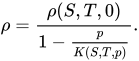
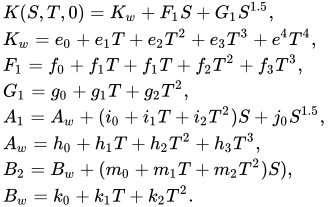
The density of ocean water is described by the UNESCO formula as:[5] The terms in this formula, density when the pressure is zero, , and a term involving the compressibility of water, , are both heavily dependent on the temperature and less dependent on the salinity:
The surface temperature, surface salinity and surface potential density calculated and plotted using the annual mean over the year 2000 of the GODAS Data.[4]

with:andIn these formulas, all of the small letters, and are constants that are defined in Appendix A of a book on Internal Gravity Waves, published in 2015.[5][clarification needed]

The density depends more on the temperature than on the salinity, as can be deduced from the exact formula and can be shown in plots using the GODAS Data.[4] In the plots regarding surface temperature, salinity and density, it can be seen that locations with the coldest water, at the poles, are also the locations with the highest densities. The regions with the highest salinity, on the other hand, are not the regions with the highest density, meaning that temperature contributes mostly to the density in the oceans. A specific example is the Arabian Sea.

Quantification

[edit]

Ocean stratification can be defined and quantified by the change in density with depth. The Buoyancy frequency, also called the Brunt-Väisälä frequency, can be used as direct representation of stratification in combination with observations on temperature and salinity.

The Buoyancy frequency, , represents the intrinsic frequency of internal gravity waves.[1] This means that water that is vertically displaced tends to bounce up and down with that frequency.

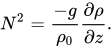
The Buoyancy frequency is defined as follows:Here, is the gravitational constant, is a reference density and is the potential density depending on temperature and salinity as discussed earlier. Water is considered to have a stable stratification for , leading to a real value of . The ocean is typically stable and the corresponding -values in the ocean lie between approximately in the abyssal ocean and in the upper parts of the ocean. The Buoyancy period is defined as . Corresponding to the previous values, this period typically takes values between approximately 10 and 100 minutes.[6] In some parts of the ocean unstable stratification appears, leading to convection.
If the stratification in a water column increases, implying an increase of the value , turbulent mixing and hence the eddy viscosity will decrease.[7] Furthermore, an increase of , implies an increase of , meaning that the difference in densities in this water column increase as well. Throughout the year, the oceanic stratification is not constant, since the stratification depends on density, and therefore on temperature and salinity. The interannual fluctuations in tropical Pacific Ocean stratification are dominated by El Niño, which can be linked with the strong variations in the thermocline depth in the eastern equatorial Pacific.[1]

Furthermore, tropical storms are sensitive to the conditions on the stratification and hence on its change.[8] On the other hand, mixing from tropical storms also tends to reduce stratification differences among layers.

Observations on increasing stratification

[edit]

Temperature and salinity changes due to global warming and climate change alter the ocean density and lead to changes in vertical stratification.[2] The stratified configuration of the ocean can act as a barrier to water mixing, which impacts the efficiency of vertical exchanges of heat, carbon, oxygen, and other constituents. Thus, stratification is a central element of Earth's climate system. Global upper-ocean stratification continued its increasing trend in 2022 and was among the top seven on record.[2]

In the last few decades, the stratification in all of the ocean basins has increased. Furthermore, the southern oceans (south of 30°S) experienced the strongest rate of stratification since 1960, followed by the Pacific Ocean, the Atlantic Ocean, and the Indian Ocean.[1] When the upper ocean becomes more stratified, the mixed layer of surface water with homogeneous temperature may get shallower, but projected changes to mixed-layer depth by the end of the 21st century remain contested.[9] The regions with the currently deepest mixed layers are associated with the greatest mixed layer shoaling, particularly the North Atlantic and Southern Ocean basin.[9]

By looking at the GODAS Data[4] provided by the NOAA/OAR/ESRL PSL, the Buoyancy frequencies can be found from January 1980 up to and including March 2021. Since a change in stratification is mostly visible in the upper 500 meters of the ocean, very specific data is necessary in order to see this in a plot. The resulting plots from the GODAS Data might indicate that there is also a decrease in stratification looking at the differences of the stratification between the years 1980, 2000 and 2020. It is possible to see that the change in stratification is indeed the biggest in the first 500 meters of the ocean. From approximately 1000 meters into the ocean, the stratification converges toward a stable value and the change in stratification becomes almost non-existent.

Annual and latitudinal means of for different ocean basins. This plot was generated using the GODAS Data[4] of 1980, 2000 and 2020.
Change in annual and latitudinal means of for different ocean basins. This plot was generated using the GODAS Data[4] of 1980, 2000 and 2020.

In many scientific articles, magazines and blogs, it is claimed that the stratification has increased in all of the ocean basins (e.g. in Ecomagazine.com[10] and NCAR & UCAR News [11]). In the figure below, the trends of the change in stratification in all of the ocean basins have been plotted.[1] This data shows that over the years the stratification has drastically increased. The changes in stratification are greatest in the Southern Ocean, followed by the Pacific Ocean. In the Pacific Ocean, the increase of stratification in the eastern equatorial has found to be greater than in the western equatorial.[1] This is likely to be linked to the weakening of the trade winds and reduced upwelling in the eastern Pacific, which can be explained by the weakening of the Walker circulation.[1]

This figure shows the global change in stratification since the year 1960 until 2018 from 0 to 2000 meters.[1] (a) Global, (b) Pacific Ocean, (c) Atlantic Ocean, (d) Indian Ocean and (e) Southern oceans. The thin grey lines indicate the interannual variations. The small plot in (a) shows the rates of for the global case and for the basins. This is calculated by centered differences of the smooth time series (Glb: Global, Pac: Pacific, Atl: Atlantic, So: Southern, Ind: Indian). The trends have been plotted for various datasets, indicated by the different lines.

Causes and consequences

[edit]

Temperature and mixing

[edit]

The change in temperature dominates the increasing stratification, while salinity only plays a role locally.[1] The ocean has an extraordinary ability of storing and transporting large amounts of heat, carbon and fresh water.[12] Even though approximately 70% of the Earth's surface consists of water, more than 75% of the water exchange between the Earth's surface and the atmosphere occurs over the oceans. The ocean absorbs part of the energy from sunlight as heat and is initially absorbed by the surface.[13] Eventually a part of this heat also spreads to deeper water. Greenhouse gases absorb extra energy from the sun, which is again absorbed by the oceans, leading to an increase in the amount of heat stored by the oceans. The increase of temperature of the oceans goes rather slow, compared to the atmosphere.

However, the ocean heat uptake has doubled since 1993 and oceans have absorbed over 90% of the extra heat of the Earth since 1955.[13] The temperature in the ocean, up to approximately 700 meters deep into the ocean, has been rising almost all over the globe.[12] The increased warming in the upper ocean reduces the density of the upper ≈500 m of water, while deeper water does not experience as much warming and as great a decrease in density. Thus, the stratification in the upper layers will change more than in the lower layers, and these strengthening vertical density gradients act as barriers limiting mixing between the upper layers and deep-water.

There is limited evidence that seasonal differences in stratification have grown larger over the years.[9]

Salinity

[edit]

The salinity is associated with the difference between evaporation and precipitation.[1] Ocean currents are important in moving fresh and saline waters around and in keeping a balance.

Evaporation causes the water to become more saline, and hence denser. Precipitation has the opposite effect, since it decreases the density of the surface water. Hence, it can be stated that salinity plays a more local role in the increase of stratification, even though it is less present compared to the influence of the temperature. For example, salinity plays an important role in the subtropical gyre, North (-East) Pacific, North Atlantic and Arctic regions.[1][14]

In the Arctic, the decrease of salinity, and hence density, can be explained by the input of freshwater from melting glaciers and ice sheets. This process and the increase of stratification in the Arctic will continue with the current carbon emissions.[1]

De-oxygenation

[edit]

A decline in dissolved oxygen, and hence in the oxygen supply to the ocean interior, is a likely effect of the increase in stratification in the upper ocean.[15] Since oxygen plays a direct and important role in the cycles of carbon, nitrogen and many other elements such as phosphorus, iron and magnesium, de-oxygenation will have large consequences. It plays a vital role for many organisms and the variety of ocean animals of all kinds.

The de-oxygenation in subsurface waters is due to the decrease in ocean mixing, which is caused by the increase of stratification in the upper ocean.[1] To illustrate, in the period between 1970 and 1990, approximately 15% of the de-oxygenation can be explained by an increase of temperature and the rest by reduced transport due to stratification.[12] In the period between 1967 and 2000 the decrease in oxygen concentration in the shallow waters, between 0 and 300 meters, was 10 times faster in the coastal ocean compared to the open ocean.[12] This has led to an increase of hypoxic zones, which can lead to a change in behaviour of the aquatic flora and fauna. The increase of stratification in the upper ocean during the second half of the 21st century can lead to a decoupling between the surface and the deeper oceans.[14] This decoupling can cause de-oxygenation in the deeper ocean as well, since the decoupling makes it less likely for the oxygen to reach the deeper oceans.

Nevertheless, the change in oxygen concentration can also be influenced by changes in circulation and winds. And even though oxygen has decreased in many areas of the oceans, it can also increase locally, due to a variety of influences on the oxygen. For example, between 1990 and 2000, the oxygen in the thermocline of the Indian Ocean and South Pacific Ocean has increased.[12]

Biology

[edit]

Increasing stratification impacts life in the oceans. In some cases, the expanded surface warm layer supports life moving to greater depths,[16] while in others the differing densities of stratified waters act to separate species from one another.[17] Stratification of water limits the distribution of nutrients required for life, resulting in oligotrophic regions spreading as the surface thermocline strengthens.[18] In many already stratified waters, such as subtropical gyres or equatorial waters, winter storms degrade the stratification and introduce much needed nutrients from the deep ocean.[19] In a warming ocean, the energy required to breach the pycnocline will be greater requiring stronger mixing events to have the same effect. Similarly where cooler water upwells from deep currents, in a more strongly stratified ocean this upwelling will also require more energy and nutrients will be limited in reaching the surface in places.[20]

The microbial pump is likely to play a larger role in nutrient cycling in the stratified surface ocean with less biological activity occurring to move dissolved organic carbon to the deep ocean.[18] As water stratification increases, the amount of dissolved oxygen made available to organisms further from the surface decreases.[21] This is due partly to decreased mixing and partly to warmer water holding less oxygen.[21]

Mixed layer depth (MLD)

[edit]

The surface mixed layer is the uppermost layer in the ocean and is well mixed by mechanical (wind) and thermal (convection) effects. Turbulence in this layer occurs through surface processes, for example wind stirring, surface heat fluxes and evaporation, The mixed layer is inherently the layer most connected to the atmosphere and affects and is affected by all weather systems, especially those with strong winds such as hurricanes.[22] Heat stored in the mixed layer in the tropical western Pacific plays a vital role in El Nino development.

The depth of the mixed layer is associated with physical, chemical and biological systems and is one of the most important quantities in the upper ocean.[22] Throughout the year, the depth of the mixed layer varies. The thickness of the layer increases in wintertime and decreases in the summer. If the mixed layer is really deep, less light can reach the phytoplankton. Phytoplankton have been shown to be important in the global carbon cycle.[23] Furthermore, since phytoplankton are at the bottom of the food chain, a decrease in phytoplankton can have consequences on a very large scale.

An exact relation between an increase in stratification and a change in the mixed layer depth has not yet been determined and remains uncertain. Although some studies suggest that a thinner mixed layer should accompany a more stratified upper ocean,[24][25][26] other work reports seasonal deepening of the mixed layer since 1970.[27] There is literature substantiating the statement that in the years from 1970 to 2018, the stratification in the basis of the mixed layer as well as the depth of the mixed layer have increased. Contradicting this result, other literature states a decrease of the depth of the mixed layer partly as a result of the increase of upper-ocean stratification.[28] It has been found that the mixed layer in the extension of the Kuroshio Current, at the west side of the North Pacific, has decreased more than 30 meters. This shoaling is caused by weakening of wind and a reduction of seasonal vertical mixing. Furthermore, there exists research stating that heating of the surface of the ocean, and hence an increase in stratification, does not necessarily mean an increase nor decrease in the mixed layer depth.[29] Using the GODAS Data[4] it can be seen that the depth of the mixed layer has increased as well as decreased over time.

Between 1970 and 2018, the summertime mixed-layer depth (MLD) deepened by 2.9 ± 0.5% per decade (or 5 to 10 m per decade, depending on the region), and the Southern Ocean experienced the greatest deepening.[27][29] However, there is limited observational evidence that the mixed layer is globally deepening, and only under strong greenhouse gas emissions scenarios do global mixed-layer depths shoal in the 21st century.[9] Although it is virtually certain that upper ocean stratification will increase through the 21st century, scientists express low confidence in how the mixed-layer depth will evolve.[9]

Annual means and change in annual means of the mixed layer depth of 1980, 2000 and 2020. This plot was generated using the GODAS Data.[4]
Identification of regions with increase and decrease of annual means of the mixed layer depth of 1980, 2000 and 2020. This plot was generated using the GODAS Data.[4]

See also

[edit]

References

[edit]
Revisions and contributorsEdit on WikipediaRead on Wikipedia
from Grokipedia
Ocean stratification is the vertical partitioning of seawater into stable layers of progressively increasing density with depth, primarily governed by spatial gradients in temperature and salinity that render denser waters subjacent to lighter ones, thereby suppressing turbulent mixing and facilitating distinct hydrodynamic regimes. This density-based layering manifests as a shallow, turbulent mixed layer where wind and buoyancy fluxes homogenize properties, overlain by a sharp pycnocline (often coinciding with a thermocline) marking rapid density escalation, and underlain by sluggish, high-density abyssal waters. Fundamentally, stratification underpins the ocean's thermohaline circulation—the global conveyor redistributing heat, salt, and biogeochemical tracers—while constraining nutrient fluxes to the euphotic zone, which in turn modulates primary production and carbon export efficiency. Empirical data from hydrographic surveys reveal that surface warming, driven by radiative imbalances, has intensified upper-ocean stratification since the mid-20th century, with buoyancy frequency anomalies exceeding natural variability in subtropical gyres, potentially curtailing ventilation of intermediate waters and amplifying deoxygenation in oxygen minimum zones. Such dynamics underscore stratification's causal primacy in mediating oceanic responses to radiative forcing, independent of prevailing narratives on ecosystem collapse thresholds that often overlook historical analogs of comparable density gradients during interglacials.

Fundamentals of Ocean Density and Layering

Physical Basis of Density-Driven Layering

The of , denoted as ρ\rho, is a nonlinear function of SS, TT, and pp, expressed through the ρ=ρ(S,T,p)\rho = \rho(S, T, p). This relationship underpins stratification, as gravitational stability requires that generally increases with depth in the absence of mechanical mixing, forming horizontal layers where lighter water overlies denser water. The international standard for computing these properties is the Thermodynamic 2010 (TEOS-10), which derives all thermodynamic variables from a formulation calibrated against empirical laboratory data spanning temperatures from -2°C to 130°C, salinities up to 120 g/kg, and pressures to 1000 bar. Prior formulations, such as the 1980 (EOS-80), employed approximations for ρ(S,T,0)\rho(S, T, 0) and a secant correction for effects, with anomalies typically on the order of 0.1–0.5 kg/m³ relative to a reference value of about 1027 kg/m³ at surface conditions. Temperature exerts the dominant control on density near the surface, with the thermal expansion coefficient α=1ρρT>0\alpha = -\frac{1}{\rho} \frac{\partial \rho}{\partial T} > 0 implying that warmer water is less dense; for typical open-ocean conditions (S ≈ 35 g/kg, T ≈ 5–25°C), α\alpha ranges from 1–3 × 10^{-4} °C^{-1}, leading to density decreases of approximately 0.2–0.3 kg/m³ per 1°C warming at constant salinity and pressure. Salinity contributes positively to density via the haline contraction coefficient β=1ρρS7.58.0×104\beta = \frac{1}{\rho} \frac{\partial \rho}{\partial S} \approx 7.5–8.0 \times 10^{-4} (g/kg)^{-1}, such that a 1 g/kg increase in salinity raises density by about 0.8 kg/m³. Pressure increases density through compressibility, with the secant bulk modulus K(S,T,p)K(S, T, p) on the order of 2.3 × 10^4 bar at surface conditions, resulting in a fractional density increase of roughly p/K ≈ 4 × 10^{-5} per bar (or about 0.4 kg/m³ per km depth), though this effect is secondary to T and S in the upper ocean. These dependencies arise from molecular interactions: thermal agitation expands water molecules against intermolecular forces, reducing density, while dissolved salts enhance ionic bonding and hydration shells, increasing mass per volume; compressibility reflects the finite volume reduction under hydrostatic pressure. Stratification emerges from buoyancy-driven sorting under , where water parcels displaced vertically experience a restoring force proportional to the local . In , the vertical ρz\frac{\partial \rho}{\partial z} (with z positive upward) determines stability: for ρz<0\frac{\partial \rho}{\partial z} < 0, denser fluid lies below lighter fluid, resisting convective overturning. This condition is quantified by the squared Brunt–Väisälä (buoyancy) frequency N2=gρ0ρzN^2 = -\frac{g}{\rho_0} \frac{\partial \rho}{\partial z}, where g ≈ 9.8 m/s² is gravitational acceleration and ρ0\rho_0 is a reference ; positive N2N^2 indicates oscillatory stability, with typical oceanic values of 10^{-5} to 10^{-4} s^{-2} in the thermocline corresponding to restoring oscillation periods of hours to days. Negative N2N^2 signals instability, promoting mixing until neutrality is restored, as parcels sink or rise adiabatically conserving potential ρ(S,θ,p)\rho(S, \theta, p) (where θ\theta is potential temperature). Surface fluxes—solar heating expanding the warm mixed layer, evaporation concentrating salinity in subtropics, or freshwater inputs diluting high latitudes—generate lateral contrasts that, under , subside or outcrop to form vertical gradients, with molecular diffusion (thermal diffusivity ≈ 10^{-7} m²/s, salt ≈ 10^{-9} m²/s) too slow to homogenize without turbulence. The nonlinear equation of state introduces cabbeling and thermobaricity: mixing equal-density parcels at different (T,S) yields denser water due to the convex ρ(T)\rho(T) curvature (2ρT2>0\frac{\partial^2 \rho}{\partial T^2} > 0), enhancing slantwise , while modifies expansion coefficients, altering gradients under compression. These effects, verified through shipboard and measurements since the , ensure that observed pycnoclines—regions of sharp ρ/z\partial \rho / \partial z—persist as barriers to vertical exchange, with changes of 0.5–2 kg/m³ over 100–500 m depths in mid-latitudes.

Vertical Structure: Pycnocline and Layers

The ocean's vertical structure is characterized by three primary layers distinguished by gradients: the surface , the pycnocline, and the deep ocean. These layers arise from variations in and , which govern through the equation of state, with playing a secondary role in the upper ocean. The occupies the uppermost portion, typically extending from the surface to depths of 10–200 meters, where mechanical stirring by winds, surface waves, and convective overturning homogenizes , , and . This uniformity minimizes internal gradients, facilitating efficient exchange of , , and gases with the atmosphere. The pycnocline forms the transitional zone beneath the , marked by a rapid increase in with depth, often spanning 100–1,000 depending on . This primarily results from cooling and salinification with increasing depth, suppressing vertical mixing and acting as a barrier between the lighter surface waters and denser deep waters. In tropical and subtropical regions, a permanent pycnocline persists year-round, driven mainly by effects ( dominance), while in mid- and high latitudes, a seasonal pycnocline overlays it during summer due to surface heating, which strengthens the density barrier temporarily before winter erodes the upper portion. The pycnocline's stability is quantified by the squared N2=gρ0ρzN^2 = -\frac{g}{\rho_0} \frac{\partial \rho}{\partial z}, where positive values indicate resistance to vertical displacement, with typical oceanic magnitudes around 10410^{-4} s2^{-2} in the pycnocline core. Below the pycnocline lies the deep ocean, extending from roughly 1,000 meters to the seafloor, where density changes more gradually due to weaker and gradients in the cold, saline waters formed by deep in polar regions. This layer remains largely isolated from surface processes, with minimal turbulent mixing across the pycnocline interface, preserving long-term water mass properties. Haline effects can modulate the pycnocline in regions of strong freshwater input, such as high latitudes, where a may contribute disproportionately to stratification.

Historical and Geological Context

Pre-Industrial Stratification Patterns

Prior to the onset of widespread industrial activities around , ocean stratification formed a stable vertical layering primarily governed by solar radiation, evaporative cooling, , riverine inputs, and , resulting in density gradients that separated lighter surface waters from denser deep waters. Temperature dominated the density structure in most regions, with surface waters warmed to 20–28°C in tropical and subtropical latitudes cooling rapidly across the to 4–10°C at intermediate depths (200–1000 m), while effects amplified stratification in evaporation excess zones through higher surface salinities (35.5–37 PSU) overlying fresher subsurface waters (34.5–35 PSU). This configuration yielded a global average pycnocline spanning approximately 100–800 m depth, with buoyancy frequency N2N^2 values typically ranging from 10510^{-5} to 10410^{-4} s2^{-2} in the upper pycnocline, reflecting a stable but regionally variable barrier to vertical mixing. Early systematic observations from the HMS Challenger expedition (1872–1876) provide direct evidence of these patterns, recording over 400 profiles that revealed a near-surface of 50–150 in low latitudes, transitioning to a pronounced density gradient below, where potential dropped by 10–15°C over 300–500 in the main . measurements, though sparser, confirmed contributions in the , with density surfaces (σθ\sigma_\theta) increasing from 22–24 kg 3^{-3} at the surface to 26–27 kg 3^{-3} at 1000 , consistent with pre-anthropogenic equilibrium states modeled in historical climatologies. These profiles indicate weaker upper-ocean thermal stratification compared to modern conditions, as evidenced by reconstructed density differences across the top 700 being approximately 0.09 kg 3^{-3} cooler than Argo-era equivalents, implying less inhibition of mixing under natural variability. Regionally, pre-industrial stratification exhibited pronounced latitudinal and gyre-scale heterogeneity: subtropical convergence zones featured shallow, strong pycnoclines (100–300 m) due to excess and Ekman convergence piling up warm, saline waters, whereas subpolar fronts allowed seasonal deepening of the to 500–1000 m during winter , facilitating intermediate water formation and reducing stratification temporarily. In the , the pycnocline shoaled to 100–200 m, modulated by equatorial and , while polar seas showed near-vertical uniformity in winter but re-stratified rapidly in spring via ice melt and heating. Paleoceanographic proxies from the late , including foraminiferal δ18\delta^{18}O records, corroborate this structure's persistence over millennia under forcings, with no evidence of systematic deviations prior to 19th-century observations. These patterns supported efficient natural ventilation and cycling, contrasting with subsequent anthropogenic enhancements in upper-ocean stability.

Long-Term Natural Variations

During glacial-interglacial cycles of the Pleistocene, ocean stratification exhibited significant natural variations, primarily driven by via , which modulated insolation, ice volume, and global sea levels. Proxy records from deep-sea sediment cores, including stable isotopes (δ¹⁸O) in benthic and radiocarbon ventilation ages, indicate that the (LGM, approximately 21,000–19,000 years ago) featured enhanced deep-ocean stratification compared to the . In the , deep waters were more isolated from surface mixing, with stratification persisting until deglacial warming disrupted it around 17,000–14,000 years ago, facilitating carbon release and atmospheric CO₂ rise of ~80–100 ppm. This glacial strengthening of density barriers in the deep ocean, particularly below 2,000 meters, resulted from cooler global temperatures (mean sea surface cooling of 2–4°C) and expanded , which promoted brine rejection and salinity contrasts that stabilized water columns. Upper-ocean pycnocline depth also varied regionally, with steeper surface density gradients during the LGM in subtropical gyres, such as the North Atlantic, where compressed circulation patterns shoaled the and intensified horizontal density fronts. Paleoceanographic reconstructions using Mg/Ca ratios in planktonic and alkenone paleothermometry reveal that these changes decoupled surface and subsurface waters, reducing vertical nutrient and heat fluxes by up to 20–30% in low latitudes. In contrast, the interglacial (post-11,700 years ago) saw pycnocline deepening in many basins due to resumed vigorous overturning, such as strengthened (), which lessened overall stratification and enhanced global ventilation. These shifts align with sea-level fluctuations of ~120 meters lower during the LGM, which exposed continental shelves, concentrated salts, and altered freshwater inputs from reduced intensity. Millennial-scale natural oscillations within interglacials, such as those linked to solar variability and volcanic forcing, further modulated stratification, though less dramatically than glacial transitions. For instance, proxy evidence from the North Pacific suggests periodic freshening events shoaled the pycnocline by 50–100 meters during cooler phases, akin to Bond cycles every ~1,500 years, driven by ice-rafted debris and altered wind patterns. Such variations underscore the 's sensitivity to orbital-scale insolation changes (peaking at ±2.5 W/m² obliquity-driven), which causally influenced and gradients without anthropogenic forcing. Empirical models corroborate that these natural dynamics, absent modern greenhouse effects, produced stratification fluctuations of 10–20% in Brunt-Väisälä (N²) across ocean basins.

Measurement and Quantification Techniques

Observational Methods and Instruments

Conductivity--depth (CTD) profilers, deployed from research vessels via rosette samplers, serve as the foundational instrument for direct in-situ measurements of ocean stratification by recording vertical profiles of , (inferred from conductivity), and to compute anomalies. These battery-powered sensor packages, often integrated with dissolved oxygen and sensors, achieve resolutions of 0.001°C for and 0.0001 S/m for conductivity, enabling precise identification of pycnoclines where gradients sharpen. Ship-based CTD casts, conducted since the with modern digital systems replacing mechanical reversing thermometers, provide high-vertical-resolution data (e.g., 1-meter bins) but are limited by sparse spatial coverage due to logistical costs. The array, comprising approximately 4,000 autonomous profiling floats since achieving full deployment around 2005, extends global stratification observations by cyclically diving to 2,000 meters every 10 days to measure and profiles, yielding structures that reveal upper-ocean pycnocline variations. Floats surface to transmit data via , with salinity accuracy of 0.01 practical salinity units and temperature precision of 0.002°C, though biases from or drift necessitate . This Lagrangian approach captures mesoscale variability in stratification, complementing Eulerian ship data, and has documented strengthening upper-ocean gradients in regions like the . Underwater gliders, such as Slocum or Seaglider models, offer targeted, endurance-focused profiling (up to 6 months per mission) for regional stratification studies by adjusting buoyancy to glide along sawtooth paths, sampling , , and to depths of 1,000 or more. Equipped with CTD sensors akin to shipborne units, gliders achieve horizontal ranges exceeding 1,000 kilometers at speeds of 0.25–0.5 m/s, enabling repeated transects in under-sampled areas like boundary currents or shelves. Fixed moorings with chains or moored profilers provide continuous of stratification at specific sites, measuring gradients to assess pycnocline depth fluctuations over years. These platforms, often part of like the Observatories Initiative, integrate acoustic Doppler current profilers to link layers with vertical mixing.

Density Metrics and Indices

Seawater density ρ\rho is determined from absolute salinity SAS_A, conservative temperature CTC_T, and pressure pp using the Thermodynamic Equation of Seawater 2010 (TEOS-10), a Gibbs function formulation that computes thermodynamic properties including density with uncertainties below 0.1 kg/m³ for typical oceanic conditions. Potential density, referenced to the surface pressure (p=0p=0), is ρ(SA,CT,0)\rho(S_A, C_T, 0), often denoted as σθ=ρ(SA,θ,0)1000\sigma_\theta = \rho(S_A, \theta, 0) - 1000 kg/m³ where θ\theta is potential temperature; this metric eliminates compressibility distortions, enabling direct comparison of water parcel densities as if adiabatically displaced to the surface. For mid-depth and deep waters, where surface-referenced potential surfaces intersect and misrepresent neutral trajectories, alternative sigma levels are applied: σ2\sigma_2 at 2000 dbar, σ4\sigma_4 at 4000 dbar, defined as the anomaly a parcel attains when adiabatically moved to those reference pressures. Neutral γn\gamma^n, computed algorithmically to align with surfaces of neutrality (where displacements incur no work), provides a globally consistent, pressure-invariant label for masses, surpassing potential in accuracy for large-scale circulation analysis despite computational intensity. Stratification intensity is quantified by the NN, with N2=(g/ρ0)(ρ/z)N^2 = -(g / \rho_0) (\partial \rho / \partial z), where g9.8g \approx 9.8 m/s² is and ρ0\rho_0 a reference (typically 1025–1027 kg/m³); stable stratification occurs when ρ/z<0\partial \rho / \partial z < 0, yielding positive N2N^2 and oscillatory parcel displacements at frequency NN. In practice, σθ/z\partial \sigma_\theta / \partial z substitutes for ρ/z\partial \rho / \partial z to account for in-situ variations, with oceanic N2N^2 values ranging from near 0 s⁻² in well-mixed layers to 10410^{-4} s⁻² or higher in sharp pycnoclines, reflecting resistance to vertical motion. Additional indices, such as the potential energy required to homogenize a water column or vertical gradients integrated over the upper ocean, assess mixing barriers and stability trends empirically.

Global Upper-Ocean Changes Since 1960

Since the 1960s, the global upper ocean—defined here as the layer from the surface to approximately 700 meters depth—has undergone pronounced warming, with ocean heat content in this layer rising by about 200 × 10^{22} joules from 1955 to recent decades, equivalent to an average heating rate of roughly 0.4 W/m² over the period. This trend has accelerated, with the rate doubling in the upper 2000 meters since the 1970s and reaching 0.86 ± 0.1 W/m² over 2005–2024. The warming is unevenly distributed, concentrating in the top 100–300 meters due to surface heat uptake, which decreases upper-layer density through thermal expansion and enhances vertical density gradients. Empirical analyses of historical hydrographic data, including shipboard measurements and later Argo float observations, indicate a global strengthening of upper-ocean stratification, quantified via metrics such as the buoyancy frequency squared (N²) or potential density differences across the pycnocline. One study reconstructing stratification from 1960 to 2018 found a global increase of 5.3% (95% confidence interval: 5.0–5.8%), driven predominantly by tropical and subtropical regions where surface warming outpaces subsurface heat penetration. Independently, gridded temperature and salinity profiles revealed statistically significant stratification strengthening in approximately 40% of the global ocean area since the 1960s, with dominant contributions from the tropics and variability linked to decadal climate modes like the Pacific Decadal Oscillation. Pycnocline intensity, marking the core density gradient separating the mixed layer from deeper waters, has also intensified globally, particularly in summertime across all ocean basins, at rates of 10^{-6} to 10^{-5} s^{-2} per decade since 1970. This manifests as a shallower and sharper pycnocline in many regions, reducing the depth of the surface mixed layer and limiting turbulent mixing. Salinity changes contribute secondarily, with freshening in high latitudes amplifying stratification via reduced surface density, though thermal effects dominate the global signal. These trends are corroborated by multiple datasets, including corrected historical profiles, underscoring a robust empirical pattern of increased upper-ocean stability.

Regional and Seasonal Heterogeneities

Ocean stratification exhibits pronounced seasonal cycles that vary by latitude. In mid-to-high latitudes, the upper ocean pycnocline (UOP) undergoes significant deepening and weakening during winter due to convective mixing, with depths exceeding 200 meters in regions like the North Atlantic and Antarctic Circumpolar Current, where stratification intensity drops to O(10^{-6} s^{-2}). In contrast, summer surface heating establishes a strong seasonal pycnocline with intensity O(10^{-4} s^{-2}) and shallow depths below 50 meters, enhancing density gradients that inhibit vertical mixing. At low latitudes in the intertropical convergence zone, stratification remains persistently intense at O(10^{-3} s^{-2}) year-round, with minimal seasonal modulation and UOP depths stabilizing at 70-80 meters, driven by consistent solar insolation and weak wind mixing. These patterns derive from hydrographic profiles in the ISAS20_ARGO dataset spanning 2002-2020, revealing a global median UOP thickness of 23 meters with limited seasonal change except in dynamic zones like the California Current, where summer thicknesses exceed 35 meters. Regional heterogeneities manifest across ocean basins, influenced by local thermodynamics and circulation. The North Pacific features deeper permanent pycnoclines averaging ~150 meters compared to ~100 meters in the North Atlantic, reflecting differences in subtropical mode water formation and subpolar gyre dynamics observed in Argo temperature-salinity profiles. In the Atlantic, subtropical regions show marked seasonal restratification delays in the Southern Ocean, where winter mixed layers deepen beyond 500 meters near features like the Rockall Plateau, contrasting with the Pacific Warm Pool's thinner, more variable UOP exceeding 35 meters due to intense precipitation-driven salinity gradients. Arctic shelves exhibit shelf-specific stratification, with tidal mixing creating offshore stratified versus nearshore mixed regimes in areas like the NW Irish Sea, where spring-summer pycnocline formation limits nutrient entrainment. These basin-scale differences, quantified via Argo floats providing over two decades of subsurface data, underscore how topography and freshwater inputs amplify local density layering, with the Pacific generally displaying stronger upper-ocean barriers to exchange than the Atlantic. Empirical trends reveal heterogeneous intensification of stratification since the 1970s, with summertime pycnocline strengthening at rates of 10^{-6} to 10^{-5} s^{-2} per decade across basins, though Atlantic changes diverge from Pacific patterns in mixed-layer maxima. Subpolar North Atlantic and Gulf of Alaska regions show amplified baroclinic tidal conversion due to enhanced density gradients, contributing to observed M_2 tide amplitude declines of 0.1-0.42 mm yr^{-1} from 1993-2020 satellite altimetry. Such variations, corroborated by Argo-derived climatologies, highlight causal links to regional salinity anomalies, where negative surface salinity changes correlate with bolstered stratification in evaporative subtropics.

Primary Drivers

Thermal Expansion and Surface Warming

Surface warming, primarily resulting from the ocean's absorption of over 90% of excess atmospheric heat since the mid-20th century, decreases the density of upper ocean waters due to the nonlinear temperature dependence of seawater density in its equation of state. This thermal effect, distinct from volumetric expansion contributing to sea-level rise, directly enhances stratification by amplifying the vertical density gradient, as warmer surface layers become buoyant relative to cooler subsurface waters below the mixed layer. Observations indicate that the global upper ocean (0–700 m) has warmed by about 0.11°C per decade from 1971 to 2010, with heat accumulation accelerating thereafter, confining warming disproportionately to the top 100–200 m and steepening the . Empirical analyses of hydrographic profiles from 1960 to 2018 reveal a global increase in stratification, quantified as the vertical potential density gradient, by 5.3% (90% confidence interval: 5.0–5.8%) when integrated from the surface to 2,000 m depth. This strengthening is predominantly thermal in origin, with temperature-driven density reductions outweighing salinity effects in most ocean basins, particularly in subtropical gyres where surface warming exceeds 0.5°C since 1960. Regional heterogeneity persists, with statistically significant pycnocline intensification in approximately 40% of the global ocean area since the 1960s, driven by reduced convective mixing and suppressed entrainment during seasonal warming. The causal link between surface warming and enhanced stratification is supported by both observational trends and process-based models, where increased near-surface buoyancy inhibits vertical velocities and deepens the isothermal layer while sharpening density contrasts at the base of the mixed layer. For instance, in the North Atlantic and Pacific subtropics, thermal stratification has risen by up to 10% per decade in recent periods, correlating with observed declines in winter mixed-layer depths by 10–20 m since the 1980s. These changes, while modulated by circulation variability, underscore thermal forcing as a primary driver amplifying ocean stability amid ongoing heat uptake.

Salinity Gradients and Freshwater Inputs

Salinity contributes to ocean density through its effect on seawater's thermohaline properties, where an increase of 1 practical salinity unit (psu) raises density by approximately 0.8 kg/m³ at typical surface temperatures, independent of temperature to first order. Vertical salinity gradients thus generate haline stratification when surface waters are fresher than underlying layers, creating a stable pycnocline that resists vertical mixing, particularly in regions with muted thermal contrasts such as high latitudes. Empirical observations indicate that such gradients dominate stratification in the 's upper layers, where a halocline separates low-salinity surface water (typically 25-30 psu) from saltier Atlantic inflows (34-35 psu) below 200 m depth. Freshwater inputs amplify these gradients by diluting surface salinity, enhancing the density contrast and thereby intensifying stratification. Primary sources include net precipitation minus evaporation (P-E), which exceeds 1 m/year in equatorial convergence zones and subpolar regions, river discharge totaling about 1.2 × 10⁶ m³/s globally (with major contributions from Arctic rivers like the Lena at ~500 km³/year), and glacial/sea ice melt adding ~2,000 km³/year in recent decades from Antarctica and Greenland. In the Canada Basin, increased freshwater accumulation from 2006-2012—driven by riverine and precipitational fluxes—lowered surface salinity by up to 1 psu relative to prior decades, resulting in a 20-30% stronger upper-ocean stratification and shallower mixed layer depths averaging 15-20 m. These inputs exhibit spatial heterogeneity: positive freshwater anomalies in the Arctic and Southern Ocean contrast with salinification in subtropical gyres due to excess evaporation, yielding a "fresher gets fresher" pattern that bolsters polar stratification while regionally varying global trends. In the Arctic, multi-decadal freshwater buildup since the 1990s—equivalent to ~5,000 km³ from ice melt and runoff—has thickened the surface low-salinity lens by 10-20 m, suppressing winter convection and reducing heat exchange with deeper waters. Such changes persist against natural variability, with modeling constrained by Argo float data confirming salinity-driven buoyancy frequency increases of 10-20% in halocline-dominated layers. In marginal seas like the Gulf of Finland, seasonal haline restratification from river inflows and ice melt elevates winter stability, delaying spring mixing by weeks and altering nutrient fluxes. Overall, while thermal effects often dominate globally, salinity gradients via freshwater forcing provide critical control in ~20-30% of ocean areas, influencing circulation and biogeochemical cycles through causal density barriers.

Ocean Mixing and Circulation Influences

Ocean mixing primarily counteracts stratification by facilitating diapycnal transport, which diffuses vertical density gradients through turbulent diffusion across isopycnal surfaces. In the ocean interior, diapycnal diffusivities typically range from 0.1 to 1 × 10^{-4} m²/s, driven largely by the breaking of internal waves generated via tidal forcing over rough topography and wind-induced near-inertial waves. These processes supply the mechanical energy required to overcome the potential energy barrier posed by stable stratification, homogenizing properties like temperature and salinity on timescales that balance surface buoyancy inputs. Enhanced mixing near boundaries, such as over seamounts or mid-ocean ridges, can elevate local rates to 10^{-3} m²/s, significantly eroding nearby stratification, while interior rates remain subdued, preserving large-scale gradients. Large-scale circulation patterns modulate stratification by advecting water masses and inducing regions of convergence or divergence that alter layer thicknesses. Wind-driven gyres, through Ekman pumping, shoal the pycnocline in subtropical regions via upward vertical velocities (typically 10-50 m/year), thereby intensifying upper-ocean density gradients by lifting denser subsurface waters closer to the sun-heated surface layer. In contrast, the thermohaline circulation influences deep stratification by upwelling nutrient- and carbon-rich abyssal waters in divergence zones like the , where rates of 10-20 Sverdrups of require diapycnal mixing of 0.5-8 Sv to close the overturning loop, preventing excessive accumulation of light water aloft. Variations in circulation strength, such as potential AMOC slowdowns, reduce convective overturning in high latitudes, allowing surface freshening to enhance local stratification by limiting downward penetration of dense water formation. The interplay between mixing and circulation sustains observed stratification profiles, as circulation sets the framework for where mixing energy is dissipated—elevated near upwelling fronts—and mixing provides the irreversible transformation needed for meridional density cells to operate against diffusive tendencies. Empirical models indicate that without sufficient interior mixing, circulation-driven transport would sharpen stratification unrealistically, underscoring their coupled role in maintaining the ocean's thermal and haline structure. Observations from microstructure profilers confirm that mixing hotspots correlate with circulation features like western boundary currents, where enhanced shear amplifies wave breaking and diffusivity.

Physical and Chemical Consequences

Impacts on Vertical Mixing and Heat Transport

Ocean stratification inhibits vertical mixing by establishing a stable density gradient that resists turbulent overturning, primarily governed by the Brunt–Väisälä frequency N2=gρ0ρzN^2 = -\frac{g}{\rho_0} \frac{\partial \rho}{\partial z}, where higher positive values indicate greater stability and reduced diapycnal diffusion. This suppression of turbulence diminishes the vertical flux of heat, momentum, and tracers from the surface to interior waters, with diapycnal diffusivities typically dropping below 10^{-5} m²/s in strongly stratified regions. Empirical data reveal that upper-ocean stratification has intensified globally, strengthening the vertical stratification maximum by 7-8% from 2006 to 2021, which correlates with reduced turbulent mixing and shallower penetration of surface heat. In response to anthropogenic warming, this enhanced stability traps over 90% of excess atmospheric heat in the upper ocean layers, limiting downward transport and altering the ocean's heat uptake efficiency. Consequently, models project decreased vertical heat advection, exacerbating surface warming amplification while constraining deeper ocean sequestration. Regional variations amplify these effects; for example, in the Southern Ocean between 30°S and 55°S, projected stratification increases restrict future heat uptake by impeding mixing across density surfaces critical for meridional overturning. Similarly, summertime pycnocline strengthening decouples surface and subsurface layers, weakening surface-to-depth heat exchanges and contributing to observed shoaling of mixed layers. These dynamics intertwine with large-scale circulation, where reduced vertical mixing indirectly influences poleward heat transport by modulating overturning strength. Overall, intensified stratification undermines the ocean's capacity to redistribute heat vertically, intensifying upper-ocean warming feedbacks.

Deoxygenation Processes and Oxygen Minimum Zones

Ocean deoxygenation refers to the reduction in dissolved oxygen concentrations in seawater, driven primarily by physical processes that limit oxygen replenishment in subsurface layers. Thermal stratification intensifies this by increasing the density gradient between warmer surface waters and cooler deeper waters, thereby suppressing vertical mixing and eddy diffusion that would otherwise transport oxygen downward from the well-oxygenated surface mixed layer. Solubility of oxygen also decreases with rising temperatures, with a roughly 2% decline in global ocean oxygen inventory observed between 1960 and 2010, attributed in part to this stratification-enhanced barrier to ventilation. Biological respiration further depletes oxygen in the ocean interior, where sinking organic matter from surface productivity is oxidized, but stratification reduces the supply of oxygen-rich waters to compensate for this consumption. Oxygen minimum zones (OMZs) are subsurface layers, typically between 200 and 1,000 meters depth, where oxygen concentrations fall below 20 μmol kg⁻¹ due to the convergence of high respiration rates and minimal physical supply. In stratified conditions, OMZs expand vertically and horizontally because weakened upwelling and ventilation fail to renew oxygen, particularly in regions like the eastern tropical Pacific and Arabian Sea, where OMZ volumes have increased by up to 3 million km³ since the mid-20th century. This expansion is mechanistically linked to enhanced pycnocline stability, which isolates intermediate waters from surface oxygenation, allowing respiratory demand to outpace supply; model projections indicate further OMZ growth of 1–3 million km³ by 2100 under moderate warming scenarios. Deoxygenation in stratified oceans also amplifies denitrification and anammox processes within OMZs, converting fixed nitrogen to N₂ gas and potentially releasing nitrous oxide, a greenhouse gas, though the net climatic feedback remains uncertain due to varying regional responses. Empirical data from bottle casts and Argo floats confirm that subtropical OMZs are shoaling (moving upward) by 10–30 meters per decade in response to stratification, compressing habitable oxygen-rich habitats for midwater species. While circulation changes, such as slowdowns in oxygen-transporting currents, contribute, the dominant causal role of stratification is supported by consistent correlations between upper-ocean density gradients and oxygen deficits across ocean basins. Coastal OMZs, influenced by local stratification from riverine freshwater inputs, exhibit even sharper deoxygenation trends, with oxygen declines exceeding 0.1 μmol kg⁻¹ yr⁻¹ in some upwelling systems.

Nutrient Distribution and Upwelling Suppression

Increased ocean stratification inhibits the vertical transport of nutrients from deeper layers to the sunlit surface waters, leading to their accumulation below the pycnocline and reduced availability for phytoplankton growth. This process is driven by enhanced density gradients, primarily from surface warming, which deepen the thermocline and suppress turbulent mixing, trapping macronutrients like nitrate and phosphate in subsurface reservoirs. Observations indicate that such stratification has contributed to declining upper-ocean nutrient concentrations, with historical data from regions like the Northeast Pacific showing average nitrate and phosphate levels in the upper 100 meters decreasing by up to 79% over three decades due to freshening and associated buoyancy increases. In coastal upwelling systems, stratification alters the source depth of upwelled waters, often shifting it to shallower, nutrient-poorer layers despite sustained or intensified winds, thereby diminishing nutrient fluxes to the euphotic zone. This suppression is evident in eastern boundary upwelling systems (EBUS), where warming-induced pycnocline strengthening reduces the efficiency of Ekman-driven upwelling, limiting the supply of deep, nutrient-enriched water. For instance, scaling analyses demonstrate that higher stratification increases the density of upwelled water while constraining its depth, resulting in lower overall nutrient delivery under projected climate scenarios. Marine heatwaves exacerbate this by further intensifying near-surface stratification, directly correlating with reduced vertical nutrient entrainment and subsequent oligotrophication. Empirical trends link these dynamics to broader declines in surface chlorophyll and phytoplankton blooms, particularly in low- to mid-latitude upwelling zones, where rising sea surface temperatures have driven a suppression of nutrient upwelling since at least the late 20th century. In EBUS such as the California, Humboldt, Canary, and Benguela currents, which account for 10-20% of global marine primary production despite covering less than 1% of ocean area, enhanced stratification is projected to override potential wind intensification effects, yielding net reductions in nutrient-driven productivity by the end of the 21st century. These changes underscore a causal chain from thermal expansion and salinity gradients to diminished biogeochemical cycling, with observational evidence from buoy and satellite data confirming weaker nutrient anomalies during stratified periods.

Biological and Ecological Implications

Effects on Primary Productivity and Food Webs

Increased ocean stratification restricts the entrainment of nutrient-rich deep waters into the sunlit surface mixed layer, thereby diminishing the availability of macronutrients such as nitrate and phosphate for phytoplankton photosynthesis and growth. This process intensifies in warming climates, where surface heating strengthens density gradients and suppresses turbulent mixing, leading to oligotrophic conditions in the euphotic zone. Observations from satellite-derived chlorophyll data reveal global declines in net primary production (NPP), with statistically significant decreases across approximately half of the ocean surface since the 1990s, predominantly in subtropical and tropical regions where stratification has increased. In specific basins like the northwestern Mediterranean, intensified stratification linked to rising sea surface temperatures has contributed to a 40% reduction in phytoplankton production over two decades, as reduced wind-driven mixing limits nutrient upwelling. Similarly, subtropical gyres exhibit suppressed phytoplankton blooms and declining ocean "greenness" due to enhanced thermal stratification, which outweighs compensatory effects from nutrient inputs in some models. These trends are corroborated by eddy-resolving simulations showing halved NPP declines in subpolar gyres under projected stratification increases, highlighting the role of fine-scale dynamics in modulating impacts. Such reductions at the base of marine food webs exert bottom-up controls, constraining energy transfer to zooplankton grazers and subsequently to fish and higher predators. Enhanced stratification alters zooplankton community composition by favoring smaller, less nutritious species adapted to nutrient-poor surface waters, which disrupts trophic efficiency and reduces forage availability for commercially important fisheries. In the Southern Ocean, projected stratification increases could cascade through shortened food chains, diminishing krill-dependent predators like penguins and seals, though natural variability in upwelling partially buffers these effects in Antarctic shelves. Overall, these disruptions threaten ecosystem stability, with empirical models indicating potential food web collapses if primary production falls below critical thresholds relative to consumer demands.

Shifts in Marine Species Distributions and Biodiversity

Increased ocean stratification, primarily driven by surface warming and freshwater inputs, alters marine habitats by intensifying thermal barriers that restrict vertical mixing, nutrient replenishment, and oxygen exchange, prompting shifts in species distributions to track suitable environmental conditions. Observations indicate that many pelagic and demersal fish species have migrated poleward at average rates of 52 ± 33 km per decade since the 1950s, with leading range edges advancing faster in response to amplified warming in stratified upper layers. These shifts are particularly evident in the Northern Hemisphere, where subtropical species have expanded into temperate and subpolar waters, as documented in long-term surveys of the U.S. Northeast Continental Shelf, where over 50% of tracked species exhibited northward and deeper displacements between 1968 and 2017. Stratification exacerbates deoxygenation in subsurface layers by limiting ventilation, compressing habitable vertical ranges for species intolerant of low oxygen, such as certain gadoids and cephalopods, leading to deeper migrations where possible. However, expanded oxygen minimum zones (OMZs) under heightened stratification constrain these vertical adjustments, with models projecting up to 20-30% reductions in vertical habitat volume for midwater species by 2100 in equatorial regions. Empirical data from global fisheries records and trawl surveys confirm these patterns, showing increased overlap of depth distributions but with physiological stress in compressed niches. These distributional changes have mixed effects on marine biodiversity, with tropical and subtropical assemblages facing range compression and potential local extirpations due to narrowed thermal tolerances and reduced productivity from nutrient trapping in stratified surface waters. Poleward regions experience influxes of subtropical species, fostering novel communities but often at the cost of native biodiversity through competitive displacement and altered food web dynamics, as seen in Arctic ecosystems where boreal fish invasions have restructured trophic interactions since the 1990s. Overall, while global species richness may redistribute rather than decline uniformly, hotspots of biodiversity loss are projected in the tropics, with empirical meta-analyses revealing inconsistent poleward signals in only about 47% of observed shifts, underscoring confounding factors like fishing pressure and natural variability alongside stratification.

Broader Climatic and Geochemical Feedbacks

Role in Carbon Sequestration and Acidification

Enhanced ocean stratification inhibits the biological carbon pump, which sequesters atmospheric CO₂ by converting it into organic matter through phytoplankton primary production and exporting particulate organic carbon to the deep ocean. By suppressing vertical mixing and nutrient upwelling from nutrient-replete deep waters, stratification reduces surface nutrient availability, curtailing phytoplankton blooms and export production rates. Observations and models project that this mechanism has contributed to a 13% decline in global oceanic CO₂ uptake over the past two decades, with stratification effects amplifying reductions in the biological pump's efficiency. In the Southern Ocean, a key carbon sink region, increased stratification between 30°S and 55°S is forecasted to limit future carbon uptake by hindering the subduction of carbon-rich mode waters. Conversely, in regions experiencing rapid freshening from ice melt, such as the , intensified near-surface stratification has temporarily enhanced carbon sequestration by trapping dissolved inorganic carbon in intermediate depths and reducing CO₂ outgassing to the atmosphere, offsetting some solubility pump weakening from warmer surface waters. This effect, observed through low-salinity surface layers since the 1990s, has prolonged carbon storage for decades but is projected to diminish as overall warming dominates. Record-high sea surface temperatures in 2023 further demonstrated stratification's role in sink variability, leading to an unexpected decline in the global ocean carbon sink compared to prior trends, as reduced mixing curtailed both physical and biological uptake processes. Regarding ocean acidification, stratification exacerbates surface pH declines by limiting the upwelling of alkalinity-rich deep waters, which naturally buffer absorbed CO₂ through carbonate chemistry. Deep ocean waters contain higher total alkalinity (typically 2,200–2,400 μmol kg⁻¹ versus 2,100–2,200 μmol kg⁻¹ in surface waters), and reduced mixing decreases this supply to the euphotic zone, intensifying aragonite undersaturation and impacts on calcifying organisms. Thermal expansion and freshwater inputs further strengthen pycnoclines, decoupling surface acidified layers from buffered subsurface waters and amplifying local acidification hotspots. This dynamic, compounded by ongoing CO₂ absorption (raising seawater pCO₂ by ~20–30% since pre-industrial levels), heightens vulnerability for ecosystems reliant on vertical exchanges, though empirical data from stratified upwelling zones show variable buffering resilience tied to regional circulation.

Interactions with Atmospheric and Cryospheric Systems

Enhanced ocean stratification modulates air-sea interactions by impeding vertical mixing, which restricts the exchange of heat, momentum, and trace gases across the ocean-atmosphere interface. In regions with strong stratification, such as the tropics and mid-latitudes, reduced entrainment of subsurface waters limits the upward flux of cooler, nutrient-rich water, thereby altering surface temperatures and influencing atmospheric convection patterns like the Madden-Julian Oscillation (MJO). Salinity-driven stratification in the Maritime Continent, for instance, plays a key role in modulating MJO propagation by affecting barrier layer thickness and air-sea coupling strength during convective events. Similarly, in the Southern Ocean, stratification suppresses wintertime convection, reducing air-sea heat loss and constraining the ocean's heat uptake from the warming atmosphere; models project that between 30°S and 55°S, this effect could diminish future heat absorption efficiency by limiting exposure of mode and intermediate waters to surface forcing. For carbon cycling, heightened stratification inhibits the upwelling of CO2-enriched deep waters, thereby curbing oceanic CO2 uptake; in the Southern Ocean, this mechanism has been linked to suppressed pCO2 at the surface due to weakened vertical mixing, reducing net absorption by up to 17% in wind-current interaction zones. Stratification also feedbacks to atmospheric variability through its influence on mixed-layer dynamics and buoyancy fluxes, which can amplify or dampen weather phenomena. Rain-induced freshening in the equatorial , for example, creates temporary low-density layers that enhance near-surface stability, reducing turbulent heat fluxes and altering local atmospheric humidity and cloud formation. In the Arctic, persistent freshening from increased precipitation and runoff has strengthened upper-ocean stratification since the 1990s, diminishing convective heat release to the atmosphere and contributing to prolonged surface warming trends. These changes can feedback to polar atmospheric circulation, potentially weakening storm tracks by stabilizing the boundary layer and reducing eddy heat transport. Interactions with the cryosphere primarily involve freshwater inputs from sea ice melt and glacial discharge, which bolster ocean stratification by lowering surface salinity and density, thereby suppressing deep convection and altering polar heat budgets. In the Arctic Ocean, enhanced freshwater from sea ice melt and river runoff—estimated to have increased Arctic freshwater content by 20-30% since 1990—has deepened and intensified the halocline, isolating Atlantic Water heat from the surface and reducing winter convection depths by up to 100 meters in some basins. This stratification inhibits the ocean's release of heat to the atmosphere, which can delay autumn sea ice formation despite cooler surface temperatures, as seen in the Beaufort and Chukchi Seas during periods of anomalous melt. In the Southern Ocean, meltwater from Antarctic ice shelves stabilizes the upper water column, enhancing pycnocline strength and potentially expanding sea ice cover by trapping heat subsurface; modeling studies indicate that a 10-20% increase in freshwater flux could sustain positive sea ice anomalies under certain wind regimes. These cryosphere-driven changes feedback to atmospheric systems by modulating albedo and latent heat fluxes, influencing hemispheric circulation patterns like the Southern Annular Mode. Conversely, atmospheric warming accelerates ice melt, perpetuating the stratification cycle and risking slowdowns in meridional overturning circulation.

Mixed Layer Dynamics

Definition, Formation, and Depth Metrics

The ocean mixed layer (ML) constitutes the uppermost portion of the water column where turbulent processes homogenize physical properties such as temperature, salinity, and density, creating a near-neutral stability zone that interfaces directly with the atmosphere. This layer typically exhibits weak vertical gradients in these properties due to sustained mixing, distinguishing it from the underlying stratified interior where density increases with depth, inhibiting vertical motion. The ML serves as a dynamic boundary layer influencing air-sea fluxes of heat, momentum, gases, and freshwater, with its base often marked by the onset of the thermocline or pycnocline. Formation of the ML arises primarily from mechanical stirring induced by surface winds, which generate shear currents and Langmuir turbulence via wave breaking and Stokes drift, entraining deeper water upward and distributing momentum downward. Convective processes contribute during periods of net surface cooling—such as radiative heat loss or evaporative cooling—which increase surface density and trigger penetrative convection, deepening the layer until buoyancy restratifies it. Buoyancy fluxes from precipitation, ice melt, or solar heating modulate stability: positive heat flux (warming) or freshwater input shoals the ML by fostering a low-density cap, while salinity changes from evaporation enhance density and promote mixing. These mechanisms interact; for instance, wind stress over a buoyantly unstable surface amplifies entrainment velocity, with the rate of deepening proportional to the cube root of wind energy input under neutral conditions. In polar regions, winter brine rejection from sea ice formation intensifies convection, occasionally extending the ML to hundreds of meters. Mixed layer depth (MLD) is quantified through profile-based criteria applied to in-situ , salinity, or measurements, with no universal standard due to regional variability in stratification drivers. Common thresholds include a potential anomaly increase of Δσ0 = 0.03 kg m-3 from a near-surface reference (typically 10 m depth) to capture the pycnocline base, or a decrease of ΔT = 0.5°C, both reflecting the point where turbulent dissipates against resistance. Alternative objective methods employ gradient maxima, where the vertical derivative of or peaks, or energy-based diagnostics like the depth at which work reaches 20 J m-3, emphasizing . Quality indices for these estimates, such as profile uniformity within the layer (ideal value ≈1.0), validate robustness, with criteria often outperforming -based ones in salinity-influenced regions like high latitudes. Globally, climatological MLDs range from 20–50 m in stratified summer to 100–200 m or more in winter extratropics and storm-impacted areas, exhibiting strong : for example, North Atlantic winter depths exceed 500 m in convective hotspots, while tropical values hover at 40–100 m year-round. Observed trends in ocean depth (MLD) exhibit regional heterogeneity, with summertime shoaling predominant in subtropical and tropical regions due to amplified surface warming relative to subsurface layers, enhancing gradients below the . Over the period from 1970 to , global summertime pycnocline stratification increased at rates of 10^{-6} to 10^{-5} s^{-2} per decade across basins, dynamically linked to MLD shoaling in these latitudes, which averaged approximately 0.09 m per year in -based estimates derived from historical hydrographic data and floats. In contrast, subpolar regions such as the North Pacific and have shown MLD deepening, on the order of 3-4% per decade, attributed to intensified wind-driven and Ekman pumping that overcome stratification from freshening. These patterns reflect competing influences of at the surface and mechanical mixing, with no uniform global MLD trend evident in long-term records. Shorter-term observations from floats between 2006 and 2021 indicate a slight global MLD deepening of about 4 m, concurrent with a 7-8% strengthening of the vertical stratification maximum, particularly in summer hemispheres, driven by mixed layer warming (∼1°C per decade) and surface freshening that reduce near-surface while deepening occurs via isopycnal heave and adjustments. However, this recent deepening contrasts with earlier decades' shoaling signals, suggesting decadal-scale oscillations superimposed on underlying climatic forcing, as confirmed in model hindcasts linking MLD changes to upper variability. Causal analysis emphasizes that while radiative warming promotes stratification and potential shoaling, secular increases in westerly winds—tied to stratospheric and forcing—have deepened MLDs in high latitudes by enhancing turbulent input. Variability in MLD operates on multiple timescales, with interannual fluctuations strongly modulated by modes such as ENSO, which shoals MLD in the eastern tropical Pacific during warm phases via weakened and reduced loss. Mesoscale eddies contribute significantly to subseasonal variability, particularly in western boundary currents and the , where they advect heat and momentum to modulate local and entrainment, generating MLD anomalies of 10-50 m. Multidecadal variability correlates with upper , as deeper MLDs facilitate greater heat uptake during positive phases of indices like the Atlantic Multidecadal Variability, though attribution remains model-dependent due to sparse pre-Argo observations. Overall, intrinsic ocean dynamics and atmospheric teleconnections amplify MLD variability beyond mean trends, with eddy-rich simulations revealing up to 20-30% greater amplitude in energetic regions compared to coarse-resolution models.

Debates, Uncertainties, and Alternative Perspectives

Evidence Gaps in Trend Attribution

Observational records for ocean stratification, typically quantified via vertical gradients in potential density derived from and profiles, are limited in both temporal extent and spatial coverage, hindering robust attribution of trends to anthropogenic forcing. Systematic global-scale data only became available with the array around 2004, providing profiles to depths of approximately 2,000 meters, but pre-2000 records depend on sparse shipboard measurements from initiatives like the World Ocean Circulation Experiment, which exhibit sampling biases and gaps exceeding 70% in some regions. Analyses extending to the detect statistically significant stratification strengthening in about 40% of the ocean area, yet these trends carry uncertainties from data inhomogeneities and aliasing of short-term variability, with error margins often comparable to the reported signals of 0.1–0.3 kg m⁻⁴ per decade in the upper 1,000 meters. Such limitations preclude definitive separation of century-scale anthropogenic signals from multi-decadal natural fluctuations, as the observational baseline spans fewer than two cycles of major modes like the Atlantic Multidecadal Oscillation. Natural climate variability poses another critical gap, as internal ocean-atmosphere can drive transient stratification changes that mimic or obscure forced trends. For example, positive phases of the enhance upper- warming and freshening in subtropical gyres, increasing stratification by up to 5–10% on decadal scales, magnitudes rivaling those attributed to accumulation in model simulations. In projections, internal variability accounts for over 50% of uncertainty in potential time stratification changes through 2100, particularly in mid-latitudes where signal-to-noise ratios remain low. Distinguishing these from anthropogenic effects requires extended records capturing full phases—often 60–80 years—but current data fall short, leading to potential over-attribution in regions like the subtropical Atlantic where decadal anomalies dominate observed gradients. Model-based attribution exacerbates these gaps, as coupled models in ensembles like CMIP6 reproduce broad stratification intensification from differential warming but diverge sharply in regional patterns and the balance between and salinity-driven haline effects. Observations indicate a shift toward haline dominance in some basins since the 1980s, yet models underrepresent freshwater flux variability from ice melt and precipitation, yielding trend mismatches of 20–30% in the . Deep-ocean stratification below 2,000 meters, where changes propagate slowly via mixing, remains poorly constrained observationally, with data insufficient for trend detection amid high natural variability, limiting causal inference to surface-forced mechanisms. These discrepancies underscore the need for improved sub-grid parameterizations of vertical mixing and circulation, as current simulations may amplify anthropogenic signals relative to unforced variability.

Natural Variability Versus Anthropogenic Forcing

Ocean stratification exhibits significant natural variability across multiple timescales, driven by internal modes that modulate , , and vertical mixing without requiring external forcing. On interannual scales, the El Niño-Southern Oscillation (ENSO) alters stratification, with El Niño phases typically enhancing upper-ocean stability through reduced , weaker , and anomalous surface warming that steepens the . La Niña events, conversely, promote mixing and temporary destratification via intensified winds and cooler surface waters. Decadal modes such as the (PDO) and (AMO) introduce basin-wide anomalies; positive PDO phases correlate with deepened thermoclines and increased stratification in the North Pacific due to persistent warm surface anomalies, while the AMO's warm phase strengthens North Atlantic stability through contrasts. These modes, with periods of 20–70 years, can produce trends comparable to observed changes over mid-20th-century records, complicating signal isolation. Anthropogenic forcing, primarily from , is hypothesized to impose a long-term intensification of stratification by disproportionately warming surface layers, thereby increasing the vertical and suppressing convective overturning. Empirical analyses of hydrographic from 1960 to 2018, including shipboard measurements and floats, indicate a global strengthening of upper-ocean (0–1000 m) stratification by approximately 0.21 ± 0.04% per decade, equivalent to a ~5% cumulative increase, quantified via the anomaly or squared Brunt-Väisälä frequency. This trend is most pronounced in subtropical and mid-latitude regions, where surface heat uptake outpaces subsurface diffusion, consistent with thermodynamic expectations from . Detection-attribution frameworks using coupled models attribute much of this signal to anthropogenic aerosols and gases, as simulated internal variability alone fails to reproduce the observed spatial pattern and magnitude in multi-ensemble hindcasts. Distinguishing natural from anthropogenic contributions remains uncertain due to sparse pre-Argo observations (before ~2004), which introduce sampling biases in trend estimates, and the potential underrepresentation of multidecadal variability in models. For instance, the observed post-1980s acceleration in subtropical stratification aligns with positive phases of the Interdecadal Pacific Oscillation (IPO), a PDO-like mode that can alias as a secular trend over 30–50 years. Regional studies show natural modes explaining up to 50–70% of variance in pycnocline depth fluctuations, with global attribution relying heavily on model-based fingerprints that exhibit known biases in simulating mixing and freshwater fluxes. Empirical orthogonal function analyses of reanalysis products reveal that while low-frequency trends exceed ENSO-scale noise globally, decadal oscillations rival forced signals in extratropical basins, underscoring the need for extended Argo-like observations to resolve emergence timescales. Projections under high-emission scenarios anticipate further divergence, but reliability hinges on improved parameterization of subgrid-scale processes influencing variability.

Critiques of Alarmist Projections and Model Reliability

Critiques of projections portraying rapid and irreversible increases in often center on the limitations of general circulation models (GCMs), which exhibit substantial inter-model spread in simulating gradients and dynamics. For instance, CMIP6 ensemble projections for heat and carbon uptake, closely tied to stratification strength, vary by factors of two or more across models, primarily due to differing representations of processes and surface freshwater fluxes that influence upper-ocean barriers. This divergence arises from unresolved parameterizations of sub-grid scale physics, such as vertical mixing and overflows, which models struggle to constrain empirically, leading to unreliable extrapolations beyond historical forcing. Observed trends in upper-ocean stratification since the mid-20th century further underscore model shortcomings, with statistically significant strengthening detected in only approximately 40% of the global area when analyzed from the onward using historical hydrographic data. Many GCMs fail to reproduce these spatially heterogeneous patterns, often overpredicting uniform deepening of the or pycnocline in hindcasts, partly because they inadequately capture decadal modes like the that modulate natural density variability. In regions like the tropical Pacific, even higher-resolution models do not consistently align with observed warming and profiles that drive stratification, highlighting persistent biases in simulating mode water formation and . Alarmist framings of stratification as a tipping element amplifying and productivity collapse rely on projections from models that, in validation against oxygen observations, show weaker declines in better-performing ensembles compared to lower-skill ones. Natural variability confounds attribution, as multi-decadal oscillations can mimic or mask anthropogenic signals in profiles, with studies indicating that internal modes explain a substantial portion of post-1960 changes without invoking external forcing dominance. Consequently, projections assuming linear of current trends overlook compensatory feedbacks, such as enhanced entrainment in a warmer , which empirical analyses suggest could mitigate projected barrier strengthening. These reliability gaps, compounded by models' tendency to overestimate Southern surface warming trends by up to 50% over recent decades, counsel caution against equating ensemble means with inevitable catastrophe.

References

Add your contribution
Related Hubs
User Avatar
No comments yet.

